
- 1800-123-5555
- Travel Agent? Join Us
- Blog
- Offers











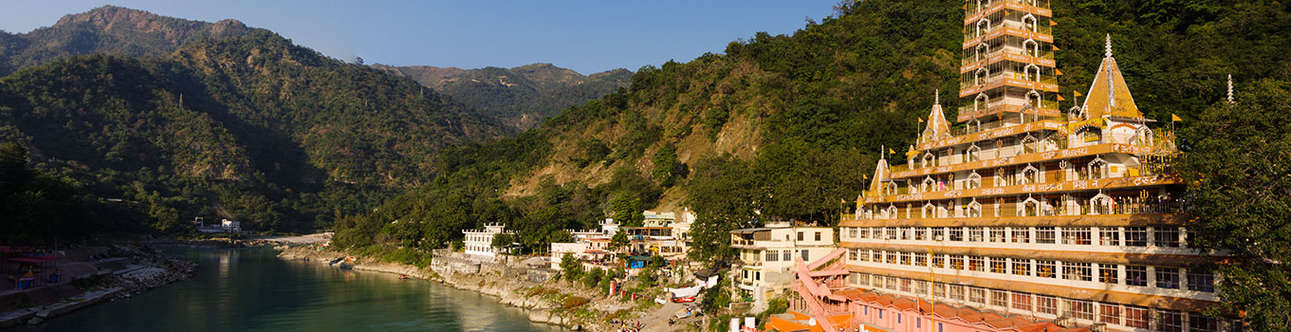
Places to Visit in Rishikesh: Temples, Ghats, Bridges and Adventure Spots
Experience the best of adventure and nature with this handy guide crafted by our travel experts
Rated 4.20/5 ( based on 2476 reviews )
Places to Visit in Rishikesh

Shivpuri in Rishikesh
There is a region named Shivpuri near Rishikesh. Overseen by the majestic Himalayas and surrounded by the lush green vegetation, Shivpuri is a beautiful place to be. Because of its rugged and uneven geography, the Ganges and its tributaries exhibit some of the most herculean rapids, providing a perfect setting to try river ...

Triveni Ghat in Rishikesh
Triveni Ghat is located in Mayakund, Rishikesh Uttarakhand. This ghat is on the banks of Holy River Ganga. This ghat is used for baths by pilgrims. You will find idols of Lord Vishnu and Krishna here. Triveni Ghat in Rishikesh is the meeting point of three holy rivers Ganga, Yamuna, and Saraswati. It is the most honored hol...

Lakshman Jhula in Rishikesh
The Lakshman Jhula Rishikesh is one of the main tourist attractions in the city of Rishikesh. This is basically a suspension bridge which connects the two villages which go by the names of Tapovan and Jonk. The first being in the Tehri Garhwal district and the latter in Pauri Garhwal district. Because the bridge is located ...

Parmarth Niketan in Rishikesh
Parmarth Niketan in Rishikesh is ideally located on the banks of Ganga and so close is the holy river to the Ashram that it seems to permeate your being with its holiness, be it your room or the private ghat at the Ashram. There are many rooms in the Ashram that gives you a soothing view of Ganga from your window. When you ...
Rishikesh packs temples, river beaches, suspension bridges and India's busiest white-water into roughly 12 km of the Ganga's right bank, which is why a two-day trip never feels like enough. This guide maps 30 places to visit in Rishikesh, grouped the way you would actually plan a day: the ghats and bridges around Ram Jhula, the hill temples a short drive out, the ashrams of Swarg Ashram, the rafting and bungee hubs upstream, and the waterfalls and caves hidden in the Rajaji forest. Every entry carries timings, entry fee, distance from Ram Jhula and how long to budget, so you can build a route instead of a wish-list. Rishikesh is still the yoga town people picture, but it is also where you raft a Grade III rapid in the morning and sit through the Ganga Aarti the same evening.
Quick planning snapshot
• Go September to November or February to April. Clear skies, warm days, cold river, and open rafting season.
• Base yourself near Ram Jhula or Tapovan. Most ghats, bridges and ashrams are a walk or short auto ride apart.
• Two full days cover the headline sights. Add a third for Neelkanth Mahadev, Kunjapuri sunrise or a day of rafting.
• Rafting runs roughly mid-September to June and closes in the monsoon. Book bungee and rafting a day ahead in peak season.
• Lakshman Jhula is shut to the public. Cross on the new Bajrang Setu glass bridge or at Ram Jhula instead.
Places to Visit in Rishikesh: at-a-glance
| Place | Type | Timings | Entry fee | Distance from Ram Jhula | Time needed |
|---|---|---|---|---|---|
| Triveni Ghat | Ghat + Ganga Aarti | 24 hours, Aarti at sunset | Free | ~2.5 km | 1 hr |
| Ram Jhula | Suspension bridge | ~5 AM to 11 PM | Free | 0 km | 30 min |
| Lakshman Jhula / Bajrang Setu | Bridge (new glass bridge) | Daylight hours | Free | ~2 km | 30 min |
| Parmarth Niketan | Ashram + Aarti | Aarti at sunset | Free to attend | At Ram Jhula | 1 hr |
| Neelkanth Mahadev Temple | Hill temple | ~5 AM to 7 PM | Free | ~32 km | Half day |
| Beatles Ashram (Chaurasi Kutia) | Heritage ashram | 10 AM to 4 PM | Rs 150 (Indian adult) | ~2 km | 2 hr |
| Kunjapuri Devi Temple | Sunrise temple | ~5 AM to 7 PM | Free | ~25 km | Half day |
| Tera Manzil (Trimbakeshwar) | 13-storey temple | ~6 AM to 7 PM | Free | ~2 km | 45 min |
| Bharat Mandir | Oldest temple | ~6 AM to 1 PM, 2 to 8 PM | Free | ~2 km | 30 min |
| Swarg Ashram | Ashram quarter | Daylight hours | Free | At Ram Jhula | 1 hr |
| Shivpuri | Rafting + camping hub | Day trips | Rafting from ~Rs 600 | ~16 km | Half day |
| Jumpin Heights | Bungee / flying fox | ~9 AM to 5 PM | Bungee ~Rs 3,700 | ~20 km | Half day |
| Kaudiyala | Grade III+ rafting | Day trips | Rafting package | ~35 km | Full day |
| Marine Drive | Riverside rafting put-in | Day trips | Rafting / camping | ~22 km | Half day |
| Neer Garh Waterfall | Waterfall | ~8 AM to 6 PM | ~Rs 30 | ~7 km | 2 hr |
| Garud Chatti Waterfall | Waterfall | Daylight hours | Free | ~5 km | 1.5 hr |
| Vashishta Gufa | Meditation cave | 8 AM to noon, 3 to 6 PM | Free | ~22 km | 2 hr |
| Rajaji National Park (Chilla) | Wildlife safari | 6 AM to 6 PM, closed in monsoon | Safari fees | ~9 km | Half day |
Iconic bridges and ghats of Rishikesh
The riverfront is where a Rishikesh trip starts. The two surviving pedestrian bridges and the main ghats sit within a short walk or auto ride of each other, so you can cover this whole cluster in a relaxed half day and finish at the evening Aarti.
Triveni Ghat
Triveni Ghat at Mayakund is the largest bathing ghat in Rishikesh and the one you come back to at dusk. It marks the meeting of the Ganga, Yamuna and the mythical Saraswati, and pilgrims take a holy dip here before the evening Maha Aarti. Rows of oil lamps go onto the water around sunset while priests swing fire lamps and the crowd sings, roughly 6 PM in winter and closer to 7 PM in summer. Mornings are quieter and good for the milk-feeding ritual and photographs. The ghat stays open through the day at no charge, and Raghunath Temple and Rishikund are a two-minute walk away, so it is an easy first or last stop. For ticket and ritual detail, see our page on Triveni Ghat entry fees and timings.
Ram Jhula
Ram Jhula is the working heart of the pilgrim side of Rishikesh. The iron suspension bridge links Sivananda Ashram on the town bank with Swarg Ashram and Parmarth Niketan across the river, and crossing it on foot, dodging the odd scooter and a lot of pilgrims, is half the experience. Built in the 1980s, it opens from early morning to late evening and costs nothing to cross. Below it, boats ferry visitors across and cafés line both banks. Treat Ram Jhula as your base coordinate. Most places in this guide are measured from here. Give it half an hour to walk across and back, longer if you stop for a riverside chai.
Lakshman Jhula and Bajrang Setu
Lakshman Jhula, the 1920s iron bridge where Lakshman is said to have crossed the Ganga on a jute rope, is the postcard image of Rishikesh. It has been closed to the public since July 2019 after safety checks found it unsafe, so you can photograph it but not walk it. In its place, the new glass-floored Bajrang Setu opened nearby and now carries foot traffic across the river beside the 13-storey Tera Manzil temple. The surrounding Tapovan lanes are packed with cafés, German bakeries and yoga studios. Plan a short visit, read the current crossing status before you go, and use Bajrang Setu or Ram Jhula to get across. Our Lakshman Jhula timings and access page tracks the latest status.
Janki Setu
Janki Setu is the newest of the three suspension bridges, strung between Ram Jhula and Lakshman Jhula and named for Sita. It was built partly to take pressure off the two older bridges, and it is wider and steadier underfoot, which makes it the calmest crossing for anyone uneasy with heights. The mid-river view back toward the ashram ghats and the forested far bank is the best on the river. It is free, open through daylight hours, and a five-minute detour from Ram Jhula.
Parmarth Niketan Ghat
Parmarth Niketan runs the second great Ganga Aarti of Rishikesh, and many travellers rate it above the Triveni version because the chanting is led by the ashram's resident students on the steps of its private ghat. The aarti starts at sunset and lasts about an hour. Arrive 20 minutes early for a step to sit on. The ashram itself sits right at Ram Jhula and is covered as an ashram below. For the ghat, you need only turn up. If you can only watch one aarti, this is the quieter, more musical one.
Muni Ki Reti
Muni Ki Reti, the "sands of the sages", is the riverside township that holds Ram Jhula, the main ashrams and the ghats, so in practice you spend much of your trip here without clocking the name. It is a separate municipality on the Tehri Garhwal bank, known for the Nataraj and Shatrughna temples, the boat crossing and some of the calmest river-facing cafés in Rishikesh. Treat it as the walkable spine that links the bridges, ghats and ashram quarter rather than a single ticketed sight. Everything here is free and on foot from Ram Jhula.
Temples and spiritual sites
Rishikesh earns its "Yoga Capital" tag at the ghats, but its oldest and most atmospheric temples are a short drive up into the hills. Pair one hill temple with your riverfront day, or give Neelkanth and Kunjapuri a half day each.
Neelkanth Mahadev Temple
Neelkanth Mahadev is the big pilgrimage out of Rishikesh, a Shiva temple at about 1,330 m where the god is said to have drunk the poison churned from the ocean, turning his throat blue. The drive climbs roughly 32 km through the Manikoot hills, about 90 minutes by taxi or shared jeep, and the last stretch of forest road is the memorable part. Doors open around 5 AM and close near 7 PM, with a long midday break at peak times. Entry is free. Weekends and Shravan (the monsoon month) bring heavy crowds and long queues, so go early on a weekday. Combine it with Garud Chatti waterfall on the same road.
Kunjapuri Devi Temple
Kunjapuri is the sunrise temple, a Shakti Peetha on a hilltop about 25 km from Rishikesh toward Tehri. People drive up in the dark to catch first light over the Himalayan skyline, with Swargarohini, Gangotri and Banderpunch range on a clear morning and the Ganga valley on the other side. A short flight of steps leads to the shrine. It opens before dawn and closes around 7 PM, entry is free, and October to March gives the clearest views. It is the best half-day trip for anyone who wants mountains rather than more river.
Tera Manzil Temple (Trimbakeshwar)
Tera Manzil, also called Trimbakeshwar, is the 13-storey temple that towers over the Lakshman Jhula bank. Each floor holds shrines to a different deity, and the climb is worth it for the widening view of the river and bridges from the upper terraces. It is an active temple, busy with bell-ringing and offerings, and a complete contrast to the quiet hill shrines. Open roughly 6 AM to 7 PM, free to enter, right beside Bajrang Setu, so it folds neatly into the bridges cluster.
Bharat Mandir
Bharat Mandir in the old town is believed to be the oldest temple in Rishikesh, linked by legend to Adi Shankaracharya and dedicated to Vishnu. It is small, unshowy and often missed, which is exactly why it rewards a stop between Triveni Ghat and the bazaar. The inner idol is carved from a single black stone, and the temple comes alive on Basant Panchami, its founding day. Open mornings and evenings with a midday close, free entry, about 2 km from Ram Jhula in the heart of the old market.
Raghunath Temple
Raghunath Temple, dedicated to Lord Rama, sits a short walk from Triveni Ghat and is usually visited together with it. The shrine is calm and rarely crowded, a good pause before or after the evening aarti. Close by is Rishikund, a small spring-fed pool linked in legend to sage Kubja and the Yamuna. Entry is free and it takes only 20 to 30 minutes, so treat it as part of the Triveni stop rather than a separate trip.
Virbhadra Temple
Virbhadra, about 6 km toward Haridwar, is an ancient Shiva temple tied to the fierce Virbhadra form of the god and to the Mahabharata era. Archaeological remains around the site point to a long history, and it stays well off the standard tourist loop, so you get it mostly to yourself. It matters most during Maha Shivaratri, when local processions fill the grounds. Worth a short detour for anyone interested in the older, quieter layer of Rishikesh beyond the ghats.
Ashrams, yoga and the Ganga Aarti
The ashram quarter around Swarg Ashram and Ram Jhula is what made Rishikesh famous, from Sivananda's teaching lineage to the Beatles' 1968 stay. You can tour the ashrams in a morning. Several welcome visitors for aarti, yoga or a simple stay. For a deeper list, see our guide to the ashrams in Rishikesh.
Parmarth Niketan Ashram
Parmarth Niketan is the largest ashram in Rishikesh, a riverside campus of more than 1,000 rooms built around a courtyard with a giant Shiva statue. It runs daily yoga and meditation, hosts the International Yoga Festival each March, and its sunset Ganga Aarti on the ghat is one of the two great evening rituals in town. Day visitors are welcome to join the aarti and walk the grounds for free. Overnight stays are simple and ashram-rule bound. It sits right at Ram Jhula, so it anchors the whole pilgrim-bank day.
Beatles Ashram (Chaurasi Kutia)
Chaurasi Kutia, universally called the Beatles Ashram, is where the band studied transcendental meditation with Maharishi Mahesh Yogi in 1968 and wrote much of the White Album. Abandoned for decades and reclaimed by the forest, it reopened as a ticketed heritage site inside Rajaji Tiger Reserve. You wander through the egg-shaped meditation pods, the lecture halls and the graffiti-covered walls that street artists have turned into a gallery. It opens 10 AM to 4 PM. Entry is around Rs 150 for Indian adults, Rs 40 for students and Rs 600 for foreigners, with the gate inside the reserve about 2 km from Ram Jhula. Allow a couple of hours and carry water. There are no shops inside.
Swarg Ashram
Swarg Ashram is less a single ashram than the pedestrian temple quarter on the east bank, a tangle of lanes with temples, bookshops, charity kitchens and the Gita Bhawan complex. It is strictly vegetarian and alcohol-free, and its riverside steps are a fine place to sit and watch the Ganga. Everything here is walkable from Ram Jhula and costs nothing, which makes it the natural place to drift between temple visits and the evening aarti.
Sivananda Ashram
The Divine Life Society's Sivananda Ashram, founded by Swami Sivananda in 1936, sits on the town bank by Ram Jhula and is one of the most respected yoga and Vedanta centres in India. It runs structured courses and keeps a quieter, more scholarly feel than the festival-driven campuses across the river. Casual visitors can see the temple and bookstore. Serious students apply ahead for programmes. Free to visit, central, and a good counterweight to the busier Swarg Ashram side.
Gita Bhawan
Gita Bhawan, in the Swarg Ashram lanes on the Ganga bank, offers some of the most affordable rooms in Rishikesh and free religious discourses, plus a well-known market for Ayurvedic goods, prayer beads and handloom cloth. It is a working pilgrim rest-house rather than a sight, but the riverside setting and the cloth-and-incense bazaar make it a pleasant wander. Open through the day, no entry charge, a short walk from Ram Jhula.
Adventure in Rishikesh
Rishikesh is the adventure capital of north India as much as its yoga capital. Rafting, bungee, cliff jumping and camping all run from a string of hubs on the Ganga upstream of town. For the full menu, see things to do in Rishikesh, and build a trip around it with our Rishikesh adventure packages.
Shivpuri
Shivpuri, about 16 km up the Ganga from Rishikesh, is the busiest rafting and riverside-camping base in the area. Most 16 km rafting runs put in here and finish near Ram Jhula, taking in Grade II and III rapids with names like Roller Coaster and Golf Course, and the banks are lined with tented camps for an overnight. Rafting runs roughly mid-September to June and starts around Rs 600 per person for the standard stretch. It is the easy, high-energy half-day that most first-timers do. Timing and operator detail are on our Shivpuri page.
Jumpin Heights
Jumpin Heights at Mohan Chatti, about 20 km out, runs India's first and highest fixed-platform bungee, a 83 m jump off a cantilevered ledge over a seasonal stream, operated with an Australian safety team. The same site has a giant swing and a long flying fox across the valley. A bungee jump is around Rs 3,700 per person. Slots run roughly 9 AM to 5 PM and sell out in peak season, so book a day ahead. Weight and health rules apply. Prices and jump rules are detailed on our bungee jumping entry-fees page.
Kaudiyala
Kaudiyala, about 35 km upstream toward Devprayag, is where serious rafters go. The river here throws up Grade III+ and IV rapids, and the long Kaudiyala to Rishikesh run is the premium white-water stretch in the region, usually sold as a full-day or overnight camping package. It is not the place for a casual first float. Pick it if you have rafted before and want the bigger water. The drive up the Badrinath road is scenic in its own right.
Byasi
Byasi, around 30 km from Rishikesh, is the classic put-in for the 26 km rafting run and a major cluster of riverside beach camps. It is calmer than Kaudiyala and better suited to families and groups who want to combine a moderate raft with a night under canvas on the sand. Cliff jumping and body-surfing happen at the quieter pools here. Camps open from around September once the monsoon water drops.
Marine Drive
Marine Drive, about 22 km up the Badrinath highway, is a popular rafting put-in and camping stretch named, half in joke, after the riverside road. The 18 km run from here down to Shivpuri is the middle-distance option, longer than the Shivpuri float but gentler than Kaudiyala, with good sandy banks for camps. It is a solid pick for a half-day raft plus an overnight without committing to the full Grade IV water.
Tapovan
Tapovan, on the hillside above Lakshman Jhula, is the café-and-yoga heart of modern Rishikesh rather than an adventure site, but it is where most adventure trips begin and end. Yoga schools, teacher-training centres, rooftop cafés and gear shops fill its lanes, and the Ganga views from the upper terraces are the best in town. Base yourself here if you want walkable access to bridges, food and classes between rafting days.
Nature, waterfalls and day-trips near Rishikesh
Step a few kilometres off the river and Rishikesh turns into forest: waterfalls in the Rajaji hills, meditation caves up the Badrinath road and a tiger reserve on the doorstep. For more on the surrounding country, see our guides to hill stations near Rishikesh and offbeat places around Rishikesh.
Neer Garh Waterfall
Neer Garh, on the Neelkanth road about 7 km from Ram Jhula, is the most popular waterfall near Rishikesh. A short forest trail past a lower pool leads to a multi-tier main fall where you can swim in the cold natural pools. It is best just after the monsoon, September to February, when the water runs full but the trail is dry. Open roughly 8 AM to 6 PM with a small entry charge of about Rs 30. Wear grippy shoes for the rocks and start early to beat the day-trippers.
Garud Chatti Waterfall
Garud Chatti, around 5 km up the Neelkanth road, is the quieter alternative to Neer Garh, where water drops through seven tiers into a bathing pool. A legend ties the spot to Garuda, the eagle mount of Vishnu. The short walk in from the road passes a small temple, and because fewer tour groups come here, you often get the pool to yourself on a weekday. Free to enter, daylight hours, and easy to pair with Neelkanth Mahadev on the same drive.
Patna Waterfall
Patna Waterfall takes its name from the nearby Patna village, not the city, and sits about 5 km up a forest trail from Lakshman Jhula through the Rajaji woods. The reward at the top is a limestone fall and a set of caves you can scramble into. It is more of a light trek than a roadside stop, so it suits travellers who want an hour or two of walking. Go in the cooler months and carry water. There are no stalls on the trail.
Vashishta Gufa
Vashishta Gufa, about 22 km up the Badrinath road, is a meditation cave where the sage Vashishta is said to have sat in penance. The cave is dark, cool and silent, with a Shiva lingam deep inside, and the Swami Purushottamananda Ashram above runs it. Many visitors sit for 15 or 20 minutes of stillness in the pitch dark. A small beach on the Ganga below is a fine spot to rest afterward. Open roughly 8 AM to noon and 3 to 6 PM, free, and the single best quiet-escape near Rishikesh.
Rishikund
Rishikund, the "pool of the sages", sits beside Raghunath Temple near Triveni Ghat. Legend holds that the Yamuna filled the tank to bless a sage, and the water is considered holy. It is a small, walled pool rather than a scenic lake, so set expectations, but it fits into the Triveni stop at no cost and rounds out the old-town cluster. Ten minutes is plenty.
Phool Chatti
Phool Chatti, about 5 km beyond Lakshman Jhula on the way to Neelkanth, pairs a small waterfall with a long-running ashram known for its week-long silent yoga retreats. The forest setting is greener and calmer than the town, and day visitors can see the falls and the river beach. It is a gentle half-day for anyone who wants the ashram atmosphere without the crowds of Swarg Ashram.
Rajaji National Park
Rajaji National Park wraps around Rishikesh, and its Chilla range gate is about 9 km away across the river near Haridwar. The reserve protects elephants, leopards, deer and a growing tiger population across sal forest and the Ganga's banks, and morning jeep safaris from Chilla are the way in. The park runs roughly October or mid-November to mid-June and closes for the monsoon, with timings around 6 AM to 6 PM and standard safari and vehicle fees. Book the safari ahead in season. It is the one place near Rishikesh that swaps temples for wildlife entirely.
Plan your Rishikesh visit
Best time to visit Rishikesh
The sweet spots are late September to November and February to April, when days are warm, nights cool and the river clear. These months also cover the rafting season and the big festivals. Summer, April to June, is hot in town but peak rafting and the busiest camps. Carry light cottons and start sightseeing early. The monsoon, July to mid-September, swells the Ganga, closes rafting and Rajaji and brings landslide risk on the hill roads, though the forest is at its greenest. Winter, December to January, is cold and quiet, good for yoga and aarti without crowds, with chilly mornings for Kunjapuri. For a month-by-month breakdown, see our best time to visit Rishikesh page.
How to reach Rishikesh
By air: the nearest airport is Jolly Grant (Dehradun), about 20 km away, with daily flights from Delhi and connections to Mumbai, Bengaluru and other metros. A taxi from the airport takes 45 minutes to an hour. By rail: Rishikesh has its own station and the newer Yoga Nagari Rishikesh terminal, while the larger Haridwar Junction, about 25 km away, has far more trains from Delhi and across India. Both connect by taxi or bus. By road: Rishikesh is roughly 240 km from Delhi, a six to seven hour drive up NH 334 and the Dehradun highway, with regular state and private buses from the Delhi ISBT. Within town, shared autos (Vikrams) and cycle-rickshaws are the way to hop between Triveni Ghat, Ram Jhula and Lakshman Jhula.
How many days and sample routes
Two days cover the essentials. Three let you add a hill temple or a full rafting day.
1. One day (compact): Triveni Ghat and Raghunath Temple in the morning, cross Ram Jhula to Parmarth Niketan and Swarg Ashram, lunch at a Tapovan café, then the evening Ganga Aarti back at Parmarth or Triveni.
2. Day two (bridges and adventure): morning rafting from Shivpuri finishing at Ram Jhula, afternoon at Bajrang Setu, Tera Manzil and the Beatles Ashram, sunset at a riverside café in Tapovan.
3. Day three (hills and forest): pre-dawn drive to Kunjapuri for sunrise, or a half-day to Neelkanth Mahadev with Garud Chatti waterfall, ending with Vashishta Gufa on the Badrinath road.
Ready to turn this into a booked trip? Browse our Rishikesh tour packages, with family, honeymoon and budget options customisable around the places above.
Rishikesh trips, by the numbers
| TT trip signal | Value |
|---|---|
| Most popular trip length | 2 to 3 days |
| Busiest booking months | October and March |
| Top package type | Adventure and weekend getaways |
| Average traveller rating for Rishikesh trips | 4.2 / 5 |
Plan your trip
Rishikesh rewards a route over a checklist: string the ghats and bridges into one day, the ashrams and a rafting run into the next, and save the hill temples and forest waterfalls for a third. Each of the 30 places above links to a deeper page where we have one, so you can check timings and fees before you set out. When you are ready to book, our customisable Rishikesh tour packages build any of these clusters into a trip, and the wider Uttarakhand travel guides help you pair Rishikesh with Haridwar, Mussoorie or the Char Dham road.
Popular Packages
Unlimited Choices. Trusted Agents. Best Prices. Happy Memories.
Cities:
- Jim Corbett
Starting from:
₹999/-
₹1,998/-50% OffCities:
- Haridwar
Starting from:
₹999/-
₹1,998/-50% OffCities:
- Rishikesh
Starting from:
₹2,500/-
₹2,750/-9% OffCities:
- Lansdowne
Starting from:
₹3,000/-
₹3,333/-10% OffCities:
- Dhanaulti
Starting from:
₹3,500/-
₹5,000/-30% OffCities:
- Lansdowne
Starting from:
₹3,749/-
₹4,120/-9% OffCities:
- Rishikesh
Starting from:
₹3,999/-
₹4,395/-9% OffCities:
- Rishikesh
Starting from:
₹4,200/-
₹4,565/-8% OffCities:
- Rishikesh
Starting from:
₹4,200/-
₹4,565/-8% OffCities:
- Rishikesh
Starting from:
₹4,200/-
₹6,000/-30% OffCities:
- Mussoorie
Starting from:
₹4,500/-
₹6,429/-30% OffCities:
- Dhanaulti
Starting from:
₹4,724/-
₹5,026/-6% OffCities:
- Chakrata
Starting from:
₹4,724/-
₹5,080/-7% OffCities:
- Rishikesh
Starting from:
₹4,725/-
₹5,192/-9% OffCities:
- Lansdowne
Starting from:
₹4,725/-
₹5,192/-9% OffCities:
- Jim Corbett
- Corbett
Starting from:
₹4,725/-
₹5,197/-9% OffCities:
- Jim Corbett
Starting from:
₹4,999/-
₹7,141/-30% OffCities:
- Chopta
Starting from:
₹5,250/-
₹5,645/-7% OffCities:
- Chopta
Starting from:
₹5,250/-
₹5,645/-7% OffCities:
- Jim Corbett
Starting from:
₹5,250/-
₹5,769/-9% OffOur experts would love to create a package just for you!
Fill in your requirements here >
Fastest Growing Holiday Marketplace
650+
Verified Agents
22 Lac+
Happy Travellers
65+
Destinations
Easy, Secure & Reliable
Traveltriangle
Verified
Stringent
Quality Control
24/7
Support
What Travelers Say About Our Rishikesh Packages
Read real reviews,packages, stories, and experiences from happy customers who booked with TravelTriangle.
Swaminathan Sripada
Bengaluru
Swaminathan's 5 days trip to Rishikesh
Swagatika Nayak
New delhi
Swagatika's 5 days trip to Rishikesh
Traveller Life
New delhi
Traveller's 3 days trip to Rishikesh
Yashna Shettu
Mumbai
Yashna's 4 days trip to Rishikesh
Sweta Patnaik
New delhi
Sweta's 3 days trip to Rishikesh
Praveen Garg
Travel by own car
Praveen's 2 days trip to Rishikesh
Amey Joshi
Mumbai
Amey's 4 days trip to Rishikesh
Vaibhav Sam
Vaibhav's 4 days trip to Rishikesh
Mohit Daga
Gurgaon
Mohit's 8 days trip to Rishikesh
Rahul Sharma
New delhi
Rahul's 4 days trip to Rishikesh
Want best packages handpicked just for you?
Fill the form and get a callback from our holiday experts
FAQ's of Rishikesh
Read on to find out why our customers love us!
How many days are enough to visit Rishikesh?
Two full days are enough to cover the headline places to visit in Rishikesh: the ghats and bridges around Ram Jhula, the main ashrams, the Ganga Aarti and one rafting run. Add a third day if you want a hill temple such as Neelkanth Mahadev or Kunjapuri sunrise, a forest waterfall or a longer rafting and camping stretch upstream at Byasi or Kaudiyala. Yoga and meditation travellers often stay a week or more at an ashram
Is there any beach in Rishikesh?
Yes, there are several beaches in Rishikesh along the banks of the sacred Ganges River, including Neem Beach, Asa Beach, Great Himalayan Expeditions Beach and Mini Goa Beach.
What is Rishikesh famous for?
Rishikesh is known as the Yoga Capital of the World and as the white-water rafting and adventure hub of north India. It is famous for the Ganga Aarti at Triveni Ghat and Parmarth Niketan, its suspension bridges, the Beatles Ashram where the band studied meditation in 1968, India's highest bungee jump at Jumpin Heights, and as the gateway to the Char Dham pilgrimage. It is strictly vegetarian and alcohol-free across most of the town
What are the best places for white-water rafting in Rishikesh?
The best places for white-water rafting in Rishikesh depend on your experience level. For beginners, the Brahmapuri to Rishikesh stretch is ideal, while Shivpuri to Rishikesh offers a more challenging experience. For experienced rafters, the Marine Drive to Rishikesh and the Kaudiyala to Rishikesh provide more intense rapids.
What is the best time to visit Rishikesh?
Late September to November and February to April are the best months, with warm days, cool nights and clear skies that suit both sightseeing and rafting. Summer is hot but has the busiest rafting season, winter is cold and quiet, and the monsoon from July to mid-September closes rafting and Rajaji and brings landslide risk on hill roads. For sunrise at Kunjapuri, October to March gives the clearest Himalayan views
What’s the price for bungee jumping in Rishikesh?
The price for bungee jumping in Rishikesh is INR 3,700 per person, with additional charges for using a video camera and accompanying the Jumper.
How It Works
Personalise This Package
Make changes as per your travel plan & submit the request.
Get Multiple Quotes
Connect with top 3 agents, compare quotes & customize further.
Book The Best Deal
Pay in easy installments & get ready to enjoy your holiday.
Corporate Office:
Holiday Triangle Travel Private Limited
Address: Plot No - 52 , 3rd Floor,
Batra House , Sector 32,
Gurugram -122001,Haryana
Landline: 1800 123 5555
Connect with us on :

Made with
in India
All rights reserved © 2026