
 7D / 6N
8% OFF


What Makes Balinese Food Different
Balinese cuisine is the Hindu-influenced cooking of Bali, built on pork, ceremonial dishes and a fresh spice paste called base genep. That makes it different from the rest of Indonesia, where most people are Muslim and pork is off the menu. Here, babi guling (spit-roast suckling pig) is the island’s most famous plate, and most Balinese Hindus avoid beef instead. A warung lunch of Balinese food costs about IDR 25,000 to 60,000 (≈ ₹132 to ₹316). The 22 dishes below run from ceremonial meat to rice plates, seafood, vegetables and sweets. Each one comes with the warung that cooks it best, the price you should pay, and whether it suits pork-free, halal or vegetarian diets.
Key takeaways
- Order babi guling between 11 am and 1 pm in Ubud or on Sunset Road. Good warungs sell out by mid-afternoon.
- Budget IDR 25,000 to 75,000 (≈ ₹132 to ₹395) for a full warung plate and IDR 5,000 to 15,000 for street snacks like nasi jinggo.
- Say “tanpa terasi” (without shrimp paste) if you are vegetarian or Jain, because shrimp paste goes into most sambals.
- Ask “ada babi?” (is there pork?) before ordering if you eat halal. Bali is majority Hindu and many kitchens cook pork.
- Skip turtle and caged-civet coffee. All sea turtles are fully protected in Indonesia.
22 Balinese dishes at a glance
Prices are typical warung prices, compiled in October 2026 from the sources named in each dish section. Rupee figures use ₹1 ≈ IDR 190, and IDR 10,000 is about £0.45.
| # | Dish | What it is | Course | Diet | Heat | Typical price (IDR) |
|---|---|---|---|---|---|---|
| 1 | Babi guling | Spit-roast suckling pig with crackling | Meat | Pork | Medium | 25,000 to 75,000 |
| 2 | Lawar | Minced meat or jackfruit with coconut and spice | Meat / veg | Pork or veg (nangka) | Medium | 15,000 to 35,000 |
| 3 | Bebek / ayam betutu | Duck or chicken slow-cooked in spice paste | Meat | Pork-free | Hot | 38,000 (quarter chicken) to around 155,000 (crispy duck) |
| 4 | Sate lilit | Minced fish, chicken or pork pressed on lemongrass | Meat / fish | Fish or chicken versions pork-free | Mild | 20,000 to 40,000 |
| 5 | Sate babi / sate plecing | Pork satay; satay with chilli-tomato sambal | Meat | Pork | Medium to hot | 15,000 to 35,000 |
| 6 | Ayam pelalah | Shredded chicken in chilli, lime and spice | Meat | Pork-free | Hot | 20,000 to 35,000 |
| 7 | Tum | Spiced mince steamed in banana leaf | Meat | Pork or chicken | Medium | 5,000 to 15,000 a parcel |
| 8 | Jukut ares | Banana stem soup on a bone broth | Soup | Pork or chicken broth | Mild | Ceremonial; side dish |
| 9 | Nasi campur Bali | Rice with 4 to 6 small sides | Rice | Varies | Medium | 25,000 to 60,000 |
| 10 | Nasi tepeng | Gianyar breakfast rice porridge | Rice | Varies | Medium | 15,000 to 30,000 |
| 11 | Nasi jinggo | Fist-sized banana-leaf rice parcel | Rice | Varies | Medium | 5,000 to 15,000 |
| 12 | Bubur mengguh | North Bali coconut porridge with chicken | Rice | Pork-free | Mild | 15,000 to 25,000 |
| 13 | Pepes ikan | Spiced fish steamed in banana leaf | Fish | Pork-free | Medium | 20,000 to 45,000 |
| 14 | Ikan bakar Jimbaran | Grilled fish and seafood on the beach | Fish | Pork-free | Mild (sambal extra) | Sold by weight |
| 15 | Sambal matah | Raw shallot, lemongrass and chilli relish | Condiment | Veg if no terasi | Very hot | Served free |
| 16 | Jukut urab | Blanched vegetables with spiced coconut | Veg | Veg (ask no terasi) | Mild | 10,000 to 20,000 |
| 17 | Serombotan | Klungkung vegetable salad, spicy coconut dressing | Veg | Veg (ask no terasi) | Hot | 10,000 to 20,000 |
| 18 | Tipat cantok | Rice cake and vegetables in peanut sauce | Veg | Veg (ask no terasi) | Mild to medium | 8,000 to 20,000 |
| 19 | Jaja Bali | Klepon, laklak and other rice-flour sweets | Sweet | Vegetarian | None | 2,000 to 10,000 a piece |
| 20 | Bubur injin / sumsum | Black rice and rice-flour puddings | Sweet | Vegetarian | None | 10,000 to 20,000 |
| 21 | Es daluman | Green leaf jelly with coconut milk and palm syrup | Drink | Vegan | None | 8,000 to 15,000 |
| 22 | Kopi Bali | Kintamani robusta and arabica coffee | Drink | Vegan | None | 5,000 to 30,000 a cup |
Indonesia
Bali
Balinese Cuisine: 22 Traditional Dishes to Try in Bali and Where to Eat Them
Best Time
April - October
Select Package Type
Best Selling Packages


22 Balinese Dishes, From Babi Guling to Kopi Bali
The dishes in eating order, ceremonial meat first, then rice plates, seafood, vegetables, sweets and drinks, followed by where to eat, prices, ordering, diet tips and responsible eating
-
Babi Guling (Balinese Roast Suckling Pig)
-
Lawar (Minced Meat, Coconut and Spice Salad)
-
Bebek Betutu and Ayam Betutu (Slow-Cooked Spiced Duck or Chicken)
-
Sate Lilit (Minced Satay on Lemongrass)
-
Sate Babi and Sate Plecing (Pork Satay and Chilli-Tomato Satay)
-
Ayam Pelalah (Shredded Spiced Chicken)
-
Tum (Spiced Mince Steamed in Banana Leaf)
-
Jukut Ares (Banana Stem Soup)
-
Nasi Campur Bali (Balinese Mixed Rice)
-
Nasi Tepeng (Gianyar Breakfast Rice Porridge)
-
Nasi Jinggo (Banana-Leaf Rice Parcel)
-
Bubur Mengguh (Buleleng Savoury Porridge)
-
Pepes Ikan (Spiced Fish Steamed in Banana Leaf)
-
Ikan Bakar Jimbaran (Grilled Seafood)
-
Sambal Matah (Raw Shallot and Lemongrass Sambal)
-
Jukut Urab (Vegetables With Spiced Coconut)
-
Serombotan (Klungkung Vegetable Salad)
-
Tipat Cantok (Rice Cake and Vegetables in Peanut Sauce)
-
Jaja Bali (Klepon, Laklak and Balinese Sweets)
-
Bubur Injin and Bubur Sumsum (Rice Puddings)
-
Es Daluman (Green Leaf Jelly Drink)
-
Kopi Bali (Kintamani Coffee)
Explore Popular Destination In Bali
01
Babi Guling (Balinese Roast Suckling Pig)
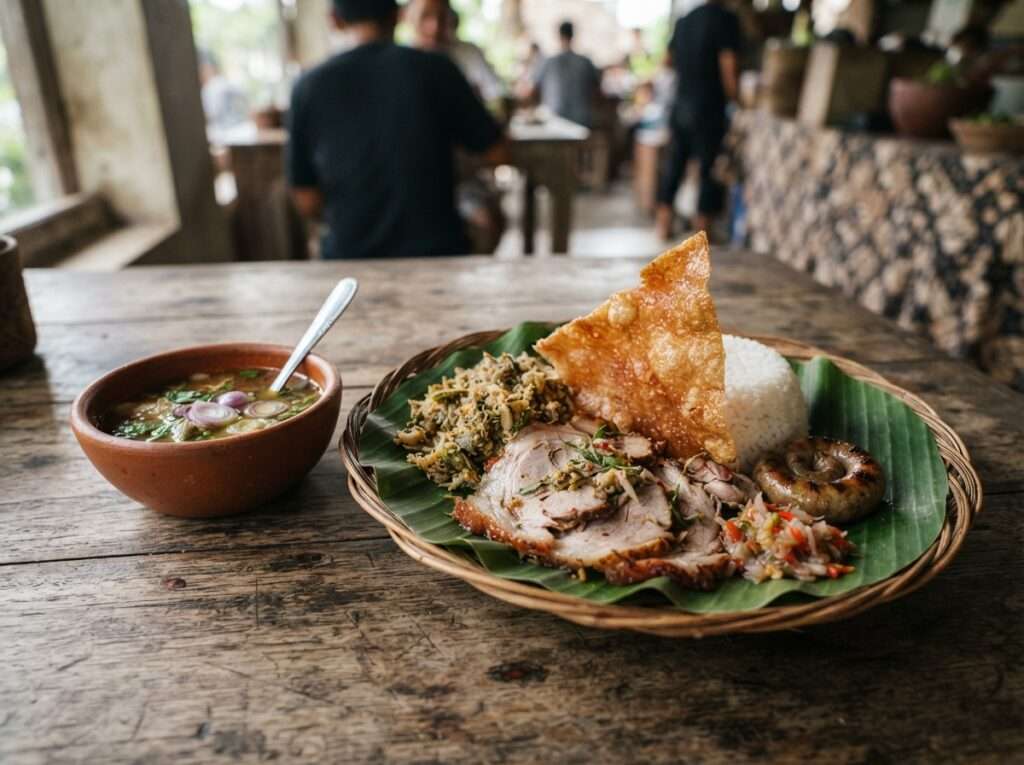
Babi guling is the dish that defines Balinese cuisine. A whole young pig is rubbed and stuffed with base genep, cassava leaves and chilli, then turned on a spit over coconut-husk embers for hours until the skin goes amber and shatters when you bite it. It started as ceremony food for temple festivals and weddings, and Balinese families still roast one for Galungan. Today every town has a warung that roasts daily. A plate brings thin slices of pork, a shard of crackling, a spoon of lawar, a short length of spiced pork sausage (urutan), a bowl of pork-bone soup and rice. Ibu Oka is the name everyone knows. Its branch at Jalan Tegal Sari 2, a short walk from Ubud Palace, charged IDR 65,000 a plate and IDR 75,000 for the set when Eatbook reviewed it, and opens 11 am to 6 pm. Locals often prefer smaller places. Pak Malen on Sunset Road charges IDR 25,000 to 50,000 a serving, according to Indonesia’s official tourism site.
| Where to try | Ibu Oka 3, Jl. Tegal Sari, Ubud; Babi Guling Pak Malen, Sunset Road, Seminyak; Gianyar night market |
| Price | IDR 25,000 to 75,000 (≈ ₹132 to ₹395) a plate |
| When to go | 11 am to 1 pm, while the crackling is crisp; good warungs sell out by mid-afternoon |
| Diet | Pork. Not for halal, Jain or vegetarian travellers |
Related Tour Packages


❮
❯
02
Lawar (Minced Meat, Coconut and Spice Salad)
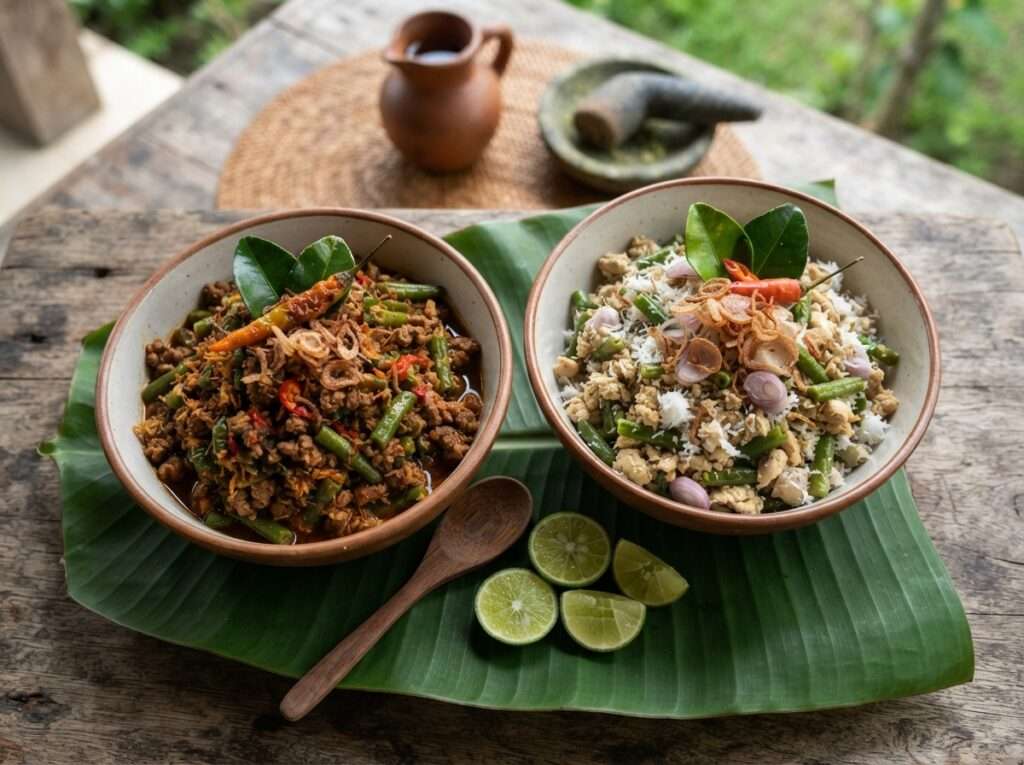
Lawar is the dish Balinese families make together before a ceremony, and it is the side that turns a plate of babi guling into a full meal. Finely chopped meat (usually pork, sometimes chicken or duck) is mixed by hand with green beans or young jackfruit, grated toasted coconut, base genep, fried shallots and lime. It comes in two colours. Lawar merah (red lawar) is mixed with fresh pig’s blood, which gives it a deep colour and an iron edge. Lawar putih (white lawar) has no blood and is the version most visitors find easier. On the morning before Galungan, called penampahan, village men gather to slaughter pigs and chop lawar in huge batches, as NOW! Bali describes in its guide to the festival. For vegetarians there is lawar nangka, made with young jackfruit, sold at many Ubud warungs.
| Where to try | Any babi guling warung; lawar specialists in Gianyar and Denpasar; lawar nangka at Ubud warungs |
| Price | IDR 15,000 to 35,000 (≈ ₹79 to ₹184) as a plate; included in a babi guling set |
| Diet | Usually pork. Lawar nangka (jackfruit) is the vegetarian version; ask "tanpa daging, tanpa terasi" |
| Good to know | Eat lawar the day it is made. Red lawar with raw blood is best eaten only at busy, trusted warungs |
Related Tour Packages


❮
❯
03
Bebek Betutu and Ayam Betutu (Slow-Cooked Spiced Duck or Chicken)
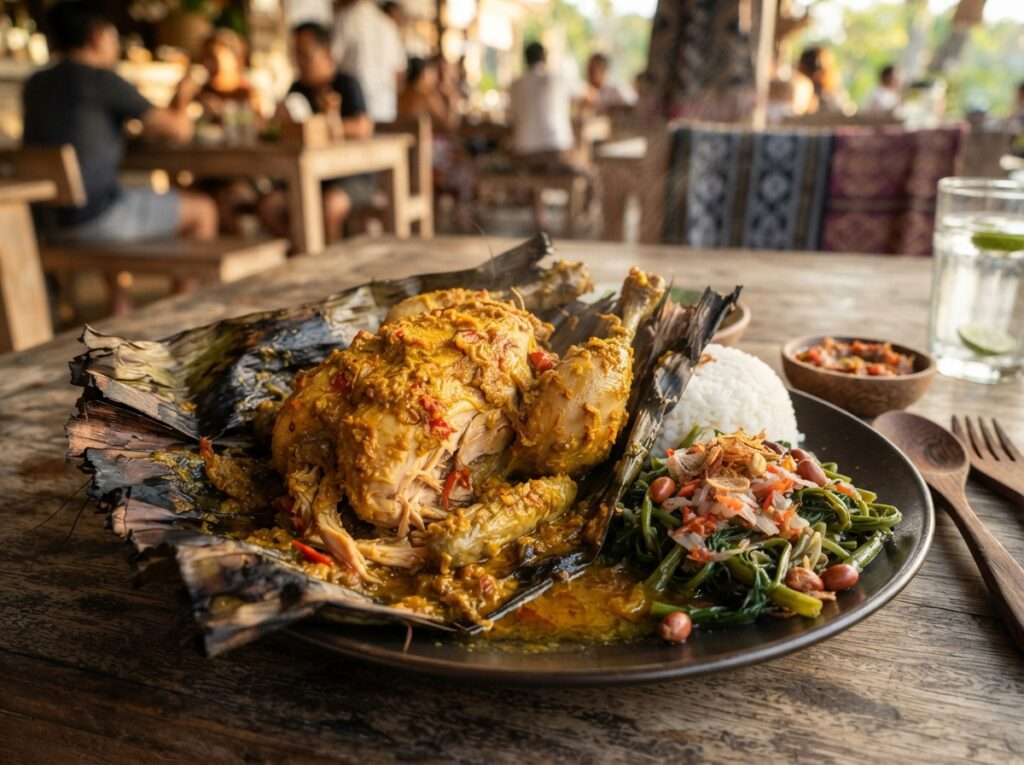
Betutu is Bali’s slow-cooked feast dish. A whole duck (bebek) or chicken (ayam) is packed inside and out with base genep, wrapped in banana leaf or areca palm bark, and cooked for many hours, traditionally buried in hot embers, until the meat slides off the bone and the paste has turned into a thick, fiery gravy. It is one of the hottest dishes on the island. The most famous ayam betutu comes from Gilimanuk, the ferry port on Bali’s west tip. Ayam Betutu Men Tempeh has served it there since 1978, and Indonesia’s official tourism guide lists a quarter chicken at IDR 38,000, a half at IDR 66,000 and a whole bird at IDR 121,000. In Ubud, Bebek Bengil (the Dirty Duck Diner) on Jalan Hanoman is known for crispy duck, a fried cousin of betutu, and its signature crispy duck costs from around IDR 155,000 before the 21% tax and service charge. Most places need a day’s notice for a whole bebek betutu.
| Where to try | Ayam Betutu Men Tempeh, Gilimanuk (the original stall, which runs no branches); Bebek Bengil, Jl. Hanoman, Ubud |
| Price | IDR 38,000 quarter chicken to IDR 121,000 whole (≈ ₹200 to ₹637); Bebek Bengil crispy duck from around IDR 155,000 (≈ ₹816) before tax and service |
| Diet | No pork. The chicken version at Men Tempeh suits most halal travellers; confirm at the counter |
| Good to know | Order whole bebek betutu a day ahead. Ask for the gravy on the side if you are wary of heat |
Related Tour Packages


❮
❯
04
Sate Lilit (Minced Satay on Lemongrass)
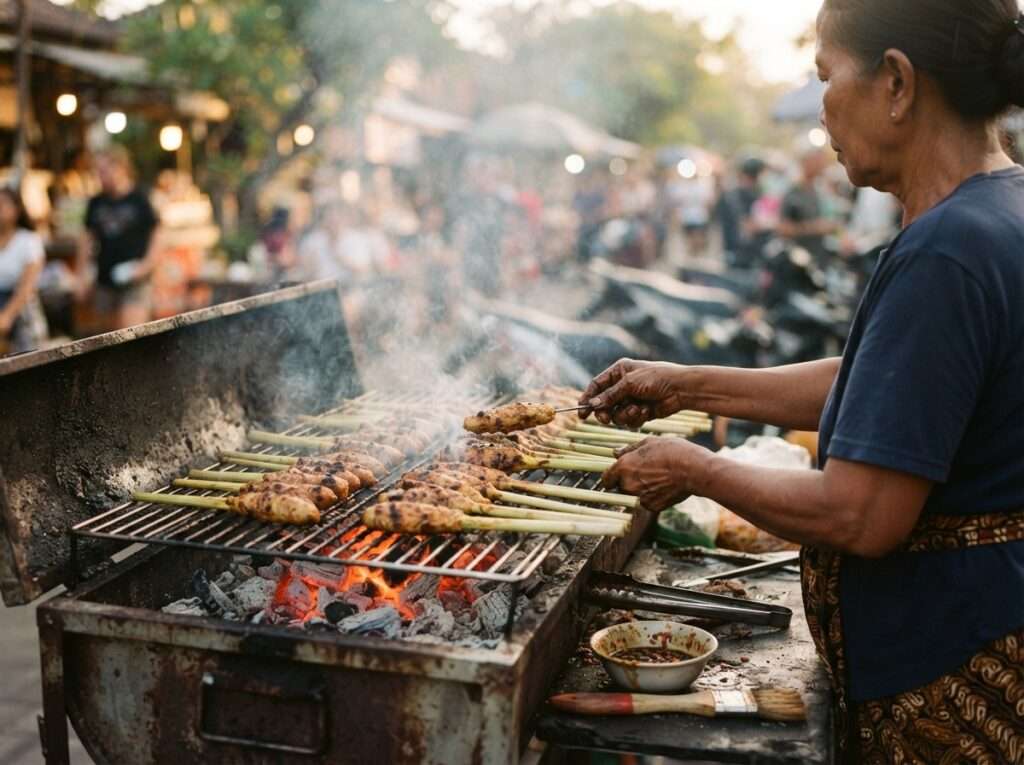
Sate lilit is Bali’s own satay, and it is shaped differently from the cubed sate you know from Java. Minced fish, chicken or pork is mixed with grated coconut, coconut milk, lime leaf and base genep, then pressed by hand around a flat bamboo stick or a stalk of lemongrass (“lilit” means to wrap) and grilled over coconut husk. The result is soft, fragrant and lightly sweet, with lemongrass perfume in every bite. Fish sate lilit, usually made with tuna or mackerel, is the most common version in Sanur, Jimbaran and Ubud warungs, and it is one of the gentlest dishes on this list for a first-timer. It shows up on nasi campur plates and in ceremony offerings, and cooking classes teach it because the technique is easy to learn.
| Where to try | Nasi campur warungs in Sanur and Ubud; fish grills in Jimbaran; most cooking classes |
| Price | IDR 20,000 to 40,000 (≈ ₹105 to ₹211) for a plate of 5 to 8 sticks |
| Diet | Fish and chicken versions are pork-free; pork sate lilit exists, so ask "ikan atau babi?" (fish or pork?) |
| Heat | Mild. Spice comes from the sambal served with it |
05
Sate Babi and Sate Plecing (Pork Satay and Chilli-Tomato Satay)
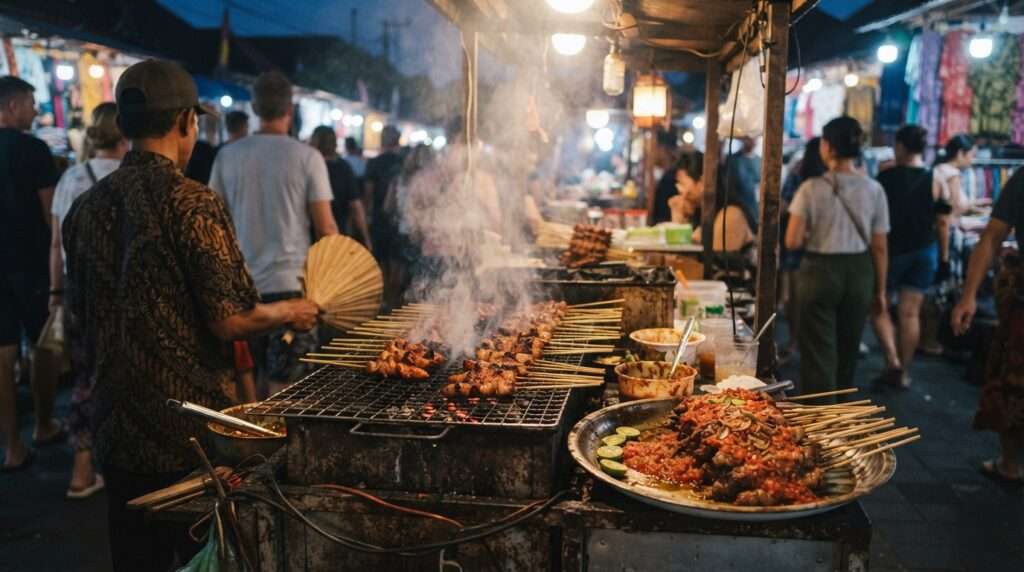
Sate babi is pork satay, a common Balinese street food that is hard to find in the rest of Muslim-majority Indonesia. Cubes of pork belly or shoulder are marinated in sweet soy and garlic, grilled over charcoal until the fat chars, and served with a peanut or chilli sauce. Night markets in Gianyar and Denpasar grill it until late. Sate plecing is the hotter Balinese twist. Grilled satay (chicken, pork or fish) is smothered in plecing, a sambal of tomato, bird’s eye chilli, shrimp paste and lime. If you like your food sharp and fresh rather than sweet, sate plecing is the one to try.
| Where to try | Gianyar night market; Kereneng and Sindhu night markets; roadside grills after dark |
| Price | IDR 15,000 to 35,000 (≈ ₹79 to ₹184) for 10 sticks |
| Diet | Sate babi is pork; sate plecing comes in chicken and fish versions, but plecing contains shrimp paste |
| When to go | Evenings, from about 5 pm |
06
Ayam Pelalah (Shredded Spiced Chicken)
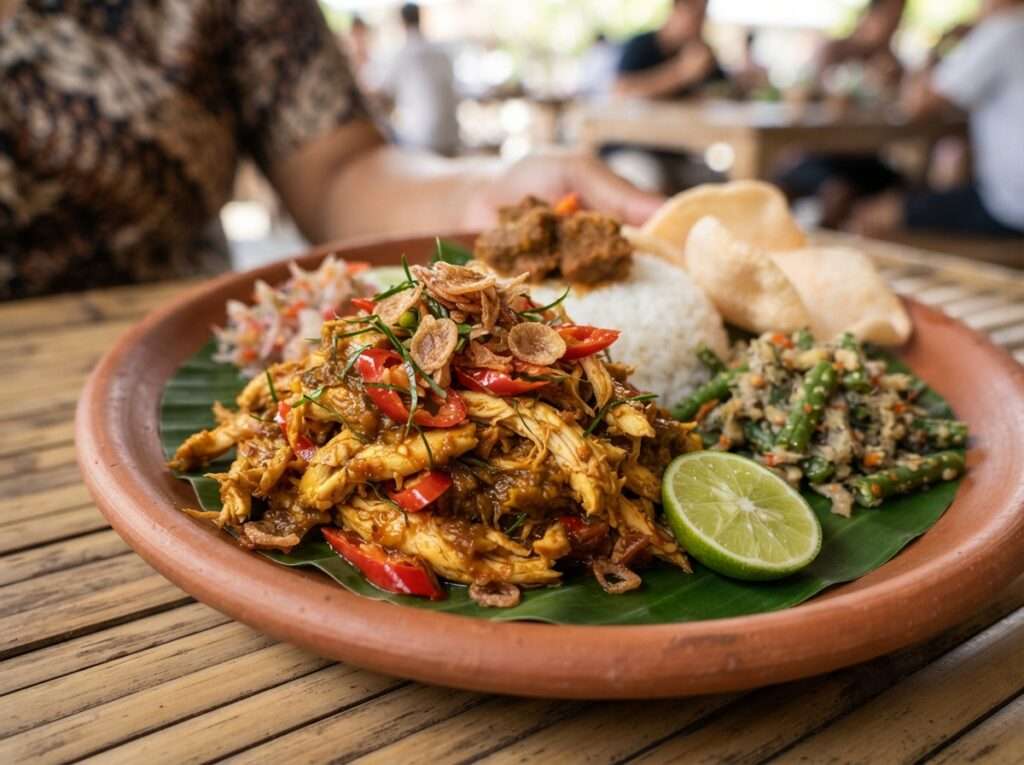
Ayam pelalah is shredded chicken tossed with chilli, shallot, lime leaf, lime juice and base genep, served at room temperature. It looks simple and tastes loud, with sour, hot and fragrant notes all at once. Balinese cooks make it from chicken left over after a ceremony or from grilled chicken, which is why it shows up as one of the small sides on a nasi campur plate. Because it uses chicken, it is one of the easier Balinese dishes for travellers who avoid pork, and it is a useful plate to ask for at a mixed warung.
| Where to try | Nasi campur counters across Bali; Ubud and Sanur warungs |
| Price | IDR 20,000 to 35,000 (≈ ₹105 to ₹184) on a mixed-rice plate |
| Diet | Pork-free; check the warung if you need halal |
| Heat | Hot. Ask for "sedikit pedas" (a little spicy) |
07
Tum (Spiced Mince Steamed in Banana Leaf)
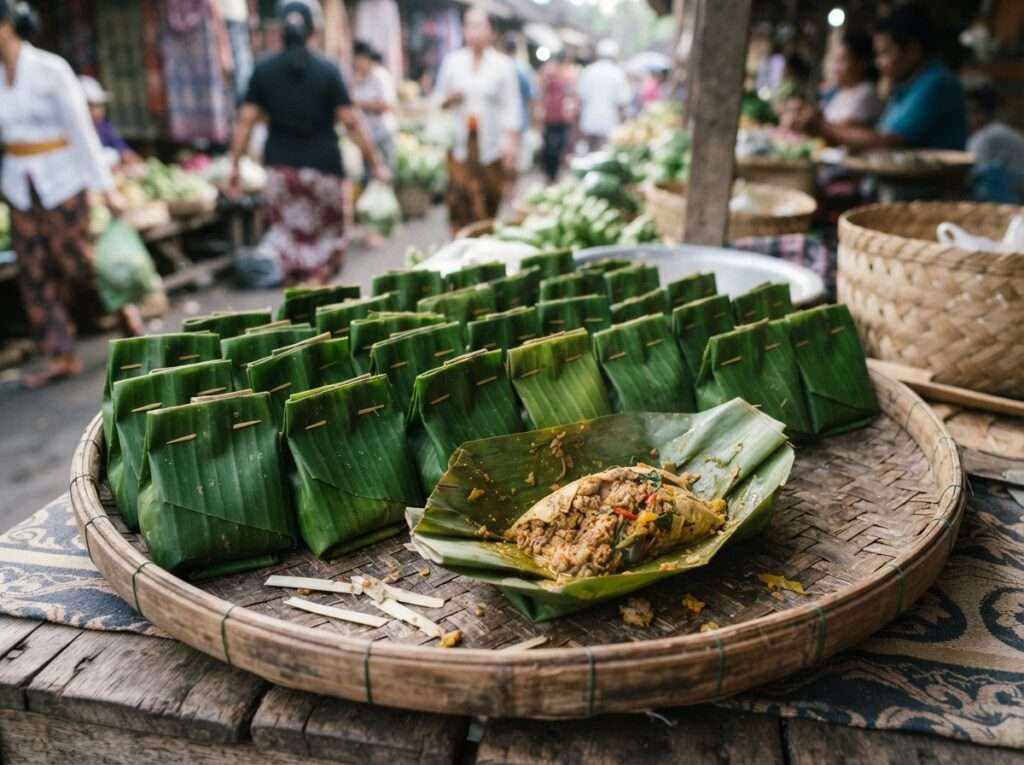
Tum is minced meat (pork, chicken or duck) mixed with base genep and coconut, folded into a small banana-leaf parcel and steamed. It is soft, rich and portable, closer to a Balinese pâté than to a dumpling. Tum is a ceremony staple, often made in the same morning session as lawar, and you will find it on nasi campur plates and sold by the parcel at morning markets. If you see small banana-leaf parcels pinned with a bamboo sliver at a market stall, ask whether it is tum and which meat is inside.
| Where to try | Morning markets (Pasar Ubud, Pasar Badung); nasi campur counters |
| Price | IDR 5,000 to 15,000 (≈ ₹26 to ₹79) a parcel |
| Diet | Usually pork or chicken; ask "babi atau ayam?" (pork or chicken?) |
08
Jukut Ares (Banana Stem Soup)
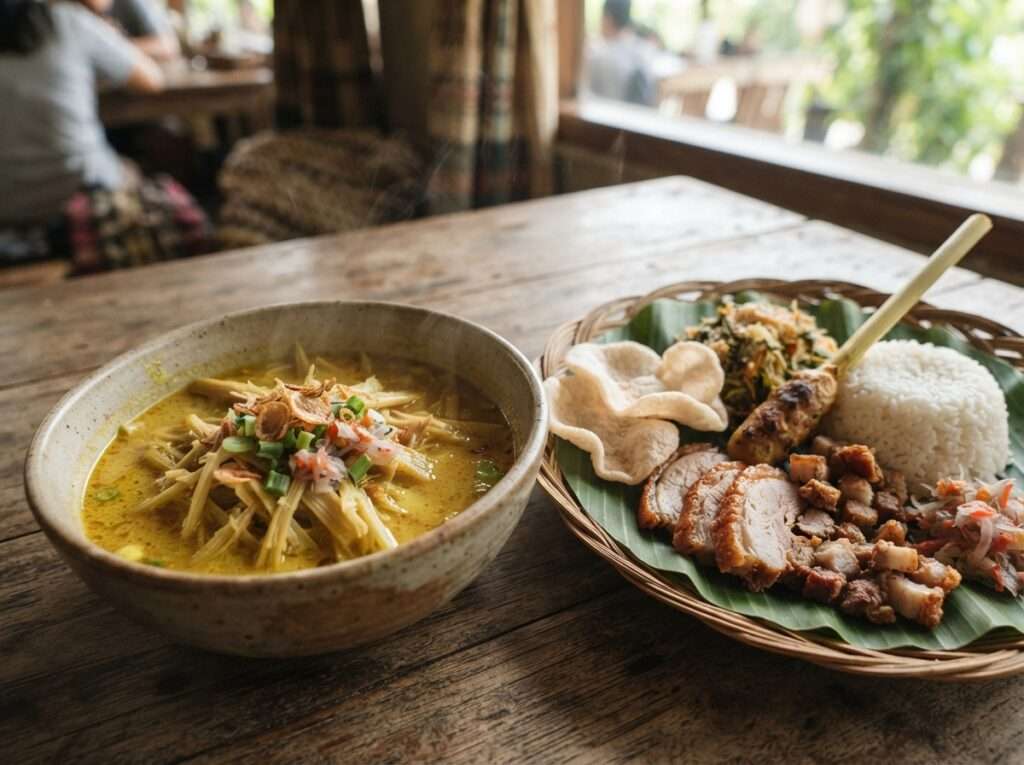
Jukut ares is a soup made from the tender inner stem of the banana tree, sliced thin and simmered in a pork or chicken bone broth seasoned with base genep. The stem stays slightly crunchy and soaks up the spiced broth, so it tastes like a light, earthy curry. It is a classic of ceremonial communal meals, served after temple festivals alongside lawar and babi guling. In a warung you are most likely to meet it as the soup served with a babi guling plate. It is a good example of how Balinese cooks waste nothing from the garden.
| Where to try | Babi guling warungs; village ceremonies; some Balinese cooking classes |
| Price | Served as a side with a set plate |
| Diet | Usually pork broth; chicken versions exist |
09
Nasi Campur Bali (Balinese Mixed Rice)
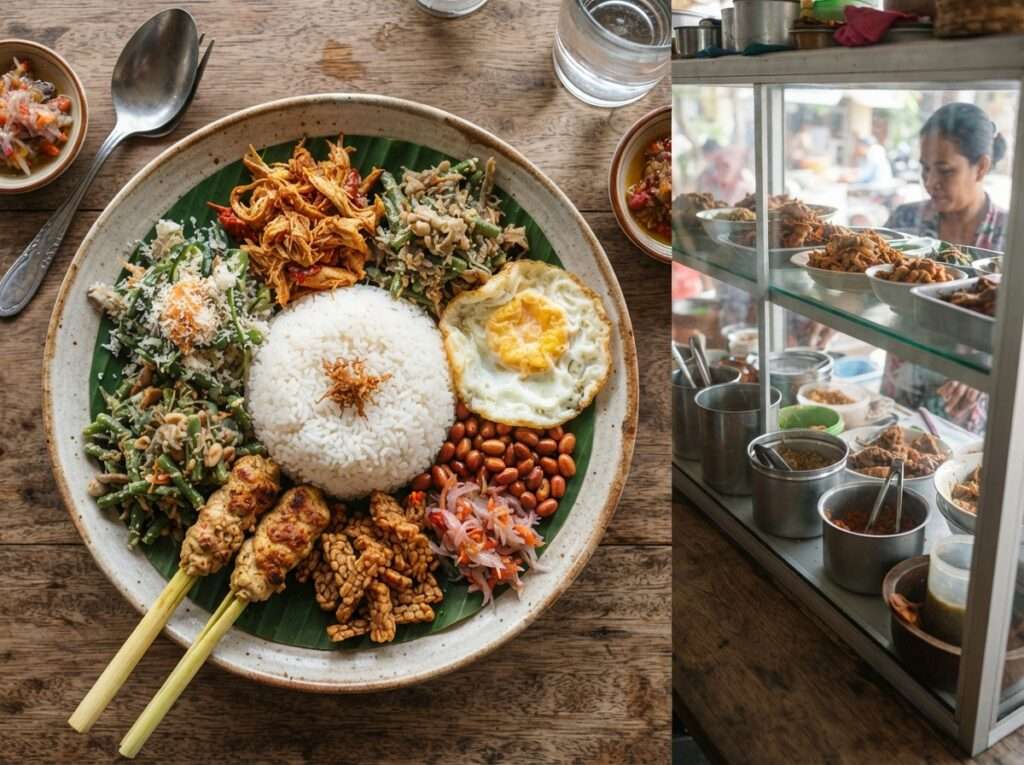
Nasi campur Bali is how most Balinese actually eat lunch, and it is the best way to try several dishes at once. You get a mound of rice ringed by four to six small portions, chosen from the glass cabinet at the front of the warung: sate lilit, lawar, ayam pelalah, jukut urab, a boiled or fried egg, peanuts, fried tempeh and a spoon of sambal. The price depends on what you pick. In Sanur, Warung Men Weti has been cooking a single dish, its nasi campur with chicken, from about 8 am until the trays run out, which is often before 1 pm, with queues of up to 30 minutes at busy times. Lokasi Bali lists it at IDR 25,000 to 30,000, and IDR 40,000 to 50,000 for the special. In Ubud, Nasi Ayam Kedewatan Ibu Mangku on Jalan Raya Kedewatan serves a well-known pork-free version from 7 am.
| Where to try | Warung Men Weti, Sanur; Nasi Ayam Kedewatan Ibu Mangku, Ubud; Warung Wardani, Denpasar |
| Price | IDR 25,000 to 60,000 (≈ ₹132 to ₹316) |
| Diet | Varies by side; Ibu Mangku and Warung Wardani serve pork-free versions |
| How to order | Point at the sides you want in the cabinet. Ask the price before they pack the plate |
10
Nasi Tepeng (Gianyar Breakfast Rice Porridge)
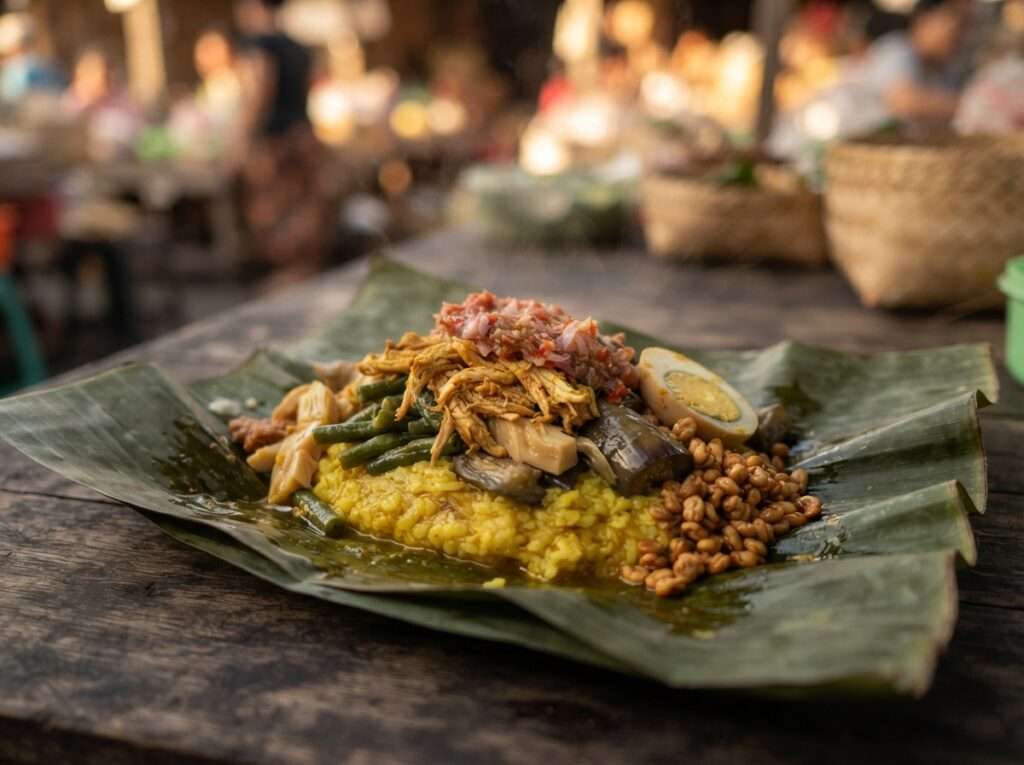
Nasi tepeng is a breakfast dish from Gianyar town, the capital of Gianyar regency (the regency Ubud belongs to), southeast of Ubud. Rice is cooked down with base genep, coconut, long beans, jackfruit and eggplant until it becomes a thick, savoury porridge, then topped with shredded chicken or duck, an egg, fried soybeans and sambal. It is wrapped in banana leaf to take away. If you are staying in Ubud, a 25-minute drive to Gianyar town for nasi tepeng at 7 am, then a market wander, is one of the best food mornings on the island.
| Where to try | Breakfast stalls around Gianyar town and the old Gianyar market |
| Price | IDR 15,000 to 30,000 (≈ ₹79 to ₹158) |
| When to go | 6 am to 10 am; it is a breakfast dish and sells out |
| Diet | Chicken or duck topping; ask if pork is used |
11
Nasi Jinggo (Banana-Leaf Rice Parcel)
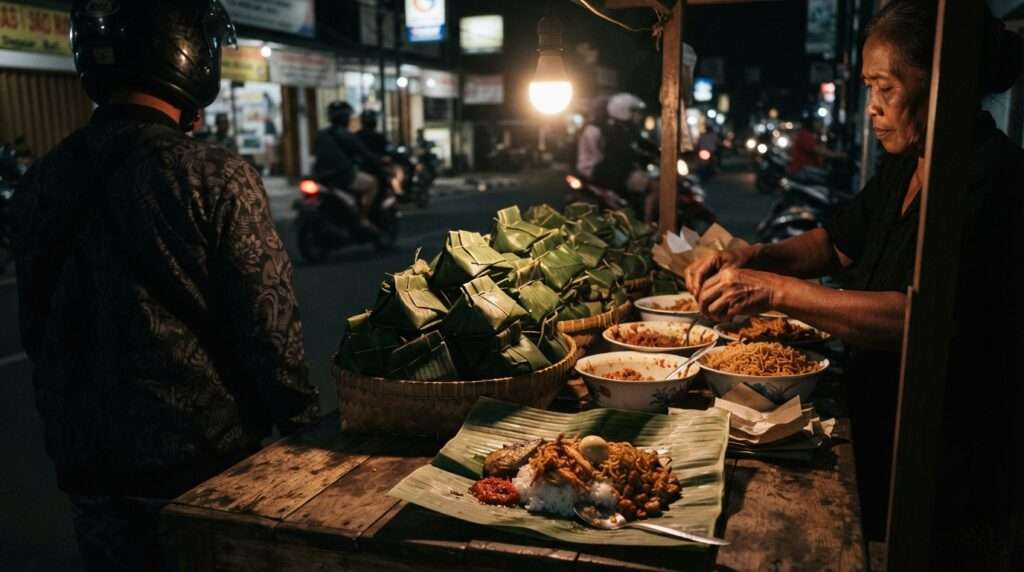
Nasi jinggo is Bali’s late-night and early-morning street snack, a fist-sized cone of rice wrapped in banana leaf with a spoon of shredded chicken or pork, a few strands of fried noodles, tempeh and sambal. It first appeared on Denpasar’s Jalan Gajah Mada in the 1980s, and one popular story says the name comes from Hokkien “jeng go”, one thousand five hundred, its old price in rupiah. Today a standard pack costs about IDR 5,000 according to Visit Bali, and IDR 8,000 to 15,000 for richer versions with egg or squid, according to Times Indonesia. Sellers set up on Denpasar pavements from evening into the small hours. Two or three packs make a cheap meal, and it is the most authentic way to eat like a Denpasar student.
| Where to try | Roadside sellers in Denpasar (Jl. Gajah Mada, Renon), Kuta and Sanur, evenings and late night |
| Price | IDR 5,000 to 15,000 (≈ ₹26 to ₹79) a pack |
| Diet | Chicken or pork filling; ask "ayam atau babi?" |
12
Bubur Mengguh (Buleleng Savoury Porridge)
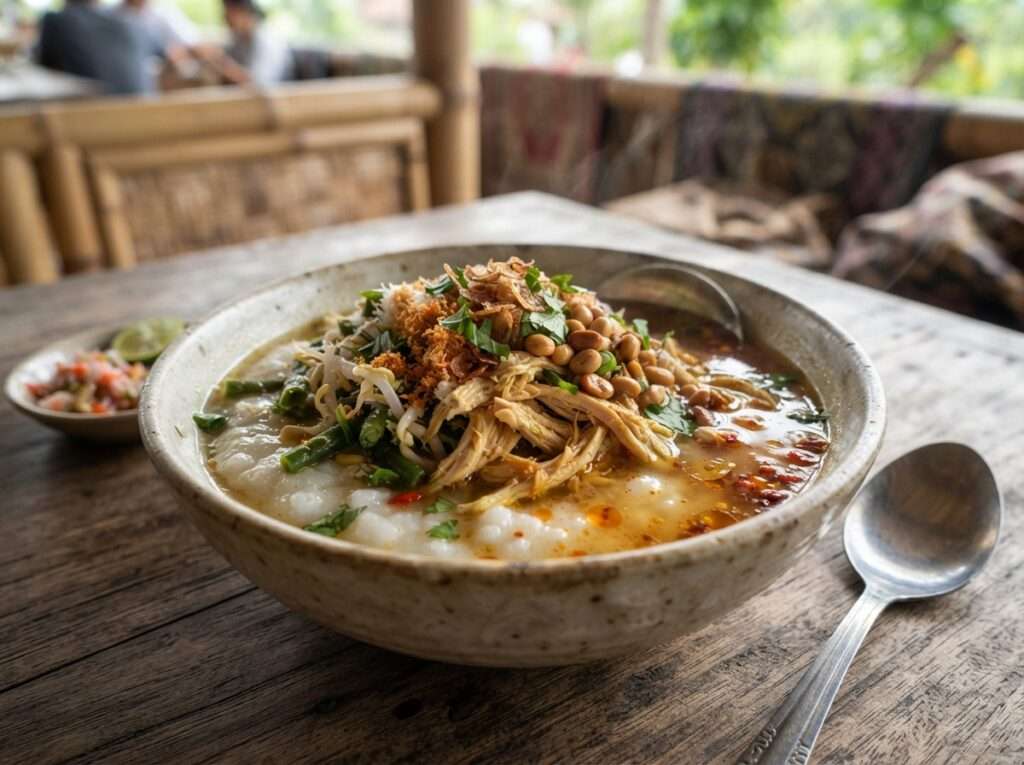
Bubur mengguh is a savoury rice porridge from Buleleng in North Bali. The rice is cooked in coconut milk with spices until silky, then topped with shredded spiced chicken, a ladle of chicken broth, toasted coconut and urab vegetables. It began as ceremony food and is now sold as breakfast in Singaraja and around Lovina. If you are heading north for the Lovina dolphins or the lakes, it is the dish to look for at a market stall before you set off. It is gentle, filling and pork-free in most versions.
| Where to try | Breakfast stalls in Singaraja and Lovina, North Bali |
| Price | IDR 15,000 to 25,000 (≈ ₹79 to ₹132) |
| Diet | Chicken; usually pork-free |
13
Pepes Ikan (Spiced Fish Steamed in Banana Leaf)
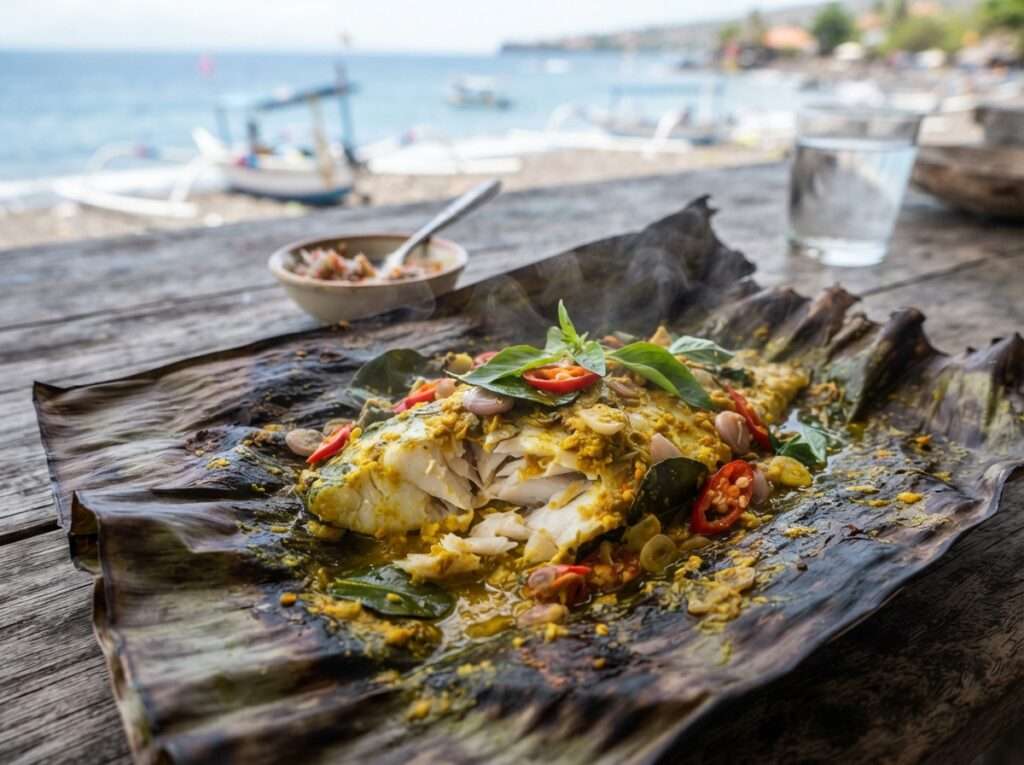
Pepes ikan is fish fillet or whole small fish smothered in a turmeric-yellow spice paste, wrapped in banana leaf and steamed, then often finished over charcoal so the leaf chars. When you unwrap it, the fish is moist and the paste has set into a fragrant crust of turmeric, chilli, lemongrass and basil. Pepes is cooked across Indonesia, but the Balinese version uses base genep and local reef fish. It is one of the best pork-free choices at a Balinese warung and travels well, so it is often packed for day trips.
| Where to try | Coastal warungs in Sanur, Amed and Jimbaran; nasi campur counters |
| Price | IDR 20,000 to 45,000 (≈ ₹105 to ₹237) |
| Diet | Pork-free; may contain shrimp paste |
14
Ikan Bakar Jimbaran (Grilled Seafood)

Jimbaran Bay is where Bali goes for grilled seafood. Rows of beach cafés set tables on the sand at sunset, and you pick snapper, grouper, prawns, squid or clams from an ice tray. The seafood is brushed with a Balinese marinade of garlic, chilli, turmeric and sweet soy, grilled over coconut husks and served with rice, water spinach and sambal matah. You pay by weight, so agree the price per kilo before the grill. The morning fish market on the same beach sells the catch at local prices if you want to see it landed. Gaurav, who toured Bali with his family on a TravelTriangle trip, ended a long temple day with “a relaxing dinner at Jimbaran Bay” and found that “the food wasn’t very expensive” (read his Bali family trip).
For named places and prices, see our guide to the best seafood restaurants in Bali and the markets in Jimbaran.
| Where to try | Jimbaran Bay beach cafés (Muaya, Kedonganan and Jimbaran Beach strips); Jimbaran fish market |
| Price | Sold by weight; confirm the per-kilo rate before cooking |
| When to go | Sunset, 5.30 pm to 7 pm |
| Diet | Pork-free; good for most halal travellers (ask about the marinade) |
15
Sambal Matah (Raw Shallot and Lemongrass Sambal)
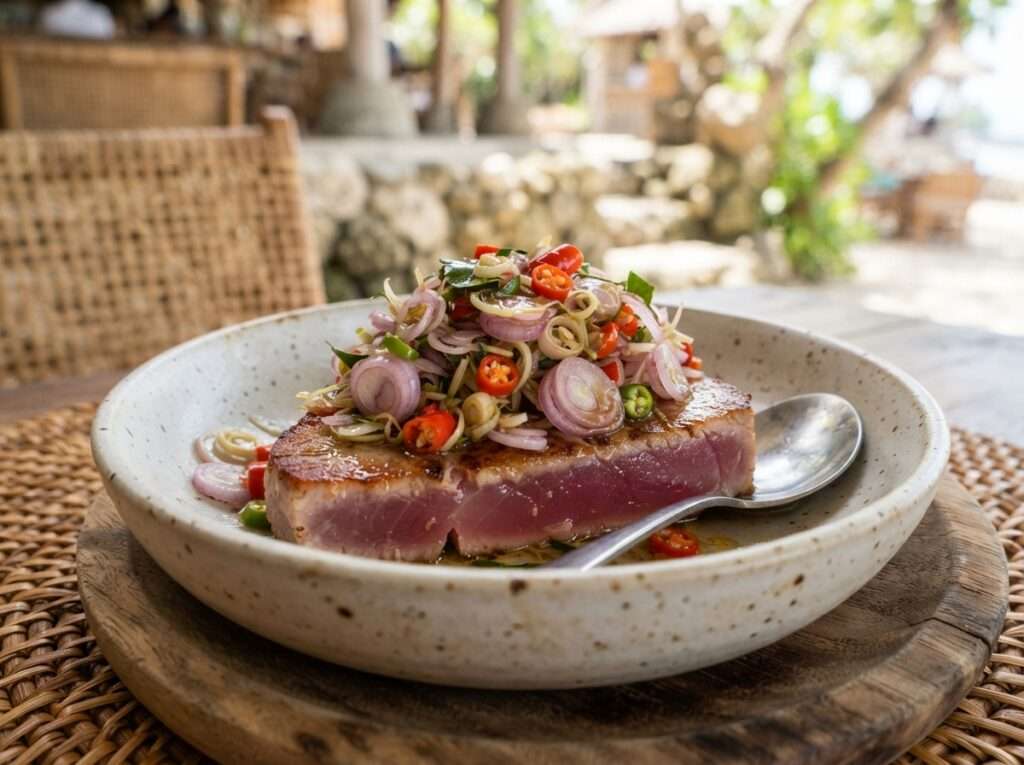
Sambal matah is Bali’s signature relish, and you will see it on almost every table. “Matah” means raw. Thinly sliced shallots, lemongrass, bird’s eye chilli and kaffir lime leaf are tossed with salt, a squeeze of lime, a little toasted shrimp paste and hot coconut oil. Nothing is cooked or ground, so it tastes bright, crunchy and very hot. Locals spoon it over grilled fish, chicken and tuna. Tuna sambal matah is seared tuna buried under it. Ask for it on the side. Vegetarians should check for terasi, because most versions include it.
| Where to try | Everywhere, from warungs to Jimbaran seafood grills |
| Price | Served free with grilled dishes |
| Diet | Vegan only if made "tanpa terasi" (without shrimp paste) |
| Heat | Very hot |
16
Jukut Urab (Vegetables With Spiced Coconut)
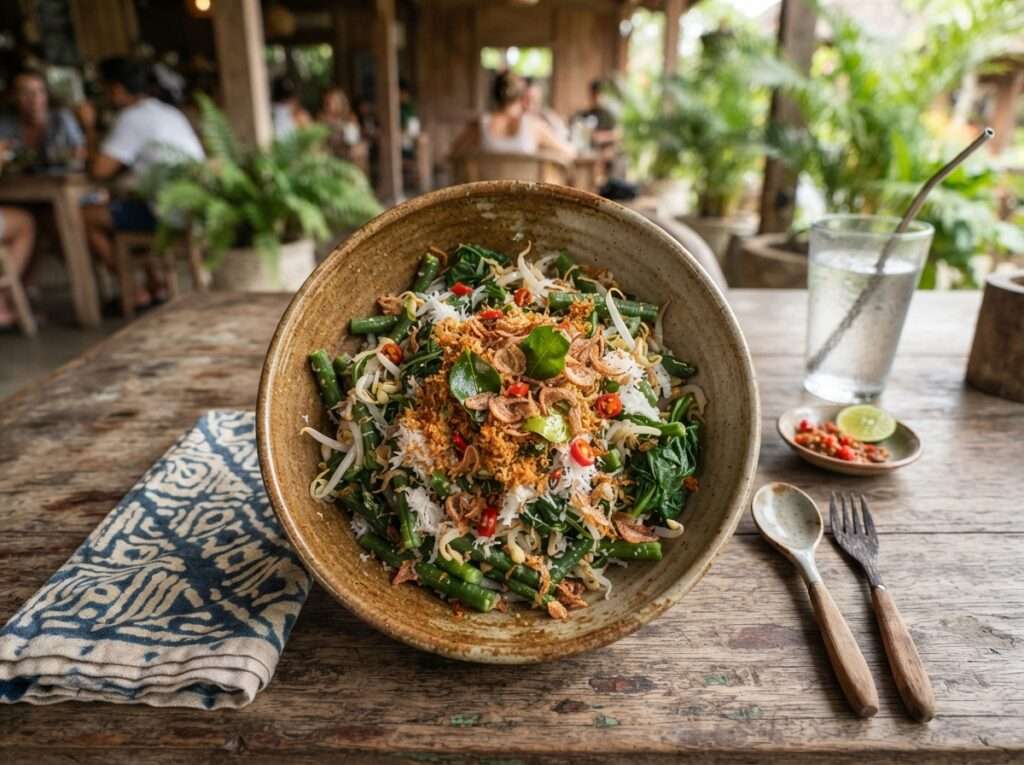
Jukut urab, also called sayur urab, is blanched vegetables (long beans, bean sprouts, spinach or fern tips) tossed with grated coconut that has been fried with base genep, garlic, chilli and lime leaf. It is crunchy, nutty and fresh, and it is the vegetable side on most nasi campur plates. At home Balinese families cook it daily. Because it is meat-free in its basic form, it is one of the most useful dishes for vegetarian travellers, as long as the cook leaves out the shrimp paste in the spice mix.
| Where to try | Nasi campur counters everywhere; vegetarian cafés in Ubud |
| Price | IDR 10,000 to 20,000 (≈ ₹53 to ₹105) as a side |
| Diet | Vegetarian if made without terasi; ask "tanpa terasi" |
17
Serombotan (Klungkung Vegetable Salad)
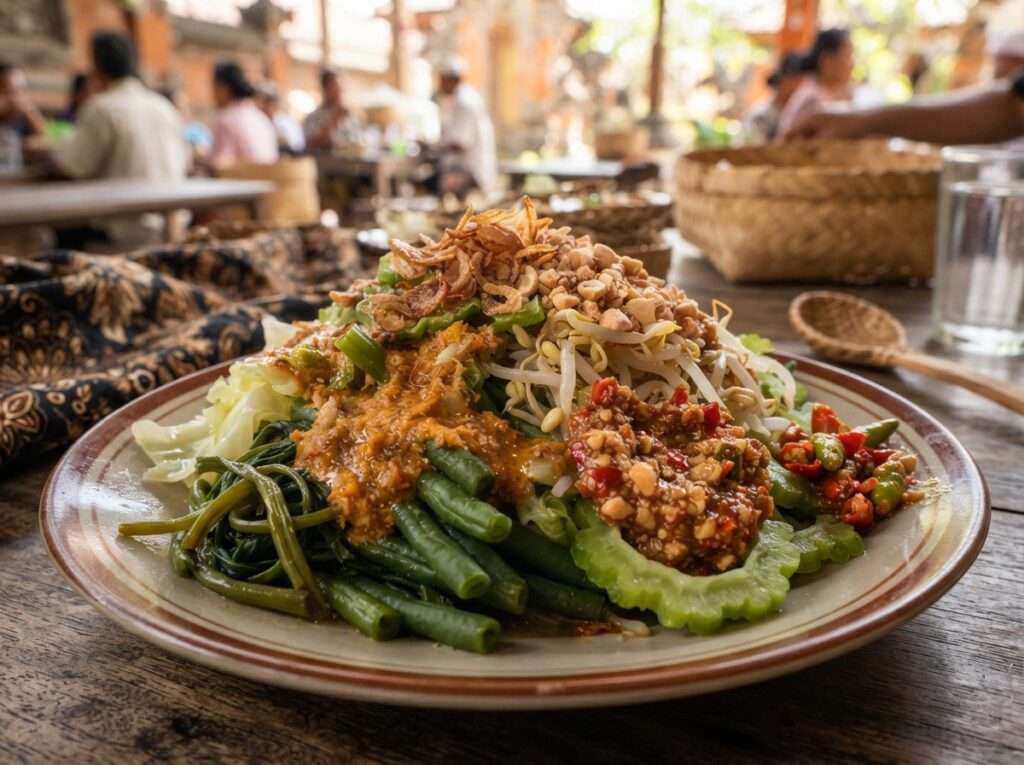
Serombotan is a warm vegetable salad from Klungkung (Semarapura) in East Bali. Water spinach, long beans, cabbage, bean sprouts and bitter melon are blanched and dressed with kalas, a spiced coconut sauce, then finished with a peanut and chilli sambal. It is more complex and spicier than urab, with bitter, sweet and hot layers. It is easy to combine with a visit to the Klungkung palace and its Kerta Gosa painted ceilings, and it is one of the few Balinese dishes that is fully vegetable based by tradition.
| Where to try | Warungs around Semarapura market and Klungkung palace, East Bali |
| Price | IDR 10,000 to 20,000 (≈ ₹53 to ₹105) |
| Diet | Vegetable based; sambal may contain shrimp paste |
| Heat | Hot |
18
Tipat Cantok (Rice Cake and Vegetables in Peanut Sauce)
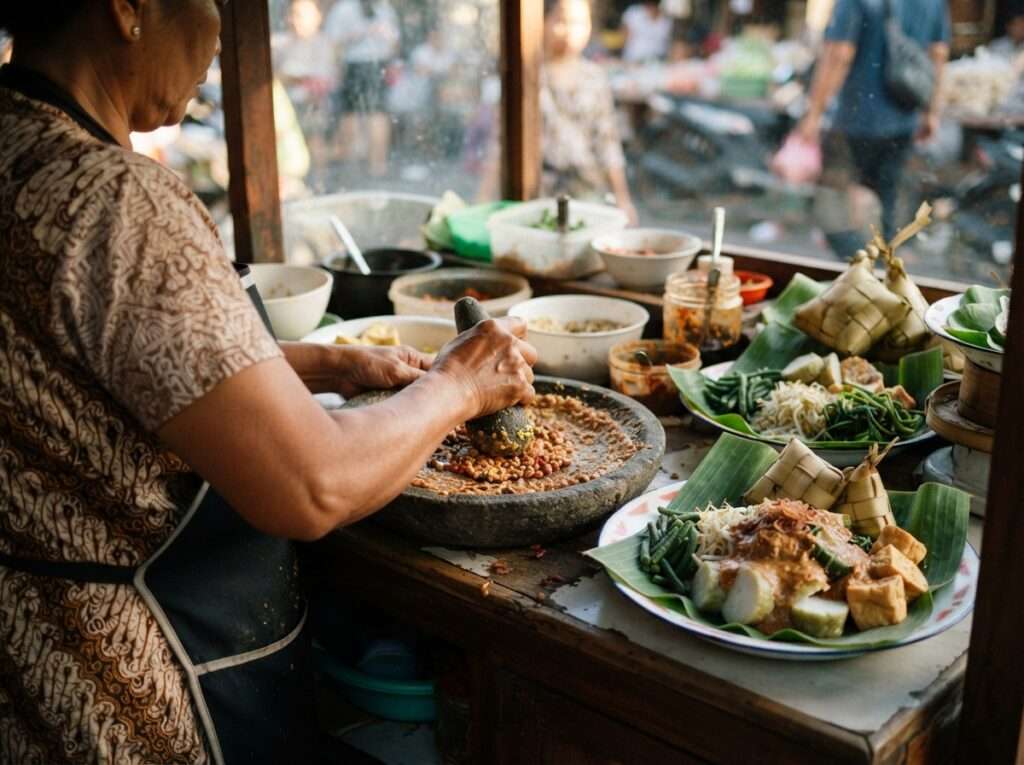
Tipat cantok is Bali’s answer to gado-gado. Tipat (rice cakes cooked in woven coconut-leaf pouches) are sliced and mixed with blanched long beans, bean sprouts, water spinach and fried tofu, then covered in a peanut sauce that is ground to order with garlic, chilli and a little shrimp paste. “Cantok” refers to that pounding of the sauce. It is cheap, filling and one of the best vegetarian meals in Bali once you ask for it without terasi. Long-running Denpasar stalls such as Tipat Cantok Made Bencong on Jalan Turi in Kesiman have sold a plate for under IDR 10,000, according to Visit Bali listings. Ask for your level of chilli when the seller starts grinding.
| Where to try | Tipat Cantok Made Bencong, Kesiman, Denpasar; morning stalls across Denpasar |
| Price | IDR 8,000 to 20,000 (≈ ₹42 to ₹105) |
| Diet | Vegetarian only without the shrimp paste in the peanut sauce; ask "tanpa terasi" |
| How to order | Tell the seller "cabe satu" (one chilli) or "tidak pedas" (no chilli) as they grind |
19
Jaja Bali (Klepon, Laklak and Balinese Sweets)
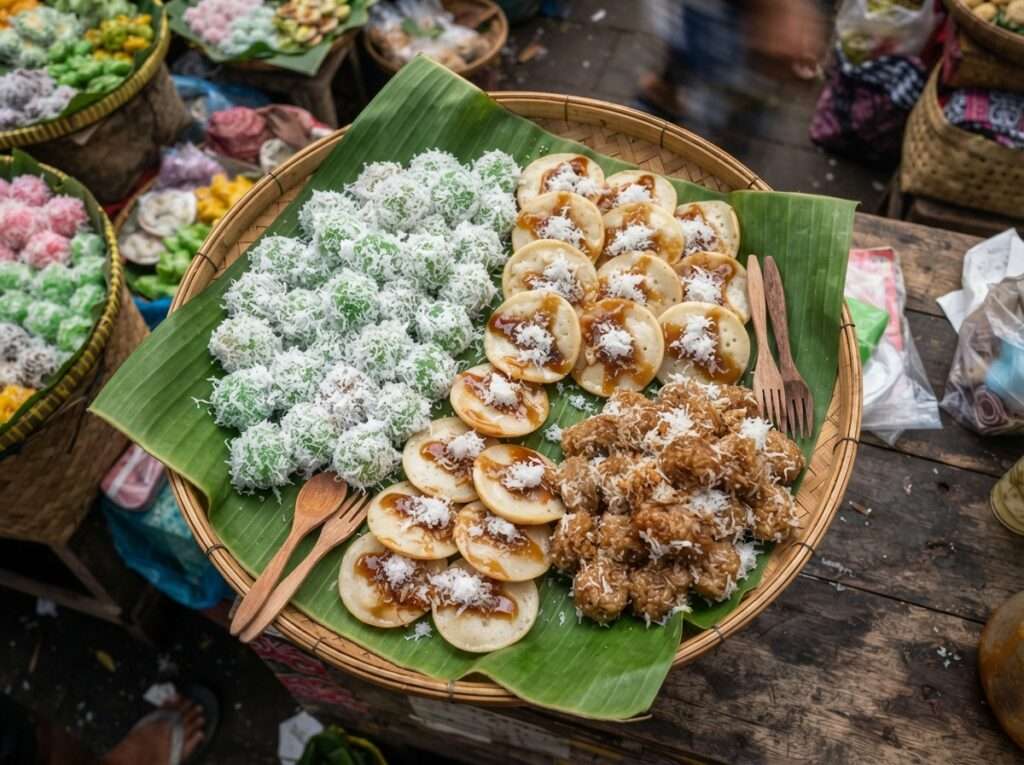
Jaja Bali are the small, bright sweets made from rice flour, coconut and palm sugar that you see in market baskets and on offering trays. Klepon are green pandan rice balls filled with liquid palm sugar and rolled in grated coconut, and they burst when you bite them. Laklak are small green or white pancakes cooked in clay moulds and served with coconut and palm-sugar syrup. Batun bedil are chewy rice-flour dumplings in a palm-sugar sauce. Many of these cakes are made first for offerings and then eaten by the family. Rujak, cut fruit with a chilli and palm-sugar dressing, is the other snack you will find at the same morning stalls.
| Where to try | Morning markets: Pasar Ubud (before 8 am), Pasar Badung in Denpasar, Gianyar market |
| Price | IDR 2,000 to 10,000 (≈ ₹11 to ₹53) a piece or small pack |
| Diet | Vegetarian and usually vegan |
| When to go | Early morning, 6 am to 9 am |
20
Bubur Injin and Bubur Sumsum (Rice Puddings)
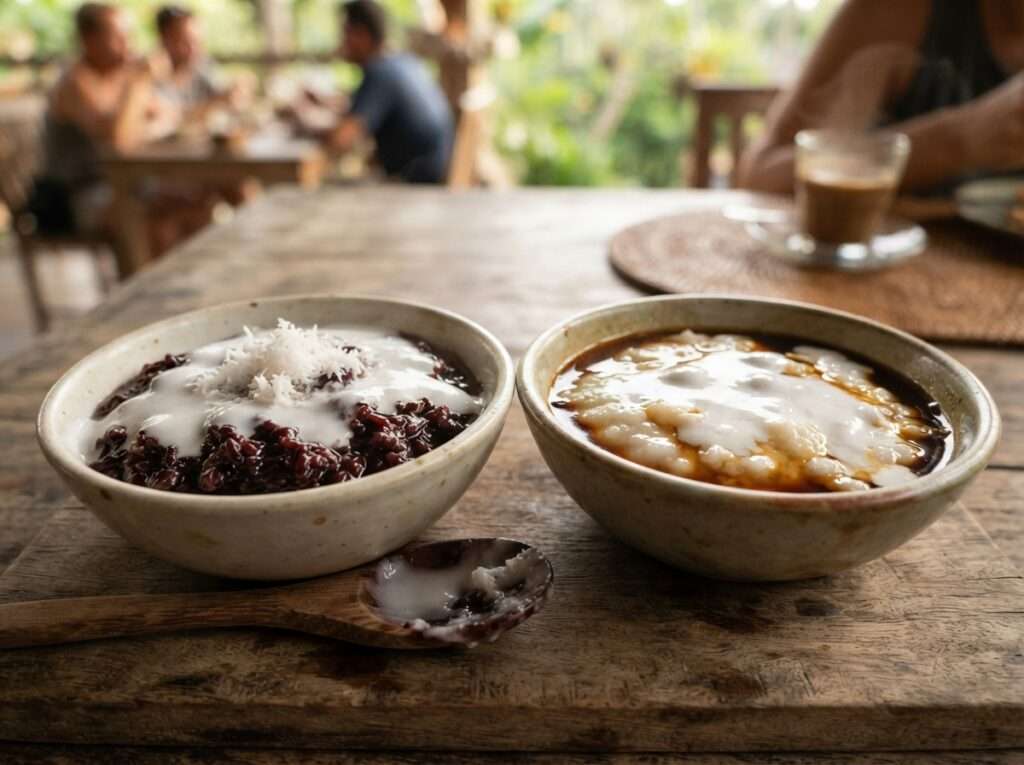
Bubur injin is Balinese black rice pudding. Black glutinous rice is simmered with pandan and palm sugar until thick, then topped with salted coconut cream, so it tastes sweet, nutty and a little salty. Bubur sumsum is its pale cousin, a soft rice-flour pudding cooked in coconut milk and served with palm-sugar syrup. Both are eaten for breakfast or dessert. Bubur injin is the one dessert you will see on menus from roadside warungs to resort breakfasts.
| Where to try | Dessert stalls in morning markets; most warung menus; hotel breakfasts |
| Price | IDR 10,000 to 20,000 (≈ ₹53 to ₹105) |
| Diet | Vegetarian and vegan |
21
Es Daluman (Green Leaf Jelly Drink)
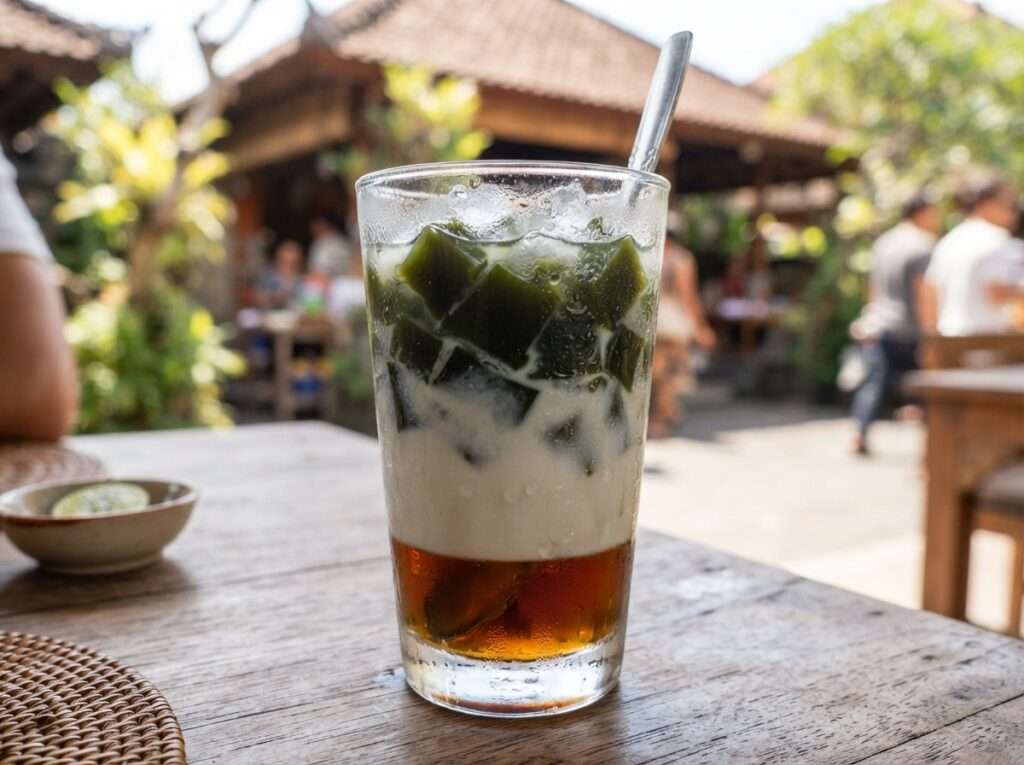
Es daluman is a cooling drink made from the leaves of the daluman plant, which are crushed and set into a dark green jelly. The jelly is cut into cubes and served over ice with coconut milk and palm-sugar syrup, so the glass shows three layers: green jelly, white coconut milk and brown syrup. It tastes grassy, creamy and sweet. Balinese drink it on hot afternoons and many say it settles the stomach. You will find it at market drink stalls and in traditional warungs.
| Where to try | Market drink stalls; traditional warungs in Denpasar and Gianyar |
| Price | IDR 8,000 to 15,000 (≈ ₹42 to ₹79) |
| Diet | Vegan |
22
Kopi Bali (Kintamani Coffee)

Kopi Bali is the island’s everyday coffee: finely ground robusta, boiled or steeped with sugar, served black and gritty in a glass. The highlands around Kintamani, near Mount Batur, also grow arabica, and Kintamani arabica holds a Geographical Indication from Indonesia’s intellectual property office, so it is protected the way Darjeeling tea is. Coffee plantation stops between Ubud and Kintamani offer free tasting flights of coffee and herbal teas. They will also offer kopi luwak, coffee made from beans eaten and excreted by civets. A 2016 study by Oxford University and World Animal Protection found every one of 16 luwak plantations it visited around Bali kept civets in poor cages. If you want to try luwak, buy only beans with credible wild-collected certification, or skip it. A plain Kintamani arabica is the better coffee anyway.
| Where to try | Warungs everywhere; Kintamani coffee farms; specialty cafés in Ubud and Canggu |
| Price | IDR 5,000 to 30,000 (≈ ₹26 to ₹158) a cup; plantation tastings often free |
| Diet | Vegan |
| Good to know | Skip caged-civet luwak tastings |
What Is Balinese Cuisine? Hindu Roots, Pork and Ritual
Balinese cuisine is the cooking of Bali’s Hindu majority, and religion shapes almost every plate. About 87% of Bali’s people are Hindu, according to Indonesia’s 2020 census figures, compared with under 2% across Indonesia as a whole. That single fact explains the two things that surprise visitors most. Pork is everywhere, because the Hindu Balinese have no dietary rule against it. Beef is rare in traditional dishes, because the cow is sacred.
Food also sits at the centre of ritual. The biggest dishes on this list (babi guling, lawar, betutu, tum) were ceremony food first, cooked communally before Galungan, weddings, tooth filings and cremations, and only later became daily warung staples. Every morning you will see canang sari, small palm-leaf trays of flowers, rice and sweets, placed on doorsteps and shrines. Those offerings are for the gods, not for passers-by, so never step on one or eat from it. Our guide to things not to do in Bali covers the rest of the etiquette.
Rice is the base of every meal. A Balinese meal is a heap of rice with small amounts of several dishes around it, eaten at room temperature with the right hand, often alone rather than at a family table. Food is cooked once in the morning and eaten through the day.
Balinese food vs Indonesian food
| Balinese food | Wider Indonesian food | |
|---|---|---|
| Main religion of the cooks | Hindu (about 87% of Bali) | Muslim (about 87% of Indonesia) |
| Main meats | Pork, chicken, duck, fish | Chicken, beef, goat, fish; no pork |
| Spice base | Base genep, fresh and root heavy (kencur, turmeric, galangal) | Bumbu varies by region; more sweet soy in Java, more dried spice in Sumatra |
| Signature dishes | Babi guling, lawar, betutu, sate lilit, tipat cantok | Nasi goreng, mie goreng, gado-gado, rendang, soto, bakso |
| Ritual food | Central; many dishes began as ceremony food | Festive dishes exist (rendang, ketupat) but less tied to daily ritual |
| Halal status | Many warungs not halal | Most food halal |
Base Genep: The Spice Paste Behind Balinese Food
Base genep means “complete spice” in Balinese, and it is the paste that makes Balinese food taste Balinese. Cooks pound fresh roots, aromatics and a few dry spices together on a stone mortar every morning, often leaving the skins on the roots. The core is eight fresh ingredients and four or five dry ones, according to NOW! Bali’s guide to Balinese spices, and each family adjusts the balance for pork, chicken, duck or fish. Recipes run from about 12 spices to the 15-spice version Indonesia’s state broadcaster RRI describes.
| Ingredient | Balinese / Indonesian name | What it adds |
|---|---|---|
| Shallot and garlic | Bawang merah, bawang putih | Sweet, savoury base |
| Galangal | Isen (Bali) / lengkuas | Sharp, piney heat |
| Lesser galangal | Cekuh (Bali) / kencur | Camphor-like perfume; the Balinese signature |
| Turmeric | Kunyit | Colour, earthiness |
| Ginger | Jahe | Warmth |
| Chilli | Cabe | Heat |
| Candlenut | Tingkih / kemiri | Body and richness |
| Shrimp paste | Terasi | Deep savoury salt (not vegetarian) |
| Dry spices | Coriander seed, black pepper, nutmeg, long pepper | Background spice |
To make a small batch at home, blitz or pound 10 shallots, 6 garlic cloves, thumb-sized pieces of galangal, kencur, turmeric and ginger, 4 candlenuts, 3 to 6 chillies, a teaspoon each of coriander seed and black pepper, and half a teaspoon of toasted shrimp paste. Fry the paste in coconut oil with lemongrass and salam leaf until fragrant. It keeps for a week in the fridge and seasons chicken, fish or vegetables.
Also Eaten Everywhere in Bali: Indonesian Staples
Some of the most-ordered dishes in Bali are Indonesian rather than Balinese, and you will see them on every menu. Nasi goreng is fried rice with sweet soy, egg and prawn crackers. Mie goreng is the noodle version. Gado-gado is blanched vegetables, egg and tofu under peanut sauce, a Javanese cousin of tipat cantok. Tahu and tempe (tofu and fermented soybean cake) come fried, in sweet soy as tempe manis, or in curries. Bakso is meatball soup, soto is a turmeric broth with chicken or beef, and rendang is the slow-cooked beef curry from West Sumatra. All are good, cheap and mostly halal. For the full list, read our guide to Indonesian food.
Where to Eat Balinese Food in Bali, Area by Area
Warungs (small family-run eateries) cook the best Balinese food, and each part of the island has its own specialities. Use this table to plan food stops around where you are staying.
| Area | Signature dish | Where to eat | Price band (IDR) |
|---|---|---|---|
| Ubud | Babi guling, crispy duck, nasi ayam | Ibu Oka 3 (Jl. Tegal Sari); Bebek Bengil (Jl. Hanoman); Nasi Ayam Kedewatan Ibu Mangku | 35,000 to around 155,000 |
| Gianyar | Nasi tepeng, babi guling, night-market satay | Gianyar night market, from about 5 pm; breakfast stalls near the old market | 10,000 to 40,000 |
| Sanur | Nasi campur, fish sate lilit | Warung Men Weti (from 8 am, sells out by about 1 pm); beach warungs | 25,000 to 50,000 |
| Denpasar | Tipat cantok, nasi jinggo, halal nasi campur | Tipat Cantok Made Bencong (Kesiman); nasi jinggo sellers at night; Warung Wardani (Jl. Yudistira, 8 am to 4 pm) | 5,000 to 40,000 |
| Seminyak and Kuta | Babi guling | Babi Guling Pak Malen (Sunset Road) | 25,000 to 50,000 |
| Jimbaran | Ikan bakar | Jimbaran Bay beach cafés at sunset | By weight |
| Gilimanuk (west) | Ayam betutu | Ayam Betutu Men Tempeh, by the ferry port | 38,000 to 121,000 |
| Klungkung (east) | Serombotan | Warungs near Semarapura market | 10,000 to 20,000 |
| North Bali | Bubur mengguh | Breakfast stalls in Singaraja and Lovina | 15,000 to 25,000 |
The Gianyar night market is the single best place to taste many dishes in one evening. Stalls open around 3 pm to 5 pm and trade until about midnight, and most dishes cost under IDR 30,000. Our guide to the night markets in Bali has the timings, and the markets in Gianyar Regency guide covers the morning markets. If you are based in Ubud, pair a food walk with the Ubud Art Market and the restaurants in Ubud. For sit-down dining beyond warungs, see our picks of the best restaurants in Bali and the cafes in Bali.
How to Order at a Warung, Step by Step
Ordering at a Balinese warung is quick once you know the routine. Most do not have printed menus in English, and many simply have a glass cabinet of the day’s dishes.
- Look for the busiest warung. A queue of locals and motorbikes outside means fresh food and fast turnover.
- Check what they serve. A sign reading “babi” or “babi guling” means pork. A “halal” sign or Javanese name usually means no pork.
- Point at the cabinet. For nasi campur, point to each side you want and say “ini” (this one). Say “nasi campur, satu” for one plate with the house selection.
- Set your spice level. Say “tidak pedas” (not spicy), “sedikit pedas” (a little spicy) or “sambal di samping” (sambal on the side).
- Ask the price before they pack it. “Berapa?” (how much?) avoids surprises, especially at tourist-area warungs.
- Choose to eat in or take away. “Makan di sini” is eat here, “bungkus” is wrap it to go. Takeaway often comes in brown paper or banana leaf.
- Pay in cash or QRIS. Most warungs take rupiah cash, and many now accept QRIS QR payments from Indonesian wallets. Tipping is not expected at warungs, but rounding up is appreciated.
What Balinese Food Costs in 2026
Eating Balinese food is cheap if you eat where locals eat. Prices below are per person and compiled from the warung sources quoted in this guide.
| Style of eating | Per meal (IDR) | Per meal (₹) | Per meal (£) | Per day, 3 meals (₹) |
|---|---|---|---|---|
| Street food and market snacks | 10,000 to 25,000 | 53 to 132 | 0.45 to 1.10 | 160 to 400 |
| Local warungs | 25,000 to 60,000 | 132 to 316 | 1.10 to 2.70 | 400 to 950 |
| Tourist warungs in Ubud, Seminyak, Canggu | 60,000 to 120,000 | 316 to 632 | 2.70 to 5.40 | 950 to 1,900 |
| Mid-range restaurants | 150,000 to 300,000 | 789 to 1,579 | 6.75 to 13.50 | 2,400 to 4,700 |
| Jimbaran seafood dinner | 200,000 to 500,000 | 1,053 to 2,632 | 9 to 22.50 | (one dinner) |
Tourist restaurants add up to 21% on top of menu prices (10% government tax and up to 11% service charge), so check the bottom of the menu. A large bottle of local Bintang beer costs more in bars than at a minimarket, and imported wine is heavily taxed.
Vegetarian, Jain and Halal Food in Bali
Bali is easy for vegetarians and manageable for halal travellers, as long as you know two things: pork is common, and shrimp paste (terasi) hides in most sambals and spice pastes. This table shows which dishes fit which diet.
| Diet | Safest Balinese dishes | Watch out for | Where it is easiest |
|---|---|---|---|
| Vegetarian | Tipat cantok, jukut urab, serombotan, lawar nangka, jaja Bali, bubur injin | Terasi in sambal and base genep; fish sauce | Ubud, Canggu |
| Jain | Plain tipat with steamed greens (ask for peanut sauce without garlic), jaja Bali, bubur injin, fresh fruit | Shallot and garlic are in almost every paste; root vegetables (turmeric, galangal) | Indian restaurants in Kuta, Seminyak, Ubud |
| Halal | Ayam betutu, pepes ikan, ikan bakar, bubur mengguh, nasi ayam at halal warungs | Shared kitchens with pork; lard in some fried items | Denpasar, Kuta, Jimbaran, Nusa Dua |
| No beef | Almost all traditional Balinese dishes | Bakso, rendang, burgers at Javanese and tourist places | Everywhere |
Phrases that help
| You want to say | Say this |
|---|---|
| I am vegetarian | Saya vegetarian |
| No meat | Tanpa daging |
| No pork | Tidak pakai babi |
| Without shrimp paste | Tanpa terasi |
| No onion, no garlic | Tanpa bawang merah, tanpa bawang putih |
| Not spicy / a little spicy | Tidak pedas / sedikit pedas |
| Is there pork? | Ada babi? |
| Is this halal? | Ini halal? |
Halal-friendly picks with a long track record include Warung Wardani in Denpasar for halal nasi campur, Nasi Ayam Kedewatan Ibu Mangku in Ubud and Ayam Betutu Men Tempeh in Gilimanuk. Ubud has the island’s biggest choice of vegetarian cafés, so start with our list of vegetarian restaurants in Bali and the cafes in Ubud. Indian travellers missing dal and roti will find plenty of choice in Kuta, Seminyak and Ubud; our guide to Indian restaurants in Bali lists Jain-friendly kitchens.
Eat Responsibly: Turtle, Civet Coffee and Offerings
A few Balinese foods are off the menu for good reasons. Sea turtle (penyu) was once cooked for ceremonies as satay and lawar. All sea turtle species are now protected in Indonesia under Law No. 5 of 1990 and Government Regulation No. 7 of 1999, which ban catching, killing and trading turtles and their eggs, according to ProFauna and WWF-Indonesia. Offenders face prison terms, and the 1990 law was amended in 2024 by Law No. 32 of 2024. Bali police still intercept turtle smugglers, so if anyone offers you turtle, decline and report it.
Kopi luwak is the second one. Many plantations on the Ubud to Kintamani road keep wild-caught civets in small wire cages, and the 2016 Oxford and World Animal Protection study found every plantation it checked failed basic welfare standards. Some health claims made for luwak coffee are not supported by medical evidence. Enjoy a plain Kintamani coffee instead.
The third is simpler. The canang sari offerings on pavements and in temples are prayers, not food. Leave them where they are, and walk around them.
Balinese Cooking Classes and Food Tours
A cooking class is the fastest way to understand Balinese food, and Ubud has dozens. Most start with a 7.30 am to 8 am pickup and a walk through a local morning market, then move to a family compound to grind base genep and cook six to eight dishes such as sate lilit, pepes, urab, betutu and bubur injin, ending with lunch. Paon Bali in Laplapan village, near Ubud, is one of the best-known, listed at about US$35 a person (≈ IDR 550,000 to 600,000, or ₹2,900 to ₹3,160) on 2026 booking sites for a morning class with market visit, lunch and Ubud pickup. Afternoon classes skip the market. Evening food tours of Denpasar and the Gianyar night market cost about the same and cover more dishes with less cooking. Classes are one of the most popular half days in our list of things to do in Bali and things to do in Ubud.
How We Researched This Guide
This guide was rewritten in October 2026. Dish descriptions draw on Balinese and Indonesian food sources, including Indonesia’s official tourism site (indonesia.travel), NOW! Bali, Visit Bali, RRI and the Wikipedia entry on Balinese cuisine. Warung names, hours and prices come from each warung’s own site where one exists, Indonesia.travel, Eatbook, Lokasi Bali and 2026 Ubud and Denpasar food guides, and are named in each dish section. Conservation facts come from ProFauna, WWF-Indonesia and the 2016 civet study published in the journal Animal Welfare. Rupee figures use ₹1 ≈ IDR 190 (October 2026). Warung prices in Bali move every year, so treat them as a guide and check the board before you order.
Plan Your Bali Food Trip
Balinese cuisine rewards the curious eater. Start with babi guling or betutu, try a nasi campur to taste five dishes at once, and leave room for a Gianyar night market and a morning of jaja Bali. If you avoid pork or eat vegetarian, the pork-free and vegetable dishes above, plus a few words of Bahasa, will carry you a long way. Many travellers fit a cooking class in Ubud or a Jimbaran seafood dinner into their trip, and both are easy to add when you customise one of our Bali tour packages, or a Bali honeymoon package for couples. For the rest of your planning, start with our Bali travel guide and the best time to visit Bali.
FAQs
FAQs About Balinese Cuisine
Famous dishes, spice, halal and vegetarian food, costs, street food safety and turtle, answered
Balinese cuisine is known for pork, ceremonial dishes and base genep, a fresh spice paste of shallot, garlic, galangal, turmeric, kencur, ginger, chilli and shrimp paste. Most Balinese are Hindu, so pork is central and beef is largely avoided. The signature dishes are babi guling, bebek betutu, lawar and sate lilit.
Babi guling, spit-roast suckling pig stuffed with base genep, is the most famous food in Bali. A warung plate brings sliced pork, crackling, lawar, pork sausage, soup and rice for about IDR 25,000 to 75,000 (≈ ₹132 to ₹395). Ibu Oka 3 in Ubud and Pak Malen on Sunset Road are the best-known places to try it.
Balinese food is the Hindu island's own cooking, built on pork, ceremonial dishes and base genep. Indonesian food usually means the halal national staples eaten across the country, such as nasi goreng, mie goreng, gado-gado, bakso and rendang. You will find both in Bali, but babi guling, lawar, betutu, sate lilit and tipat cantok are Balinese.
Yes, Balinese food is usually spicier than Javanese food, but most of the heat sits in the sambal on the side. Sambal matah, made with raw bird's eye chilli, is the hottest thing on most plates. Ask for tidak pedas (not spicy) or sedikit pedas (a little spicy) and keep the sambal separate.
Not all food in Bali is halal. Bali is majority Hindu, and many warungs cook pork and chicken in the same kitchen. Halal food is still easy to find in Denpasar, Kuta, Jimbaran and Nusa Dua, so look for a halal sign. Warung Wardani in Denpasar, Ibu Mangku in Ubud and Men Tempeh in Gilimanuk are well-known pork-free options.
Yes, especially in Ubud and Canggu. Jukut urab, serombotan, tipat cantok, lawar nangka (jackfruit lawar) and jaja Bali sweets are all vegetable based. The catch is terasi, the shrimp paste in most sambals and spice pastes. Vegetarian and Jain travellers should say tanpa terasi (without shrimp paste) and ask for sambal on the side.
Most Balinese Hindus avoid beef because the cow is sacred, so beef rarely appears in traditional Balinese dishes. You will still see it in bakso, rendang and burgers at Javanese warungs and tourist restaurants. Traditional Balinese cooking uses pork, chicken, duck and fish instead, so beef-avoiding travellers do well at Balinese warungs.
A local warung meal costs about IDR 25,000 to 60,000 (≈ ₹132 to ₹316, or £1.10 to £2.70). Street snacks like nasi jinggo cost IDR 5,000 to 15,000. Tourist warungs in Ubud, Seminyak and Canggu charge IDR 60,000 to 120,000, and mid-range restaurants IDR 150,000 to 300,000 per person before tax and service.
Yes, if you choose busy stalls that cook to order, because a long local queue means fast turnover. Pick dishes served hot, skip food that has sat uncovered in the afternoon sun, and avoid ice and raw salads at very small stalls. Most Bali belly comes from tap water and lukewarm buffet food, not from busy grills.
Most Balinese buy a quick rice-based breakfast from a market or roadside stall. Common choices are nasi jinggo, nasi tepeng porridge in Gianyar, bubur mengguh in North Bali, and jaja Bali sweets such as klepon and laklak with coffee. Nasi goreng is eaten at breakfast too, but it is Indonesian rather than Balinese.
No. All sea turtle species are protected in Indonesia under Law No. 5 of 1990 and Government Regulation No. 7 of 1999, which ban catching, killing and trading turtles and their eggs. Turtle was once cooked for Balinese ceremonies, and Bali police still intercept smugglers. If anyone offers you turtle satay or lawar, decline and report it.
Try Warung Babi Guling Ibu Oka 3 on Jalan Tegal Sari near Ubud Palace, Babi Guling Pak Malen on Sunset Road between Seminyak and Kuta, or the stalls at the Gianyar night market. Go between 11 am and 1 pm, while the crackling is crisp, because popular warungs sell out by mid-afternoon. Expect IDR 25,000 to 75,000 a plate.