
- 1800-123-5555
- Travel Agent? Join Us
- Blog
- Offers











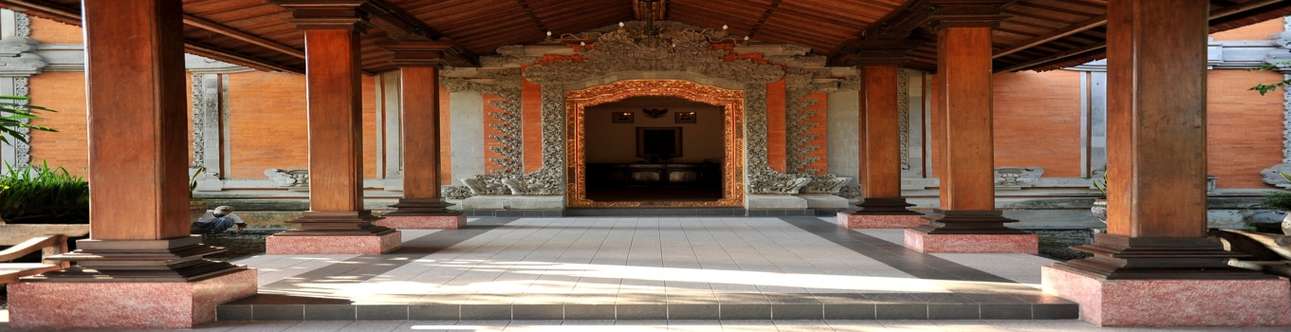
Museum Puri Lukisan, Ubud
An incredible place with Bali’s finest art collections
Rated 3.50/5 ( based on 10 reviews )
About Museum Puri Lukisan In Bali
Museum Puri Lukisan is Ubud's first museum, a garden of four gallery buildings on Jalan Raya Ubud, 300 m west of Ubud Palace. It opened in 1956 to keep the best Balinese painting and woodcarving on the island instead of in foreign collections. Entry is IDR 95,000 per adult (about Rs 500), children under 15 go free with an adult, and the gates are open 9 AM to 6 PM every day. Most visitors need an hour and a half.
The name means "palace of paintings". Inside you walk from 1930s village scenes painted under the Pita Maha artists' group to the fine ink drawings of I Gusti Nyoman Lempad, who lived past a hundred and designed part of the museum himself. For Indian visitors there is a second layer. Many of the paintings tell stories from the Ramayana and the Mahabharata, Hanuman and Yudhishthira included, and an Indian restaurant called The Chowk sits by the lotus pond inside the grounds.
• Pay IDR 95,000 (about Rs 500) at the gate. Ignore the 50,000, 75,000 and 85,000 figures still quoted on older pages.
• Arrive at 9 AM or after 3 PM. Tour groups pass through between late morning and mid-afternoon.
• Walk the four buildings clockwise from the North Gallery, and give the Lempad drawings 20 minutes.
• Walk here from Ubud Palace in 5 minutes. Do not drive the last stretch, because the one-way loop makes it slower.
Museum Puri Lukisan at a glance
| What you need to know | Detail |
|---|---|
| Entry fee | IDR 95,000 per adult (about Rs 500). Under-15s free with an adult, not in groups |
| Opening hours | 9 AM to 6 PM, daily (closed on Nyepi, 8 March 2027) |
| Time needed | 1 to 2 hours (about 1.5 for most visitors) |
| Best time | 9 to 11 AM, or after 3 PM |
| Address | Jalan Raya Ubud, Ubud, Gianyar, Bali 80571 |
| Phone | +62-361-971159 |
| Distance from Ubud Palace | 300 m west, a 4 to 5 minute walk |
| From the airport (DPS) | 35.5 km, plan 60 to 90 minutes |
| What is inside | 4 gallery buildings, a lotus garden, The Chowk Indian restaurant, a shop, workshop space |
| Photography | Allowed in most areas. Keep the flash off |
| Dress | No strict code. Covered shoulders and knees are respectful |
Museum Puri Lukisan entry fee in IDR and rupees
The adult ticket at Museum Puri Lukisan costs IDR 95,000, which is about Rs 500 at late-October 2026 exchange rates. That is the figure on the museum's own fee page, and we checked it there on 4 November 2026. Children under 15 enter free when they come with an adult. The free-child rule does not apply to school or tour groups, which book through the museum's enquiry form and get a group quote.
| Ticket | Price (IDR) | Price (Rs, approx.) | Notes |
|---|---|---|---|
| Adult, individual visit | 95,000 | 500 | Bought at the gate on the day |
| Child under 15 with an adult | Free | Free | Not valid for children in a group |
| Group visit | On enquiry | On enquiry | Arrange through the official enquiry form; discounts possible |
| Workshops | On enquiry | On enquiry | Priced separately from the ticket (see Workshops below) |
You will see other prices online. TravelTriangle's older pages said IDR 50,000 and IDR 75,000, and several travel sites still print 50,000, 80,000 or 85,000. Those are older rates. The 85,000 figure came with a free drink at the café, and a few listings still describe a drink voucher. Ask at the desk whether one is included on the day rather than counting on it.
A family of two adults and two children under 15 pays IDR 190,000 in total, roughly Rs 1,000. Carry rupiah in cash as a fallback; small Ubud ticket desks do not always take Indian cards.
Opening hours and the best time to visit
Museum Puri Lukisan is open from 9 AM to 6 PM every day of the week, Mondays included. Some travel listings give a 5 PM closing time. The museum's own page says 6 PM, but if you want unhurried time in all four buildings, be at the gate by 4 PM.
| Time slot | What it is like | Who it suits |
|---|---|---|
| 9 to 11 AM | Quietest. Cool galleries, soft light on the lotus pond | Art lovers, photographers, anyone reading the labels |
| 11 AM to 3 PM | Busiest. Tour groups and heavy traffic on Jalan Raya Ubud | Fine for a rainy-day escape, less good for the drawings |
| 3 to 5 PM | Crowds thin again; good for a late lunch at The Chowk first | Travellers coming from the Monkey Forest or Campuhan |
| After 5 PM | Last hour; galleries close at 6 | A short look only |
Season. The museum is one of the best things to do in Ubud between November and March, when afternoon rain is common, because the galleries are indoors. The garden paths between them are open to the sky, so carry an umbrella.
Closed days. Like everything on the island, the museum does not open on Nyepi, the Balinese Day of Silence. In 2027 Nyepi falls on Monday 8 March, and the whole of Bali, the airport included, shuts from 6 AM that day to 6 AM the next. Big ceremony days in Ubud can also bring the main road to a standstill, so check with your driver the evening before.
What to see in the four gallery buildings
The museum is four separate buildings around a garden, named North, West, East and South. Each holds a different part of the collection: pre-war modern traditional Balinese paintings, the Ida Bagus Made Estate collection, wayang paintings, and temporary exhibitions. Rudolf Bonnet drew up the design in Balinese forms, and Lempad painted the murals at the entrance to the North Building. Walk them clockwise from the North and you see the story of Balinese painting in order.
| Building | Gallery | What is inside | Give it |
|---|---|---|---|
| North (I) | Pitamaha Gallery | Pre-war modern traditional paintings from 1930 to 1945 and the I Gusti Nyoman Lempad collection. Lempad's murals frame the entrance | 30 to 40 min |
| West (II) | Ida Bagus Made Gallery | Works from the estate of Ida Bagus Made Poleng (1915 to 1999), more than a hundred paintings and sketches held for safekeeping | 15 to 20 min |
| East (III) | Wayang Gallery | Wayang-style painting, the flat, puppet-like narrative tradition that Balinese art grew out of | 15 min |
| South (IV) | Founders Gallery | The museum's history, new acquisitions and temporary exhibitions | 15 min |
| Garden | Lotus pond and sculptures | Stone sculpture between the pavilions, and The Chowk restaurant | 10 min, or lunch |
Start in the North Building, because it explains everything else. The 1930s paintings show village life (rice harvests, cockfights, markets, temple days) painted in a way Balinese artists had never tried before. Bodies have weight, and landscapes have depth. That shift came from the Pita Maha years, when young painters from Ubud and the nearby villages traded ideas with Walter Spies and Rudolf Bonnet.
The West Building is quieter and more personal. Ida Bagus Made was a devout Ubud painter who distrusted dealers and sold to very few collectors. President Sukarno was one of the few collectors he respected, and his works now hang in museums around the world.
The East Building is where to slow down if you know the epics. Wayang painting takes its figures straight from the shadow-puppet theatre, so heroes and gods appear in profile with the same headdresses and gestures as the leather puppets. The South Building changes most often, so it is the one to check on a second visit.
Six works worth finding
The museum holds hundreds of works, but six of them carry most of its reputation. These are the pieces Wikipedia and the museum's own history single out, and they make a 30-minute highlights route if you are short of time.
| Work | Artist | Where | Why it matters |
|---|---|---|---|
| The Dream of Dharmawangsa | I Gusti Nyoman Lempad | North (Pitamaha Gallery) | One of the museum's masterpieces, drawn in Lempad's spare, flowing line. Dharmawangsa is the Balinese name for Yudhishthira |
| Balinese Market | Anak Agung Gde Sobrat | Permanent collection | Hung at the opening in 1956. The colours have faded but the crowded figures still show Bonnet's influence |
| The Birth of Hanuman (1936) | I Gusti Made Deblog | Pre-war collection | Nymphs and forest creatures bring offerings to the newborn monkey hero. Presented by the chairman of the Ford Foundation |
| The Priest Dharmaswami (1935) | Ida Bagus Gelgel | Pre-war collection | Natural dyes on paper. A monkey, a snake and a tiger bring gifts to the priest who saved them from a well. Gelgel won a silver medal in Paris in 1937 |
| Goddess Pertiwi (Mother Earth) | Ida Bagus Nyana | Woodcarving collection | An elongated, dreamlike woodcarving with spidery legs and a coiled serpent |
| Lempad's entrance murals | I Gusti Nyoman Lempad | North Building doorway | Easy to walk past. Stop before you go in |
Displays rotate, and a work can be out on loan or in storage. If one of these is the reason you came, ask at the desk where it is hanging.
Ramayana and Mahabharata on the walls
Indian visitors often find Puri Lukisan more familiar than they expect. Balinese Hinduism grew from the same roots, and the two great epics reached Bali through Java centuries ago. They are still performed every week in Ubud's dance and shadow-puppet shows, and they run through the painting collection.
Look for Hanuman in Deblog's forest scene. The wayang paintings of the East Building draw on the same two epics, so heroes such as Arjuna are the figures to watch for. Lempad's Dream of Dharmawangsa takes its hero from the Mahabharata, where you know him as Yudhishthira. Anak Agung Gde Sobrat learned both epics as a boy from his grandfather, a puppeteer who taught him to carve leather puppets before he ever painted. Gelgel's Priest Dharmaswami is a moral fable of grateful animals that sits close to the Panchatantra stories many Indian children grow up with.
The names change in Bali. Arjuna stays Arjuna, but Yudhishthira becomes Dharmawangsa, Bhima becomes Bima, and Ravana is often written Rahwana. Reading the labels with that in mind turns a gallery of unfamiliar art into stories you already know. If you want to go further, the museum's Classical Painting workshop teaches the Kamasan style using characters from the Ramayana and Mahabharata.
History from Pita Maha (1936) to today
Museum Puri Lukisan exists because Balinese art was leaving Bali. By the 1930s collectors were buying the island's best paintings and carvings and shipping them abroad. Ubud's royal family and the Dutch painter Rudolf Bonnet feared the finest work would never come home, so they set out to build a museum that would keep it on the island.
| Year | What happened |
|---|---|
| 1936 | The Pita Maha artists' cooperative is founded by Tjokorda Gde Agung Sukawati (the King of Ubud), his brother Tjokorda Gde Raka Sukawati, and the painters Walter Spies and Rudolf Bonnet |
| 1953 | The Ratna Wartha Foundation is set up to carry on the Pita Maha mission, and the idea of a museum is born |
| 31 Jan 1954 | Prime Minister Ali Sastroamidjojo lays the first stone |
| 1956 | Education and Culture Minister Mohammad Yamin opens the museum |
| 1972 | Two new wings are added, including a temporary exhibition hall |
| 1978 | Tjokorda Gde Agung Sukawati, I Gusti Nyoman Lempad and Rudolf Bonnet die. Their grand royal cremation in Ubud follows early in 1979 |
| 2008 | Two shows the museum billed as its 50th anniversary: Pioneers of Balinese Painting (Rudolf Bonnet collection, lent by Leiden) and the first showing of the Ida Bagus Made Estate collection |
| 2011 | The South wing, an open meeting hall and the museum café are added |
The museum calls itself Ubud's first museum, and that is accurate. You will also read that it is "the oldest museum in Bali". It is not. The Bali Museum in Denpasar opened in 1932, more than twenty years earlier. Puri Lukisan can fairly be called the oldest art museum in Ubud.
Balinese painting styles and the artists to know
The collection covers the five schools that shaped modern Balinese painting: Ubud, Batuan, Sanur, Young Artists and Keliki, with the older wayang tradition behind them all. Knowing which is which takes five minutes and makes the galleries far easier to read.
| Style | Home village | Hallmarks | Names to look for |
|---|---|---|---|
| Wayang (classical) | Kamasan, Klungkung | Flat figures in profile, as in shadow puppets; epic stories told in rows | Ida Bagus Gelgel, who grew up in Kamasan |
| Ubud | Ubud, Peliatan, Pengosekan | Daily life and landscapes with depth and real anatomy, shaped by Spies and Bonnet | Anak Agung Gde Sobrat, plus Lempad's Pita Maha circle |
| Batuan | Batuan, south of Ubud | Dense, dark, crowded scenes filled edge to edge, often with demons and spirits | Batuan school works in the North Gallery |
| Sanur | Sanur, on the coast | Animals, sea life and fishing scenes, often in ink with strong black and white | Sanur school works in the pre-war collection |
| Young Artists | Penestanan, by Campuhan | Bright, flat, naive colour from the 1960s onward | Penestanan painters |
| Keliki | Keliki, north of Ubud | Miniature paintings, packed with tiny figures of gods and demons | Keliki school works |
Two artists deserve a special stop. I Gusti Nyoman Lempad was a painter, sculptor and architect who designed palaces and temples around Ubud as well as parts of this museum. His line drawings look simple until you notice that every figure is made from a few sure strokes. Ida Bagus Nyana did the same thing in wood, stretching his figures into long, fluid shapes that look half melted. His son Ida Bagus Tilem carried the style on.
Art and culture workshops
Museum Puri Lukisan runs 11 hands-on workshops in Balinese art, music and ritual. The museum lists them on its website but does not publish prices, so book through the enquiry form or at the desk a day ahead and ask for the fee, duration and whether materials are included.
| Workshop | What you do |
|---|---|
| Gamelan | An introduction to the gamelan instruments and how they are played |
| Flute playing | Learn to play a Balinese bamboo flute |
| Balinese dance | The basic steps used in many Balinese dances |
| Mask painting | The meaning and shapes of Balinese masks, while painting your own |
| Basketry | Weave a traditional basket from palm leaf and bamboo |
| Offering making | Make canang, the small daily offerings you see on every Bali doorstep |
| Traditional painting | A one-day workshop from first sketch to a finished painting |
| Classical painting | A Kamasan-style painting of characters from the Ramayana and Mahabharata |
| Batik | Learn the wax-and-dye textile technique and make your own design |
| Woodcarving | Carve a piece like the ones that decorate Balinese temples |
| Shadow puppet | Carve and paint a leather wayang puppet and learn what each figure means |
For families with children over about eight, offering making or mask painting are the easiest fit. Batik suits couples, because you take the cloth home. The one-day painting workshop is the serious option for anyone who draws.
The Chowk, the shop and the lotus garden
The museum's restaurant is The Chowk, an Indian restaurant the museum calls an "Indian Gourmet House". It seats about 150 people in an open pavilion beside the lotus pond, and you can sit down without doing the galleries first. After a week of nasi goreng, it is a welcome change for many Indian travellers.
The kitchen draws on North and South Indian cooking with a Balinese setting, and vegetarian dishes are easy to find. If you eat Jain or avoid onion and garlic, say so when you order rather than assuming a dish fits. For more choice in town, see our guide to Indian restaurants in Bali.
The garden between the four buildings is part of the visit, not just the way between them. Stone sculptures stand along the paths, and the lotus pond is at its best in the morning. Do not pick the flowers. A small shop near the entrance sells books, prints and handicrafts. Original paintings by Ubud artists are on sale at many galleries along Jalan Raya Ubud, and the Ubud Art Market is a 5-minute walk east for cheaper souvenirs.
How to reach Museum Puri Lukisan
Museum Puri Lukisan is on Jalan Raya Ubud, the main road through town, about 300 m west of Ubud Palace and the market crossroads at Monkey Forest Road. Look for a tall split gate with a large wooden sign on the north side of the road; it is also the way into the car park. Betel Nut Café and Casa Luna restaurant are directly across the street.
If you are staying in central Ubud, walk. The palace is 4 to 5 minutes away on foot, and the one-way traffic loop turns the same trip into a 1.6 km drive. "A five-minute drive" on older pages is really a five-minute walk.
| From | Road distance | Plan for | Best way |
|---|---|---|---|
| Ubud Palace | 300 m | 5 min walk | Walk |
| Blanco Renaissance Museum | 1.1 km | 10 min walk | Walk |
| Campuhan Ridge Walk start | 0.8 km | 10 min walk | Walk |
| Monkey Forest main gate | 1.5 km on foot | 20 min walk | Walk down Monkey Forest Road |
| ARMA | 2.1 km | 10 min drive or 20 min walk | Grab or walk |
| Neka Art Museum | 2.9 km | 10 min drive | Grab or Gojek |
| Goa Gajah | 5.6 km | 15 to 20 min | Car or scooter |
| Tegallalang rice terraces | 10.6 km | 25 to 35 min | Car |
| Tirta Empul | 19.8 km | 35 to 45 min | Car |
| Sanur | 22.1 km | 45 to 60 min | Car |
| Denpasar | 22.3 km | 45 to 60 min | Car |
| Seminyak | 32.1 km | 60 to 90 min | Car |
| Kuta | 32.4 km | 60 to 90 min | Car |
| Canggu | 33.4 km | 60 to 90 min | Car |
| Ngurah Rai Airport (DPS) | 35.5 km | 60 to 90 min | Pre-booked transfer or Grab |
| Jimbaran | 40.4 km | 70 to 100 min | Car |
| Nusa Dua | 43.5 km | 70 to 100 min | Car |
Times are calculated on the road network from the museum gate and stretched for normal Bali traffic. Leave more time between 4 and 7 PM on weekdays.
By Grab or Gojek. Both apps work in Ubud, though some village roads have taxi-cooperative zones where app drivers will only drop off. A Grab car within Ubud costs roughly IDR 20,000 to 40,000, and from Seminyak or Kuta about IDR 250,000 to 350,000 one way.
By private driver. For most Indian families this is the easiest option. A half-day or full-day Ubud driver lets you combine the museum with the Monkey Forest, Goa Gajah and Tirta Empul without bargaining for each leg. Most Ubud tour packages include a culture day that passes the museum.
From the airport. Ngurah Rai is 35.5 km away. Plan 60 to 90 minutes, longer in the evening rush through Denpasar.
Puri Lukisan vs ARMA vs Neka vs Blanco
Ubud has four big art museums, and most visitors have time for one or two. Puri Lukisan is the most central and the most focused on the Pita Maha masters, so it is the best pick if you see only one. ARMA and Neka are larger. Blanco is a single artist's flamboyant house.
| Museum Puri Lukisan | ARMA | Neka Art Museum | Blanco Renaissance Museum | |
|---|---|---|---|---|
| Adult fee | IDR 95,000 (about Rs 500) | About IDR 150,000 (about Rs 790) | IDR 150,000 (about Rs 790) | About IDR 100,000 (about Rs 520), usually with a drink |
| Hours | 9 AM to 6 PM | 9 AM to 6 PM | 9 AM to 5 PM | 9 AM to 5 PM |
| Where | Central Ubud, 300 m from the palace | Pengosekan, south Ubud | Sanggingan, 2.9 km north-west | By the Campuhan bridge, 1.1 km west |
| Focus | Pita Maha, Lempad, the five Balinese schools | Balinese and Javanese art, including Walter Spies works, plus dance shows | The widest survey of Balinese painting, plus a kris (dagger) collection | Antonio Blanco's own paintings and house |
| Time needed | 1 to 2 hours | 2 to 3 hours | 1.5 to 2.5 hours | 1 hour |
| Best for | First-timers, short on time, Indian-epic stories | A half day with gardens and a performance | Serious art lovers | Couples, photographers |
| Our guide | You are here | ARMA guide | Neka Art Museum guide | Blanco Museum guide |
Puri Lukisan is not the same place as Ubud Palace. The palace (Puri Saren Agung) is the royal residence 300 m east, with a free outer courtyard and evening dance shows. The museum was founded by the same royal family, which is why the two get confused. For every museum in town, ranked, see our guide to museums in Ubud, and for the island as a whole, museums in Bali.
A three-hour Ubud art walk
You can see Ubud's art history in one morning on foot, with Puri Lukisan in the middle. The route below is about 2.5 km of walking and suits a cool 9 AM start.
1. Ubud Palace, 9 AM. Walk into the outer courtyard to see the carved gates (free). Spend 20 minutes.
2. Pura Taman Saraswati, 9:30 AM. A water temple to the goddess of learning behind its own lotus pond, a 3-minute walk west on the main road. Spend 15 minutes.
3. Museum Puri Lukisan, 9:50 AM. The four galleries, clockwise from the North. Spend 90 minutes.
4. Lunch at The Chowk, 11:30 AM. Or keep walking and eat at Campuhan.
5. Blanco Renaissance Museum, 12:30 PM. A 10-minute walk west, downhill to the Campuhan bridge. Spend 45 minutes.
6. Campuhan Ridge Walk, 1:30 PM. Start at the bridge and walk the ridge for as long as the heat allows; see our Campuhan Ridge Walk guide.
Prefer the macaques to the ridge? Swap steps 5 and 6 for the Ubud Monkey Forest, a 20-minute walk south from the museum down Monkey Forest Road. With a car, the classic culture day adds Goa Gajah and Tirta Empul in the afternoon. More ideas are in our list of places to visit in Ubud.
Tips and rules for visiting
The museum's rules are simple, and most come down to protecting paintings on paper that are close to a hundred years old.
• Do not touch the artworks, including the frames and the sculptures in the garden.
• Photos are fine, flash is not. The museum publishes no formal photo policy, so ask at the desk, and keep the flash off near the pre-war works on paper. Tripods and drones are a no.
• Dress modestly. There is no enforced dress code, but covered shoulders and knees are respectful in a museum founded by Ubud's royal family. Light cotton is enough; you do not need a sarong.
• Do not pick the lotus flowers or anything else in the garden.
• Hire a guide if you want the stories. Guides at the gate can explain the epics and the artists. Agree the price before you start; plan on about IDR 100,000 to 150,000 for a group.
• Accessibility. The galleries are separate buildings linked by outdoor paths with some steps. Wheelchair users should call ahead to ask which buildings have step-free entry.
• Children. Under-15s go free, and the garden gives restless kids space. Point younger children to the animals in the Sanur-style paintings and to Hanuman.
How long you need, by visitor.
| Visitor | Time to allow | What to prioritise |
|---|---|---|
| Short on time | 30 to 45 min | North Gallery and the six works above |
| First-time visitor | 1 to 1.5 hours | All four buildings clockwise, then the garden |
| Family with young children | 45 min to 1 hour | North Gallery, Hanuman, the lotus pond |
| Art lover | 2 to 3 hours | Every building, the labels, a guide |
| Museum plus lunch or workshop | 3 to 4 hours | Galleries, The Chowk, a booked workshop |
What half a day costs, per person.
| Item | IDR | Rs (approx.) |
|---|---|---|
| Museum ticket (adult) | 95,000 | 500 |
| Lunch at the museum or nearby | 100,000 to 250,000 | 520 to 1,310 |
| Grab within Ubud, both ways | 40,000 to 80,000 | 210 to 420 |
| Guide, shared by a group of four | 25,000 to 40,000 | 130 to 210 |
| Total | 260,000 to 465,000 | 1,360 to 2,440 |
Indian travellers also pay the Bali tourist levy of IDR 150,000 per person once per trip, through the Love Bali website or at the airport on arrival. It is not collected at the museum.
Is Museum Puri Lukisan worth visiting?
Yes, for almost anyone spending a day in Ubud. It is the cheapest of the four big art museums, the easiest to reach, and the only one built around the artists who created modern Balinese painting. For Indian visitors, recognising Hanuman and Yudhishthira on the walls makes it far more rewarding than a typical gallery visit.
It is less suited to travellers who want a big outdoor sight; the Monkey Forest or the rice terraces will hold small children longer. And if you have already seen Neka, Puri Lukisan still adds the Lempad drawings and the Pita Maha story, but keep the visit to an hour. For the rest of the island, our places to visit in Bali list ranks every major sight, and the Bali tourism hub covers visas, seasons and budgets. Travellers who want the whole trip handled can compare Bali tour packages that include an Ubud culture day.
Edited by TravelTriangle. Last updated November 2026. Our Bali desk checked the entry fee, hours and address on this page against the museum's official website on 4 November 2026 and calculated every drive time on the road network the same day.
Popular Packages
Unlimited Choices. Trusted Agents. Best Prices. Happy Memories.
Cities:
- Kuta
- Nusa Dua
Starting from:
₹19,990/-
₹29,990/-33% OffCities:
- Kuta
- Seminyak
Starting from:
₹19,998/-
₹22,180/-10% OffCities:
- Kuta
- Ubud
Starting from:
₹21,000/-
₹23,836/-12% OffCities:
- Denpasar
Starting from:
₹21,500/-
₹23,370/-8% OffCities:
- Kuta
- Gianyar
Starting from:
₹21,998/-
₹23,911/-8% OffCities:
- Kuta
- Gili Island
- Ubud
Starting from:
₹22,000/-
₹28,274/-22% OffCities:
- Kuta
- Seminyak
Starting from:
₹22,500/-
₹24,725/-9% OffCities:
- Kuta
- Ubud
Starting from:
₹22,998/-
₹25,273/-9% OffCities:
- Kuta
Starting from:
₹24,500/-
₹26,630/-8% OffCities:
- Kuta
- Seminyak
Starting from:
₹26,999/-
₹29,347/-8% OffCities:
- Kuta
- Seminyak
Starting from:
₹27,000/-
₹29,670/-9% OffCities:
- Kuta
- Bali
Starting from:
₹27,999/-
₹30,434/-8% OffCities:
- Kuta
- Ubud
Starting from:
₹29,000/-
₹32,222/-10% OffCities:
- Kuta
- Seminyak
Starting from:
₹29,999/-
₹32,608/-8% OffCities:
- Kuta
- Seminyak
Starting from:
₹29,999/-
₹32,608/-8% OffCities:
- Kuta
- Seminyak
Starting from:
₹30,000/-
₹32,258/-7% OffCities:
- Kuta
- Seminyak
Starting from:
₹30,999/-
₹32,978/-6% OffCities:
- Nusa Dua
- Ubud
Starting from:
₹31,500/-
₹35,000/-10% OffCities:
- Kuta
- Seminyak
Starting from:
₹31,600/-
₹33,978/-7% OffCities:
- Kuta
- Nusa Dua
- Bali
Starting from:
₹31,999/-
₹34,042/-6% OffPlaces To Visit In Bali
Let the experts guide you to the best of this mesmerizing destination
View AllNungnung Waterfall In Bali
Bali is no less than a Mecca when it comes to finding happiness in waterfalls. You could find the world’s most stunning waterfall here in Bali. Nungnung Waterfall is situated in the north of Ubud and takes just an hour drive from the main city. It is evaluated as a standout amongst the best Bali cascades on the island. Clim...
- Waterfalls
- Nature
- Adventure
- Ideal for friends
- Ideal for families
Pura Lempuyang Luhur In Bali
Lempuyang Temple is a complex of seven Hindu temples on Mount Lempuyang in Karangasem, East Bali, and its famous Gates of Heaven stand at the lowest of them, Pura Penataran Agung Lempuyang. Foreign visitors pay IDR 100,000 (about Rs 524) with a sarong included, plus a compulsory IDR 50,000 return shuttle from the car park, ...
- Temple Tour
- Sightseeing
- Ideal for friends
- Ideal for families
Sacred Monkey Forest Sanctuary In Bali
The Ubud Monkey Forest, officially the Sacred Monkey Forest Sanctuary (Mandala Suci Wenara Wana), is a 12.5-hectare temple forest in Padangtegal village at the south end of Jalan Monkey Forest in Ubud. About 1,050 Balinese long-tailed macaques live here around three Hindu temples built in the 14th century. Entry costs IDR 1...
- Sightseeing
- Monkey Forest
- Nature
- Ideal for friends
- Ideal for families
Gitgit Waterfall In Bali
Gitgit Waterfall (Air Terjun Gitgit, often written Git Git) is a 35 m jungle waterfall in Gitgit village, Sukasada district, about 10 km south of Singaraja in North Bali. It sits right beside the main road from Bedugul down to the north coast. A paved path of roughly 500 m drops through clove and coffee gardens to the pool,...
- Gitgit waterfall
- Nature
- Adventure Activities
- Ideal for friends
- Ideal for families
Pura Ulun Danu Batur In Bali
Pura Ulun Danu Batur is the great temple of Kintamani, on the rim of the Batur caldera at about 1,400 m, and the Balinese rank it second only to Besakih. Foreign adults pay IDR 50,000 to 75,000 (about Rs 262 to Rs 393) at the ticket counter across the road, and visitors are let in from about 8 AM to 5 PM. Driving up from Ub...
- Sightseeing
- Temple
- Nature
- Ideal for friends
- Ideal for families
Things To Do In Bali
Your list of the best things to do, compiled on the basis of actual traveler experiences
View AllSekumpul Waterfall Trekking In Bali
Sekumpul Waterfall (Air Terjun Sekumpul) is a cluster of waterfalls in Sekumpul village, Sawan district, Buleleng regency, in the hills of North Bali. Several streams drop about 80 m, roughly 262 feet, into a single jungle valley. A view-only ticket costs IDR 20,000 (about Rs 105). Treks to the bottom with a village guide c...
- Adventure
- Trekking
- Nature
Mount Batur Trekking In Bali
Mount Batur (Gunung Batur) is an active volcano in Kintamani, north-east Bali, 1,717 m above sea level, and its sunrise trek is one of the most popular hikes in Bali. You leave your hotel around 2 AM, start walking at about 4 AM with a licensed local guide, and reach the summit in roughly two hours for a fit person, in time...
- Trekking
- Adventure
- Nature
Safari And Marine Park In Bali
By the TravelTriangle Bali desk. Last updated November 2026. Hours, show times and shuttle slots on this page were checked by our Bali desk against the park's official schedule and shuttle pages on 2 November 2026.
Bali Safari and Marine Park, officially Taman Safari Bali, is a safari park and aquarium complex in Serongga,...
- Marine Park
- Adventure
- Nature
Bird Park Tour In Bali
Bali Bird Park is open from 9 AM to 5:30 PM every day, and an international adult ticket costs IDR 385,000 (about Rs 2,019) at the gate. Children aged 2 to 12 pay IDR 265,000 (about Rs 1,390), and the ticket covers every show and feeding session in the park, with no extra payments inside. It sits at Batubulan in Gianyar, 11...
- Bird Watching
- Nature
- Adventure
Mount Agung Sunrise Trekking In Bali
Mount Agung (Gunung Agung) is Bali's highest mountain and an active volcano, 3,031 m above sea level. You climb it at night with a licensed local guide, which is compulsory, so you stand on top for sunrise. There are two main routes. From the temple of Pura Pasar Agung you reach the crater rim in about 3 to 4 hours. From Pu...
- Adventure
- Mountains
- Trekking
- Ideal for friends
Our experts would love to create a package just for you!
Fill in your requirements here >
Fastest Growing Holiday Marketplace
650+
Verified Agents
22 Lac+
Happy Travellers
65+
Destinations
Easy, Secure & Reliable
Traveltriangle
Verified
Stringent
Quality Control
24/7
Support
What Travelers Say About Our Bali Packages
Read real reviews,packages, stories, and experiences from happy customers who booked with TravelTriangle.
Tanusharma
Noida
Tanusharma's 6 days trip to Bali
Richa Sahu
Delhi
Richa's 11 days trip to Bali
Vaibhav Nageshwaran
Chennai
Vaibhav's 5 days trip to Bali
Ranjeet Sethi
Delhi
Ranjeet's 7 days trip to Bali
Sandeepreddy Devarapalli
Hyderabad
Sandeepreddy's 10 days trip to Bali
Pranay Bhaskar
Hyderabad
Pranay's 6 days trip to Bali
Sanchayitamahato
Kolkata
Sanchayitamahato's 6 days trip to Bali
Prem Kumar Tyagi
Delhi
Prem's 6 days trip to Bali
Swarna B
Bengaluru
Swarna's 6 days trip to Bali
Manik Prabhu
Hyderabad
Manik's 7 days trip to Bali
Popular Kerala Holiday Packages
Spiritual Packages
Kerala Holiday Packages From Metro Cities
Popular 1 Night & Above Kerala Holiday Packages
Popular 6 Nights & Above Kerala Holiday Packages
Top Tour Packages In India
Top International Tour Packages
Tour Packages By Theme And Activity
Top Honeymoon Destinations In India
Top International Honeymoon Destinations
Top Destinations In India
Top International Destinations
Want best packages handpicked just for you?
Fill the form and get a callback from our holiday experts
Frequently Asked Questions
Get your answers — before you plan your trip.
Bali Travel FAQs
How much is the Museum Puri Lukisan entry fee in rupees?
The adult ticket is IDR 95,000, about Rs 500 at late-2026 exchange rates. That is the price on the museum's official website, checked in November 2026. Children under 15 enter free with an adult, but the free-child rule does not apply to groups, which get a quote through the museum's enquiry form. Ignore the 50,000, 75,000 and 85,000 figures on older websites. A family of two adults and two children under 15 pays about Rs 1,000 in total.
What are the opening hours of Museum Puri Lukisan? Is it open on Monday?
The museum is open every day from 9 AM to 6 PM, Monday included. Some travel listings give a 5 PM close, so arrive by 4 PM if you want time in all four buildings. The quietest hours are 9 to 11 AM. Like all of Bali, it is closed on Nyepi, the Day of Silence, which falls on Monday 8 March 2027.
How long do I need at Museum Puri Lukisan?
Most visitors need about 1.5 hours to walk all four gallery buildings and the garden. With only 30 to 45 minutes, see the North Gallery and its Lempad drawings. Art lovers who read the labels or hire a guide can easily spend 2 to 3 hours, and with lunch at The Chowk or a workshop it becomes a half day.
Where is Museum Puri Lukisan, and how far is it from Ubud Palace?
The museum is on Jalan Raya Ubud, the main street of Ubud, Gianyar 80571. It is about 300 m west of Ubud Palace, a 4 to 5 minute walk. The entrance is a tall split gate with a wooden sign on the north side of the road, opposite Casa Luna and Betel Nut Café. From Ngurah Rai Airport it is 35.5 km, so plan 60 to 90 minutes by car.
Is Museum Puri Lukisan the same as Ubud Palace?
No. Ubud Palace (Puri Saren Agung) is the royal residence 300 m east, with a free courtyard and evening dance shows. Museum Puri Lukisan is a separate art museum that the same royal family helped found in 1956. "Puri" means palace in Balinese, which causes the mix-up, and "Puri Lukisan" means palace of paintings. Most people visit both in the same morning.
Is Museum Puri Lukisan good for children? Do kids go free?
Yes on both counts. Children under 15 enter free when accompanied by an adult, though not as part of a group. The garden and lotus pond give children space between buildings. The animal scenes and Hanuman paintings hold their attention, and the offering-making and mask-painting workshops suit children over about eight. Plan 45 minutes to an hour with young kids.
Can I take photos inside Museum Puri Lukisan?
Yes, photography is allowed in most areas, but keep the flash off. Many of the pre-war works are on paper and fade under strong light. The museum publishes no formal photo policy, so ask at the ticket desk, especially in the temporary exhibition room. Tripods and drones are not appropriate. The lotus pond and the carved gate are the best photo spots.
Is there a dress code at Museum Puri Lukisan?
There is no strict dress code, and you do not need a sarong as you would at a temple. Covered shoulders and knees are still respectful, because the museum was founded by Ubud's royal family and sits in the town centre. Light cotton clothes and comfortable shoes are enough for the garden paths. Carry an umbrella between November and March.
Is there an Indian restaurant inside Museum Puri Lukisan?
Yes. The Chowk, which the museum calls an Indian Gourmet House, is inside the grounds beside the lotus pond and seats about 150. It serves North and South Indian dishes with plenty of vegetarian choices. If you eat Jain food or avoid onion and garlic, say so when ordering. You can eat there without visiting the galleries.
Can I join a workshop at Museum Puri Lukisan, and how much does it cost?
Yes. The museum runs 11 workshops: gamelan, bamboo flute, Balinese dance, mask painting, basketry, offering making, traditional painting, classical Kamasan painting of Ramayana and Mahabharata characters, batik, woodcarving and shadow puppets. The museum does not publish prices, so ask for the fee through its enquiry form or at the desk a day ahead. Reseller prices online vary widely.
Should I visit Puri Lukisan, ARMA or Neka?
If you have time for one, choose Puri Lukisan. It is the most central, the cheapest at IDR 95,000 against 150,000 for Neka and ARMA, and it is built around the Pita Maha masters. Neka gives the widest survey of Balinese painting and needs about two hours. ARMA suits a longer visit with gardens and dance. With a full day, pair Puri Lukisan with one of them.
Is Museum Puri Lukisan the oldest museum in Bali?
No, though it is often described that way. It is Ubud's first museum, opened in 1956, and the oldest art museum in Ubud. The Bali Museum in Denpasar, which opened in 1932, is older. Puri Lukisan's story starts earlier still, with the Pita Maha artists' group founded in Ubud in 1936 by the royal family, Walter Spies and Rudolf Bonnet.
How It Works
Personalise This Package
Make changes as per your travel plan & submit the request.
Get Multiple Quotes
Connect with top 3 agents, compare quotes & customize further.
Book The Best Deal
Pay in easy installments & get ready to enjoy your holiday.
Corporate Office:
Holiday Triangle Travel Private Limited
Address: Plot No - 52 , 3rd Floor,
Batra House , Sector 32,
Gurugram -122001,Haryana
Landline: 1800 123 5555
Connect with us on :

Made with
in India
All rights reserved © 2026