
 8D / 7N
6% OFF


Arugam Bay, Sri Lanka: the surf town that won Asia's Best Beach
Arugam Bay, on Sri Lanka’s east coast, was voted Asia’s Best Beach for 2026 in the Conde Nast Traveller Readers’ Choice Awards, and it is the island’s most famous surf town. The long right-hand point break here pulls surfers from around the world between roughly April and October, while the wide, shallow crescent of the bay itself is just as good for a swim or a sunset once the boards come in. It sits a long way from Colombo, so getting here takes planning, which is part of why the town has kept its slow, barefoot feel. Our editors mapped the surf points, the best months to come, the quickest way to reach it and what there is to do once you are off the water, so you can build a trip around the things that actually matter to you.
Key takeaways
- Surf runs roughly April to October and peaks July to September; the famous Main Point is a 300 to 500 metre right-hand point break for intermediate and advanced surfers.
- Beginners should start at Baby Point, Whiskey Point or the gentle rights near Elephant Rock, where the waves are small and beginner-friendly.
- If a direct flight suits your route, Mattala Rajapaksa is far closer (around three to four hours by road) than Colombo (closer to seven); most travellers still fly into Colombo and make the long cross-island transfer.
- Come May to September for the driest beach weather; many guesthouses and surf camps close from November to March.
- Beyond surfing, spend a morning on a Pottuvil Lagoon boat safari or take a day trip to Kumana National Park for elephants and birds.
Arugam Bay at a glance
| Detail | What to know |
| Best known for | World-class right-hand point break surfing |
| 2026 accolade | Asia’s Best Beach, Conde Nast Traveller Readers’ Choice Awards |
| Surf season | April to October, peak July to September |
| Best beach weather | May to September (east coast dry months) |
| Nearest airport | Mattala Rajapaksa (HRI) ~170 km / ~3 to 4 hr; Colombo (CMB) ~320 km / 6 to 8 hr |
| Top surf points | Main Point, Baby Point, Whiskey Point, Peanut Farm, Elephant Rock, Pottuvil Point |
| Beyond surfing | Pottuvil Lagoon safari, Kumana National Park, Elephant Rock, Muhudu Maha Viharaya |
| Suggested stay | 3 to 5 days |
Sri Lanka
Sri Lanka
Best Time
May - September
Select Package Type
Best Selling Packages


Why Arugam Bay is worth the long drive
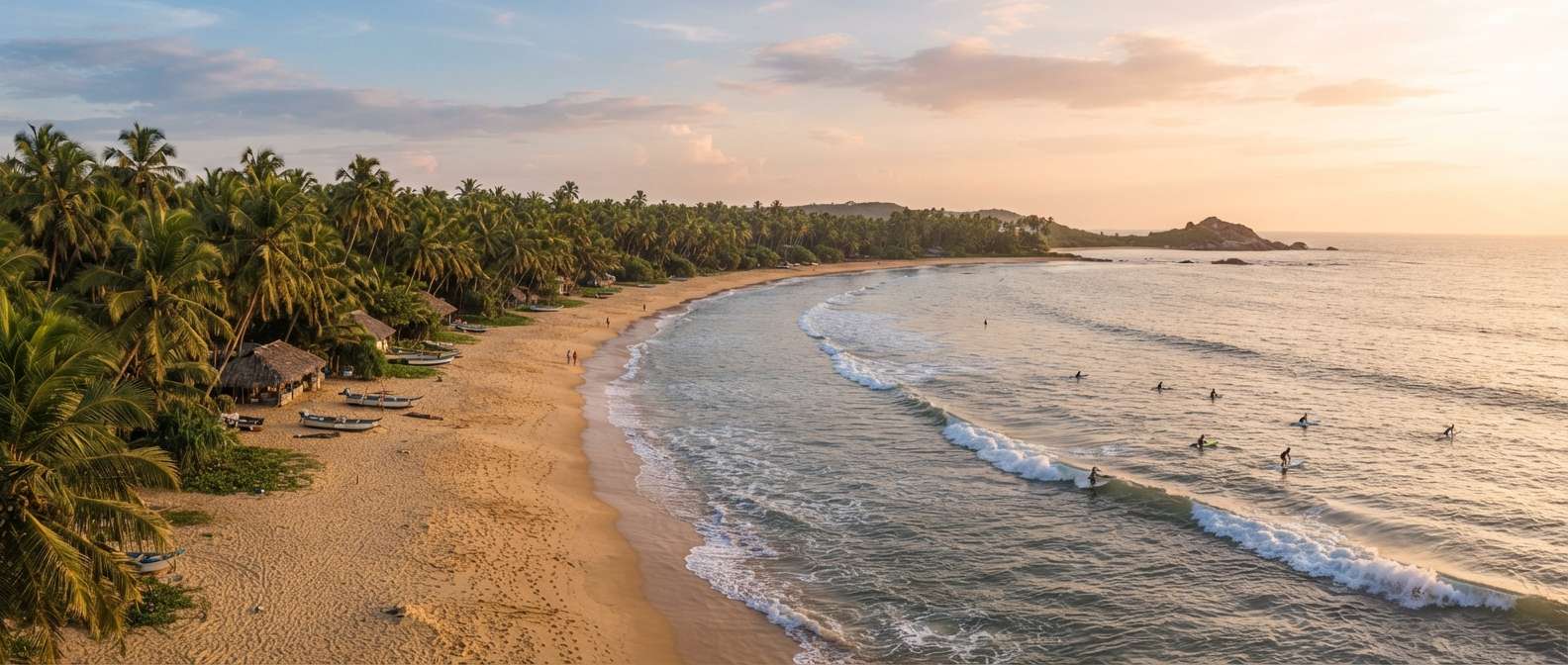
For years Arugam Bay was the preserve of surfers who did not mind a long bus ride for an empty wave. That reputation is out of date. In October 2026 it topped the Conde Nast Traveller Readers’ Choice Awards as Asia’s Best Beach, scoring higher than Railay in Thailand and Boracay in the Philippines, and it was one of four Sri Lankan beaches in the region’s top twenty. The appeal is simple once you arrive. The main beach is a long, gently curving bay with soft sand and water calm enough to wade into, backed by a single sandy strip of guesthouses, surf schools and open-sided cafes. There is no high-rise, no boardwalk and very little traffic. Surfers come for one of the most reliable right-hand point breaks in the Indian Ocean, but you do not need a board to enjoy the place. Plenty of travellers come to swim, read, eat fresh seafood and watch the fishing boats, then use the town as a base for lagoon safaris and the national park an hour down the coast.
Surfing in Arugam Bay: seasons and surf points
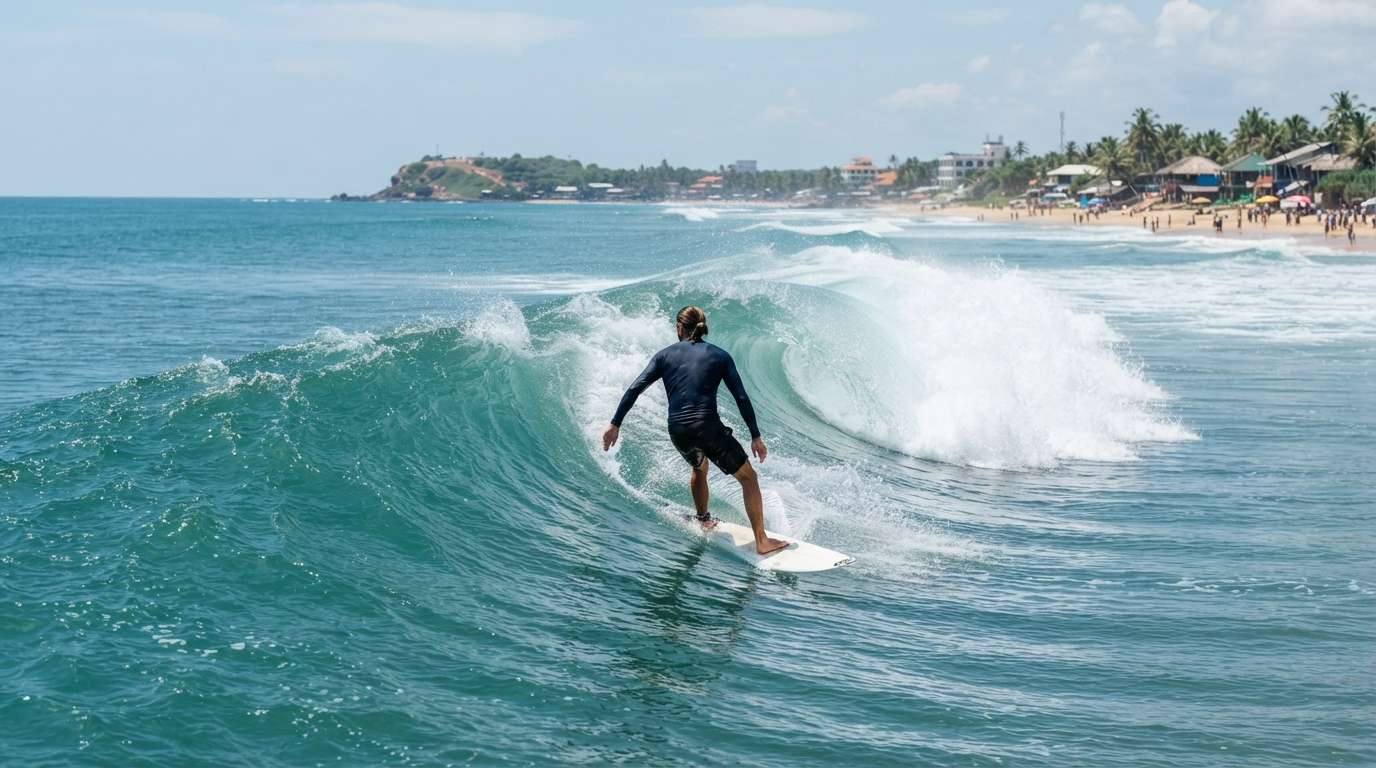
Surfing is the reason Arugam Bay is on the map, and the east coast season is the mirror image of the rest of Sri Lanka. While the southwest coast around Hikkaduwa and Weligama surfs best from November to April, the east coast comes alive from around April through October, with the cleanest, most consistent swell in the peak months of July to September. That is when the offshore winds line up with the point and the long rights peel for hundreds of metres. Outside those months the swell drops off, the water turns glassy and flat, and many of the surf camps pack up until the following season.
The bay is unusual in packing beginner, intermediate and advanced waves into a short stretch of coast, so where you paddle out depends entirely on your level. The table below sorts the main breaks by skill, wave type and when they work best. Treat the months as a guide; conditions shift year to year.
| Surf point | Skill level | Wave | Best months | Where |
|---|---|---|---|---|
| Main Point | Intermediate to advanced | Long right-hand point break, 300 to 500 m rides | July to September | Arugam Bay town |
| Baby Point | Beginner | Small, mellow rights over sand | May to October | Beside Main Point |
| Whiskey Point | Beginner to intermediate | Easy rights, good for longboards | Much of the season | About 15 min north |
| Peanut Farm | Intermediate | Two peaks, longer rides, fewer crowds | May to September | About 15 to 20 min south |
| Elephant Rock | Beginner to intermediate | Gentle point beside a viewpoint | May to September | South of town |
| Pottuvil Point | Intermediate | Right point break, quieter | May to September | About 15 min north |
| Okanda | Advanced | Remote, powerful right | July to September | About 1 hr south |
Most first-timers start at Baby Point, which has a forgiving sandy bottom, or at nearby Whiskey Point, where the waves are small and mellow though there is some rock at the take-off, before graduating to the faster wall at Main Point. Surf schools line the main strip and rent boards by the hour or day; expect to pay from around LKR 6,000 for a group lesson and from around LKR 1,500 a day for a board, with cheaper rates the longer you keep it. If you want to dive as well as surf, the reefs further round the island are covered in our guide to scuba diving in Sri Lanka.
Best time to visit Arugam Bay
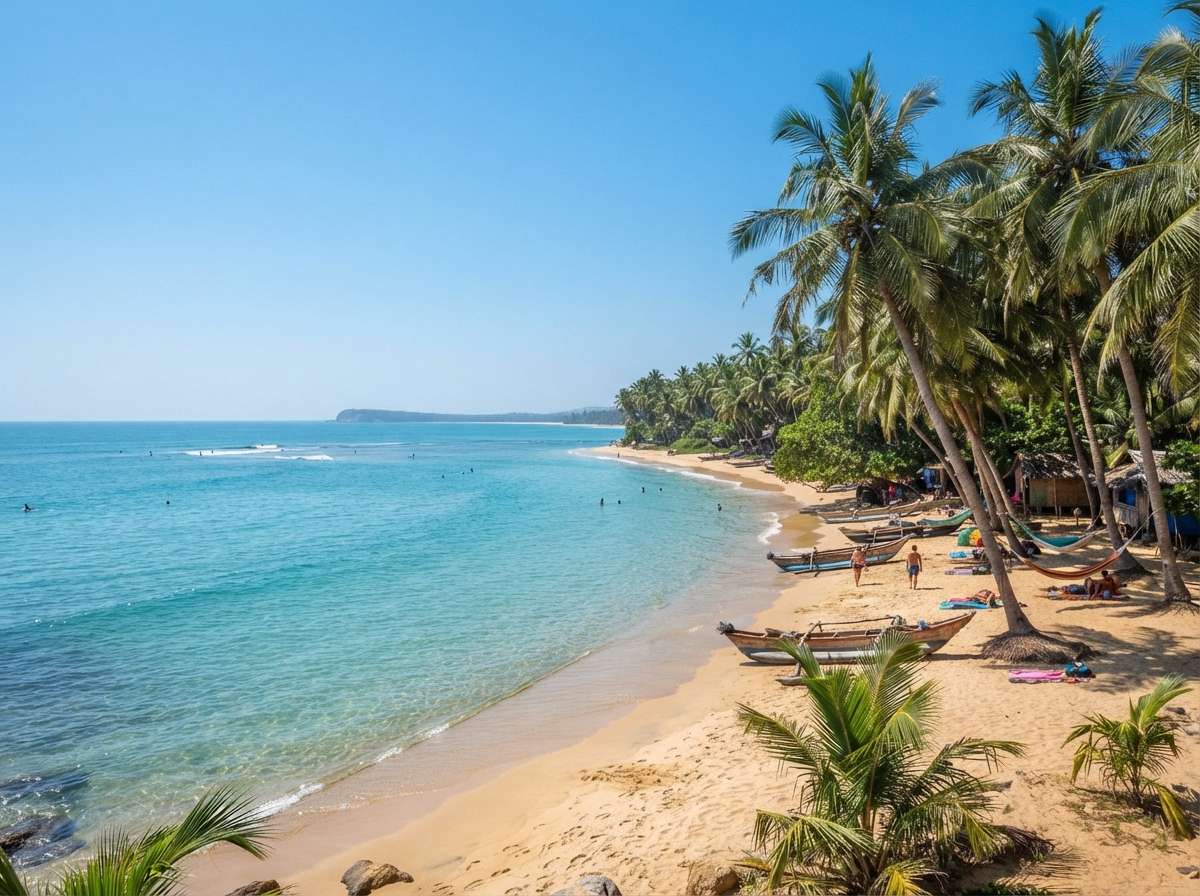
Plan your trip around the east coast dry season, which runs from about May to September. These are the months when the rain stays away, the sea is warm and the surf is at its best, and it is also when the town is at its liveliest, with every cafe open and a steady crowd of surfers and travellers. July to September is the busiest window, so book accommodation ahead if you are coming for the peak swell. April and October sit on the shoulders of the season: still surfable, often quieter and a little cheaper, with a slightly higher chance of a passing shower.
From November to March the pattern flips. The northeast monsoon brings rain to the east coast, the swell fades, and a large share of the guesthouses, surf schools and restaurants simply close for the off-season. The town goes quiet and sleepy. It is not impossible to visit then, but you will find far fewer places open and little surf, so unless you specifically want the emptiness, save Arugam Bay for the May to September window.
How to reach Arugam Bay and the nearest airport
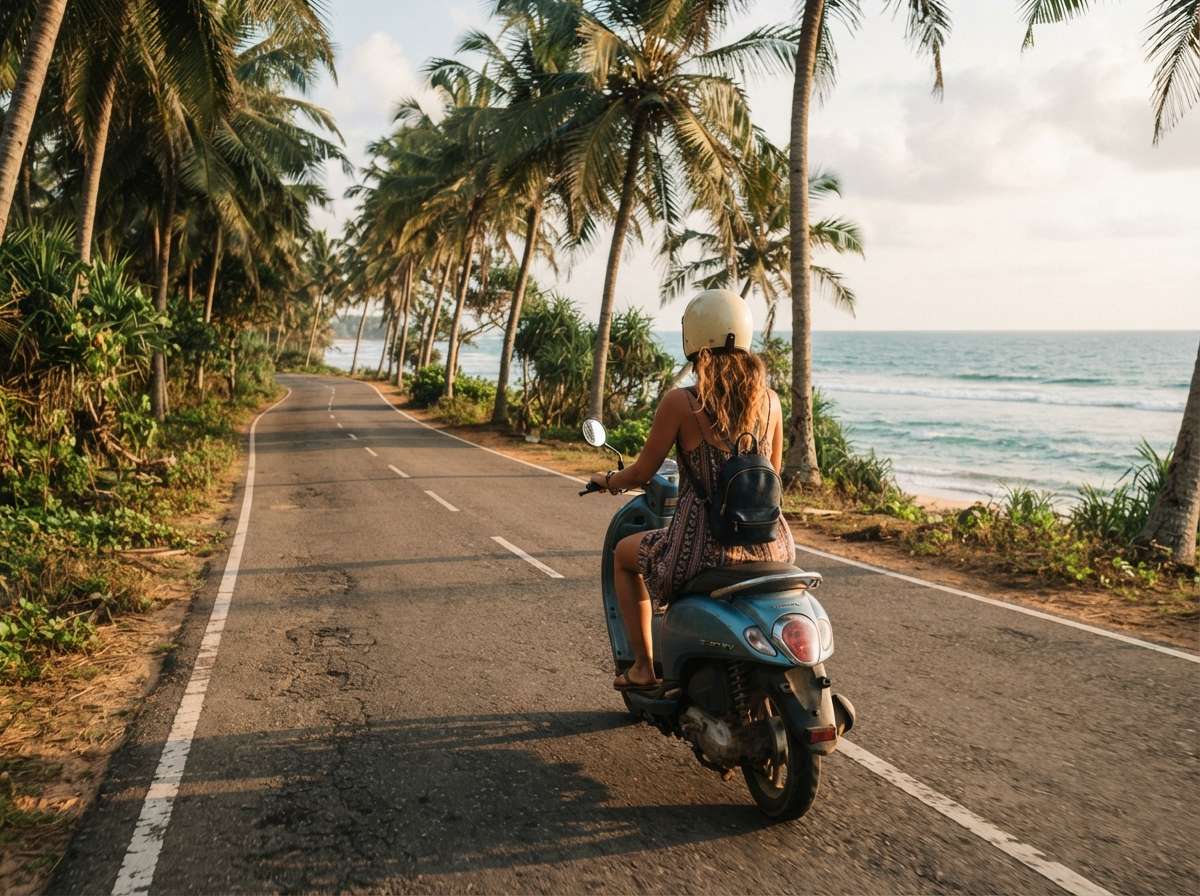
Arugam Bay’s one drawback is its distance from everywhere, so it pays to plan the journey. The town sits on the southeast coast, well away from Sri Lanka’s main airport.
By air, the closest international gateway is Mattala Rajapaksa International Airport (HRI) in the south, roughly 170 km away or about three to four hours by road, which makes it the quickest arrival if a flight suits your route. Most visitors, though, land at Colombo’s Bandaranaike International Airport (CMB), around 320 km away on the other side of the island. From Colombo you are looking at six to eight hours by private car or taxi, or seven to nine hours by bus, so many people break the journey overnight rather than drive it in one go. There is also a small domestic airport at Batticaloa (BTC) to the north, about two and a half hours away, served by light aircraft from Colombo if you want to skip the long road transfer.
By road, the most common approach is a direct car or taxi from Colombo or the airport, which is comfortable but long. Budget travellers take the bus, either direct to Pottuvil, the nearest town, and a short tuk-tuk hop to the beach, or with a change along the way. Many surfers fold Arugam Bay into a wider loop, arriving from Ella in the hill country, which is a scenic three to four hour drive southeast and a popular way to combine the mountains with the coast.
Things to do in Arugam Bay beyond surfing
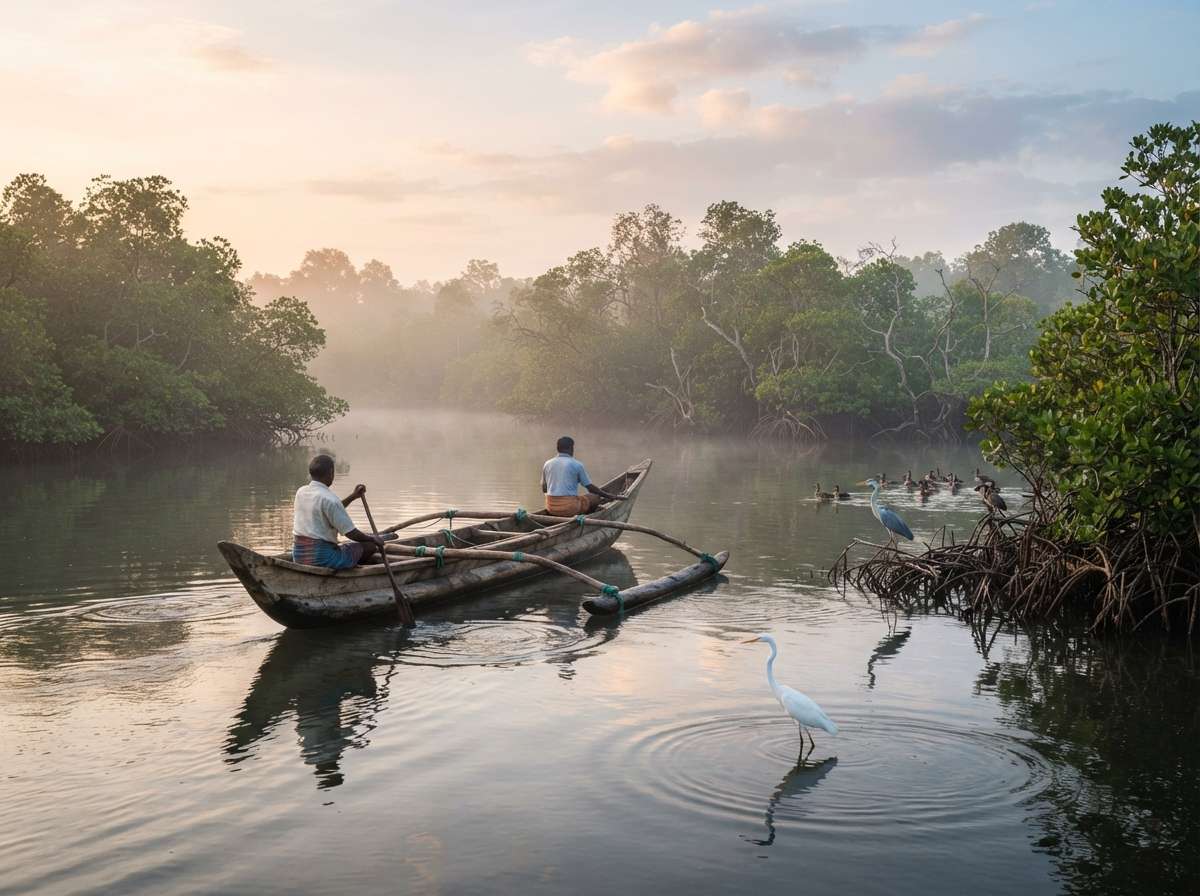
Arugam Bay rewards a few lazy days, but when you want a break from the water there is more to the area than the beach. The wetlands and scrub jungle just inland are full of wildlife, and a couple of ancient sites sit within easy reach of the strip.
Pottuvil Lagoon boat safari
A quiet morning or late-afternoon boat trip through the Pottuvil Lagoon, fringed by mangroves just north of the bay, is the easiest wildlife outing from town. Local boatmen pole you through the channels to spot crocodiles basking on the banks, water birds, monkeys and, if you are lucky, elephants that come down to drink. It takes a couple of hours and is calm, cheap and a complete contrast to the surf.
Kumana National Park
For a bigger safari, Kumana National Park lies down the coast to the south, roughly an hour to ninety minutes away past Okanda. It is one of Sri Lanka’s best bird sanctuaries, with a famous mangrove swamp that draws thousands of migratory and resident birds, and you also have a real chance of elephants, and a slimmer one of leopards. A half-day jeep safari from Arugam Bay is the usual way to see it.
Elephant Rock and the ancient temples
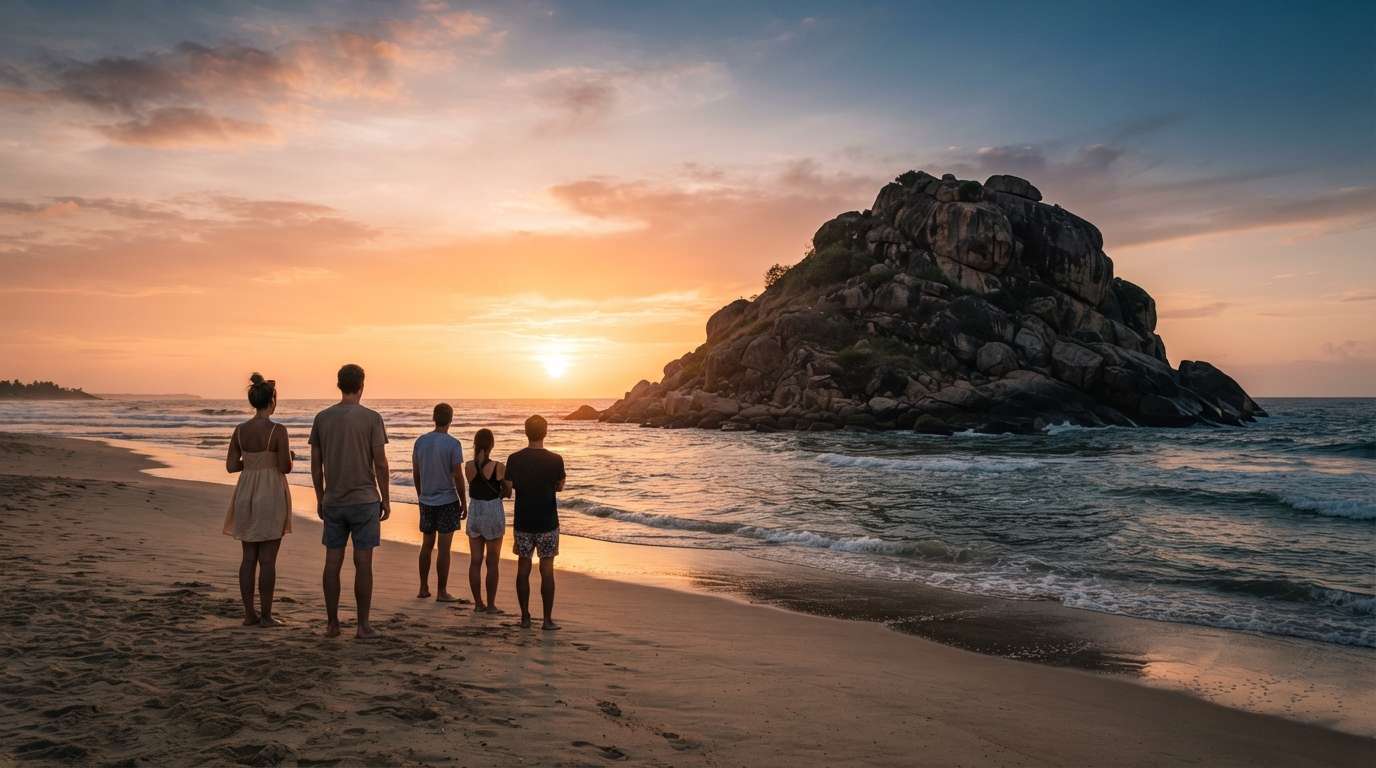
Closer to home, Elephant Rock is the headland just south of the bay (about 4 km down the coast) that doubles as a gentle surf spot and the best sunset viewpoint in the area; a short climb gives you the whole coastline at golden hour. On the coast near Pottuvil, Muhudu Maha Viharaya is an atmospheric old temple half-buried in beachside sand, linked in local tradition to King Kavantissa. Further out, the rock-cut Kudumbigala forest monastery, founded as a refuge for meditating monks, sits about thirty kilometres away and makes a good half-day trip for the climb and the views from the top.
Both are active Buddhist sites, so cover your shoulders and knees, remove your shoes and hat before stepping onto the temple grounds, and never turn your back on a Buddha statue for a photo.
Where to stay and eat in Arugam Bay
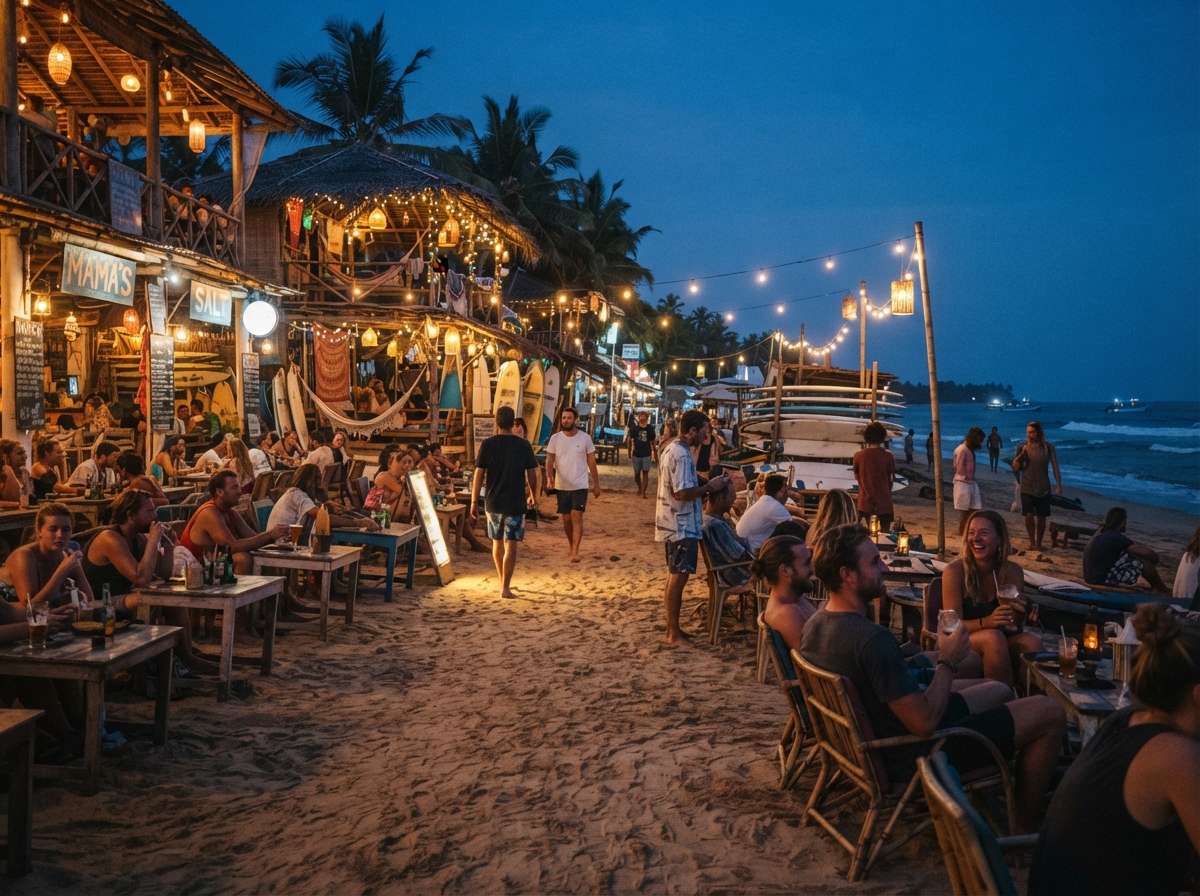
Almost everything in Arugam Bay lines one long road behind the beach, so you are never far from the sand. Accommodation runs from simple surf-camp cabanas and family guesthouses to a handful of smarter boutique places with pools, such as The Blue Wave and Arugambay Roccos, with rates climbing in the July to September peak and falling sharply on the shoulders of the season. Book ahead for the peak; turn up and bargain in the quieter months.
Eating out is relaxed and seafood-heavy. The strip is full of open-sided cafes serving fresh fish and prawns, Sri Lankan rice and curry, and the Western and brunch food that surfers run on, from hummus and smoothie bowls to strong morning coffee. A plate of the day’s catch with rice costs very little, and most places are casual, barefoot and good for lingering between surf sessions. For a full island itinerary that pairs the east coast with the hills and the south, browse our Sri Lanka travel guide.
Practical tips for visiting Arugam Bay
- Bring cash. There are only a few ATMs in town and they can run dry in peak season, and the most reliable bank ATMs are over in Pottuvil a few kilometres north, so carry enough rupees to cover a few days.
- Reef-safe sunscreen, a rash vest and a water bottle make the long days in the sun easier, and the shops here have limited stock.
- Hire a scooter or tuk-tuk to reach the outer surf points, the lagoon and the temples, as they are spread out along the coast.
- The bay is calm and good for swimming, but the point breaks have rocks and current, so beginners should stick to the sandy beginner spots or take a lesson.
- Do not swim or wade in the lagoons and estuaries behind the beach and around Elephant Rock, which are home to crocodiles; keep to the open sea and the dry trails.
- Respect the off-season. From November to March many places shut, so check that your guesthouse and a few cafes are open before you commit to the trip.
Planning your Arugam Bay trip
Give yourself three to five days: enough to find your feet in the surf, take a lagoon safari or a Kumana jeep trip, and still have a morning spare to do nothing at all on Asia’s best beach. Come between May and September, book ahead for the July to September peak, and plan the long transfer from Colombo or Mattala before you arrive. When you are ready to turn it into a trip, our Sri Lanka tour packages can fold Arugam Bay into a wider island itinerary with the hills, the south coast and the cultural triangle.
FAQs
Frequently asked questions About Arugam Bay
Yes. Arugam Bay is one of the better places in Sri Lanka to learn, because it has gentle beginner waves alongside its famous advanced break. Start at Baby Point or Whiskey Point, where small, mellow rights are easy to learn on, or take a lesson near Elephant Rock. Surf schools line the main strip and rent boards by the hour or day. Once you are confident, you can graduate to the faster wall at Main Point just along the coast.
The east coast surf season runs from about April to October, the opposite of Sri Lanka's southwest coast. The best and most consistent swell lands in the peak months of July to September, when offshore winds groom the point and the long rights peel for hundreds of metres. April and October are quieter shoulder months that still surf well. From November to March the swell fades and many surf camps close, so plan your trip for the May to September window.
The main bay is calm, shallow and gently shelving, which makes it one of the more swimmer-friendly beaches on this coast. The surf points, by contrast, break over rock and can carry a current, so they are for surfers rather than swimmers. Stick to the main beach for a dip, keep an eye on children in the water, and ask locally about conditions on any given day. If you want waves without the rocks, the sandy beginner spots are the safest place to practise.
Three to five days is the sweet spot. That gives you time to settle into the surf or a few lessons, fit in a Pottuvil Lagoon boat safari and a day trip to Kumana National Park, climb Elephant Rock for sunset, and still have a morning to relax on the beach. Dedicated surfers often stay a week or more to make the long journey worthwhile and chase the swell across the different points. For a quick stop, two nights covers the highlights.
Arugam Bay is on the southeast coast, a long way from the main airport. The nearest international gateway is Mattala Rajapaksa (HRI) in the south, about 170 km or three to four hours by road. Most visitors fly into Colombo's Bandaranaike airport (CMB), roughly 320 km away, which is six to eight hours by car or seven to nine by bus. There is also a small domestic airport at Batticaloa to the north. Many travellers arrive instead from Ella in the hills, a scenic three to four hour drive.
Very much so. You do not need a board to enjoy Arugam Bay. The main beach is calm and good for swimming and lazing, the cafes along the strip are made for slow mornings, and the surrounding area is full of wildlife. Take a boat safari through Pottuvil Lagoon to see crocodiles, elephants and birds, join a jeep safari into Kumana National Park, or visit the ancient coastal temple at Muhudu Maha Viharaya. It is an easy place to do very little.
Lessons and rentals are good value by international standards. A group surf lesson usually costs from around LKR 6,000, and renting a board runs from around LKR 1,500 a day, with better rates the longer you keep it. Private lessons and multi-day surf packages cost more. Prices rise a little in the July to September peak and soften in the shoulder months, so it is worth comparing a couple of the schools along the main strip before you book.
Yes, especially if you want a laid-back beach with genuine character. It was named Asia's Best Beach for 2026, it has some of the most reliable surf in the Indian Ocean, and it has kept the slow, barefoot feel that bigger resorts have lost. The catch is the distance: it is a long haul from Colombo, and most of the town shuts down outside the May to September season. Time your trip for those months and the journey is well worth it.