
 7D / 6N
8% OFF


Bali's Most Famous Places, Sorted By Type
Bali’s most famous tourist attractions are Uluwatu Temple, Tanah Lot, Lempuyang’s Gates of Heaven, the Tegallalang rice terraces, Ubud’s Sacred Monkey Forest, Ulun Danu Beratan, Tirta Empul, Mount Batur, Nusa Penida and Besakih. Most charge foreign adults IDR 50,000 to 150,000 (about ₹265 to ₹800), and the beaches are free. This list covers 40 famous places in Bali, grouped by type, so you can see at a glance which temples, terraces, waterfalls and islands are worth your time. Every entry says what the place is famous for, what it costs in rupiah and rupees, how long to give it and one local tip. Two short sections at the end are honest about which famous photos hide a queue and which big names are overrated.
Key takeaways
- Reach Lempuyang, Tegallalang and Tirta Empul before 8 am. By 10 am the photo queues at the first two can run past an hour.
- Budget about ₹2,500 per person for a day of three or four paid sights. Beaches, the Campuhan Ridge and Ubud Palace cost nothing.
- Carry a sarong or use the one lent at the gate. All nine temples on this list ask you to cover shoulders and knees.
- Keep small rupiah notes for village fees, farmers’ donation boxes and parking. UPI was not working in Indonesia when we checked in late October 2026.
- Skip the Bali swing if the queue is over 30 minutes. Sidemen, Jatiluwih and Gunung Kawi give you the same scenery with a fraction of the crowd.
The 10 most famous places in Bali
If you only have time for the names everyone back home will ask about, these are the ten. The type column tells you where each one sits in the full list below.
| Attraction | Type | Famous for | Fee for foreign adult, IDR (₹) | Time needed |
|---|---|---|---|---|
| Uluwatu Temple | Temple | Clifftop temple and the sunset Kecak fire dance | 60,000 (₹320) + Kecak 150,000 (₹800) | 3 hours |
| Tanah Lot | Temple | Sea temple on a rock, Bali’s best-known sunset | 75,000 (₹400) | 2 hours |
| Lempuyang Temple | Temple | Gates of Heaven photo framing Mount Agung | 100,000 + 50,000 shuttle (₹800 total) | 3 to 4 hours |
| Tegallalang Rice Terraces | Rice terraces | Postcard rice terraces and swings | 25,000 to 50,000 (₹135 to ₹265) | 1.5 hours |
| Sacred Monkey Forest | Wildlife | 1,200 macaques among jungle temples | 130,000 (₹690) | 1.5 hours |
| Ulun Danu Beratan | Temple | Lake temple pictured on the 2005-series IDR 50,000 note | 100,000 (₹530) | 1.5 hours |
| Tirta Empul | Temple | Holy spring purification pools | 50,000 (₹265) | 1.5 hours |
| Mount Batur | Volcano | Sunrise trek to an active volcano rim | Trek about 600,000 to 800,000 (₹3,190 to ₹4,255) | 7 to 8 hours |
| Nusa Penida | Island | Kelingking Beach’s T-rex cliff | Boat 150,000 to 250,000 each way (₹800 to ₹1,330) | Full day |
| Besakih Temple | Temple | Bali’s Mother Temple on Mount Agung | 150,000 incl. shuttle (₹800) | 2 hours |
All 40 Bali tourist attractions at a glance
The 40 places below run in this order, temples first and adventure parks last, so you can jump straight to the type you care about. Fees are for a foreign adult in rupiah. Each entry below also gives the rupee figure.
| # | Attraction | Type | Entry fee, IDR | Time needed |
|---|---|---|---|---|
| 1 | Uluwatu Temple | Temple | 60,000, Kecak 150,000 extra | 3 hours |
| 2 | Tanah Lot | Temple | 75,000 | 2 hours |
| 3 | Besakih Temple | Temple | 150,000 with shuttle | 2 hours |
| 4 | Lempuyang Temple | Temple | 100,000 + 50,000 shuttle | 3 to 4 hours |
| 5 | Ulun Danu Beratan | Temple | 100,000 | 1.5 hours |
| 6 | Tirta Empul | Temple | 50,000 | 1.5 hours |
| 7 | Taman Ayun | Temple | 50,000 | 1 hour |
| 8 | Goa Gajah | Temple | 50,000 | 1 hour |
| 9 | Gunung Kawi | Temple | 50,000 | 1.5 hours |
| 10 | Tegallalang Rice Terraces | Rice terraces | 25,000 to 50,000 | 1.5 hours |
| 11 | Jatiluwih Rice Terraces | Rice terraces | 75,000 | 2 hours |
| 12 | Sidemen Valley | Rice valley | Free | Half day |
| 13 | Campuhan Ridge Walk | Valley walk | Free | 1.5 hours |
| 14 | Mount Batur | Volcano | 50,000 area fee, trek 600,000 to 800,000 | 7 to 8 hours |
| 15 | Kintamani coffee plantations | Highlands | Free tasting | 45 minutes |
| 16 | Handara Gate and Munduk | Highlands | 50,000 for the gate photo | Half day |
| 17 | Tegenungan Waterfall | Waterfall | 30,000 | 1.5 hours |
| 18 | Tukad Cepung Waterfall | Waterfall | 30,000 | 1.5 hours |
| 19 | Sekumpul Waterfall | Waterfall | 20,000, guided trek 150,000 to 250,000 | 3 hours plus the drive |
| 20 | Aling-Aling Waterfall | Waterfall | About 20,000, slides about 150,000 | 2 to 3 hours |
| 21 | Padang Padang, Melasti and Bukit beaches | Beach | Pandawa 25,000, others small cash fees | 2 to 3 hours |
| 22 | Jimbaran Bay | Beach | Free | 2 hours |
| 23 | Nusa Dua and Tanjung Benoa | Beach | Free, water sports extra | Half day |
| 24 | Kuta, Legian and Double Six | Beach | Free | 2 hours |
| 25 | Seminyak and Petitenget | Beach | Free | Half day |
| 26 | Canggu | Beach | Free, small parking fees | Half day |
| 27 | Lovina Beach | Beach | Free, dolphin boats per seat | Full day |
| 28 | Nusa Penida | Island | Boat 150,000 to 250,000 each way + 25,000 island fee + 25,000 per main site | Full day |
| 29 | Nusa Lembongan and Ceningan | Island | Boat fare + island levy | Full day |
| 30 | Amed and Tulamben | Underwater | Free, gear hired locally | Full day |
| 31 | Ubud Palace and Art Market | Palace and market | Free, dance about 100,000 | 1.5 hours |
| 32 | Penglipuran Village | Village | About 50,000 in a package | 1 hour |
| 33 | Tirta Gangga Water Palace | Water palace | 90,000 | 1 hour |
| 34 | Garuda Wisnu Kencana | Cultural park | 150,000 | 2 to 3 hours |
| 35 | Sacred Monkey Forest | Wildlife | 130,000 | 1.5 hours |
| 36 | Bali Safari and Marine Park | Wildlife park | From about 650,000 | Half day |
| 37 | Bali Zoo | Wildlife park | Tiered tickets | Half day |
| 38 | Waterbom Bali | Water park | From about 630,000 | Half day |
| 39 | Ayung River Rafting | Adventure | Sold as a tour | Half day |
| 40 | Bali Swing | Adventure | Package, varies by site | 1.5 to 2 hours |
Indonesia
Bali
40 Famous Bali Tourist Attractions, From Temples To Islands
Best Time
April - October
Select Package Type
Best Selling Packages


40 Bali Tourist Attractions In Type Order
Forty famous Bali attractions in one list, temples first, then rice terraces, volcanoes, waterfalls, beaches, islands, palaces and villages, and wildlife and adventure parks
-
Uluwatu Temple And The Kecak Fire Dance
-
Tanah Lot Temple
-
Besakih Temple
-
Lempuyang Temple (Gates Of Heaven)
-
Ulun Danu Beratan Temple
-
Tirta Empul Temple
-
Taman Ayun Temple
-
Goa Gajah
-
Gunung Kawi Temple
-
Tegallalang Rice Terraces
-
Jatiluwih Rice Terraces
-
Sidemen Valley
-
Campuhan Ridge Walk
-
Mount Batur And Kintamani
-
Kintamani Coffee Plantations
-
Handara Gate, Munduk And The Twin Lakes
-
Tegenungan Waterfall
-
Tukad Cepung Waterfall
-
Sekumpul Waterfall
-
Aling-Aling Waterfall
-
Padang Padang, Melasti And The Bukit Beaches
-
Jimbaran Bay
-
Nusa Dua And Tanjung Benoa
-
Kuta, Legian And Double Six Beaches
-
Seminyak And Petitenget
-
Canggu
-
Lovina Beach
-
Nusa Penida
-
Nusa Lembongan And Nusa Ceningan
-
Amed And Tulamben
-
Ubud Palace And Ubud Art Market
-
Penglipuran Village
-
Tirta Gangga Water Palace
-
Garuda Wisnu Kencana Cultural Park
-
Sacred Monkey Forest Sanctuary
-
Bali Safari And Marine Park
-
Bali Zoo
-
Waterbom Bali
-
Ayung River Rafting
-
Bali Swing
Explore Popular Destination In Bali
01
Uluwatu Temple And The Kecak Fire Dance
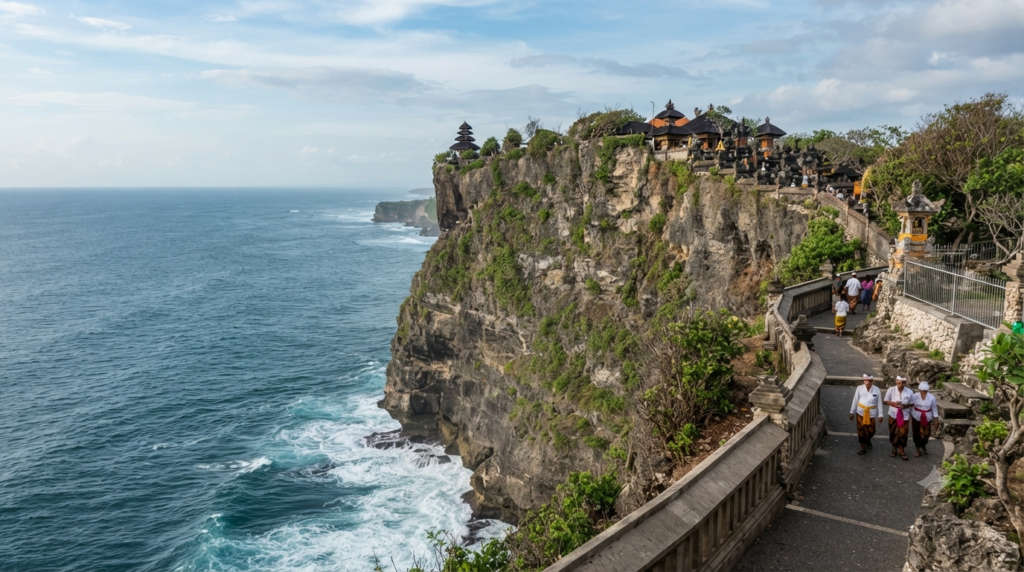
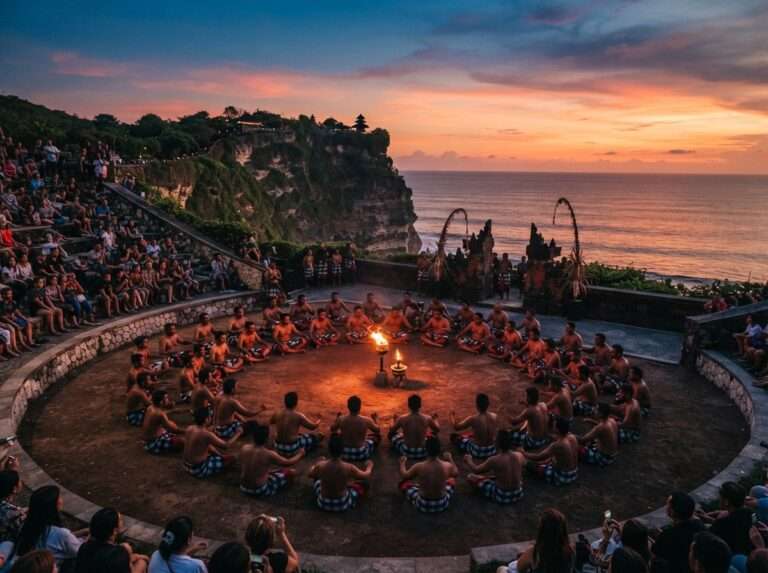
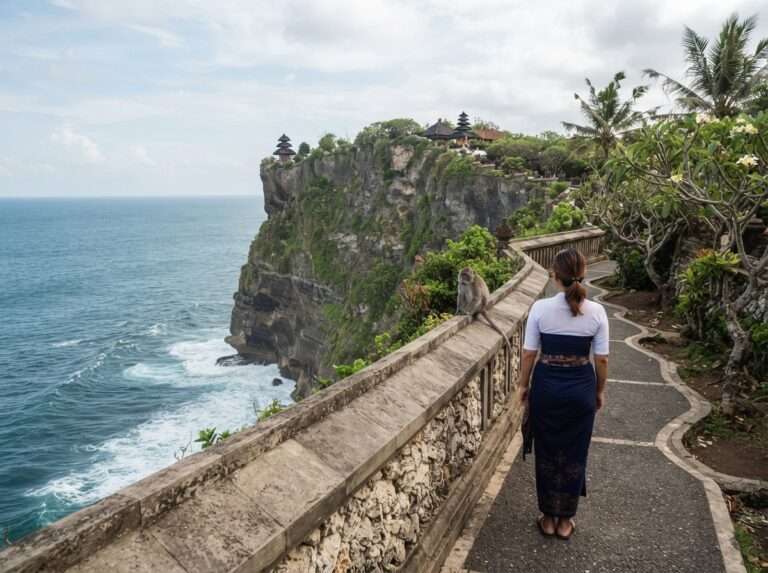
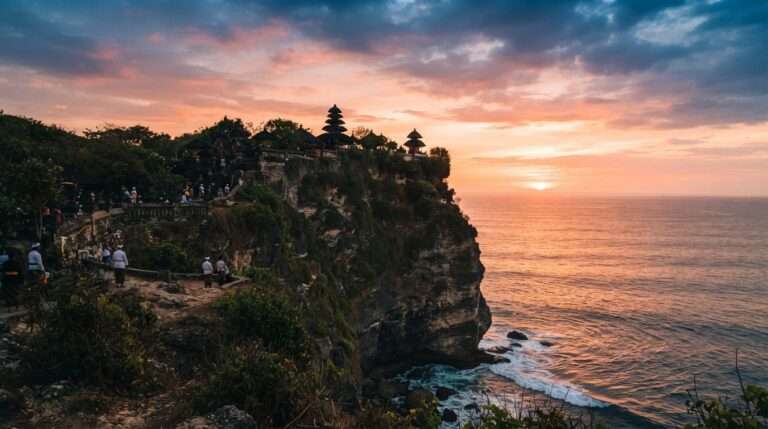
Pura Luhur Uluwatu is the most famous of Bali’s sea temples, set on a limestone cliff about 70 metres above the Indian Ocean at the southern tip of the Bukit. It is one of the island’s six directional temples, and as at every Balinese temple, the inner shrine is closed to visitors. You come for the clifftop path and the Kecak fire dance at sunset, which tells the Ramayana from Sita’s abduction to Hanuman setting Lanka alight. Gaurav Krishna Kamath wrote in his family travelogue that the climb tired his family of seven, but the waves and the Ramayana at sunset made it worth it.The resident macaques grab sunglasses and phones and trade them back for fruit.
Our Uluwatu Temple guide covers the cliff walk.
| Type | Temple (sea temple, Bukit peninsula) |
| Famous for | Clifftop views and the sunset Kecak dance |
| Entry fee | IDR 60,000 (≈ ₹320) foreign adult, IDR 40,000 child, sarong included (Badung rate from 1 January 2026). Kecak ticket IDR 150,000 (≈ ₹800) extra |
| Time needed | 3 hours. Kecak starts around 6 pm |
| Local tip | Arrive by 4.30 pm for a Kecak seat facing the sunset, and keep glasses inside your bag |
| Map | Uluwatu Temple on Google Maps |
Related Tour Packages


❮
❯
02
Tanah Lot Temple
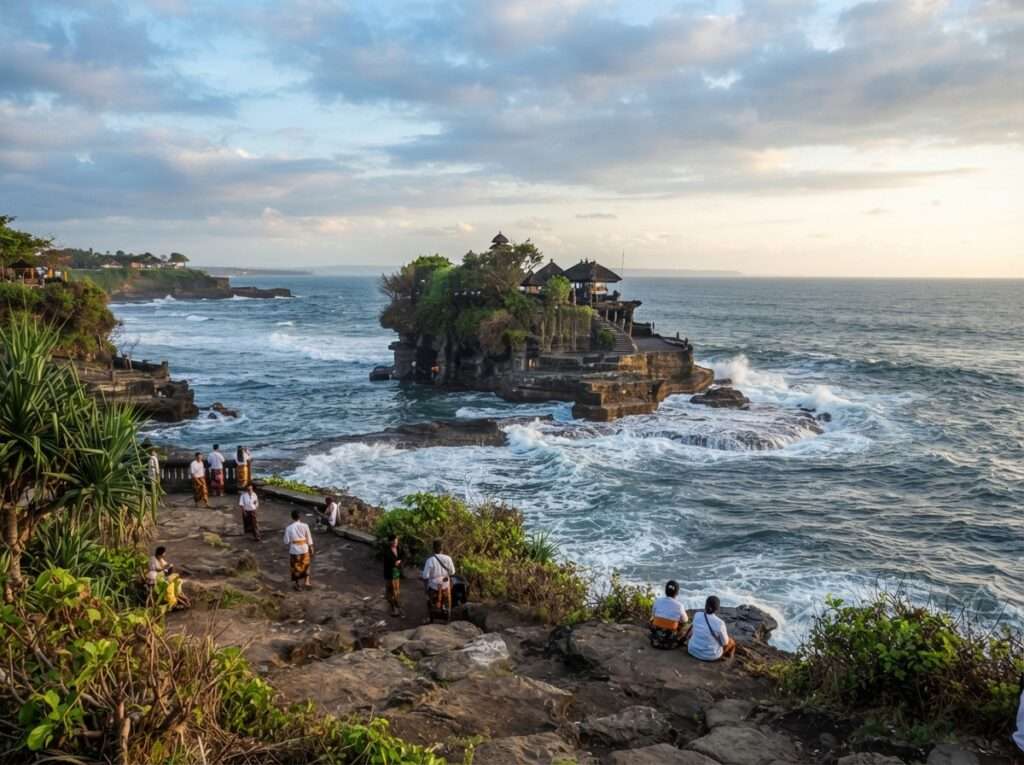
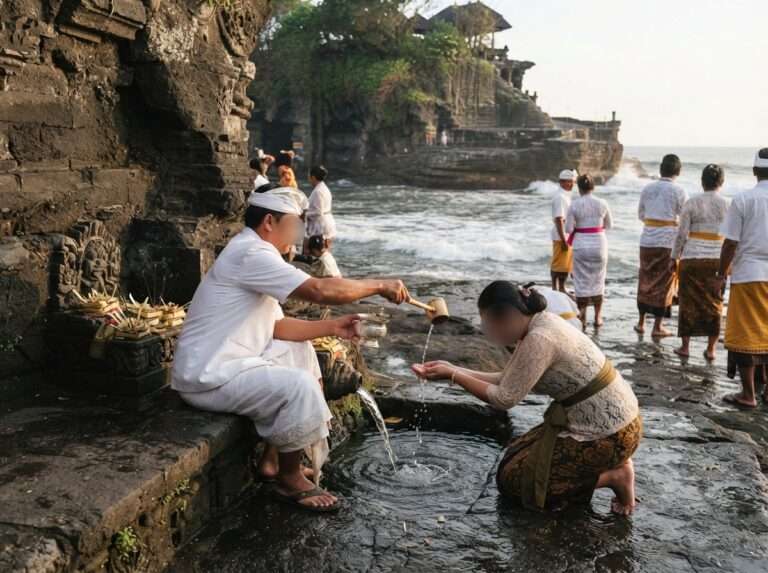
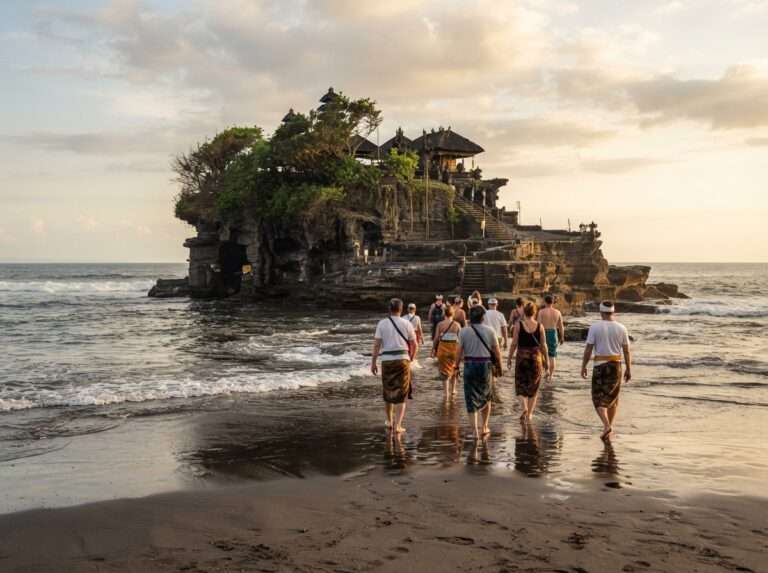
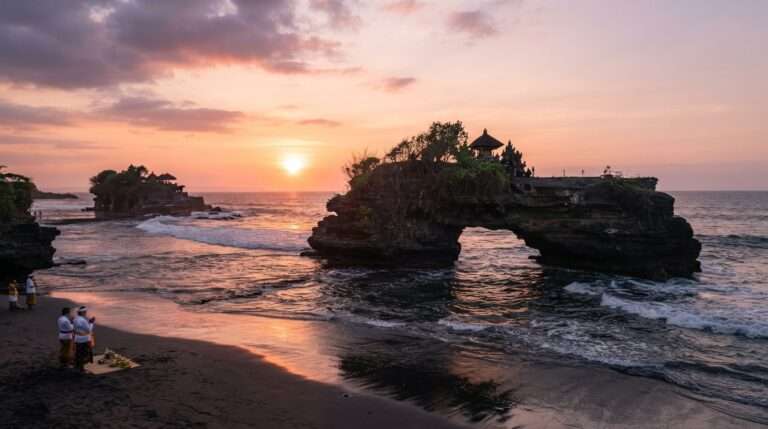
Tanah Lot is a 16th-century sea temple on a rock just off the Tabanan coast. The sea cuts it off at high tide, and at low tide you can walk across to the base. It is the most photographed sunset in Bali, so the cliff path fills from 5 pm. At the foot of the rock, priests give visitors holy water from a freshwater spring, though only worshippers may climb to the shrine. Batu Bolong, a smaller temple on a natural rock arch, is a five-minute walk north and far quieter.
Our Tanah Lot Temple guide has the tide tips, and the Tanah Lot entry fee page lists child and parking rates.
| Type | Temple (sea temple, Tabanan) |
| Famous for | A temple on a rock in the surf at sunset |
| Entry fee | IDR 75,000 (≈ ₹400) foreign adult, IDR 40,000 child. A rise to IDR 100,000 was postponed in March 2026 |
| Time needed | 2 hours |
| Local tip | Check a tide table and arrive at 4 pm, so you get low tide for the walk and stay for sunset |
| Map | Tanah Lot on Google Maps |
Related Tour Packages


❮
❯
03
Besakih Temple
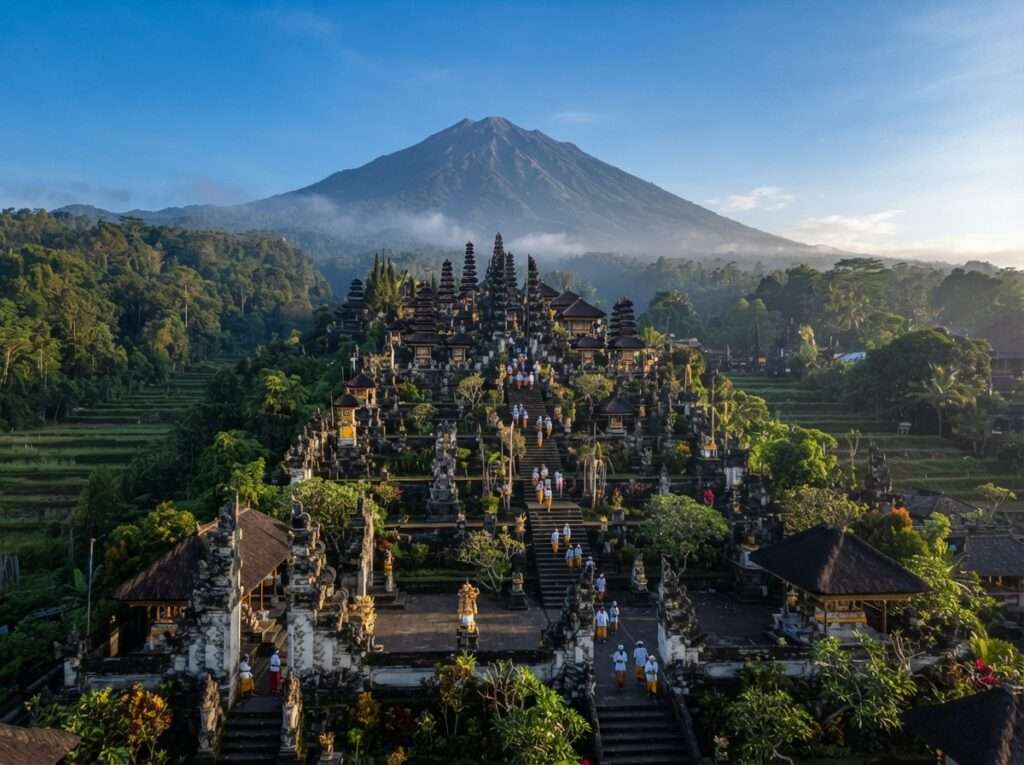
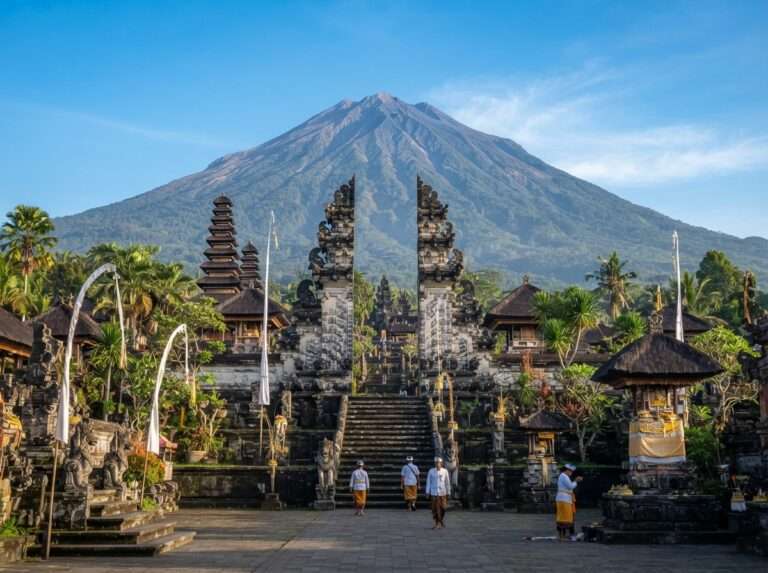
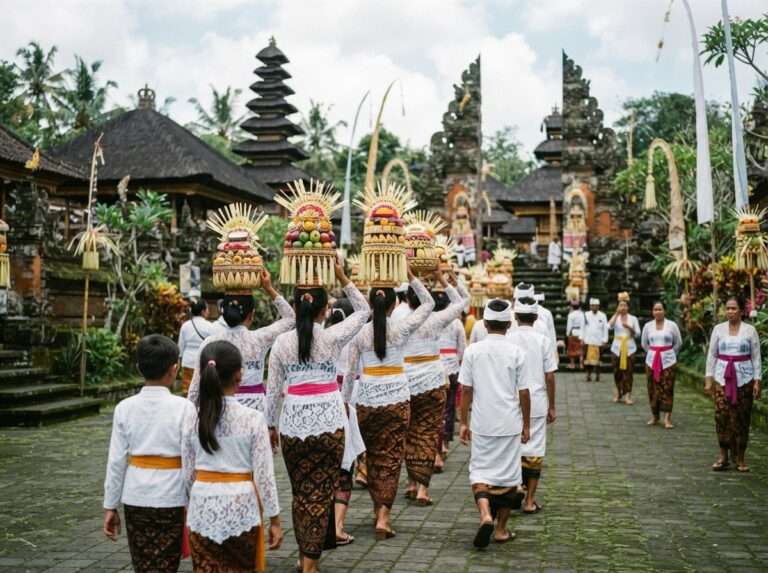
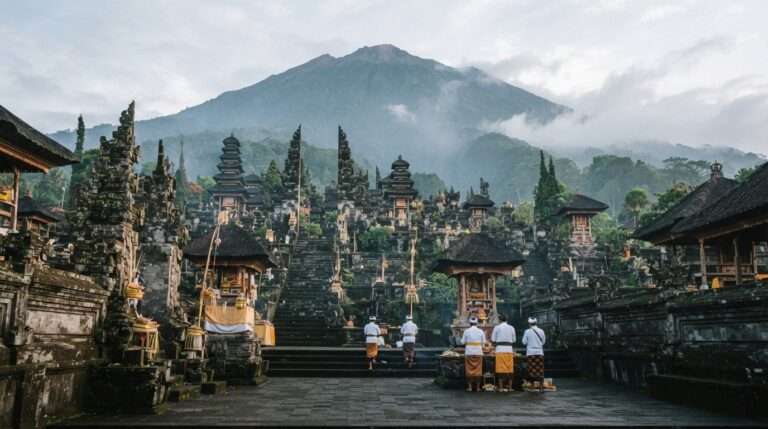
Pura Besakih is Bali’s Mother Temple, a complex of more than 80 temples climbing the slope of Mount Agung, the island’s highest volcano at 3,031 metres. It has been the centre of Balinese Hinduism for over a thousand years, and on festival days thousands of families arrive in white with offerings stacked on their heads. The ticket now includes a shuttle from the car park and a set visitor route, which ended most of the old touting. On a clear morning Agung’s summit rises straight behind the split gate.
See our Besakih Temple guide and the wider list of Bali temples.
| Type | Temple (mother temple, Karangasem) |
| Famous for | Bali's largest and holiest temple, with Agung behind it |
| Entry fee | IDR 150,000 (≈ ₹800) foreign adult, including shuttle and sarong |
| Time needed | 2 hours |
| Local tip | Go at 8 am, before cloud covers Agung. Politely refuse offering sellers on the road in |
| Map | Besakih on Google Maps |
Related Tour Packages


❮
❯
04
Lempuyang Temple (Gates Of Heaven)
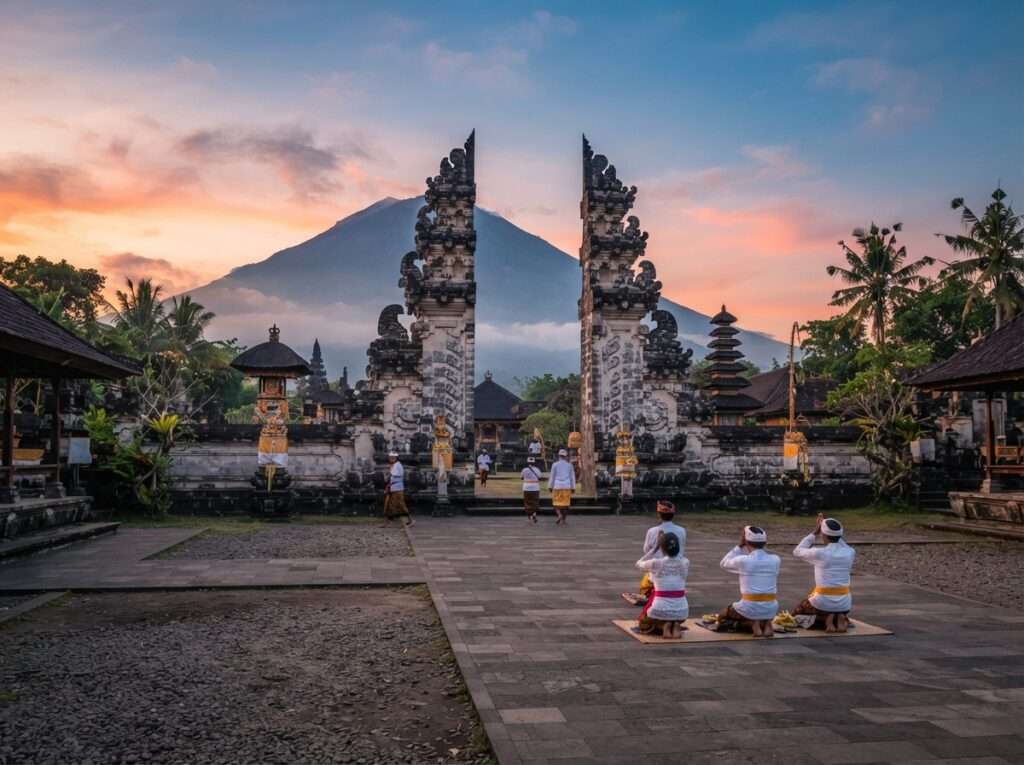
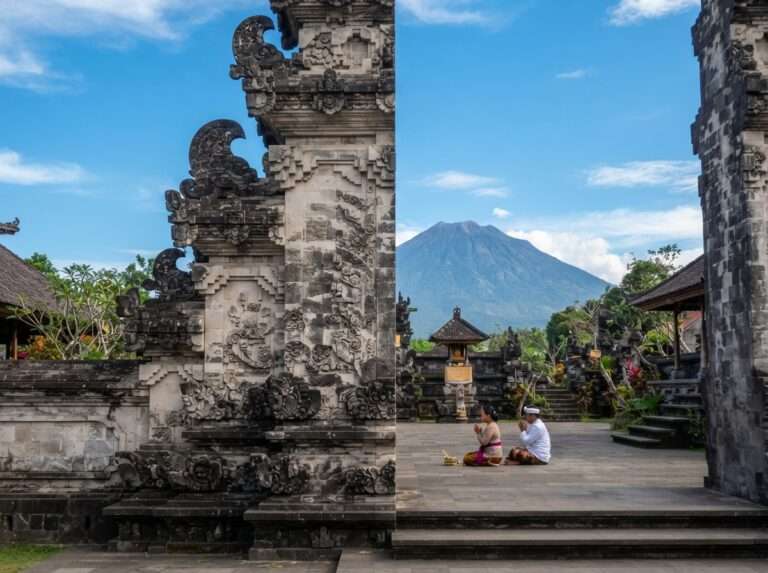
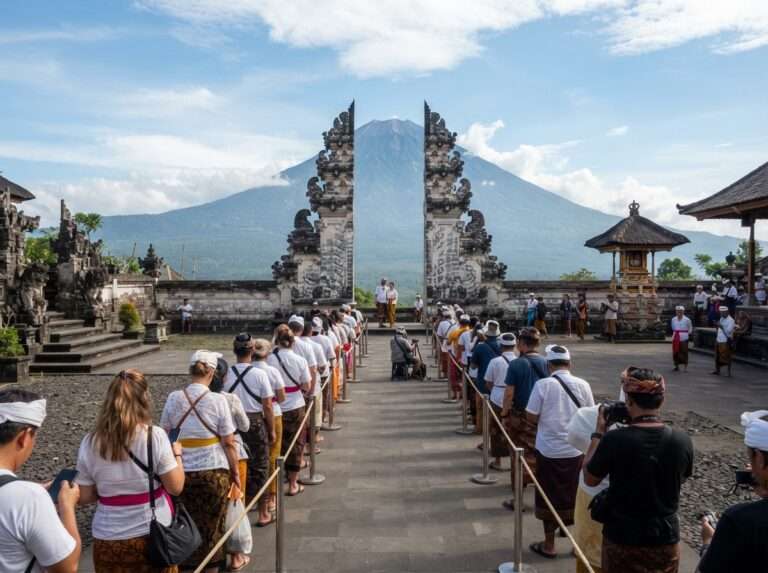
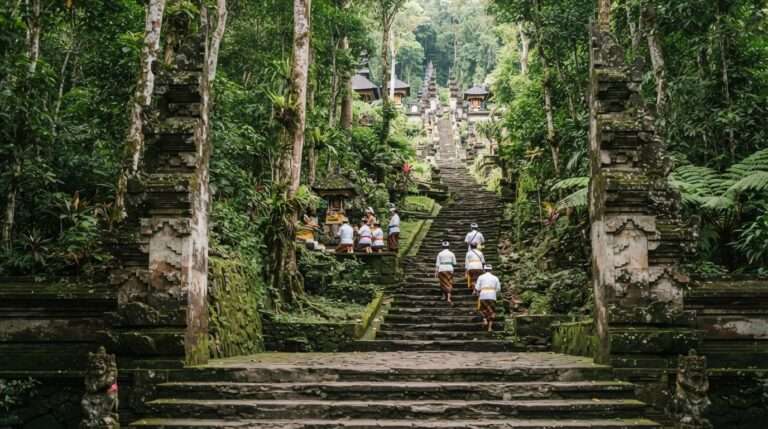
Pura Lempuyang Luhur is one of Bali’s oldest temples, high on Mount Lempuyang in Karangasem. Its split gate with Mount Agung behind it is the island’s most famous photo. The “lake” in that photo is a mirror the gate photographers hold under your phone lens, and the queue for the shot commonly runs one to three hours by mid-morning. Cars park below and a minibus shuttle takes you up from 5.30 am. Beyond the gate, the climb to the upper temples is about 1,700 steps through forest, and few visitors go past the first courtyard.
See our Lempuyang Temple guide.
| Type | Temple (mountain temple, Karangasem) |
| Famous for | The Gates of Heaven photo framing Mount Agung |
| Entry fee | IDR 100,000 temple entry plus IDR 50,000 shuttle (≈ ₹800 total), sarong included, per Indonesia's Ministry of Tourism |
| Time needed | 3 to 4 hours including the queue |
| Local tip | Take the first shuttle. April to October gives the clearest view of Agung |
| Map | Lempuyang on Google Maps |
05
Ulun Danu Beratan Temple
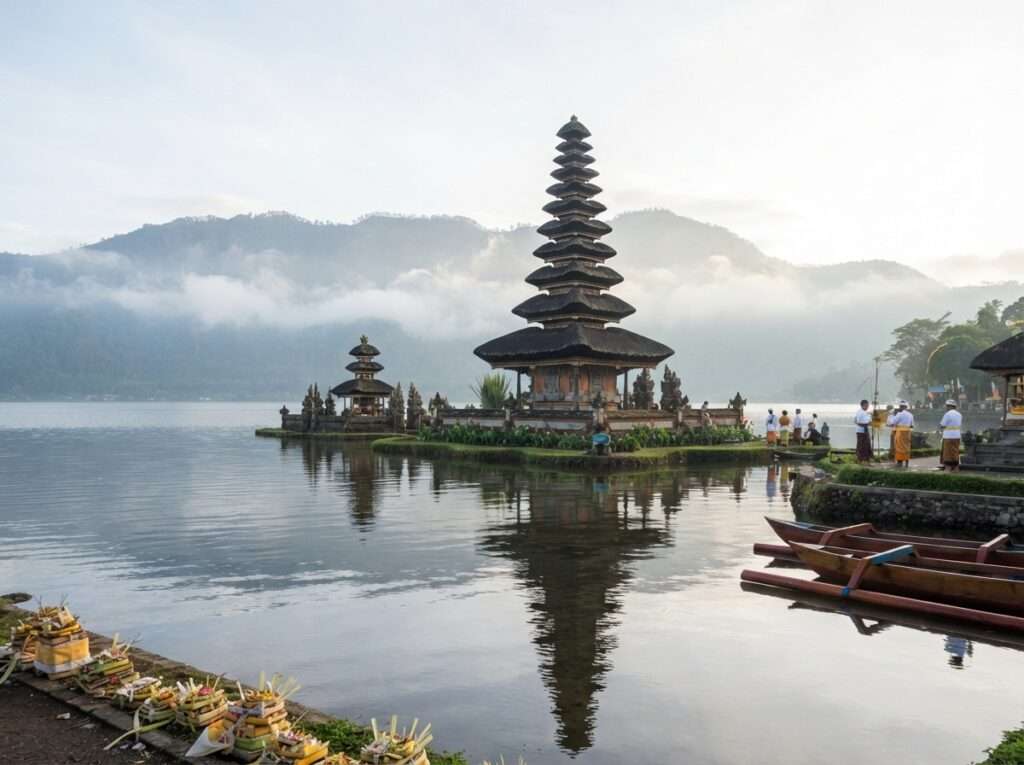
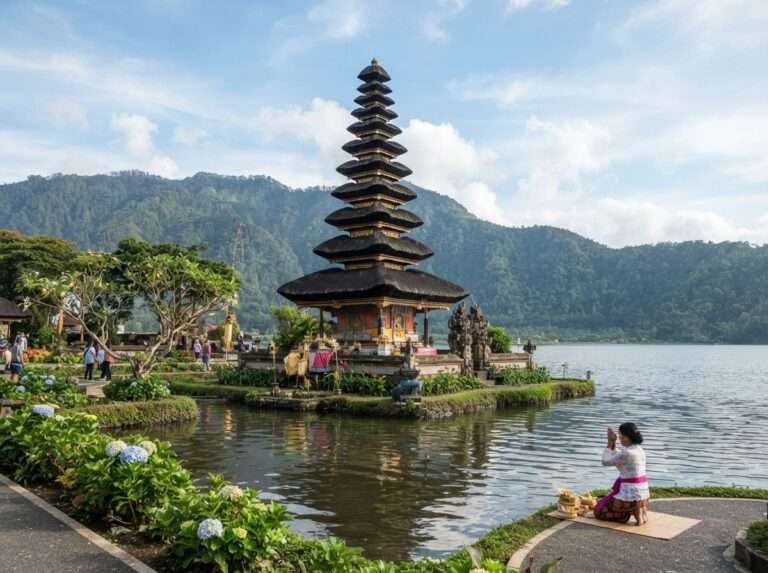
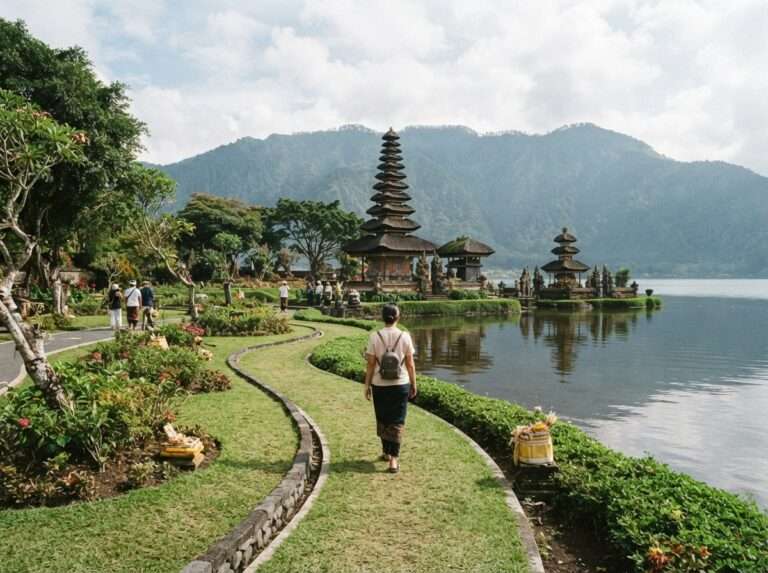
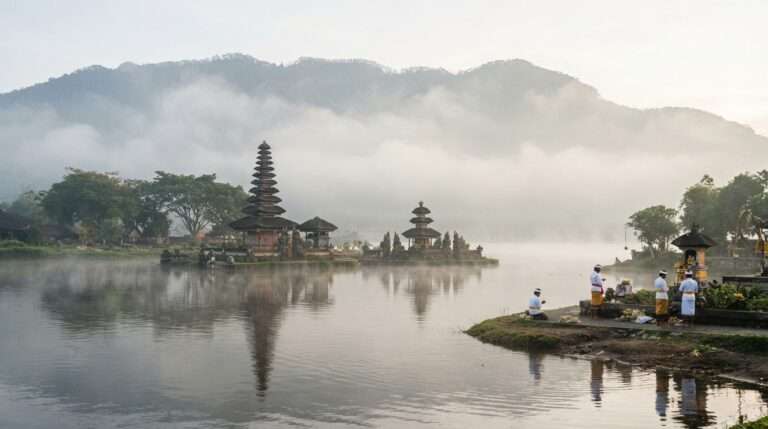
Ulun Danu Beratan is the temple on Lake Beratan in the Bedugul highlands, its 11-tiered meru tower appearing to float on the water. It is the temple on the back of the blue IDR 50,000 note first issued in 2005, before the 2016 redesign. At about 1,200 metres it is 8 to 10°C cooler than the coast, and mist often hangs on the hills behind. The gardens are large, so it rarely feels as packed as Tanah Lot. Ten minutes away, the Bali Botanic Garden (Kebun Raya) covers more than 150 hectares of highland forest and orchid houses, an easy add-on with older parents.
See our Ulun Danu Bratan guide.
| Type | Temple (lake temple, Bedugul) |
| Famous for | The meru tower on the lake, pictured on the 2005-series IDR 50,000 note |
| Entry fee | IDR 100,000 (≈ ₹530) foreign adult, IDR 75,000 child, from 1 July 2026 |
| Time needed | 1.5 hours |
| Local tip | Get there by 8 am for mist and still water, and pack a light jacket |
| Map | Ulun Danu Beratan on Google Maps |
06
Tirta Empul Temple
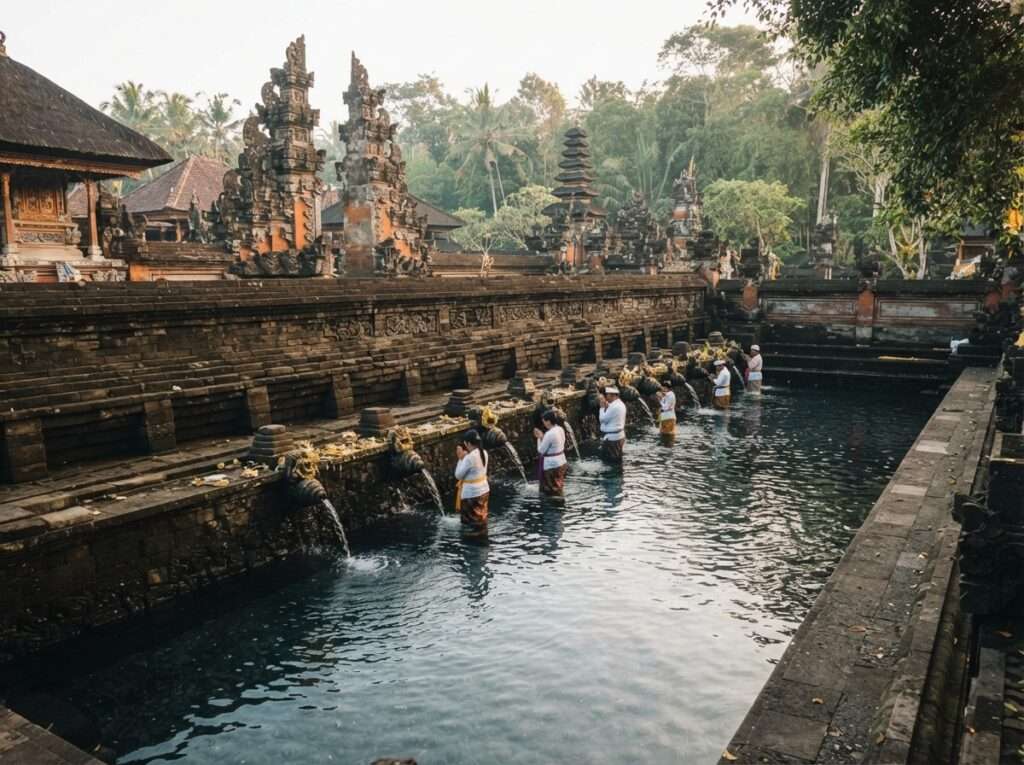
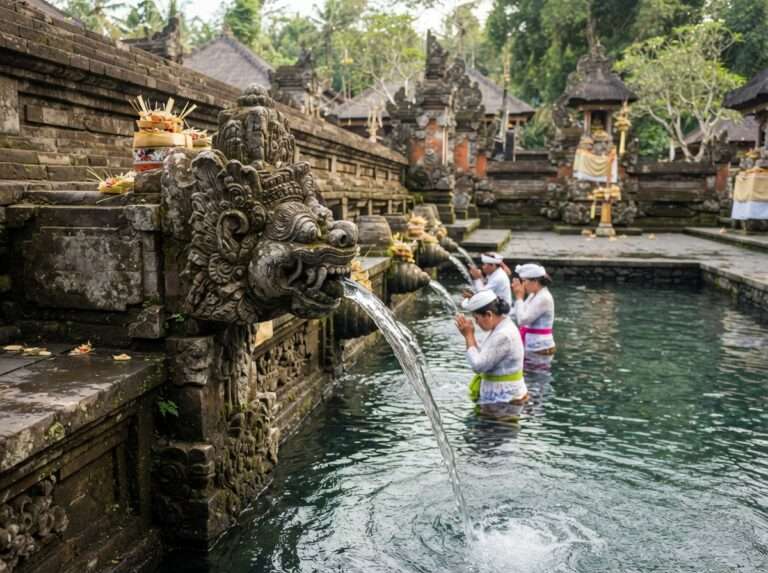
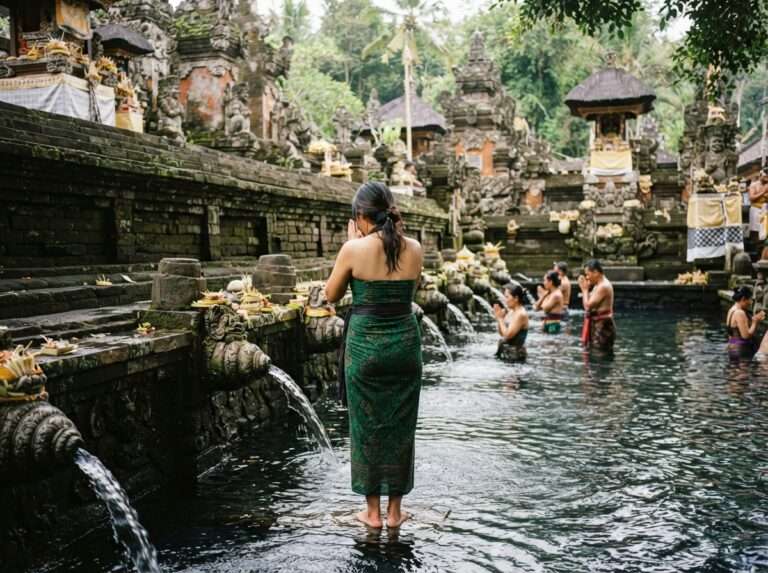
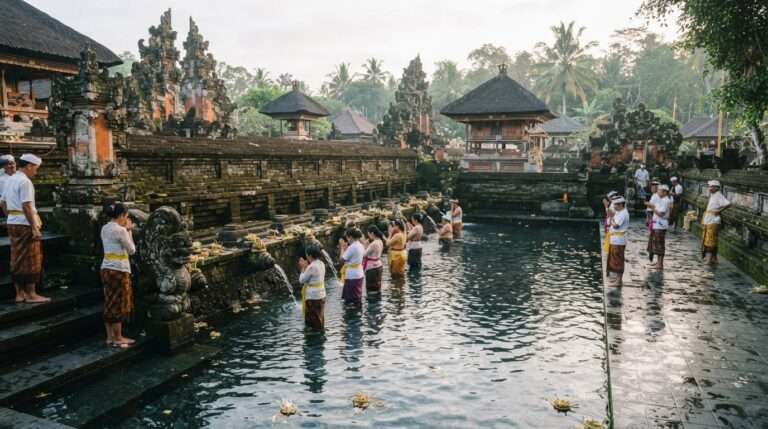
Tirta Empul is a water temple built around a holy spring in Tampaksiring, founded in the 10th century. Balinese Hindus bathe in its long stone pools, moving from spout to spout in a set order as part of the melukat purification ritual. Visitors can join in wearing a green sarong rented on site. Indian travellers often find it familiar, because it is close to a temple-tank bath back home. Skip the last two spouts, which are for funeral rites.
Our Tirta Empul guide explains the spout order.
| Type | Temple (spring temple, Tampaksiring) |
| Famous for | The melukat purification pools |
| Entry fee | IDR 50,000 (≈ ₹265) foreign adult, the Gianyar regency rate (Perda 5/2021); some 2026 guides quote IDR 75,000, so confirm at the gate. Bathing sarong rented separately |
| Time needed | 1.5 hours |
| Local tip | Come at 8 am opening, before the bathing queue builds, with a towel and dry clothes |
| Map | Tirta Empul on Google Maps |
07
Taman Ayun Temple
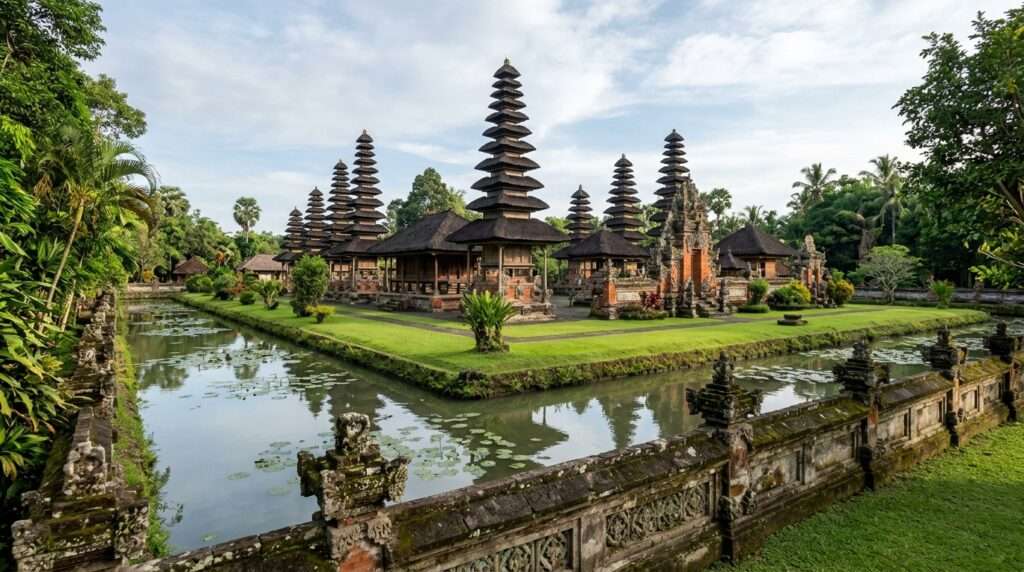
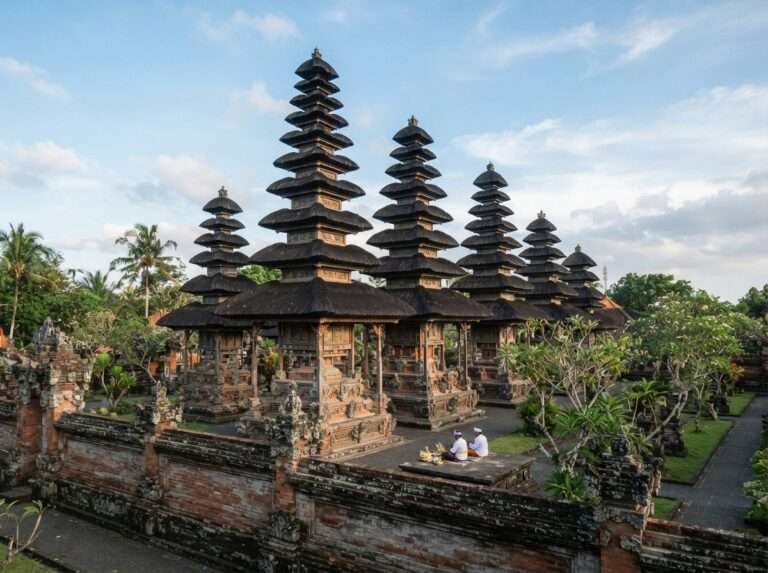
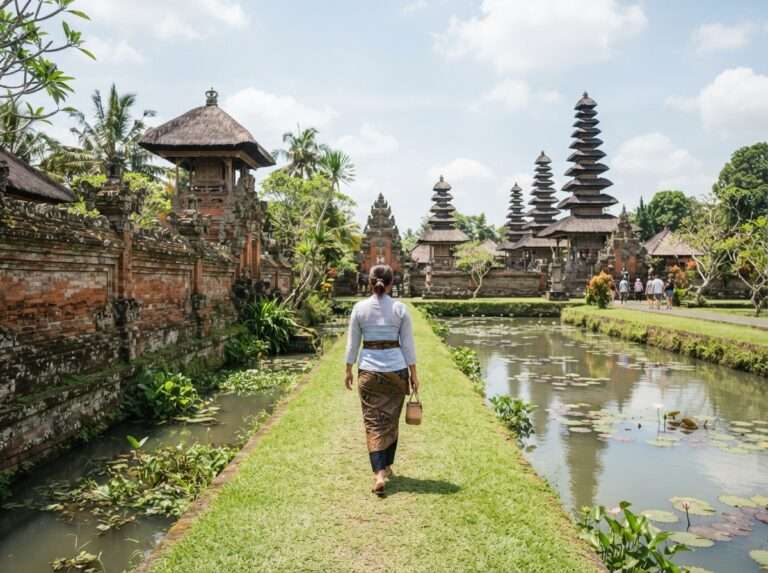
Taman Ayun was the royal temple of the Mengwi kingdom, built in 1634 and now part of Bali’s UNESCO-listed subak landscape. A moat and wide lawns surround tiered meru towers, which you see over a low wall rather than up close. It is quiet, it takes an hour, and it sits on the road from Seminyak to Bedugul and Jatiluwih, so it makes a good first stop on a mountain day.
Read more in our Taman Ayun Temple guide.
| Type | Temple (royal temple, Mengwi) |
| Famous for | Moated royal gardens and tiered shrines, part of the UNESCO subak listing |
| Entry fee | IDR 50,000 (≈ ₹265) foreign adult |
| Time needed | 1 hour |
| Local tip | Visit between 8 and 10 am, before the tour buses heading north stop here |
| Map | Taman Ayun on Google Maps |
08
Goa Gajah
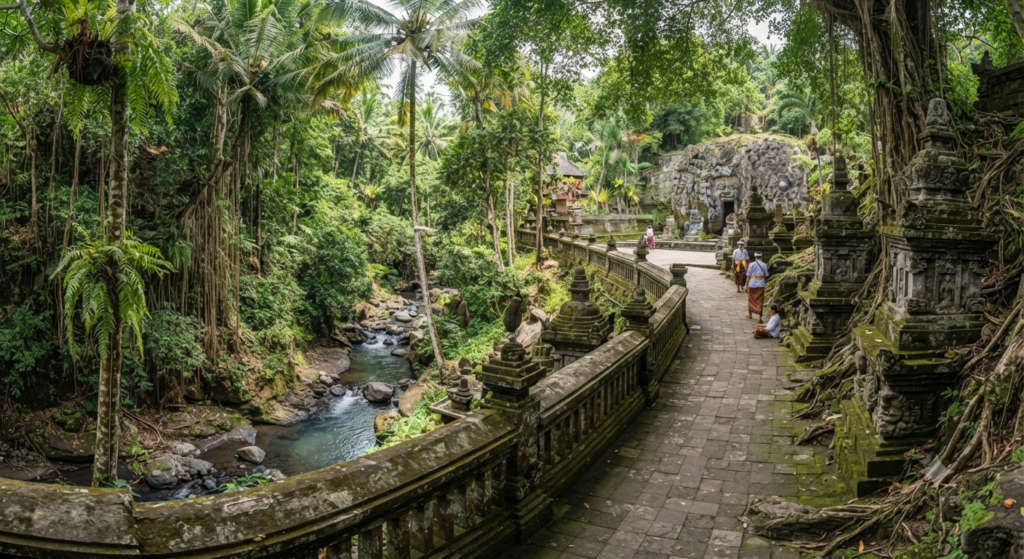
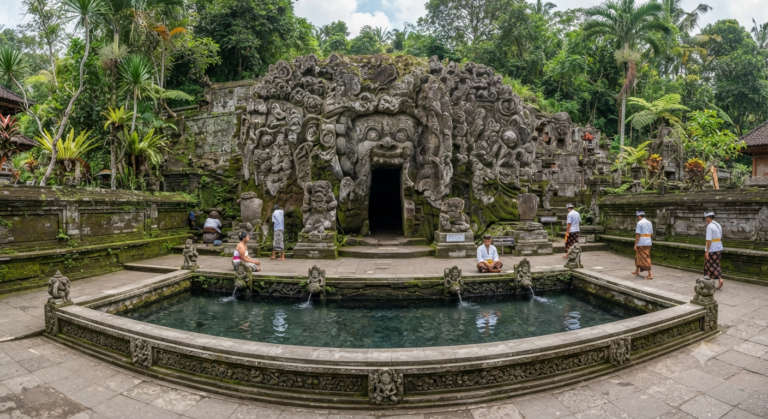
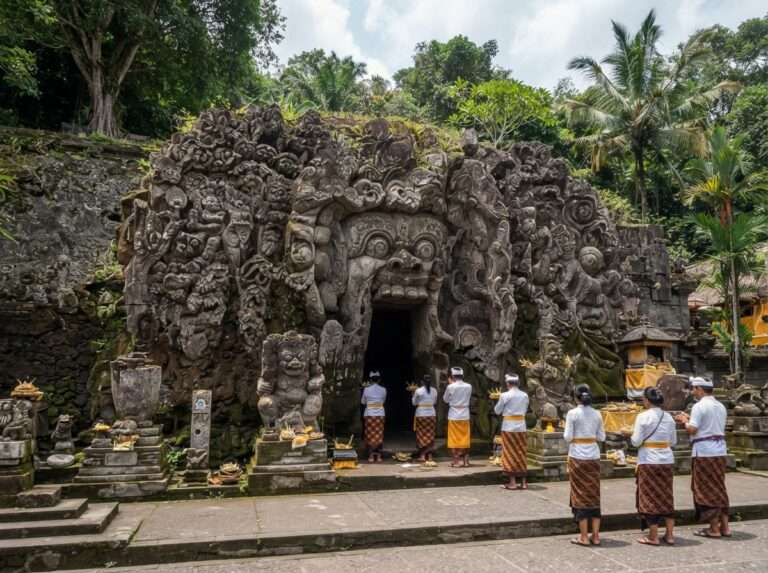
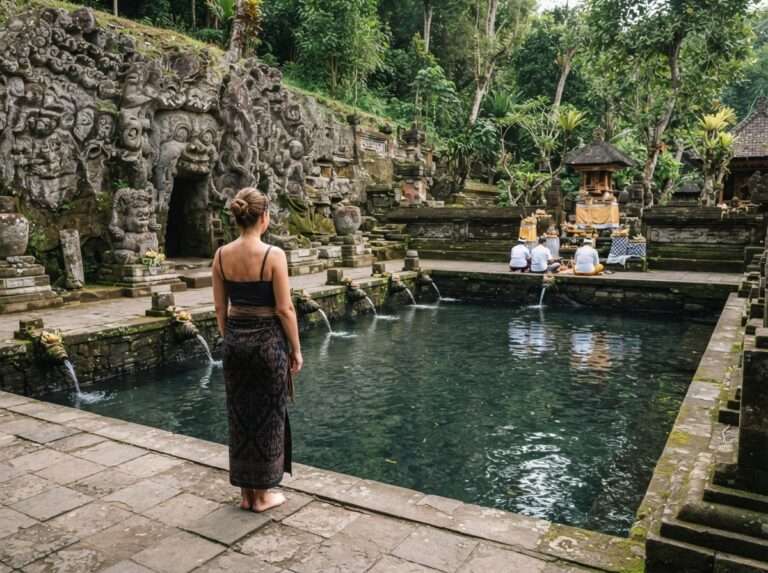
Goa Gajah, the Elephant Cave, is an 11th-century cave temple on the edge of Bedulu, 10 minutes south-east of Ubud. You walk into the rock through a carved demon’s mouth. Inside sit a Ganesha statue and lingam shrines, and outside are bathing pools that archaeologists uncovered in 1954. A path behind the pools drops to a stream and old Buddhist relics. It takes under an hour, which is why it fits neatly between Ubud and the Gianyar waterfalls.
See our Goa Gajah guide.
| Type | Temple (cave temple, Bedulu) |
| Famous for | The demon-mouth cave entrance and Ganesha shrine |
| Entry fee | IDR 50,000 (≈ ₹265) foreign adult, sarong lent at the gate |
| Time needed | 1 hour |
| Local tip | Do not skip the stream path behind the pools. Most visitors never see it |
| Map | Goa Gajah on Google Maps |
09
Gunung Kawi Temple
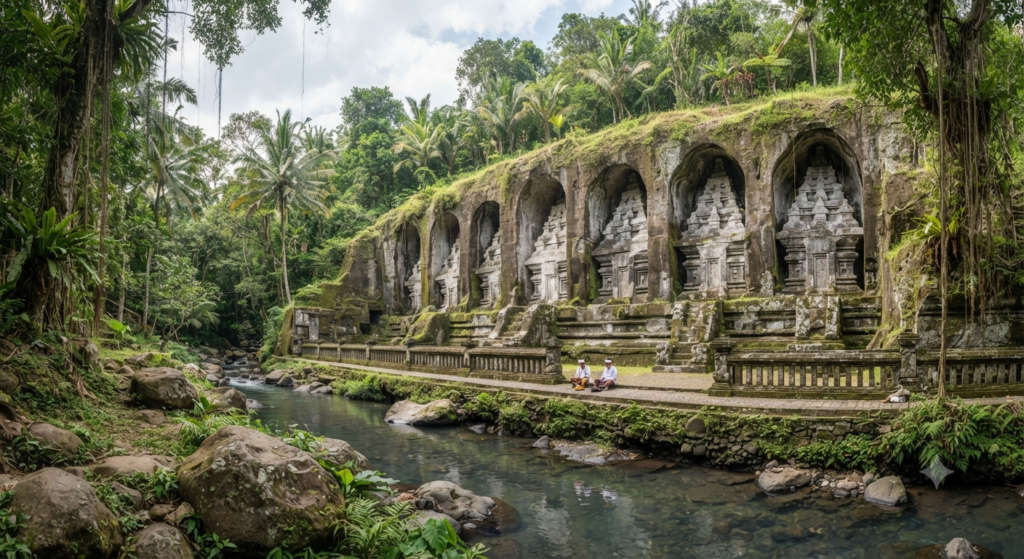
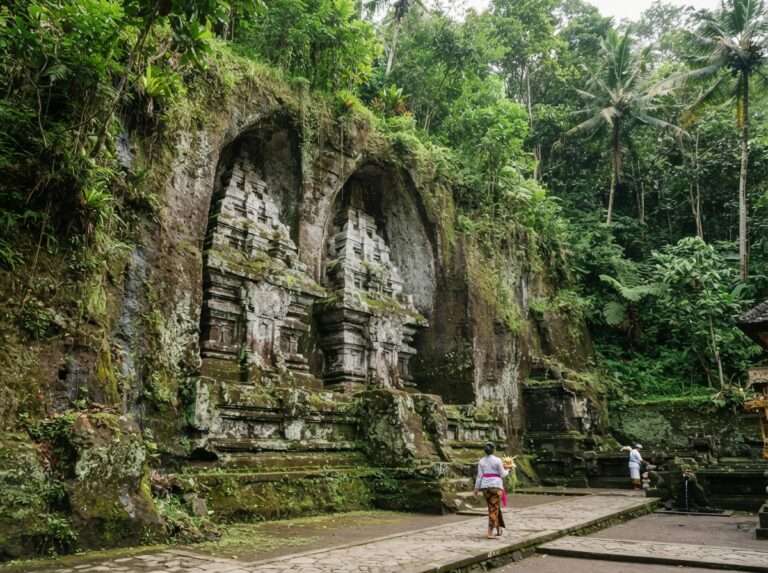
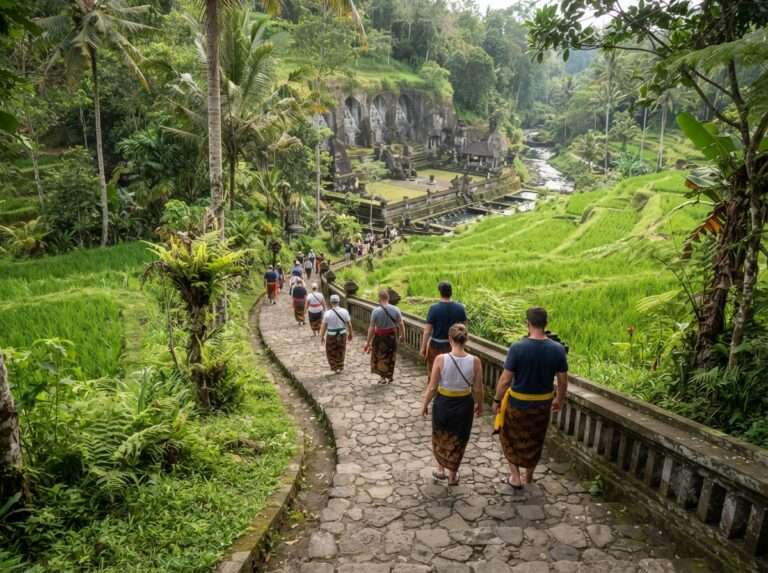
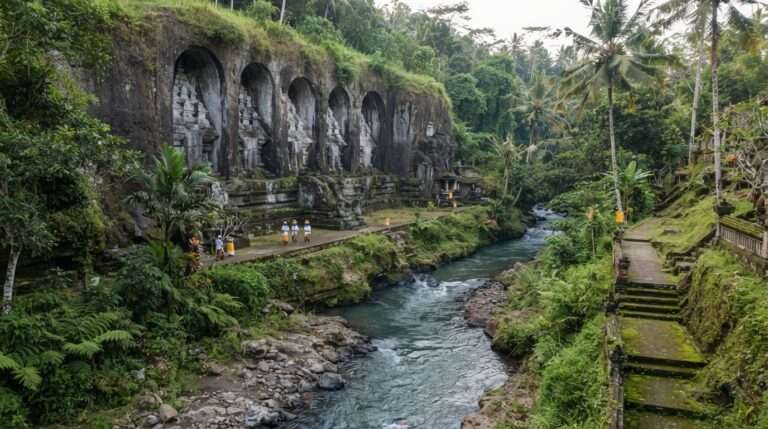
Gunung Kawi, 10 minutes from Tirta Empul, has ten shrines carved into the cliff of a river gorge in the 11th century, each about 7 metres high. You walk down roughly 300 steps through rice fields to the river, so the climb back is what takes time. It sees a fraction of Tirta Empul’s crowd and is the better photograph of the two. Pair them in one morning. It is one of Bali’s oldest monuments.
| Type | Temple (rock-cut shrines, Tampaksiring) |
| Famous for | Ten shrine facades carved into a gorge wall |
| Entry fee | IDR 50,000 (≈ ₹265) foreign adult, the Gianyar regency rate (Perda 5/2021). Some 2026 guides quote IDR 75,000, so confirm at the gate |
| Time needed | 1.5 hours |
| Local tip | The steps get slippery after rain, so wear shoes with grip |
| Map | Gunung Kawi on Google Maps |
10
Tegallalang Rice Terraces
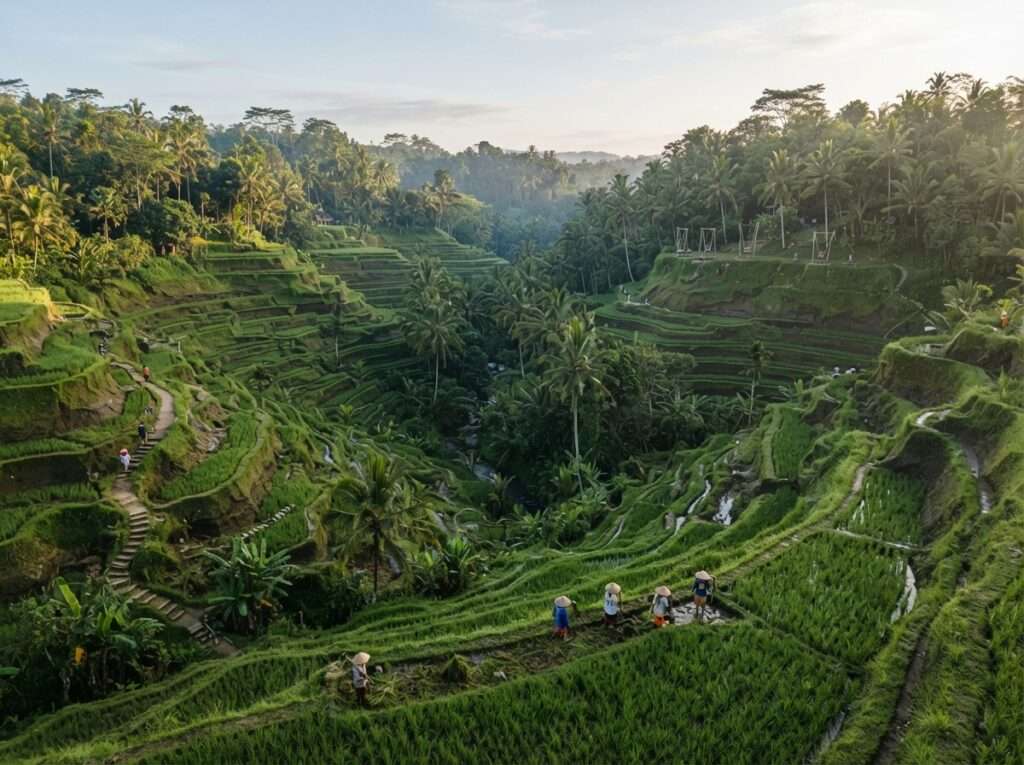
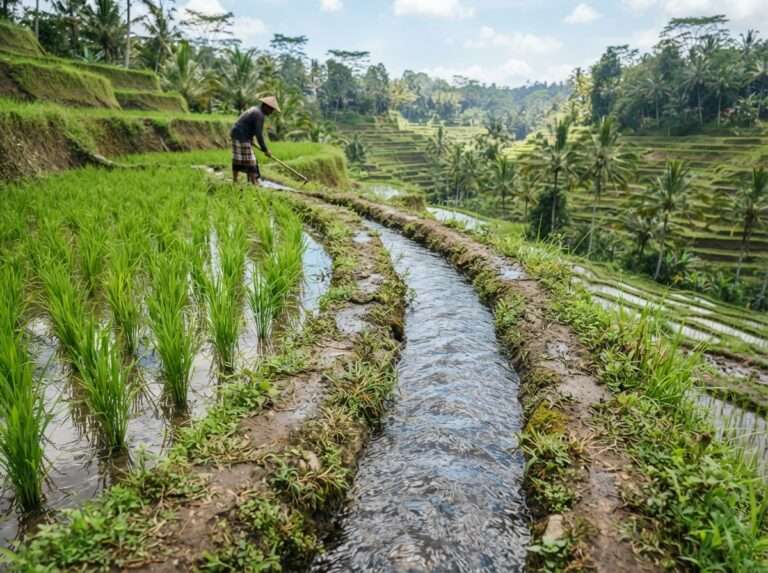
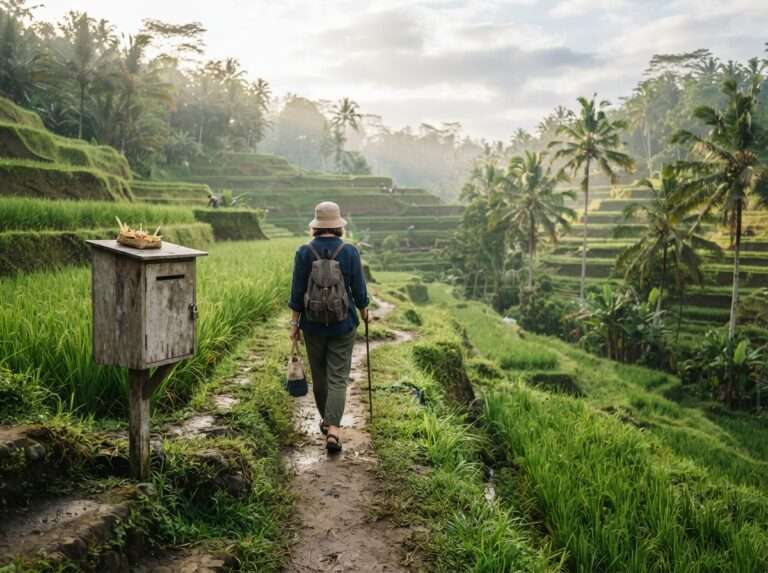
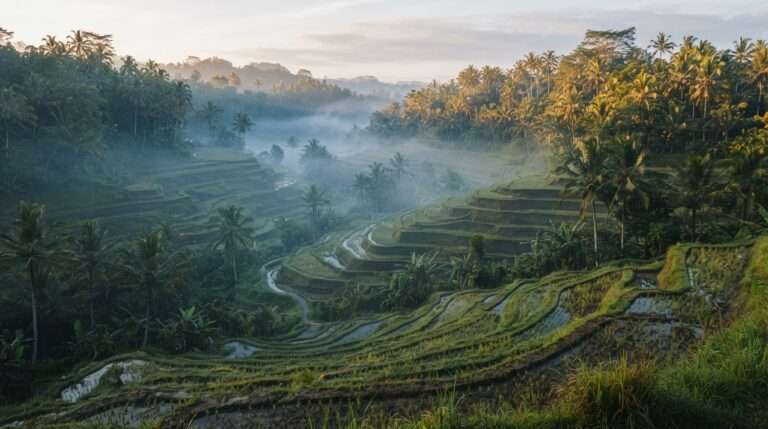
Tegallalang, 20 minutes north of Ubud, is the rice terrace on most Bali posters. Its steep green steps are watered by subak, Bali’s shared canal system. UNESCO lists the subak landscapes at Jatiluwih and around Tirta Empul, but Tegallalang itself sits outside that listing. You pay a small entry fee, then farmers whose land you cross ask for small donations, which is fair because they keep the terraces planted. Swings and giant nests along the rim cost extra and are optional. By 10 am the paths are shoulder to shoulder, so go early.
See our Tegallalang Rice Terraces guide.
| Type | Rice terraces (north of Ubud) |
| Famous for | Bali's postcard rice terraces |
| Entry fee | IDR 25,000 to 50,000 (≈ ₹135 to ₹265). Swings charged separately |
| Time needed | 1.5 hours |
| Local tip | Arrive between 7 and 8 am and carry IDR 5,000 and 10,000 notes for the donation points |
| Map | Tegallalang on Google Maps |
11
Jatiluwih Rice Terraces
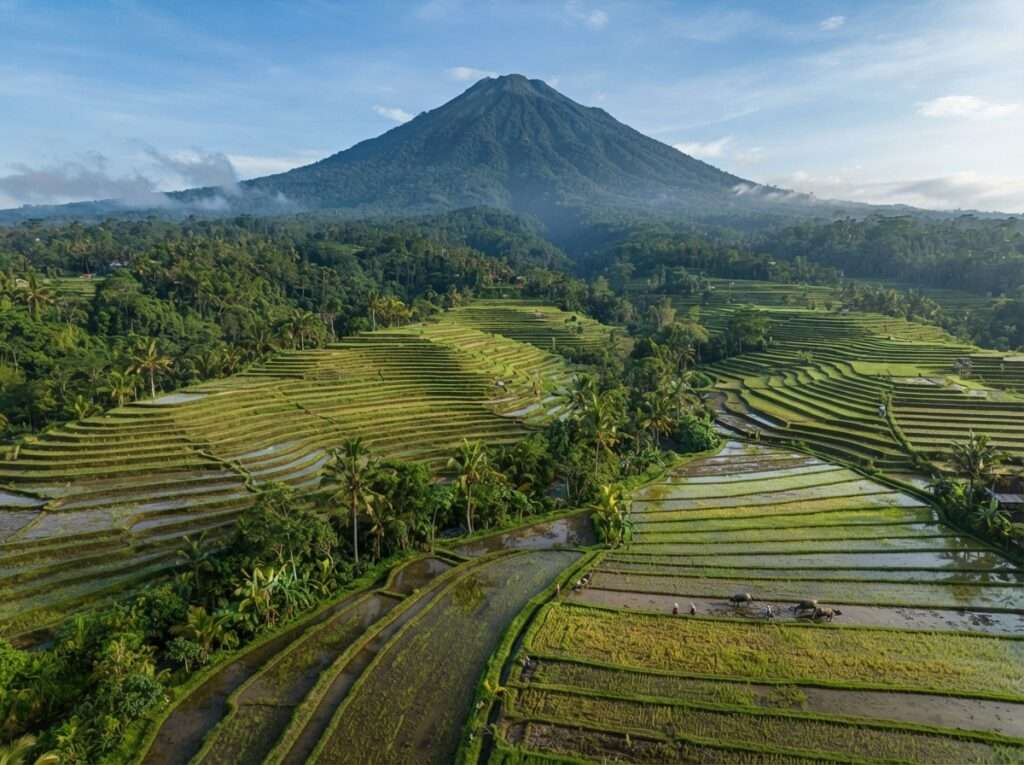
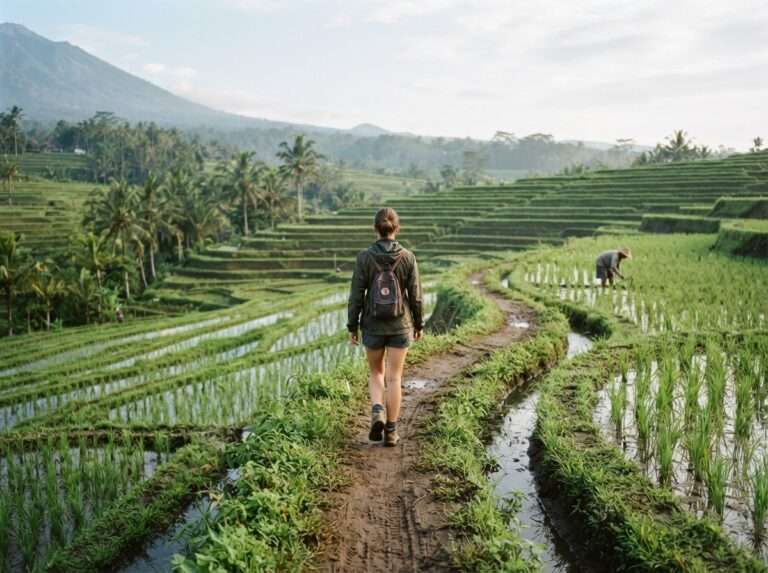
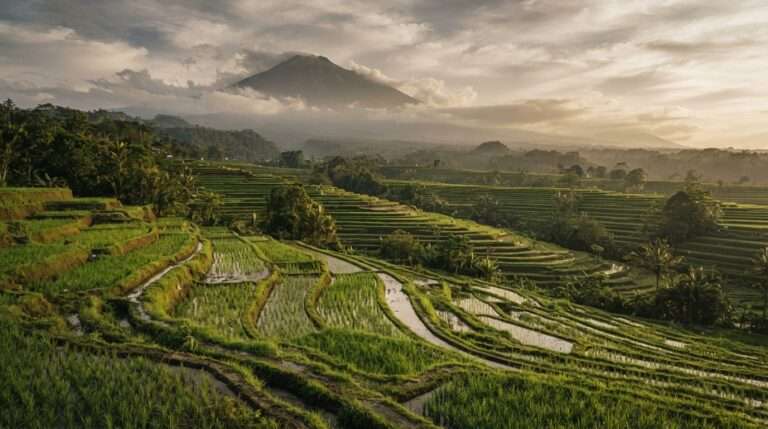
Jatiluwih, on the slopes of Mount Batukaru, is Bali’s largest rice terrace landscape at more than 600 hectares and the heart of the island’s UNESCO subak listing. It is wider and flatter than Tegallalang, with marked walking loops of one to three hours and far fewer people. You can walk for twenty minutes and meet only farmers. It pairs with Taman Ayun and Ulun Danu Beratan on a Tabanan day.
Read our Jatiluwih guide.
| Type | Rice terraces (UNESCO site, Tabanan) |
| Famous for | Bali's biggest terraces and the UNESCO subak landscape |
| Entry fee | IDR 75,000 (≈ ₹400) foreign adult, cash only (jatiluwih.id) |
| Time needed | 2 hours |
| Local tip | The fields are greenest in March to April and September to October. Drones need a separate fee |
| Map | Jatiluwih on Google Maps |
12
Sidemen Valley
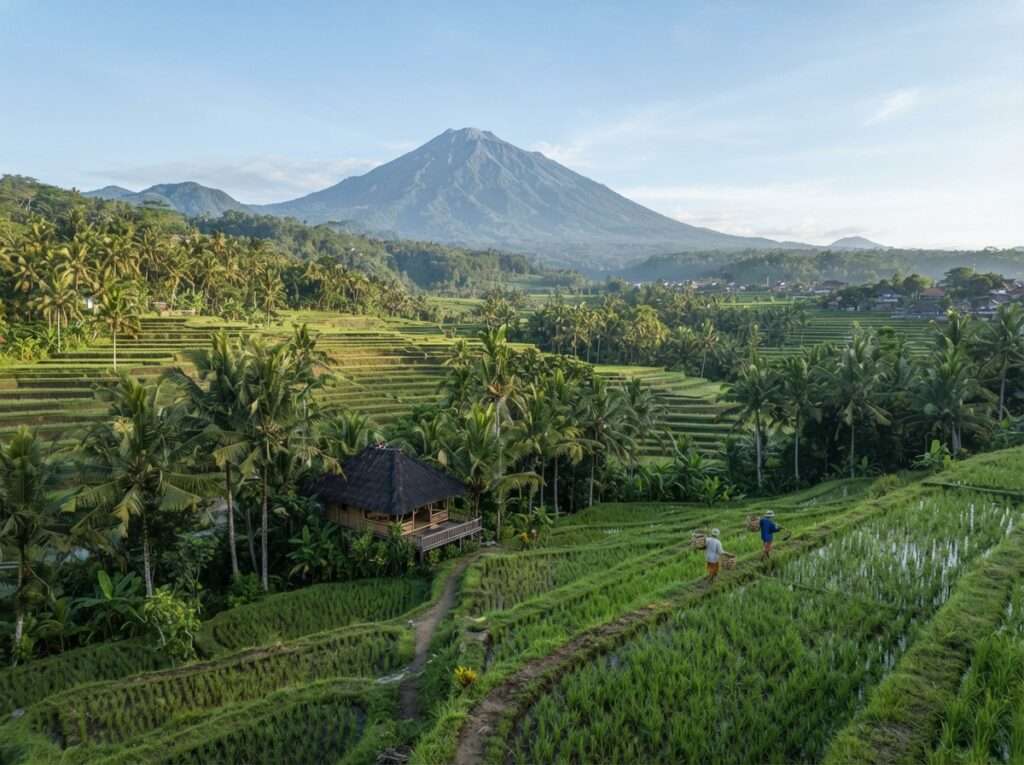

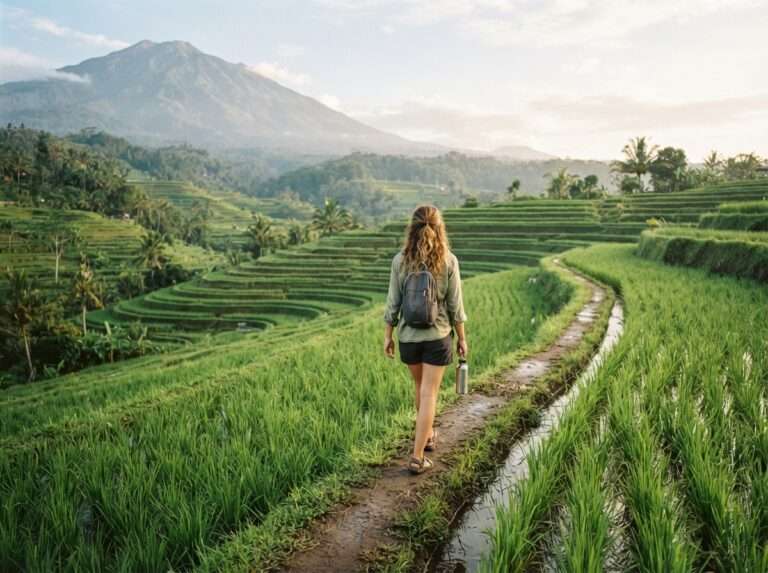
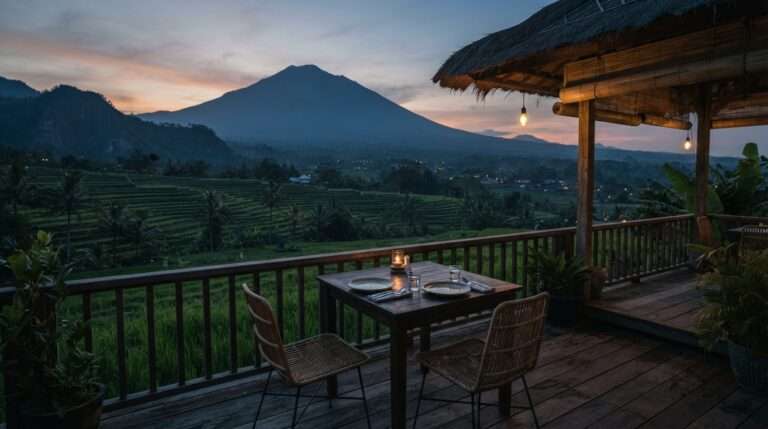
Sidemen is a farming valley in Karangasem with rice terraces, songket weaving workshops and Mount Agung views, and it feels like Ubud did decades ago. There is no entry fee and no single sight. You walk the paddy paths, watch weavers at their looms and eat at a guesthouse warung above the fields. It is two hours from Seminyak, so it works as a detour south of Besakih on an East Bali day, or better, as a night away from the traffic.
Our Sidemen Valley guide lists the walks.
| Type | Rice valley (Karangasem) |
| Famous for | Quiet terraces, songket weaving and Agung views |
| Entry fee | Free |
| Time needed | Half day, or overnight |
| Local tip | Hire a local guide for the paddy walks, because the paths cross private land |
| Map | Sidemen on Google Maps |
13
Campuhan Ridge Walk
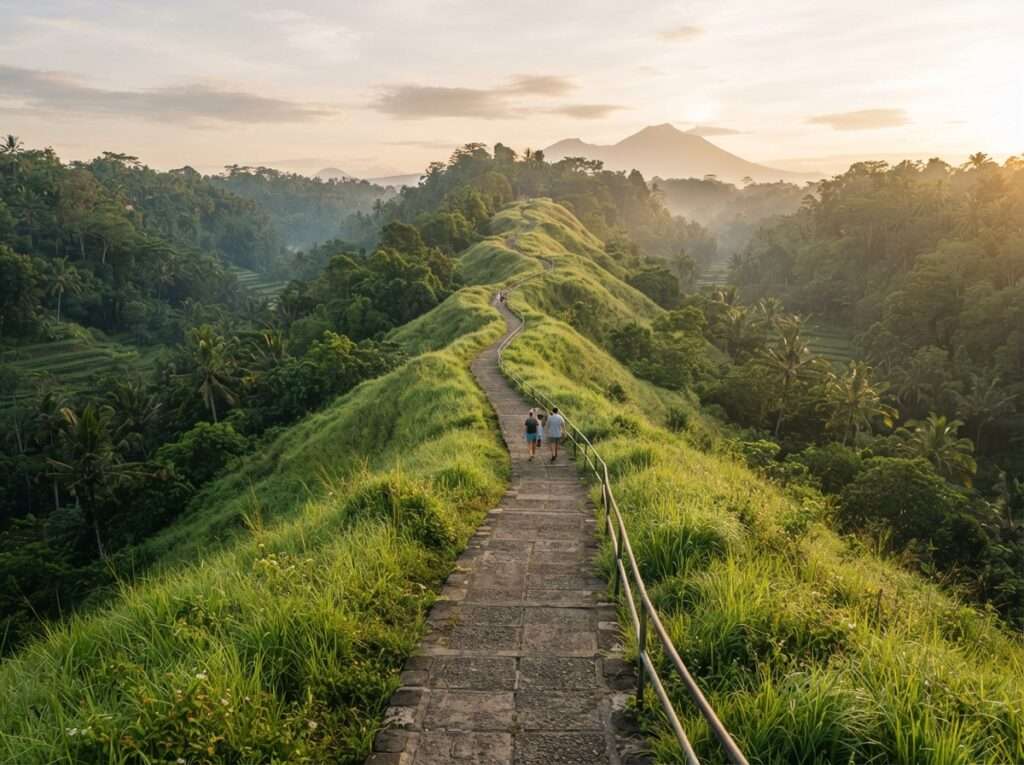
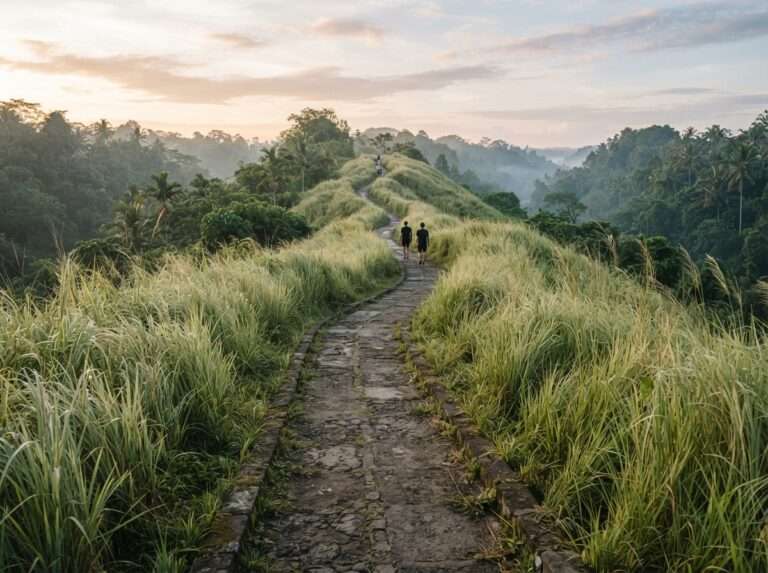
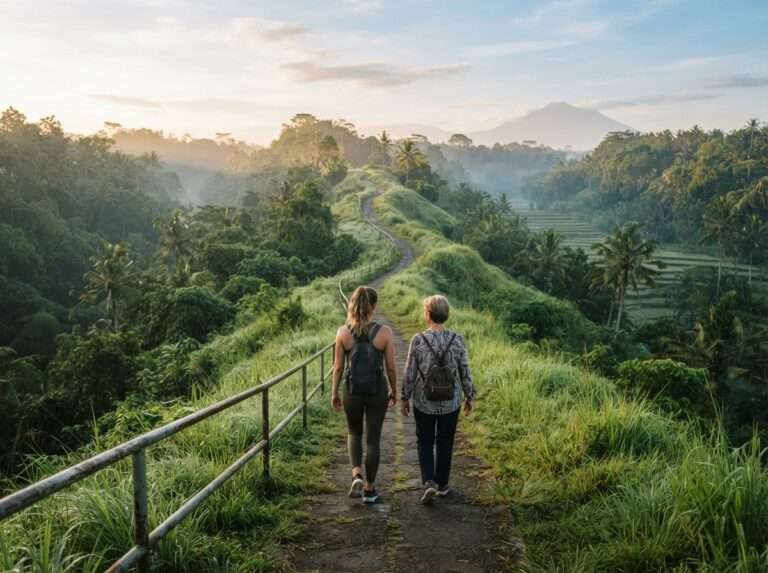
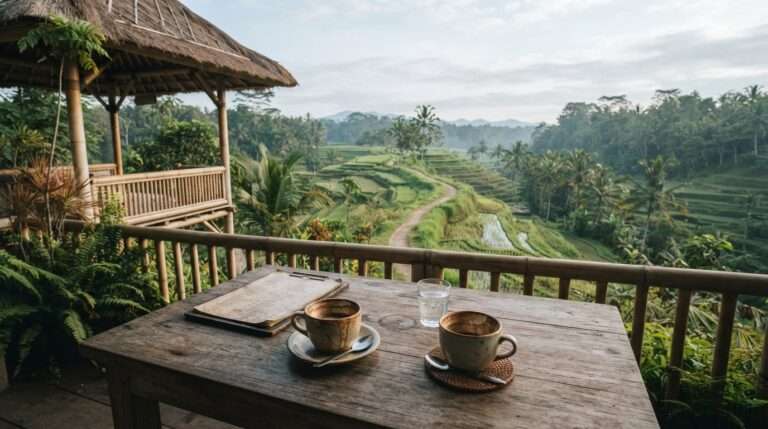
The Campuhan Ridge Walk is a paved path of about 2 km each way along a grassy ridge between two river valleys, starting behind the Warwick Ibah hotel at the west end of Ubud. It is free and gentle enough for children and older parents, and it ends at a few rice-field cafés in Bangkiang Sidem. The ridge has no shade at all. Go at 6.30 am for soft light and cool air and you are back for breakfast by 8.30.
Our Campuhan Ridge Walk guide has the route.
| Type | Valley walk (Ubud) |
| Famous for | Ubud's easiest sunrise walk |
| Entry fee | Free |
| Time needed | 1.5 hours return |
| Local tip | Carry water. There is nothing to buy until the cafés at the far end |
| Map | Campuhan Ridge Walk on Google Maps |
14
Mount Batur And Kintamani
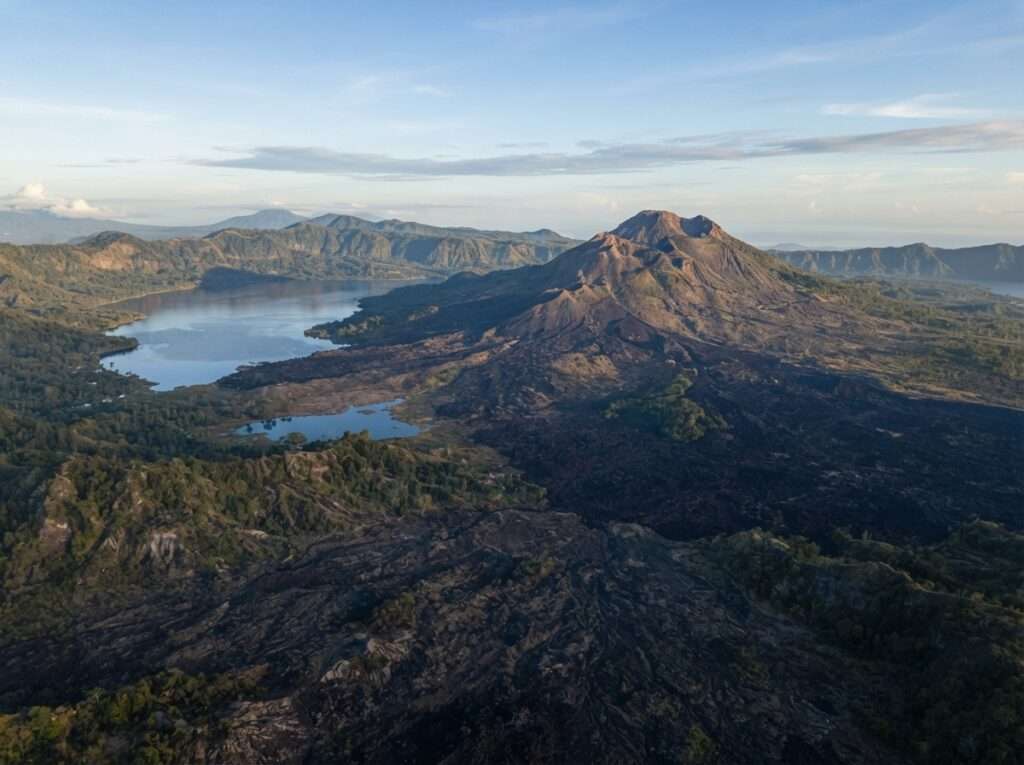
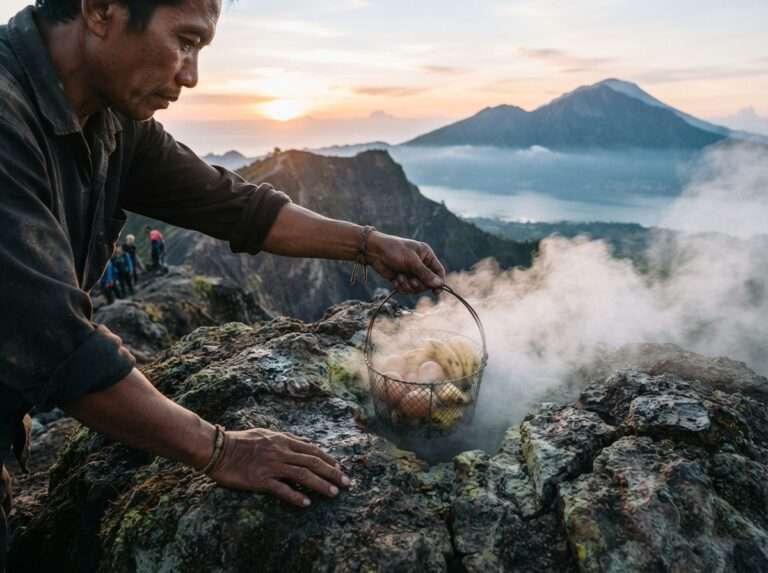
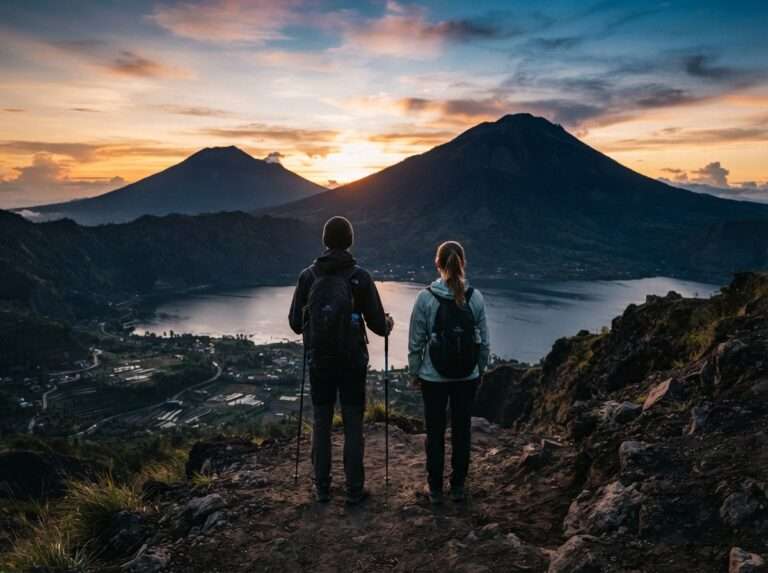
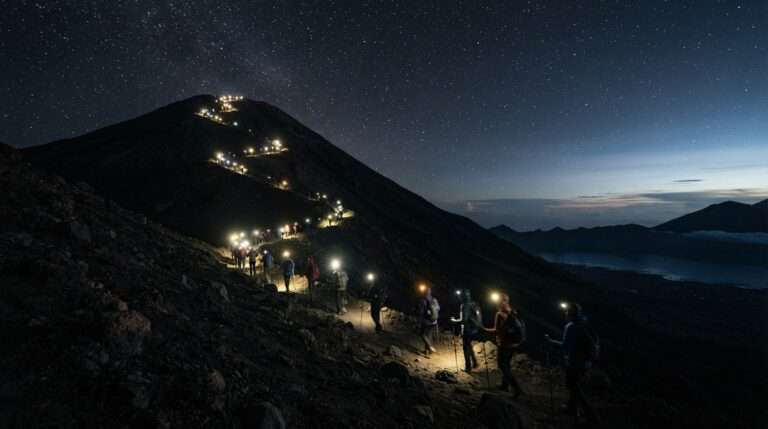
Mount Batur is an active volcano, 1,717 metres high, and its sunrise trek is the one hike most Bali visitors do. Pickup is around 2 am, you start walking at 4 am with a head torch, and you reach the rim in about two hours to watch the sun come up behind Mount Agung and Mount Abang. Guides cook eggs and bananas in steam vents for breakfast. Any reasonably fit adult can do it, but the loose gravel on the way down is hard on knees. If you would rather not climb, the Kintamani ridge gives the same crater-lake view from a café.
Our Mount Batur guide and Mount Batur trekking page explain the options.
| Type | Volcano (Kintamani) |
| Famous for | The sunrise trek to an active volcano rim |
| Entry fee | Kintamani area fee IDR 50,000 (≈ ₹265). Group trek with a licensed guide about IDR 600,000 to 800,000 (≈ ₹3,190 to ₹4,255) |
| Time needed | 7 to 8 hours including transfers |
| Local tip | It is cold on top before sunrise, so carry a fleece even in July |
| Map | Mount Batur on Google Maps |
15
Kintamani Coffee Plantations
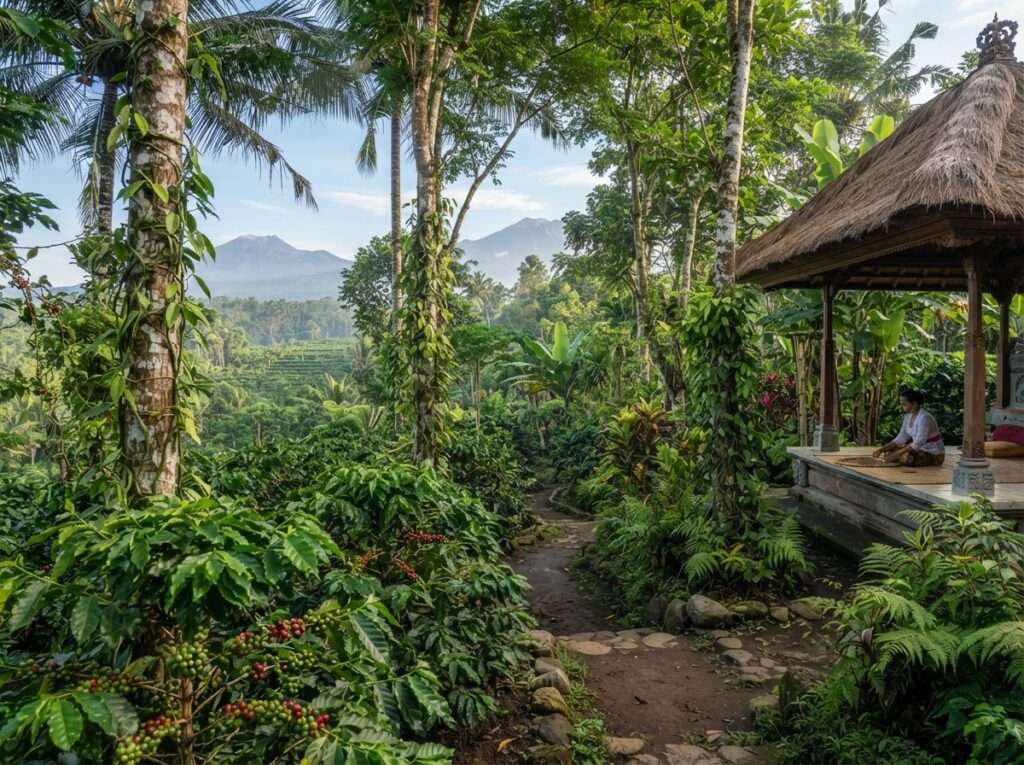
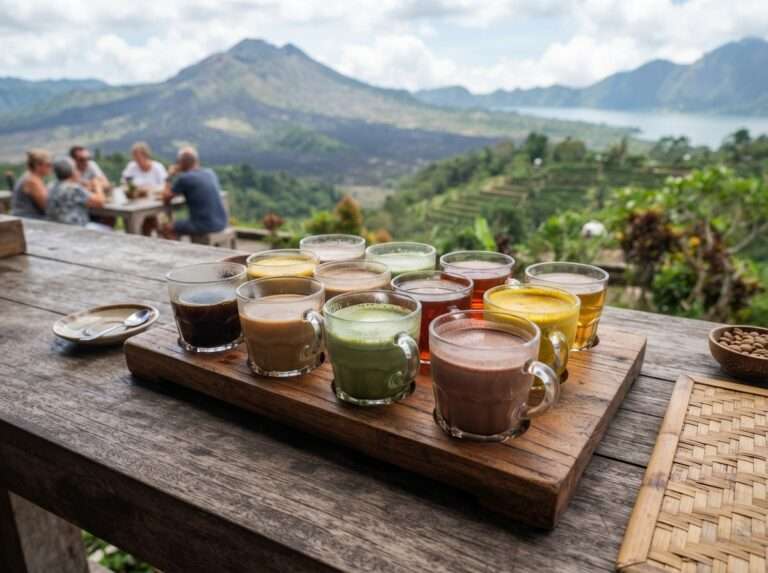
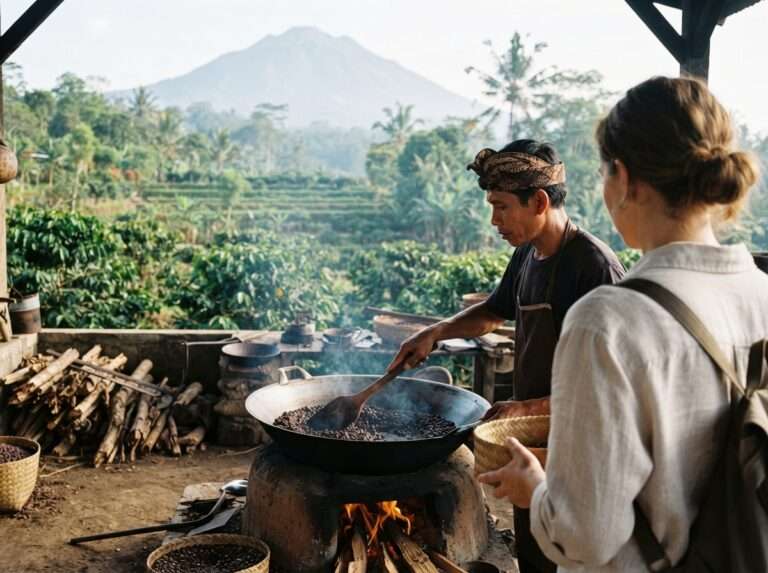
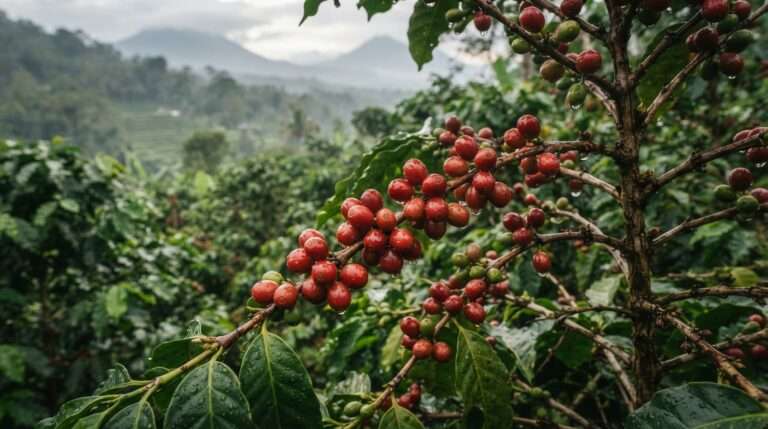
On the road between Ubud and Kintamani, a string of agro-tourism gardens show how Balinese coffee, cocoa and spices are grown and roasted. A staff member walks you past coffee bushes, vanilla vines and a wood-fired roasting pan, then sits you down with a free tasting tray of a dozen small cups of coffee, tea and cocoa. The famous one is kopi luwak, made from beans eaten and passed by the Asian palm civet, and a single cup is sold separately. Most gardens keep civets in cages for show. If animal welfare matters to you, skip the luwak and ask whether beans are wild-collected. It is a free, easy stop on the way back from Batur or Tegallalang.
| Type | Highlands (agro-tourism, Tegallalang to Kintamani road) |
| Famous for | Free coffee tastings and kopi luwak |
| Entry fee | Garden walk and tasting tray free. Kopi luwak and bags of coffee are paid |
| Time needed | 45 minutes |
| Local tip | Taste first, buy later. Prices for the same coffee vary a lot between gardens and Ubud shops |
| Map | Coffee plantations near Tegallalang on Google Maps |
16
Handara Gate, Munduk And The Twin Lakes
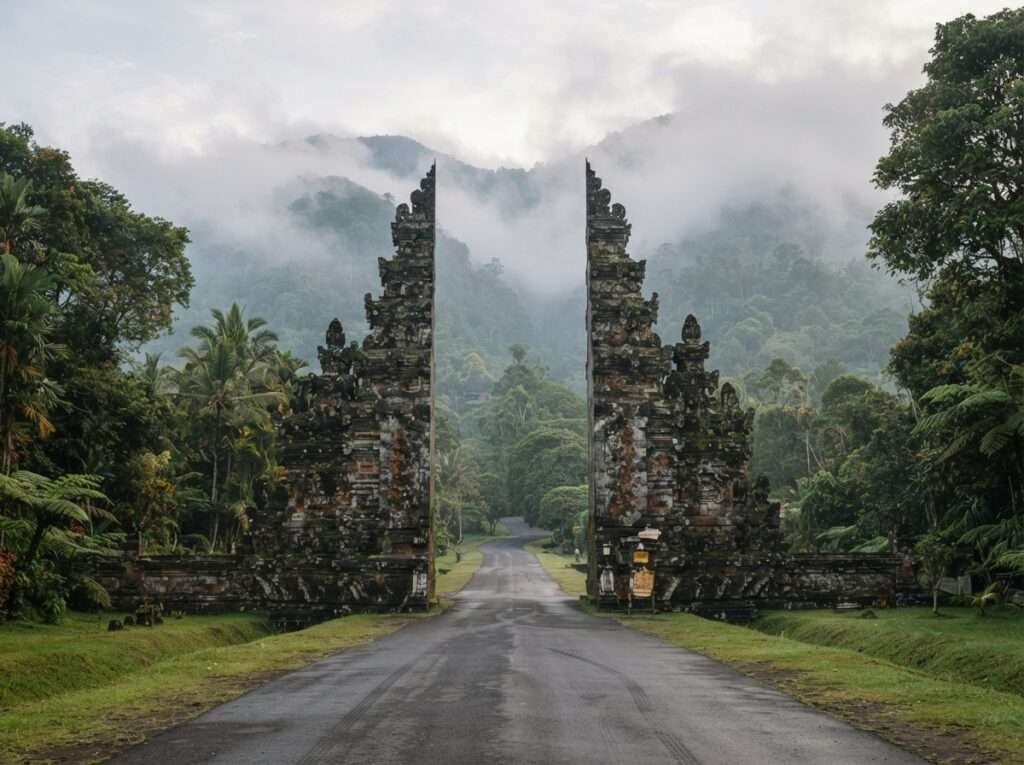
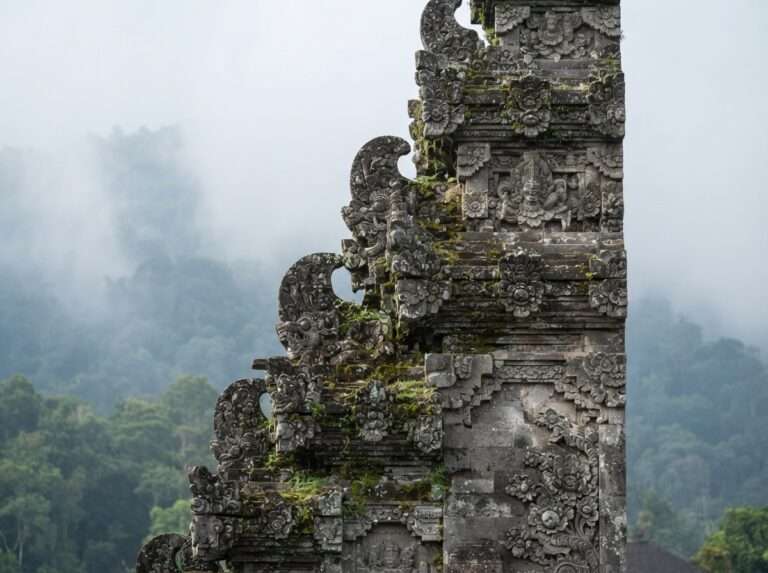
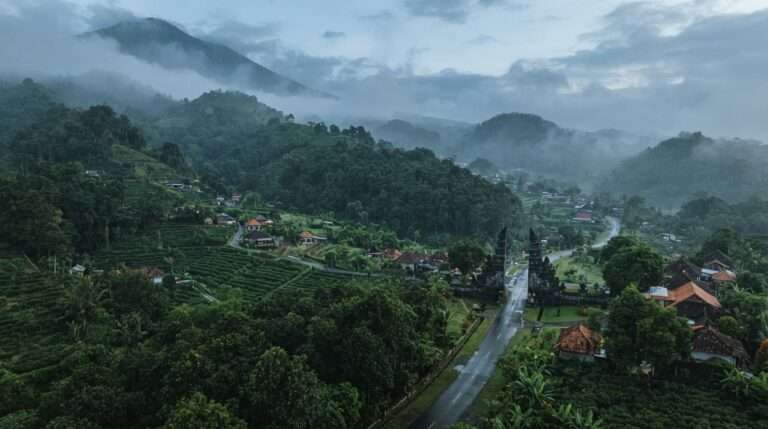
Fifteen minutes past Ulun Danu Beratan, the Handara Gate is a split stone gate at the entrance to a golf resort, framed by misty hills, and one of Bali’s most shared photos. Above it, Wanagiri Hidden Hill has viewing platforms over the twin lakes of Buyan and Tamblingan. Further on, the clove-and-coffee village of Munduk has cool air, walking trails and the Banyumala and Munduk waterfalls. Most visitors only pass through, but a night in Munduk gives you misty dawns and empty trails.
For more hill country, see our Bali mountains guide.
| Type | Highlands (Bedugul to Munduk) |
| Famous for | The Handara Gate photo and the twin-lake viewpoints |
| Entry fee | Handara Gate photo IDR 50,000 (≈ ₹265). Wanagiri platforms charge small fees each |
| Time needed | Half day, or overnight in Munduk |
| Local tip | The gate queue can pass 45 minutes by mid-morning, so get there before 9 am |
| Map | Handara Gate on Google Maps |
17
Tegenungan Waterfall
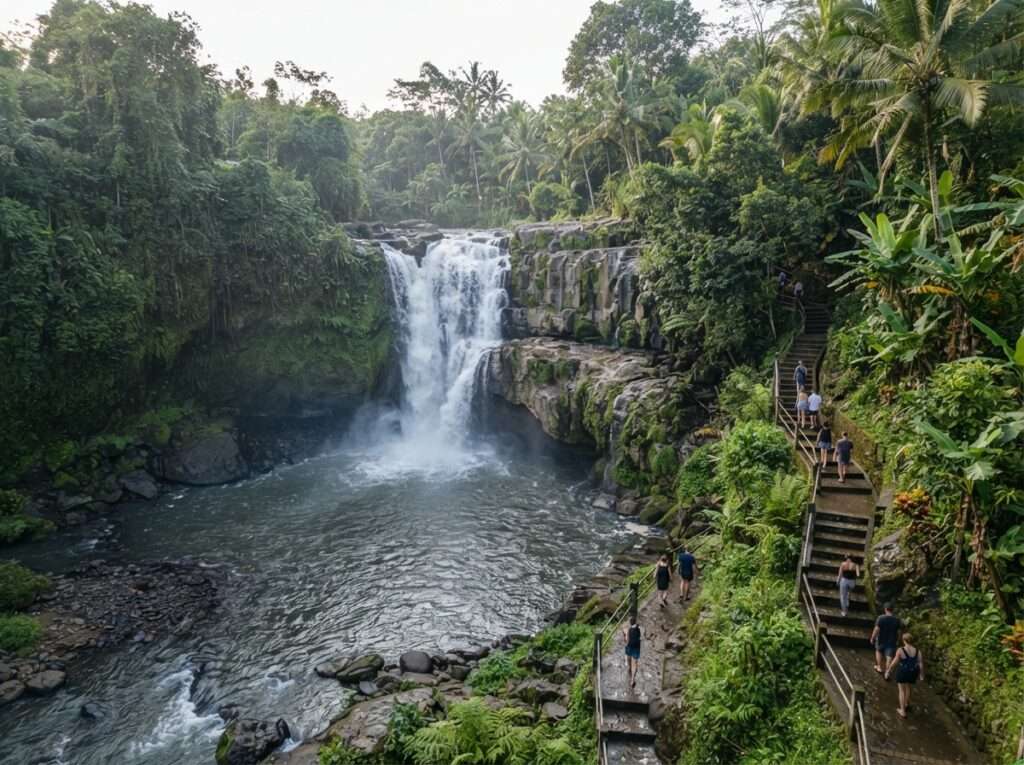
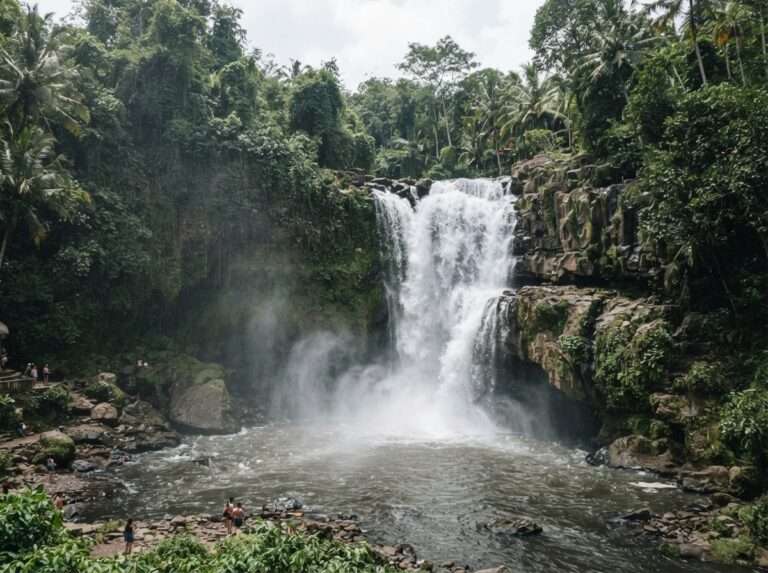
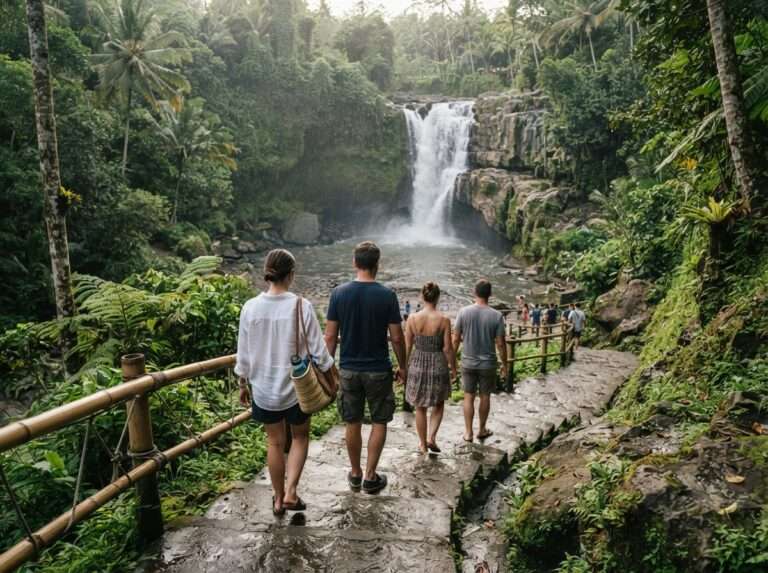
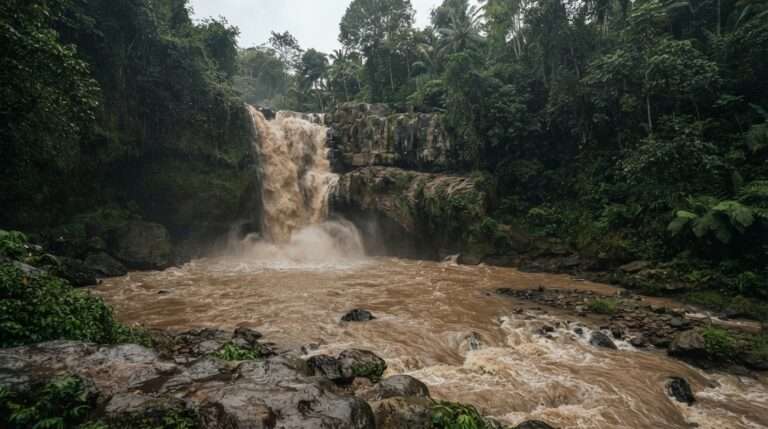
Tegenungan is Bali’s most accessible big waterfall, a wide fall on the Petanu River 20 minutes south of Ubud with a paved staircase down to the pool. It is the easy choice for families who cannot manage Sekumpul’s trek. Swimming depends on the flow, and the pool closes when the river runs high after heavy rain.
Our Tegenungan Waterfall guide and the wider best waterfalls in Bali list compare it with the others.
| Type | Waterfall (Gianyar) |
| Famous for | The easiest big waterfall to reach |
| Entry fee | IDR 30,000 (≈ ₹160) |
| Time needed | 1.5 hours |
| Local tip | Go between 7 and 9 am, and save energy for about 170 steps back up |
| Map | Tegenungan on Google Maps |
18
Tukad Cepung Waterfall
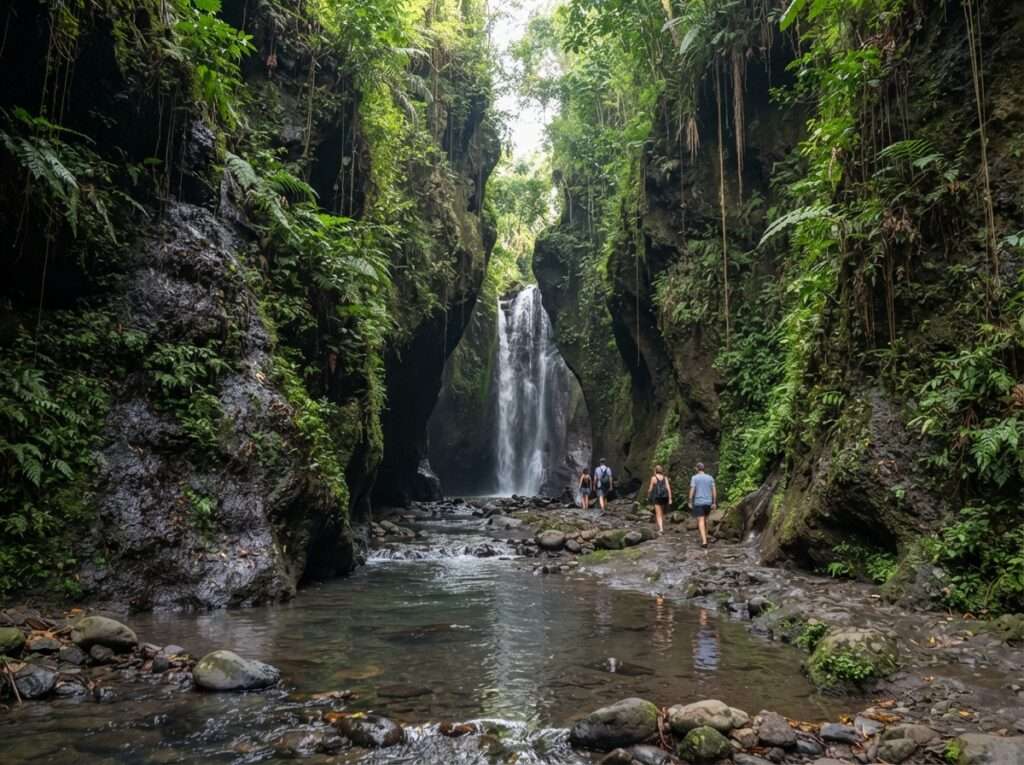
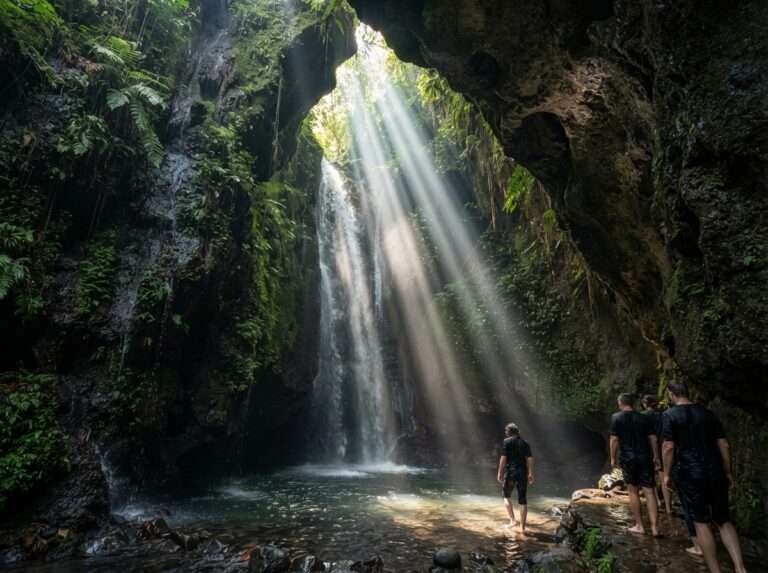
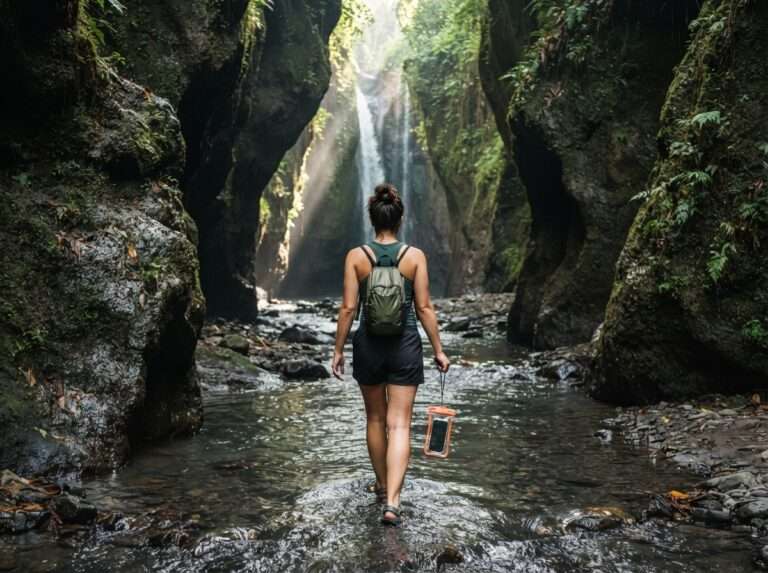
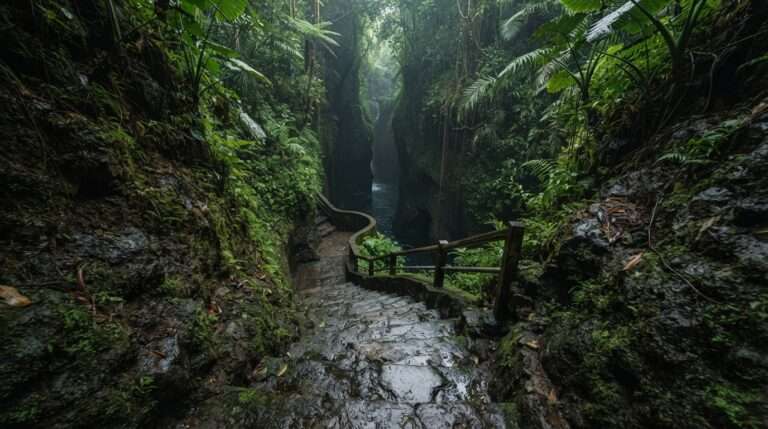
Tukad Cepung, in Bangli about an hour east of Ubud, falls into a narrow limestone cave. On sunny mornings between about 9 and 10 am, beams of light drop through a gap in the rock, and that is the photo people travel for. You wade a shallow stream to reach it and the spray is heavy, so phones need a waterproof pouch. The walk is short, but the steps down are steep and wet.
See the Tukad Cepung Waterfall guide.
| Type | Waterfall (Bangli) |
| Famous for | Light beams falling into a cave |
| Entry fee | IDR 30,000 (≈ ₹160) |
| Time needed | 1.5 hours |
| Local tip | Light beams need a clear morning between April and October. Wear sandals that can get wet |
| Map | Tukad Cepung on Google Maps |
19
Sekumpul Waterfall
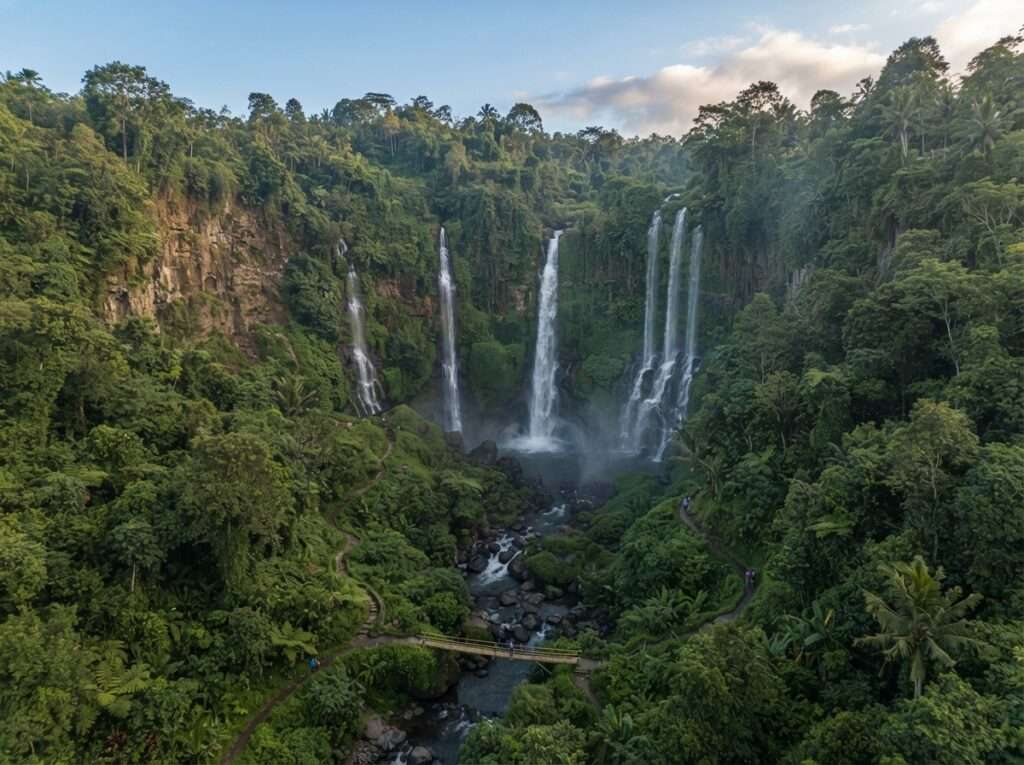
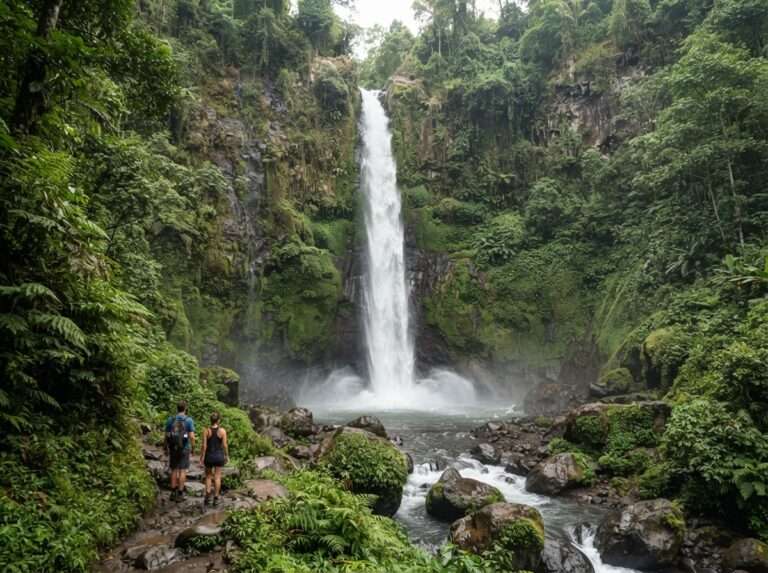
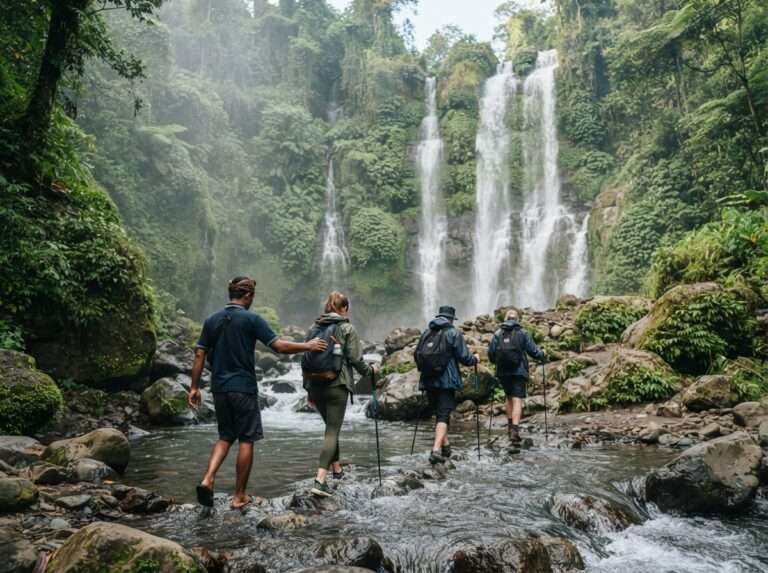
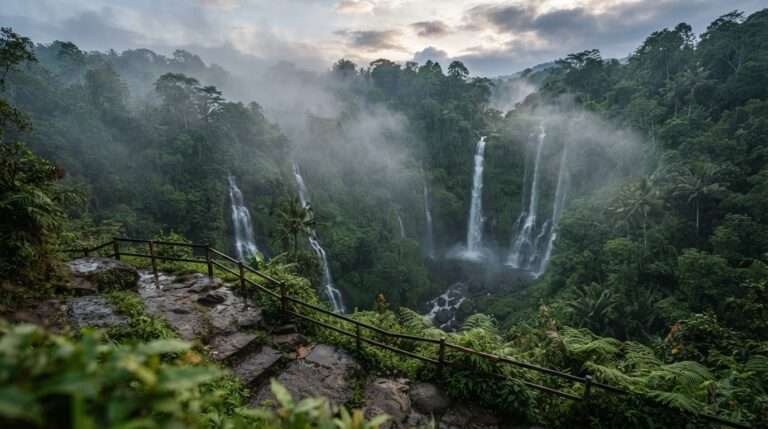
Sekumpul in North Bali is a group of seven falls, the tallest about 80 metres, dropping into a jungle valley. Many travellers rate it Bali’s best waterfall, and it is a proper trek. A small fee gets you to the viewpoint, but going down to the base means a guided walk of 1.5 to 3 hours with steep steps and river crossings. It is three hours from Seminyak, so most people sleep in Munduk or Lovina, or leave at 6 am. On the same road, Gitgit Waterfall is a 40-metre fall with a short paved path, the easy option for anyone who cannot do the Sekumpul steps.
See the Sekumpul Waterfall guide.
| Type | Waterfall (Buleleng, North Bali) |
| Famous for | Seven falls in one jungle valley |
| Entry fee | Viewpoint IDR 20,000 (≈ ₹105). Guided trek IDR 150,000 to 250,000 (≈ ₹800 to ₹1,330) |
| Time needed | 3 hours plus the drive |
| Local tip | Go April to October when trails are dry, in shoes you do not mind soaking |
| Map | Sekumpul on Google Maps |
20
Aling-Aling Waterfall
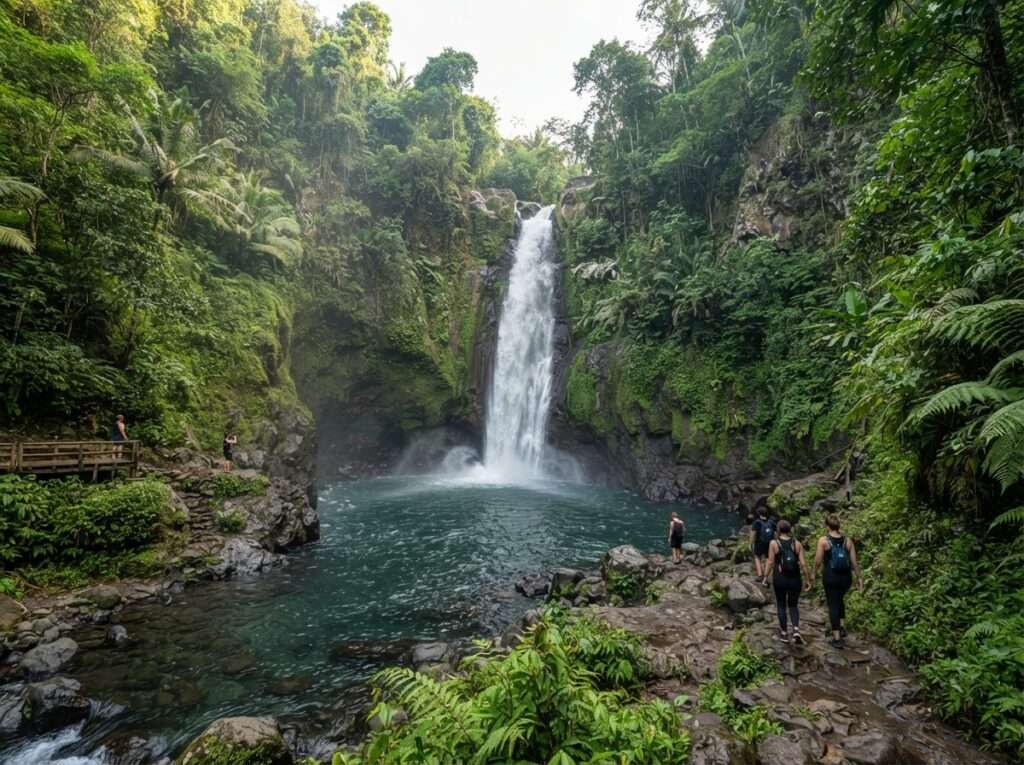
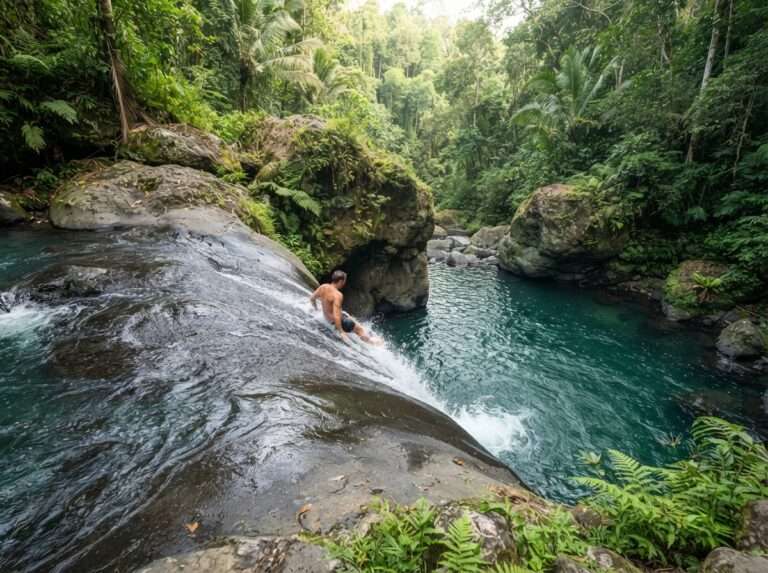
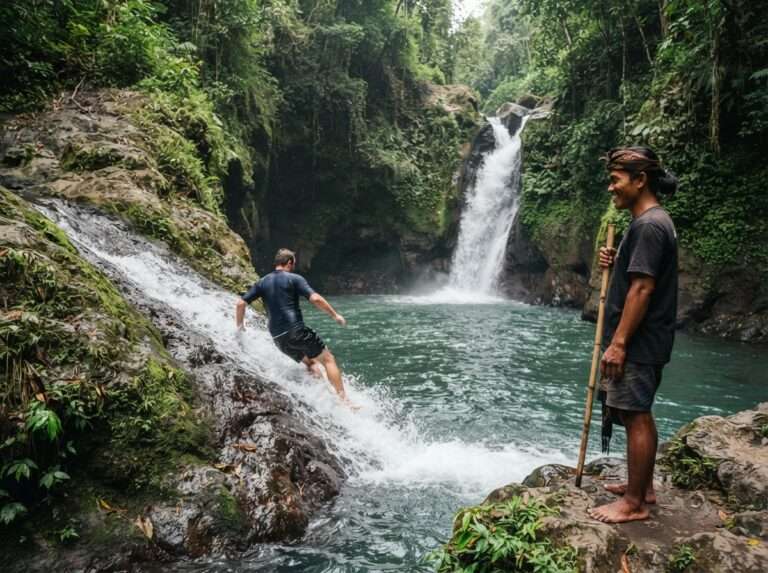
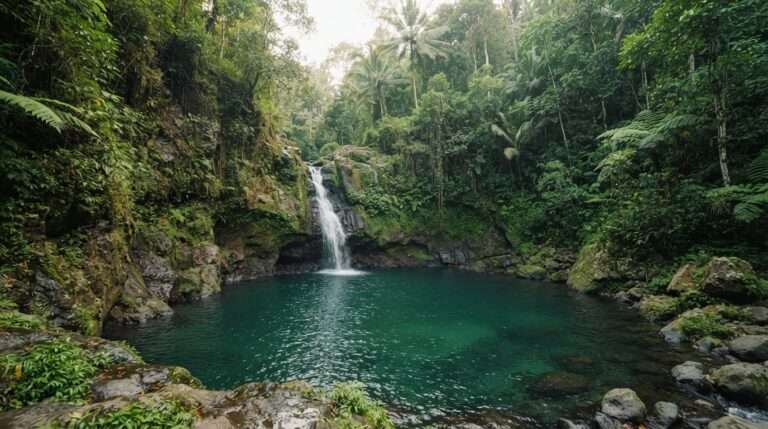
Aling-Aling, in Sambangan village near Singaraja, is a 35-metre fall famous for what sits below it. Local guides lead you down to a chain of smaller falls with natural rock slides and jump points into deep pools, and the slide at Kroya falls is the one in most videos. You do not slide or jump without a village guide, who checks the water depth each day. It is about an hour’s drive from Sekumpul, so the two fill one long North Bali day. Jumps and slides close when the river runs high in the wet season.
| Type | Waterfall (Sambangan, North Bali) |
| Famous for | Natural rock slides and cliff jumps into pools |
| Entry fee | About IDR 20,000 (≈ ₹105) to see the fall. Guided slide and jump package about IDR 150,000 (≈ ₹800) |
| Time needed | 2 to 3 hours |
| Local tip | Choose the lower jumps first. The guide will tell you which pools are deep enough that day |
| Map | Aling-Aling on Google Maps |
21
Padang Padang, Melasti And The Bukit Beaches
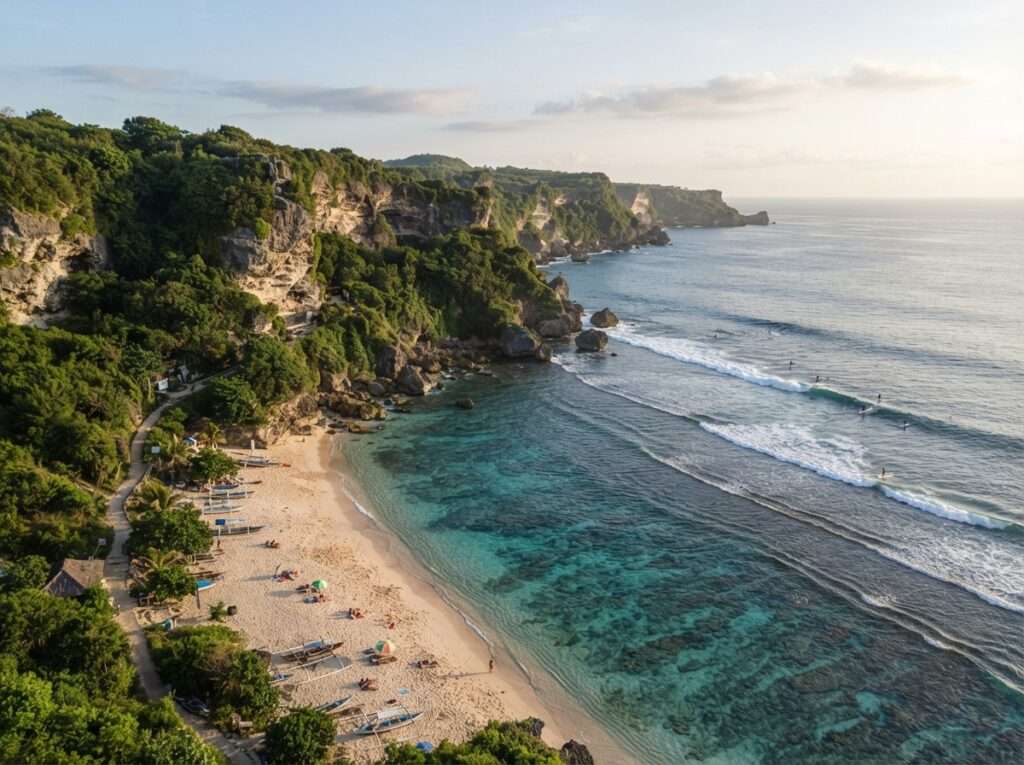
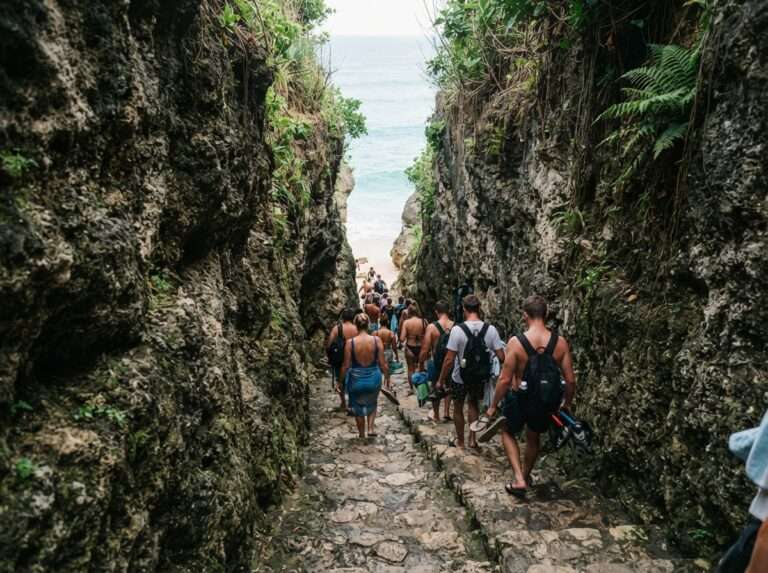
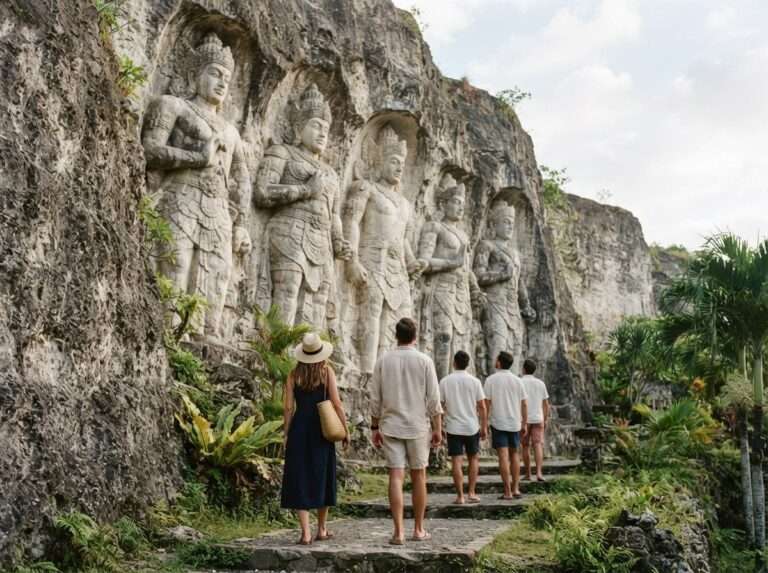
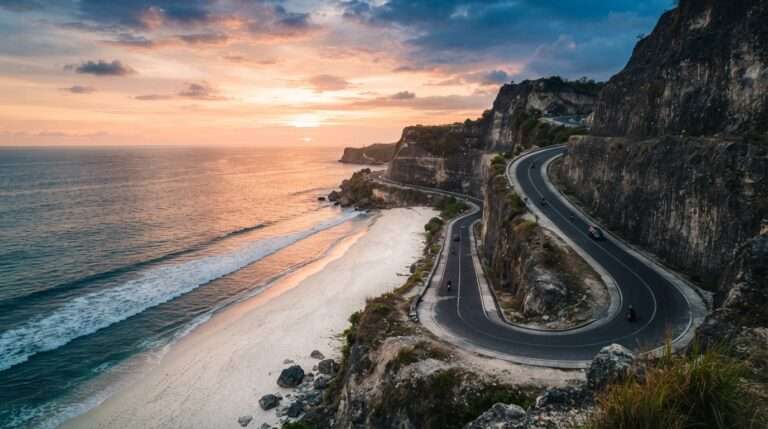
The Bukit’s beaches sit under tall limestone cliffs, and the water is clearer than anywhere near Kuta. Padang Padang is a small cove reached through a narrow rock cleft and steep stairs, with gentle water inside the reef and a famous surf break outside it. Melasti, reached by a road cut through the cliff, has white sand and the best swimming on calm days. Suluban sits right under Uluwatu, reached through gaps in the rocks, and is for watching surfers rather than swimming. Pandawa has the five Pandava brothers carved into the cliff, which Indian families love to photograph.
Quieter options are Balangan Beach and Green Bowl Beach.
| Type | Beaches (Bukit peninsula) |
| Famous for | White-sand coves under limestone cliffs |
| Entry fee | Pandawa IDR 25,000 (≈ ₹135). Padang Padang and Melasti charge small village fees in cash |
| Time needed | 2 to 3 hours for two beaches |
| Local tip | Go in the morning at low tide. Expect 100 to 300 steps at several beaches, though Melasti and Pandawa have car access |
| Map | Melasti Beach on Google Maps |
22
Jimbaran Bay
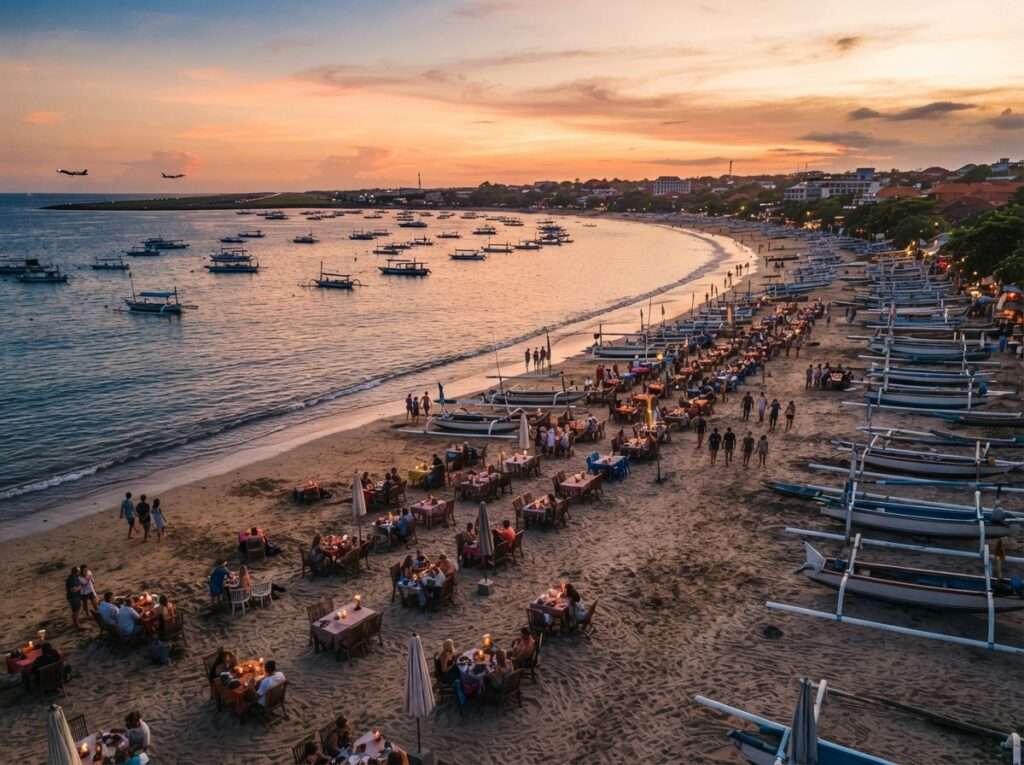
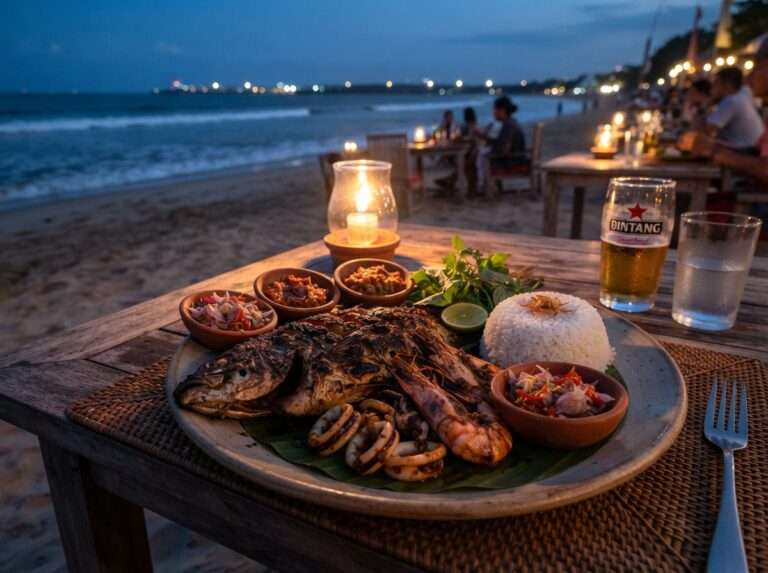
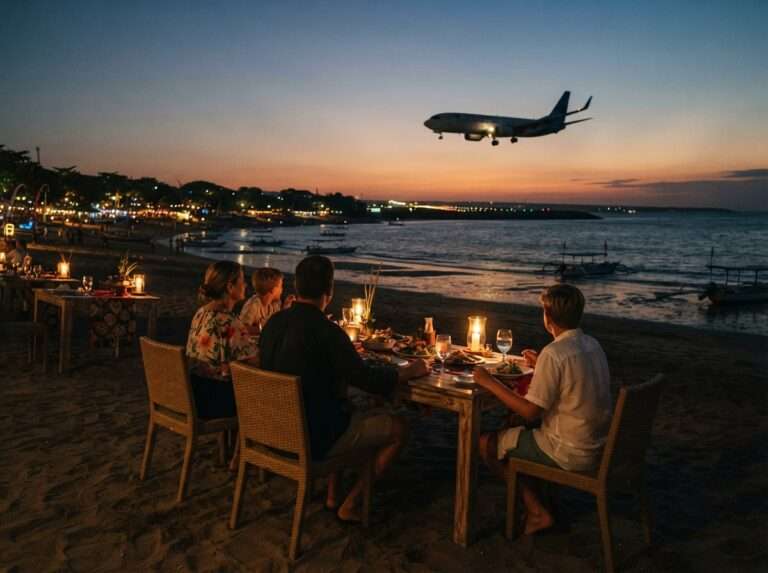
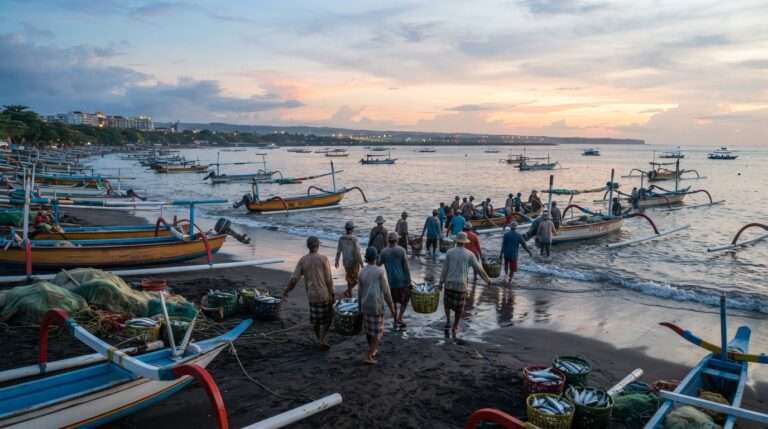
Jimbaran is a long, curved bay just south of the airport where the fishing fleet still lands its catch at dawn. In the evening the warungs set tables on the sand, and you eat grilled fish, prawns and squid with your feet in the sand while planes come in low over the water. Fish is priced by weight, so check the rate per 100 grams before it goes on the grill. Gaurav Kamath’s family ended their Uluwatu day here, and that is the right order, because the bay is 25 minutes from the temple.
Our guide to places to visit in Jimbaran covers the fish market.
| Type | Beach (south coast) |
| Famous for | Seafood dinners on the sand at sunset |
| Entry fee | Free |
| Time needed | 2 hours |
| Local tip | Agree the total for fish, rice and sides before you order. The fish market runs from 6 am |
| Map | Jimbaran Bay on Google Maps |
23
Nusa Dua And Tanjung Benoa
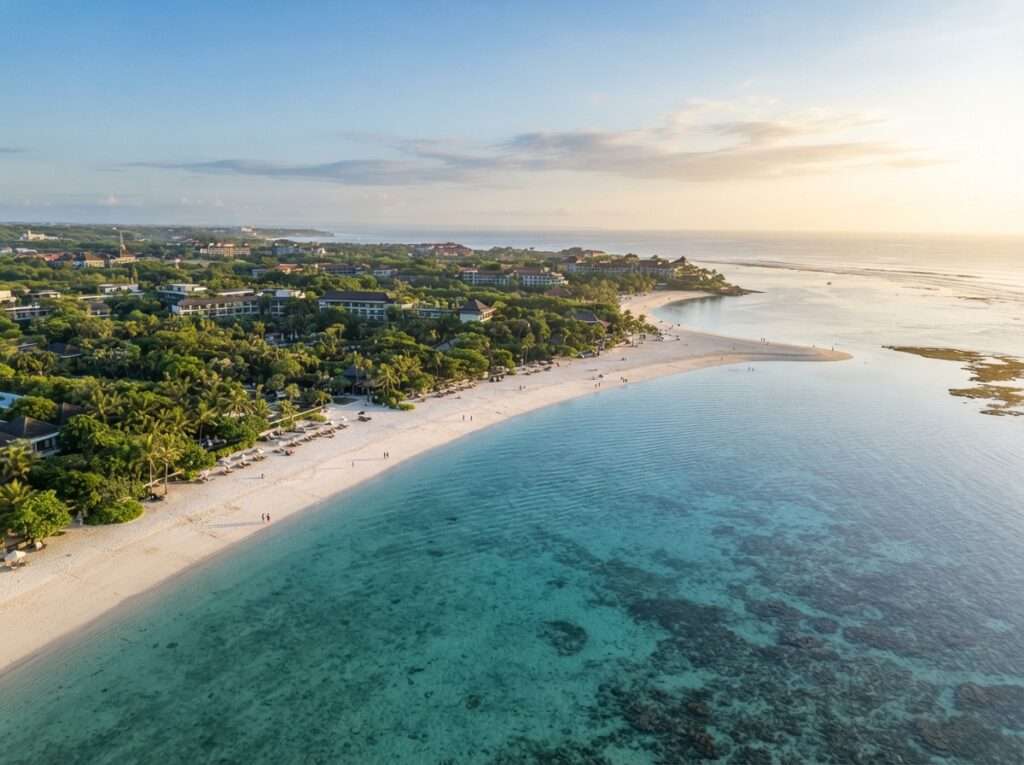
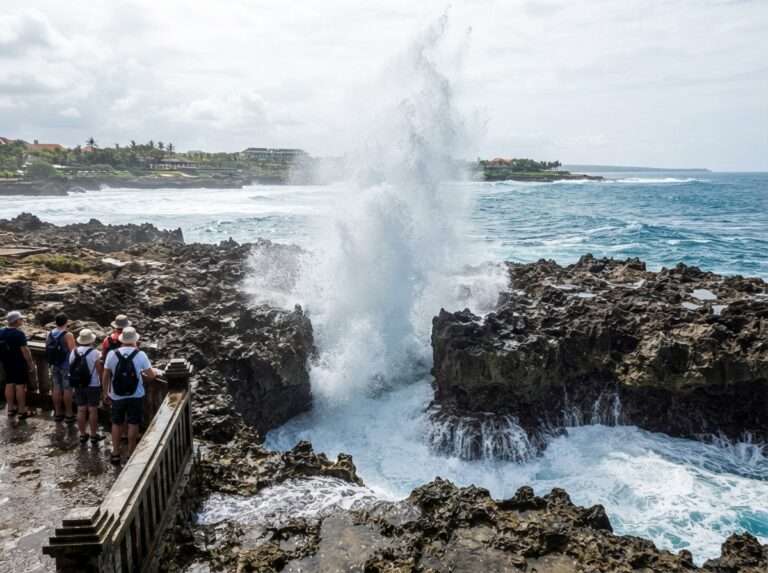
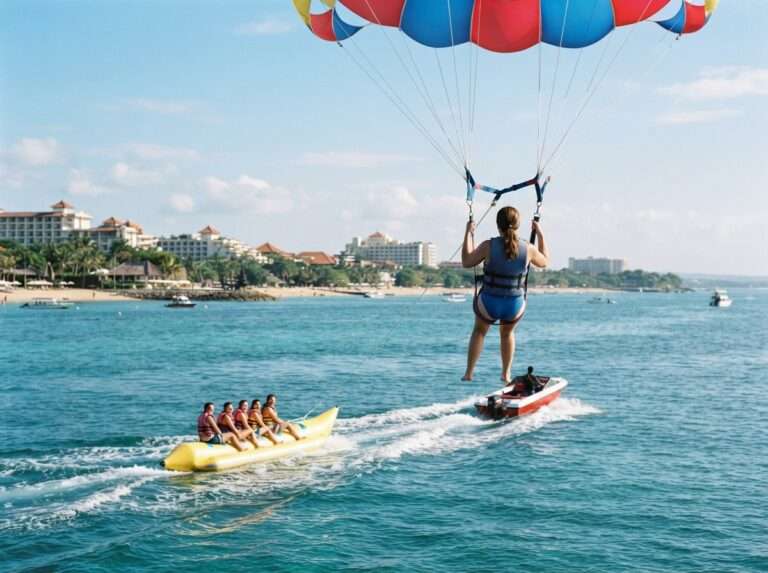
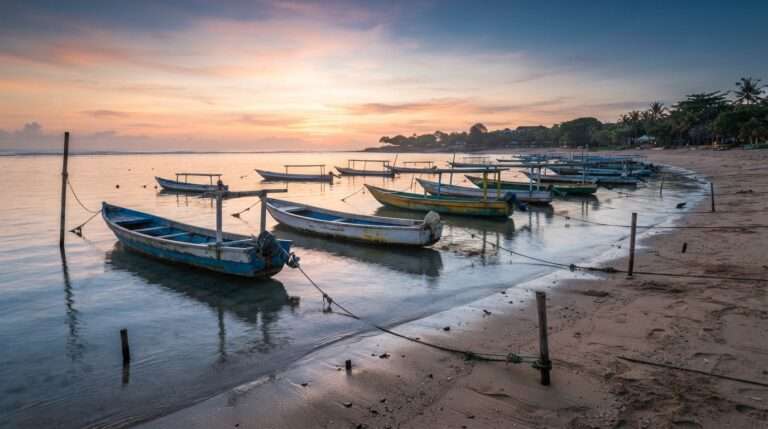
Nusa Dua is a gated resort zone on the south-east coast with calm, reef-protected water that suits young children and non-swimmers. At its southern end, Water Blow throws waves up through a crack in the coral rock, best at high tide on a windy day. Just north, Tanjung Benoa is Bali’s water sports strip, with banana boats, parasailing, jet skis and glass-bottom boats to Turtle Island. Parv and his wife spent a morning here in their 8-day Bali travelogue before heading on to Tanah Lot. Compare operators on the beach, because the same ride can cost very different amounts.
| Type | Beach (south-east coast) |
| Famous for | Calm water and Bali's water sports strip |
| Entry fee | Beaches free. Water Blow charges a small gate fee |
| Time needed | Half day |
| Local tip | Do water sports in the morning before the wind picks up, with child-size life jackets |
| Map | Tanjung Benoa on Google Maps |
24
Kuta, Legian And Double Six Beaches
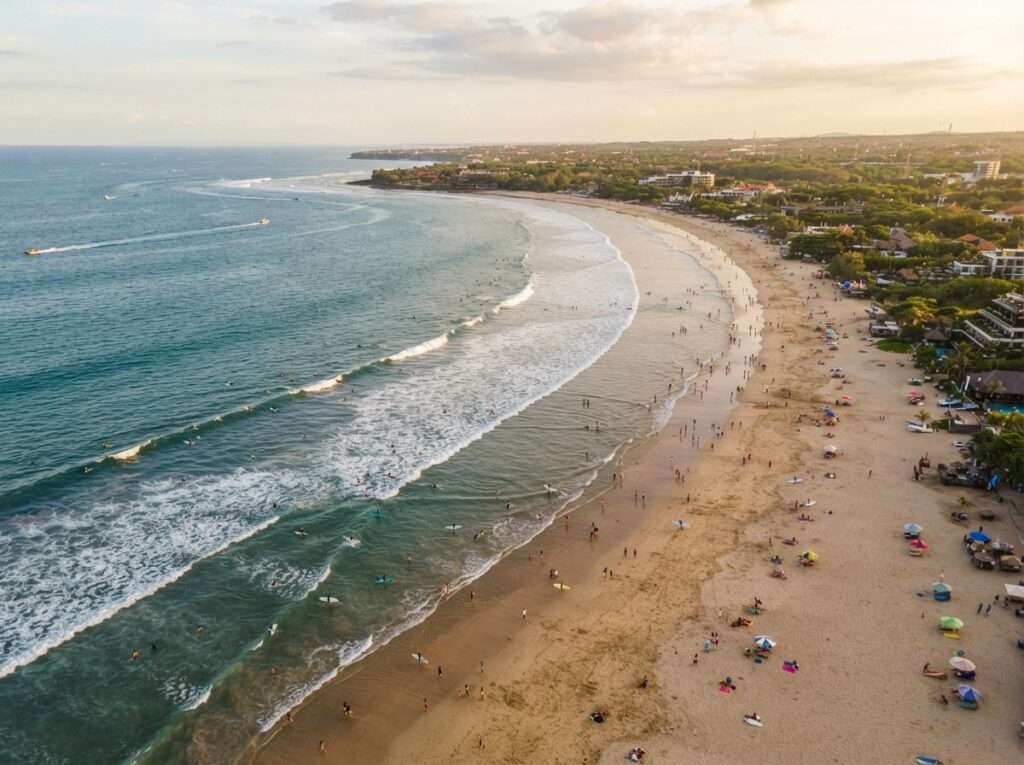
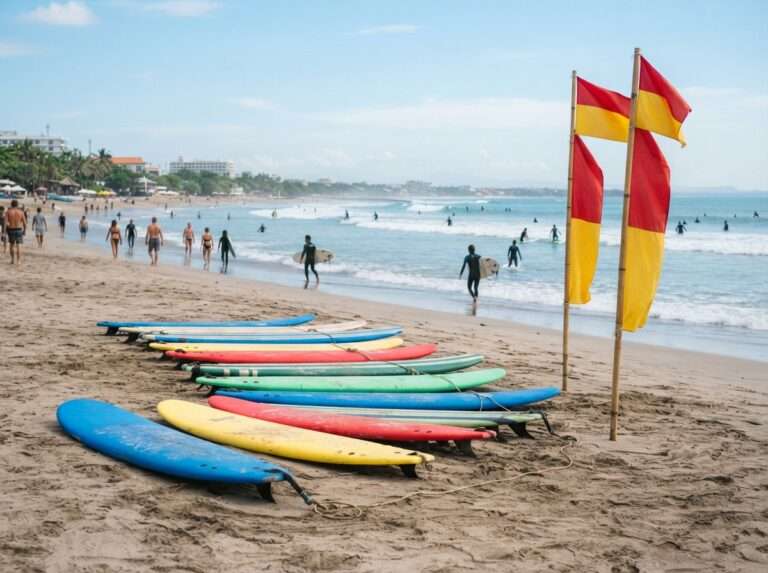
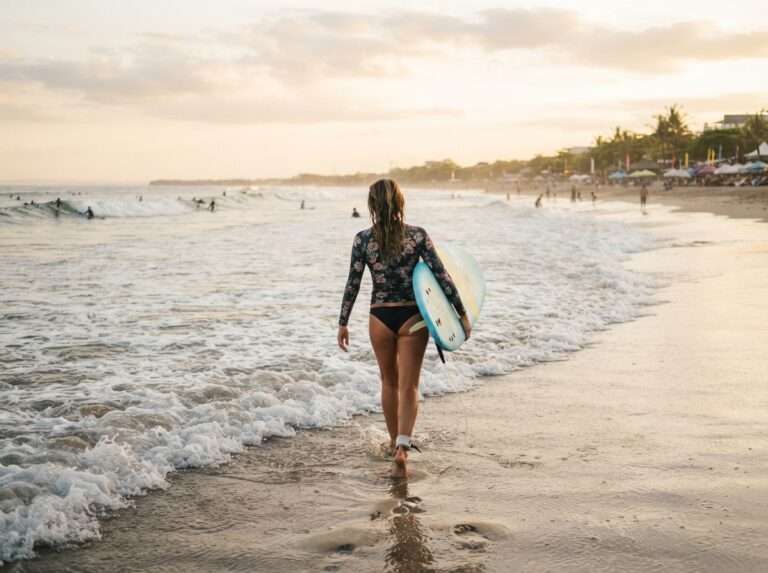
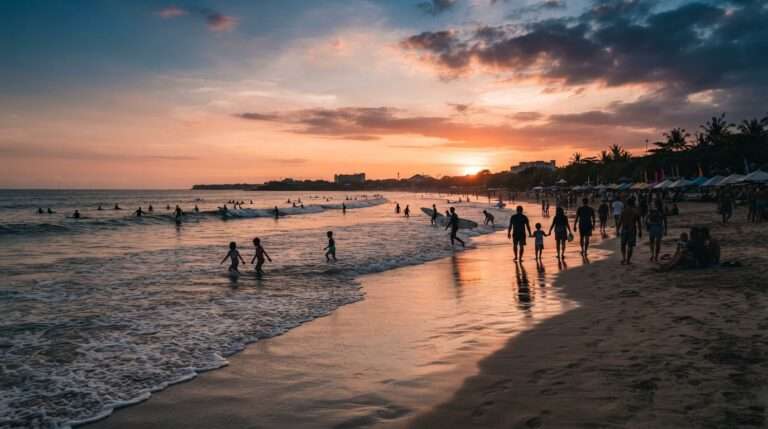
Kuta Beach is Bali’s most famous and busiest beach, a 2.5 km sweep of golden sand that runs north as Legian and Double Six towards Seminyak. It is public and free at any hour. Waves are mellow on most days, and surf schools rent soft boards to beginners by the hour. Sunset is the show, with families, hawkers and surfers on the sand at once. Swim between the red-and-yellow flags, because rips here are strong.
Our guide to places to visit in Kuta covers Beachwalk and Poppies Lane.
| Type | Beach (Kuta to Seminyak) |
| Famous for | Bali's best-known beach, sunsets and beginner surf |
| Entry fee | Free |
| Time needed | 2 hours |
| Local tip | December to March, storms wash rubbish onto the sand. Come at 5 pm for sunset |
| Map | Kuta Beach on Google Maps |
25
Seminyak And Petitenget
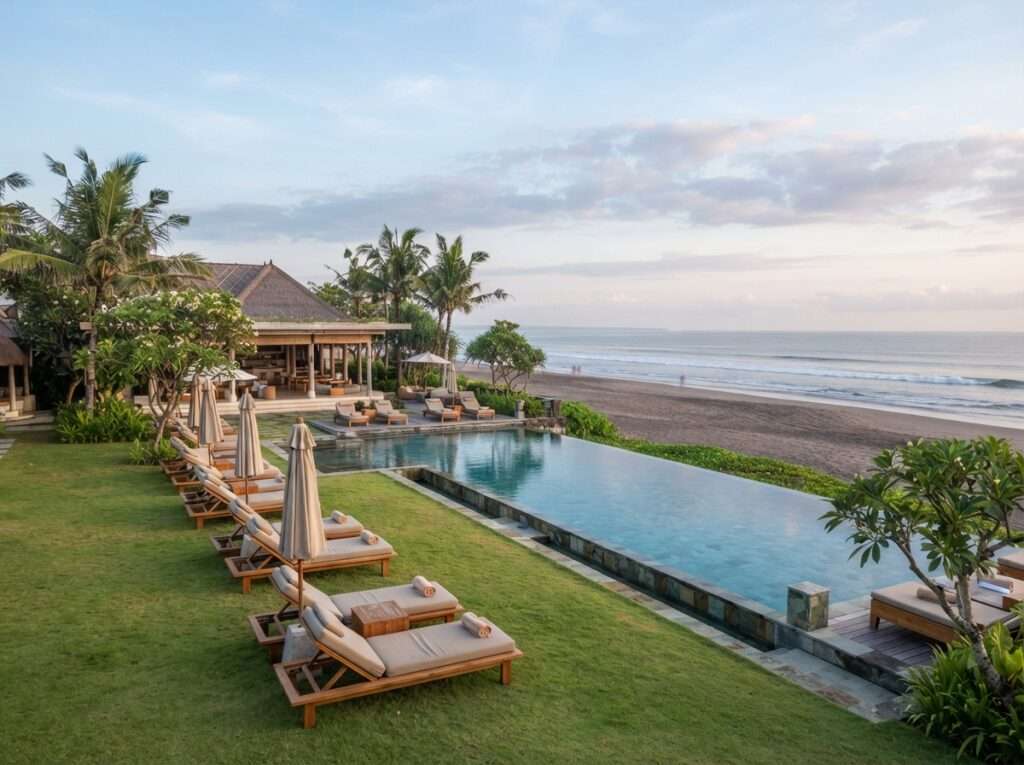
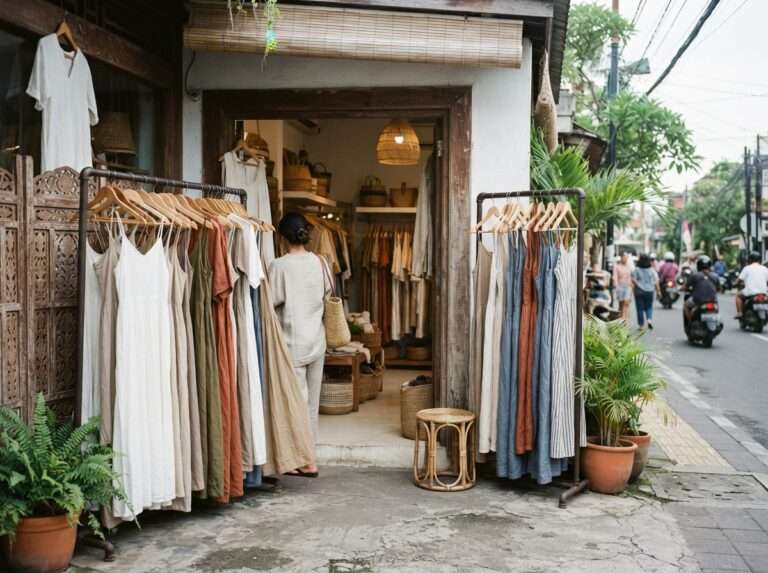

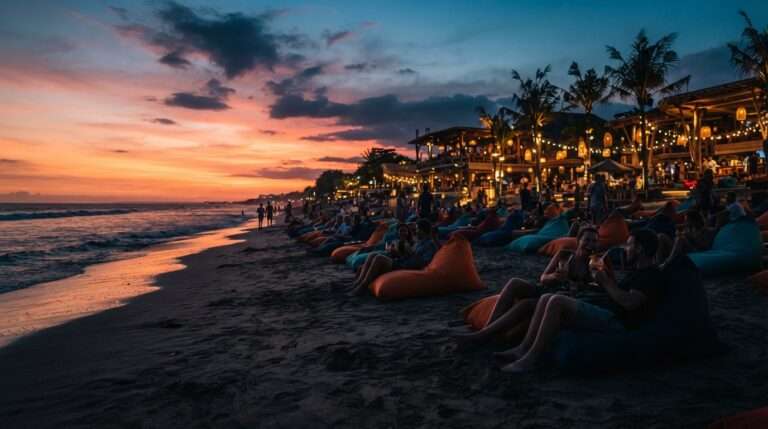
Seminyak is Bali’s smartest beach suburb, with boutiques along Jalan Kayu Aya, brunch cafés and big beach clubs at Petitenget. Pura Petitenget, a small sea temple on the beach, holds colourful ceremonies on full-moon days. You can watch from the outer area in a sarong, but the inner courtyard is for worshippers. Shoppers should read our shopping in Bali guide. For bars and clubs, see nightlife in Bali.
The rest of the area is in our guide to places to visit in Seminyak.
| Type | Beach (Seminyak) |
| Famous for | Beach clubs, boutiques and sunset on the sand |
| Entry fee | Free |
| Time needed | Half day |
| Local tip | Jalan Petitenget jams from 5 pm, so walk to sunset rather than drive |
| Map | Petitenget Beach on Google Maps |
26
Canggu
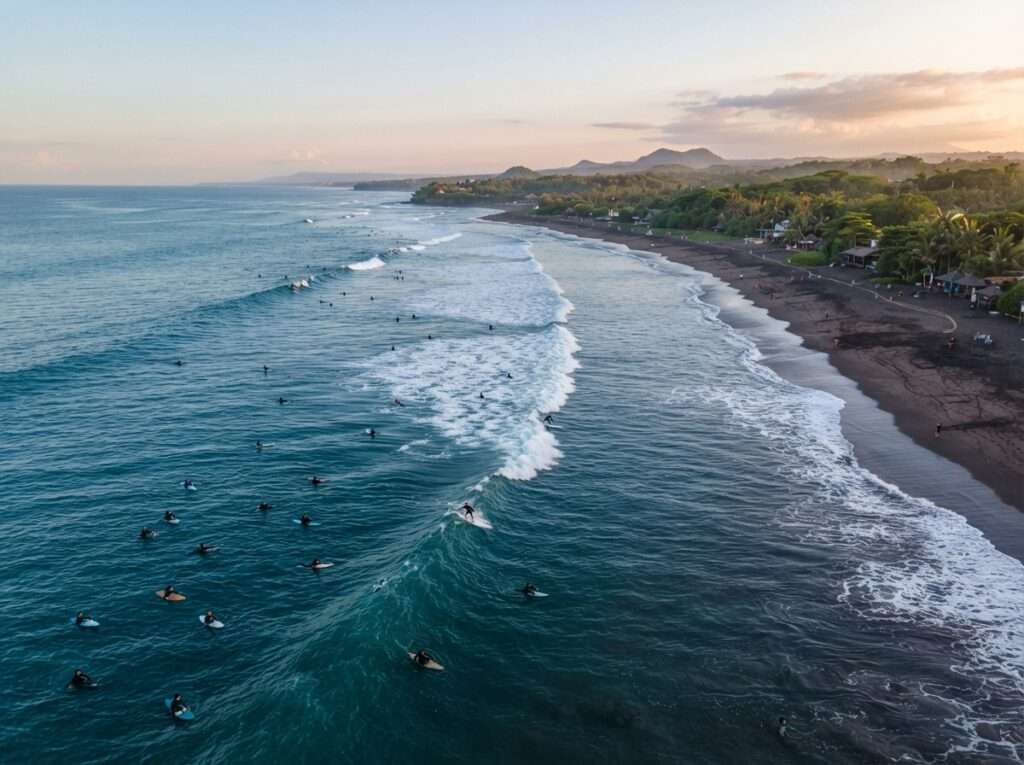
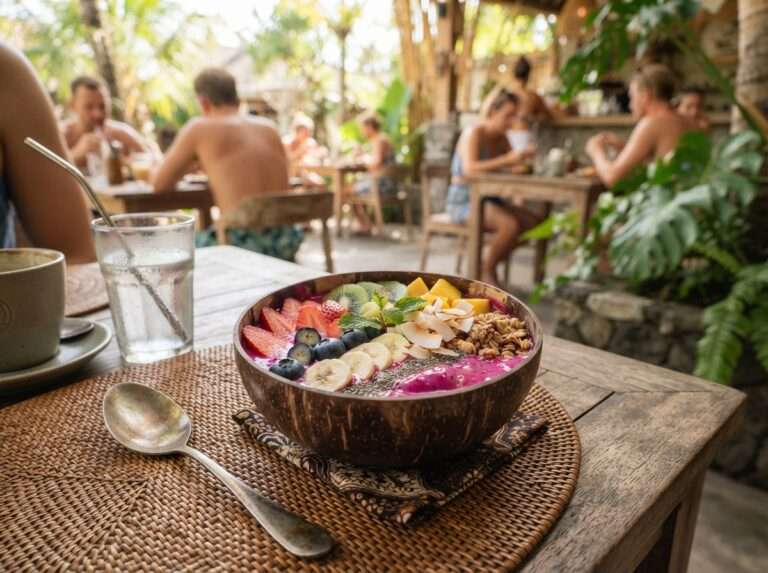
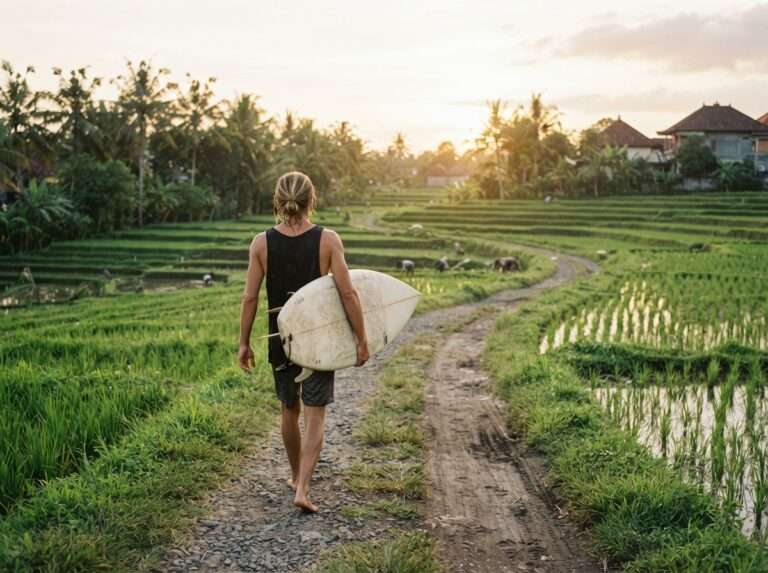
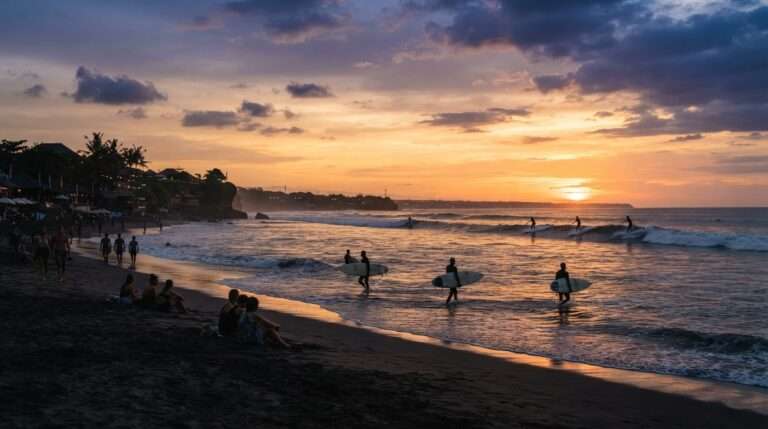
Canggu, 30 minutes north-west of Seminyak, is where Bali’s surf and café crowd moved when Seminyak got expensive. Batu Bolong and Echo Beach have steady waves, board rental and lessons, while the back roads still pass working rice paddies. A smoothie bowl off Jalan Batu Bolong and sunset at Echo Beach is the classic Canggu afternoon. It is 30 minutes from Tanah Lot, so the two fit into one day.
Our Canggu guide has the beaches in order.
| Type | Beach (west coast) |
| Famous for | Surf, cafés and rice-field roads |
| Entry fee | Free, with small parking fees at the beaches |
| Time needed | Half day |
| Local tip | The black volcanic sand gets very hot by noon. Surf in the morning, watch it at sunset |
| Map | Echo Beach on Google Maps |
27
Lovina Beach
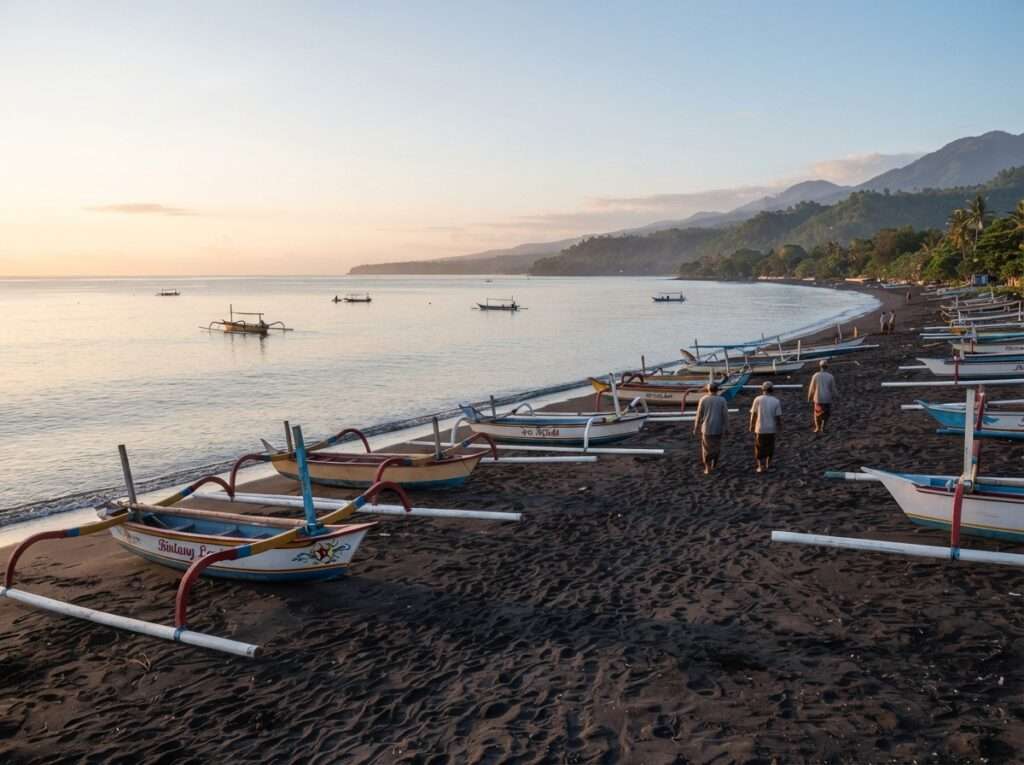
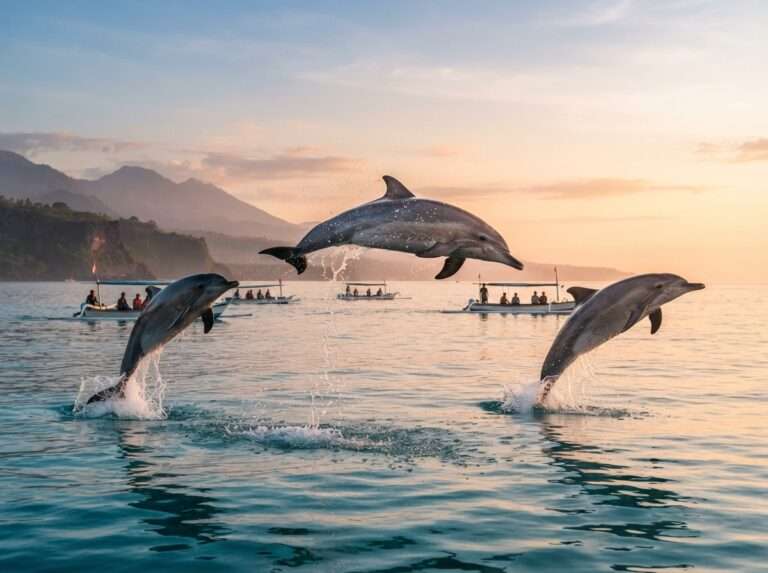
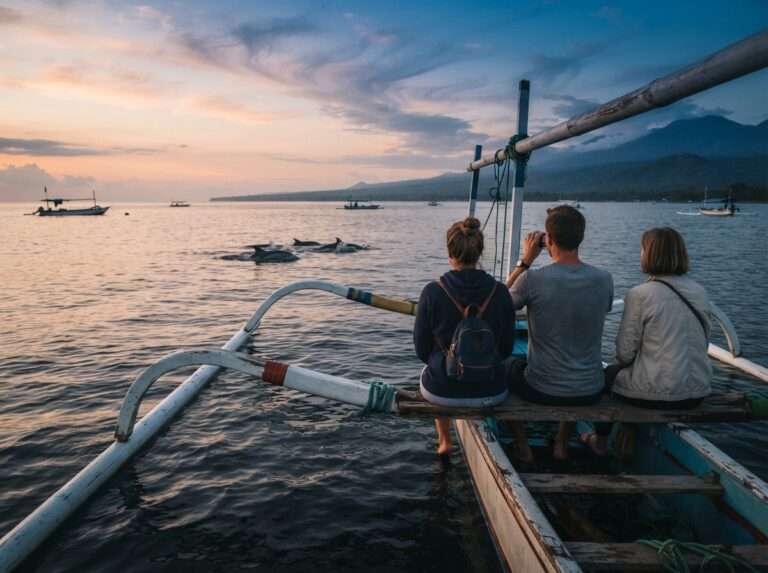
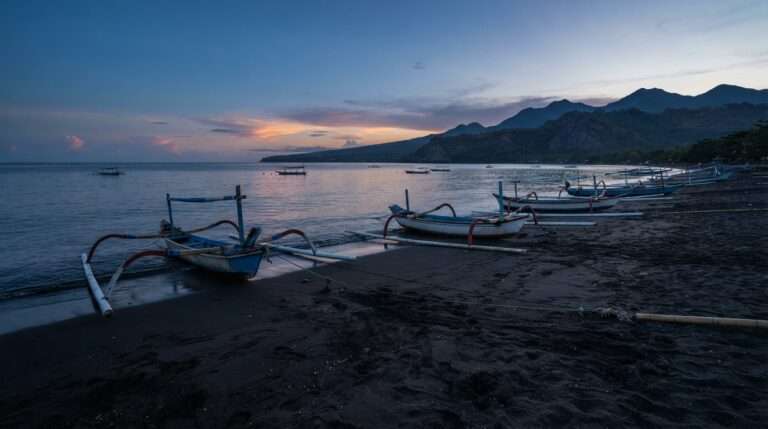
Lovina is a quiet strip of black-sand beaches on the north coast, known for dawn boat trips to see spinner dolphins. Boats leave at about 6 am and are back by 8.30. On a good morning you see dozens of dolphins, but the boats crowd them, so pick a captain who keeps his distance. The sea is calm, the hotels are cheap and the evenings are slow, which is the point after the south. It works best as a night or two combined with Sekumpul and Aling-Aling.
Our Lovina Beach guide covers the stays.
| Type | Beach (North Bali) |
| Famous for | Sunrise dolphin-watching boats |
| Entry fee | Beach free. Dolphin boats are priced per seat on the beach |
| Time needed | Full day, or overnight |
| Local tip | Agree that the captain will hang back from the pod before you board |
| Map | Lovina Beach on Google Maps |
28
Nusa Penida
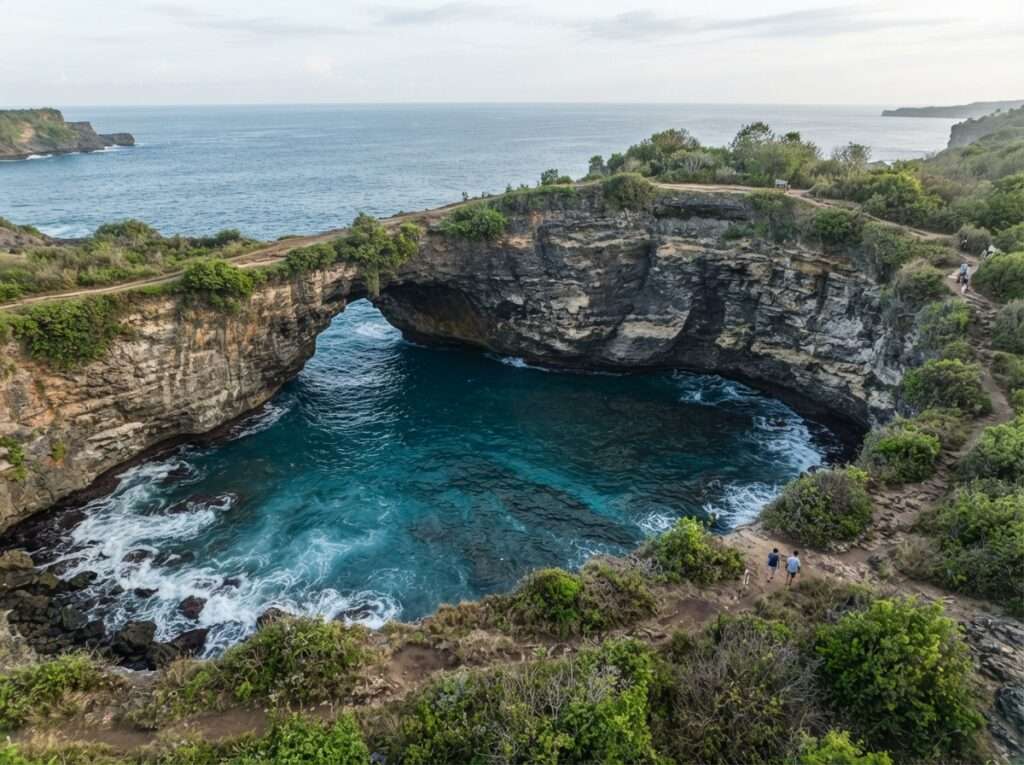
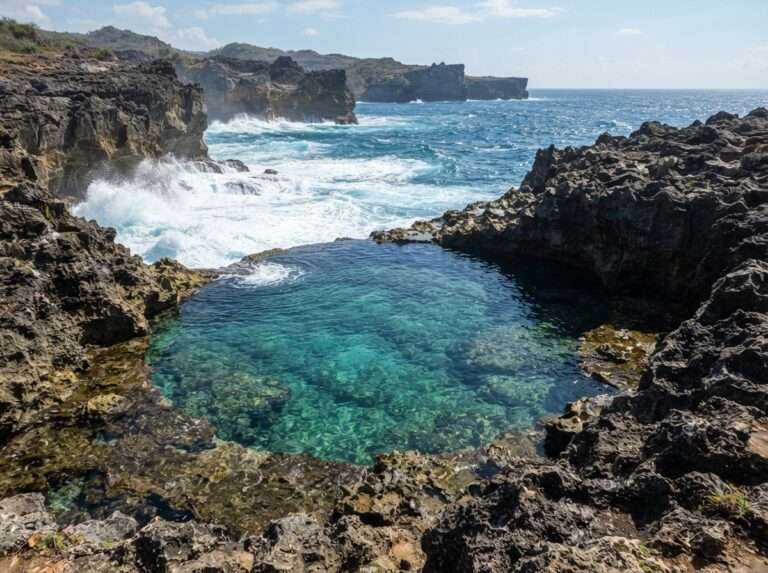
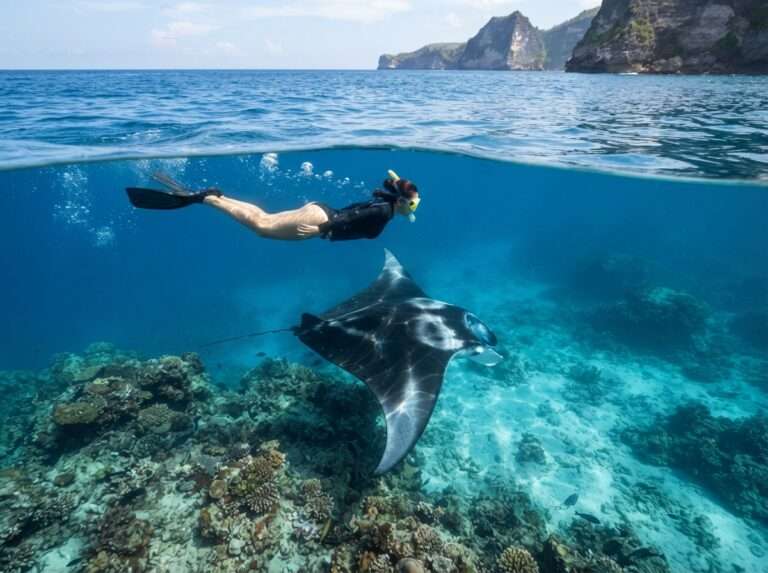
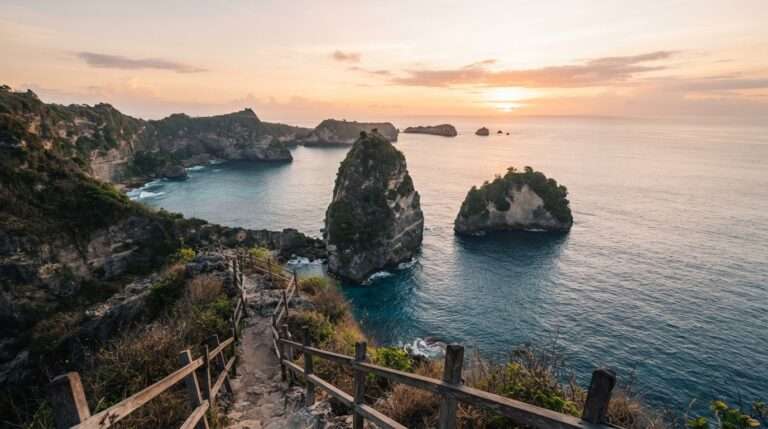
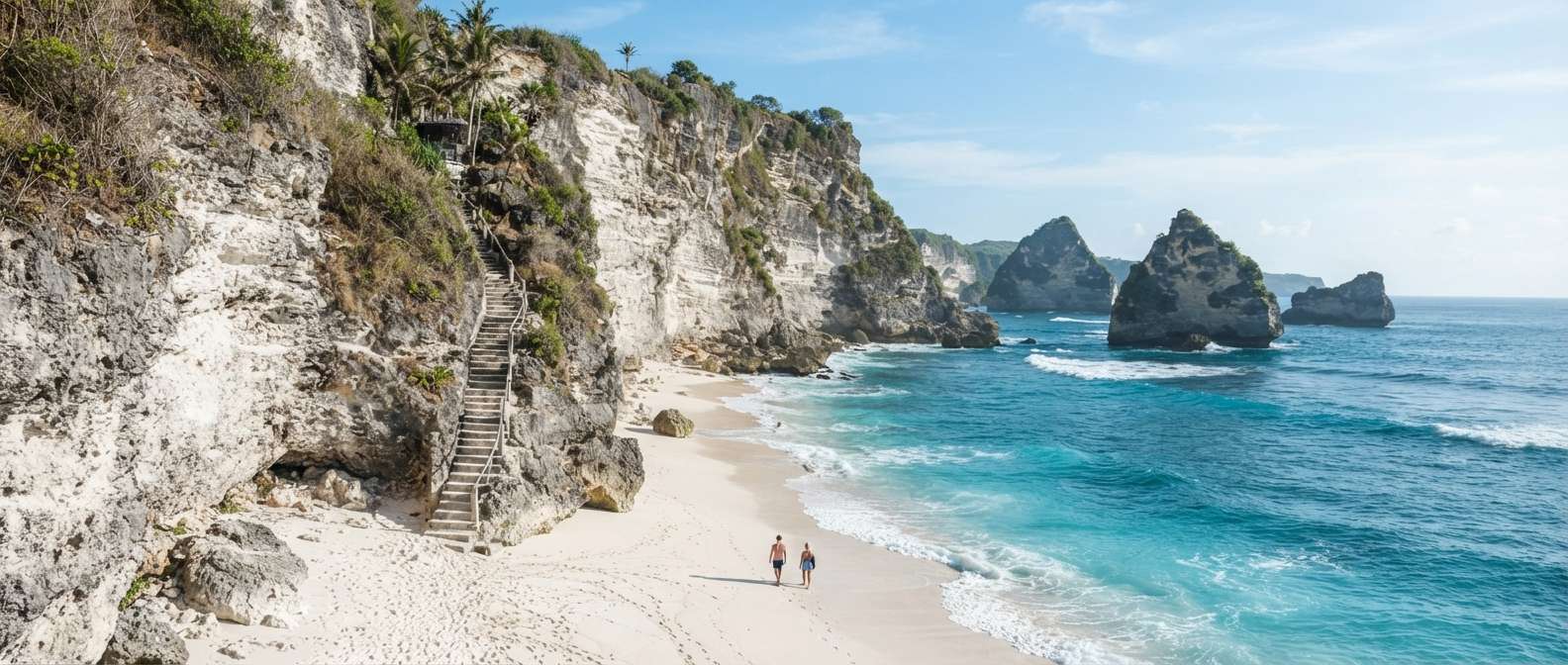
Nusa Penida is the big, rugged island south-east of Bali, and it holds the views in most Bali photos. Kelingking Beach’s T-rex headland, Broken Beach’s sea arch and Angel’s Billabong rock pool are on the west side. Diamond Beach, with its staircase carved down a white cliff, and the Thousand Islands viewpoint are on the east. Crystal Bay is good for snorkelling, and boats take snorkellers to Manta Point to swim with reef manta rays. Swimming is banned at Kelingking, Diamond Beach and Angel’s Billabong, and the half-built glass lift at Kelingking is not open to visitors. Fast boats from Sanur take about 45 minutes. The island roads are rough, so hire a driver there rather than a scooter.
Our Nusa Penida guide splits the island into two loops.
| Type | Island (south-east of Bali) |
| Famous for | Kelingking's T-rex cliff, Diamond Beach and manta rays |
| Entry fee | Fast boat IDR 150,000 to 250,000 (≈ ₹800 to ₹1,330) each way. Island fee IDR 25,000 (≈ ₹135), plus IDR 25,000 at each main viewpoint such as Kelingking since 1 September 2026 under Klungkung Perda 4/2026 |
| Time needed | Full day for the west loop, two days for both sides |
| Local tip | Boats get cancelled in big July and August swells, so keep a spare day |
| Map | Kelingking Beach on Google Maps |
29
Nusa Lembongan And Nusa Ceningan
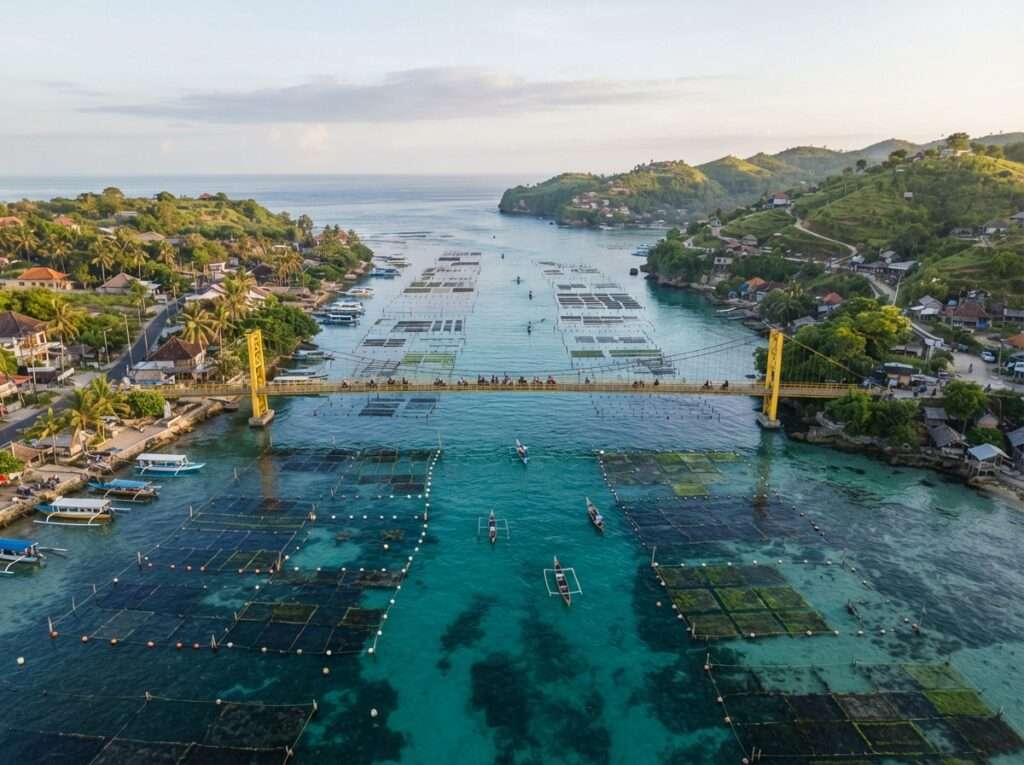
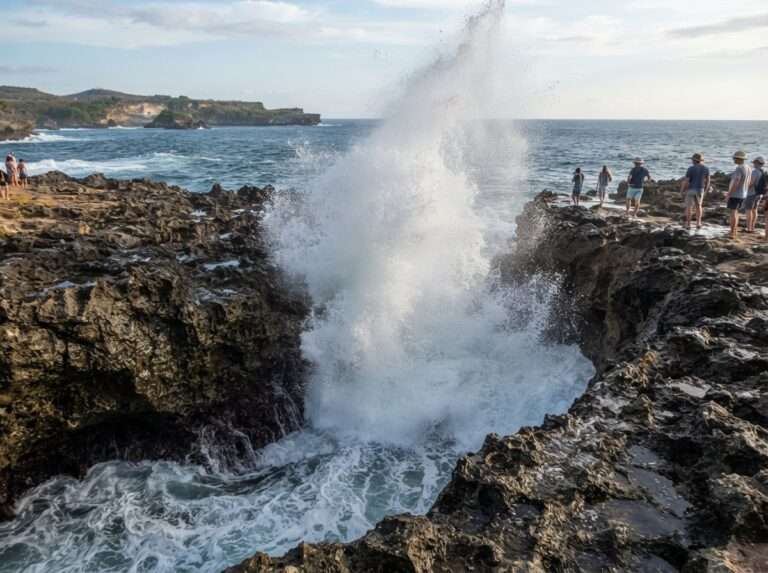
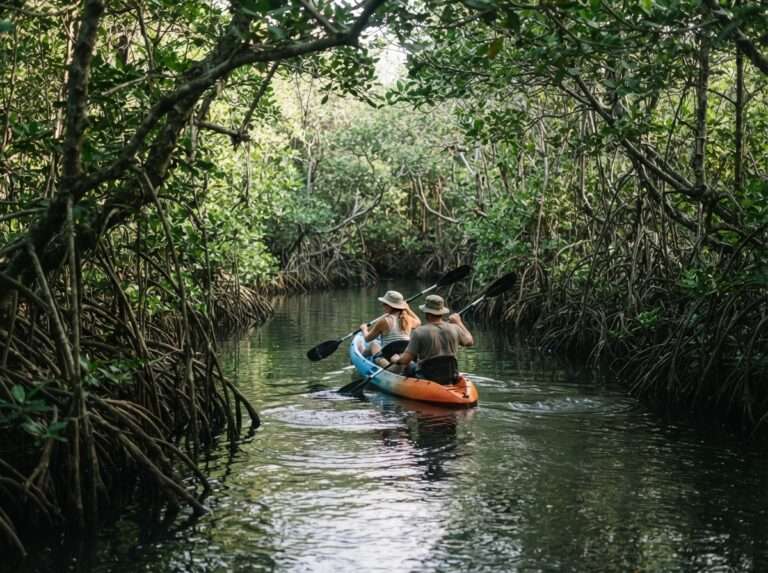
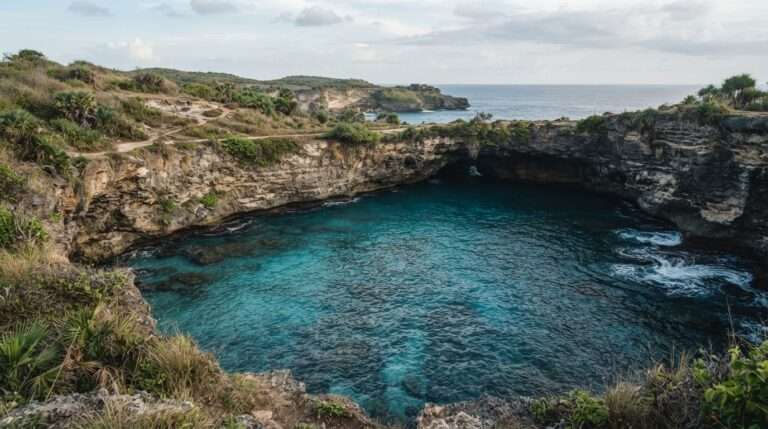
Nusa Lembongan is Penida’s smaller, gentler neighbour, about 30 minutes by fast boat from Sanur. Mangrove kayak trips, seaweed farms and Dream Beach make it a slower, beachier day. At Devil’s Tear, waves explode up through the rocks at high tide. The Yellow Bridge crosses to Nusa Ceningan, where the Blue Lagoon’s turquoise water sits below low cliffs. Lembongan’s guesthouses are a good base for Manta Point without Penida’s roads.
Our Nusa Lembongan guide and islands around Bali compare the islands.
| Type | Island (south-east of Bali) |
| Famous for | Devil's Tear, the Yellow Bridge and the Blue Lagoon |
| Entry fee | Fast boat from Sanur. Island levy paid on arrival |
| Time needed | Full day, or overnight |
| Local tip | Time Devil's Tear for high tide. Scooters are fine here, unlike on Penida |
| Map | Devil's Tear on Google Maps |
30
Amed And Tulamben
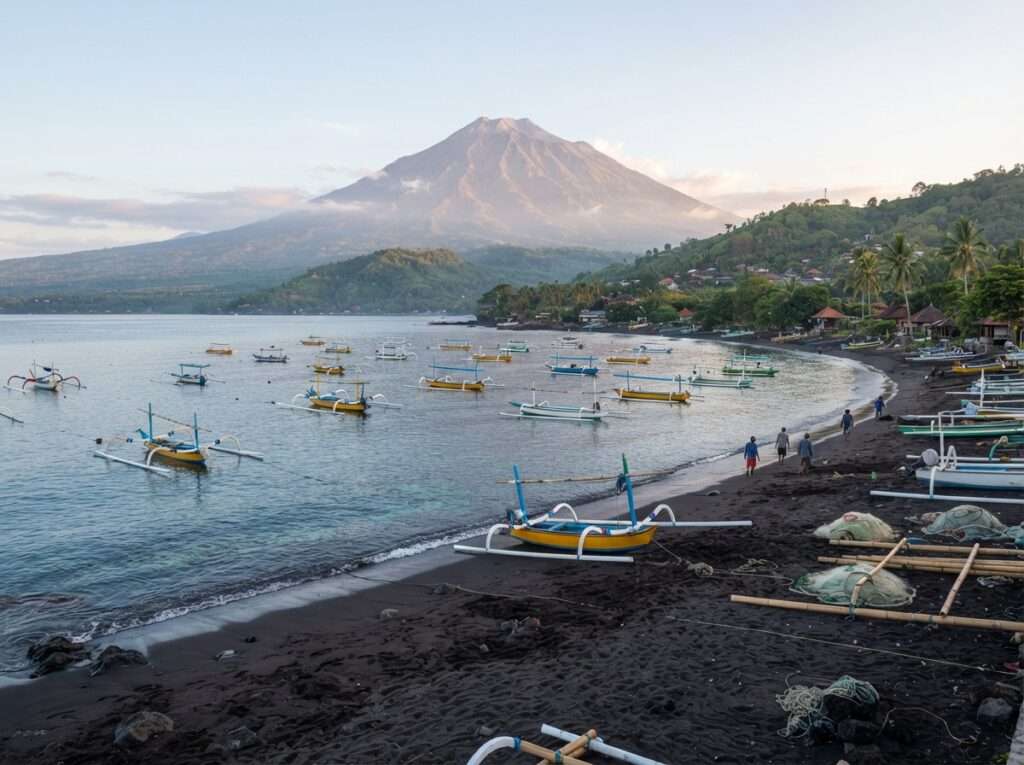
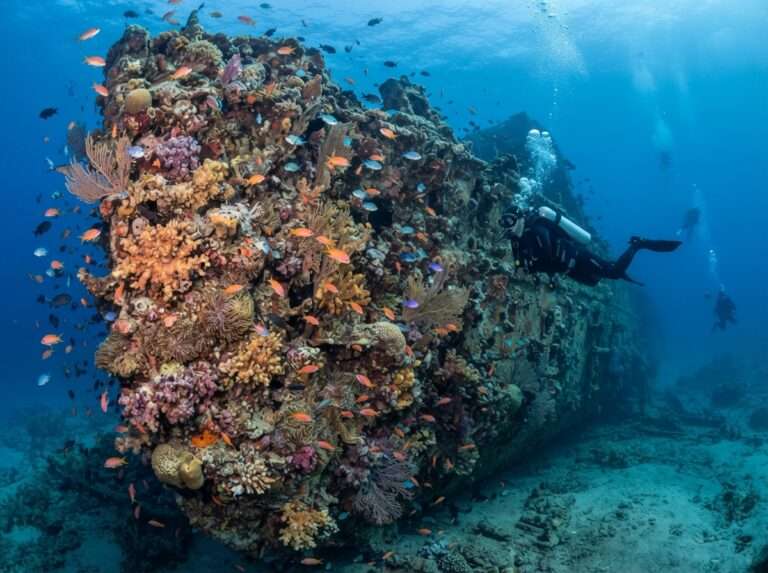
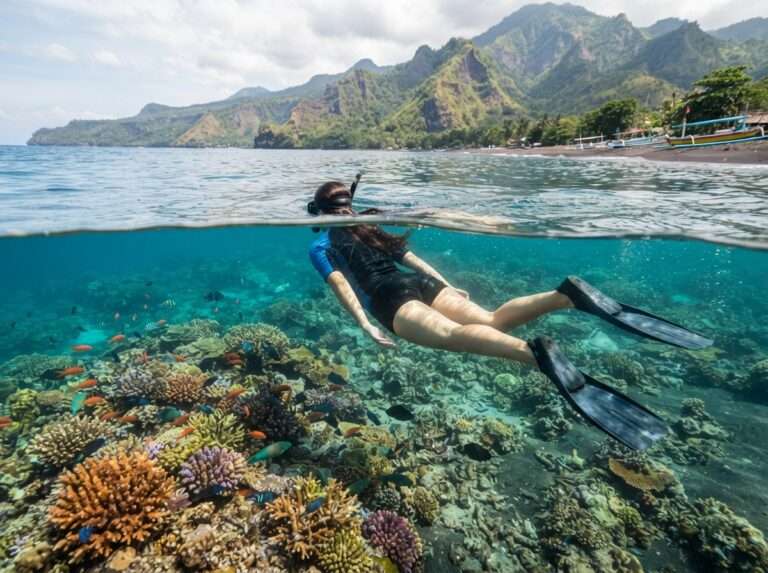
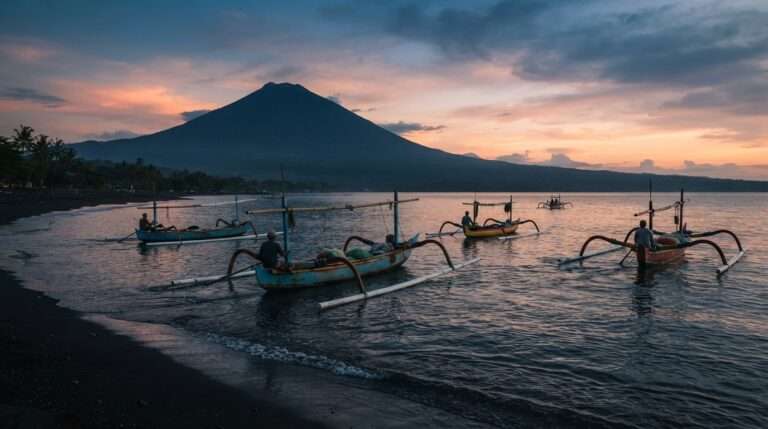
Amed is a string of fishing villages on Bali’s north-east coast, with black-sand coves, calm water and coral right off the beach at Jemeluk Bay. You can snorkel here without a boat. Twenty minutes north, Tulamben has the USAT Liberty, a World War II cargo ship torpedoed in 1942, beached at Tulamben and pushed into the sea by Mount Agung’s 1963 eruption, now lying 3 to 30 metres down just off the stones, one of the world’s easiest wreck dives. For walls and clearer water still, divers head to Menjangan Island in West Bali National Park.
See our things to do in Tulamben, plus snorkelling in Bali and scuba diving in Bali.
| Type | Underwater (north-east coast) |
| Famous for | Shore snorkelling and the USAT Liberty wreck |
| Entry fee | Free. Snorkel gear and dives hired locally |
| Time needed | Full day, or overnight |
| Local tip | Snorkel between 7 and 10 am for flat water, in water shoes for the pebble beaches |
| Map | Jemeluk Bay on Google Maps |
31
Ubud Palace And Ubud Art Market
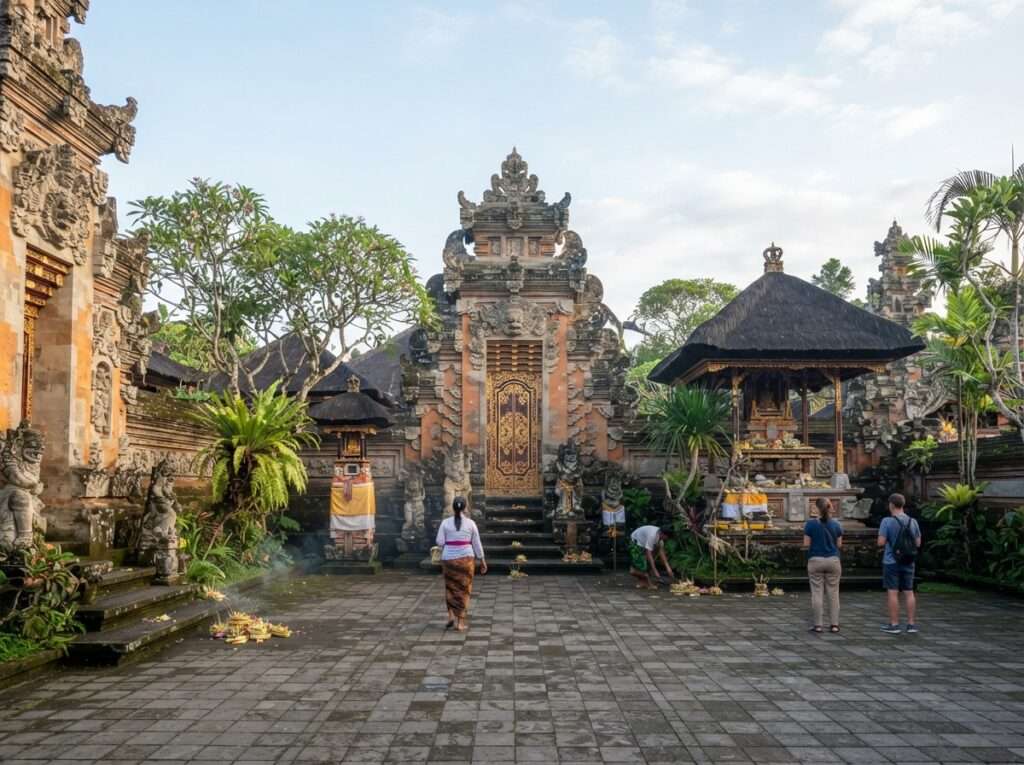
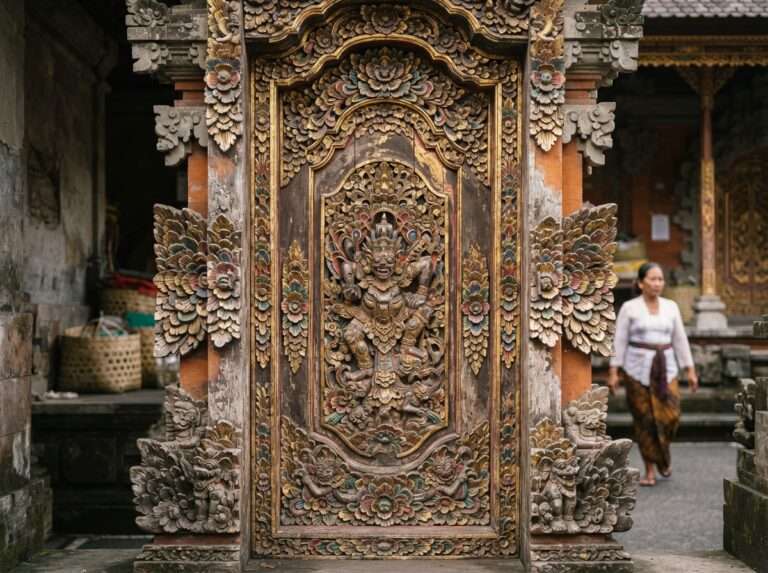
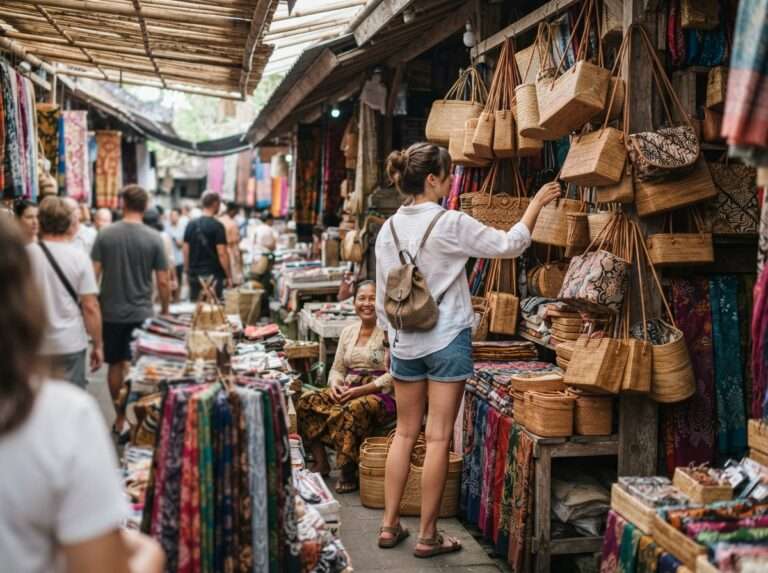
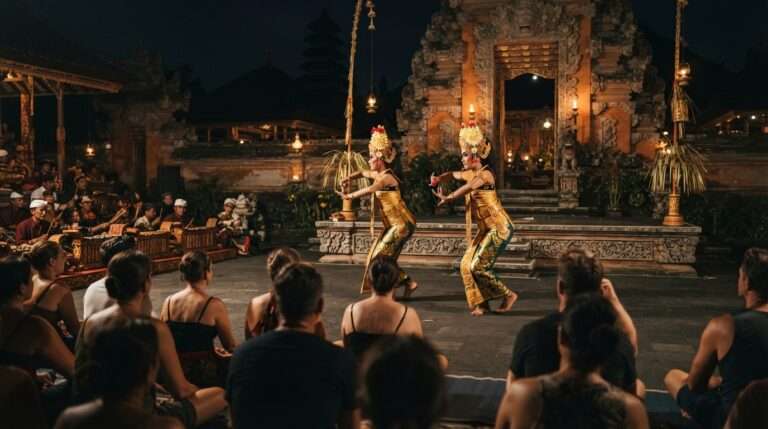
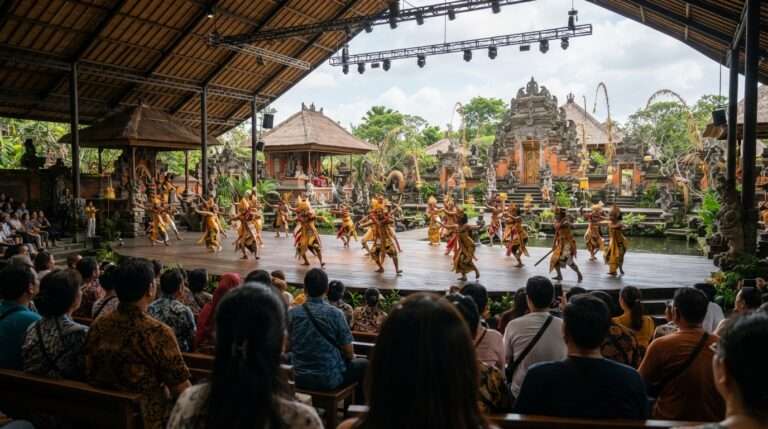
Puri Saren Agung, the Ubud royal palace, stands in the centre of town and is free to walk into by day. Its carved courtyards and gold-leaf gates are still home to the royal family. Come back after dark for a Legong or Barong dance in the courtyard, performed most evenings around 7.30 pm with tickets sold on the street outside. The Ubud Art Market opposite sells sarongs, Ata grass bags and paintings, and prices drop if you shop before 10 am.
Our things to do in Ubud guide covers the rest of town.
| Type | Palace and market (Ubud) |
| Famous for | Evening Legong dances in a royal courtyard |
| Entry fee | Palace free. Dance tickets about IDR 100,000 (≈ ₹530) |
| Time needed | 1.5 hours |
| Local tip | Start bargaining at about 40% of the first price at the market |
| Map | Ubud Palace on Google Maps |
32
Penglipuran Village
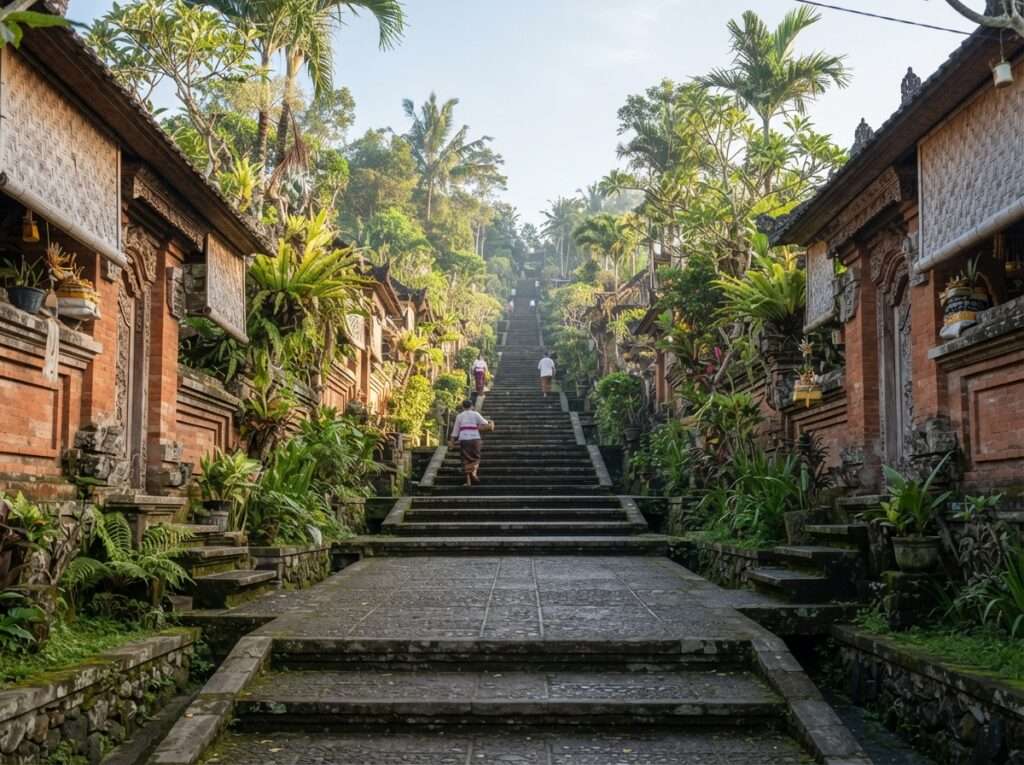
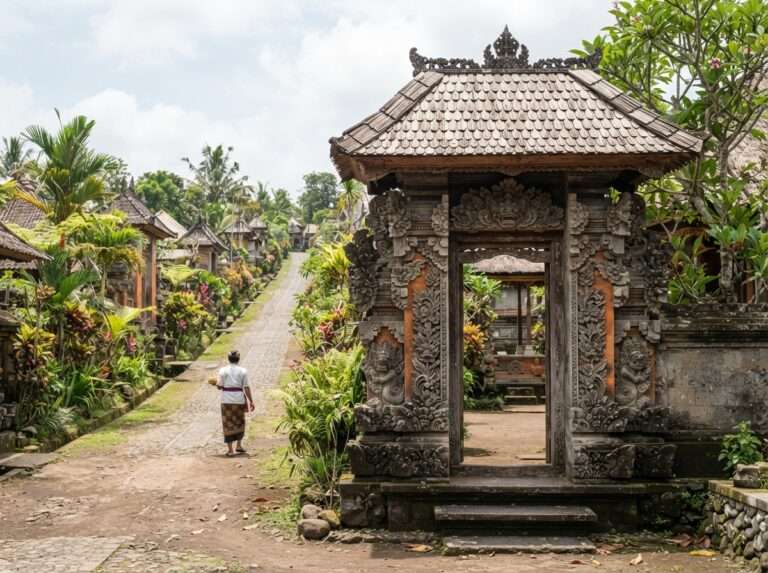
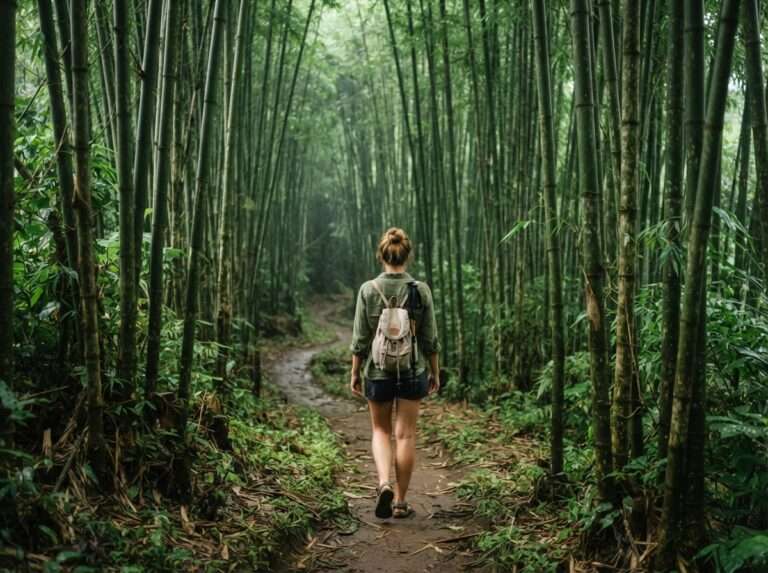
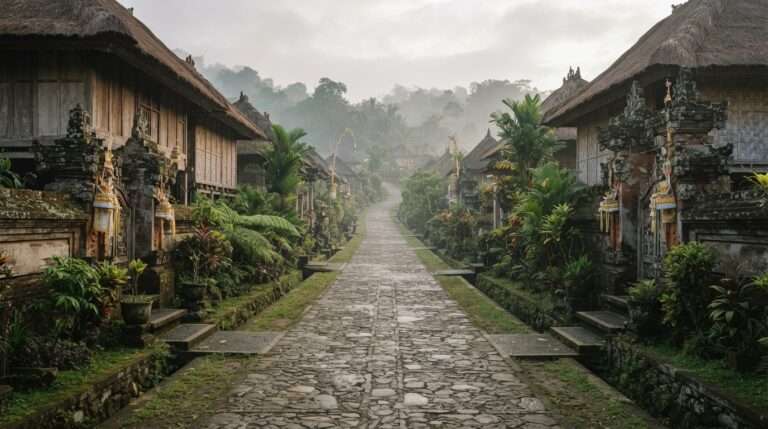
Penglipuran, in the Bangli highlands, is a traditional Balinese village laid out along one straight, stepped lane with matching carved gateways on both sides. It is known as one of the cleanest villages in the world, it is car-free inside, and families still live in the compounds. Behind the village is a bamboo forest walk. Recent guides quote a single foreign adult ticket of about IDR 50,000, but check the current price and what it includes at the gate.
Read about Bali’s other villages in famous villages in Bali.
| Type | Village (Bangli) |
| Famous for | One of the world's cleanest villages |
| Entry fee | About IDR 50,000 (≈ ₹265) foreign adult, per 2025-26 guides. Check at the gate |
| Time needed | 1 hour |
| Local tip | Ask before photographing inside family compounds. Visit on the way to or from Kintamani |
| Map | Penglipuran on Google Maps |
33
Tirta Gangga Water Palace
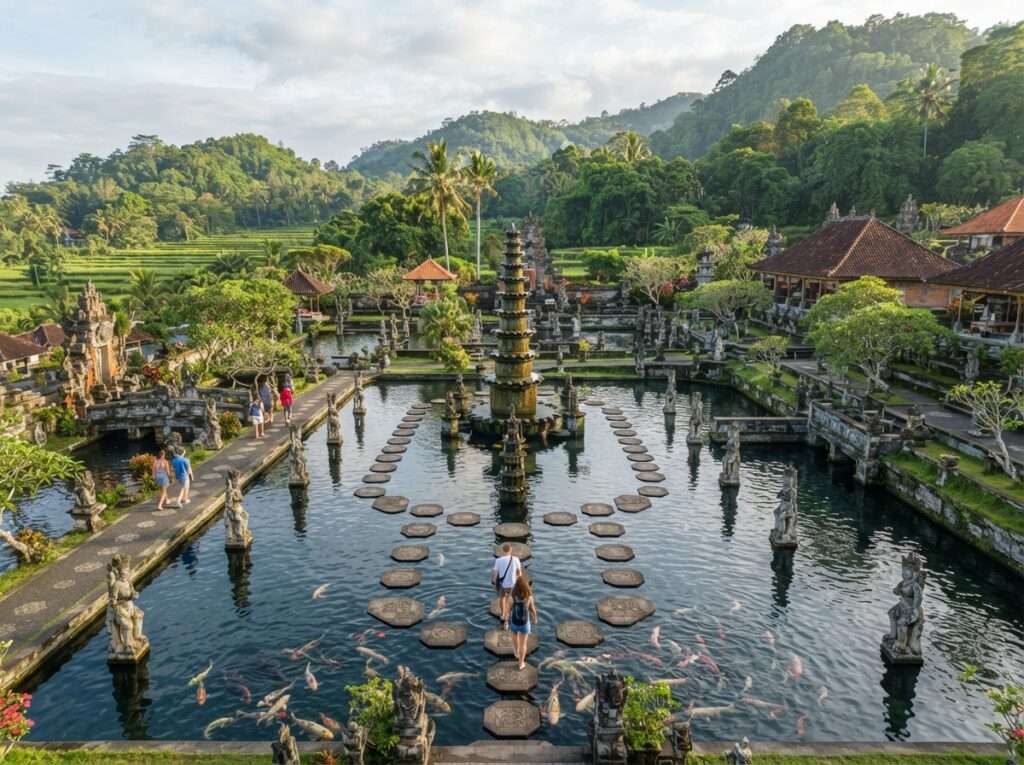
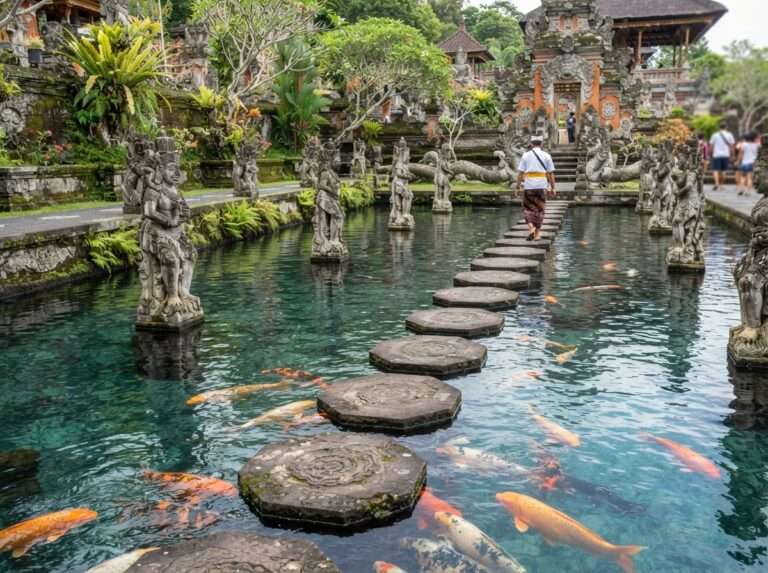
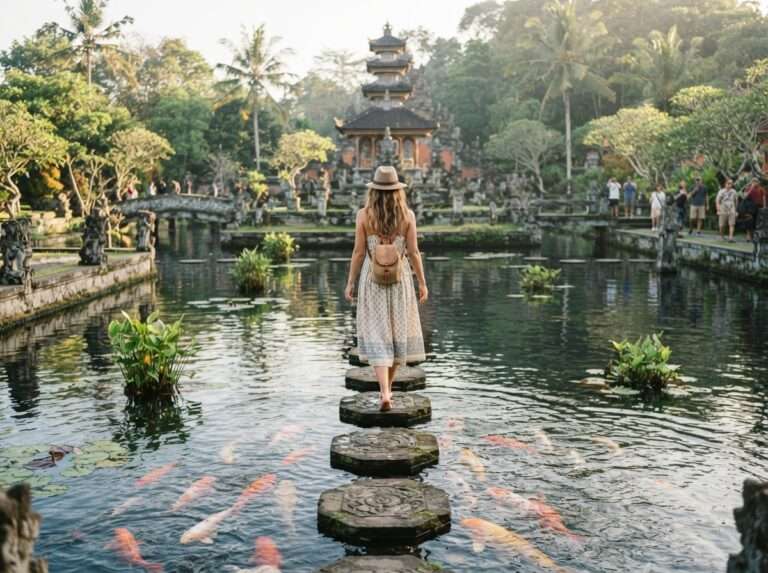
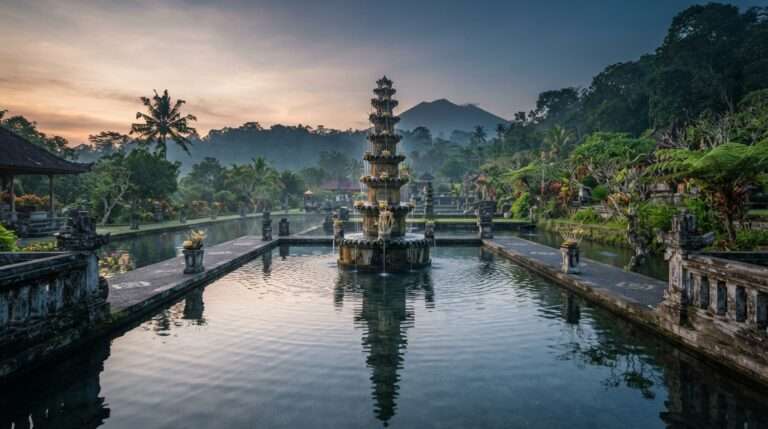
Tirta Gangga is a royal water garden built by the last king of Karangasem in 1946 and named after the holy Ganges. Stepping stones cross koi ponds past carved statues and an 11-tiered fountain. It is 20 minutes from Lempuyang, so the two share one East Bali morning.
Half an hour south, near Amlapura, the Ujung Water Palace has bigger pools, a European-style pavilion and almost no crowd.
| Type | Water palace (Karangasem) |
| Famous for | Stepping stones across koi ponds |
| Entry fee | IDR 90,000 (≈ ₹480) foreign adult |
| Time needed | 1 hour |
| Local tip | Before 9 am you get the stepping stones to yourself. Fish food is sold at the gate |
| Map | Tirta Gangga on Google Maps |
34
Garuda Wisnu Kencana Cultural Park
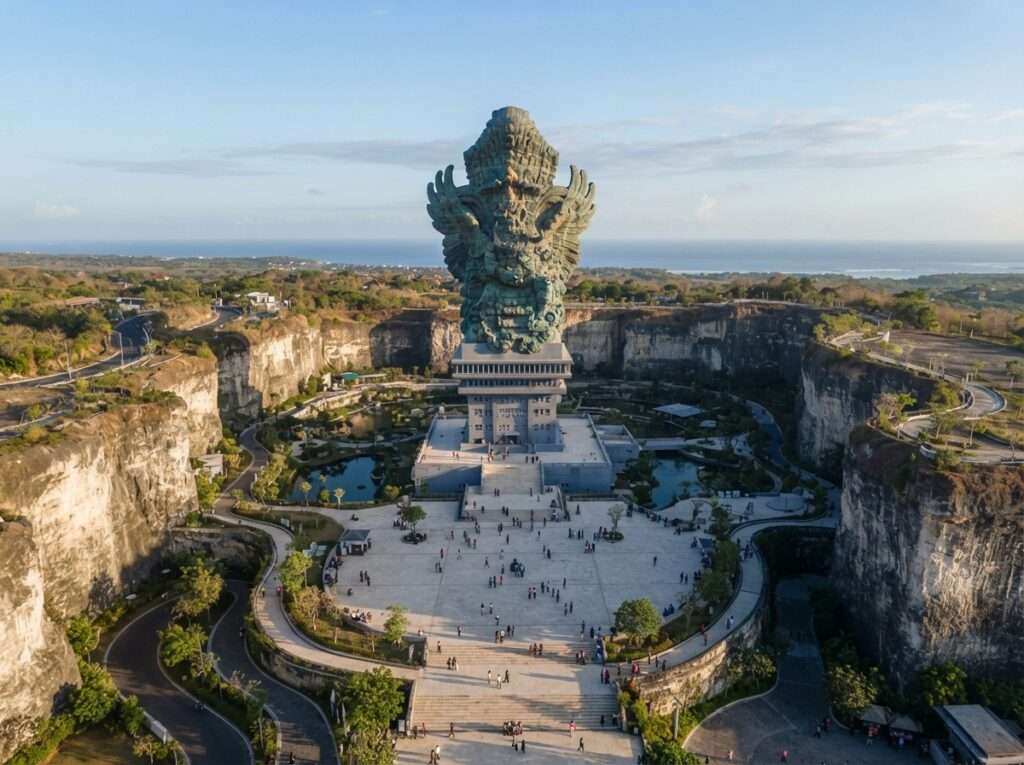
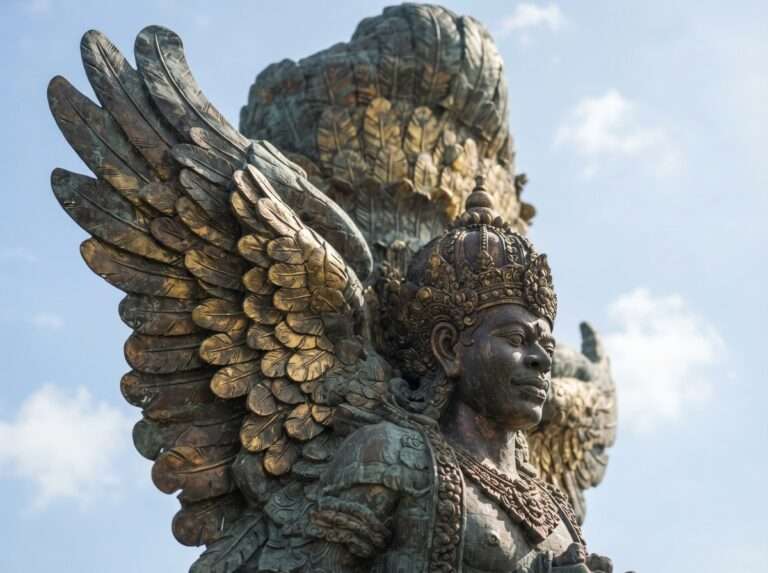
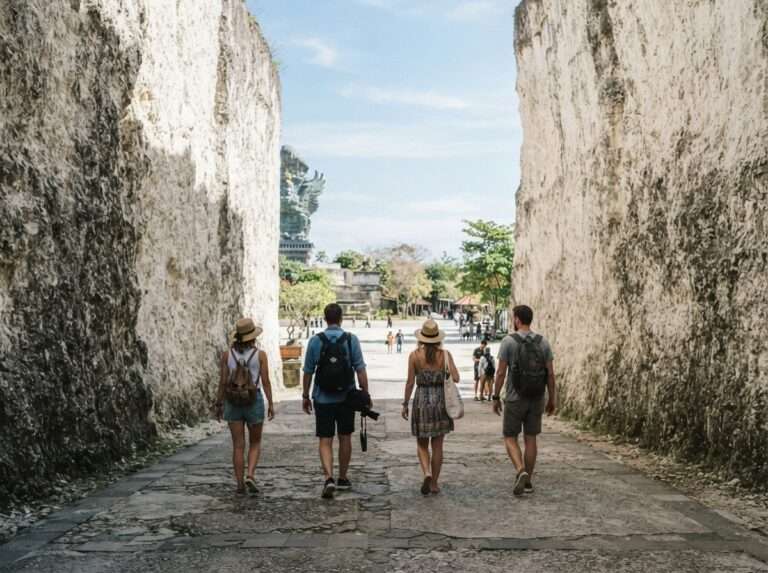
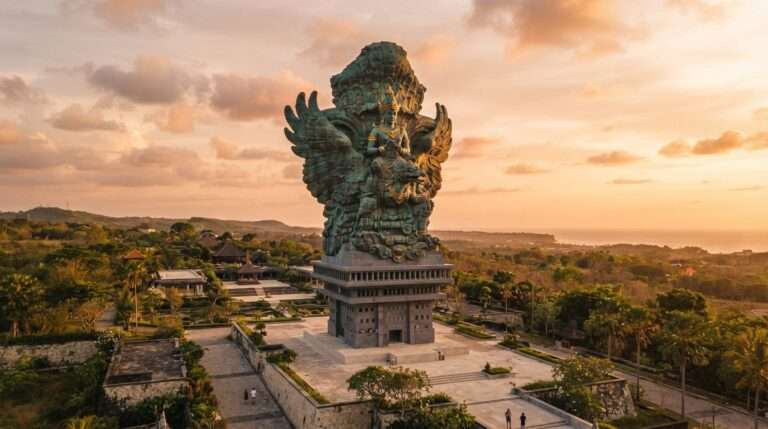
GWK is home to the 121-metre statue of Vishnu riding Garuda, finished in 2018 and taller than the Statue of Liberty including its base. The park is cut into an old limestone quarry, so you walk between sheer white walls to reach the statue plaza. Short dance shows run through the day, and kids enjoy the Segway and buggy rides. It is 20 minutes from Uluwatu, which is how most South Bali day tours pair them. Go late morning, then drive on to the cliff temple for sunset.
| Type | Cultural park (Bukit peninsula) |
| Famous for | Bali's giant Vishnu-on-Garuda statue |
| Entry fee | IDR 150,000 (≈ ₹800) foreign adult |
| Time needed | 2 to 3 hours |
| Local tip | Shuttle buggies run from the gate to the statue if you want to skip the walk |
| Map | GWK on Google Maps |
35
Sacred Monkey Forest Sanctuary
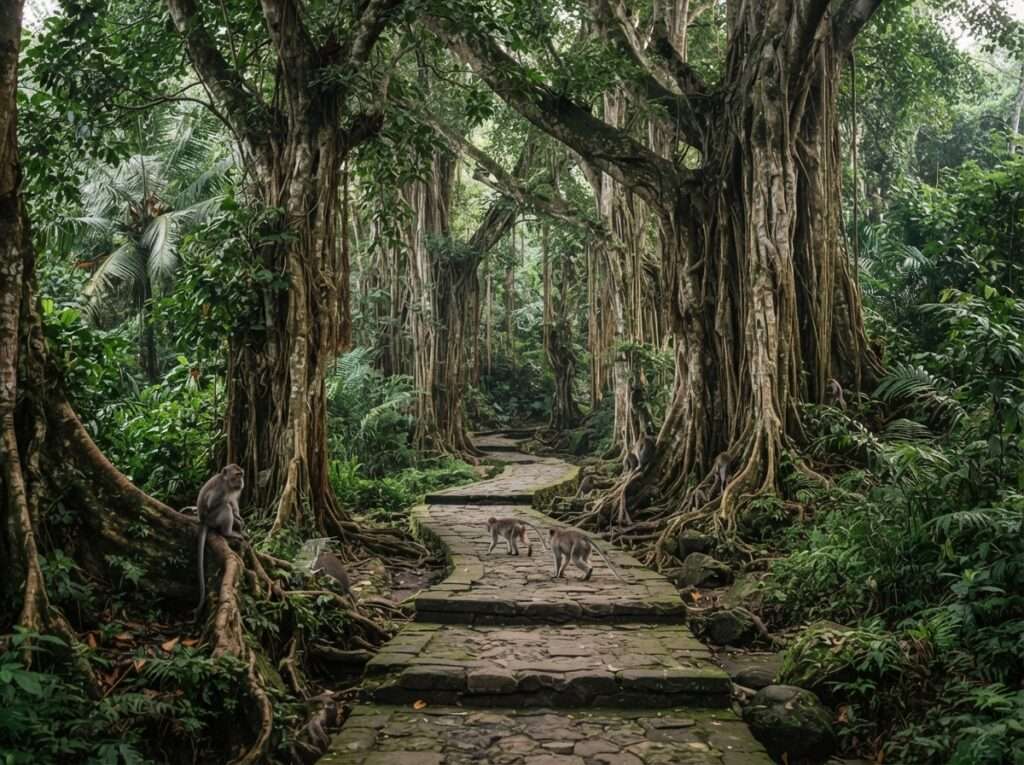
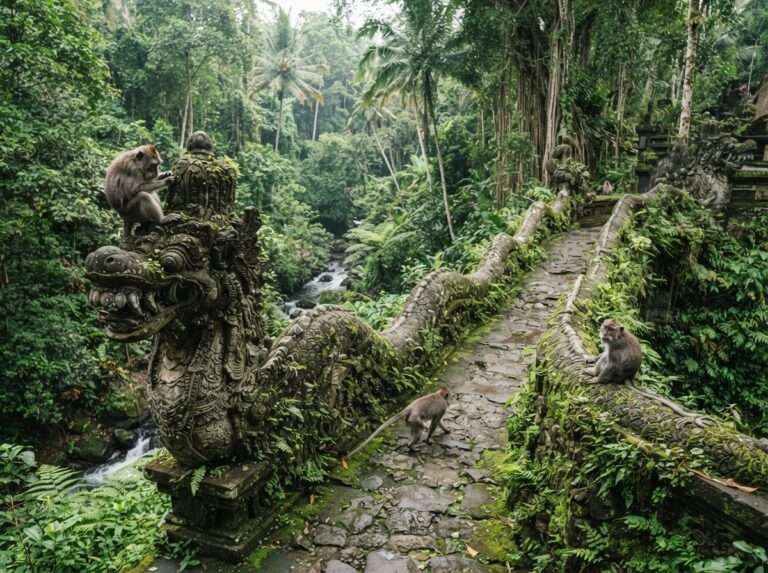
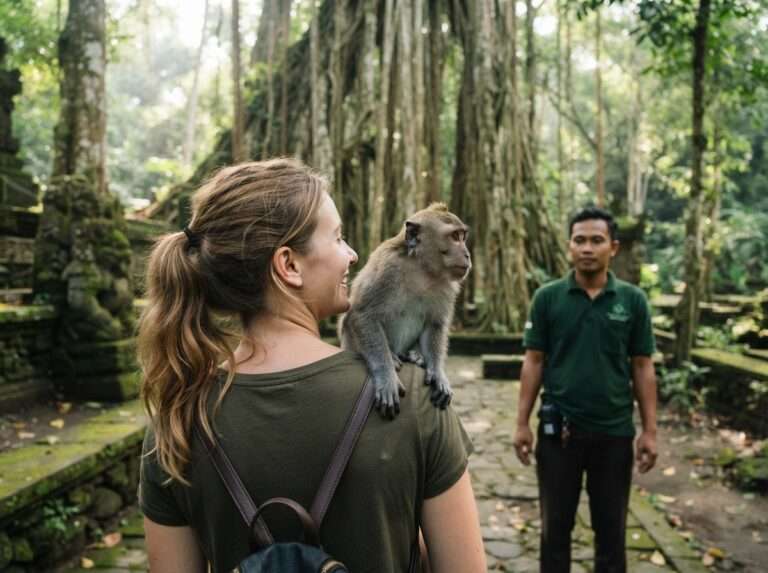
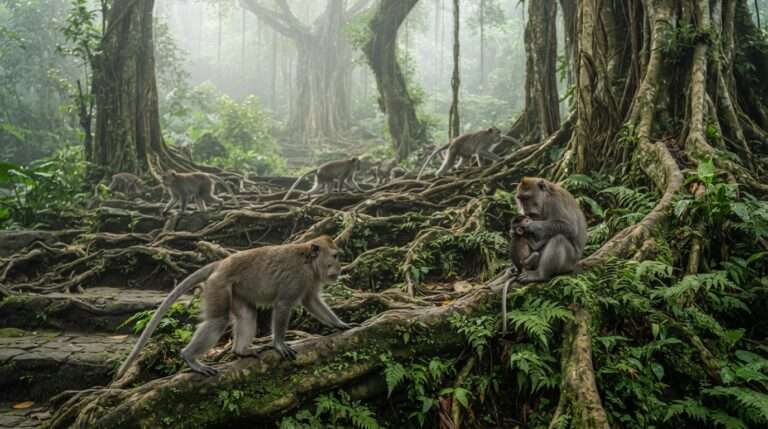
The Sacred Monkey Forest is 12.5 hectares of forest in the middle of Ubud, home to more than 1,200 long-tailed macaques and three 14th-century temples. Paths wind under giant banyan and nutmeg trees to a moss-covered dragon bridge over a ravine. The monkeys are used to people but they are not tame. Carry no food, keep bags zipped, avoid eye contact and never pull away if one climbs on you. Staff in green uniforms will help.
Our Ubud Monkey Forest guide has the rules, and the Monkey Forest entry fee page tracks ticket changes.
| Type | Wildlife (Ubud) |
| Famous for | 1,200 macaques among moss-covered temples |
| Entry fee | IDR 130,000 (≈ ₹690) adult, IDR 100,000 child (official site). Open 9 am to 6 pm |
| Time needed | 1.5 hours |
| Local tip | The self-service kiosks take cards only, while the staffed counter takes cash and card. Go at the 9 am opening |
| Map | Monkey Forest on Google Maps |
36
Bali Safari And Marine Park
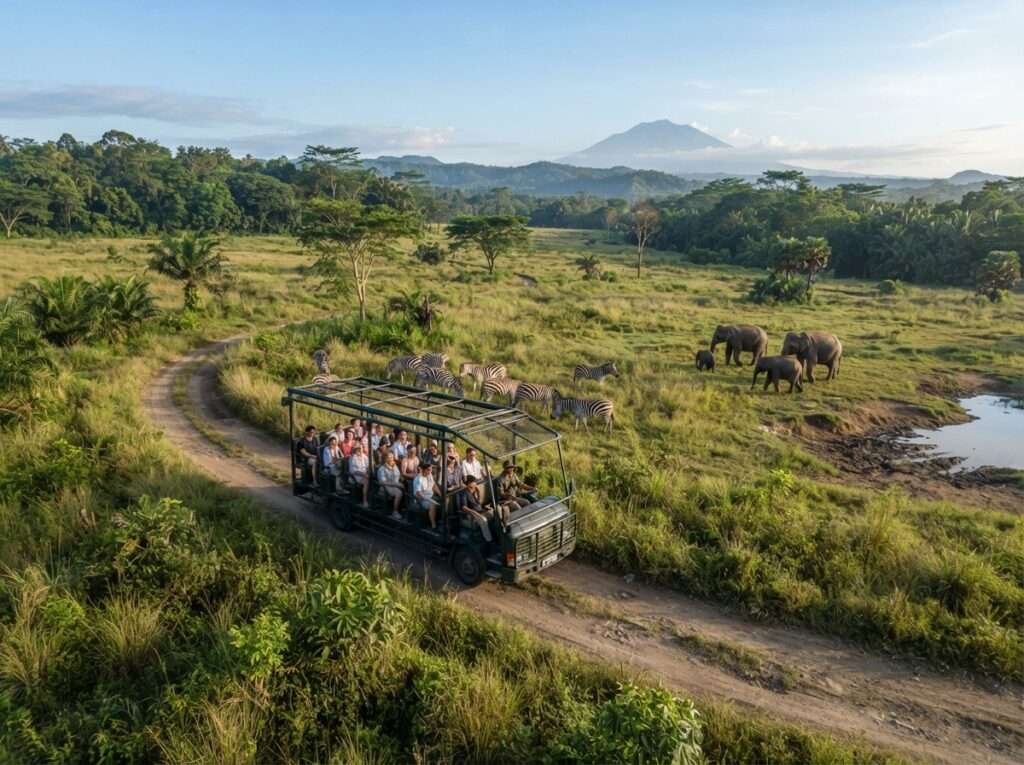
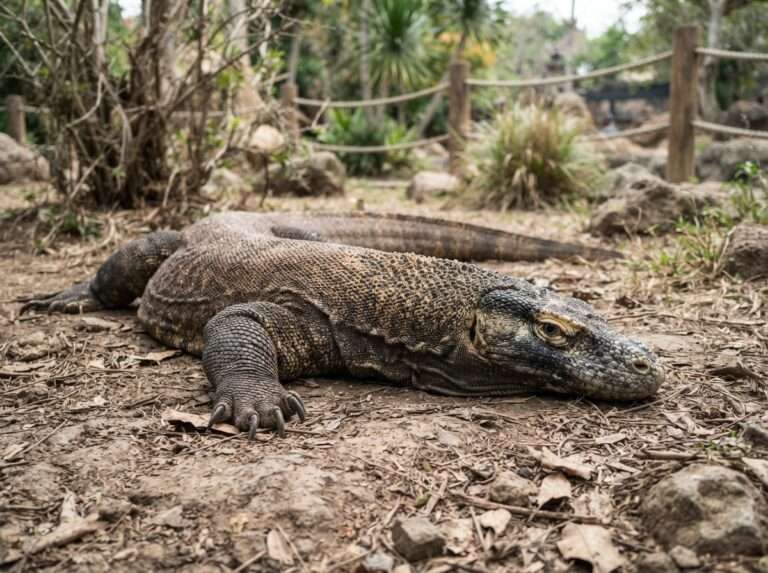
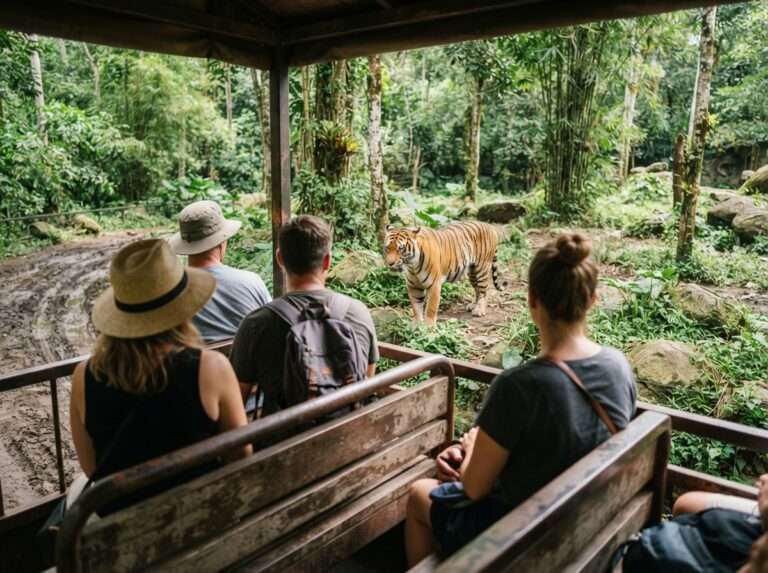
Bali Safari and Marine Park, in Gianyar about an hour from Seminyak, is a drive-through park where trams take you past Komodo dragons, Sumatran tigers, elephants and zebras. Kids can feed animals in the petting zones, and the Bali Agung show, staged at 2.30 pm from Tuesday to Sunday and included in the Jungle Hopper and higher tickets, is a big stage production. Parv and his wife gave it a full day of their trip. For birds rather than big cats, the Bali Bird Park at Singapadu has walk-through aviaries and is a calmer half day with toddlers.
Our Bali Safari and Marine Park guide and the safari tickets page cover the tiers.
| Type | Wildlife park (Gianyar) |
| Famous for | Tram safari past Komodo dragons and tigers |
| Entry fee | From about IDR 650,000 (≈ ₹3,460) per adult on Mondays, about IDR 750,000 (≈ ₹3,990) on other days |
| Time needed | Half day |
| Local tip | Go in the morning when animals are active, and pair it with Tegenungan, 25 minutes away |
| Map | Bali Safari on Google Maps |
37
Bali Zoo
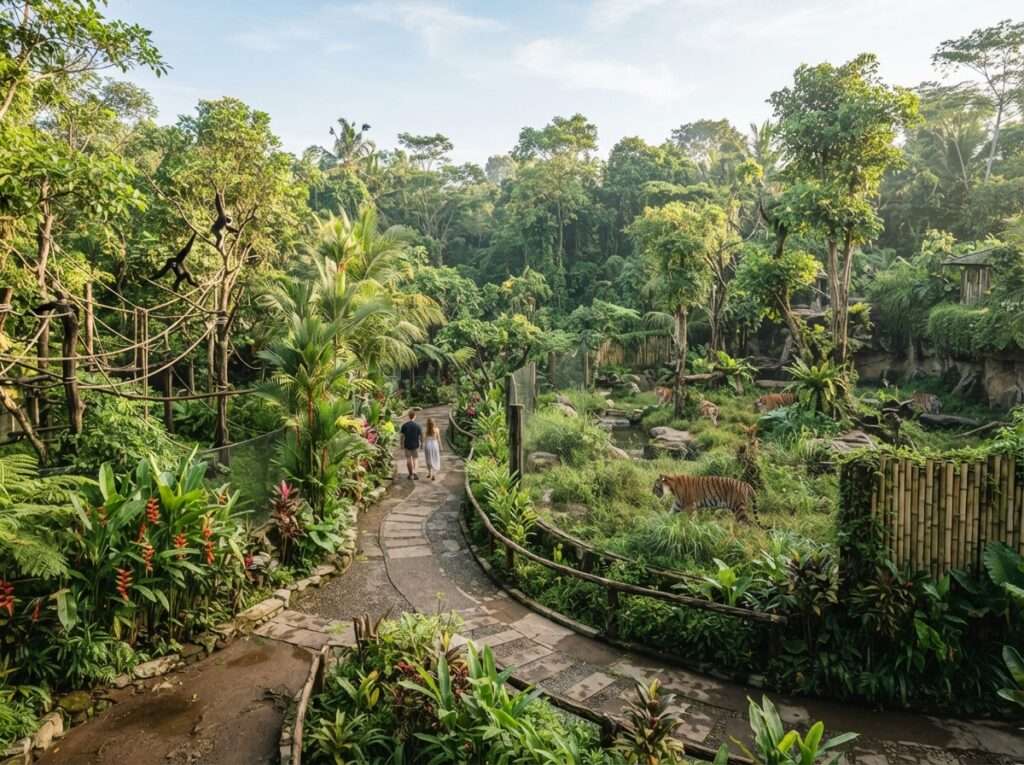
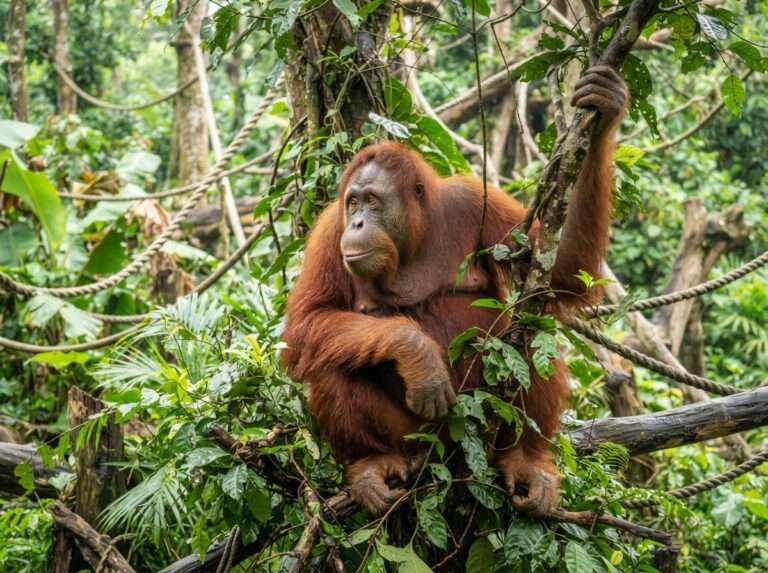
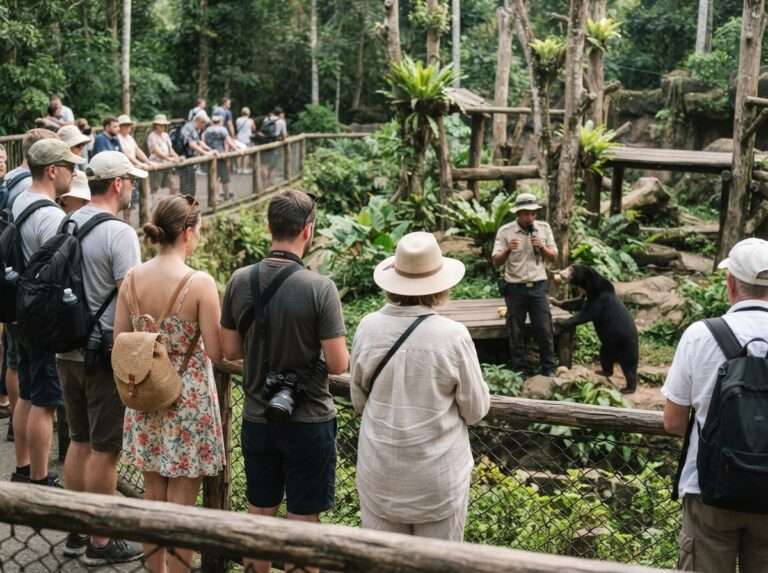
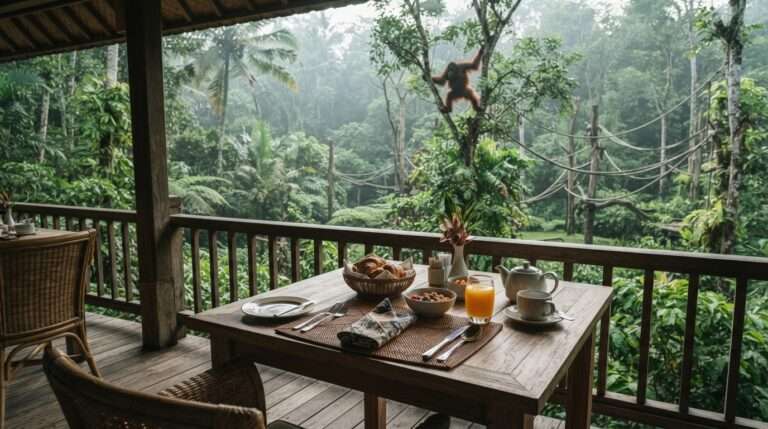
Bali Zoo, at Singapadu about 30 minutes south of Ubud, is smaller and greener than the Safari Park and easier with young children. Paths run through tropical garden past orangutans, Sumatran tigers, sun bears and Komodo dragons, and keepers give feeding talks through the day. The add-ons are what families book it for. Breakfast with the orangutans and the elephant mud-bath sessions sell out in school holidays. It is close to Ubud, so a morning here and an afternoon at the Monkey Forest make an easy animal day.
| Type | Wildlife park (Singapadu, Gianyar) |
| Famous for | Breakfast with orangutans and keeper feeding talks |
| Entry fee | Tiered tickets, with add-ons priced separately. Online rates usually beat the gate |
| Time needed | Half day |
| Local tip | Book the orangutan breakfast a few days ahead in June and December holidays |
| Map | Bali Zoo on Google Maps |
38
Waterbom Bali
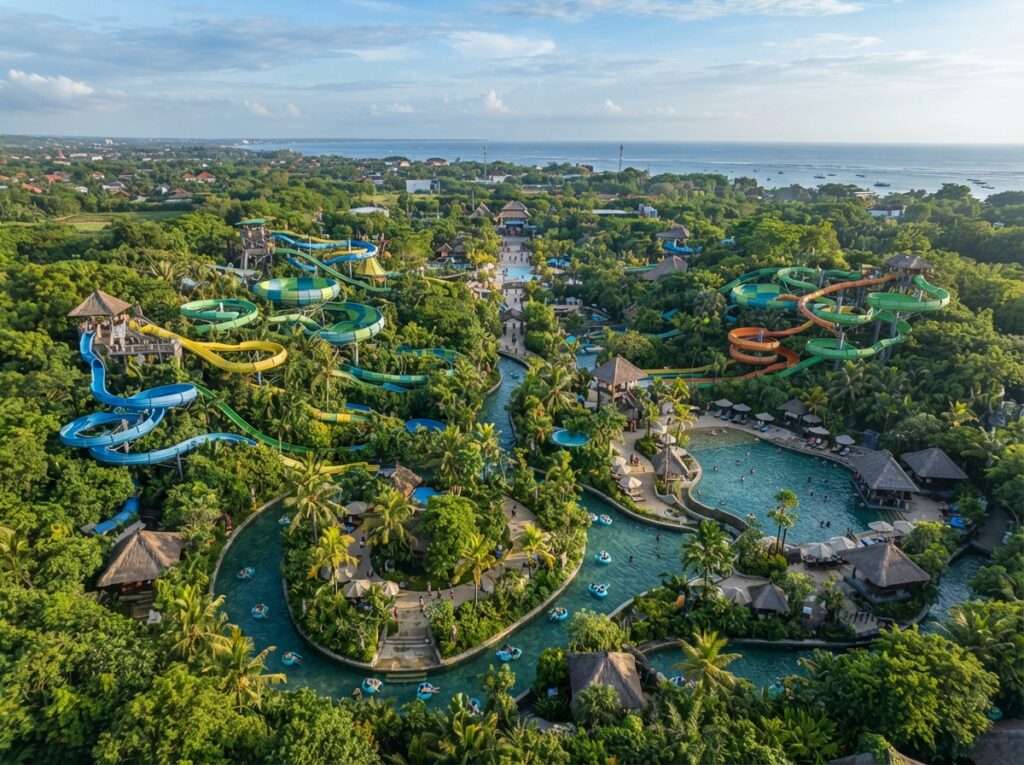
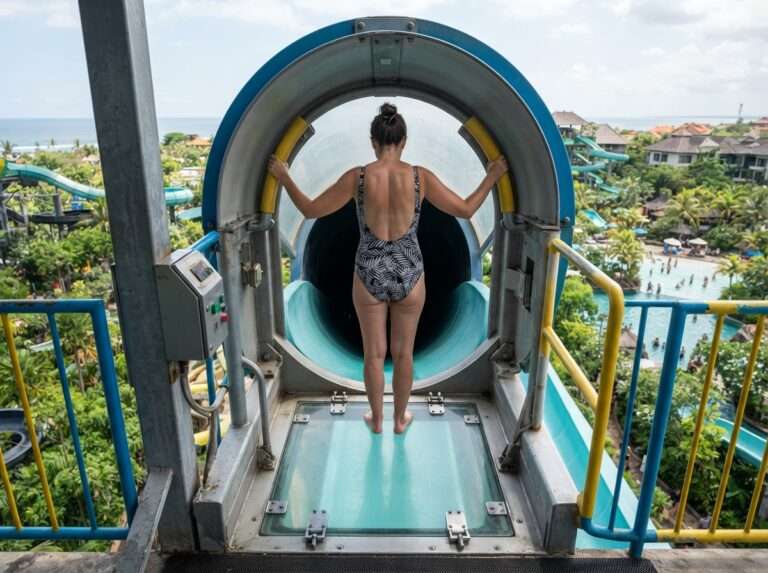
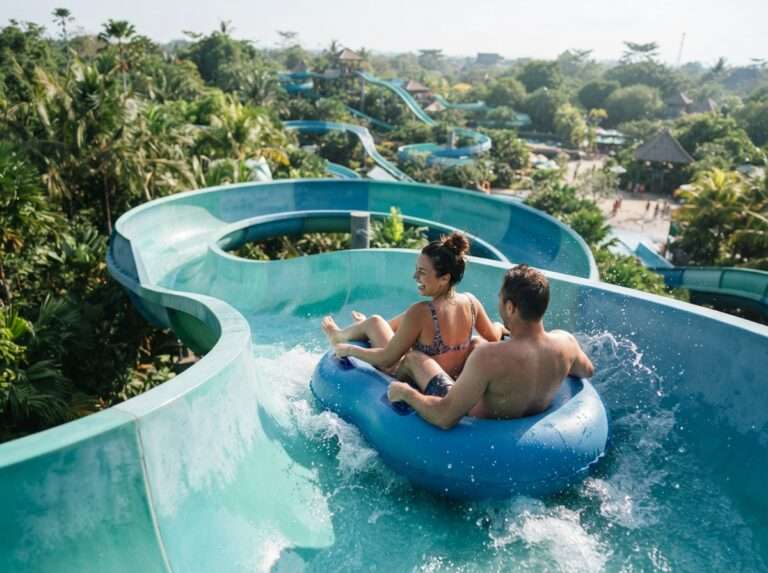
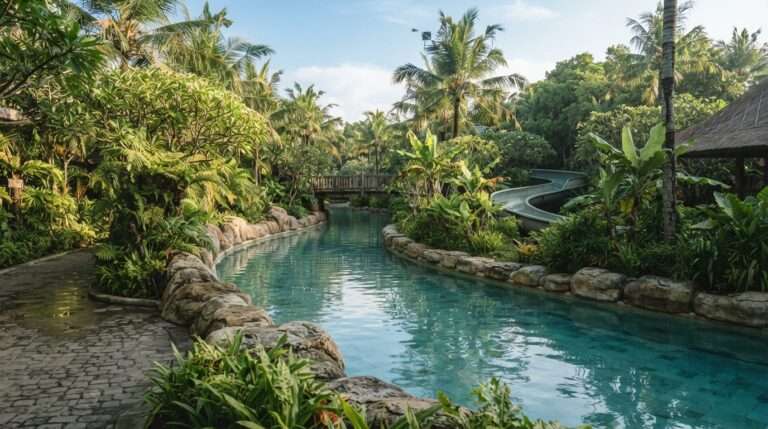
Waterbom, in Tuban just south of Kuta, sits in more than 5 hectares of tropical garden since its Oasis expansion and has been rated among the world’s best water parks for years. The Climax slide starts with a trapdoor drop, and a separate shallow zone has small slides for children. Lockers, towels and food are paid inside, so a family of four spends noticeably more than the gate price. Book online a day ahead for a lower rate and arrive at opening, when big-slide queues are under ten minutes.
See our Waterbom guide and the Waterbom tickets page.
| Type | Water park (Kuta) |
| Famous for | The Climax trapdoor slide |
| Entry fee | From about IDR 630,000 (≈ ₹3,350) per adult day pass on the official site. Open about 9 am to 6 pm |
| Time needed | Half day |
| Local tip | Weekdays outside Indian and Australian school holidays are the quietest |
| Map | Waterbom on Google Maps |
39
Ayung River Rafting
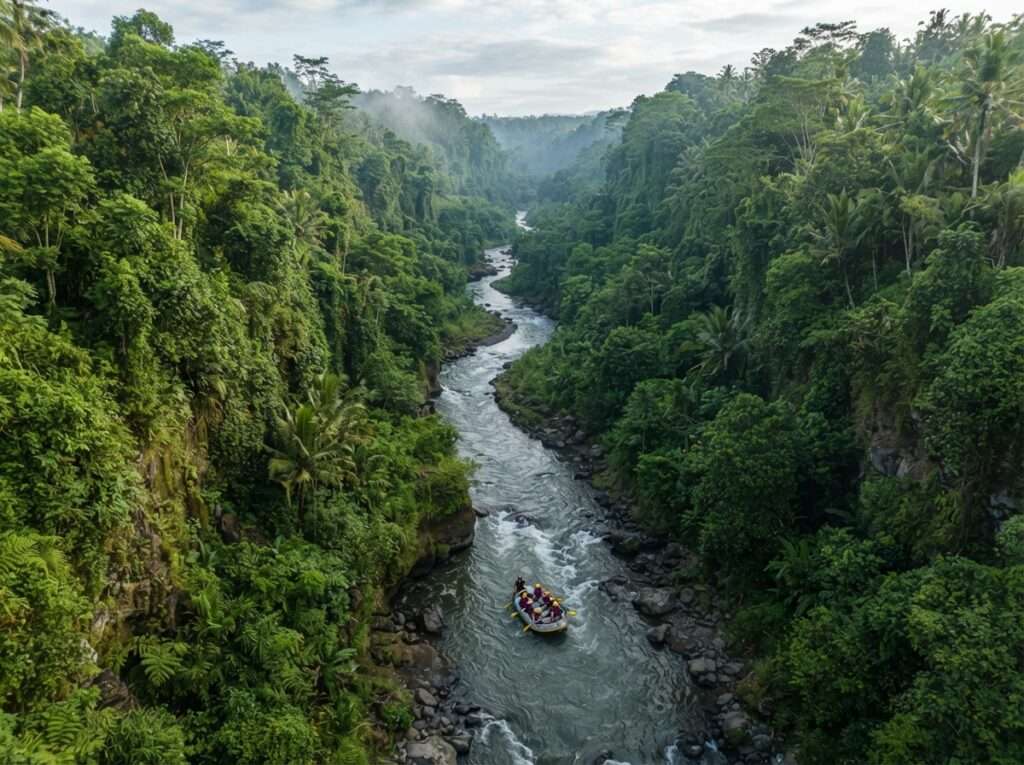
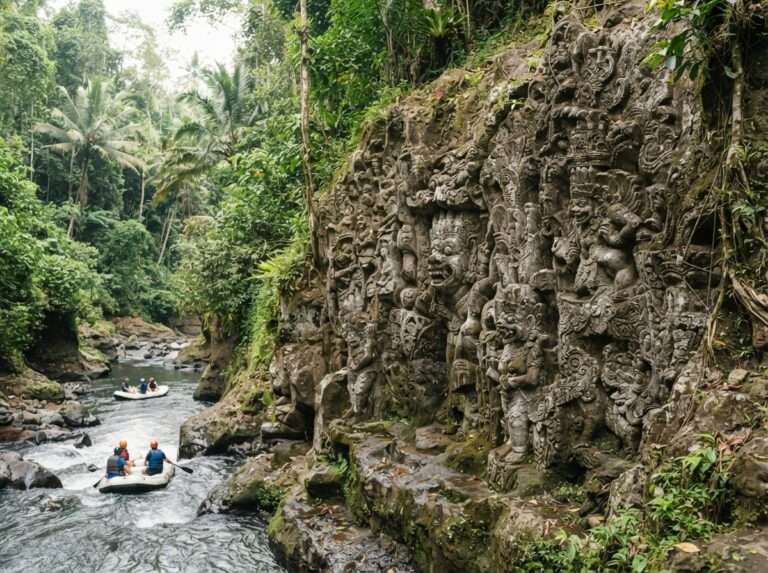
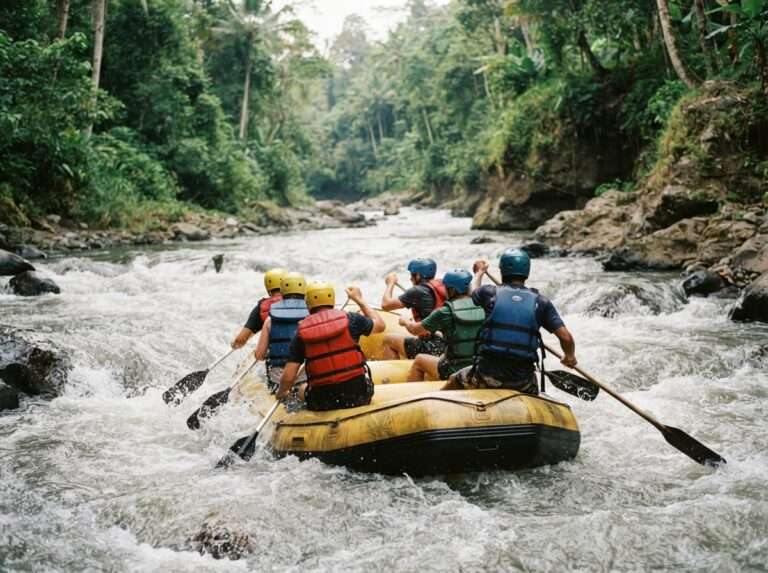
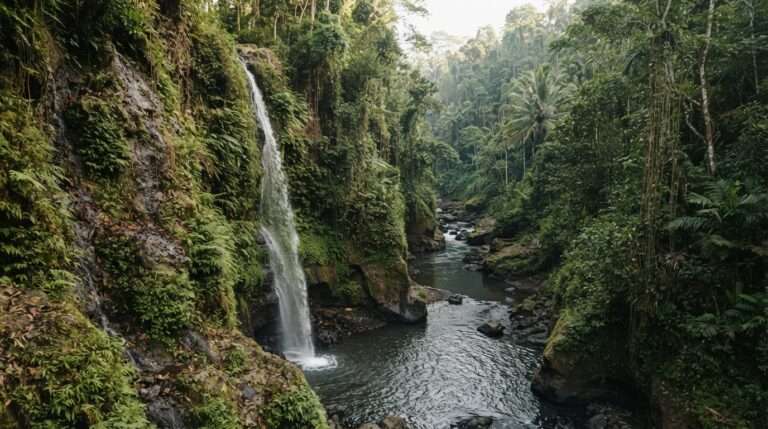
The Ayung is Bali’s main rafting river, with grade II to III rapids through a jungle gorge just north of Ubud. Trips cover about 10 to 12 km in roughly two hours, passing carved rock reliefs and small waterfalls on the gorge walls. It suits families with children from about 7 up. Amit Bhatnagar, who had rafted the Ganga at Rishikesh, wrote in his Bali honeymoon travelogue that the Ayung was gentler but prettier. Most tours include hotel pickup, lunch and a shower at the end.
| Type | Adventure (Ubud) |
| Famous for | Gentle rapids through a carved jungle gorge |
| Entry fee | Booked as a tour with pickup and lunch. Compare a few operators |
| Time needed | Half day including transfers |
| Local tip | Hundreds of steps lead down to and up from the river. December to March brings bigger rapids |
| Map | Ayung River on Google Maps |
40
Bali Swing
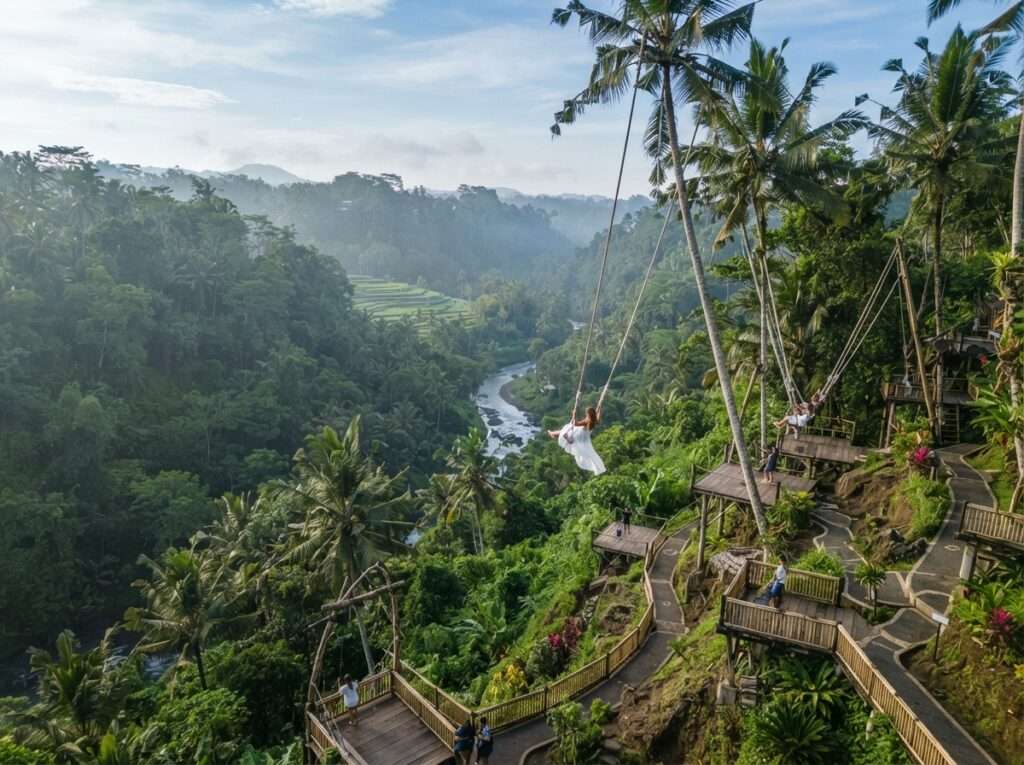
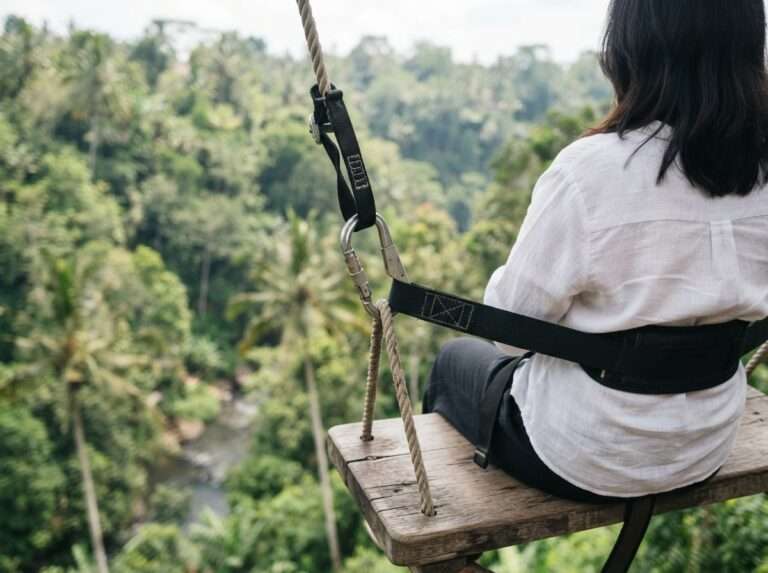
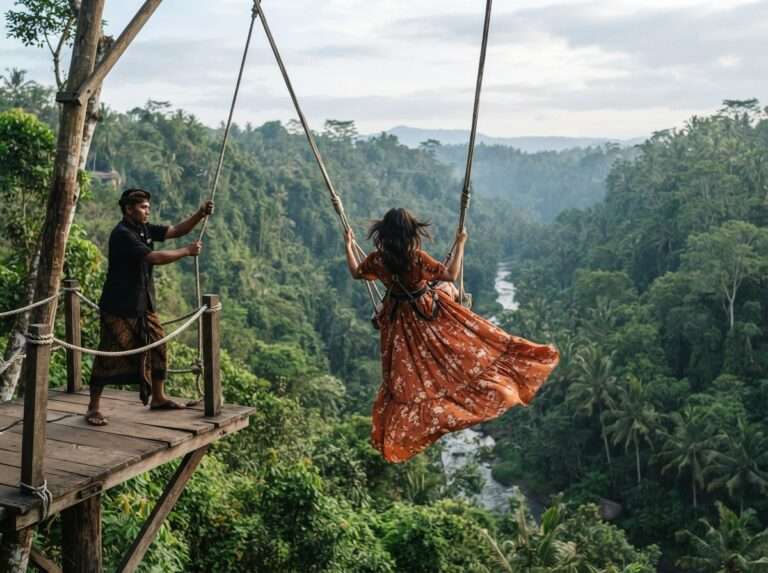
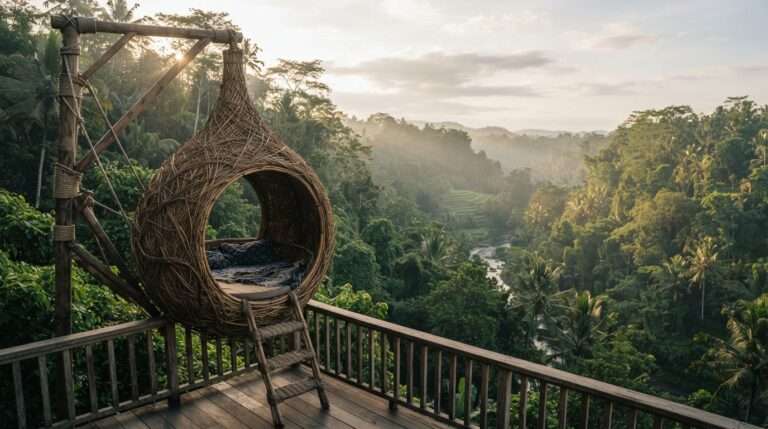
The Bali swing is the photo of a long dress flying out over a jungle valley, and it has become one of Bali’s most famous paid attractions. The original Bali Swing is at Bongkasa, about 30 minutes west of Ubud, and dozens of copies now line the Tegallalang terraces, including Alas Harum, which pairs swings with a coffee garden. You pay for a package that bundles a set number of swings, nest and platform photos, and often a meal. Every swing should have a harness clipped to a back strap and a staff member on the rope. If either is missing, walk away. Dress rental is extra at most sites.
| Type | Adventure (Bongkasa and Tegallalang) |
Where Bali's Famous Attractions Are
Bali takes longer to cross than it looks, so check where each attraction sits before you plan a day. The temples are spread across the whole island, from Uluwatu in the far south to Lempuyang in the east. The waterfalls cluster in two places, around Ubud and in the north near Singaraja. Beaches line the south, and the islands sit 30 to 45 minutes by boat off Sanur. Every entry above also has its own Google Maps link in the box. To use them without signal, download the Bali area in Google Maps before you leave hotel Wi-Fi.
Famous Bali Photo Spots: What The Photo Doesn't Show
Half of Bali’s famous attractions are famous because of one photograph, and the photograph rarely shows the queue, the fee or the trick behind it. None of these are reasons to skip the place. They are reasons to plan the visit.
The Lempuyang “reflection” is the big one. There is no lake at the Gates of Heaven. A photographer holds a small mirror under your phone lens, and the queue for that shot can run one to three hours by mid-morning. The first shuttle at 5.30 am cuts it to minutes, and Agung is clearest at that hour anyway.
At Tegallalang and the other swing sites, the empty-valley swing photo is shot between queues. Expect a line by late morning, a package price and a dress you rent. At the Handara Gate, the empty-road photo needs a 45-minute wait by 10 am and a fee. At Kelingking on Nusa Penida, the viewpoint is a short walk from the car park, but the beach below is a steep, sometimes rope-assisted scramble that takes about an hour down and longer back up. And Tanah Lot looks like it floats because you see it at high tide, when you cannot walk across.
| Famous photo | What you don’t see | How to get the shot without the wait |
| Lempuyang Gates of Heaven | Mirror trick, 1 to 3 hour queue, IDR 150,000 with shuttle | First shuttle at 5.30 am, April to October |
| Tegallalang and Bali swings | Package price, swing queue, rented dress | Weekday opening time, check the harness |
| Handara Gate | IDR 50,000 fee, 45-minute queue by 10 am | Arrive before 9 am |
| Kelingking Beach | Steep scramble to the sand, little shade | Shoot from the top, go down only if fit and in grip shoes |
| Tanah Lot | Island at high tide, walkable only at low tide | Arrive at 4 pm on a low-tide afternoon |
| Tukad Cepung light beams | Needs sun at 9 to 10 am, wet wade | Clear dry-season morning, waterproof pouch |
Overrated Vs Underrated Bali Attractions
Some of Bali’s most famous names are worth every rupiah. A few are better known for being famous than for being good, and each has a quieter twin within an hour. Our picks draw on TravelTriangle travellers’ published trip reports and the queue times above.
Kuta Beach is the most famous beach in Bali and the one returning travellers mention least. It is crowded, the hawkers are persistent, and rubbish washes in during the wet season. Melasti or Padang Padang on the Bukit give you clearer water for the same drive. Tegallalang after 9 am is a queue on a path, while Jatiluwih at the same hour is open terraces and farmers. The Lempuyang gate after 7 am is mostly waiting. Besakih and Sidemen sit on the same slopes of Agung with no photo line.
| If this is on your list | The catch | Try this instead |
| Kuta Beach | Crowds, hawkers, wet-season rubbish | Melasti or Padang Padang |
| Tegallalang after 9 am | Packed paths, donation stops | Jatiluwih or Sidemen |
| Lempuyang gate after 7 am | One to three hour photo queue | Besakih and Tirta Gangga |
| Tirta Empul at midday | Long bathing queue | Gunung Kawi, 10 minutes away |
| Handara Gate | Paid photo, queue | Wanagiri Hidden Hill over the twin lakes |
Underrated and worth the drive: Gunung Kawi’s carved shrines, Taman Ayun’s moat at 8 am, Aling-Aling’s slides, the Ujung Water Palace and a night in Munduk.
How To Visit A Bali Temple Respectfully
Nine of the 40 attractions on this list are working temples, and Bali’s 2025 visitor rules (Governor’s Circular 7/2025) keep their inner areas for worshippers in traditional dress. Getting temple etiquette right takes five minutes.
- Dress for the gate. Wear a top that covers your shoulders and clothes that reach your knees, then tie on the sarong and sash lent at the gate.
- Buy the ticket at the official counter. Pay at the ticket window, not to people on the road outside, and keep small rupiah notes for parking.
- Stay in the visitor areas. Inner courtyards are for worshippers, so follow the signs and the marked path.
- Step around offerings. Never step on or over the small canang offerings on the ground.
- Keep your head below the shrines. Do not climb walls or shrines for a photo, and ask before photographing people at prayer.
- Give way to ceremonies. If a procession comes through, stand aside and wait. Women who are menstruating may not enter temple grounds, under Balinese custom and the 2025 visitor rules.
How We Chose And Checked These 40 Attractions
We started from the places TravelTriangle travellers ask our Bali desk about most, then checked which attractions the top Bali guides and Google’s own suggestions treat as famous. That added the Bali swing, Aling-Aling, the Kintamani coffee gardens and Bali Zoo to the list. We left out bars, beach clubs and restaurants, which live in our nightlife in Bali and Balinese cuisine guides, and the Gili Islands, which belong to Lombok.
Entry fees were checked in October 2026 against each attraction’s own website where one exists (Monkey Forest Ubud, Jatiluwih), Indonesia’s Ministry of Tourism site for Lempuyang and 2026 fee reporting such as The Bali Sun for Ulun Danu Beratan. Rupee figures use about IDR 188 to ₹1. Bali’s fees change often, so carry a little extra cash.
Planning Your Route Around These Attractions
This list is sorted by type, which is the best way to choose what you want to see but not the best way to drive it. Bali’s roads are slow, and Ubud to Lempuyang alone takes about two hours. Once you have a shortlist, our guide to places to visit in Bali regroups the island area by area with entry fees, timings and day routes.
Our best time to visit Bali page covers the dry and wet seasons month by month, and how to reach Bali has flights from Indian cities. Every foreign visitor also pays the IDR 150,000 Bali tourist levy, once per trip, on the official Love Bali site.
Conclusion: See Bali's Famous Places Without The Crowds
Bali’s famous tourist attractions are famous for good reason, and most of them reward an early start far more than a long list. Pick a few temples, one rice terrace, one waterfall and one island, then go before 8 am and save the sunset for Uluwatu or Tanah Lot.
If you want the hotels, transfers and a driver arranged around the attractions you have picked here, our Bali tour packages can be built day by day. Couples can browse Bali honeymoon packages, and families can look at Bali family packages.
FAQs
FAQs About Bali Tourist Attractions
Everything You Need to Know Before Visiting Bali’s Top Attractions
The 10 most famous tourist attractions in Bali are Uluwatu Temple, Tanah Lot, Lempuyang's Gates of Heaven, the Tegallalang rice terraces, Ubud's Sacred Monkey Forest, Ulun Danu Beratan, Tirta Empul, Mount Batur, Nusa Penida and Besakih. Six of them are temples, which says a lot about the island. Most charge foreign adults IDR 50,000 to 150,000 (about ₹265 to ₹800). Lempuyang and Besakih are in East Bali, two to three hours from the south, so give each its own early morning.
Bali is most famous for its Hindu temples, rice terraces, volcanoes and beaches. It is the only Hindu-majority island in Indonesia, with thousands of temples and daily offerings on every doorstep. The subak rice terraces at Jatiluwih are part of Bali's UNESCO World Heritage listing, Tegallalang's are the most photographed, Mount Batur's sunrise trek is the island's best-known hike, and Uluwatu's Kecak dance tells the Ramayana. Indian travellers often find the culture surprisingly familiar, from Ganesha statues to Mahabharata carvings at Pandawa Beach.
The must-see temples in Bali are Uluwatu on its sea cliff, Tanah Lot on its rock, Besakih the Mother Temple, Lempuyang with its Gates of Heaven, Ulun Danu Beratan on its lake and Tirta Empul with its holy spring. Goa Gajah, Gunung Kawi and Taman Ayun are older and much quieter. With limited time, choose Uluwatu for sunset, Tirta Empul for the purification ritual and Ulun Danu Beratan for the setting. Most lend sarongs at the gate. See our Bali temples guide for more.
Bali's beaches are all free, including Kuta, Legian, Seminyak, Canggu's Echo Beach, Jimbaran Bay and Lovina, though some charge a small parking or village fee. Ubud Palace, the Ubud Art Market, the Campuhan Ridge Walk and the Sidemen Valley paddy paths are free too, and so are the tasting trays at the Kintamani coffee gardens. A day of free sights in Ubud followed by a Jimbaran sunset costs only your transport and dinner.
The best Bali attractions for families are Bali Safari and Marine Park, Bali Zoo, Waterbom in Kuta, the calm beaches of Nusa Dua, Garuda Wisnu Kencana and Tegenungan Waterfall, which has a paved staircase. The Monkey Forest is a hit with older children if snacks stay packed away. Skip the Sekumpul trek, the Kelingking climb and the Batur sunrise trek with children under 10. Our guide to places to visit in Bali with family has more ideas.
The most famous photo spots in Bali are the Lempuyang Gates of Heaven, the Tegallalang swings, the Handara Gate, Kelingking Beach on Nusa Penida and Tanah Lot at sunset. They are worth it if you go early. By mid-morning the Lempuyang queue can run one to three hours and the Handara Gate about 45 minutes. Arriving at opening, or on the first Lempuyang shuttle at 5.30 am, turns most of these into a short wait.
No, the water reflection in Lempuyang photos is not real. There is no lake or pool at the gate. Local photographers hold a small mirror just under your phone lens, which creates the mirror-image effect, and they take the photo for a small tip. The gate, the temple and the view of Mount Agung are all real, and on a clear morning between April and October the view on its own is worth the early start.
Kuta Beach, Tegallalang after 9 am, the Lempuyang gate after 7 am and the Handara Gate are the famous Bali attractions travellers most often call overrated, mainly because of crowds and queues. Each has a better alternative nearby. Try Melasti or Padang Padang instead of Kuta, Jatiluwih or Sidemen instead of a late Tegallalang visit, and Gunung Kawi instead of a midday Tirta Empul. Go early and most famous sights are good again.
Every Bali temple asks visitors to cover shoulders and knees and wear a sarong with a sash tied at the waist. Uluwatu, Besakih, Lempuyang and most others lend sarongs at the gate, usually included in the ticket. At Tanah Lot you stay outside the shrine on the rock, so a sarong is not usually needed. At Tirta Empul you rent a separate green sarong to bathe. Women who are menstruating may not enter temple grounds, and only worshippers in traditional dress may enter the inner shrines.
Yes, Nusa Penida is worth a day trip if you are fit and start early. Fast boats from Sanur take about 45 minutes and cost IDR 150,000 to 250,000 (about ₹800 to ₹1,330) each way, plus an IDR 25,000 island fee and IDR 25,000 at each main viewpoint. One day covers the west loop of Kelingking, Broken Beach, Angel's Billabong and Crystal Bay. Hire a driver on the island because the roads are rough, and keep a spare day in July and August when swells cancel boats.
Kuta Beach is the most famous beach in Bali, a 2.5 km stretch of golden sand south of Seminyak known for sunsets and beginner surf. For swimming and clear water, though, the Bukit beaches are better. Melasti and Padang Padang have white sand under limestone cliffs, Nusa Dua has calm water for children, and Kelingking on Nusa Penida is the most photographed beach of all. Our best beaches in Bali guide ranks them.
A private driver is the easiest way to see Bali's famous attractions, especially with family. Most temples, terraces and waterfalls sit outside the towns, public buses do not reach them, and Grab and Gojek are limited or restricted in some villages. A car with driver for 8 to 10 hours costs roughly IDR 600,000 to 900,000 (about ₹3,190 to ₹4,790) shared by the group. Book the Batur trek and Nusa Penida as tours with pickup instead.