
 7D / 6N
8% OFF


What Bedulu Is And Why People Come
Bedulu, also spelt Bedahulu or Bedaulu, is a village in Gianyar regency, about 5 km by road from central Ubud, and once the seat of Bali’s old kingdom. Its four main monuments sit within about 2 km of each other, led by Goa Gajah, Yeh Pulu and Pura Samuan Tiga.
Do not confuse it with Bedugul, the lake town in the highlands, or Petulu, the heron village north of Ubud. This guide covers the monuments in Bedulu, Bali, one by one, with entry costs and a half-day route.
Key takeaways
- Allow half a day. All four main sites sit within about 2 km of each other.
- Budget about IDR 120,000 (₹630) a person for entry and donations, before your car.
- Go on a weekday, as Museum Sarkofagus is reported closed at weekends.
- Reach Goa Gajah before 10 am, when the tour groups arrive.
- Keep your driver for the return, as guides disagree on whether app taxis will collect you here.
Monuments in Bedulu at a glance
Costs are per foreign adult at about IDR 190 to ₹1. The Goa Gajah, Yeh Pulu and Tegallinggah fees match Gianyar regency’s 2021 tariff regulation. Hours come from published guides, and we confirmed none by phone, so carry cash and allow for changes.
| Site | What it is | Entry in IDR (about ₹) | Hours reported |
|---|---|---|---|
| Goa Gajah | Carved cave, Ganesha and bathing pools. Allow 45 to 90 minutes | 50,000 (₹260) | 8 am to 6 pm daily |
| Yeh Pulu | 25 m rock relief. Allow 30 to 45 minutes | 30,000 (₹160) | 8 am to 5 pm daily |
| Pura Samuan Tiga | Major working temple with old courtyards. Allow 30 minutes | Donation | Daytime, ceremonies restrict access |
| Museum Sarkofagus (Gedong Arca) | Stone sarcophagi. Allow 30 minutes | Free or donation | Monday to Friday, about 8 am to 4 pm |
| Tegallinggah Cliff Temple | Unfinished shrines in a river gorge. Allow 90 minutes | 30,000 (₹160) | Not published, go in daylight |
Indonesia
Bali
Bedulu, Bali: Ancient Monuments, Cave Temples And Rock Reliefs
Best Time
April - October
Select Package Type
Best Selling Packages


5 Monuments In Bedulu, Bali, And How To See Them
The five sites come first, followed by the village's history, Kecak, a half-day route, the walk question, lunch, dress and notes for Indian visitors.
Explore Popular Destination In Bali
01
Goa Gajah
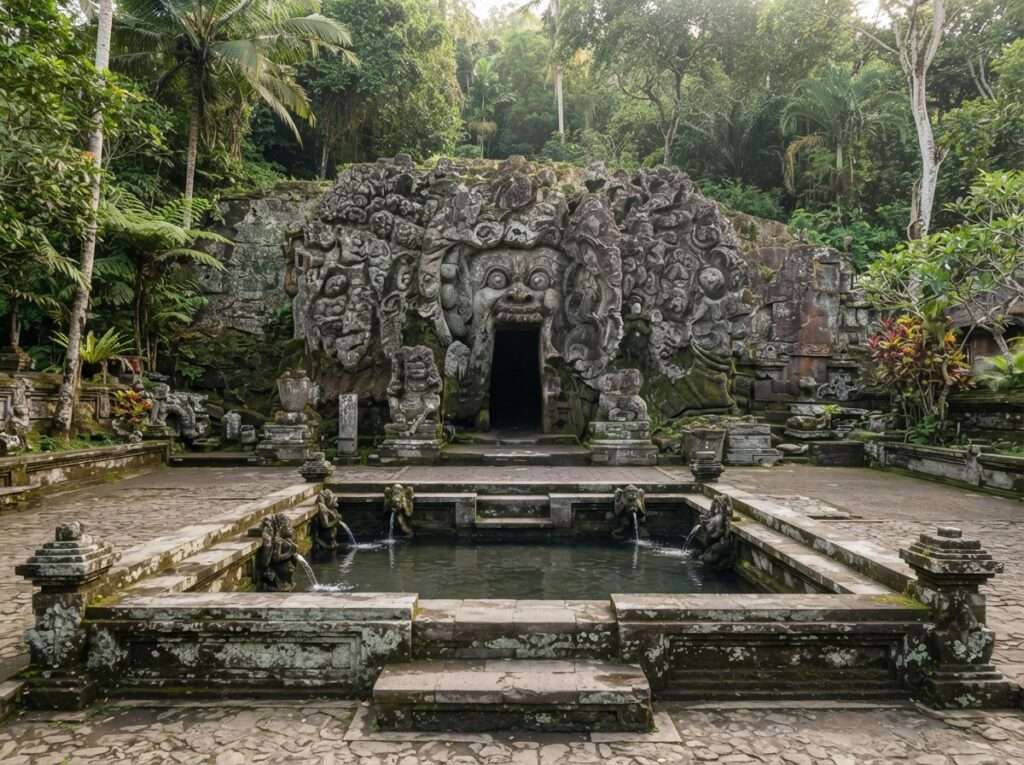
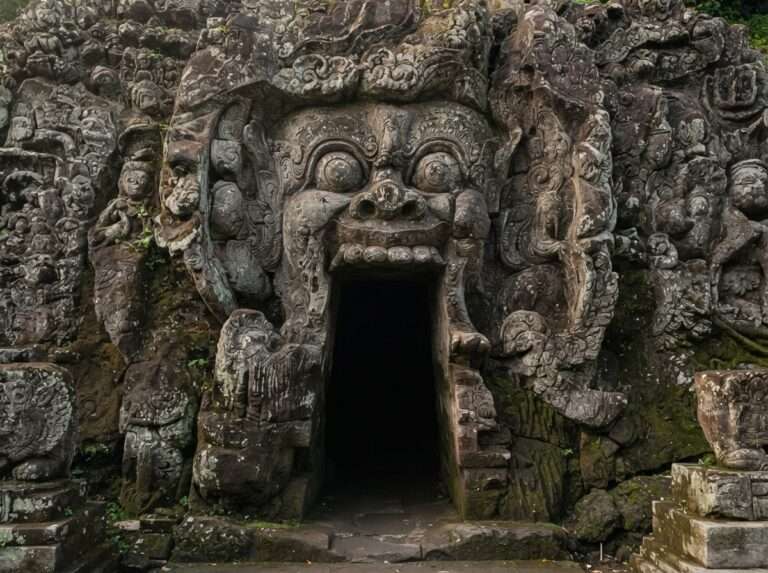
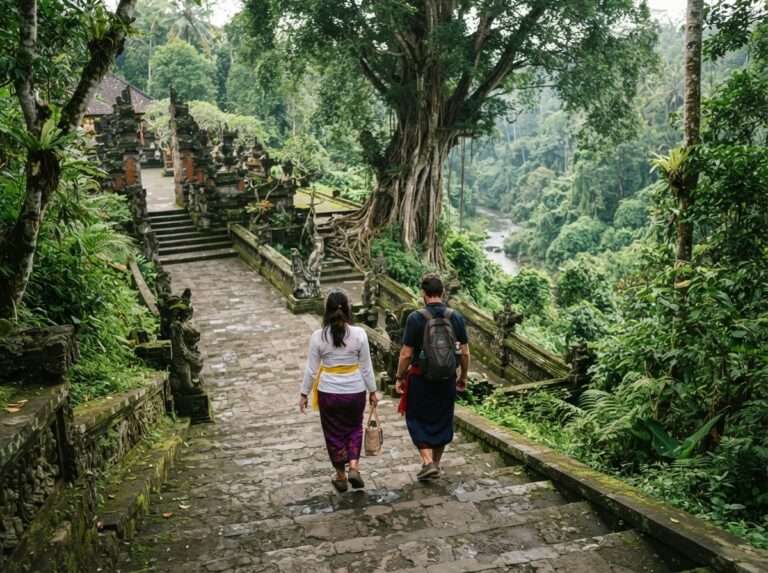
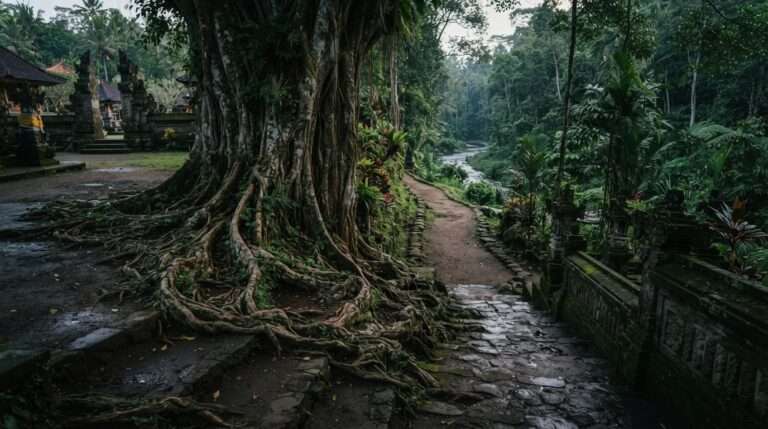
Goa Gajah, the Elephant Cave, is the site that brings most people to Bedulu. You go in through a mouth carved as a glaring face, and the passage behind it is short, narrow and dark. Inside sit a Ganesha statue and a lingam and yoni, per Bali Holiday Secrets. That statue is the usual explanation for the name, as there is no evidence elephants ever lived here.
Out front are bathing pools that stayed buried until 1954. The cave is usually dated to around the 11th century, and some guides place the site earlier, so treat it as about a thousand years old. Stairs run down from the ticket gate, and the climb back is the only hard part. Follow them past the huge old tree to the river and the small Buddhist shrine, and 45 minutes becomes 90. Skip the unofficial guides at the gate, as the site is well signed.
TravelTriangle’s Goa Gajah page has more on the site itself.
| Child entry | IDR 25,000 (about ₹130) |
| Sarong | Sarong and sash included in the ticket |
| Parking | IDR 10,000 for a car, IDR 5,000 for a scooter, paid on exit |
| Best time | Before 10 am, or after 5 pm for shade, as anyone already inside is reported to be able to stay until 7 pm |
Related Tour Packages


❮
❯
02
Yeh Pulu
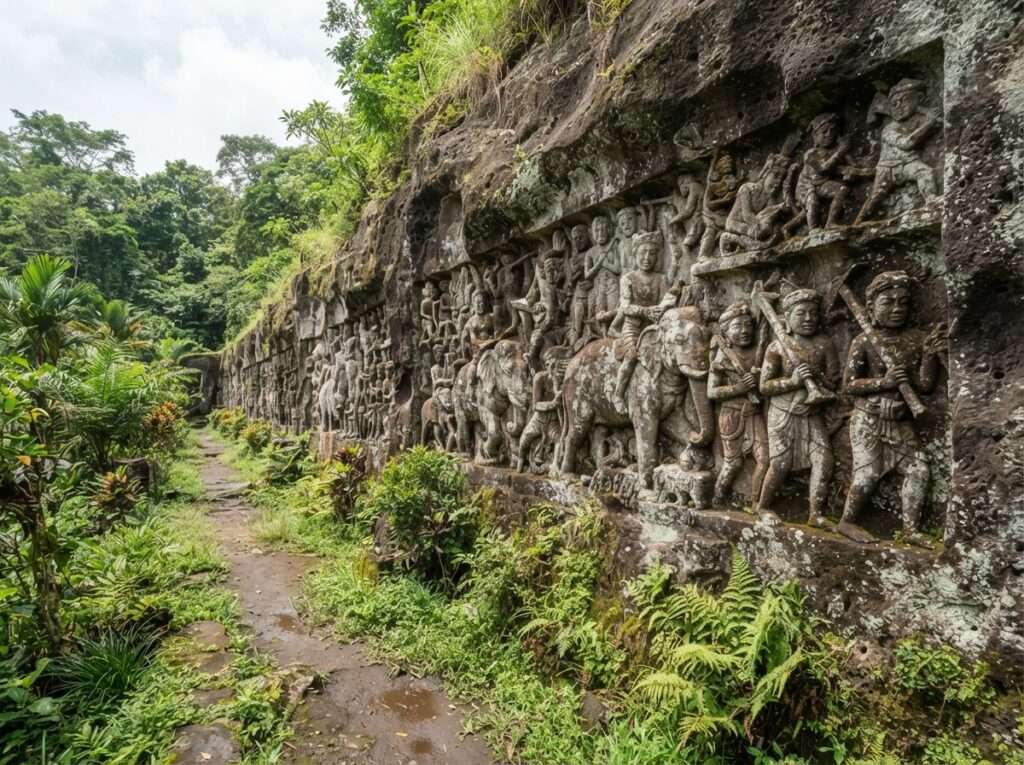
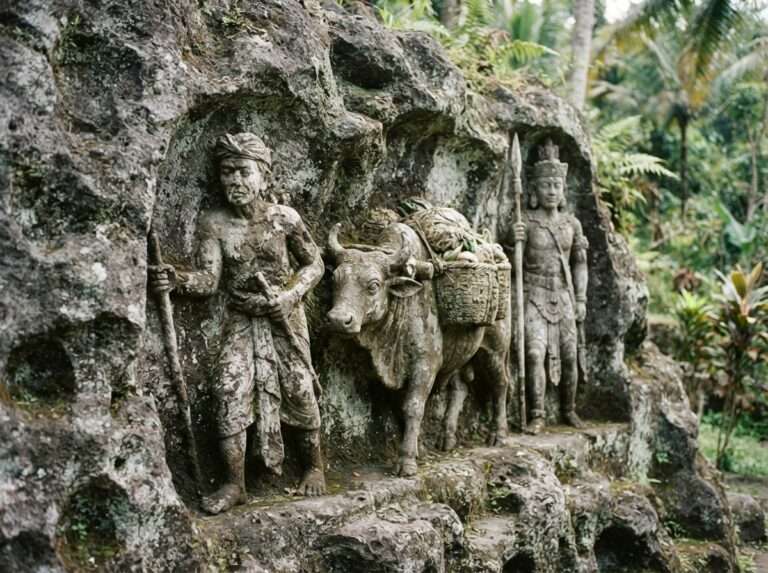
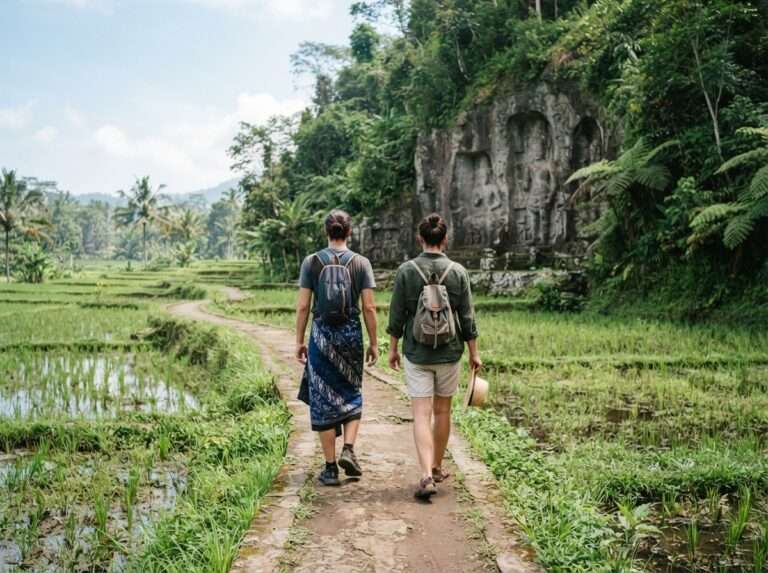
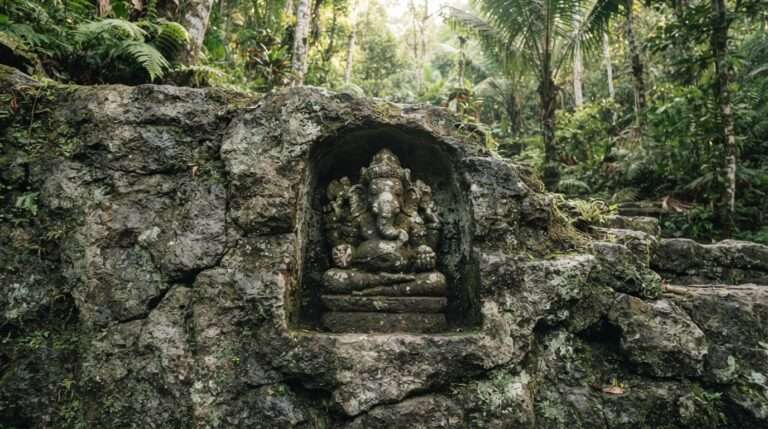
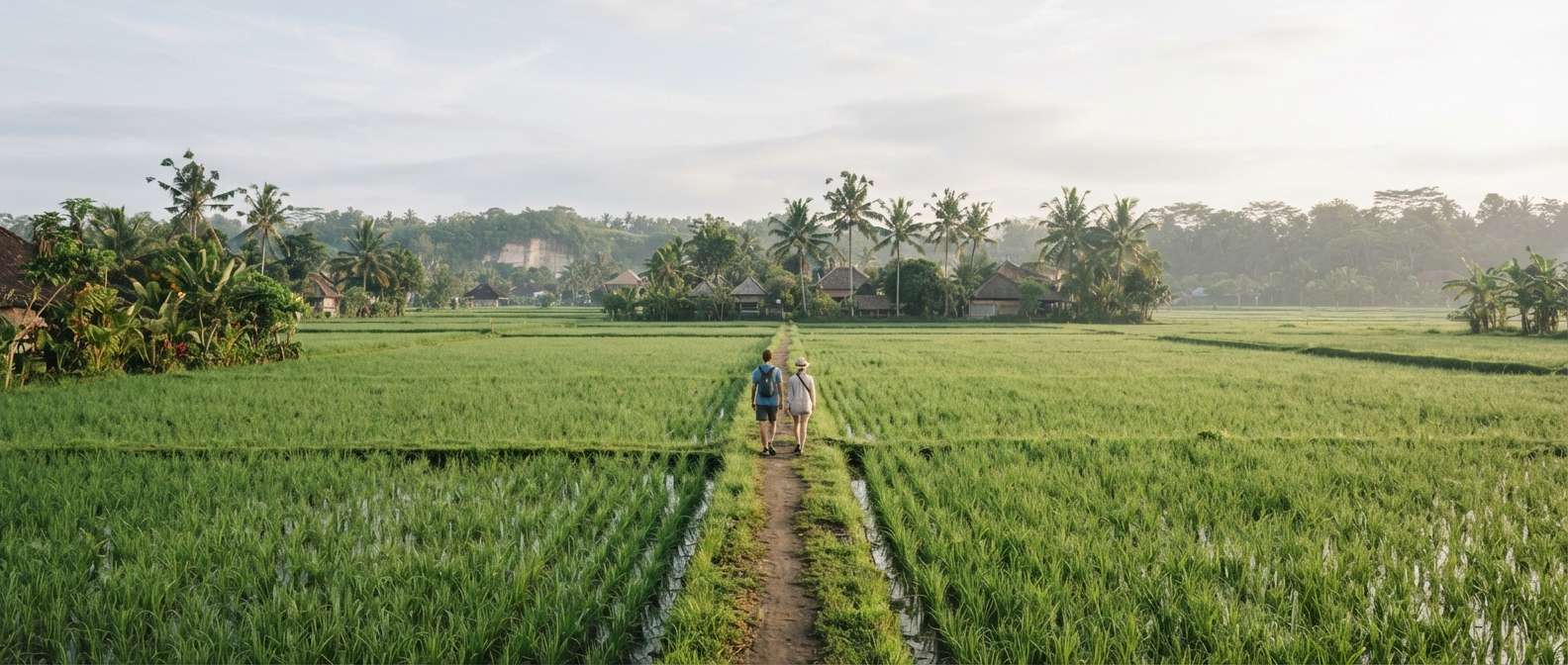
Most of the crowd at Goa Gajah never makes the short drive here, which is the reason to come. Yeh Pulu is a 25 m relief cut directly into a rock face, about 2 m high, with near life-size figures. Where Balinese temples tend to show gods, this one mostly shows people, including farmers and nobles, in scenes set out one after another along the wall. The exception is a seated Ganesha in a niche at the southern end. Not everyone reads the panel as daily life, either, and the scholar Bernet Kempers saw stories of Krishna in it.
Most guides date it to the 14th century, around the time the old kingdom fell, though one account puts it earlier. Local legend credits the whole panel to Kebo Iwa, the giant of Balinese folklore, who is said to have scratched it with his fingernails. Enjoy that as a story.
The site has little else, so 30 minutes covers it, and our fuller guide to Yeh Pulu Temple has the background.
| Child entry | IDR 15,000 (about ₹80) |
| Payment | Cash only, at a small kiosk by the car park |
| Sarong | Included if your legs are exposed |
| Walk in | 5 to 10 minutes on a flat path past rice fields, muddy after rain |
| Parking | Free, with few spaces |
Related Tour Packages


❮
❯
03
Pura Samuan Tiga
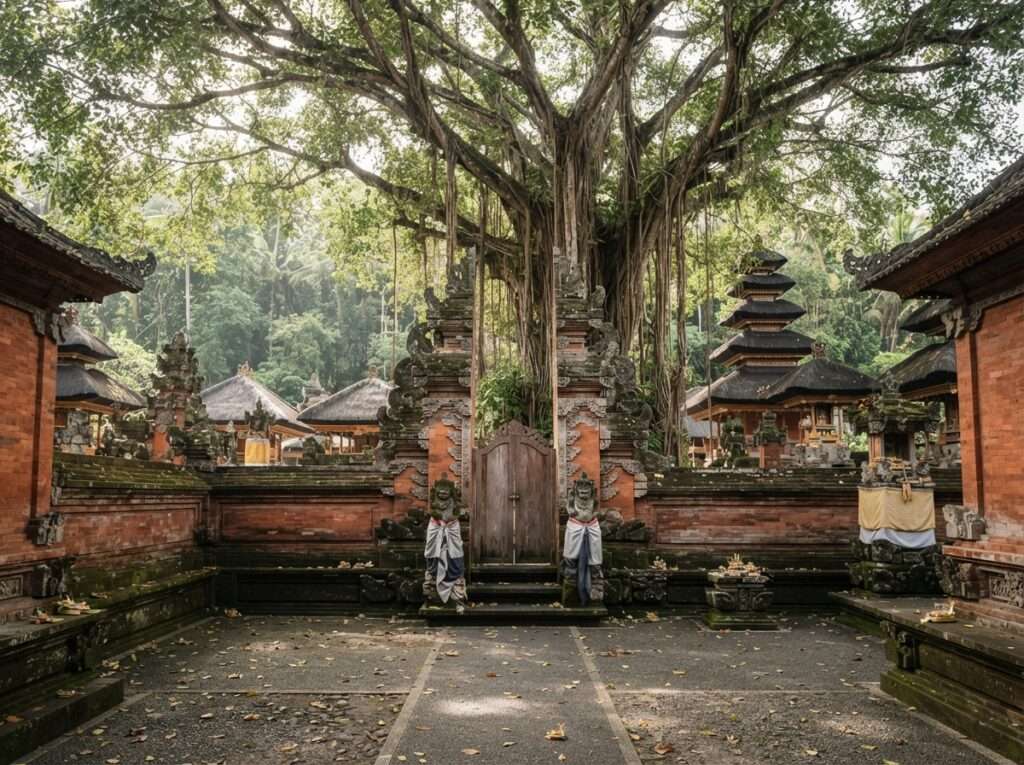
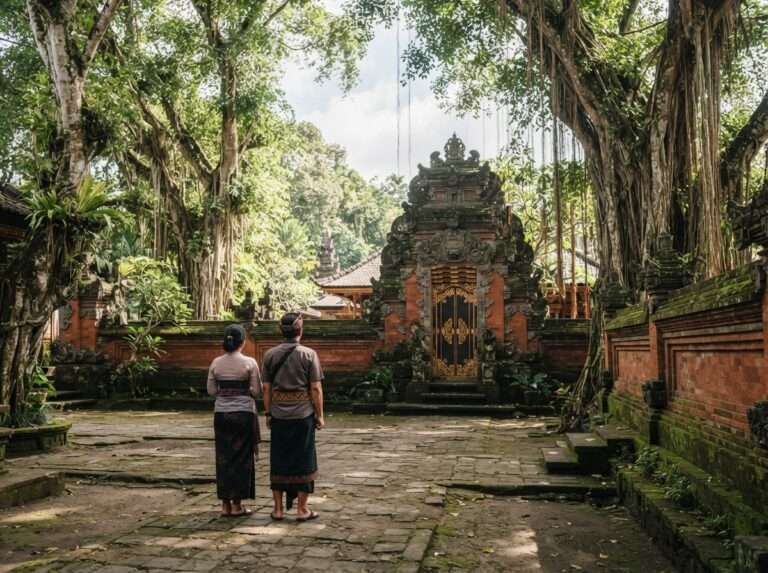
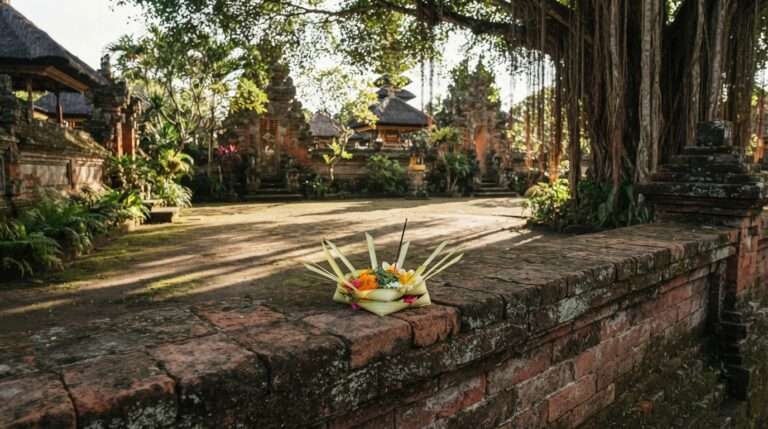
This is the temple that shaped how Balinese Hinduism is organised. Tradition holds that around the early 11th century Mpu Kuturan brought feuding sects together here, and that the meeting gave rise to the Kahyangan Tiga, the set of three temples every Balinese village keeps. The name means the meeting of three.
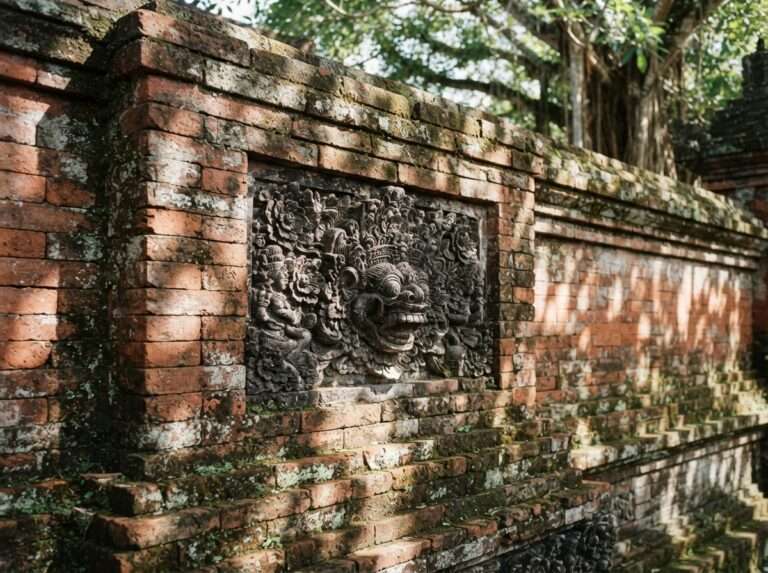
It is a working temple, so visit it as one. The compound rises through courtyards of red brick and old banyan shade, and Bali Travel Hub notes much of it was rebuilt after the 1917 earthquake. Visitors usually stay in the outer areas, and inner courtyards can close without notice. Published entry figures run from free to IDR 30,000, so we treat it as a donation.
Each year the temple’s festival brings Siat Sampian, a mock battle in which the people of Bedulu fight with woven coconut leaves as a rite of purification. Sources disagree on the day. Travel guides mostly point to March or April, a 2016 Bisnis Indonesia report says it comes three days after the festival’s peak, and a Balinese account places it at the full moon of Jiyestha, around April or May, so we do not print a date. Ask in the village if you are planning around it.
| Sarong | Sarong and sash required, reported available on site |
| Address | Jalan Pura Samuan Tiga, Bedulu |
| Photography | Ask first, and keep cameras out of the inner areas |
| From Goa Gajah | 1.8 km by road |
Related Tour Packages


❮
❯
04
Museum Sarkofagus (Gedong Arca)
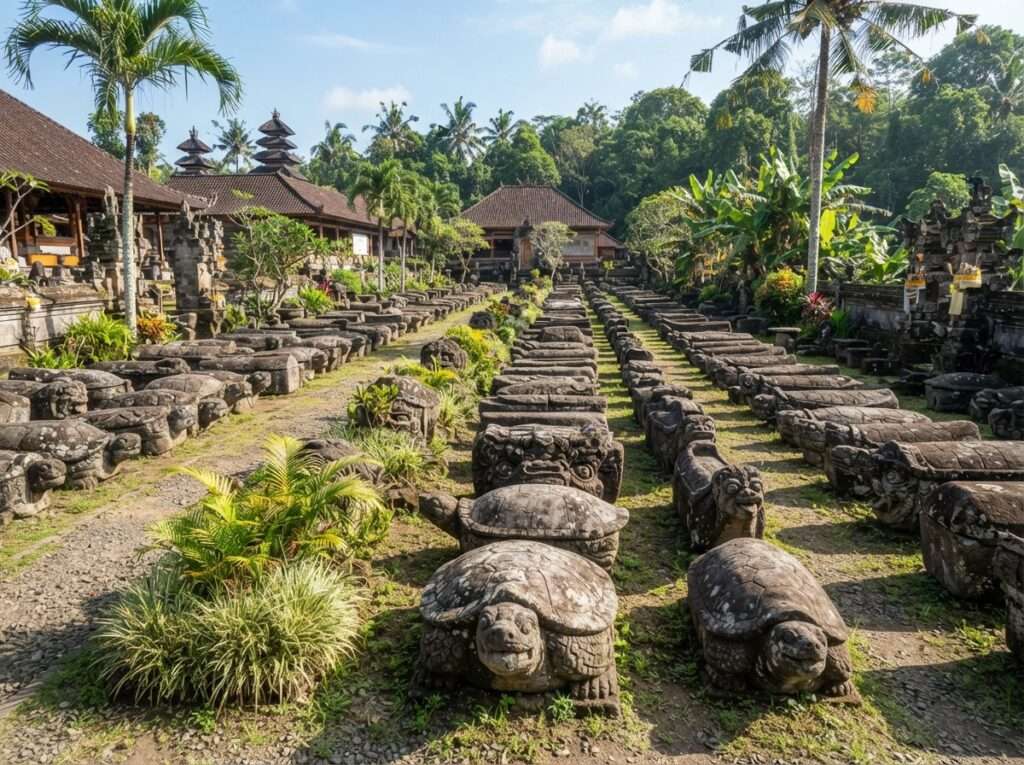
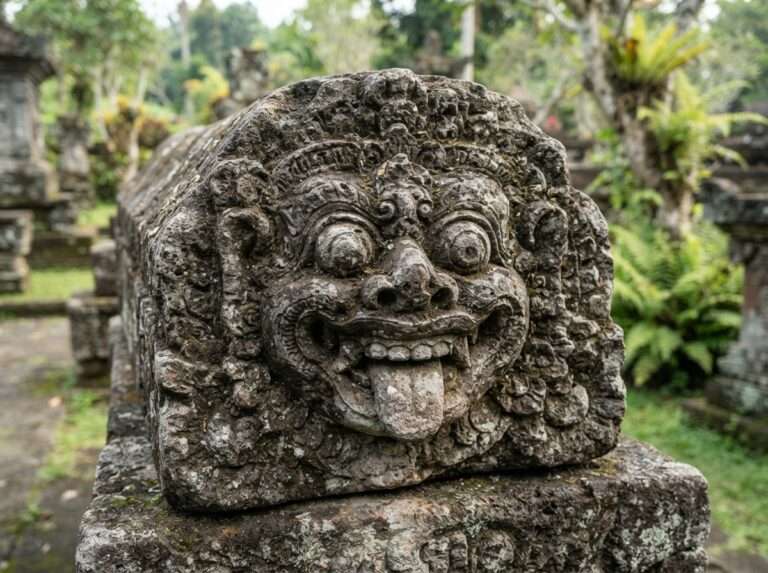
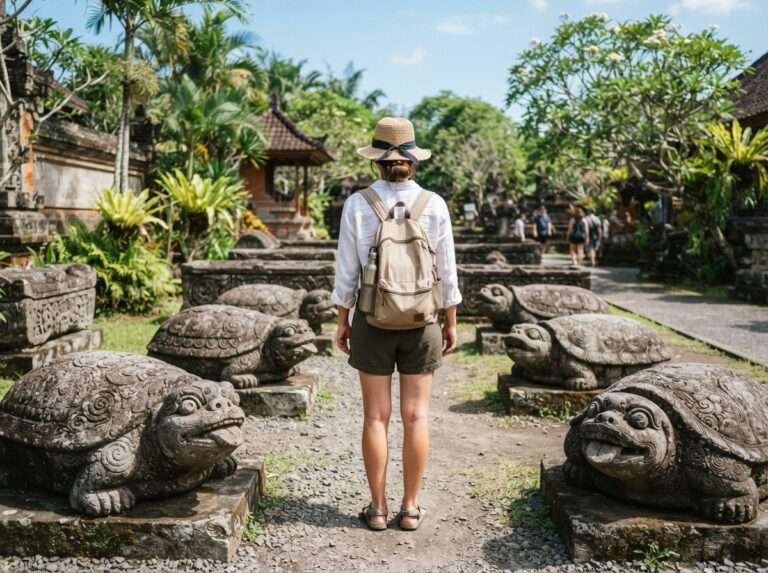
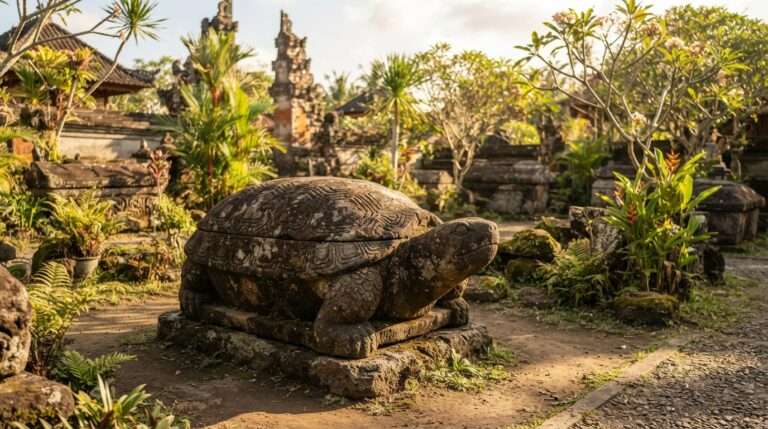
Older guides call this Gedong Arca. It reopened on 27 February 2025 as Museum Sarkofagus, so look for either name on signs and maps. The draw is a courtyard of stone sarcophagi from around Bali, many shaped like turtles and carved with wide-eyed faces and protruding tongues, which is older material than anything else on this page. Budaya Bali counts 33 of them.
Plan around the days. AccessiaPass reported Monday to Friday opening in August 2026, closed on weekends and national holidays, while an older listing gives different days. We found no hours published since the reopening by the museum itself, so have a fallback.
| Parking | Free, per AccessiaPass |
| Bring | A hat and water, as the garden has little shade |
| Rules | Do not touch or climb the sarcophagi |
| From Goa Gajah | 1.2 km by road |
05
Tegallinggah Cliff Temple
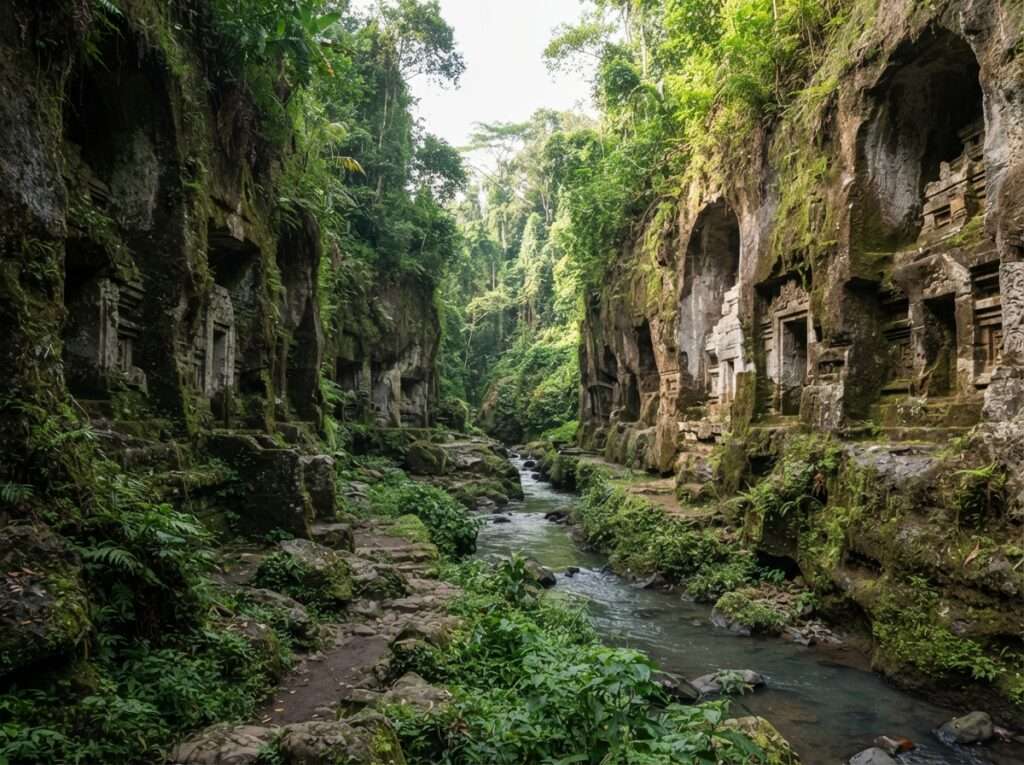
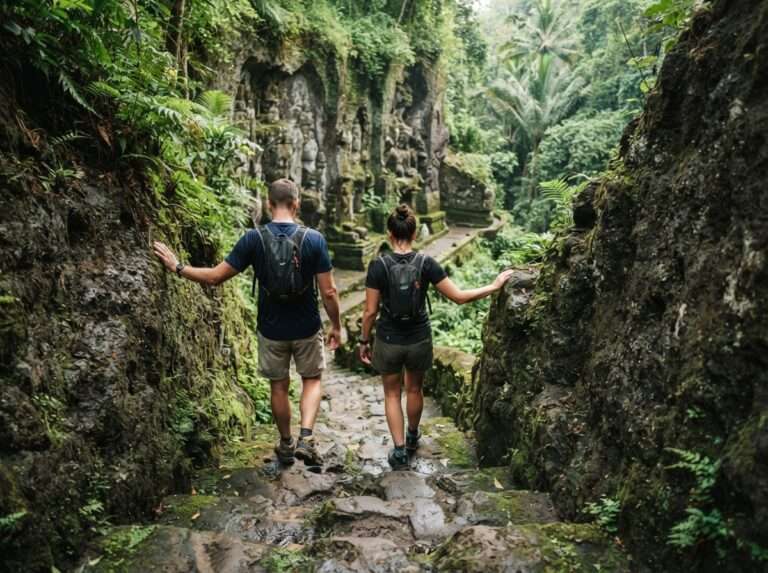
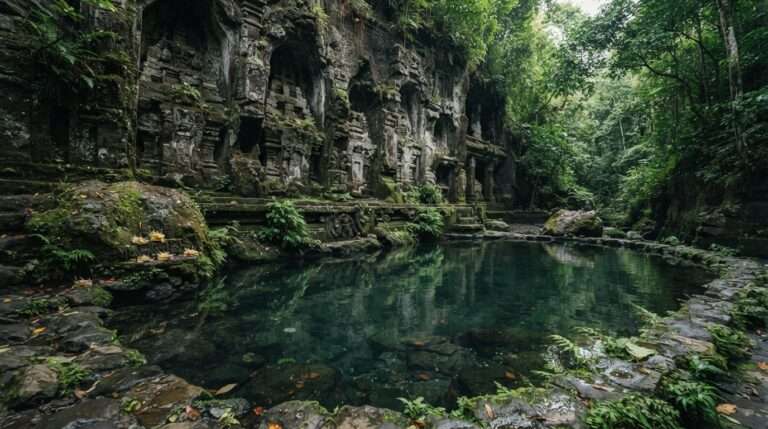
Only go here if you are steady on your feet. Tegallinggah is a set of unfinished shrines cut into both walls of the Pakerisan gorge, about 3.5 km from Goa Gajah, and the hardest site on this page to reach. NOW! Bali described it in September 2026, with about 300 moss-covered steps down, a main staircase in disrepair, a stretch of rock to clamber over and a cliff edge with no ropes.
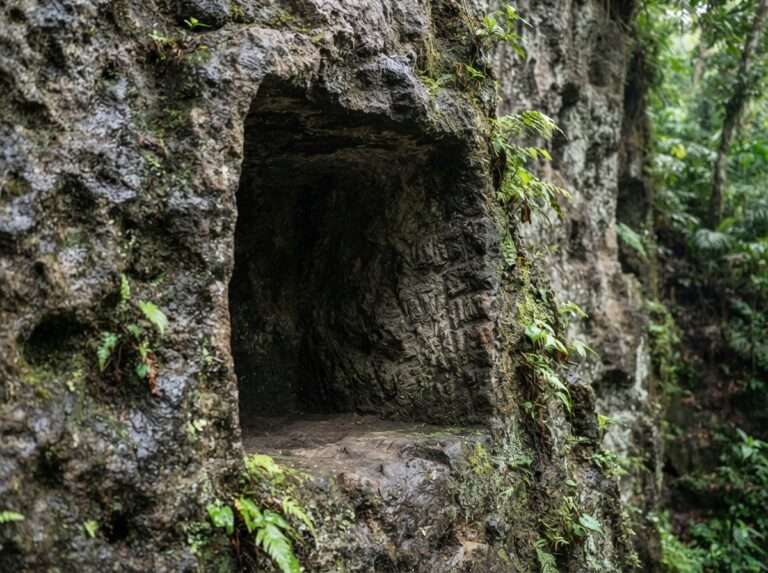
At the bottom are a spring-fed pool used for purification, rock-cut meditation niches and two shrines topped with lingga. The carving simply stops, possibly because an earthquake ended the work. NOW! Bali advises against bringing young children, older parents or anyone with limited mobility, and against going in heavy rain.
Bedulu’s tourism village office runs tours that cover the cliff temple and Sucen Temple, which is the safer way to see them.
| Ticket | Informal booth at the end of a village lane |
| Footwear | Closed shoes with grip |
| Best for | Fit travellers with time to spare |
A Short History Of Bedulu
Bedulu was the royal seat of the last independent Balinese kingdom before Java took the island. The king remembered as Dalem Bedahulu, of the Pejeng dynasty, was the last ruler to hold out against the Majapahit empire of Java, until its commander Gajah Mada defeated him in 1343. The court then moved to nearby Samprangan and later to Gelgel, and Bedulu went back to being a village.
The name is explained through a legend. Beda hulu means different head, and the story says the king was left with the head of a pig. It may be folklore, but Budaya Bali reads it as a symbol of Balinese resistance to conquest.
For a wider view of the island’s sites, see our guide to monuments in Bali.
Bedulu, Bedugul Or Petulu?
The three names sound close and lead to very different days. Check your driver’s map pin before you set off.
| Bedulu | Bedugul | Petulu | |
|---|---|---|---|
| Where | Gianyar, 5 km southeast of central Ubud | Highlands of Tabanan, 44 km by road from Bedulu | Gianyar, 3.5 km north of central Ubud |
| Known for | Goa Gajah, Yeh Pulu, old temples | Lake Beratan, Ulun Danu temple | Herons roosting in the village at dusk |
| Climate | Warm, low-lying rice country | Cool mountain air | Warm, low-lying rice country |
| Time to give it | Half a day | A long day trip from Ubud | An hour near sunset |
Where Kecak Took Shape
Kecak is on most Bali itineraries, and its modern form took shape here. Wayan Limbak, a dancer who was born in Bedulu and died there in 2003, worked with the German artist Walter Spies in the 1930s. Together they turned a chant from trance ritual into a staged Ramayana story, with the men’s chorus as the monkey army. How much credit Spies deserves is disputed, and the Balinese scholar I Wayan Dibia argues that the form was already developing before he arrived. We found no confirmed regular Kecak show in Bedulu today, so plan to see it elsewhere on your trip.
Just Outside Bedulu
Three neighbours pair well with these sites, though none of them is in Bedulu. Road distances are from Goa Gajah.
| Site | Road distance | Why go | Our guide |
|---|---|---|---|
| Pura Penataran Sasih, Pejeng | 2 km | Holds the bronze Moon of Pejeng drum | Penataran Sasih |
| Gunung Kawi, Tampaksiring | 13 km | Royal shrines cut into a river valley | Gunung Kawi |
| Tirta Empul, Tampaksiring | 15 km | Holy spring and purification pools | Tirta Empul |
Penataran Sasih is close enough to add to the route below as an extra stop. Gunung Kawi and Tirta Empul make a separate afternoon, and our guide to temples in Bedulu lists more shrines around the area.
A Half-Day Route From Ubud
This weekday route takes a little over three hours at the sites, or about four and a half with lunch and the drive back. It costs about IDR 120,000 (₹630) a person, assuming a IDR 20,000 donation at each of the two donation stops. Every stop is under 10 minutes from the last by road.
- Leave Ubud at 8 am. Central Ubud to Goa Gajah is 5 km, which Bali Holiday Secrets puts at 15 minutes.
- See Goa Gajah first. Give it an hour, and you are through before the groups arrive.
- Drive to Museum Sarkofagus. Allow 30 minutes among the sarcophagi. On a Saturday or Sunday, skip this stop.
- Continue to Pura Samuan Tiga. Have your sarong ready and leave a donation.
- Finish at Yeh Pulu. Bring cash, and add 10 minutes each way for the path.
- Stop for lunch around 11:30 am. Then head back to Ubud, or carry on to Tampaksiring.
From Sanur, allow about 45 minutes each way for the 24 km, and from Seminyak about 1 hour 15 minutes for 31 km. Those figures come from Bali Holiday Secrets and vary with traffic. One guide quotes IDR 300,000 to 500,000 for a half-day driver, so use that as a starting point.
If you are building Bedulu into a longer stay, our places to visit in Ubud guide helps you fill the rest of the day.
Can You Walk From Goa Gajah To Yeh Pulu?
Plan to drive. The two sites are only about 1 km apart in a straight line, and 1.4 km by road, but we could not confirm a marked footpath. Lonely Planet says small paths cross the paddy fields and that you may need to pay a local to guide you.One traveller reported 45 minutes with no real path. These are working fields, so ask at the Goa Gajah gate, and walk only with someone who knows the way.
Lunch In Bedulu, Including Vegetarian
Vegetarian Maharani on Jalan Mahendradata No. 79 is the useful find for Indian travellers, a budget vegetarian place listed from 6 am to 9 pm, with nasi campur and a vegan menu. Ask about egg, onion and garlic if you avoid them, and check it is open before you drive over. Layana Warung on Jalan Raya Goa Gajah and Yeh Pulu Cafe are two general options close to the sites.
For a full Indian meal, head back to Ubud with our guide to Indian restaurants in Bali, or browse vegetarian restaurants in Bali.
What To Wear And Ceremony Days
Wear something that covers your shoulders, plus a sarong and sash for the temples. Goa Gajah includes both in the ticket, and Yeh Pulu includes a sarong if your legs are exposed. At Samuan Tiga, Wayfar adds that menstruating visitors should not enter, in line with Balinese custom, and that photos stay out of the inner sanctum. On ceremony days, give way to worshippers and do not walk in front of anyone praying. Follow the pecalang, the village’s traditional guards, on where to stand. Everything shuts on Nyepi, Bali’s day of silence, which falls on 8 March in 2027.
Notes For Indian Visitors
Much of this will feel familiar. Ganesha and the lingam sit in the cave at Goa Gajah, Ganesha appears again at Yeh Pulu, the Ramayana runs through Kecak, and the Kahyangan Tiga at Samuan Tiga are linked to Brahma, Vishnu and Shiva. The practice differs, though, so watch first and ask a local before joining any ritual. Rupee figures on this page use about IDR 190 to ₹1, so check the rate before you change money, and carry small notes for the kiosks and donations.
Bali’s IDR 150,000 (about ₹790) tourist levy is separate from these site fees, and provincial officials have checked it at Goa Gajah, so keep your voucher on your phone.
How We Checked This Guide
We wrote this in November 2026 from published sources, which are linked inline, and road distances are routed on OpenStreetMap data. Nobody on the team visited the sites or phoned them for this version. Where sources disagree, as they do on site hours and the Siat Sampian date, we say so. Goa Gajah is not a UNESCO World Heritage Site.
It joined the tentative list in 1995 and is reported to have been dropped in 2015.
Planning Your Ubud Days
Bedulu rewards a slow morning more than a quick photo stop. Start at Goa Gajah, go on a weekday if you want the museum, and leave Tegallinggah for those happy with 300 steps. It fits easily into any trip based in Ubud. If you are still shaping one, compare our Ubud tour packages or the wider Bali tour packages, and see how Bedulu sits among other famous villages in Bali.
FAQs
Bedulu, Bali: Frequently Asked Questions
Bedulu, Bali FAQ: history & travel tips
Bedulu is in Blahbatuh district, Gianyar regency, in south central Bali. It sits about 5 km by road southeast of central Ubud, between the Petanu and Pakerisan rivers, and about 38 km from Ngurah Rai airport. Maps also show it as Bedahulu or Bedaulu, which are the same place. Jalan Raya Goa Gajah is the main road through it, and it passes the Elephant Cave.
Bedulu is known for its ancient monuments and as the old royal seat of Bali. Its best-known sites are the Goa Gajah cave, the Yeh Pulu rock relief and Pura Samuan Tiga, where tradition says Balinese Hinduism's village temple system began. The village is also tied to the 1343 Majapahit conquest and to Wayan Limbak, a key figure in modern Kecak.
Bedulu is usually traced to beda hulu, meaning different head. The phrase comes from a legend about the last king, Dalem Bedahulu, who was said to have the head of a pig. Local writers read the story as a symbol of resistance to Java's conquest.
No, they are separate places about 44 km apart by road. Bedulu is a low-lying village near Ubud, known for carved monuments. Bedugul is a cool highland area in Tabanan, known for Lake Beratan and the Ulun Danu temple. Allow a separate day for Bedugul. Petulu, the third name people mix up, is a heron-watching village just north of Ubud.
Not officially, though most travellers treat it as part of the Ubud area. Bedulu belongs to Blahbatuh district, while Ubud is its own district next door. In practice it works as an easy morning trip from any Ubud hotel, and many listings place Goa Gajah under Ubud. Your driver will know it, but give the site name as well as the village.
Goa Gajah is 5 km by road from central Ubud, about 15 minutes in light traffic. Yeh Pulu, Samuan Tiga and Museum Sarkofagus are a few minutes further on. A scooter or car suits the trip. Keep your driver for the return, because one guide says app taxis are easy to book here and another says pickups are unreliable.
Half a day covers the four main sites. Allow an hour at Goa Gajah, 30 minutes each at Museum Sarkofagus and Samuan Tiga, and 45 minutes at Yeh Pulu including the walk in. Add 90 minutes for Tegallinggah if you are fit enough for its steps. With Gunung Kawi and Tirta Empul added, the trip becomes a full day.
Expect about IDR 120,000 (₹630) a person for the four main sites. Goa Gajah is IDR 50,000 for a foreign adult and Yeh Pulu IDR 30,000, in line with Gianyar regency's 2021 tariff regulation. Domestic adults pay IDR 30,000 and IDR 20,000. Samuan Tiga works on donation and Museum Sarkofagus is free or by donation, per published guides, so carry extra cash.
We recommend the short drive of 1.4 km. Small paths do cross the paddy fields, but we could not confirm a marked route, and accounts range from an easy stroll to 45 minutes with no real path. Lonely Planet warns you may need to pay a local to guide you. Ask at the Goa Gajah gate if you want to try it.
Cover your shoulders and knees, and expect to wear a sarong and sash at every temple. Goa Gajah includes both in the ticket, and Yeh Pulu provides a sarong if your legs are exposed. Bring your own to Samuan Tiga if you can. Wear shoes with grip for the stairs at Goa Gajah and the muddy path at Yeh Pulu.