4D / 3N
17% OFF
4D / 3N
17% OFF
Manali-Kasol Tour Package by Cab for Himachal (4D/3N) - At A Glance
- Hotel
- Meals
- Sightseeing
- Entry Tickets
- Cab Transfer
₹12,688
₹10,500 /pp
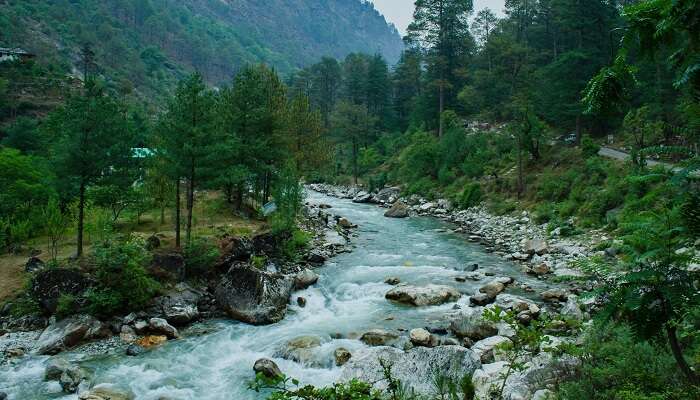


Tirthan Valley sits at roughly 1,600 m (about 5,250 ft) in the Banjar tehsil of Kullu district, and the best places to visit here cluster within a 35 km radius of the river that gives the valley its name. This is one of the few corners of Himachal Pradesh where the road stays quiet, the Tirthan runs clear enough to see brown trout, and the Great Himalayan National Park begins almost at your doorstep. Over a week of trekking to Serolsar Lake, fishing below Gushaini, and driving the Jalori Pass, our writers mapped the attractions that actually earn a place on your itinerary. Below are the 12 that do, with altitudes, trek times, and the season each one rewards.
Key takeaways
| Place | Altitude / setting | Best for | Time needed |
|---|---|---|---|
| Great Himalayan National Park | 1,500 to 4,100 m | Trekking, wildlife, UNESCO core | 1 to 4 days |
| Jalori Pass | ~3,120 m (10,280 ft) | Drive, high-pass views | Half day |
| Serolsar Lake | ~3,100 m | Forest trek, temple | 3 to 4 hrs |
| Jibhi | ~1,600 m | Waterfalls, cafes, cottages | 1 day |
| Chhoie Waterfall | ~1,900 m | Short trek, family walk | 1.5 hrs |
| Gaidhar Waterfall / Sai Ropa | ~1,500 m | Park gateway, easy trek | 2 to 3 hrs |
| River Tirthan | ~1,500 m | Trout fishing, riverside stays | Flexible |
| Raghupur Fort | ~3,200 m | Ridge trek from Jalori | 3 to 4 hrs |
| Budhi Nagin Temple | ~3,100 m | Pilgrimage at Serolsar | Add-on |
| Shringa Rishi Temple | ~1,900 m | Heritage, valley views | 1 hr |
| Chehni Kothi | ~2,100 m | Ancient tower, history | 2 to 3 hrs |
| Shoja and Gushaini | 1,500 to 2,700 m | Base villages, park entry | Stay overnight |
Best Places To Visit In Tirthan Valley
Best Time
March - June
Select Package Type

3 Days & 2 Nights
₹9,043 /@pp
GET FREE QUOTE

9 Days & 8 Nights
₹36,484 /@pp
GET FREE QUOTE.jpg?tr=w-600,h-300)

A quick map of every attraction in this guide, so you can build a route before you read the detail. Distances are measured from Gushaini, the usual valley base.

Start here, because the whole valley is really a doorway into this park. The Great Himalayan National Park spreads across about 754 sq km of the upper Tirthan, Sainj, and Jiwa catchments, was notified as a national park in 1999 after first being protected in 1984, and was inscribed as a UNESCO World Heritage Site in 2014 for its outstanding biodiversity. More than 375 recorded animal species live inside it, from the Himalayan tahr to the monal pheasant, and the snow leopard prowls its higher reaches. You cannot drive through it. Vehicles stop at the ecozone villages and the walking begins. Most first-timers enter at Sai Ropa (the park’s interpretation and eco-tourism centre, about 3 km before Gushaini) or from Gushaini itself, where the Tirthan and Falachan rivers meet. Day walks reach Rolla and Shilt; the classic multi-day route climbs to Tirth. If you want a guided package built around the park, TravelTriangle’s Tirthan Valley tour packages arrange the permits and a registered local guide, which the park requires past the ecozone.


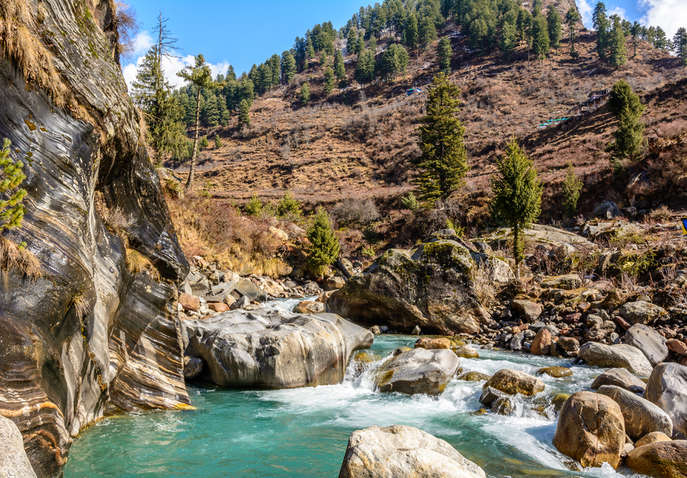

At about 3,120 m (10,280 ft), Jalori Pass is the high point of any Tirthan trip, and for most people the drive up is the adventure. The pass links the Kullu side of the valley with the Shimla district, and the road switches back through oak and deodar until the trees thin and the Dhauladhar range opens ahead. It sits roughly 34 km from Gushaini, a two-hour drive on a rough but motorable track. In deep winter the snow shuts the top, and vehicles turn back at Shoja, about 5 km short of the pass. A small tea shack and the Mahakali temple mark the crest, and two of the valley’s best short treks, Serolsar Lake and Raghupur Fort, start right from it.


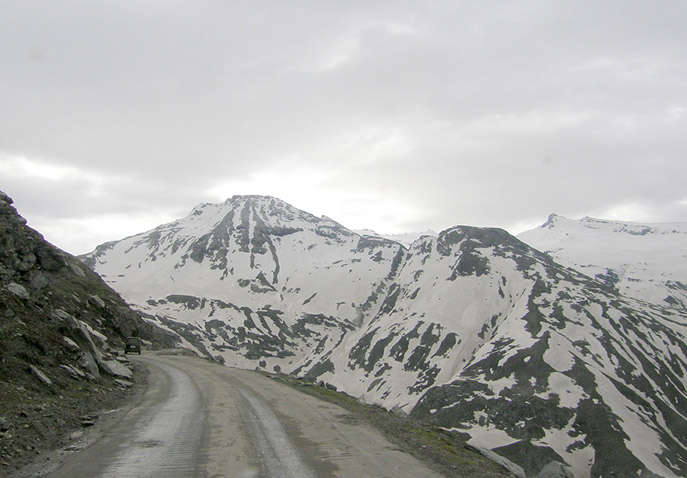


From the top of Jalori Pass, a 5 km forest trail leads to Serolsar Lake, and it is the walk we send everyone on. The path stays almost level through thick oak and rhododendron, so it takes only an hour and a half each way, and it is doable for anyone reasonably fit, children included. The lake itself is small, dark, and ringed by trees, with water the locals hold to be medicinally pure. On the far bank stands the Budhi Nagin temple. There is no road in, which is exactly why it stays so quiet. Carry your own water and snacks; there is one seasonal dhaba and nothing else.
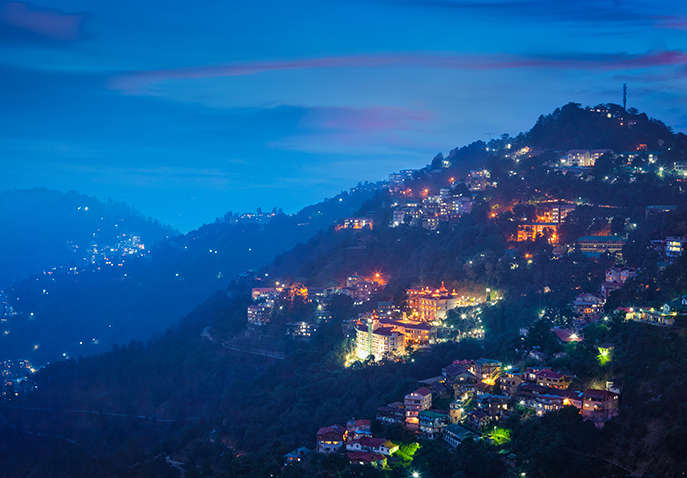


Travellers have taken to calling Jibhi the Mini Thailand of Himachal, and once you see the Jibhi waterfall dropping through mossy rock into a green pool, the nickname makes sense. The village sits on the Tirthan’s banks about 12 km below Jalori Pass, and it has become the valley’s most comfortable base, with timber cottages, riverside cafes, and Victorian-style wooden guesthouses. Use it for slow mornings and easy add-ons: the Jibhi waterfall is a ten-minute walk, the Mini Thailand pool a short drive, and the Chehni Kothi trailhead is close by. If you only have a weekend, Jibhi is where to spend it.

Chhoie Waterfall is the easiest of the valley’s cascades to reach and a good first walk for families. The trail leaves the road near Ghiyagi and climbs through pine and apple orchards for about 45 minutes to a clear stream that spills down the rock. It falls inside the wider Great Himalayan National Park landscape, so the forest around it is genuinely wild. The climb is short but steep in places, so wear proper shoes. Go in the morning, when the light drops straight into the gorge and the pool is cold enough to wake you up fully.

Sai Ropa is the park’s gateway and worth a stop in its own right. It has the forest department’s interpretation centre, a campsite, and a riverside trout point, and it is where most treks are registered. From the village, a short trek of under an hour reaches Gaidhar Waterfall, a tall, thin fall that runs hardest just after the monsoon. This stretch is far less trafficked than Jibhi, so it suits travellers who want the park’s quiet without a full multi-day trek. If you are planning the walking in advance, our Tirthan Valley trek guide maps the routes that start from here.

The river is the reason this valley feels different from the rest of Kullu. The Tirthan rises inside the national park and runs clear and cold the whole way down, and it holds both brown and rainbow trout, which makes it one of the few angling rivers in Himachal where you can actually cast a line. Fishing is permitted with a day licence from the fisheries department, usually arranged through your homestay, and the stretch around Gushaini and Nagini is the productive one. If fishing is not your thing, the riverside is still the best place in the valley to do nothing well: read, wade, and listen to the water. Many of the stays sit right on the bank.

Raghupur Fort is the other trek that starts from Jalori Pass, running the opposite way to Serolsar along a broad grassy ridge. It is about 3 km of gentle climbing to the ruins, roughly a 90-minute walk, and the reward is a 360-degree sweep of the Dhauladhar and the Kullu valley from the old stone walls. Little of the fort survives beyond its ramparts, said to have been built by the Rajas of Mandi as a refuge, but the meadow it crowns is one of the finest viewpoints in the valley and a favourite spot to camp in the clear post-monsoon months. Carry water; the ridge has no source.

Beside Serolsar Lake stands the Budhi Nagin temple, dedicated to the serpent goddess Budhi Nagin, whom local lore counts among the many naga deities of the Banjar and Seraj region. The wooden shrine is simple, weathered, and still actively worshipped, and villagers tell that the goddess keeps the lake’s water pure. Reaching it means doing the Serolsar trek, so pair the two: the lake for the setting, the temple for the story. If you visit during a local fair, you may catch the deity being carried out in procession, which is the region’s living tradition rather than a staged show.

Shringa Rishi Temple, in Banjar’s Baggi village, honours the sage Shringa Rishi, the ruling deity of the whole Banjar valley. The pagoda-style temple rises in three timber tiers, carved and slate-roofed in the classic Himachali style, and it looks out over terraced fields and pine ridges. Inside are the idols of the sage and of Shanta. Beyond the architecture, the temple matters because the deity holds real authority in local life, and festivals here draw villages from across Seraj. It is a short detour off the main valley road and takes only an hour, but it grounds the trip in the culture that the scenery alone does not show.

Chehni Kothi is the valley’s most striking piece of history, a stone-and-timber tower rising around 30 m near Jibhi that once stood even taller before the 1905 Kangra earthquake took its top floors. It sits at roughly 2,100 m, and reaching it means a steep half-hour to hour climb from the road below Chehni village. The tower is one of the tallest surviving dry-stack timber-bonded structures in the western Himalaya, built without cement in the kath-kuni style, and the walk up through the old hamlet is part of the appeal. History-minded travellers should not skip it; the craft on show is centuries old and increasingly rare.

Two villages anchor the valley, and where you sleep shapes the trip. Gushaini, at about 1,500 m where the Tirthan meets the Falachan, is the lower base and the closest launch point for the national park, the river fishing, and Sai Ropa. Shoja, higher at around 2,700 m on the way to Jalori Pass, is a tiny cluster of homestays wrapped in forest, cooler, quieter, and the choice for waking up to a ridge view. Split two nights between them and you cover the valley from river to pass without long daily drives. Both have grown a small, well-run homestay scene rather than hotels, which keeps the place feeling like a village.
If your days are limited, use this to pick fast. It matches the valley’s attractions to the kind of traveller you are.
| You are here for | Go to | Skip if short on time |
| Trekking and wildlife | Great Himalayan NP, Serolsar Lake, Raghupur Fort | Shringa Rishi Temple |
| An easy family trip | Jibhi, Chhoie Waterfall, River Tirthan | Raghupur Fort ridge |
| Photography and views | Jalori Pass, Raghupur Fort, Shoja | River-level stays |
| Heritage and culture | Chehni Kothi, Shringa Rishi, Budhi Nagin | High passes |
| Quiet and offbeat | Gushaini, Sai Ropa, Gaidhar Waterfall | Jibhi in peak season |
Tirthan is a year-round base, but each season opens different places. Here is what to expect month by month. For a deeper seasonal read, see our guide to Tirthan Valley in March.
| Season | Months | What it is good for |
| Spring | March to April | Green valley, blossom, Jalori opening after snow |
| Summer | May to June | Best all-round: passes open, treks clear, pleasant days |
| Monsoon | July to mid-Sept | Lush and empty, but landslide risk and slippery trails |
| Autumn | Late Sept to Nov | Clearest ridge views, best for Raghupur and photography |
| Winter | Dec to Feb | Snow in the valley; Jalori Pass closed, lower places only |
Three days is the sweet spot. This route strings the 12 places into a sensible order without backtracking, and it doubles as a booking template if you want it packaged.
Day 1: Reach Gushaini and settle into a riverside homestay. Spend the afternoon on the Tirthan bank, try a trout-fishing licence, and walk up to Chhoie Waterfall before dinner.
Day 2: Enter the Great Himalayan National Park from Sai Ropa or Gushaini with a registered guide for a day walk, or trek to Gaidhar Waterfall if you want something shorter. Evening in Jibhi for its cafes and the Mini Thailand pool.
Day 3: Drive up to Jalori Pass early, trek 5 km to Serolsar Lake and the Budhi Nagin temple, then walk the Raghupur Fort ridge if time allows. Drop to Chehni Kothi or Shringa Rishi Temple on the way down.
Want it booked end to end with stays, permits, and a driver? Compare options on the Tirthan Valley family tour or the wider Himachal tour packages.

Agar aap Hindi mein search kar rahe hain, toh yahan Tirthan Valley me ghumne ki sabse acchi jagah ek line mein: Great Himalayan National Park sabse khaas hai, Jalori Pass aur uske aage Serolsar Lake ka trek sabse popular hai, aur Jibhi families ke liye sabse aasan base hai. River Tirthan par trout fishing hoti hai, aur Chehni Kothi purani virasat dekhne walon ke liye best hai. Ghumne ka sahi samay March se June aur October se November hai, jab mausam saaf rehta hai aur pass khule rehte hain.
Few valleys in Himachal pack this much into so little road: a UNESCO-listed national park, a high pass, a trout river, and villages that still feel like villages. Cover the Great Himalayan National Park, Jalori Pass with Serolsar Lake, and Jibhi, and you will have seen the best of it. When you are ready to turn this list into a trip, browse the Tirthan Valley tour packages and shape one around the places above, or read how to get here in our Tirthan Valley tour package guide.
The 12 best places are the Great Himalayan National Park, Jalori Pass, Serolsar Lake, Jibhi, Chhoie Waterfall, Gaidhar Waterfall and Sai Ropa, River Tirthan, Raghupur Fort, Budhi Nagin Temple, Shringa Rishi Temple, Chehni Kothi, and the gateway villages of Shoja and Gushaini. The national park, the Jalori Pass with Serolsar Lake, and Jibhi are the three most people rate highest.
Yes, it is the single best reason to come to Tirthan Valley. The park is a UNESCO World Heritage Site with more than 375 recorded animal species, and even a one-day walk from Sai Ropa or Gushaini shows you old-growth forest and river gorges you cannot see anywhere else in the valley. Past the ecozone you need a registered guide and a permit, which stays and packages arrange for you.
The nickname comes from the Jibhi waterfall and a nearby pool where clear green water drops through mossy black rock, which travellers thought resembled the jungle waterfalls of Thailand. The name stuck on social media and now marks one of the most photographed spots in the valley. It is a short walk or drive from Jibhi village.
May and June are the best all-round months: the weather is pleasant, the treks are clear, and Jalori Pass is open. April brings spring greenery, and late September to November gives the clearest ridge views for photography. Avoid the peak monsoon from July to mid-September for landslide risk, and remember the Jalori Pass usually closes under snow from late December to March.
The usual route is by road via Aut on the Mandi to Kullu highway, then along the Banjar road to Gushaini or Jibhi. Delhi is an overnight drive of roughly 12 hours and Chandigarh about 8. For full transport options, routes, and where to break the journey, see our Tirthan Valley tour package guide.
Three full days let you see the best of Tirthan Valley without rushing. That covers a day around Gushaini and the river, a day in the national park or on a shorter trek, and a day for Jalori Pass with Serolsar Lake. A weekend works if you stick to Jibhi and the pass, but you will miss the park.
Most travellers stay in riverside homestays around Gushaini and Nagini for the national park and fishing, or in forested Shoja higher up for the ridge views. Jibhi has the widest choice of cottages and cafes and suits first-timers and families. The valley runs on small homestays rather than large hotels, which keeps it quiet, so book ahead in peak season.
Yes. Tirthan Valley is one of the safer, calmer parts of Himachal, popular with solo travellers, couples, and families alike, with a well-established homestay network and low crime. The usual mountain caution applies: trek with a guide inside the national park, avoid the passes in bad weather, and keep to marked trails around waterfalls, which can be slippery.
Yes, the valley receives snow between December and February, and the higher points like Jalori Pass and Shoja hold it longest. Snowfall shuts the pass to vehicles for much of winter, so a winter trip is limited to the lower valley around Gushaini and Jibhi. For a spring visit as the snow clears, see our guide to Tirthan Valley in March.
Tirthan Valley me ghumne ki sabse best jagah Great Himalayan National Park hai, jo UNESCO World Heritage Site hai. Iske alawa Jalori Pass, Serolsar Lake ka trek, aur Jibhi ka waterfall sabse popular hain. River Tirthan par trout fishing aur Chehni Kothi ka purana tower bhi zaroor dekhein. Ghumne ka sahi samay March se June aur October se November hai.
Real reviews from real travelers who booked with us.
View All Reviews