
 8D / 7N
6% OFF


Nuwara Eliya's Temples at a Glance
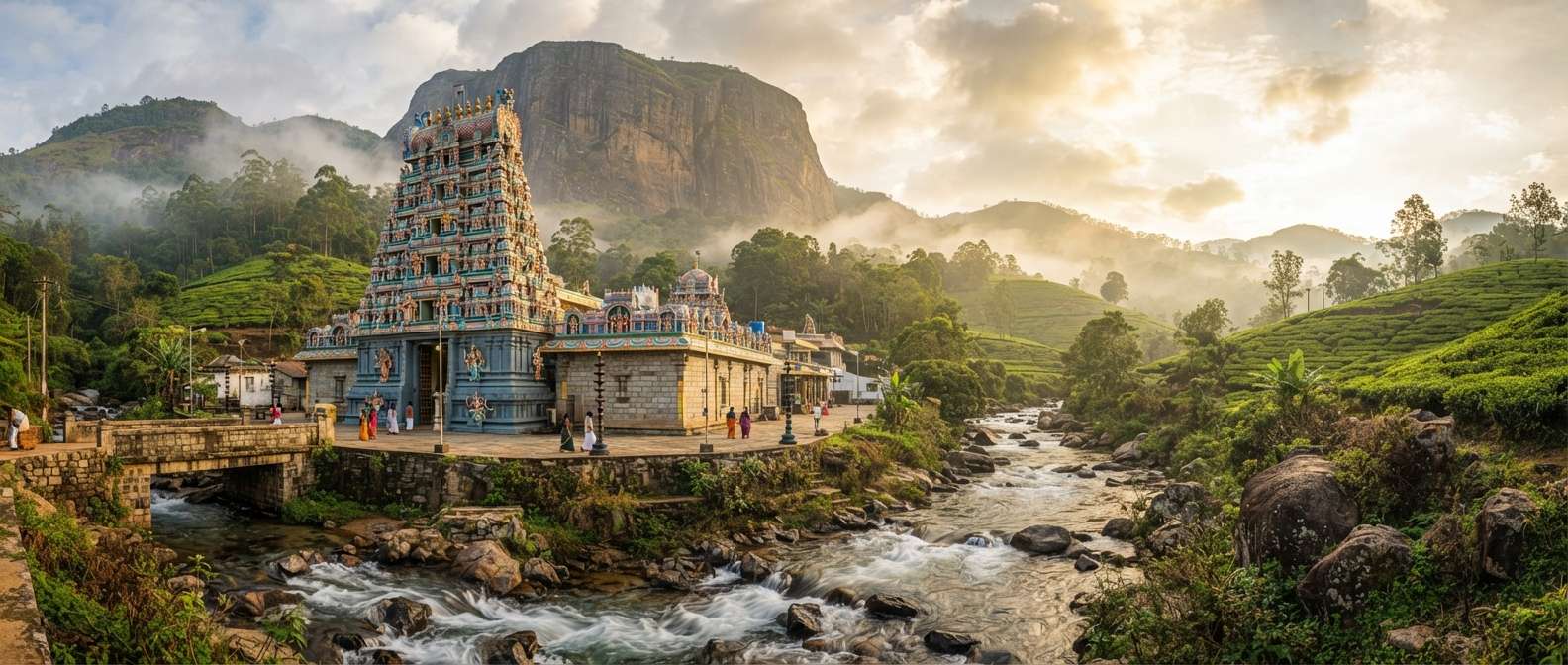
The best-known temples in Nuwara Eliya are Seetha Amman Temple at Sita Eliya, 5 km out of town, where the Ramayana says Sita was held in Ravana’s Ashok Vatika, and the Sri Bhakta Hanuman Temple at Ramboda, 30 km north on the Kandy road. Around them sit five more. Gayathri Peedam is a Hindu kovil inside the town itself. Divurumpola, on the Welimada road, is the Buddhist temple tied to Sita’s trial by fire. Down in the Kotmale valley you find the 88 m Mahaweli Maha Seya stupa and Kadadora Vihara, a temple that disappears under a reservoir and comes back in droughts. That makes three Hindu kovils plus the new meditation centre inside the Seetha Amman complex, and three Buddhist temples, all within about 50 km of town and easiest to see over a day and a half. Entry is free at almost every one of them. Dress code is what catches visitors out, and we cover that below. Every fact here is checked against Wikipedia, the High Commission of India in Colombo, Chinmaya Mission and Central Province Tourism.
Key Takeaways
- Start with Seetha Amman Temple. It is 5 km south-east of town, free to enter, and open 8 am to 1 pm and 2 pm to 6:30 pm.
- Reach Ramboda by 7 am. The Hanuman temple opens at 7 and the valley mist usually burns off within the hour, so you get the view over Kotmale.
- Plan one long day plus a morning. By car, Ramboda, Gayathri Peedam, Seetha Amman, Hakgala and Divurumpola fit one day of about 100 km and nine hours. The two Kotmale temples lie further down the valley and need a second morning. A car with driver for a full day of about 100 km on these mountain roads costs from around LKR 18,000 (about ₹5,200).
- Pack socks you don’t mind dirtying. Shoes come off at every temple, and stone floors in the hill country are cold before 10 am.
- Go between January and April. These are the driest months in Nuwara Eliya, and in a dry year Kadadora Vihara’s ruins may show above the Kotmale water.
Temples in Nuwara Eliya: quick comparison
| Temple | Religion | Distance from town | Timings | Entry | Best for |
|---|---|---|---|---|---|
| Seetha Amman Temple | Hindu | About 5 km south-east, A5 towards Badulla | 8 am to 1 pm, 2 pm to 6:30 pm | Free (small puja ticket) | Ramayana pilgrims, first-time visitors |
| Ashok Vatika Meditation Centre | Hindu (meditation hall) | Inside the Seetha Amman complex | Temple hours | Free | Quiet reflection, older travellers |
| Gayathri Peedam (Sri Lankatheeswarar) | Hindu | About 1 km, Lady McCallum’s Drive | Morning and evening pujas | Free, donations welcome | A quick visit in town |
| Sri Bhakta Hanuman Temple, Ramboda | Hindu | About 30 km north, A5 towards Kandy | 7 am to 1 pm, 3:30 pm to 6:30 pm | Free | Hanuman devotees, valley views |
| Divurumpola Raja Maha Viharaya | Buddhist | About 20 km south-east, near Welimada | Daylight hours | Free, donations welcome | The Agni Pariksha legend |
| Kotmale Mahaweli Maha Seya | Buddhist | About 45 to 50 km north-west, via Ramboda | Daylight hours | Free | Sri Lanka’s second-tallest stupa |
| Kadadora Vihara | Buddhist | About 45 to 50 km, Kotmale reservoir | Visible only when water is low | Free | Photographers, dry-year visits |
Sri Lanka
Sri Lanka
Temples in Nuwara Eliya: 7 Hindu Kovils and Buddhist Temples to Visit (2026)
Best Time
January - April
Select Package Type
Best Selling Packages


7 Temples in Nuwara Eliya
Four of these are Hindu: three kovils (kovil is the Tamil word for temple) and the meditation centre at Seetha Amman, built and run mostly by the Indian Tamil community whose families came to work the tea estates. Three are Buddhist. The Hindu temples come first, starting with the one most visitors come for.
Explore Popular Destination In Sri Lanka
01
Seetha Amman Temple, Sita Eliya
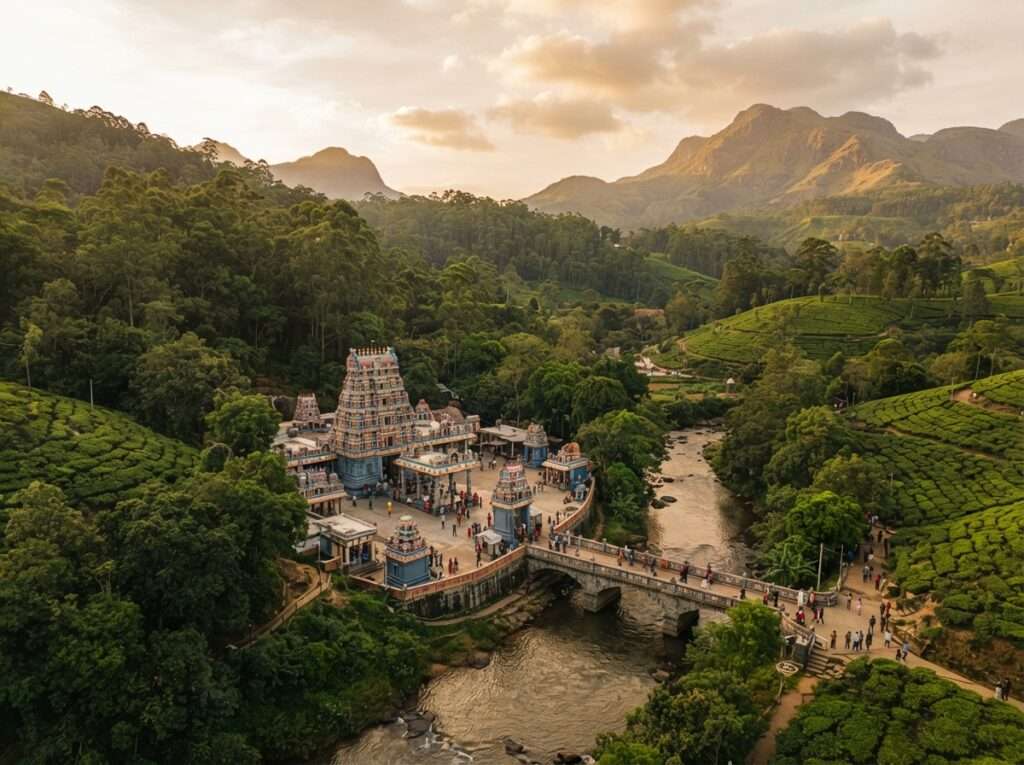
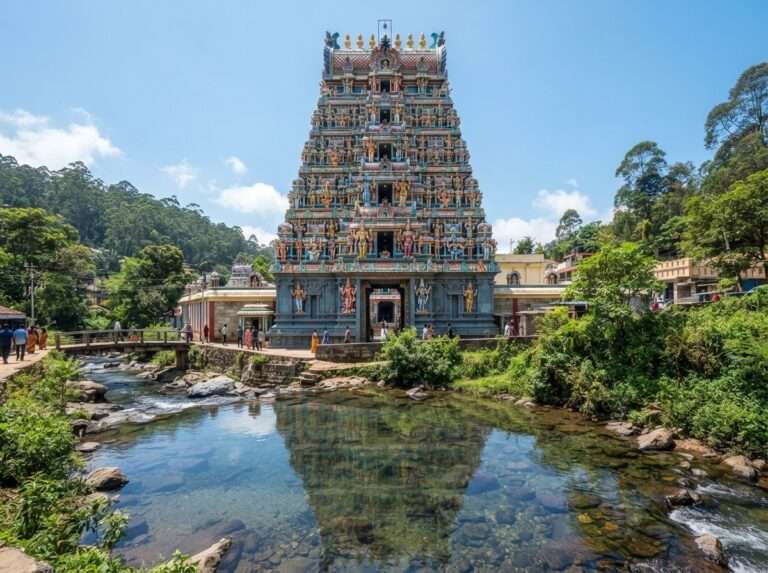
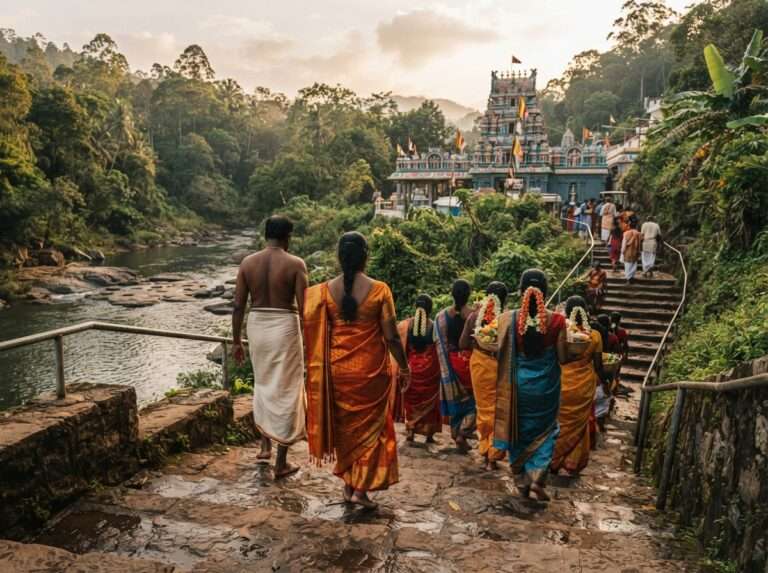
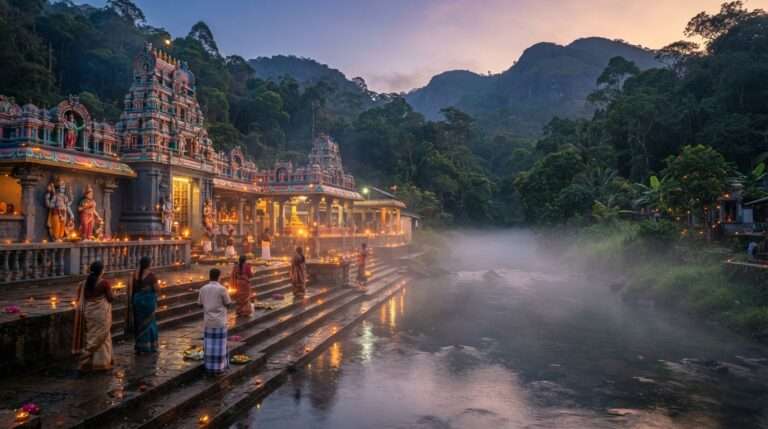
Seetha Amman Temple is the most famous temple in Nuwara Eliya, and the one most Indian visitors come for. It stands at Sita Eliya, about 5 km south-east of town on the A5 towards Hakgala and Badulla, where Hindu tradition places Ravana’s Ashok Vatika, the garden where Sita was held captive. The painted gopuram faces a fast, clear stream. On the far bank, on a flat black rock, are the large hollows that devotees call Hanuman’s footprints, now outlined in bright paint.
The shrine started a century ago as stones for Rama, Lakshmana and Sita after three darkened idols were found near the riverbank. Indian Tamils, whose families came to Sri Lanka as tea-estate workers under the British, built the temple you see now and still look after it. In 2021 a stone from Sita Eliya went to India for the Ram temple in Ayodhya. Water from the Sarju river in Ayodhya was later flown here for the temple’s Kumbhabhishekam in May 2024.
The newest building on site is the Ashok Vatika Meditation Centre, opened in August 2025 and covered next. Sit there for ten minutes after the puja and the only noise is the stream.
Arrive before 10 am on weekends. Tour coaches from Kandy roll in by late morning, and the riverside steps get crowded. For the full story and practical details, read our Seetha Amman Temple guide.
| Location | Sita Eliya, A5 Nuwara Eliya to Badulla road, about 5 km from town |
| Timings | 8 am to 1 pm and 2 pm to 6:30 pm, daily (Seetha Amman Temple timings) |
| Entry fee | Free, a small ticket applies only if you book a puja (Seetha Amman Temple entry fees) |
| How to get there | 15 minutes by tuk-tuk, or any Badulla or Welimada bus (how to reach Seetha Amman Temple) |
| Time needed | 45 minutes to 1 hour, including the meditation centre |
| Nearby | Hakgala Botanical Garden, 1.7 km further south-east |
Related Tour Packages


❮
❯
02
Ashok Vatika Meditation Centre
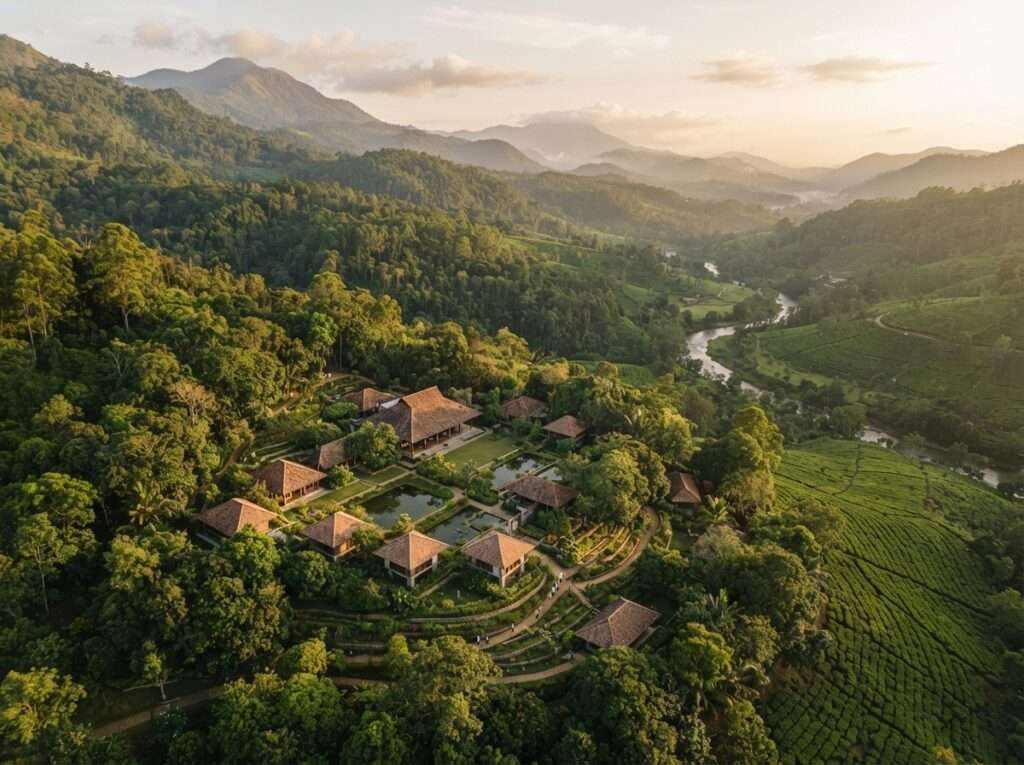
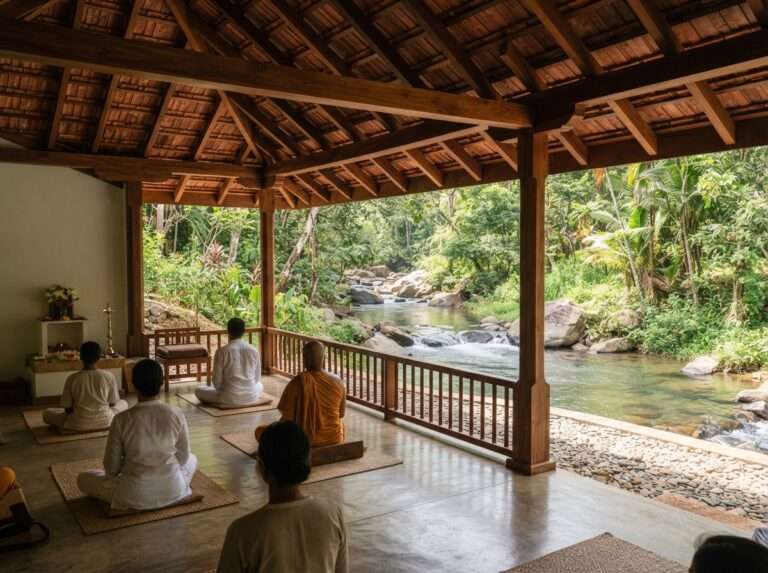
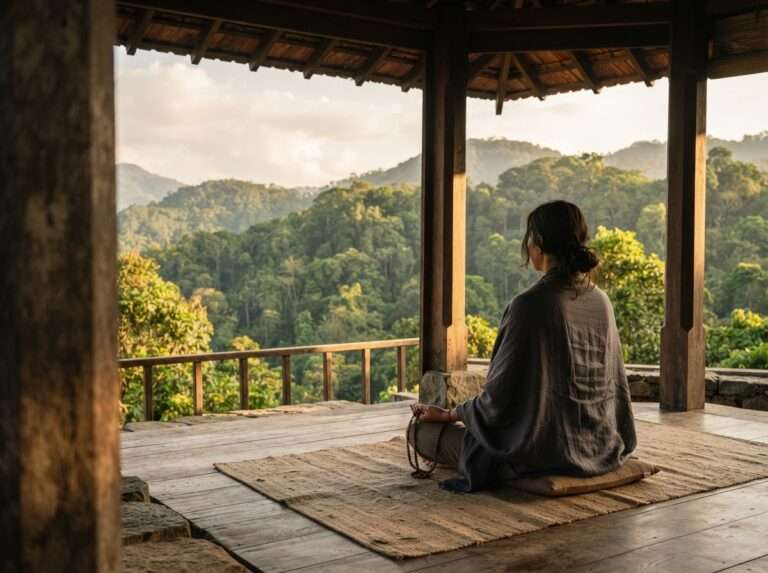
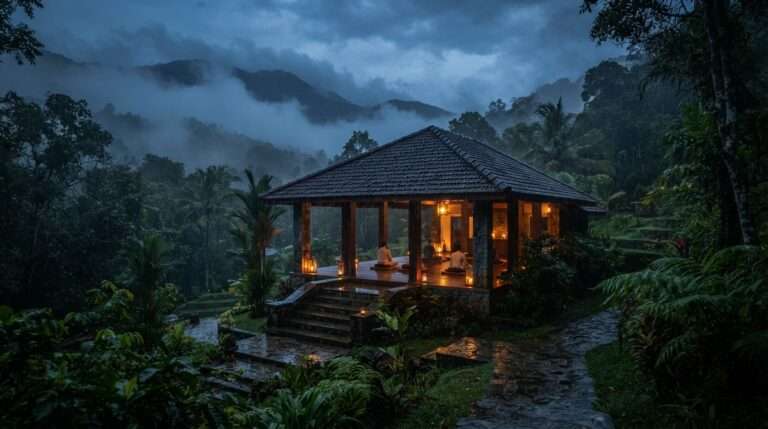
The Ashok Vatika Anushree Meditation Centre is the newest place of worship around Nuwara Eliya and sits inside the Seetha Amman complex. India and Sri Lanka marked its start in April 2023, when Prime Minister Dinesh Gunawardena and Indian High Commissioner Gopal Baglay laid the foundation stone, and it opened in August 2025.
Sri Lanka’s Foreign Minister Vijitha Herath and India’s High Commissioner Santosh Jha opened it on 3 August 2025, and devotees in New Delhi paid for the building. It is a meditation hall, not a temple with its own deity, so there is no puja schedule. Visitors go in quietly after praying at Seetha Amman. Phones go on silent. If you are travelling with older family members, it is the one place on the Ramayana trail with proper seating and shelter from the drizzle.
| Location | Inside the Seetha Amman Temple complex, Sita Eliya |
| Opened | 3 August 2025 |
| Entry fee | Free |
| Time needed | 15 to 20 minutes |
Related Tour Packages


❮
❯
03
Gayathri Peedam (Sri Lankatheeswarar Temple)
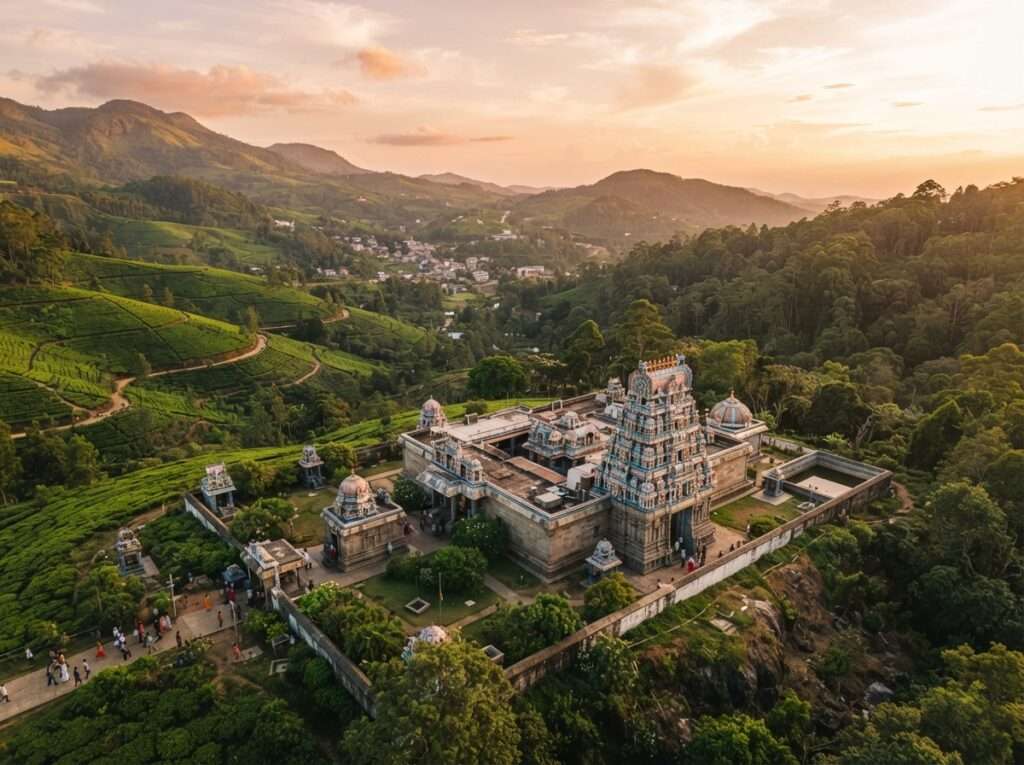
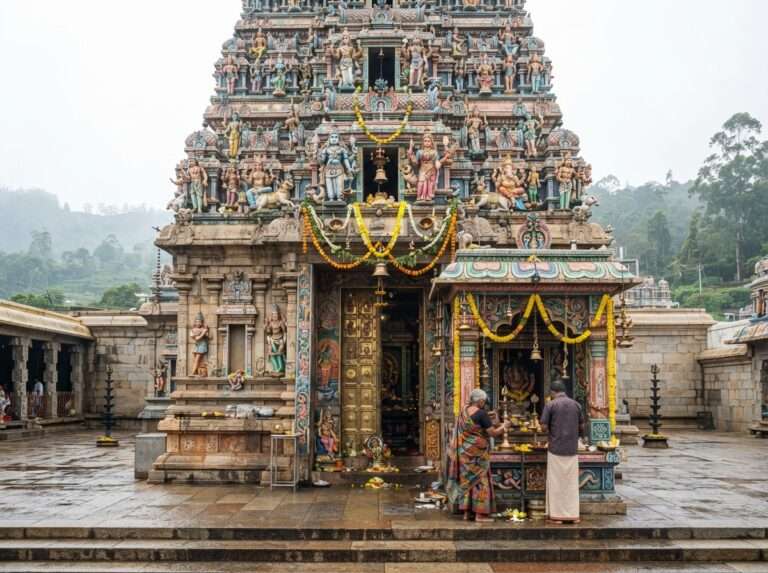
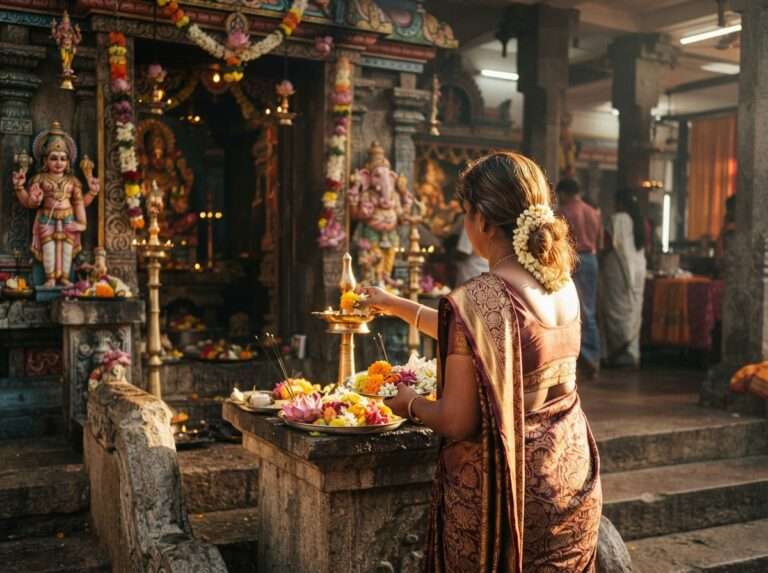
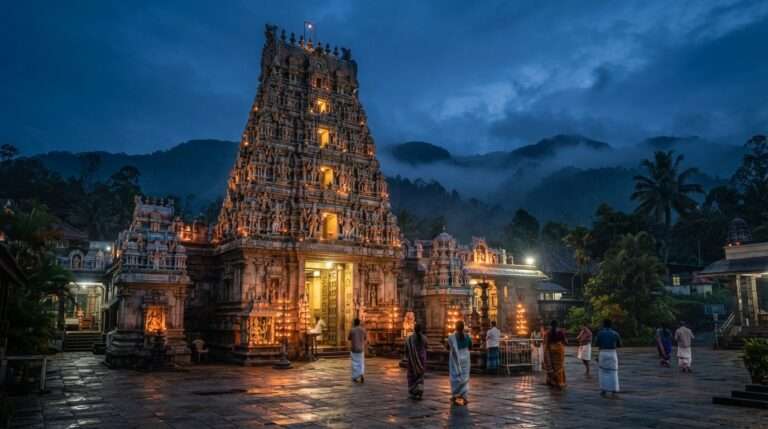
Gayathri Peedam is the Hindu temple most visitors miss, even though it is inside Nuwara Eliya town on Lady McCallum’s Drive. It is also called the Sri Lankatheeswarar Temple, and sources describe it as the first temple in Sri Lanka built to the goddess Gayathri. Swami Murugesu, a Kandy-born sage remembered as Gayathri Siddhar, founded it in the 1970s. After he died in Chennai in 2007, his samadhi was placed in the temple’s Gayathri Mandir.
The Ramayana link here is to Ravana’s son Meghanath (Indrajit), who local belief says performed his penance to Shiva on this spot to win his powers before the war with Rama. The Shiva lingam is said to have come from the Narmada river in India. It is a smaller, quieter place than Seetha Amman. You can see it in 30 minutes, which makes it an easy stop on the way out of town on any route.
More detail is in our Gayathri Peedam guide.
| Location | Sri Murugesu Square, Lady McCallum's Drive, Nuwara Eliya town |
| Timings | Open for morning and evening pujas, quietest mid-morning |
| Entry fee | Free, donations welcome |
| How to get there | 5 minutes by tuk-tuk from the town centre, Nanu Oya railway station is 8.5 km |
| Time needed | 30 minutes |
Related Tour Packages


❮
❯
04
Sri Bhakta Hanuman Temple, Ramboda
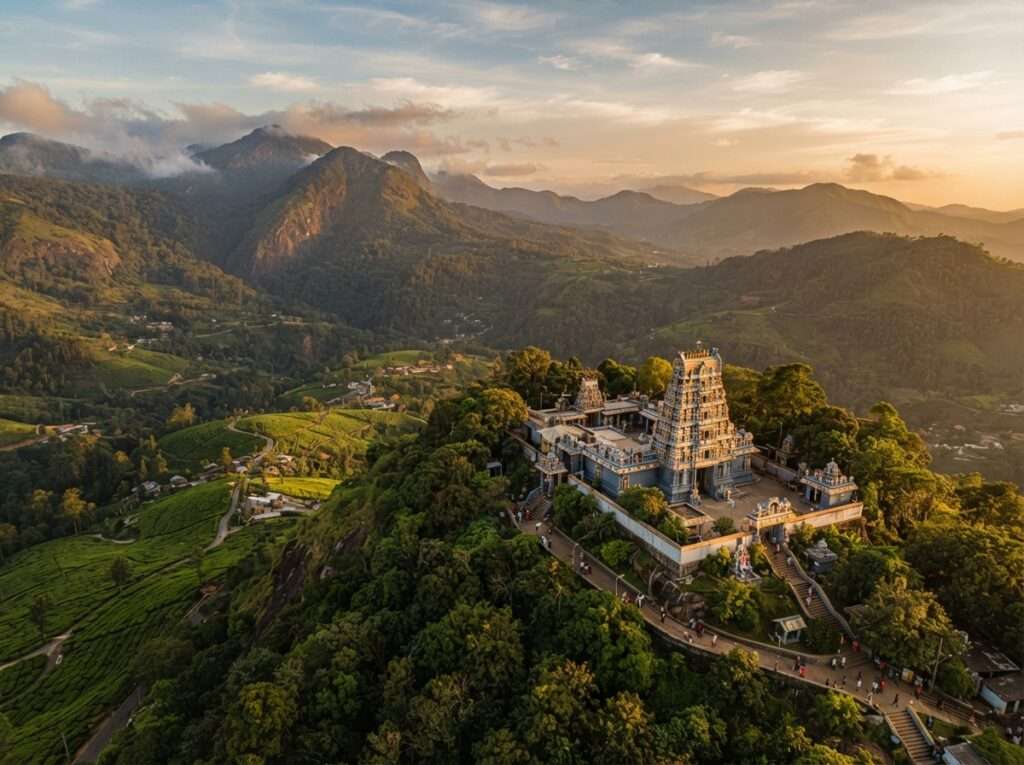
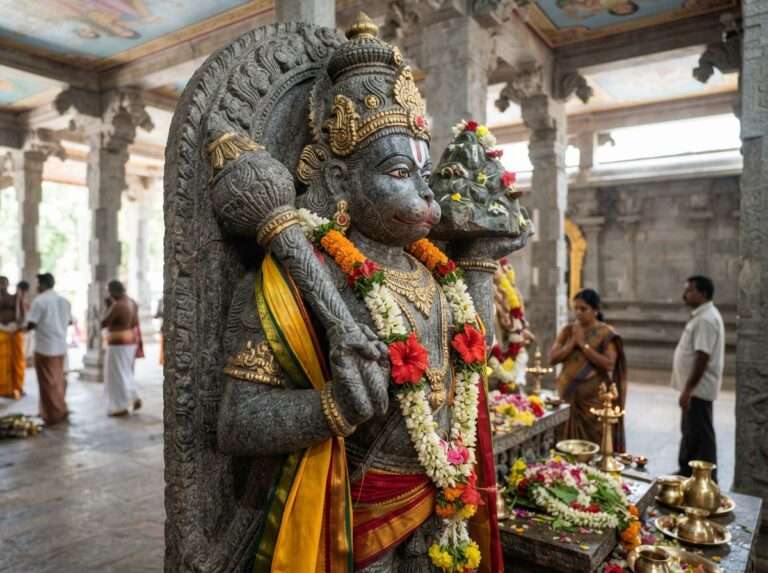
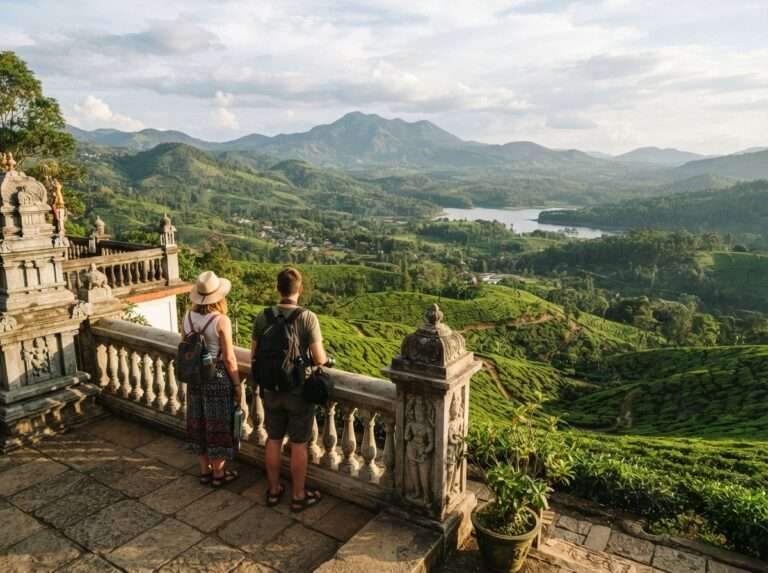
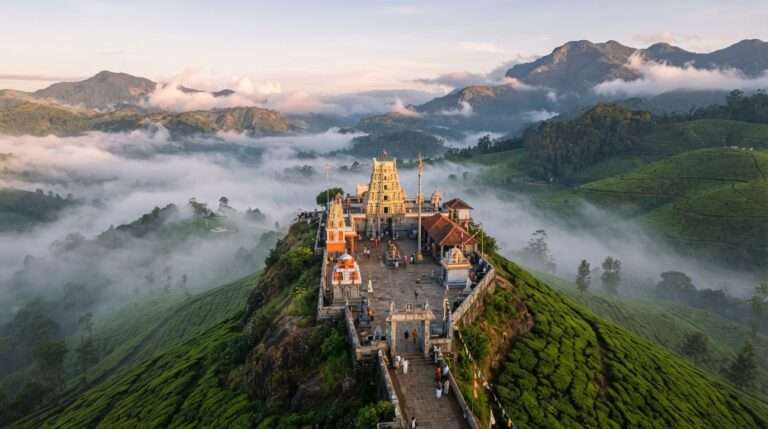
The Sri Bhakta Hanuman Temple sits on a ridge at Ramboda, about 30 km north of Nuwara Eliya on the A5 towards Kandy. Allow close to an hour for the drive, because the road drops through a long run of hairpins. Chinmaya Mission built it, and its consecration date was 8 April 2001. Local tradition holds that Ramboda is where Hanuman searched for Sita, and the name is often read as “Rama’s army”.
Inside is a 16 ft granite Hanuman, the main image, by Chinmaya Mission’s own count. What most visitors remember, though, is the terrace. From it you look down over tea estates to the Kotmale valley, and on a clear morning you can trace the river towards the reservoir where two of the Buddhist temples below stand. Hanuman Jayanti brings the biggest crowds. On an ordinary weekday at 7:30 am you may have the terrace to yourself.
Combine it with Ramboda Falls, just down the road, and with tea at one of the estate factories on the same stretch.
Our Shri Bhakta Hanuman Temple guide covers what to see nearby.
| Location | Ramboda, A5 Nuwara Eliya to Kandy road, about 30 km from town |
| Timings | 7 am to 1 pm and 3:30 pm to 6:30 pm, daily |
| Entry fee | Free |
| How to get there | 50 to 60 minutes by car, or any Kandy-bound bus from Nuwara Eliya |
| Time needed | 45 minutes, add 30 for Ramboda Falls |
| Built by | Chinmaya Mission Sri Lanka, consecrated 2001 |
05
Divurumpola Raja Maha Viharaya
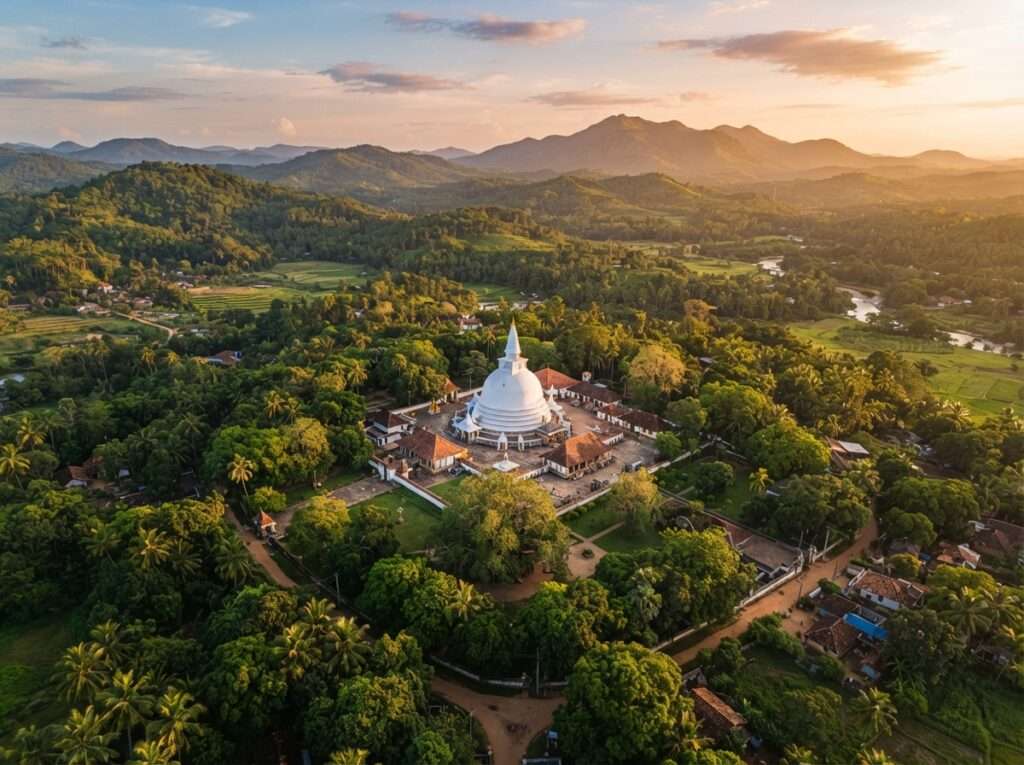
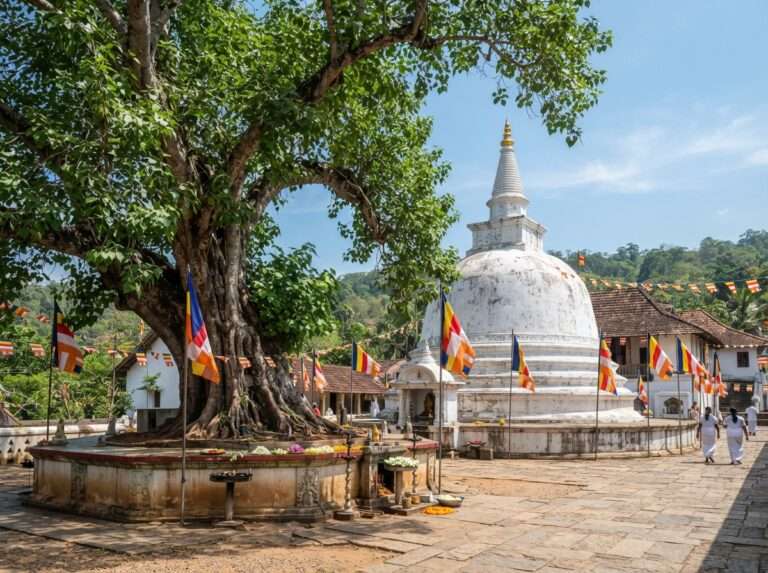
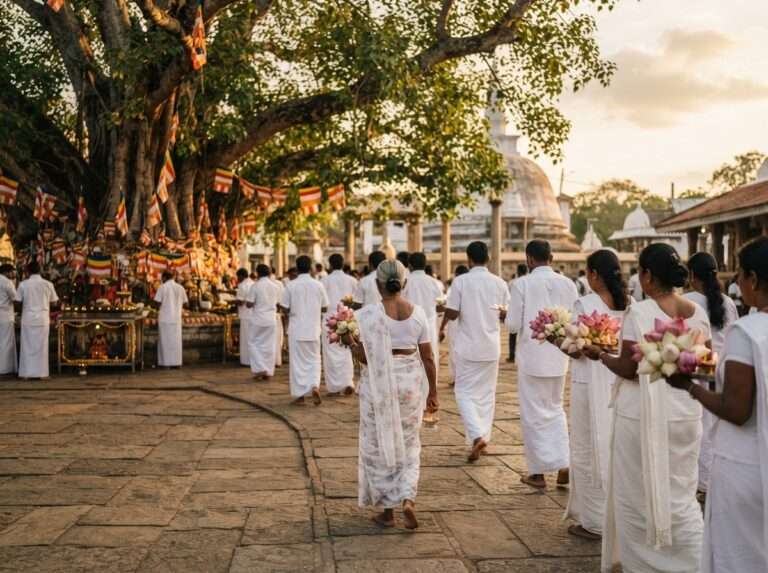
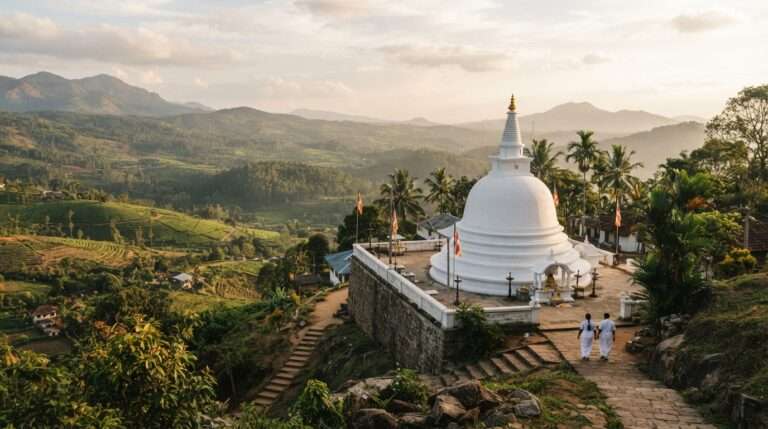
Divurumpola is a Buddhist temple with a Hindu story at its centre. It stands about 20 km from Nuwara Eliya on the Welimada road, near the 96 km post and roughly 4 km before Welimada town. Sita Eliya is about 5 km out of town on the same road, so Divurumpola lies roughly 15 km beyond Seetha Amman Temple.
Tradition says this is where Sita went through the Agni Pariksha, the trial by fire that proved her purity to Rama. Divurum means “oath” in Sinhala, and the place-name carries that meaning. For generations, villagers in this area have settled disputes by swearing an oath at the temple, believing a false oath here brings misfortune. It is a social custom, not a court process.
The grounds hold a white stupa, a Bo tree and a shrine room, and Hindu pilgrims on the Ramayana trail come alongside local Buddhist families. Late afternoon is the best time, when the light softens over the paddy and vegetable plots of the Welimada plateau.
| Location | Welimada road, about 4 km before Welimada, near the 96 km post |
| Distance from town | About 20 km, 45 minutes to 1 hour by road |
| Entry fee | No formal fee, donations welcome |
| Dress code | White or light clothing appreciated, shoulders and knees covered |
| Time needed | 30 to 45 minutes |
06
Kotmale Mahaweli Maha Seya
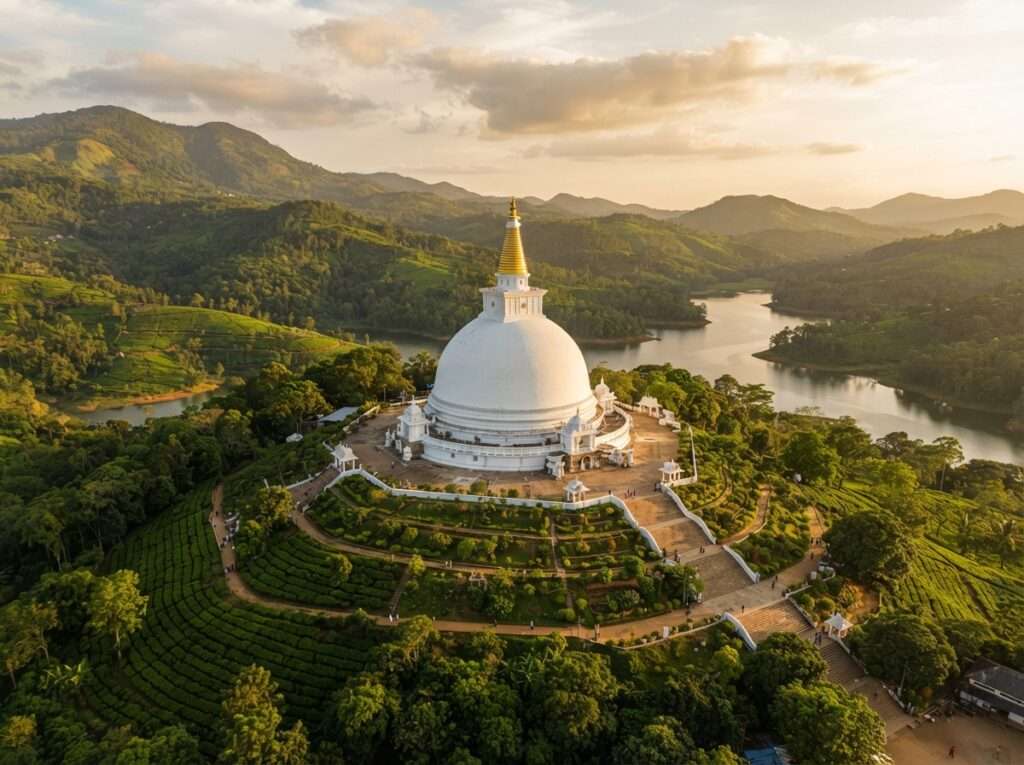
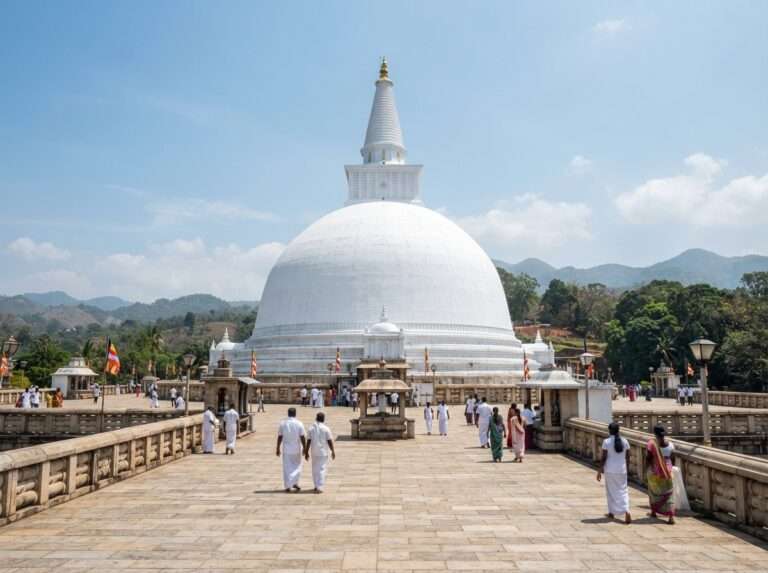
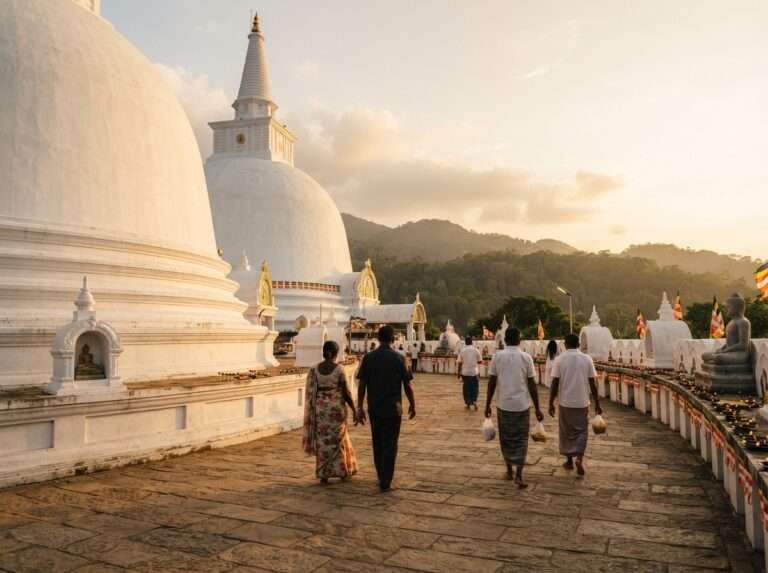
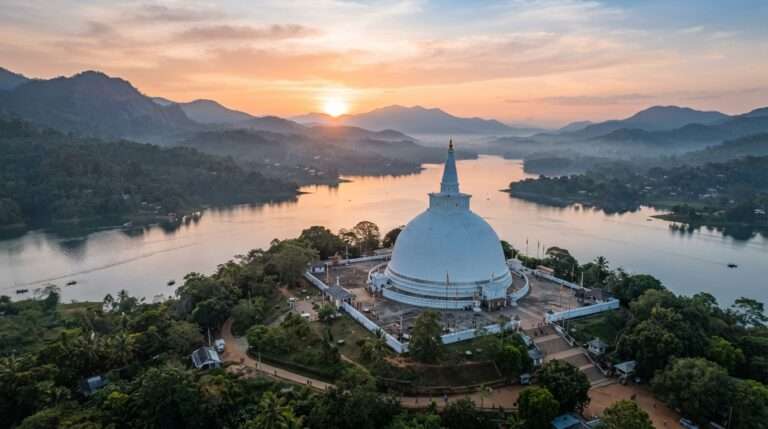
Mahaweli Maha Seya is the one Buddhist site on this list you can see from far away. The white dome stands 88 m tall, second in Sri Lanka only to Ruwanweli Seya at Anuradhapura, and it looks down over the Kotmale reservoir. The Mahaweli authorities built it to make up for the temples lost when the valley was flooded for the Kotmale Dam.
President J. R. Jayewardene laid the foundation stone in 1983. Work then stalled for years and the stupa was only declared open on 20 June 2016, by President Maithripala Sirisena. It was built around a stainless-steel frame, an engineering design credited to Dr A. N. S. Kulasinghe of the Mahaweli Cultural Foundation. Expect a wide, quiet terrace, a long walk around the base, and a lot of sky.
The drive is about 45 to 50 km from Nuwara Eliya, down through Ramboda and around the reservoir, so plan it on the same day as the Hanuman temple.
| Location | Kotmale, above the Kotmale reservoir |
| Distance from town | About 45 to 50 km, 1.5 to 2 hours via Ramboda |
| Height | 88 m, Sri Lanka's second-tallest stupa |
| Opened | 20 June 2016 (foundation stone 1983) |
| Entry fee | Free |
| Time needed | 45 minutes |
07
Kadadora Vihara, the Temple Under the Reservoir
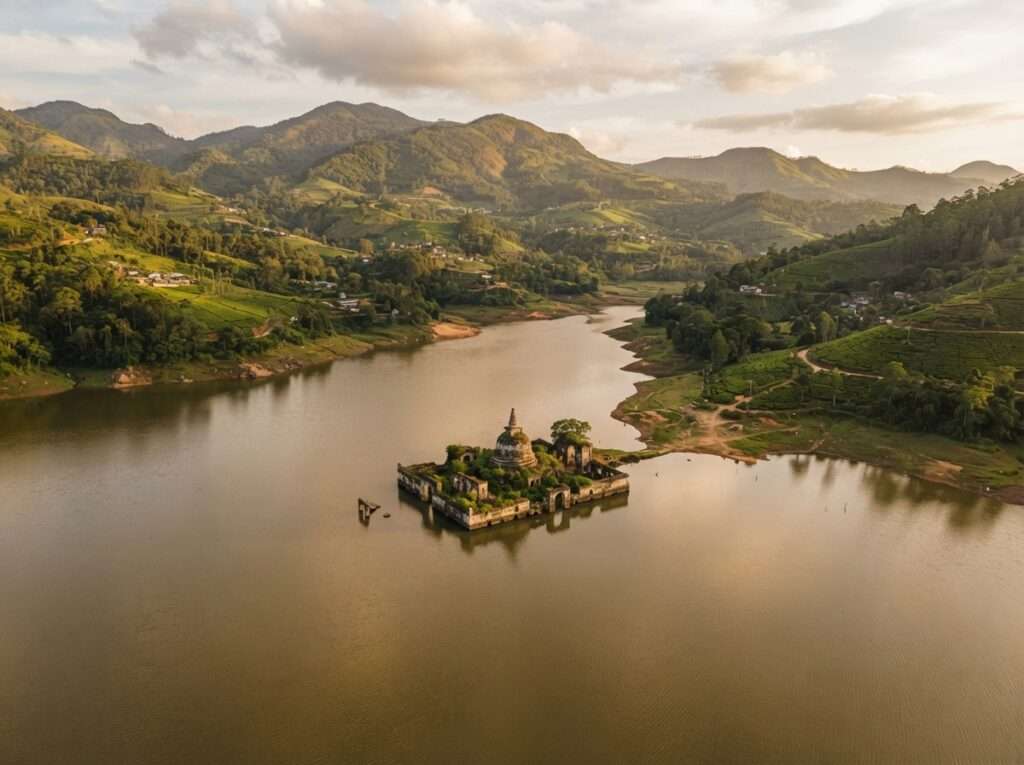
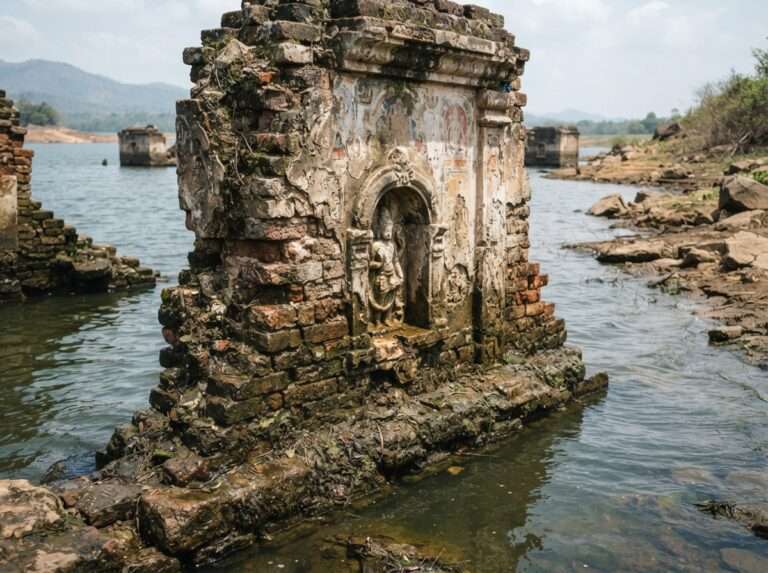
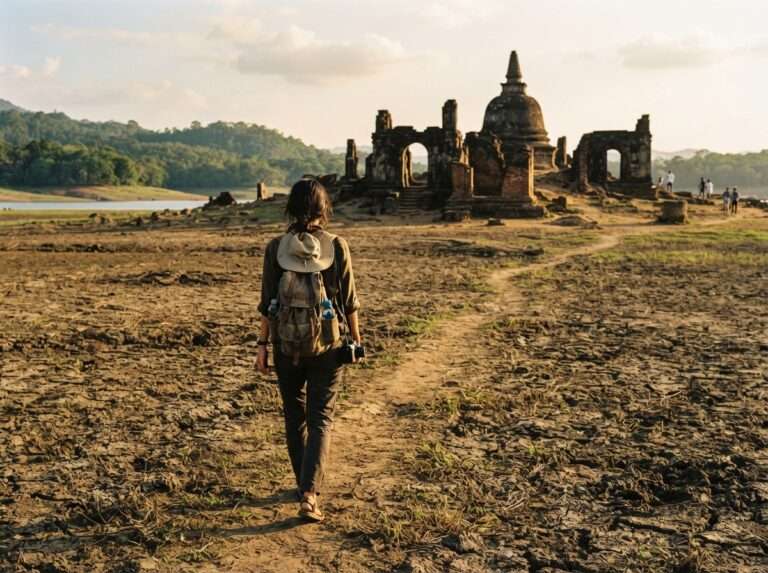
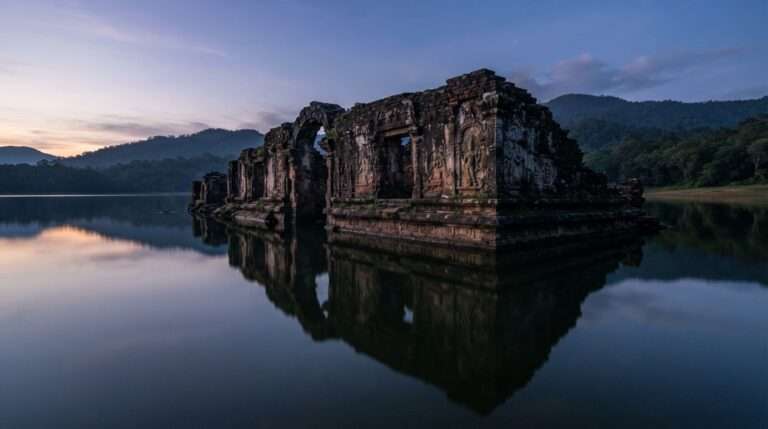
Kadadora Vihara, formally Kadadora Sri Priyabimbaramaya, is the strangest temple near Nuwara Eliya, and the one you are least likely to actually see. Work on the Kotmale Dam began in 1979, and when the reservoir filled in 1985, about 57 villages and 54 religious places in the valley went under the water. Kadadora was abandoned and slowly sank with them.
When a long dry spell pulls the reservoir down, the walls of the shrine room surface again. Its central sanctuary once held the main Buddha statue, and its walls were painted with scenes from the Buddha’s life and the Jataka stories. Sri Lankan papers reported it breaking the surface again in early 2024. In a normal year you will see only water, so check local news before making the drive, and pair it with Mahaweli Maha Seya so the trip is worth it either way.
Don’t climb on the exposed walls. The structure is fragile and has been underwater for four decades.
| Location | Kotmale reservoir, Nuwara Eliya District |
| Distance from town | About 45 to 50 km, 1.5 to 2 hours via Ramboda |
| When visible | Only when reservoir levels drop, usually late in the dry season |
| Entry fee | Free |
| Pair with | Mahaweli Maha Seya on the same shore |
Ramayana Sites Near the Temples (Not Temples, Still Worth the Stop)
Three places on the same roads complete the Ramayana trail without being temples. The most important is Hakgala Botanical Garden, 1.7 km beyond Seetha Amman. Many pilgrims treat Hakgala as part of the wider Ashok Vatika, and the rock face of Hakgala looms over both. The garden itself was laid out in the 1860s for cinchona and now has rose beds and fern collections. See our Hakgala Botanical Garden guide for fees and timings.
Ramboda Falls, just below the Hanuman temple, is the second. The third, for serious pilgrims, is the Ravana-linked sites further east around Ella, which belong to a longer trip. Our Ramayana trail in Sri Lanka guide maps all of them across the island, from Munneswaram on the west coast to Ella.
A One-Day Temple Route From Nuwara Eliya
Two roads leave Nuwara Eliya in opposite directions, and the temples sit on both of them. The A5 north goes down to Ramboda and Kotmale. The A5 south-east runs past Sita Eliya and Hakgala, then drops towards Welimada and Divurumpola. The route below covers the four best-known temples plus Hakgala in about nine hours. Add Kotmale only if the reservoir is low or you want Maha Seya.
| Leg | Distance | Drive time | What to do |
| Nuwara Eliya town to Ramboda Hanuman Temple | About 30 km | 50 to 60 min | Morning darshan at the 7 am opening, valley view |
| Ramboda back to Gayathri Peedam (in town) | About 30 km | 50 to 60 min | 30-minute visit |
| Gayathri Peedam to Seetha Amman Temple | About 6 km | 15 min | Temple, stream, meditation centre |
| Seetha Amman to Hakgala Botanical Garden | 1.7 km | 5 min | Lunch nearby, garden walk |
| Hakgala to Divurumpola | About 13 km | 30 min | Stupa and oath shrine in late-afternoon light |
| Divurumpola back to Nuwara Eliya | About 20 km | 45 min | Back before dark |
How to Visit the Temples Around Nuwara Eliya in One Day
- Book a car with driver the evening before. A tuk-tuk is too slow for the Ramboda hairpins on a nine-hour loop, so keep tuk-tuks for town and the Sita Eliya side. Ask your hotel to fix the full-day price and the list of stops so there is no haggling at 6 am.
- Leave town by 6:30 am for Ramboda. The road down is clearest early, before the Kandy traffic builds.
- Visit Sri Bhakta Hanuman Temple at the 7 am opening. Spend 45 minutes, then stop at Ramboda Falls on the way back up if the light is good.
- Drive back through town to Gayathri Peedam. It is on Lady McCallum’s Drive, so you lose almost no time.
- Reach Seetha Amman Temple before the 1 pm closing. The temple shuts for an hour from 1 pm, so aim to arrive by 11:30 am.
- Walk Hakgala Botanical Garden after lunch. It is 1.7 km on, and an hour among the rose beds is plenty.
- Finish at Divurumpola for the late-afternoon light. Drive back to town before dark, because the A5 bends are slow in mist.
If you would rather leave the driving and bookings to someone else, our Sri Lanka Ramayana tour packages build this route into a full island itinerary.
How to Reach the Temples From Nuwara Eliya Town
Nuwara Eliya has no railway station of its own. The nearest is Nanu Oya, about 8 km away, on the Colombo to Badulla line, and a tuk-tuk from the station to town takes about 20 minutes. From town, you have three ways to do the temples.
| Local bus | Tuk-tuk | Car with driver | |
| Typical cost | Under LKR 150 per leg | About LKR 2,000 to 2,500 for Seetha Amman return with waiting | From around LKR 18,000 for the full day |
| Best for | Seetha Amman, Hakgala, Divurumpola | Seetha Amman and Gayathri Peedam | The full route, Ramboda and Kotmale |
| Which bus | Badulla or Welimada buses for Sita Eliya and Divurumpola, Kandy buses for Ramboda | Not applicable | Not applicable |
| Downside | Infrequent after 5 pm, you walk from the stop | Cold and slow on the long Ramboda hairpins | Highest cost for solo travellers |
A tuk-tuk is fine for the south-east side. For Ramboda and Kotmale, a car is worth the extra cost, because the road climbs about 900 m back up to town and tuk-tuks crawl on it. For trains, transfers and road routes from Colombo and Kandy, see how to reach Nuwara Eliya.
Hindu Kovils vs Buddhist Temples: What to Expect and What to Wear
The etiquette at a kovil and at a vihara is close but not identical, and the differences are what visitors get wrong.
| Hindu kovils (Seetha Amman, Gayathri Peedam, Hanuman) | Buddhist temples (Divurumpola, Maha Seya, Kadadora) | |
| Shoes | Off at the entrance, footwear stand provided | Off before the stupa terrace and shrine room |
| Clothing | Shoulders and knees covered, men may be asked to remove shirts in the inner sanctum during some pujas | Shoulders and knees covered, white or light colours preferred |
| Head covering | Remove hats and caps | Remove hats and caps |
| Offerings | Flowers, coconut, camphor, sold at stalls outside | Flowers (often lotus) and oil lamps |
| Photography | Allowed in the grounds, ask before shooting the sanctum | Allowed, never pose with your back to a Buddha image |
| Typical cost | Free entry, optional puja ticket | Free entry, donation box |
A few more rules apply everywhere. Walk clockwise around a shrine or stupa. Don’t point your feet at an image when you sit down. Keep your voice low during pujas. And carry a pair of thick socks. Barefoot on stone in the hill country before 10 am is genuinely cold, and temple staff are used to visitors wearing socks in the grounds.
Best Time to Visit Temples in Nuwara Eliya
The best time to visit the temples in Nuwara Eliya is January to April, when the hill country is at its driest and mornings are clear. Nuwara Eliya sits at about 1,868 m, so it is cool all year, with mornings around 10°C to 15°C. Rain comes with the south-west monsoon from about May to September and again with the inter-monsoon showers of October and November.
| Months | Weather | Temple visits |
| January to March | Dry, clear, cold nights | Best overall. Clear Ramboda views, best chance of a low Kotmale reservoir |
| April | Warm days, peak “April season” holidays around the Sinhala and Tamil New Year | Busy. Book cars early and go to Seetha Amman at 8 am |
| May to September | Mist and frequent rain | Temples stay open, views often hidden. Carry a rain jacket |
| October to December | Inter-monsoon showers, cooler | Navaratri and Deepavali pujas at the kovils, afternoons often wet |
Time of day matters as much as the month. Go in the morning. Seetha Amman and the Hanuman temple are calmest before 10 am, and afternoon mist often rolls in over Ramboda after 2 pm. For a month-by-month weather guide, read the best time to visit Nuwara Eliya.
Plan Your Temple Trip to Nuwara Eliya
Nuwara Eliya’s temples cover both of Sri Lanka’s big faiths within a short drive. You can stand where tradition says Sita waited for Rama, see Hanuman’s 16 ft granite image above the Kotmale valley, and in a dry year watch a Buddhist temple rise out of a reservoir. One full day covers the best of them. If you want the temples woven into a longer trip with Kandy, the tea country and the coast, our Sri Lanka tour packages and Nuwara Eliya tour packages can include them. For the rest of the town, see our list of places to visit in Nuwara Eliya and the Nuwara Eliya travel guide.
For temples elsewhere on the island, browse our guides to temples in Sri Lanka and Buddhist temples in Sri Lanka.
FAQs
FAQs About Temples in Nuwara Eliya
Quick answers on the famous temples, distances, timings, entry fees, dress code and the one-day route.
Seetha Amman Temple at Sita Eliya is the most famous temple in Nuwara Eliya. Hindu tradition places Ravana's Ashok Vatika here, where Sita was held captive, and the stream beside the temple has rock hollows revered as Hanuman's footprints. It is about 5 km from town on the A5 towards Badulla, free to enter and open 8 am to 1 pm and 2 pm to 6:30 pm. In August 2025 a new meditation centre opened in the same complex.
Seetha Amman Temple is about 5 km south-east of Nuwara Eliya town, at Sita Eliya on the A5 road towards Hakgala and Badulla. A tuk-tuk takes about 15 minutes, and any Badulla or Welimada bus from the town bus stand will drop you outside. Hakgala Botanical Garden is a further 1.7 km along the same road, so most visitors combine the two in a half-day trip.
Yes. The three to know are Divurumpola Raja Maha Viharaya, about 20 km away near Welimada, and two temples in the Kotmale valley, about 45 to 50 km away. These are the 88 m Mahaweli Maha Seya stupa, opened in 2016, and Kadadora Vihara, which was flooded by the Kotmale reservoir in the 1980s and only appears when the water is low. Divurumpola is also linked to the Ramayana as the site of Sita's trial by fire.
Kovil is the Tamil word for a Hindu temple, used across Sri Lanka's tea country, where most Hindus are Indian Tamils. Around Nuwara Eliya, the main kovils are Seetha Amman Kovil at Sita Eliya, Gayathri Peedam (Sri Lankatheeswarar) inside the town, and the Sri Bhakta Hanuman Temple at Ramboda. All three welcome visitors of any faith, as long as you remove your shoes and dress modestly.
The Sri Bhakta Hanuman Temple at Ramboda is open daily from 7 am to 1 pm and from 3:30 pm to 6:30 pm. The early slot is the better one. Mist often closes in over the Kotmale valley in the afternoon, and the view from the terrace is half the reason to go. The temple is about 30 km north of Nuwara Eliya, 50 to 60 minutes by car on the A5.
No. Every temple on this list is free to enter. At Seetha Amman you pay a small amount only if you book a puja, and the Buddhist temples have donation boxes. Your main costs are transport and offerings. Budget about LKR 2,000 to 2,500 for a tuk-tuk to Seetha Amman and back, or from around LKR 18,000 for a car with driver for the full day.
Cover your shoulders and knees, and take off shoes and hats before entering. At Buddhist temples such as Divurumpola, white or light-coloured clothing is preferred. At the Hindu kovils, men may be asked to remove their shirts in the inner sanctum during some pujas. Bring thick socks, because the stone floors are cold on hill-country mornings, and a light jacket for the mist.
You can only see Kadadora Vihara when the Kotmale reservoir drops low enough to expose it, which happens in long dry spells, usually late in the dry season. It surfaced again in early 2024. In a normal year it stays underwater. Check Sri Lankan news reports before driving the 45 to 50 km from Nuwara Eliya, and visit Mahaweli Maha Seya on the same trip so the drive pays off either way.
Yes, if you hire a car. Leave by 6:30 am for the Hanuman temple at Ramboda, return through town to Gayathri Peedam, reach Seetha Amman before its 1 pm break, walk Hakgala after lunch and finish at Divurumpola in the late afternoon. That loop covers about 100 km in roughly nine hours. Kotmale's Buddhist temples need extra time and are better on a separate morning.
Two are. The Sri Bhakta Hanuman Temple at Ramboda, built by Chinmaya Mission and consecrated in 2001, is dedicated to Hanuman and has a 16 ft granite image. At Seetha Amman Temple, the rock across the stream holds the large hollows devotees call Hanuman's footprints, marking where tradition says he met Sita and gave her Rama's ring.
Sri Lankan tradition places Sita's Agni Pariksha, her trial by fire, at Divurumpola, about 20 km from Nuwara Eliya near Welimada. The site is now a Buddhist temple, Divurumpola Raja Maha Viharaya, with a stupa and Bo tree. The name comes from the Sinhala word for oath, and villagers in the area still settle disputes by swearing an oath at the temple, as a custom rather than a legal process.
January to April is the best time, because it is the driest stretch of the year and mornings are clear for the Ramboda views. April is busy with the New Year holidays, so go early in the day. From May to September, rain and mist are common but the temples stay open. Whatever the month, visit before 10 am, when the temples are quietest and the mist has not yet rolled in.