4D / 3N
17% OFF
4D / 3N
17% OFF
Manali-Kasol Tour Package by Cab for Himachal (4D/3N) - At A Glance
- Hotel
- Meals
- Sightseeing
- Entry Tickets
- Cab Transfer
₹12,688
₹10,500 /pp


If you are hunting for the best places to visit in Jibhi, start with this short list and you will not go wrong. Jibhi is a small village in the Banjar valley of Kullu district, sitting at roughly 1,600 metres in the deodar and pine belt below Jalori Pass. It gets searched as Jibi, Gibi and even GB hill station, so if that is how you found it, you are in the right place. What makes Jibhi worth the long drive is how much sits within a 15 km radius: a forest waterfall, a lake you trek to, a centuries-old tower, a river that looks like it belongs in Thailand, and a mountain pass with meadow walks on either side. Most travellers give it two to three days and wish they had booked a fourth.
Places To Visit In Jibhi
Best Time
March - June
Select Package Type

3 Days & 2 Nights
₹9,043 /@pp
GET FREE QUOTE

.jpg?tr=w-600,h-300)

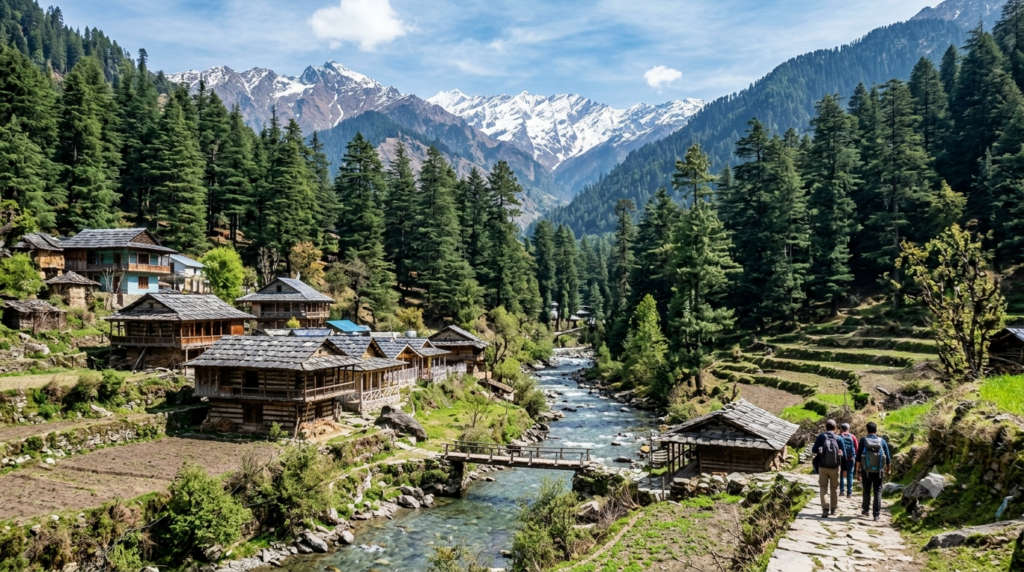
Jibhi works across three clear seasons, and the one you pick changes what you can actually reach. Summer opens the high passes and treks. The monsoon turns the forest a deep green but brings landslide risk on the ghat road. Winter delivers snow and the quietest cafes, though Jalori Pass often shuts for weeks at a stretch.
The sweet spot is late September to mid-November. Roads are open, the light is clean for the Jalori meadows, and you avoid both the peak-summer rush and the winter closures.
| Season | Months | Weather | Best for |
| Spring / Summer | March to June | Pleasant days 15-25C, cool nights | Jalori Pass, Serolsar and Raghupur treks, riverside |
| Monsoon | July to August | Wet, green, misty; some road risk | Waterfalls in full flow, low crowds, cafe days |
| Autumn | September to November | Crisp and clear, cold nights | Best all-round window: clear views, open roads |
| Winter | December to February | Snow, 0C and below; Jalori may close | Snow lovers who are flexible on plans |
Short on time? This table is the whole trip in one screen. Distances are approximate road or trek distance from Jibhi village.
| Place | Type | Distance from Jibhi | Best for | Best time |
| 1. Jibhi Waterfall | Forest waterfall | ~1.5 km | Easy walk, photos | Mar-Jun, Sep-Nov |
| 2. Kulhi Katandi (Mini Thailand) | Riverside spot | ~5 km | Picnic, forest trail | Apr-Jun, Sep-Oct |
| 3. Jalori Pass | Mountain pass | ~12 km | Views, trek base | May-Oct |
| 4. Serolsar Lake | Alpine lake + temple | Jalori + ~5 km trek | Day trek, quiet | May-Oct |
| 5. Raghupur Fort | Ruined fort + meadow | Jalori + ~3 km trek | Meadow trek, sunset | May-Oct |
| 6. Chehni Kothi | Heritage tower | ~14 km | Architecture, village walk | Mar-Nov |
| 7. Shringa Rishi Temple | Wooden temple | ~14 km | Culture, calm | Year-round |
| 8. Great Himalayan NP | UNESCO park | ~25 km | Wildlife, multi-day treks | Apr-Jun, Sep-Nov |
| 9. Shoja | Viewpoint village | ~6 km | Sunrise, slow stay | Apr-Nov |
| 10. Chhoie Waterfall | Waterfall trek | ~18 km | Short hike, temple | Mar-Jun, Sep-Nov |
| 11. Balu Nag Temple | Ridge temple trek | Trek above Jibhi | Short climb, views | May-Oct |
| 12. Jibhi Market | Local market | In town | Woolens, honey, crafts | Year-round |
| 13. Jibhi Viewpoint & Ghost Village | Viewpoint | ~1 km | Sunset, cafes | Year-round |
| 14. Tirthan Valley | River valley | ~20 km | Trout fishing, camping | Mar-Jun, Sep-Nov |
Jibhi may be a small Himalayan village, but its peaceful trails, waterfalls, temples, and nearby hamlets give you plenty to explore. From quiet nature spots to scenic viewpoints, these places make a Jibhi trip worth slowing down for.
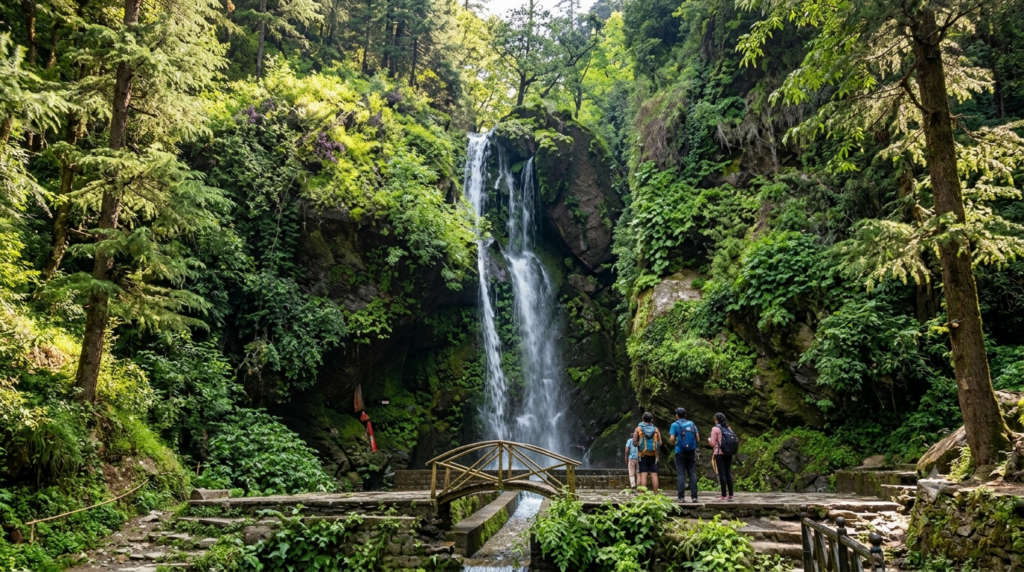
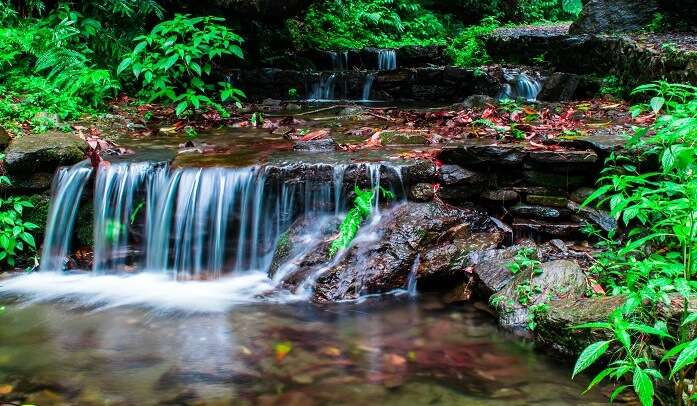
This is the one nearly everyone starts with, and for good reason. A short walk from the road drops you into a pocket of thick forest where a slim fall tumbles over dark rock into a shallow pool. The little wooden bridge and the moss make it a favourite for photos, and it stays cool even in June. Go early to have it mostly to yourself. If you want the timings, fees and trail notes, we have a full guide to the Jibhi Waterfall.


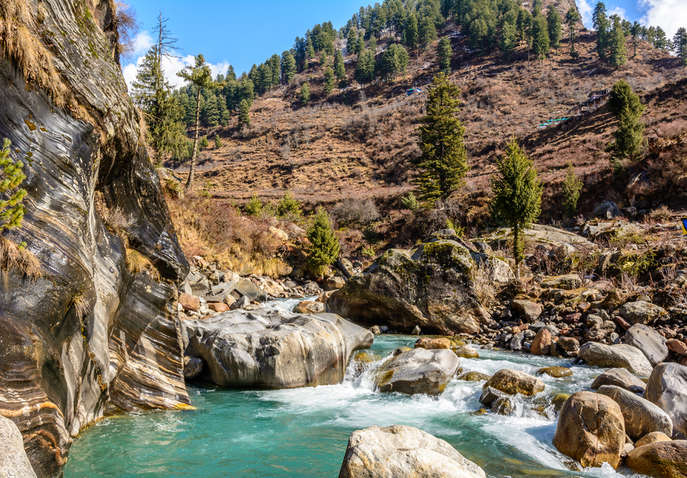
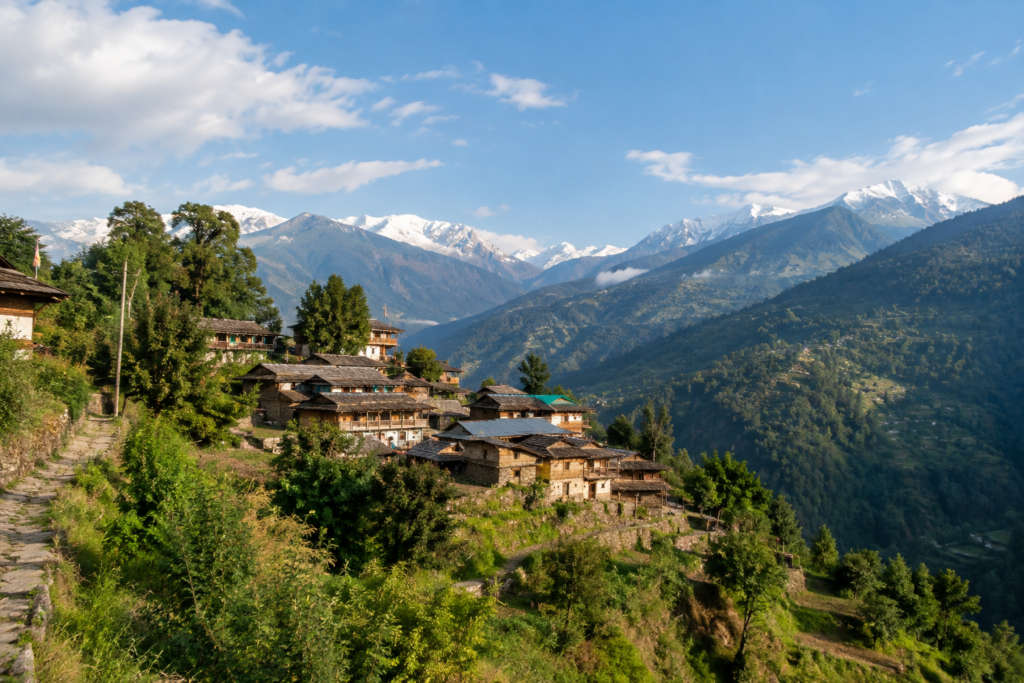
A few kilometres from the village, a clear stream squeezes between two large boulders in a deodar forest, and the scene has earned the nickname Mini Thailand. Locals also call it Veer Ki Aar. The last stretch is a gentle forest walk, so wear grippy shoes and carry water. It is calmest on weekday mornings before day-trippers arrive. Read our dedicated guide to Kulhi Katandi and how to reach it before you go.


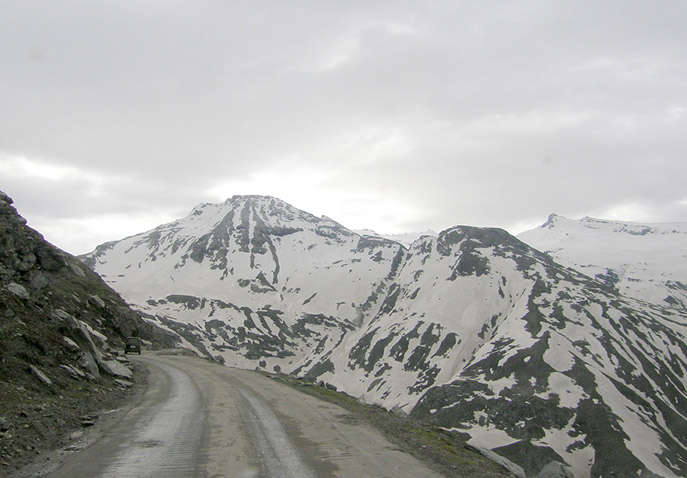


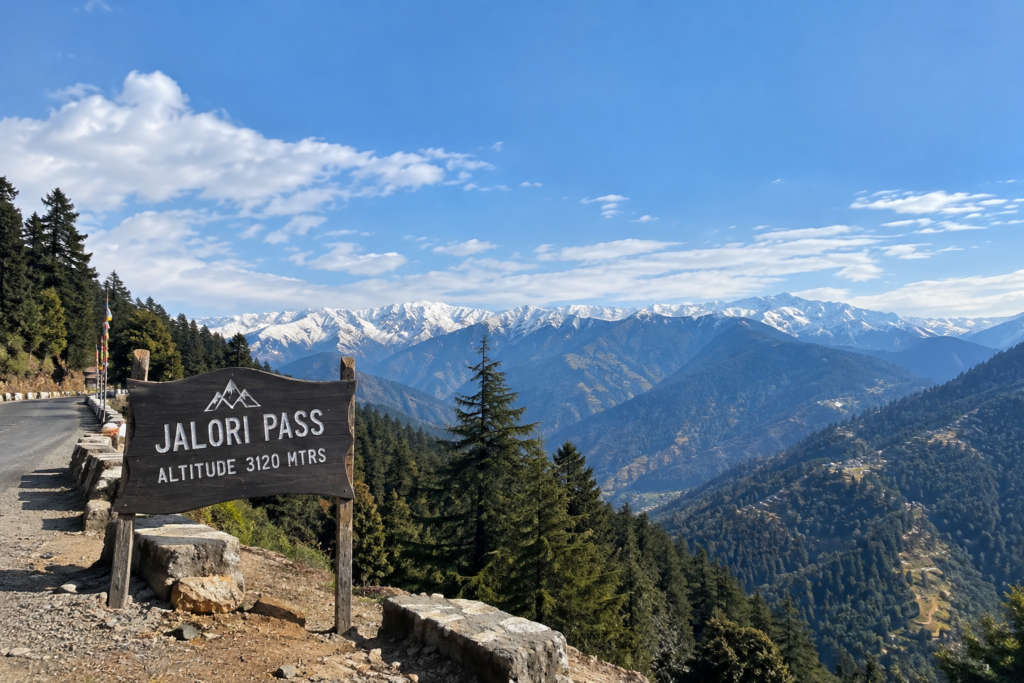
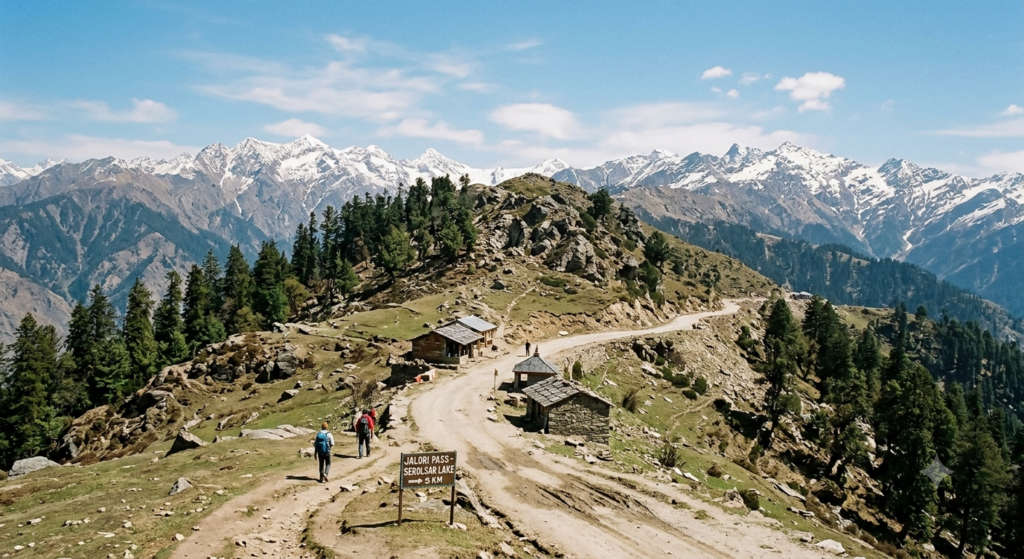
At around 3,120 metres, Jalori Pass is the high point of any Jibhi trip and the launchpad for its two best treks. The drive up is a tight series of switchbacks that ends at a small dhaba cluster and a temple. From here you can walk to Serolsar Lake on one side or Raghupur Fort on the other. One thing to plan around. The pass usually closes under snow from December to February, so check the road before you attempt a winter run.
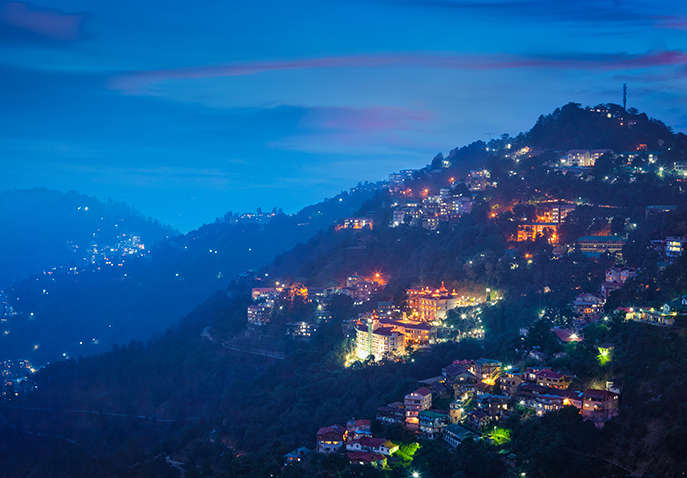


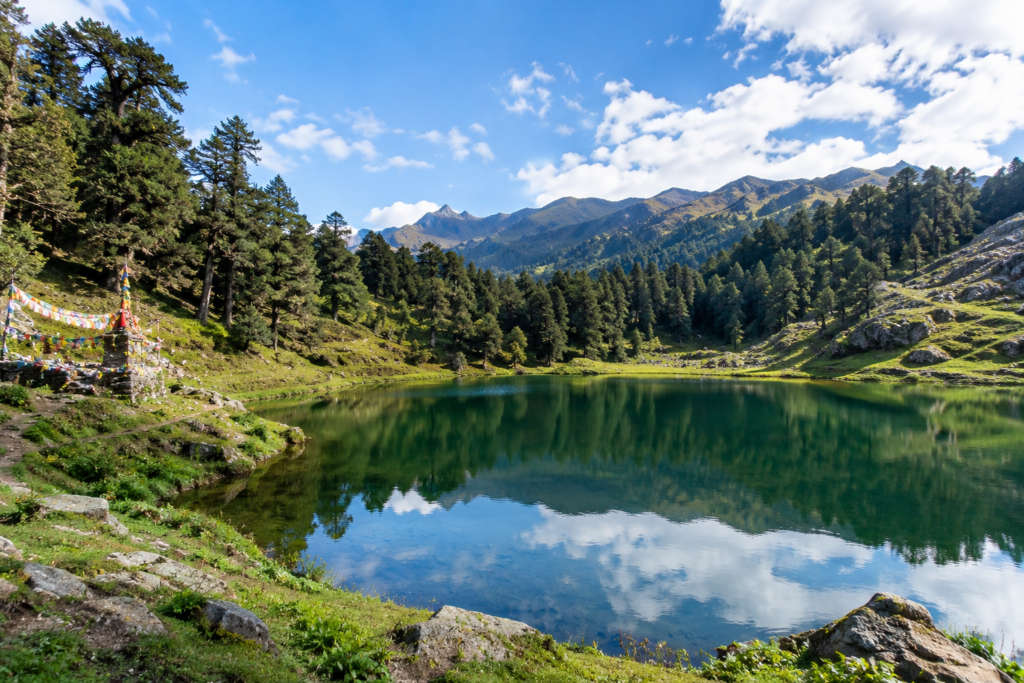
A roughly 5 km forest trek from Jalori Pass leads to Serolsar, a small green lake ringed by old oak and deodar at about 3,100 metres. The Budhi Nagini temple sits on its bank, and by local custom the water is kept clean, with birds said to clear fallen leaves. It is a there-and-back day walk of three to four hours total, easy enough for a reasonably fit first-timer. Carry your own snacks and pack out your trash.
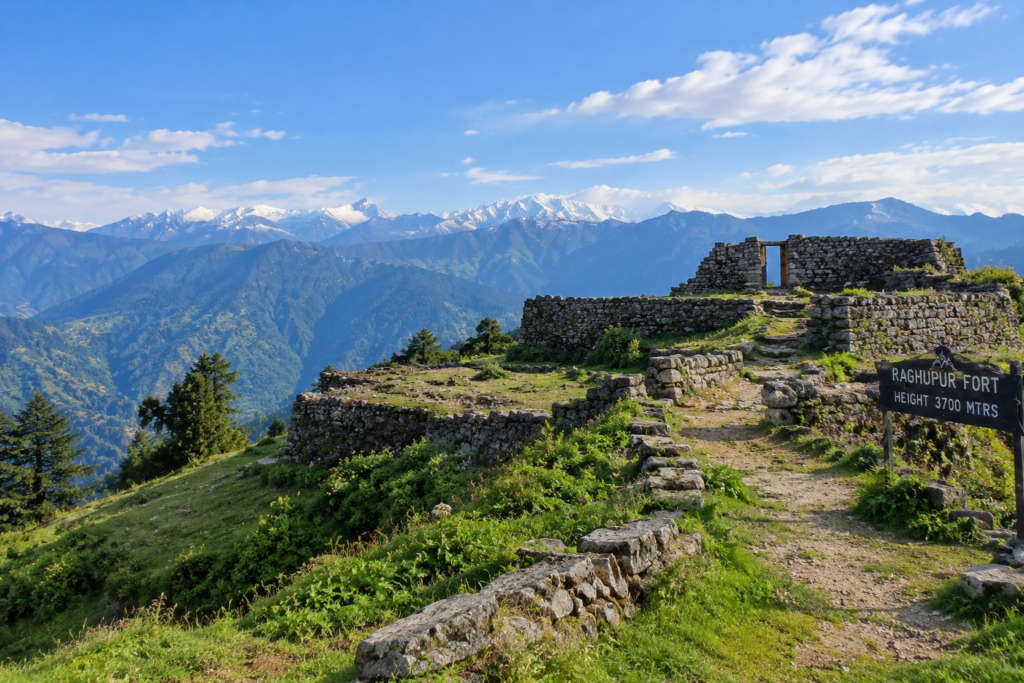
On the opposite side of Jalori Pass, a shorter climb of about 3 km brings you to the grassy ruins of Raghupur Fort, once linked to the rulers of Mandi. There is not much stonework left, but the reward is the meadow: a wide open ridge with layered mountain views that turn gold near sunset. It pairs well with a morning Serolsar walk if you are fit, or take it as a slow half-day on its own. Our guide to Raghupur Fort has the trek details.
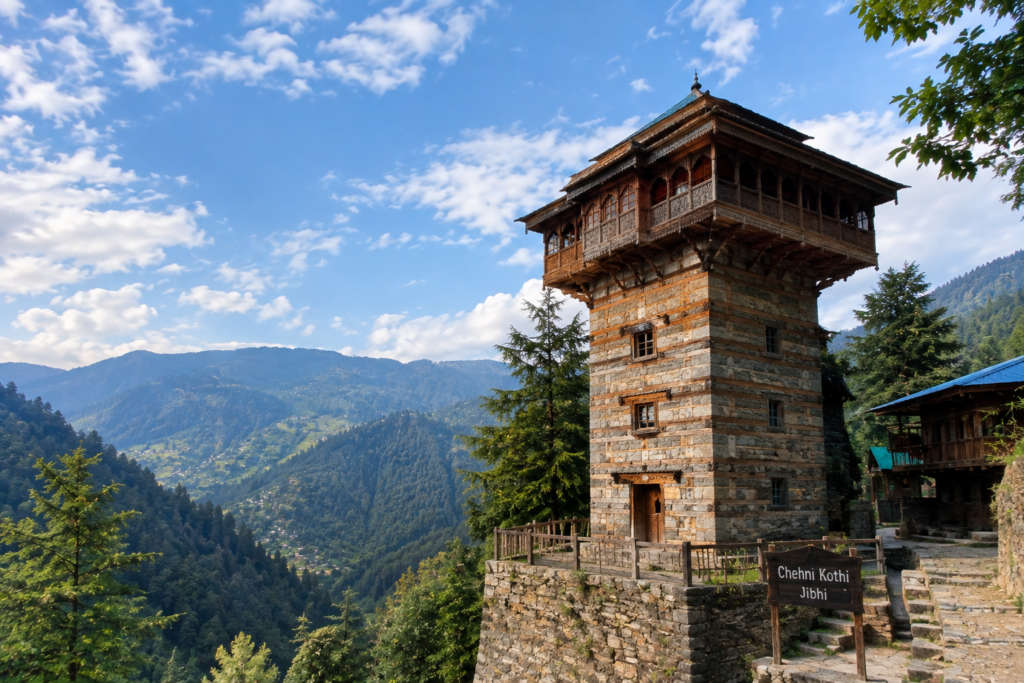
Chehni Kothi is the standout piece of heritage near Jibhi: a tall tower-temple built in the Kath-Kuni style of interlocked stone and timber, without cement. It is often described as around 1,500 years old, and is said to have lost some of its original height in the 1905 Kangra earthquake yet still rises many storeys over the village. Reaching it means a short uphill walk through Chehni hamlet, which is half the charm. See our closer look at Chehni Kothi.
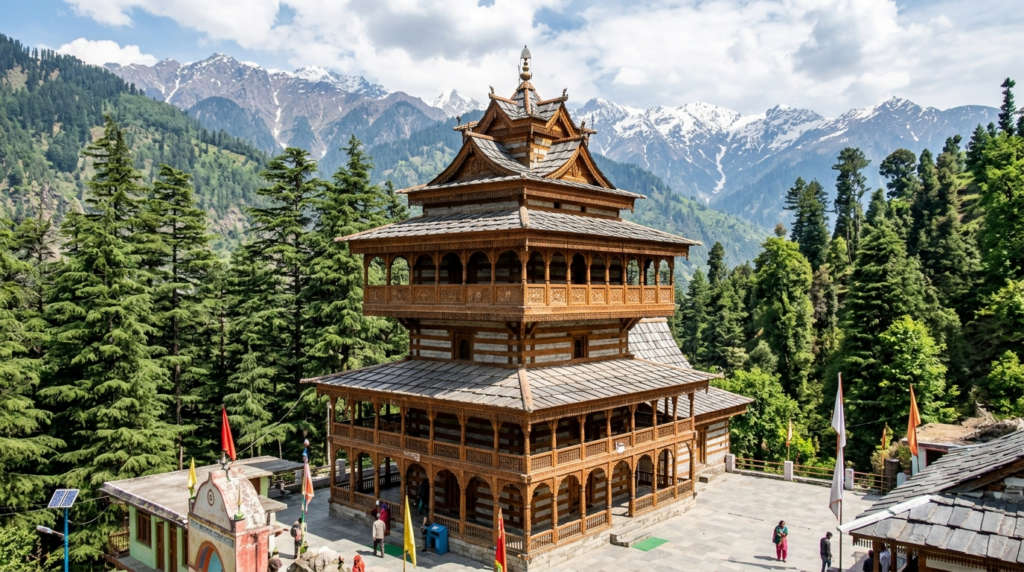
Close to Chehni, the Shringa Rishi Temple honours the presiding deity of the Banjar valley and is one of the most respected shrines in the area. The wooden architecture, carved panels and slate roof are worth the stop even if you are not there for a fair. Time your visit for a local festival and you will see the valley’s culture at full volume; visit on a normal weekday and it is simply quiet and grounding.
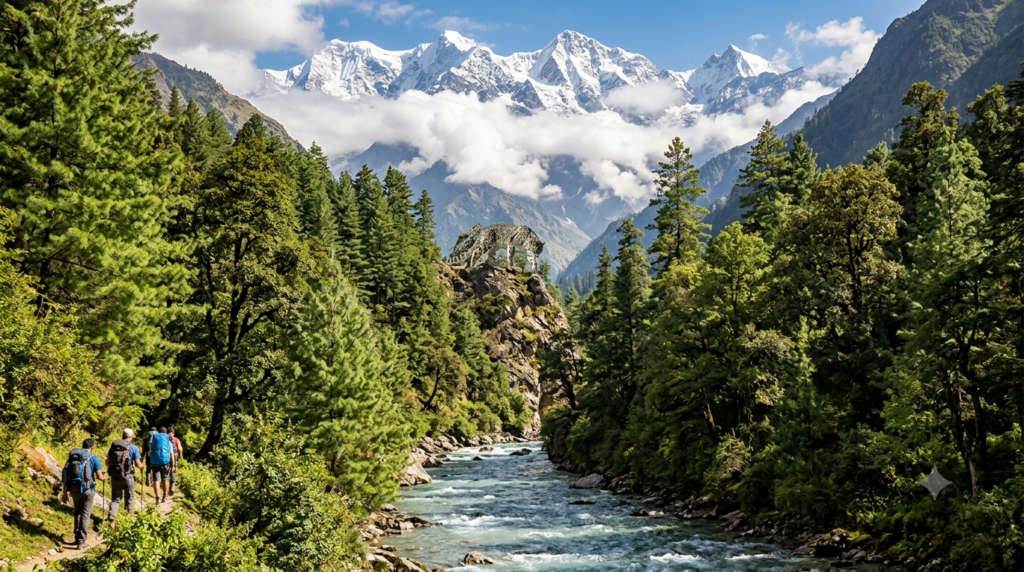
About 25 km away, near Gushaini, lies the entry to the Great Himalayan National Park, a UNESCO World Heritage Site since 2014. You cannot drive through it, but you can walk in from the ecozone on day hikes or arrange a guided multi-day trek to spot Himalayan wildlife and birdlife. Even a short morning trail from Sai Ropa gives you a real sense of how wild this corner of Himachal still is. Guides and permits are arranged locally.
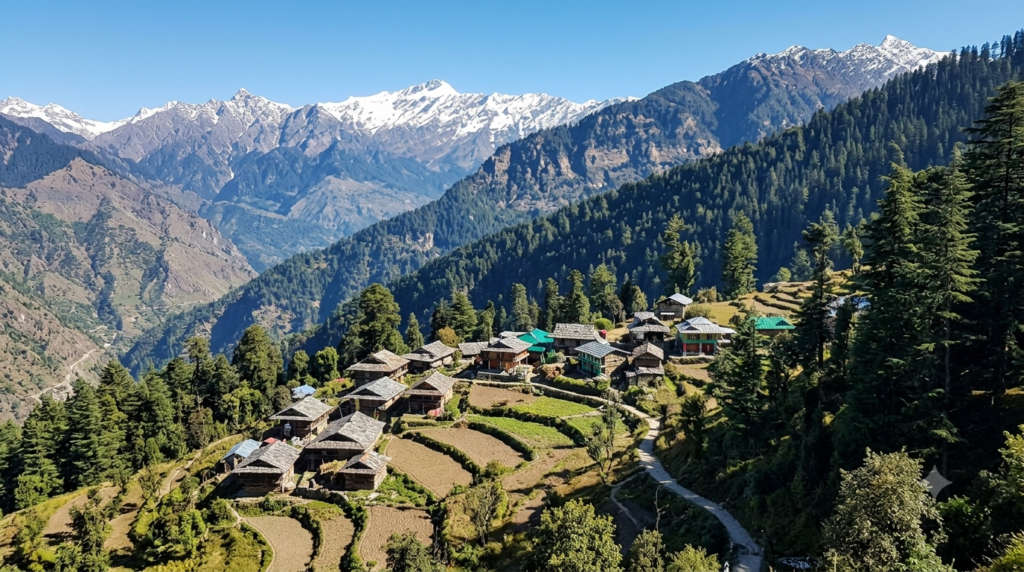
Shoja is the small village between Jibhi and Jalori Pass, perched higher at roughly 2,700 metres, and it is where people go when Jibhi itself feels busy. Wake up here and you often get a clean line of snow peaks before the mist rolls in. There is a viewpoint facing the Serolsar ridge, a couple of old forest rest houses and very little else, which is exactly the point.
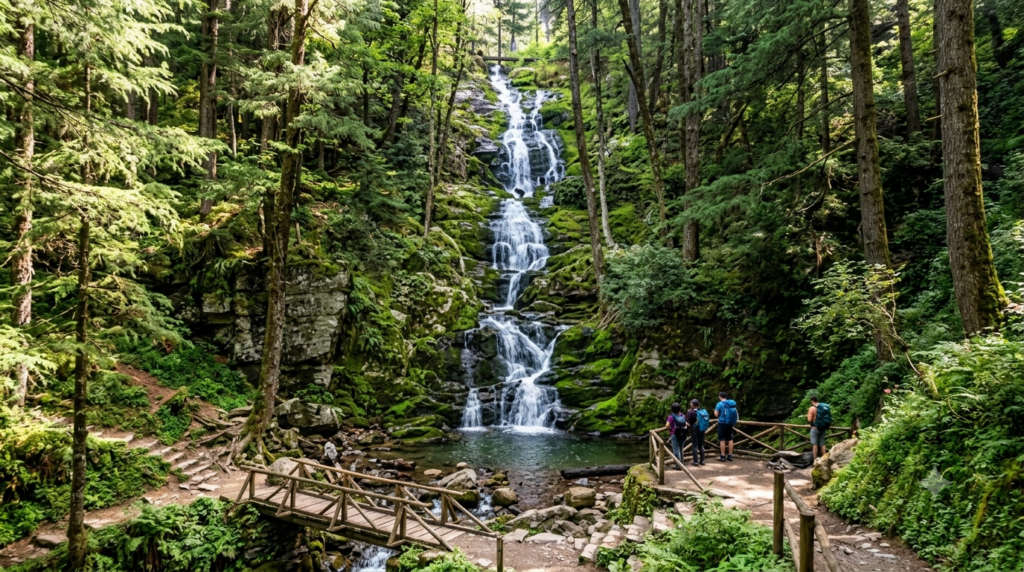
On the Tirthan side, a short and steep trek of about 30 to 40 minutes from the road near Nagini climbs to Chhoie Waterfall, with a small temple beside the cascade. It is less visited than Jibhi Waterfall, so you trade an easy walk for more solitude. Good grip on your shoes matters here because the last section can be slick after rain.
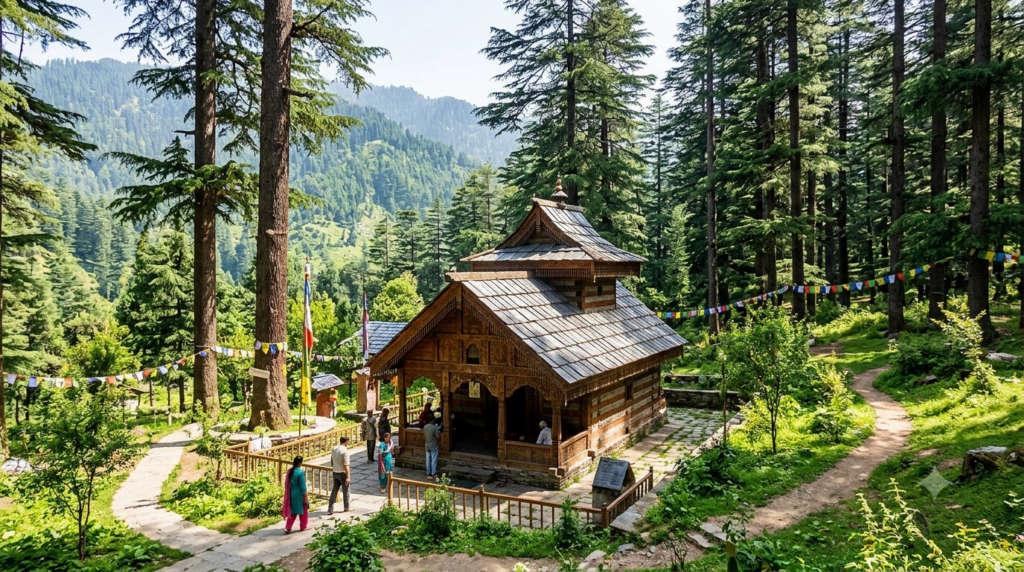
For travellers who want a leg-stretch with a payoff, the trail up to Balu Nag Temple climbs the ridge above Jibhi through forest and clearings. It is a local pilgrimage spot, and the higher you get the wider the valley opens behind you. Start early, keep it to a half day, and ask at your homestay for the current trailhead because the path is not always signed.
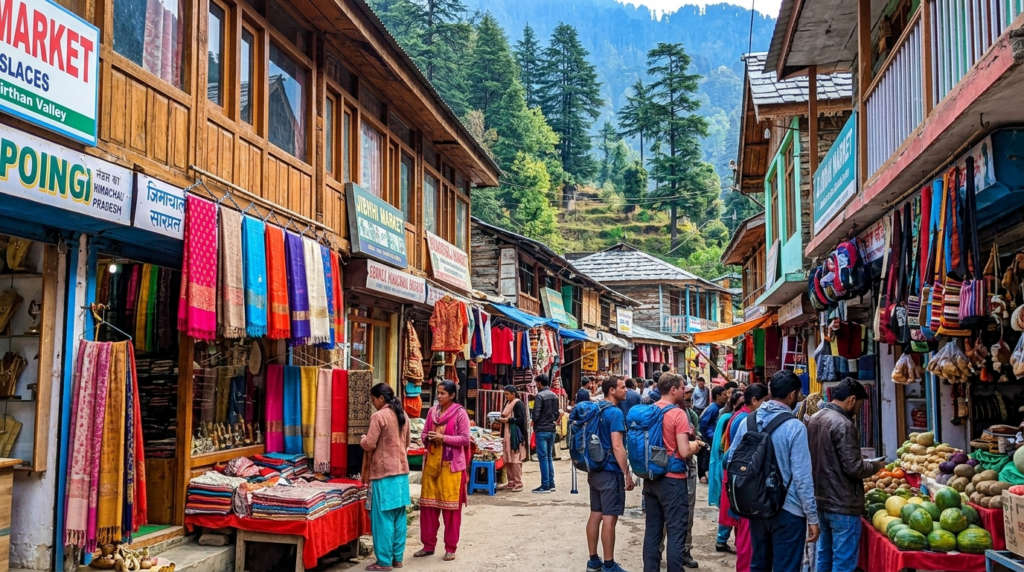
The little market strip in Jibhi is where you pick up the things worth carrying home: handwoven Kullu woolens and caps, local wildflower honey, rajma and apples in season, and small wood crafts. Prices are fair and the sellers are usually the makers. It is also the easiest place to grab a hot lunch of siddu or trout between treks.
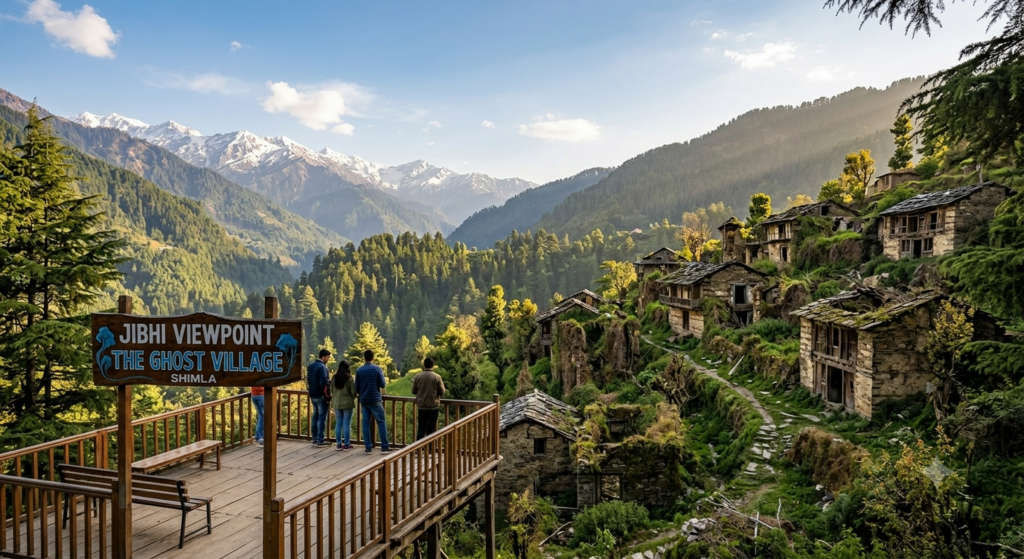
Just above the village, a cluster of cafes and a short trail lead to a viewpoint that catches the sunset over the valley, and nearby sits the so-called ghost village, a set of old abandoned wooden homes that the internet loves. It takes barely an hour, needs no planning, and is the ideal soft landing on your first evening. Several of the cafes up here double as small guesthouses, so it is an easy corner to base yourself in, within walking distance of the village.
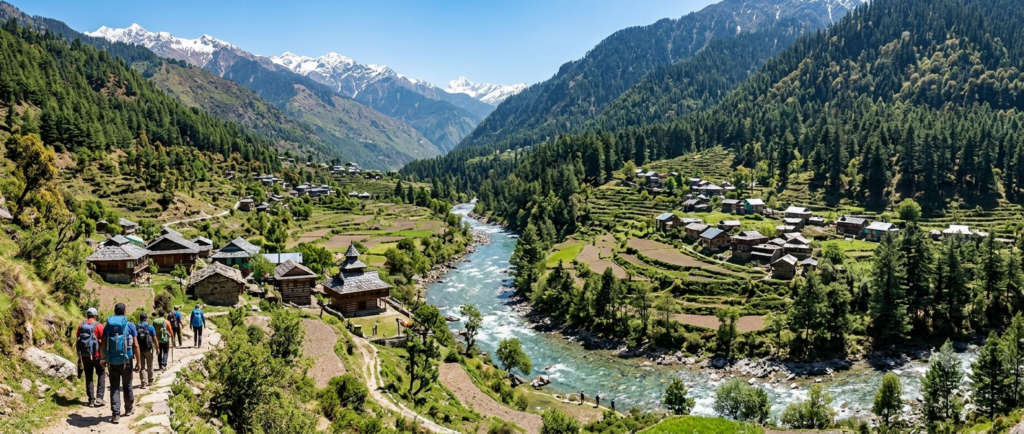
Jibhi and Tirthan are often planned together, and it is easy to see why. Around 20 km away near Gushaini, the Tirthan river runs clear and cold, and this is the valley for trout fishing, riverside camping and slow days by the water. If you have a spare day, base a night here and let the pace drop even further. Our full guide covers the best places to visit in Tirthan Valley.
Beyond the core list, a few spots make easy add-on days if you have a car and time. Banjar, about 8 km down, is the valley’s market town and your best bet for supplies, an ATM and a proper lunch. Kullu, roughly 55 km on, brings the Beas river, the Bijli Mahadev trek and the option to loop your trip toward Manali. And in the neighbouring Sainj valley, the meadow at Shangarh is a wide green plateau ringed by deodar that rewards the extra hour of driving with real quiet. Any of these can be done in a day and back in Jibhi by dinner.
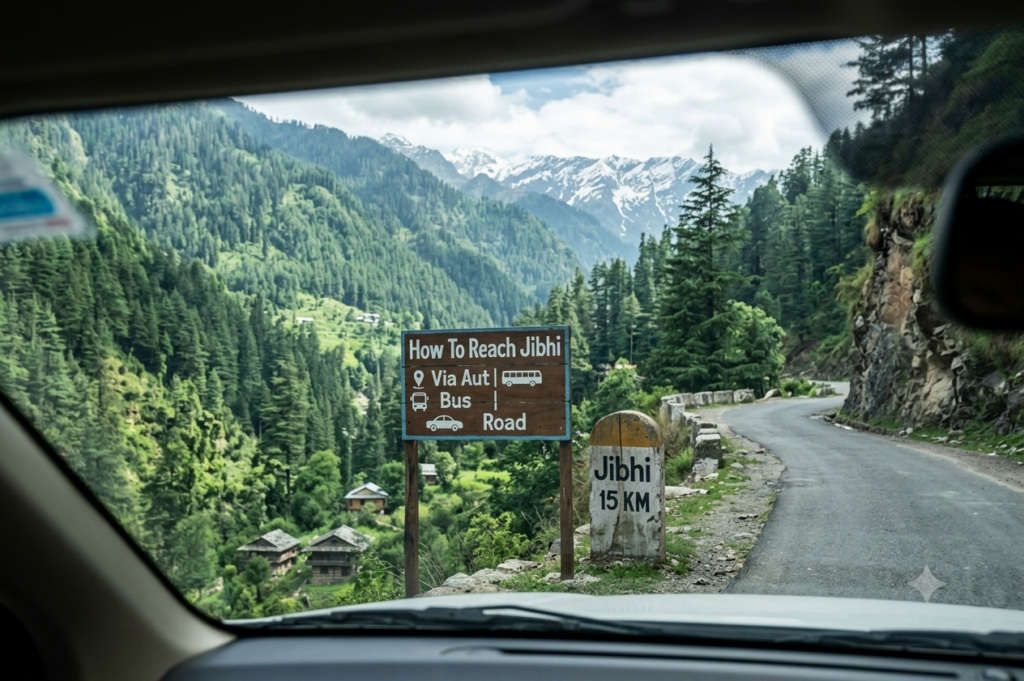
Jibhi sits off the Aut-Banjar road in the Banjar valley, and getting there is half the adventure. Here is the short version by each mode.
Self-driving is comfortable up to Banjar. The final climb to Jibhi and up to Jalori Pass is narrow, so go slow and travel in daylight.
The best of Jibhi is not one headline sight but the way so much sits within easy reach of a single sleepy village. Give it three unhurried days, walk to at least one lake and one ruin, and let the deodar forest do the rest. When you are ready to turn this list into a real itinerary with stays and transfers sorted, browse our Jibhi tour packages, or read more Himachal guides on our Himachal travel hub.
Yes, especially if you want a quieter Himalayan base than Manali or Kasol. Within a 15 km radius you get a forest waterfall, an alpine lake trek, a centuries-old tower and a mountain pass, all without the crowds. Two to three days is enough to see the highlights at a relaxed pace.
Two to three days suits most travellers. Day one covers the village, Jibhi Waterfall and the viewpoint. Day two is Jalori Pass with either the Serolsar Lake or Raghupur Fort trek. A third day lets you add Chehni Kothi, Kulhi Katandi or a Tirthan Valley detour without rushing.
March to June and September to November are the best windows. Autumn, from late September to November, gives the clearest views and open roads. Winter brings snow and a real chance that Jalori Pass is closed, while the July to August monsoon is green but carries some landslide risk on the ghat road.
The nickname comes from Kulhi Katandi, a spot near Jibhi where a clear stream flows between two large boulders in a deodar forest. The scene resembles the rocky river landscapes people associate with Thailand, which is how the Mini Thailand tag stuck. Locals also call it Veer Ki Aar.
Drive about 12 km up to Jalori Pass, then trek roughly 5 km through oak and deodar forest to the lake. It is a moderate there-and-back walk of three to four hours total and is doable for a reasonably fit first-timer. Carry water and snacks, as there are only a few small stalls at the pass.
Not reliably. Jalori Pass usually closes under snow from December to February and reopens once the road is cleared, often around March. If you are travelling in winter, check the current status locally before heading up, because access can change day to day after a fresh snowfall.
It depends on what you want. Kasol is livelier, with a bigger cafe and backpacker scene. Tirthan is all about the river, fishing and camping. Jibhi sits between the two, forested and calm but with more sightseeing packed close by. Many travellers pair Jibhi and Tirthan in one trip since they are only about 20 km apart.
The correct spelling is Jibhi, but it is commonly searched as Jibi, Gibi and even GB hill station because of how the name sounds. They all refer to the same village in the Banjar valley of Kullu district, Himachal Pradesh, so you will land in the right place whichever spelling you use.
Jibhi is roughly 500 km from Delhi, about a 12 to 14 hour drive via Chandigarh, Mandi, the Aut tunnel and Banjar. You can also take an overnight Volvo or HRTC bus to Aut or Banjar and cover the last stretch by local taxi. Breaking the journey at Mandi or Aut makes it far easier.
Yes. Jibhi is a small, welcoming village, and the core sights are easy walks rather than hard treks, which suits families and older travellers. The main things to plan around are the winding mountain roads and the winter cold. For a smooth first trip, base yourself in one homestay and do day trips out from it.
Real reviews from real travelers who booked with us.
View All Reviews