
"Had a great experience with Turn on vacation."
Best place to visit in malana: hidden himalaya gems
Malana sits at roughly 2,652 metres in Himachal Pradesh’s Kullu district, on a shelf above the Malana River between the Chandrakhani and Deo Tibba ridges. It is one of the oldest inhabited villages in the Himalayas, and for most travellers the pull is the mix of a hard-earned approach, a temple culture that outsiders are asked not to touch, and a self-rule tradition often called the world’s oldest democracy. The best places to visit in Malana are close together: the Jamlu Devta temple, the Chandrakhani Pass trail, Magic Valley, the Malana River gorge and the hydro-power stretch below the village. Here is what to see, when to go and how to reach it.
Key Takeaways
- Go April to June or September to early November for clear trails; heavy snow closes the passes from December.
- Reach it via Kasol, then Jari, then the Malana Hydro Power Station gate, then a stone-step climb of about 3 to 4 km to the village.
- The real Malana sights are tight and walkable: Jamlu Devta temple, Chandrakhani Pass, Magic (Waichin) Valley, Malana River and Rashol Pass.
- Respect the no-touch custom: do not touch temple walls, homes or residents unless invited. Fines apply.
- Malana runs its own two-council village government and is famed for its isolation and the Kanashi language spoken nowhere else.
Top places to explore in malana village
Himachal
Best Time
April - June
Select Package Type
Best Selling Packages
About Malana: where it is and why it is different
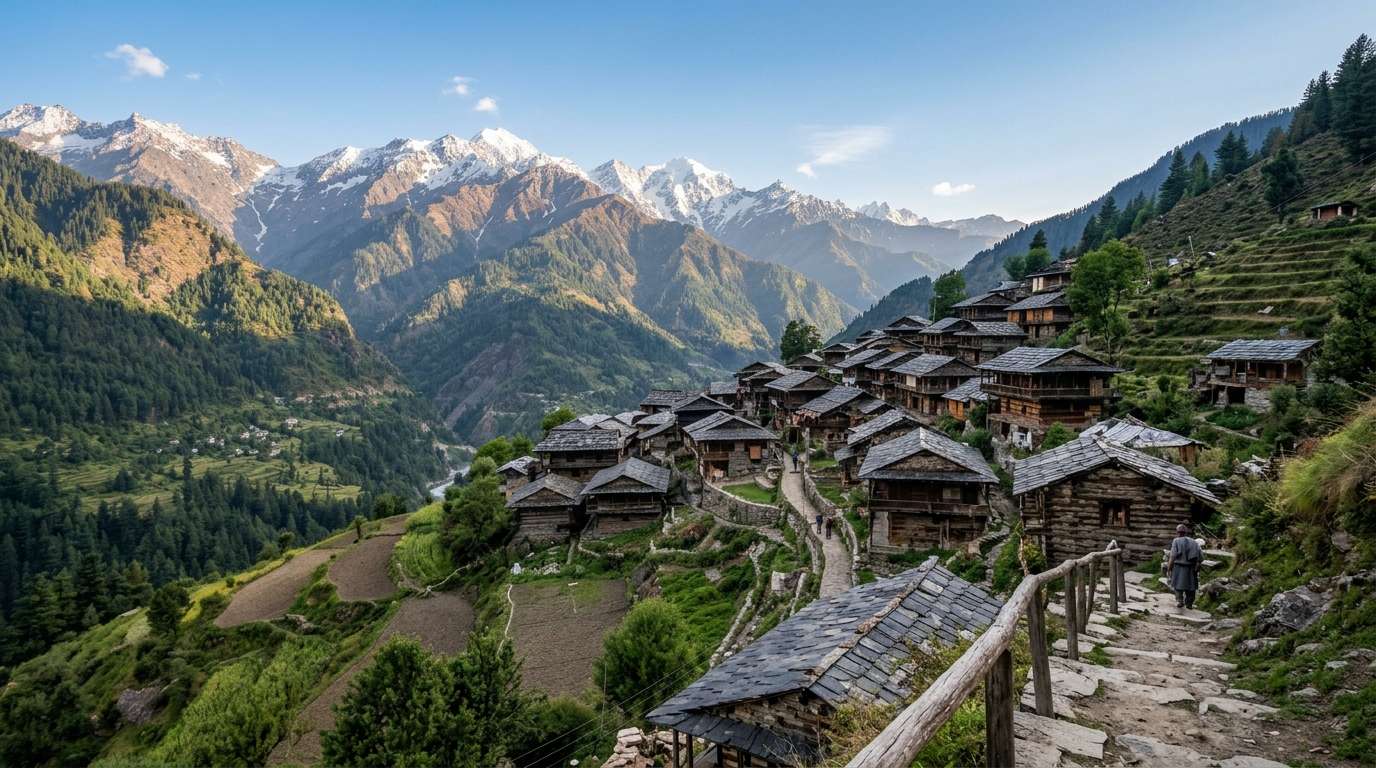
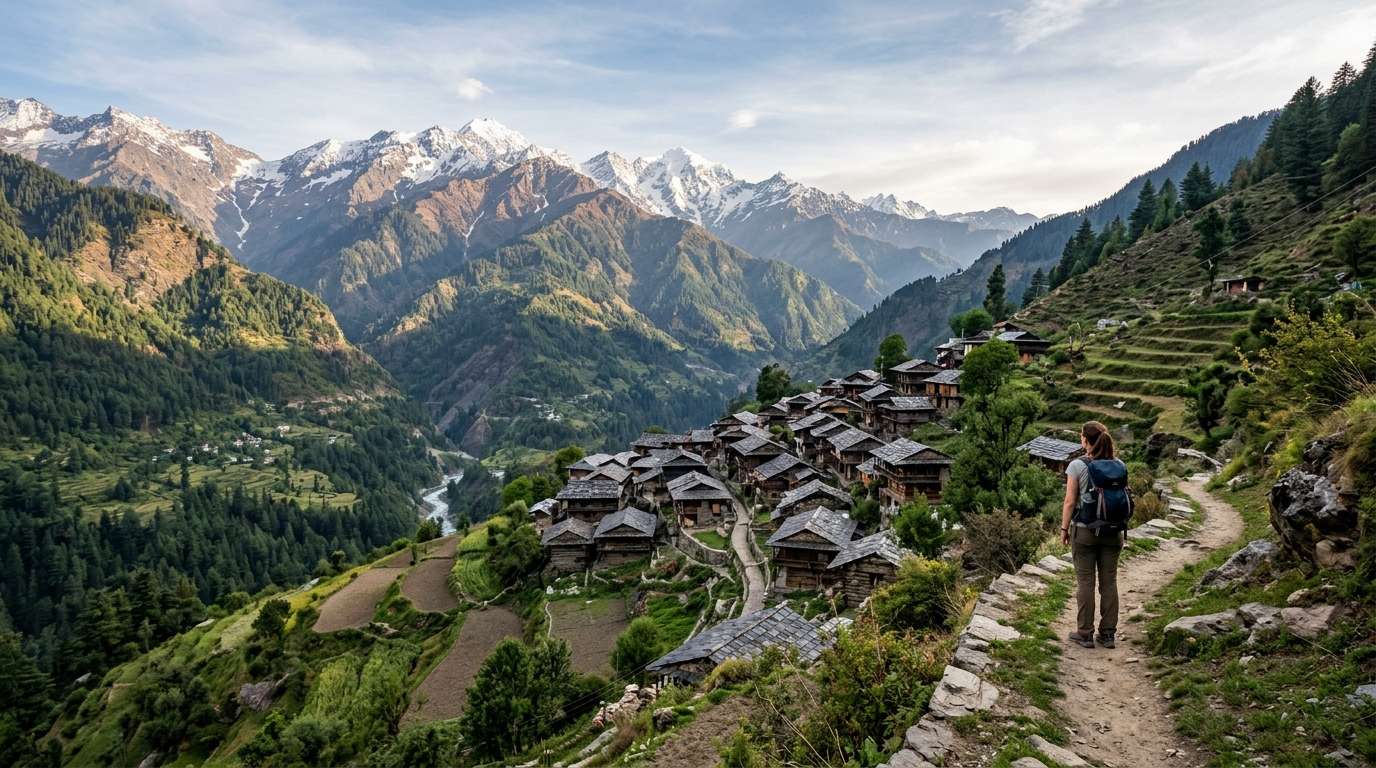
Malana is a single village of stone-and-timber houses tucked into a side valley of the Parvati region, drained by the Malana Nala (stream) that gives the place its name. It faces the Chandrakhani ridge on one side and the Deo Tibba massif on the other, which is why the approach feels so closed-in until the village suddenly opens up on its terrace. The road does not reach the houses. That isolation is the whole story of Malana, and it shaped a community that governs itself, speaks its own tongue and keeps its distance from visitors.
Unlike the busy Parvati backpacker stops an hour away, Malana is not a cafe town. There is a small cluster of guesthouses on the lower, newer part of the settlement, but the old village keeps its rules. You come here to walk, to see the Jamlu Devta temple from a respectful distance, and to sit with a view that has changed very little in centuries. Treat it as a full-day walk from Kasol or Jari rather than a place to sprawl in for a week.
What is Malana famous for
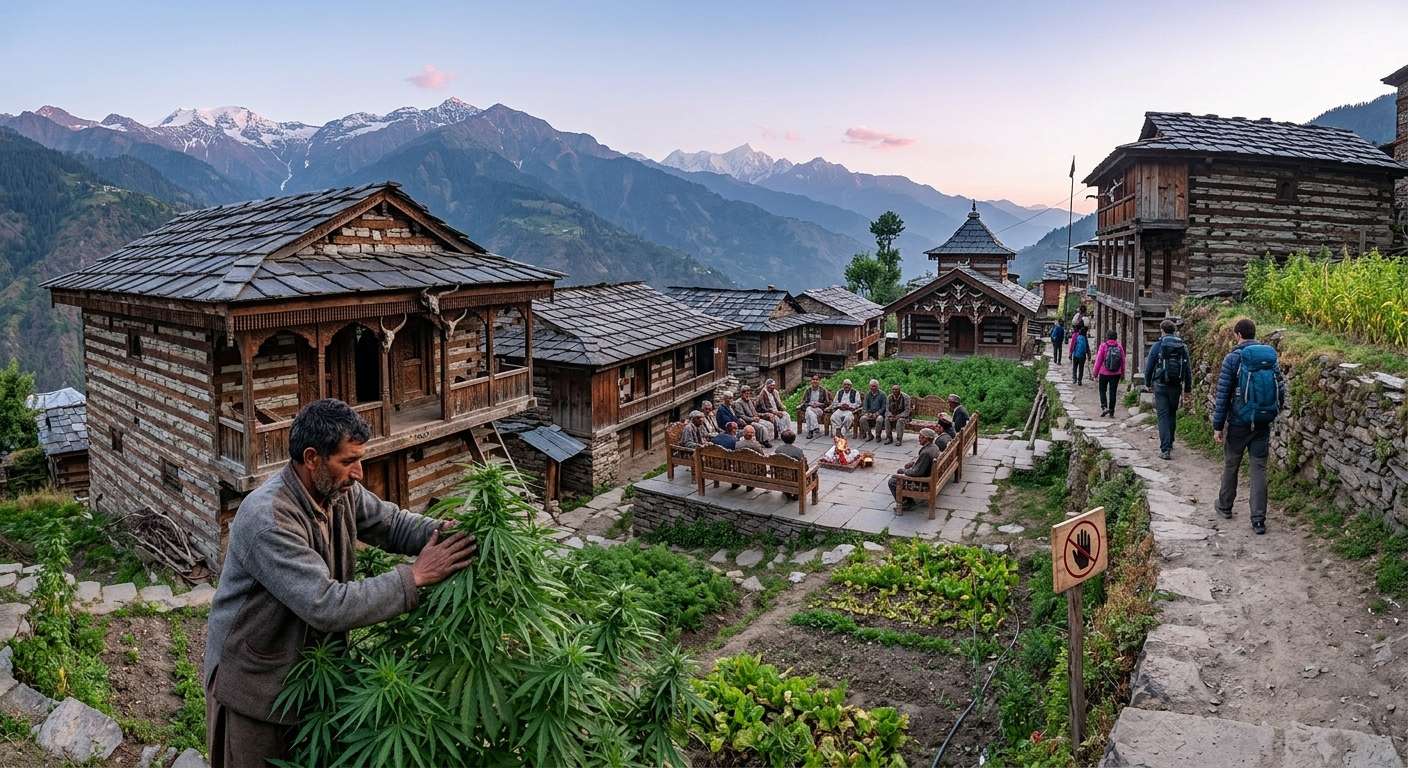
The world’s oldest democracy
Malana governs itself through a village council with two tiers, an upper house (Jyeshthang) and a lower house (Kanishthang), with the deity Jamlu Devta held as the final authority on disputes. Locals and many writers describe this self-rule as the world’s oldest democracy. Whether or not it predates every other assembly, the system is real and still runs daily village life, from land matters to fines for breaking custom.
A language and lineage of its own
Malanis speak Kanashi, a language unrelated to the Himachali dialects around them and understood almost nowhere else. A long-standing local belief traces the community’s descent to soldiers left behind by Alexander’s army. It is lore rather than settled history, but it is central to how Malana sees itself, and it is a big part of why the village guards its bloodlines and customs so closely.
The no-touch custom
This is the rule that trips up most visitors. Outsiders are asked not to touch the temple, its walls, the homes, or the residents themselves, because contact is considered polluting under local belief. If you touch something you should not, you may be asked to pay a fine that funds a purification ritual. Shopkeepers often place goods down for you to pick up rather than hand them over. None of this is hostility. It is a working custom, and the simplest courtesy is to keep your hands to yourself, ask before photographing people, and follow your host’s lead. For the deeper story of Malana’s law, mythology and mystery, read our companion piece on the secrets of Malana.
Malana Cream
Malana’s name travels far because of Malana Cream, a high-grade hand-rubbed charas the region is known for. It is worth being clear: cannabis products are illegal in India under the NDPS Act, and buying, carrying or using them is a criminal offence. We mention it only because it is part of why the village became notorious, not as anything to seek out. Come for the trek, the temple and the culture instead.
Best places to visit in Malana
The genuinely Malana sights sit within a short radius of the village. Here is the at-a-glance grid first, then the detail on each.
Best places to visit in Malana
| # | Place | Type | How to access | Time needed | Best season |
| 1 | Jamlu Devta Temple | Temple / culture | In the old village, on foot | 30-45 min (from outside) | Apr-Jun, Sep-Nov |
| 2 | Chandrakhani Pass | High-pass trek | Trek from Naggar or above Malana | 2-3 days round trek | May-Oct |
| 3 | Magic (Waichin) Valley | Alpine meadow | Uphill walk above Malana | Half to full day | May-Oct |
| 4 | Malana River gorge | River / scenery | Along the approach trail | Passed en route | Apr-Jun, Sep-Nov |
| 5 | Rashol Pass | Ridge trek | Trek linking Rashol & Malana | 1-2 days | May-Oct |
| 6 | Malana Hydro Power Station | Landmark / trailhead | Road-end below the village | En route | Year-round (road) |
Explore Popular Destination In Himachal
01
Jamlu Devta Temple
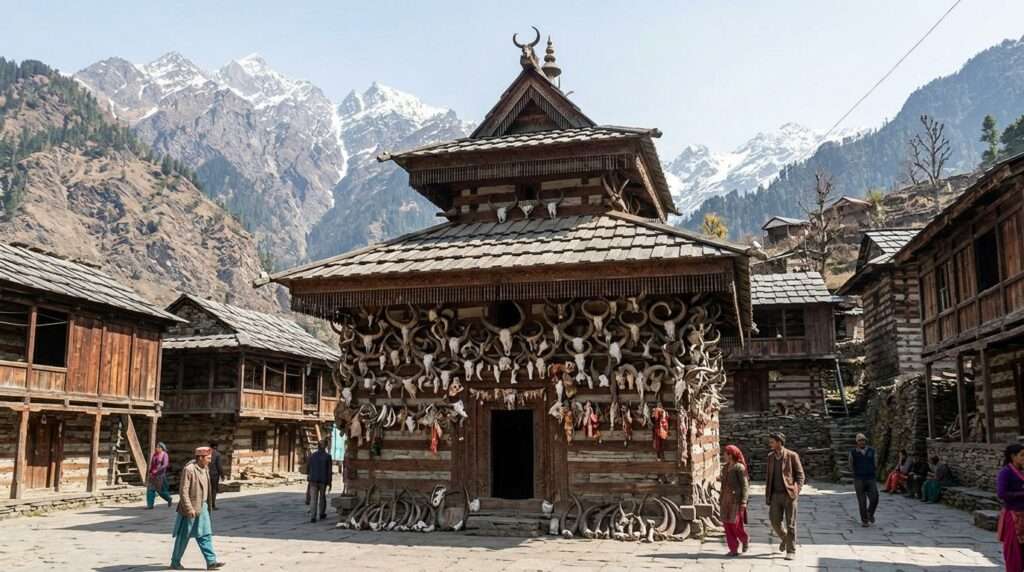
The Jamlu (Jamadagni Rishi) temple is the heart of Malana and the seat of the deity who, in effect, governs it. The carved wooden shrine sits in the old village and is the one sight everyone comes to see. You can look and photograph the structure from the public path, but you cannot enter or touch it, and non-residents are kept at a set distance. Watch how villagers move around it and keep the same respectful gap. This is the section of a Malana visit where the no-touch rule matters most.
02
Chandrakhani Pass
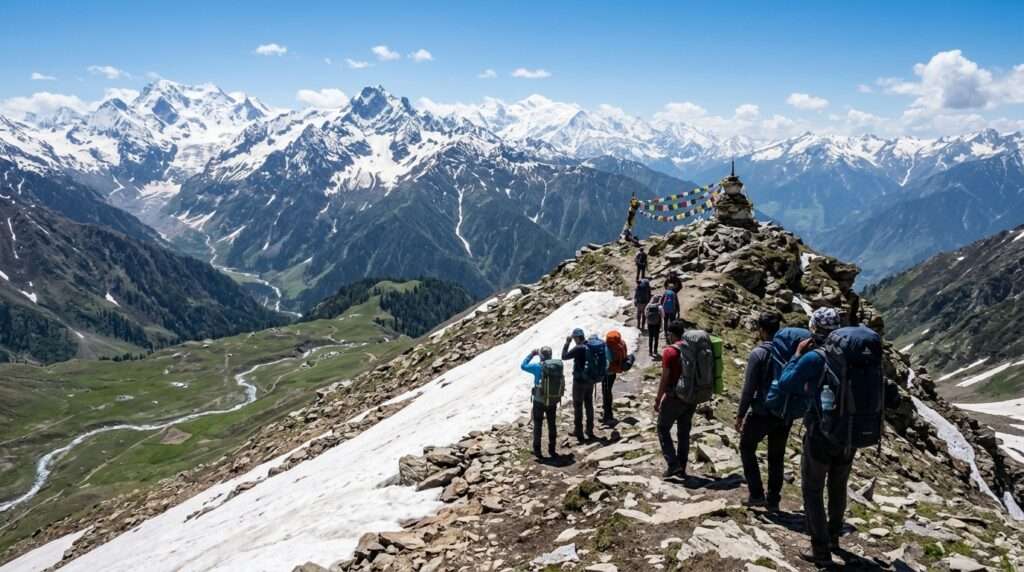
Chandrakhani, at around 3,600 metres, is the classic high crossing linked to Malana and one of the finest ridge walks in Kullu. The traditional route climbs from Naggar through oak and meadow before topping out to a wide Himalayan panorama, then descends toward Malana, which is how many trekkers first arrive at the village. Done as a two to three day trek, it pairs the pass with the culture of Malana at the end. Go between May and October; the ridge holds snow well into spring.
03
Magic Valley (Waichin Valley)
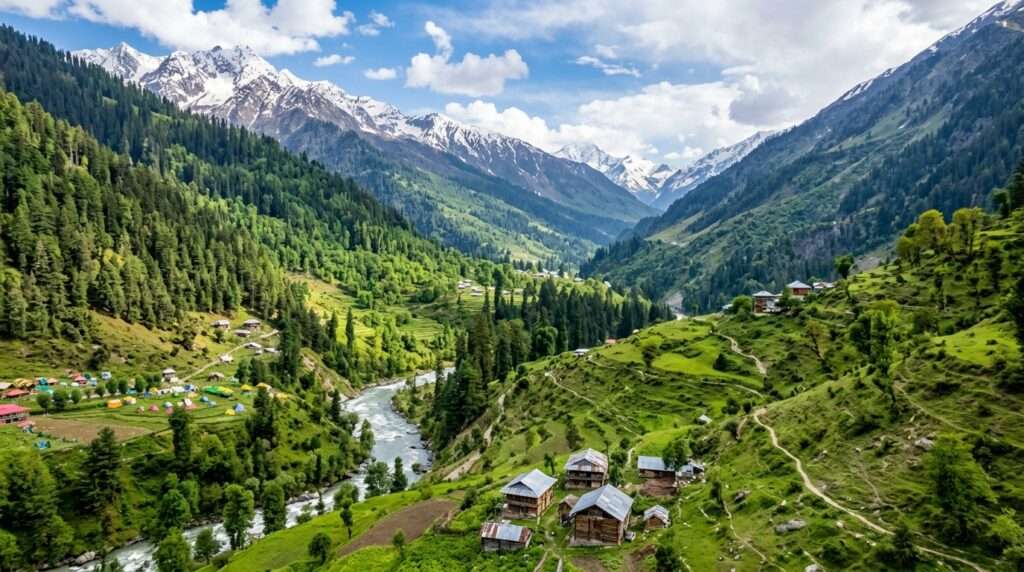
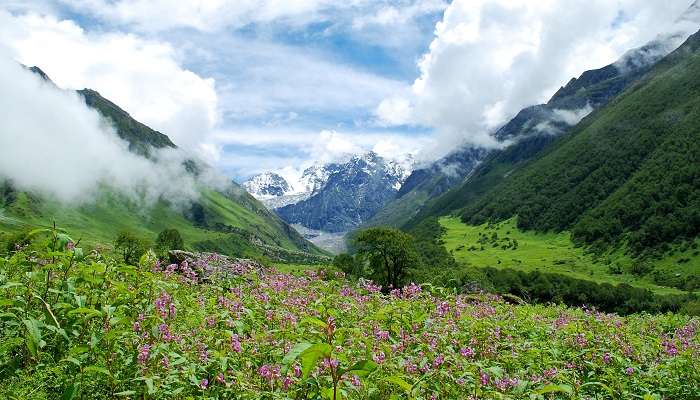
Above Malana lies Waichin Valley, better known to travellers as Magic Valley, a broad green meadow ringed by peaks and threaded by a stream. It is an easy half-day walk up from the village and the quietest spot in the area to simply sit for a few hours. Some backpackers camp here in summer. If you only add one thing to the temple visit, make it this walk.
04
Malana River and gorge
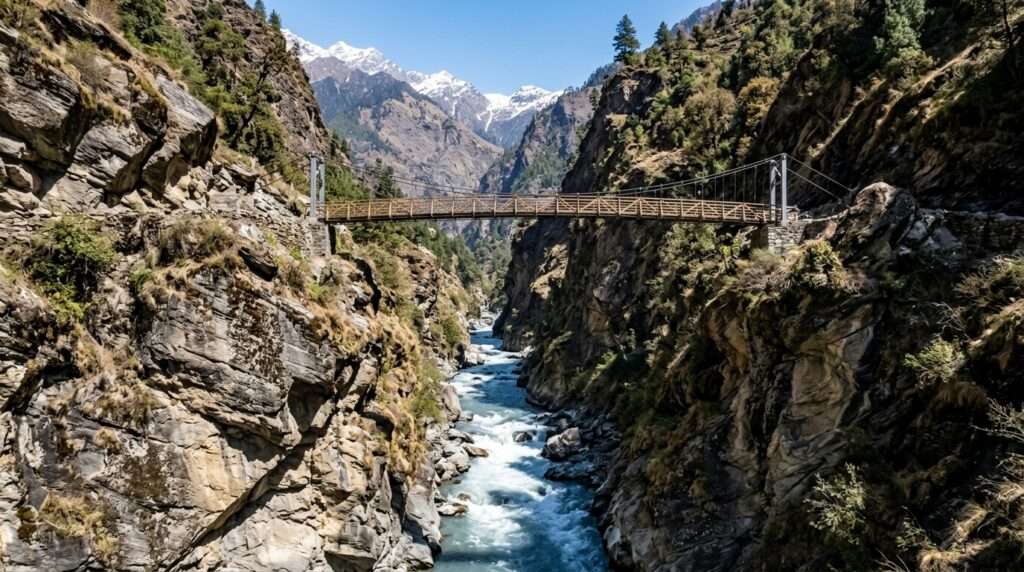
The Malana River (the Malana Nala) runs below the village and you follow it for much of the approach. The gorge is steep, loud with snowmelt in early summer, and genuinely scenic where the trail hugs the water. It is not a destination you stop at so much as a stretch you walk through, but it is one of the best parts of the route and worth slowing down for
05
Rashol Pass
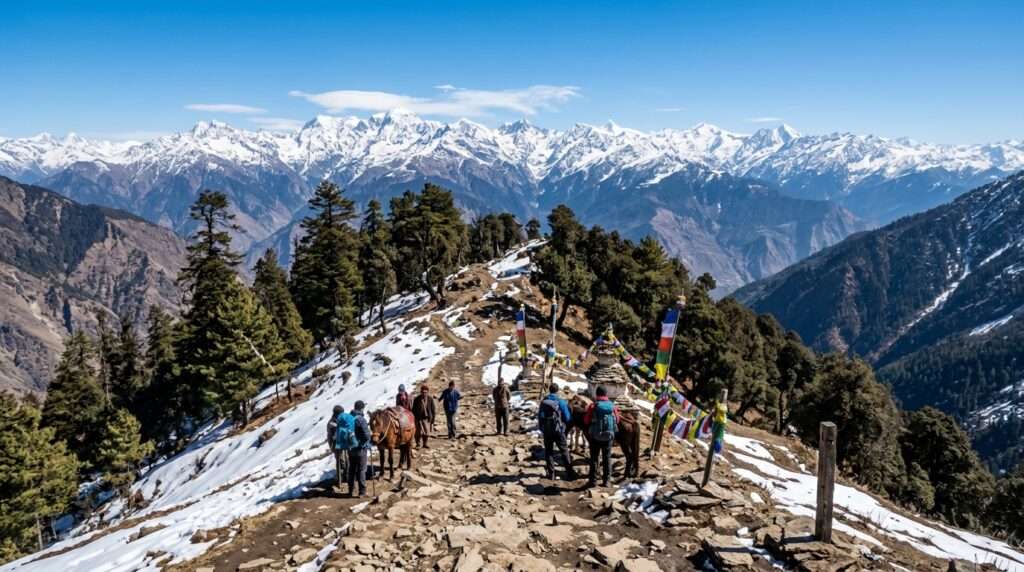
Rashol Pass connects the village of Rashol, above Kasol, with the Malana side, and it is a rewarding one to two day trek for walkers who want a quieter alternative to the main Jari approach. The trail runs through thick pine and clearing meadows with steady views. It suits reasonably fit trekkers and, like the other high routes here, is a May to October proposition.
06
Malana Hydro Power Station
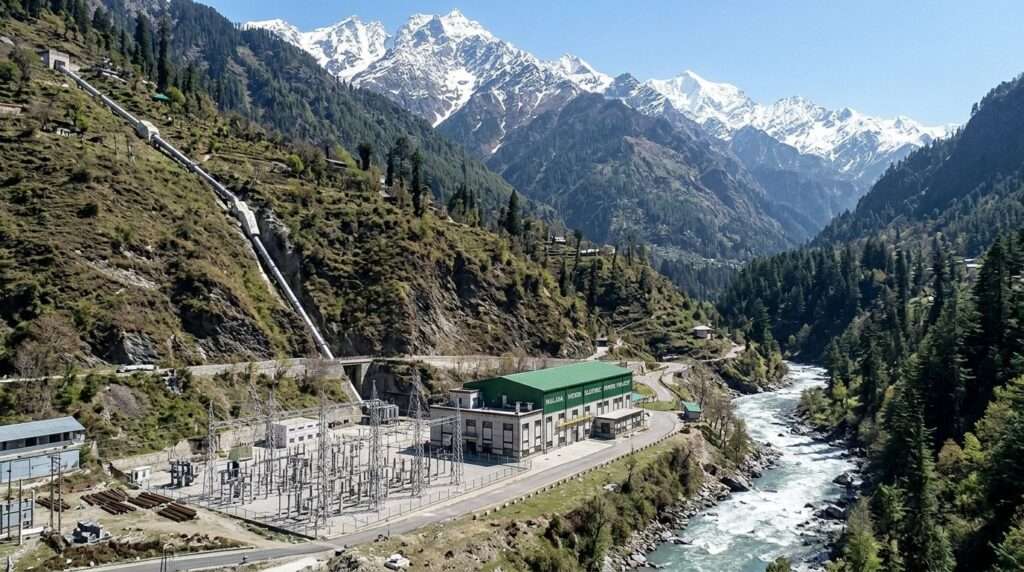
The Malana Power project on the river is the practical end of the road below the village and the point most day-trippers now start their climb from. It is a landmark rather than a sight, but it marks where vehicles stop and the walk to Malana begins, and the dam-and-river setting is a fair place to catch your breath before the steps.
Best time to visit Malana
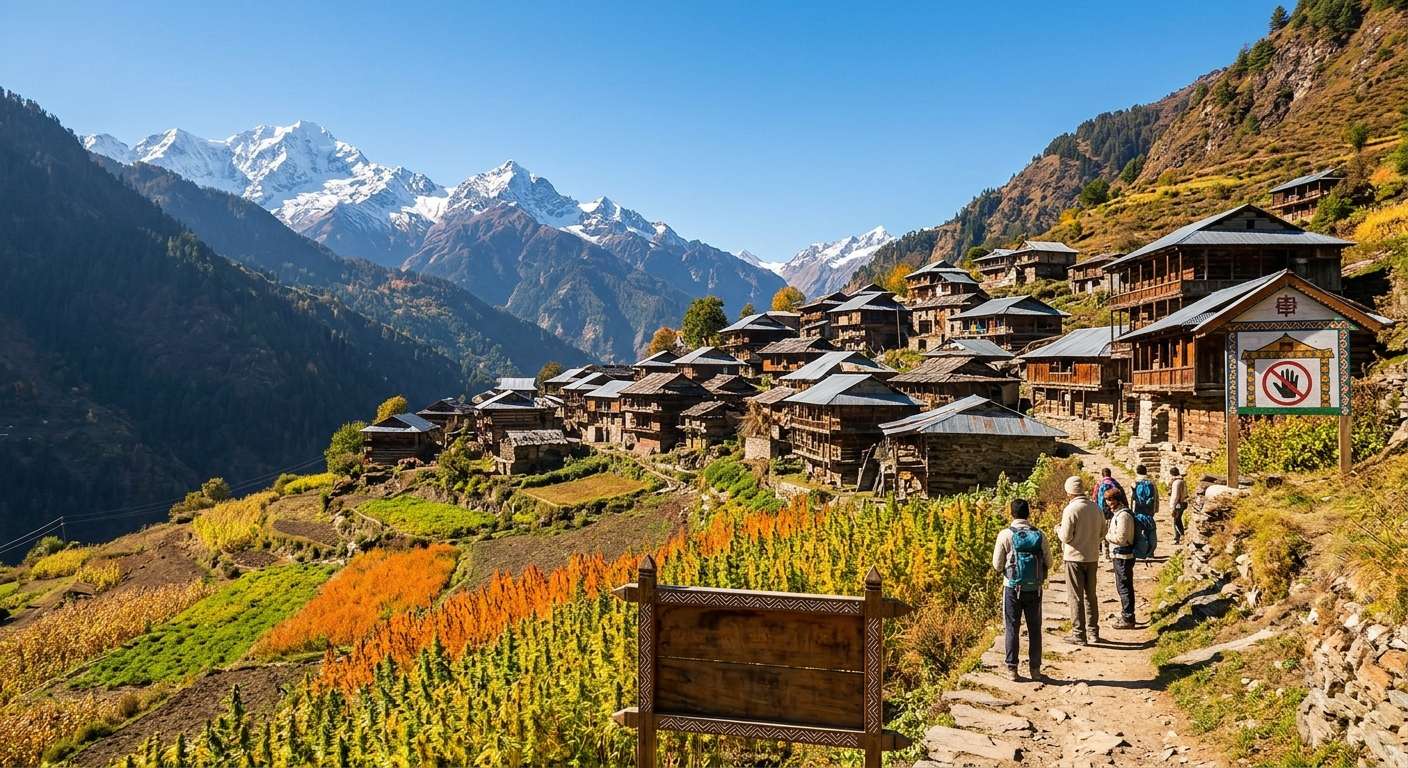
Malana is a warm-season destination. The trails are clearest and the village most accessible from April to June and again from September to early November. Summer is comfortable for walking, the passes are open, and Magic Valley is at its greenest. From December the higher approaches take heavy snow and access becomes difficult, so winter is only for well-prepared trekkers.
| Season | Months | What to expect | Good for |
| Spring / Summer | Apr-Jun | Mild days, open trails, greenest meadows | First-timers, Magic Valley, the temple |
| Monsoon | Jul-Aug | Rain, leeches, slippery slopes, some landslides | Skip unless experienced |
| Autumn | Sep-early Nov | Crisp, clear, stable trails, fewer crowds | Best all-round window, photography |
| Winter | Dec-Feb | Heavy snow, passes often blocked, very cold | Only equipped snow trekkers |
How to reach Malana
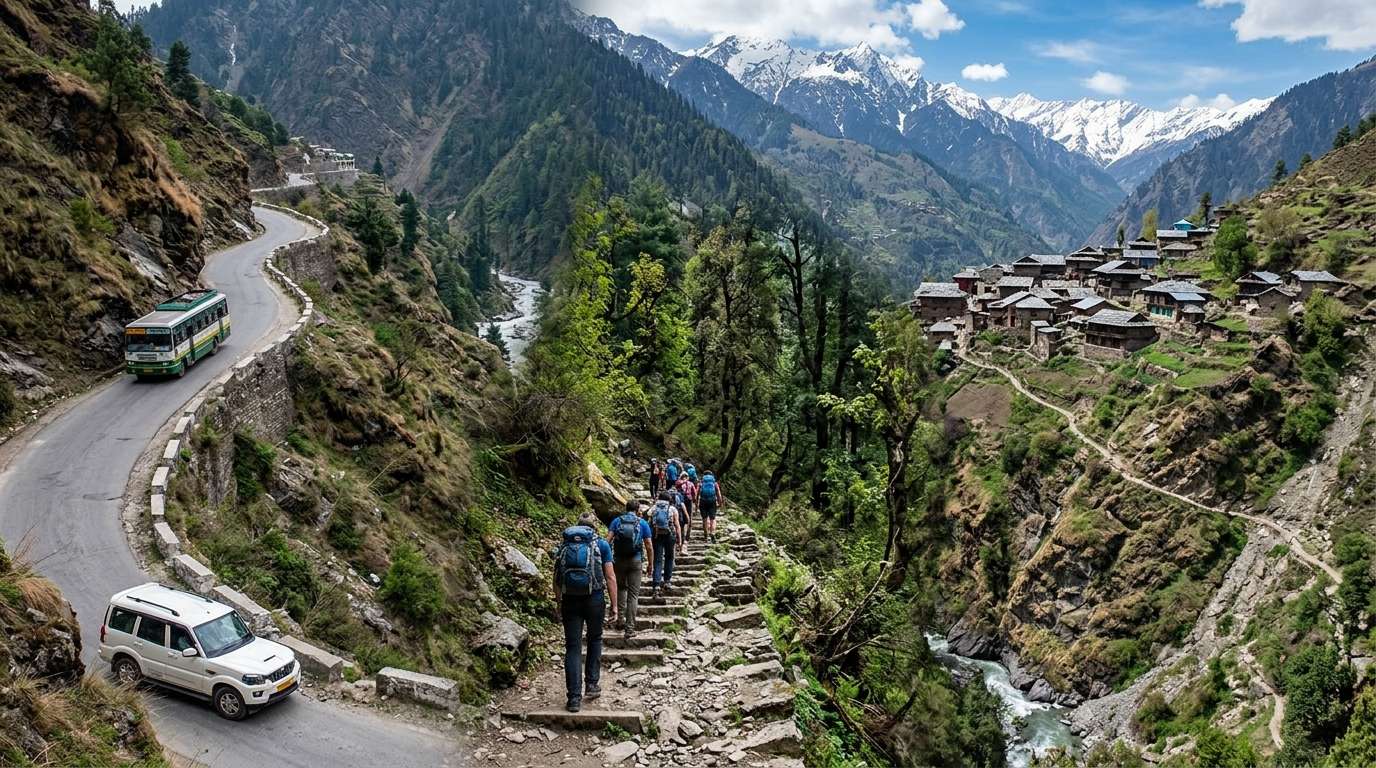
There is no direct road to Malana village, and that is the point. You drive as far as the Malana Hydro Power Station and finish the last leg on foot up a stone-step trail. Here is the route step by step.
- Fly or train to the gateway. The nearest airport is Bhuntar (Kullu-Manali), about 30 km from Jari; the nearest broad-gauge railhead is at Chandigarh or Jogindernagar (narrow gauge), from where you drive on.
- Get to Kasol or Jari. From Delhi or Chandigarh, buses and taxis run up the Parvati Valley to Kasol; Jari is the small town just before it and the turn-off for Malana. Delhi to this area is an overnight journey.
- Drive from Jari to the power-station gate. From Jari a narrow mountain road climbs to the Malana Hydro Power Station, the road-end below the village. Shared and private taxis cover this stretch.
- Climb the final trail on foot. From the gate it is a steady stone-step ascent of roughly 3 to 4 km, around 1 to 1.5 hours depending on your pace, up to the village. Carry water and go slow if you are not acclimatised.
- Arrive and follow local custom. Enter respectfully, keep to the public paths, and remember the no-touch rule around the temple and homes.
Because most people fold this into a Parvati Valley trip, it pairs naturally with a Kasol base. If you are still planning the wider route, our Himachal tour packages and the Himachal travel guide cover transport, stays and the best Kullu-Parvati itineraries.
Nearby: extend your trip from Malana
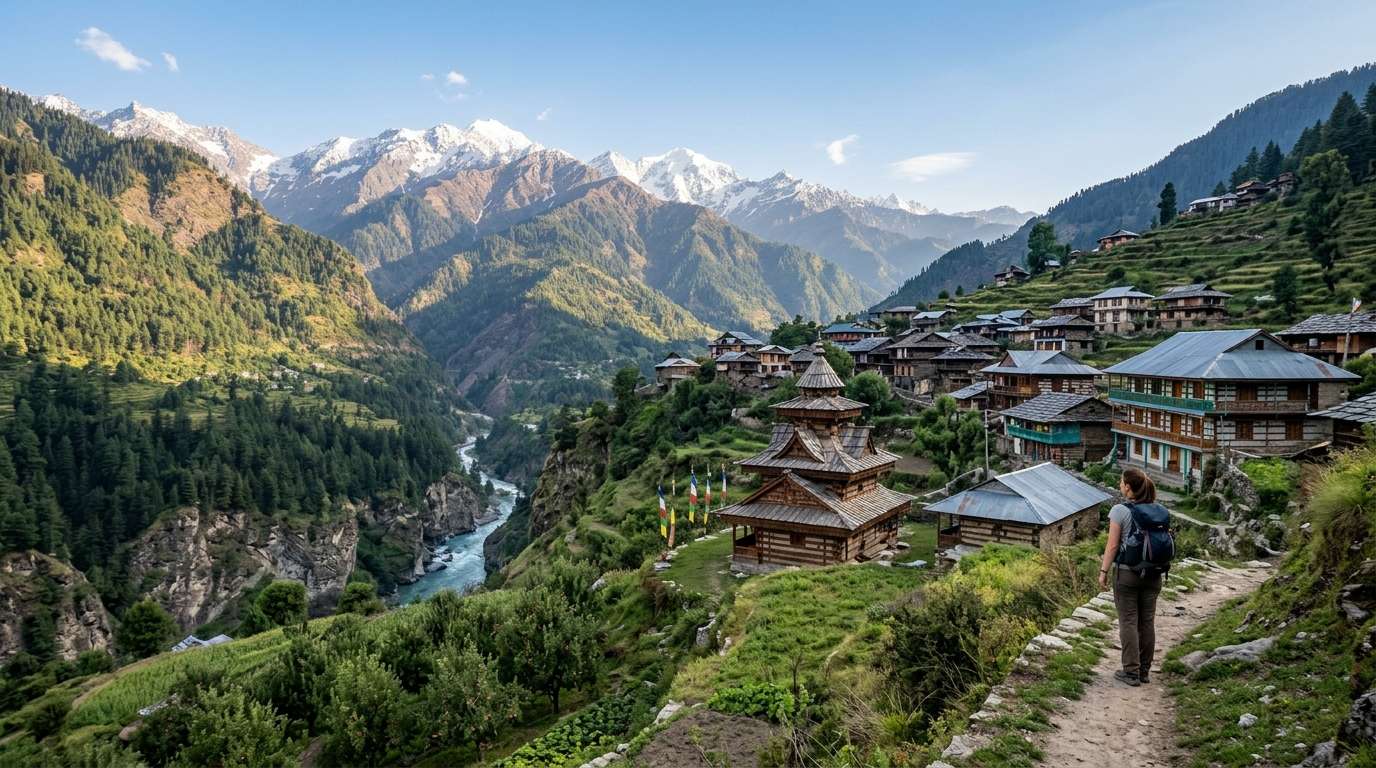
Malana itself is a half to full-day visit, so most travellers combine it with the wider Parvati Valley. These places are not in Malana, but they are close and easy to add on either side of your trek.
- Kasol, the valley’s main traveller hub on the Parvati River, about an hour below the Malana trailhead. The natural base for the whole area.
- Tosh, a hillside hamlet at the head of the valley with big views, a short drive and walk beyond Kasol.
- Kheerganga, a popular full-day trek to hot springs and a ridgeline meadow, starting from Barshaini.
- Manikaran, a pilgrimage town known for its hot springs and the gurudwara, a short drive up from Kasol.
- Parvati Valley beyond: Barshaini, Kalga and Pulga make quiet extra nights if you have time.
Planning your Malana trip
Malana rewards travellers who arrive on its terms: walk in, keep your hands to yourself, and give the temple and the village the distance they ask for. Pair it with a couple of days in the wider Parvati Valley and you have one of Himachal’s most memorable short treks. When you are ready to turn this into an actual route, browse our Himachal tour packages for Kullu and Parvati trips you can customise around a Malana day
FAQs
Frequently asked questions
April to June and September to early November are the best windows. The trails are open and dry, the meadows are green in summer and crisp in autumn, and the village is easiest to reach. Avoid the July to August monsoon for slippery, leech-prone paths, and treat December to February as snow-trekking only, when the higher approaches are often blocked.
From Delhi or Chandigarh, travel up the Parvati Valley to Kasol, then to Jari. A mountain road runs from Jari to the Malana Hydro Power Station, the road-end below the village. From there it is a stone-step climb of about 3 to 4 km, roughly 1 to 1.5 hours, to Malana. The nearest airport is Bhuntar, about 30 km from Jari.
The core sights are the Jamlu Devta temple in the old village, the Chandrakhani Pass trail, Magic (Waichin) Valley above the village, the Malana River gorge along the approach, and Rashol Pass for trekkers. Most of these are within a short walk or a day trek of the village itself.
Malana runs its own village government with two councils, an upper house and a lower house, with the deity Jamlu Devta held as the final authority. This long-standing self-rule is widely described as one of the oldest surviving village democracies, and it still decides everyday matters and disputes in the village.
Malana Cream is a high-grade hand-rubbed charas the region became known for. It is not legal. Cannabis products are banned in India under the NDPS Act, and buying, carrying or using them is a criminal offence. It is worth knowing about as part of Malana's reputation, but it is not something to travel here for.
The key one is the no-touch custom. Do not touch the temple, its walls, the houses or the residents unless you are invited to, as physical contact is considered polluting under local belief, and breaking it can mean a fine. Ask before photographing people, keep to public paths, and follow your host's lead. Simple respect goes a long way here.
There are a few basic guesthouses and homestays on the lower, newer part of the village, but the old village restricts outsider stays and facilities are minimal. Many travellers visit Malana as a day trek from Kasol or Jari and sleep down in the valley. If you do plan to stay, confirm current rules and availability locally before you set out.
Yes, for a respectful visitor on the main trail it is safe. The risks are practical rather than social: a steep climb, changeable mountain weather, and limited services. Go in daylight, carry water and layers, do not wander off marked paths, and be careful not to get drawn into anything involving illegal substances.
Connectivity is patchy. You may get a weak signal on some networks in parts of the village, but do not rely on it. Download offline maps, tell someone your plan before you start the trek, and treat Malana as a place to disconnect rather than stay online.
No. There are no ATMs or banking facilities in the village, and the few shops work in cash. Withdraw what you need in Kasol or Bhuntar before you head up, and carry small notes for the trail and any fines or fees.
Yes. Malana and the passes above it get heavy snow through winter, roughly December to February, which is why access becomes difficult and the high trails close. Snow can linger into spring on Chandrakhani and Rashol, so early-season trekkers should check conditions first.
Malana pairs well with the rest of the Parvati Valley. Kasol is the main hub about an hour below the trailhead, with Tosh, Kheerganga, Manikaran and the Barshaini hamlets all within easy reach for extra days of trekking, hot springs and quiet villages.