
 8D / 7N
6% OFF


What February Is Really Like in Sri Lanka
Sri Lanka in February is dry season on the west and south coasts and in the Cultural Triangle, which makes it about as reliable as the island gets. The west and south coasts and the Cultural Triangle are in their dry season, with daytime highs of 31°C to 32°C, sea water near 28°C and only about five rainy days in the month. Colombo averages 77 mm of rain in February against more than 300 mm in May. Up in the hills, Nuwara Eliya runs at 21°C by day and drops to 10°C at night. February is also the heart of blue-whale season off Mirissa and a good month for leopards in Yala. The catch is that everyone knows this. It is high season, so south-coast rooms and whale boats need booking early, and the east coast is still a few weeks from its best.
Key Takeaways
- Expect 31°C to 32°C and calm seas on the west and south coasts, and pack a fleece for 10°C nights in Nuwara Eliya.
- Book whale watching off Mirissa. February sits inside the December to April season, and boats leave around 6:30 am.
- Base your beach days between Bentota and Mirissa. Trincomalee and Pasikudah only settle into calm-sea season from April.
- Plan 7 days for the classic loop of Sigiriya, Kandy, the tea hills, Ella, Yala and the south coast. Indian travellers need an ETA from eta.gov.lk before flying, free for Indians since 25 May 2026.
- Note 20 February 2027. It is Navam Poya, the night of Colombo’s Navam Perahera and the busiest weekend on Adam’s Peak.
February at a Glance
| Question | February answer |
| Is it a good time to go? | Yes. Peak dry season for the west, south and Cultural Triangle |
| Coast weather | 31°C to 32°C by day, 23°C to 24°C at night, sea about 28°C |
| Hill weather | 21°C by day and 10°C at night in Nuwara Eliya; Kandy 28°C |
| Rain | 47 mm to 77 mm on the coasts across 4 to 6 rainy days |
| Signature experience | Blue whales off Mirissa |
| Coast to skip for swimming | East (Trincomalee, Nilaveli, Pasikudah, Arugam Bay) |
| Crowds and prices | High season. Book hotels 6 to 8 weeks ahead |
| Ideal trip length | 7 days for the loop, 10 days with beach time |
Sri Lanka
Sri Lanka
Weather by region, where to go, a 7-day route and costs from India
Best Time
December - April
Select Package Type
Best Selling Packages


Sri Lanka Weather in February
February weather in Sri Lanka is hot and dry on the coasts, warm and dry in the Cultural Triangle, and cool in the hill country. The figures below are World Meteorological Organization climate normals for 1991 to 2020, the 30-year averages weather services use, rounded to the nearest degree.
| Region (weather station) | Avg high | Avg low | Rain in Feb | Rainy days | February verdict |
| West coast (Colombo, Negombo, Bentota) | 32°C | 24°C | 77 mm | 5 | Dry and sunny, about 8 to 9 hours of sun a day |
| South coast (Galle, Unawatuna, Mirissa) | 31°C | 24°C | 71 mm | 6 | Best beach coast this month; calm sea for swimming |
| Southeast and Yala (Hambantota) | 32°C | 24°C | 47 mm | 4 | Driest region; good safari month |
| Cultural Triangle (Anuradhapura, Sigiriya) | 32°C | 22°C | 60 mm | 4 | Dry; climb before 10 am to beat the heat |
| Kandy | 28°C | 18°C | 74 mm | 5 | Warm days, comfortable evenings |
| Hill country (Nuwara Eliya, Horton Plains) | 21°C | 10°C | 73 mm | 7 | Clear mornings, occasional afternoon mist |
| East coast (Trincomalee) | 30°C | 24°C | 96 mm | 5 | Drying out after January’s 152 mm; sea still choppy |
Two numbers in that table surprise people. Trincomalee’s February is far drier than its January, so the east is not a washout. What holds it back is the sea, which still carries swell from the tail of the northeast monsoon. And the hill country gets almost as much rain as Colombo, but it comes as short afternoon showers, so mornings on the tea estates are usually clear.
Ella sits about 800 m lower than Nuwara Eliya and is noticeably warmer. Badulla, the nearest weather station, averages 26°C by day and 16°C at night in February, so a light layer is enough in Ella.
Why the West and South Are Dry in February
Sri Lanka has two monsoons that hit opposite sides of the island. The southwest monsoon soaks the west and south from about May to September. The northeast monsoon brings rain to the north and east from about October to January. February falls in the gap after the northeast monsoon has spent itself, which is why Colombo, Galle and Mirissa are bone dry while the east coast is only just recovering.
For the full twelve-month picture, see our month-by-month guide to the best time to visit Sri Lanka.
What to Wear in Sri Lanka in February
You are packing for two climates. Cotton and linen work on the coast and in the Cultural Triangle, where it is 32°C by 11 am. A fleece or light jacket earns its place in Nuwara Eliya and on any pre-dawn climb, because the summit of Adam’s Peak is cold and windy before sunrise.
- Loose cotton shirts, shorts and dresses for the coast, plus swimwear and a rash guard for snorkelling.
- One warm layer and long trousers for Nuwara Eliya, Horton Plains and Adam’s Peak.
- A sarong or scarf and clothes that cover shoulders and knees for the Temple of the Tooth, Dambulla and Gangaramaya. You remove shoes and hats at every temple, so socks help on sun-baked stone.
- Reef-safe sunscreen, sunglasses and a hat. Coastal UV is extreme at midday.
- Walking shoes with grip for the 1,200 steps of Sigiriya and the 5,000-plus steps of Adam’s Peak.
- Mosquito repellent, a small first-aid kit and a power bank for long road days.
One rule surprises Indian travellers. Visible Buddha tattoos can get you refused entry or deported, so keep them covered.
Is February a Good Time to Visit Sri Lanka?
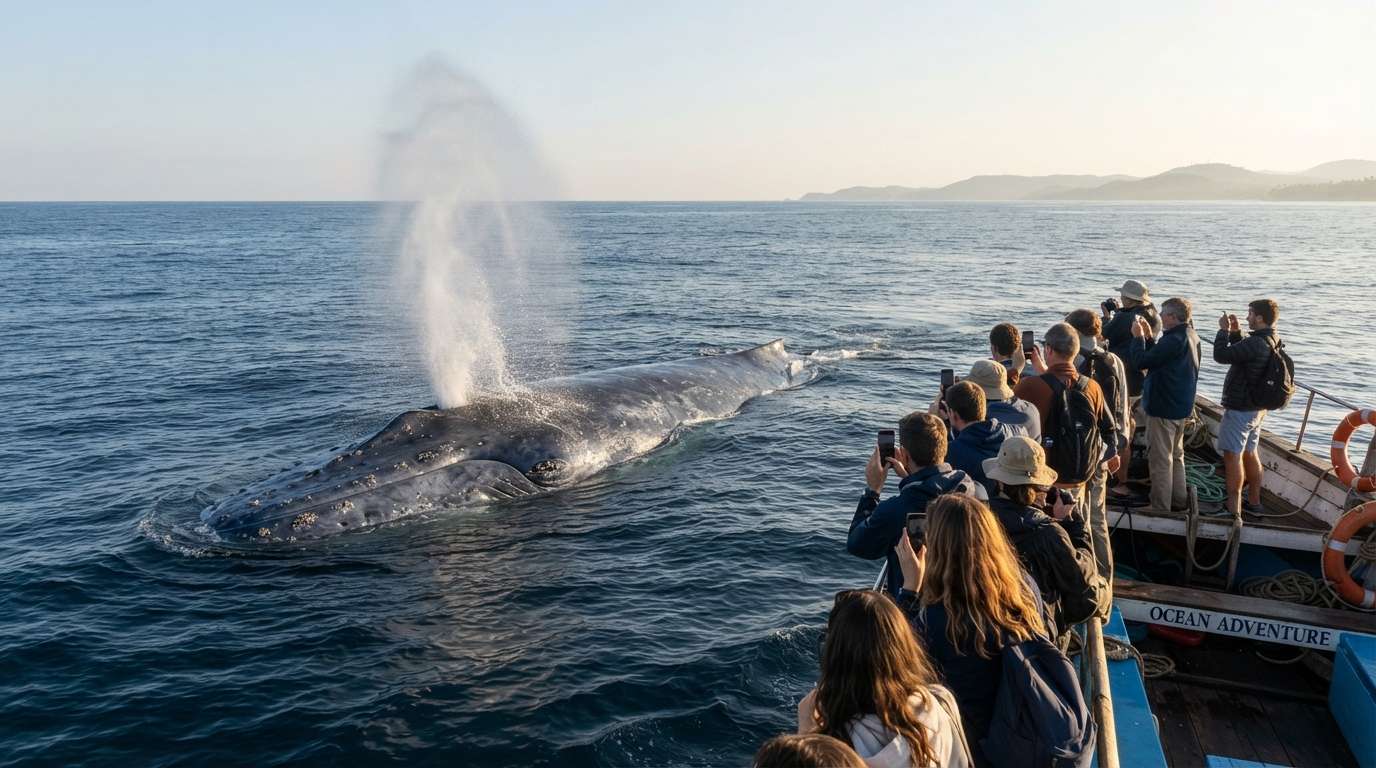
Yes. February is one of the two or three best months to visit Sri Lanka, as long as you plan around the west, south, Cultural Triangle and hills rather than the east coast. Rain is at its lowest across the classic tourist route, the whales are in, and Yala is drying out. The trade-off is cost. February is high season, and south-coast rooms often cost close to double their June rate.
Here is how February compares with the months either side of it.
| Factor | January | February | March |
|---|---|---|---|
| West and south coast | Dry, 31°C | Driest, 31°C to 32°C | Dry, hotter and more humid late in month |
| Hill country | Coolest nights, some frost on Horton Plains | Clear mornings, 10°C nights | Warming, more afternoon showers |
| East coast | Wet (152 mm in Trincomalee) | Drying (96 mm), sea still rough | Settling; calm from April |
| Blue whales off Mirissa | Good | Peak | Peak |
| Crowds and prices | Highest (holiday spillover) | High | Easing after mid-month |
| Big events | Duruthu Perahera, Thai Pongal | Independence Day, Navam Perahera | Maha Shivaratri (6 Mar 2027) |
Our read for February travellers is simple. Go if you want the safest weather bet for a first trip, a beach-plus-hills combination, or whales. Think about Sri Lanka in March if your budget is tight, because rates ease in the second half of that month while the weather holds. And if you are travelling over the Indian winter break, Sri Lanka in January gives you the same coast with slightly higher prices.
Crowds and Prices in February
February is part of the December to March high season. Galle Fort is busiest between 4 pm and sunset, the 6:30 am whale boats from Mirissa fill a day or two ahead, and Sigiriya sees tour-bus queues from about 9 am. The workaround is timing. Be at Sigiriya for its 7 am opening, see Galle Fort in the morning, and book hotels in Mirissa, Galle and Ella six to eight weeks out. Weekday travel helps too, because Sri Lankan families fill the hill stations and Adam’s Peak on weekends and poya days.
Top Places To Visit In Sri Lanka In February
February opens up almost all of the island except the east. These nine places make the strongest February trip, ordered roughly along the classic loop. For a wider list that is not tied to a season, see our guide to Sri Lanka tourist places.
| Place | Why February works | Days to spend | Best time of day |
| Galle | Dry, clear evenings on the fort walls | 1 | Morning walk, sunset on the ramparts |
| Mirissa | Peak blue-whale season | 1 to 2 | 6:30 am boat |
| Hikkaduwa, Unawatuna and Bentota | Calm, warm sea for swimming and snorkelling | 2 to 3 | Mornings before the wind picks up |
| Sigiriya and Dambulla | Driest weeks of the year in the Cultural Triangle | 1 to 2 | 7 am gate opening |
| Kandy | Comfortable 28°C days | 1 | 6:30 pm temple puja |
| Nuwara Eliya | Clear mornings across the tea estates | 1 | Early morning |
| Ella | Dry trails and train views | 1 to 2 | Sunrise on Little Adam’s Peak |
| Yala National Park | Water holes shrinking, so animals concentrate | 1 | 6 am gate or 2:30 pm drive |
| Colombo | Arrival or departure stop | Half to 1 | Late afternoon at Galle Face Green |
Galle
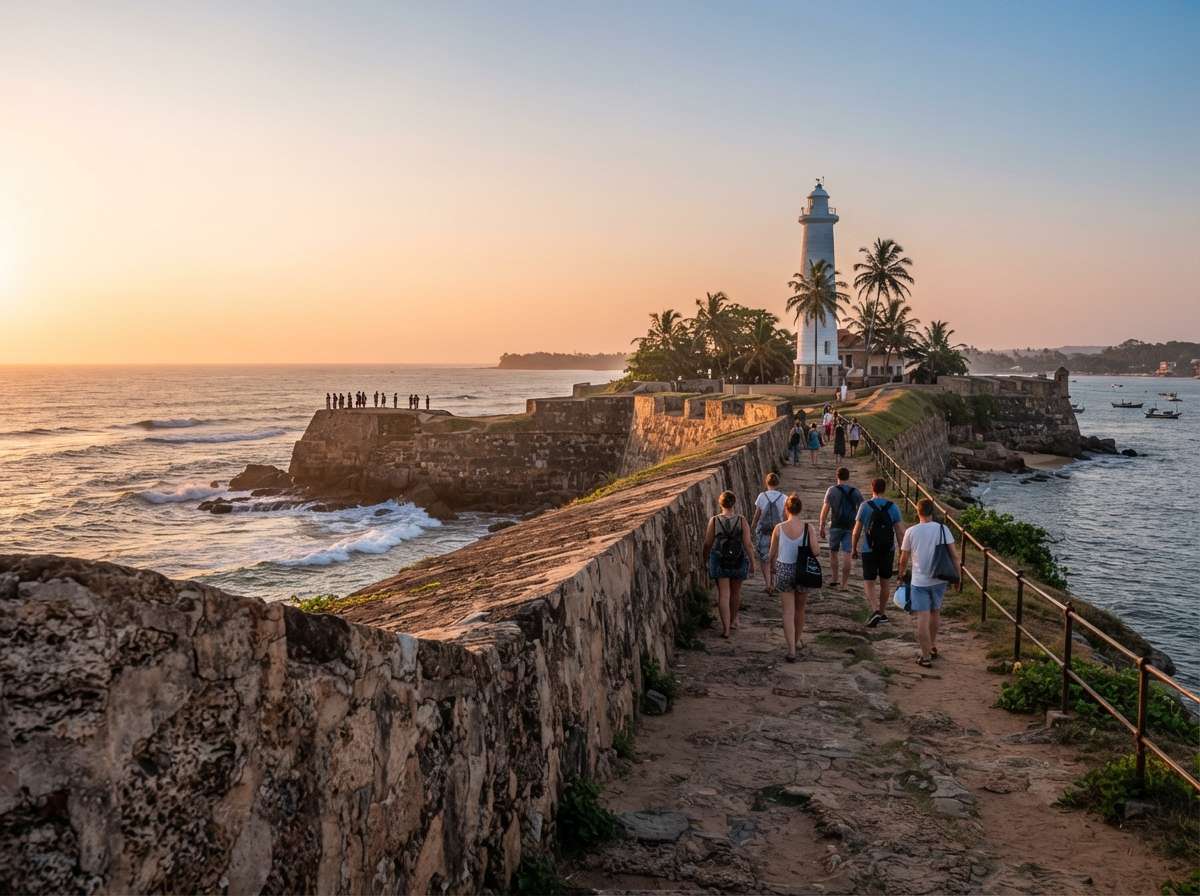
Galle Fort is the Old Town of Galle and its Fortifications, a UNESCO World Heritage Site since 1988 and the best surviving example of a fortified town built by Europeans in South Asia. The Portuguese started it and the Dutch rebuilt it in the 17th century, and the walls you walk today are mostly Dutch, about 2.5 km all the way round. In February the walls stay dry and the evenings clear, so the lighthouse bastion and Flag Rock fill with people watching the sun drop into the sea. Spend the morning on the lanes inside, where Dutch-era houses now hold cafes, jewellers and small museums, and come back to the walls at about 5:30 pm. Our Galle Fort guide covers the bastions one by one.
Mirissa
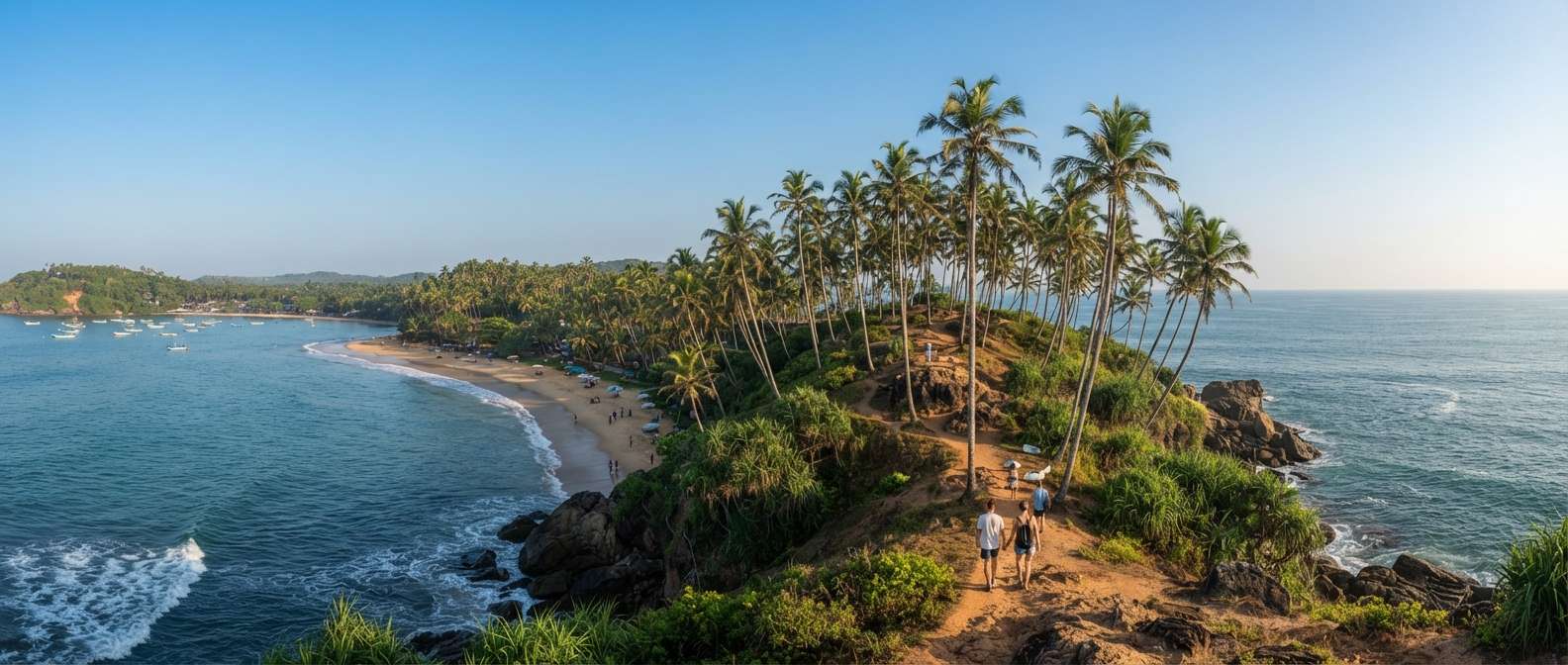
Mirissa is the reason many people choose February. It is Sri Lanka’s main whale-watching harbour, and the continental shelf drops away close enough offshore that blue whales feed within a short boat ride. The season runs from about December to April, and February is in the middle of it, with flat morning seas. The town itself is a curved bay with Coconut Tree Hill at one end and Parrot Rock at the other, both short walks from the beach road. Two nights is the right amount, one to arrive and one after the boat. Our list of things to do in Mirissa has the beach-side picks.
Hikkaduwa, Unawatuna and Bentota
These three cover the beach styles of the southwest coast. Hikkaduwa, 98 km south of Colombo, has a shallow coral reef close to shore where green turtles feed, and February water is clear enough to snorkel straight off the beach. Unawatuna, 6 km past Galle, is a sheltered half-moon bay that suits families and swimmers who want calm water. Bentota, the closest of the three to the airport, is the resort strip, with river safaris on the Bentota Ganga and the most water sports. All three are in peak season from November to April, and February is the middle of that window. For more options along this coast, see the best beaches in Sri Lanka.
Sigiriya and Dambulla
Sigiriya is the 5th-century rock fortress of King Kashyapa, a granite column about 180 m high with frescoes halfway up and palace foundations on the summit. The climb to the summit is about 1,200 steps, and the round trip takes 1.5 to 2 hours. February is one of the driest months in the Cultural Triangle, so the rock is safe and dry underfoot, but it is 32°C by late morning. Be at the gate for the 7 am opening. Half an hour away by road, the Dambulla cave temple holds five painted caves and more than 150 Buddha images, and it is cooler in the afternoon. Entry to Sigiriya is USD 35 for most foreign adults and USD 20 for SAARC passport holders, Indians included, per the Central Cultural Fund rate in 2026. Our Sigiriya Rock Fortress guide walks you through the climb.
Kandy
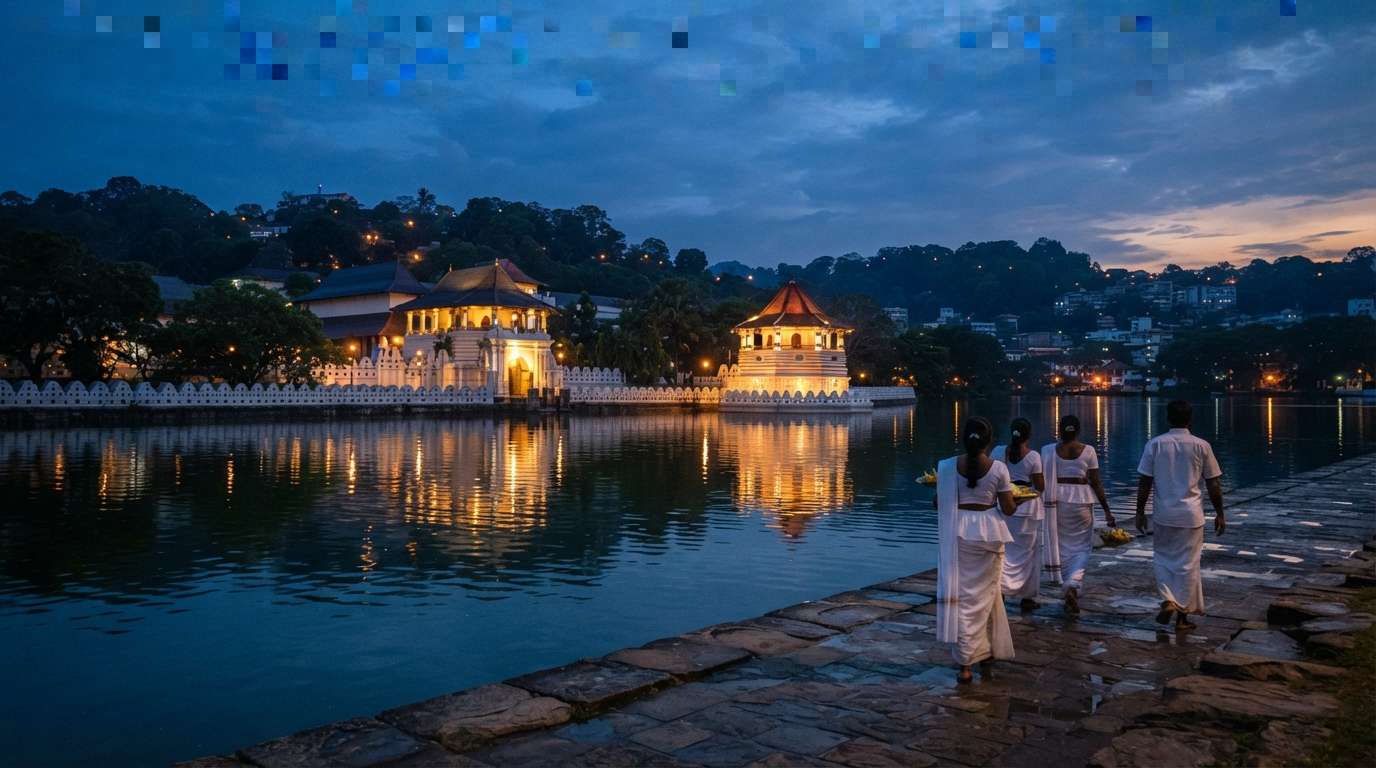
Kandy was the last royal capital of Sri Lanka, and the city centre is part of the UNESCO-listed Sacred City of Kandy. Its centrepiece is the Temple of the Sacred Tooth Relic, Sri Dalada Maligawa, which sits on the edge of Kandy Lake. One full day is enough for most people. Spend the morning at the Royal Botanic Gardens in Peradeniya, 6 km out of town, and be back for the 6:30 pm puja, when drummers play and the inner chamber opens. February days in Kandy are a comfortable 28°C, so walking the 3.4 km lake loop in the afternoon is pleasant rather than punishing.
Nuwara Eliya
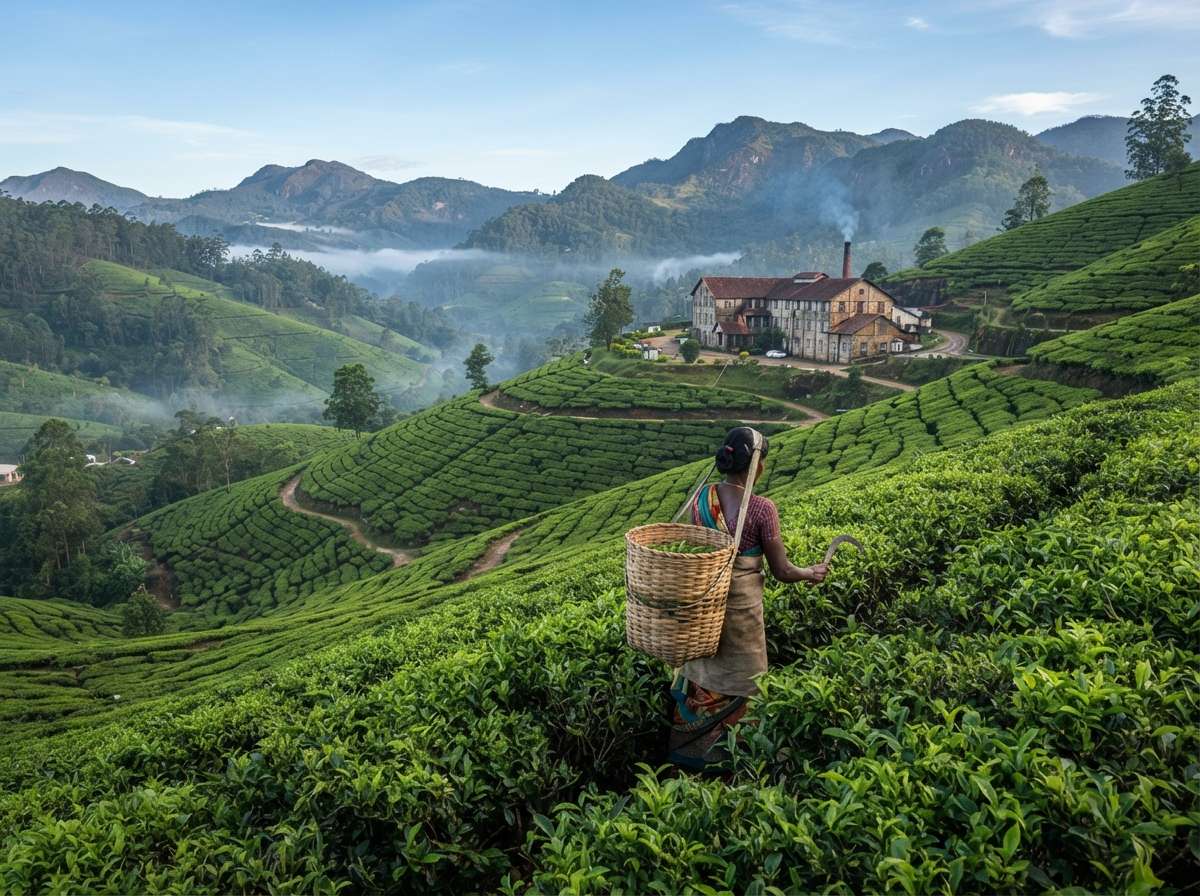
At 1,868 m, Nuwara Eliya is the highest town in Sri Lanka and the centre of its tea country. February is clear and dry here, with days near 21°C and nights down to 10°C, which is why Sri Lankans come up to escape the heat. Tour a working tea factory such as Pedro or Damro Labookellie (the former Mackwoods estate), walk round Gregory Lake, and drive out to Horton Plains for the dawn walk to World’s End. Indian travellers often add Sita Amman Temple at Sita Eliya, about 6 km out on the Badulla road, which marks the place where Sita is believed to have been held. It is part of the Ramayana trail in Sri Lanka. For estate visits, see our guide to tea plantations in Sri Lanka.
Ella
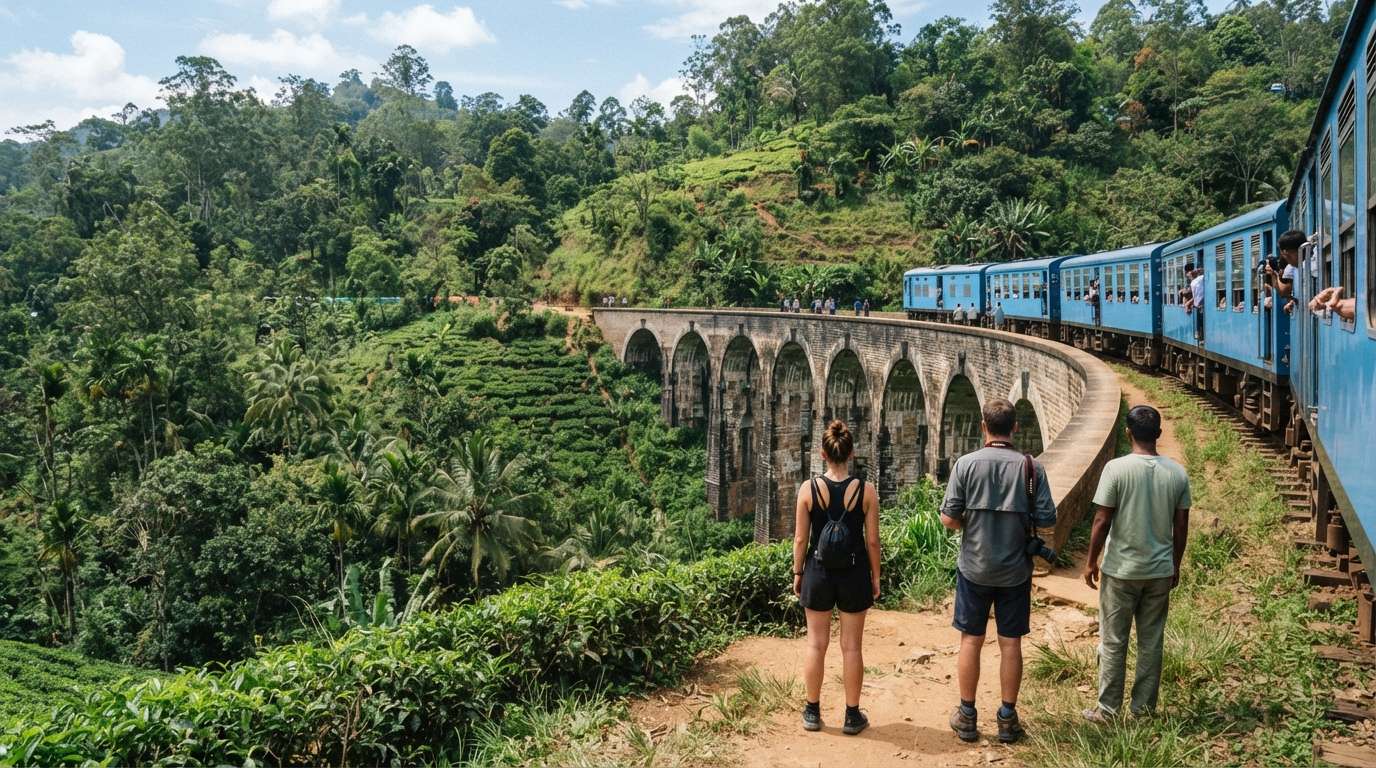
Ella is a small hill town at about 1,000 m that runs on walks and views. Little Adam’s Peak is a 45-minute climb with a wide view down the Ella Gap. Ella Rock is a harder half-day hike. The Nine Arch Bridge, a colonial-era stone viaduct, is a 30-minute walk from town, and the trick is to check the train timetable and arrive 15 minutes before one crosses. February’s dry trails make all three easy to combine in two days. Our list of things to do in Ella has the rest.
Yala National Park
Yala, on the southeast coast, has one of the highest densities of leopards in the world, along with elephants, sloth bears, crocodiles and peacocks. February is the start of the dry season here. The region gets only 47 mm of rain this month, the water holes shrink, and animals gather where you can see them. Block 1 is the busy zone with the best leopard odds, and it is open in February (it usually closes for a few weeks in September and October). Base yourself in Tissamaharama, 30 minutes from the gate, and pick either the 6 am or the 2:30 pm drive. For other parks, see our round-up of national parks in Sri Lanka and the full Yala National Park guide.
Colombo
Colombo is a half-day to one-day stop, not a five-day base. Use it for your arrival or last evening. Walk Galle Face Green at sunset, see the Gangaramaya Temple and its odd, crowded museum of gifts, and eat at the Pettah markets or along Marine Drive. In February, Gangaramaya is also the start point of the Navam Perahera, covered in the festivals section below.
Things To Do In Sri Lanka In February
These are the experiences February does better than almost any other month. Each one comes with the timing and cost details you need to book it.
Watch Blue Whales off Mirissa
Boats leave Mirissa harbour at about 6:30 am and spend four to six hours at sea, heading 15 to 30 km out to the shipping lanes where blue whales feed. Spinner dolphins are close to guaranteed, and blue whale sightings are common in February, though no operator can promise one. Most boats charge LKR 8,000 to 15,000 per adult, including breakfast, and premium boats go to about LKR 20,000. Book the day before and pick a licensed operator with a naturalist on board. If you get seasick, take a tablet an hour before boarding and sit at the back of the lower deck.
Track Leopards in Yala National Park
A half-day jeep safari in Yala costs LKR 15,000 to 25,000 per jeep (up to six people), plus park entry per person. Foreign adults pay about USD 25 and SAARC nationals, Indians included, about USD 20, with a per-jeep service charge and 18% VAT added at the gate. The 6 am drive gives you the cooler light and active cats. The 2:30 pm drive avoids the 4:30 am wake-up. Ask your driver to keep the engine off at sightings, and expect the famous leopard spots in Block 1 to draw 20 or more jeeps at once in high season.
Ride the Hill-Country Train to Ella
The train through the tea hills is on every Sri Lanka wish list, but the line has changed since Cyclone Ditwah’s landslides in late 2025. Line status checked on 2 November 2026: trains run between Nanu Oya (the station for Nuwara Eliya) and Badulla, which includes Ella and the Nine Arch Bridge stretch, and have done since 20 June 2026. Kandy to Nanu Oya is still closed. Sri Lanka Railways has targeted the end of 2026 for reopening it, though some operators expect early 2027. The good news is that Nanu Oya to Ella is the most scenic section anyway, about 3 hours through tunnels, waterfalls and tea estates. Drive from Kandy to Nuwara Eliya (about 3 hours) and board at Nanu Oya. A reserved second-class seat on this stretch costs under LKR 2,000, and on the Nanu Oya to Ella stretch the open valley and gorge views are on the left-hand side, facing the direction of travel. The booking system allocates reserved seats, so you cannot choose a side, but passengers share the windows and open doorways freely.
Climb Adam’s Peak for Sunrise
Adam’s Peak, or Sri Pada, is a 2,243 m mountain sacred to Buddhists, Hindus, Muslims and Christians. The pilgrimage season runs from the Unduvap Poya in December to Vesak in May, so in February the 5,000-plus steps are lit and the tea stalls along the way are open all night. Start from Dalhousie at about 2 am to reach the top for a sunrise at about 6:20 am, when the peak casts a triangular shadow over the clouds. Avoid weekends and Navam Poya on 20 February 2027 if you can, because the queue near the summit can take two hours.
Climb Sigiriya at Opening Time, or Fly Over It
The first hour after the 7 am opening is the best time on Sigiriya. The air is cool, the frescoes are not yet crowded, and the light on the Lion’s Paw terrace is soft. For a different view, hot-air balloon flights over the Cultural Triangle run from about November to April, and February’s still dawns are ideal. Flights take off around 6 am and last about an hour. Pick one or the other for the same morning, since both run at first light.
Watch the Evening Puja at the Temple of the Tooth
The Temple of the Tooth holds the tooth relic of the Buddha and runs three pujas a day, at about 5:30 am, 9:30 am and 6:30 pm. The evening one is the most atmospheric, with drummers in the hall and a line of devotees carrying lotus flowers past the shrine. Dress in white or light colours that cover shoulders and knees. If you have an hour to spare beforehand, Udawattakele forest reserve behind the temple is a quiet walk for birdwatchers. It is a walking reserve, not a safari park.
Walk Galle Fort’s Ramparts at Sunset
Start at the Clock Tower at about 5 pm, walk the wall west and then south past the Star and Aeolus bastions, and stop at Flag Rock for sunset at about 6:20 pm, with the lighthouse a few minutes further on. In February the sky is usually clear right down to the horizon. Afterwards, eat inside the fort on Pedlar Street or Church Street.
Festivals and Events in February 2027
February 2027 has two public holidays, National Day and Navam Poya, plus one of Colombo’s biggest processions, and all three affect travel plans.
| Date | Event | Where | What it means for your trip |
| Thursday 4 February | National Day (79th Independence Day) | Colombo, main parade near Galle Face | Public holiday. Expect road closures around Galle Face during rehearsals in the days before |
| Friday 19 and Saturday 20 February (expected) | Navam Maha Perahera | Gangaramaya Temple, Beira Lake, Colombo | Two evenings of dancers, drummers and decorated elephants; arrive by 7 pm for a kerbside spot |
| Saturday 20 February | Navam Full Moon Poya | Island-wide | Public holiday. No alcohol sales, most meat shops shut, temples and Adam’s Peak are packed |
| Saturday 6 March | Maha Shivaratri | Koneswaram (Trincomalee), Munneswaram (Chilaw) | Falls in March in 2027, so plan a late-February trip to run into it if you want to attend |
The Navam Perahera is one of the largest processions in Colombo, and it winds around Beira Lake rather than through the old city. It is usually held over two nights around Navam Poya, which is why we expect 19 and 20 February in 2027. Gangaramaya confirms the nights in January. [VERIFY: Navam Perahera 2027 nights – Gangaramaya announcement, mid-January 2027] On poya days alcohol sales are banned island-wide, hotel bars included, and meat shops close. Restaurants stay open and many lean vegetarian, which makes poya days easy for Indian vegetarians.
For the full calendar, see our guide to festivals in Sri Lanka.
7-Day Sri Lanka Itinerary for February
This route follows the dry side of the island in a loop that starts and ends at Colombo’s Bandaranaike airport. It runs 7 full days and 7 nights, with Day 8 for the flight home, a private car and driver for the road sections and the train for the hill stretch.
| Day | Route | Drive or train time | What to do | Stay |
| 1 | Colombo airport to Sigiriya | About 4 hours by road | Arrive, check in, sunset from Pidurangala if you land early | Sigiriya |
| 2 | Sigiriya to Dambulla to Kandy | 30 minutes, then 2.5 hours | Sigiriya at 7 am, Dambulla caves at noon, 6:30 pm puja in Kandy | Kandy |
| 3 | Kandy to Nuwara Eliya | About 3 hours | Peradeniya gardens, Ramboda Falls, a tea factory, Sita Amman Temple | Nuwara Eliya |
| 4 | Nanu Oya to Ella | About 3 hours by train | The scenic train, Nine Arch Bridge in the late afternoon | Ella |
| 5 | Ella to Tissamaharama | About 2.5 hours | Little Adam’s Peak at dawn, Yala afternoon safari | Tissamaharama |
| 6 | Tissamaharama to Mirissa | About 2 hours | Beach afternoon, sunset at Coconut Tree Hill | Mirissa |
| 7 | Mirissa | n/a | 6:30 am whale boat, back by about noon; afternoon at Secret Beach or Parrot Rock | Mirissa |
| 8 | Mirissa to Galle to Colombo airport | 45 minutes, then about 2 hours | Galle Fort walk in the morning, evening flight home | n/a |
If the Day 7 boat is cancelled for rough sea, take the 6:30 am boat on Day 8 and skip Galle. Where to base yourself is part of the plan. Sigiriya has more mid-range hotels than Dambulla. In Kandy, stay near the lake so you can walk to the temple. Nuwara Eliya’s colonial-era hotels book out first in February. In the south, Mirissa works better than Galle for the last two nights because the whale boats leave from there.
With 10 days, add one night in Sigiriya for the Polonnaruwa ruins by bicycle, one more night in Ella for the Ella Rock hike, and a final night on the beach at Unawatuna or Bentota before the airport. With 5 days, cut the hills, run Colombo to Sigiriya to Kandy, then drive straight to the south coast for Galle and the whale boat. A ready version of this route is our Sri Lanka tour package for February, which a planner can stretch or shorten to your dates.
How to Plan a February Trip, Step by Step
- Book flights by mid-December. February fares from Indian cities climb after the New Year rush, and the early morning departures from Chennai and Bengaluru sell first.
- Apply for the free ETA. Fill in the tourist ETA on the official site, eta.gov.lk, with your passport, return ticket and first hotel address. It has been free for Indian passport holders since 25 May 2026, so confirm the fee on the site when you apply. Approval usually arrives by email within a day or two.
- Lock the south-coast and Yala nights first. Mirissa, Galle and Tissamaharama run out of good mid-range rooms before anywhere else in February.
- Check the hill railway status. Look up the Sri Lanka Railways notices in January, then reserve seats for the Nanu Oya to Ella stretch (or Kandy to Ella if the full line has reopened). Keep a road transfer as a fallback.
- Hire a car and driver for the road days. Sri Lanka’s distances are short but the roads are slow, averaging 35 to 40 km an hour in the hills. A driver who doubles as a guide saves the most time.
- Pre-book the whale boat and the Yala jeep. Book them for the morning after you arrive in each place, so a cancelled boat or a bad safari leaves you a second try.
- Carry cash in Sri Lankan rupees. Change some money at the airport, use cards in hotels, and keep LKR for tuk-tuks, temple tickets and roadside stalls.
Cost of a Sri Lanka Trip in February from India
A 7-day Sri Lanka trip in February costs about ₹32,000 to ₹42,000 per person on a budget, ₹65,000 to ₹85,000 mid-range and ₹1,50,000 or more for luxury, before flights. Add ₹12,000 to ₹38,000 for a return flight depending on your city. These are ranges built from late-2026 hotel, transport and entry prices, with two people sharing a room.
Flights from Indian Cities
| From | Flight time to Colombo | Typical February return fare |
| Chennai | About 1 hour 20 minutes | ₹12,000 to ₹20,000 |
| Kochi or Thiruvananthapuram | About 1 hour 10 minutes | ₹14,000 to ₹22,000 |
| Bengaluru | About 1 hour 35 minutes | ₹15,000 to ₹24,000 |
| Hyderabad | About 2 hours | ₹18,000 to ₹28,000 |
| Mumbai | About 2 hours 20 minutes | ₹20,000 to ₹32,000 |
| Delhi | About 3 hours 30 minutes | ₹24,000 to ₹38,000 |
SriLankan Airlines, IndiGo and Air India fly direct on most of these routes. Fares move daily, so treat these as the economy range you will usually see when booking six to eight weeks ahead.
Daily Costs and Entry Fees
| Item | Budget | Mid-range | Luxury |
| Hotel per night (double room) | ₹2,500 to ₹4,500 | ₹6,000 to ₹12,000 | ₹18,000 and up |
| Getting around per day | ₹800 to ₹1,500 (bus, train, tuk-tuk) | ₹5,000 to ₹6,500 per car with driver | ₹7,000 and up per car |
| Food per person per day | ₹800 to ₹1,200 | ₹1,500 to ₹2,500 | ₹4,000 and up |
| 7-day total per person, without flights | ₹32,000 to ₹42,000 | ₹65,000 to ₹85,000 | ₹1,50,000 and up |
The main entry fees for an Indian passport holder add up to about ₹10,000 per person over the week. Sigiriya is USD 20 at the SAARC rate. Yala is about USD 20 at the SAARC rate, plus VAT and your share of the jeep. A whale boat is LKR 8,000 to 15,000. A reserved hill-train seat is under LKR 2,000. The Sri Lankan rupee traded at roughly 3.5 to the Indian rupee in late October 2026, so LKR 10,000 is about ₹2,900.
If you would rather fix the cost upfront, TravelTriangle’s February package starts at ₹36,499 per person for 3 nights without airfare, and longer Sri Lanka tour packages are quoted the same way, with hotels, transfers and sightseeing included.
Visa, Flights and Travel Tips for Indians
Indian passport holders need a tourist ETA (electronic travel authorisation), applied for online at eta.gov.lk before you fly. Under the free-visa scheme that took effect on 25 May 2026, the tourist ETA has been free for Indians, with a 30-day stay and two entries. Check the current fee on eta.gov.lk when you apply, because airlines can refuse boarding without the approval. Ignore agents who charge a service fee for it.
A few more things Indian travellers ask us about every February:
- Money. Indian rupees are not accepted in shops. Use a forex card or international debit card at ATMs, and keep small LKR notes. UPI QR payments have worked in Sri Lanka through LankaPay since February 2024, but only at some merchants, so do not rely on them.
- SIM cards. Dialog and SLT-Mobitel sell tourist SIMs at the airport arrivals hall. A 30-day data pack costs less than an Indian international roaming plan.
- Vegetarian food. Rice and curry comes with three to six vegetable curries, dhal and sambol, so vegetarians eat well everywhere. Colombo and Kandy have Indian restaurants, and hotels on the tourist circuit make North Indian food on request. Our guide to Sri Lankan cuisine has the dishes to try.
- Driving side. Sri Lanka drives on the left like India, but distances take longer than the map suggests. Kandy to Nuwara Eliya is only 77 km and still takes about 3 hours.
- Safety. Sri Lanka is safe for families and solo travellers. The real risks are the sea and the sun. Swim only at flagged beaches and wear a hat between 11 am and 3 pm.
For the wider destination guide, from regions to culture, start at our Sri Lanka tourism page.
Planning Your February Trip
February gives you Sri Lanka at its most dependable. The west and south coasts are dry, the hills are clear, the whales are feeding off Mirissa, and Yala’s water holes are drawing in the animals. Plan a 7-day loop on the dry side of the island, book the south coast early, and keep an eye on the hill railway notices in January.
When you are ready to put dates on it, browse our Sri Lanka tour packages or start from the February itinerary package and have a planner tailor it to your pace.
FAQs
Sri Lanka in February: Frequently Asked Questions
Quick answers on February weather, rain, whales, festivals, trip length, costs, the ETA and the Ella train.
Yes, February is one of the best months to visit Sri Lanka. The west coast, south coast, Cultural Triangle and hill country are all in their dry season, with about five rainy days in the month on the coasts. It is also peak blue-whale season off Mirissa and a good safari month in Yala. The only region to avoid for a beach holiday is the east coast, where the sea stays rough until about April.
February is hot, sunny and dry on most of the tourist route. Colombo and Galle get around 71 mm to 77 mm of rain across five or six short showers, with 8 to 9 hours of sun a day. The Cultural Triangle is dry and hot, and the hill country is cool with clear mornings. The east coast is drying out after its January rains but its sea is still choppy.
On the coasts, February temperatures run from about 24°C at night to 31°C or 32°C by day, according to WMO climate normals for Colombo and Galle. Sigiriya and Anuradhapura reach 32°C with nights near 22°C. Kandy is milder at 28°C by day and 18°C at night. Nuwara Eliya is the coolest, with highs of 21°C and lows near 10°C, so pack a warm layer.
Very little on the west and south. Colombo averages 77 mm and Galle 71 mm across five or six rainy days, mostly short afternoon showers, compared with over 300 mm in Colombo in May. The southeast around Yala is the driest at 47 mm. Trincomalee on the east coast gets 96 mm, which is far less than its 152 mm in January.
The south and west coasts. Bentota, Hikkaduwa, Unawatuna, Galle and Mirissa have calm, clear water around 28°C and dry weather all month. The east coast around Trincomalee, Nilaveli, Pasikudah and Arugam Bay has its season from about April to September, so in February its beaches are quieter but the sea is rougher and some beach hotels are still opening up.
Yes. February is in the middle of the December to April whale-watching season off Mirissa, when blue whales feed in deep water 15 to 30 km offshore. Boats leave at about 6:30 am and return by late morning, and most charge LKR 8,000 to 15,000 per adult. Dolphins are seen on most trips, and blue whales on many, though sightings are never guaranteed.
It is high season, so yes, it is busier and pricier than the monsoon months. South-coast hotel rates often run close to double their June level, and the best mid-range rooms in Mirissa, Galle and Ella sell out first. Book six to eight weeks ahead, visit Sigiriya at its 7 am opening, and avoid Adam's Peak on weekends and poya days.
National Day falls on Thursday 4 February 2027, Sri Lanka's 79th Independence Day, with a parade in Colombo. Navam Full Moon Poya is on Saturday 20 February, and the Navam Maha Perahera at Colombo's Gangaramaya Temple is expected on 19 and 20 February, with elephants, dancers and drummers. Maha Shivaratri falls on 6 March in 2027, just after February.
Seven days is enough for the classic loop of Sigiriya, Kandy, Nuwara Eliya, Ella, Yala and the south coast, with a whale-watching morning at the end. With 10 days you can add Polonnaruwa, a second day in Ella and two beach days. With only five days, skip the hills and pair the Cultural Triangle and Kandy with Galle and Mirissa.
A 7-day trip costs about ₹32,000 to ₹42,000 per person on a budget, ₹65,000 to ₹85,000 mid-range and ₹1,50,000 or more in luxury, with two people sharing and flights extra. Return flights in February usually cost ₹12,000 to ₹20,000 from Chennai and ₹24,000 to ₹38,000 from Delhi. Entry fees for Sigiriya, Yala and a whale boat add about ₹10,000 per person.
Yes, Indian travellers need an ETA, though the tourist ETA has been free for them since 25 May 2026, when India was added to Sri Lanka's free-visa list. It gives a 30-day stay with two entries. Check the current fee on eta.gov.lk when you apply. Apply online at eta.gov.lk before you fly, as airlines can refuse boarding without it. Carry your return ticket and hotel booking in case immigration asks.
Yes, at least on the most scenic part. After Cyclone Ditwah damaged the hill line in late 2025, trains resumed between Nanu Oya and Badulla, which covers Ella and the Nine Arch Bridge, on 20 June 2026. Kandy to Nanu Oya was still closed when we checked on 2 November 2026, with reopening targeted for the end of 2026. If it is still shut when you travel, drive from Kandy to Nuwara Eliya and board the train at Nanu Oya.