
 8D / 7N
6% OFF


What Sri Lanka Is Famous For Buying
Sri Lanka is famous for Ceylon tea, blue sapphires, true cinnamon, batik, hand-carved Ambalangoda masks and handloom textiles, and most of them cost less here than the same thing in an Indian shop. A 100 g box of single-estate tea runs about LKR 500 to 2,500 (₹145 to 725), and the island grows roughly 85 to 90% of the world’s true cinnamon, so the sticks you buy in a Colombo supermarket are the real thing. Shopping in Sri Lanka splits neatly in two. You buy food and crafts cheaply at supermarkets, markets and the state-run Laksala, and you buy gemstones carefully, from licensed dealers with paperwork. This guide covers the 18 things worth bringing home, where to buy each one city by city, what is actually cheaper than in India, and how much you can carry back duty-free (₹75,000 per person under India’s 2026 baggage rules).
Key Takeaways
- Buy tea and spices at Cargills or Keells supermarkets. The same Dilmah or Mlesna packs cost far less than at the airport, and you skip the spice-garden mark-up.
- Use Laksala for fixed-price crafts. The government-run chain sells masks, batik, brass and lacquerware at marked prices, which gives you a benchmark before you bargain anywhere else.
- Buy gemstones only from NGJA-licensed dealers, ask for a lab report, and keep the invoice for Indian customs.
- Carry back up to ₹75,000 of goods duty-free per person when you fly into India (Baggage Rules, 2026). Anything above that is taxed.
- Bargain 30 to 40% off the first price at Pettah and street stalls, never at malls, Laksala or boutiques like Barefoot and Odel.
Sri Lanka shopping price guide (₹ and LKR)
Approximate 2026 shop prices. The rupee figures use about 3.45 Sri Lankan rupees to ₹1, so check the day’s rate before you buy.
| What to buy | Best place to buy it | Typical price (LKR) | About (₹) | Quick tip |
|---|---|---|---|---|
| Ceylon tea, 100 to 250 g | Supermarkets, Mlesna, tea-factory outlets | 500 to 2,500 | 145 to 725 | Look for the Lion logo of the Sri Lanka Tea Board |
| Blue sapphire, per carat | NGJA-licensed dealers in Colombo and Ratnapura | From 30,000 | From 8,700 | Ask for a lab report |
| True cinnamon, 100 g | Supermarkets, Pettah spice shops | 400 to 1,200 | 115 to 350 | “Alba” is the finest grade |
| Wooden mask, small to medium | Ambalangoda workshops, Laksala | 1,500 to 8,000 | 435 to 2,300 | Pick a Kolam mask for a cheerful one |
| Batik wall hanging or sarong | Kandy, Bentota, Laksala | 1,500 to 6,000 | 435 to 1,750 | Real batik shows the pattern on both sides |
| Handloom sari | Barefoot, Selyn | 8,000 to 25,000 | 2,300 to 7,250 | Fair-trade tag on Selyn pieces |
| Ayurvedic balm or oil | Pharmacies, Siddhalepa, Spa Ceylon | 400 to 4,000 | 115 to 1,150 | Liquids over 100 ml go in checked bags |
| Noritake mug or dinner set | Noritake outlets in Matale and Colombo | 1,500 (mug) to 30,000+ (set) | 435 to 8,700+ | Ask for export packing |
| Wooden elephant figurine | Laksala, Kandy market | 800 to 10,000 | 230 to 2,900 | Ebony is heavy; light “ebony” is painted |
| Dumbara mat | Laksala, villages near Kandy | 1,500 to 6,000 | 435 to 1,750 | Rolls flat into a suitcase |
| Kithul treacle or jam, per bottle | Supermarkets, Nuwara Eliya | 500 to 1,500 | 145 to 435 | Pack in a sealed bag in checked luggage |
| Arrack, 750 ml | Licensed liquor shops, duty-free | 3,500 to 7,000 | 1,000 to 2,000 | India allows 2 litres duty-free |
Sri Lanka
Sri Lanka
Best Time
December - April
Select Package Type
Best Selling Packages


18 Famous Sri Lankan Buys, Then the Best Shops City by City
The 18 things travellers most often bring home from Sri Lanka, ordered by demand, followed by where to shop in Colombo, Kandy, Galle and the hill country.
-
Ceylon Tea
-
Blue Sapphires and Other Gemstones
-
Ceylon Cinnamon and Spices
-
Ambalangoda Wooden Masks
-
Batik
-
Handloom Saris, Kandyan Osariya and Sarongs
-
Ayurvedic Oils and Balms
-
Noritake and Dankotuwa Porcelain
-
Elephant and Buddha Figurines
-
Dumbara Mats and Cane Boxes
-
Brass, Silver and Lacquerware
-
Moonstone Carvings and Painted Stone Art
-
Paintings and Contemporary Art
-
Beeralu Lace
-
Jams, Chutneys and Kithul Treacle
-
Arrack
-
Coconut-Shell Craft and Elephant-Dung Paper
-
Export-Surplus Clothing
Explore Popular Destination In Sri Lanka
01
Ceylon Tea
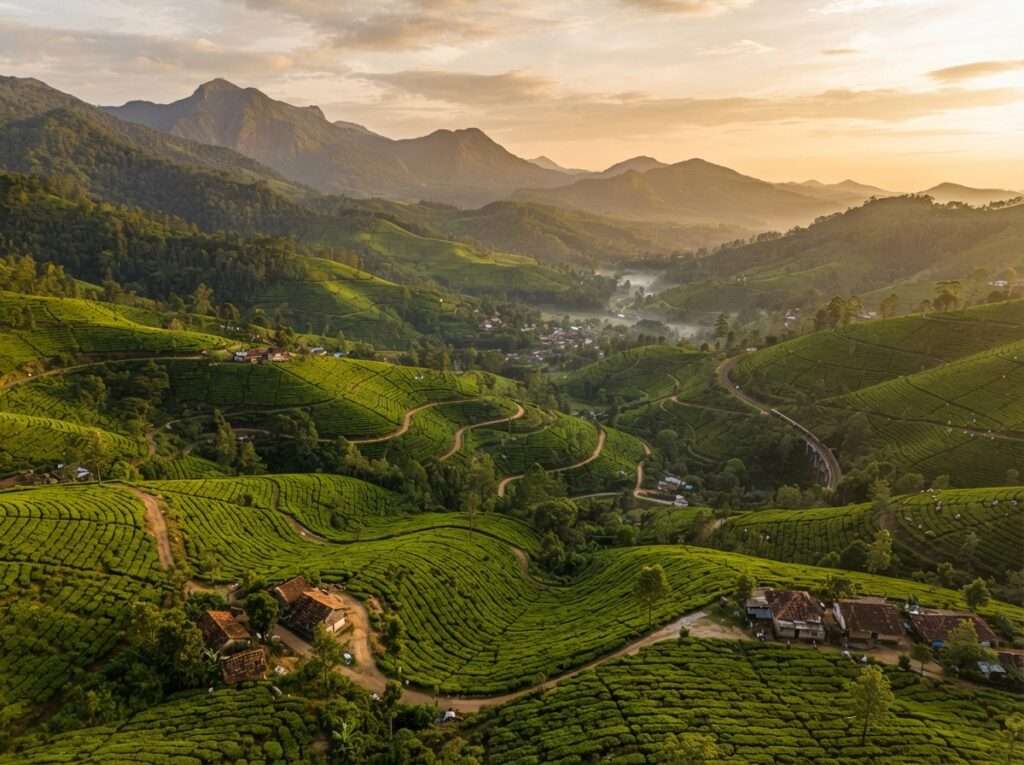
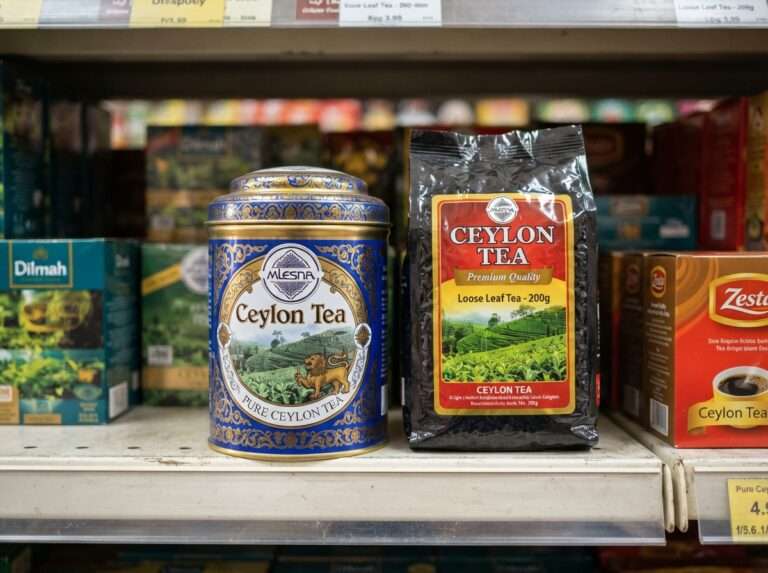
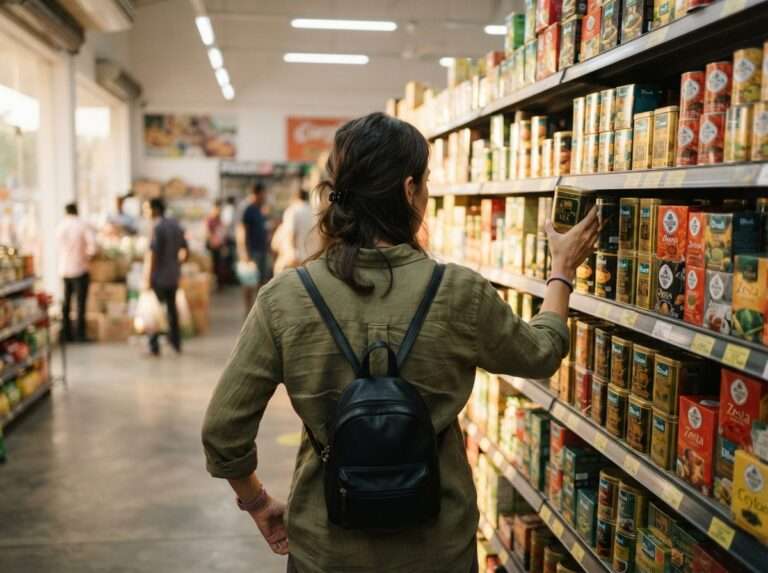
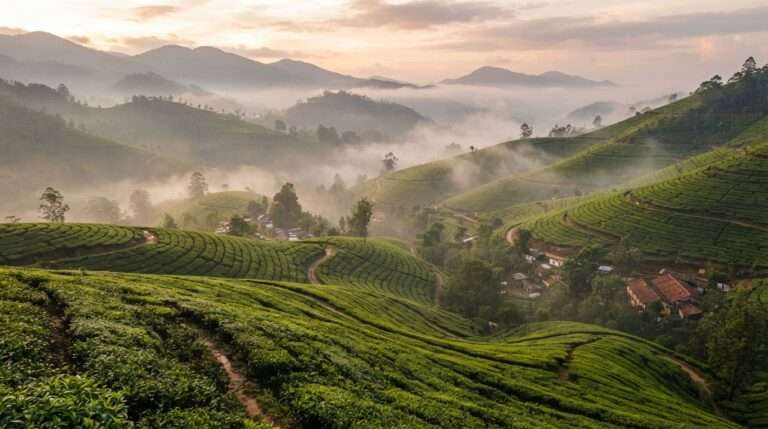
Tea is what most people take home, and it is the one souvenir you can buy well almost anywhere. The hill country around Nuwara Eliya and Ella grows the light, bright “high-grown” teas, while the Kandy and Ruhuna regions give stronger, darker cups that suit Indian-style milk tea. Supermarkets are the cheapest source. A 200 g pack of Dilmah or a Mlesna gift tin at Cargills Food City or Keells costs a fraction of the airport price. If you have time in the hills, a factory outlet such as Pedro Estate near Nuwara Eliya lets you taste before you buy.
Read our guide to tea plantations in Sri Lanka if you want to plan a factory visit around the purchase.
| Typical price | LKR 500 to 2,500 per 100 to 250 g (₹145 to 725) |
| Where to buy | Cargills and Keells supermarkets, Mlesna Tea Centres (Majestic City, Crescat Boulevard), tea-factory outlets in Nuwara Eliya and Ella |
| How to check it's real | The Lion logo of the Sri Lanka Tea Board on the pack means it is 100% Ceylon tea packed in Sri Lanka |
Related Tour Packages


❮
❯
02
Blue Sapphires and Other Gemstones
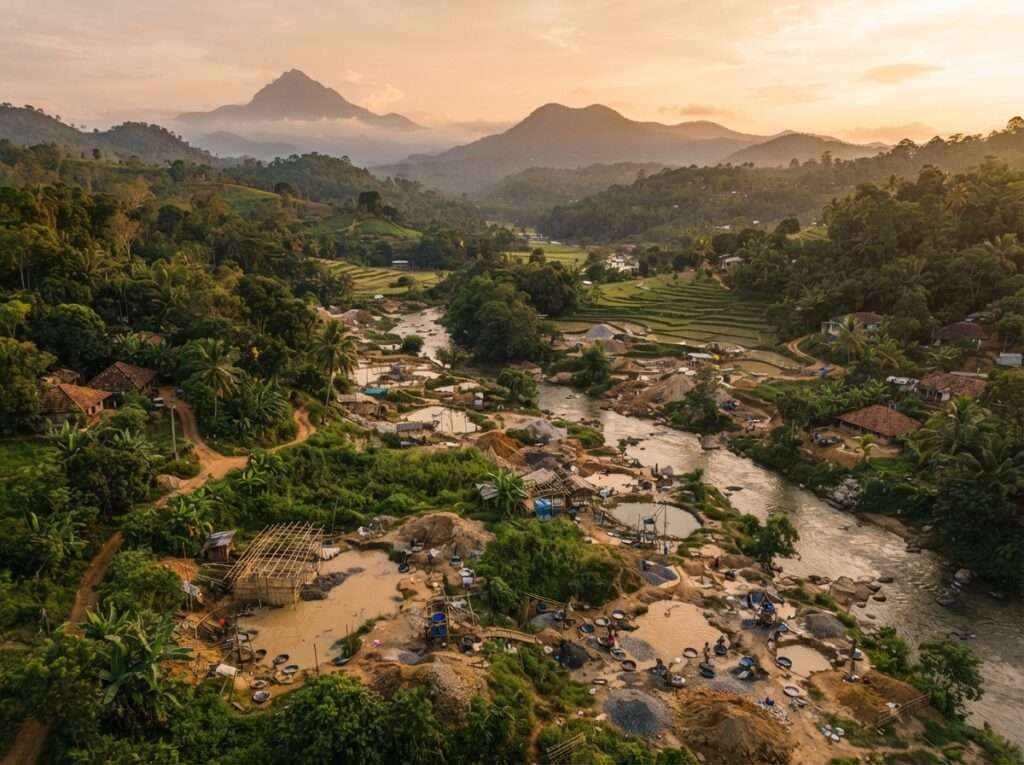
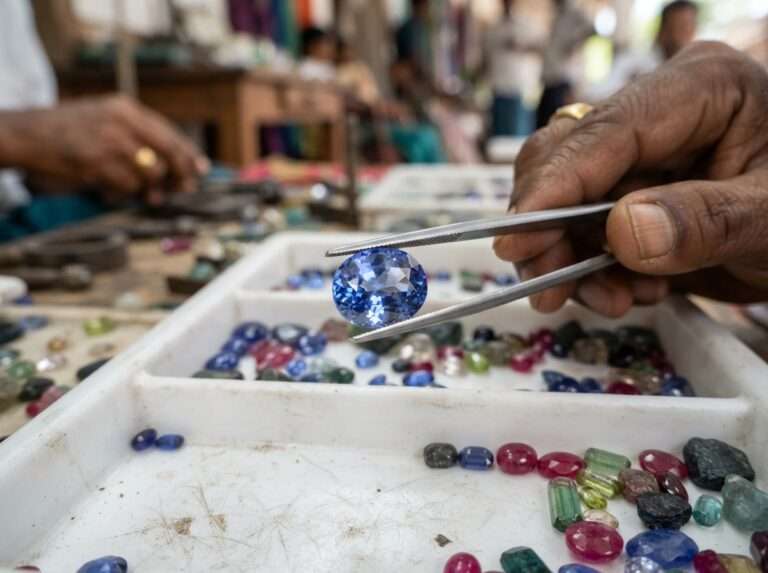
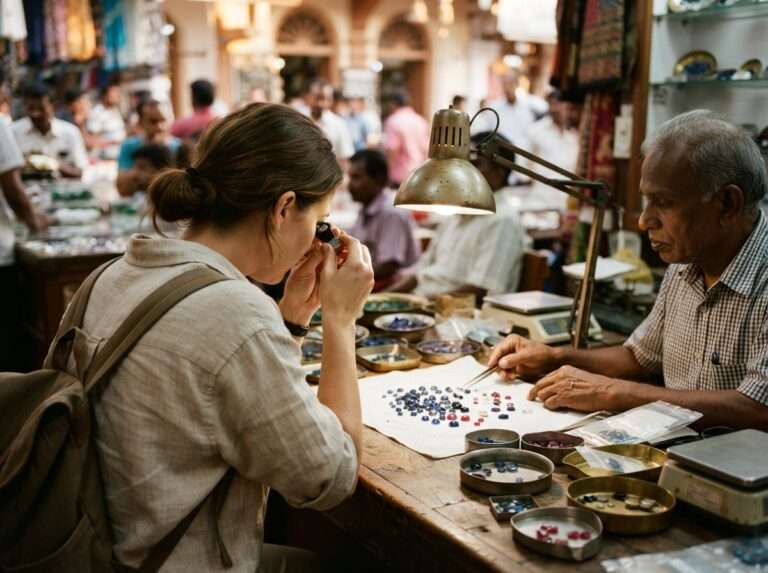
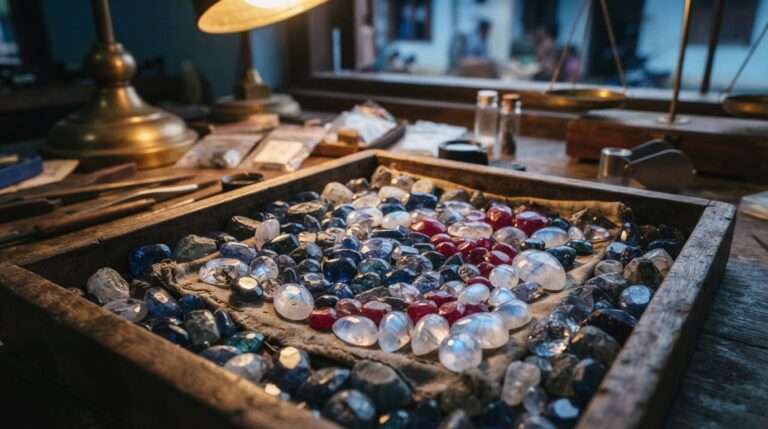
Sri Lanka has been trading gemstones for over two thousand years, and Ratnapura, whose name means “city of gems”, is still where most of them are mined. The stone everyone asks for is blue sapphire. You will also see star sapphires, padparadscha (a pink-orange sapphire found mostly here), rubies, cat’s eye chrysoberyl, topaz, garnets and the milky-blue moonstone from Meetiyagoda. Prices swing wildly with colour, clarity and treatment, so a 1-carat heated blue sapphire and an unheated one of the same size can be several lakh rupees apart. The old line on this page said the gem hubs were Unawatuna and Kandy. They are not. Ratnapura is the source, and Colombo has the largest cluster of licensed dealers.
Follow the six steps in How to Buy Gemstones Safely before you spend serious money.
| Typical price | From about LKR 30,000 per carat for commercial-grade blue sapphire (₹8,700); fine unheated stones run into lakhs |
| Where to buy | NGJA-licensed dealers in Colombo (Galle Road and the Fort area) and Ratnapura |
| How to check it's real | A laboratory report from the NGJA lab or a recognised private lab, and an itemised invoice |
Related Tour Packages


❮
❯
03
Ceylon Cinnamon and Spices
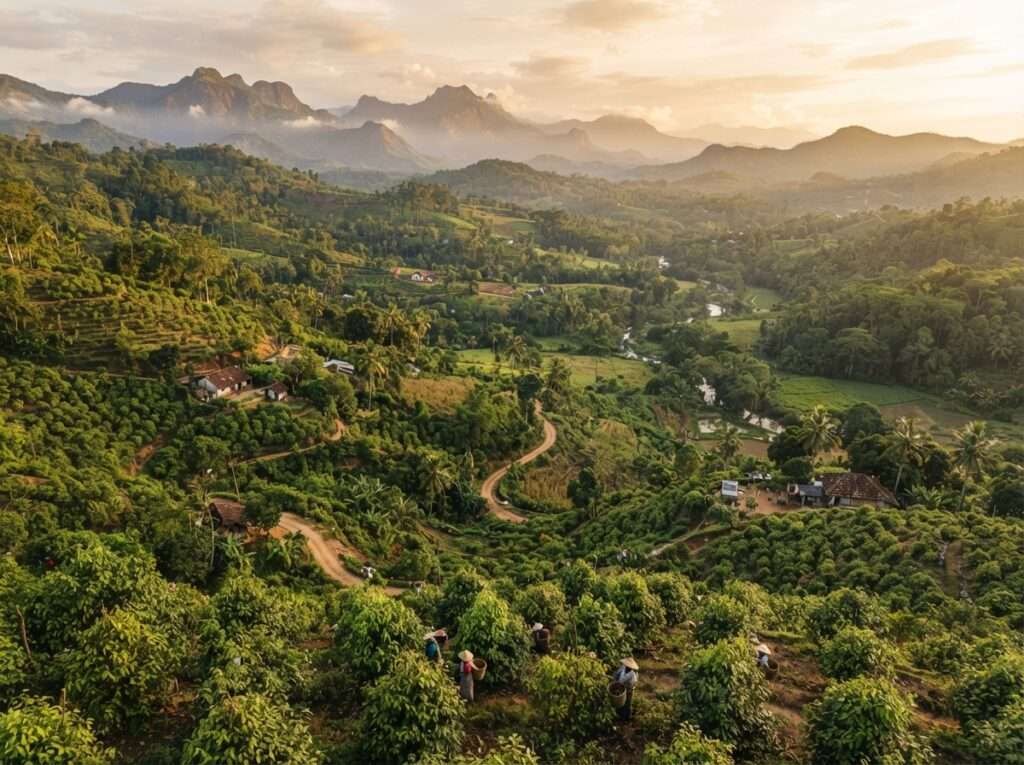
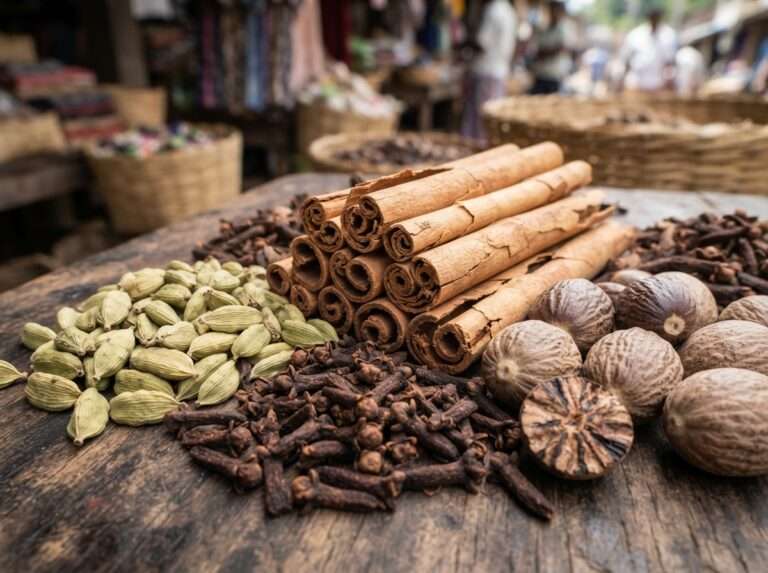
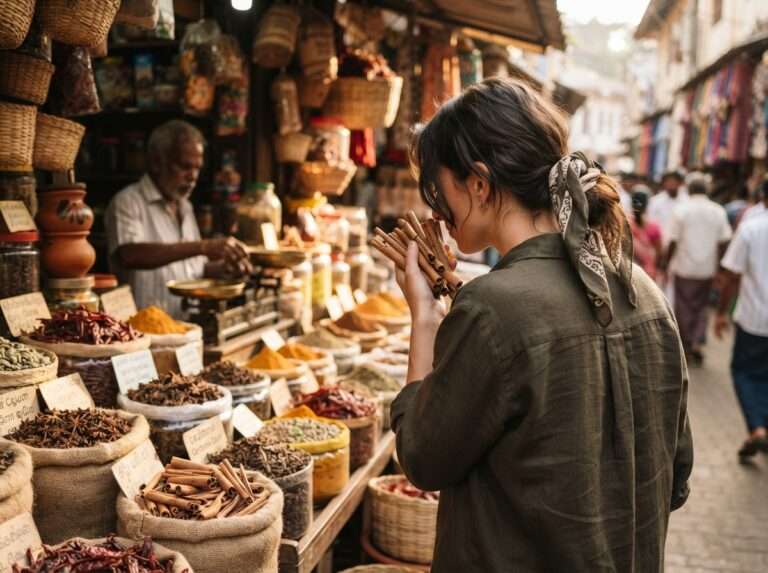
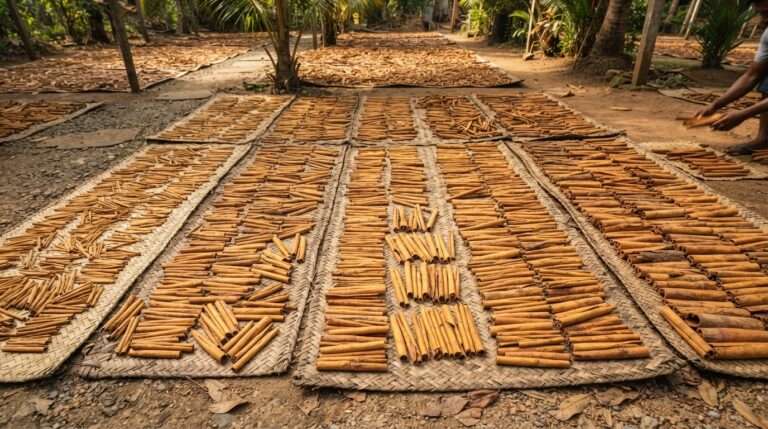
Sri Lanka grows roughly 85 to 90% of the world’s true cinnamon (Cinnamomum verum), according to the country’s Export Development Board. That matters because most “cinnamon” sold in India is cassia, a harder, more pungent relative. True Ceylon cinnamon rolls into thin, papery layers like a cigar and crumbles in your fingers. Grades go by thickness, and “Alba” (under 6 mm) is the finest. Cardamom, black pepper, cloves, nutmeg and the dark-roasted Sri Lankan curry powder are the other buys. The spice gardens on the Kandy to Matale road are a fun stop, but their prices run several times higher than a supermarket, and guides often earn a commission. Buy the sticks at Cargills or Keells, or in the Pettah spice lanes in Colombo, and use the gardens for the tour.
| Typical price | LKR 400 to 1,200 per 100 g of cinnamon (₹115 to 350) |
| Where to buy | Supermarkets, Pettah spice shops, Galle Fort spice stores |
| How to check it's real | Thin, many-layered quills that snap easily; cassia is a single thick bark curl |
Related Tour Packages


❮
❯
04
Ambalangoda Wooden Masks
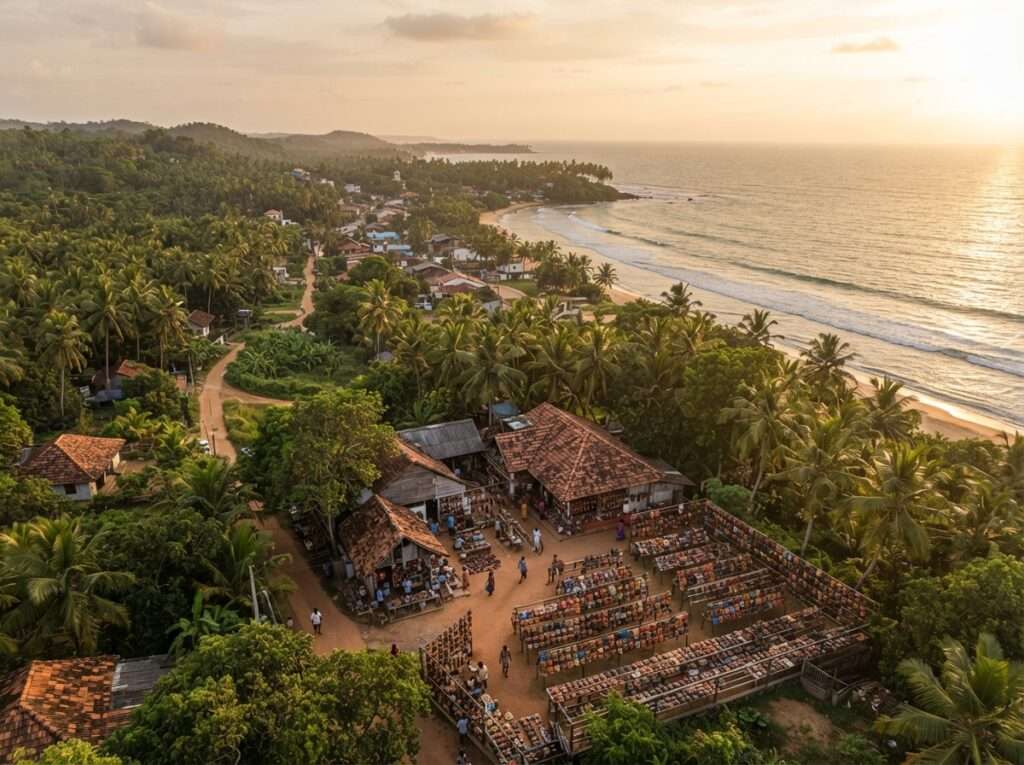
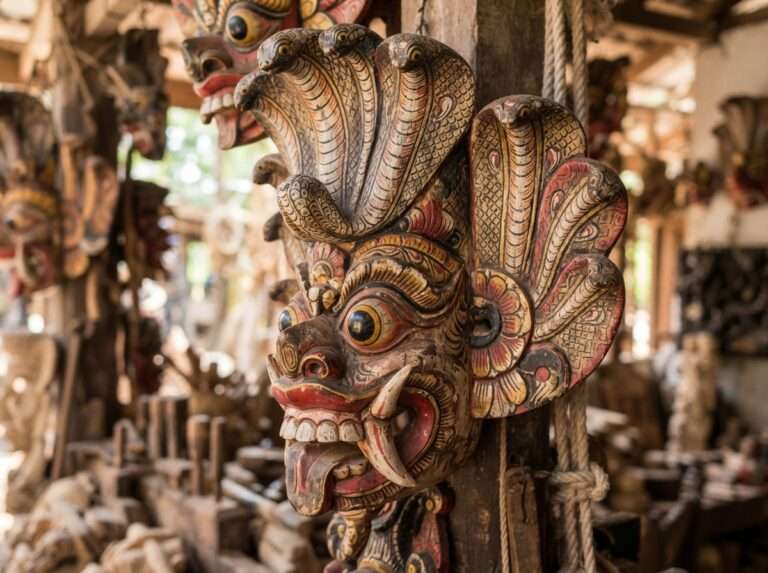
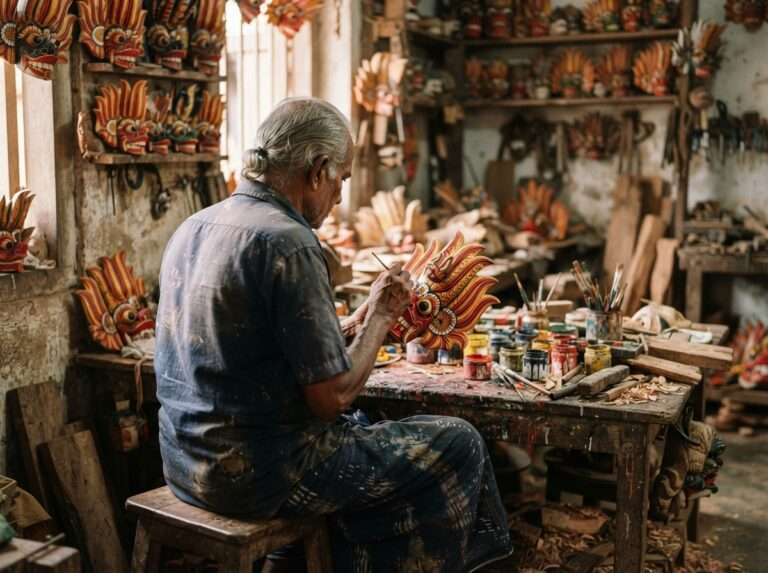
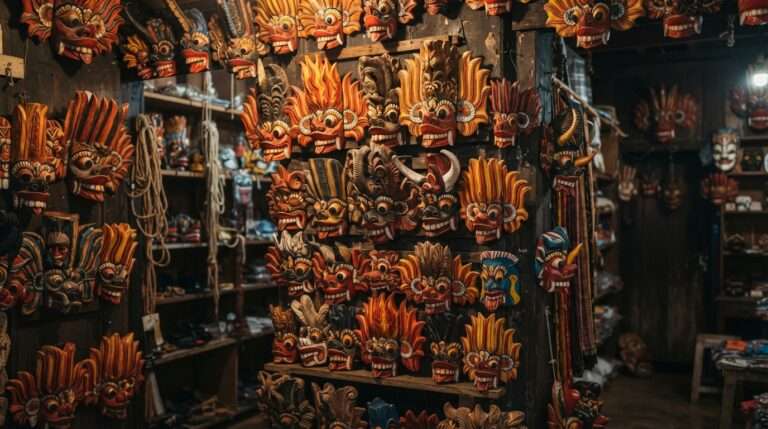
The painted masks hanging in every souvenir shop come from the coastal town of Ambalangoda, about 85 km south of Colombo on the Galle road. Carvers use light kaduru wood and still paint many by hand. There are three families of mask. Raksha (demon) masks, including the cobra-crowned Naga Raksha, appear in festival processions. Sanni masks were used in healing rituals, one mask for each of the 18 illnesses. Kolam masks belong to comic folk dramas. The Ariyapala Masks Museum on the main road has free entry with a tip box, a workshop where you can watch the carving, and a sales outlet. Travellers consistently report that its shop costs more than small workshops nearby, so look there and compare before buying.
| Typical price | LKR 1,500 to 8,000 for small to medium masks (₹435 to 2,300); large Raksha masks cost far more |
| Where to buy | Ambalangoda workshops and the Ariyapala outlet, Laksala in Colombo and Kandy |
| How to check it's real | Uneven hand-painted brushwork and a light, carved wood body; moulded resin copies feel heavy and smooth |
05
Batik
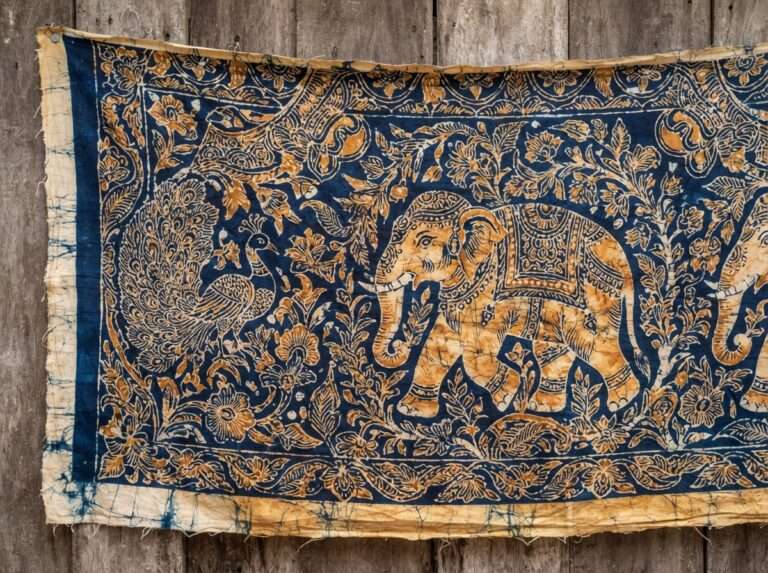
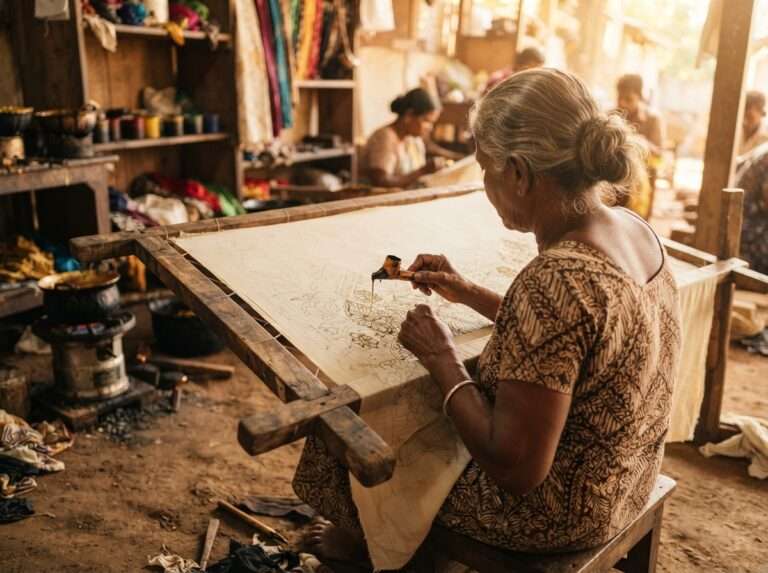
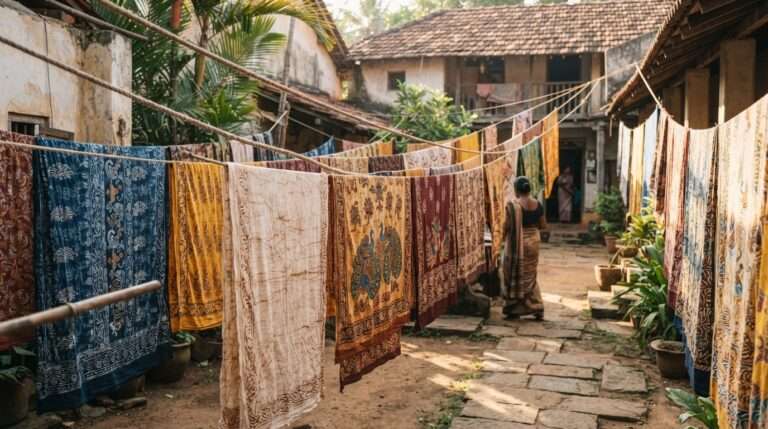
Batik arrived from Java and became a Sri Lankan craft in its own right, with elephants, peacocks and temple dancers as favourite motifs. Kandy and the Bentota to Hikkaduwa coast have the most workshops, and many let you watch the wax and dye process. Wall hangings, cushion covers, sarongs and shirts are the easy buys. Jayamali Batiks near Kandy’s central market is a long-running studio, and the shops covered in our Bentota shopping guide sell batik straight from the coast workshops. Machine-printed fabric is common, so check the back.
| Typical price | LKR 1,500 to 6,000 for a wall hanging or sarong (₹435 to 1,750) |
| Where to buy | Jayamali Batiks (Kandy), Bentota and Hikkaduwa workshops, Laksala |
| How to check it's real | Hand-waxed batik shows the design on both sides and fine "crackle" lines where the wax broke |
06
Handloom Saris, Kandyan Osariya and Sarongs
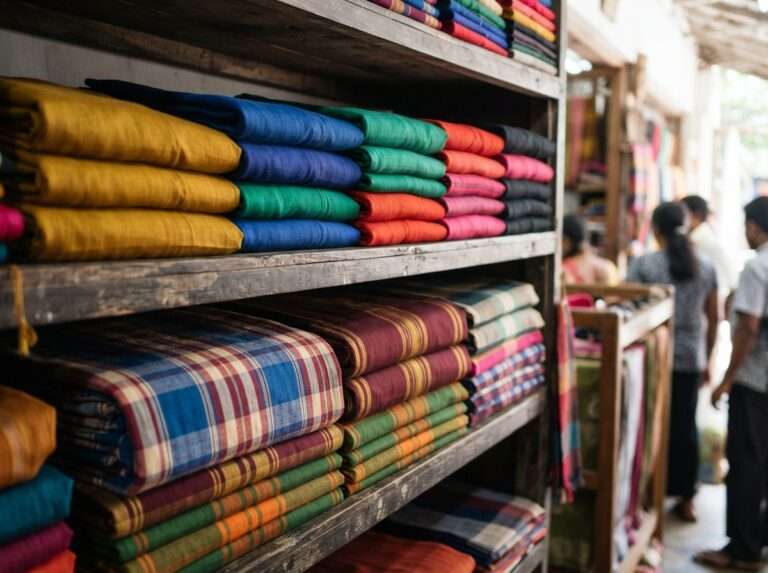
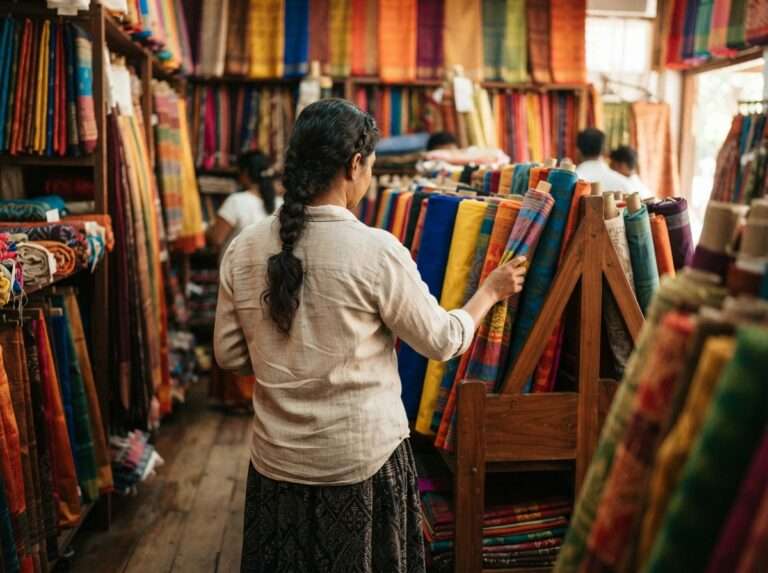
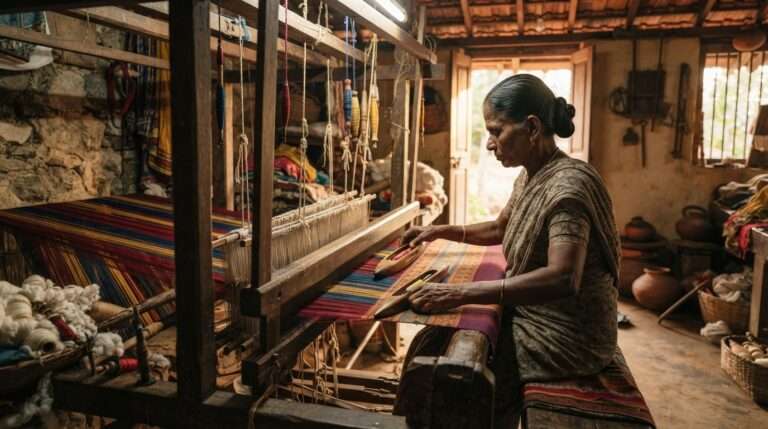
The Sri Lankan sari to look for is the Kandyan or osariya style, draped with a frilled pleat at the waist and worn by brides and at formal events. It is a different garment from the Indian sari, so the old Mysore silk image on this page has gone. Handloom cotton is the other strength. Barefoot, founded by the designer Barbara Sansoni, sells bold, solid-colour handloom saris, sarongs and fabric by the metre. Selyn, a fair-trade handloom company, makes saris, kurtas and accessories woven in village centres. A cotton sarong is the cheap, practical buy for men and women alike.
| Typical price | Handloom sari LKR 8,000 to 25,000 (₹2,300 to 7,250); cotton sarong from LKR 1,000 (₹290) |
| Where to buy | Barefoot (Colombo and Galle Fort), Selyn (Colombo), Kandy market for sarongs |
| How to check it's real | Handloom has slight irregularities in the weave and a fringe or selvedge finished by hand |
07
Ayurvedic Oils and Balms
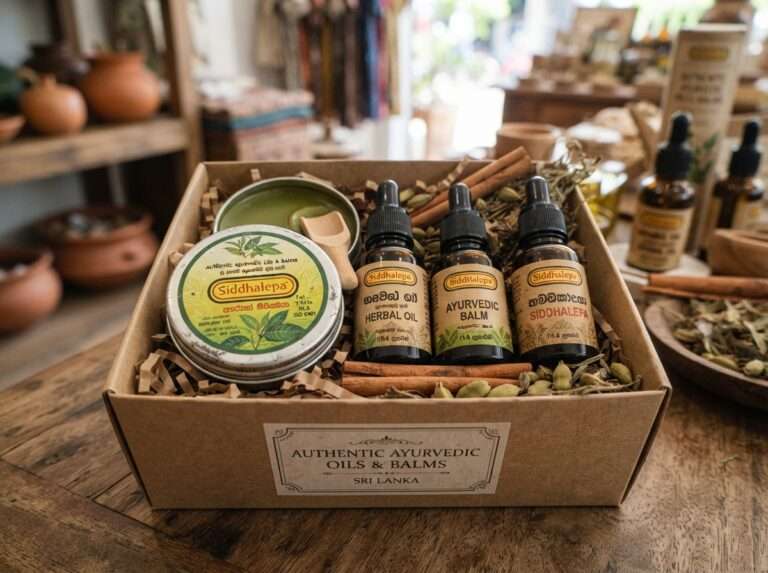
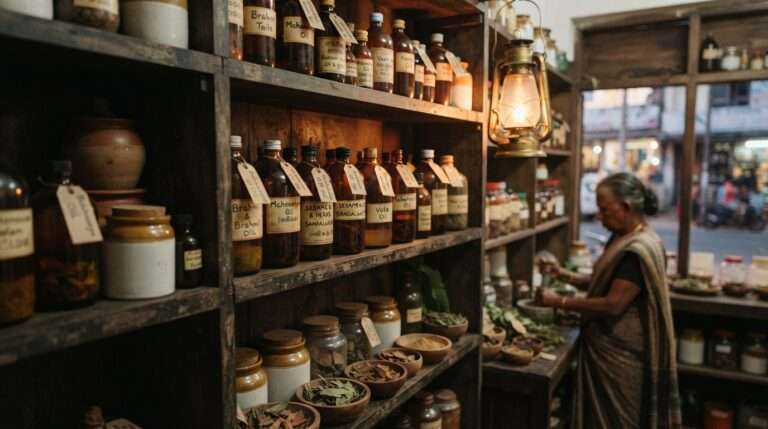
Sri Lanka runs its own Ayurveda tradition, and its balms and oils are cheap, compact gifts. Siddhalepa, a herbal balm sold for generations, is the one every Sri Lankan household keeps and every pharmacy stocks. Spa Ceylon sells luxury Ayurvedic body and bath products in smart gift boxes at the Dutch Hospital and the big malls. Herbal teas such as coriander-based Paspanguwa (a cold remedy) are a local favourite. Check the label for the ingredients if you have allergies.
| Typical price | LKR 400 to 4,000 (₹115 to 1,150) |
| Where to buy | Pharmacies and supermarkets (Siddhalepa), Spa Ceylon stores, Laksala |
| How to check it's real | A printed batch number and the manufacturer's address on the pack |
08
Noritake and Dankotuwa Porcelain
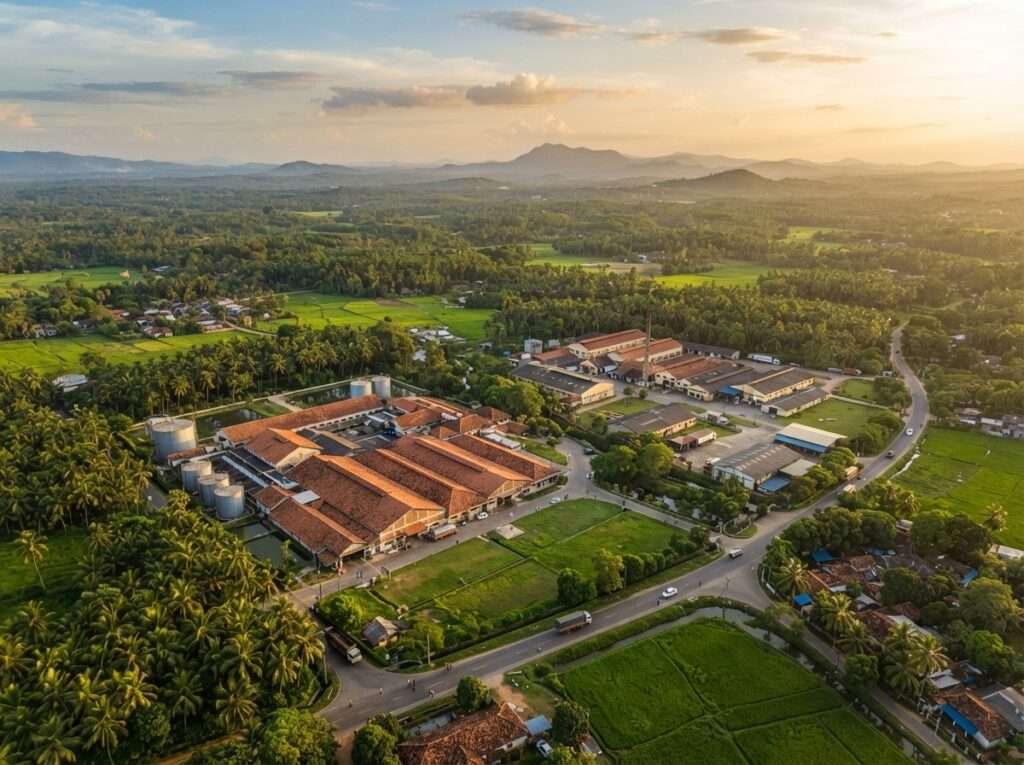
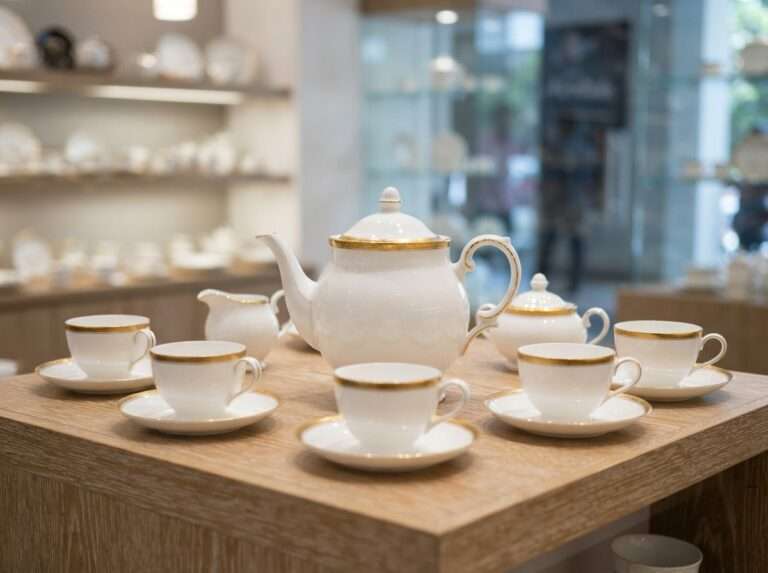
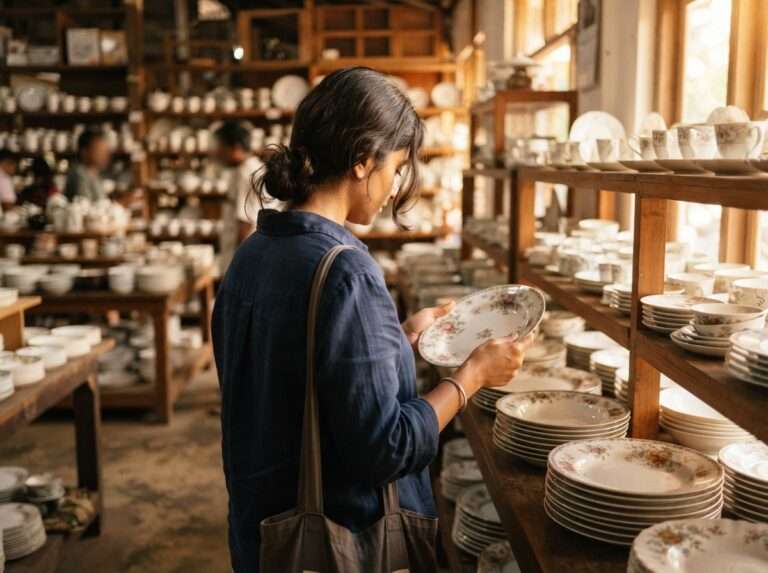
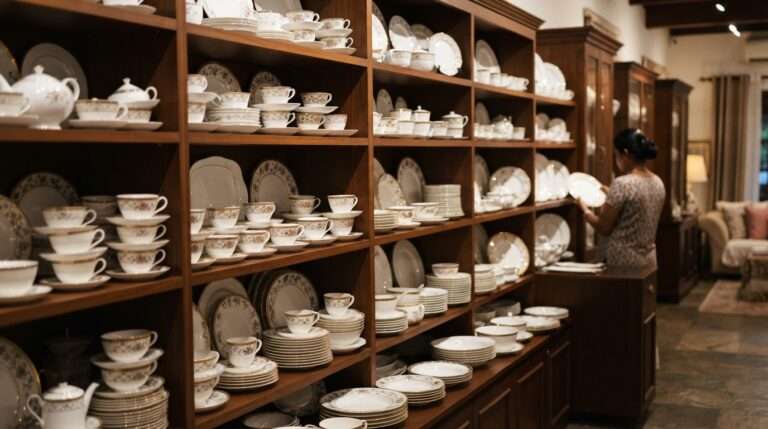
Few people expect to buy porcelain in Sri Lanka, but the Japanese company Noritake has made tableware here since the 1970s and runs its main factory in Matale, on the Kandy to Dambulla road. The factory outlet sells seconds and current ranges, and its counter handles export packing for overseas buyers. Dankotuwa, a Sri Lankan brand, makes similar porcelain at lower prices. If you are not passing Matale, Noritake’s flagship store on Dharmapala Mawatha in Colombo carries the full range.
| Typical price | Mugs from LKR 1,500 (₹435); a dinner set from about LKR 30,000 (₹8,700) |
| Where to buy | Noritake factory outlet (Matale), Noritake flagship (Colombo), Dankotuwa showrooms |
| How to check it's real | The back-stamp on each piece; ask for a factory bill and packing |
09
Elephant and Buddha Figurines
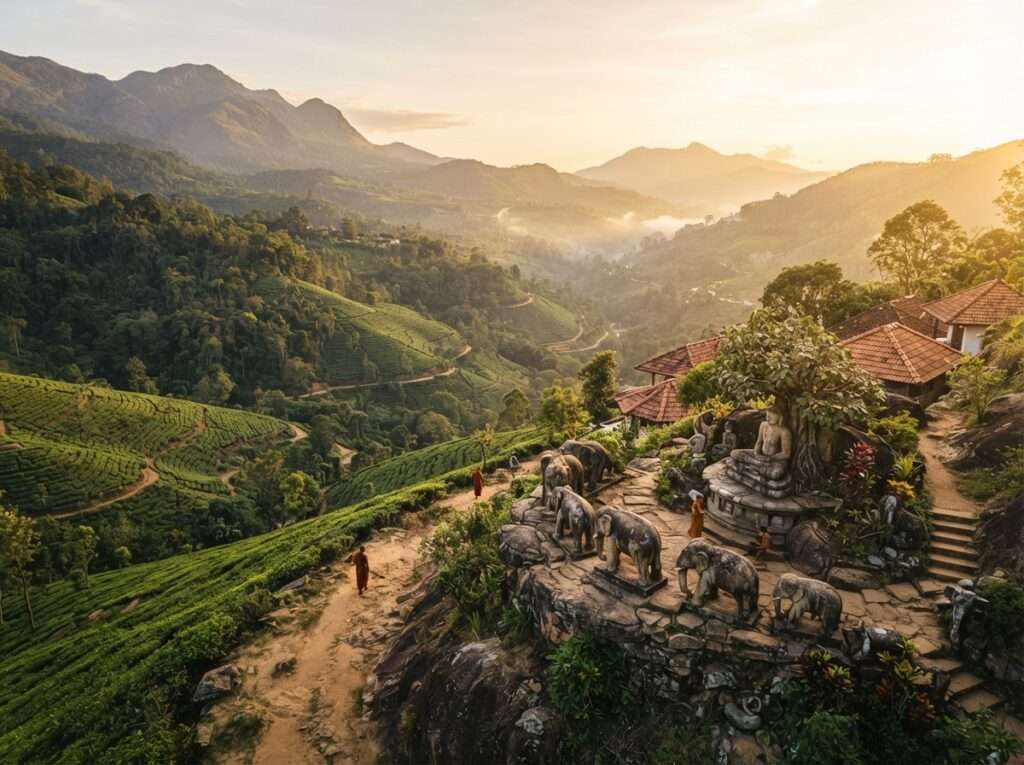
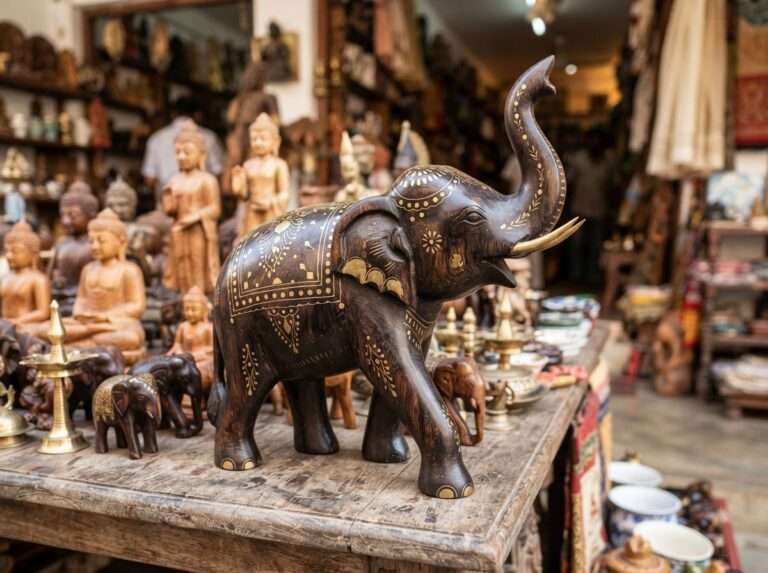
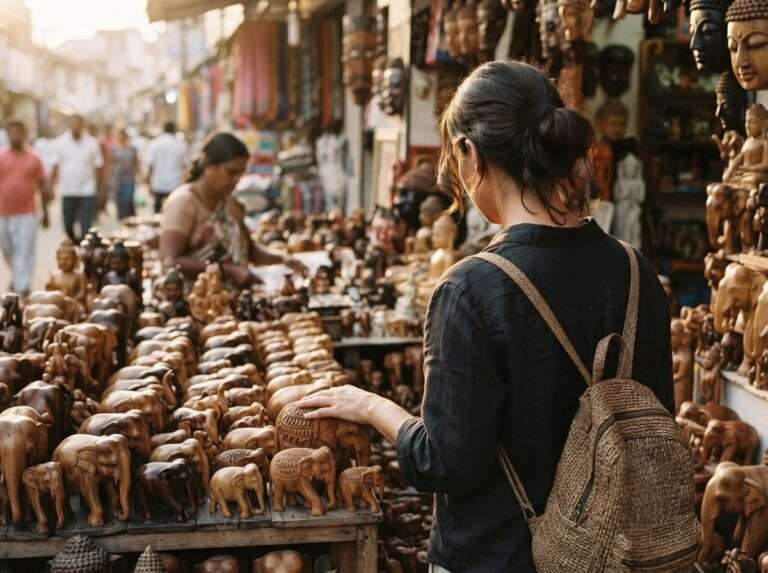
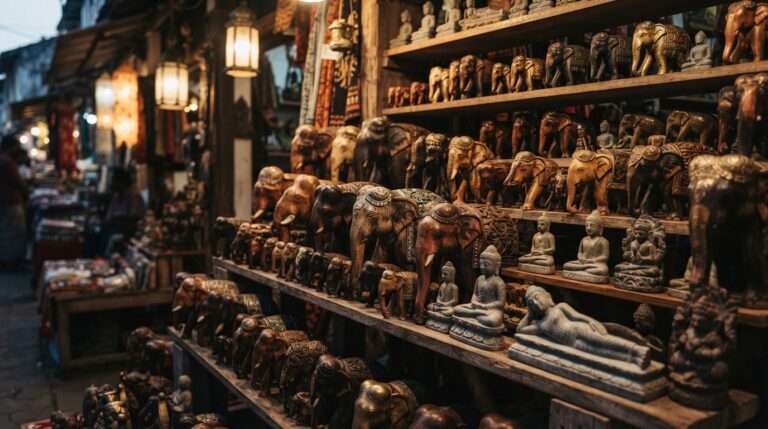
Carved elephants are the island’s classic gift, in wood, brass, stone and ebony. Buddha figures are sold just as widely, in seated and standing poses. Buy the elephant freely. With the Buddha, keep two things in mind. Sri Lanka treats Buddha images with deep respect, so do not buy one as a decoration for a bathroom or a garden floor, and never pose for photos with your back to it. New souvenir Buddha images are fine to take home, and customs allows up to five per person, but antique Buddha images, and separated heads or hands, are cultural property that needs an export permit, so stick to clearly new, whole pieces. Be wary of “ebony” that feels light; real ebony is dense and heavy, and lighter wood is often painted black.
| Typical price | LKR 800 to 10,000 (₹230 to 2,900) |
| Where to buy | Laksala, Lakpahana, Kandy market, Galle Fort shops |
| How to check it's real | Weight (real ebony sinks in water) and visible carving marks |
10
Dumbara Mats and Cane Boxes
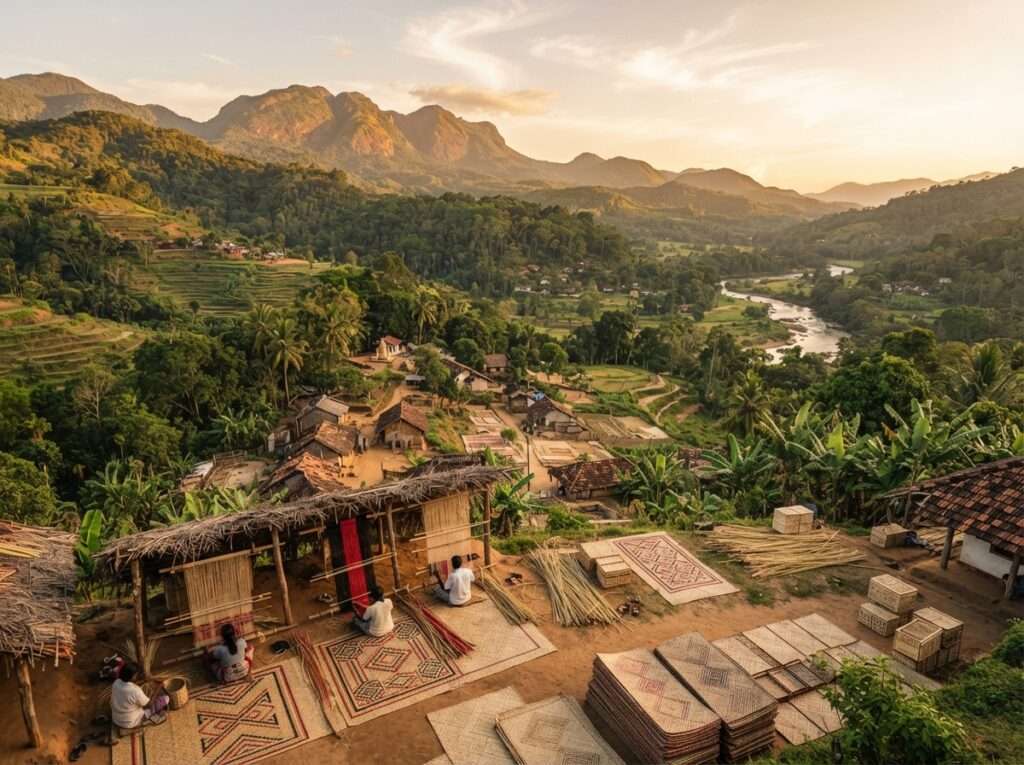
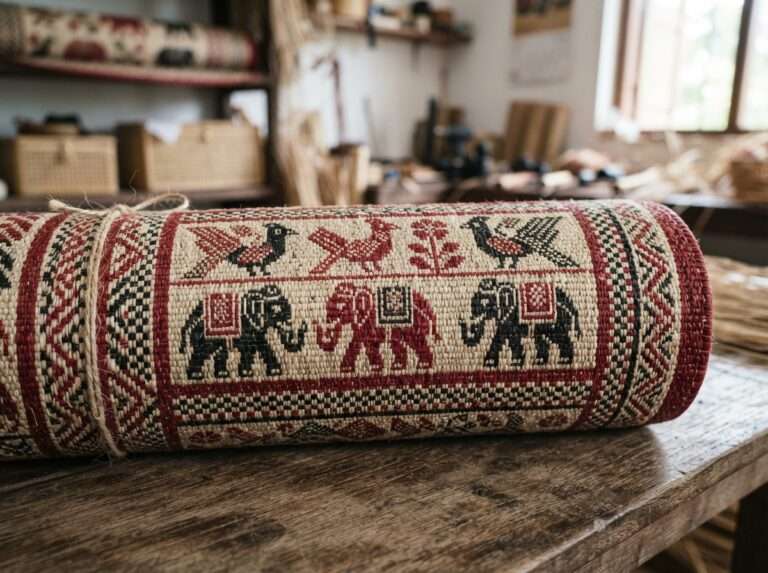
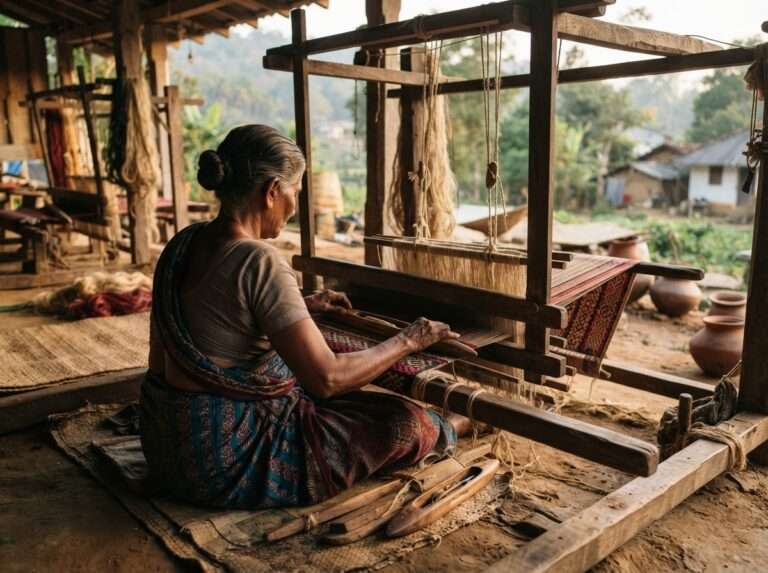
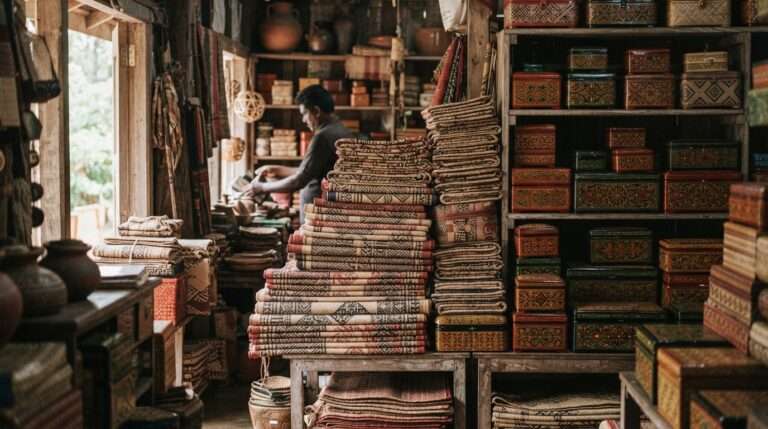
Dumbara weaving comes from villages in the Dumbara valley east of Kandy. Craftsmen work hemp-like hana fibre into mats and wall hangings with geometric patterns of birds, elephants and dancers in red, black and natural tones. The mats roll flat, weigh little and make a good wall piece back home. Cane and rattan boxes, often lacquered, are the companion buy.
| Typical price | LKR 1,500 to 6,000 for a mat (₹435 to 1,750) |
| Where to buy | Laksala, Kandy market, roadside weavers in the Dumbara valley |
| How to check it's real | A tight, even weave with the same pattern on both faces |
11
Brass, Silver and Lacquerware
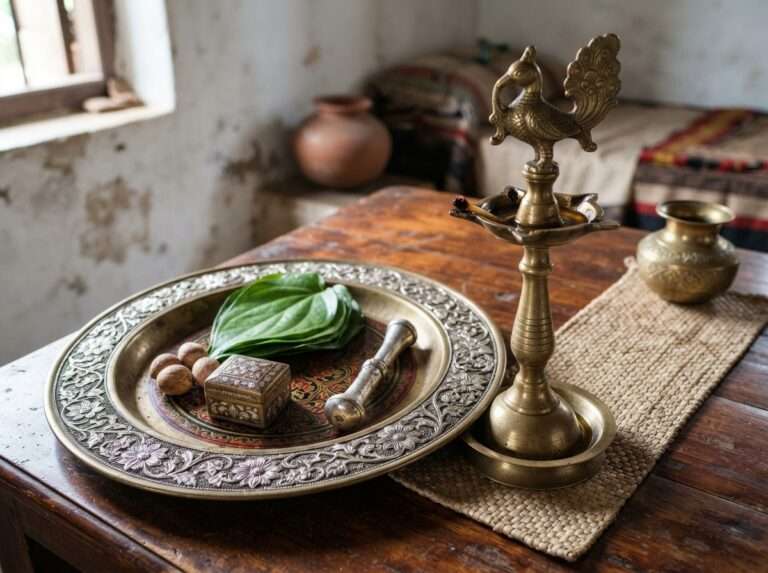
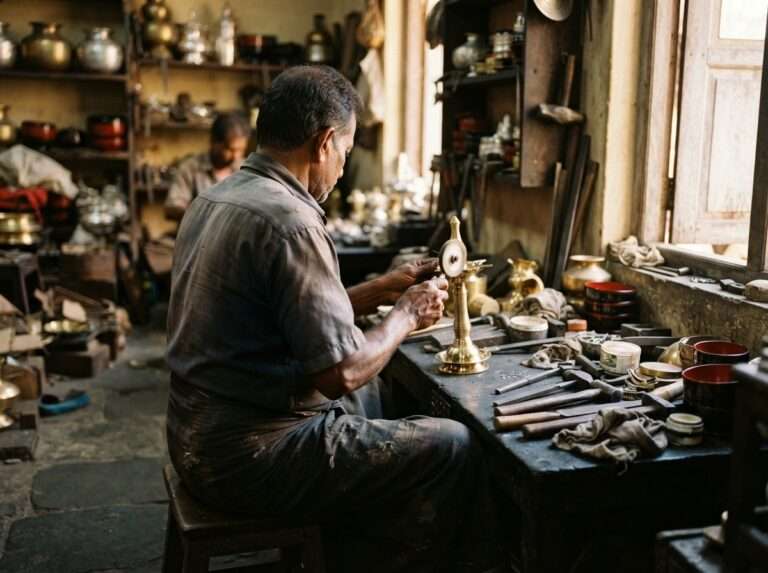
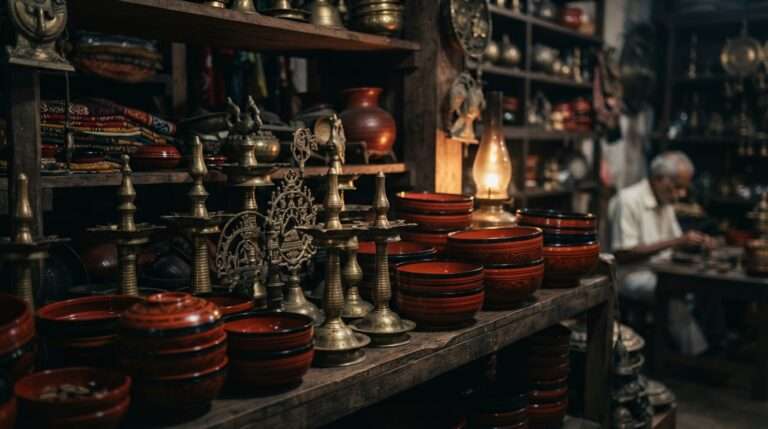
Sri Lanka’s official tourism board lists brass, silver and lacquer among its traditional crafts. Brass oil lamps, betel trays and small boxes come from smithing villages around Kandy. Lacquerware, made by turning wood and layering coloured lac in red, yellow and black bands, comes from the Matale area. Silver filigree jewellery is a lighter buy that rarely tips your customs allowance.
| Typical price | LKR 1,000 to 15,000 (₹290 to 4,350) |
| Where to buy | Laksala, Lakpahana, Kandy craft shops |
| How to check it's real | Brass should be heavy for its size; lacquer bands should be smooth and evenly layered |
12
Moonstone Carvings and Painted Stone Art

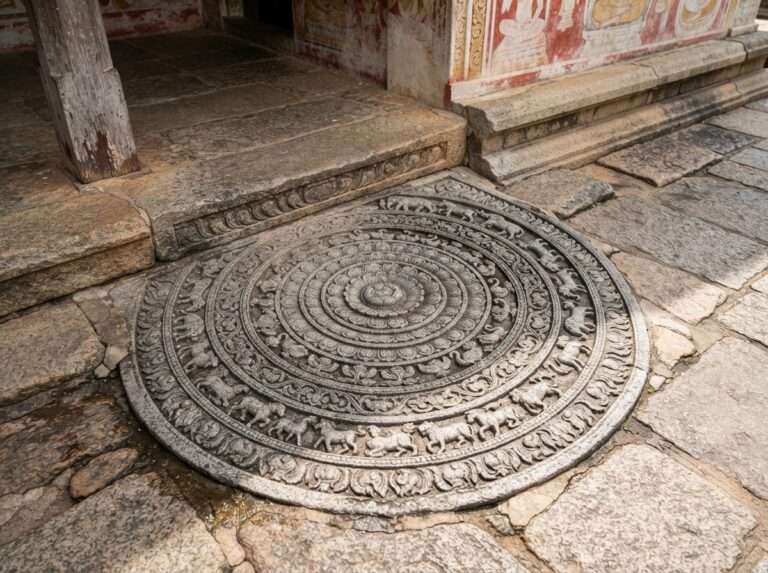
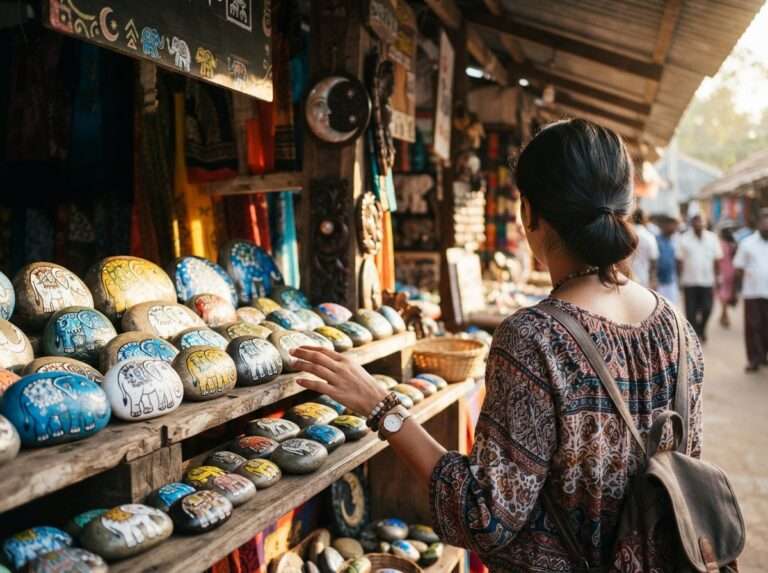
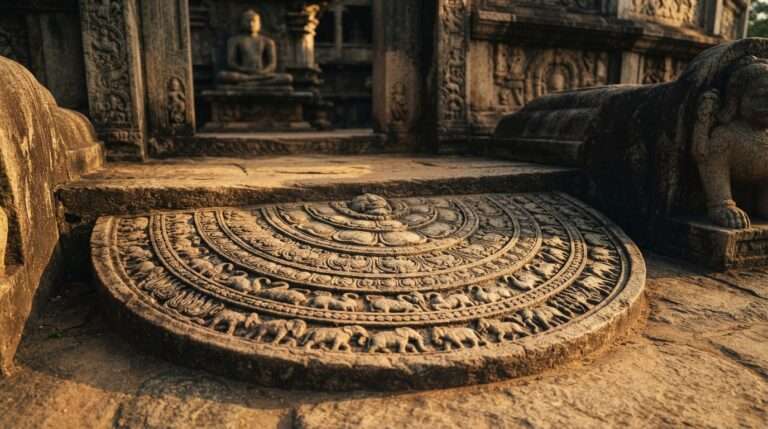
The semicircular carved “moonstone” doorstep is one of Sri Lanka’s signature designs, found at the entrance of temples in Anuradhapura and Polonnaruwa. Small stone and wood replicas make a good keepsake. Do not confuse it with the gemstone of the same name. Around Dambulla and Sigiriya, vendors also sell smooth river stones painted with elephants and dancers, which cost little and pack easily.
| Typical price | Painted stones LKR 300 to 1,500 (₹90 to 435); carved replicas LKR 2,000 to 15,000 (₹580 to 4,350) |
| Where to buy | Stalls near Dambulla, Sigiriya and Anuradhapura, Laksala |
| How to check it's real | Replicas are new and legal to export. A worn, genuinely old carving is an antique and needs a permit |
13
Paintings and Contemporary Art
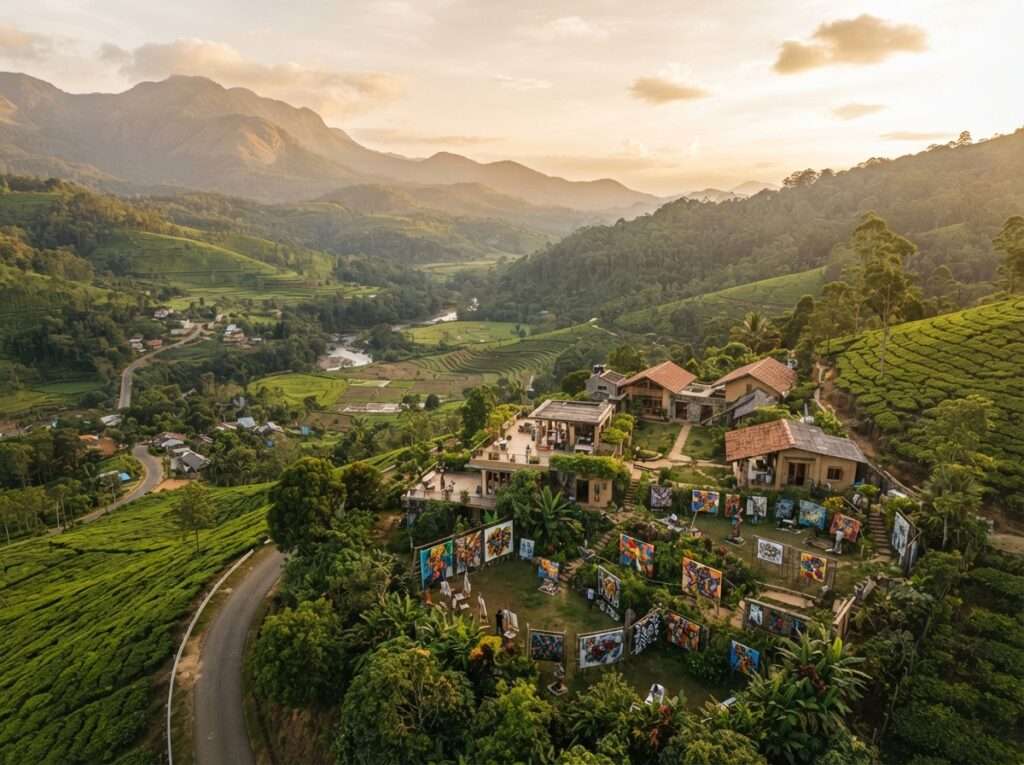
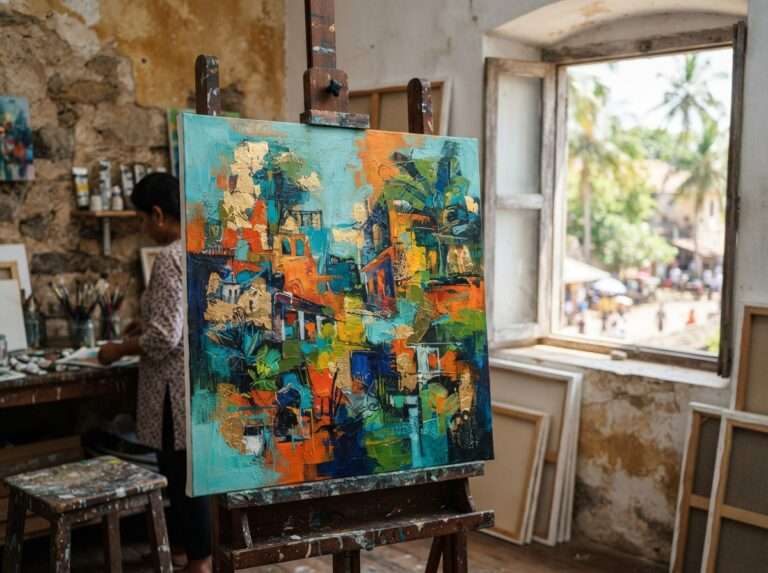
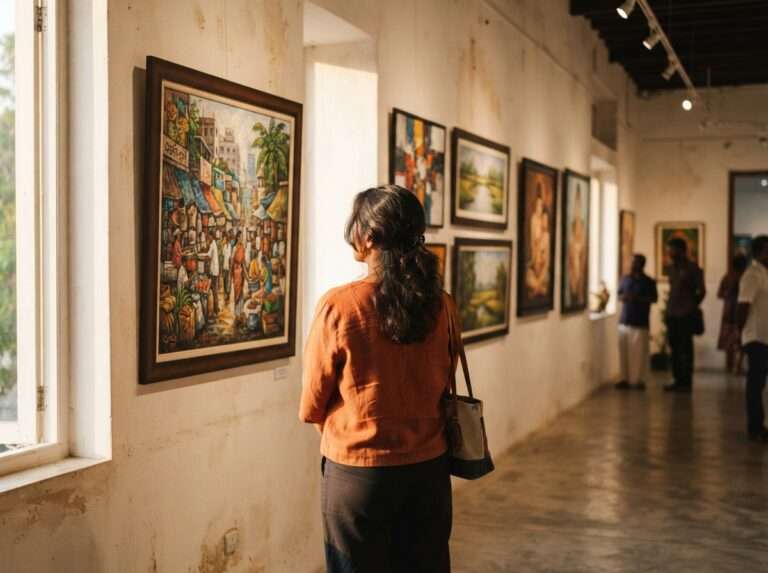
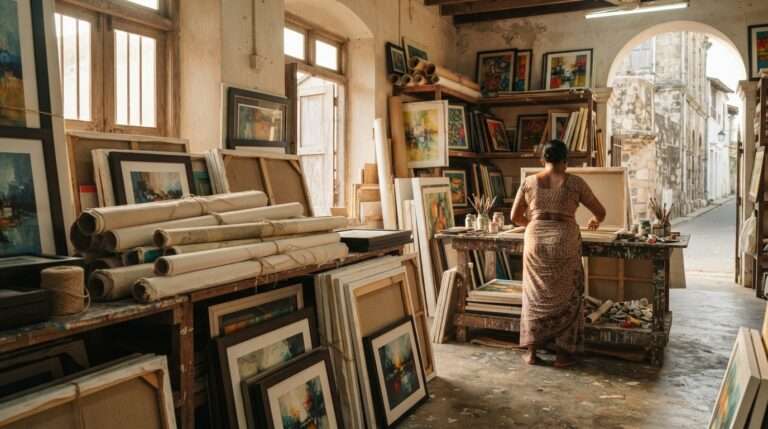
Sri Lankan painting runs from temple-mural style figures to bright contemporary canvases. Colombo has the most galleries, and Paradise Road’s gallery café shows local artists. In Galle Fort, small studios sell prints and originals, and many ship abroad. Rolled canvases fit in a cardboard tube as hand baggage.
| Typical price | Prints from LKR 3,000 (₹870); originals vary widely |
| Where to buy | Paradise Road (Colombo), Galle Fort studios |
| How to check it's real | Ask for a signed certificate and the artist's name on the invoice |
14
Beeralu Lace
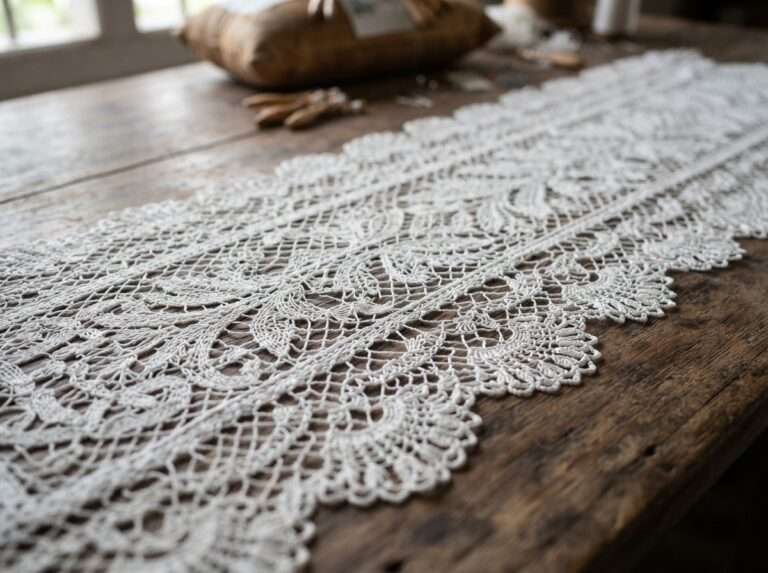
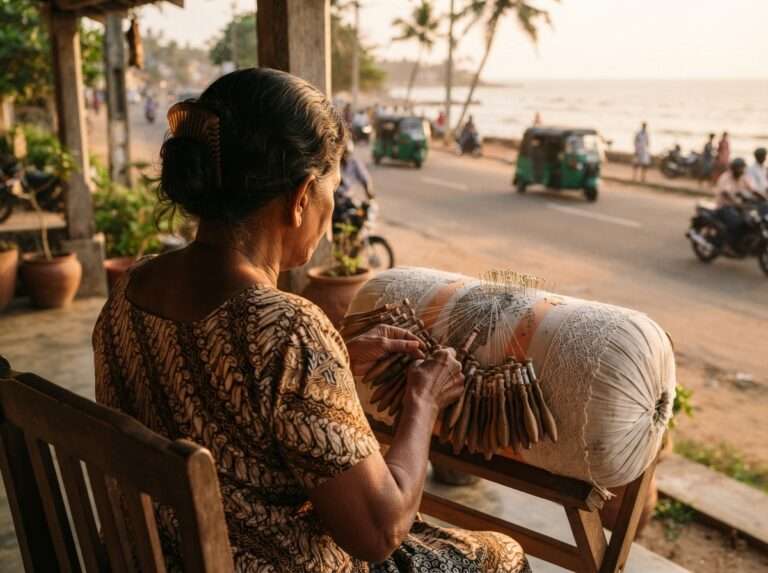
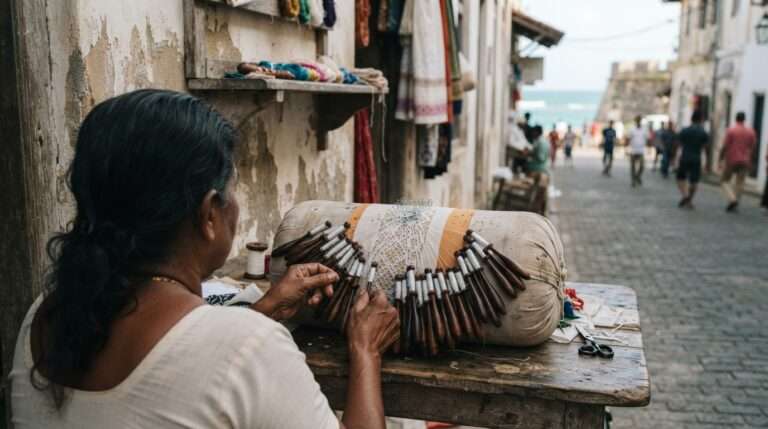
Beeralu is bobbin lace, introduced by the Portuguese in the 16th century and still made by women on the south coast. Lacemakers work dozens of wooden bobbins over a pillow to build table runners, collars and doilies. Galle and Weligama are the centres, and you will often see a lacemaker working outside a shop on the coast road.
| Typical price | LKR 2,000 to 8,000 for a table runner (₹580 to 2,300) |
| Where to buy | Galle Fort shops, Weligama roadside lacemakers |
| How to check it's real | Bobbin lace has tiny irregular knots; machine lace is perfectly uniform |
15
Jams, Chutneys and Kithul Treacle
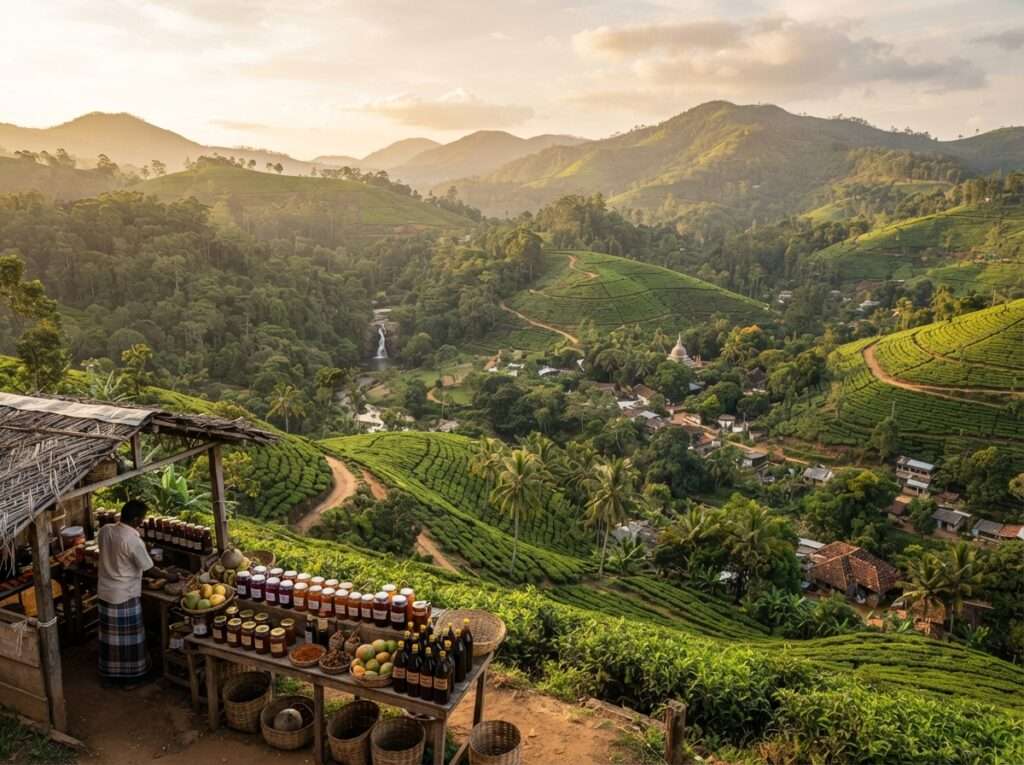
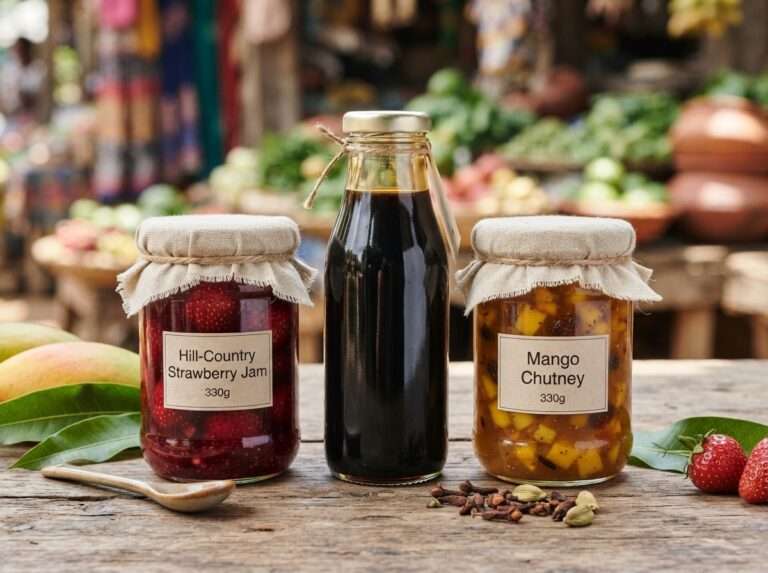
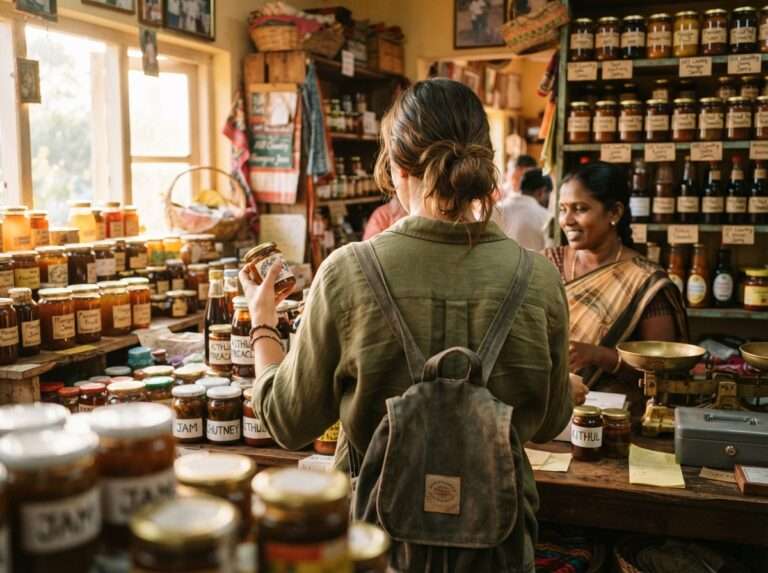
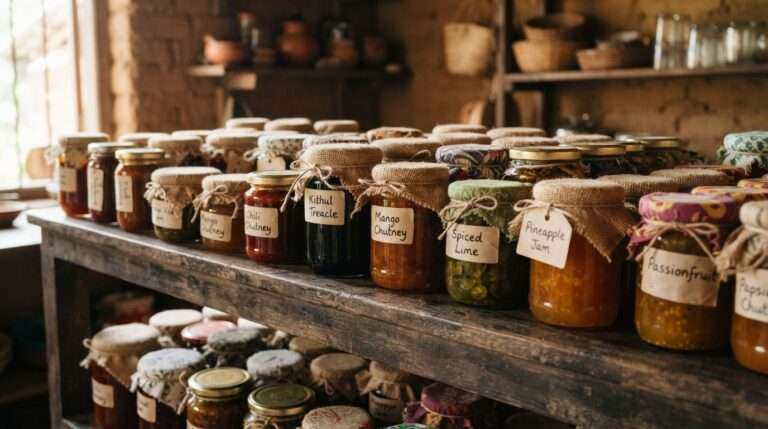
Kithul treacle, the dark syrup tapped from the fishtail palm, is the island’s own sweetener. Locals pour it over buffalo curd, and it is worth bringing home in a sealed bottle. Wood apple jam, mango chutney, ginger preserves and the hill-country strawberry jams are the other edible buys. In Nuwara Eliya, the jam room run by Franciscan sisters on Church Road makes small-batch jams and chutneys that sell out. For everything else on the plate, see our guide to Sri Lankan cuisine.
| Typical price | LKR 500 to 1,500 per bottle or jar (₹145 to 435) |
| Where to buy | Supermarkets, the Franciscan sisters' jam room (Nuwara Eliya), Good Market (Colombo) |
| How to check it's real | Pure kithul treacle lists only kithul sap; "treacle" blended with sugar is cheaper and thinner |
16
Arrack
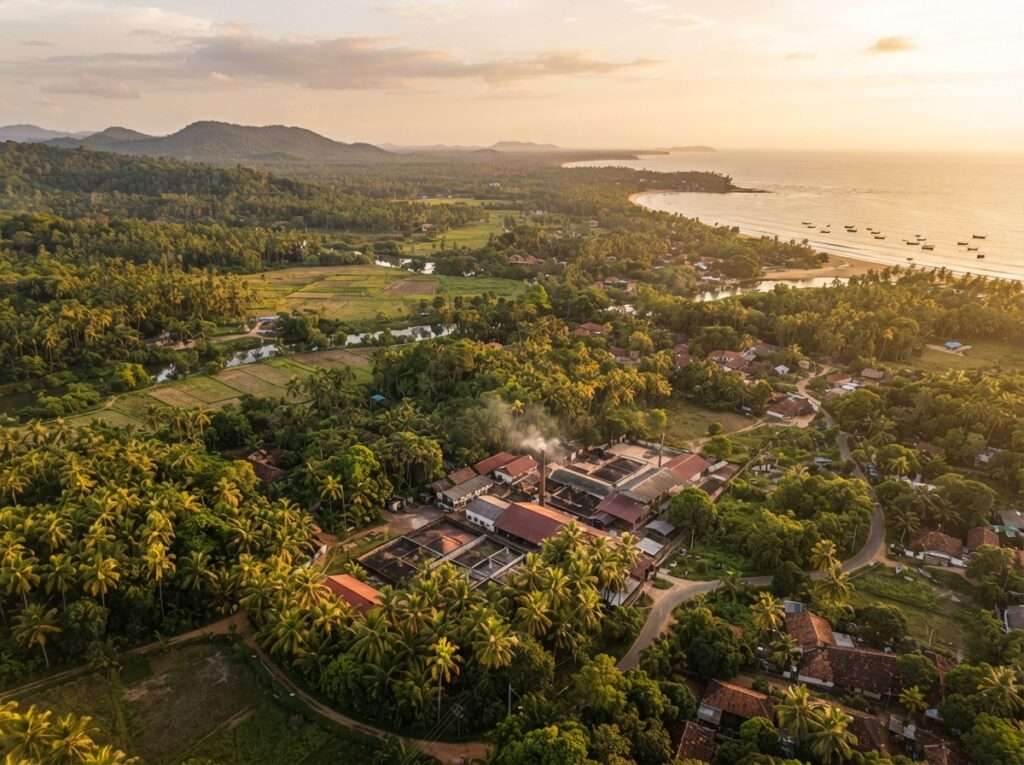
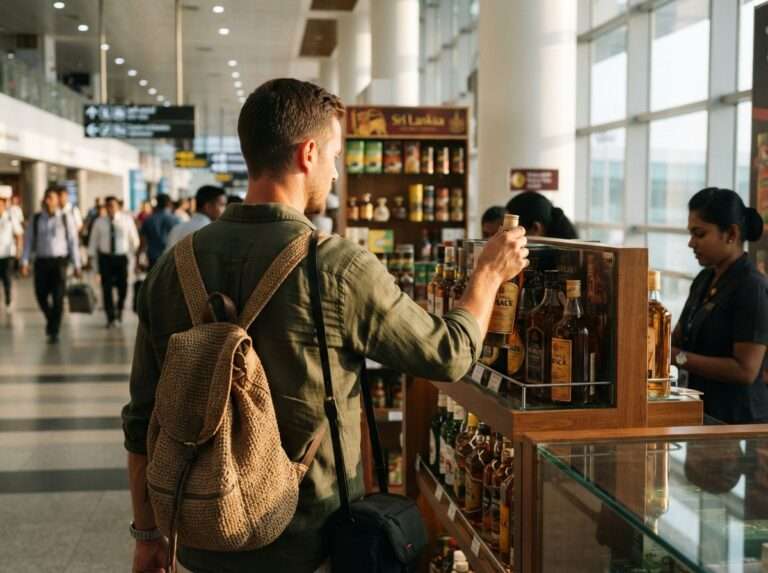
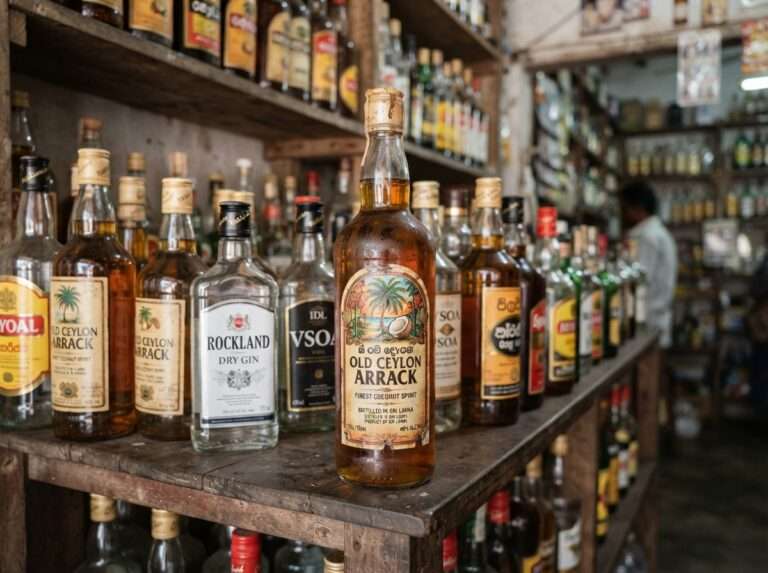
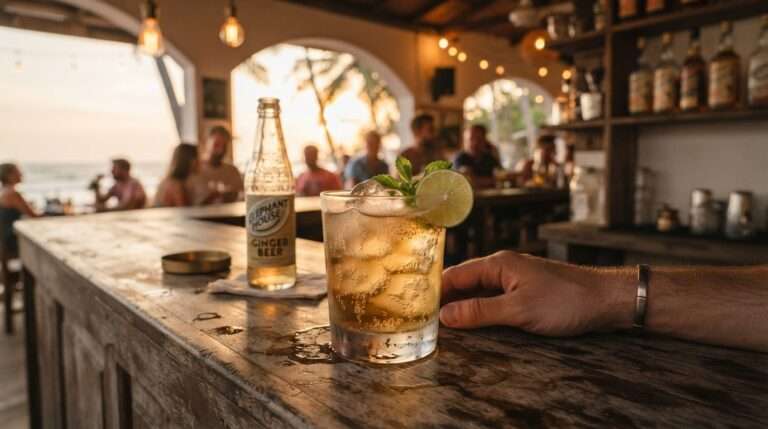
Coconut arrack is Sri Lanka’s national spirit, distilled from the sap of coconut flowers. It tastes somewhere between rum and whisky and works well with ginger beer. Buy it from a licensed liquor shop or at the duty-free counter in Colombo airport. Remember that India’s baggage rules allow 2 litres of alcohol per adult duty-free, which covers two standard 750 ml bottles with a little room to spare.
| Typical price | LKR 3,500 to 7,000 per 750 ml (₹1,000 to 2,000) |
| Where to buy | Licensed liquor shops, BIA departure duty-free |
| How to check it's real | Look for "100% coconut arrack" on the label; cheaper blends mix in neutral spirit |
17
Coconut-Shell Craft and Elephant-Dung Paper
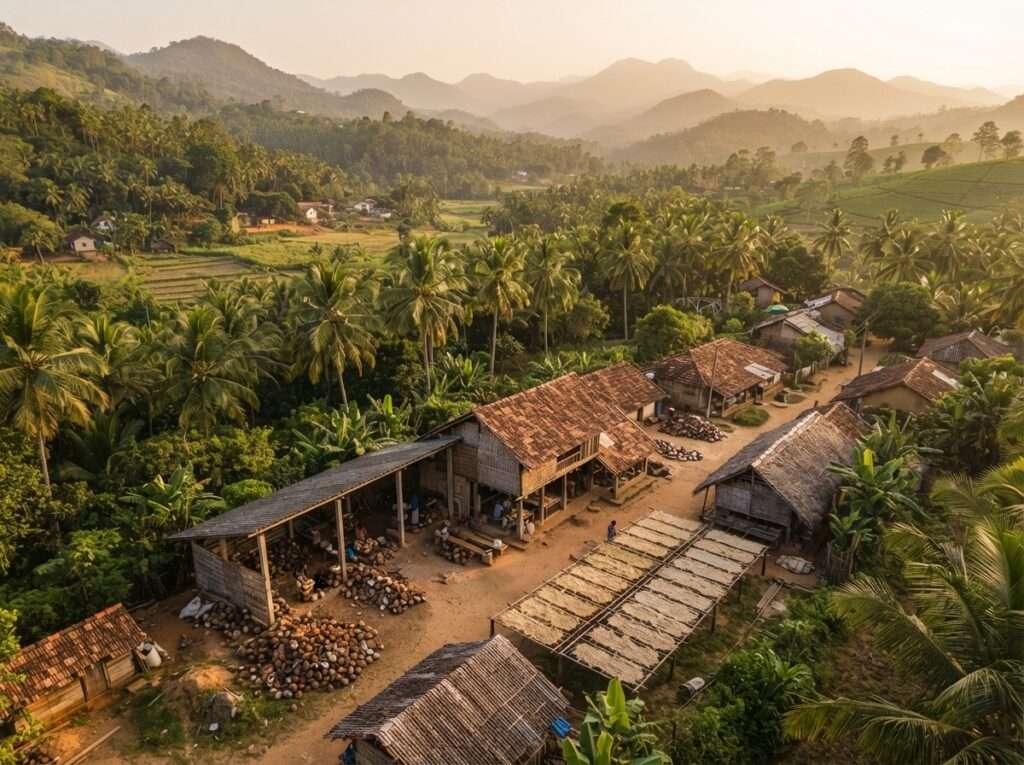
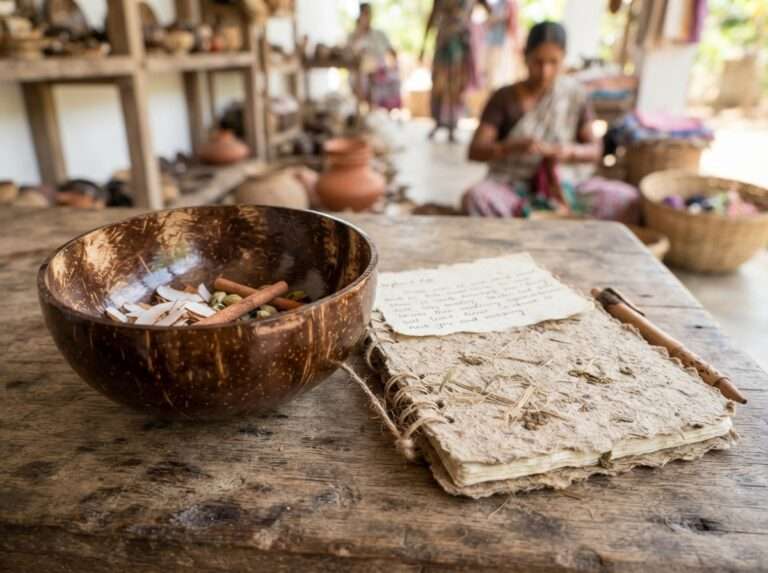
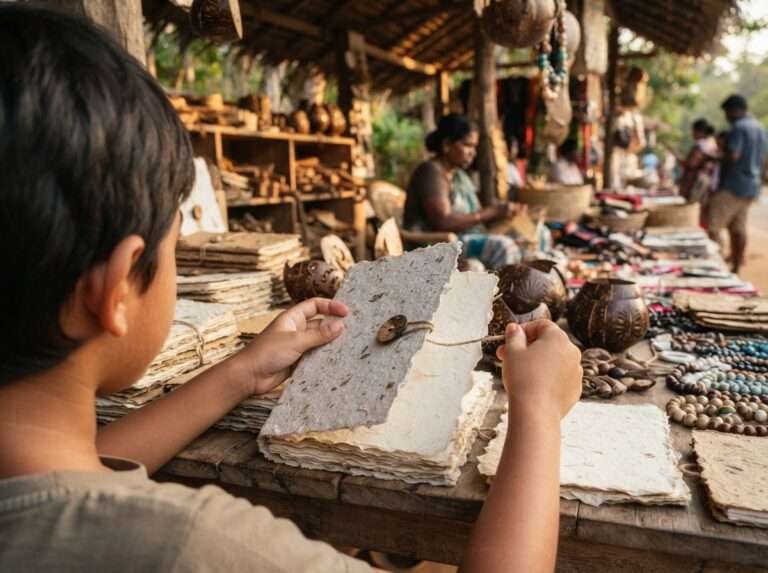
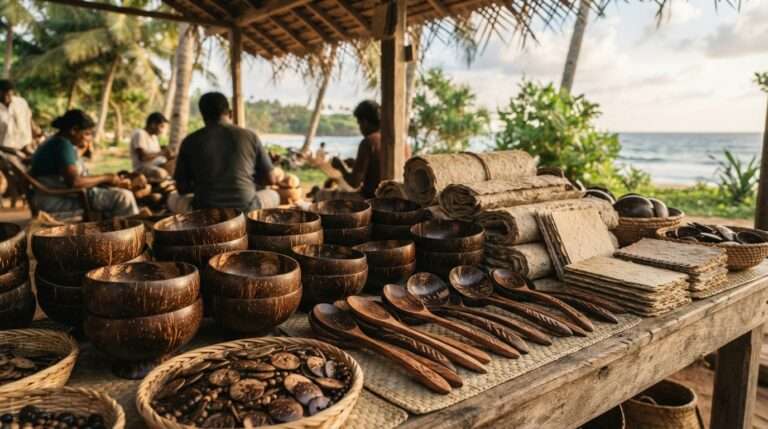
These are the cheap, quirky gifts. Polished coconut-shell bowls, spoons and buttons are sold along the south coast. Elephant-dung paper notebooks, made from washed and boiled dung fibre near the Pinnawala elephant area, are odourless and amuse every child who receives one. Maximus is the best-known maker.
| Typical price | LKR 300 to 2,500 (₹90 to 725) |
| Where to buy | Maximus outlets near Pinnawala, Laksala, south-coast stalls |
| How to check it's real | Dung paper has visible fibres and a rough, uneven surface |
18
Export-Surplus Clothing
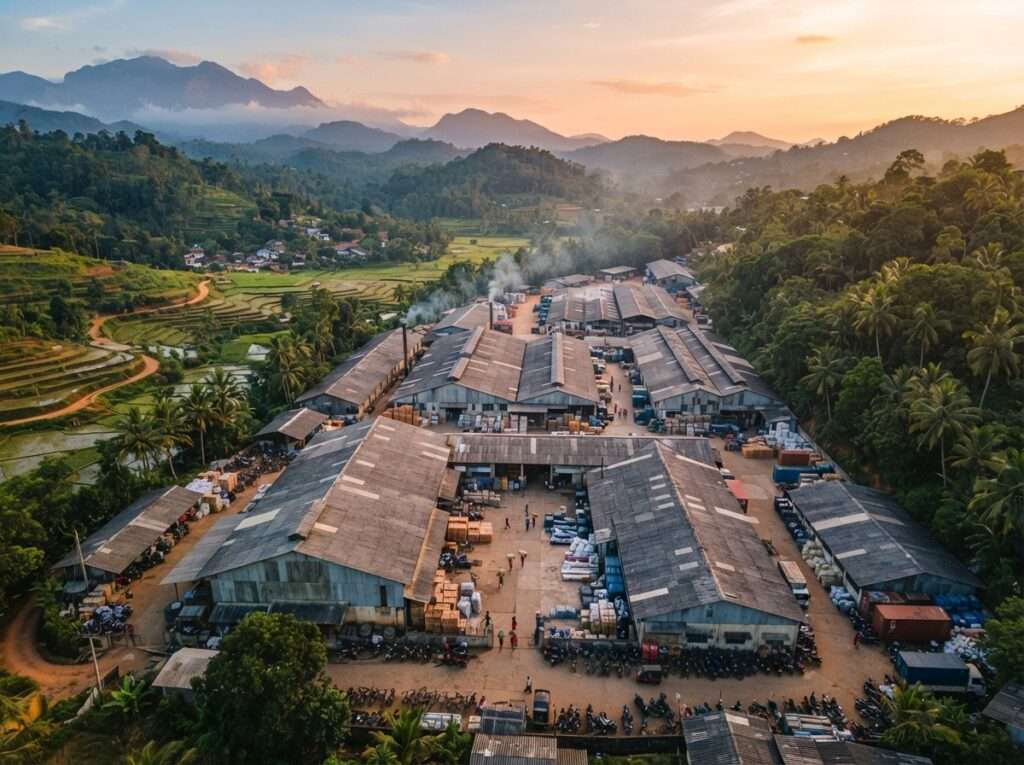
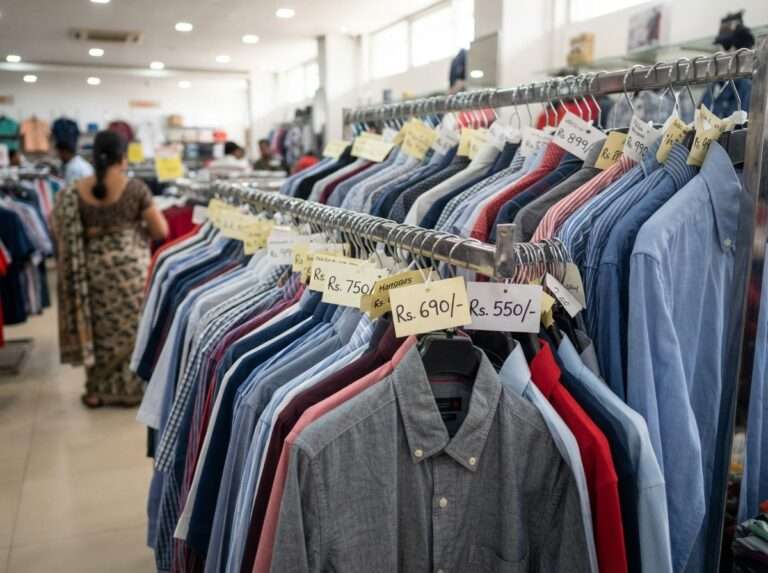
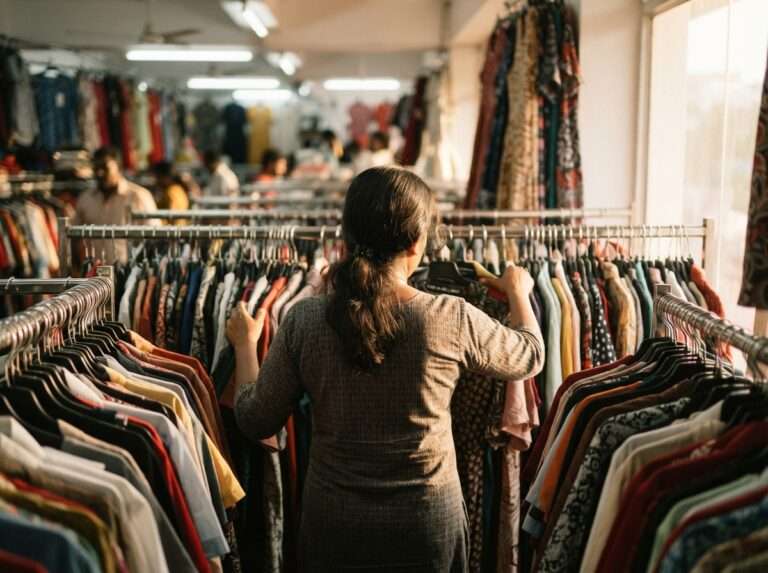
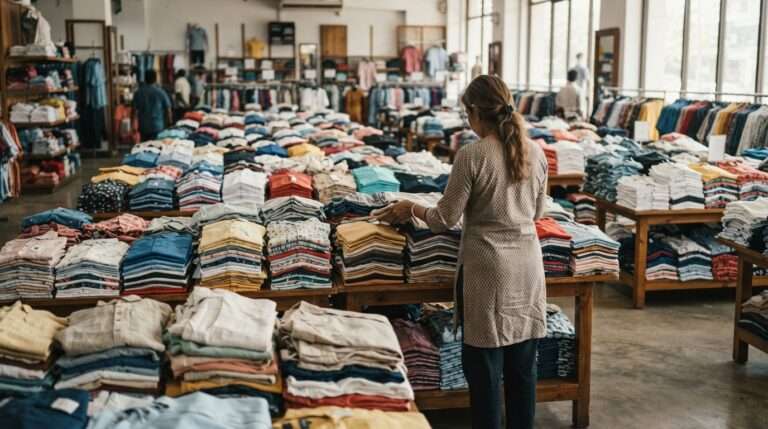
Sri Lanka is one of Asia’s largest garment exporters, making clothes for global brands. Overruns and seconds end up in Colombo stores at low prices. Odel stocks local and international labels in a department-store setting, and the House of Fashions on R. A. de Mel Mawatha is where Colombo families buy budget clothing. Check stitching and sizes carefully; seconds can carry small faults.
| Typical price | T-shirts from LKR 1,500 (₹435) |
| Where to buy | Odel, House of Fashions, Pettah wholesale lanes |
| How to check it's real | Check the inside label and seams; cut labels usually mean an overrun or second |
Where to Shop in Sri Lanka, City by City
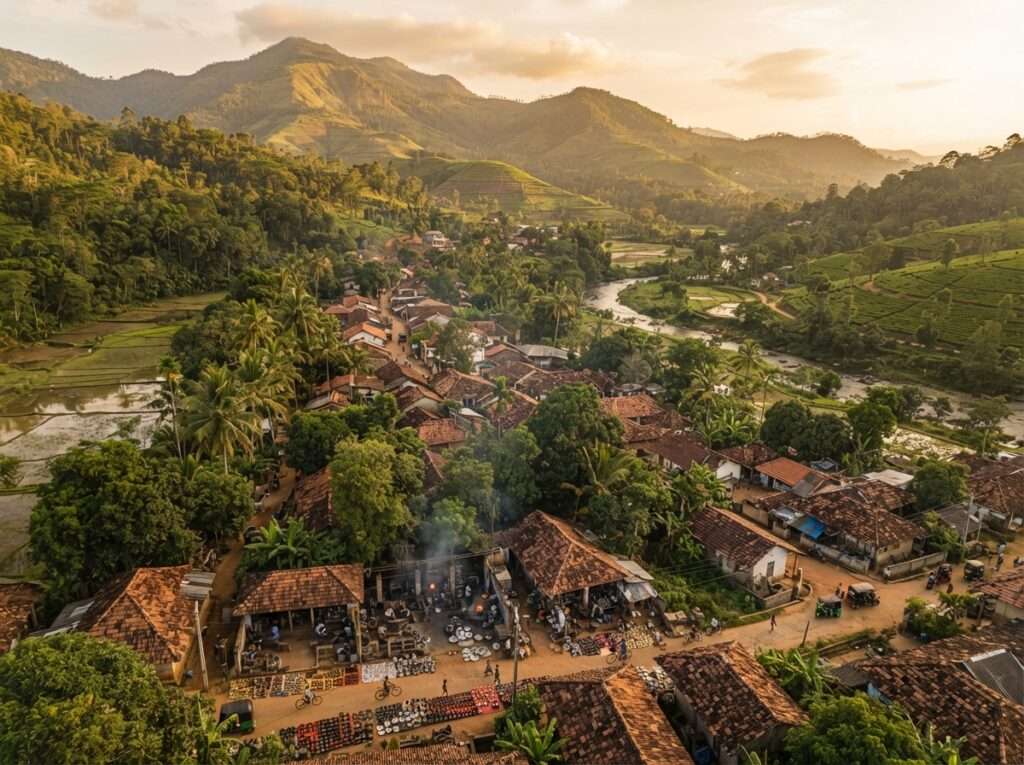
Most visitors shop in four places. Colombo has the malls, boutiques and the cheapest wholesale market. Kandy is the craft centre. Galle Fort and the south coast have the antique and design shops, and the hill country sells tea at source. Here is what to buy where.
Colombo: What Is Famous for Shopping
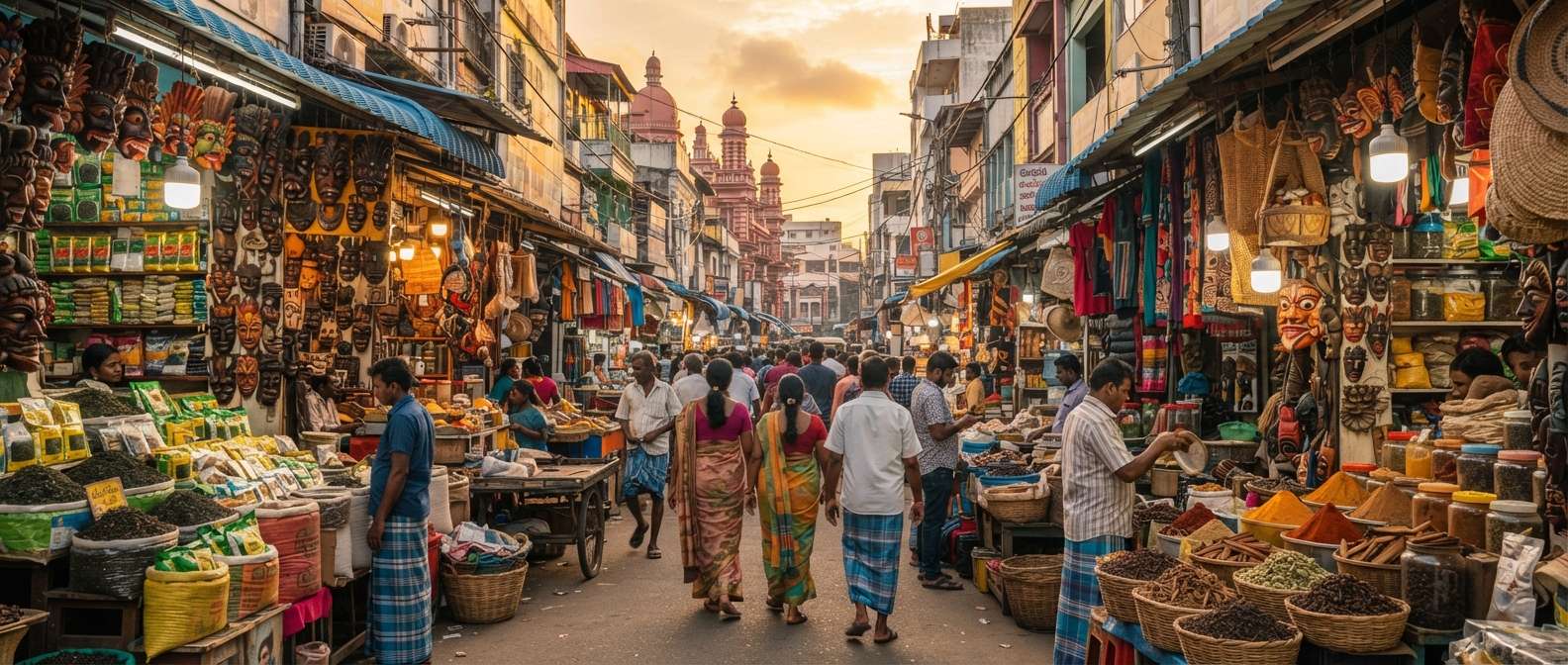
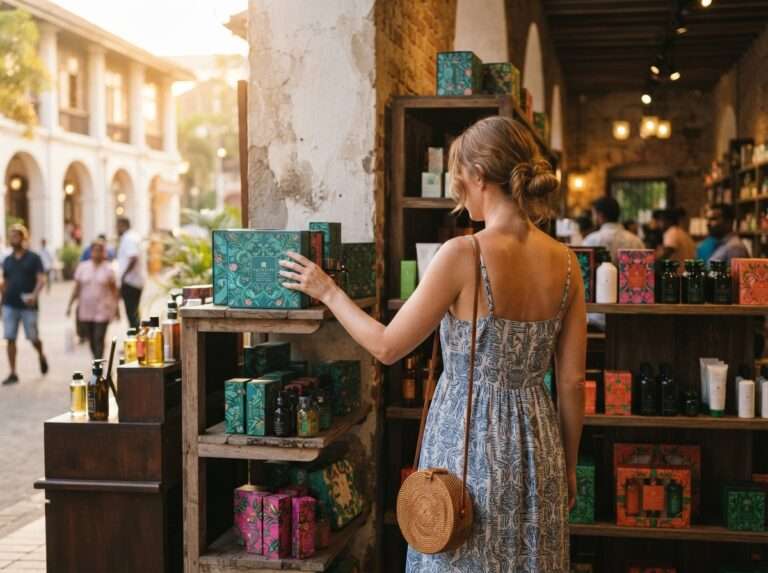
Colombo is famous for three kinds of shopping. Pettah is the old wholesale bazaar, where spices, fabric, electronics and household goods pile up in lanes sorted by trade. Design boutiques like Barefoot, Paradise Road and Odel sell the best of Sri Lankan design at fixed prices. And the newer malls, One Galle Face, Colombo City Centre and Havelock City, carry international brands. For crafts at fixed prices, start at Laksala. Our guides to shopping malls in Colombo and markets in Colombo go store by store.
| Shop or market | Area | Best for | Price level | Fixed price or bargain |
|---|---|---|---|---|
| Laksala | 215 Bauddhaloka Mawatha, Colombo 7 (daily 9am to 9pm) | Masks, batik, brass, lacquer, figurines | ₹ | Fixed |
| Lakpahana | Reid Avenue, Colombo 7 | Handicrafts, demon masks, treasure boxes | ₹ | Fixed |
| Odel | 5 Alexandra Place, Colombo 7 | Clothing, souvenirs, tea gift packs | ₹₹ | Fixed |
| Barefoot | 704 Galle Road, Colombo 3 | Handloom saris, sarongs, homeware, books | ₹₹ | Fixed |
| Paradise Road | 213 Dharmapala Mawatha, Colombo 7 | Design homeware, gifts, gallery café | ₹₹₹ | Fixed |
| Selyn | 102 Fife Road, Colombo 5 | Fair-trade handloom clothes and accessories | ₹₹ | Fixed |
| Pettah and the Floating Market | Colombo 11, opposite Fort station | Spices, fabric, cheap goods, street food | ₹ | Bargain |
| Good Market | Racecourse Promenade, Colombo 7 (Saturdays) | Organic food, kithul, handmade goods | ₹₹ | Fixed |
| Majestic City and Crescat Boulevard | Galle Road, Bambalapitiya and Kollupitiya | Mlesna tea, mid-range brands, food courts | ₹₹ | Fixed |
| One Galle Face, Colombo City Centre, Arcade Independence Square | Galle Face, Union Place, Independence Square | International brands, Spa Ceylon | ₹₹₹ | Fixed |
Pettah rewards a plan. Go before 11am, when the lanes are quieter, keep your phone in a front pocket, and walk the Fourth Cross Street spice shops before you buy cinnamon anywhere else. The Pettah Floating Market, built on boardwalks over Beira Lake beside the station, is calmer and better for snacks than serious shopping.
Kandy: Crafts, Batik and the Central Market
Kandy is the place for crafts. The Kandy Municipal Central Market, a two-level courtyard near the lake, sells spices, batik, sarongs and wooden goods, and stall owners expect bargaining. Jayamali Batiks is a short walk away. For fixed prices and air-conditioning, Kandy City Centre on Sri Wickrama Rajasinghe Mawatha has an Odel and a supermarket for tea. Brass and Dumbara weaving villages lie within an hour’s drive. See our Kandy shopping guide and the list of markets in Kandy, and the Kandy travel guide for the rest of your stay.
Galle and the South Coast: Antiques, Design and Masks
Inside Galle Fort, the shopping is compact and walkable. Church Street, Pedlar Street, Leyn Baan Street and Hospital Street hold most of it. The Dutch Gallery on Church Street sells colonial-era antiques and jewellery. Olanda on Leyn Baan Street specialises in antique and reproduction furniture and ships worldwide. Orchid House on Hospital Street mixes handicrafts, spices, books and spa products, and Barefoot has a branch on Pedlar Street. Spice shops line the fort’s main streets. Our shopping in Galle guide walks the fort street by street.
Further along the coast, Ambalangoda is the mask town, Weligama has the lacemakers, and Bentota has batik and craft shops covered in our Bentota shopping and markets in Bentota guides. Mirissa is mostly beachwear and small boutiques; see Mirissa shopping.
Hill Country and Ratnapura: Tea and Gemstones at Source
In the hills, buy tea where it grows. Factory outlets around Nuwara Eliya and Ella let you taste grades side by side, and Mlesna runs a branch in Bandarawela. The Franciscan sisters’ jam room in Nuwara Eliya is the place for preserves. Ratnapura, about 100 km southeast of Colombo, is the gem capital. Its morning street trading is fascinating to watch, though it is a dealer’s market, and first-time buyers do better with a licensed shop that issues paperwork. Plan the hill stops with our Nuwara Eliya guide.
Is Sri Lanka Cheaper Than India for Shopping?
Sri Lanka is cheaper than India for tea, true cinnamon and other spices, local crafts and, if you buy carefully, coloured gemstones at source. It is not cheaper for electronics, imported cosmetics or international branded goods, because Sri Lanka’s import taxes push those prices above Indian levels. Gold jewellery is about the same, and India’s jewellery allowance only applies to residents who have lived abroad for over a year, so there is little reason to buy gold here.
| Item | Sri Lanka vs India | Why |
|---|---|---|
| Ceylon tea | Cheaper | Bought at source, wide choice of single-estate packs |
| True cinnamon | Much cheaper, and genuine | Most Indian “cinnamon” is cassia |
| Cardamom and pepper | About the same | India grows both too |
| Coloured gemstones | Cheaper at source | Sapphires are mined here, but only buy with a lab report |
| Batik and handloom | Similar or slightly cheaper | Unique designs you will not find in India |
| Masks, Dumbara mats, lacquer | Only available here | Craft is specific to Sri Lanka |
| Export-surplus clothing | Cheaper | Overruns from the garment industry |
| Electronics and phones | More expensive | High import taxes |
| Imported cosmetics and perfume | More expensive | High import taxes |
| Gold jewellery | About the same | Little saving, and customs limits apply |
Things to Buy in Sri Lanka for Kids
Children like gifts they can hold, use or show off at school. Five that work well:
- Elephant soft toys and wooden elephants, sold at Laksala and every craft shop. Pick lacquered wooden toys with rounded edges for small children.
- Elephant-dung paper notebooks from Maximus. Every child wants to hear how they are made.
- Mini Kolam masks. The cheerful folk-drama faces are friendlier than the Raksha demons.
- Batik T-shirts and kids’ sarongs, cheap at Kandy market and in Bentota.
- Wooden puzzle boxes and spinning tops, sold at Lakpahana and Laksala.
For travelling with children more broadly, see our guide to places to visit in Sri Lanka with family.
How to Buy Gemstones Safely in Sri Lanka
The gemstone trade is where tourists lose real money. The common trap is a friendly tuk-tuk driver who offers a free ride to a “gem factory” or “government gem museum” that pays him a commission. Avoid that by following these steps.
- Decide the stone, size and budget before you go. Know whether you want a blue sapphire, a star sapphire or a cheaper stone like topaz, and fix a ceiling.
- Buy only from an NGJA-licensed dealer. The National Gem and Jewellery Authority licenses dealers and runs the state testing laboratory in Colombo, with a branch in Ratnapura. Licensed shops display their licence.
- Ask for a laboratory report. The report should state the stone, its weight and whether it has been heated or treated. Heat treatment is normal for sapphires, but it should be disclosed and priced lower.
- Get an independent test for big purchases. For anything costing more than a few lakh rupees, have the stone checked at the NGJA lab or a recognised private lab before you pay in full.
- Pay by card and keep the itemised invoice. A card payment leaves a record, and Indian customs will ask for the bill.
- Carry the stone and paperwork in hand baggage and declare it in India if its value, together with your other purchases, crosses the ₹75,000 allowance.
Sri Lanka Shopping Tips: Bargaining, Payments and Opening Hours
Bargain where it is expected. At Pettah, Kandy market and street stalls, the first price is an opening bid. Start at about half and settle 30 to 40% below the first quote. At Laksala, Odel, Barefoot, the malls and supermarkets, prices are fixed.
Carry cash for markets, use cards in shops. Malls, boutiques and supermarkets take Visa and Mastercard. Market stalls and tuk-tuks want Sri Lankan rupees. ATMs are easy to find in towns. Indian rupees are not accepted in shops.
Mind the full-moon days. Every month’s Poya (full moon) is a public holiday. Liquor shops close and some smaller shops shut, while malls usually stay open.
Watch for commissions. Guides and drivers often steer you to spice gardens, gem shops and batik factories that pay them. Visit for the experience if you like, but compare the price at Laksala or a supermarket before you buy.
Claim VAT back on big purchases. Sri Lanka’s Inland Revenue Department reopened a tourist VAT refund counter at Bandaranaike International Airport in July 2025 for visitors staying under 90 days whose purchases cross a Rs 50,000 threshold at participating stores. Ask the shop for the refund form when you pay.
Ship the bulky things. Olanda, Noritake and several Colombo galleries ship abroad. For anything fragile or heavy, shipping is safer and often cheaper than paying excess baggage.
What Can Indians Carry Back? Customs Rules for 2026
India replaced its 2016 baggage rules on 2 February 2026. Under the Baggage Rules, 2026 (CBIC Notification 14/2026-Customs (N.T.)), an Indian resident flying back from Sri Lanka can bring goods worth up to ₹75,000 duty-free, up from ₹50,000. Anything above that is charged customs duty on the excess.
| Item | What India allows duty-free | Note |
|---|---|---|
| General goods (tea, crafts, clothes, gemstones) | Up to ₹75,000 per passenger | Arriving by air or sea; land arrivals are not covered |
| Alcohol | Up to 2 litres | Counts within the ₹75,000 |
| Cigarettes | Up to 100 | Counts within the ₹75,000 |
| Laptop | One, extra to the allowance | Passengers aged 18 and above |
| Gold and jewellery | 20 g (men) or 40 g (women) | Only for residents who have lived abroad over a year; short-trip tourists get no extra jewellery allowance |
On the Sri Lankan side, a few rules matter. Antiques cannot leave the country without a permit from the Director General of Archaeology, and customs at Colombo airport do seize undeclared antiques. Keep the receipt for anything sold as “antique-style” to show it is new. Coral, seashells, ivory, tortoiseshell and products of protected animals are banned from export. Pack liquids over 100 ml, such as arrack, oils and treacle, in checked baggage. Only cut and polished gemstones or finished jewellery may leave the country with tourists; rough or uncut stones are restricted and need a National Gem and Jewellery Authority export licence. Sri Lanka also limits tea exports: the few kilos a typical shopper buys are fine, but carrying more than 10 kg needs commercial clearance from the Sri Lanka Tea Board.
What Not to Buy in Sri Lanka
- Coral, shells and turtle-shell items, which are illegal to export and harm the reefs.
- Ivory and “antique” statues without paperwork, which customs can seize at the airport.
- Gemstones from street touts or anyone who approaches you, however good the story.
- “Ceylon cinnamon” at airport or spice-garden prices, when supermarkets sell the same at a fraction.
- Electronics and international brands, which cost more than in India.
Plan Your Sri Lanka Trip Around the Shopping
Shopping in Sri Lanka rewards a little planning. Fill your bag with tea, cinnamon and crafts in Colombo and Kandy, buy gemstones only with a lab report, and keep your total under ₹75,000 to clear Indian customs without paying duty. If you would rather have the route, hotels and a Pettah or Galle Fort stop arranged for you, browse our Sri Lanka tour packages and plan the rest with the Sri Lanka travel guide. Travelling on a tight budget? Our Sri Lanka on a budget guide shows where the savings are.
FAQs
FAQs About Shopping in Sri Lanka
Sri Lanka is famous for Ceylon tea, blue sapphires and other gemstones, true cinnamon, batik, hand-carved Ambalangoda masks and handloom textiles. Noritake porcelain, Ayurvedic balms like Siddhalepa, Dumbara mats and kithul treacle are other popular buys. Tea and cinnamon are the best value, since the island grows them and supermarket prices are low. Gemstones are the big-ticket item, and they should only be bought from an NGJA-licensed dealer with a lab report.
The best things to buy in Sri Lanka are Ceylon tea, Ceylon cinnamon, a blue sapphire if your budget allows, a painted wooden mask from Ambalangoda, and batik or handloom fabric. For gifts, add Siddhalepa balm, elephant figurines and elephant-dung paper notebooks. Most cost LKR 500 to 8,000 (about ₹145 to 2,300), except gemstones and porcelain dinner sets.
Sri Lanka is cheaper than India for tea, true cinnamon, crafts and coloured gemstones bought at source, and for export-surplus clothing. It is more expensive for electronics, imported cosmetics and international brands because of Sri Lanka's import taxes. Gold jewellery costs about the same, so there is little saving there.
Yes, if you shop for what the island makes. Tea, spices, gemstones, batik, handloom and wooden crafts are better value and more varied than at home, and Colombo has modern malls such as One Galle Face and Colombo City Centre. It is not a destination for cheap electronics or global luxury brands.
Colombo is famous for Pettah's wholesale bazaar, design boutiques like Barefoot and Paradise Road, the Odel department store and the state-run Laksala craft showroom. One Galle Face, Colombo City Centre, Majestic City and Crescat Boulevard are the main malls. On Saturdays, the Good Market at the Racecourse sells organic food and handmade goods.
Buy genuine gemstones from NGJA-licensed dealers in Colombo or Ratnapura, the gem-mining capital. Ask for a laboratory report stating the stone, weight and any heat treatment, pay by card, and keep the itemised invoice. Avoid shops that a tuk-tuk driver or a stranger offers to take you to, since many pay commissions and inflate prices.
An Indian resident flying back can carry goods worth up to ₹75,000 duty-free under India's Baggage Rules, 2026, in force since 2 February 2026. Alcohol (up to 2 litres) and cigarettes (up to 100) count within that limit. The extra jewellery allowance of 20 g for men and 40 g for women only applies to residents who have lived abroad for more than a year.
Ceylon tea, cinnamon and spice packs from supermarkets, Siddhalepa balm, painted stones, elephant-dung paper, coconut-shell bowls, cotton sarongs and kithul treacle all cost under LKR 1,500 (about ₹435). Buy them at Cargills, Keells, Laksala or Pettah rather than at the airport, where the same tea costs several times more.
Good buys for children are elephant soft toys and lacquered wooden elephants, elephant-dung paper notebooks from Maximus, small Kolam masks, batik T-shirts and wooden puzzle boxes. Most cost under LKR 2,500 (about ₹725) and are sold at Laksala, Lakpahana and Kandy market.
You can bargain at Pettah, Kandy market and street stalls, where a final price 30 to 40% below the first quote is normal. Prices are fixed at Laksala, Odel, Barefoot, Paradise Road, malls and supermarkets. Bargain with a smile and walk away politely if the price does not fall.
Yes. The Inland Revenue Department runs a tourist VAT refund counter at Bandaranaike International Airport, reopened in July 2025, for visitors staying under 90 days whose purchases at participating stores cross a Rs 50,000 threshold. Ask the shop for the refund paperwork at the time of purchase and claim at the airport before check-in.
Buy authentic Ceylon tea at Cargills and Keells supermarkets, at Mlesna Tea Centres in Colombo malls, or at tea-factory outlets in Nuwara Eliya and Ella. Check for the Sri Lanka Tea Board's Lion logo, which certifies 100% Ceylon tea packed in Sri Lanka. Supermarket prices are far lower than at the airport.