6D / 5N
8% OFF
6D / 5N
8% OFF
Romantic Bangkok And Phuket Honeymoon Tour
- Hotel
- Meals
- Sightseeing
- Airport Transfer
- Cruise
₹19,022
₹17,500 /pp
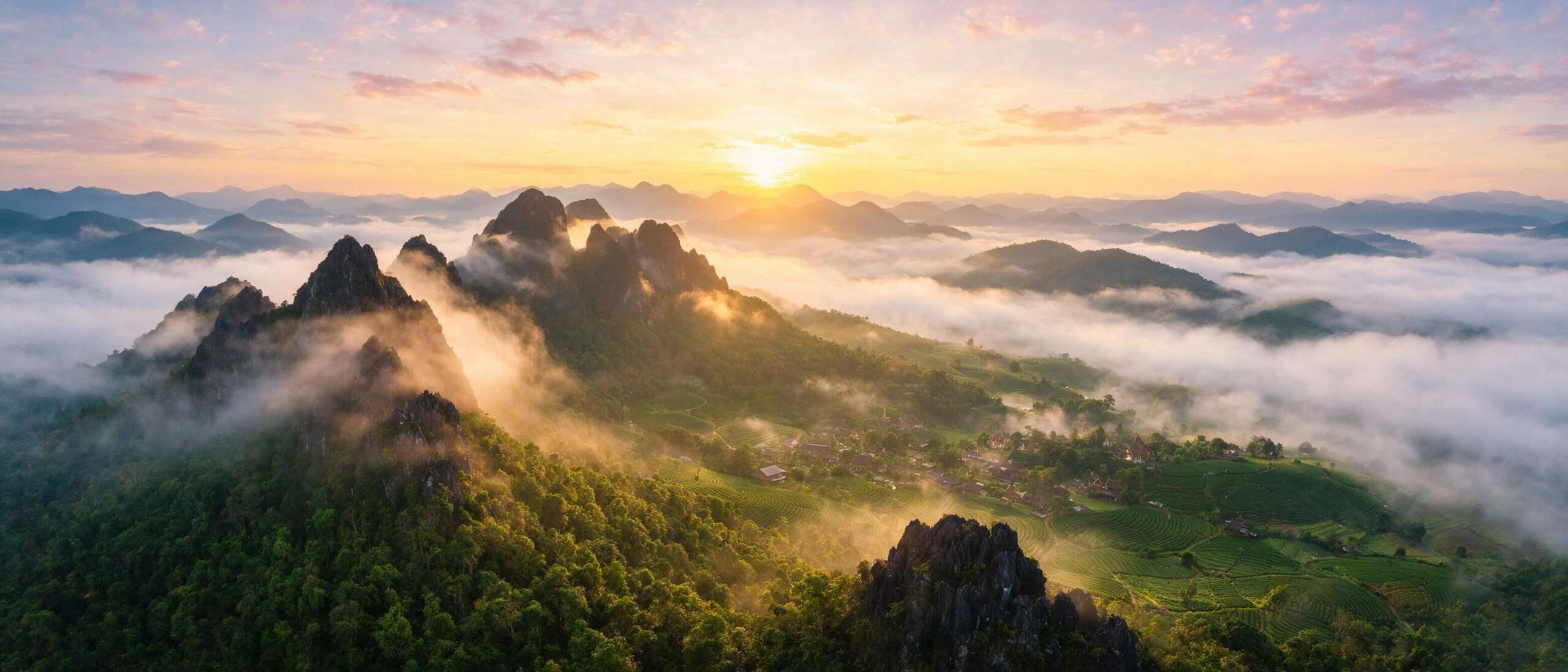


Trekking in Thailand takes you well past the beaches and night markets, into cloud forest above 2,500 metres, to hill-tribe villages reached only on foot, and along ridge trails that fall straight toward the Andaman Sea. Call it trekking or hiking, the country fits an unusual range into short distances. You can do a two-hour temple climb one morning and start a two-day summit push the next. This guide covers 16 of the best treks and hikes in Thailand with real distances, difficulty grades, park fees and seasons, and it finishes with a section built for Indian travellers planning the trip from scratch.
Key takeaways
Trekking in Thailand
Best Time
November - February
Select Package Type


Here is every trek in this guide in one view, so you can pick by region, difficulty and season before you read the detail. Distances are one-way to the main viewpoint or camp unless noted, and fees are the foreigner rate at the park gate.
| Trek / hike | Region | Distance | Difficulty | Duration | Best months | Guide? |
| Doi Inthanon (Kew Mae Pan) | North (Chiang Mai) | 2.8 km loop | Easy-moderate | 1.5-2 hrs | Nov-May | Compulsory |
| Pha Dok Siew Trail, Doi Inthanon | North (Chiang Mai) | 3 km | Moderate | 2-3 hrs | Nov-Feb | Yes (local) |
| Doi Suthep Monk’s Trail | North (Chiang Mai) | 1.5 km | Easy-moderate | 1-1.5 hrs | Year-round | Optional |
| Doi Luang Chiang Dao | North (Chiang Dao) | 8.5 km | Hard | 2 days | Nov-Feb | Compulsory |
| Chiang Rai hill-tribe treks | North (Chiang Rai) | 5-15 km | Easy-moderate | 1-3 days | Nov-Feb | Recommended |
| Mae Taeng / Karen village treks | North (Chiang Mai) | 6-20 km | Moderate | 1-3 days | Nov-Feb | Yes |
| Pai Canyon | North (Mae Hong Son) | 1-3 km | Moderate | 1-2 hrs | Nov-Feb | No |
| Phu Chi Fa | North (Chiang Rai) | 0.8-1 km | Easy | 45-60 min | Nov-Feb | No |
| Khao Yai National Park | Central (near Bangkok) | 2-8 km trails | Easy-hard | Half-full day | Nov-Feb | Recommended |
| Erawan Falls 7-tier | West (Kanchanaburi) | 2 km | Moderate | 2-4 hrs | Nov-Apr | No |
| Kaeng Krachan / Pala-U (near Hua Hin) | West (Phetchaburi) | Varies | Easy-moderate | Half-full day | Nov-Apr | Recommended |
| Kamphaeng Phet / Mae Wong NP | Central | 3-10 km | Moderate | Half-full day | Nov-Feb | Recommended |
| Khao Sok National Park | South (Surat Thani) | Up to 11 km | Moderate | Half-2 days | Dec-Apr | Recommended |
| Khao Ngon Nak (Dragon Crest) | Andaman (Krabi) | 3.7 km | Moderate-hard | 3-4 hrs | Dec-Apr | No |
| Khao Luang / Krung Ching | South (Nakhon Si Thammarat) | 4 km | Hard | Half day | Dec-Apr | Recommended |
| Phu Kradueng | Isan (Loei) | 5.5 km ascent | Hard | 2-3 days | Oct-May | Optional (porters) |
The walking is grouped by region, because that is how you will actually plan a trip. The north holds the classic multi-day treks and the highest peaks. The south and the Andaman coast give you jungle and sea-view ridges. The centre and Isan add waterfalls and one of Thailand's great overnight climbs.
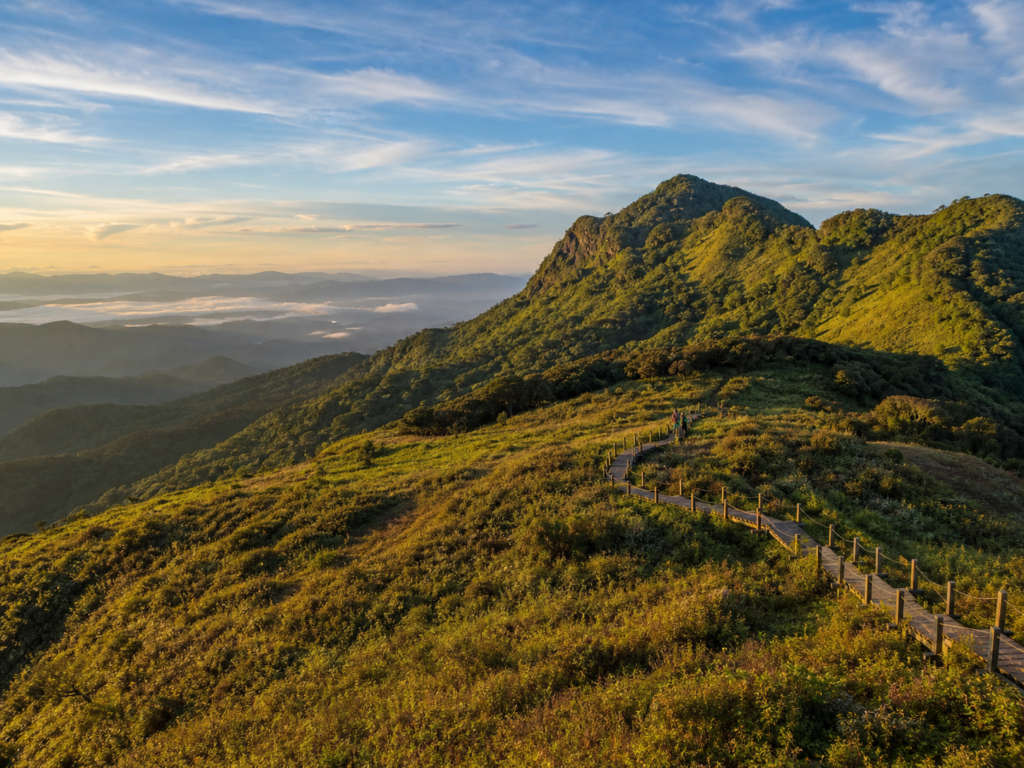
Doi Inthanon is the roof of Thailand at 2,565 metres, and the mountain packs several distinct walks into one park (entry around 300 THB for foreign visitors). The star is the Kew Mae Pan Nature Trail, a 2.8 km loop along a grassy ridge that drops into cloud on a clear cool-season morning. A Hmong guide is compulsory here, it costs around 200 THB, and the trail closes every year from 1 June to 31 October so the alpine ground can recover. Lower down, the Ang Ka boardwalk is a flat 360-metre sphagnum-bog walk anyone can do, while the twin chedis and the Pha Dok Siew trail reward an early start before the tour buses arrive.


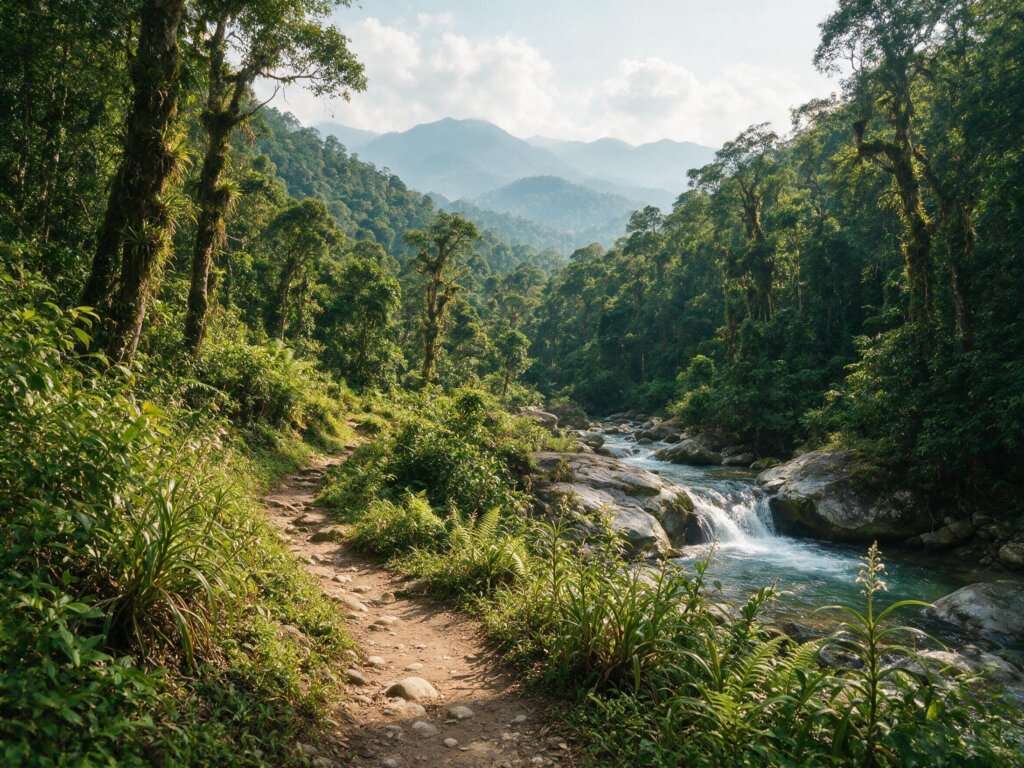
This 3 km route runs from a Karen village down past the Pha Dok Siew waterfall through coffee plots and terraced rice. You walk it with a local guide from Ban Mae Klang Luang, which puts the fee straight into the community, and the pace is gentle enough for a first-timer. Go November to February when the paddy is green and the leeches are asleep.
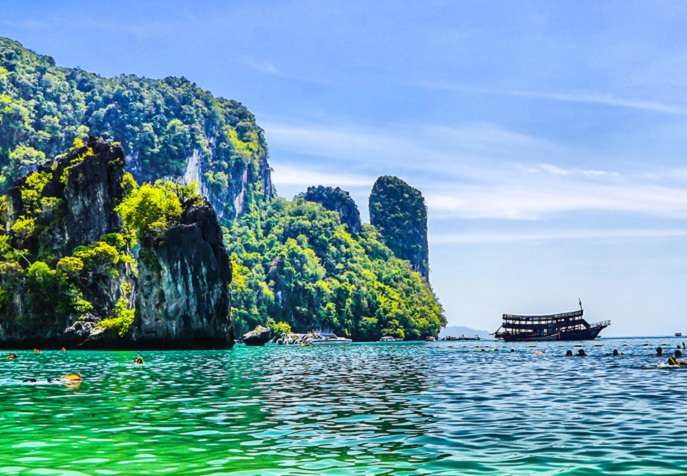


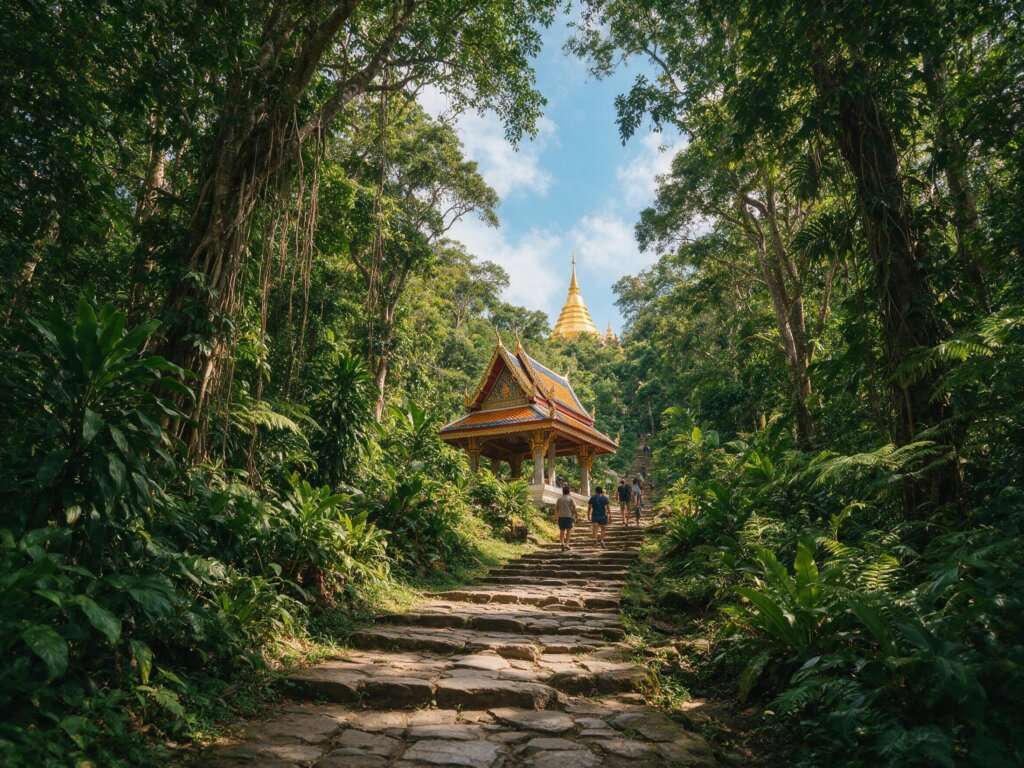
The best short hike in Thailand sits on Chiang Mai’s doorstep. The Monk’s Trail climbs about 1.5 km through forest, marked by strips of orange robe tied to the trees, and lands you at Wat Pha Lat, a moss-covered temple hidden in the woods. Push on and the path meets the road up to Wat Phra That Doi Suthep, the golden temple that overlooks the city. It is free, it takes about an hour, and it works year-round if you start early.
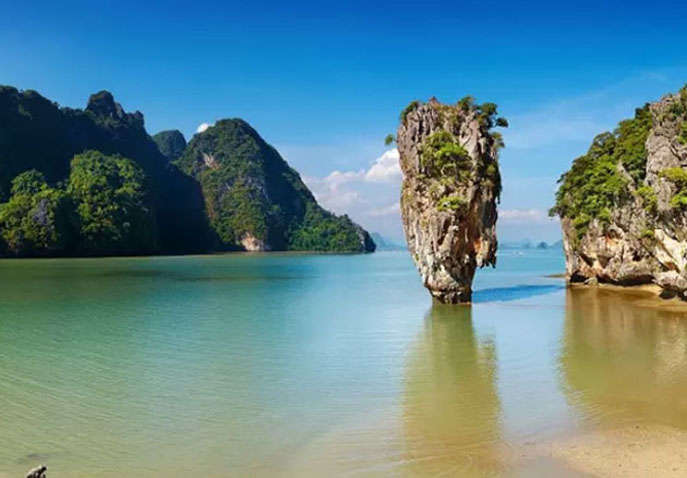

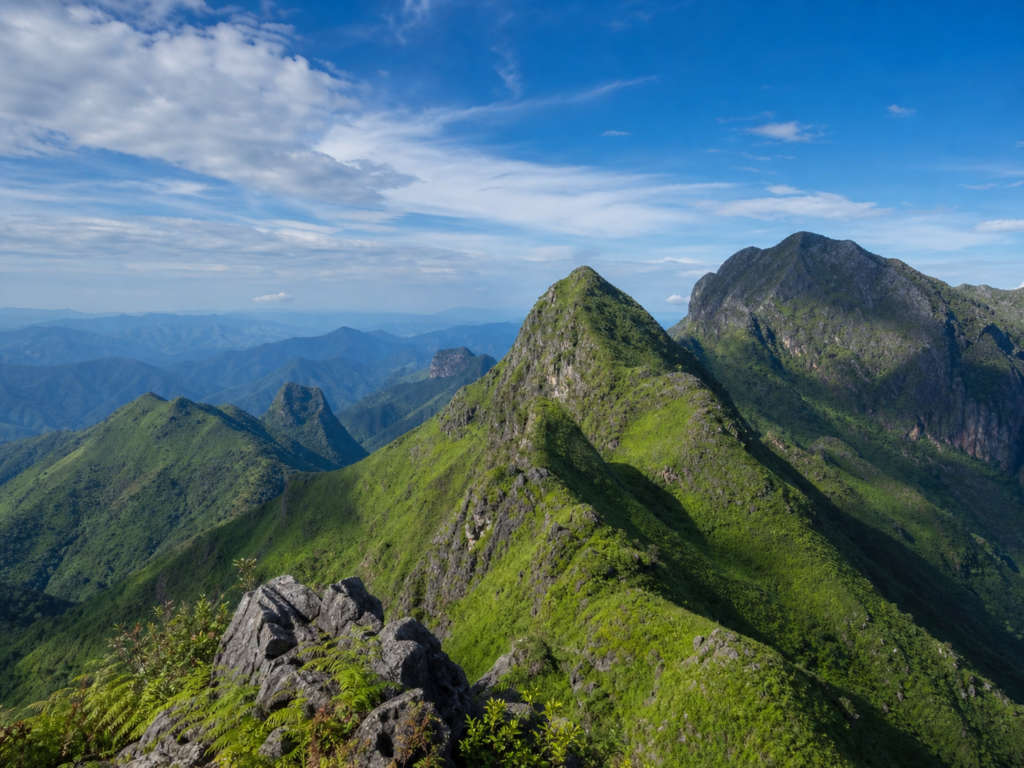
At 2,225 metres this is Thailand’s third-highest peak and its most serious mainstream climb. The summit is open only from 1 November to the end of February, a certified park guide is mandatory (solo hikers are turned back), and most people do it as a two-day trip camping near the top. The 8.5 km ascent is steep and exposed on the final ridge, but the sunrise over a sea of cloud is the one every Thai trekker wants. Book the guide and permit at least a day ahead through the park office.
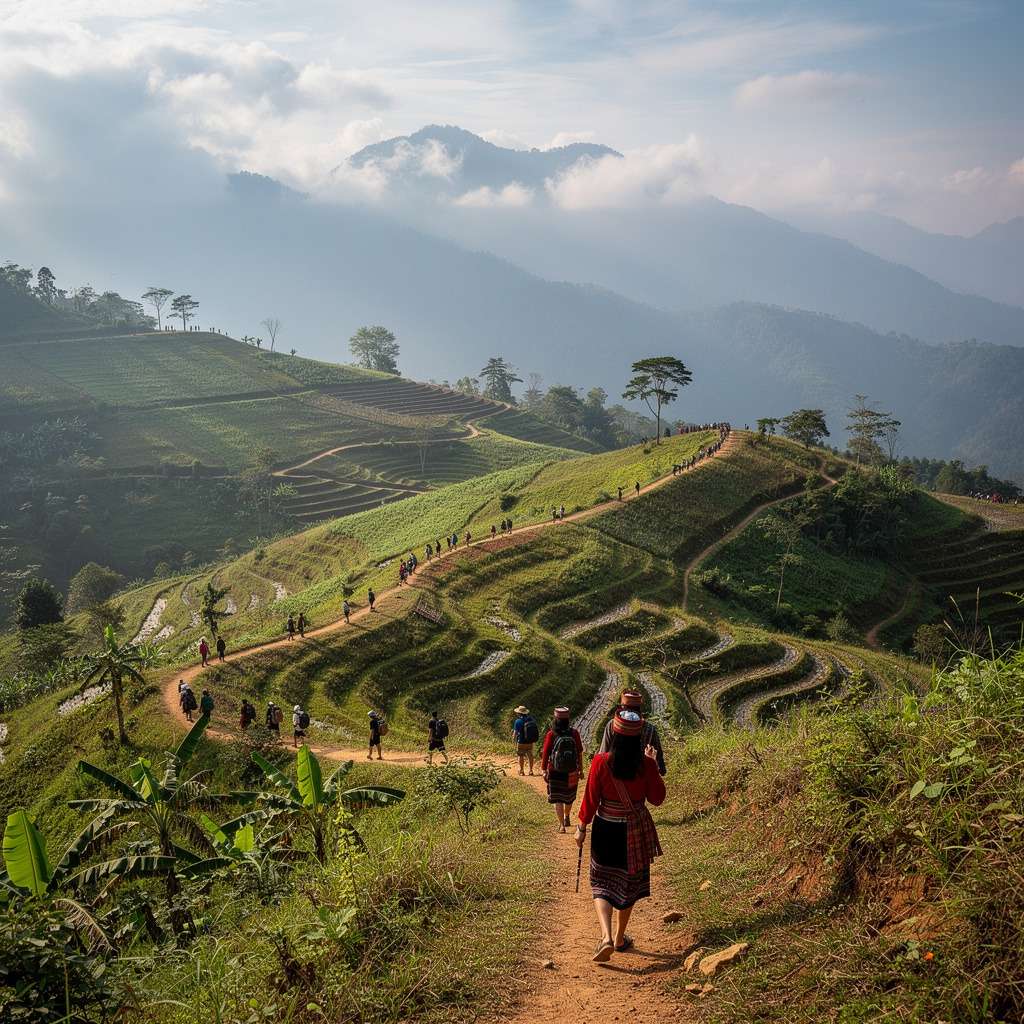
Chiang Rai, 785 km north of Bangkok, is where hill-tribe trekking began. Routes out of the Mueang district and around Doi Tung link Akha, Lahu and Karen villages, often over one to three days with a night in a village homestay. Come for the walking and the culture rather than raw altitude. A guide is worth it here, both for the trail and for translating and reading village etiquette.
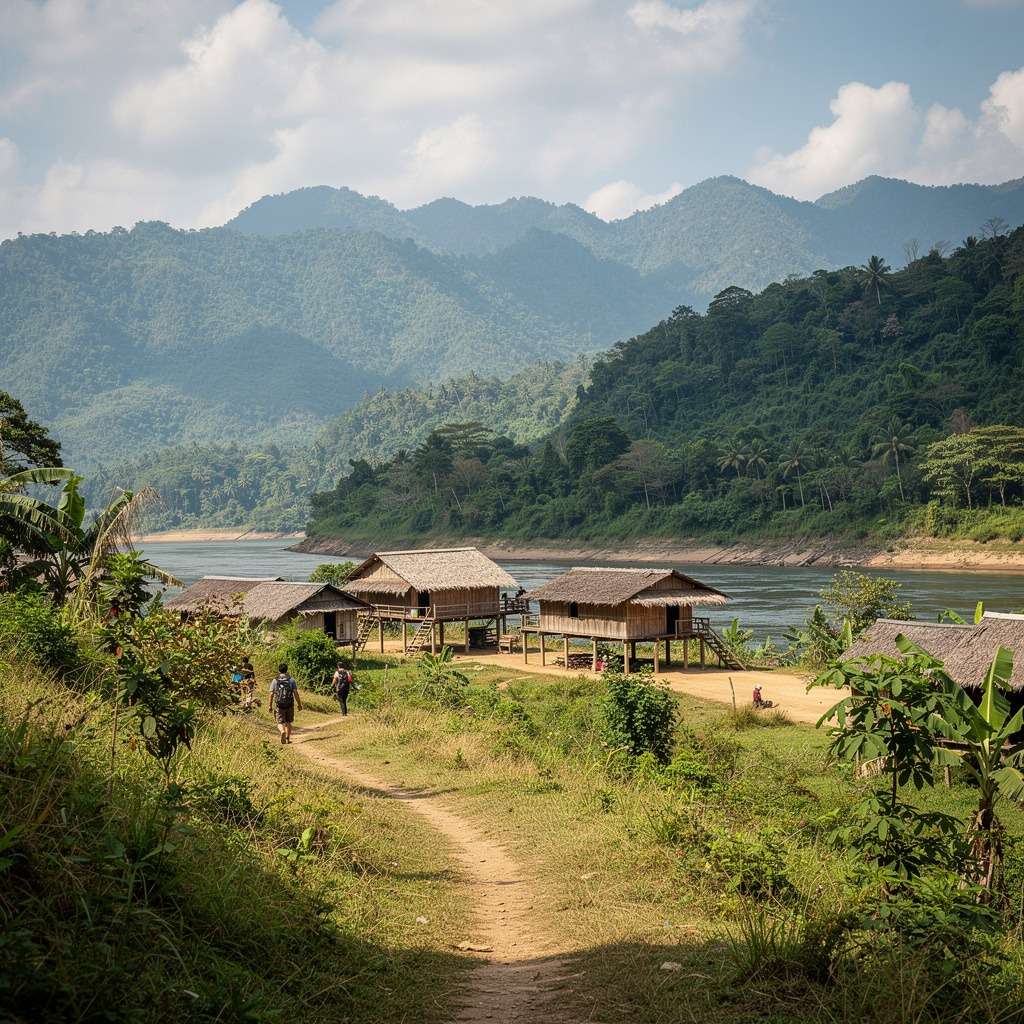
The Mae Taeng valley north of Chiang Mai is the classic base for one to three-day village treks through Lisu, Lahu and Karen country, usually combined with a river section and a night in a bamboo homestay. Distances run from an easy 6 km day to a full 20 km over two days. This is the trek to choose if you want the northern-Thailand experience in the guidebooks, ethical elephant observation included rather than riding.
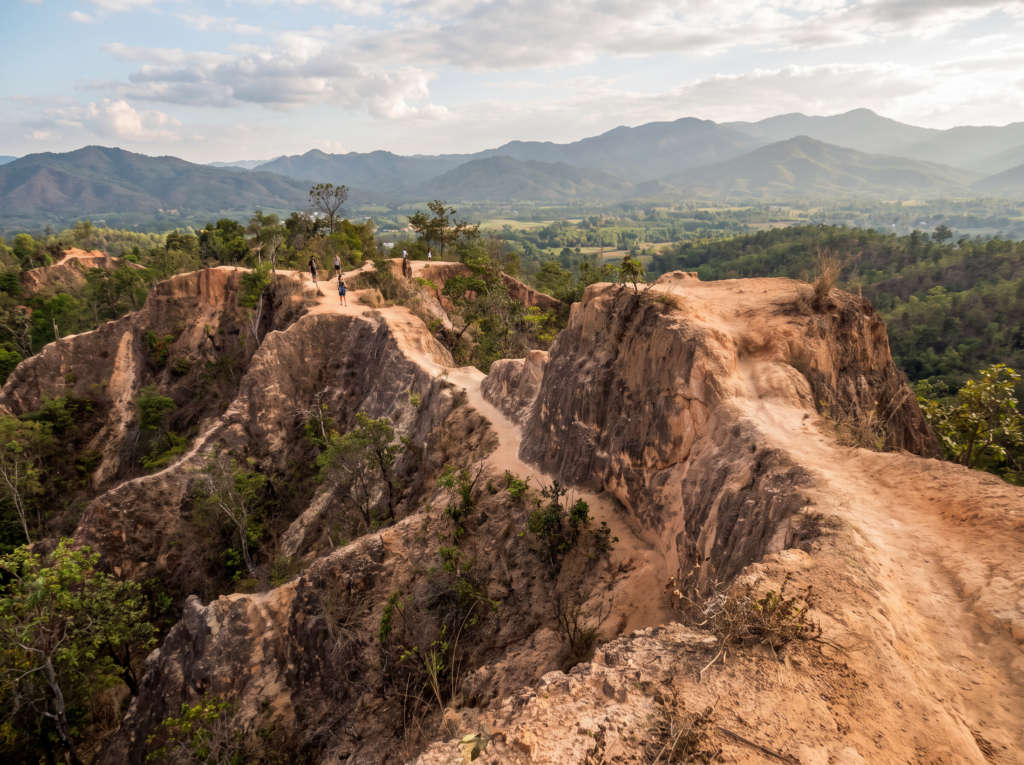
Pai Canyon (Kong Lan) is short but it grabs your attention. Narrow earthen ridges, some barely a shoe-width across, fall away on both sides into red-rock gullies, and you can scramble as far along them as your nerve allows. It is free and takes an hour or two. Go for sunset, wear grippy shoes, and skip it after rain when the clay turns slick.
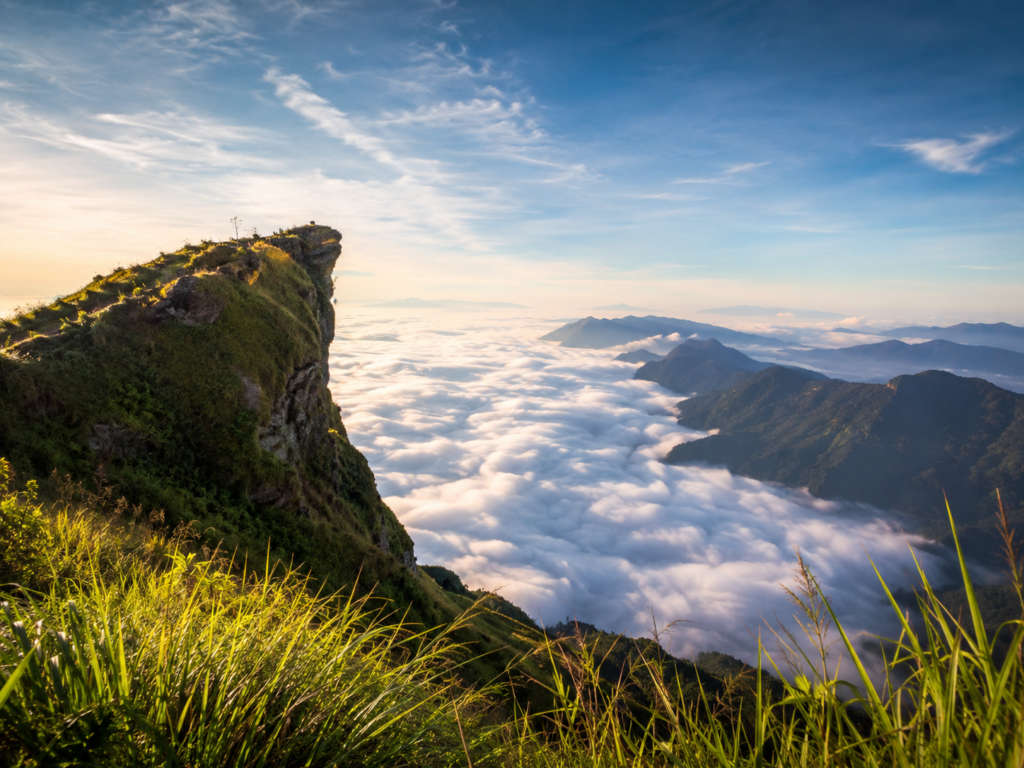
Phu Chi Fa is the easy walk with the outsized payoff. A short 45 to 60-minute climb of under a kilometre lands you on a cliff edge above the Mekong plains, and on a cool-season dawn you look down on a solid white sea of mist with Laos beyond. Stay in a nearby guesthouse and start in the dark. This one is genuinely cold before sunrise, so bring a layer.
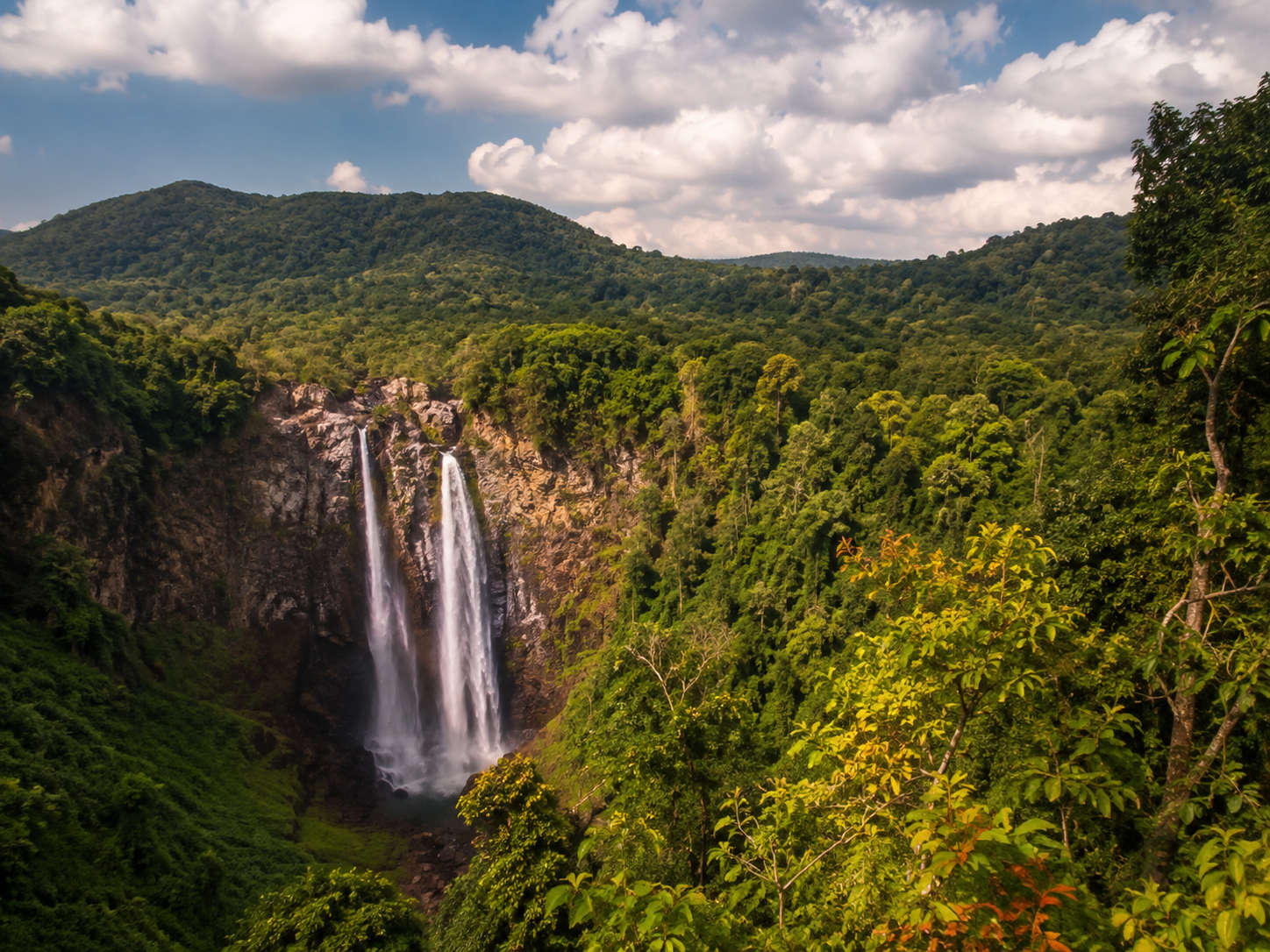
Khao Yai is the big jungle within reach of Bangkok, about three hours away and Thailand’s oldest national park (entry around 400 THB for foreigners). Trails range from the easy Nong Pak Chi wildlife-tower walk to longer forest routes linking the Haew Suwat and Haew Narok waterfalls. Wild elephants, gibbons and hornbills are all here, which is exactly why a park guide is worth hiring rather than walking the deep trails alone.
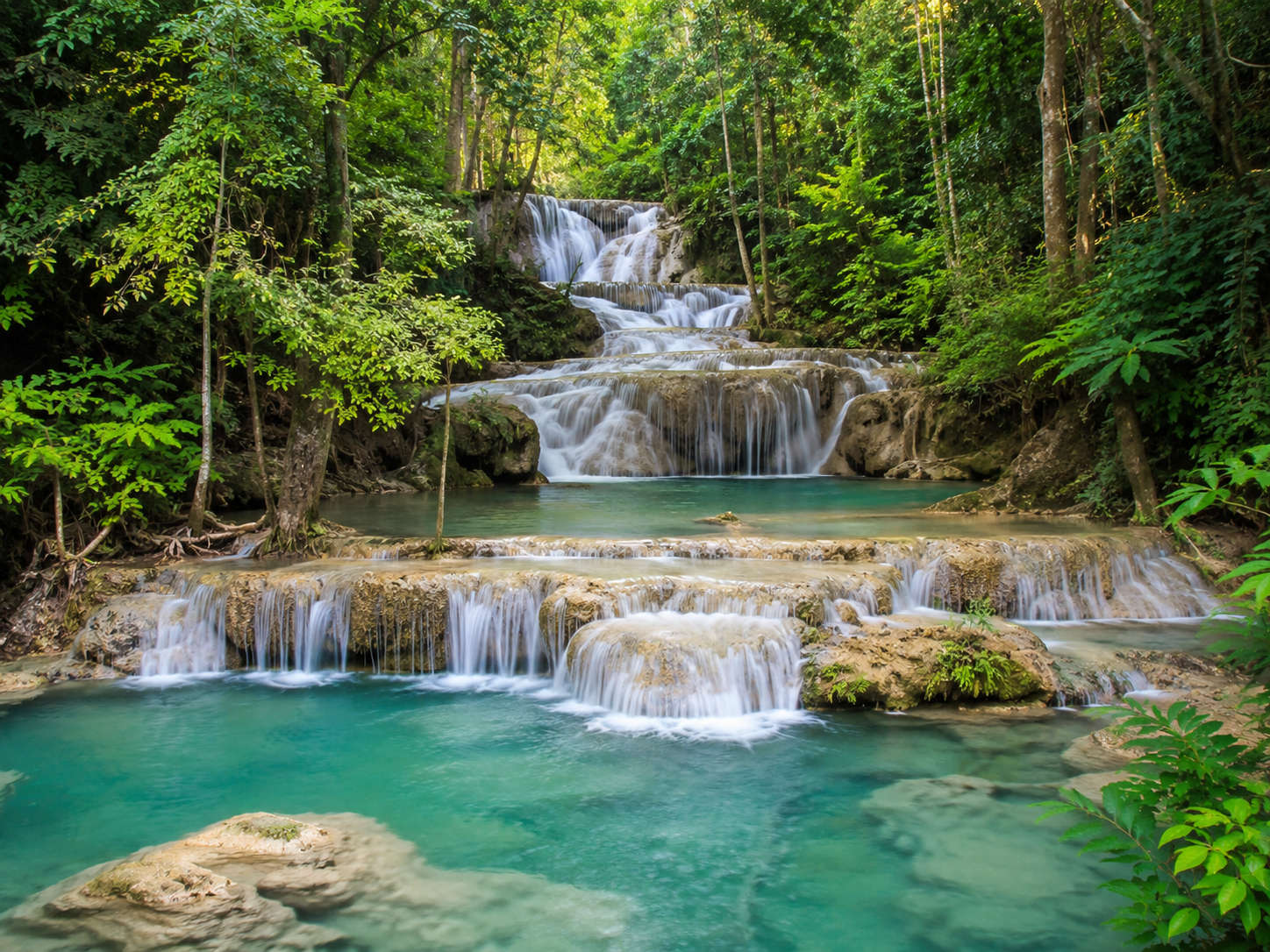
Erawan is the waterfall walk everyone loves. A 2 km trail climbs past seven tiers of emerald pools, and you can swim in most of them, so carry a swimsuit and reef-safe sunscreen. The lower levels are an easy stroll and the upper tiers need a bit of clambering over roots and rock. Entry is around 300 THB, and the pools are clearest from November to April.
Hua Hin is better known for its beach, but inland lies Kaeng Krachan, Thailand’s largest national park, and the Pala-U waterfall trail (park entry around 300 THB). The walking here is forest and birdlife rather than summits, and it pairs well with an ethical elephant sanctuary where you observe and feed the animals instead of riding them. Come November to April, and take a guide for the deeper Kaeng Krachan trails.
Kamphaeng Phet blends a UNESCO-listed historical park with real forest walking in the hills to its west, chiefly around Mae Wong National Park and its Chong Yen viewpoint. It is a quieter, off-the-circuit choice that suits travellers who want ruins and trails in one stop. This is a religious and heritage area, so keep to marked paths near the temples and dress modestly around the Buddha images.
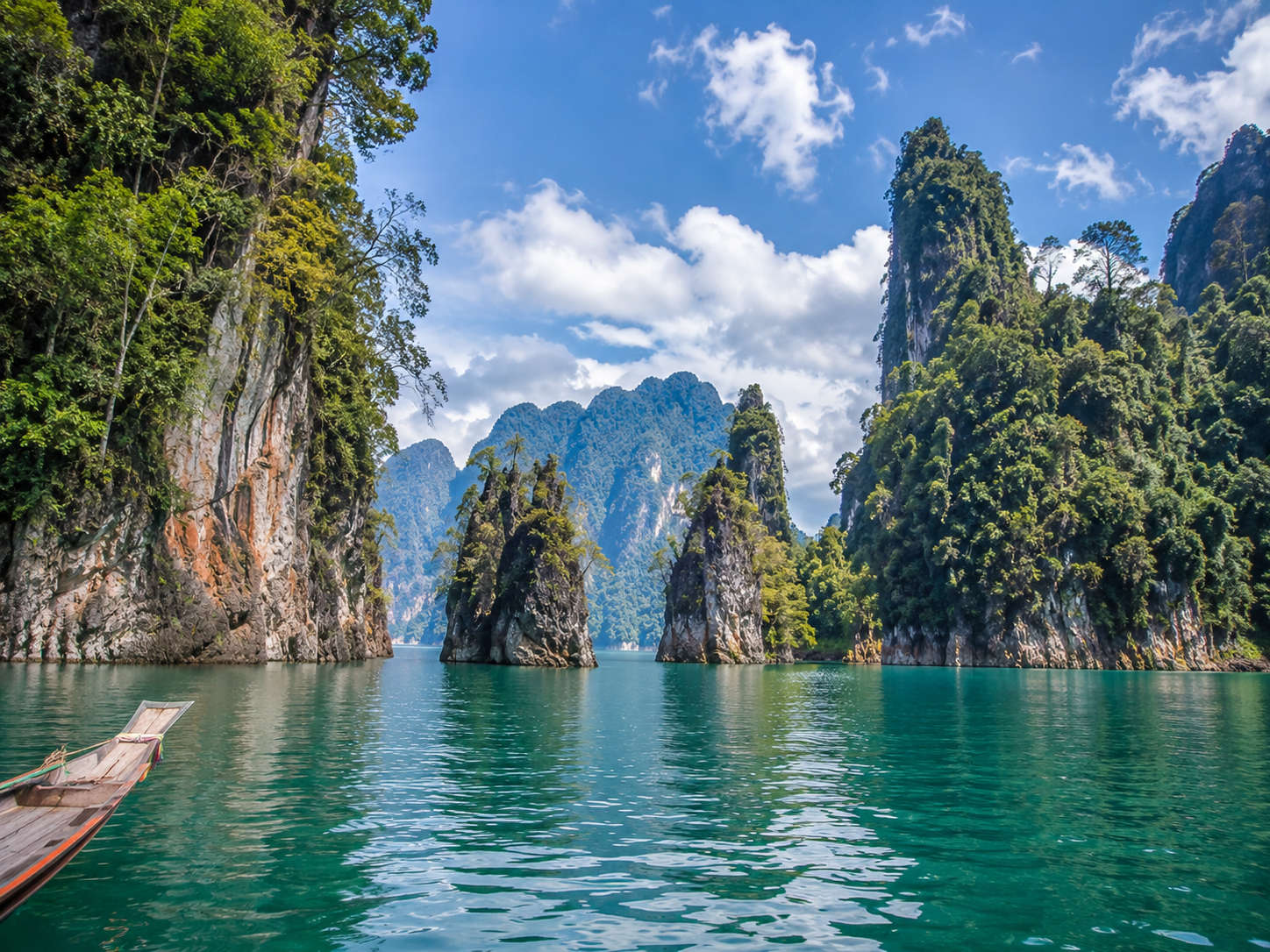
Khao Sok protects a rainforest older than the Amazon, and it is the south’s headline trek (entry around 300 THB). An 11 km trail follows the river past waterfalls and limestone karst, and most visitors add a longtail boat and an overnight in a floating raft house on Cheow Lan Lake. The catch is leeches after rain, so pack repellent and a little salt, tuck your trousers into your socks, and go December to April for the driest walking. Reach it by bus or by air into Phuket or Surat Thani.
Dragon Crest is the best half-day hike on the Andaman coast. A 3.7 km climb through forest gains a series of viewpoints, and the final rock spur juts out over a green sweep of Krabi’s coast and islands. It is free but steep in places, with ropes on the last section. Start by 7 am to beat the heat and the crowds, carry two litres of water, and turn back if the rock is wet.
For a tougher southern day, Khao Luang National Park hides the Krung Ching waterfall at the end of a roughly 4 km jungle trail with more than 4,000 steps in sections. The reward is a 40-metre curtain of water in deep rainforest that most beach-bound travellers never see. It is humid, slippery and best tackled with a local guide from December to April.
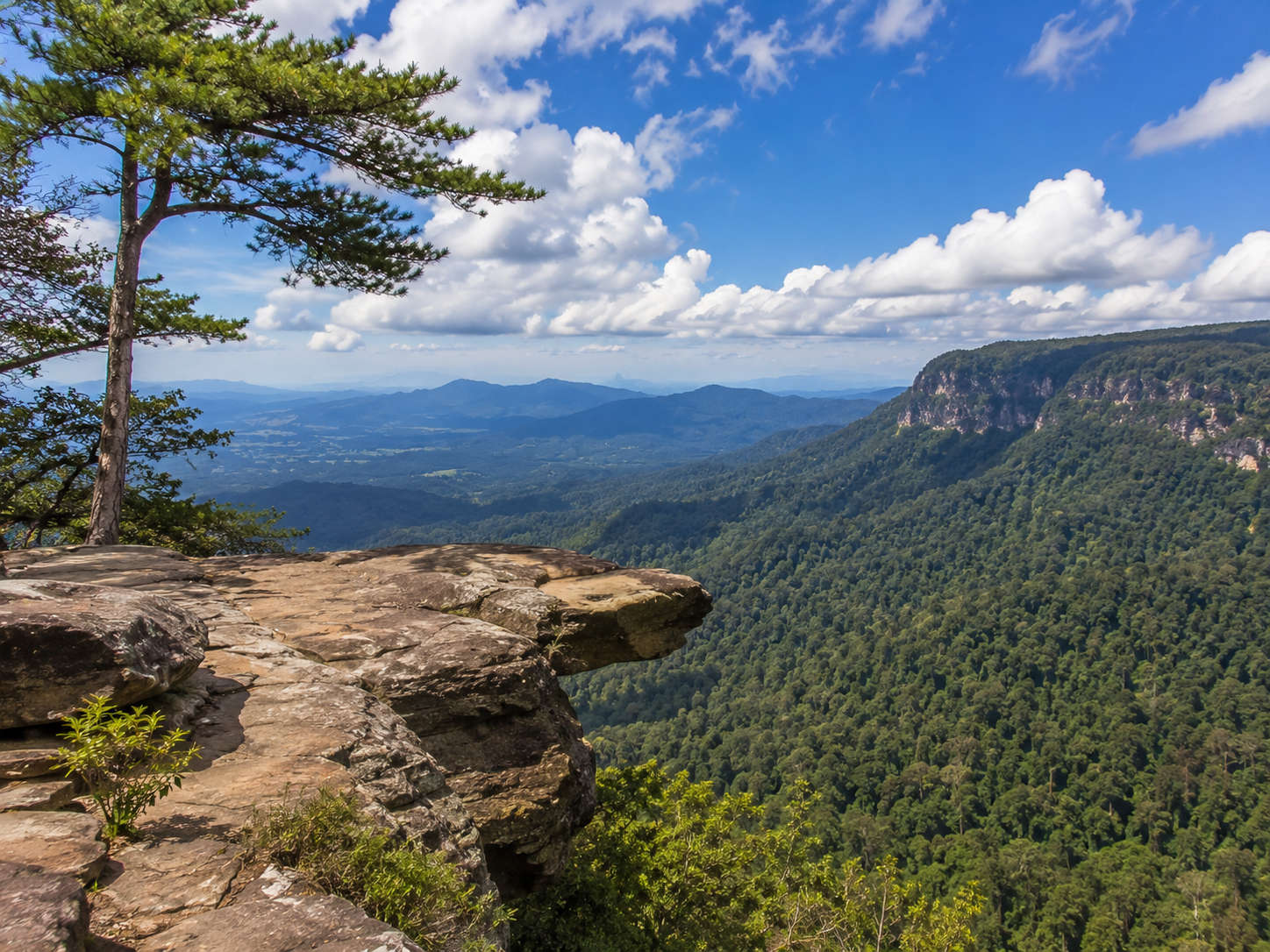
Phu Kradueng is the rite-of-passage overnight climb. A steep 5.5 km ascent gains the rim of a heart-shaped plateau in three to five hours, and from there a network of paths (another few kilometres) reaches the cliff-edge sunset and sunrise points and the Wang Kwang camp. Porters carry your gear up by the kilo if the pack is too much. The park opens 1 October and closes 1 June to 30 September for the monsoon, and nights on top are cold, so bring a warm layer.
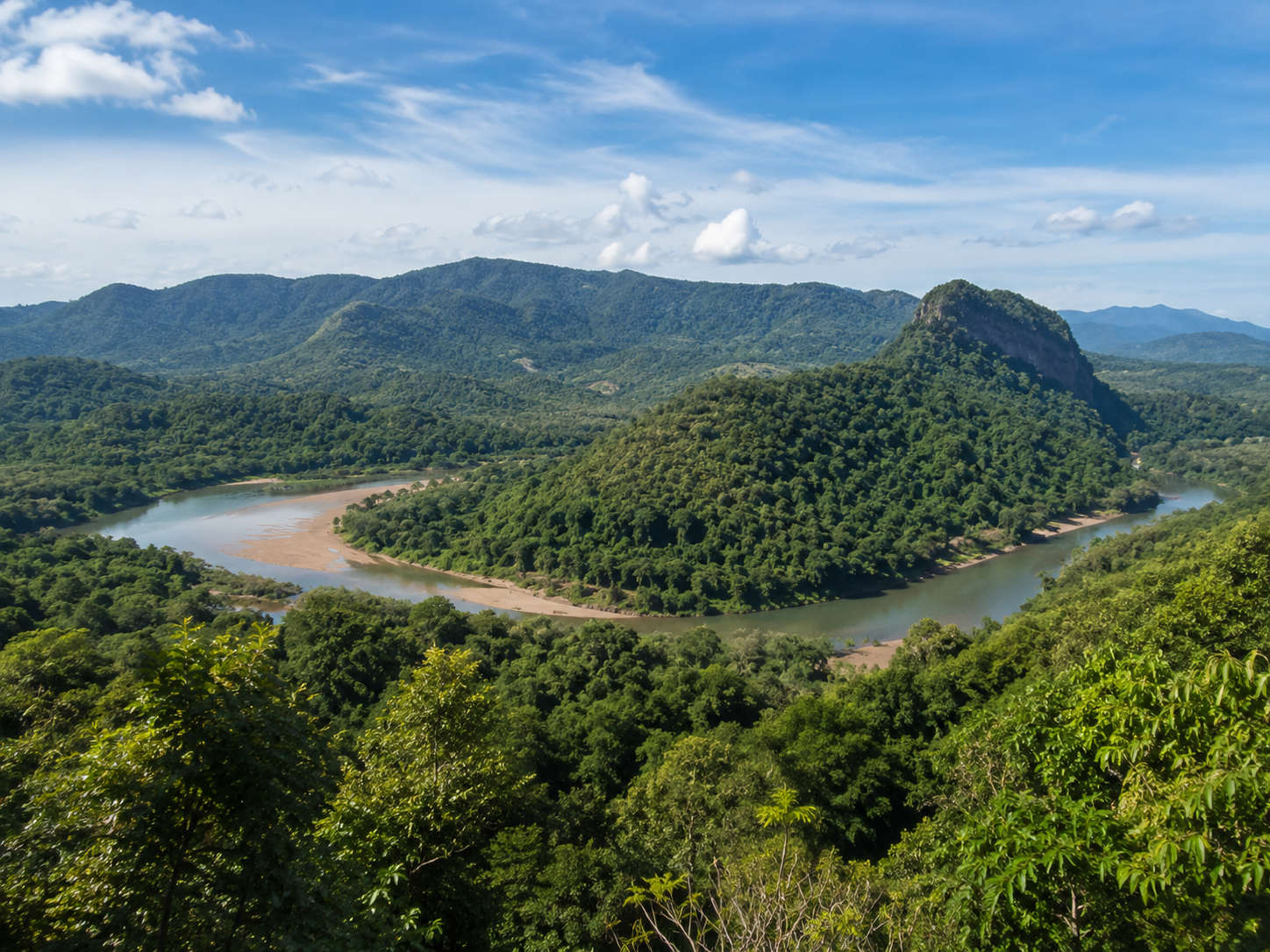
The short answer is the cool, dry season from November to February. Trails are firm, rivers are low and safe to cross, and the ridge views are clear rather than hazed out. March and April bring fierce heat and, in the north, crop-burning haze that can grey out the mountains. June to October is the southwest monsoon, when leeches thrive, clay trails turn treacherous and some high trails close. For a broader view of when to visit Thailand, the season splits a little by region.
| Region | Best months | Avoid | Note |
| North (Chiang Mai, Chiang Rai, Mae Hong Son) | Nov to Feb | Mar-Apr (haze), Jun-Oct (rain) | Cold dawns above 1,500 m; Kew Mae Pan closed Jun-Oct |
| Andaman and south (Krabi, Khao Sok) | Dec to Apr | May to Oct (heavy rain) | Jungle is lush but leechy in the wet months |
| Isan and central (Phu Kradueng, Khao Yai) | Nov to Feb | Jun to Sep | Phu Kradueng fully closed 1 Jun to 30 Sep |
Some trails you can simply walk up. Others you legally cannot do alone.
Do you need a guide?
A guide is compulsory on Kew Mae Pan and Doi Luang Chiang Dao, and it is the norm for multi-day hill-tribe and village treks where you cross private land and need someone who speaks the local language. Short marked routes like the Monk’s Trail, Pai Canyon, Phu Chi Fa, Erawan and Dragon Crest are fine on your own. When you do hire, use a licensed operator rather than a tout at the trailhead. It costs a little more and buys you insurance, a first-aid kit and someone who knows the weather window.
Reading the difficulty grades
Easy means a flat or gently graded path under two hours, doable in trainers. Moderate means a few hundred metres of climb, some roots and rock, and two to four hours on your feet. Hard means a sustained ascent, exposure or an overnight, where fitness and grippy footwear matter. The grades in the table above use this scale.
What to pack
Staying safe
The real risks in Thailand are heat, flash floods and slips, not wildlife. Start early to walk in the cool, turn back if a river is rising or the rock is wet, and never wade a flooded crossing. In the parks with wild elephants, chiefly Khao Yai and Kaeng Krachan, keep your distance and follow your guide. Tell your guesthouse your route on the longer solo walks.
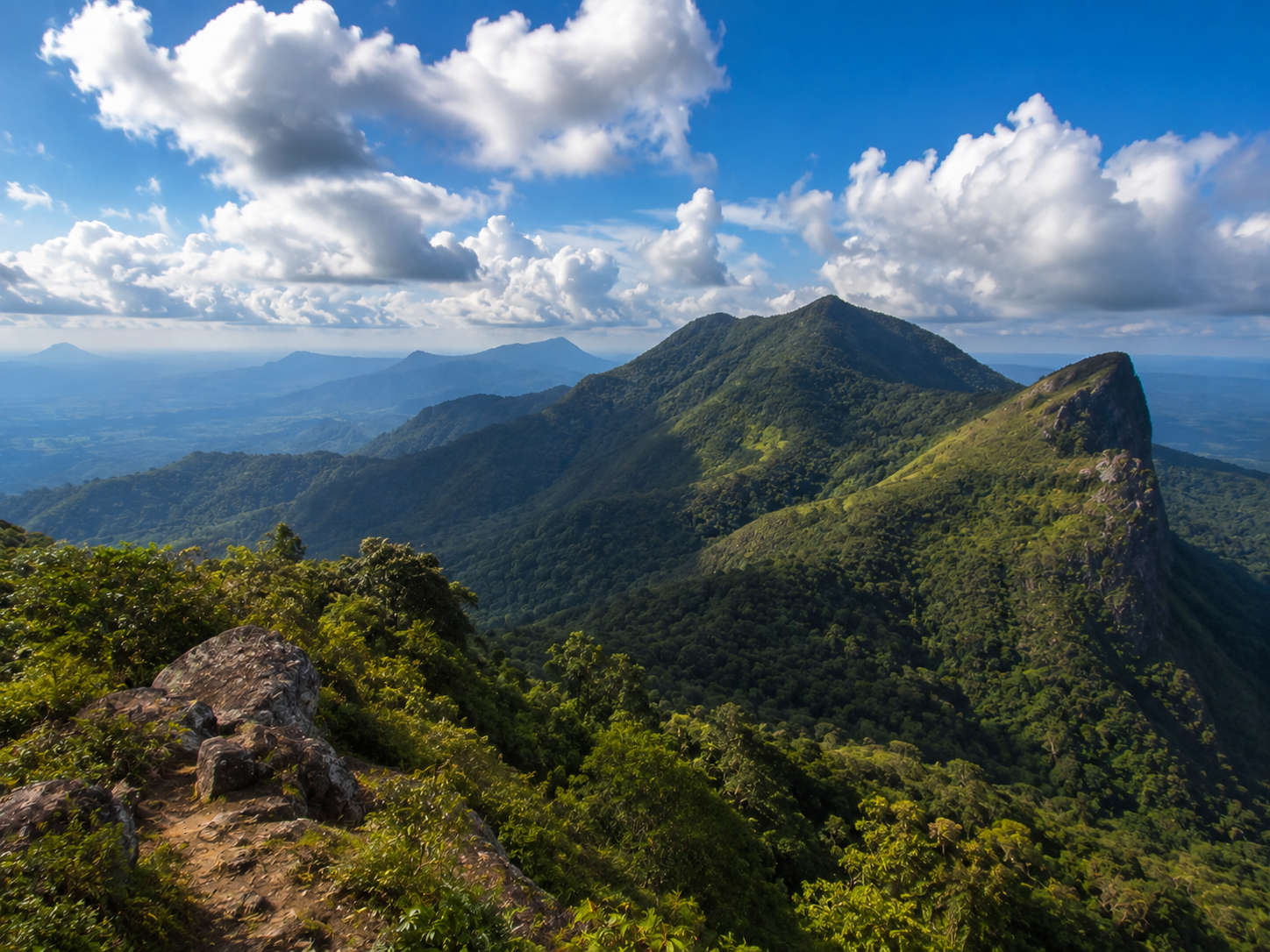
Thailand is one of the easiest trekking trips an Indian traveller can plan. Flights are short, the cool season lines up neatly with the Indian winter, and the whole thing costs a fraction of a comparable Himalayan expedition once you are on the ground.
Flights and getting to the trailheads
Fly into Chiang Mai (CNX) for the northern treks or Bangkok (BKK or DMK) for Khao Yai, Kanchanaburi and the south. Return fares from Delhi, Mumbai, Kolkata or Bengaluru typically run Rs18,000 to Rs35,000 depending on season and how early you book. From Bangkok, a cheap domestic hop or an overnight bus reaches Chiang Mai, and shared songthaews and minibuses connect the trailheads from there.
What it costs on the ground
At roughly Rs2.85 to the baht, the day-to-day numbers are gentle. Here is what the walking itself adds up to, before food and rooms.
| Item | Thai price | Approx INR |
| Return flight, India to Chiang Mai / Bangkok | n/a | Rs18,000 to Rs35,000 |
| National park entry (per park, foreigner) | 300 to 400 THB | Rs850 to Rs1,150 |
| Guided day trek from Chiang Mai | 800 to 1,500 THB | Rs2,300 to Rs4,300 |
| 2-day / 1-night hill-tribe trek with homestay | 1,800 to 3,500 THB | Rs5,100 to Rs10,000 |
| Doi Luang Chiang Dao 2-day guided climb | 4,000 to 6,000 THB | Rs11,400 to Rs17,100 |
| Kew Mae Pan compulsory guide | ~200 THB | ~Rs570 |
These are trekking costs only. Budget guesthouses in Chiang Mai run 500 to 1,000 THB a night, and a good meal is 60 to 150 THB, so a week of northern trekking is very achievable on a mid-range Indian budget.
Visa, permits and paperwork
Indian passport holders can enter Thailand visa-free for tourism for up to 60 days under the current rules, so no visa run is needed for a trekking trip. The only permits you deal with are at the parks themselves: the guide bookings for Kew Mae Pan and Doi Luang Chiang Dao, and standard national-park entry tickets elsewhere.
Food, especially for vegetarians
Vegetarian and Jain travellers do fine here. Learn the phrase jay (pure veg) and gin jay for strict vegetarian, carry a written note in Thai, and stock up on fruit, nuts and packed snacks before a multi-day trek where kitchens are simple. Village homestays will usually cook a vegetable and rice meal if you ask ahead through your guide.
Homestay etiquette
On village treks you are a guest in someone’s home. Take your shoes off at the door, dress modestly, ask before photographing people, and buy the handicrafts or coffee the community makes rather than haggling hard. A guide who works with the same villages regularly will steer you right.
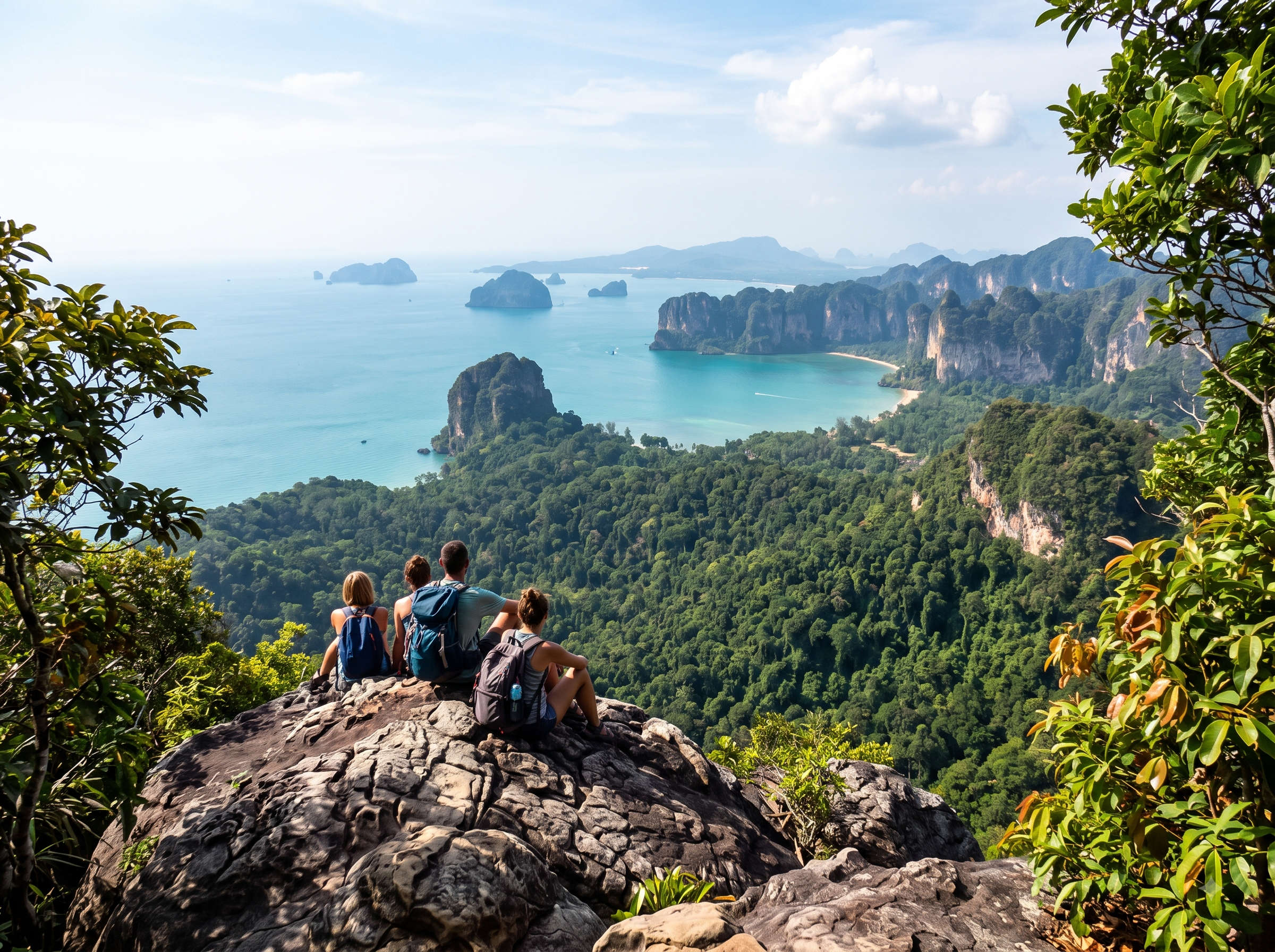
Thailand rewards the traveller who walks. Pick the north for the classic multi-day treks and the highest summits, the south for rainforest and sea-view ridges, and the cool season from November to February for the best of all of it. Start early, hire a licensed guide where it is required, and pack for heat and leeches rather than cold. When you are ready to turn the plan into a trip, our Thailand tour packages bundle the flights, transfers and Chiang Mai trekking so you can focus on the trail.
Yes. Thailand offers everything from one-hour temple climbs to two-day summit pushes, with cloud-forest peaks over 2,500 metres in the north, jungle trails in the south and ridge walks on the Andaman coast. Trails are well set up, guides are affordable, and the cool dry season from November to February gives excellent walking conditions.
November to February, the cool dry season, is best across the country. Trails are firm, rivers are safe to cross and views are clear. Avoid March to April in the north for crop-burning haze, and June to October for the monsoon, when several high trails such as Kew Mae Pan and Phu Kradueng close.
Northern Thailand is the heart of it. Chiang Mai (Doi Inthanon, the Monk's Trail), Chiang Dao (Doi Luang), Chiang Rai (hill-tribe treks and Phu Chi Fa) and Mae Hong Son (Pai Canyon, Karen villages) hold the classic multi-day treks and the highest peaks. The south adds Khao Sok's rainforest and Krabi's Dragon Crest.
The Doi Suthep Monk's Trail to Wat Pha Lat is the easy favourite, and Kew Mae Pan and the Pha Dok Siew loop on Doi Inthanon are the scenic day walks. For an overnight, the Mae Taeng valley runs Karen and Lisu village treks, and nearby Doi Luang Chiang Dao is the region's toughest summit.
For some trails, yes. A licensed guide is compulsory on Kew Mae Pan and Doi Luang Chiang Dao, and it is standard for multi-day hill-tribe treks. Short marked routes like the Monk's Trail, Pai Canyon, Phu Chi Fa, Erawan and Dragon Crest can be done on your own if you are reasonably fit.
For most short and moderate trails, yes, a good pair of trainers with grip is fine. But the wet rock on Khao Ngon Nak and the exposed ridge on Doi Luang Chiang Dao really call for proper trail shoes or light boots, and any muddy monsoon-season walk is safer with a lugged sole.
Wear light, quick-dry clothing, a hat and grippy shoes, and carry a warm layer for cold dawns on the high peaks. Avoid flip-flops, jeans and heavy non-breathable fabrics that trap sweat. Near temples and in villages, cover your shoulders and knees.
Khao Sok sits between Surat Thani and Phuket in southern Thailand. The easiest routes are a flight into Phuket or Surat Thani airport followed by a shared minivan, or a direct bus from Phuket, Krabi or Surat Thani town. Most people book transfers through their raft-house or guesthouse.
Phuket itself is more about short forest walks than big treks. The best is the trail through Khao Phra Thaeo forest to the Bang Pae and Ton Sai waterfalls, near the Gibbon Rehabilitation Project. For serious trekking, most travellers use Phuket as the gateway to Khao Sok, a couple of hours north.
Return flights from India run roughly Rs18,000 to Rs35,000, national park entry is Rs850 to Rs1,150 per park, and a guided day trek from Chiang Mai is Rs2,300 to Rs4,300. A two-day hill-tribe trek with a homestay is around Rs5,100 to Rs10,000. Indian passport holders travel visa-free for up to 60 days.
Real reviews from real travelers who booked with us.
View All Reviews