
 8D / 7N
6% OFF


What First-Time Visitors to Sri Lanka Need to Know
The Sri Lanka travel tips that matter most in 2026 come down to five moves. Apply for your ETA online before you fly (it has been free for Indian passport holders since 25 May 2026). Carry some rupee cash even though UPI now works at LankaQR shops. Cover your shoulders and knees at temples. Book tuk-tuks through PickMe instead of hailing them. And pick your coast by season. Colombo is about 1 hr 20 min from Chennai, the clocks match India’s, and India sent Sri Lanka more visitors than any other country in 2025. The 35 tips below sit under nine themes, in the order you will need them. Rules and fees were checked against official sources where they exist in November 2026, and costs are shown in Indian rupees.
Key Takeaways
- Apply for the ETA at eta.gov.lk before you book hotels. For Indians it costs nothing right now and covers 30 days with double entry.
- Switch on UPI International in PhonePe or your bank’s UPI app before you leave, and still carry LKR 5,000 to 10,000 in cash for buses, temples and small stalls.
- Budget about ₹3,500 a day per person for a backpacker trip, ₹8,000 to ₹12,000 for mid-range, and ₹20,000 or more for boutique hotels with a private driver.
- Board the Ella train at Nanu Oya for now. The Kandy section has been shut since Cyclone Ditwah, and reserved seats open 30 days before travel.
- Head to the south and west coasts from December to April, and to the east coast from May to September.
Sri Lanka at a Glance for Indian Travellers (November 2026)
| What you need to know | The short answer |
|---|---|
| Tourist visa (ETA) for Indians | Free, 30 days, double entry. Apply at eta.gov.lk before flying |
| Currency | Sri Lankan rupee (LKR). About LKR 3.5 to ₹1 at mid-market rates in late October 2026 |
| UPI | Accepted at LankaQR merchants through PhonePe and other UPI apps with UPI International switched on |
| Time zone | GMT+5:30, the same as India |
| Plugs and voltage | Types D, G and M at 230V, 50Hz. Indian plugs fit Type D and M sockets, not Type G |
| Mobile data | Dialog tourist SIM or eSIM at the airport, about LKR 1,800 for 30 GB |
| Emergency numbers | 119 police, 1990 ambulance, 1912 tourism hotline |
| Flight time from India | About 1 hr 20 min from Chennai, 3 hr from Mumbai, 3 hr 30 min from Delhi (direct) |
| Best season | South and west coasts December to April. East coast May to September |
| Languages | Sinhala and Tamil. English is widely understood in hotels, shops and on trains |
| Daily budget per person | About ₹3,500 (budget), ₹8,000 to ₹12,000 (mid-range), ₹20,000+ (luxury) |
Sri Lanka
Sri Lanka
Visa, money, trains, temple rules and safety for Indian travellers
Best Time
December - April
Select Package Type
Best Selling Packages


Visa and Entry: Do Indians Need a Visa for Sri Lanka?
Indians do need permission to enter Sri Lanka, but it is now a free online form, not a paid visa. Sri Lanka’s Department of Immigration and Emigration added India to its free-ETA list with effect from 25 May 2026. The tourist ETA allows a 30-day stay with two entries.
Apply for the free ETA online before you fly
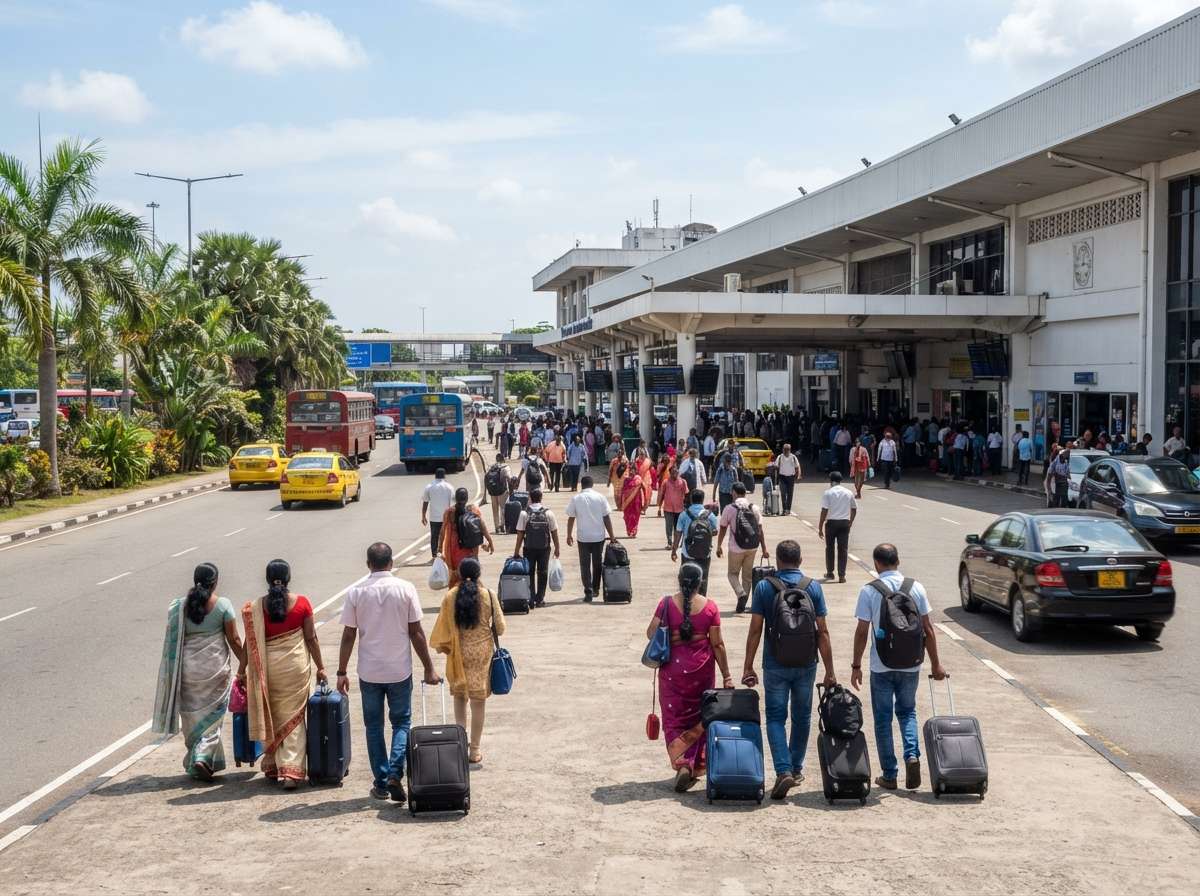
Fill in the Electronic Travel Authorization at eta.gov.lk once your flights are fixed. You type in your passport details, travel dates and first address in Sri Lanka. There is no passport scan to upload. Approval usually lands in your inbox within a day or two, and you show it on your phone at Bandaranaike International Airport (CMB). Sri Lanka stopped issuing visas on arrival to tourists in October 2025, and airlines check for an approved ETA before you board, so apply at least three or four days before you fly. Sri Lanka has switched free entry on and off for Indians since a pilot that began in October 2023, and All India Radio described the current version as a six-month programme. Check the fee shown on the portal on the day you apply. The full step-by-step form walkthrough is in our Sri Lanka visa for Indians guide.
Use only the official ETA portal, never an agent site that charges
Search for “Sri Lanka ETA” and the first results are often paid sites that look official and add a “processing fee” of ₹2,000 or more for a form that costs nothing. The only government address is eta.gov.lk. If a site asks for card details for an Indian tourist ETA right now, close it. The same goes for WhatsApp “visa agents”. Keep a screenshot of your approval and the reference number. Immigration officers in Colombo can pull it up from your passport, but airline check-in staff in India sometimes ask to see it before printing your boarding pass.
Carry the papers immigration actually checks
Your passport needs at least six months of validity from your arrival date and a blank page for the entry stamp. Carry a return or onward ticket and your first hotel booking, printed or on your phone. Also fill in Sri Lanka’s online Digital Arrival Card at eservices.immigration.gov.lk in the 72 hours before you land. Officers at CMB rarely ask, but when they do, a missing return ticket is the one thing that slows people down. An ETA allows 30 days. Stays beyond that need a paid extension from the Department of Immigration and Emigration, which you can apply for online at eservices.immigration.gov.lk or at its office in Battaramulla. If you plan a long slow trip, apply for the extension before day 30, not on your way out.
When to Go: Picking a Coast by Season
Sri Lanka has two monsoons that hit opposite sides of the island, so there is always a dry coast somewhere. The question is which one fits your dates. For the month-by-month detail, read our guide to the best time to visit Sri Lanka.
Match your coast to the monsoon
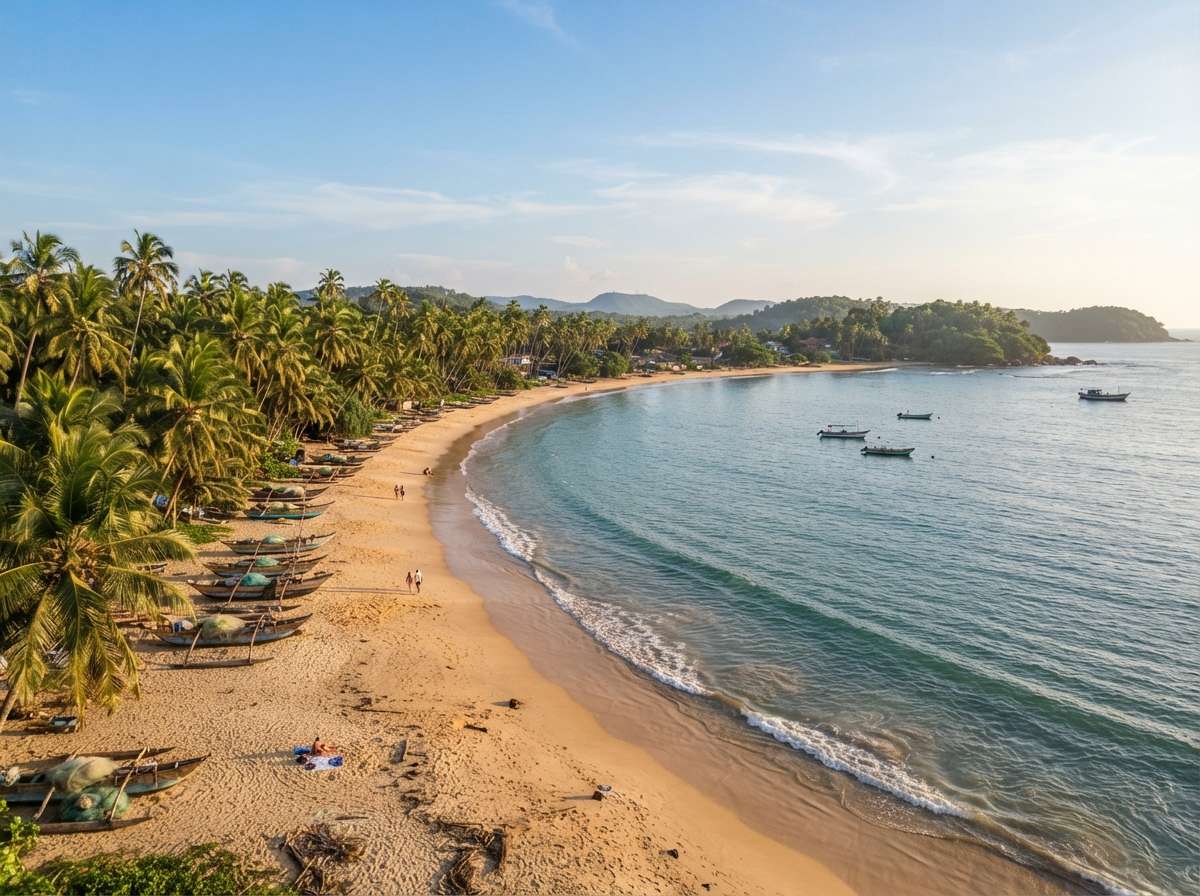
The southwest monsoon brings rain to the west coast, the south coast and the hill country from about May to September. The northeast monsoon wets the east and north from about November to February. October and early November are the inter-monsoon weeks, with afternoon storms almost everywhere. So Galle, Mirissa and Bentota are at their best from December to April, and Trincomalee, Pasikudah and Arugam Bay from May to September. The Cultural Triangle (Sigiriya, Dambulla, Polonnaruwa) stays reasonably dry for most of the year outside November and December. If your only window is July or August, base yourself on the east coast and you will hardly notice the monsoon.
| Region | Driest months | Wettest months | Go there for |
|---|---|---|---|
| West and south coast (Colombo, Bentota, Galle, Mirissa) | December to April | May to September | Beaches, whale watching off Mirissa, Galle Fort |
| Hill country (Kandy, Nuwara Eliya, Ella) | January to April | May to August, and October to November | Tea estates, the Ella train, Horton Plains |
| Cultural Triangle (Sigiriya, Dambulla, Polonnaruwa) | February to September | November to December | Ancient cities, rock temples, Minneriya elephants |
| East coast (Trincomalee, Pasikudah, Arugam Bay) | May to September | November to February | Calm swimming seas, surfing at Arugam Bay |
| North (Jaffna) | February to September | October to December | Tamil temples, Nallur Kovil, quiet islands |
Check the Poya calendar before you plan a night out
Every full moon is a Poya day, a public holiday when Sri Lanka’s Buddhists visit temples. The Excise Department’s 2026 list names 19 dry days when alcohol sales stop island-wide, and every Poya is on it. The next one is Il Poya on Tuesday, 24 November 2026. Bars, beach shacks, liquor shops and hotel bars all stop serving, so buy anything you want beforehand and keep it for your room. Temples get crowded with families in white, which is a good day to watch rather than to sightsee in a hurry. Look up the Poya dates for your trip before you book a beach night in Mirissa or Unawatuna.
Book early for Esala Perahera and the Christmas peak
Two windows fill up months ahead. The Kandy Esala Perahera runs for about ten nights in July or August, and rooms within walking distance of the Temple of the Tooth sell out early, with prices often doubling. The Christmas to New Year week on the south coast is the other crunch, when Indian, European and local holidaymakers all arrive at once. If your dates fall in either window, book hotels and any reserved train seats as soon as your flights are confirmed. Outside these weeks you can book a few days ahead almost anywhere on the island.
Is Sri Lanka Expensive? Money, UPI and a Daily Budget
Sri Lanka is cheap to eat and move around in, but entry tickets and good hotels cost more than most Indian travellers expect. The rupee has also strengthened since 2022, so the old “₹1 buys LKR 2.4” mental maths no longer works. In late October 2026, mid-market rates sat at about LKR 3.5 to the Indian rupee, which means LKR 1,000 is roughly ₹285.
Turn on UPI International before you leave India
UPI has worked in Sri Lanka since February 2024, through a link between NPCI International and LankaPay. You scan the LankaQR code at a shop, café, hotel or attraction and pay from your Indian bank account, with the amount converted to rupees on screen. PhonePe confirms support at all LankaQR points. The catch is a setting. Open your UPI app before you fly, find “UPI International” under your bank account, and switch it on (most banks let you set a date range). Do it at home, because the activation may need an OTP to your Indian number. PickMe launched a UPI offer for Indian visitors in August 2026 (20% off a ride, up to LKR 750), so check the app for the current deal.
Keep cash for tuk-tuks, buses and temple stalls
UPI does not reach everywhere. Buses take cash only, many tuk-tuk drivers flagged off the street want cash, and the flower sellers and shoe-minders outside temples take small notes. Carry LKR 5,000 to 10,000 at any time, and break big notes at supermarkets such as Keells or Cargills, because drivers rarely have change for LKR 5,000. Indian rupee notes are not accepted for payment in Sri Lanka and are hard to exchange outside Colombo, so change money into LKR at the airport or a bank rather than carrying a wad of ₹500 notes.
Use bank ATMs and exchange counters, not street changers
The old advice that ATMs refuse foreign cards is out of date. Bank of Ceylon, Commercial Bank, Sampath Bank and HNB ATMs in Colombo, Kandy, Galle and Ella take Visa and Mastercard debit cards, with a local fee of a few hundred rupees per withdrawal on top of your Indian bank’s charge. Withdraw larger amounts less often to keep fees down. The exchange counters in the CMB arrivals hall give fair rates and stay open for night flights. Avoid anyone in a market offering a “better rate”, because short-changing with folded notes is the oldest trick going. Tell your bank you are travelling so it does not block the card.
Ask for SAARC rates at ticket counters
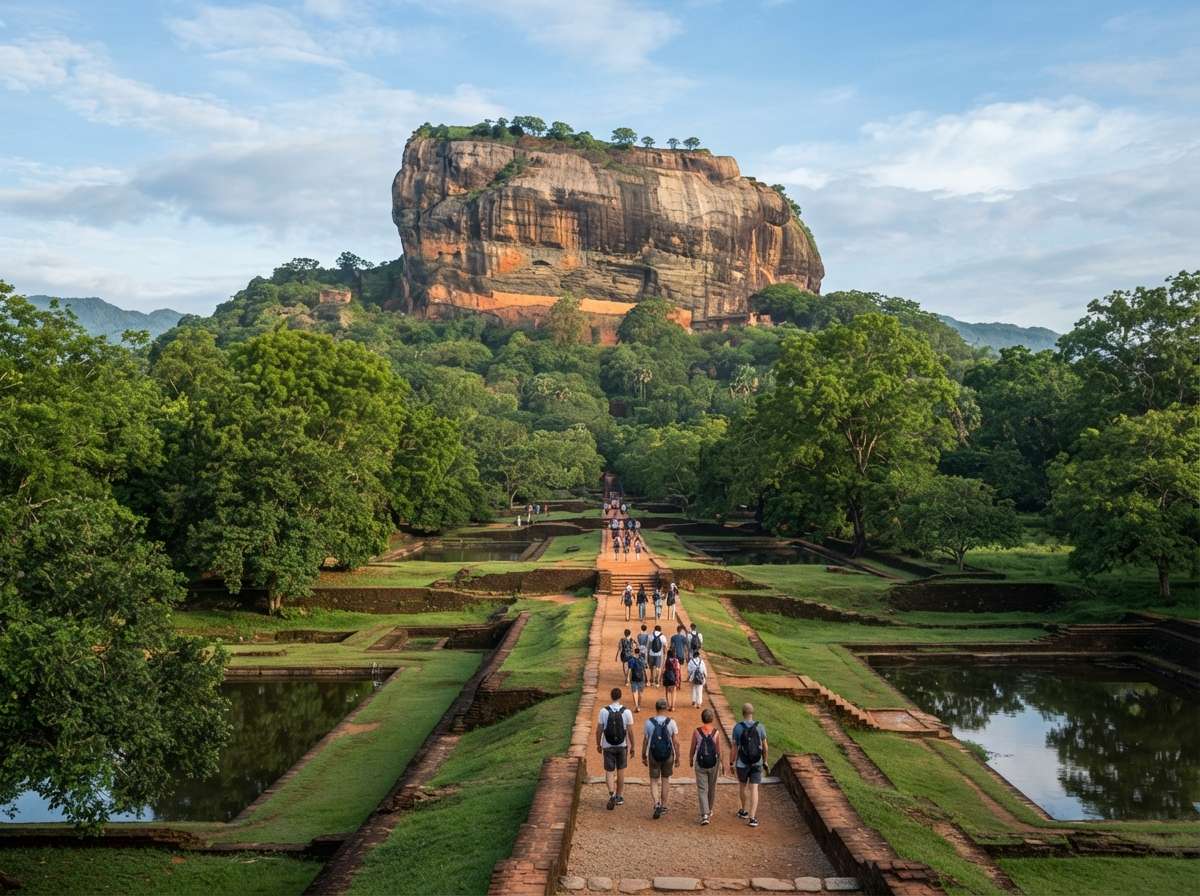
Foreigners pay far more than locals at major sites, but Indians, as SAARC nationals, often get a lower rate. Sigiriya Rock costs USD 35 for most foreign adults and USD 20 for SAARC passport holders. The Temple of the Tooth in Kandy charges LKR 3,000 to foreigners and LKR 2,500 to SAARC visitors, according to the temple’s own site. Carry your passport, since the counter staff need to see it, and ask for the SAARC ticket by name. Not every site advertises one. The Dambulla cave temple charges foreigners about LKR 3,000, so ask at the counter whether a SAARC rate applies. For the full Sigiriya breakdown, see our Sigiriya Rock entry fee guide.
| Site | Foreign adult | SAARC adult (Indians) | Source |
|---|---|---|---|
| Sigiriya Rock | USD 35 | USD 20 | Central Cultural Fund |
| Temple of the Tooth, Kandy | LKR 3,000 | LKR 2,500 | sridaladamaligawa.lk |
| Dambulla Cave Temple | LKR 3,000 | Ask at the counter | Temple ticket office |
Read the bill before you tip
Most hotel and restaurant bills in Sri Lanka already carry a 10% service charge, plus government taxes, so check the bottom of the bill before adding more. If it is there, rounding up is plenty. Where there is no service charge, 10% is a fair tip in a sit-down restaurant. Drivers and guides on multi-day trips usually get a tip at the end, and LKR 1,000 to 2,000 a day is a common figure among travellers. Small tips of LKR 100 to 200 for a porter or the person minding shoes at a temple are normal.
Daily budget per person (twin sharing), TravelTriangle estimates for 2026
| Expense | Budget | Mid-range | Luxury |
|---|---|---|---|
| Stay (per room, per night) | Guesthouse, LKR 6,000 to 10,000 (₹1,700 to ₹2,900) | 3-star hotel, LKR 18,000 to 30,000 (₹5,000 to ₹8,500) | Boutique or 5-star, LKR 60,000+ (₹17,000+) |
| Food | Local rice and curry, kottu, LKR 2,000 to 3,000 (₹570 to ₹860) | Café and restaurant meals, LKR 5,000 to 8,000 (₹1,400 to ₹2,300) | Hotel dining, LKR 12,000+ (₹3,400+) |
| Transport | Trains, buses, PickMe, LKR 1,500 to 3,000 (₹430 to ₹860) | Car and driver shared by two, LKR 9,000 to 12,500 (₹2,600 to ₹3,600) | Private car with guide-driver, higher |
| Entry tickets (average day) | LKR 1,500 to 3,000 | LKR 3,000 to 6,000 | Safari jeeps and private guides, LKR 10,000+ |
| Total per person per day | About ₹3,500 | About ₹8,000 to ₹12,000 | ₹20,000 and up |
Getting Around Sri Lanka: Train, Bus, Tuk-Tuk or Car?
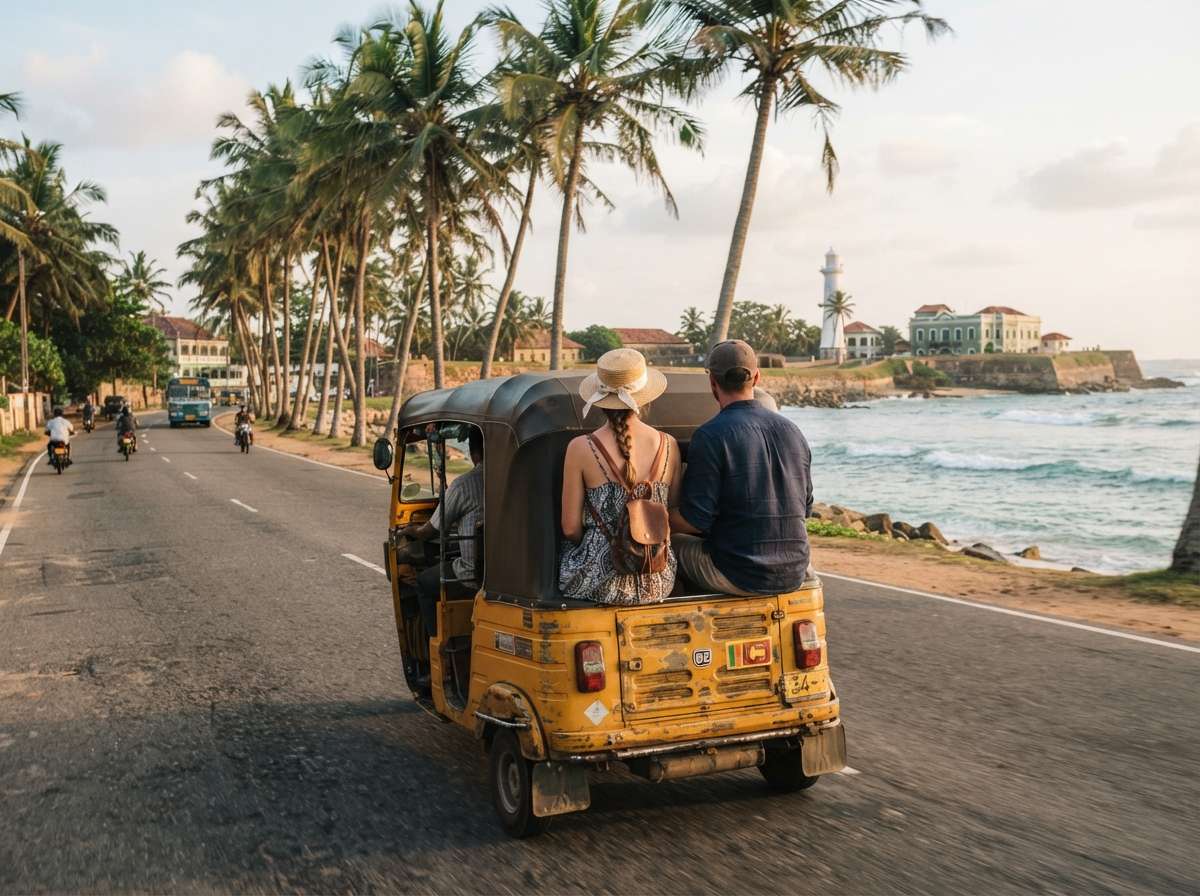
Distances look short on the map, but roads are slow, so the way you move decides how much you see. Most first-timers mix two modes: a car or train between regions, and PickMe tuk-tuks inside towns.
Book tuk-tuks on PickMe or Uber
PickMe is Sri Lanka’s own ride app and works in Colombo, Kandy, Galle, Negombo and most tourist towns. Uber covers Colombo and a few other cities. The fare is fixed before you get in, which removes the haggling that catches most visitors. Install PickMe at home and register with your Indian number, so the OTP reaches you before you swap SIMs. Where there is no app coverage, agree the fare before you sit down, or ask for a metered tuk-tuk (many Colombo tuk-tuks have meters). A driver who says “pay what you like” usually means more than the app price.
Reserve the Ella train 30 days out, and board at Nanu Oya for now
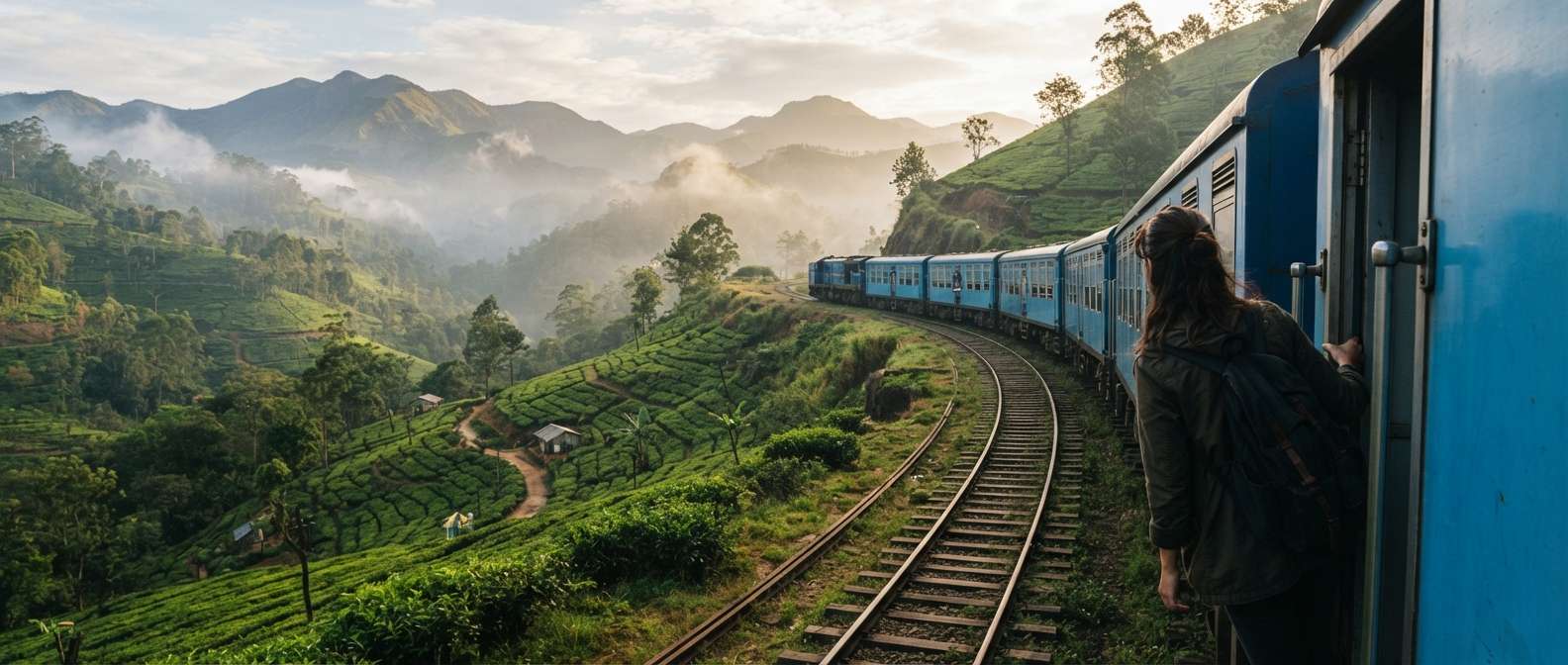
The hill-country line through tea estates is the train ride most people come for. As of November 2026 it does not run the full way from Kandy. Cyclone Ditwah destroyed sections of track in late 2025. The Nanu Oya to Ella to Badulla stretch reopened on 20 June 2026, but Kandy to Nanu Oya was still closed, with full reopening expected around the end of 2026 or early 2027. So most travellers drive from Kandy to Nanu Oya (about 2.5 to 3 hours), then take the train for the best part of the line. Reserved seats open 30 days before travel on seatreservation.railway.gov.lk and sell out within hours in season. Third-class unreserved tickets, sold at the station on the day, are the backup. Check the Sri Lanka Railways site the week you travel.
Ride the buses for short hops, not with big bags
Sri Lanka’s red government buses and private buses reach every town for a few hundred rupees, and air-conditioned intercity buses link Colombo with Kandy, and run on the Southern Expressway to Galle and Matara. They are fast and frequent. They are also crowded, the driving is bold, and there is no luggage hold on most routes, so a big suitcase ends up on your lap or blocking the aisle. Buses suit day trips and couples with backpacks. With children or large bags, a car is worth the extra spend.
Hire a car and driver if you are a family or short on days
A car with a driver is the most popular way for Indian families and couples to tour Sri Lanka, and it is common rather than a luxury. Rates run at about LKR 18,000 to 25,000 a day for a car with an English-speaking driver, usually including fuel and the driver’s meals and room. Split between two or four people, that is close to the cost of trains plus tuk-tuks. You stop at viewpoints, spice gardens and roadside fruit stalls on your own schedule. Agree in writing whether highway tolls, parking and the driver’s lodging are included before day one.
Double the time Google Maps gives you
Off the expressways, cars average 30 to 40 km an hour, because roads wind through towns, hills and the odd herd of buffalo. Colombo to Kandy is about 115 km and takes 3 to 4 hours. Kandy to Nuwara Eliya is about 75 km and takes close to 3 hours of hairpin bends. Colombo to Galle is quick at about 2 hours on the Southern Expressway. Plan one long transfer a day at most, and leave by 8 am to arrive before the afternoon rain.
Train, bus, tuk-tuk or car: which suits your trip?
| Mode | Cost | Comfort | Best for | Watch out for |
|---|---|---|---|---|
| Train | Lowest for long hauls | Good in reserved 1st and 2nd class, crowded in 3rd | Scenic hill-country legs, Colombo to Galle by the sea | Seats sell out 30 days ahead. Kandy to Nanu Oya closed for now |
| Bus | Cheapest overall | Basic, often crowded | Short hops and solo travellers with light bags | No luggage space, fast driving |
| PickMe or Uber tuk-tuk | Fixed app fare | Fine for 30 minutes or less | Getting around inside towns | Patchy app coverage in rural areas |
| Car with driver | LKR 18,000 to 25,000 a day | Best | Families, honeymooners, trips of 7 days or less | Agree tolls and the driver’s stay in writing |
Culture and Etiquette: Temple Dress Code and Local Manners
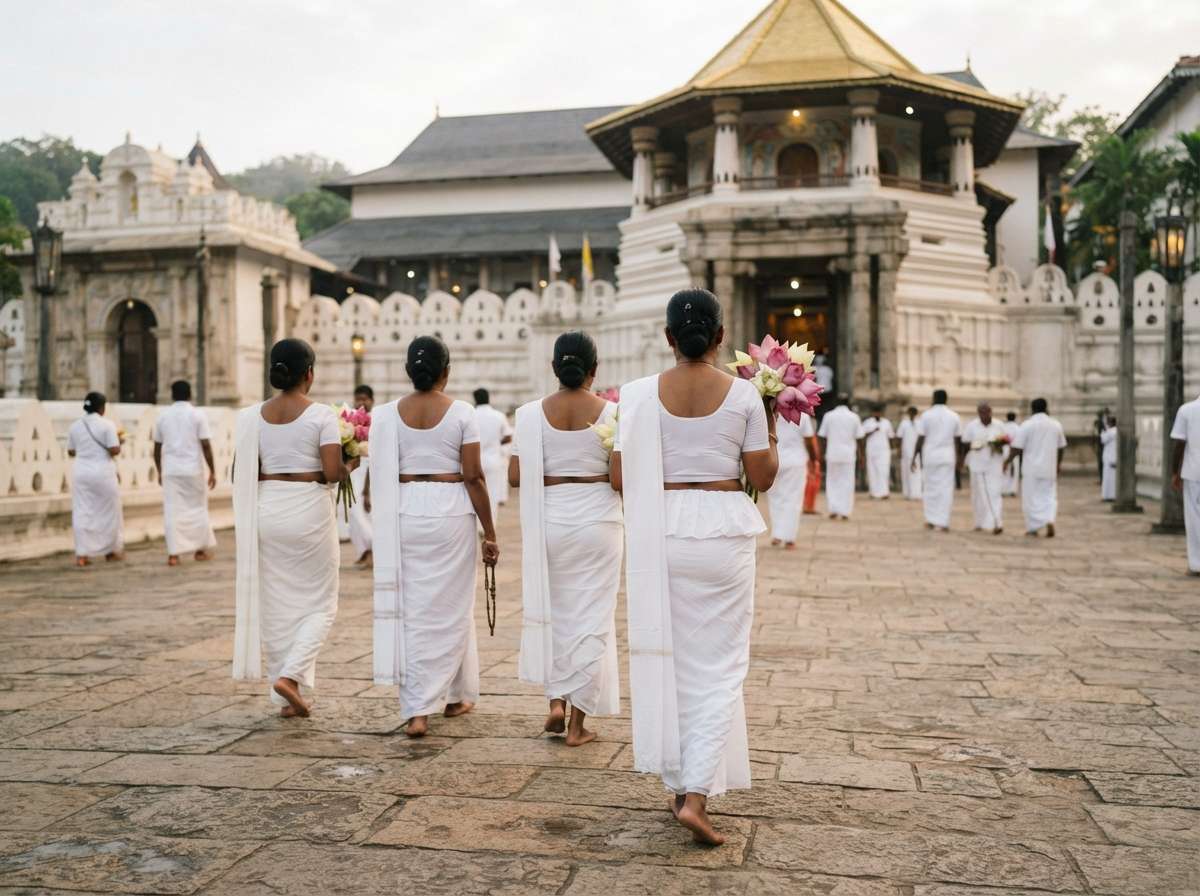
About 70% of Sri Lankans are Buddhist, and the rules around temples and the Buddha image are taken seriously, sometimes legally. Most etiquette slips by tourists happen at temple gates.
Cover shoulders and knees, and take off shoes and hats at temples
Every Buddhist temple, from the Temple of the Tooth to a small village vihara, expects covered shoulders and covered knees for men and women. Shorts above the knee and sleeveless tops will get you turned back at the gate. Carry a light sarong or long skirt and a scarf in your day bag. Shoes and hats come off before you step onto temple ground. Note the hat rule is the opposite of a gurdwara in India, where you cover your head. Stone courtyards get painfully hot by noon, so pack a pair of white socks, which are acceptable at most sites.
Never pose with your back to a Buddha, and cover Buddha tattoos
Turning your back on a Buddha statue for a selfie is seen as disrespectful, and temple staff at Dambulla and Kandy will ask you to stop. Take photos facing the statue, or sideways. Never climb on statues or pose with your hand on one. Buddha tattoos are a real risk. Sri Lankan authorities have refused entry to, and deported, foreign tourists with visible Buddha tattoos, including a British nurse in 2014. If you have one, keep it covered with sleeves or a bandage from the moment you land.
Eat and hand things over with your right hand
The left hand is considered unclean, as it is in much of India, so eat, pay and pass things with your right hand. When you eat rice and curry with your fingers in a local “hotel” (as small eateries are called), use the right hand only. Use both hands, or your right hand with your left touching your right forearm, when you give something to an older person or a monk. Monks do not shake hands with women, and women should avoid touching a monk or sitting next to one on a bus.
Keep public affection low-key
Holding hands is fine, but kissing and close cuddling in public draw stares, and on beaches near towns they can draw a lecture. This matters most for honeymooners, who make up a big share of Indian visitors. Keep the affection for your resort, and dress a little more modestly than you would in Goa once you leave the beach. Topless sunbathing is illegal. Our Sri Lanka honeymoon guide covers couple-friendly stays where you can relax.
Learn three words, and read the head wobble
“Ayubowan” (Sinhala) and “Vanakkam” (Tamil) both mean hello, and “Istuti” (Sinhala) or “Nandri” (Tamil) is thank you. English is widely understood in hotels and shops, but a greeting in the local language changes the tone of any conversation. Sinhala is spoken across most of the island and Tamil in the north and east, and Jaffna and the east coast feel culturally closer to Tamil Nadu than to Colombo. The side-to-side head wobble usually means “yes” or “fine”, which Indian travellers already know well.
Sri Lanka dos and don’ts
| Do | Don’t |
|---|---|
| Cover shoulders and knees at every temple | Wear shorts or sleeveless tops to a vihara |
| Remove shoes and hats before temple grounds | Pose with your back to a Buddha statue |
| Eat and pay with your right hand | Show off a Buddha tattoo |
| Ask for the SAARC rate at ticket counters | Pay a “processing fee” for the Indian ETA |
| Book tuk-tuks on PickMe or agree the fare first | Get in a tuk-tuk that says “pay what you like” |
| Carry LKR cash for buses and small stalls | Expect to spend Indian rupee notes |
| Check the Poya calendar before a night out | Plan a bar crawl on a full-moon day |
| Swim at beaches with lifeguards or flags | Swim on the south coast in monsoon swell |
| Drink bottled or filtered water | Drink from the tap |
| Use only certified gemstone and handicraft shops | Buy gemstones from a “friend” met on the street |
Is Sri Lanka Safe? Scams, Solo Travel and Emergency Numbers
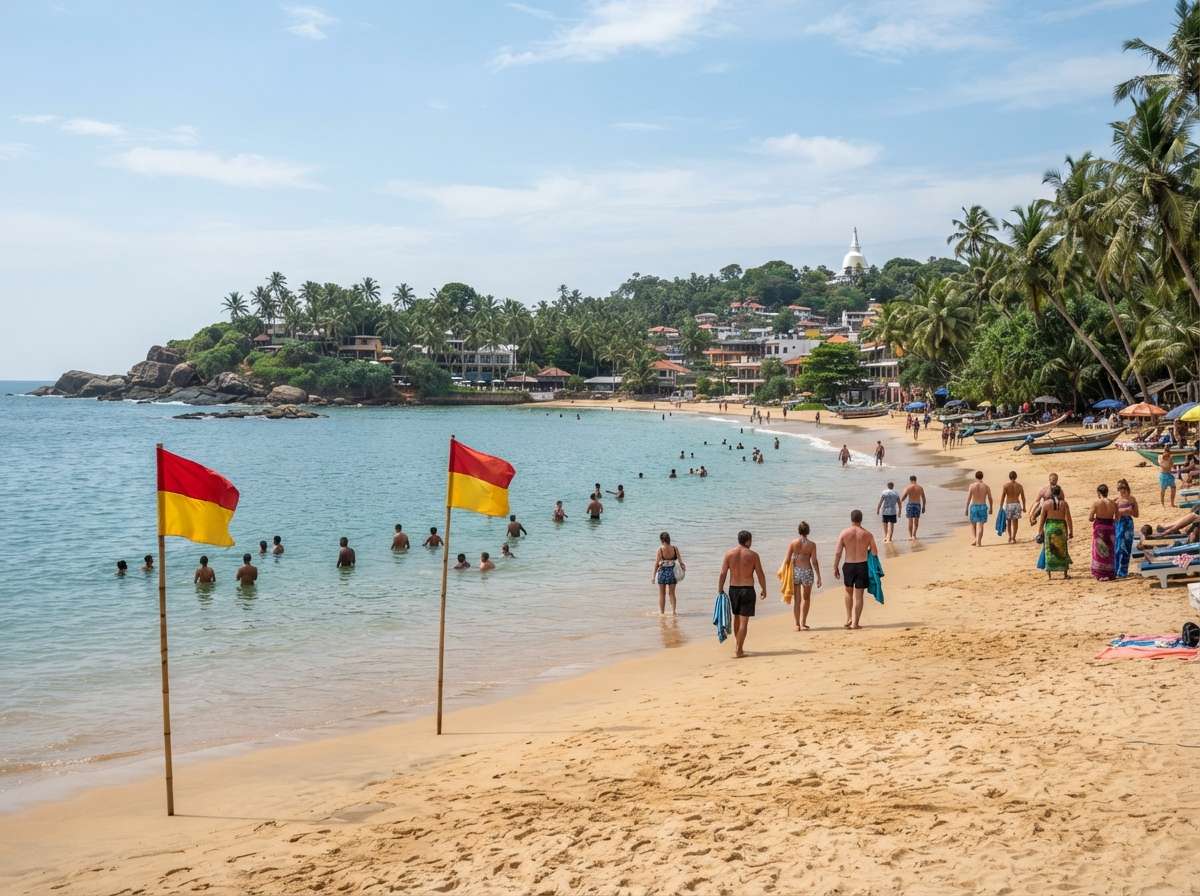
Sri Lanka is safe for Indian tourists, with low violent crime and a population that is friendly to visitors. The real risks are petty scams, strong sea currents and road traffic.
Know the four scams that catch first-timers
The gemstone pitch is the costliest. A friendly stranger says a relative runs a gemstone shop and the stones will sell for double in India. They will not. Buy gemstones only from shops certified by the National Gem and Jewellery Authority. The second is the tuk-tuk driver who says your temple or hotel is “closed today” and offers another. The third is the spice garden visit that ends with ₹5,000 worth of oils and creams you did not plan to buy. The fourth is the fake ETA site. For handicrafts, the government-run Laksala stores in Colombo, Kandy and Galle sell at fixed prices. Our shopping in Sri Lanka guide lists more trusted shops.
Solo women travellers do well with a few habits
Many Indian women travel Sri Lanka solo, and most report a smooth trip. The common annoyance is persistent attention from men, especially on the south coast, which a firm “no thank you” and walking on usually ends. Dress modestly away from the beach, use PickMe at night so the trip is logged, and avoid empty beaches after dark. Women-only compartments do not exist on most trains, so choose a reserved seat over standing room in third class. Share your plans with your guesthouse. Our Sri Lanka solo travel guide has safe bases and routes.
Swim only where the locals swim
Rip currents along the south and west coasts drown visitors every year, most often during the May to September monsoon swell. Swim at beaches with lifeguards or flags, such as Unawatuna and Mirissa in season, and ask your guesthouse which stretches are safe. A calm-looking bay can still pull hard near rocks and river mouths. On the east coast, Pasikudah’s shallow, reef-protected lagoon is the safest swimming in the country from May to September.
Save three numbers in your phone
Dial 119 for the police and 1990 for the free Suwa Seriya ambulance service, which covers the whole island and has run since 2016. The Sri Lanka Tourism hotline is 1912, for complaints and help in English. Save them before you land. The Indian High Commission in Colombo, with consulates in Kandy, Hambantota and Jaffna, can help with lost passports. Register your trip with family and keep a photo of your passport and ETA approval in your email.
Food and Drink Tips for Indian Travellers
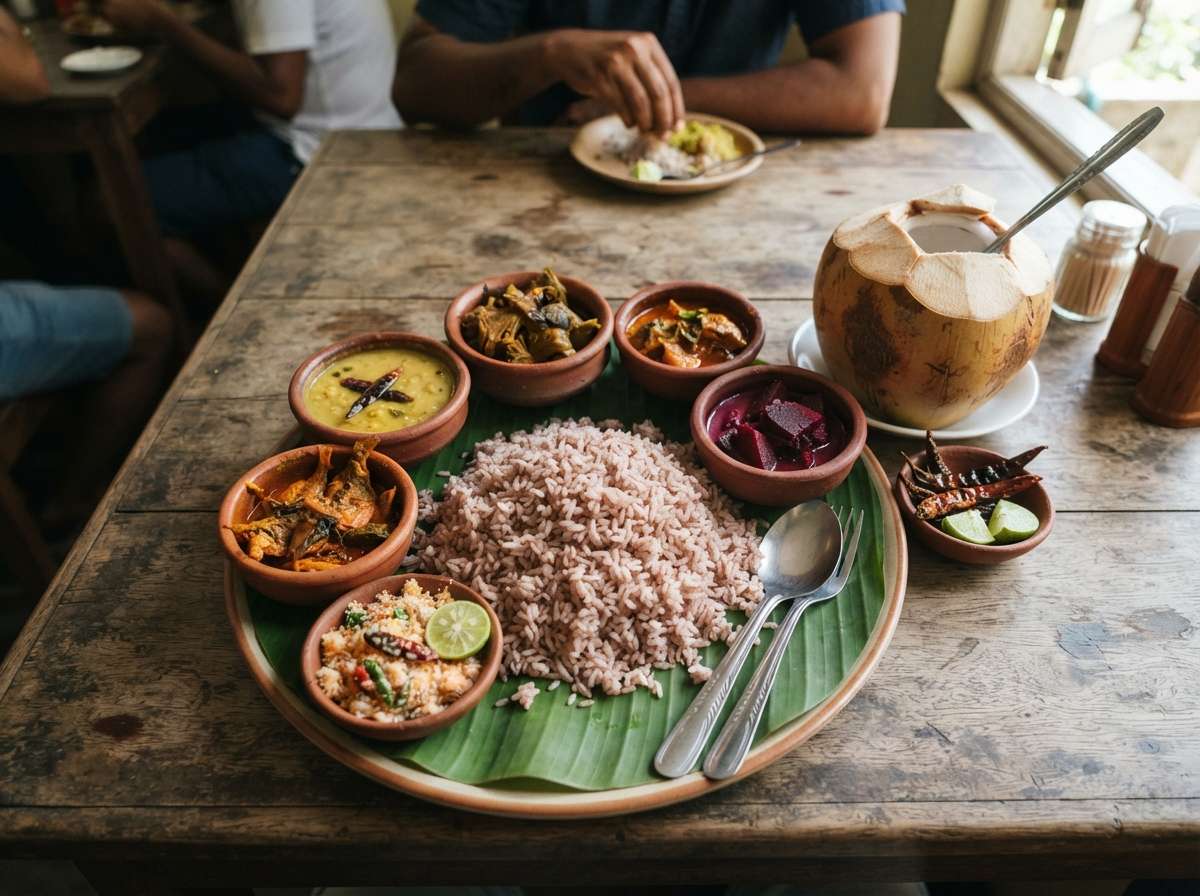
Sri Lankan food will feel familiar to anyone from South India, with coconut, curry leaves and rice at every meal. It is also hotter than many visitors expect.
Start with rice and curry, kottu and hoppers
Rice and curry is the national lunch: a plate of rice with four to six small curries such as dhal, jackfruit, beetroot and pol sambol (grated coconut with chilli and lime). In local eateries it costs about LKR 400 to 800. Kottu roti, chopped flatbread fried on a griddle with vegetables or egg, is the evening street food you will hear before you see. Hoppers (appam) with an egg in the middle are the breakfast to try. The food is close to Kerala and Tamil cooking, but heavier on chilli, so say “less spicy” when you order. Our Sri Lankan cuisine guide covers 12 dishes worth ordering.
Vegetarians and Jains should ask about Maldive fish
The biggest trap for vegetarians is Maldive fish, a dried, flaked tuna added to sambols and many “vegetable” curries for flavour. Ask for “no fish, no Maldive fish, no egg” every time, and say “elavalu witharai” (vegetables only) if English does not land. Pure-vegetarian South Indian restaurants such as Shanmugas on Ramakrishna Road in Colombo are a safe fallback, and Kandy and Nuwara Eliya have several Indian vegetarian places. Jain travellers will find onion-free and garlic-free food easier to arrange through hotels than in local eateries, so tell your hotel a day ahead.
Buy arrack and Lion Lager from licensed shops
Arrack, distilled from coconut flower sap, is Sri Lanka’s own spirit and tastes somewhere between rum and whisky. Lion Lager is the beer you will see everywhere. Buy both from licensed wine stores or hotel bars, and avoid “local arrack” sold in plain bottles, which can be illicit kasippu. Liquor shops close on every Poya day and on public holidays on the Excise Department list, so stock up the day before if you want a drink with dinner. Toddy, the milder fermented sap, is sold at roadside taverns in the south.
Drink bottled or filtered water
Tap water is not safe to drink for visitors, even in Colombo. Buy sealed bottled water (check the cap), or carry a filter bottle and refill at the water stations many hotels and cafés now offer to cut plastic. Brush your teeth with bottled water for the first few days if your stomach is sensitive. Fresh king coconut (thambili), sold at roadside stalls for LKR 150 to 250, is the best way to stay hydrated in the heat. Ice in tourist restaurants is made from treated water and is generally fine.
SIM, Internet and Plug Adapters
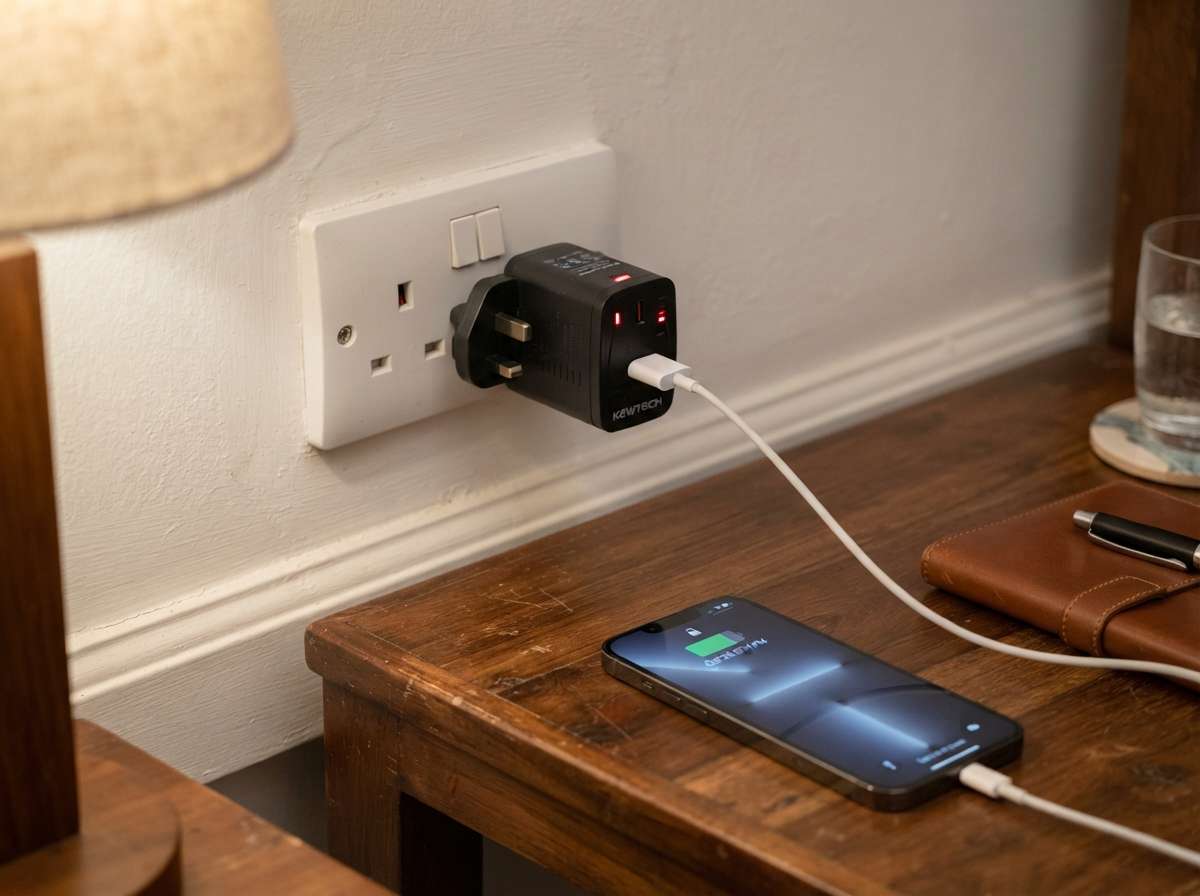
Indian roaming packs work in Sri Lanka but cost far more than a local SIM, and plug sockets are not always the Indian kind.
Buy a tourist SIM or eSIM at the airport
The Dialog and SLT-Mobitel counters in the CMB arrivals hall sell tourist SIMs and eSIMs, and the staff set them up in five minutes. Bring your passport, because registration needs it. Dialog’s tourist packs run at about LKR 1,800 for 30 GB and LKR 2,450 for 50 GB, valid for 30 days, which is under ₹750 for a whole trip. Coverage is strong in towns and along main roads, and patchy in Horton Plains, Yala and parts of the Knuckles range. Download offline Google Maps for the hill country before you leave the hotel Wi-Fi. Hotel Wi-Fi is usually good enough for WhatsApp video calls.
Pack a Type G adapter, because Indian plugs do not fit Type G
Sri Lanka runs on 230V at 50Hz, the same as India, so your chargers work without a converter. The difference is the socket. Sri Lanka uses three types: D (the round-pin Indian kind), G (the British three square pins) and M (the larger round-pin kind). Older hotels and homes often have Type D or M, while newer hotels mostly fit Type G. Do not count on universal sockets: Sri Lanka made Type G the national standard in 2016 and has since banned universal sockets in new wiring. Pack one universal adapter or a D-to-G adapter, plus a small extension board, so one adapter charges everything.
Health, Packing and Responsible Travel
No vaccines are compulsory for Indian travellers, but heat, mosquitoes and the hills each need a little preparation.
Pack for heat, rain and the hills
Pack light cotton or linen for the coast and the Cultural Triangle, where days sit at 28 to 33°C. Add a fleece or light jacket for Nuwara Eliya and Horton Plains, which drop to around 10°C at dawn. A compact umbrella or rain jacket earns its space in any month. For temples, carry a sarong or long skirt, a scarf and white socks. Men need trousers or shorts that cover the knee. A backpack is easier than a hard suitcase on trains and tuk-tuks. Bring any prescription medicine in its original pack.
Protect yourself from dengue and the sun
Dengue is present in Sri Lanka all year and peaks during and just after the monsoons, according to the Ministry of Health’s Epidemiology Unit. Use a DEET-based repellent, especially around dawn and dusk, and choose rooms with nets or screens. Sunscreen of SPF 50, a hat and sunglasses matter more than people expect, because the sun near the equator burns fast even on cloudy days. Hepatitis A and typhoid vaccines are commonly advised for travel in South Asia, so ask your doctor four to six weeks before you fly.
Buy insurance with medical cover
Private hospitals in Colombo, such as Asiri and Nawaloka, are good, but they bill foreigners at private rates, and a night in hospital can run into lakhs of rupees. Buy travel insurance with medical and evacuation cover before you leave India. Add adventure cover if you plan surfing, white-water rafting at Kitulgala or diving. Keep the policy number and the insurer’s emergency line in your phone. Insurance also covers missed connections, which is useful when trains and flights run late in the monsoon.
Choose elephant experiences that don’t involve riding
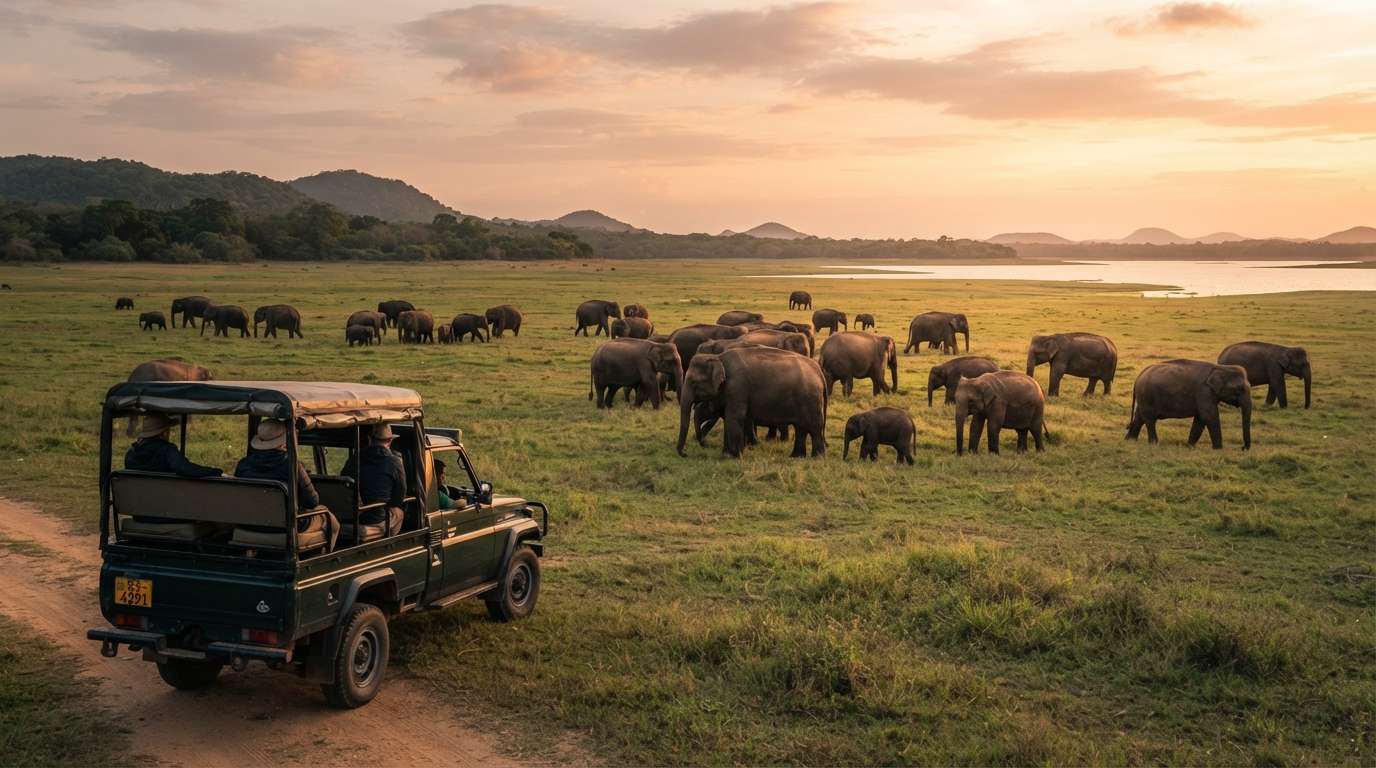
Seeing wild elephants is easy in Sri Lanka. Minneriya and Kaudulla national parks host “the Gathering” of hundreds of elephants from about July to September, and Udawalawe has herds all year. Skip elephant rides and bathing sessions at private camps, which rely on chained or captive animals. The Elephant Transit Home at Udawalawe, which rehabilitates orphaned calves for release, is a better choice. Our guide to elephant sanctuaries in Sri Lanka explains which places put the animals first. Say no to single-use plastic bags too. Sri Lanka has been tightening its ban on them.
Your Sri Lanka Trip Checklist: 7 Steps Before You Fly
Use this order to prepare. Each step depends on the one before it, so the ETA and flights come first and packing comes last.
- Book flights and apply for the ETA. Fix your dates, then apply at eta.gov.lk with your passport details and first hotel address. Save the approval email and a screenshot.
- Plan your route by season. Pick the dry coast for your month, add Kandy or the hill country, and keep one long transfer per day at most. Our Sri Lanka travel guide has route ideas, and the things to do in Sri Lanka hub helps you choose stops.
- Reserve train seats 30 days out. Log in to seatreservation.railway.gov.lk on the morning bookings open and reserve Nanu Oya to Ella seats, or note the third-class fallback.
- Set up money. Switch on UPI International in your UPI app, tell your bank you are travelling, and decide how much cash to draw at the airport.
- Install apps at home. Download PickMe and Uber, register with your Indian number, and download offline maps of Sri Lanka.
- Buy insurance and check health. Get a policy with medical cover, and see your doctor about Hepatitis A and typhoid vaccines if you are not already covered.
- Pack for temples and the hills. Add a sarong or scarf, white socks, a fleece, repellent, SPF 50 and a Type G adapter, then put your passport, ETA and hotel booking in one folder.
How We Checked This Guide
The rules and fees on this page were checked in November 2026 against primary sources where they exist: the ETA portal of Sri Lanka’s Department of Immigration and Emigration (eta.gov.lk) for entry rules, Sri Lanka Railways for train status and booking windows, the Excise Department’s 2026 dry-day list for Poya alcohol rules, Sri Lanka Tourism (srilanka.travel) and the 1990 Suwa Seriya Foundation for emergency numbers, NPCI International and PhonePe announcements for UPI, and the Temple of the Tooth and Central Cultural Fund for ticket prices. Exchange rates are mid-market figures from late October 2026. Budget figures are TravelTriangle estimates and will vary by season. Rules in Sri Lanka change often, so we re-check this page every three months.
Planning Your First Sri Lanka Trip
A smooth Sri Lanka trip comes down to a free ETA applied for in advance, a mix of UPI and cash, covered knees at every temple, and a coast picked to match the monsoon. Get those four right and the rest is easy, from the Nanu Oya train to a plate of rice and curry in Kandy. If you would rather have the ETA guidance, hotels, train seats and a driver arranged for you, compare itineraries on our Sri Lanka tour packages page. Couples can browse Sri Lanka honeymoon packages and families can start with Sri Lanka family packages. For more on the island, start at our Sri Lanka tourism hub.
FAQs
Sri Lanka Travel Tips: Frequently Asked Questions
Quick answers on the ETA, UPI, daily budget, safety, dress code, SIMs, plugs, Poya days and trip length.
Indians need an Electronic Travel Authorization (ETA), and it is currently free. Since 25 May 2026, Sri Lanka has issued a free 30-day, double-entry tourist ETA to Indian passport holders. Apply at eta.gov.lk before you fly, since there is no visa on arrival for tourists. Approval usually comes within a day or two. The scheme has changed several times since 2023, so check the fee shown on the official portal when you apply, and ignore agent sites that charge for it.
UPI works, but Indian rupee notes do not. Since February 2024 you can scan LankaQR codes at shops, restaurants, hotels and many attractions and pay from your Indian bank account through PhonePe or another UPI app. Turn on UPI International in the app before you leave India. Indian currency notes are not accepted for payment and are hard to exchange outside Colombo, so carry some Sri Lankan rupees for buses, tuk-tuks and small stalls.
Plan on about ₹3,500 per person per day on a budget, ₹8,000 to ₹12,000 for mid-range travel and ₹20,000 or more for luxury, with two people sharing a room. Food and buses are cheap. Rice and curry costs LKR 400 to 800 in a local eatery. Hotels, private drivers and entry tickets are the big costs, with Sigiriya alone at USD 20 for Indians. Travel in the off-season for each coast and hotel rates drop noticeably.
Yes. Sri Lanka is safe for Indian tourists, with low violent crime and a tourism industry that is fully open in 2026, and India is its largest source of visitors. The main risks are petty: gemstone and spice-garden scams, tuk-tuk overcharging, and rip currents on the south coast in the monsoon. Some hill-country rail sections are still being repaired after Cyclone Ditwah. Save 119 for police, 1990 for an ambulance and 1912 for the tourism hotline.
Wear light cotton clothes, and at temples cover your shoulders and knees. This applies to both men and women. Shoes and hats come off before you enter temple grounds, so white socks help on hot stone floors. Carry a sarong or scarf in your day bag. Beachwear is fine at the beach but not in towns, and topless sunbathing is illegal. Pack a fleece for Nuwara Eliya and Horton Plains, where early mornings can be close to 10°C.
Dialog is the most popular choice for tourists because of its wide coverage, and SLT-Mobitel is a solid second. Both sell tourist SIMs and eSIMs at the Bandaranaike airport arrivals hall, and you need your passport to register. Dialog's tourist packs cost about LKR 1,800 for 30 GB, valid for 30 days. That is far cheaper than an Indian roaming pack. Coverage thins out in national parks and remote hill areas.
Bring a universal adapter or a Type G (British three-pin) adapter. Sri Lanka uses Type D, G and M sockets at 230V and 50Hz. Indian plugs fit Type D and M sockets directly, and since the voltage matches India you do not need a converter. Newer hotels mostly use Type G sockets, so without an adapter you may not be able to charge at all. A small extension board lets one adapter run several chargers.
Yes, alcohol is legal and sold in licensed shops, bars and hotels, but not on Poya days. Poya is the monthly full-moon holiday, and the Excise Department's 2026 list includes every Poya among 19 dry days when alcohol sales stop island-wide. Hotel bars stop serving too, so buy beforehand if you want a drink in your room. Arrack and Lion Lager are the local drinks to try. Buy them only from licensed outlets.
Seven to ten days is right for a first trip. A week covers two or three regions without rushing: for example Sigiriya and Dambulla, Kandy and the hill country around Nuwara Eliya and Ella, or Kandy, the hill country and two days on the south coast. With five days, stick to two regions, such as Kandy and the south coast. Ten days or more lets you add Yala or the east coast without rushing. Allow for slow roads, since a 100 km drive can take three hours.
No, visitors should not drink tap water in Sri Lanka, even in Colombo and big hotels. Drink sealed bottled water, or carry a filter bottle and use the refill stations that many hotels and cafés now offer. Ice in tourist restaurants is made from treated water and is generally fine. Fresh king coconut from roadside stalls is a safe and cheap way to stay hydrated in the heat.
No vaccinations are compulsory for Indian travellers to Sri Lanka. Doctors commonly advise Hepatitis A and typhoid vaccines for travel in South Asia, along with routine shots such as tetanus, so book an appointment four to six weeks before you fly. Dengue is a year-round risk, especially around the monsoons, and there is no routine vaccine for travellers, so DEET repellent and rooms with screens or nets are your main protection.
Tipping is appreciated but not compulsory. Many hotel and restaurant bills already include a 10% service charge, so rounding up is enough there. Where no service charge is added, 10% is fair in a sit-down restaurant. Drivers and guides on multi-day tours usually get a tip at the end of the trip, often LKR 1,000 to 2,000 a day. Porters and temple shoe-minders expect LKR 100 to 200.