4D / 3N
17% OFF
4D / 3N
17% OFF
Manali-Kasol Tour Package by Cab for Himachal (4D/3N) - At A Glance
- Hotel
- Meals
- Sightseeing
- Entry Tickets
- Cab Transfer
₹12,688
₹10,500 /pp
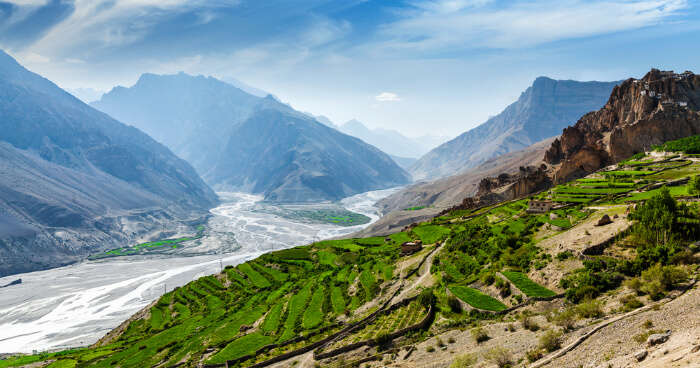


Himachal Pradesh has more than a dozen hill stations worth a proper trip, and picking the right one depends on how high you want to go, how far you can drive, and whether you are chasing snow, meadows, monasteries or a paragliding launch. This guide ranks 20 of the best hill stations in Himachal Pradesh and lays them out in one comparison table so you can match a place to your dates in about a minute. Shimla and Manali stay the crowd favourites, but the quieter ends of the state, Tirthan, Chitkul, the Spiti desert, are where our writers keep going back. Everything below is grouped into four road circuits, so you plan by route, not by a random list.
Key takeaways
Best Hill Stations In Himachal Pradesh
Best Time
March - June
Select Package Type

3 Days & 2 Nights
₹9,043 /@pp
GET FREE QUOTE

9 Days & 8 Nights
₹36,484 /@pp
GET FREE QUOTE.jpg?tr=w-600,h-300)

No other guide to Himachal puts the numbers side by side, so start here. Every altitude and distance below is an approximate road figure to help you shortlist; confirm exact timings locally before you drive. For full package options across the state, see our Himachal tour packages.
| Hill Station | Altitude (m) | Best Time | From Delhi (km) | From Chandigarh (km) | Ideal Duration | Ideal For | Nearest Airport / Railhead |
| Shimla | 2,276 | Mar-Jun, Dec-Feb (snow) | 342 | 113 | 2 to 3 days | First-timers, families | Shimla (Jubbarhatti) 23 km / Kalka rail |
| Kufri | 2,720 | Apr-Jun, Nov-Mar (snow) | 355 | 130 | Day trip | Snow, families | Shimla 35 km / Shimla rail |
| Chail | 2,250 | Apr-Jun, Sep-Nov | 335 | 110 | 1 to 2 days | Quiet, couples | Chandigarh 85 km / Kalka 45 km |
| Mashobra | 2,149 | Mar-May, Jan-Feb (snow) | 355 | 125 | 1 to 2 days | Offbeat, quiet | Shimla 20 km / Shimla rail |
| Kasauli | 1,927 | Mar-Jun, Sep-Nov | 290 | 65 | 1 to 2 days | Weekend, couples | Chandigarh 65 km / Kalka 25 km |
| Dharamshala | 1,457 | Mar-Jun, Sep-Nov | 475 | 250 | 2 to 3 days | Culture, treks | Gaggal 15 km / Pathankot 85 km |
| McLeodganj | 2,082 | Mar-Jun, Sep-Nov | 480 | 255 | 2 days | Tibetan culture, treks | Gaggal 20 km / Pathankot 90 km |
| Dalhousie | 1,970 | Mar-Jun, Dec-Feb (snow) | 555 | 320 | 2 to 3 days | Colonial charm, families | Pathankot 75 km / Pathankot rail |
| Khajjiar | 1,920 | Mar-Jun, Sep-Nov | 585 | 350 | Day trip | Meadows, families | Gaggal 120 km / Pathankot 100 km |
| Palampur | 1,472 | Mar-Jun, Sep-Nov | 445 | 220 | 2 days | Tea gardens, calm | Gaggal 40 km / Palampur rail |
| Bir Billing | 1,400 / 2,400 | Mar-Jun, Sep-Nov | 510 | 285 | 2 days | Paragliding | Gaggal 65 km / Ahju rail |
| Chamba | 996 | Mar-Jun, Sep-Nov | 585 | 355 | 2 days | Heritage, offbeat | Gaggal 170 km / Pathankot 120 km |
| Manali | 2,050 | Mar-Jun, Oct-Feb (snow) | 537 | 305 | 3 to 4 days | Adventure, honeymoon | Bhuntar 50 km / Joginder Nagar rail |
| Kullu | 1,220 | Mar-Jun, Oct-Feb | 500 | 270 | 1 to 2 days | Rafting, temples | Bhuntar 10 km / Joginder Nagar rail |
| Kasol | 1,580 | Oct-Jun | 520 | 290 | 2 to 3 days | Treks, backpackers | Bhuntar 30 km / Joginder Nagar rail |
| Tirthan Valley | 1,600 | Mar-Jun, Oct-Nov | 500 | 270 | 2 to 3 days | Nature, angling | Bhuntar 50 km / Ambala rail |
| Kaza (Spiti) | 3,650 | May-Oct | 720 | 520 | 5 to 7 days | High desert, monasteries | Bhuntar 200 km / Shimla rail |
| Kalpa (Kinnaur) | 2,960 | Apr-Jun, Sep-Oct | 570 | 345 | 2 to 3 days | Apple country, Kinner Kailash | Shimla 235 km / Shimla rail |
| Sangla | 2,700 | Apr-Jun, Sep-Oct | 590 | 360 | 2 to 3 days | Baspa valley, offbeat | Shimla 240 km / Shimla rail |
| Chitkul | 3,450 | May-Oct | 610 | 380 | 1 to 2 days | Last village, offbeat | Shimla 260 km / Shimla rail |
Figures are approximate and included for planning only. Distances are by road and vary with the route you pick.
The Shimla side is the easiest introduction to Himachal and the quickest to reach from Delhi and Chandigarh. Base yourself in Shimla and you can day-trip to Kufri, Chail, Mashobra and Naldehra without repacking. Apple-country stops like Narkanda sit a little further up the same road if you want to keep climbing.
| Altitude | Best time | Ideal stay |
|---|---|---|
| 2,276 m | March to June; snow Dec to Feb | 2 to 3 days |
| Nearest airport | Nearest railhead | Best for |
| Shimla (Jubbarhatti), 23 km | Kalka (toy train) | First-time visitors, families |
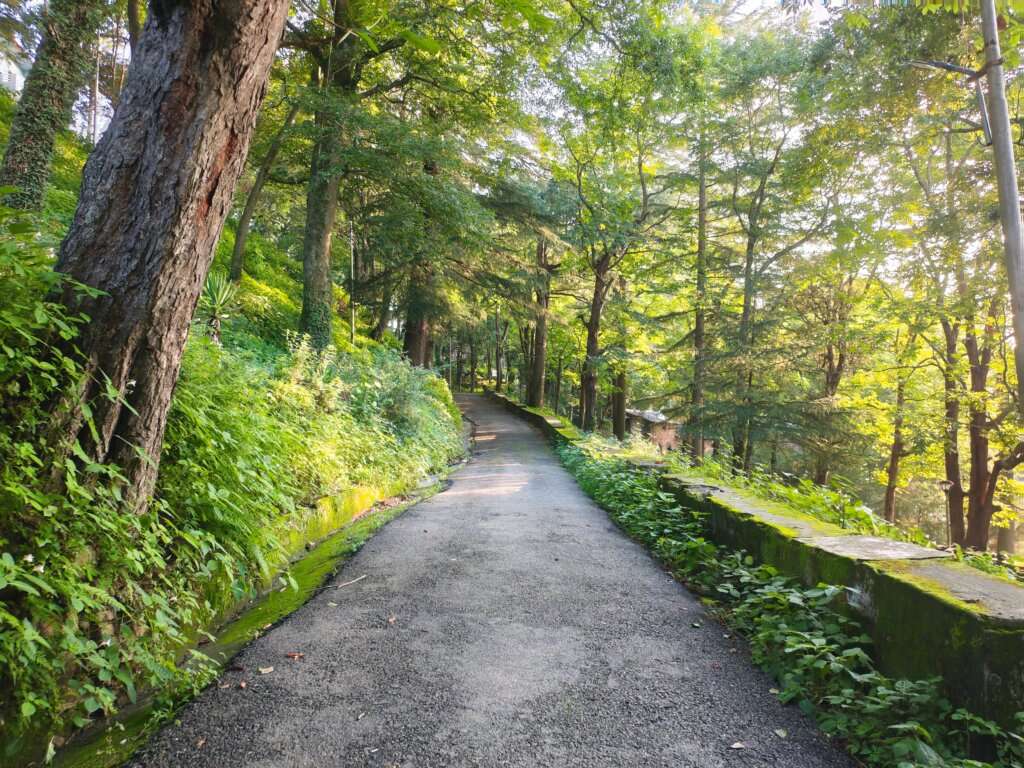
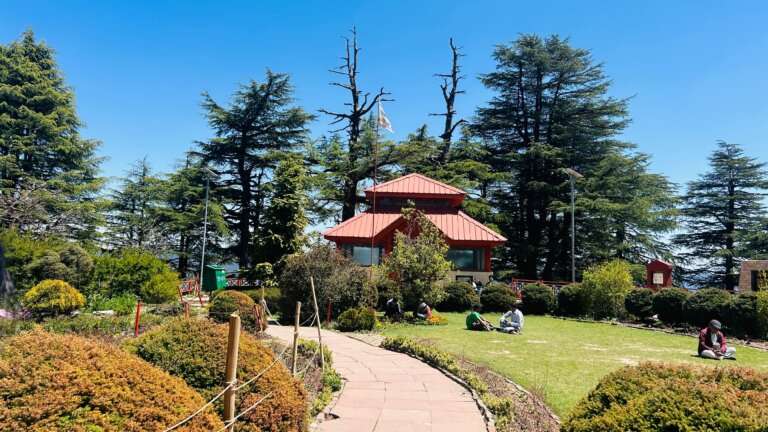
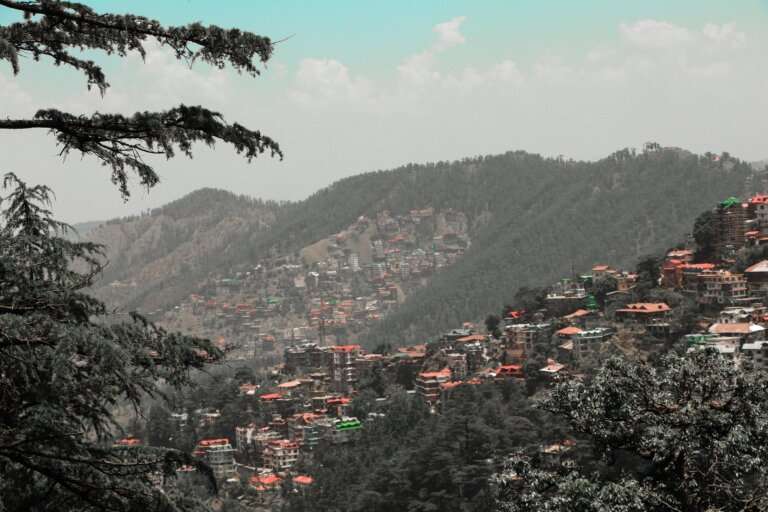
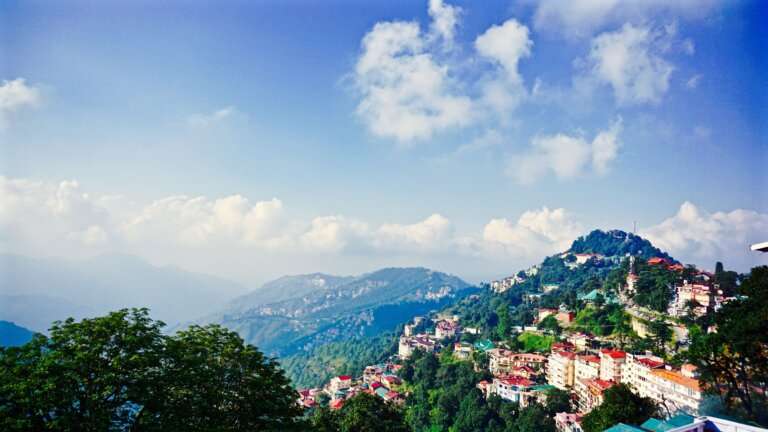
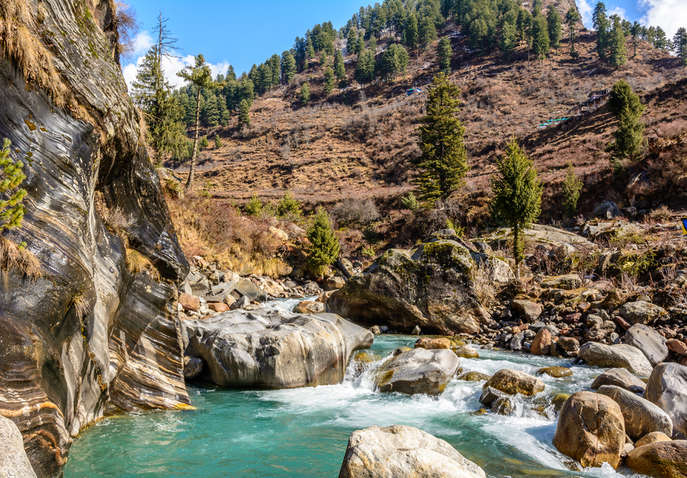
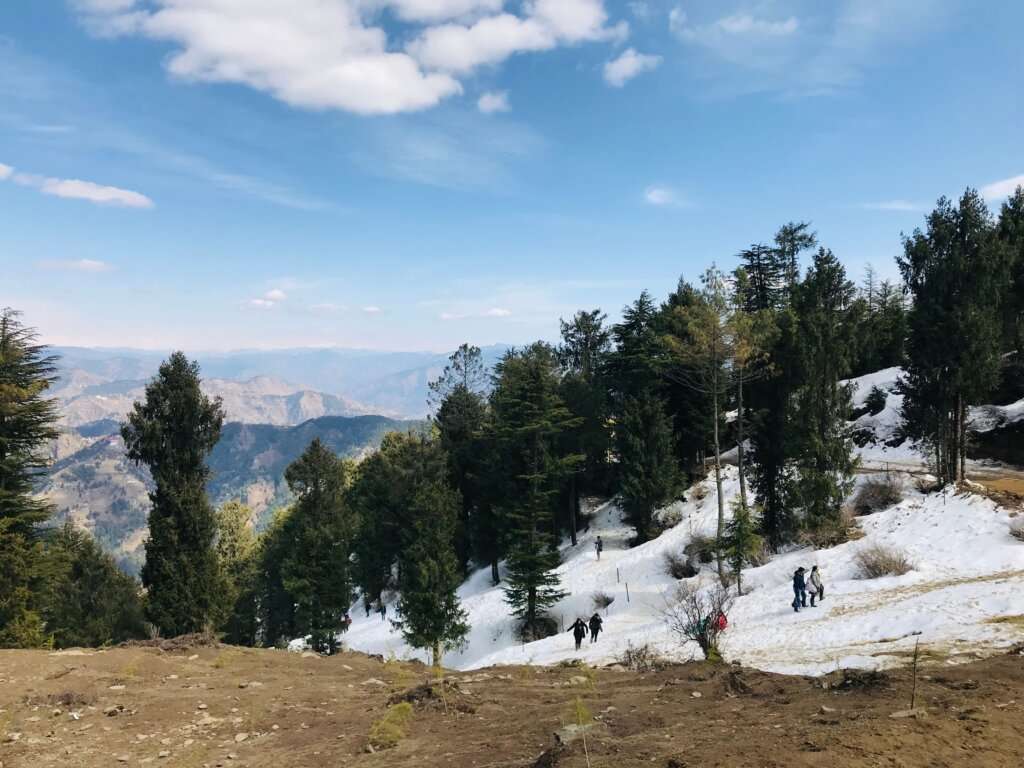
Shimla is the state capital and still the default first trip, and for good reason. The Ridge and Mall Road are made for slow evenings, the Kalka-Shimla toy train (a UNESCO World Heritage line) is worth the ride in itself, and the colonial bones of the town, Christ Church, the Viceregal Lodge, the old Gaiety Theatre, give it a character the newer resorts lack. Families come for Kufri and Jakhu Temple; couples come for the quiet at Chadwick Falls and Annandale. Come March to June for clear ridge walks, or December to February if you want snow on the Ridge. It gets busy in peak summer, so book ahead and start your mornings early.


| Altitude | Best time | Ideal stay |
|---|---|---|
| 2,720 m | April to June; snow Nov to March | Day trip |
| Nearest airport | Nearest railhead | Best for |
| Shimla, 35 km | Shimla | Snow days, families |
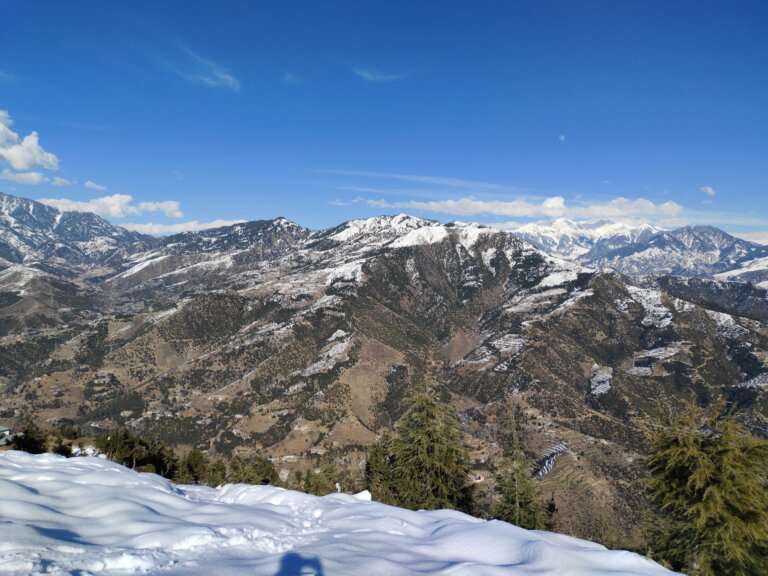
Kufri is a short drive up from Shimla and works best as a day trip rather than a base. Winter is its season: when snow settles, the slopes above town turn into an informal sledging and tubing ground, and the Kufri Fun World rides keep children busy. The rest of the year it is a gentle stop for a horse ride up to the Mahasu Peak viewpoint and a walk through the Himalayan Nature Park. Skip the touristy pony touts near the entrance and walk the trail on foot instead; the views over the Shimla valley are the same and the climb is easy.




| Altitude | Best time | Ideal stay |
|---|---|---|
| 2,250 m | April to June; September to November | 1 to 2 days |
| Nearest airport | Nearest railhead | Best for |
| Chandigarh, 85 km | Kalka, 45 km | Quiet breaks, couples |
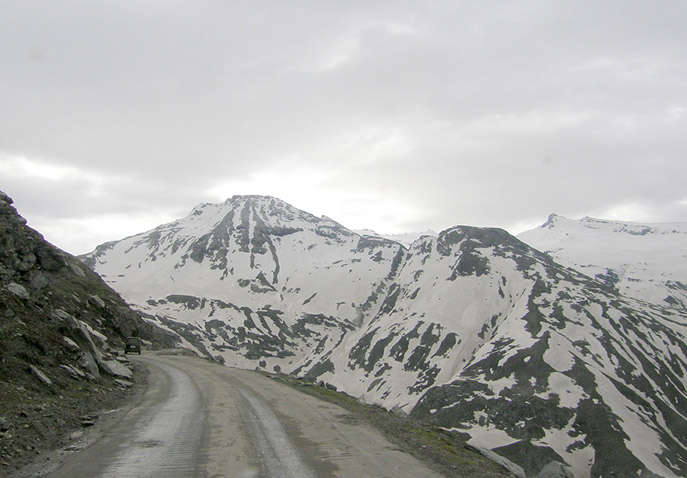
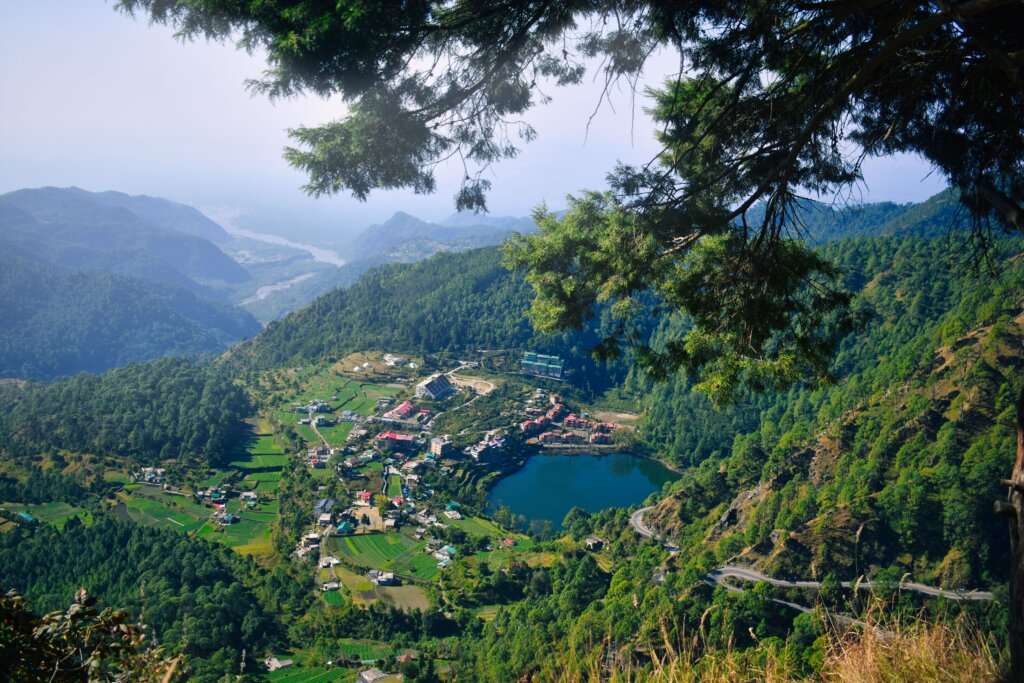
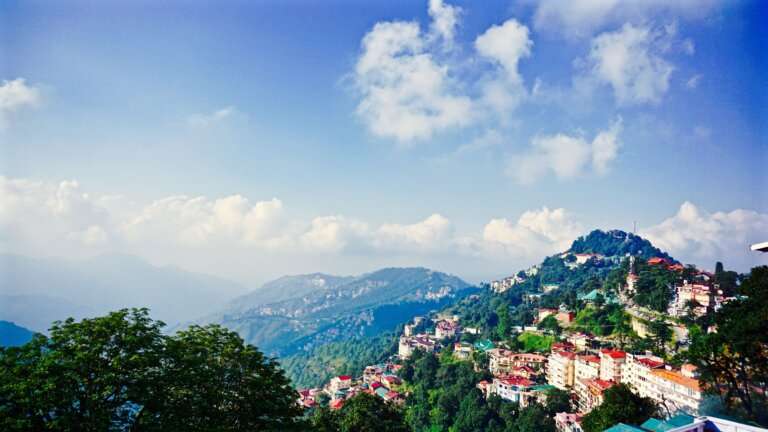
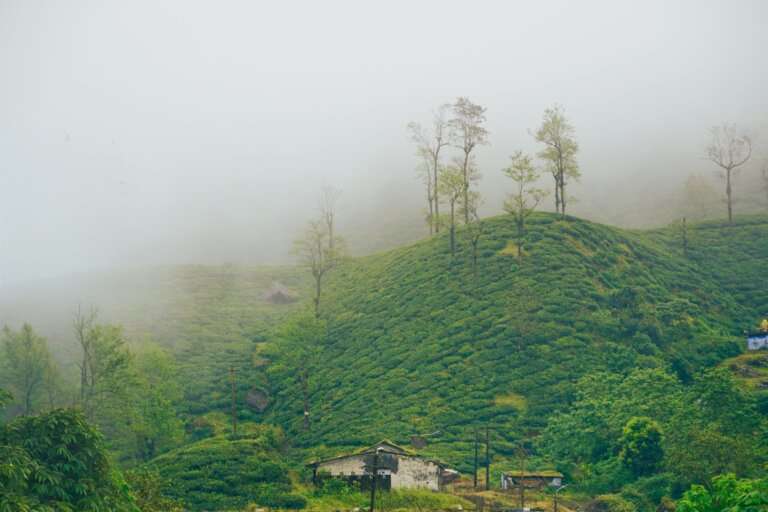
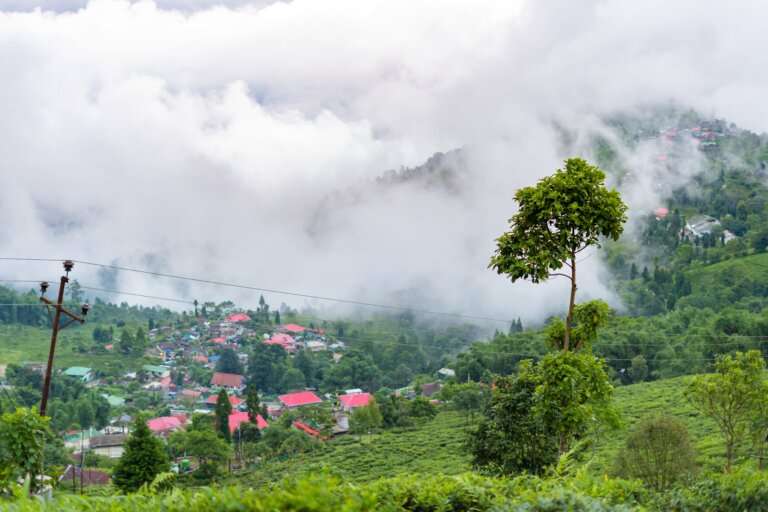
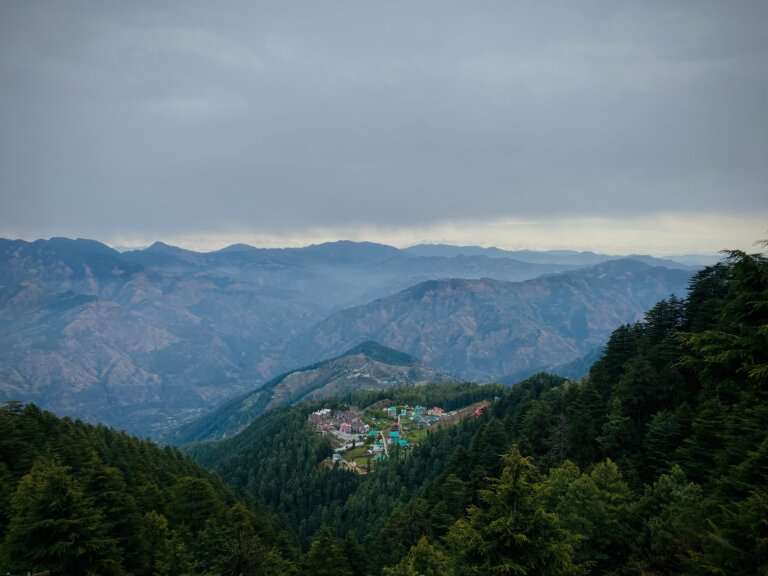
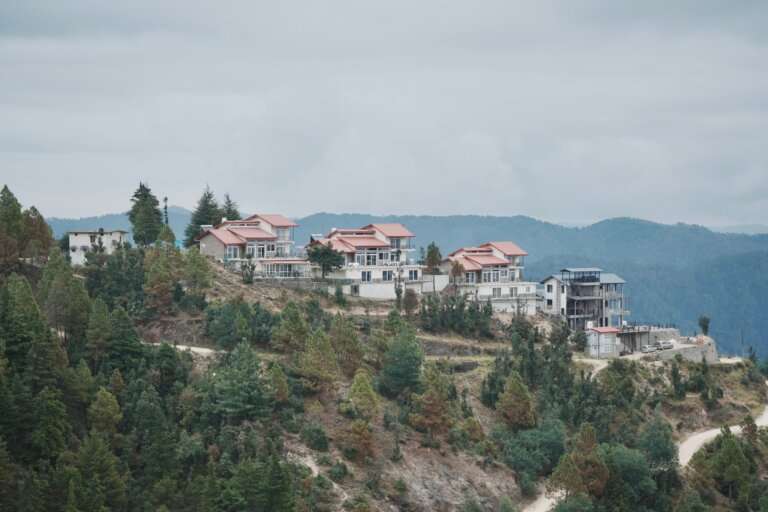
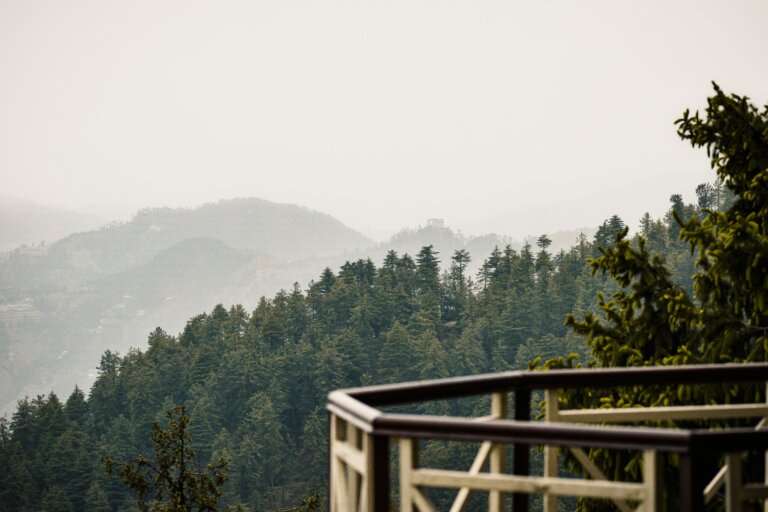
Chail is where Shimla regulars go when they want the pines without the crowds. It holds the highest cricket ground in the world (built in 1893 at over 2,250 m), a former palace-turned-hotel, and the Chail Wildlife Sanctuary where you can spot ghoral and a good range of Himalayan birds. Kali Ka Tibba temple, on a hilltop above town, gives you a full sweep of the Shivalik range at sunrise. It is a one or two-night stop, ideal for couples and anyone who finds Shimla too loud in season.


| Altitude | Best time | Ideal stay |
|---|---|---|
| 2,149 m | March to May; snow Jan to Feb | 1 to 2 days |
| Nearest airport | Nearest railhead | Best for |
| Shimla, 20 km | Shimla | Offbeat stays, quiet |
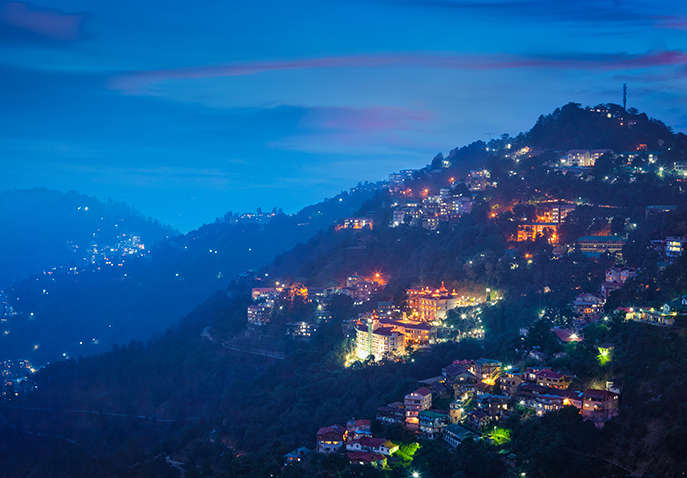
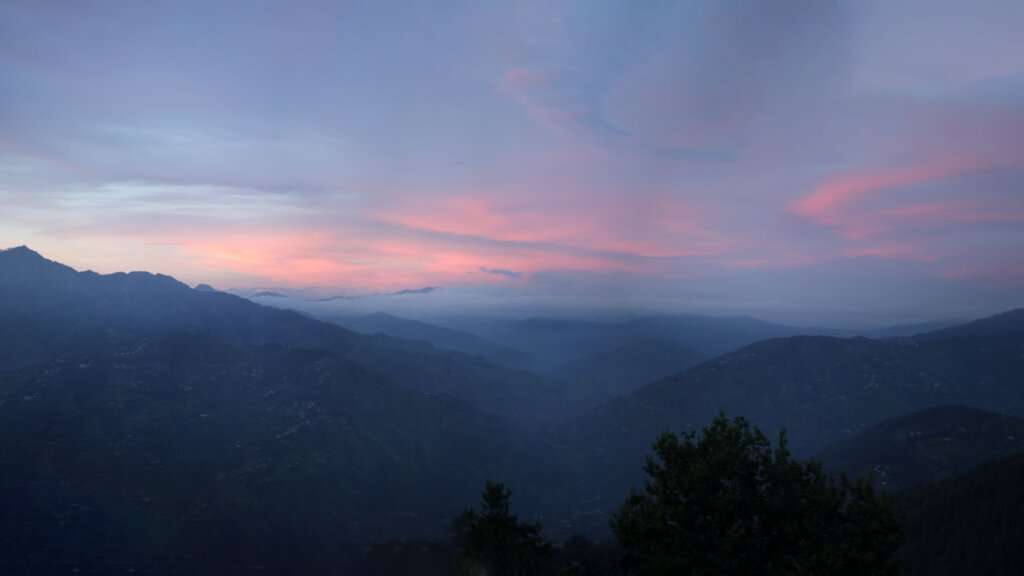
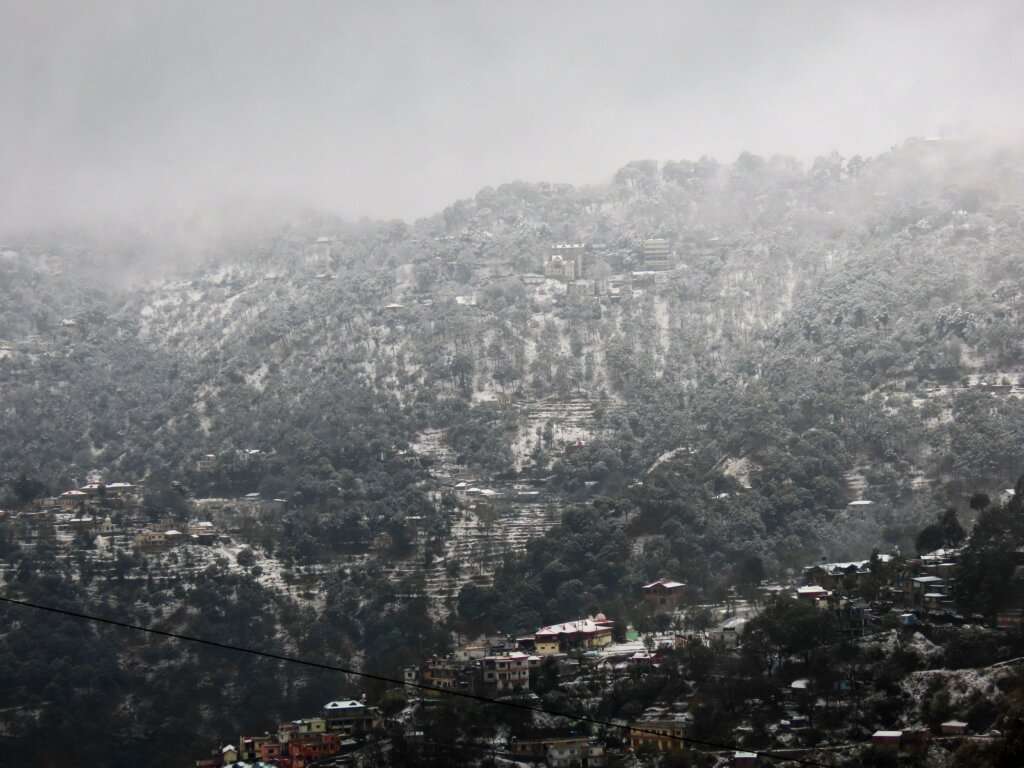
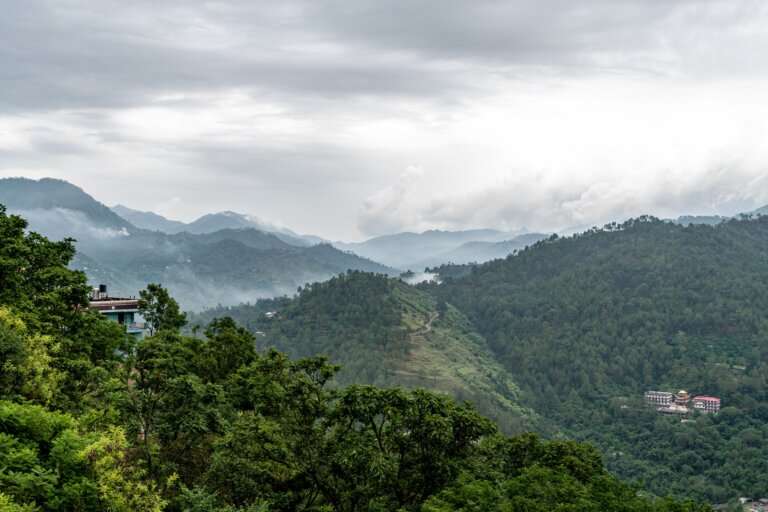
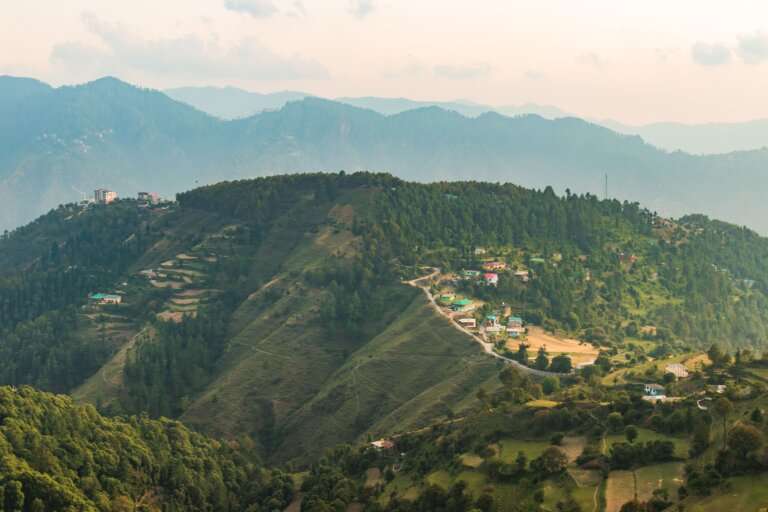
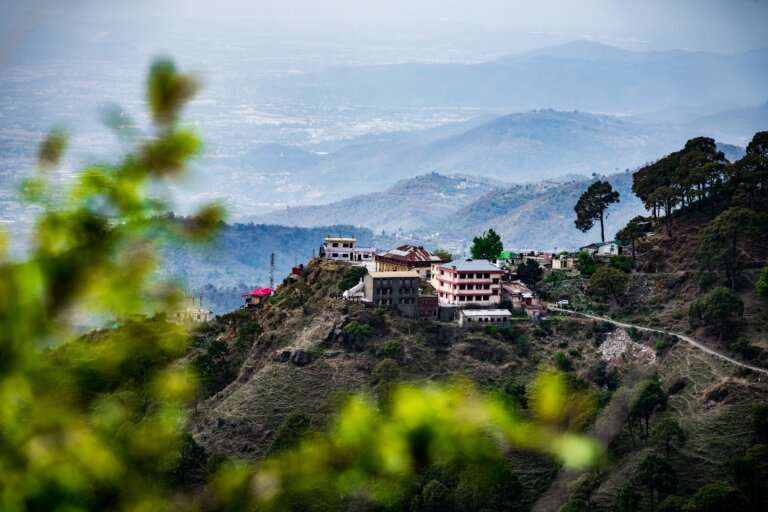
Mashobra sits just 13 km from Shimla but feels a world away, tucked into thick oak and cedar forest with far fewer visitors. The reserve forest around Craignano and the orchards near Naldehra make it a good slow-travel base, and it is a launch point for mountain biking and short forest treks. Winter brings a light dusting of snow in January and February without the Shimla crowds. Our writers rate it as one of the most under-booked stays within an hour of the capital.
| Altitude | Best time | Ideal stay |
|---|---|---|
| 1,927 m | March to June; September to November | 1 to 2 days |
| Nearest airport | Nearest railhead | Best for |
| Chandigarh, 65 km | Kalka, 25 km | Weekend trips, couples |
Kasauli is the closest proper hill station to Delhi and the natural weekend pick from Chandigarh, just over an hour away. It is a small cantonment town, which keeps it clean and low-rise: the Gilbert Trail, the colonial-era Christ Church, and Sunset Point are all short walks, and Timber Trail nearby runs a cable car with valley views. Because there is no direct railhead beyond the shared-name station, most people drive up from Kalka. Come for a slow one or two nights rather than a packed itinerary. Kasauli is also the nearest hill station to Amb Andaura and the Una belt in the plains below, an easy first stop for anyone driving up from that side.
The Kangra and Chamba side of Himachal trades the Shimla crowds for Tibetan monasteries, tea gardens, paragliding and the widest meadows in the state. It is a longer haul from Delhi, so give it three or four days and loop several of these together. Gaggal (Kangra) airport puts you in the middle of it.
Dharamshala: Home Of The Dalai Lama
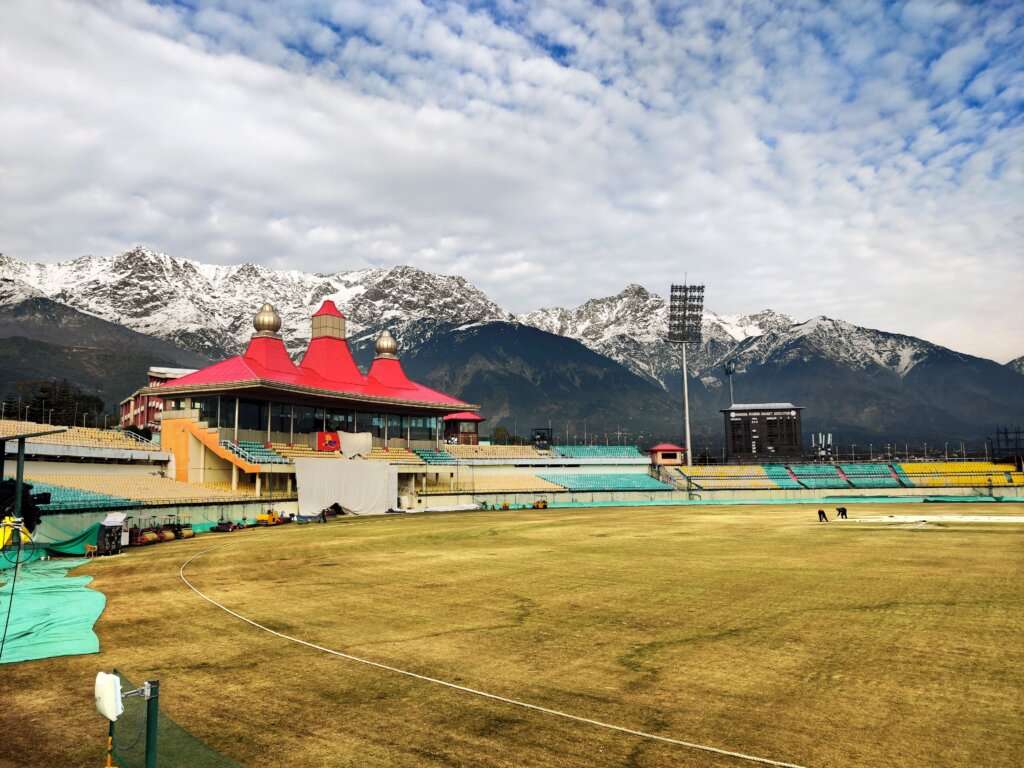
Dharamshala is the headquarters of the Tibetan government-in-exile, and that shapes everything from the food to the pace of the place. The lower town is administrative; the real draw is the ridge above it. The Triund trek, a straightforward climb to a ridgeline campsite under the Dhauladhar wall, is one of the best beginner treks in India, and the HPCA stadium is the most photogenic cricket ground you will see. Base here for two to three days and split your time between the monasteries, the Kareri Lake trail and McLeodganj just uphill.
| Altitude | Best time | Ideal stay |
| 1,457 m | March to June; September to November | 2 to 3 days |
| Nearest airport | Nearest railhead | Best for |
| Gaggal (Kangra), 15 km | Pathankot, 85 km | Culture, trekking |
McLeodganj: Little Lhasa In The Dhauladhars
McLeodganj sits a few hundred metres above Dharamshala and is really its own town, built around the Dalai Lama’s temple complex, Namgyal Monastery and a lane of Tibetan cafes and craft shops. Bhagsu Waterfall and the Bhagsunag temple are an easy walk, and Naddi View Point delivers the classic Dhauladhar sunset. It is the trailhead for Triund and Dharamkot, so most trekkers stay here rather than in the lower town. Two unhurried days is enough.
| Altitude | Best time | Ideal stay |
| 2,082 m | March to June; September to November | 2 days |
| Nearest airport | Nearest railhead | Best for |
| Gaggal, 20 km | Pathankot, 90 km | Tibetan culture, treks |
Dalhousie: Colonial Calm Above The Ravi
Dalhousie is a set of five hills laid out by the British in the 1850s, and it has kept that unhurried, tree-lined feel. The Garam Sadak and Thandi Sadak walks loop around the town at an easy grade, St John’s Church and the Dainkund peak trek fill a day, and the town works as the gateway to Khajjiar and Chamba. Snow arrives in December and holds into February. It suits families and anyone who wants scenery without a hard itinerary.
| Altitude | Best time | Ideal stay |
| 1,970 m | March to June; snow Dec to Feb | 2 to 3 days |
| Nearest airport | Nearest railhead | Best for |
| Pathankot, 75 km | Pathankot | Colonial charm, families |
Khajjiar: The Mini Switzerland Of India
Khajjiar is a single, near-perfect meadow ringed by deodar forest with a small lake at its centre, about 20 km from Dalhousie. It earned its Swiss nickname from a Swiss diplomat in the 1990s, and on a clear morning you understand why. It is a day trip, not a base: walk the meadow, visit the 12th-century Khajji Nag temple, and carry on to Kalatop Wildlife Sanctuary or down to Chamba. Go early, before the day-tripper coaches arrive from Dalhousie.
| Altitude | Best time | Ideal stay |
| 1,920 m | March to June; September to November | Day trip |
| Nearest airport | Nearest railhead | Best for |
| Gaggal, 120 km | Pathankot, 100 km | Meadows, families |
Palampur: Tea Gardens Under The Dhauladhars
Palampur is the green, low-key counterpoint to the busier Kangra towns, wrapped in tea estates with the Dhauladhar range as a backdrop. The tea gardens at Neugal Khad, the Tashi Jong monastery, and the Chamunda Devi temple make an easy two-day loop, and paragliding runs from the nearby valley in season. It is also a sensible overnight on the way to Bir Billing. Come for the calm rather than a checklist of sights.
| Altitude | Best time | Ideal stay |
| 1,472 m | March to June; September to November | 2 days |
| Nearest airport | Nearest railhead | Best for |
| Gaggal, 40 km | Palampur (Kangra Valley) | Tea gardens, slow travel |
Bir Billing: India’s Paragliding Capital
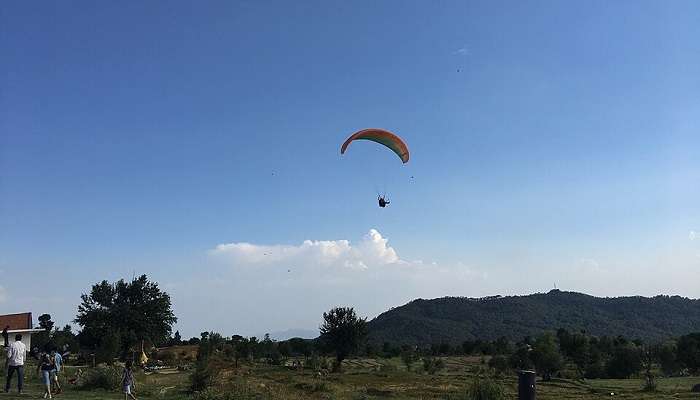
Bir Billing is the reason paragliders come to Himachal at all. The take-off is at Billing (around 2,400 m) and the landing is at Bir village below, and in the October window the site hosts world-tour events. Even if you never leave the ground, Bir is a pleasant base of Tibetan monasteries, a working colony at Chokling, and cafes that would not look out of place in a bigger city. Flights run spring and autumn; the monsoon and deep winter are off-season for the air.
| Altitude | Best time | Ideal stay |
| 1,400 m (Bir) / 2,400 m (Billing) | March to June; September to November | 2 days |
| Nearest airport | Nearest railhead | Best for |
| Gaggal, 65 km | Ahju | Paragliding, adventure |
Chamba: The Heritage Town Most People Skip
Chamba is the old capital of a former princely state, and it wears its history openly: the Rang Mahal palace, the stone Lakshmi Narayan temple group from the 10th century, and the grassy Chowgan promenade at the centre of town. It is lower and warmer than the rest of this circuit, which makes it a good shoulder-season stop, and it is the gateway to the Pangi and Bharmour valleys beyond. Add it if you want culture over cafes.
| Altitude | Best time | Ideal stay |
| 996 m | March to June; September to November | 2 days |
| Nearest airport | Nearest railhead | Best for |
| Gaggal, 170 km | Pathankot, 120 km | Heritage, offbeat |
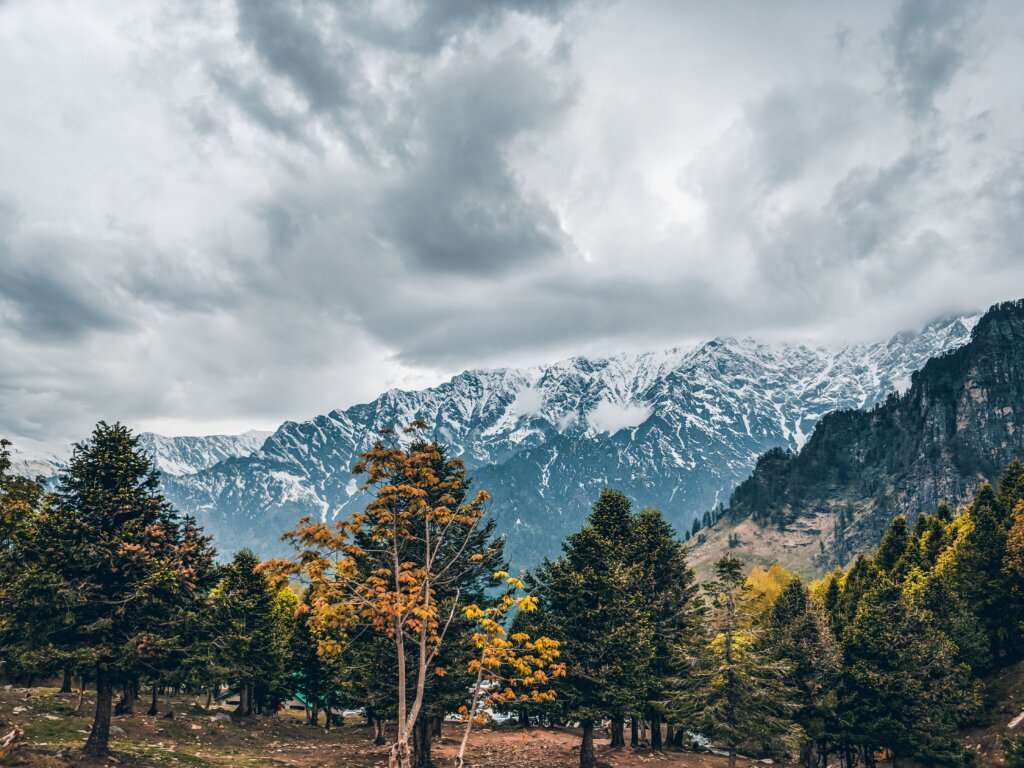
The Beas and Parvati valleys hold Himachal’s best-known adventure hub and its best backpacker trails in one stretch of road. Manali is the anchor; Kullu, Kasol, Tirthan and the quieter Jibhi and Shoja hamlets branch off it. This is the circuit for snow at the Atal Tunnel end, rafting on the Beas, and multi-day treks out of the Parvati valley.
Manali: The All-Rounder For Adventure And Honeymoons
Manali does more than any other town in this list. The Atal Tunnel now puts Sissu and the Lahaul snow within an hour year-round, Solang Valley runs paragliding and skiing in season, and Old Manali keeps the cafe-and-riverside crowd happy. Hadimba temple, the Vashisht hot springs and the drive up to Rohtang fill the classic itinerary; honeymooners take the same sights at a slower pace. It is the one place here that justifies three to four nights on its own. Fly into Bhuntar, 50 km down the valley.
| Altitude | Best time | Ideal stay |
| 2,050 m | March to June; snow Oct to Feb | 3 to 4 days |
| Nearest airport | Nearest railhead | Best for |
| Bhuntar (Kullu-Manali), 50 km | Joginder Nagar | Adventure, honeymoon |
Kullu: Rafting And The Valley Of The Gods
Kullu is often driven straight through on the way to Manali, which is a mistake if you want white water. The Beas here has the state’s most accessible rafting stretch, the Bijli Mahadev temple trek gives you a full-valley view, and the town runs a famous Dussehra festival in October. Manikaran, with its hot springs and gurudwara, is a short drive up the Parvati road. Give it a night on the way in or out rather than skipping it.
| Altitude | Best time | Ideal stay |
| 1,220 m | March to June; October to February | 1 to 2 days |
| Nearest airport | Nearest railhead | Best for |
| Bhuntar, 10 km | Joginder Nagar | Rafting, temples |
Kasol: The Parvati Valley Base Camp
Kasol is the Parvati valley’s backpacker capital, a riverside strip of Israeli cafes, budget guesthouses and trekking outfitters at around 1,580 m. Most people use it as a base rather than a sightseeing stop. The hot springs and gurudwara at Manikaran are a short drive upriver, the climb to Kheerganga is the classic overnight trek, and the hamlets of Tosh, Kalga and Chalal make easy day escapes. Come between October and June, give it two or three days, and expect a young, slow-moving crowd rather than colonial promenades. For a longer stay built around the valley, our guide to the hill stations near Kasol maps out the wider Parvati and Sainj side in more detail.
| Altitude | Best time | Ideal stay |
| 1,580 m | October to June | 2 to 3 days |
| Nearest airport | Nearest railhead | Best for |
| Bhuntar, 30 km | Joginder Nagar | Treks, backpackers |
Tirthan Valley: The Green Quiet Next To A National Park
Tirthan Valley, on the edge of the Great Himalayan National Park (a UNESCO World Heritage site), is the antidote to Manali. There are no big hotels, just riverside guesthouses, trout in the Tirthan river, and short treks to Serolsar Lake and Jalori Pass. The offbeat hamlets of Jibhi and Shoja sit on the same road and are worth folding in for a night. Come for slow days, angling and forest walks rather than nightlife.
| Altitude | Best time | Ideal stay |
| 1,600 m | March to June; October to November | 2 to 3 days |
| Nearest airport | Nearest railhead | Best for |
| Bhuntar, 50 km | Ambala | Nature, angling |
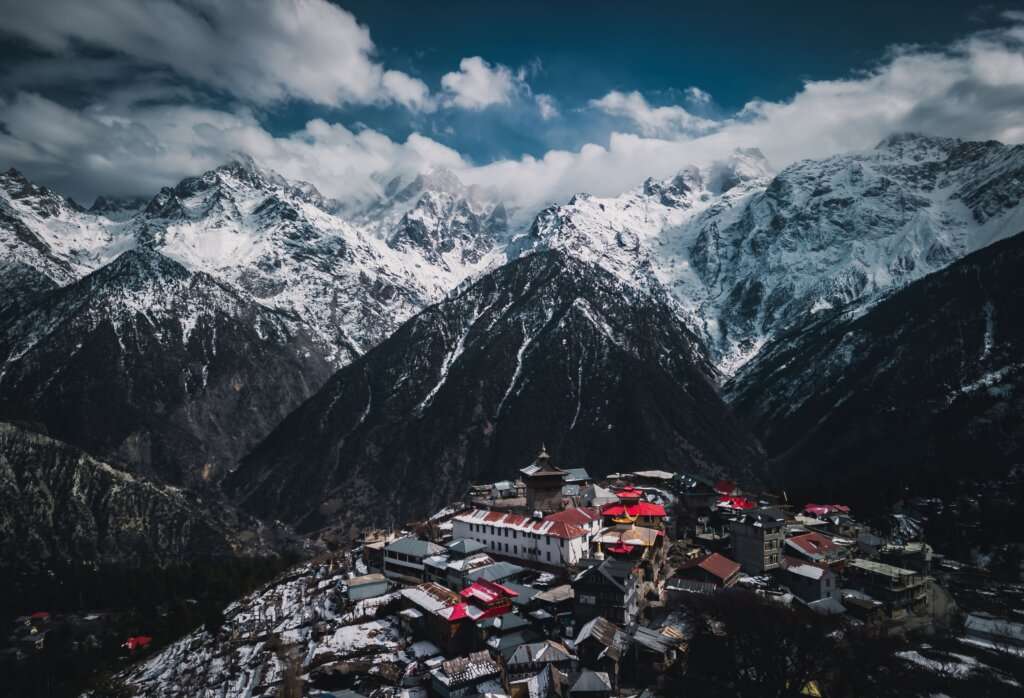
This is the high, dry, dramatic end of Himachal, and the one most guides leave out. The Kinnaur and Spiti belt sits in the rain shadow of the main range, so it stays clear through the monsoon when the rest of the state is wet. Roads are rough and the altitude is real, so acclimatise, carry cash, and give the loop the better part of a week. Indian travellers usually need no permit for the main circuit; foreign nationals need an Inner Line Permit for the stretch near the border.
Kaza (Spiti Valley): The High-Altitude Desert
Kaza is the hub of the Spiti valley, a cold high desert of ochre cliffs and whitewashed monasteries at around 3,650 m. From here you reach Key Monastery, Kibber (one of the highest villages you can drive to), the fossil village of Langza and the Komik and Hikkim hamlets with their high-altitude post office. This is the coldest and most demanding place on the list, open roughly May to October when the passes are clear. Budget five to seven days for the full loop and build in a rest day for the altitude.
| Altitude | Best time | Ideal stay |
| 3,650 m | May to October | 5 to 7 days |
| Nearest airport | Nearest railhead | Best for |
| Bhuntar, 200 km (seasonal) | Shimla | High desert, monasteries |
Kalpa (Kinnaur): Apple Orchards Under Kinner Kailash
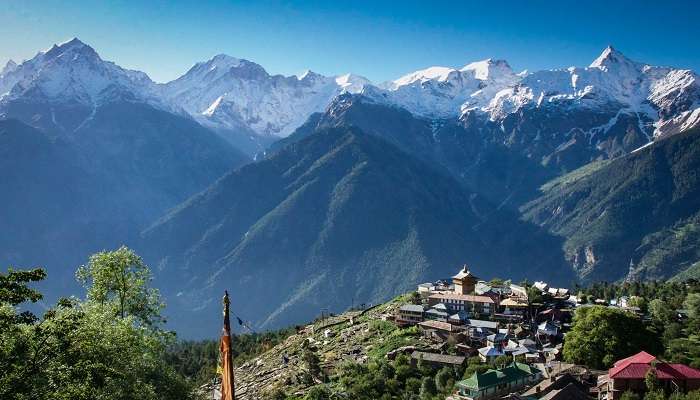
Kalpa looks straight across the valley at the Kinner Kailash range, and at dawn the peaks turn gold above the apple orchards, one of the great free spectacles in Himachal. The old village has a working Buddhist monastery and Hindu temple side by side, and the drive up from Reckong Peo is short. It is the gentlest introduction to Kinnaur, high but not extreme, and a natural first night before you push on to Spiti.
| Altitude | Best time | Ideal stay |
| 2,960 m | April to June; September to October | 2 to 3 days |
| Nearest airport | Nearest railhead | Best for |
| Shimla, 235 km | Shimla | Apple country, mountain views |
Sangla: The Baspa Valley Green Belt
Sangla sits in the Baspa valley, greener and more forested than the rest of Kinnaur, with the old Kamru fort and a working trout hatchery. It is the last comfortable base before Chitkul and a good spot to slow down and acclimatise on the way up. Terraced fields and apple orchards run right up to the treeline. Come April to June or September to October; the valley closes in under heavy winter snow.
| Altitude | Best time | Ideal stay |
| 2,700 m | April to June; September to October | 2 to 3 days |
| Nearest airport | Nearest railhead | Best for |
| Shimla, 240 km | Shimla | Baspa valley, offbeat |
Chitkul: The Last Village On The Indo-Tibet Road
Chitkul is the final inhabited village on the old Indo-Tibet road before the border, at around 3,450 m on the banks of the Baspa. There is not much to do, and that is the point: a few homestays, a wooden temple, potato fields, and some of the cleanest air in the country. It is a short one or two-night add-on from Sangla, open roughly May to October. Go for the sheer remoteness rather than sights.
| Altitude | Best time | Ideal stay |
| 3,450 m | May to October | 1 to 2 days |
| Nearest airport | Nearest railhead | Best for |
| Shimla, 260 km | Shimla | Last village, offbeat |
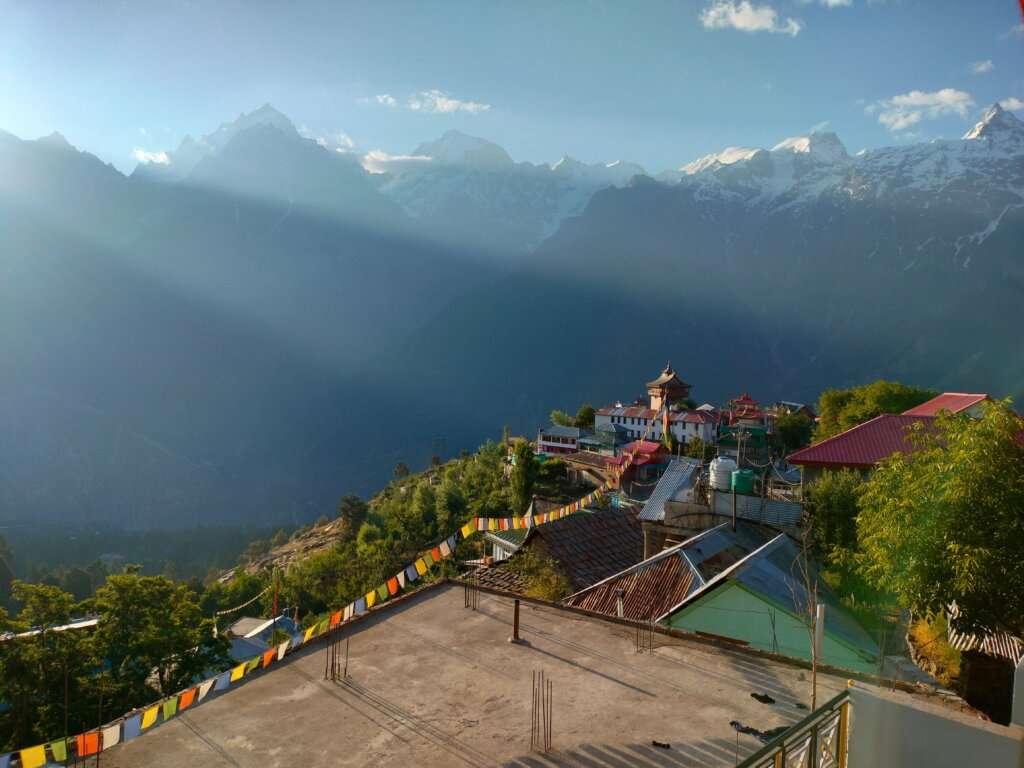
With 20 options the choice comes down to four questions: how much time you have, whether you want snow, how far you can travel, and how remote you want to get.
For a first trip or a family holiday, stay on the Shimla belt or the Dharamshala side, both are well-serviced and easy to reach. For snow, aim for December to February at Shimla, Kufri, Manali or Dalhousie. For a monsoon-safe trip in July and August, when the rest of the state is wet, head to the rain-shadow Kinnaur and Spiti belt. For a short weekend from Delhi, Kasauli and Shimla are the only realistic picks. And for genuine quiet, Tirthan, Mashobra, Sangla and Chitkul deliver it.
For a fuller month-by-month breakdown and where to stay in each region, see our Himachal tourism guide.
If this is your first trip, start on the Shimla belt or the Manali valley and save the Kinnaur and Spiti loop for when you have a full week and a taste for rough roads. Whichever circuit you pick, the table near the top of this guide will help you match a station to your dates and driving range. When you are ready to turn a shortlist into a real itinerary, browse our Himachal tour packages and tell us how many days you have, we will build the route around you.
Kaza and the wider Spiti valley are the coldest, sitting at around 3,650 m in a high-altitude cold desert. Winter temperatures there routinely drop well below freezing and many roads close from November, which is why the season runs roughly May to October. Chitkul and the Kinnaur high villages run a close second.
The Spiti and Kinnaur belt holds the highest inhabited places in the state. Chitkul, at about 3,450 m, is often called the last village on the old Indo-Tibet road, while the villages of Komik and Hikkim near Kaza sit even higher, above 4,300 m. Among the mainstream hill stations, Kufri and Narkanda on the Shimla side are the highest, at over 2,700 m.
Head to the rain-shadow belt of Kinnaur and Spiti. Because Kaza, Kalpa, Sangla and Chitkul sit behind the main Himalayan range, they stay mostly dry while Shimla, Manali and the Kangra valley get heavy monsoon rain and the odd landslide. If you would rather stay low, Dalhousie and Khajjiar handle the rain better than the busy central valleys.
For fewer crowds try Tirthan Valley and the nearby hamlets of Jibhi and Shoja, Mashobra near Shimla, Chamba in the Ravi valley, and the whole Kinnaur belt of Kalpa, Sangla and Chitkul. These give you the same mountain scenery as the headline towns with a fraction of the traffic, though roads and stays are simpler, so plan a little more.
For reliable, accessible snow, Kufri, Narkanda, Manali (including Solang and the Atal Tunnel side) and Dalhousie are the safest bets between late December and February. Shimla itself sees good snow most winters. For deeper, more dramatic snow you would look at Spiti, but many of its roads close entirely in winter.
It depends on the view you want. Khajjiar is the classic pick for its Swiss-style meadow and lake, Kalpa for the Kinner Kailash range at sunrise, and Chitkul for sheer remoteness on the Baspa river. For a first trip, most travellers find the Dhauladhar backdrop at McLeodganj and Palampur hard to beat.
There is no single official count, but Himachal has well over two dozen developed hill stations plus many smaller villages that function the same way. This guide curates the 20 most worth a dedicated trip across four road circuits, rather than listing every settlement in the hills.
Kasauli is the closest at about 290 km (roughly 6 hours by road), followed by Shimla at about 342 km (around 7 hours). Both are reachable via Chandigarh and Kalka, which makes them the only two Himachal hill stations that work comfortably for a two-day weekend from Delhi. For anything deeper in the state, plan at least three days.
March to June is the all-round best window, with green valleys, open roads and pleasant days across the state. December to February is for snow at Shimla, Kufri, Manali and Dalhousie. September to November brings clear post-monsoon skies and thin crowds, and May to October is the only window for the high Spiti and Kinnaur passes.
Indian travellers usually do not need a permit for the main Kinnaur and Spiti circuit through Kalpa, Sangla, Chitkul and Kaza. Foreign nationals need an Inner Line Permit for the restricted stretch near the border, obtainable at Reckong Peo or Kaza. Carry a valid photo ID either way, and check the current district notification before you travel as rules change.
Real reviews from real travelers who booked with us.
View All Reviews