
 8D / 7N
6% OFF


14 Best Waterfalls in Sri Lanka: Tallest Falls, Heights and How to Reach Each
The tallest waterfall in Sri Lanka is Bambarakanda, a 263-metre ribbon in the Badulla hills, and it is only the headline act. Sri Lanka’s waterfalls number in the hundreds, packed into a compact central highland where monsoon-fed rivers drop off the edge of the tea country in every direction. This guide ranks the island’s tallest falls by height, then walks you through the 14 best waterfalls in Sri Lanka worth building a trip around, with the real height of each, the nearest town, how to reach it and when it runs fullest. Some sit right on the road. Others need a steep hike or a park ticket. We have driven the hill-country loop and point you to the ones that earn the detour.
Key takeaways
- Bambarakanda is the tallest at 263 m; Diyaluma (220 m) and Kurundu Oya (189 m) come next.
- Base yourself around Ella, Nuwara Eliya and Hatton to reach most of the big falls in two to three days.
- Go from late November to March for the strongest flow and the clearest skies.
- Roadside falls are free to view; Baker’s Falls needs a Horton Plains National Park ticket.
- Treat the rocks and pools as genuinely dangerous: several of these falls have fatal drowning records.
The 14 best waterfalls at a glance
A quick map of the 14 falls covered below, with the height, the closest town and the months each one runs fullest.
| Waterfall | Height | Nearest town | Best time to see |
|---|---|---|---|
| Bambarakanda | 263 m | Kalupahana | Oct to Jan |
| Diyaluma | 220 m | Koslanda | Dec to Feb |
| Dunhinda | 63 m | Badulla | Dec to Feb |
| Devon | 97 m | Talawakele | Oct to Jan |
| St Clair’s | 80 m | Talawakele | Oct to Jan |
| Ramboda | 109 m | Ramboda | Oct to Jan |
| Laxapana | 129 m | Maskeliya | Oct to Jan |
| Kirindi Ella | 116 m | Pelmadulla | May to Sep |
| Ravana | 25 m | Ella | Nov to Feb |
| Bopath Ella | 30 m | Kuruwita | May to Sep |
| Baker’s | 20 m | Horton Plains | Jan to Mar |
| Aberdeen | 98 m | Ginigathena | Oct to Jan |
| Alakola Ella | 60 m | Pundaluoya | May to Sep |
| Elgin | 25 m | Ramboda | Oct to Jan |
Sri Lanka
Sri Lanka
Best Time
November - March
Select Package Type
Best Selling Packages


Explore Popular Destination In Sri Lanka
01
Bambarakanda Falls
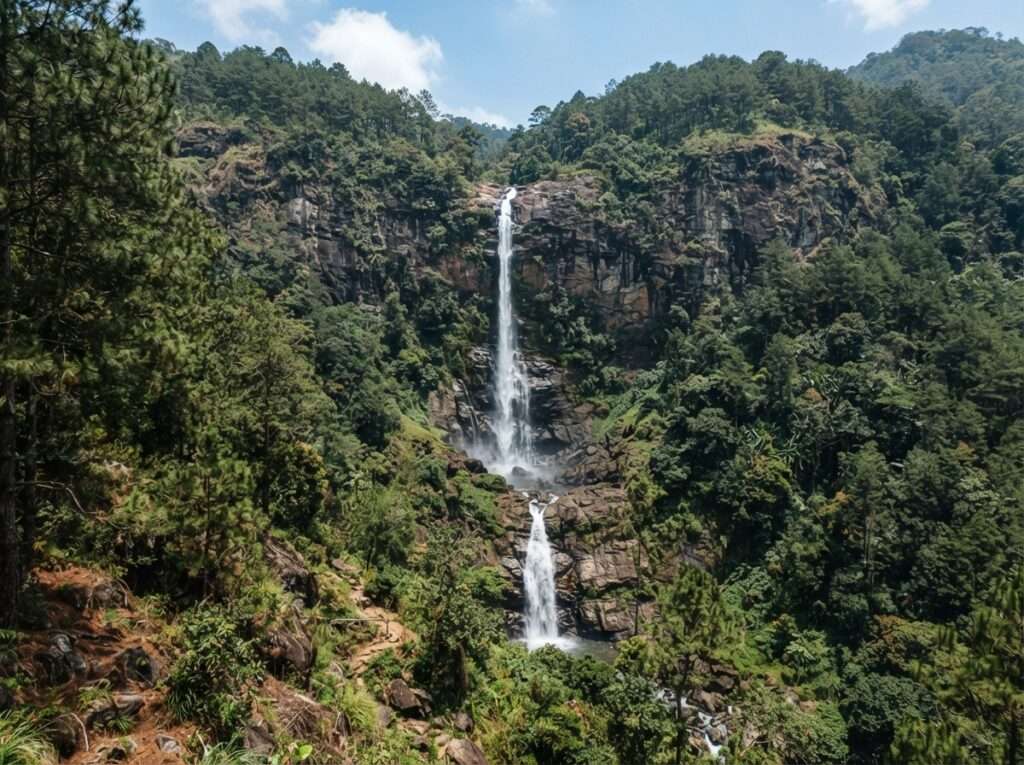
At 263 metres, Bambarakanda is the tallest waterfall in Sri Lanka, a thin three-tier ribbon that drops through pine forest above the village of Kalupahana in Badulla district. It runs hardest from October into the early months of the year and can thin to a trickle in the dry season, so time your visit for the months after the rains. To reach it, turn off the A4 Colombo to Badulla road at Kalupahana and follow the 4 km side road to the viewpoint; the base is a short, steep walk below. Go early, before the valley mist rolls up and hides the top.
| Height | 263 m |
| Nearest town | Kalupahana |
| Best time to see | Oct to Jan |
Related Tour Packages


❮
❯
02
Diyaluma Falls
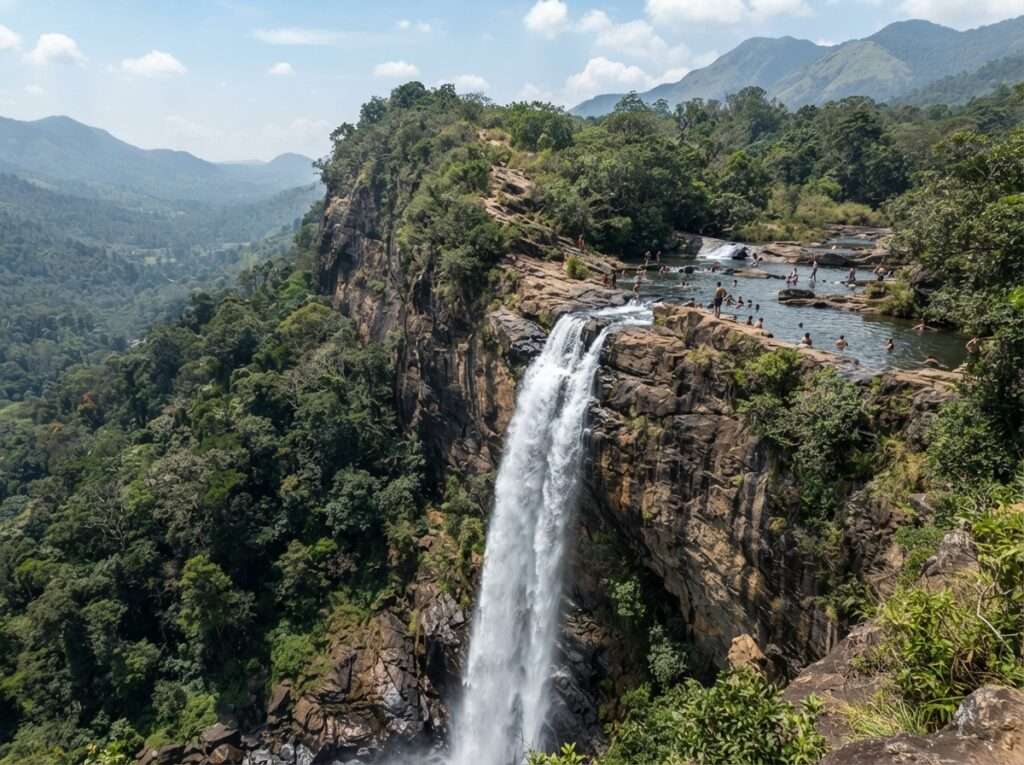
Diyaluma is the country’s second-tallest fall at 220 metres, pouring off a cliff near Koslanda on the A4. Most people photograph it from the roadside bend below, but the real prize sits up top, a chain of natural infinity pools where you can sit with your legs over the edge and the hills falling away in front of you. The climb from the Poonagala road takes about 45 minutes and the rock gets slick, so wear grippy shoes and keep well back from the lip. The lower pool is an easier stop if you would rather stay at road level.
| Height | 220 m |
| Nearest town | Koslanda |
| Best time to see | Dec to Feb |
Related Tour Packages


❮
❯
03
Dunhinda Falls
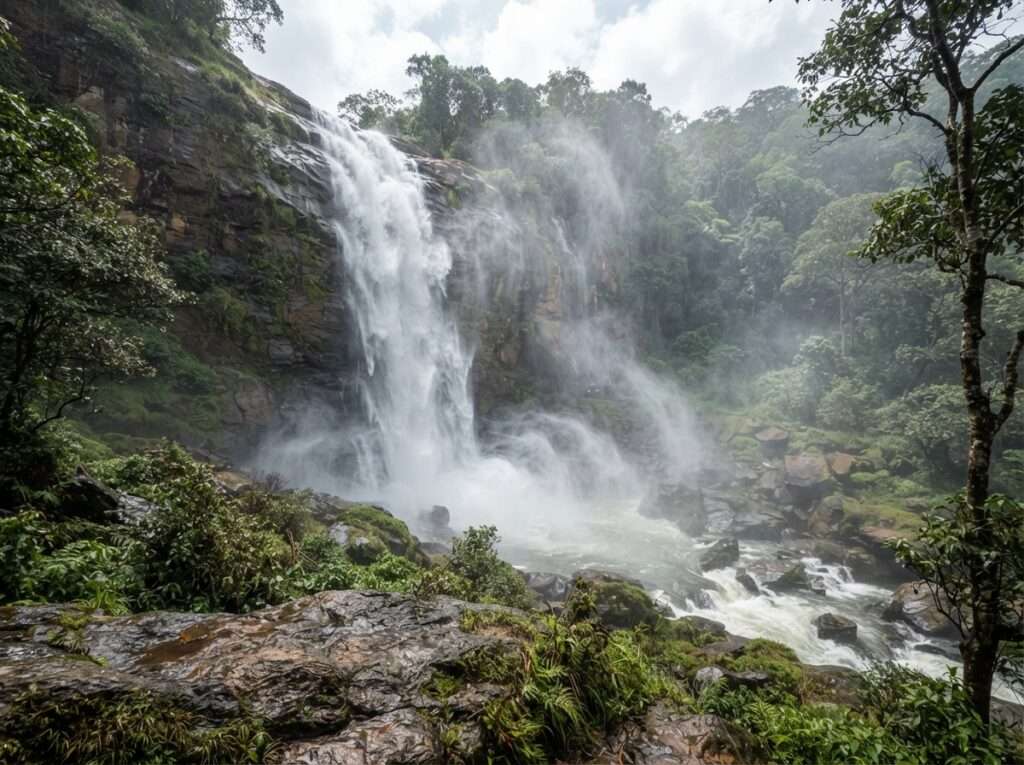
Dunhinda, about 5 km north of Badulla town, is named for the smoky spray (dun means mist) that hangs over its 63-metre plunge. A 1.5 km footpath runs from the car park to the viewing platform, passing the smaller Kuda Dunhinda on the way, and it fills with local families at weekends. The track is uneven with a few steep, rooty sections, so allow 30 to 40 minutes each way and carry water. The fall is fullest during and just after the northeast monsoon, roughly December to February.
| Height | 63 m |
| Nearest town | Badulla |
| Best time to see | Dec to Feb |
Related Tour Packages


❮
❯
04
Devon Falls
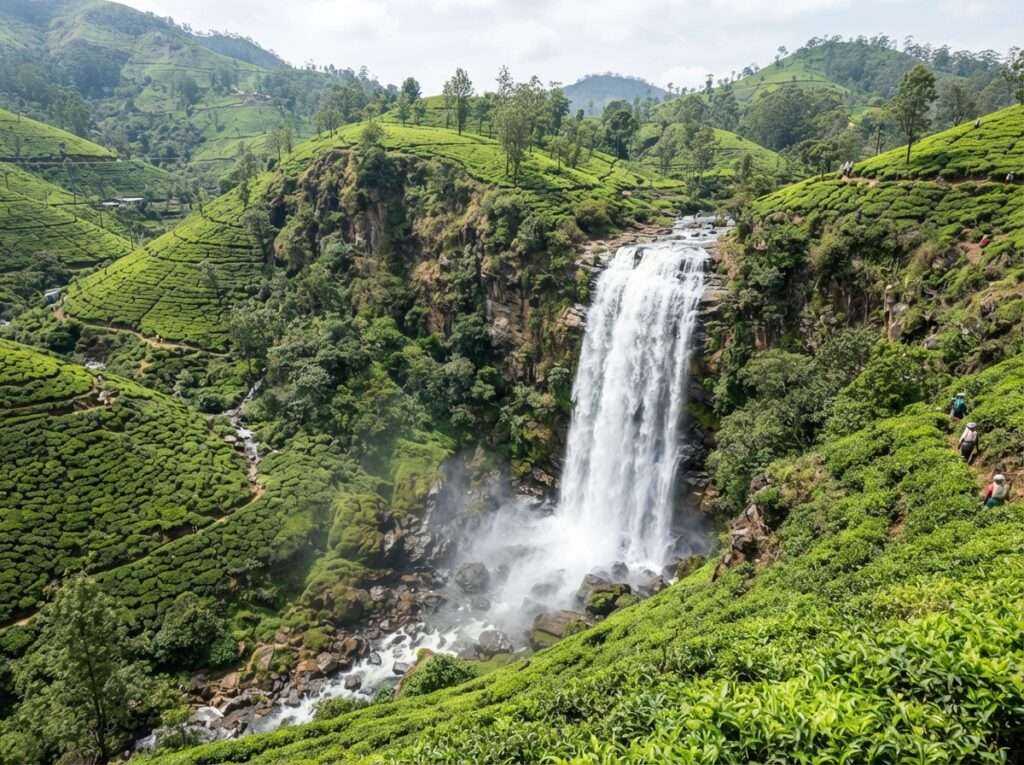
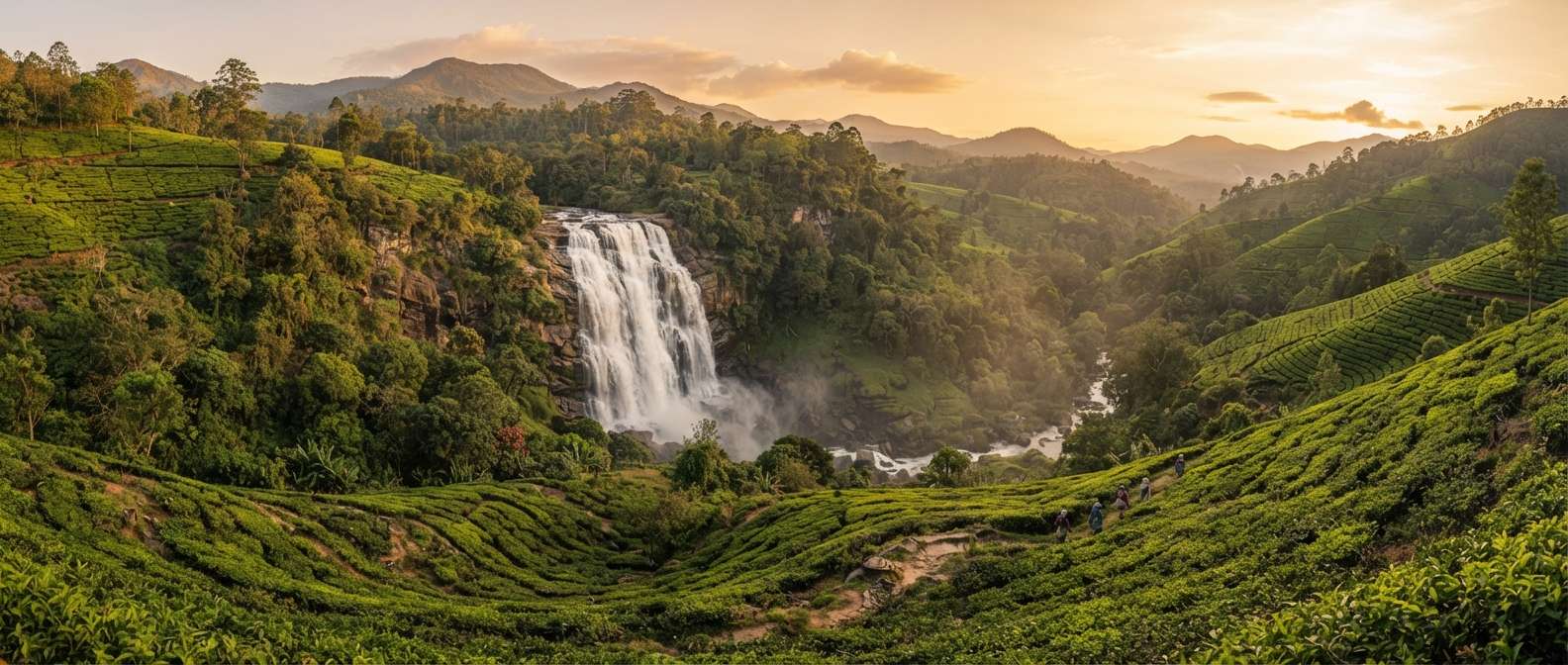
Devon drops 97 metres in a broad white sheet beside the A7 near Talawakele, framed by tea fields on every side. You can see it from a marked roadside viewpoint, or from the Devon Falls View Cafe across the valley, which is the angle on most postcards. Because it sits right on the Hatton to Nuwara Eliya road, it pairs neatly with St Clair’s a few kilometres away. Local guides nicknamed it the Veil of the Valley for the way it fans out. Morning light hits it best; by mid-afternoon the sun drops behind the ridge.
| Height | 97 m |
| Nearest town | Talawakele |
| Best time to see | Oct to Jan |
05
St Clair's Falls
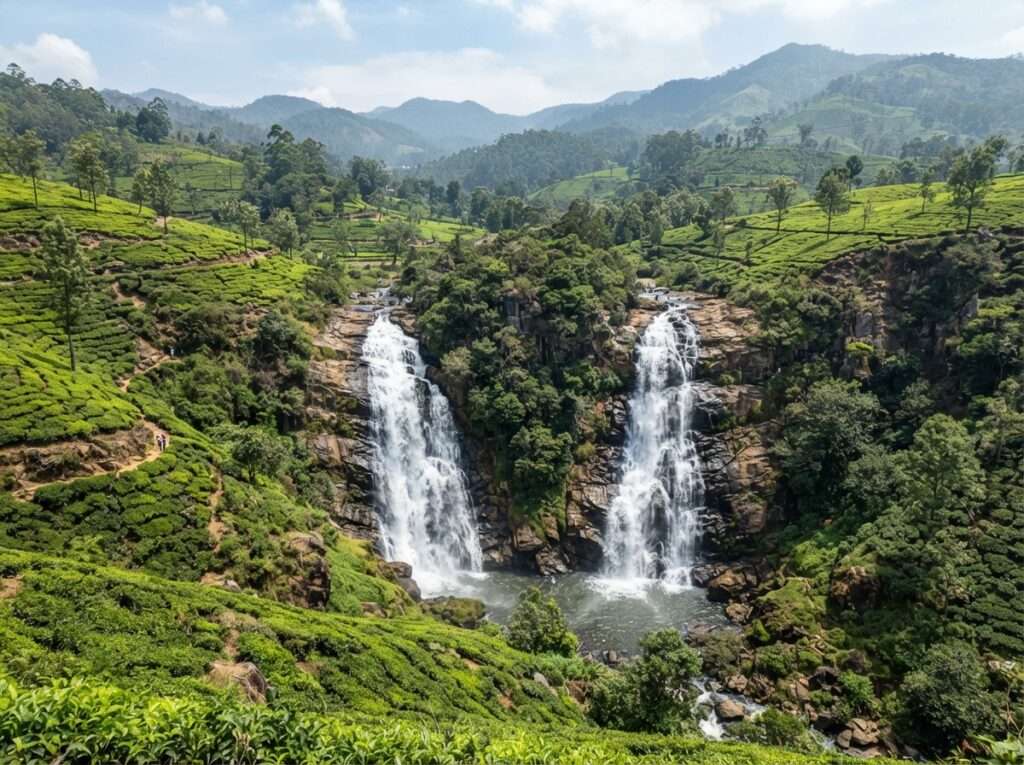
Often called the Little Niagara of Sri Lanka, St Clair’s spreads 80 metres wide across two broad cascades near Talawakele, set among the St Clair tea estate. A hydro scheme upstream means the flow can dip when water is diverted, so it looks its fullest in the wet months. The classic view is from the signposted platform on the A7, and a steeper path leads down toward the base for those who want the spray. It sits only a short drive from Devon, so chase both on the same hill-country morning.
| Height | 80 m |
| Nearest town | Talawakele |
| Best time to see | Oct to Jan |
06
Ramboda Falls
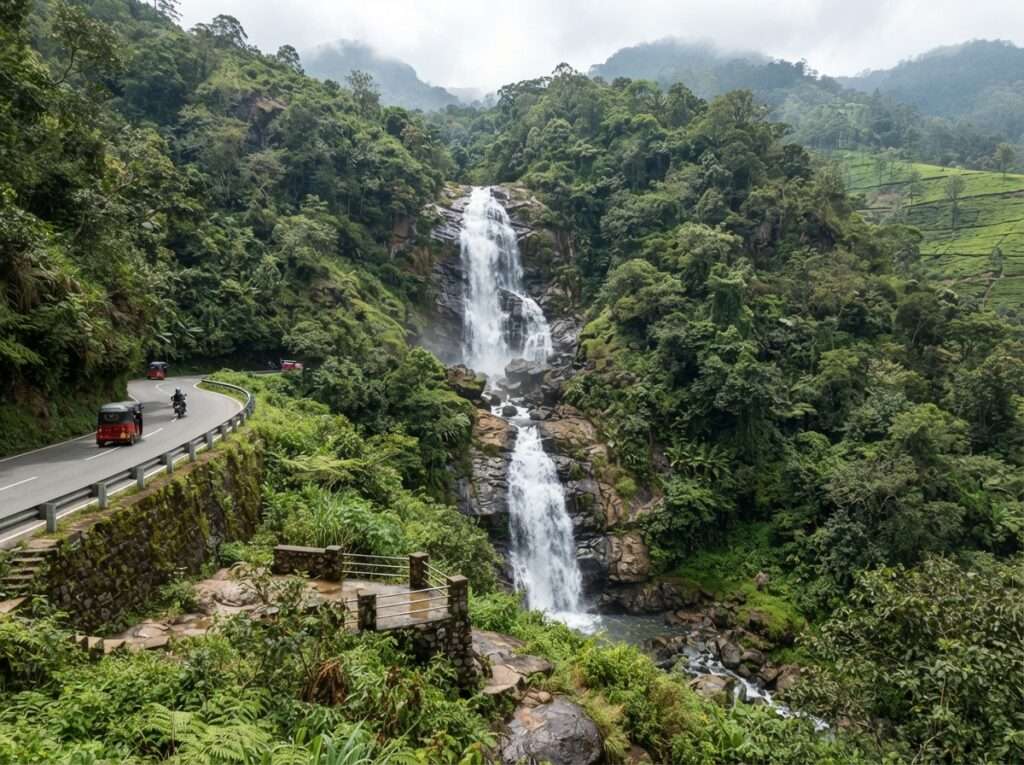
Ramboda tumbles 109 metres in two main sections beside the A5 Kandy to Nuwara Eliya road, roughly halfway between the two towns. The upper fall is a short walk behind the Ramboda Falls Hotel, while the lower section is visible from the road near the Hindu temple. It is one of the easiest big falls to tick off because you barely leave the car, which makes it a natural tea-and-photo break on the climb to Nuwara Eliya. Flow is strongest in the second half of the year after the southwest monsoon feeds the catchment.
| Height | 109 m |
| Nearest town | Ramboda |
| Best time to see | Oct to Jan |
07
Laxapana Falls
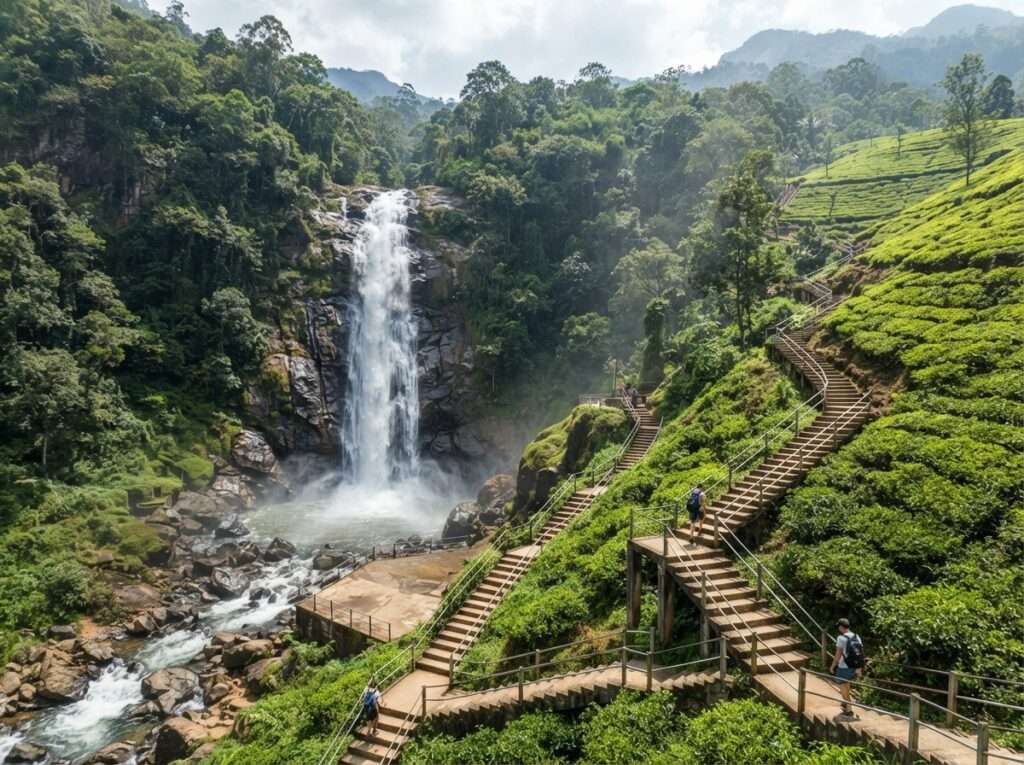
Laxapana drops 129 metres near the Maskeliya hydro complex and is one of the taller falls most visitors can actually walk up to. A long flight of concrete steps leads from the road to a platform near the base, with tea slopes all around. Because the river here feeds a power station, the volume can be managed, so it is at its most dramatic after heavy rain. The drive in from Hatton is slow and winding, so set aside a half day and pair it with the Maussakele reservoir viewpoints.
| Height | 129 m |
| Nearest town | Maskeliya |
| Best time to see | Oct to Jan |
08
Kirindi Ella
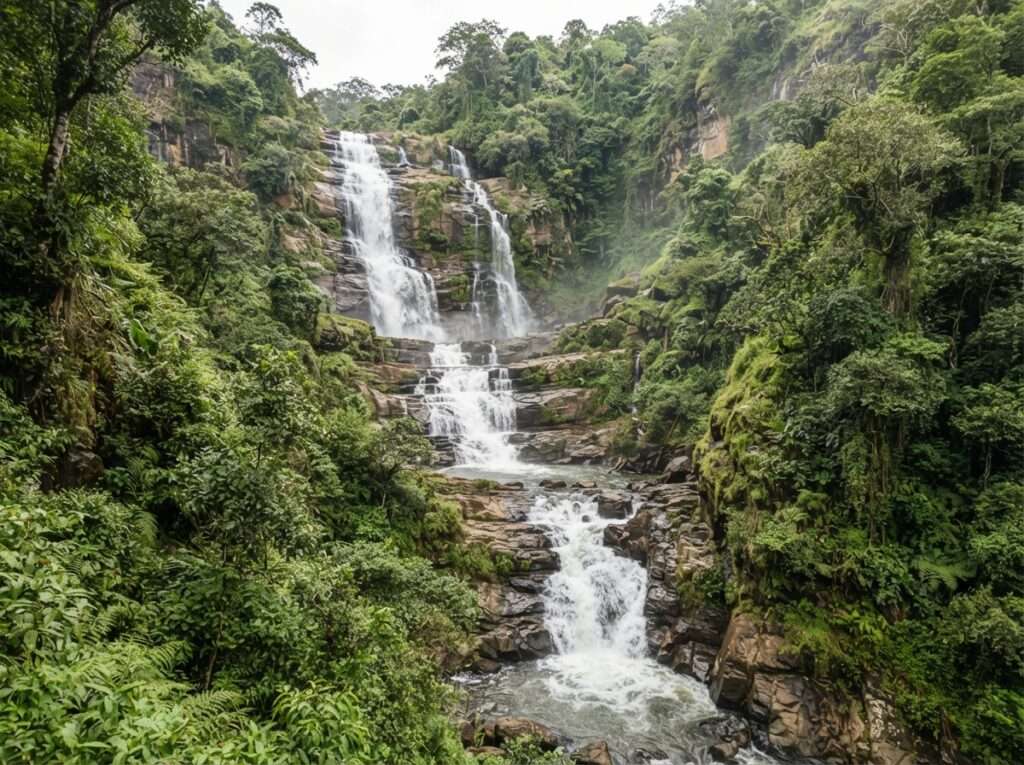
Kirindi Ella falls 116 metres in a series of steps near Pelmadulla in the Ratnapura district, on the wetter southwestern side of the hills. It is quieter than the Nuwara Eliya falls and keeps a healthy flow for much of the year thanks to the heavy Sabaragamuwa rainfall. A short path from the Kalawana road leads to the base. The rocks here have a reputation for being dangerously slippery and there have been drownings in the pools, so admire it from firm ground rather than scrambling onto the ledges.
| Height | 116 m |
| Nearest town | Pelmadulla |
| Best time to see | May to Sep |
09
Ravana Falls
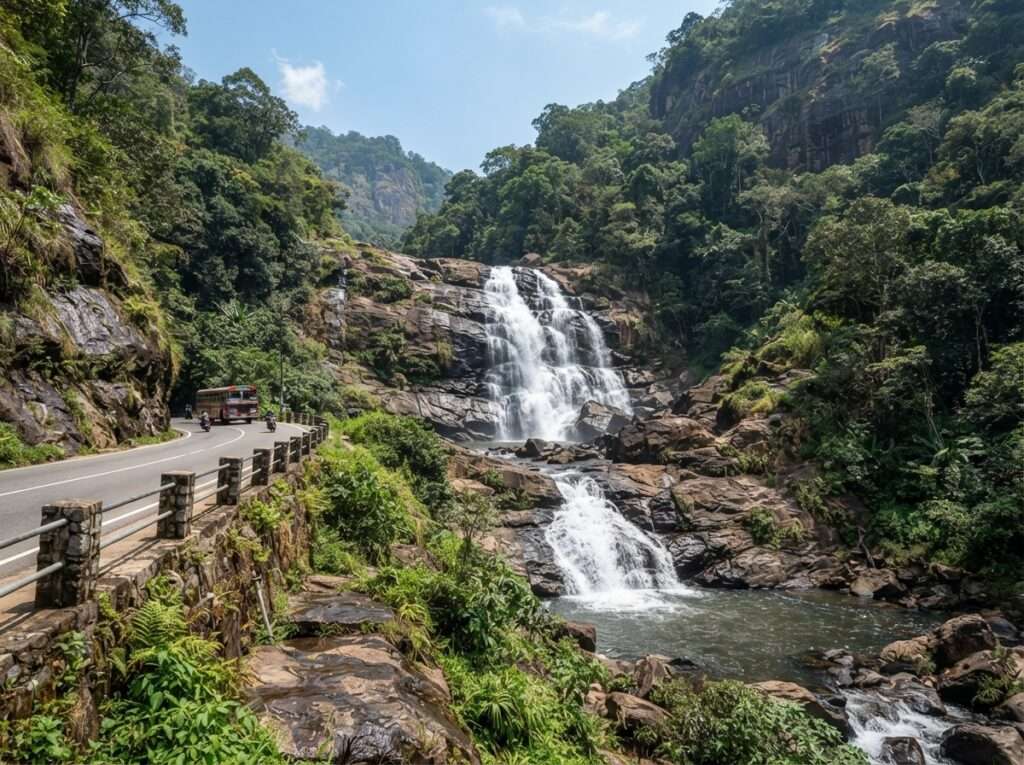
Ravana Falls is the one almost every Ella visitor sees, a 25-metre cascade that spills right beside the main Ella to Wellawaya road about 6 km from town. It is tied to the Ramayana legend of King Ravana, and the caves above are said to be where Sita was hidden. Because it is roadside, it draws crowds and a line of stalls, so come early. The pool at the base swells dangerously after rain and has claimed lives, so resist the urge to swim when it is in full flow. It is an easy add-on to anything on your Ella list.
| Height | 25 m |
| Nearest town | Ella |
| Best time to see | Nov to Feb |
10
Bopath Ella
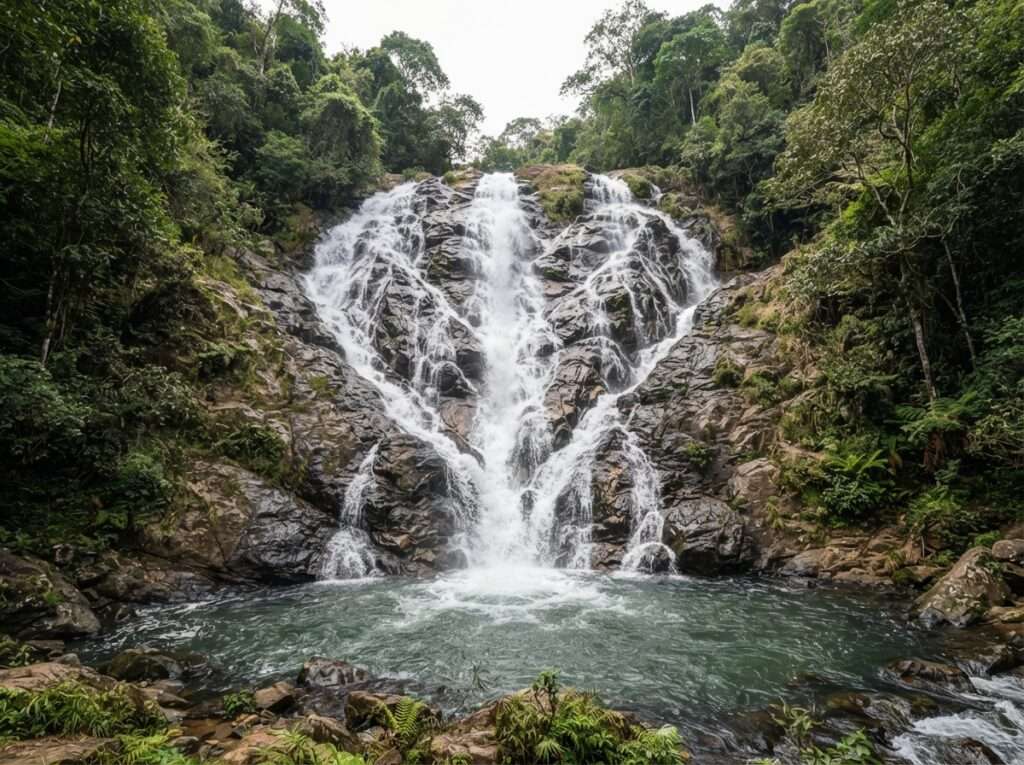
Bopath Ella takes its name from its shape, a single 30-metre stream that splits and spreads like the leaf of a bo (sacred fig) tree. It sits near Kuruwita in the Ratnapura district, about two hours from Colombo, which makes it one of the easiest falls to reach on a day trip from the coast. A short walk from the car park, past a line of snack stalls, brings you to the base. The pool looks inviting but the current is strong and unpredictable, and signs warn against swimming for good reason.
| Height | 30 m |
| Nearest town | Kuruwita |
| Best time to see | May to Sep |
11
Baker's Falls
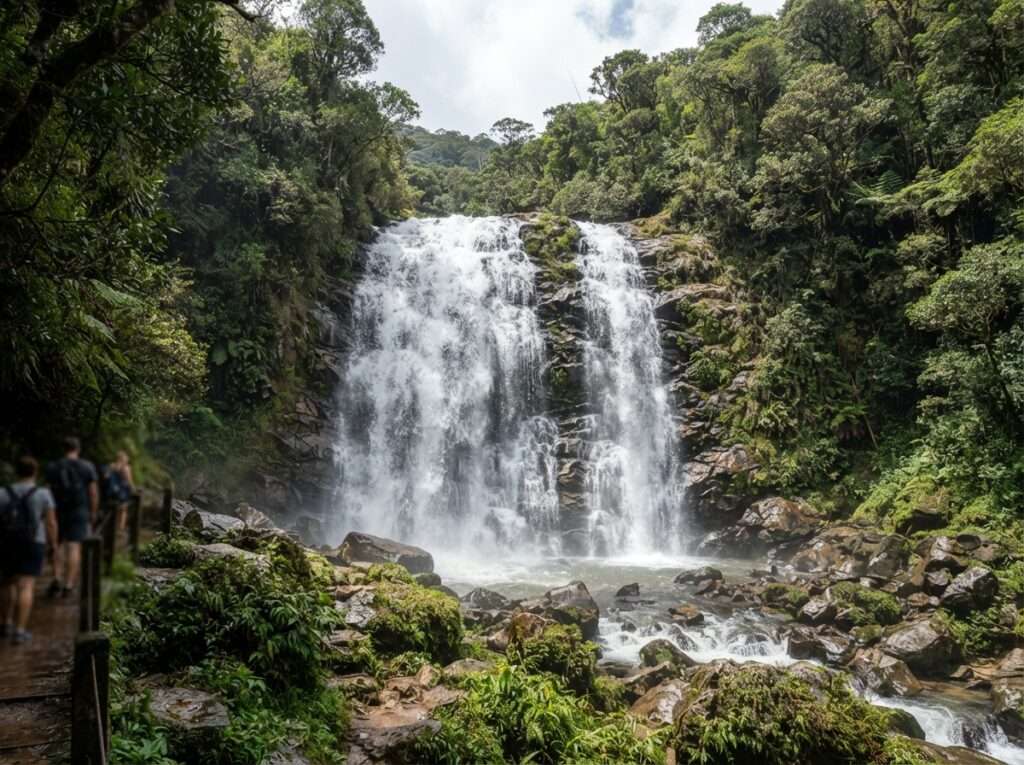
Baker’s Falls is the reward midway around the walking loop in Horton Plains National Park, a wide 20-metre curtain named after the British explorer Samuel Baker. You reach it only on foot, as part of the 9 km circuit that also takes in World’s End, and you pay the standard Horton Plains entry ticket to get in (from around US$30 for foreign adults once the service charge is added; confirm the current rate at the gate). Set off at dawn, because the plateau clouds over by mid-morning and the deck can be packed by nine. Rhododendrons and dwarf forest line the path in.
| Height | 20 m |
| Nearest town | Horton Plains |
| Best time to see | Jan to Mar |
12
Aberdeen Falls
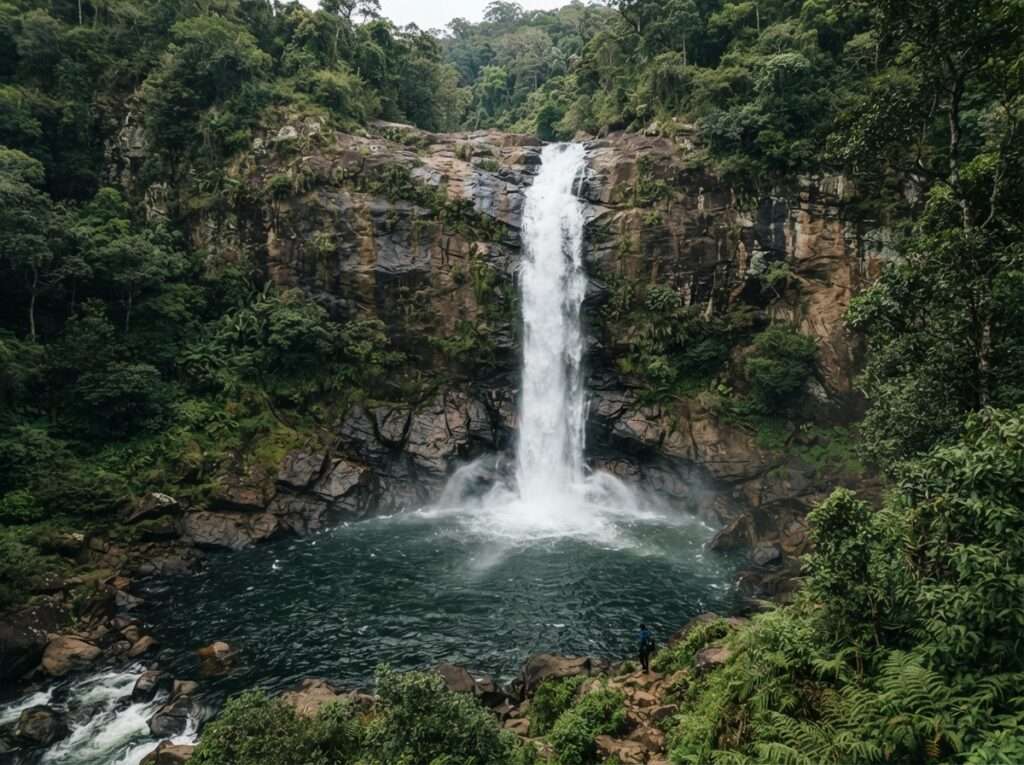
Aberdeen plunges 98 metres down a rock face near Ginigathena, off the Hatton road, and sees a fraction of the crowds the roadside falls draw. Getting to the base means a steep 30 to 45 minute hike down a rough trail from the village of Dik Ella, and the climb back is a workout, so wear proper shoes. It was named during the British era and its river, the Kehelgamu Oya, feeds the Laxapana hydro complex downstream, one of the country’s first. The reward is a deep plunge pool and, most days, the place almost to yourself.
| Height | 98 m |
| Nearest town | Ginigathena |
| Best time to see | Oct to Jan |
13
Alakola Ella
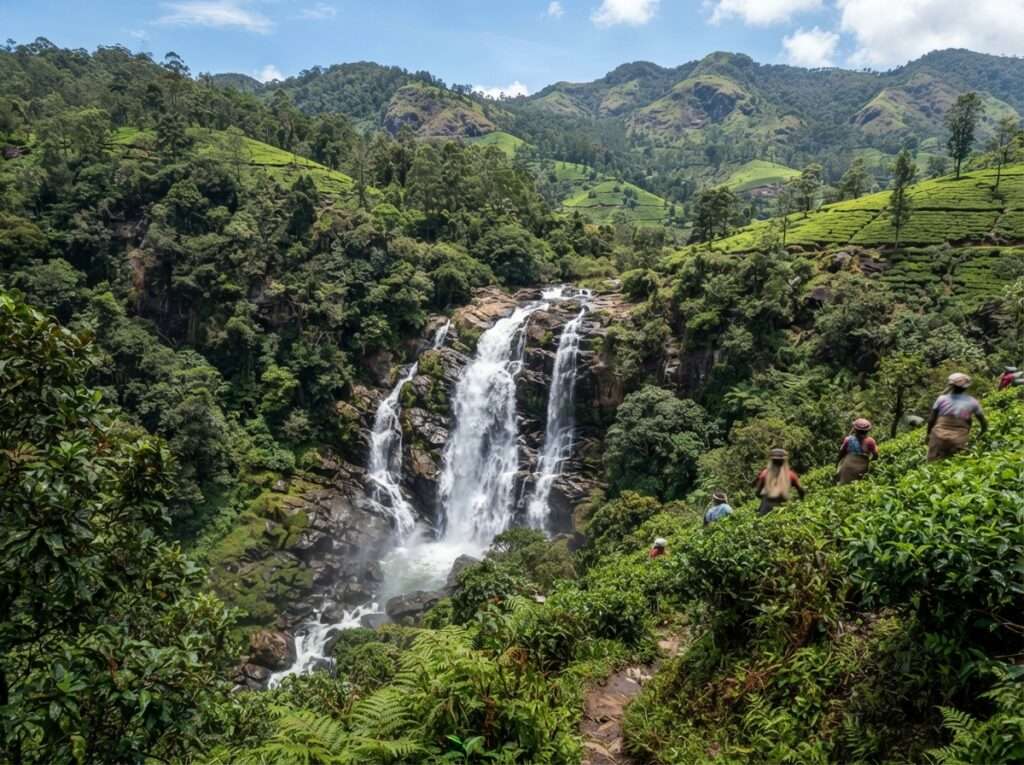
Alakola Ella is a quieter 60-metre fall in the hills near Pundaluoya, well off the usual tourist line and reached on a short trek through tea country. Local tappers and the odd hiker are often the only people there, which is the appeal. The final stretch is a narrow path that turns muddy after rain, so a guide from the nearest village helps. It runs best in the wetter months and shrinks noticeably in the dry season, so check conditions before making the detour.
| Height | 60 m |
| Nearest town | Pundaluoya |
| Best time to see | May to Sep |
14
Elgin Falls
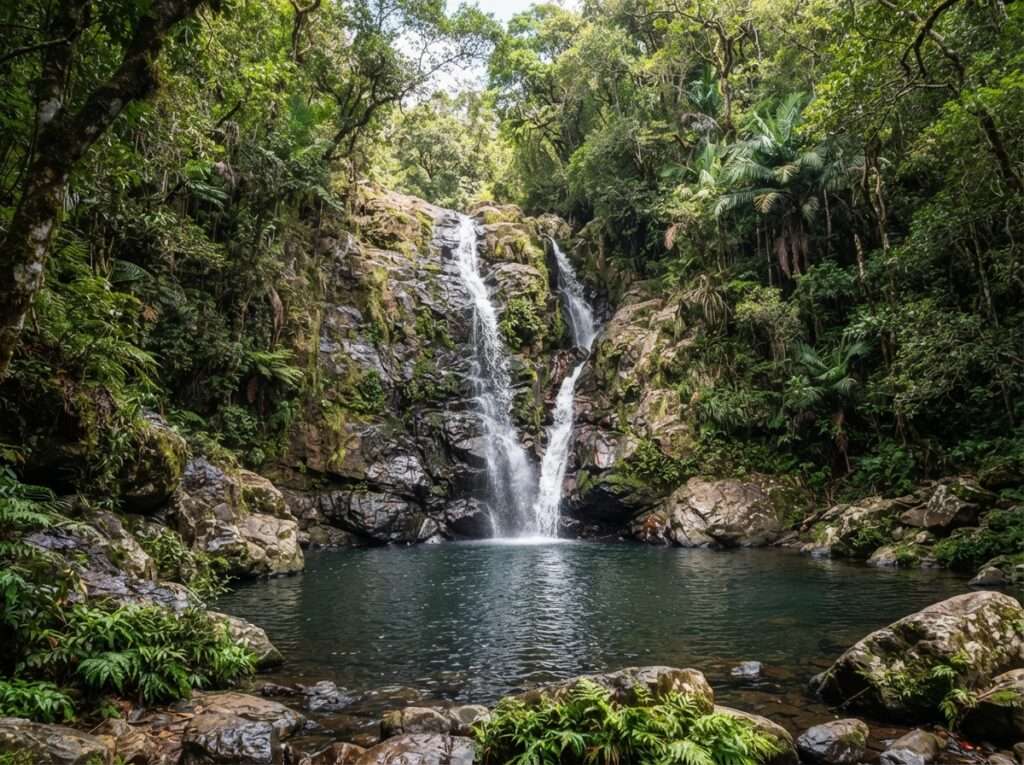
Elgin Falls is a compact 25-metre cascade off the Nuwara Eliya road near Ramboda, often overlooked because travellers rush past it to the bigger Ramboda fall nearby. A short walk from the roadside brings you to a calm pool framed by forest, and it rarely draws a crowd. It pairs well with Ramboda and the Labookellie tea estate on the drive up. Like most hill-country falls, it is fullest in the months following the monsoon and gentler once the dry season sets in.
| Height | 25 m |
| Nearest town | Ramboda |
| Best time to see | Oct to Jan |
More waterfalls worth chasing
If you are building a longer waterfall route, a few more earn the detour. Bomburu Ella near Nuwara Eliya is the island’s widest fall, a fan of around ten cascades reached on a short trek. Lover’s Leap, just above Nuwara Eliya town below the Pedro tea estate, carries a tragic local legend and makes an easy morning walk. Further out, Galboda Falls sits beside the hill-country railway near Watawala, Sera Ella hides in the Knuckles foothills, and Puna Ella rewards anyone who goes looking off the Ratnapura back roads.
When to go, and how to stay safe
Sri Lanka’s waterfalls do not all peak at the same time, because the island runs on two monsoons. The central and western hill-country falls (Devon, St Clair’s, Ramboda, Laxapana, Aberdeen) draw on the southwest monsoon and run hardest from about October into January, then ease through the drier early months while still carrying decent flow and clearer skies. The Uva-side falls like Dunhinda and Diyaluma fill out during and just after the northeast monsoon, roughly December to February. For most trips, late November to March gives you strong flow and the best chance of sun. For the full month-by-month picture, see our guide to the best time to visit Sri Lanka.
Safety is not a footnote here. Several of these falls have claimed lives. The rocks are far more slippery than they look, flow can surge within minutes after rain upstream, and the pools below Kirindi Ella, Bopath Ella, Ravana and Diyaluma are known drowning spots. Stay back from the lip at the top of Diyaluma and Bambarakanda, do not swim when the water is high or brown, and treat every warning sign as real.
Plan your Sri Lanka waterfall trip
Sri Lanka crams more waterfalls into a few hours’ drive than almost anywhere its size, from the 263-metre drop at Bambarakanda to the roadside spray of Ravana. Pick a hill-country base, time it for the months after the rains, and you can string half a dozen of these into a single trip. When you are ready to turn the route into a booking, our Sri Lanka tour packages bundle the hill-country falls with Ella, Nuwara Eliya and Kandy.
FAQs
Frequently asked questions
Bambarakanda Falls is the tallest at 263 metres. It drops in a thin three-tier ribbon through pine forest near Kalupahana in Badulla district, off the A4 Colombo to Badulla road. It runs fullest from October into the early months of the year and can thin out in the dry season, so plan your visit for just after the rains.
Diyaluma Falls, at 220 metres, is the second-tallest, near Koslanda on the A4. The third is Kurundu Oya Falls (also called Maturata Ella) at 189 metres. Some older guides swap the order of the second and third, but by measured height Diyaluma is clearly ahead of Kurundu Oya.
Late November to March is the safest all-round window. The central hill-country falls run hardest from October into January after the southwest monsoon, while the Uva-side falls such as Dunhinda and Diyaluma peak during the northeast monsoon from December to February. The dry season still carries good flow with clearer skies, which is better for photos.
Most roadside falls, including Ravana, Devon, St Clair's and Ramboda, are free to view. The exception is Baker's Falls, which sits inside Horton Plains National Park, so you pay the park entry ticket (around US$25 for foreign adults; confirm the current rate at the gate). A handful of smaller falls may charge a small local parking or upkeep fee.
Bopath Ella near Kuruwita is the closest big fall to Colombo, about two hours by road and a short walk from the car park. If you are heading up into the hills, Ramboda, Devon and St Clair's all sit right on the main roads and need almost no walking, which makes them the easiest to fit into a driving day.
At some, carefully. The upper pools at Diyaluma are a popular dip in dry conditions, and a few smaller falls have calm wading spots. But the base pools at Kirindi Ella, Bopath Ella and Ravana are dangerous and have caused drownings, and any fall can surge fast after rain upstream. Never swim when the water is high, brown or fast.
Ravana Falls is the closest, about 6 km from Ella town on the road to Wellawaya, right beside the tarmac. Diyaluma, the island's second-tallest, is roughly an hour south near Koslanda and makes an easy half-day trip from Ella, especially if you want to hike up to its clifftop pools.
Hundreds. The island's compact wet highlands produce one of the densest concentrations of waterfalls anywhere its size. Published catalogues list several hundred named falls, though counts vary because the standard reference list leaves out anything under 10 metres and because cascades are sometimes counted as one fall or several.
Partly. The scenic hill-country railway from Kandy to Ella passes close to several falls, and you can combine a rail leg with a driver for the rest. Nanu Oya (for Nuwara Eliya) and Hatton are useful stations for the Devon, St Clair's and Laxapana cluster, while Ella station puts you minutes from Ravana. Most falls still need a short road transfer at the end.
Two to three days covers the highlights. With a base around Nuwara Eliya or Ella and a driver, you can string together Devon, St Clair's, Ramboda, Ravana and Diyaluma, and add Bambarakanda or Baker's Falls if you have a third day. A week lets you reach the quieter falls like Aberdeen, Alakola Ella and Kirindi Ella at a relaxed pace.