
 8D / 7N
6% OFF


Sri Lanka's Lakes: Ancient Tanks, Hill Mirrors And The Largest Of Them All
Almost every lake in Sri Lanka is man-made, and that is what makes them worth seeking out. The best lakes in Sri Lanka range from Gregory, a cool hill-country lake laid out by the British in Nuwara Eliya, to Parakrama Samudra, a 12th-century reservoir in Polonnaruwa so vast that locals call it an inland sea. In between sit mirror-still mountain pools, a city lake with a temple on an island, and the giant irrigation tanks that have watered the dry zone for 2,500 years. Here are ten lakes worth your time, a straight answer to which one is actually the largest, and how to reach each.
Key takeaways
- Visit Gregory Lake in Nuwara Eliya for boating in cool hill air, the most popular lake for first-time visitors.
- See the elephant gathering at Minneriya tank, where hundreds of wild elephants congregate around August and September.
- Know the answer: Senanayake Samudraya is the largest reservoir by water capacity, while Bolgoda is the largest natural lake by area.
- Count on tanks, not natural lakes: around 18,000 man-made tanks survive across the island, one of the highest densities on earth.
- Time it right: the cultural-triangle tanks are best from May to September, the hill lakes from March to May, and Colombo’s lakes from December to March.
What is the largest lake in Sri Lanka?
There is no single answer, and that is the interesting part. Sri Lanka has almost no natural lakes, so the biggest bodies of water are man-made reservoirs built for irrigation. If you mean sheer water capacity, the largest is Senanayake Samudraya, the reservoir behind the Gal Oya dam, holding about 950 million cubic metres. If you mean the largest natural lake, that is Bolgoda, just south of Colombo. The largest of the ancient reservoirs by surface area is Parakrama Samudra in Polonnaruwa, and the one most often loosely called the country’s largest lake is Kala Wewa near Anuradhapura. Here is how they compare.
| Which ‘largest’? | Lake | Size | Where |
|---|---|---|---|
| Largest by water capacity | Senanayake Samudraya (Gal Oya) | About 950 million m3 | Inginiyagala, eastern Sri Lanka |
| Largest natural lake (by area) | Bolgoda Lake | About 15 km2 | South of Colombo |
| Largest ancient reservoir (by area) | Parakrama Samudra | About 22.6 km2 | Polonnaruwa |
| Often called the largest | Kala Wewa | About 123 million m3 | Near Anuradhapura |
The 10 best lakes in Sri Lanka at a glance
| Lake | Nearest town | Type | Distance from Colombo | Best for |
|---|---|---|---|---|
| Gregory Lake | Nuwara Eliya | Hill-country lake | About 180 km | Boating and cool climate |
| Parakrama Samudra | Polonnaruwa | Ancient reservoir | About 215 km | History, sunsets, birdlife |
| Minneriya Tank | Habarana | Reservoir and park | About 185 km | The elephant gathering |
| Kandy Lake | Kandy | City lake | About 120 km | Walks and the Temple of the Tooth |
| Bolgoda Lake | Moratuwa | Natural lake | About 25 km | Boating and a day escape |
| Tissa Wewa | Tissamaharama | Ancient tank | About 290 km | Yala gateway and birds |
| Kandalama Reservoir | Dambulla | Reservoir | About 160 km | Views and quiet mornings |
| Sembuwatta Lake | Elkaduwa | Spring-fed hill lake | About 140 km | Photos and cool air |
| Beira Lake | Colombo | Urban lake | In central Colombo | A city temple and boating |
| Kala Wewa | Kekirawa | Ancient reservoir | About 160 km | History and the Avukana Buddha |
Sri Lanka
Sri Lanka
A clear 2026 guide to the ten best lakes, which one is largest, and how to reach each
Best Time
May - September
Select Package Type
Best Selling Packages


10 Best Lakes In Sri Lanka, Hills To Ancient Tanks
The ten lakes below run from Gregory and Sembuwatta in the hills, through Kandy and the great cultural-triangle tanks, to Bolgoda and Beira near Colombo, in a route that strings together naturally.
Explore Popular Destination In Sri Lanka
01
Gregory Lake, Nuwara Eliya
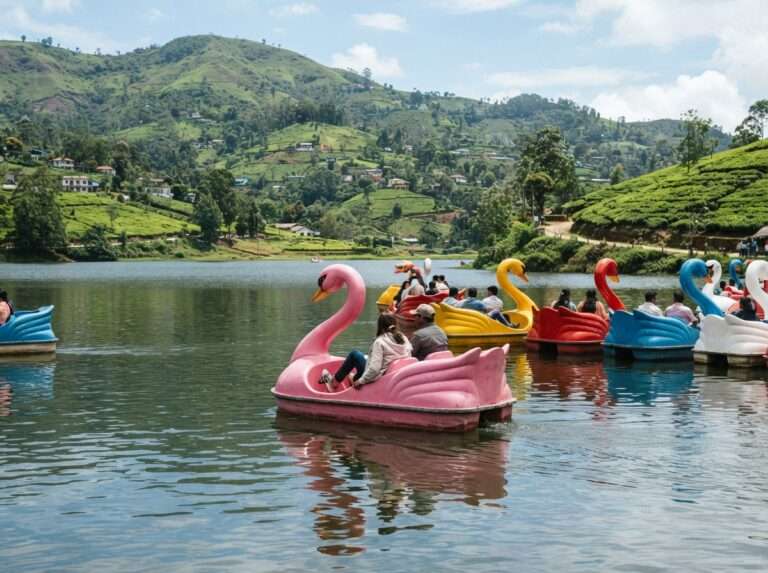
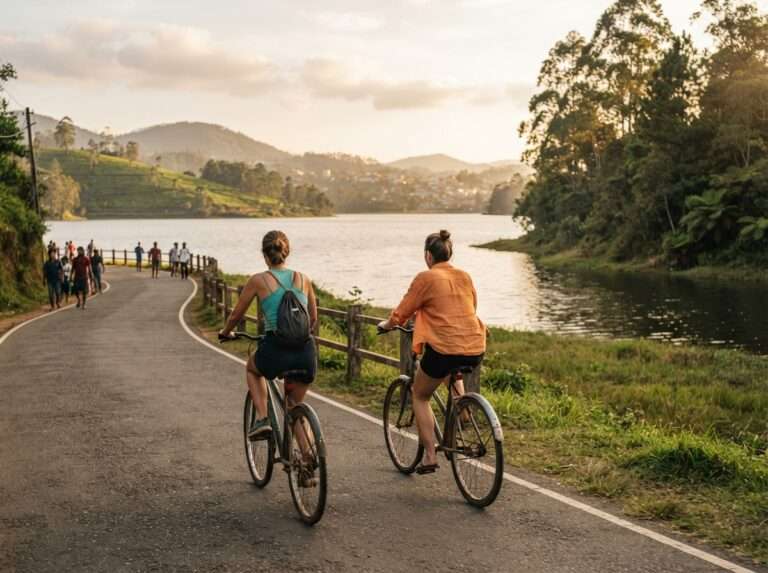
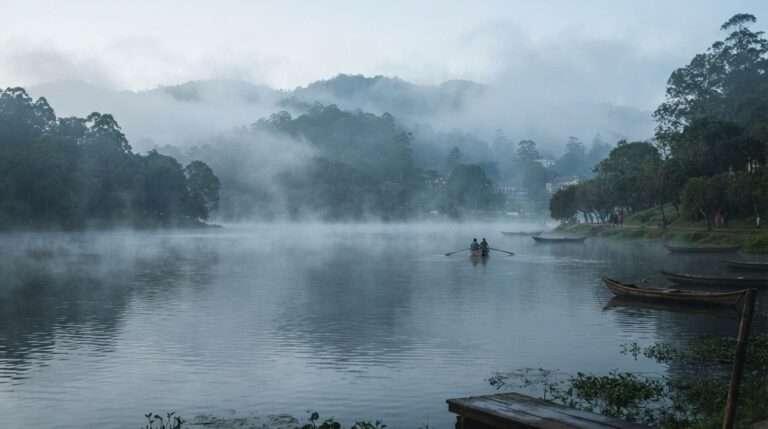
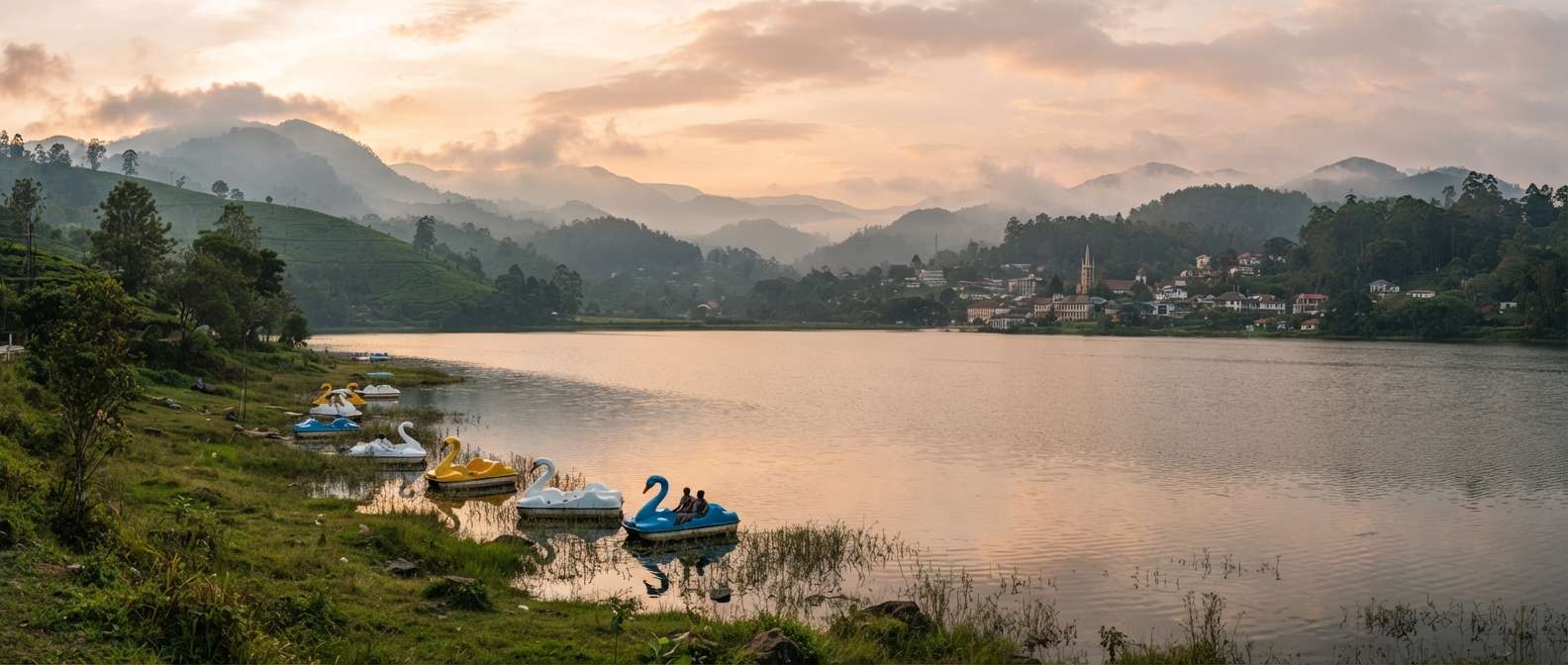
Start with Gregory, the lake most people picture first. It sits in the middle of Nuwara Eliya at around 1,900 metres, so the air is cool and the light is soft, and the British laid it out in 1873 under Governor Sir William Gregory as a hill-station centrepiece. Today it is pure easy fun: swan pedal boats, speedboat rides, pony rides along the shore and the odd water-walking ball for children. Come for a late-morning or afternoon outing, pair it with a walk through the old colonial town, and bring a layer because evenings here get genuinely chilly.
For the wider area, see our guide to Nuwara Eliya.
| Where | In the centre of Nuwara Eliya, in the hill country |
| Best time | March to May for the clearest hill weather |
| Known for | Pedal and speed boats, pony rides, cool climate |
| Tip | Carry a light jacket; evenings are cold at this altitude |
Related Tour Packages


❮
❯
02
Parakrama Samudra, Polonnaruwa
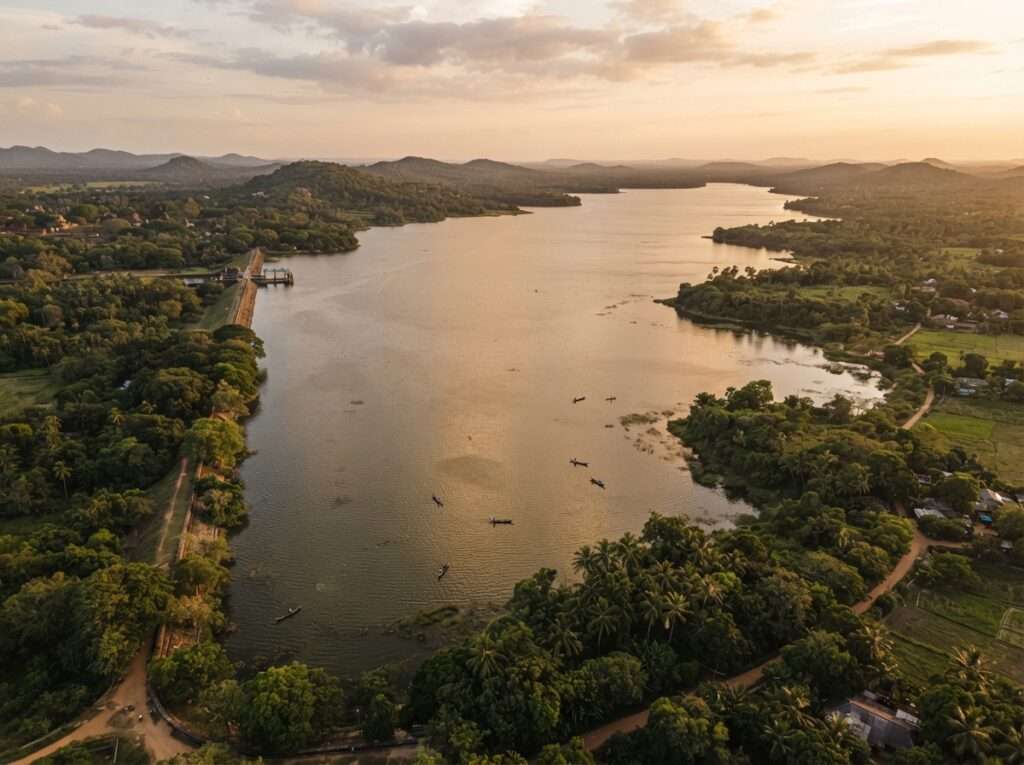
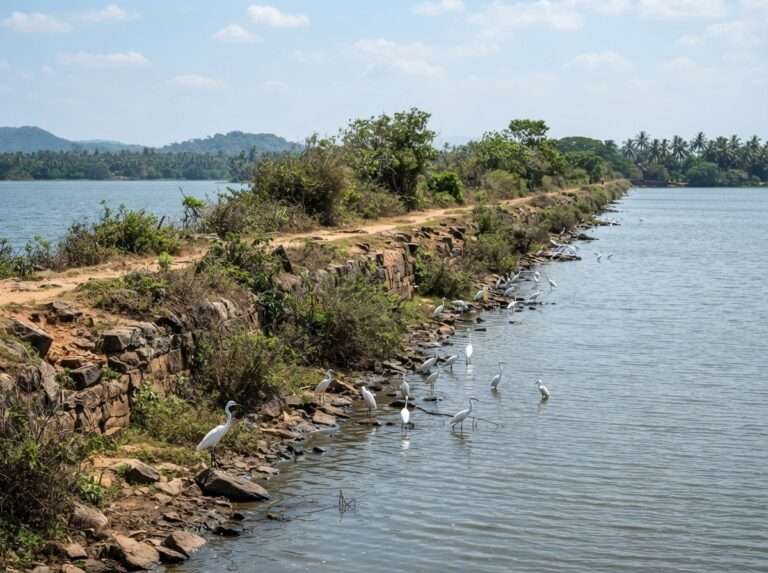
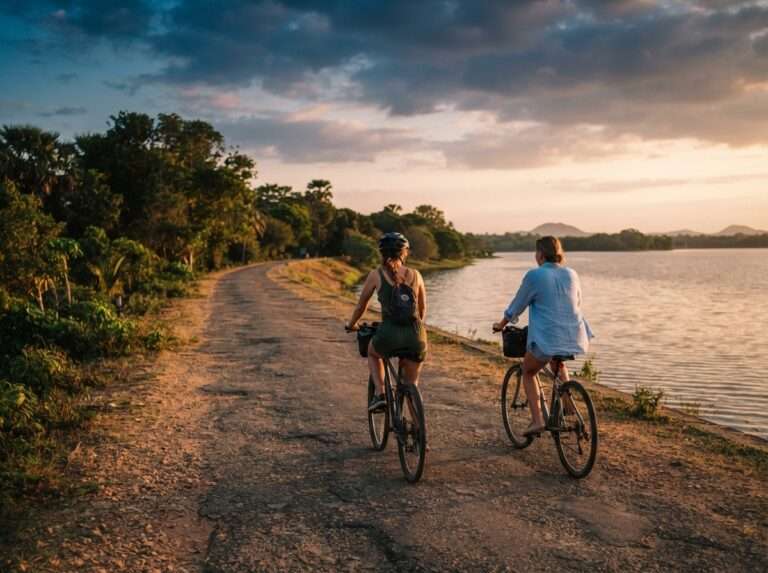
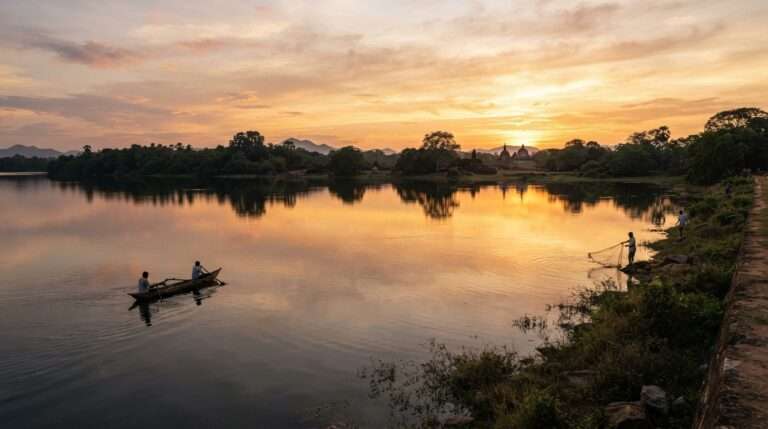
Parakrama Samudra is the one that stays with you. It is a 12th-century reservoir on the edge of the ancient city of Polonnaruwa, built up by King Parakramabahu I, whose line about not letting a single drop of rain reach the sea unused still sums up the island’s whole approach to water. It is really five linked tanks covering around 22.6 square kilometres, so wide it reads as an inland sea, with a bund perfect for a sunset walk and a statue of the king gazing over it. Egrets, pelicans and the odd elephant come to the water’s edge at dusk. See it at the end of a day exploring the Polonnaruwa ruins.
| Where | On the western edge of Polonnaruwa, in the cultural triangle |
| Best time | May to September, late afternoon for the sunse |
| Known for | An ancient inland sea, the Parakramabahu statue, birdlife |
Related Tour Packages


❮
❯
03
Minneriya Tank, Habarana
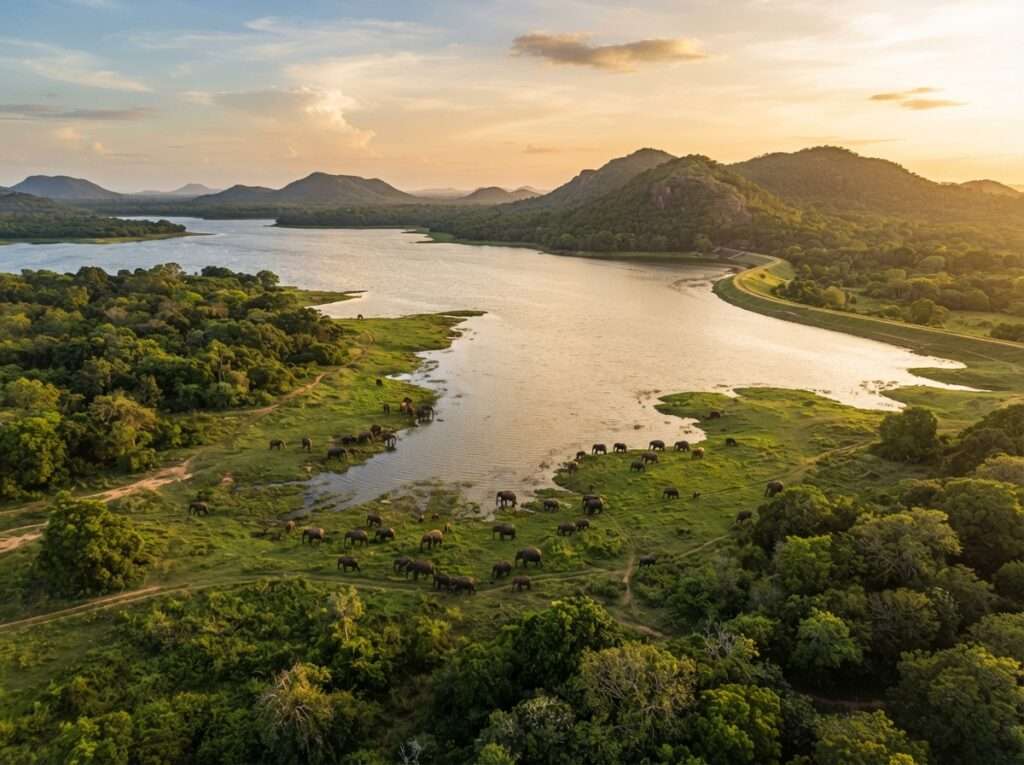
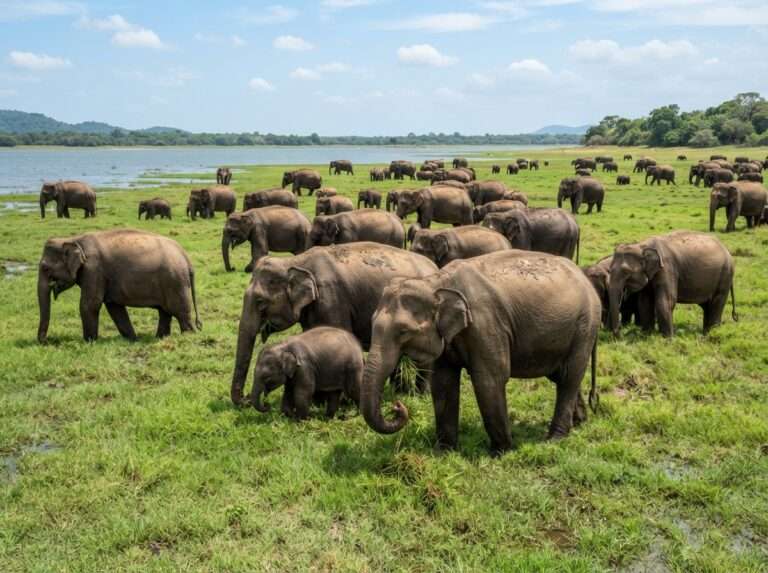
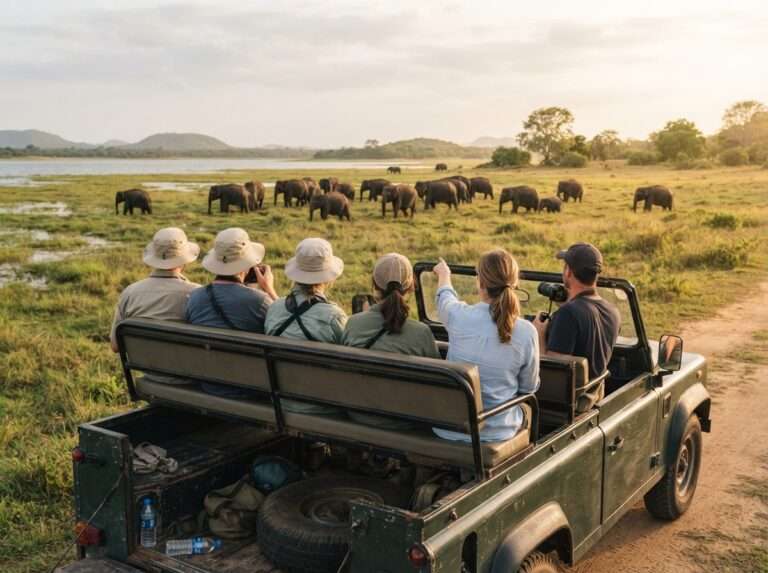
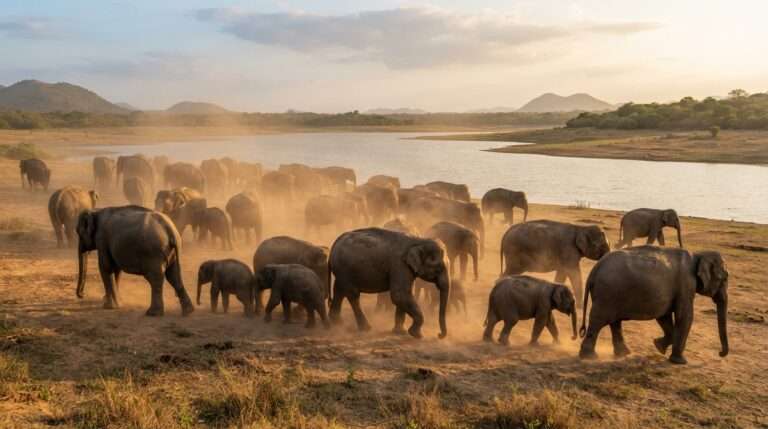
Minneriya is the lake you visit for the elephants. King Mahasen built this tank in the third century AD, and every year in the dry months its water recedes to leave fresh grass on the lakebed, drawing hundreds of wild elephants to graze in what is known simply as the Gathering, one of Asia’s great wildlife spectacles. A jeep safari in Minneriya National Park around August and September is the way to see it, with herds, calves and lone bulls spread across the shoreline against the water.
For more on seeing elephants responsibly, read our guide to elephant sanctuaries in Sri Lanka.
| Where | Minneriya National Park, near Habarana and Polonnaruwa |
| Best time | About August to September for the Gathering |
| Known for | Hundreds of wild elephants grazing the lakebed |
Related Tour Packages


❮
❯
04
Kandy Lake, Kandy
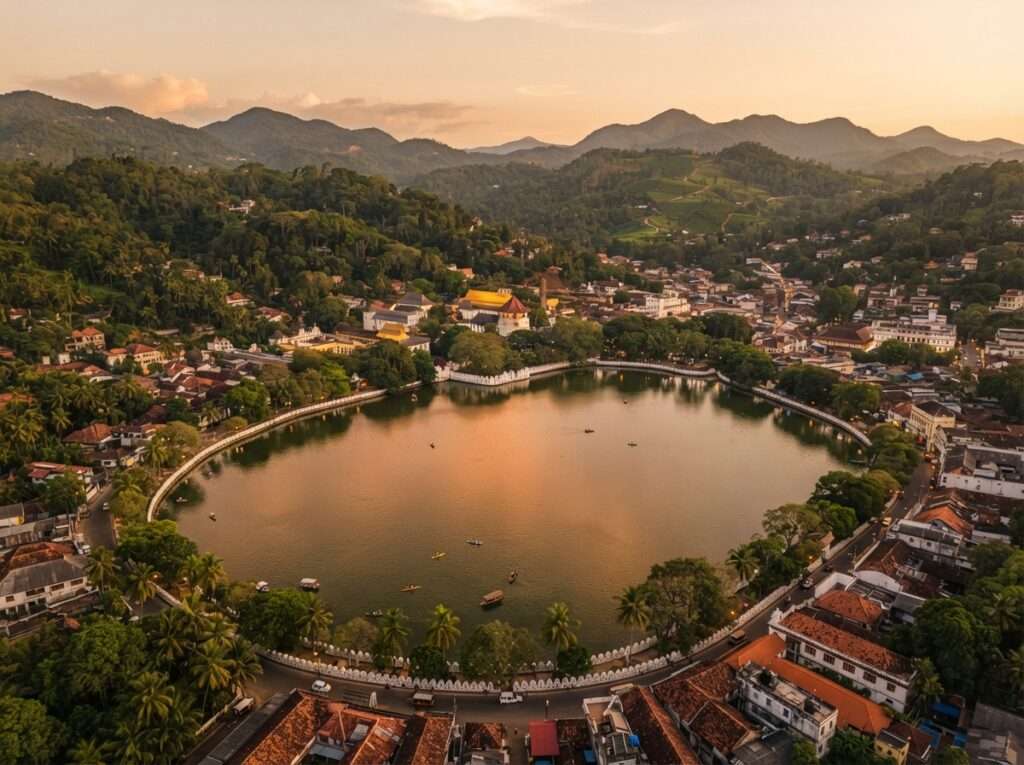
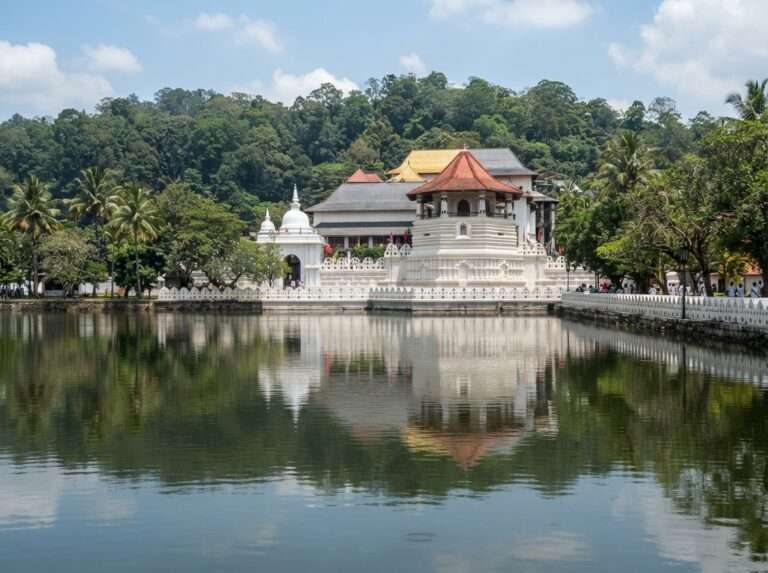
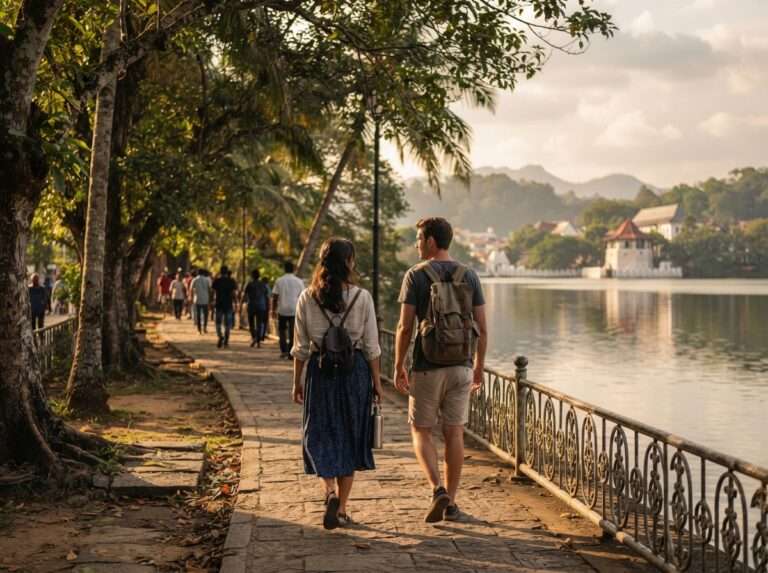
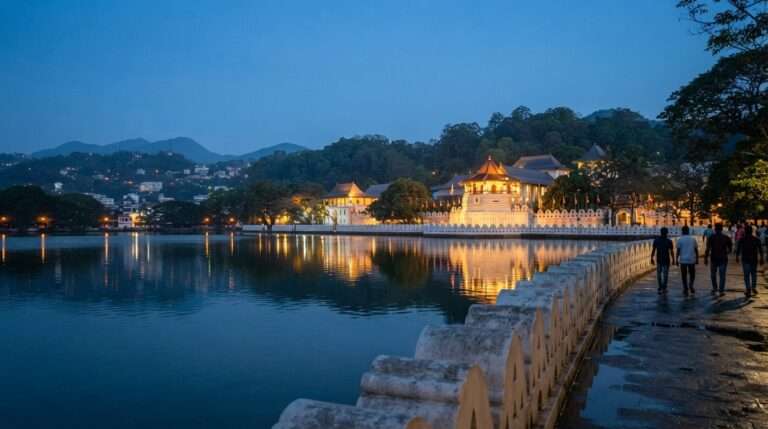
Kandy Lake sits right in the heart of the old royal capital, built in 1807 by Sri Wickrama Rajasinghe, the last king of Kandy, who named it Kiri Muhuda, the Sea of Milk. A shaded path loops the whole shore, and the walk takes in the Temple of the Sacred Tooth Relic on the northern bank, egrets and monitor lizards on the water, and views up to the surrounding hills.
It is the easiest lake to enjoy on foot, best in the early morning or at golden hour. Make it the calm centre of a day in Kandy.
| Where | In the centre of Kandy, beside the Temple of the Tooth |
| Best time | Year-round; early morning or late afternoon |
| Known for | A lakeside walk, royal history, the Temple of the Tooth |
05
Bolgoda Lake, Moratuwa
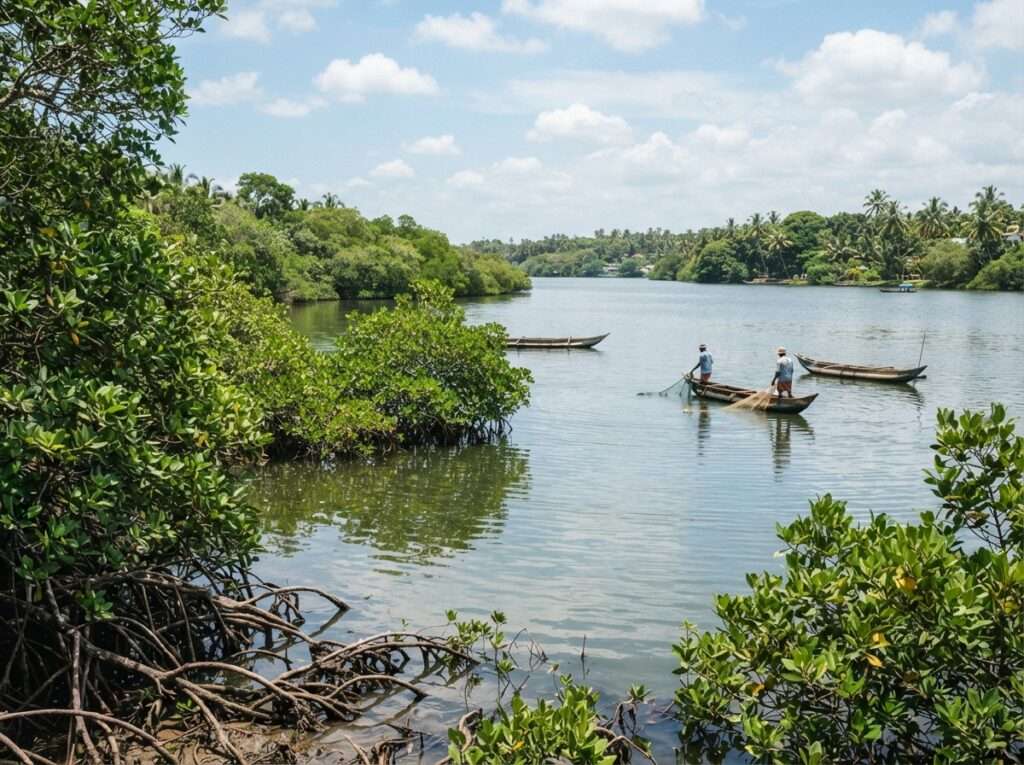
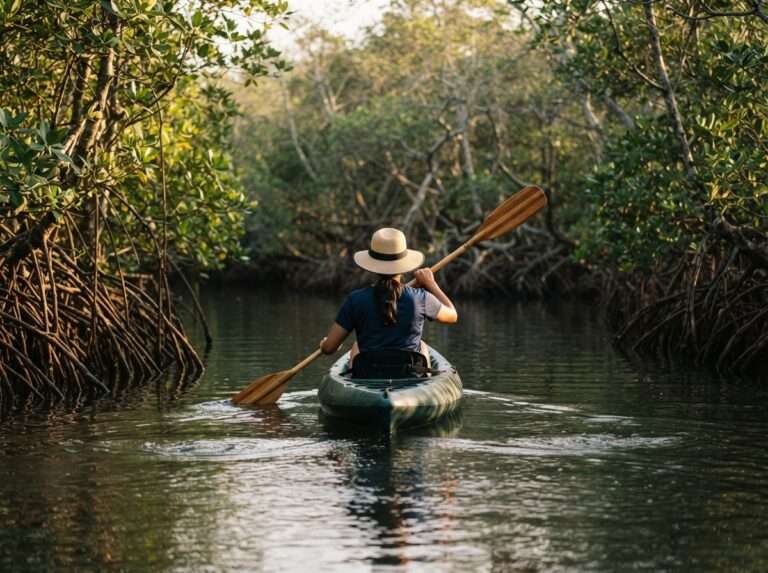
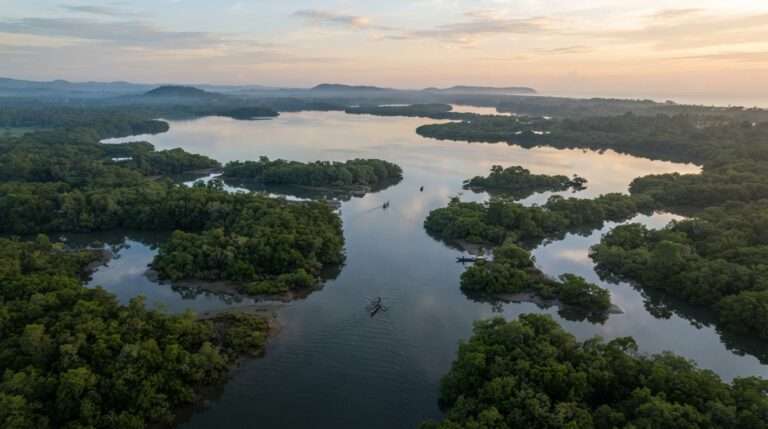
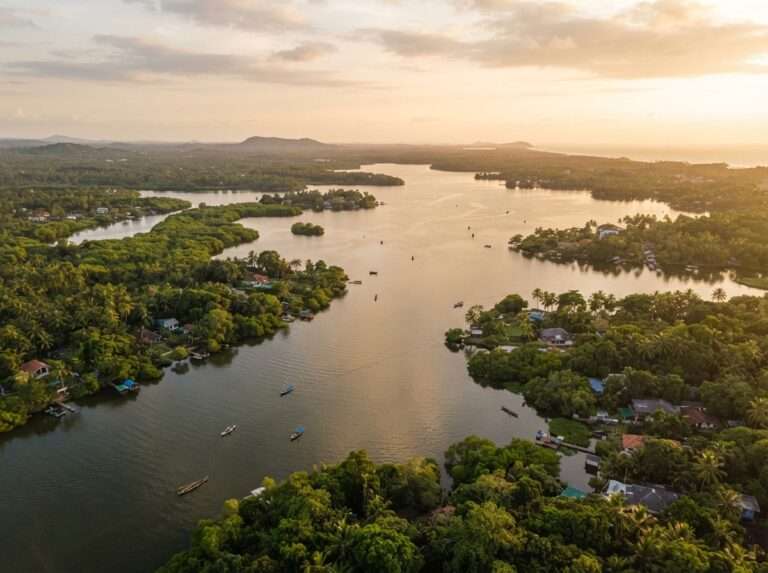
Bolgoda is the big one near the capital, Sri Lanka’s largest natural lake and an easy escape just south of Colombo. It is a sprawling freshwater system fringed with mangroves and old rubber estates, and it is made for being on the water: kayaking, sailing, canoeing and gentle boat cruises past fishing hamlets and birdlife. Weekends bring Colombo families out for lunch at the lakeside restaurants, while weekday mornings are quiet enough to hear the kingfishers. If you only have a half-day out of the city and want water rather than beach, this is the one.
| Where | South of Colombo, around Moratuwa and Panadura |
| Best time | December to March, mornings for calm water |
| Known for | The largest natural lake, kayaking, sailing, birdlife |
06
Tissa Wewa, Tissamaharama
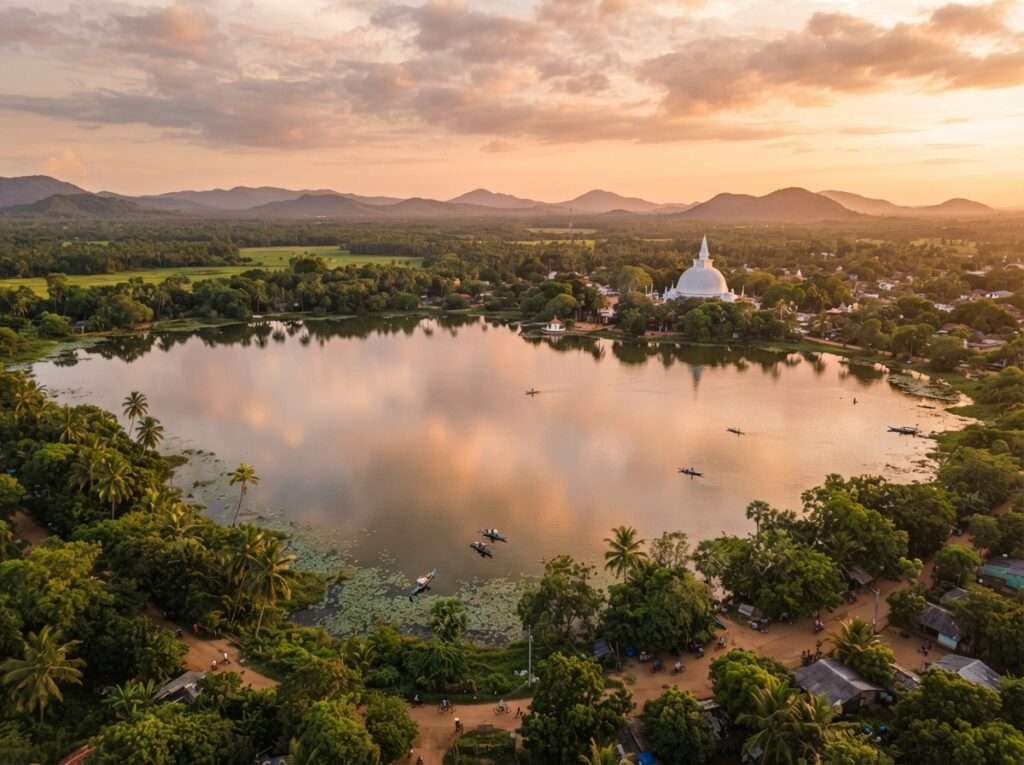
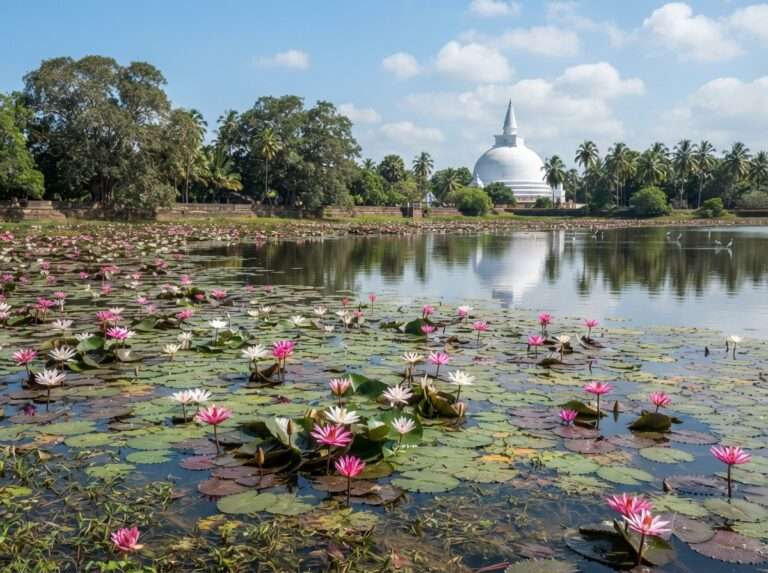
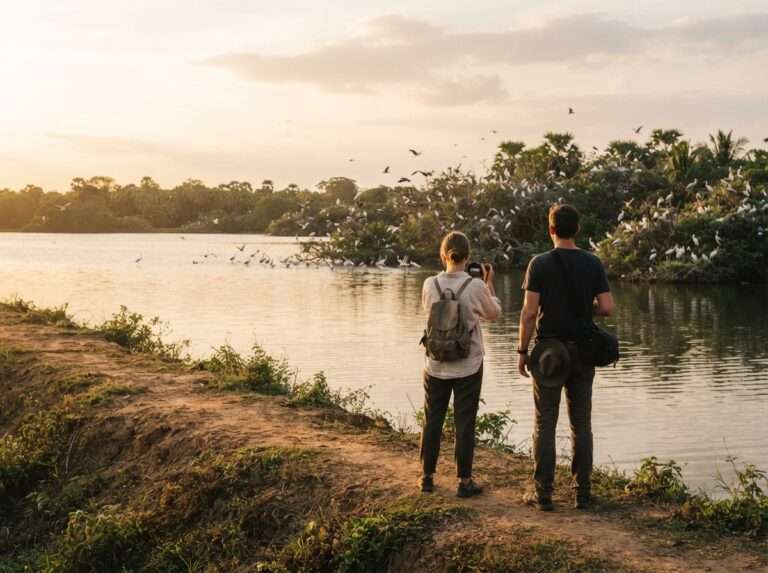
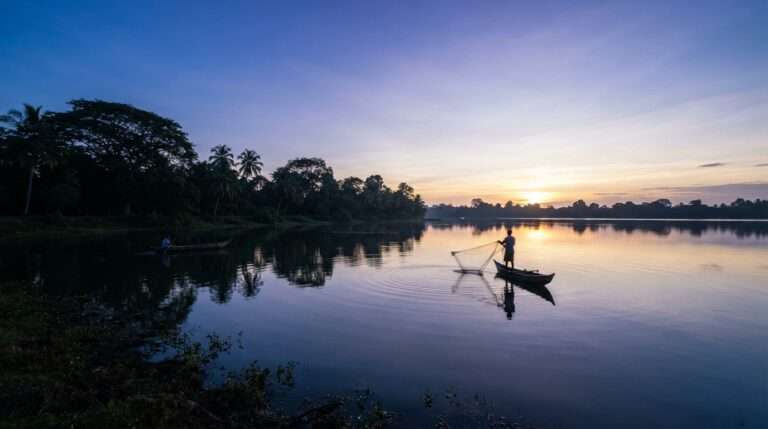
Tissa Wewa is the lake that opens the deep south. This ancient tank sits beside the town of Tissamaharama, the usual base for safaris into Yala, and it makes a lovely first or last stop on a wildlife trip. At dawn the water mirrors the sky, lotus flowers open across the shallows, and herons, storks and pelicans work the edges while local life wakes up around the bund. It is a gentle, uncommercial place, best enjoyed with an early walk and a camera before you head into the park.
| Where | Beside Tissamaharama town, gateway to Yala National Park |
| Best time | February to July for Yala, early morning at the tank |
| Known for | Sunrise reflections, lotus, water birds, Yala access |
07
Kandalama Reservoir, Dambulla
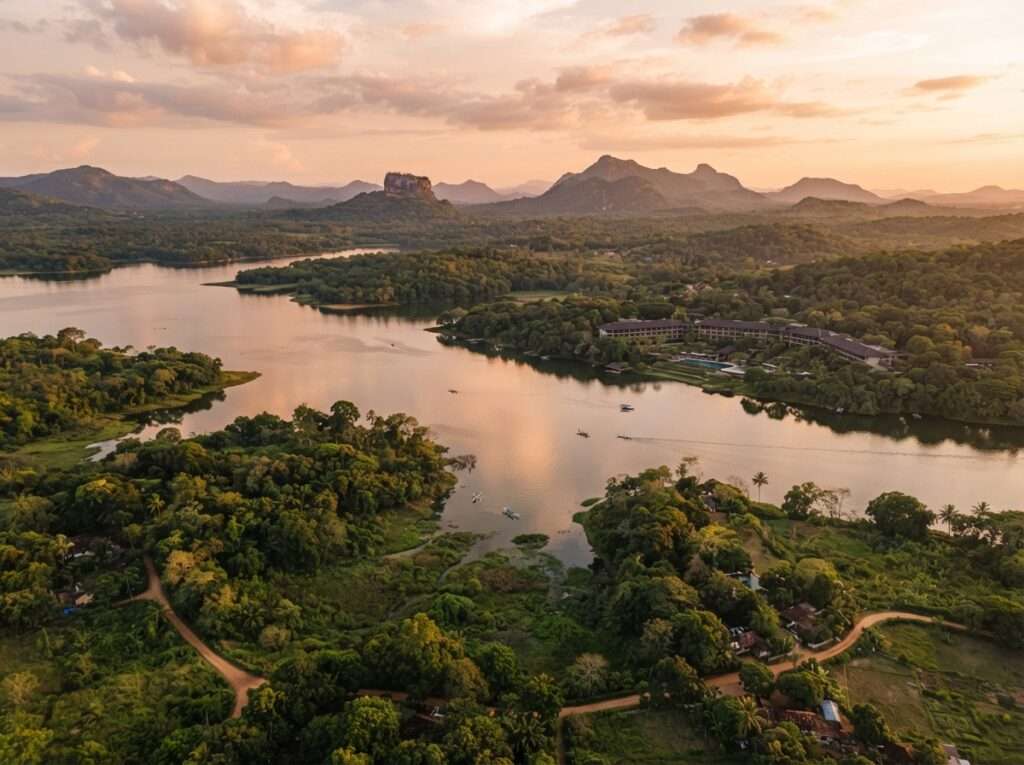
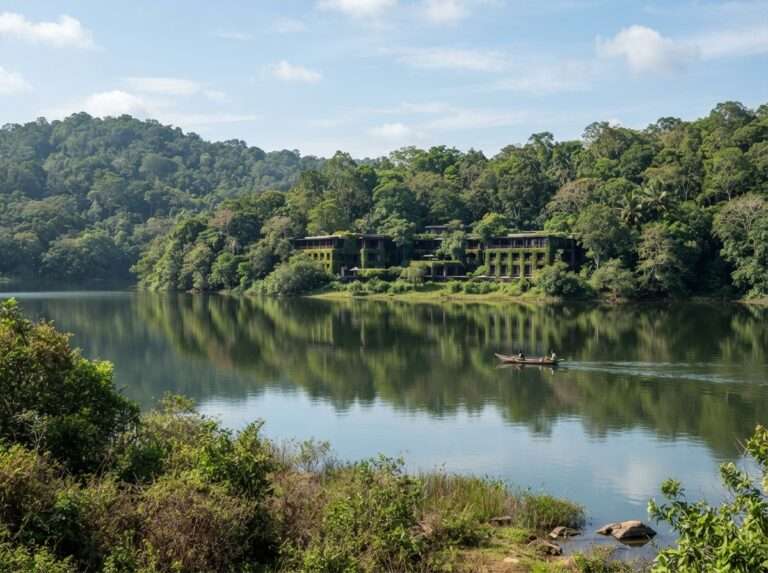
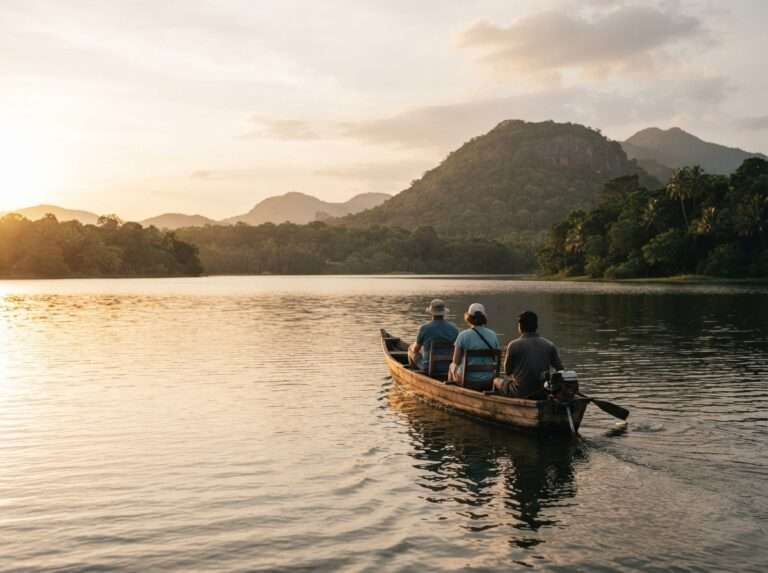
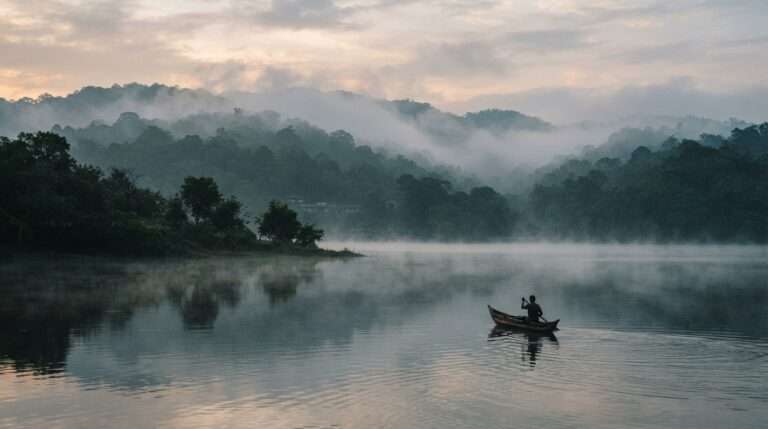
Kandalama is the quiet, scenic tank of the cultural triangle. This irrigation reservoir near Dambulla is ringed by forested hills, and its most famous feature is the way the celebrated Heritance Kandalama hotel disappears into the treeline along one shore rather than dominating it. Even if you are not staying, the reservoir rewards an early drive: still water, a backdrop of distant rock outcrops toward Sigiriya, and good birdwatching from the banks. Pair it with the Dambulla cave temples or a climb at nearby Sigiriya for a full day in the region.
| Where | Near Dambulla, in the cultural triangle |
| Best time | May to September, early morning |
| Known for | Forest-ringed calm, birdlife, views toward Sigiriya |
08
Sembuwatta Lake, Elkaduwa
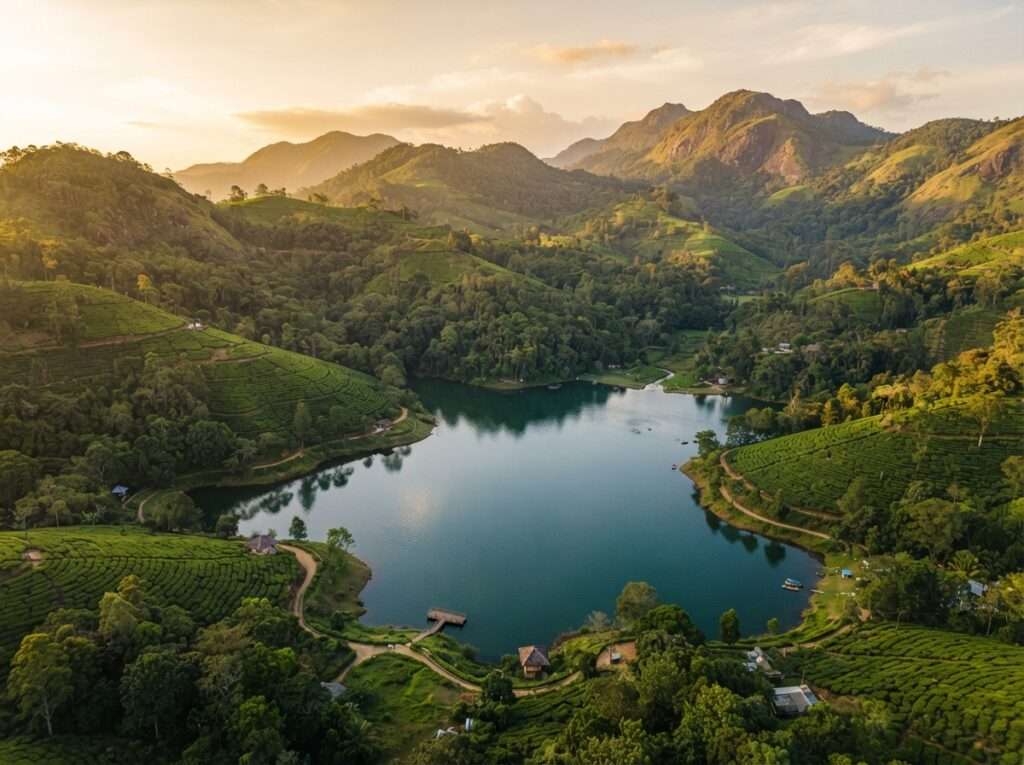
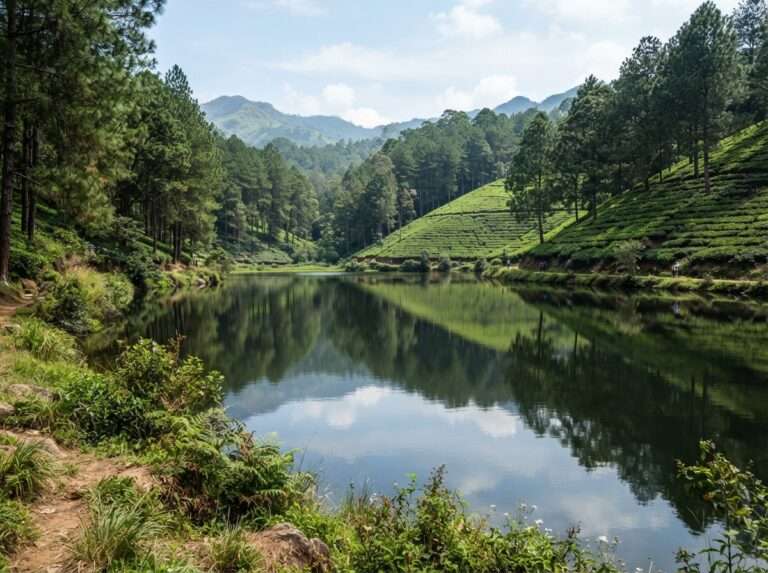
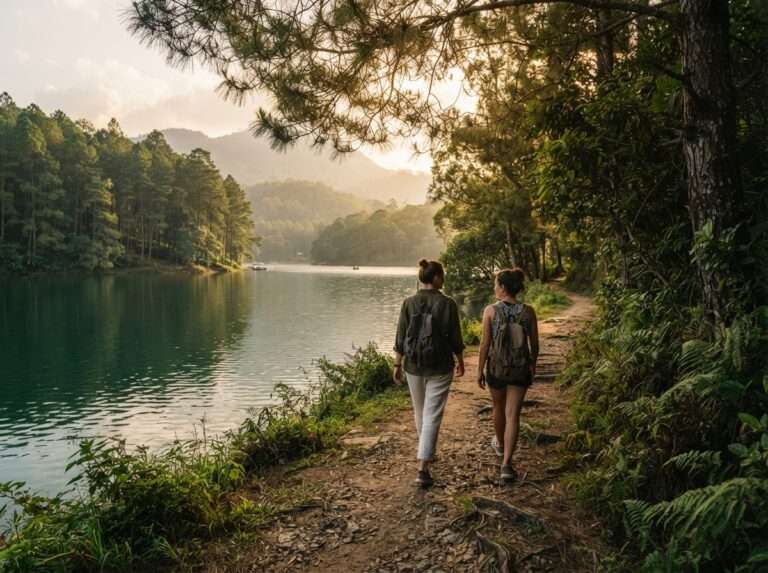
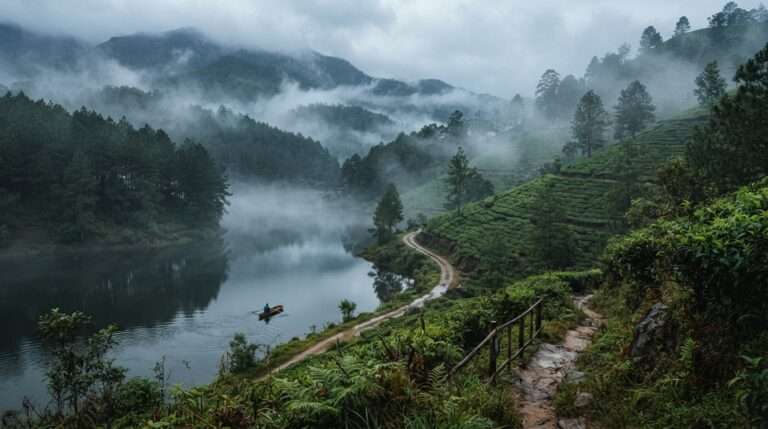
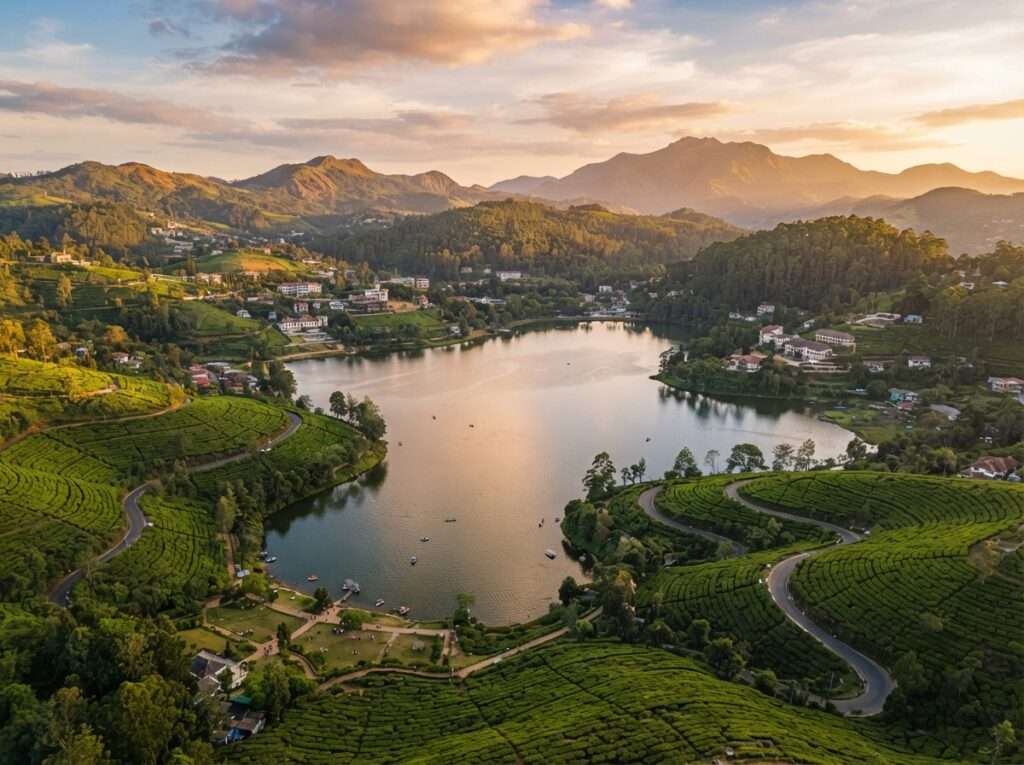
Sembuwatta is the island’s open secret, a small man-made lake fed by a natural spring high above Elkaduwa, near Matale. Hemmed in by pine forest and tea slopes, its water is clear and mirror-still, and the whole setting has made it a favourite with photographers and young Sri Lankans on a weekend run from Kandy. You can take a short pedal-boat turn, picnic on the grass, or just sit in the cool air and watch the mist move over the hills. It is our pick for the prettiest lesser-known lake in the country.
| Where | Above Elkaduwa, near Matale in the central hills |
| Best time | March to May for clear hill weather |
| Known for | A spring-fed mirror lake, pine forest, photography |
09
Beira Lake, Colombo
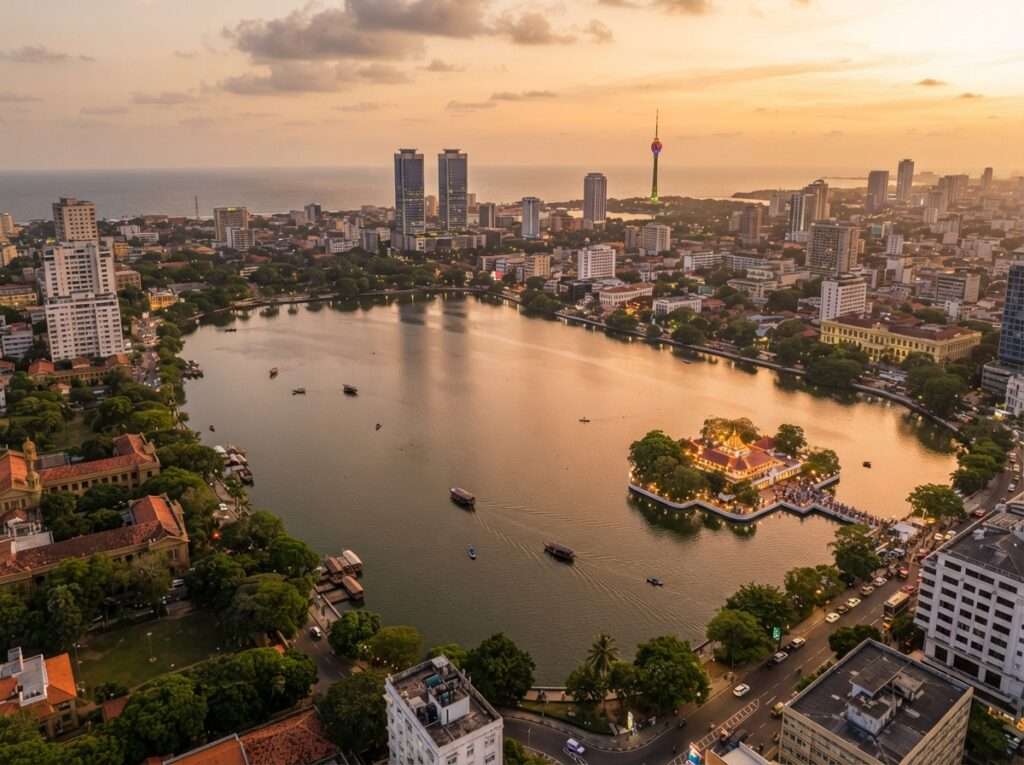
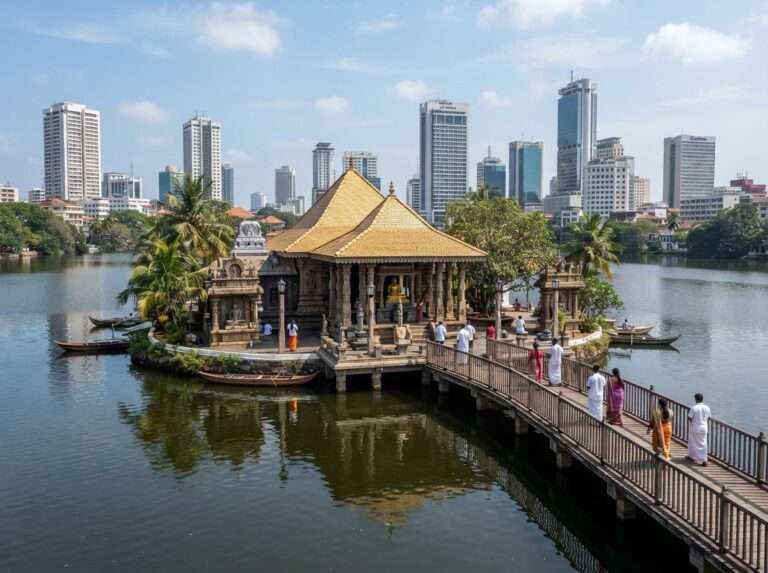
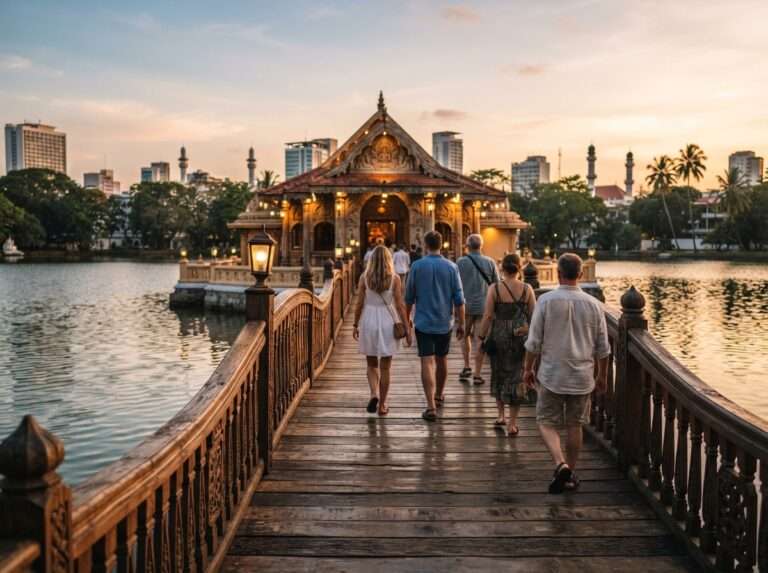
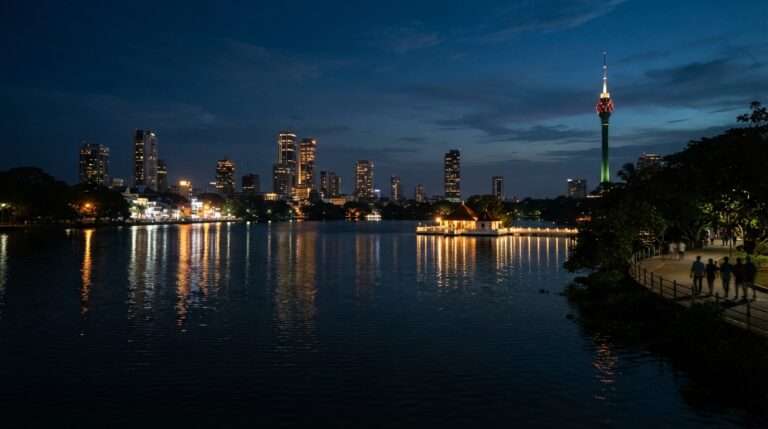
Beira is the lake in the middle of the city. Once far larger, it has shrunk over the past century as Colombo grew around it, but it remains a working part of the capital’s life, with office towers on one side and, on a small island at its centre, the serene Seema Malaka meditation pavilion linked to the Gangaramaya temple. You can take a swan pedal boat out, watch cormorants dry their wings on the old wooden posts, or simply walk the promenade at dusk when the city lights hit the water. It is the easiest lake to fit into a Colombo afternoon.
| Where | In central Colombo |
| Best time | December to March, late afternoon |
| Known for | The Seema Malaka temple pavilion, city boating |
10
Kala Wewa, Kekirawa
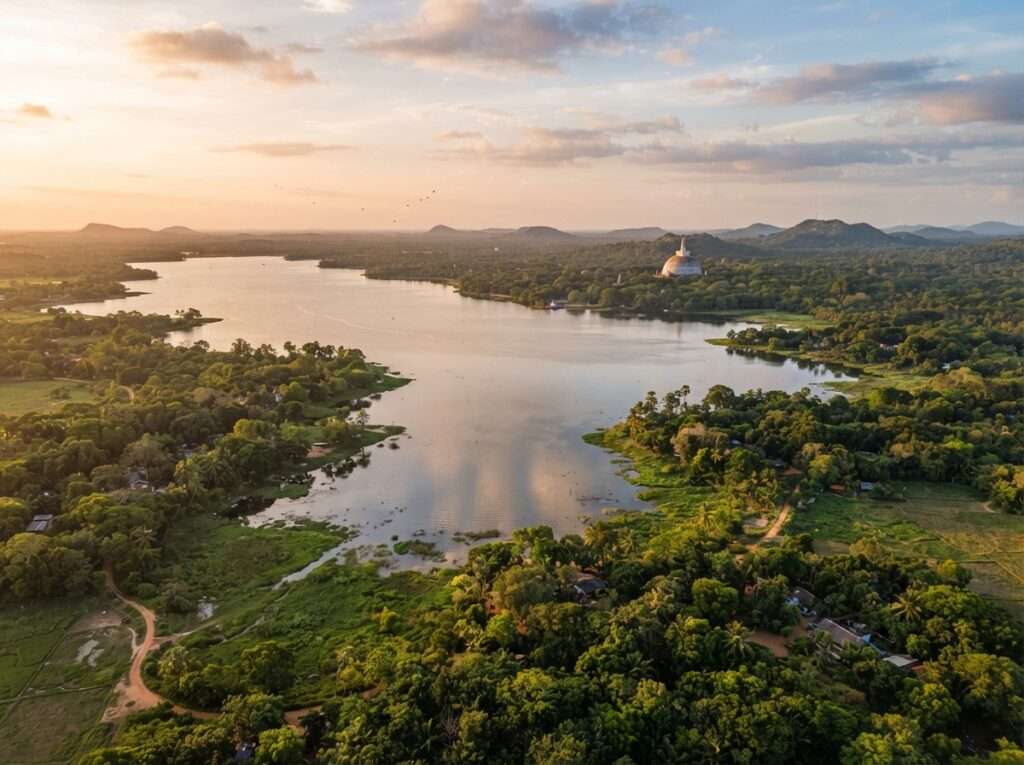
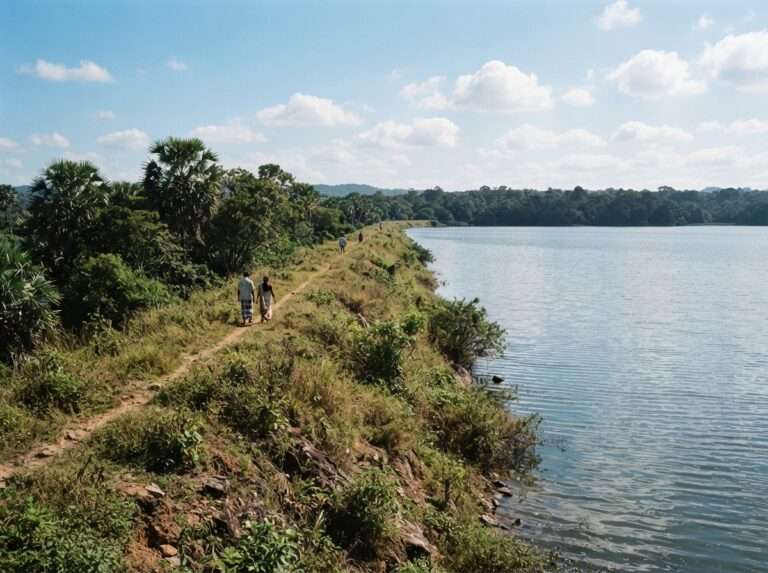
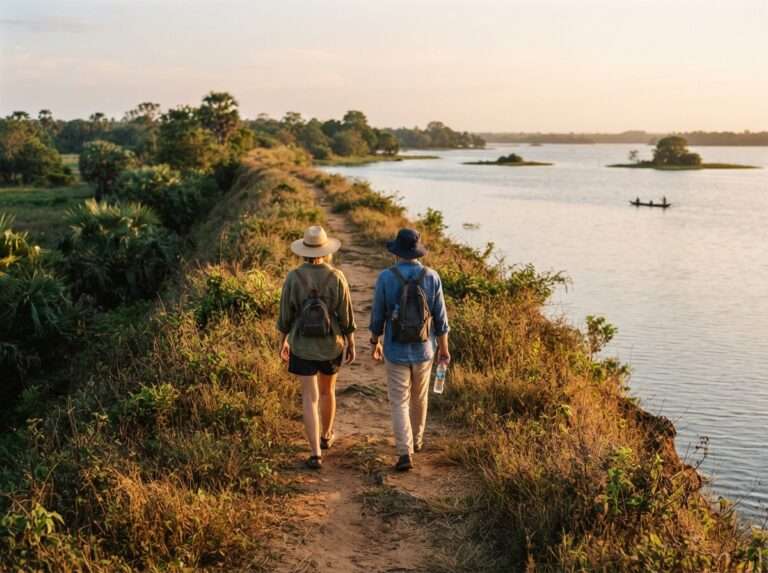
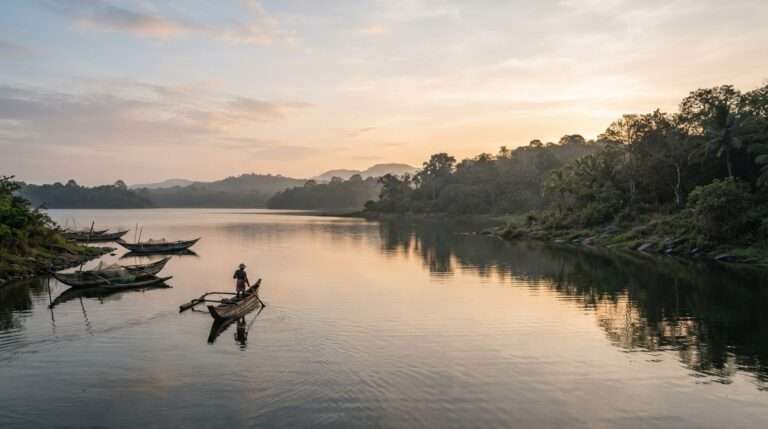
Kala Wewa closes the list with pure ancient engineering. King Dhatusena built this reservoir in the fifth century AD, and from it he cut the Jaya Ganga, a canal that runs nearly 90 kilometres to the old capital of Anuradhapura on a famously gentle gradient. The tank holds around 123 million cubic metres and is often loosely called the country’s largest lake, which is why the debate over the real largest is worth having. Nearby stands the Avukana Buddha, a towering rock-cut statue from the same era, so history travellers can pair the two in a single morning.
| Where | Near Kekirawa, between Dambulla and Anuradhapura |
| Best time | May to September, early morning or late afternoon |
| Known for | An ancient reservoir, the Jaya Ganga canal, the Avukana Buddha |
How many lakes does Sri Lanka have?
Sri Lanka has very few natural lakes but thousands of man-made ones. Around 18,000 tanks survive across the island today, down from an estimated 30,000 in ancient times, and somewhere between 10,000 and 14,000 of them are still in active use for irrigation. Most cluster in the dry northern and eastern lowlands, where kings from the third century BC onward built them to catch and store the monsoon. That 2,500-year-old network gives Sri Lanka one of the highest densities of man-made reservoirs anywhere on earth, which is why nearly every lake in this guide, apart from Bolgoda, is really a tank.
Lakes in and around Colombo
If you are based in the capital, three lakes are within easy reach. Beira sits in the city centre, with the Seema Malaka temple on its water. Diyawanna Lake wraps around the Parliament complex at Sri Jayawardenepura Kotte, a green, bird-rich stretch popular for evening walks and paddle boats. And Bolgoda, the largest natural lake, is a short drive south for a proper half-day on the water.
For the full city, see our guide to places to visit in Colombo.
Best time to visit the lakes in Sri Lanka
The right month depends on which lakes you are chasing. The cultural-triangle tanks, Parakrama Samudra, Minneriya, Kandalama and Kala Wewa, are at their best from May to September, the dry season in the north-central zone, which is also when the Minneriya elephant gathering peaks. The hill lakes, Gregory and Sembuwatta, are clearest and coolest from March to May. Colombo and the west coast, so Beira and Bolgoda, are driest from December to March. Whichever you choose, start early: the water is calmest and the birdlife most active before mid-morning.
For the full picture, check our guide to the best time to visit Sri Lanka.
Planning a lakes trip in Sri Lanka
String a few of these together and you have a trip in itself: Gregory and Sembuwatta in the hills, Kandy Lake in the old capital, then the great tanks of Polonnaruwa, Minneriya and Kala Wewa across the cultural triangle. Add Bolgoda or Beira if you are starting in Colombo.
When you want it built into one smooth route with transport and guides sorted, our Sri Lanka tour packages can fold the lakes, the ancient cities and the hill country into a single itinerary.
FAQs
Lakes In Sri Lanka: Frequently Asked Questions
Quick answers on the largest lake, how many there are, and when to go
It depends on how you measure it. By water capacity, the largest is Senanayake Samudraya, the reservoir behind the Gal Oya dam, which holds about 950 million cubic metres and was completed in 1953. By surface area among natural lakes, the largest is Bolgoda, just south of Colombo. The biggest of the ancient reservoirs by area is Parakrama Samudra in Polonnaruwa. Because Sri Lanka has almost no natural lakes, these man-made tanks hold the records.
The biggest natural lake by area is Bolgoda Lake, a sprawling freshwater lake of around 15 square kilometres south of Colombo. Among the ancient reservoirs, Parakrama Samudra in Polonnaruwa is the largest by surface area at about 22.6 square kilometres. Kala Wewa near Anuradhapura is also often cited as one of the largest. Which one counts as biggest really comes down to whether you mean a natural lake or a man-made tank.
Sri Lanka has very few natural lakes but a huge number of man-made tanks built for irrigation. Around 18,000 tanks survive today, down from an estimated 30,000 in ancient times, and between 10,000 and 14,000 of them are still in active use. Most sit in the dry northern and eastern lowlands. This network, started more than 2,000 years ago, gives the island one of the highest densities of man-made reservoirs in the world.
Hardly any. Nearly every large body of water in Sri Lanka is a man-made reservoir, or tank, built to store monsoon rain for farming. The main exception is Bolgoda Lake near Colombo, which is widely regarded as the country's largest natural lake. Everything else on a typical lakes list, from Kandy Lake to Parakrama Samudra, is a human-built tank or reservoir, which is part of what makes Sri Lanka's water landscape so unusual.
Gregory Lake in Nuwara Eliya is the most popular for its cool hill setting and easy boating, while Sembuwatta Lake near Elkaduwa is the quiet favourite of photographers for its mirror-still, spring-fed water and pine-forest surroundings. For history and scale, Parakrama Samudra in Polonnaruwa is hard to beat at sunset. The most beautiful one really depends on whether you are after hill scenery, calm reflections or an ancient inland sea.
The best place is Minneriya Tank, in Minneriya National Park near Habarana. In the dry months, roughly August and September, the tank recedes and hundreds of wild elephants gather to graze on the fresh grass, a spectacle known as the Gathering. A jeep safari takes you close to the herds along the shoreline. In some recent years the elephants have shifted to the nearby Kaudulla tank, so ask locally about where the Gathering is strongest when you visit.
Three lakes are easy to reach from Colombo. Beira Lake sits in the city centre and is home to the Seema Malaka temple pavilion on a small island. Diyawanna Lake surrounds the Parliament complex at Sri Jayawardenepura Kotte and is popular for evening walks and paddle boats. Bolgoda Lake, the largest natural lake in the country, is a short drive south and good for a half-day of kayaking or a boat cruise.
It varies by region. The cultural-triangle tanks such as Parakrama Samudra, Minneriya and Kala Wewa are best from May to September, which is also when the Minneriya elephant gathering peaks. The hill lakes, Gregory and Sembuwatta, are clearest from March to May. Colombo's lakes, including Beira and Bolgoda, are driest from December to March. Across the board, early morning gives you the calmest water and the most active birdlife.