4D / 3N
24% OFF
Best Selling Alleppey-Munnar Kerala Weekend Tour
- Hotel
- Meals
- Sightseeing
- Houseboat
- Cab Transfer
₹17,132
₹13,020 /pp
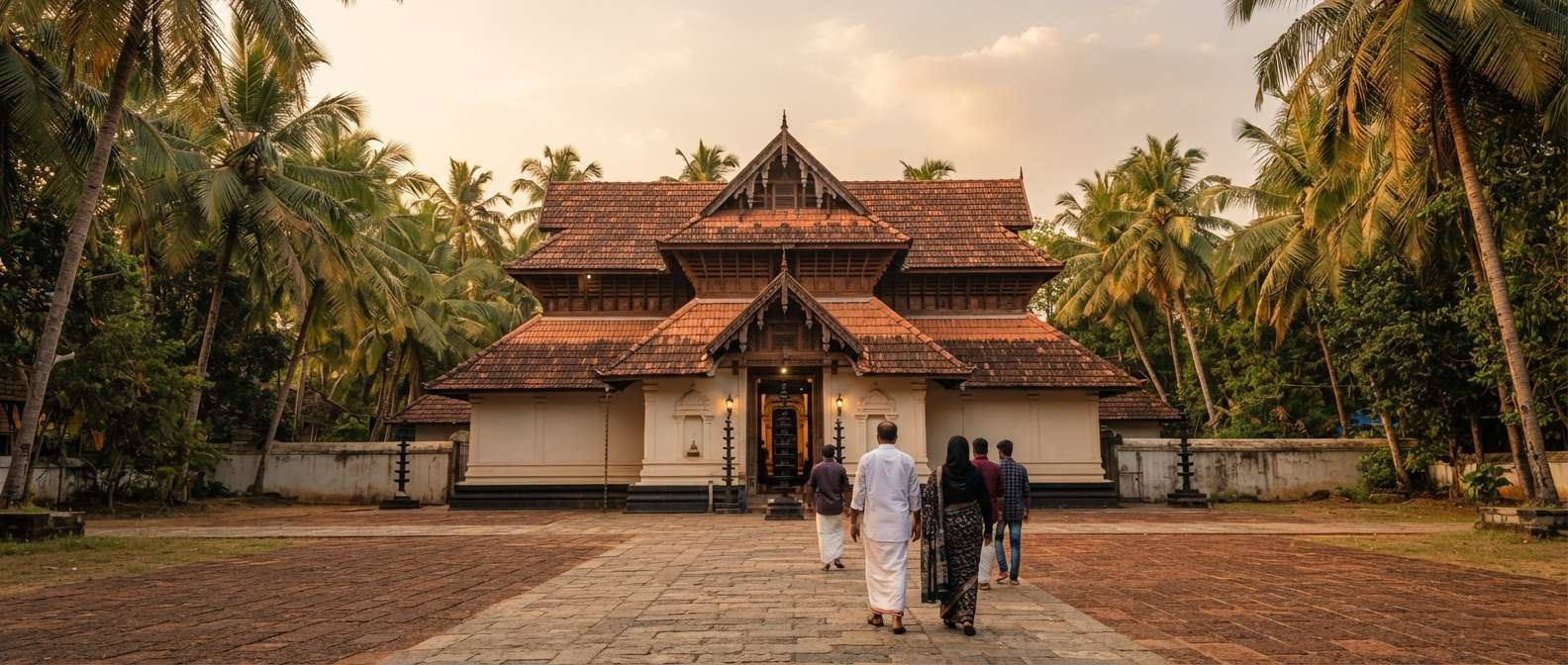


The biggest mosque in Kerala is Jamiul Futuh, the Indian Grand Masjid near Kozhikode, which opened in 2022 and holds about 25,000 worshippers. The oldest, by a tradition that goes back 1,400 years, is Cheraman Juma Masjid at Kodungallur, dated to 629 CE. Between those two lies a line of mosques you will not find anywhere else in India. Some are timber buildings with sloping tiled roofs that look like temples, some are Sufi shrines where Hindu pilgrims pray beside Muslims, and one is the mosque every Sabarimala pilgrim walks through.
This list covers the 15 famous mosques in Kerala worth a journey, from Thiruvananthapuram in the south to Kasaragod in the north. For each one you get the history, what to look at, who may go inside, and how to reach it. Muslims make up about a quarter of Kerala’s people, so a mosque visit here is as much a look at daily life on the Malabar coast as it is a heritage stop.
Use this table to compare all 15 mosques in one view. The visitors column is the rule most people ask about, and it changes from mosque to mosque.
| Mosque | Town, district | Built | Known for | Non-Muslim visitors |
|---|---|---|---|---|
| Jamiul Futuh | Kaithapoyil, Kozhikode | 2022 | Biggest mosque in Kerala, about 25,000 | Ask at the gate |
| Cheraman Juma Masjid | Kodungallur, Thrissur | Trad. 629 CE | Oldest mosque tradition in India | Yes, compound |
| Beemapally Dargah | Thiruvananthapuram | 20th c. building | Pink domes, Beema Beevi shrine, Uroos | Yes |
| Ponnani Valiya Juma Masjid | Ponnani, Malappuram | Early 16th c. | The Mecca of Kerala, Makhdoom scholars | Ask the office |
| Malappuram Valiya Juma Masjid | Malappuram | Centuries old | Shuhada tombs, Malappuram Nercha | Ask the committee |
| Kolloorvila Juma Masjid | Pallimukku, Kollam | Modern | Big mahallu mosque on the Kollam highway | Ask the committee |
| Palayam Juma Masjid | Thiruvananthapuram | 1813, rebuilt 1967 | Shares a crossroads with a temple and a church | Ask the office |
| Mishkal Palli | Kuttichira, Kozhikode | 14th c. | Four-storey timber mosque, 1510 fire | Exterior, ask to enter |
| Madayi Palli | Pazhayangadi, Kannur | By 1124 CE | Malik Dinar tradition, white marble | Ask the committee |
| Thazhathangady Juma Masjid | Kottayam | Trad. 824 CE | Finest wood carving in Kerala | Ask the committee |
| Malik Dinar Mosque | Thalangara, Kasaragod | Trad. 642 CE | Malik Dinar dargah, Uroos | Ask the committee |
| Odathil Palli | Thalassery, Kannur | 1806 | Temple-style copper roof, gold finials | No, view from outside |
| Kondotty Pazhayangadi | Kondotty, Malappuram | 18th c. | Sufi dargah, Kondotty Nercha | Yes, dargah |
| Mampuram Maqam | Tirurangadi, Malappuram | 19th c. | Mampuram Thangal’s tomb, Nercha | Yes, maqam |
| Vavar Palli | Erumeli, Kottayam | Centuries old | Sabarimala pilgrims’ stop | Yes |
15 historic masjids and Sufi shrines along the Kerala coast, with entry rules, festivals and how to reach each
Best Time
October - March
Select Package Type


5 Days & 4 Nights
₹24,604 /@pp
GET FREE QUOTEThe list opens with the two superlatives, the biggest and the oldest, then runs through the rest roughly by fame. After it come the biggest, oldest and most beautiful mosques, architecture, the festival calendar, visiting rules, a 6-day mosque trail and food nearby.
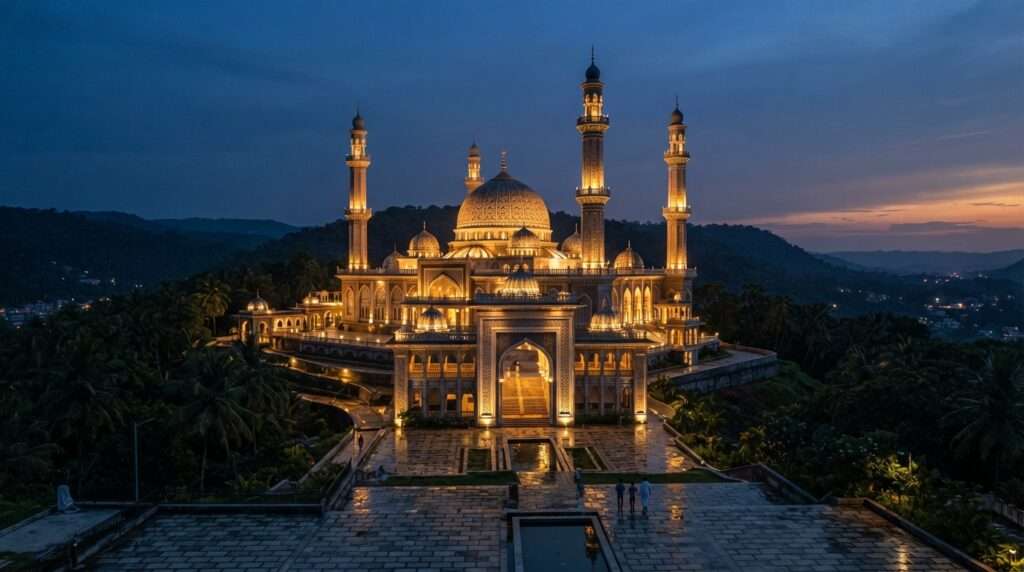
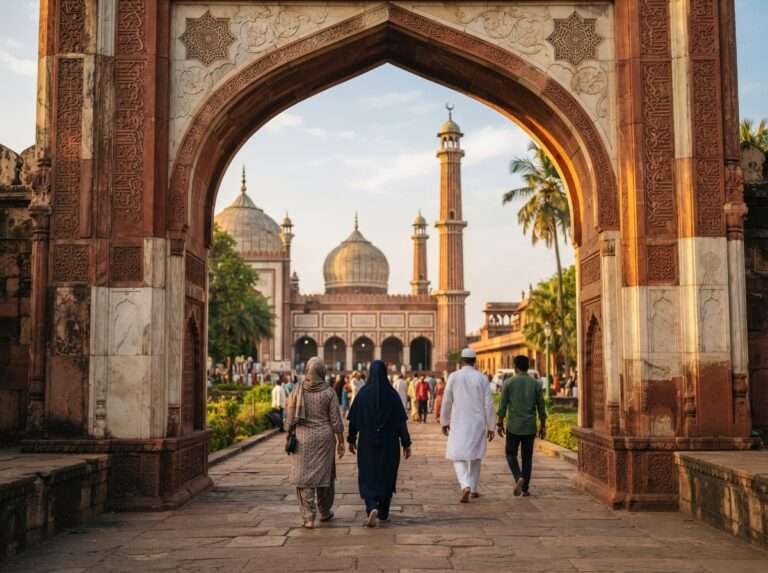
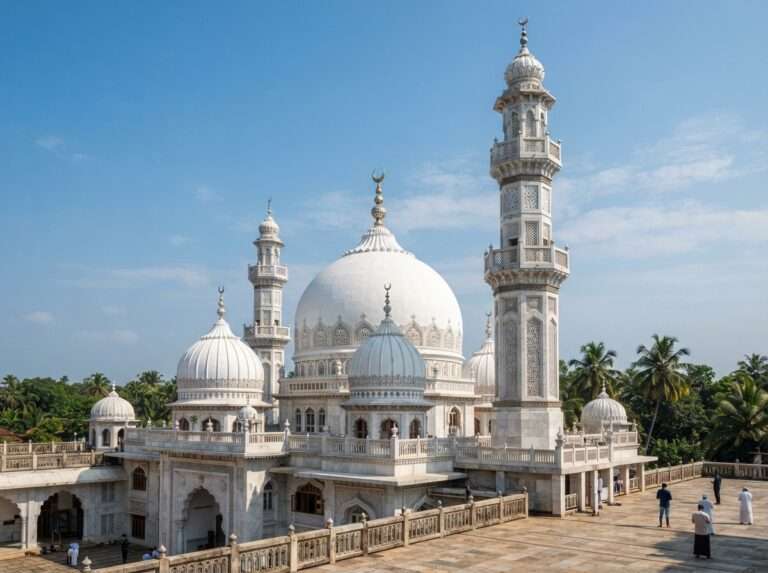
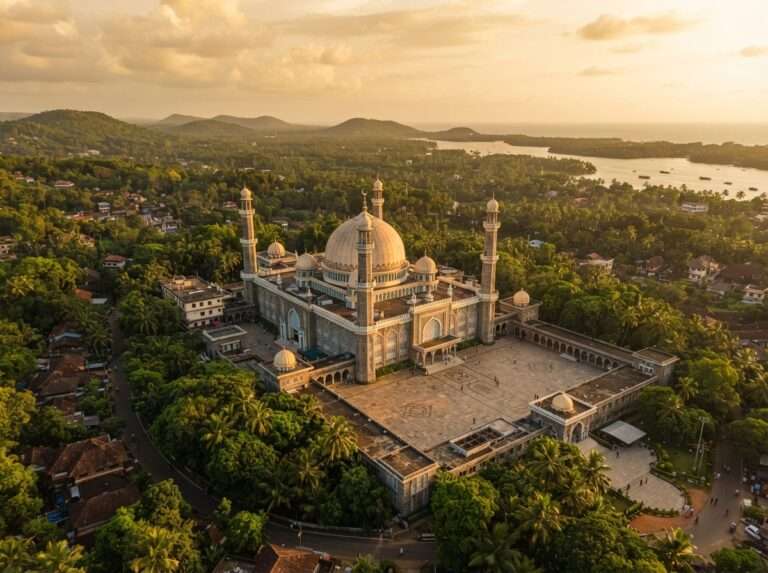
Jamiul Futuh is the biggest mosque in Kerala and, by its builders’ own description, the largest masjid in India. It opened in September 2022 inside Markaz Knowledge City at Kaithapoyil, about 40 to 45 km north-east of Kozhikode city on the road to Wayanad, and holds around 25,000 worshippers under one roof. Construction started in 2011 under Sheikh Abubakr Ahmad, the Grand Mufti of India, who founded the Markaz institutions.
Nothing about it looks like the timber mosques further down this list. The design, by architects Darvish Kareem and Ahammed Aflah, follows the Indo-Saracenic revival style and borrows from Mughal, Ottoman and Moroccan buildings. There are 17 domes, five minarets, four named gates (Mecca, Madina, Yamani and Shami) and a rooftop garden planted with hundreds of trees. The complex also houses a research library, a heritage museum and the office of the Grand Mufti. It is the answer to both “biggest mosque in Kerala” and “new masjid in Kerala”, and it is worth pairing with a day in Kozhikode.
| Built | Opened September 2022 |
| Capacity | About 25,000 worshippers |
| Visitors | Visitors of all faiths may see a designated area. Entry is free and visiting starts after 8 am |
| How to reach | About 40 km from Kozhikode railway station by road, via Thamarassery |
| Official site | jamiulfutuh.com |


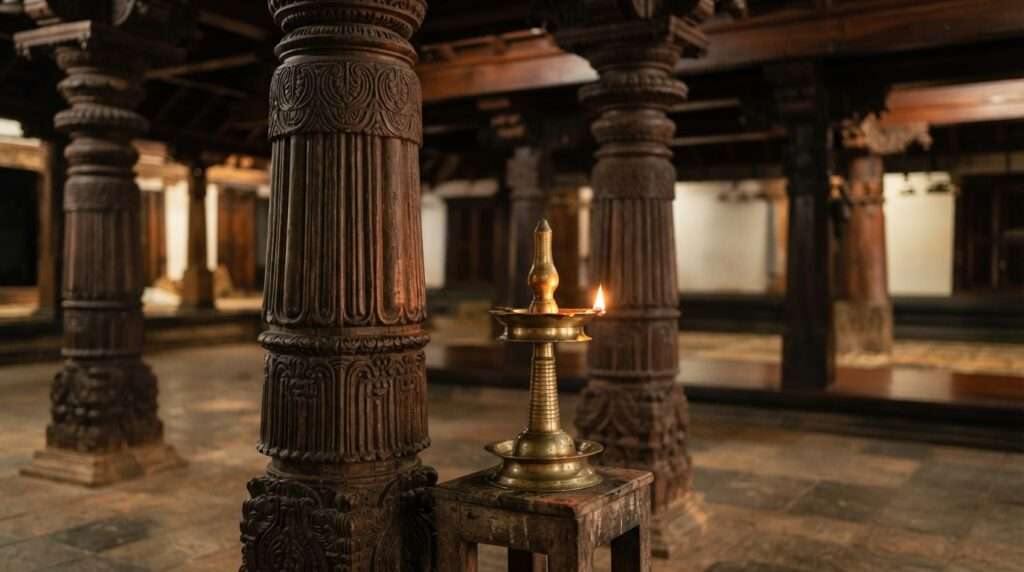
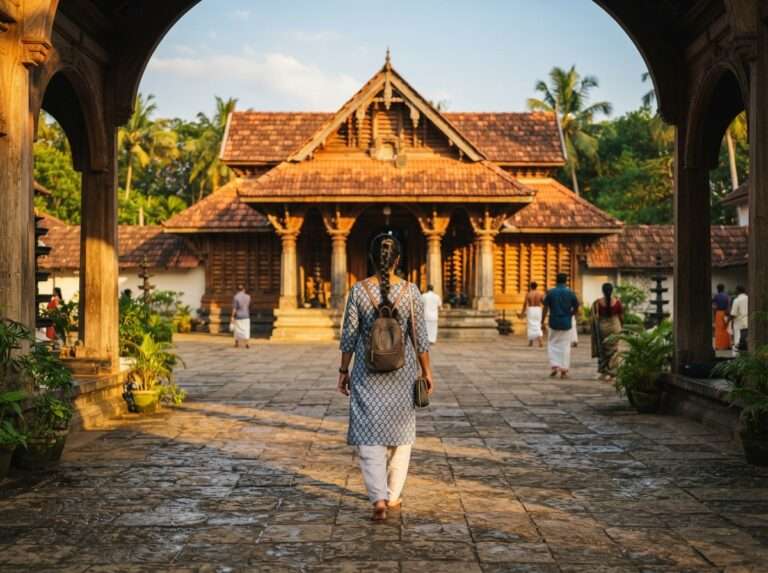
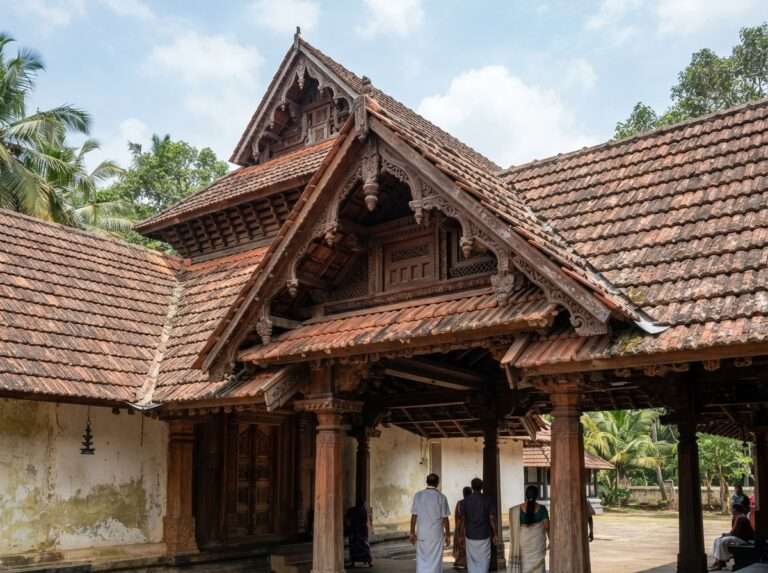
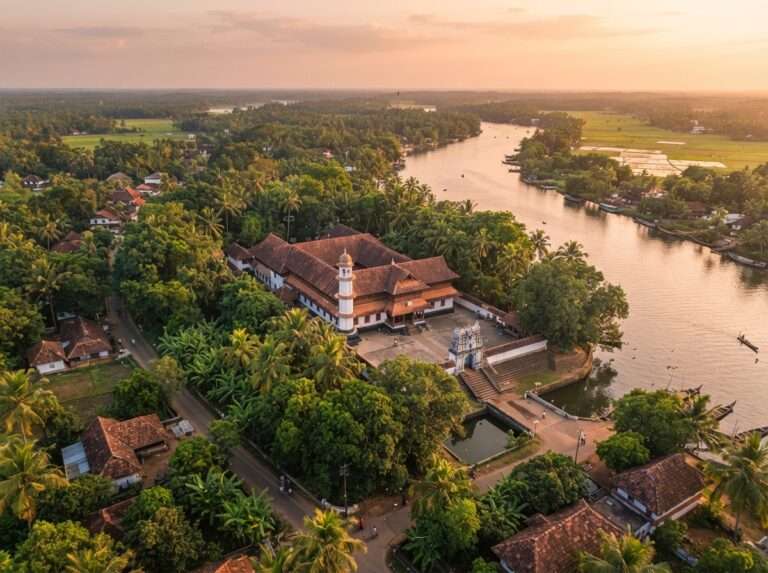
Cheraman Juma Masjid is the oldest mosque in Kerala by tradition and is widely described as the first mosque in India. Kerala’s Muslims date it to 629 CE, in the Prophet’s lifetime. The story goes that the Chera king Cheraman Perumal sailed to Arabia, embraced Islam and died there before he could return, and that the Arab missionary Malik Dinar and his companions carried the king’s letters back to Kodungallur and built the mosque. Historians debate the date, and parts of the present building were rebuilt in 1568.
The mosque went through a restoration of about 30 months (2019 to 2021) under the state’s Muziris Heritage Project. The work removed the concrete additions of the late 20th century and brought back the sloping Kerala roof, timber pillars and the brass lamp that has burned in the prayer hall for centuries. Non-Muslim visitors are welcome in the compound, and many local Hindu families bring their children here for Vidyarambham, the first lesson in letters, on Vijayadashami. Plan a half day with our Kodungallur guide, which covers the Muziris sites nearby.
| Built | Traditionally 629 CE. Rebuilt 1568. Restored and reopened 2022 |
| Visitors | Non-Muslim visitors welcome in the compound. Women are not taken into the main prayer hall, so ask at the office |
| How to reach | About 20 km from Irinjalakuda station and about 38 km from Kochi airport |
| Nearby | Muziris Heritage sites, Kodungallur Bhagavathy Temple |


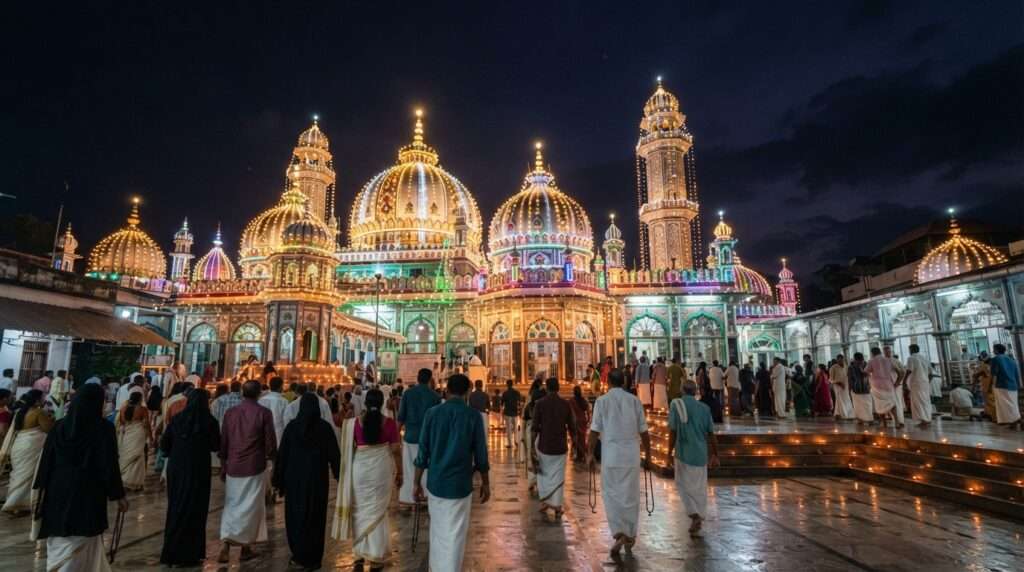
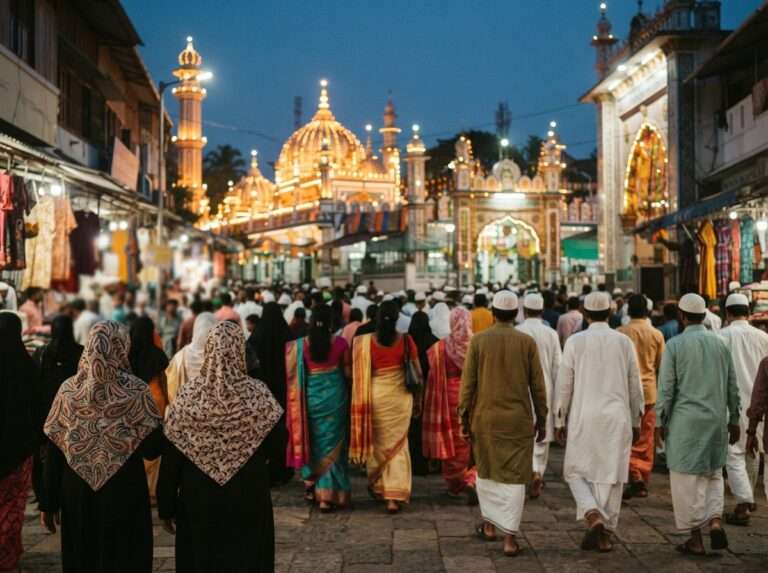
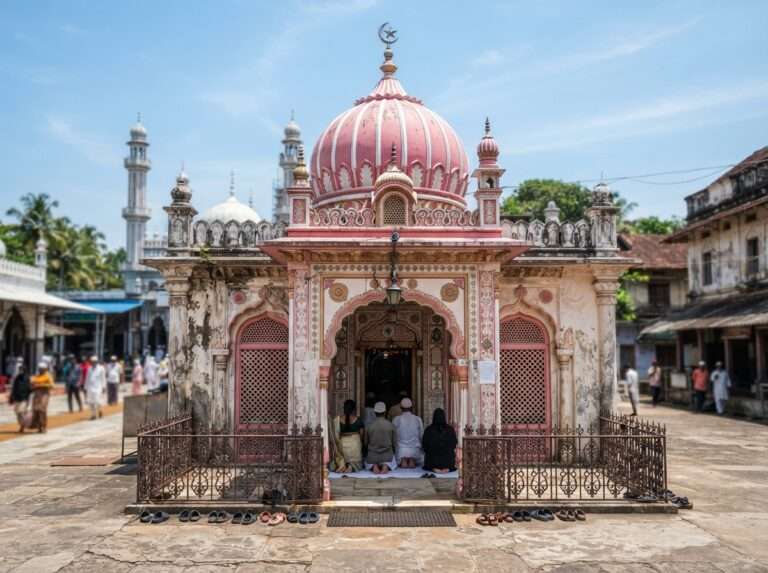
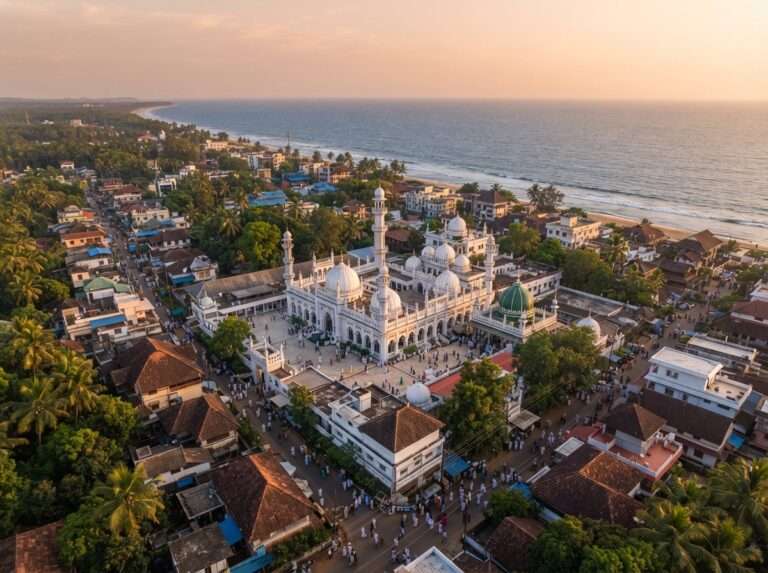
Beemapally is the pink-and-white domed shrine on the southern edge of Thiruvananthapuram, close to the sea near Poonthura. It holds the tombs of Syedunnisa Beema Beevi, believed to be of the Prophet’s family, and her son Syedu Shuhada Maheen Abubacker. People of every faith come here to pray for healing, and on an ordinary evening you will see as many women pilgrims as men.
The present building was designed by G. Gopalakrishnan, the architect behind more than 100 Kerala mosques, and its foundation stone was laid by M. Muhammad Ismail. The big event is the Beemapally Uroos, also called Chandanakudam, which begins on the first day of the Islamic month of Jumada al-Akhir and runs for about 11 days. Devotees carry pots smeared with sandal paste in procession, duffmuttu groups perform through the night and the festival closes with a procession of elephants and panchavadyam. Kerala Tourism lists it among the state’s main festivals.
| Built | Shrine centuries old. Present domed building 20th century |
| Visitors | Pilgrims of all faiths, men and women, visit the dargah |
| Festival | Uroos (Chandanakudam), from 1 Jumada al-Akhir, about ten days |
| How to reach | About 5 km from Thiruvananthapuram Central |


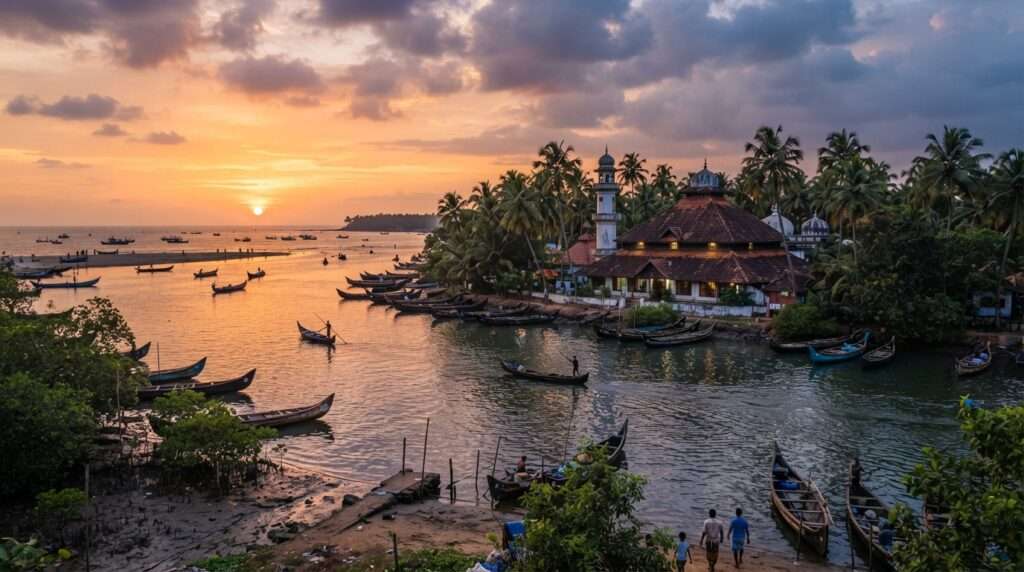
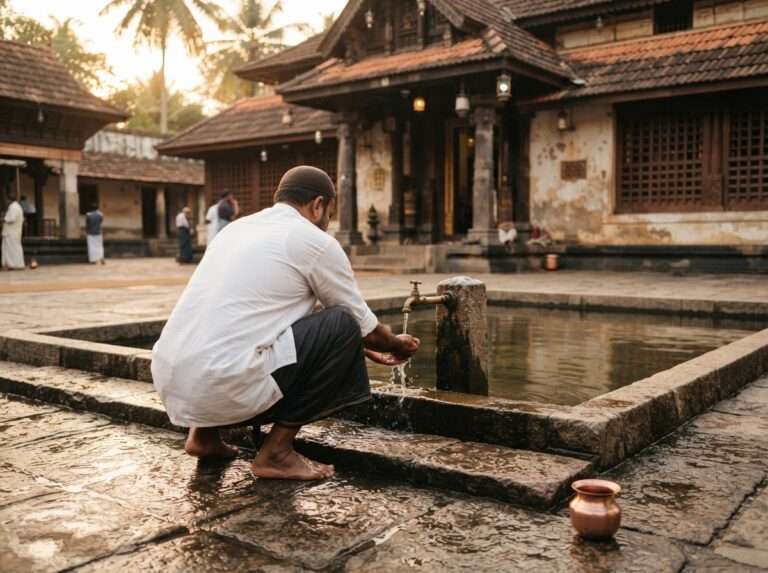
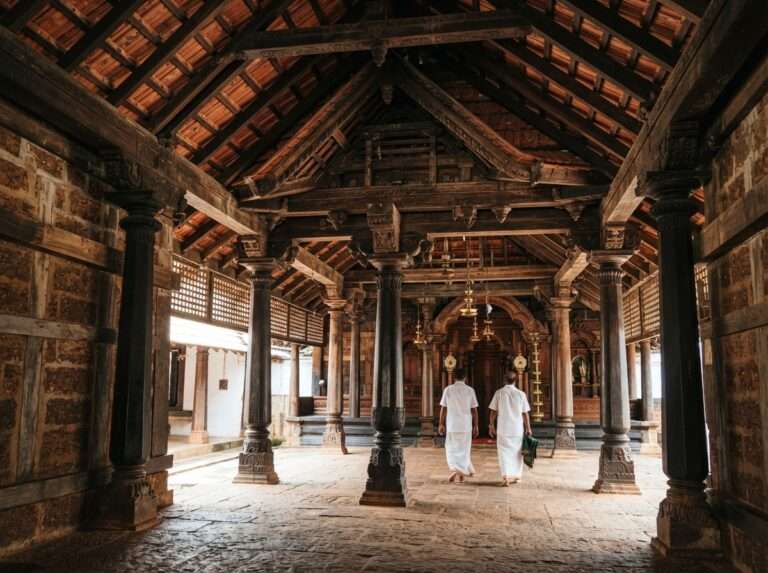
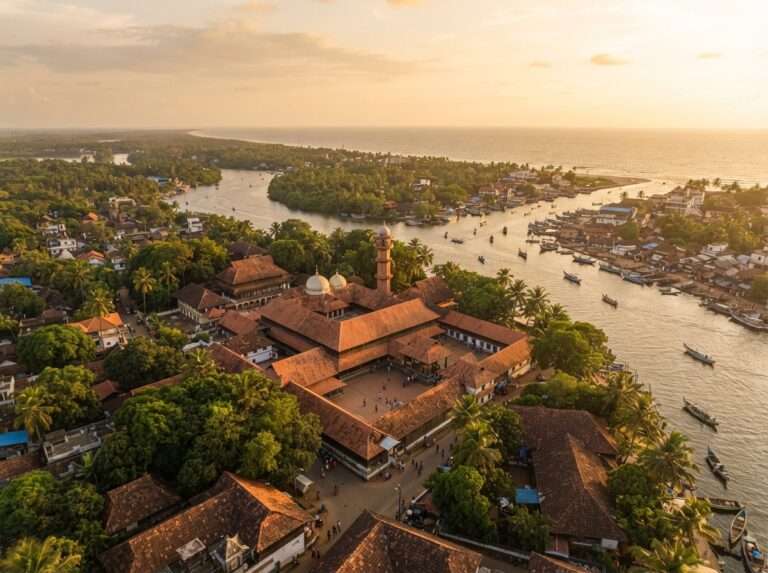
Ponnani is called the Mecca of Kerala, and this mosque is the reason. Sheikh Zainuddin Makhdoom I built it in the early 16th century (1510 by local account, 1518 to 1520 CE in other records), and for the next 400 years it ran one of the most respected centres of Islamic learning in South Asia. Students lived and studied inside the mosque in a system called the palli dars, and scholars came from as far as Java and East Africa. Its best-known custom is Vilakkathirikkal, sitting to study around the mosque’s great oil lamp, after which students earned the title of Musliyar.
His grandson Zainuddin Makhdoom II wrote Tuhfat ul-Mujahidin here in the 1580s, the first history of Kerala written by a Keralite and a record of the fight against the Portuguese. The building is a large timber-and-laterite structure with a tiled Kerala roof and a tank for ablutions. It sits near the Bharathapuzha estuary, so combine it with the Misri Masjid and the lighthouse on our Ponnani travel guide.
| Built | Early 16th century |
| Known for | Seat of the Makhdoom scholars, the Mecca of Kerala |
| Visitors | A working seminary. Visitors should ask the office before entering |
| How to reach | About 17 km from Kuttippuram station and 23 km from Tirur |
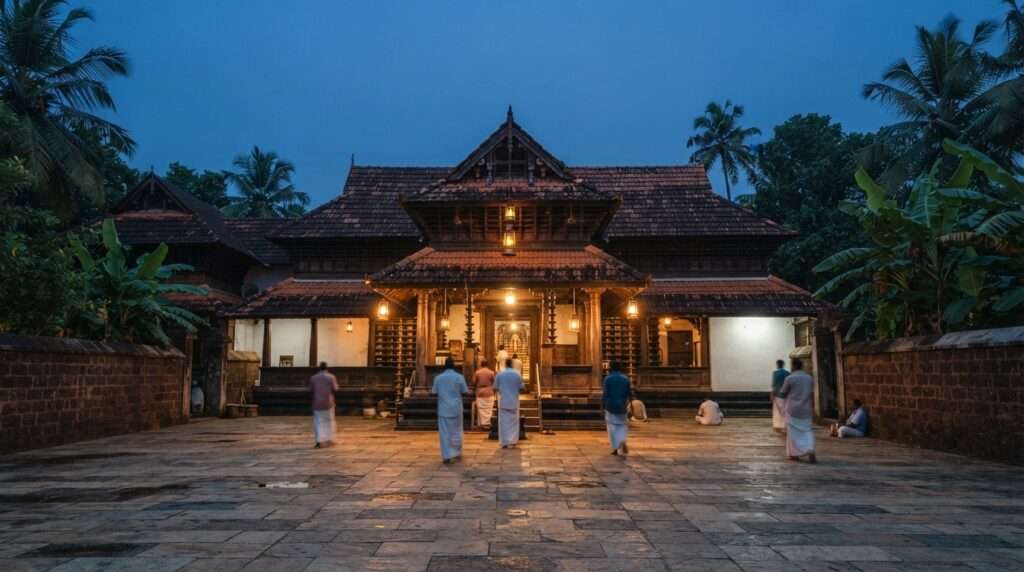
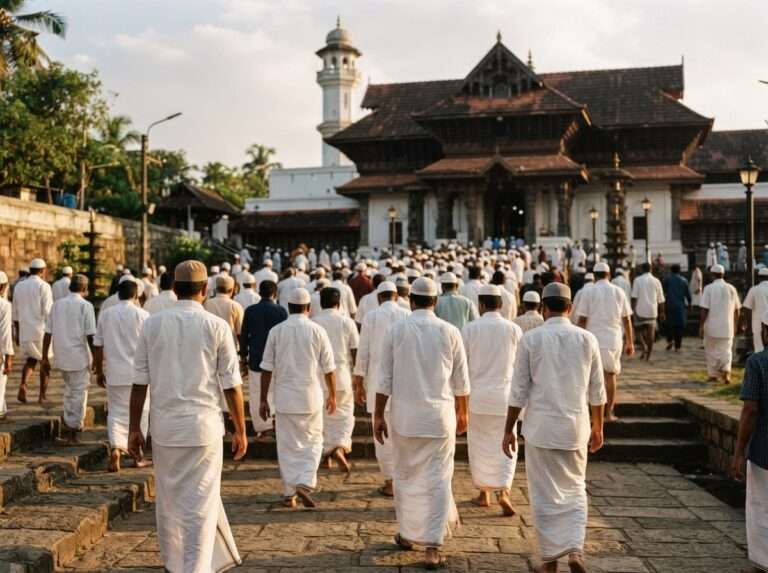
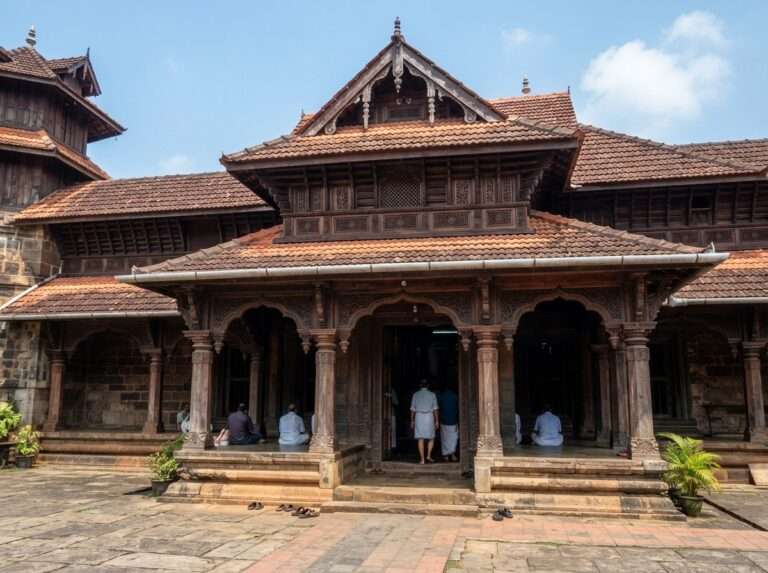
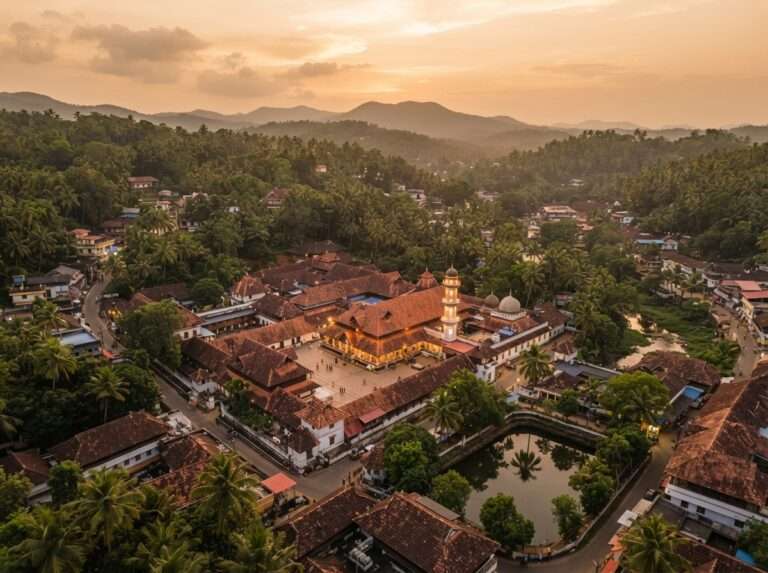
Malappuram Valiya Juma Masjid is the town’s main mosque and one of the largest traditional mosques in the Malabar region. Its compound holds the tombs of the Malappuram Shuhadas, the martyrs of an 18th-century battle, and the Malappuram Nercha held in their memory is one of the loudest, most crowded festivals in the district.
One of the 44 martyrs buried here is Kunhelu, a Hindu goldsmith who fought beside them. His descendants are still invited to the nercha, which has made this mosque one of Kerala’s best-known symbols of Hindu-Muslim friendship.
The district has the highest share of Muslims in Kerala, so a Friday here gives you a sense of how central the Juma masjid is to Malabar life. Shops pause, the lanes fill and the sermon carries over loudspeakers into the market. Visit on another weekday if you want to see the building quietly, then use our places to visit in Malappuram list to plan the rest of the day.
| Built | Centuries old, enlarged over time |
| Known for | Shuhada tombs and the Malappuram Nercha |
| Visitors | Ask the mahallu committee before entering the prayer hall |
| How to reach | About 30 km from Tirur station and 25 km from Kozhikode airport |
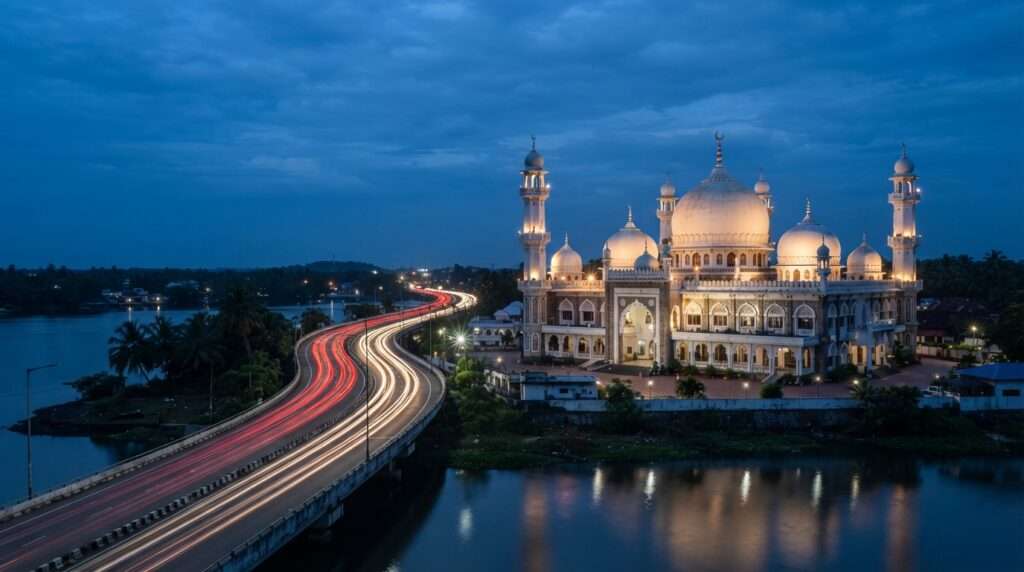
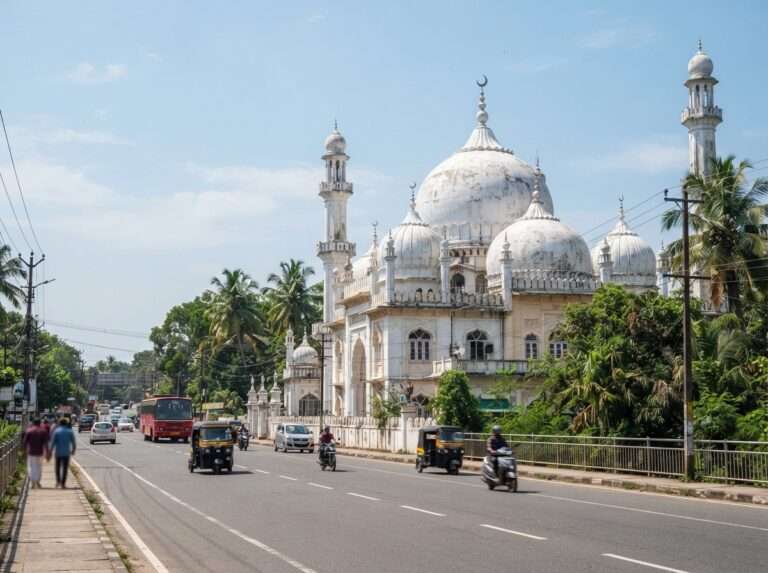
Kolloorvila Juma Masjid at Pallimukku is one of the big mahallu mosques of south Kerala. It stands on the Kollam to Thiruvananthapuram highway about 4 km from Kollam town, and its white domes are easy to spot from the road.
It is a working neighbourhood mosque rather than a heritage monument, so come for the scale and the Friday crowd rather than old carving. If you are driving the coast, it fits between Varkala and the Ashtamudi backwaters. See our list of places to visit in Kollam for the rest of the stop.
| Visitors | Ask the committee before entering the prayer hall |
| How to reach | About 4 km from Kollam Junction station |
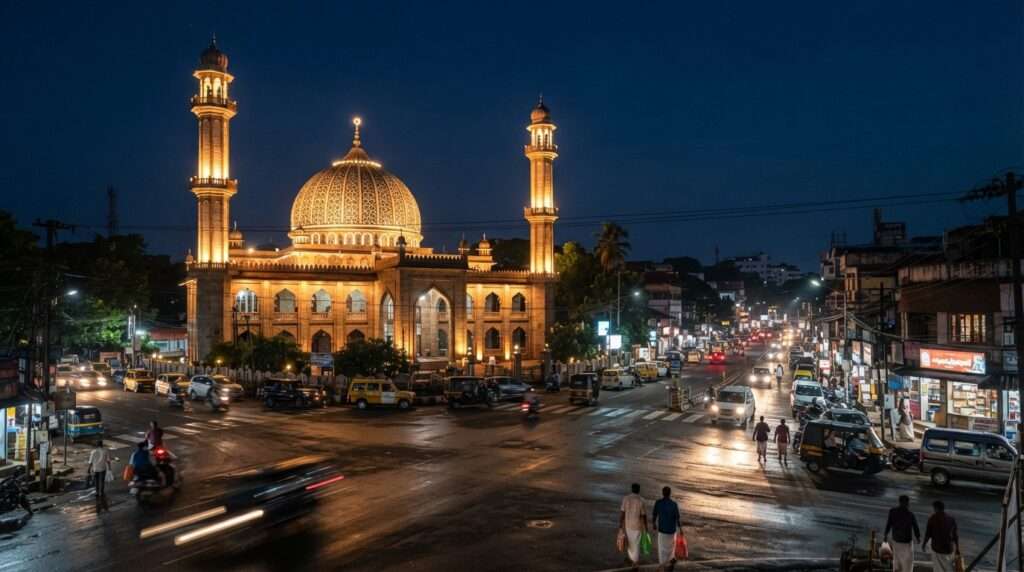
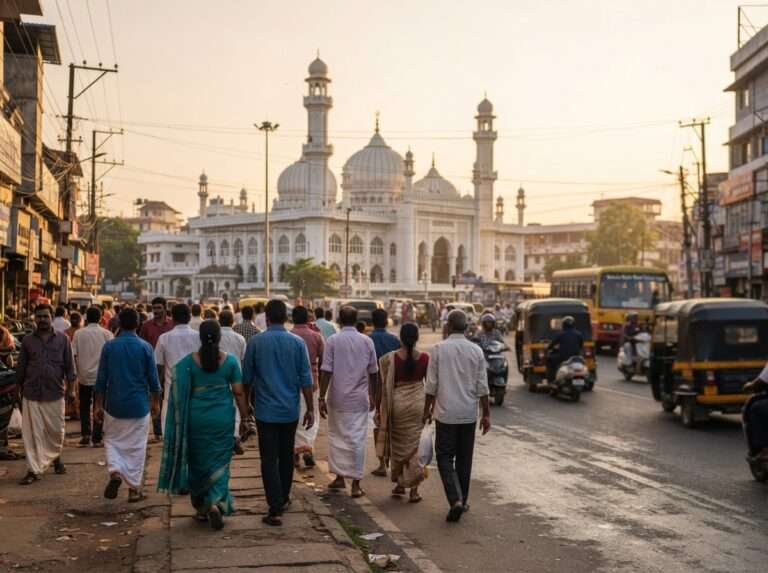
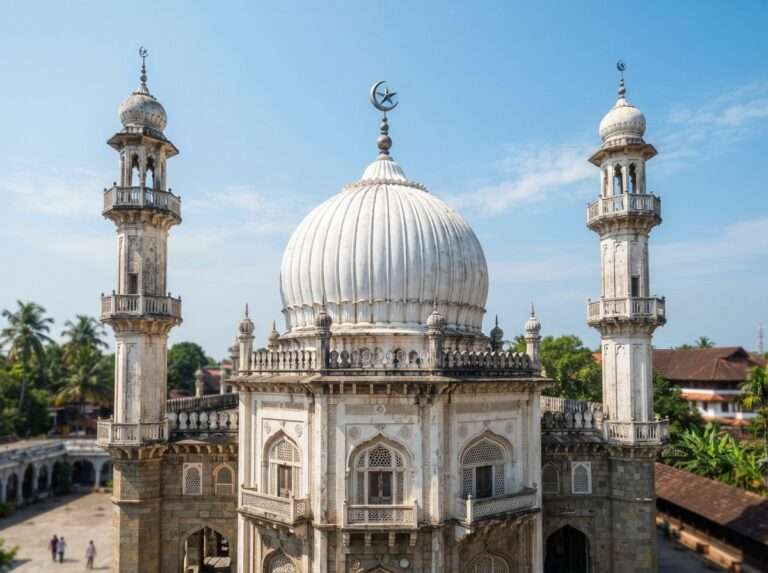
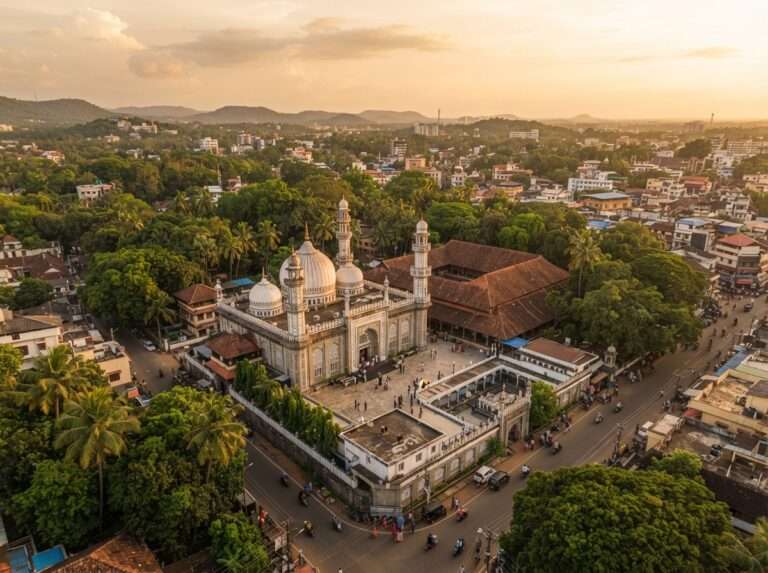
Palayam Juma Masjid began in 1813 as a small mosque for the Muslim soldiers of the British Indian regiment posted in the city, which is why older residents still call it the pattalappalli, the army mosque. The present building went up in the 1960s and was inaugurated in 1967 by President Zakir Husain. It holds about 2,000 worshippers under one dome and two minarets.
The mosque is famous for its neighbours. The Palayam Ganapathy temple, which shares a wall with the mosque, and St Joseph’s Cathedral are within a few steps of it, and the three have shared the same crossroads in the heart of the capital for generations. It is the easiest mosque on this list to visit, a short walk from the Secretariat and MG Road.
| Built | 1813. Present building inaugurated 1967 |
| Capacity | About 2,000 worshippers |
| Visitors | Ask at the office before entering |
| How to reach | About 2 km from Thiruvananthapuram Central |
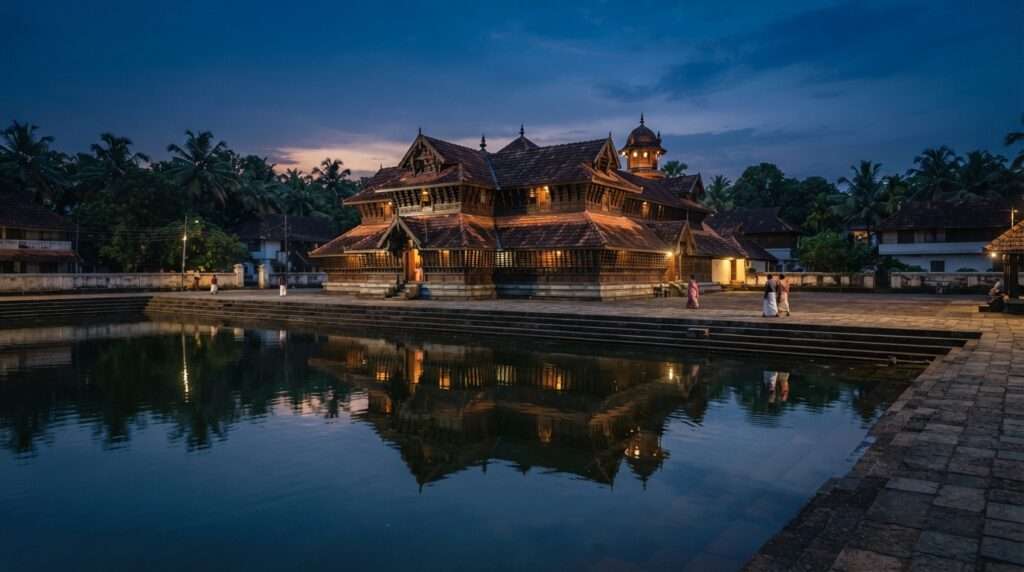
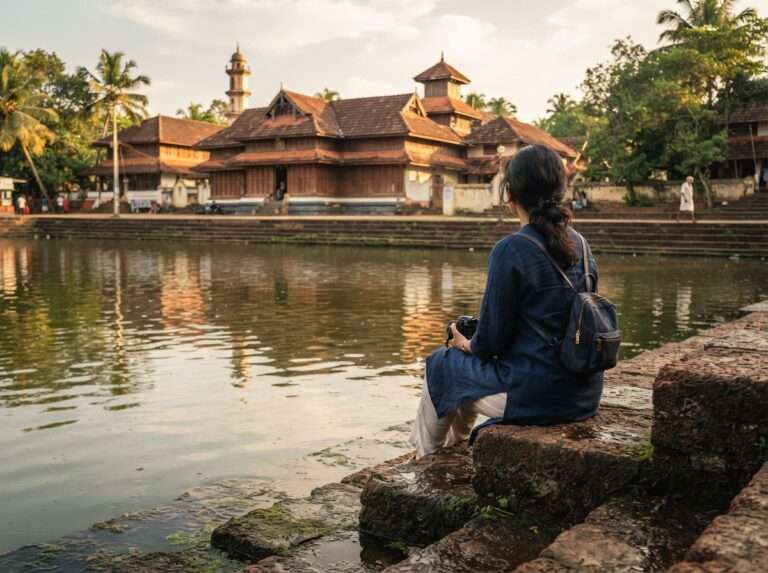
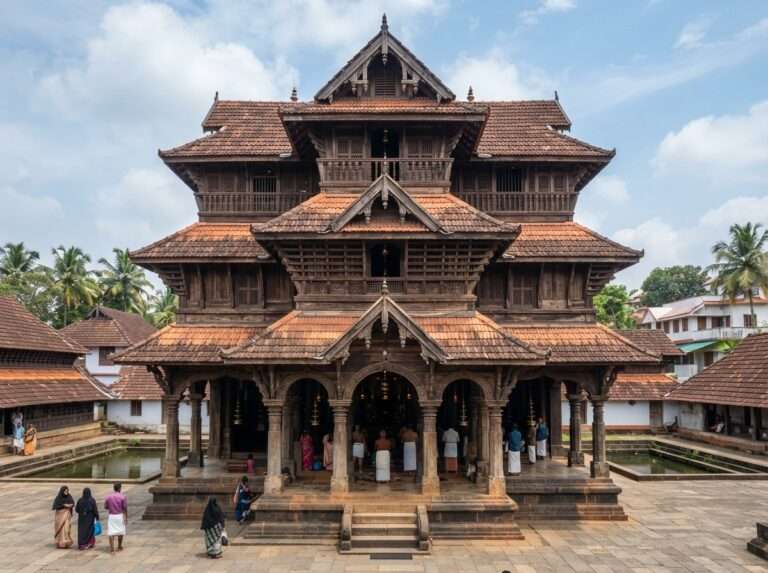
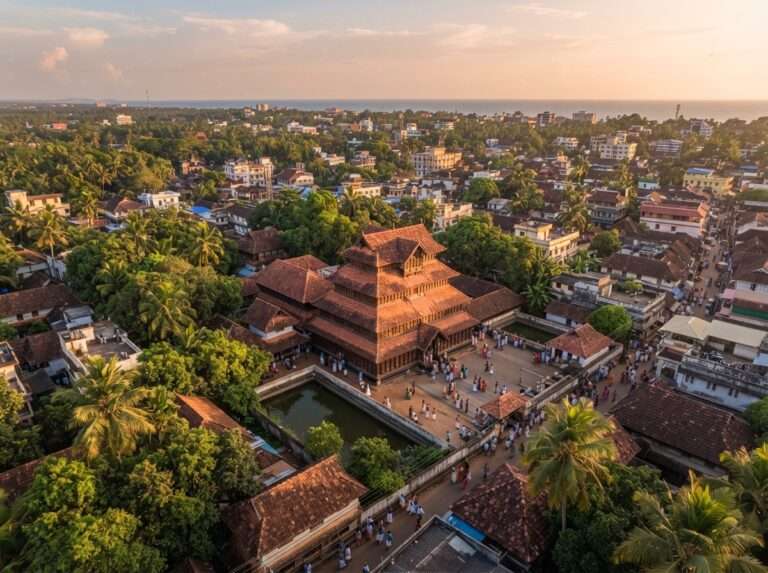
Mishkal Palli is the finest surviving example of the old Kerala mosque. The Arab merchant and shipowner Nakhuda Mishkal built it in the 14th century, and it stands four storeys high in timber, with 47 doors, 24 carved pillars and no dome or minaret at all. The prayer hall holds about 400 people.
In January 1510 the Portuguese under Albuquerque attacked Calicut and set the mosque on fire. The top floors still show the damage, and the building was rebuilt in 1578 to 1579 with one storey fewer than before. It faces the Kuttichira tank, and two more old mosques stand in the same quarter. The Kuttichira Juma Masjid is one, and the Muchundi Palli, with a 13th-century stone inscription recording a grant to it, is the other. Walk the three in an hour, then head to the rest of Calicut.
| Built | 14th century. Burned 1510, rebuilt 1578 to 1579 |
| Capacity | About 400 |
| Visitors | Exterior and courtyard for visitors. Ask before entering |
| How to reach | About 2 km from Kozhikode station |
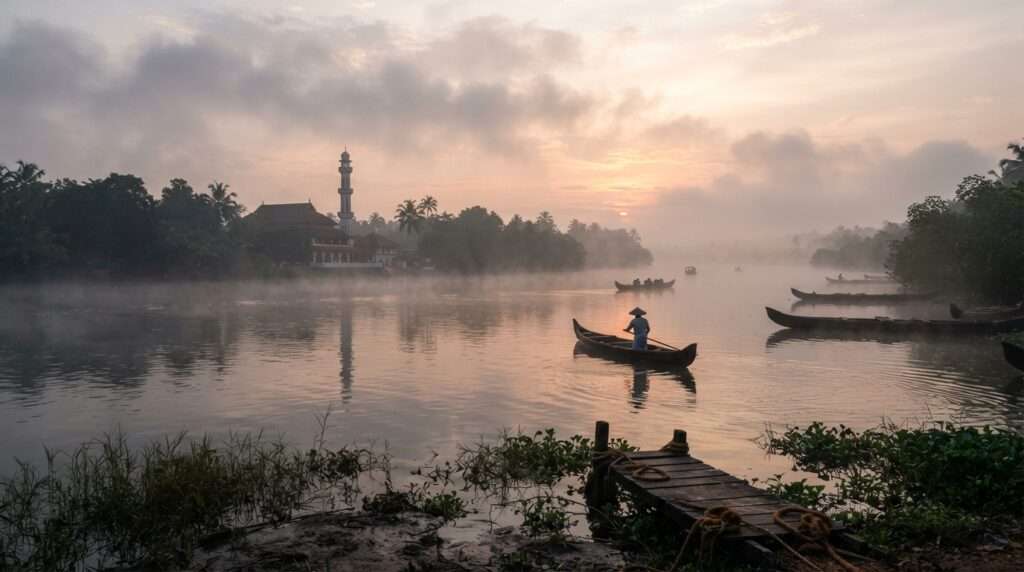
Madayi Palli stands on a low hill beside the Pazhayangadi river in Kannur, and local tradition counts it among the mosques founded by Malik Dinar’s party. The earliest documented date for the mosque is 518 AH, or 1124 to 1125 CE, which still makes it one of the oldest dated mosques in the state.
The mosque is best known for a block of white marble that tradition says Malik Dinar brought from Arabia. The old building was demolished in 2006 and replaced with a new Indo-Saracenic structure on the original foundations, keeping the old qibla wall and the first mimbar, so come for the history and the setting rather than old woodwork. Madayipara, the laterite plateau above it, is a good short walk in the green months.
| Built | Tradition links it to Malik Dinar. Documented by 1124 to 1125 CE |
| Visitors | Ask the committee before entering |
| How to reach | About 2 km from Pazhayangadi station |
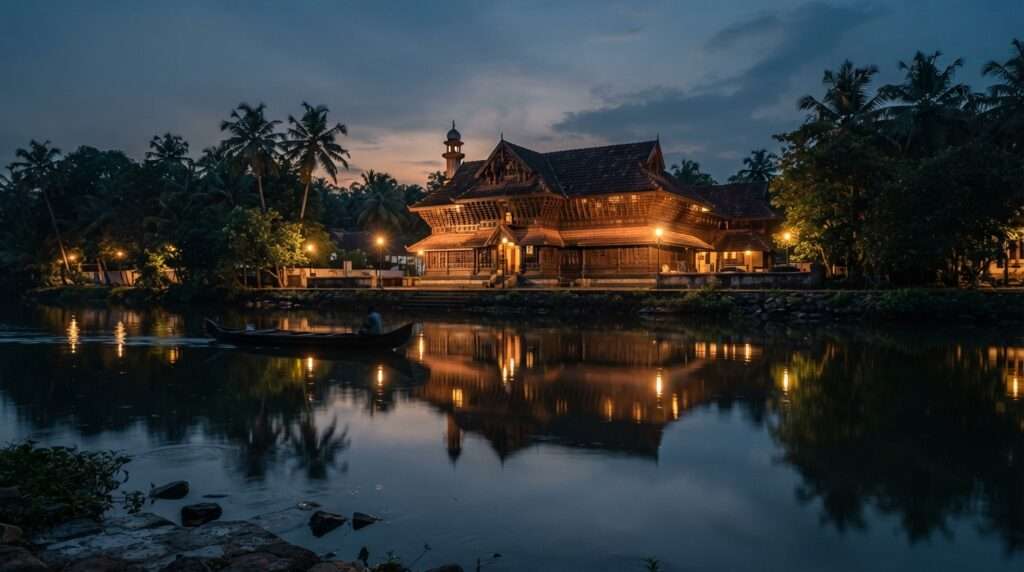
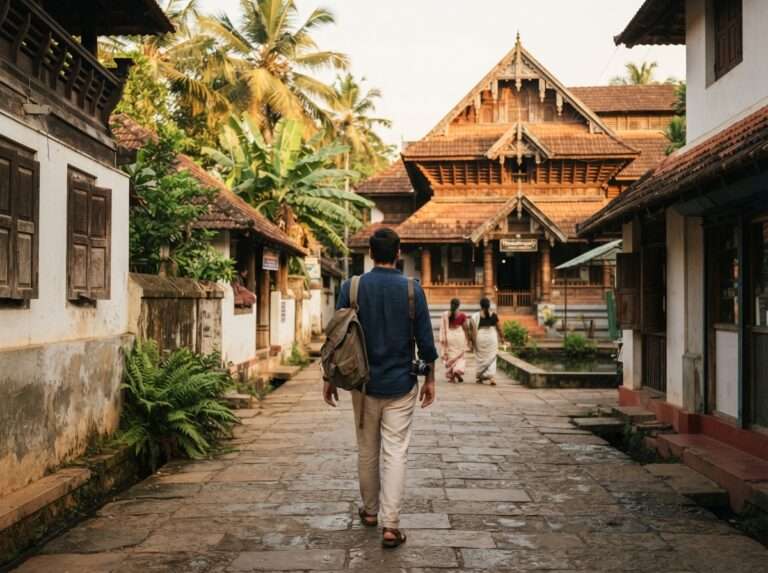
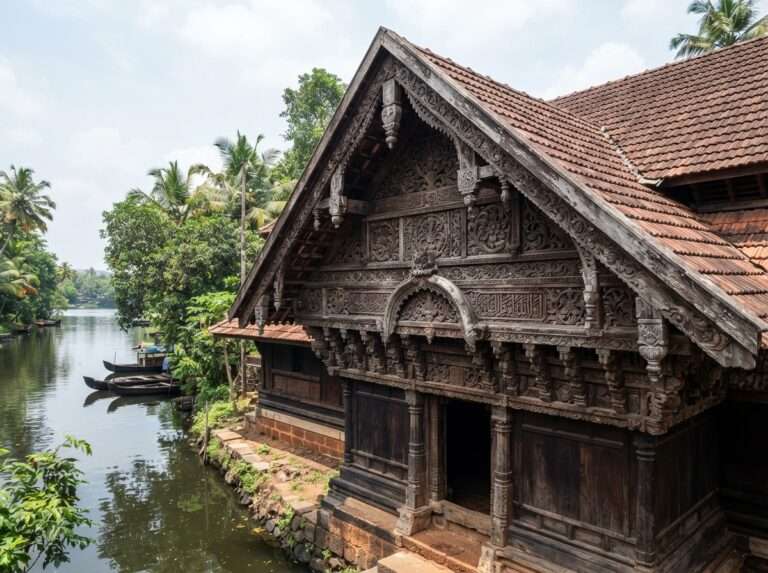
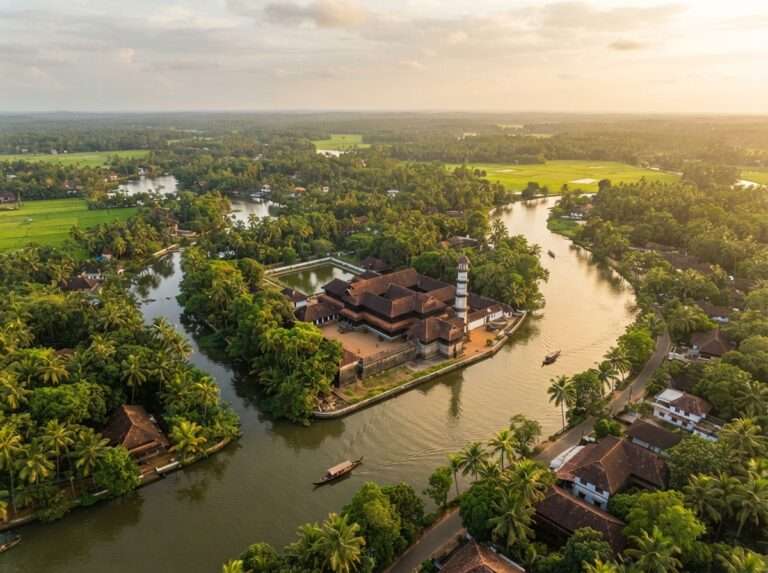
Thazhathangady Juma Masjid sits on the bank of the Meenachil river in Kottayam’s old trading quarter and is often called the most beautifully carved mosque in Kerala. Tradition places its founding around 824 CE, and local accounts link it to Habib Dinar, son of Malik Dinar. Inside, eight teak pillars and the ceiling are carved in detail, and a water tank for ablutions is cut from a single block of stone that holds about 2,000 litres.
Entry is free, but published visiting hours differ, so confirm the timing with the mosque committee before you go. Kerala Tourism lists the mosque as open to men only. Women were allowed in to visit on two one-off days in 2016, so women should expect to see it from outside unless the committee says otherwise. Our full Thazhathangady Juma Masjid guide has the history of the Thazhathangady heritage street around it.
| Built | Traditionally 824 CE |
| Visiting hours | 8 am to 12 noon, 3:30 to 4:30 pm. Free |
| Visitors | Muslim women on designated days only. Others by permission |
| How to reach | About 3 km from Kottayam station |
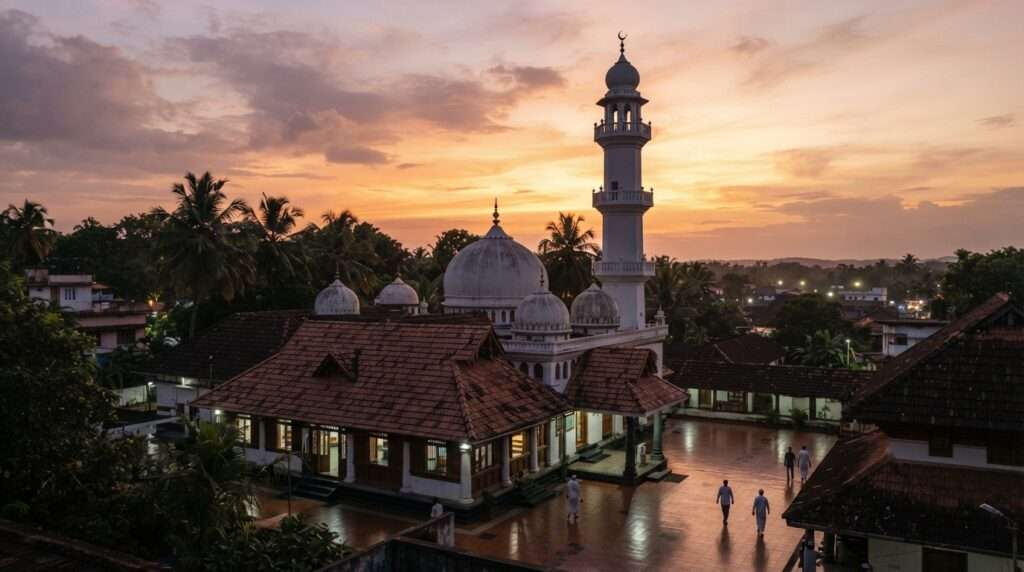
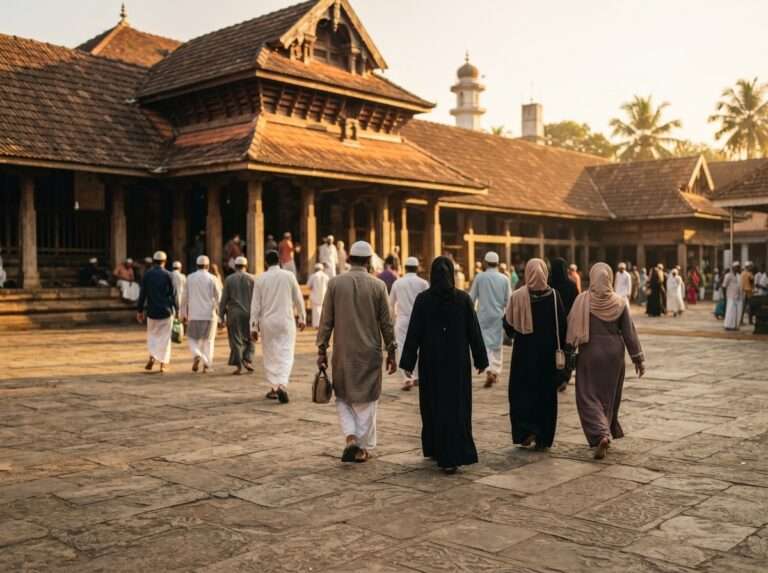
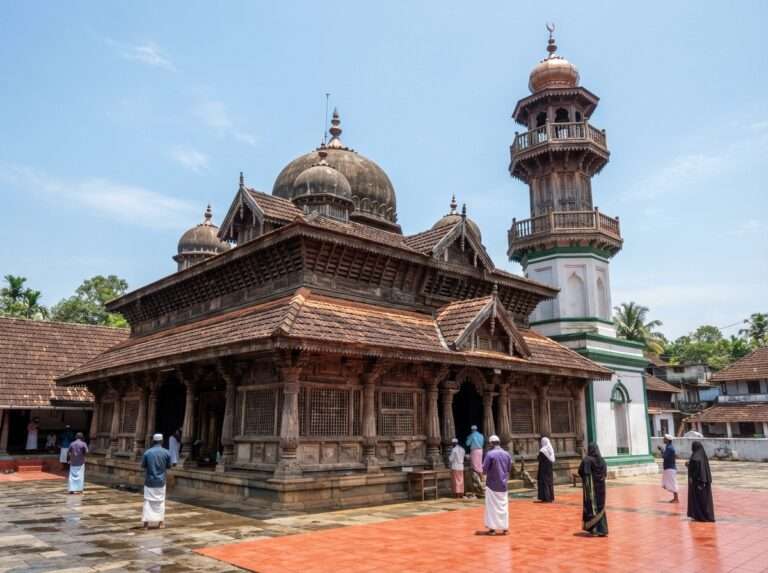
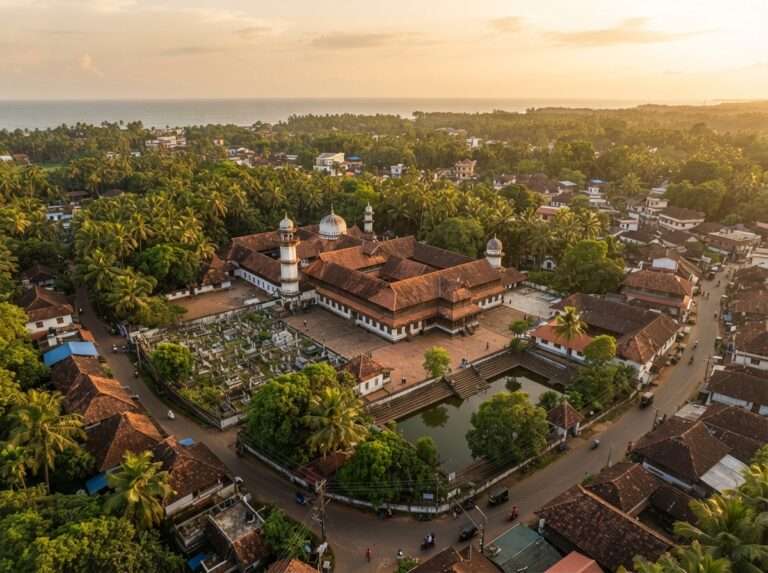
The Malik Dinar Mosque in Kasaragod is traditionally dated to 22 AH (642 to 643 CE) and is one of the oldest mosque sites in India. It holds the dargah of Malik Dinar’s family, which makes it the most important pilgrimage mosque in the far north of Kerala.
The old Kerala-style prayer hall with its timber interior is still there, but a large remodelling in 2018 added domes, a minaret and new wings. The complex also runs a madrasa, a cemetery and an orphanage. The Malik Dinar Uroos is not an annual event. Kasaragod’s district tourism council says it is held once every three years, and it draws pilgrims from Kerala and Karnataka, so check with the committee whether one falls in your travel year. Bekal Fort is 15 km to the south if you want to add a sight.
| Built | Traditionally 642 to 643 CE. Remodelled 2018 |
| Festival | Malik Dinar Uroos, Muharram season |
| Visitors | Ask the committee before entering |
| How to reach | About 2 km from Kasaragod station |
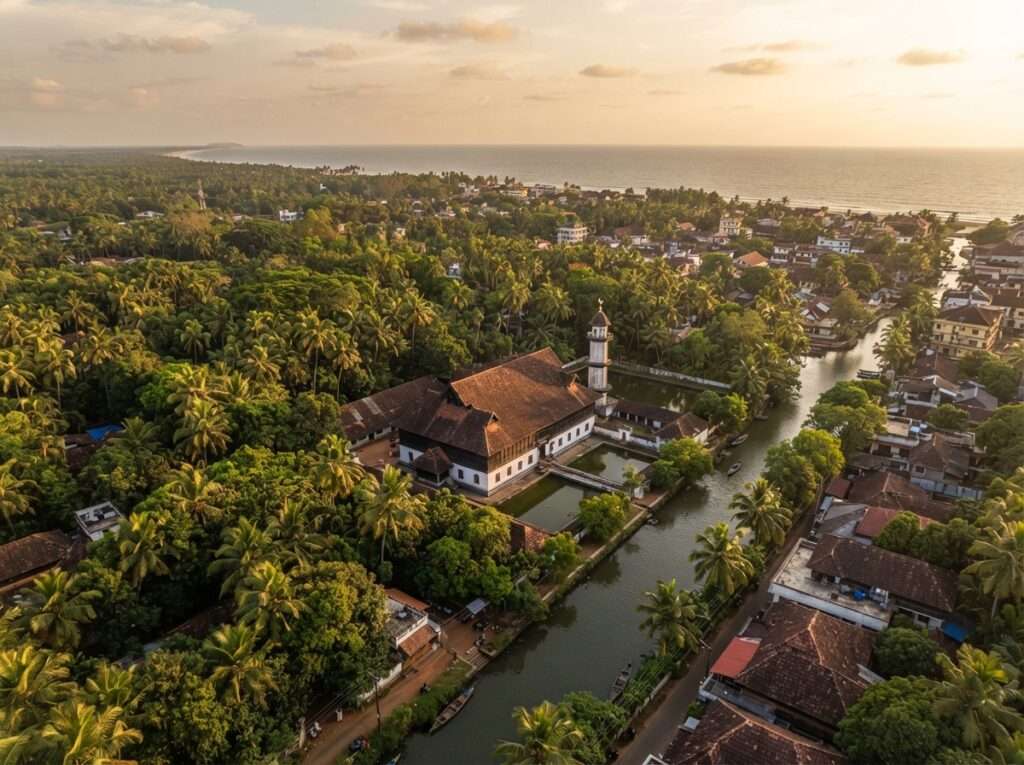
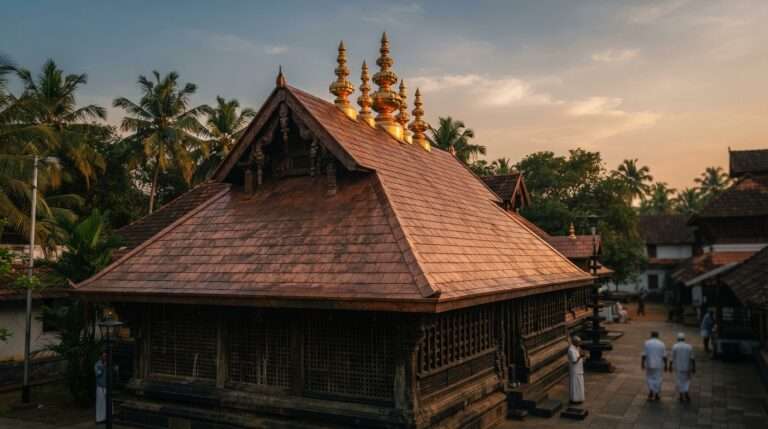
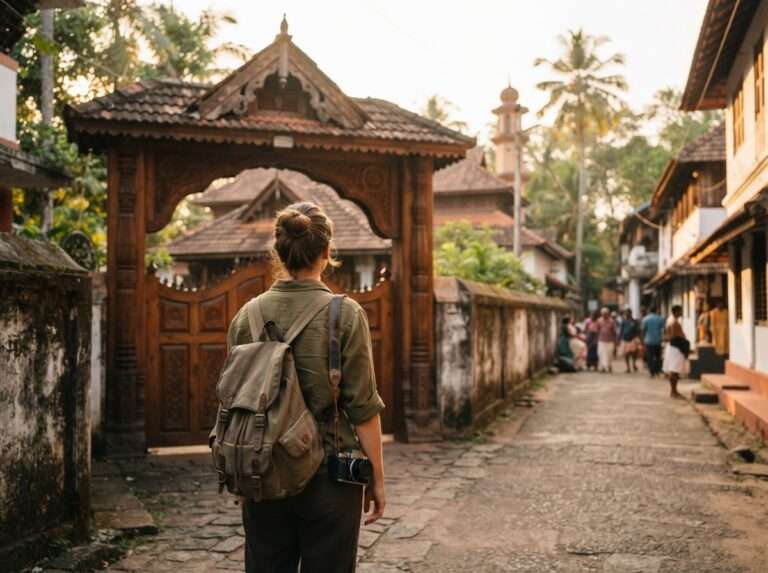
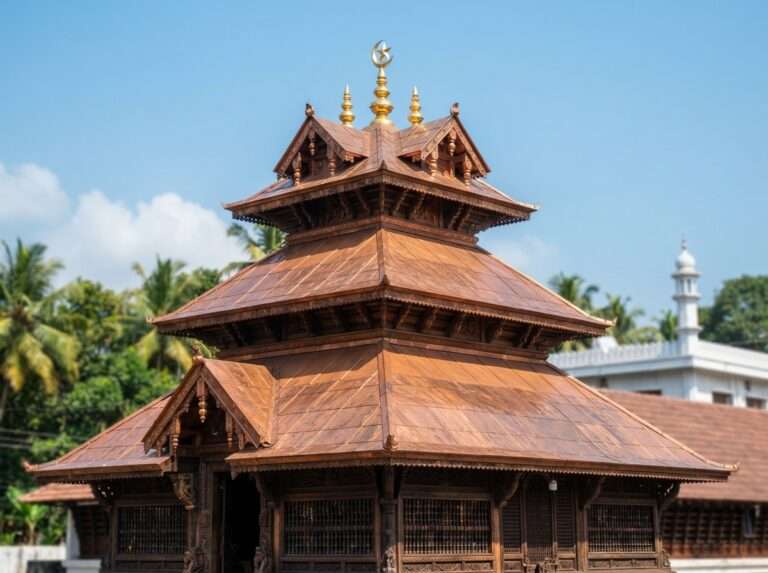
Odathil Palli was built in 1806 by Moosa Kakka of the Keyi family, a merchant who traded with the East India Company, on land that was once a sugarcane garden (an odam). It is the best example of a mosque built exactly like a Kerala temple. It has three tiers of teak, dozens of windows, a roof sheeted in copper and golden finials on top.
Non-Muslims are not allowed inside Odathil Palli, so plan to see it from the lane and the gate. It is still worth the stop, because the roofline is the clearest lesson on this list in how Kerala mosques borrowed from temple building. Kerala Tourism’s Thalassery heritage circuit includes it with the fort and the pier.
| Built | 1806 |
| Visitors | Non-Muslims are not allowed inside. View from outside |
| How to reach | About 1 km from Thalassery station |
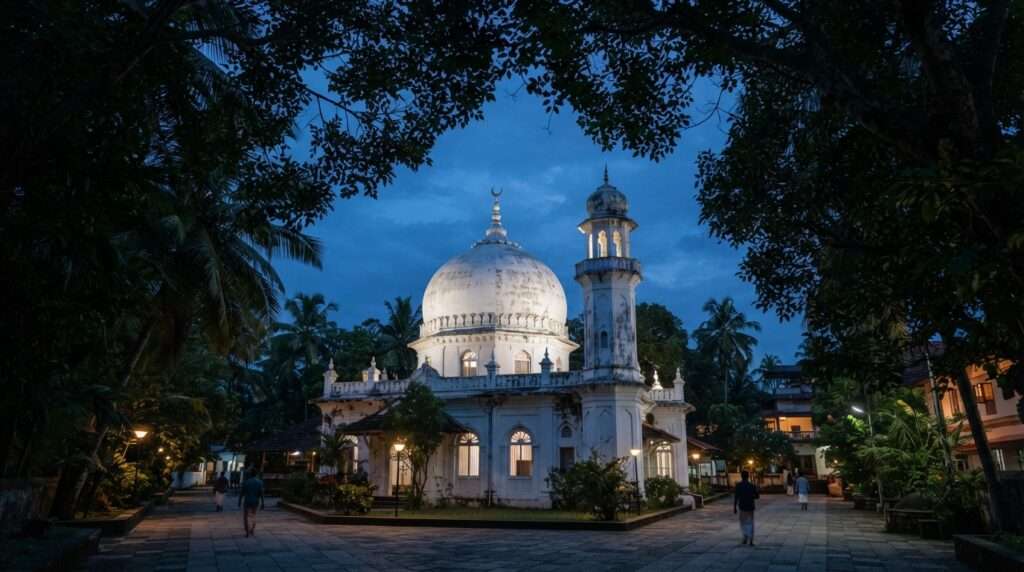
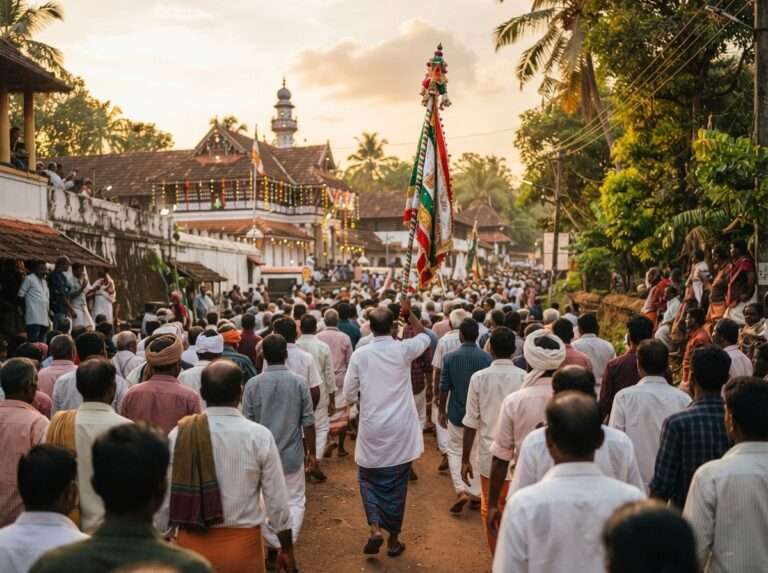
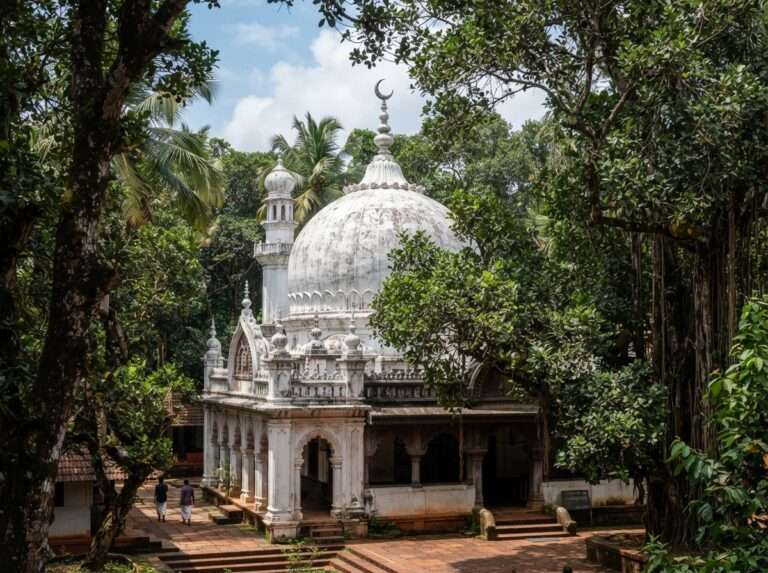
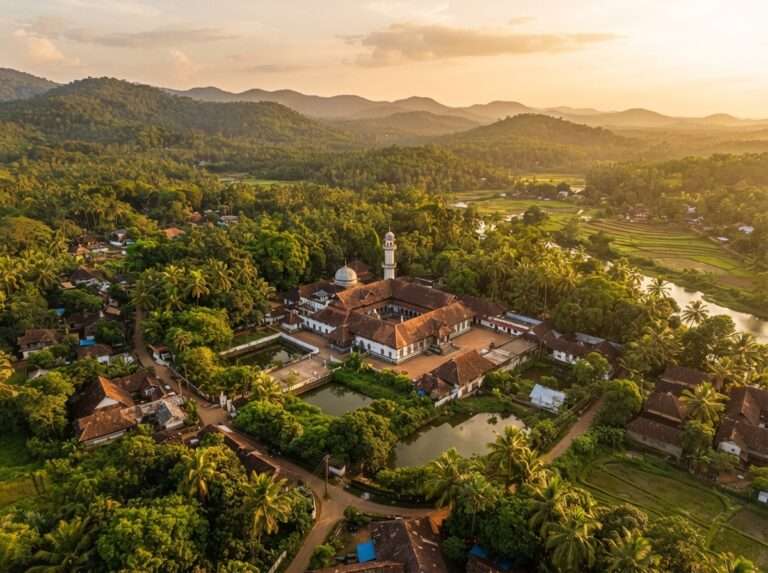
The Pazhayangadi mosque at Kondotty grew up around the dargah of Muhammad Shah Thangal, an 18th-century Sufi master whose family, the Kondotty Thangals, led a large following across Malabar. It is a centre of the Sufi tradition in Kerala rather than a formal Juma masjid, and it has a white dome set among old trees.
The Kondotty Nercha is the big event, a festival of several days with flag processions, music and feasts, usually held in February or March on dates the Dargah committee sets each year. The mosque is about 3 km from Calicut International Airport at Karipur, so it is an easy first or last stop on a Malabar trip. See airports in Kerala if you are flying in.
| Built | 18th century |
| Festival | Kondotty Nercha, dates set by the Dargah committee |
| Visitors | Pilgrims of all faiths visit the dargah |
| How to reach | About 3 km from Kozhikode airport |
Mampuram Maqam, on the bank of the Kadalundi river at Tirurangadi, holds the tomb of Sayyid Alavi Thangal, known as Mampuram Thangal, the 19th-century scholar who led Malabar’s Muslims and opposed British rule. His son Fazal Pookoya Thangal was exiled by the British in 1852.
The Mampuram Nercha falls in the Islamic month of Muharram and is observed as a strictly religious week of prayer and talks, without the music and fireworks of other nerchas. On Thursdays the maqam is busy with families who come to pray and share food, so arrive early on those days.
| Built | 19th century shrine |
| Festival | Mampuram Nercha, Muharram |
| Visitors | Pilgrims of all faiths visit the maqam |
| How to reach | About 9 km from Parappanangadi station |
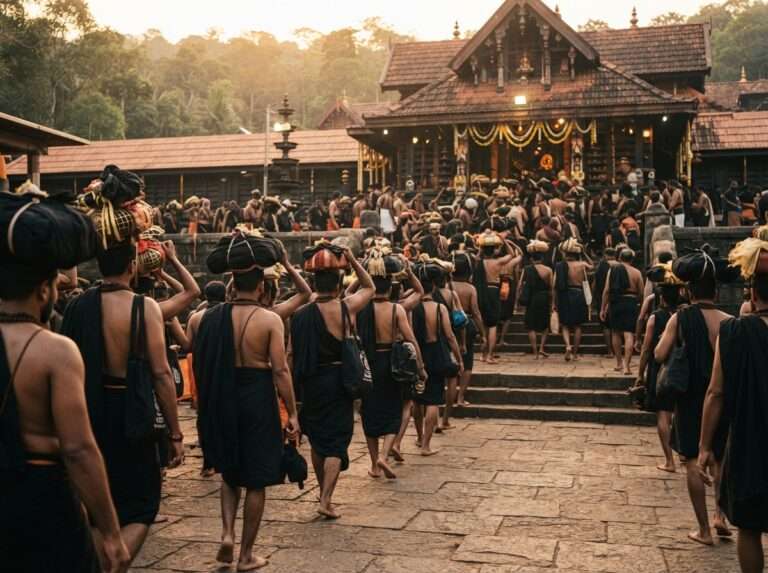
Vavar Palli at Erumeli is the one mosque in Kerala that every Sabarimala pilgrim knows. Vavar, a Muslim warrior, is remembered as a close companion of Lord Ayyappa, and Ayyappa devotees in black clothes walk through the mosque and take its blessing before they begin the trek to Sabarimala.
The key day is the Erumeli Petta Thullal in January, a few days before Makaravilakku, when groups of pilgrims dance through the town with painted faces and visit both the mosque and the Dharma Sastha temple across the road. Erumeli is about 50 km from Kottayam. Read about the temple end of the journey in our Sabarimala temple guide.
| Known for | Sabarimala pilgrims visit before their trek |
| Festival | Erumeli Petta Thullal, January |
| Visitors | Ayyappa pilgrims and visitors of all faiths |
| How to reach | About 50 km from Kottayam station |
Jamiul Futuh is the biggest mosque in Kerala by a wide margin, five times the capacity of the next largest. Capacity is the fairest way to rank them, and these are the figures the mosques or their published records give.
| Rank | Mosque | Place | Capacity | Opened or rebuilt |
| 1 | Jamiul Futuh (Indian Grand Masjid) | Kaithapoyil, Kozhikode | About 25,000 | 2022 |
| 2 | Kolloorvila Juma Masjid | Pallimukku, Kollam | More than 5,000 | Modern building |
| 3 | Palayam Juma Masjid | Thiruvananthapuram | About 2,000 | 1967 |
| Also large | Malappuram Valiya Juma Masjid, Beemapally Dargah, Kambalakkad Juma Masjid (Wayanad) | Malabar and south Kerala | Not published | Different eras |
| For scale | Mishkal Palli | Kozhikode | About 400 | 14th c. |
Cheraman Juma Masjid is the oldest mosque in Kerala by tradition. A word on dates before the list. The earliest dates below come from community tradition, often tied to Malik Dinar’s mission, while later ones come from inscriptions and records. Historians argue that the oldest surviving timber in any of these buildings is several centuries younger than the tradition, because Kerala’s mosques were rebuilt again and again in wood.
| Mosque | Place | Date | Type of date |
|---|---|---|---|
| Cheraman Juma Masjid | Kodungallur | 629 CE | Tradition. Rebuilt 1568 |
| Malik Dinar Mosque | Kasaragod | 642 to 643 CE (22 AH) | Tradition |
| Thazhathangady Juma Masjid | Kottayam | 824 CE | Tradition |
| Madayi Palli | Pazhayangadi, Kannur | 1124 to 1125 CE (518 AH) | Documented |
| Muchundi Palli | Kuttichira, Kozhikode | 13th century | Inscription |
| Mishkal Palli | Kuttichira, Kozhikode | 14th century | Documented |
| Ponnani Valiya Juma Masjid | Ponnani | Early 16th century | Documented |
| Odathil Palli | Thalassery | 1806 | Documented |
Beauty here comes in two styles, and the best list has both.
No single official count of mosques in Kerala is published. The Kerala State Waqf Board registers waqf institutions, many of them mosques, but not every prayer hall. What is certain is scale. Muslims were 26.56% of Kerala’s population in the 2011 Census, and the community is organised into mahallus, neighbourhood parishes that each run a Juma masjid, a madrasa and a burial ground. Add the small niskara palli prayer rooms in markets, bus stands and bazaars, and the number of mosques runs into many thousands, most of them in Malappuram, Kozhikode and Kannur districts. Wikipedia’s list of mosques in Kerala documents only the notable ones.
The first mosques in Kerala were built by local carpenters who had built temples and palaces all their lives, so they used what worked in 3,000 mm of monsoon rain. That meant laterite plinths, timber frames, steep roofs of tile or copper sheet and wide eaves. There were no domes and no minarets. The call to prayer was given from the roof or the door, and the ablution tank took the place of the temple pond.
The dome arrived much later, in the 19th and 20th centuries, with Indo-Saracenic ideas from the rest of India and the Gulf. That is why Kerala has both styles side by side. The matrix below shows which mosque to pick for which style.
| Feature | Traditional Kerala style | Indo-Saracenic and modern |
|---|---|---|
| Roof | Steep, tiled or copper-sheeted, several tiers | Domes, often white or pastel |
| Minarets | None | Two to five |
| Main material | Teak and jackwood on a laterite base | Concrete, stone cladding |
| Inside | Carved pillars, wooden ceilings, a lamp or tank | Open halls, calligraphy, chandeliers |
| Best examples | Mishkal, Thazhathangady, Odathil, Cheraman (restored) | Jamiul Futuh, Beemapally, Palayam, Kolloorvila |
| Best for | Heritage and photography | Scale and festivals |
Cheraman shows the swing between the two better than anywhere. It gained concrete additions in the late 20th century and lost them again in the 2019 to 2021 restoration, which put the old roof back. See more of the state’s old buildings in our guide to heritage places in Kerala.
Most mosque festivals in Kerala follow the Islamic lunar calendar, which runs about 11 days shorter than the Gregorian year. So a festival moves earlier by about 11 days every year, and any fixed month you read online will be wrong within two or three years. An Uroos marks a saint’s death anniversary, and a Nercha is a festival of vows and offerings at a shrine. Kerala Tourism’s guide to the Nercha explains the tradition.
| Festival | Where | When (calendar rule) | Next expected |
|---|---|---|---|
| Beemapally Uroos (Chandanakudam) | Beemapally, Thiruvananthapuram | From 1 Jumada al-Akhir, about 11 days | About 11 to 22 November 2026 |
| Erumeli Petta Thullal | Vavar Palli, Erumeli | A few days before Makaravilakku | January 2027, a few days before Makaravilakku |
| Ramadan and Eid ul-Fitr | Every mosque | Month of Ramadan | Ramadan from about 8 February 2027 |
| Mampuram Nercha | Mampuram Maqam, Tirurangadi | Muharram | About 6 to 12 June 2027 (1 to 7 Muharram) |
| Malik Dinar Uroos | Malik Dinar Mosque, Kasaragod | Once every three years (check with the committee) | Announced by the committee |
| Kondotty Nercha | Pazhayangadi, Kondotty | Set by the Dargah committee | Announced by the Dargah |
| Nabi Dinam (Milad) | Mosques and madrasas statewide | 12 Rabi al-Awwal | About mid-August 2027 |
Nabi Dinam processions of madrasa children in white, with flags and duff drums, are one of the best sights in Malabar towns. More celebrations are listed in our guide to festivals in Kerala.
Kerala has no single rule for visitors. Each mosque’s committee decides, so here is what we found for the mosques on this list, followed by the steps that work everywhere.
| Mosque | Non-Muslim visitors | Women | Worth knowing |
|---|---|---|---|
| Jamiul Futuh | Ask at the gate | Ask at the gate | Office: +91 75106 00606 |
| Cheraman Juma Masjid | Welcome in the compound | Ask the office | Vidyarambham on Vijayadashami |
| Beemapally | Welcome | Welcome at the dargah | Busiest on Fridays and during Uroos |
| Palayam Juma Masjid | Ask the office | Ask the office | Central, easy to combine with the city |
| Thazhathangady Juma Masjid | Ask the committee | Men only (Kerala Tourism) | Confirm visiting hours with the committee |
| Odathil Palli | Not allowed inside | Ask | View the roof from the lane |
| Vavar Palli | Welcome | Ask | Crowded in the Sabarimala season, Nov to Jan |
| Mampuram and Kondotty shrines | Welcome | Welcome | Busy on Thursdays |
| All other mosques | Ask the committee | Ask the committee | Avoid Friday 12:30 to 2 pm |
Kerala’s famous mosques follow the coast, so one road trip up NH 66 covers almost all of them. This route starts at Thiruvananthapuram airport and ends at Kasaragod, with Mangaluru airport about 60 km beyond. Distances are approximate road figures.
| Day | Route | Mosques | Approx. drive |
|---|---|---|---|
| 1 | Thiruvananthapuram to Kollam | Palayam, Beemapally, then Kolloorvila | 70 km, 2 hrs |
| 2 | Kollam to Kottayam | Thazhathangady (Vavar Palli at Erumeli is about 50 km away, a half-day detour) | 85 km, 2.5 hrs |
| 3 | Kottayam to Kodungallur to Ponnani | Cheraman, then Ponnani Valiya Juma Masjid | 170 to 175 km, 5 to 5.5 hrs |
| 4 | Ponnani to Malappuram to Kozhikode | Mampuram, Malappuram Valiya Juma Masjid, Kondotty, then Mishkal and Kuttichira at dusk | 130 km, 4 hrs |
| 5 | Kozhikode to Kaithapoyil to Thalassery | Jamiul Futuh in the morning, Odathil in the evening | 150 to 160 km, 4.5 to 5 hrs |
| 6 | Thalassery to Kasaragod | Madayi Palli, Malik Dinar Mosque | 115 km, 3 hrs |
Kochi sits between days 2 and 3 if you want a night in Fort Kochi, where the 16th-century Chembittapalli in Mattancherry is a short walk from the Jew Town synagogue. October to March is the most comfortable season, as our best time to visit Kerala guide explains, but check the festival table above first. Prefer to have the driving and hotels arranged? Our Kerala tour packages can be built around this route, and the Kerala itinerary guide shows how to add the backwaters.
Mosque visits in Malabar end at the table. In Kozhikode, walk from Kuttichira to SM Street (Mittai Theruvu) for Kozhikode halwa, sold in dozens of colours by weight. Thalassery’s biryani uses the short-grain kaima rice and is best at the old restaurants near the station. Ask for pathiri, the thin rice flatbread, with chicken curry at breakfast anywhere in Malappuram. In Ramadan, many Malabar mosques serve nombu kanji, a spiced rice gruel, to anyone who drops in at sunset. Our guide to Kerala cuisine has the full list, and Beypore beach, where Arab-style dhows are still built by hand, is 10 km from Kuttichira.
Start with Jamiul Futuh for scale and Cheraman for history, then give a morning to the timber mosques of Kuttichira. That is the shortest way to see how Kerala’s mosques changed over 1,400 years. Kerala’s mosques sit beside some of India’s oldest temples and churches, so read our guides to famous temples in Kerala and famous churches in Kerala to fill the gaps, or see the national list of famous mosques in India. When you are ready to plan dates, start from the Kerala travel guide or shape a trip on our Kerala tour packages page.
Sources: Kerala Tourism (keralatourism.org), Jamiul Futuh official site (jamiulfutuh.com), Kerala State Waqf Board, Census of India 2011, and published histories of each mosque. Image sources: Wikimedia Commons, Facebook, Pexels and Pixabay.
Quick answers on the biggest, oldest and most beautiful mosques, entry rules, timings, dress code and festivals
Jamiul Futuh, also called the Indian Grand Masjid, is the biggest mosque in Kerala. It opened in September 2022 at Markaz Knowledge City, Kaithapoyil, about 40 km from Kozhikode, and holds around 25,000 worshippers. Its builders describe it as the largest masjid in India. The next largest is Kolloorvila Juma Masjid in Kollam, with room for more than 5,000, followed by Palayam Juma Masjid in Thiruvananthapuram at about 2,000.
Cheraman Juma Masjid in Kodungallur is the oldest mosque in Kerala by tradition, dated to 629 CE and linked to the Chera king Cheraman Perumal and the missionary Malik Dinar. Historians debate that date, and part of the building was rebuilt in 1568. Other very old sites are the Malik Dinar Mosque in Kasaragod (traditionally 642 to 643 CE) and Thazhathangady Juma Masjid in Kottayam (traditionally 824 CE).
No single official count of mosques in Kerala is published. Muslims made up 26.56% of Kerala's population in the 2011 Census, and the community is organised into mahallus, each with its own Juma masjid and committee. Add the smaller prayer halls (niskara palli) found in almost every town and the number runs into many thousands, with the highest concentration in Malappuram and Kozhikode districts.
The ten most famous mosques in Kerala are Jamiul Futuh (Kozhikode), Cheraman Juma Masjid (Kodungallur), Beemapally (Thiruvananthapuram), Ponnani Valiya Juma Masjid, Malappuram Valiya Juma Masjid, Kolloorvila Juma Masjid (Kollam), Palayam Juma Masjid (Thiruvananthapuram), Mishkal Palli (Kozhikode), Thazhathangady Juma Masjid (Kottayam) and the Malik Dinar Mosque (Kasaragod). Odathil Palli, Madayi Palli, Kondotty, Mampuram and Vavar Palli complete our list of 15.
Ponnani Valiya Juma Masjid gives Ponnani its name as the Mecca of Kerala. Sheikh Zainuddin Makhdoom I built it in the early 16th century, and for about 400 years it ran a residential school of Islamic learning that drew students from across South and Southeast Asia. His grandson Zainuddin Makhdoom II wrote Tuhfat ul-Mujahidin, a history of Kerala and the Portuguese wars, at Ponnani.
For grandeur, Jamiul Futuh with its 17 domes and 107 m minarets is the most striking new mosque in Kerala. For traditional beauty, Thazhathangady Juma Masjid in Kottayam has the finest wood carving, Mishkal Palli in Kozhikode is the best four-storey timber mosque and Odathil Palli in Thalassery shows the temple-style copper roof at its best. Beemapally's pink and white domes are the most photographed in the south.
Yes, many mosques in Kerala receive non-Muslim visitors, but the rule is set by each mosque's committee. Cheraman Juma Masjid, Beemapally, Vavar Palli and the visitor area of Jamiul Futuh are open to people of all faiths. Odathil Palli in Thalassery does not allow non-Muslims inside. At smaller mahallu mosques, ask at the office, visit outside prayer times and wait for someone to show you in.
It depends on the mosque. Women pilgrims visit Beemapally dargah and the Mampuram and Kondotty shrines in large numbers. Many traditional Juma masjids do not take women into the main prayer hall. At Thazhathangady, Muslim women may enter only on designated days, and at Cheraman women visitors are kept to the compound. Newer mosques often have a separate women's area. Always ask at the gate.
Mosques open for the five daily prayers from before dawn until after the night prayer, but visitors should come between prayers, roughly 8 am to 12 noon and 3 to 5 pm. Avoid Friday between about 12:30 and 2 pm, when the Juma prayer and sermon fill every mosque. Thazhathangady's visiting hours are 8 am to 12 noon and 3:30 to 4:30 pm. Jamiul Futuh receives visitors after 8 am.
Wear loose clothes that cover the shoulders, arms and legs to below the knee. Women should carry a scarf to cover the head. Men should avoid shorts. You will leave your shoes at the entrance, so slip-on footwear helps, and socks are useful on hot stone courtyards at midday. Avoid tight or see-through fabric and remove caps with slogans or images.
The Beemapally Uroos begins on the first day of Jumada al-Akhir in the Islamic calendar and runs for about ten days. In 2026 that month is expected to start around 11 or 12 November, depending on the moon sighting in Kerala, so the festival should run until about 22 November. The Hijri calendar moves about 11 days earlier every year, so the 2027 Uroos will fall around the start of November.
Yes, and Ramadan is a good time to see mosque life, though you should keep visits short in the day. In 2027 Ramadan is expected to begin around 8 February. Mosques are busiest at sunset, when people break the fast with nombu kanji, a rice gruel served free at many Malabar mosques, and during the late tarawih prayers. Visit in the morning and dress conservatively.
Real reviews from real travelers who booked with us.
View All Reviews