
 8D / 7N
6% OFF


Tracing the Ramayana's Lanka Chapters, Site by Site
Our Sri Lanka desk has mapped the Ramayana trail site by site, cross-checking temple legends with the routes operators actually drive. The distances, drive times and site-to-town links below reflect that research, not a brochure.
The Ramayana trail in Sri Lanka threads together more than fifteen temples, caves, waterfalls and gardens that the epic places on the island, from the garden where Sita was held to the hilltop temple Ravana is said to have built. It is the one pilgrimage circuit that lets you trace the Lanka chapters of the Ramayana along one island route, and most travellers cover its core in five days or the full loop in seven. This guide names every site, maps each one to its nearest town, gives you the road distance from Colombo, and lays out a day-by-day plan you can hand straight to a driver.
One point clears up the most common confusion before you start. Ashok Vatika, the garden where Ravana kept Sita, is identified today with the Hakgala Botanical Garden in Seetha Eliya, right beside the Seetha Amman Temple near Nuwara Eliya. Get that pairing straight and the rest of the trail falls into place.
Key takeaways
- Cover 15+ Ramayana sites, with the core Seetha Eliya cluster (Seetha Amman, Ashok Vatika and Gayathri Peedam) within a few kilometres of each other, and Divurumpola a short drive further toward Welimada.
- Ashok Vatika is the present-day Hakgala Botanical Garden, about 170 km from Colombo and about a kilometre from the Seetha Amman Temple.
- Give the trail 5 days for the hill-country core, or 7 days to add Chilaw, Ella and the coast; 8 days to add Trincomalee in the northeast, and nine or ten if you also want Jaffna in the far north.
- Base yourself in Nuwara Eliya or Seetha Eliya for two nights; it puts the densest run of sites on your doorstep.
- Go between January and March for dry, cool hill weather on the stretch that holds most of the temples.
These are the Ramayana places in Sri Lanka the trail is built around, grouped by the site rather than the town, with the nearest town noted so you can place each on a map.
Ramayana sites at a glance
Use this to plan the order of your visits. Distances are road distances from Colombo and are approximate.
| Site | Nearest town / region | Ramayana significance | Approx. from Colombo |
|---|---|---|---|
| Munneswaram & Manavari | Chilaw (NW coast) | Rama’s prayer and first lingam | ~80 km |
| Koneswaram Temple | Trincomalee (NE coast) | Ravana’s Shiva temple; 2nd lingam | ~260 km |
| Sri Bhakta Hanuman + Ramboda Falls | Ramboda (hills) | Hanuman’s search begins | ~150 km |
| Seetha Amman Temple | Seetha Eliya / Nuwara Eliya | Where Sita was held captive | ~170 km |
| Ashok Vatika (Hakgala Garden) | Seetha Eliya | The garden Sita was kept in | ~170 km |
| Gayathri Peedam | Nuwara Eliya | Meghanada’s penance for boons | ~175 km |
| Divurumpola | near Welimada | Sita’s Agni Pariksha (fire test) | ~190 km |
| Ravana Falls & Ravana Cave | Ella | Ravana’s hideout for Sita | ~200 km |
| Seetha Kotuwa | Hasalaka | Sita’s first captivity; Lankapura | ~160 km |
| Panchamuga Anjaneyar & Kelaniya | Colombo | Five-faced Hanuman; Vibheeshana crowned | in Colombo |
| Nilavarai Well | Jaffna | Rama’s arrow spring | ~400 km |
Sri Lanka
Sri Lanka
Ramayana Trail in Sri Lanka 2026: Sacred Sites & Itinerary
Best Time
January - March
Select Package Type
Best Selling Packages


What is the Ramayana trail in Sri Lanka?
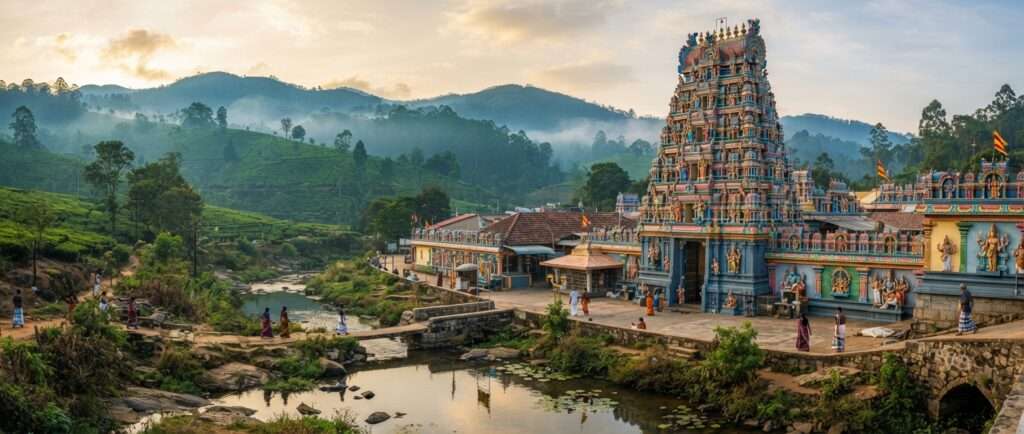
The Ramayana trail is the set of real places across Sri Lanka that local tradition ties to the island chapters of the epic: Ravana’s abduction of Sita, her captivity, Hanuman’s search, the war, and Sita’s fire ordeal. The Ramayana in Sri Lanka is not a single monument. It is a route that runs from the northwest coast at Chilaw, inland through Kandy, up into the tea hills around Nuwara Eliya, across to Ella, and back down to Colombo, with northern sites at Trincomalee and Jaffna for those who have the days.
Sri Lankans revere Ravana as a learned king and a devotee of Lord Shiva rather than a villain, so the temples here tell the story from the Lankan side. That is what makes the trail worth doing in person. You get the Indian Ramayana you grew up with, retold on the ground where the Lanka episodes are set. For the wider island around the trail, our Sri Lanka tourism guide is the place to start. Travellers consistently tell us the hill-country leg, where four or five sites sit within a short drive, is the part that stays with them
Ramayana sites in Sri Lanka: the sacred places to visit
These are the Ramayana places in Sri Lanka the trail is built around, grouped by the site rather than the town, with the nearest town noted so you can place each on a map.
-
Munneswaram and Manavari Temples (Chilaw)
-
Koneswaram Temple (Trincomalee)
-
Sri Bhakta Hanuman Temple and Ramboda Falls (Ramboda)
-
Seetha Amman Temple (Seetha Eliya, Nuwara Eliya)
-
Ashok Vatika / Hakgala Botanical Garden (Seetha Eliya)
-
Gayathri Peedam (Nuwara Eliya)
-
Divurumpola Temple (near Welimada)
-
Ravana Falls and Ravana Cave (Ella)
-
Seetha Kotuwa (Hasalaka)
-
Panchamuga Anjaneyar and Kelaniya Temple (Colombo)
-
Nilavarai Bottomless Well (Jaffna)
Explore Popular Destination In Sri Lanka
01
Munneswaram and Manavari Temples (Chilaw)
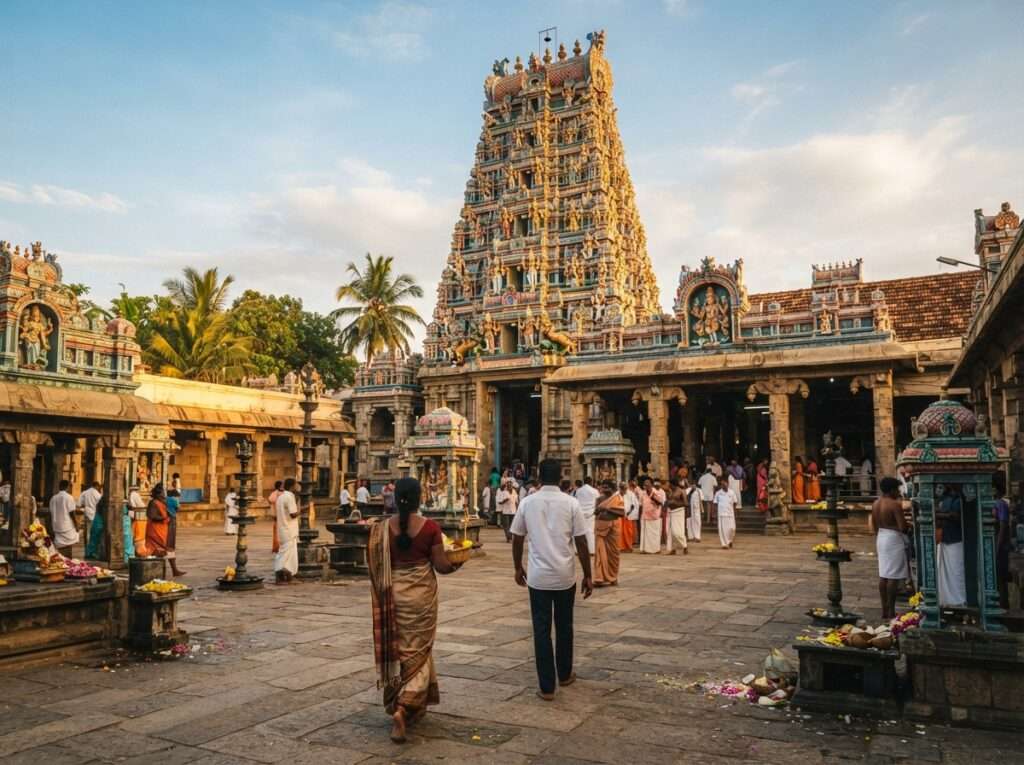
Chilaw, on the northwest coast about 80 km from Colombo, holds the trail’s two founding temples. Legend says that after Rama defeated Ravana he was followed by Brahmahathi Dosham, the curse of having killed a Brahmin, and that it lifted only when he stopped here. Lord Shiva told him to install and worship four lingams, at Manavari, Koneswaram, Thiruketheeswaram and Rameshwaram.
Munneswaram Temple is where that prayer took place, a Shiva temple complex still active today. A short drive away, Manavari Temple holds the first lingam Rama is said to have installed, and it is one of only two lingams in the world named after Rama rather than Shiva, the other being the Ramalingam at Rameswaram in India. Together they open the circuit, which is why most itineraries reach them on day one, en route from the airport.
Related Tour Packages


❮
❯
02
Koneswaram Temple (Trincomalee)
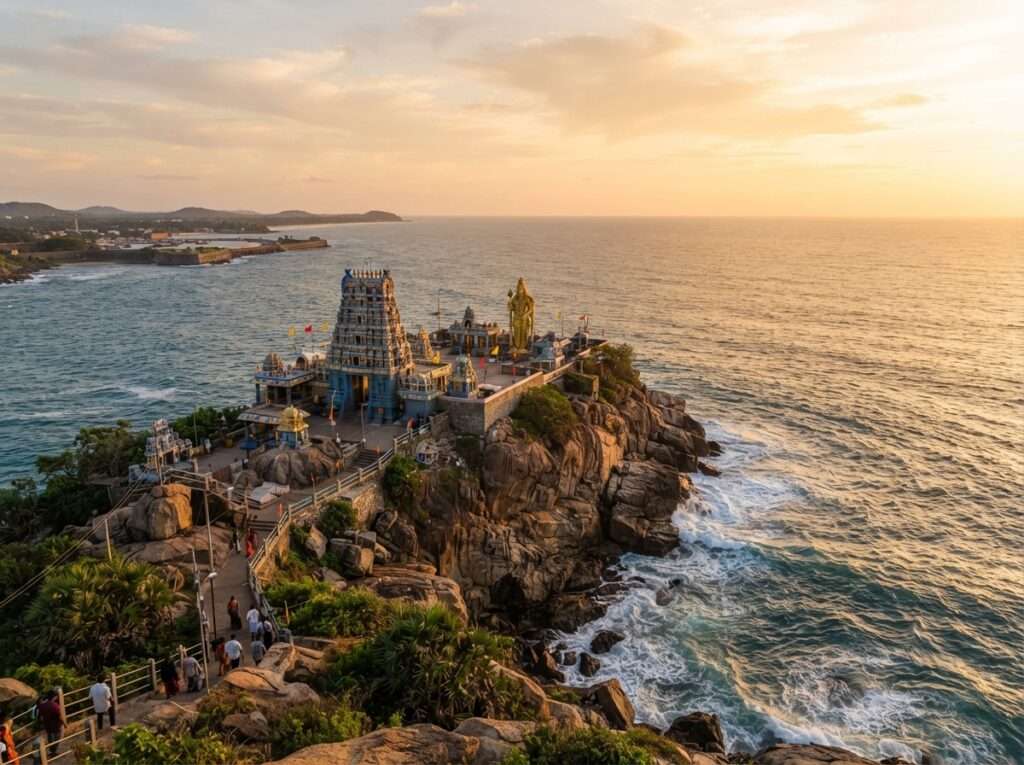
On a cliff above the sea at Swami Rock in Trincomalee, roughly 260 km northeast of Colombo, Koneswaram Temple is the most dramatically set site on the trail and one of the five legendary Pancha Ishwaram shrines. Tradition holds that Ravana himself worshipped Shiva here with his mother, and that the second of Rama’s four lingams was installed at this spot. It is a detour from the hill-country core, so it usually lands in the 8-day version of the trail rather than the 5-day one.
Near Trincomalee, the Kanniya Hot Springs belong to the same chapter: Ravana is said to have raised their seven warm wells to perform the funeral rites for his mother.
Related Tour Packages


❮
❯
03
Sri Bhakta Hanuman Temple and Ramboda Falls (Ramboda)
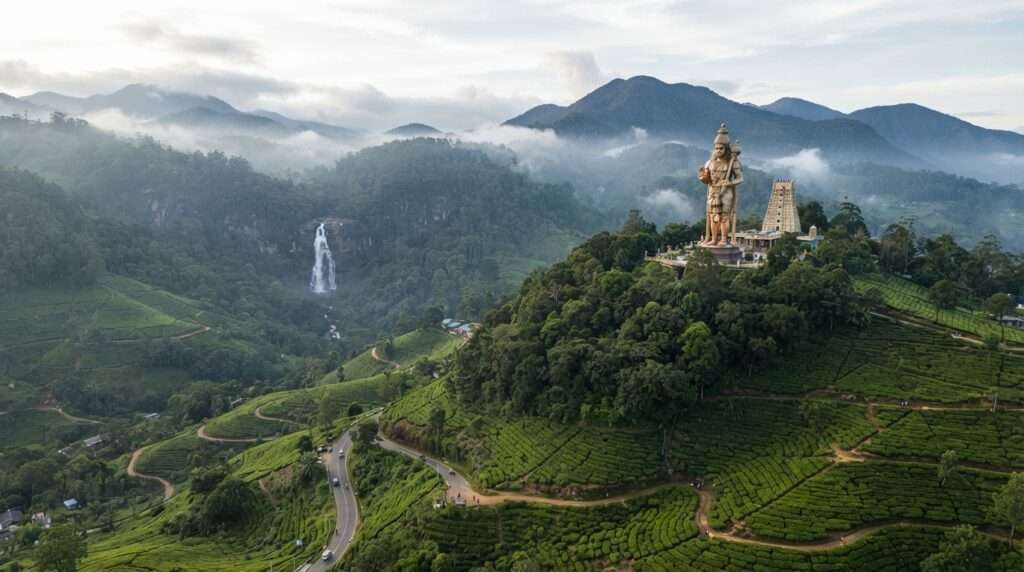
Ramboda, a village on the climb into the Central hills, is where Hanuman is believed to have begun his search for Sita. The Sri Bhakta Hanuman Temple, built by the Chinmaya Mission on the hillside, overlooks the Kotmale valley and reservoir, a short climb above the 109-metre Ramboda Falls. It sits just off the Kandy-to-Nuwara Eliya road, a short turn above the highway.
Pair it with the tea-country waterfalls that line the same route.
Related Tour Packages


❮
❯
04
Seetha Amman Temple (Seetha Eliya, Nuwara Eliya)
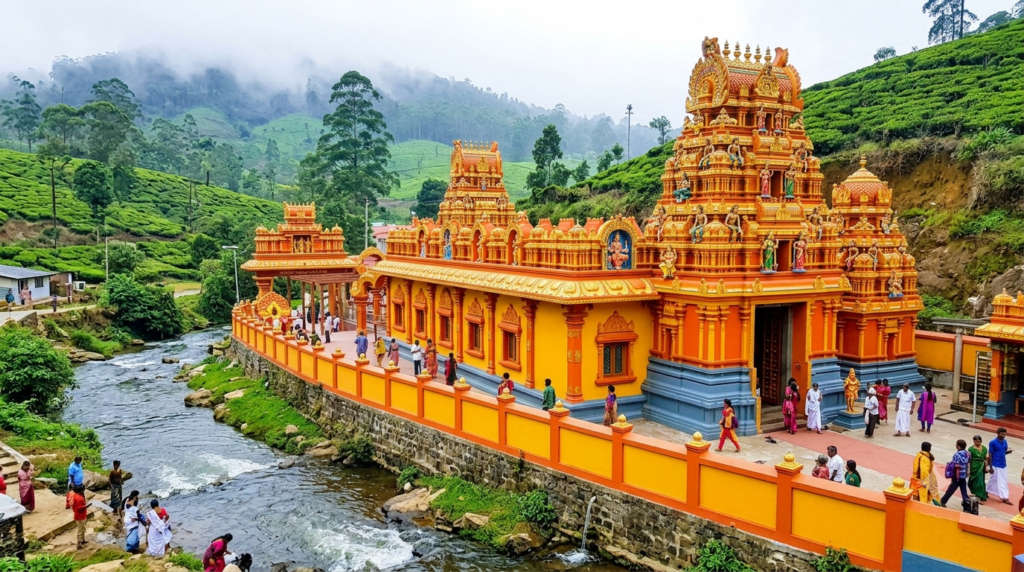
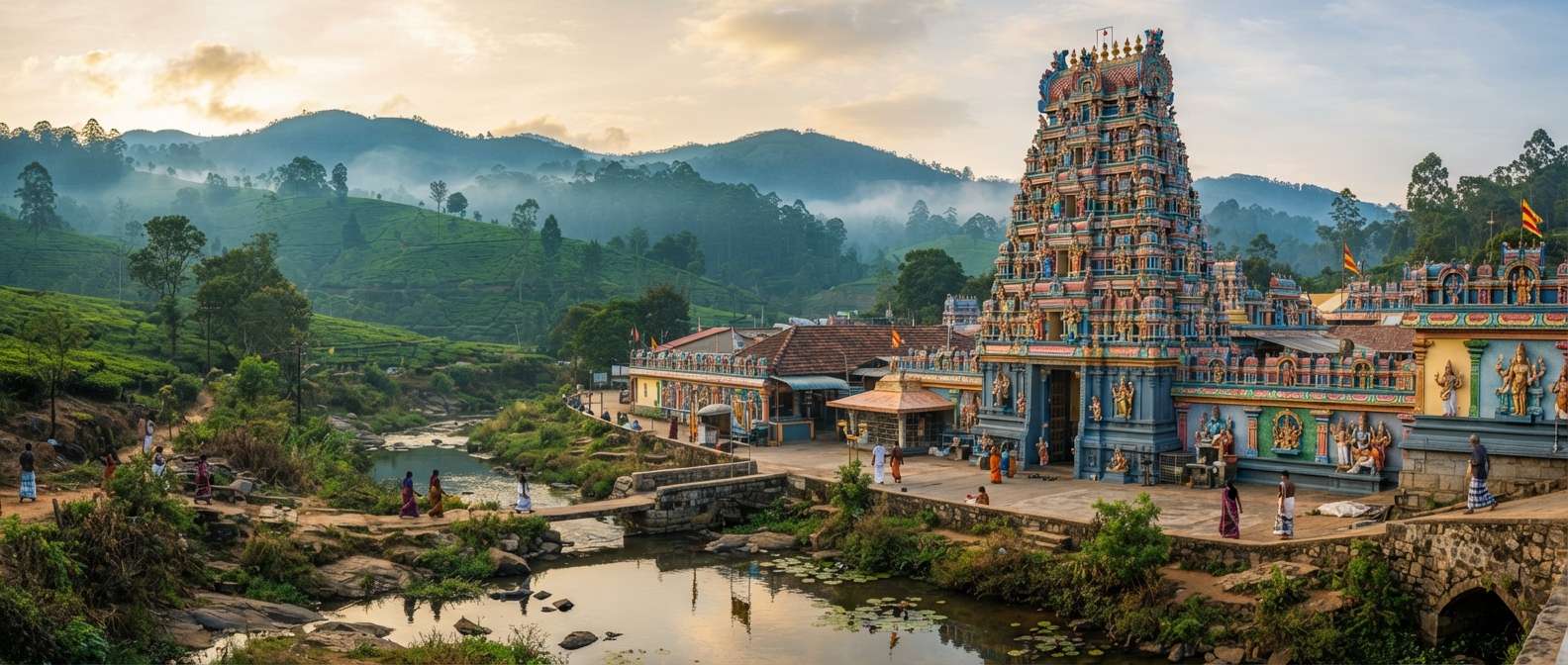
This is the emotional heart of the trail. The Seetha Amman Temple, about 170 km from Colombo and a few kilometres south of Nuwara Eliya in the village of Seetha Eliya, marks the spot where Sita is believed to have been held during her captivity. A stream runs beside the temple where she is said to have bathed, and circular marks on the rocks across the water are revered as Hanuman’s footprints, left when he found her and handed over Rama’s ring. It stands directly beside Ashok Vatika.
05
Ashok Vatika / Hakgala Botanical Garden (Seetha Eliya)
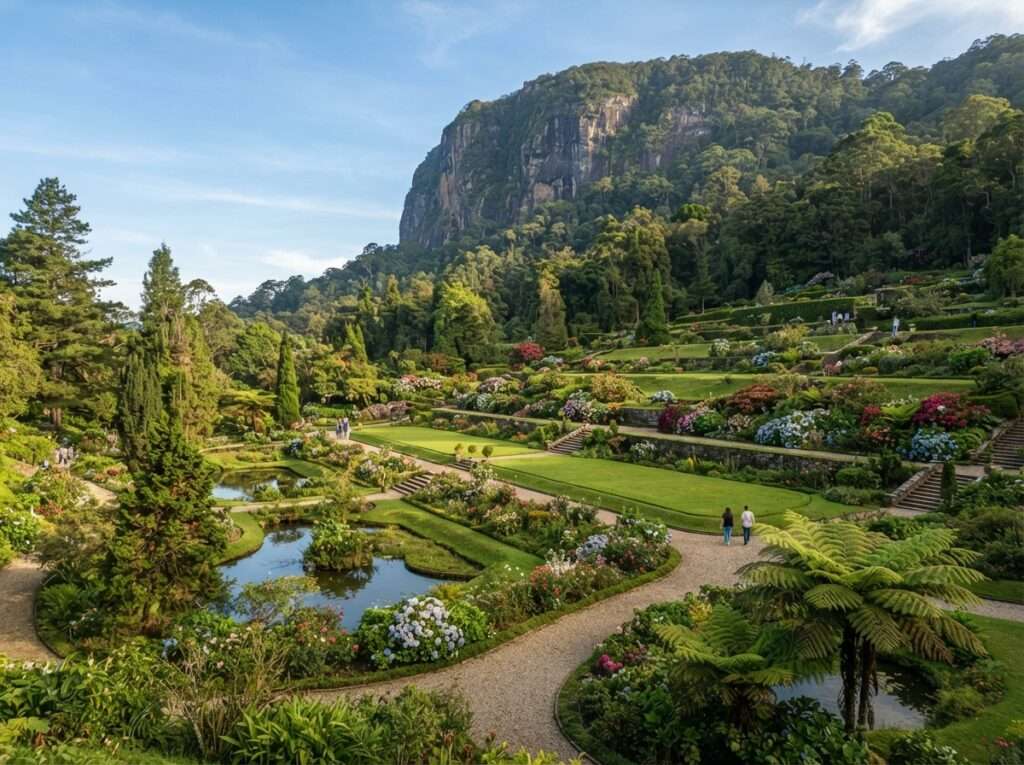
Ashok Vatika is the garden where Ravana kept Sita after she refused a place in his palace, and tradition says the garden was laid out by Vishwakarma. Its present-day identity is the Hakgala Botanical Garden, at the foot of Hakgala Rock in Seetha Eliya, with Sita Pokuna, a barren patch atop the rock jungle, pointed to as the exact place she waited. Hakgala is about 170 km from Colombo by road, and only about a kilometre from the Seetha Amman Temple, so the two are always visited together.
For gate timings and ticket prices before you go, see our Hakgala Botanical Garden entry fees guide.
06
Gayathri Peedam (Nuwara Eliya)
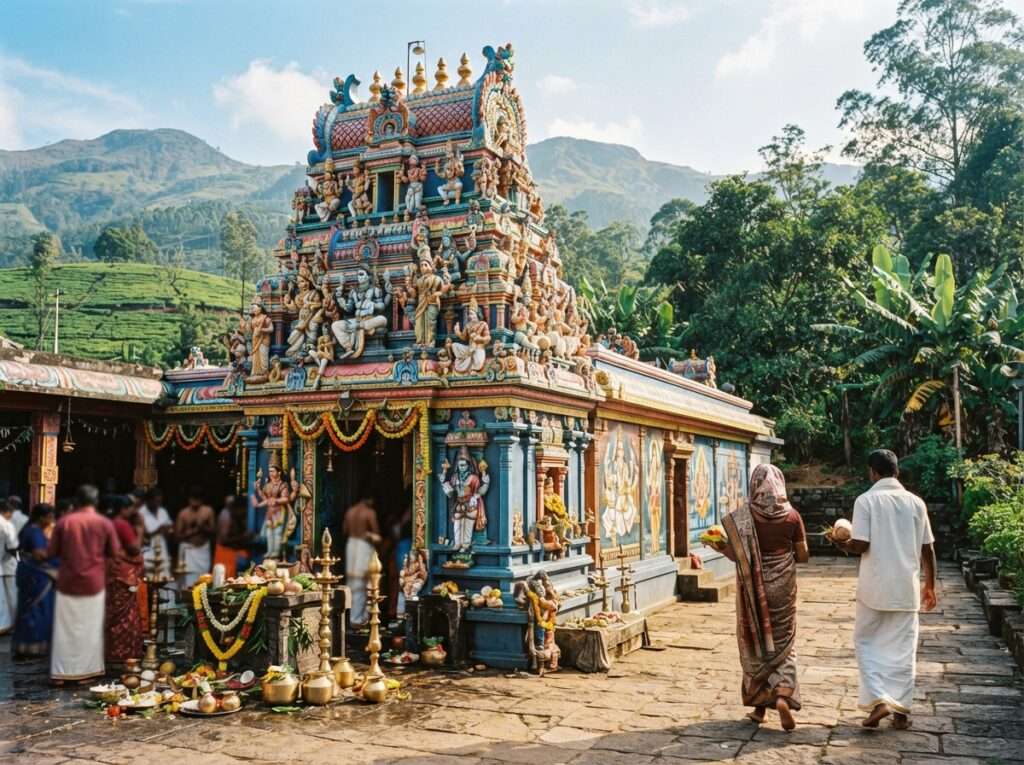
A short way from Seetha Amman sits Gayathri Peedam, believed to be where Ravana’s son Meghanada (Indrajit) performed penance to win the boons he later used in battle. It is a small, living temple rather than a monument, and it rounds out the Nuwara Eliya cluster.
07
Divurumpola Temple (near Welimada)
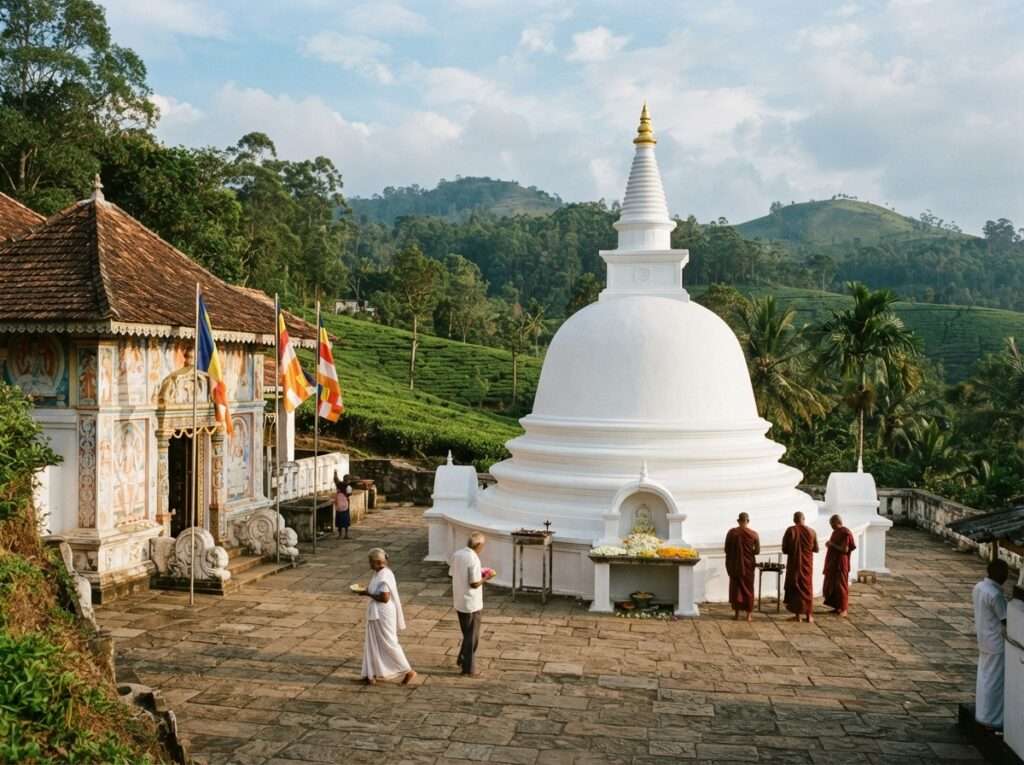
About 190 km from Colombo, past Nuwara Eliya toward Welimada, Divurumpola is where Sita is said to have undergone the Agni Pariksha, the trial by fire through which she proved her purity after being freed. The name means “place of oath,” and the temple is still used for oath-taking today. It closes the Sita chapter of the trail and sits close enough to Seetha Eliya to fit the same day.
08
Ravana Falls and Ravana Cave (Ella)
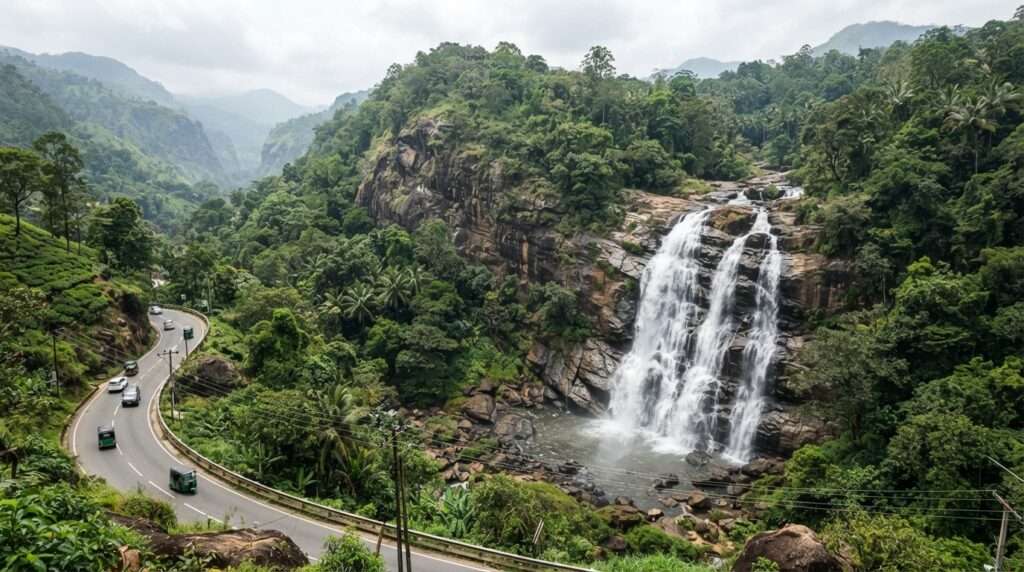
Around Ella, roughly 200 km from Colombo, the story turns to Ravana himself. The 25-metre Ravana Falls tumbles beside the main road, and a short drive away the limestone Ravana Cave is set high in the hillside, where the king is said to have hidden Sita for a time. The cave is reached by a long stairway of several hundred steps and rewards you with valley views. Ella is also where many travellers slow down for a night, so it makes a natural pivot between the hills and the coast.
09
Seetha Kotuwa (Hasalaka)
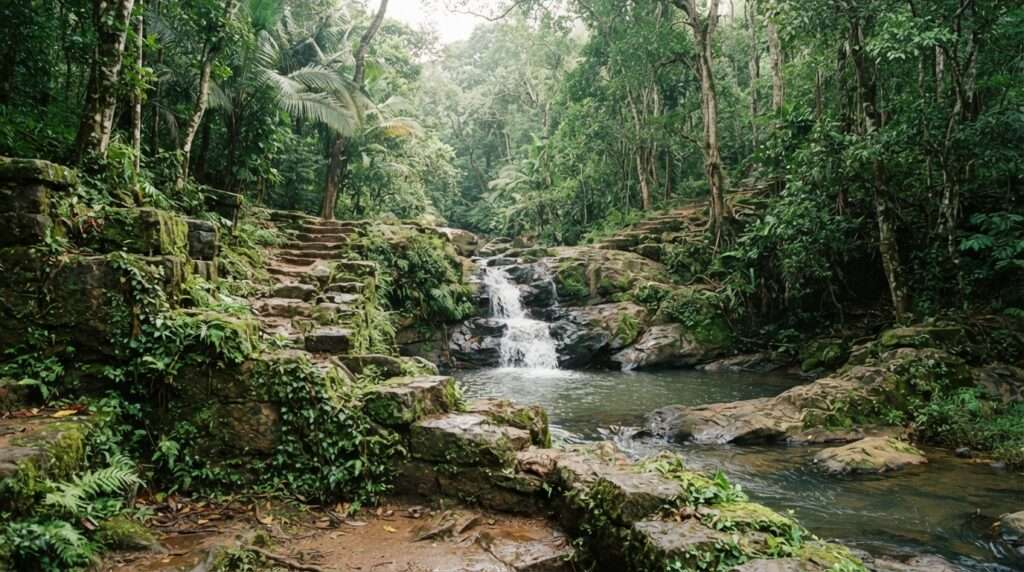
Before Sita was moved to Ashok Vatika, she is believed to have been held at Seetha Kotuwa near Hasalaka, on the site of the old city of Lankapura where Queen Mandodari’s palace once stood among waterfalls. It is the quieter, less-visited end of the trail, worth adding if you are routing through the central interior.
10
Panchamuga Anjaneyar and Kelaniya Temple (Colombo)
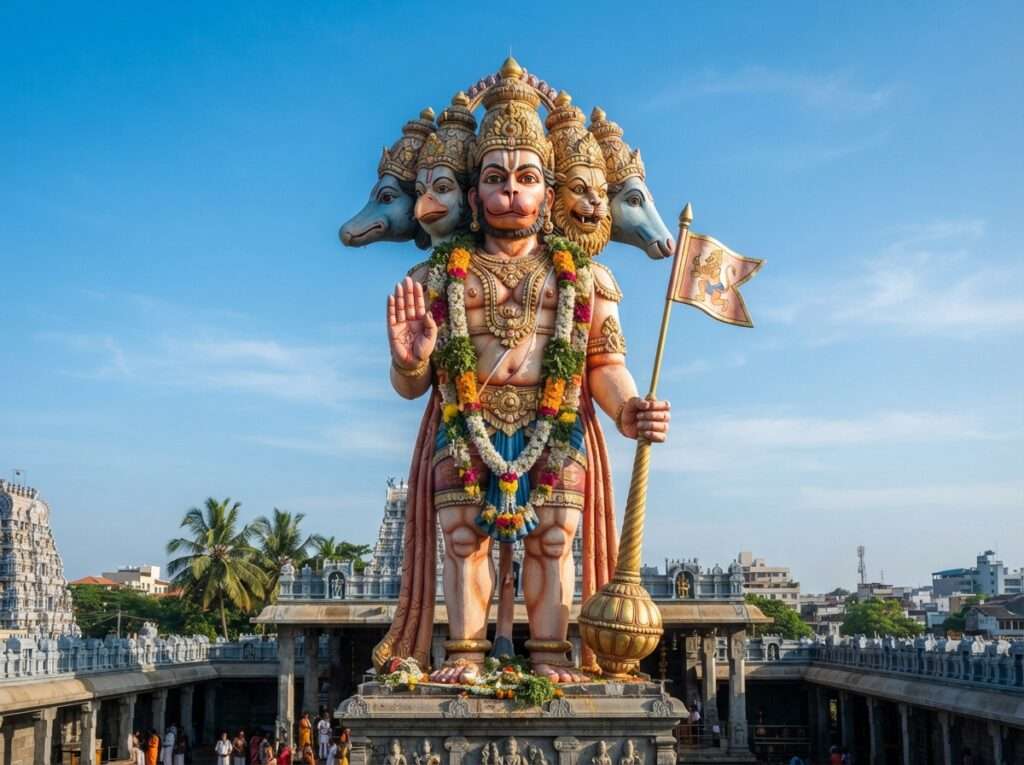
Colombo closes the loop with two temples. The Panchamuga Anjaneyar Temple is the only temple with a chariot of Anjaneya and the island’s only five-faced Hanuman shrine. The Kelaniya Raja Maha Vihara on the city’s edge is where Vibheeshana, Ravana’s brother, is believed to have been crowned king of Lanka after the war. Both are easy half-day stops before a flight home.
11
Nilavarai Bottomless Well (Jaffna)
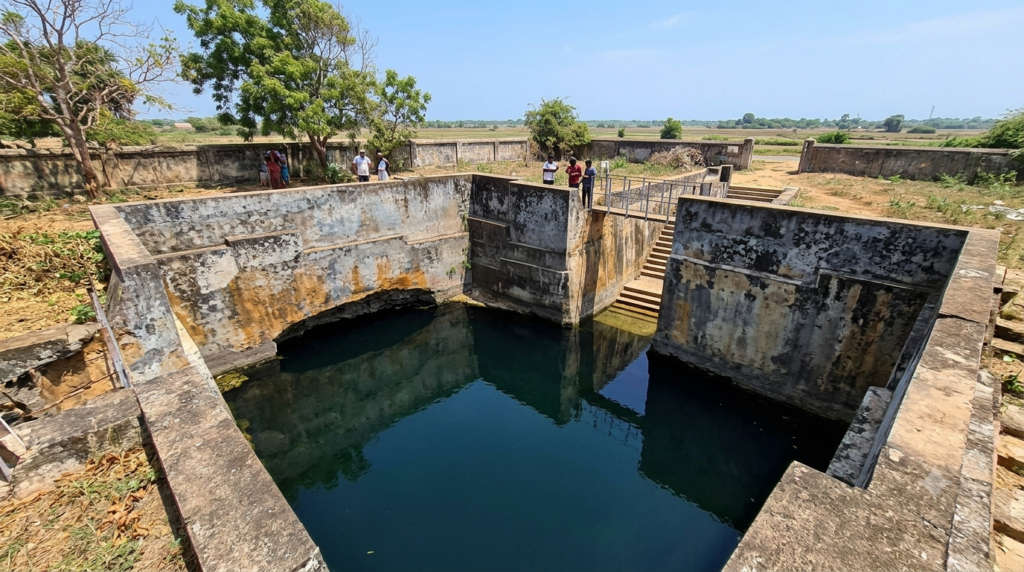
In the far north near Jaffna, the Nilavarai well is said to have been created when Rama shot an arrow into the ground to bring water for his army. For generations its depth went unmeasured, giving it the name “bottomless,” but in 2016 a Sri Lanka Navy robotic expedition mapped its floor to about 52.5 metres, with fresh water in the top 18 metres. Like Trincomalee, it belongs to the extended northern trail for travellers with a week or more.
Other Ramayana sites worth adding
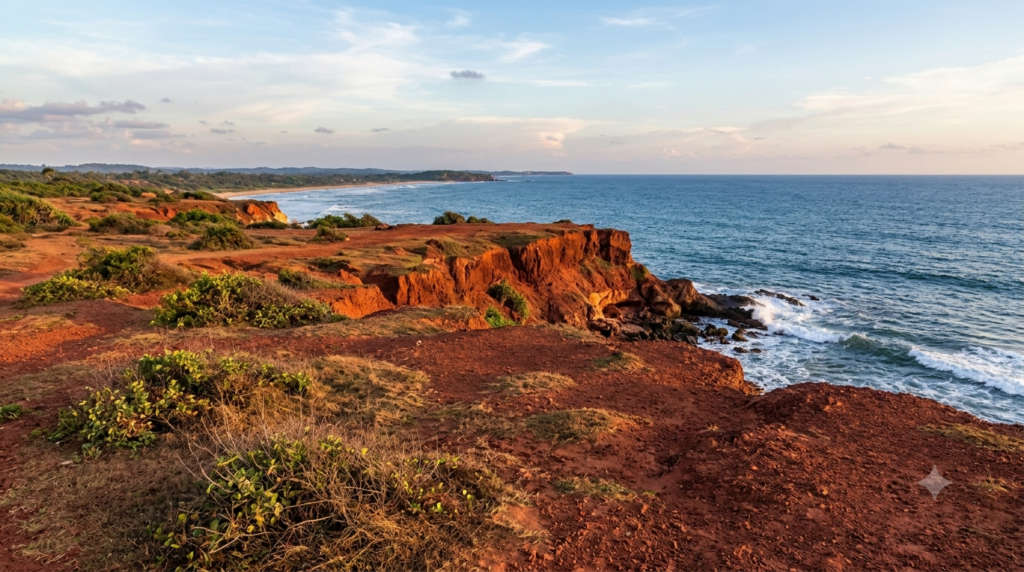
Several more places fill out the epic for those with extra days:
- Ussangoda: a stretch of reddish earth on the south coast that Hanuman is said to have scorched with his burning tail.
- Rumassala, Galle: a hill held to be a piece of the Sanjeevani mountain Hanuman carried from the Himalayas and dropped en route.
- Ritigala: a range of ancient cave ruins marking another spot where fragments of the Sanjeevani mountain fell.
- Cobra Hooded Cave, Sigiriya: linked to Sita’s captivity, near the famous rock fortress; see our Sigiriya guide to combine it.
- Kothmale: where Sita is said to have dropped rice balls to leave a trail for Rama, still sold locally as Sita goli.
- Thotupola Kanda and Kataragama: a highland peak tied to Ravana’s legend and a major southern pilgrimage town, both optional add-ons.
Distances from Colombo to the Ramayana sites
Most trips begin at Bandaranaike International Airport near Colombo, so these road distances and drive times are the ones that shape your route. The hill-country core, where the key Sita sites sit, is reached on the Colombo-Kandy-Nuwara Eliya road.
| Route from Colombo | Distance | Typical drive time |
| Colombo to Chilaw (Munneswaram) | ~80 km | ~2 hours |
| Colombo to Kandy | ~115 km | ~3.5 hours |
| Colombo to Ramboda | ~150 km | ~4.5 hours |
| Colombo to Seetha Amman Temple | ~170 km | ~5 hours |
| Colombo to Ashok Vatika (Hakgala) | 170 km | ~5 hours |
| Colombo to Divurumpola (Welimada) | ~190 km | ~5.5 hours |
| Colombo to Ella (Ravana Falls) | ~200 km | ~6 hours |
| Colombo to Trincomalee (Koneswaram) | ~260 km | ~6 hours |
| Colombo to Jaffna (Nilavarai) | ~400 km | ~8 hours |
The single most-asked distance is Colombo to Ashok Vatika, and the answer is about 170 km by the direct road, with the Seetha Amman Temple reached first, about a kilometre before it on the same road. Once you are in Seetha Eliya, the core sites are minutes apart, which is why it pays to sleep in Nuwara Eliya for two nights.
7-day Ramayana trail itinerary in Sri Lanka
A five-day trip covers the hill-country core. Seven days lets you open with Chilaw and close along the coast without rushing the temples. Here is the seven-day plan our desk uses, followed by the day-by-day detail.
| Day | Route | Ramayana sites covered |
| 1 | Colombo airport to Chilaw to Kandy | Munneswaram, Manavari |
| 2 | Kandy | Temple of the Tooth Relic (Buddhist highlight) |
| 3 | Kandy to Seetha Eliya (via Ramboda) | Sri Bhakta Hanuman, Ramboda Falls |
| 4 | Seetha Eliya day | Seetha Amman, Ashok Vatika (Hakgala), Gayathri Peedam, Divurumpola |
| 5 | Seetha Eliya to Ella | Ravana Falls, Ravana Cave |
| 6 | Ella to Colombo (via south coast) | Ussangoda |
| 7 | Colombo | Panchamuga Anjaneyar, Kelaniya Temple |
Day 1: Colombo to Chilaw to Kandy
Land at Colombo, drive north to Chilaw for Munneswaram and Manavari, then turn inland for Kandy. It is a full day on the road, so keep temple stops tight and settle into Kandy by evening. The Chilaw temples make a natural first stop on the drive in from the airport.
Day 2: A day in Kandy
Kandy is not a Ramayana site, but it is the natural overnight hub and worth a full day. Visit the Temple of the Sacred Tooth Relic, walk Kandy Lake, and catch a Kandyan dance performance in the evening. Rest here before the climb into the hills.
Kochi
The drive up to the tea country is one of the loveliest in the country. Stop at the Sri Bhakta Hanuman Temple and Ramboda Falls on the way, then continue to Seetha Eliya or Nuwara Eliya for a two-night base. Reaching the hills, roughly 80 km from Kandy in about 3 hours, puts you minutes from the densest run of sites.
Day 3: Kandy to Seetha Eliya via Ramboda
This is the day the trail builds to. Seetha Amman Temple, Ashok Vatika at Hakgala Botanical Garden, and Gayathri Peedam sit within a short drive of each other, and Divurumpola is a reasonable add toward Welimada. Give the whole day to this cluster; it is the reason most pilgrims come.
Day 4: The Seetha Eliya sites
Drop down toward Ella for Ravana Falls, right by the road, and the climb up to Ravana Cave above it. Ella is a relaxed hill town, so if your flight allows, this is the night to slow the pace.
Day 6: Ella to Colombo via the coast
Head back toward Colombo, routing along the south coast so you can take in Ussangoda, the scorched-earth site tied to Hanuman. It is a long but scenic driving day.
Day 7: Colombo and departure
Start in Mattancherry, where the spice m
Close the loop in Colombo with the Panchamuga Anjaneyar Temple and the Kelaniya Raja Maha Vihara, where Vibheeshana was crowned, before your flight. To add the northern sites, Koneswaram in Trincomalee or the Nilavarai well near Jaffna, it is best to route north early in the trip, soon after Chilaw and with an overnight stop, rather than doubling back from Colombo at the end.
Prefer a fixed, guided version with hotels and transfers sorted? Browse our Sri Lanka Ramayana tour packages and have the whole circuit arranged end to end.
Planning and cost of a Ramayana tour in Sri Lanka
A guided Ramayana circuit is almost always booked as a customisable package rather than priced site by site, because the value is in the driver-guide who knows the temple legends and the order to drive them. Cost depends on how many days you take, the season, and your hotel class, and a 5-day core trip sits well below a full 8-day loop that adds Trincomalee and Jaffna. Rather than quote a figure that dates quickly, we keep live, customisable pricing on the Sri Lanka Ramayana tour packages page, and you can also browse the wider Sri Lanka tour packages to combine the trail with beaches or wildlife.
Best time to walk the Ramayana trail
Most of the trail runs through the hill country, which is at its best from January to March when Nuwara Eliya and Ella are dry and cool. The west coast around Colombo and Chilaw also holds up well from December to March. If you plan to add Trincomalee or the east, aim for May to September, when that coast is driest. For the full picture, see our guide to the best time to visit Sri Lanka.
Travel tips for the trail
- Hire a car with a driver-guide for the whole route; the sites are spread across the island and public transport between them is slow.
- Dress modestly for the temples, with shoulders and knees covered, and be ready to remove shoes at shrine entrances.
- At the Hindu kovils on the trail, such as Munneswaram and Koneswaram, men are usually required to remove their shirts and enter the inner shrine bare-chested. At the Buddhist temples, by contrast, such as the Temple of the Sacred Tooth Relic and Kelaniya, everyone keeps shoulders and knees covered and shirts stay on.
- Carry small cash for temple donations, parking and the Hakgala garden ticket.
- Base two nights in Seetha Eliya or Nuwara Eliya so you are not driving in and out of the core cluster.
- Combine the trail with the wider island; our Sri Lanka travel coverage links the temples to the hills and coast.
Walking the trail
The Ramayana trail turns a story you have known all your life into a week of real places, from the garden where Sita waited to the cliff temple Ravana built for Shiva. Visit the sites in order, give the Seetha Eliya cluster a full day, and let a local driver-guide fill in the legends between stops.When you are ready to put it all on a single itinerary, start with our Sri Lanka Ramayana tour packages and have the whole circuit arranged
FAQs
Frequently asked questions about the Ramayana trail in Sri Lanka
Common questions on Ashok Vatika, distances, how many days and the best time to go
Ravana's palace complex is believed to have stood on top of Trikuta Mountain in the ancient city of Lankapura, the capital of his kingdom. The hill country around Nuwara Eliya and the central interior near Hasalaka are the regions most often linked to his seat of power.
According to the Ramayana, Sita was kept at Ashok Vatika after her abduction, because she refused to stay in Ravana's palace. Ashok Vatika is identified today with the Hakgala Botanical Garden in Seetha Eliya, beside the Seetha Amman Temple near Nuwara Eliya.
Yes. Tradition and local temple authorities identify the present-day Hakgala Botanical Garden, at the foot of Hakgala Rock in Seetha Eliya, as the site of Ashok Vatika. Sita Pokuna, a bare patch atop the rock jungle, is pointed to as the spot where Sita waited, and the garden sits right next to the Seetha Amman Temple.
Ashok Vatika, at the Hakgala Botanical Garden, is about 170 km from Colombo. Take the Colombo-Kandy highway up into the hill country toward Nuwara Eliya; the drive takes roughly five hours, and the Seetha Amman Temple sits about a kilometre before the garden on the same road.
Five days cover the hill-country core around Kandy and Nuwara Eliya, which holds the key Sita sites. Seven days let you add Chilaw at the start and Ella and the coast at the end without rushing, and eight days add Trincomalee in the northeast, with nine or ten needed to also reach Jaffna in the far north
January to March is ideal, because most of the trail runs through the hill country, which is dry and cool then. The west coast near Colombo is also good from December to March. If you plan to include Trincomalee in the northeast, come between May and September, when that coast is at its driest.
Koneswaram Temple in Trincomalee is the site most closely tied to Ravana. Tradition holds that he and his mother worshipped Lord Shiva there, and that it is one of the four lingam sites connected to Rama's later penance. It sits dramatically on Swami Rock above the sea.
Most Sri Lankans do not worship Ravana as a god, but he is widely revered as a hero, a devoted follower of Lord Shiva, and a king of great learning. The temples along the trail tell the story from this Lankan point of view, which is part of what makes visiting them so different from the Indian sites.
By the epic's account, Sita spent roughly one year in captivity in Lanka, most of it at Ashok Vatika after she refused a place in Ravana's palace. The trail lets you visit the sites of her captivity, her rescue and her fire ordeal, across the places the epic sets in Lanka.
Ravana's mother was Kaikesi. She is part of why Koneswaram Temple carries such weight on the trail, since Ravana is said to have worshipped Shiva there alongside her.
Sita refused to live in the palace with Ravana, so he placed her in Ashok Vatika, the garden said to have been laid out by Vishwakarma. Keeping her in the garden, under guard but apart from his household, is the detail the Seetha Amman Temple and Hakgala garden are built around today.
Because the trail is driven as a customisable circuit, the cost moves with the number of days, the season and your choice of hotels, so a short core trip costs far less than a full northern loop. For current, customisable rates on a complete guided circuit, see our Sri Lanka Ramayana tour packages.