4D / 3N
17% OFF
4D / 3N
17% OFF
Manali-Kasol Tour Package by Cab for Himachal (4D/3N) - At A Glance
- Hotel
- Meals
- Sightseeing
- Entry Tickets
- Cab Transfer
₹12,688
₹10,500 /pp
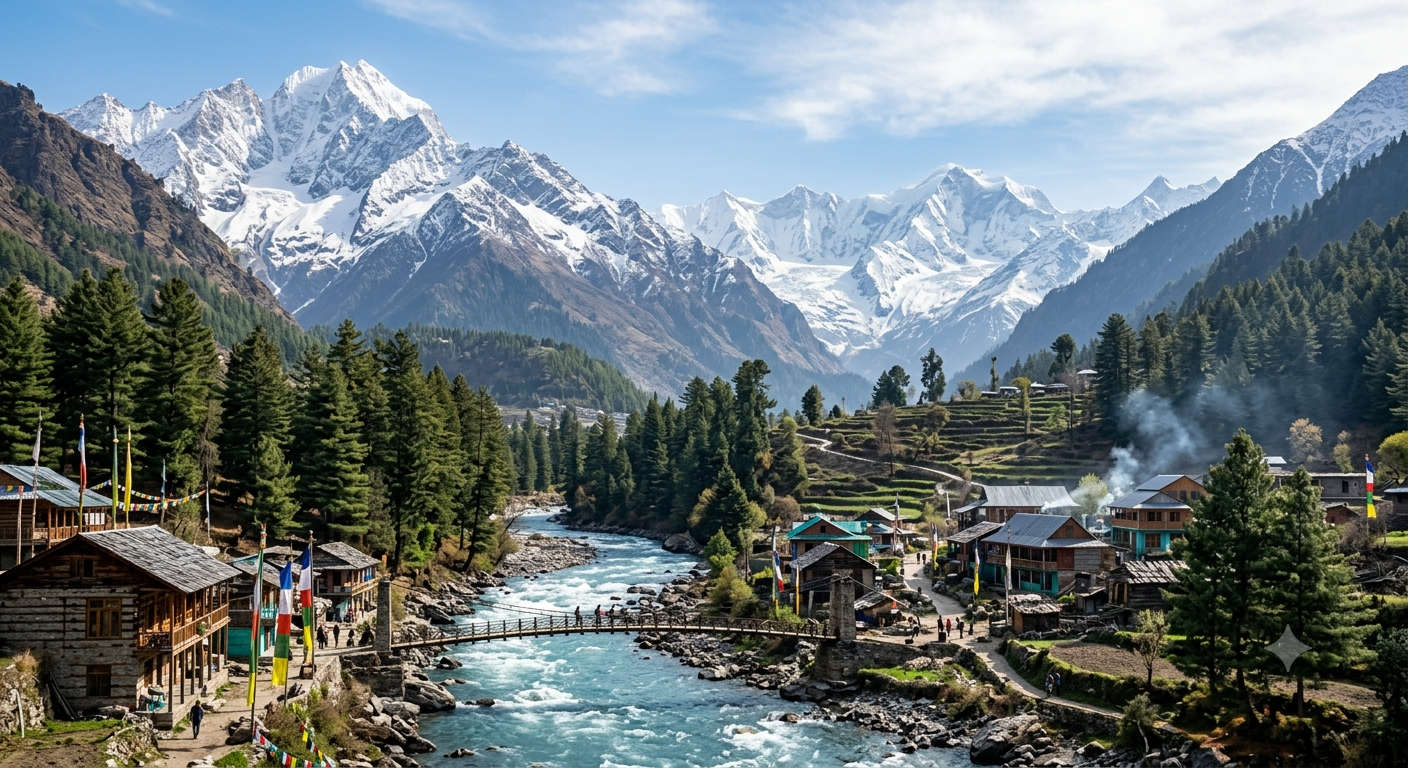


Kasol needs three to four days to enjoy without rushing, sits at roughly 1,580 metres on the banks of the Parvati river, and costs a first-timer somewhere between Rs 5,000 and Rs 18,000 depending on how you travel and where you sleep. That is the short version of this Kasol travel guide. The longer version is that Kasol rewards people who plan a little: which villages to base in, how many days each side trek eats up, when the snow closes the higher trails, and the one legal reality about the local charas that first-timers keep learning the hard way. This guide walks a complete beginner from arrival to departure, with a day-by-day itinerary, a 2026 cost breakdown and the practical notes on permits, altitude and safety that most Kasol pages leave out.
Your First Kasol Trip in Brief
Best Time
March - June
Select Package Type

3 Days & 2 Nights
₹9,043 /@pp
GET FREE QUOTE

9 Days & 8 Nights
₹36,484 /@pp
GET FREE QUOTE.jpg?tr=w-600,h-300)

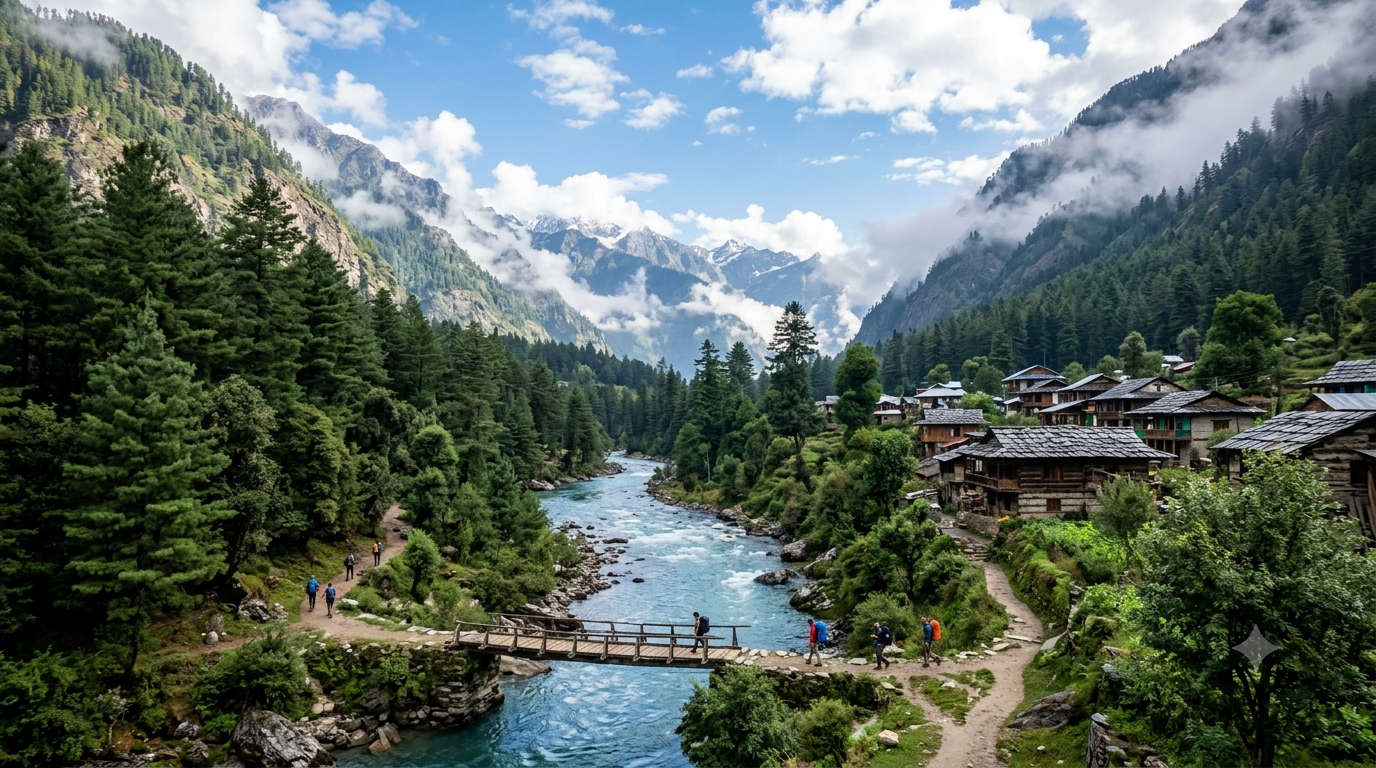
Kasol is a small riverside village in Kullu district, Himachal Pradesh, strung along the Parvati river between Bhuntar and Manikaran. It grew from a trekking halt into the backpacking capital of North India over the last decade, helped along by Israeli travellers who settled here after their military service, so you will hear as much Hebrew as Hindi on the main lane and eat more shakshuka than rajma. The village splits into Old Kasol and New Kasol across a small bridge, with cafes, hostels and camping grounds on both banks.
Kasol itself is really a base camp. The reason people love it is everything within a short drive or walk: the hot springs at Manikaran, the cliff-top hamlet of Tosh, the offbeat trails to Rasol and Grahan, and the big one, Kheerganga. For a full run-down of the sights, see our dedicated guide to the best places to visit in Kasol. This guide stays focused on planning your first trip: how long to go, what it costs, and how to do it right.
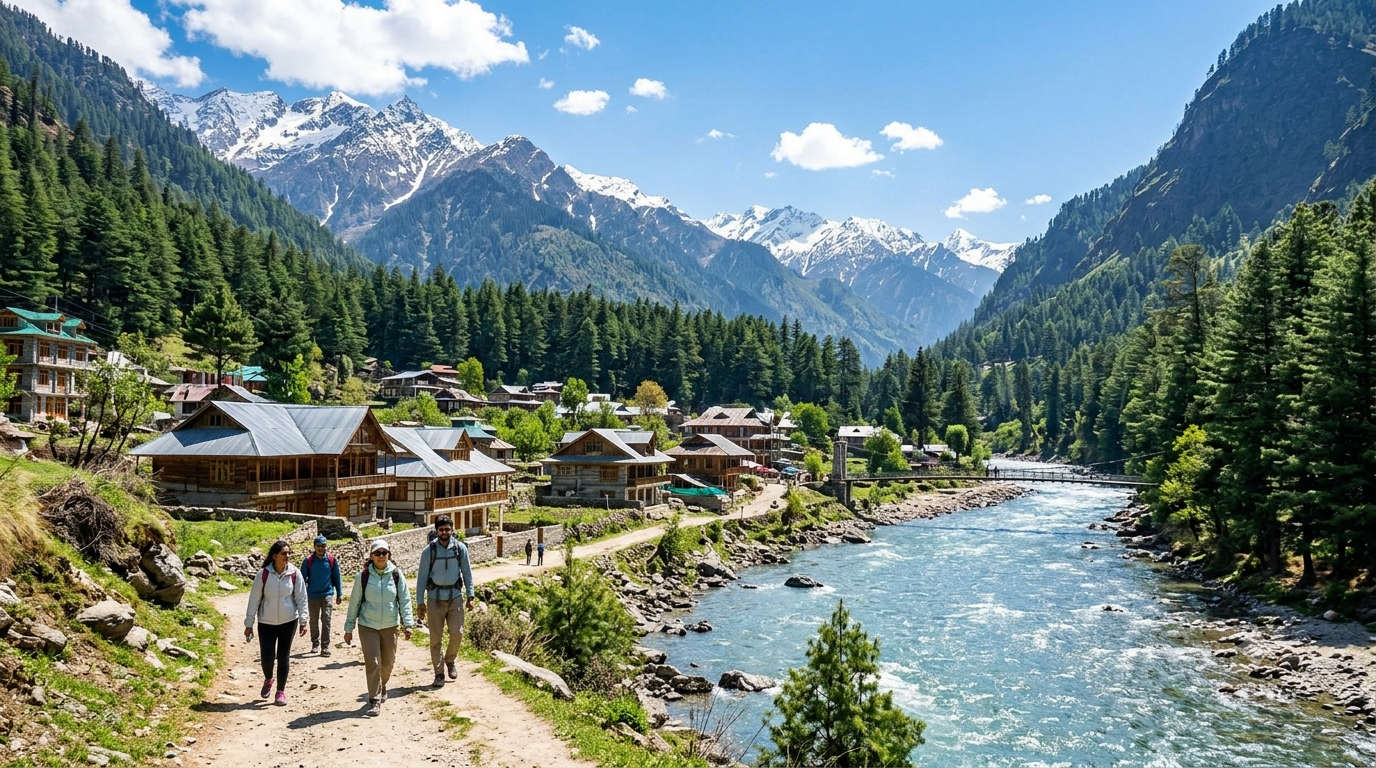
Kasol is open all year, but the experience changes completely with the season, and picking the wrong month is the most common first-timer mistake. The short answer: come from April to June if you want green valleys and open high treks, and December to February only if snow is the point of your trip. Avoid the peak monsoon.
Kasol month-by-month, 2026
| Months | What it is like | Best for |
| March to April | Cool days, cold nights, valley turning green, higher trails still thawing | First-timers, easy treks, fewer crowds |
| May to June | Warmest and busiest, all treks including Kheerganga open, book stays ahead | Kheerganga, Tosh, first Himalayan trip |
| July to mid-Sept | Monsoon, heavy rain and landslide risk on the Bhuntar to Kasol road | Not recommended for first-timers |
| Late Sept to Nov | Clear post-monsoon skies, crisp air, thinning crowds | Photography, calm cafes, budget travel |
| Dec to Feb | Snow in Kasol and above, some higher villages cut off, cold but magical | Snow lovers, couples, quiet retreats |
Want the snow angle in detail? Read our guides to snowfall in Kasol and visiting Kasol in winter. For the official month-by-month breakdown, see the Kasol best-time hub.
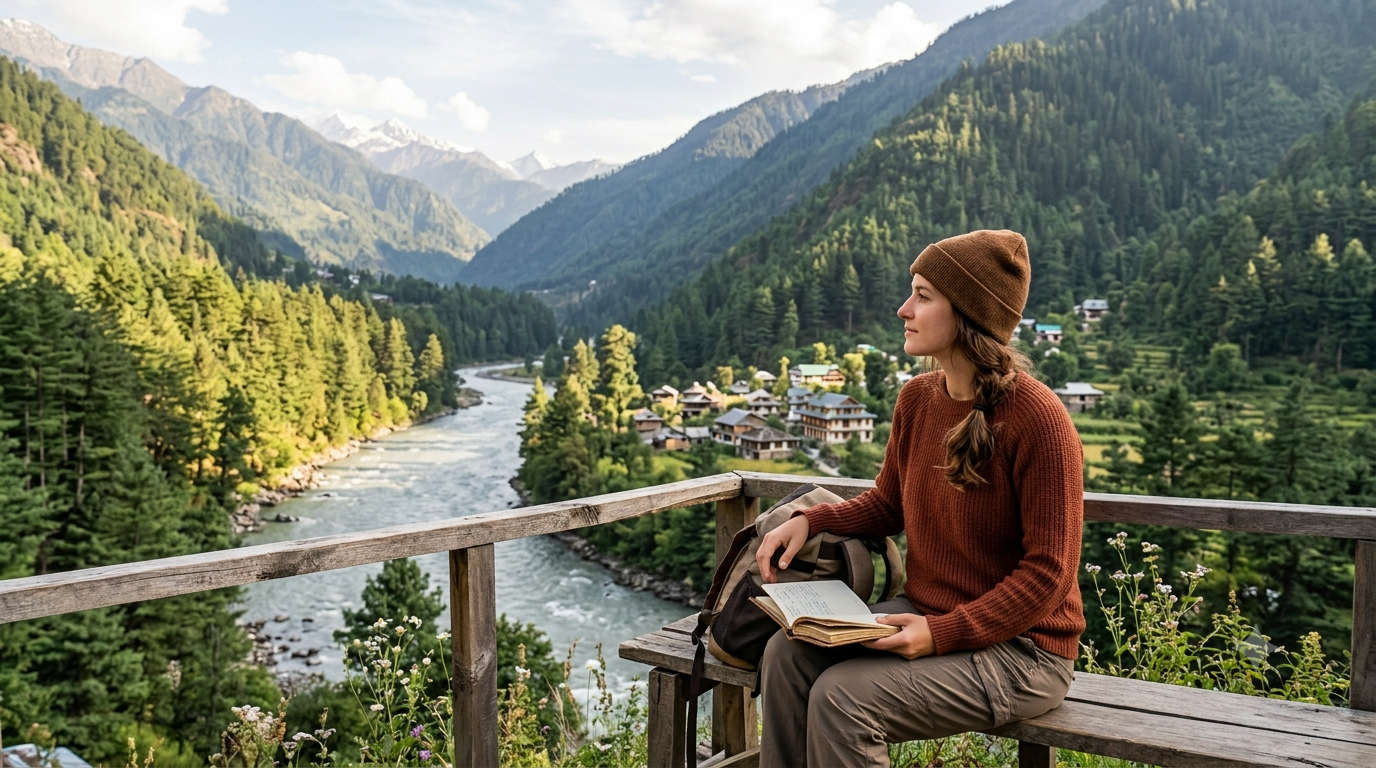
Three to four days is the sweet spot for a first Kasol trip. Two days is enough only if Kasol is a stop on a longer Himachal route and you are happy to see just the village, Chalal and Manikaran. Give it four to five days and you can add a proper trek to Kheerganga or a night in Tosh without treating the holiday like a checklist. Here is what each length realistically buys you, remembering that a night bus from Delhi eats one evening on each end.
How long to spend in Kasol
| Trip length | Best for | What you can comfortably cover |
| 2 days / 1 night | A quick add-on to a Manali or Himachal trip | Kasol village, Chalal walk, a Manikaran half-day |
| 3 days / 2 nights | A relaxed first taste of the valley | Above plus Tosh or Malana, cafe-hopping, riverside time |
| 4 days / 3 nights | The ideal first-timer trip | Above plus a full Kheerganga day-trek or a night in Tosh |
| 5 days / 4 nights | Slow travel or offbeat trekkers | Above plus Rasol, Grahan or the Waichin (Magic) Valley |
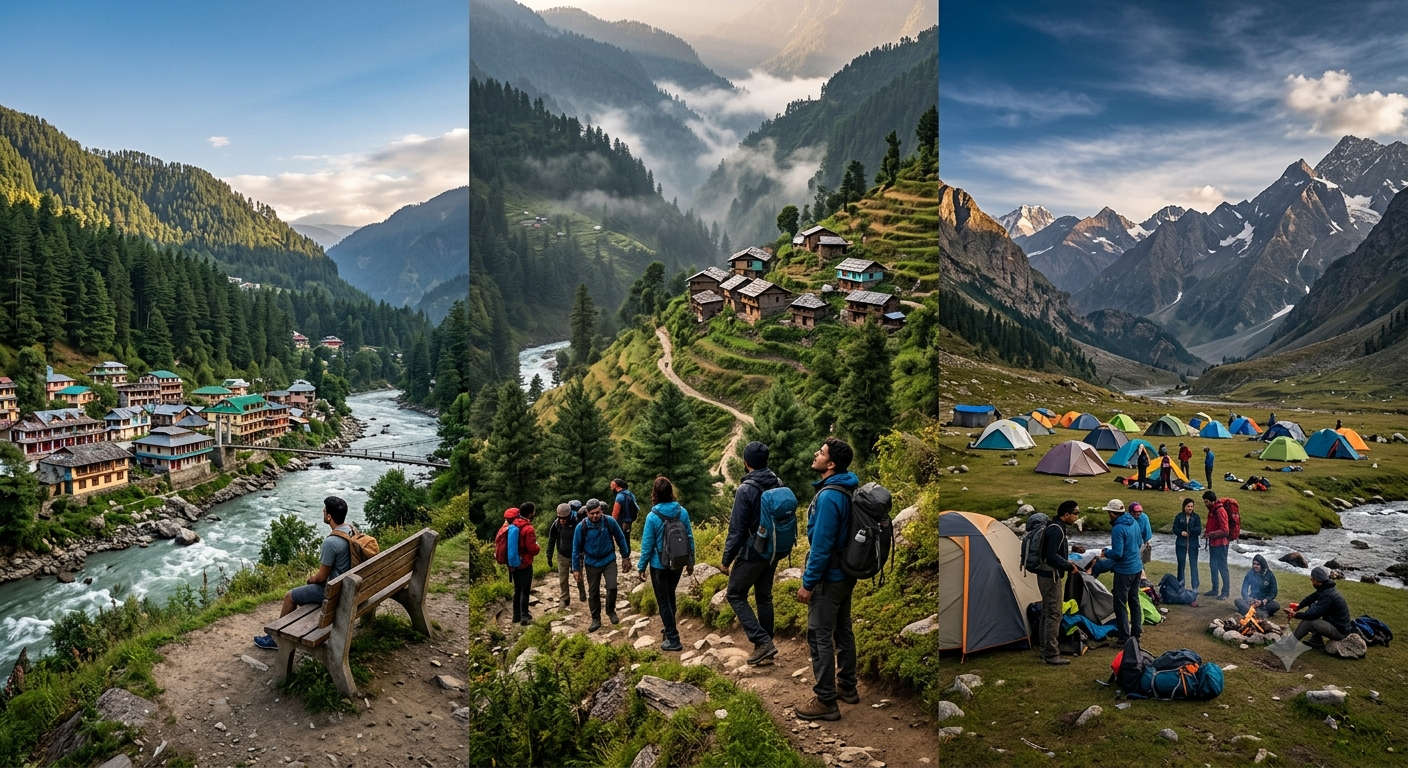
Below are three ready-to-use plans built around the same core, so you can start with the 3-day version and simply bolt on days. All of them assume you reach Bhuntar or Kasol by morning after an overnight bus from Delhi or Chandigarh.
3-Day Kasol Itinerary (the classic first trip)
4-Day Kasol Itinerary (add Kheerganga)
Follow Days 1 and 2 above, then swap in the trek.
5-Day Kasol Itinerary (offbeat add-on)
Follow the 4-day plan, then add one more day for the trails most first-timers miss.
Prefer to skip the planning entirely? Our Kasol tour packages bundle stays, transfers and these treks into a single customisable trip. If you are driving up yourself, the Delhi to Kasol road-trip guide covers the route in detail.
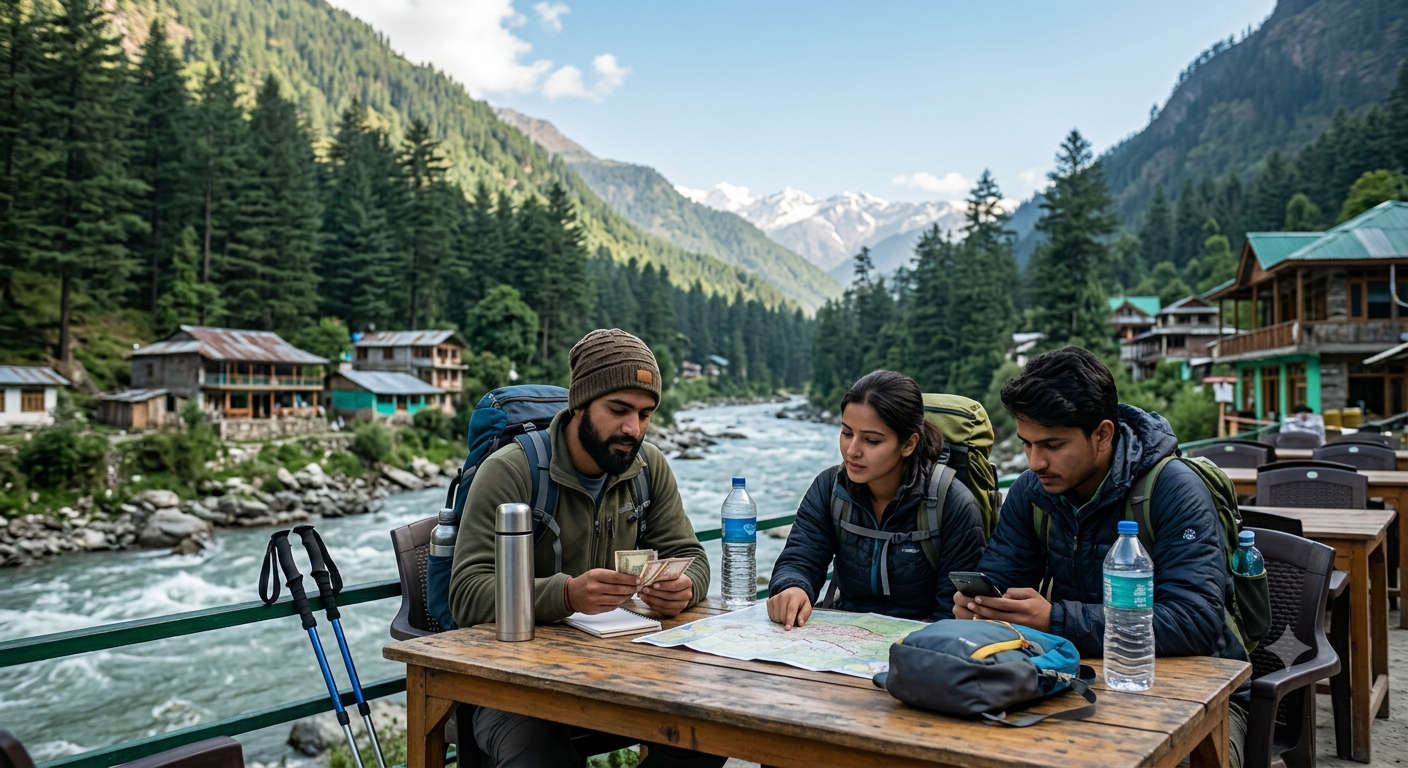
A Kasol trip is genuinely cheap if you travel like a backpacker and only as expensive as you choose to make it. For a first-timer doing 3 to 4 days, budget roughly Rs 5,000 to Rs 8,000 per person if you take buses, stay in hostels and eat at cafes, and about Rs 10,000 to Rs 18,000 per person for private cabs, a comfortable riverside room and a few paid activities. This is the section people search as kasol ghumne ka kharcha, so here is the honest line-item version. Fares move year to year, so treat the table as a planning baseline and confirm current rates when you book.
Sample Kasol trip cost, 2026 (planning baseline)
| Expense (per person, 3 to 4 days) | Budget style | Comfortable style |
| Delhi to Kasol return travel (Volvo / shared cab) | Rs 2,400 to Rs 3,600 | Rs 6,000 to Rs 9,000 (private cab share) |
| Stay (2 to 3 nights) | Rs 1,500 to Rs 3,000 (hostel / camp) | Rs 5,000 to Rs 9,000 (riverside room) |
| Food and cafes | Rs 1,000 to Rs 1,800 | Rs 2,500 to Rs 4,000 |
| Local cabs, treks, entry and extras | Rs 800 to Rs 1,500 | Rs 2,000 to Rs 4,000 |
| Rough total | Rs 5,000 to Rs 8,000 | Rs 10,000 to Rs 18,000 |
Two ways to keep it cheap: travel by HRTC or Volvo bus rather than a private cab, and go in the shoulder months of March or October when rooms are half the June price. Carry enough cash, because card machines and ATMs are unreliable once you leave Kasol.
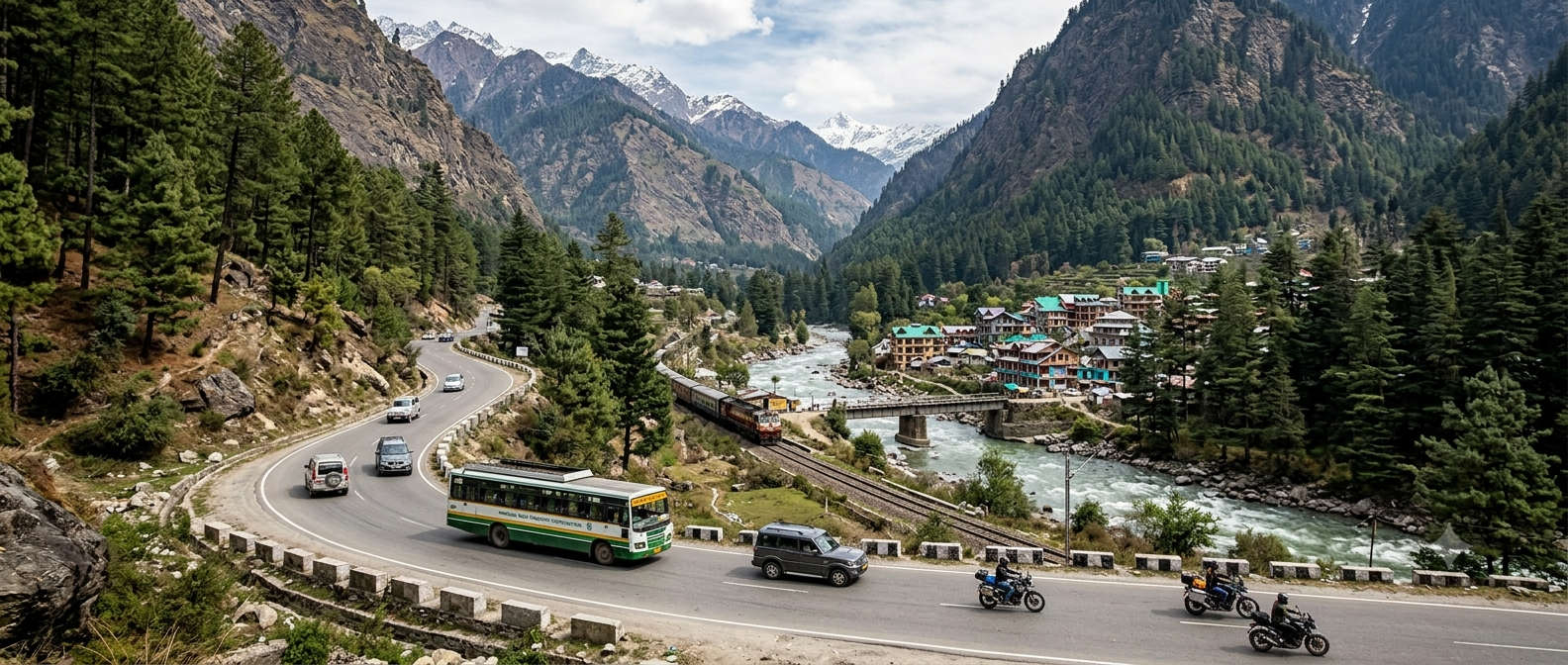
Kasol is not on a railway line and has no airport of its own, so almost everyone arrives by road up the Parvati valley. Here is the simplest route for a first-timer, step by step.
On-the-ground reality for 2026: the Bhuntar to Kasol stretch is a narrow hill road that slows badly in the monsoon and after landslides, so pad your arrival time. Mobile network is patchy beyond Kasol and drops on the treks, and there are no working ATMs past Kasol, so draw cash in Bhuntar or Kasol town.
For city-specific routes and timings, see the Kasol how-to-reach hub and the Manikaran travel notes.
This is the section written specifically for someone who has never been to the Parvati valley, and it is the part most Kasol guides skip. Read it before you go.
Do you need a permit?
No. Indian nationals need no permit to visit Kasol, Manikaran, Tosh, Malana or anywhere in the Parvati valley, and there is no entry fee for the villages. Foreign nationals travel on their standard Indian visa; no special inner-line permit applies here. The only access rules you will meet are the Kheerganga day-trek timings and the etiquette at Malana, covered below.
The cannabis-law reality (please read this)
The Parvati valley is famous for its charas, sold openly as Malana cream, and first-timers are often surprised to learn it is fully illegal. Cannabis is a controlled substance under the Narcotics Drugs and Psychotropic Substances (NDPS) Act, 1985. Buying, carrying or possessing it is a criminal offence, police checks on the valley road are real, and foreign travellers in particular have faced arrest and long legal trouble. Treat any offer, however casual, as a legal risk, not a local custom. Nobody else writes this plainly, so we will: do not buy it.
Malana etiquette
Malana is an old village with its own customs, and visitors are asked not to touch the residents, their homes or temple structures, with fines posted for breaking the rule. Buy food and water from the designated shops, follow the signs, and be respectful. It makes a good half-day trip from Kasol (about 21 km, then a short walk), best done with a local guide who knows the current rules.
Altitude and AMS
Kasol at about 1,580 metres is low enough that altitude is not a concern in the village itself. It becomes relevant on the treks: Kheerganga tops out near 3,000 metres, and a fast climb with poor sleep and no water can bring on a headache, nausea or breathlessness, the early signs of acute mountain sickness. Climb slowly, drink plenty of water, and if symptoms get worse, descend. Anyone with heart or breathing conditions should take the higher treks gently.
Kheerganga: day-trek only in 2026
If Kheerganga is on your list, note the rule that catches people out: overnight camping on the Kheerganga meadow has been banned by the Himachal Pradesh Forest Department since July 2024, and the ban is in force for the 2026 season to protect the fragile alpine site. It is now a day-trek. Start from Barshaini early in the morning, reach the top, use the hot spring, and descend the same day to sleep lower down at Pulga, Kalga, Barshaini or Tosh. Carry your own water and cash, and check the current timing at the forest check-post before you set off.
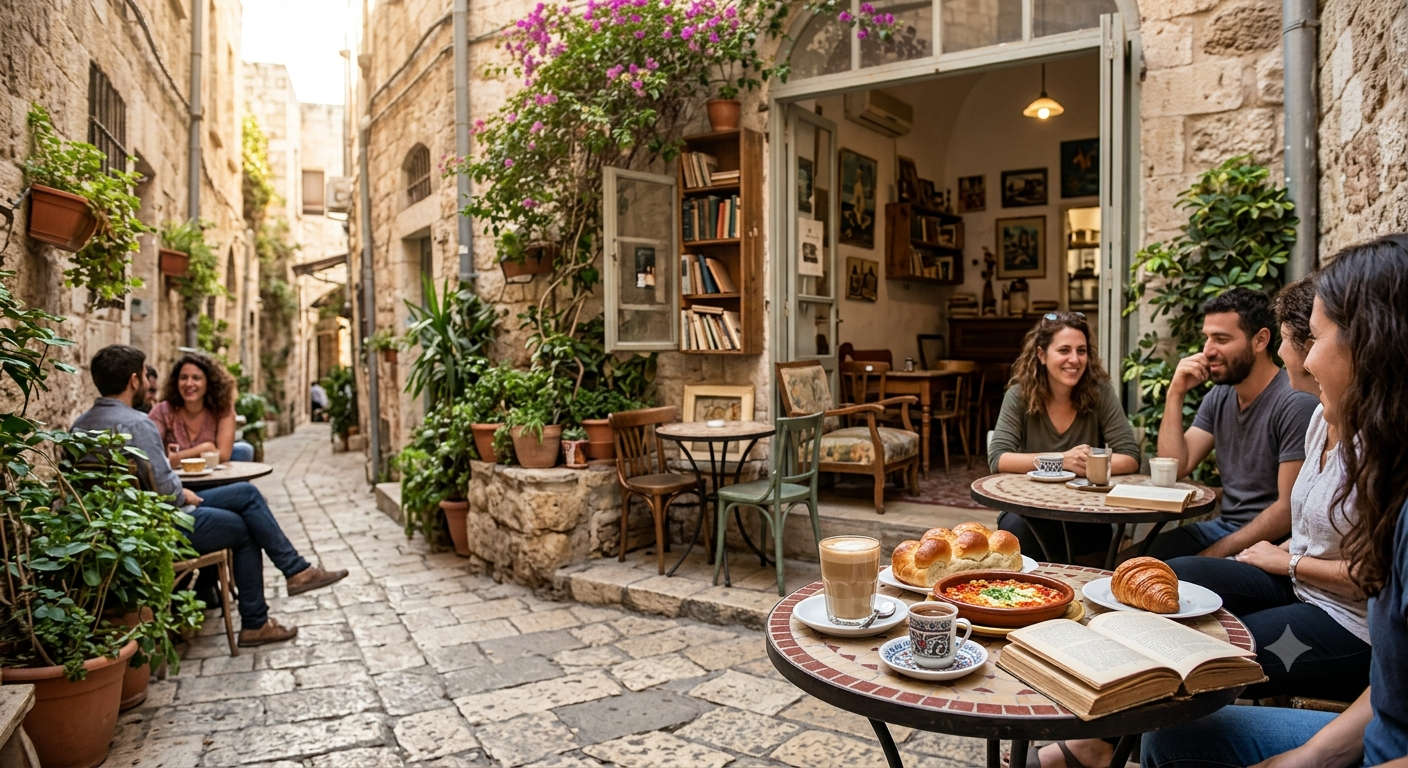
Half the reason people linger in Kasol is the food. The cafe scene grew out of the long-staying Israeli community, so alongside momos and Himachali food you get properly good hummus, shakshuka, pita, and thin wood-fired pizza, usually eaten on floor cushions with the river below. A few first-timers reliably enjoy: Stone Garden Cafe for the view, Jim Morrison Cafe and Moon Dance Cafe for the classic Kasol atmosphere, Evergreen Cafe and Freedom Cafe for long lazy breakfasts, and Buddha Place for a quiet riverside seat. Portions are generous and service runs on mountain time, so order, then relax.
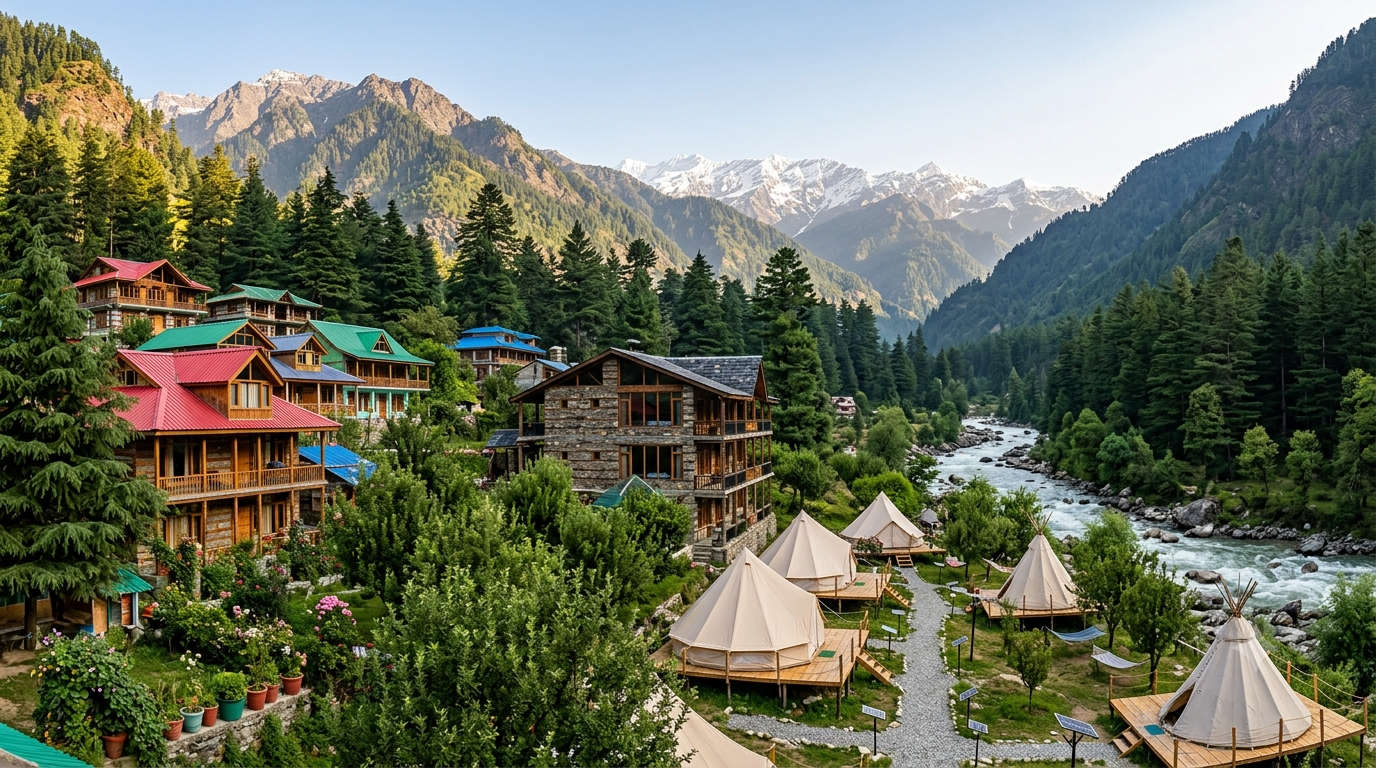
Stays split neatly into three tiers. Hostels and campsites in and around Kasol run cheap and social and suit solo backpackers. Riverside cottages and mid-range hotels in New Kasol give you a private room with a Parvati view for a comfortable trip. For something quieter, base yourself in Chalal, Katagla or Tosh, a short hop from the crowds. In peak May and June, book two to three weeks ahead, because the good riverside rooms sell out first.
For specific properties by budget, see our roundup of the best homestays in Kasol.

Kasol is a mountain trip, and the single most common packing mistake is under-dressing for the night, which stays cold even in summer. Pack to the season.
Summer (April to June)
Light layers for the day, a warm fleece or jacket for the evening, comfortable trekking shoes, a rain shell, sunscreen, a cap and a refillable water bottle. Nights still drop to single digits.
Winter (December to February)
Serious warmth: a heavy down jacket, thermals, woollen cap and gloves, waterproof boots with grip for snow, and moisturiser. Some higher villages get cut off, so keep plans flexible.
Monsoon and always
A good rain jacket and a dry bag for electronics in the wet months. In every season carry a power bank, a basic first-aid kit with any personal medicine, a torch, enough cash for days off-grid, and copies of your ID.
Kasol fast facts, 2026
| Detail | Information |
| Location | Kullu district, Himachal Pradesh, on the Parvati river |
| Altitude | About 1,580 m (about 5,180 ft) |
| Ideal trip length | 3 to 4 days for first-timers |
| Best time | April to June (green), Dec to Feb (snow) |
| Nearest airport | Kullu-Manali (Bhuntar, KUU), about 30 km |
| Nearest major railhead | Chandigarh, about 280 km |
| Distance from Delhi | About 520 km (10 to 12 hrs by road) |
| Distance from Chandigarh | About 280 km (7 to 8 hrs) |
| Permit | None needed for Indian nationals |
| ATM / network | Unreliable beyond Kasol, carry cash |
| First-timer budget | Rs 5,000 to Rs 18,000 pp for 3 to 4 days |
| Do not miss | Manikaran hot springs, Tosh, Kheerganga day-trek |
Kasol is one of the easiest first Himalayan trips to get right: reach Bhuntar, give yourself three or four days, come in the shoulder or summer months, carry cash, respect the treks and the law, and let the valley set the pace. Do that and you leave understanding why people keep coming back.
When you are ready to plan the real thing, browse our customisable Kasol tour packages, or read a real traveller’s account in this Kasol and Kheerganga travelogue before you go.
Three to four days is ideal for a first Kasol trip. Two days covers only the village, Chalal and Manikaran, which works if Kasol is a stop on a wider Himachal route. Four to five days lets you add a full Kheerganga day-trek, a night in Tosh, or an offbeat trail to Grahan or Rasol without rushing. Remember that an overnight bus from Delhi uses one evening on each end.
No. Indian nationals need no permit to visit Kasol, Manikaran, Tosh, Malana or the wider Parvati valley, and there is no village entry fee. Foreign nationals travel on their normal Indian visa, with no special inner-line permit for this area. The only access rules you will meet are the Kheerganga day-trek timings enforced by the Forest Department and the visitor etiquette at Malana.
For a 3 to 4 day trip, budget roughly Rs 5,000 to Rs 8,000 per person if you take buses, sleep in hostels or camps and eat at cafes. A comfortable version with private cabs, a riverside room and a few paid treks runs about Rs 10,000 to Rs 18,000 per person. The biggest variables are transport and stay. Travelling by Volvo bus and visiting in the shoulder months keeps costs down.
Delhi is the most common starting point. A return Volvo or HRTC bus from Delhi to Bhuntar costs roughly Rs 2,400 to Rs 3,600 per person, and the last 30 km to Kasol by local bus or shared cab is inexpensive. Add stay, food and local travel and a first-timer typically spends Rs 5,000 to Rs 12,000 per person for 3 to 4 days from Delhi, depending on comfort level.
April to June is the best all-round window, with green valleys, warm days and every trek including Kheerganga open. December to February is for snow lovers, though nights are freezing and some higher villages get cut off. The post-monsoon months of late September to November bring clear skies and thin crowds. Avoid the peak monsoon of July to mid-September, when the Parvati road is prone to landslides.
Almost everyone reaches Kasol by road. The nearest airport is Kullu-Manali at Bhuntar, about 30 km away, but flights are limited, so most people take an overnight Volvo from Delhi (about 520 km) or Chandigarh (about 280 km) to Bhuntar, then a bus or shared cab for the final 30 km. There is no railway station in Kasol; the nearest major railhead is Chandigarh.
Kasol is generally considered safe for solo female travellers, and many visit alone, but the usual mountain-town caution applies. Stay in well-reviewed hostels or homestays, avoid isolated trails after dark, keep someone informed of your plans, and be firm about declining drug offers. Network is patchy on the treks, so download offline maps and carry a power bank. On the longer treks, going with a small group or a local guide is sensible.
They suit different travellers. Kasol is quieter, cheaper and more about riverside cafes, village treks and a backpacker mood. Manali is busier and more commercial, with snow points, adventure activities and family-friendly hotels. First-time backpackers and people wanting calm usually prefer Kasol. Families and first-time Himachal tourists often prefer Manali. Many trips combine both, since they are only a few hours apart.
Yes, and December to February is the season if you want snow, with Kasol and the higher villages turning white. Expect freezing nights, occasional road blocks after heavy snow, and some higher hamlets being hard to reach. Pack heavy winter clothing and waterproof boots, and keep your plans flexible. The higher treks like Kheerganga are risky or closed in deep winter, so stick to the village, Chalal and Manikaran.
Kasol works well for families who enjoy an easygoing, nature-focused trip rather than packed sightseeing. The village, the riverside cafes, Chalal, and a day trip to the Manikaran hot springs and Gurudwara are all comfortable with children and older relatives. The steep treks to Kheerganga or Malana are better left to older kids and fit adults. Choose a mid-range riverside stay and keep the pace relaxed.
The Kheerganga trek is open and remains one of the valley's highlights, but overnight camping on the meadow is banned. The Himachal Pradesh Forest Department stopped camping there in July 2024 to protect the site, and the ban continues through the 2026 season, so Kheerganga is now a day-trek. Start early from Barshaini, use the hot spring, and descend the same day to sleep at Pulga, Kalga, Barshaini or Tosh. Confirm timings at the forest check-post.
Malana is about 21 km from Kasol and takes around an hour by road, followed by a short uphill walk from the Malana road-head to the village. You can take a private cab or a shared taxi from Kasol. There is no direct bus into Malana itself. It is easily done as a half-day trip, ideally with a local guide who can explain the village's customs and current visitor rules.
Pack for cold nights even in summer. From April to June, bring light day layers plus a warm jacket, trekking shoes, a rain shell and sunscreen. From December to February, bring heavy down layers, thermals, gloves, a woollen cap and waterproof boots. In every season carry a power bank, a torch, a basic first-aid kit, enough cash for days without ATMs, and copies of your ID.
Kasol's cafe scene is one of its main draws, shaped by the long-staying Israeli community. First-timers reliably enjoy Stone Garden Cafe for the view, Jim Morrison Cafe and Moon Dance Cafe for the classic atmosphere, Evergreen Cafe and Freedom Cafe for long breakfasts, and Buddha Place for a quiet riverside table. Expect good hummus, shakshuka, pizza and momos. Portions are large and service is unhurried.
The peak monsoon, roughly July to mid-September, is the one time first-timers should think twice. The narrow Bhuntar to Kasol road and the higher trails are prone to landslides and closures after heavy rain, and the treks turn slippery and risky. If you must go, keep your itinerary flexible, avoid the high treks, watch weather and road updates, and build in buffer days. The shoulder months on either side are far safer.
Real reviews from real travelers who booked with us.
View All Reviews