4D / 3N
24% OFF
Best Selling Alleppey-Munnar Kerala Weekend Tour
- Hotel
- Meals
- Sightseeing
- Houseboat
- Cab Transfer
₹17,132
₹13,020 /pp


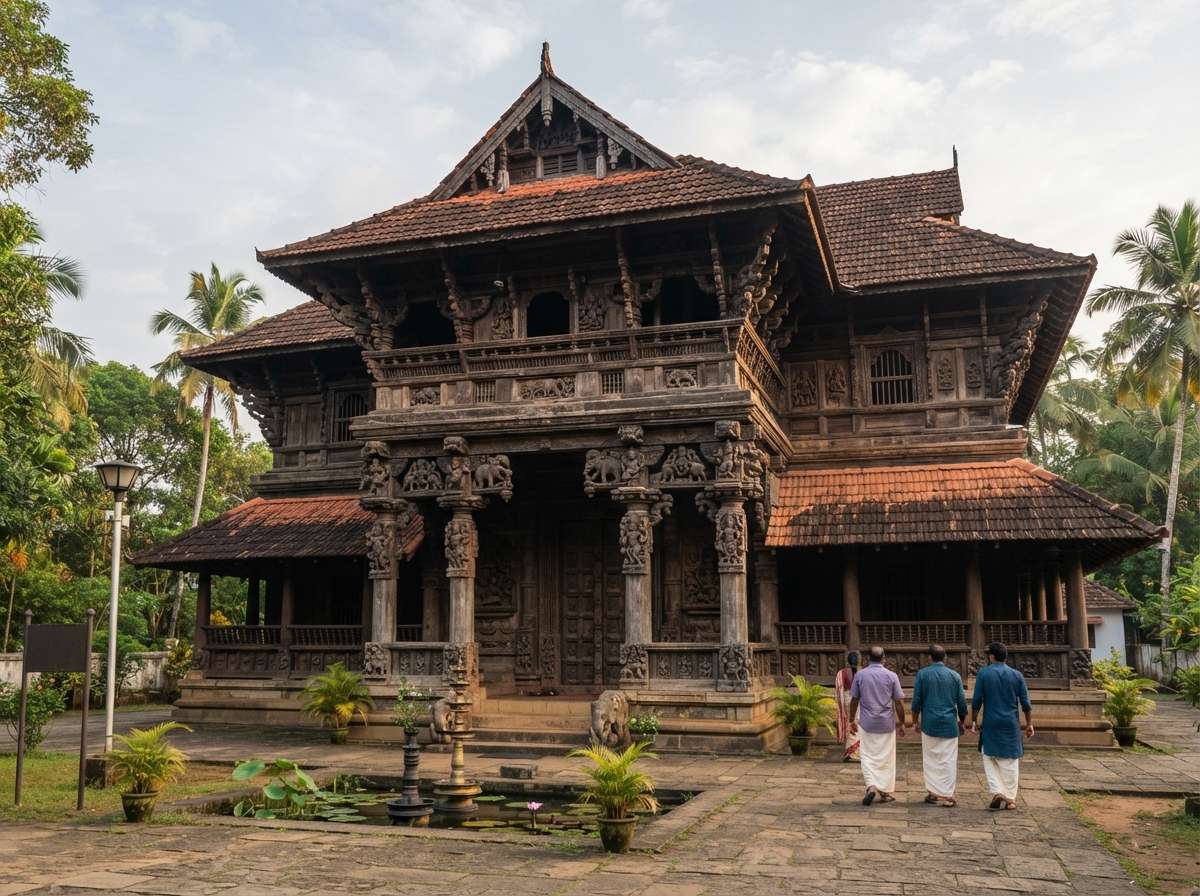
The Kerala Folklore Museum in Thevara, Kochi is the rare museum where the building is the first thing worth seeing. Art and antiques collector George J. Thaliath and his wife Annie George opened it in 2009, reassembled from salvaged wooden heritage structures, and the result is often called the only museum of its kind in Kerala, one that is itself a piece of folk architecture. Across three floors it holds 4,000 to 5,000 artefacts of Kerala’s ritual, craft and performance life, from stone and bronze sculptures to masks, murals and musical instruments. Give it an hour and a half to two hours, and try to be there in the evening when the top-floor theatre comes alive. Here is what the place actually is, floor by floor, and how to plan a visit.
If you only read one thing before you go, read this.
| What | Detail |
|---|---|
| Where | Pandit Karuppan Road, Thevara, Kochi, Kerala 682013, near the Thevara ferry junction |
| Founded | 2009, by art and antiques collector George J. Thaliath and his wife Annie George |
| Why it is special | Widely called Kerala’s only architectural museum, itself a work of folk architecture |
| The building | Three floors blending Malabar, Kochi and Travancore styles, reassembled from salvaged heritage structures |
| Collection | 4,000 to 5,000 artefacts, depending on the source |
| Time to allow | 1.5 to 2 hours |
| Do not miss | The top-floor Folklore Theatre and its carved wooden ceiling |
| Timings | Open daily, about 9:30 AM to 7:00 PM |
| Tickets | Adult from Rs 100, student Rs 50, foreigner Rs 200, camera Rs 100 |
For the current, full ticket schedule and any change in timings, check our dedicated kerala folklore museum entry-fees page before you travel.
Founding story, three floors of folk architecture, the evening theatre and how to plan your visit
Best Time
October - March
Select Package Type


5 Days & 4 Nights
₹24,604 /@pp
GET FREE QUOTEMost museums put the collection first and the building second. This one flips that. The structure went up over roughly seven and a half years, and George J. Thaliath is said to have brought in about 62 traditional carpenters to reassemble old wooden houses, granaries and prayer halls from across Kerala into one three-storey whole. Walk in and you are already inside the exhibit: the carved pillars, the sloping tiled roofs and the painted ceilings are original craft, not reproductions. That is why it is usually described as the only museum of its kind in India, an ethnography collection housed inside a living example of the very architecture it documents. If you have half a day in the city, it pairs naturally with the heritage streets of Fort Kochi and Mattancherry.
The museum was founded in 2009 by George J. Thaliath, an art and antiques collector, and his wife Annie George. Thaliath spent years travelling Kerala buying up folk objects, ritual masks and household craft that were quietly disappearing. Annie George handles the museum’s daily administration, which is why some guides credit her alone as the founder. The accurate line is that the couple built it together, out of about 25 years of collecting, and the family-led trust has run it since. The collecting instinct ran in the family, and the ambition was never just to store objects behind glass. It was to keep the whole world they came from intact, which is how a private collection grew into a three-floor museum with its own theatre. If you are searching for the story behind the name, this is it: one collector’s decades-long effort to stop Kerala’s folk heritage from vanishing.
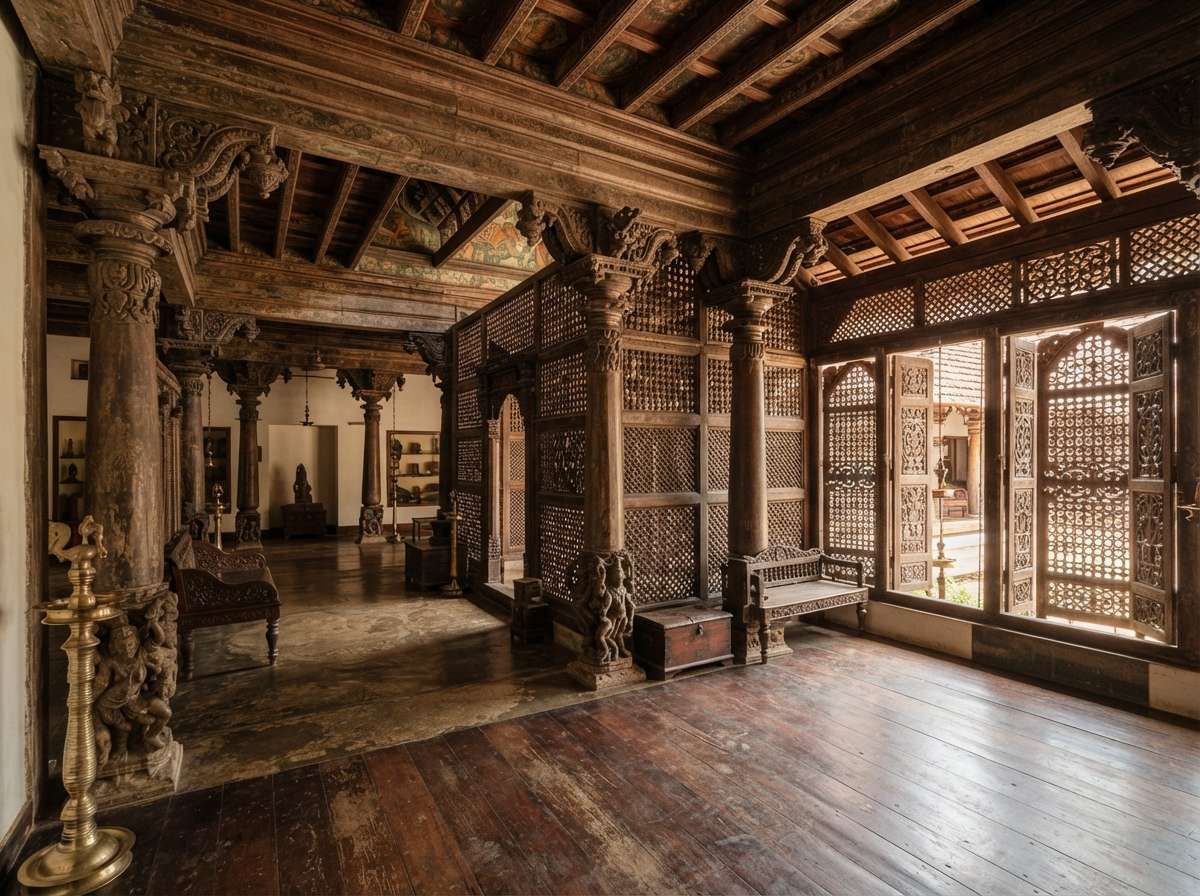
The building reads like a tour of Kerala’s regional styles stacked one on top of another. Each floor leans into a different tradition, so the higher you climb the more the woodwork and the ceilings change character. Here is how the three levels break down.
| Floor | Architectural style | What it is like |
|---|---|---|
| Ground | Malabar | The entrance level, leading up to the costume and mural galleries on the floors above |
| First | Kochi (Cochin) | Named Kalithattu: costumes of Theyyam, Kathakali and other ritual and dance forms, plus galleries of masks, textiles, paintings, jewellery and folk and tribal art |
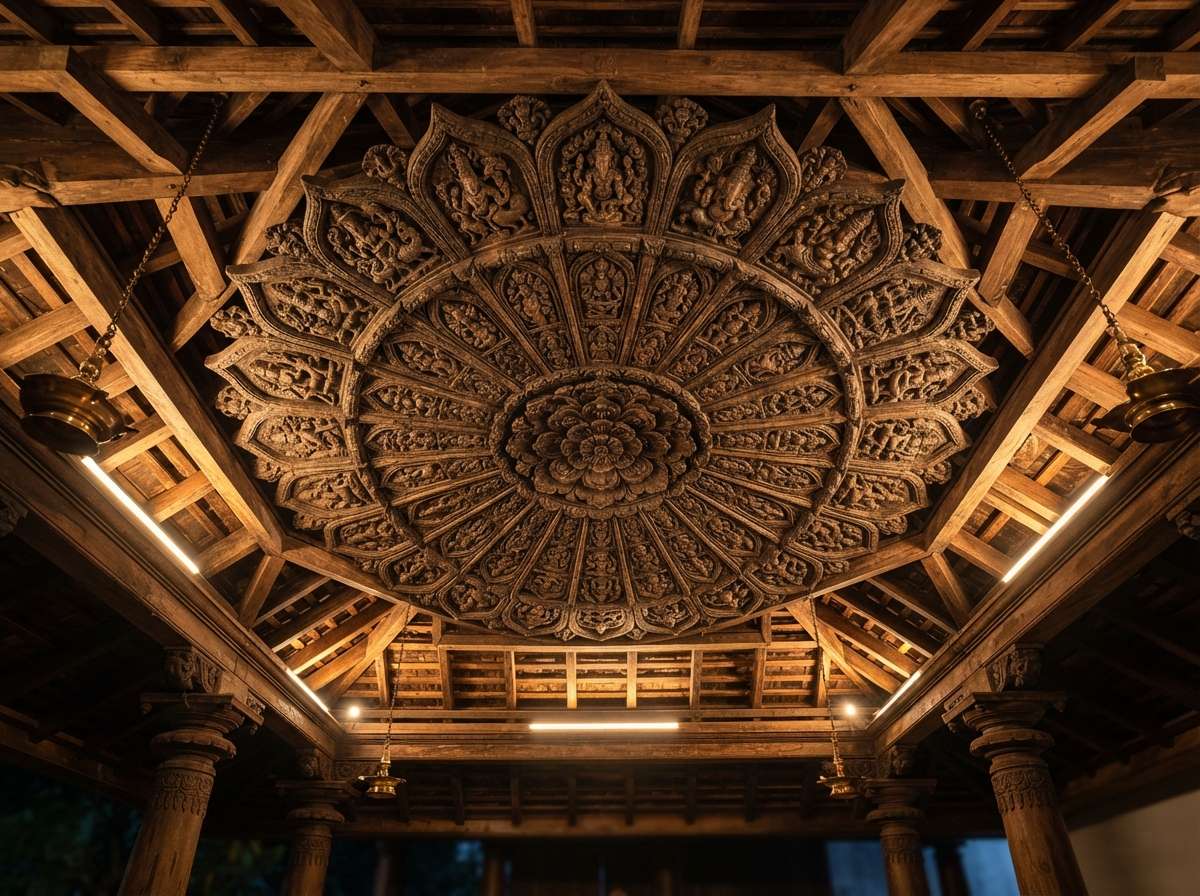
| Top | Travancore | Named Kanjadalam: mural paintings and the Folklore Theatre under a 60-frame chiselled wooden ceiling, the visual high point of the building |
The craftsmanship is the point. Look up on the top floor and the ceiling is a dense field of carved and painted panels, the kind of work that took the museum’s carpenters years to reassemble. The murals and the theatre space, sometimes called the Kalithattu, are the shots most visitors come away with. Even if folk art is not usually your thing, the roof alone earns the climb.
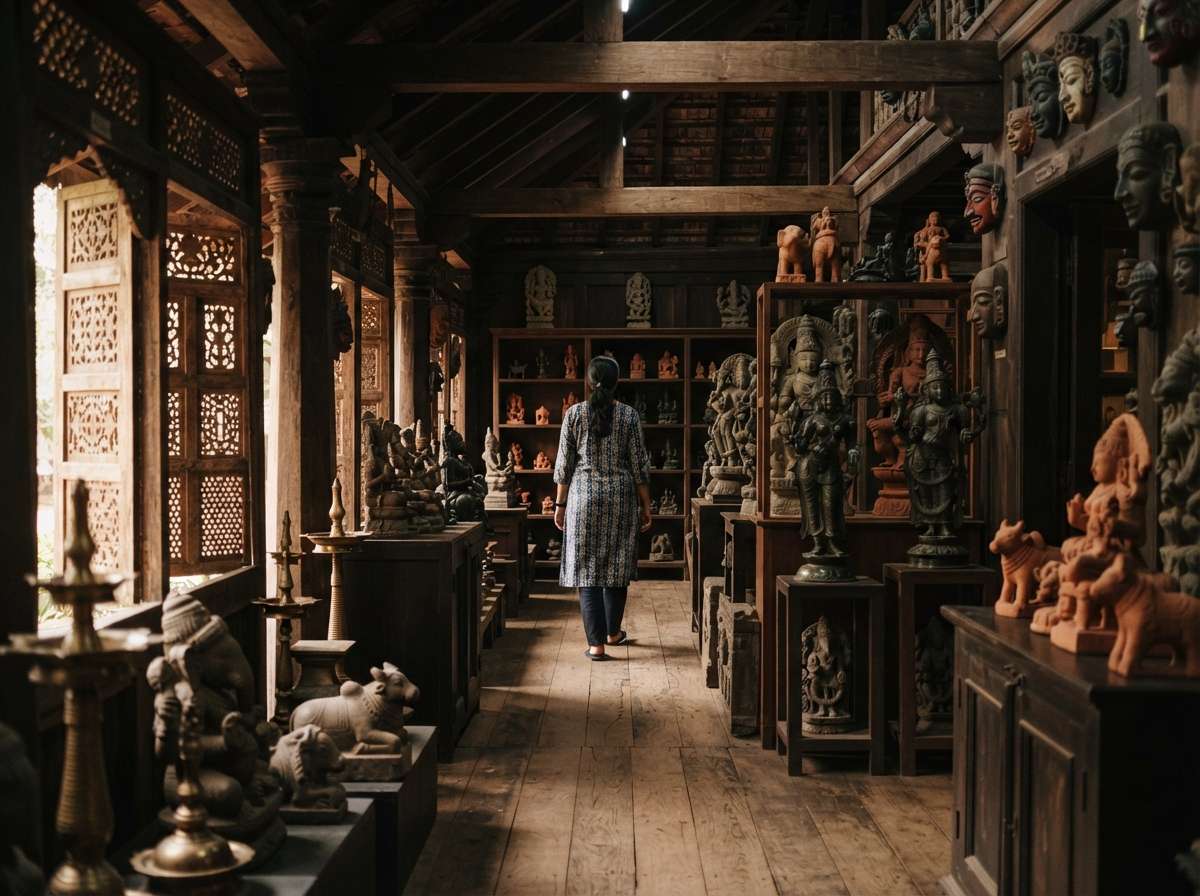
The collection runs to more than 6,000 pieces gathered over decades, with roughly 4,000 out on display at any time. It is deliberately broad, so you move from temple sculpture to tribal craft to everyday kitchenware in the space of a few rooms.
Photography is allowed for a small camera charge, and the light through the wooden screens in the late afternoon is the best of the day for it.
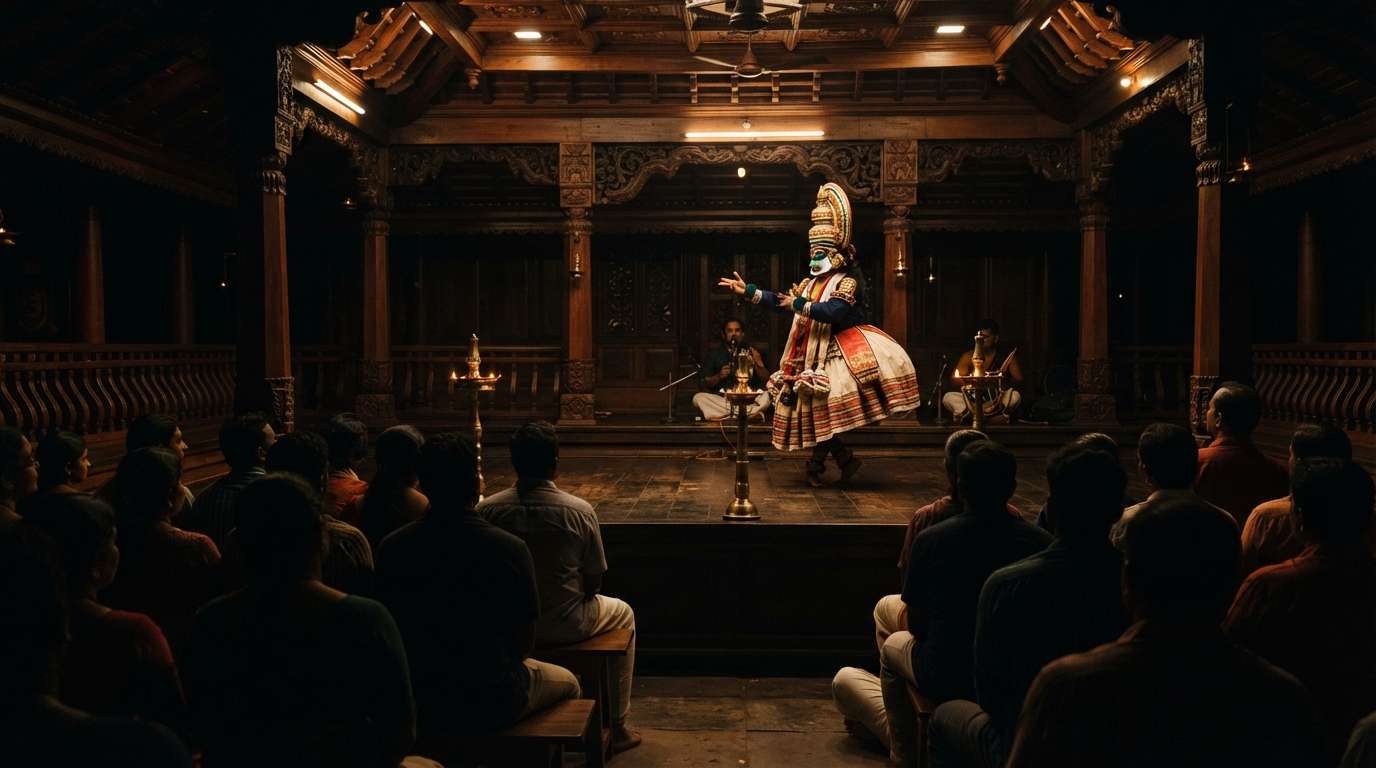
The reason to time your visit for the evening is the theatre on the top floor. Under that carved ceiling, the museum stages live Kerala art forms, the ones that are hard to catch anywhere else on a single trip. Depending on the night you might see Kathakali, Mohiniyattam or another Kerala form, performed close enough that you can watch the make-up and the footwork properly. Kerala Tourism lists the shows as daily at 6:30 PM, though some recent accounts describe them as occasional. Because the schedule changes, it is worth a quick call to the museum before you plan your day around a specific performance, and worth asking whether that evening’s show needs a separate ticket.
The museum is open daily, roughly 9:30 AM to 7:00 PM, and an unhurried visit takes an hour and a half to two hours. Tickets start at Rs 100 for adults and Rs 50 for students, with a higher foreigner rate around Rs 200 and a small camera charge of about Rs 100. Rates do change, so confirm the current schedule on our kerala folklore museum entry-fees page before you set out.
The museum sits well inside a wider Kochi itinerary rather than a trip on its own. From Thevara you are a short hop from Fort Kochi and the Chinese fishing nets, Mattancherry Palace and the old Jew Town lanes, and a slightly longer drive from the Hill Palace museum at Tripunithura. A good rhythm is heritage streets in the morning, the Folklore Museum in the late afternoon for the light and the evening performance, then dinner in Fort Kochi. For more ideas on stitching the city together, our places to visit in Kochi guide and the wider Kerala tourism guide map out the rest. If you would rather have the driving, tickets and stays handled for you, our Kerala tour packages can build the museum into a Kochi and backwaters trip.
The Kerala Folklore Museum rewards a slow, late-afternoon visit more than a quick tick off a list. Give it two hours, climb to the theatre for the ceiling and the evening show, and let the building do most of the talking. When you are ready to build it into a longer Kochi and backwaters trip with the logistics sorted, browse our Kerala tour packages for routes that put Kochi’s heritage at the centre.
Quick answers on the founder, what to see, timings, tickets, getting there and the evening shows
Anthropologist and art collector George J. Thaliath founded it in 2009. He spent years buying up folk objects, masks and craft from across Kerala, then built the museum to house them. His wife, Annie George, is closely involved in running it, which is why some sources wrongly name her as the sole founder.
Three floors hold between 4,000 and 5,000 artefacts: stone, bronze and terracotta sculptures, ritual and performance masks, folk and tribal art, textiles, jewellery, murals and musical instruments. There is also an antique shop and a handicrafts section. The top-floor theatre hosts evening performances.
Plan on an hour and a half to two hours to walk all three floors without rushing. If you want to catch an evening performance in the Folklore Theatre, add another hour and time your arrival for the late afternoon so you finish the galleries before the show.
The museum is open daily, roughly 9:30 AM to 7:00 PM. Timings can change around festivals and holidays, so it is worth confirming on the museum's own listing before a special trip. Late afternoon into early evening is the best window, both for the light and for the theatre.
Adult tickets start at Rs 100 and students pay about Rs 50. Foreign visitors are charged a higher rate, around Rs 200, and there is a small camera fee of roughly Rs 100 if you want to photograph inside. Video recording is not allowed. Because rates change, check the current, full schedule on our kerala folklore museum entry-fees page before you go.
From Cochin International Airport it is about 35 km, roughly an hour by taxi. Ernakulam South railway station is about 4 km away and the Vyttila Hub about 6 km. From Fort Kochi you can drive across via Thoppumpady and the Venduruthy bridge (about 10 km), or take a ferry to Ernakulam and then a short auto south to Thevara.
Yes. The top-floor Folklore Theatre stages live Kerala art forms such as Kathakali and Mohiniyattam, listed by Kerala Tourism as daily at 6:30 PM. The line-up changes, so call ahead if you want a particular form, and ask whether the show needs a separate ticket.
For anyone interested in Kerala's crafts, ritual arts or old architecture, yes. The building itself is the draw, a three-floor assembly of salvaged heritage woodwork, and the evening theatre gives you live art forms in one sitting. If you only have time for one indoor stop in Kochi and you like history and craft over shopping, this is the one to pick.
It is the only one where the building is as important as the collection. Rather than a modern hall, it is made of salvaged wooden heritage structures reassembled into three floors of Malabar, Kochi and Travancore styles. Combined with the live theatre, that makes it a very different experience from the palace and gallery museums elsewhere in the city.
Real reviews from real travelers who booked with us.
View All Reviews