
 8D / 7N
6% OFF


How to Time Your Visit Around the Thewawa
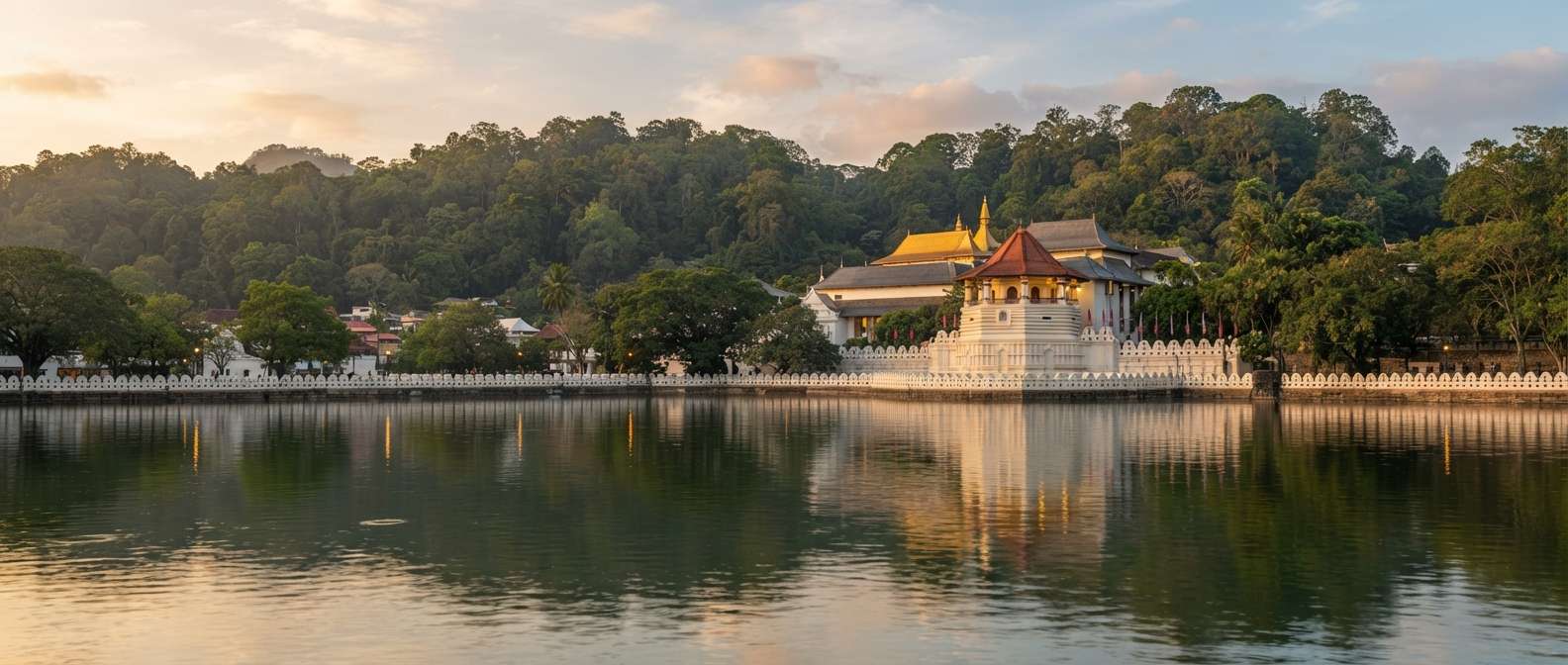
Sri Dalada Maligawa, the Temple of the Sacred Tooth Relic in Kandy, enshrines a tooth of the Buddha and is the most revered Buddhist site in Sri Lanka. It opens daily from 5:30 am to 8:00 pm, and the whole visit turns on one thing most guides bury: the thewawa, the thrice-daily pooja when the inner chamber that holds the relic is opened to the drumming of temple musicians. Time your arrival for one of those three windows and you walk in with pilgrims carrying lotus blooms, past a wall of sound and incense. Arrive between them and you see a closed shrine and a lot of other tourists doing the same. This guide gives you the exact pooja times, the current 2026 entry fees, the dress code and how to reach the temple, so you plan around the moment that actually matters.
Key takeaways
- Open 5:30 am to 8:00 pm every day, but plan around a thewawa (pooja), not just the opening hours.
- Three poojas run daily: dawn 5:30 to 7:00 am, mid-morning 9:30 to 11:00 am, and evening 6:30 to 8:00 pm.
- Budget around LKR 3,000 per foreign adult for the ticket (less for SAARC visitors and children; free for Sri Lankans).
- Dress to cover shoulders and knees and remove your shoes at the entrance; sarongs are available at the entrance if you turn up underdressed.
- Walk it in about 20 minutes from Kandy railway station (around 1.5 km), or reach Kandy from Colombo in roughly three hours.
Sri Dalada Maligawa at a glance
Here is the whole visit in one view. Everything in this box is explained in detail further down.
| Detail | What to know |
| Where | Kandy, central Sri Lanka, beside Kandy Lake and the old Royal Palace |
| Opening hours | 5:30 am to 8:00 pm, daily |
| Daily poojas (thewawa) | Dawn 5:30-7:00 am · Mid-morning 9:30-11:00 am · Evening 6:30-8:00 pm |
| Entry fee | Foreign adult ~LKR 3,000 · SAARC/Thailand/Myanmar ~LKR 2,500 · Sri Lankans free |
| Dress code | Shoulders and knees covered; shoes off at the entrance |
| Time needed | About 1 to 2 hours, longer if you stay for a full pooja |
| Best time to go | The evening thewawa, 6:30 pm, for drumming and the fullest atmosphere |
| UNESCO status | Part of the Sacred City of Kandy, a World Heritage Site since 1988 |
Sri Lanka
Sri Lanka
Explore the Sri Dalada Maligawa, Kandy in Srilanka
Best Time
December - April
Select Package Type
Best Selling Packages


Thewawa and Pooja Timings: When to Go
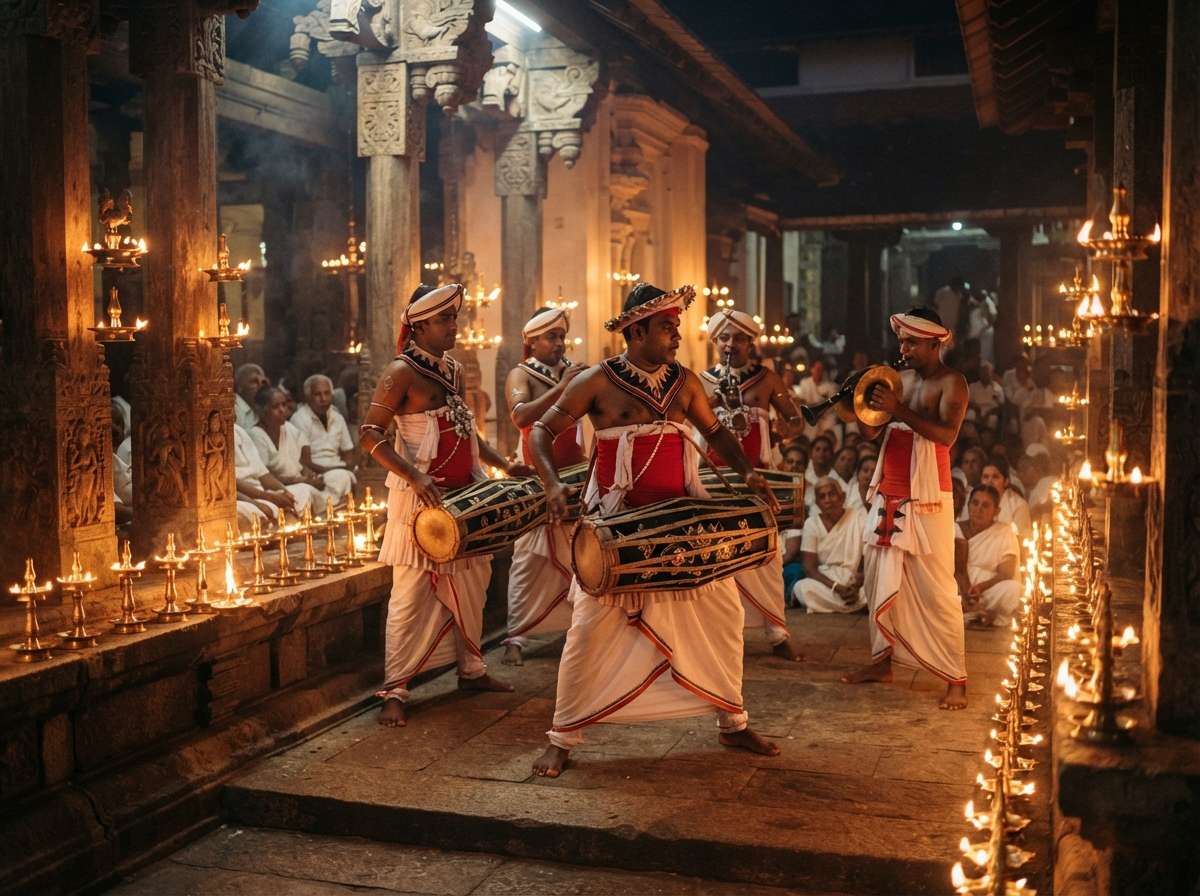
The thewawa is the daily ritual service for the relic, and it is the heartbeat of the temple. Three times a day the drummers in the Hevisi Mandapaya strike up, the doors of the inner shrine are opened, and offerings of food and flowers are made to the Sacred Tooth. You do not see the tooth itself at any point, but during a pooja you can file past the chamber that holds it, which you cannot do when the doors are shut. There are three services a day.
| Pooja (thewawa) | Time | What it is like | Best for |
|---|---|---|---|
| Dawn service (Aluyama) | 5:30-7:00 am | Quiet, cool, mostly local devotees; drumming at first light | Avoiding crowds and heat |
| Mid-morning service | 9:30-11:00 am | Busier; tour groups arrive; brightest light for photos | A first visit on a tight schedule |
| Evening service (Gilan Pasa Pooja) | 6:30-8:00 pm | The big one: full drum and horn ensemble, lamps lit, dense crowd | The complete experience |
If you only have time for one, make it the evening thewawa at 6:30 pm. The light drops, oil lamps come on, and the drumming carries right across the courtyard. Arrive 20 to 30 minutes early, because the queue to the upper shrine builds fast once the doors open. One extra note: every Wednesday at 9:30 am the temple holds the Nanumura Mangallaya, a ceremony in which the relic chamber is symbolically bathed with a fragrant herbal preparation while versifiers in the Kavikara Maduwa chant in praise of the Buddha. Wednesdays are therefore both special and more crowded.
Entry Fee, Tickets and Opening Hours
The temple is open from 5:30 am to 8:00 pm every day of the week, and the ticket counters keep the same hours. Sri Lankan nationals enter free. Foreign visitors pay an entry fee, and the temple raised its rates during 2026, so carry a little extra cash in rupees and confirm the amount at the counter rather than relying on an older figure printed elsewhere.
| Visitor | Entry fee (2026) | Notes |
|---|---|---|
| Foreign adult | Around LKR 3,000 | Roughly USD 10; pay in Sri Lankan rupees |
| SAARC, Thailand, Myanmar | Reduced rate (around LKR 2,500) | Carry photo ID showing nationality |
| Children | Reduced | Young children often free; ask at the counter |
| Sri Lankan nationals | Free | No ticket required |
Buy tickets only from the official counters or ticket machines at the temple entrance. Tickets sold anywhere else, including by touts outside, are not valid. Card machines at the counter can be unreliable, so cash is the safe option. If you plan to visit around a Poya (full-moon) day or during the Esala Perahera festival, expect long queues and tighter security, and leave more time than usual.
One upside of the 2026 fee rise: the foreign ticket now also covers the complex’s museums, including the Sri Dalada Museum and the World Buddhist Museum, so keep it on you as you move between buildings.
What to See Inside the Temple Complex
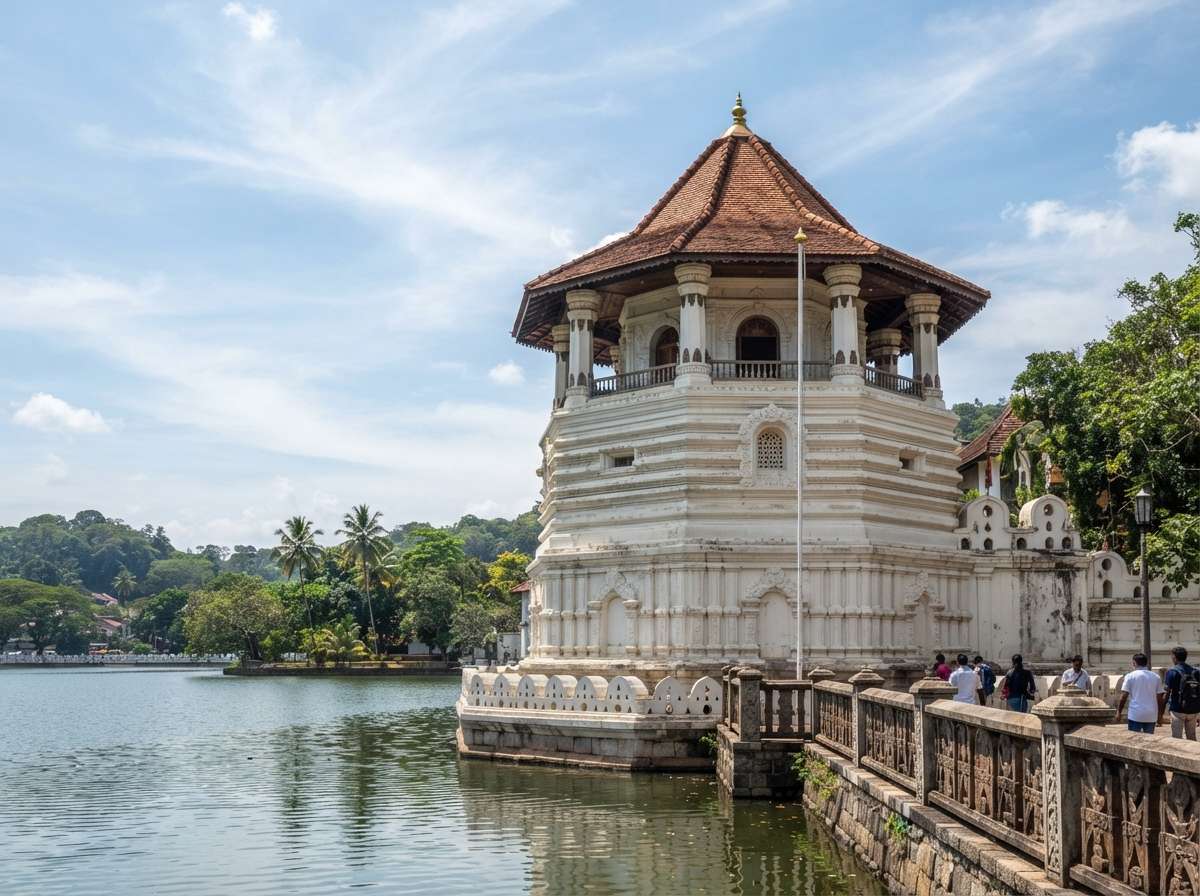
The Temple of the Tooth is not a single building but a walled complex, and most first-timers rush straight to the relic chamber and miss the rest. Give yourself time for these.
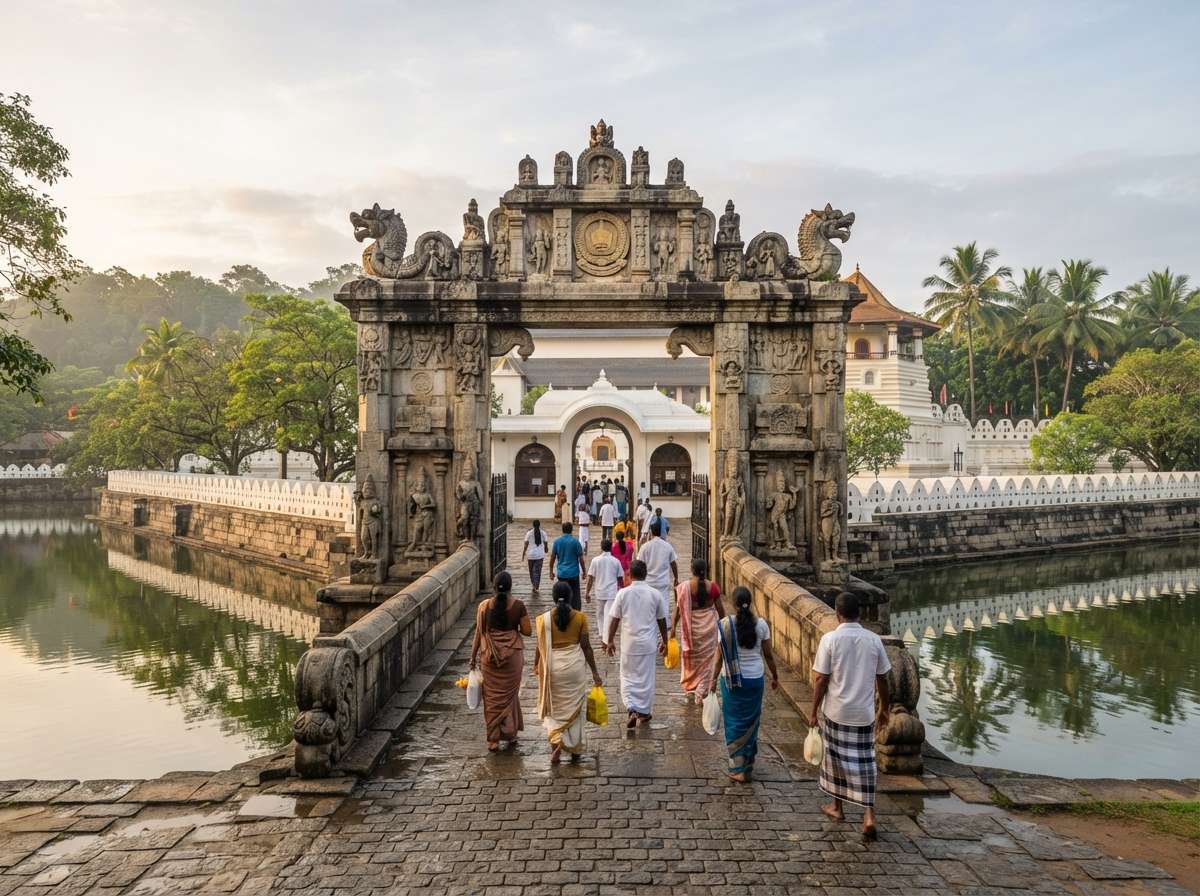
- Cross the moat and the Vahalkada entrance. You cross a small moat and pass through a carved stone gateway; the long tunnel-like entry (Ambarawa) sets the tone before you reach the courtyards.
- Paththirippuwa (the Octagon). The eight-sided tower on the lake side, added in 1800, once used by the kings to address the public and now home to the temple library. It is the shape you see on the old Sri Lankan currency note.
- Makara Thorana and the Hevisi Mandapaya. A gilded dragon archway leads toward the main shrine, and the drummers’ courtyard is where the thewawa music is played.
- The Vadahitina Maligawa, the two-storey inner shrine. The relic sits on the upper floor inside a gold stupa-shaped casket, itself nested within a set of seven jewelled caskets. During a pooja you file past the golden doors of this chamber. Above the shrine rises the Ran Viyana, the gilded canopy over the relic chamber.
- The Alut Maligawa (new shrine hall) and the museums. The newer hall holds rows of Buddha statues donated by Buddhist nations, and the complex includes the Sri Dalada Museum and the World Buddhist Museum, full of royal gifts, manuscripts and old photographs of the temple. The complex also keeps the Raja Tusker Museum, with the preserved remains of Raja, the royal elephant who carried the relic casket in the Esala Perahera for decades.
- The surrounding devales and Kandy Lake. Shrines to the guardian deities Natha, Vishnu, Kataragama and Pattini stand within or beside the complex, and the whole site opens onto Kandy Lake, which is worth a slow walk afterwards.
History and Who Built It: the Story of the Sacred Tooth Relic
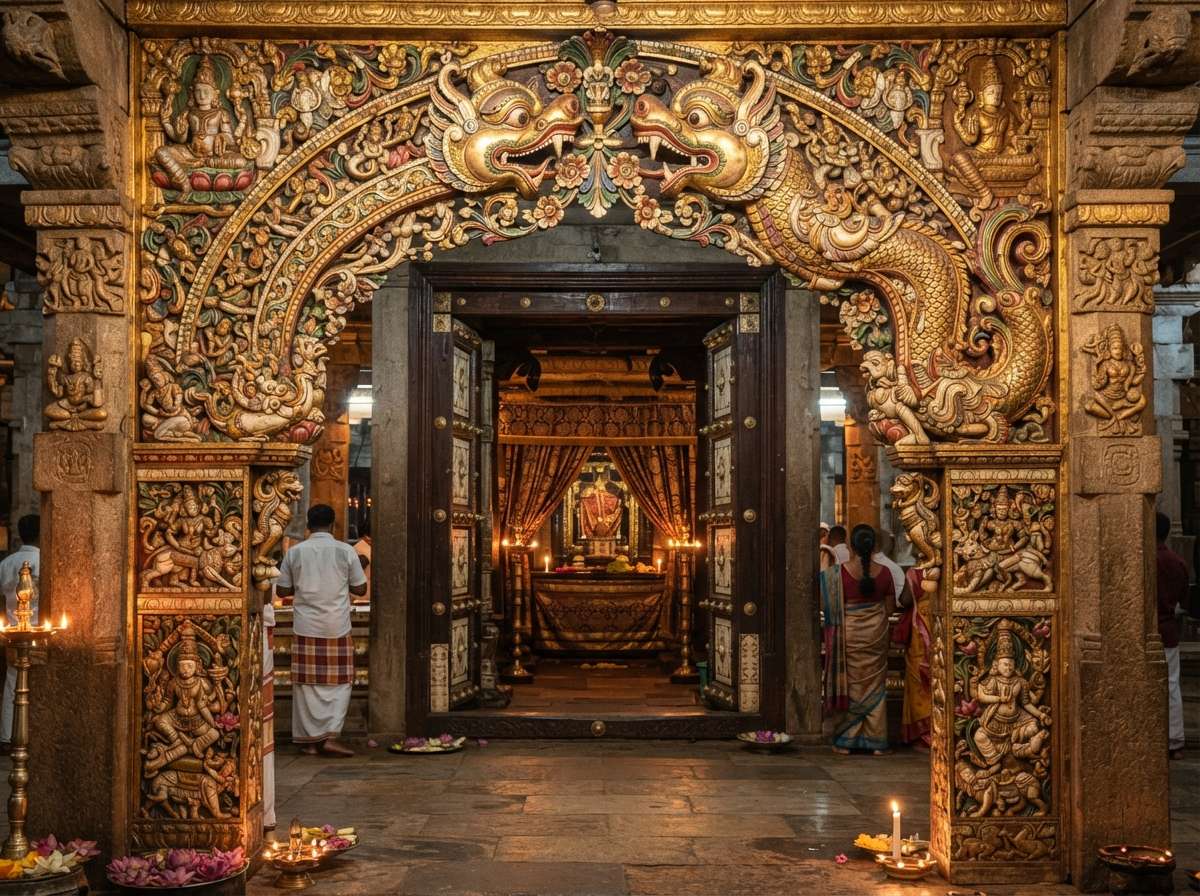
The relic reached Sri Lanka in the 4th century CE. According to the chronicles, Prince Dantha and Princess Hemamala smuggled the Buddha’s tooth out of Kalinga in eastern India, hidden in the princess’s hair, and presented it to King Keerthi Sri Meghavarna (who reigned roughly 301 to 328 CE). From that point the tooth became a symbol of sovereignty: whoever held the relic was believed to hold the right to rule, which is why it travelled from capital to capital as power shifted, and why successive kings fought and built to keep it.
The temple as an institution in Kandy began with King Wimaladharmasuriya I, who built the first Dalada Mandira between 1592 and 1604. Portuguese raids destroyed early structures; King Rajasinghe II rebuilt (he reigned 1635 to 1687), and the Dutch later burned it. The two-storey temple you walk through today was raised under King Vira Narendrasinha in the early 18th century (around 1707 to 1739). The final flourish, the octagonal Paththirippuwa and the moat, came under the last king of Kandy, Sri Wickrama Rajasinghe (1798 to 1815), before the kingdom fell to the British. That long chain of building, burning and rebuilding is exactly why the complex mixes Kandyan woodwork and stone carving with elements from several earlier kingdoms.
Dress Code, Etiquette and First-Timer Mistakes to Avoid
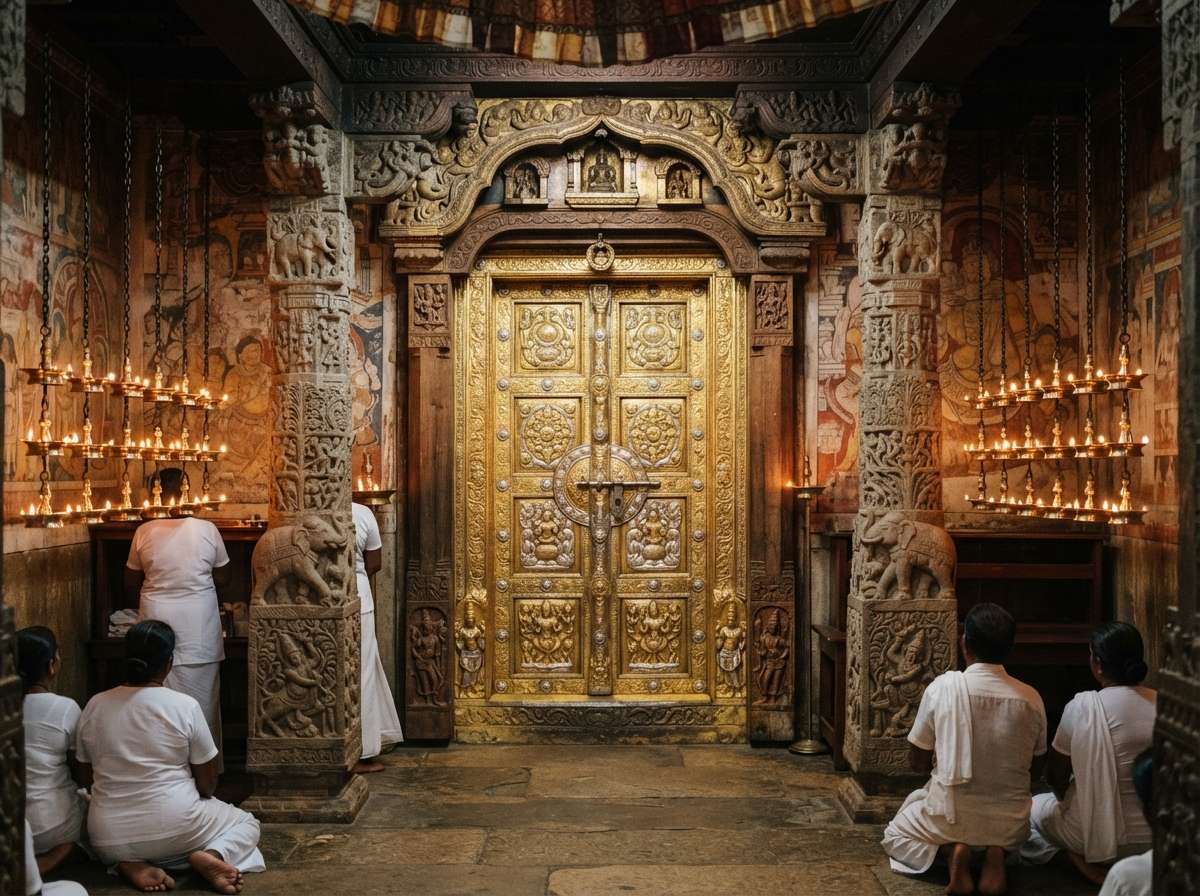
The dress code is enforced at the entrance, and it is simple: cover your shoulders and your knees. No shorts, no sleeveless tops, nothing see-through, for men and women alike. Long trousers or a skirt below the knee are fine. If you arrive underdressed, you can get a sarong at the entrance to wrap over your clothes. You remove your shoes (and hats) before entering, so slip-on footwear saves fuss, and the stone can be hot by midday, so socks are worth having.
A few things people get wrong on a first visit:
- Expecting to see the tooth. You will not. The relic stays sealed inside its caskets; what you see is the golden door of the chamber during a pooja. Knowing this in advance saves disappointment.
- Turning up between poojas. Outside the three service windows the inner shrine is closed. Check the times above before you go.
- Pointing feet or turning your back for a photo. Do not sit with your feet toward a Buddha statue, and avoid posing with your back to one; disrespecting a Buddha image is a criminal offence in Sri Lanka, and tourists have been fined or deported for it. Photography is allowed in the courtyards if done quietly, but not inside the inner sanctum or during a pooja.
- Underestimating security. Bags are screened and large luggage is not allowed inside, a legacy of the 1998 bombing of the temple. Travel light and leave big bags at your hotel.
How to Reach Kandy and the Temple, Plus Nearby Stops
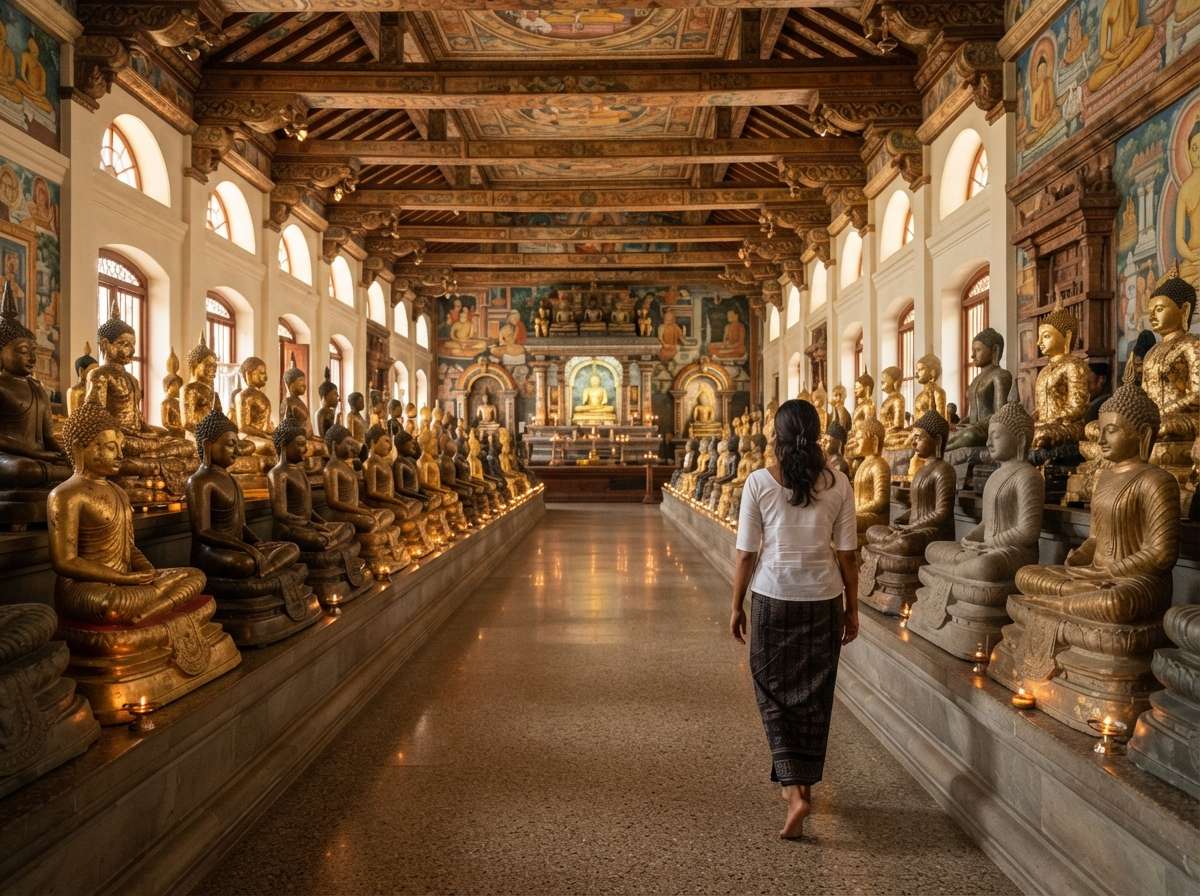
Kandy sits in the hills of central Sri Lanka, about 115 km from Colombo. The train is the pleasant way in: the Colombo to Kandy line takes roughly two and a half to three hours and climbs through the hills and tunnels of the Kadugannawa pass. By road it is a similar three hours or so, depending on traffic out of Colombo. From Kandy railway station the temple is about 1.5 km away, an easy 20-minute walk through the town centre, or a short tuk-tuk ride if it is hot. Agree the tuk-tuk fare before you get in.
Because the temple takes only an hour or two, it pairs naturally with the rest of Kandy. Within walking distance you have Kandy Lake and the bustle of the town; a little further out are the Royal Botanical Gardens at Peradeniya, the Udawattakele forest reserve behind the temple, and a cultural dance show in the evening before the 6:30 pm thewawa. Many travellers slot the temple into a wider Cultural Triangle trip taking in Sigiriya and Dambulla. If you would rather have the routing, timing and tickets handled for you, our Sri Lanka tour packages and the Kandy travel guide on our Sri Lanka tourism hub lay out the options.
Planning Your Visit
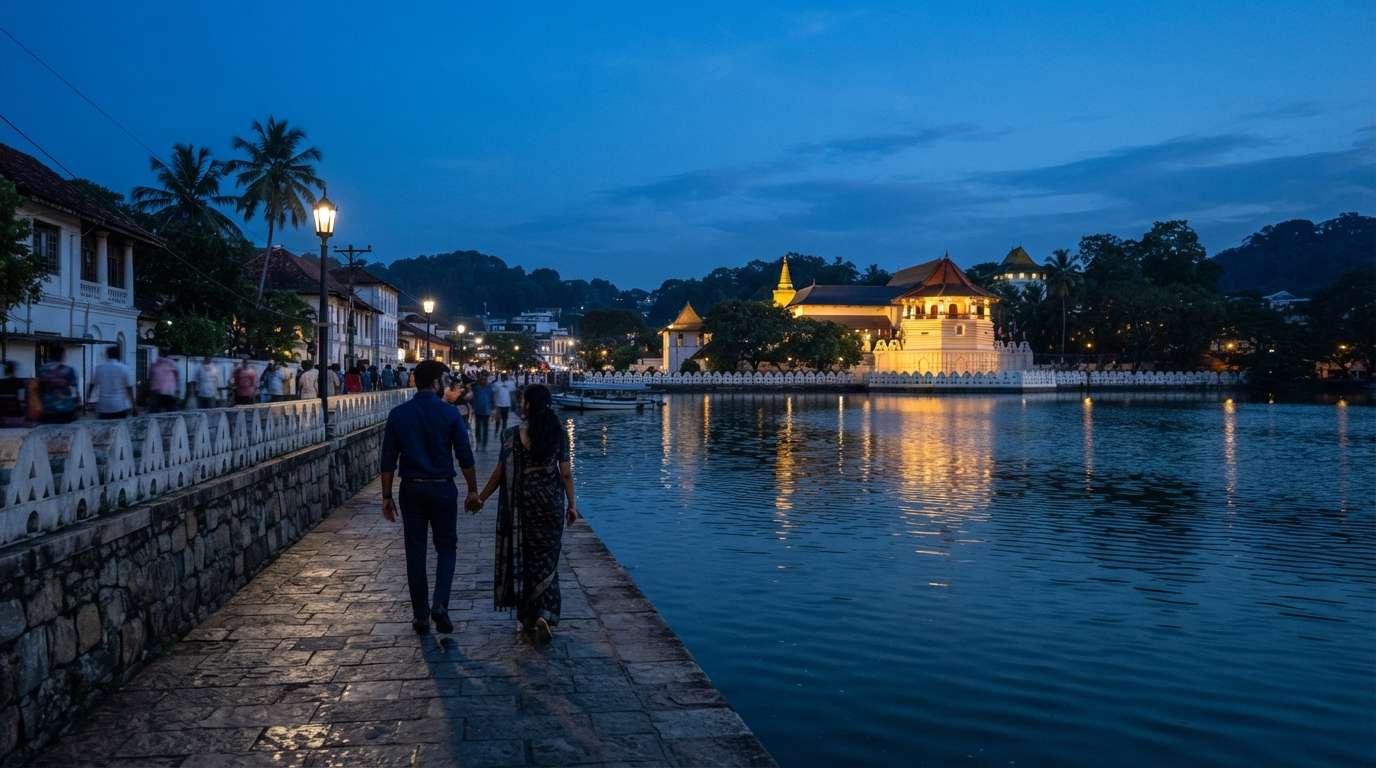
The Temple of the Sacred Tooth Relic rewards a little planning more than almost any site in Sri Lanka. Fix your visit to one of the three daily poojas, dress to cover shoulders and knees, carry cash for the ticket, and give yourself a spare hour for the museums and the lake. Do that and a half-day in Kandy becomes one of the trip’s high points. When you are ready to build the rest of the itinerary around it, browse our Sri Lanka tour packages for routes that fold Kandy into the wider island.
FAQs
Dalada Maligawa: Frequently Asked Questions
Common questions on the thewawa times, 2026 entry fee, dress code and how to reach
There are three daily poojas: the dawn service from 5:30 to 7:00 am, the mid-morning service from 9:30 to 11:00 am, and the evening service from 6:30 to 8:00 pm. The inner shrine that holds the relic is only open during these windows. The evening pooja, with its full drumming ensemble and lit lamps, is the most atmospheric, so arrive 20 to 30 minutes early to beat the queue.
Sri Lankan nationals enter free. Foreign adults pay an entry fee of around LKR 3,000 (roughly USD 10), with a lower rate for visitors from SAARC countries, Thailand and Myanmar, and reduced or free entry for young children. The temple revised its fees in 2026, so carry a little extra cash in rupees and confirm the exact amount at the official counter.
The temple is open every day from 5:30 am to 8:00 pm, and the ticket counters keep the same hours. It never closes for a weekly rest day, but Poya (full-moon) days and the Esala Perahera festival bring big crowds and tighter security, so plan extra time on those dates.
King Wimaladharmasuriya I built the first temple for the relic in Kandy between 1592 and 1604. After destruction by the Portuguese and Dutch, the two-storey temple standing today was built under King Vira Narendrasinha in the early 18th century, and the octagonal Paththirippuwa and moat were added by the last king of Kandy, Sri Wickrama Rajasinghe, around 1800.
Shoulders and knees must be covered, for men and women. Shorts, sleeveless tops and see-through clothing are not allowed. You also remove your shoes and any hat before entering. If you arrive underdressed, a sarong is available at the entrance to wrap over your clothes, but it is simpler to dress appropriately before you go.
You cannot see the tooth itself. It is sealed inside a gold casket within a set of seven nested caskets, and only the golden doors of the relic chamber are opened during a pooja, which you can file past. Photography is allowed in the courtyards if done quietly and respectfully, but not inside the inner sanctum or during worship.
From Kandy railway station the temple is about 1.5 km away, around a 20-minute walk through the town centre or a short tuk-tuk ride. From Colombo, Kandy is roughly 115 km: the scenic train takes about two and a half to three hours, and driving takes a similar three hours depending on traffic.
Allow one to two hours. You can see the main shrine and courtyards in about an hour, but staying for a full pooja and walking through the Sri Dalada and World Buddhist museums pushes it closer to two. Add time again if you continue around Kandy Lake afterwards.
Esala Perahera is Kandy's grand annual procession in honour of the relic, when a replica casket is carried through the city on a richly decorated tusker alongside dancers, drummers and torch-bearers over ten nights. It falls in July or August each year, over ten nights ending on a full-moon poya day; in 2026 the Perahera runs from 18 to 28 August, with the grand Randoli procession on 27 August. It is the busiest and most spectacular time to be in Kandy.