
Best Experiences To Have Around Kasol
Kasol packs more into one small riverside village than most Himachal towns twice its size. In a single trip you can start a Himalayan trek at dawn, raft a grade III rapid by noon, soak in a natural hot spring by evening and eat shakshuka in a wood cabin cafe after dark. This guide covers 18 real things to do in Kasol in 2026, sorted by treks, water sport, culture and day trips, with the cost, distance and best season for each so you can plan a trip that actually fits your days and budget. If you would rather read a pure sightseeing list of viewpoints and villages, see our companion guide below on places to visit.
Quick answers before you plan
- Do one big trek: the Kheerganga trek is the signature climb, about 12 km one way from Barshaini to a hot spring at roughly 2,960 m (13,050 ft).
- Get on the water: the Beas near Kullu and Pirdi runs grade II to III from roughly April to June, about Rs 1,800 to 2,500 per person.
- Free and easy: the Chalal riverside walk is free and takes about 30 to 40 minutes each way from Kasol.
- Best months: March to June and October to November are the sweet spots. Treks and rafting close through peak monsoon and deep winter.
- How long: three to four days covers the cafes, Manikaran, Chalal and one big trek without rushing.
Things To Do In Kasol
Best Time
March - June
Select Package Type
Best Selling Packages
Things to do in Kasol at a glance (2026)
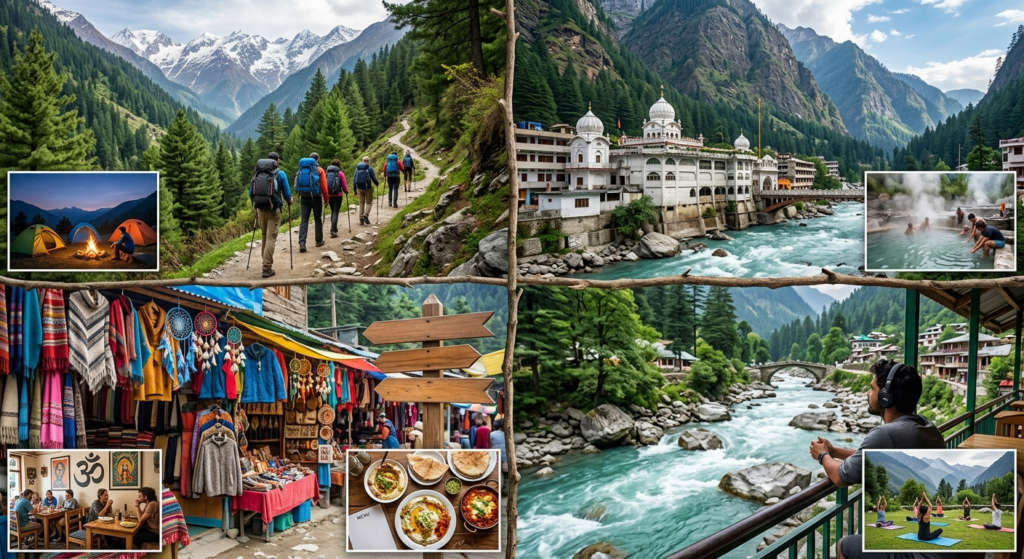
Here is the whole trip on one screen. Costs are per person and directional; confirm the trek and rafting rates with your operator on the day, because they move with the season and the water level.
| Thing to do | Best for | Cost (per person) | Distance / time from Kasol | Season / level |
| Kheerganga trek | The signature Himalayan climb | Free trail, guide ~Rs 1,500-2,500 | Drive to Barshaini (~1 hr), then ~12 km walk | Apr-Jun, Sep-Nov / moderate |
| Chalal walk | Easy riverside village stroll | Free | ~30-40 min walk each way | All year / easy |
| River rafting (Beas) | A half-day adrenaline hit | Rs 1,800-2,500 | ~30-40 km to Kullu/Pirdi | Apr-Jun / grade II-III |
| Kayaking | Paddlers wanting the Parvati/Beas | Rs 1,500-2,500 | ~30-40 km | Apr-Jun / all levels with guide |
| Riverside camping | Bonfires and stargazing | Rs 800-1,500/night with meals | In and around Kasol | Mar-Jun, Sep-Nov |
| Manikaran hot springs | Faith, langar and a hot soak | Free (donation) | ~6 km, 20 min | All year / easy |
| Sar Pass trek | A multi-day organised trek | ~Rs 8,000-10,000 (5-6 days) | Starts at Grahan/Kasol | May-Jun / moderate |
| Tosh day trip | Slow village views | Shared cab ~Rs 100-200 | ~20 km, ~1 hr | All year / easy |
| Cafe hopping | Israeli food and live music | Rs 300-600 a meal | In Kasol | All year / easy |
Treks and high-mountain walks around Kasol
Kasol sits at the mouth of the Parvati Valley, which means the good trails start almost at your guesthouse door. These four cover the full range, from a lazy hour by the river to a serious trans-Himalayan crossing.
Kheerganga trek
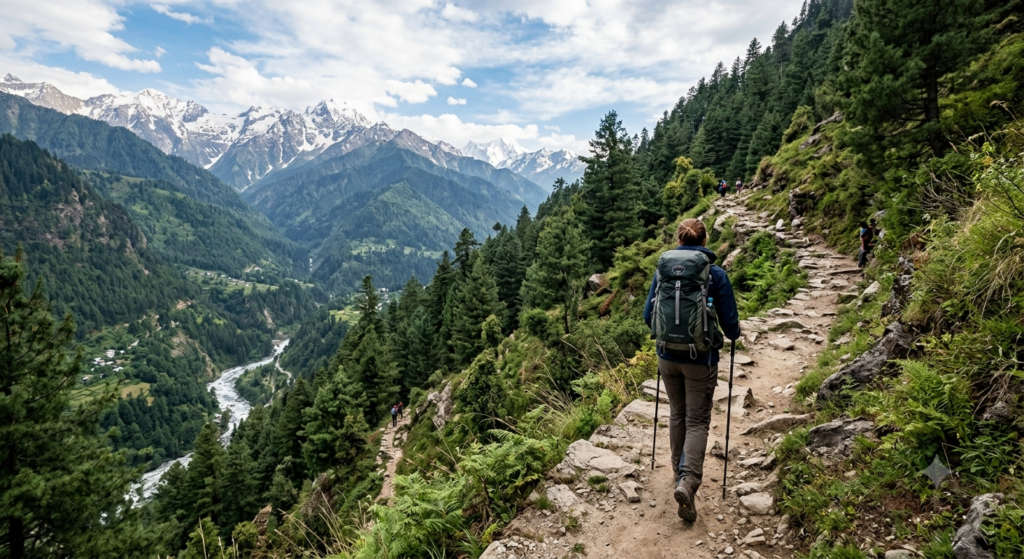
This is the walk people come to Kasol for. You drive up to Barshaini first (about an hour on shared or private transport), then climb roughly 12 km through pine and past the Rudra Nag waterfall to a meadow with a natural hot spring at around 2,960 m (13,050 ft) [FACT-CHECK EDIT: 2,960 m = about 9,711 ft, NOT 13,050 ft – wrong conversion, fix before publish (indiahikes.com, hikerwolf.com)]. Most reasonably fit walkers do it in five to six hours up and less coming down. It is graded moderate rather than hard, though beginners feel the last stretch. A local guide runs about Rs 1,500 to 2,500 and is worth it in shoulder season when the trail is quiet. Camps at the top charge for a tent and dinner, so carry cash. The trek usually closes with the first heavy snow, so October is the last comfortable month.
A note from the trail: the first hour out of Barshaini is deceptively flat along the river, and it lulls you. The climb proper starts after Rudra Nag, the waterfall shaped like a snake’s hood, and the last two km before the meadow are the ones that make you stop and breathe. I have done it in bright May sun and in cold October drizzle, and October is the one I would repeat. Fewer people, clear evening skies, and the hot spring feels twice as good when the air is near freezing. Start by 8 am so you are up before the afternoon cloud rolls in, and if you can, spend the night at the top rather than rushing both ways in a day.
Chalal village walk
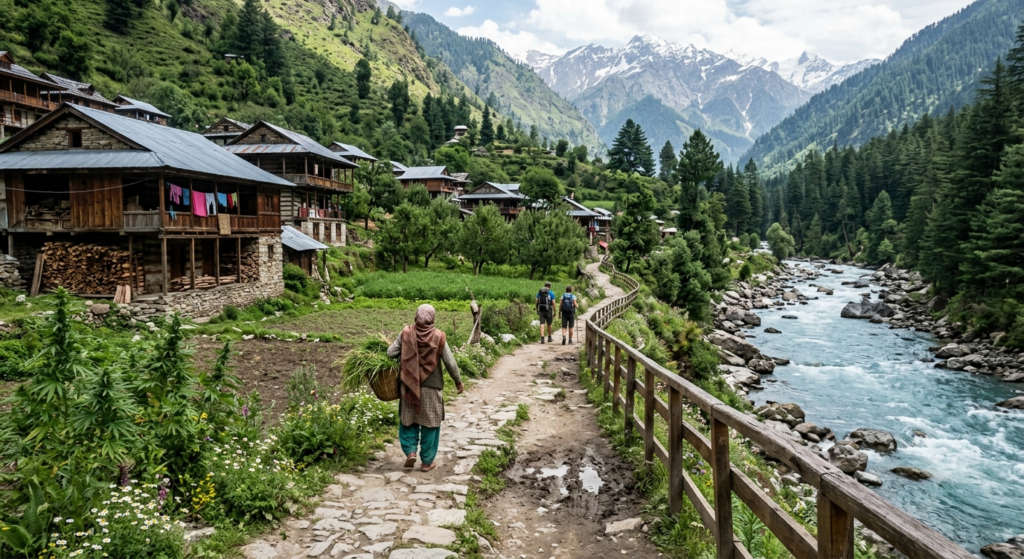
The best free thing to do in Kasol. You cross the bridge and follow the Parvati upstream on a flat, shaded path for 30 to 40 minutes to Chalal, a tiny hamlet of guesthouses, drum circles and riverside cafes. It is the walk to do on your first afternoon while your legs get used to the altitude. Go slow, stop for chai, and turn back before dark because the path has no lights.
Sar Pass trek
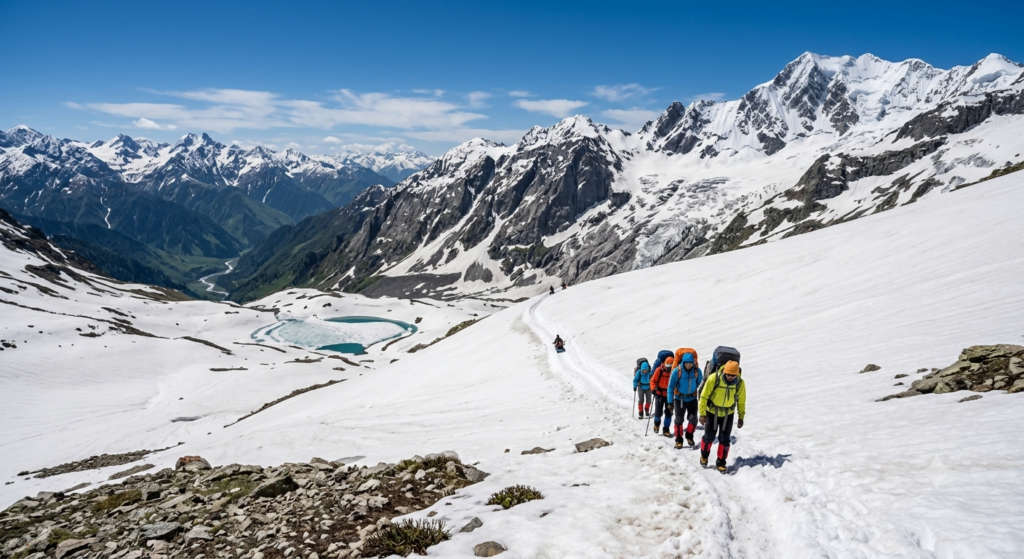
A proper organised trek, not a day hike. Sar Pass runs about 48 km over five to six days and tops out near 13,800 ft, crossing snowfields even in early summer. It usually starts from Grahan village near Kasol. Because it needs tents, guides and acclimatisation, almost everyone books it as a package for roughly Rs 8,000 to 10,000 including food and camping gear. The window is short, mostly May and June, before the monsoon shuts the high ground.
Pin Parvati Pass expedition
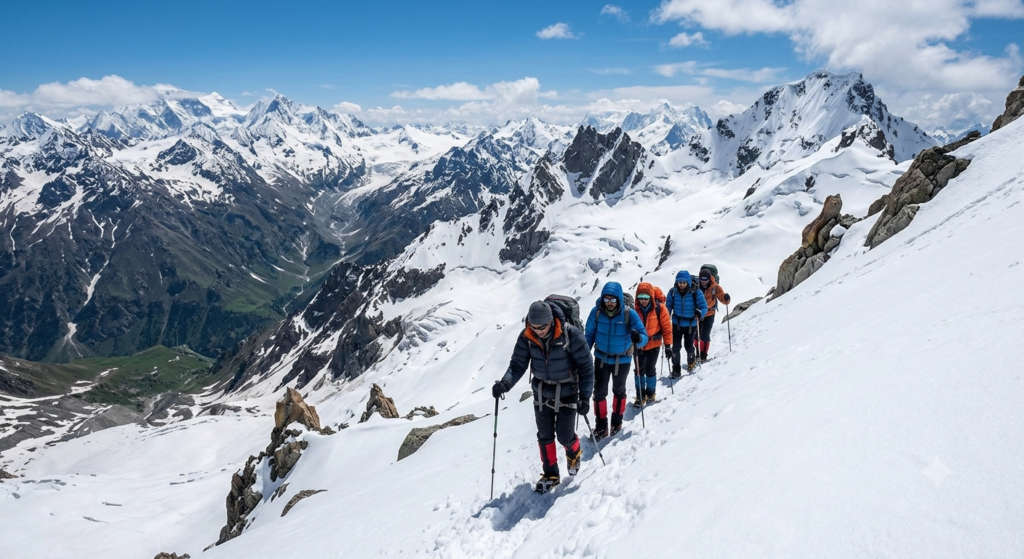
For experienced trekkers only. This is a serious 10 to 11 day trans-Himalayan expedition that links the green Parvati Valley with the cold desert of Spiti over a pass above 17,400 ft. You need prior high-altitude experience, a registered guide and a support team. Do not attempt it as an add-on to a short holiday. Most people who cross it have trained for months.
What to pack and know before you trek
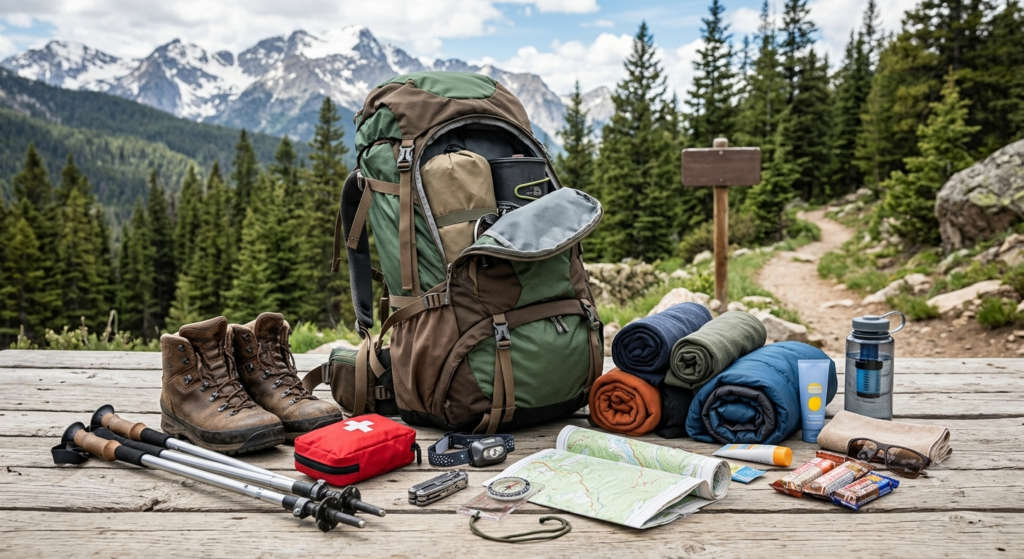
A little preparation turns a hard day into a good one. Carry layers rather than one heavy jacket, because valley mornings are cold, midday sun is fierce, and the temperature swings again at altitude. Take at least two litres of water and start your climb early, since the weather here turns by mid-afternoon in every season. Trekking shoes with grip matter more than anything else on the loose sections above Rudra Nag. Keep cash on you: there are no card machines on the trail or at the Kheerganga camps, and mobile signal drops out past Barshaini. Tell your guesthouse your plan before you set off on any long walk, and if you feel a headache or nausea gaining height, come down rather than push on.
If you are weighing one trek against another, this is the quick comparison.
| Trek | Distance | Days | Max altitude | Level | Best window |
| Chalal walk | ~2 km each way | Half day | ~1,700 m | Easy | All year |
| Kheerganga | ~12 km one way | 1-2 days | ~2,960 m | Moderate | Apr-Jun, Sep-Oct |
| Sar Pass | ~48 km | 5-6 days | ~4,200 m | Moderate-tough | May-Jun |
| Pin Parvati | ~110 km | 10-11 days | ~5,319 m | Expert only | Jul-Sep |
On the water: rafting and kayaking near Kasol
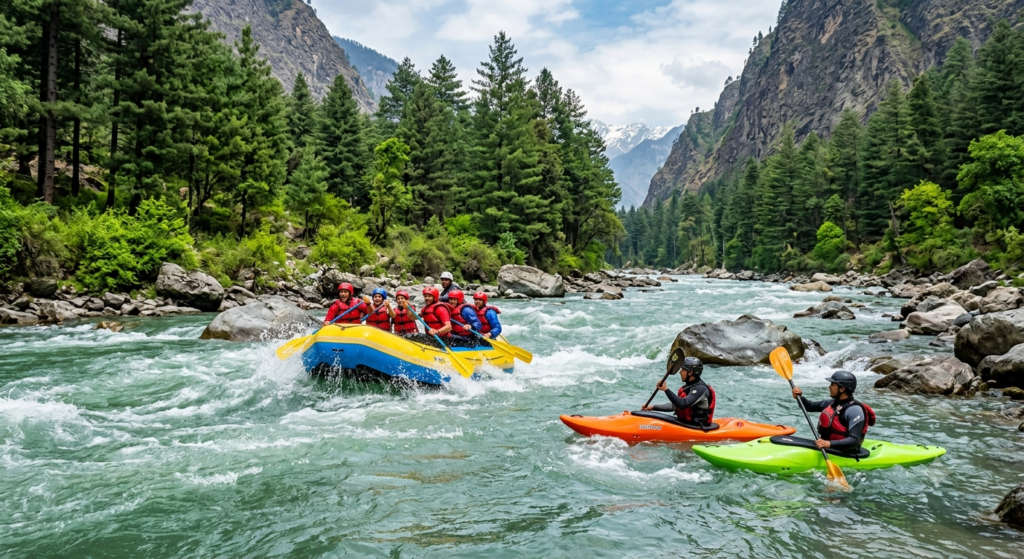
Parvati Valley is better known for trekking, but the Beas just downstream gives Kasol a genuine white-water half-day, and the calmer Parvati stretches suit first-time paddlers.
- River rafting on the Beas
The rafting runs are on the Beas around Kullu and Pirdi, about 30 to 40 km down the valley from Kasol, roughly an hour each way. Expect grade II to III rapids that are lively without being frightening, and a stretch of two to fourteen km depending on the package. A typical run costs about Rs 1,800 to 2,500 per person with gear, safety kayaker and a guide. The season is short and depends on snowmelt, mostly April to June, and operators pause when the monsoon spikes the flow. Book a morning slot for the calmest water.
The run itself is short but it earns the drive. You spend the first stretch getting the rhythm of the paddle commands, then the guide points you at the standing waves and the raft bucks through them with everyone shouting. Wear clothes you do not mind soaking and leave your phone in the operator’s dry bag, because you will come out wet to the waist. It pairs well with a Kullu or Bhuntar stop on the day you arrive or leave the valley.
- Kayaking
If rafting is the group activity, kayaking is the one you do to learn a skill. A few operators near Kullu run beginner sessions on flat water before letting you onto the moving current, priced around Rs 1,500 to 2,500 for a guided session. It is a good rainy-shoulder plan when the high trails are wet but the river is still runnable.
Culture, hot springs and cafe life
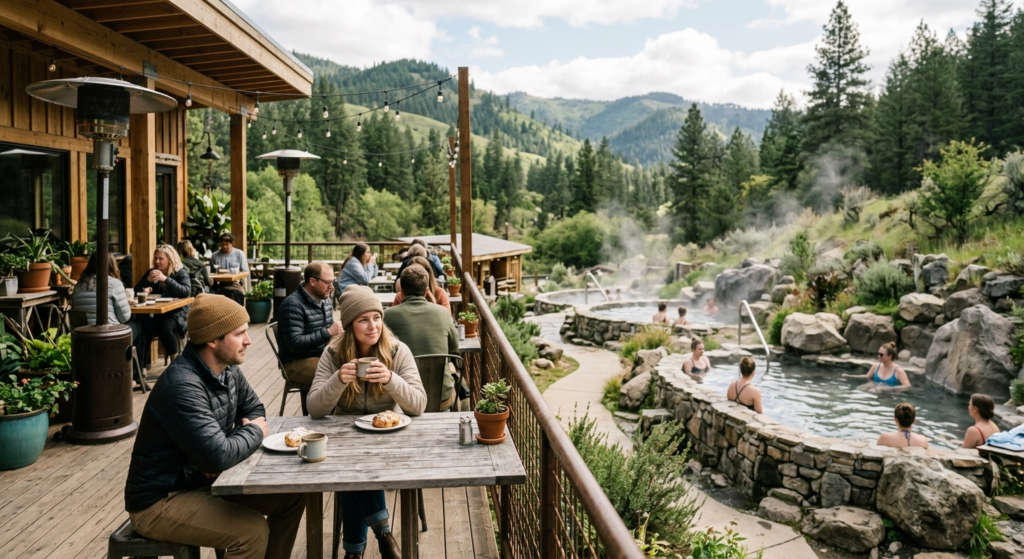
Half the point of Kasol is doing very little, well. This cluster is where the village earns its Mini Israel nickname and its slow reputation.
The valley earns its Mini Israel tag honestly. Hebrew menus, reggae drifting out of wood cabins, and a floating population of long-stay travellers give Kasol a rhythm you do not find in other Himachal towns. It is worth surrendering an afternoon to it with no plan at all: pick a cafe over the river, order slowly, and watch the light change on the far ridge.
- Manikaran hot springs and Gurudwara
Six km up the road (about 20 minutes) [FACT-CHECK EDIT: sources say about 4 km / 10-15 min, not 6 km / 20 min (yatra.com, distancebetween2.com)] sits Manikaran, where boiling geothermal springs run right beside the Parvati. Pilgrims cook rice and dal in the sacred water at the Gurudwara, and the langar serves a free hot meal to anyone who walks in. There is a Ram temple on the other bank. Go in the morning before the tour buses, dip your feet in the hot pool, and eat at the langar. It costs nothing beyond an optional donation.
- Buddhist caves and temple near Manikaran
A short walk above Manikaran leads to quiet Buddhist meditation caves and a small temple that most day-trippers miss entirely. It is a ten-minute detour from the hot springs and one of the calmest corners in the valley. Ask a local for the path up; it is not signposted well.
- Cafe hopping and Israeli food
Kasol runs on cafes. The old-timers like the Moon Dance Cafe have been baking since the early nineties, and the menus lean hard into Israeli and Middle Eastern food: shakshuka, hummus, pita, fresh salads and strong coffee. Meals land around Rs 300 to 600. Many cafes have live music in the evening and a wood fire in winter, so pick one over the river and settle in.
- Bakeries
Separate from the cafes, the small German-style bakeries turn out rum balls, cheesecake, apple crumble and fresh bread every morning. Grab a bag before a trek. They sell out by midday in peak season.
- Flea-market shopping
The lanes around the main road fill with stalls selling semi-precious stones, Kullu shawls, silver jewellery, dream catchers and Tibetan handicrafts. Prices are negotiable and quality varies, so check stones in daylight. It is a fun hour rather than a serious shopping trip.
- A spa massage
After a big trek, the small Ayurvedic spas in and around Kasol offer deep-tissue, Swedish and full-body massages for a fraction of city rates. It is the smartest thing you can do to your legs the day after Kheerganga.
- Try local rice beer
Chang, a mildly fermented local rice brew, is part of Parvati Valley culture and easy to find in the villages. Try a small glass for the experience, and remember that anything stronger sold informally in this valley is both illegal and risky.
Camping, festivals and nights in Kasol
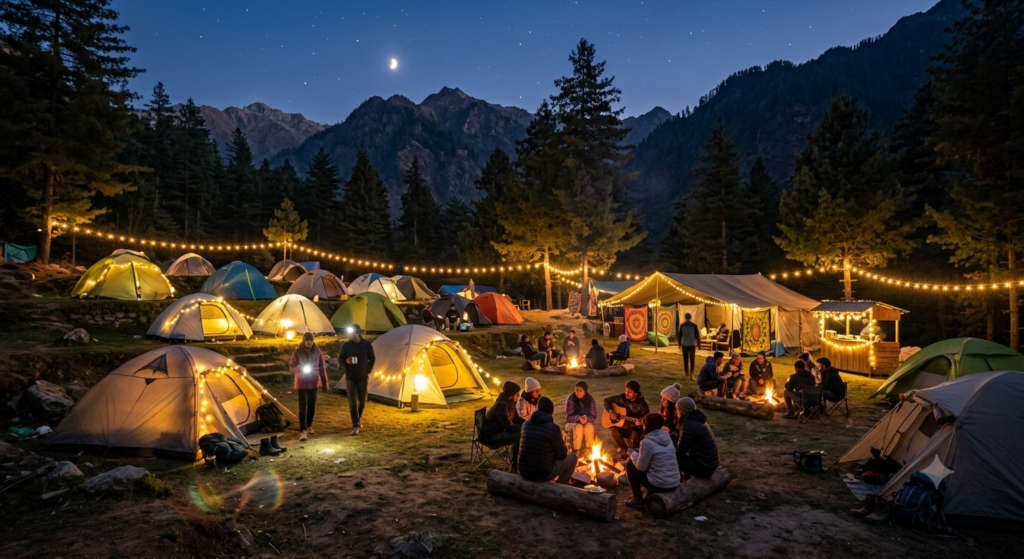
Kasol after dark is bonfires and drum circles more than clubs, and a couple of times a year the whole valley turns up for a party.
- Riverside camping
Sleeping by the Parvati is the classic Kasol night. Riverside camps in and around the village and up toward Chalal run about Rs 800 to 1,500 a night including a tent, dinner and a bonfire. The sky here is genuinely dark, so the stargazing after the fire dies down is the real draw. I spent two nights at a camp below Chalal and remember the sound more than the sight: the river never stops, and it drowns out everything until you sleep. Bring a warm layer, because even summer nights drop cold by the water, and pick a camp set back a little from the noisiest stretch of rapids if you are a light sleeper.
- Parvati Shangri-La and psytrance nights
The Parvati Valley is one of India’s psytrance homes, and the Parvati Shangri-La style festivals bring international DJs, laser shows and long overnight sets. Tickets for the bigger events run roughly Rs 1,000 for standard entry up to about Rs 4,000 for premium passes. Dates shift every year, so check the current line-up before you plan a trip around one.
- Kasol year-end music festival
Around the new year, a two-day music festival brings DJs, barbecue stalls and flea markets to the village. It is the busiest week of Kasol’s calendar, so book beds well ahead if you want to be here for it. For the full plan, see our guide to the Kasol new year party below.
- See snowfall
From December to February the higher slopes around Kasol turn white, and a good storm dusts the village itself. It is a quieter, colder Kasol: many cafes stay open with a fire going, the big treks close, and the Bhuntar road occasionally shuts for a few hours. If snow is your reason for coming, read our dedicated Kasol in winter guide before you book.
Easy day trips from Kasol
You do not have to trek to see the valley. Three villages make simple half-day or day trips by shared cab.
- Tosh, Malana and Naggar
Tosh sits about 20 km up the valley (roughly an hour) at around 2,400 m, a slow village of apple orchards and cafes with a big mountain view. Malana, about 21 km away and reached by a short steep walk, is an ancient village with its own customs and rules, so read up and respect them before you go. Further out, Naggar (about 57 km, toward Manali) has a historic castle, a folk-art museum and quiet riverside homestays. Tosh is the easiest and best first pick.
Best time to visit Kasol and how to reach
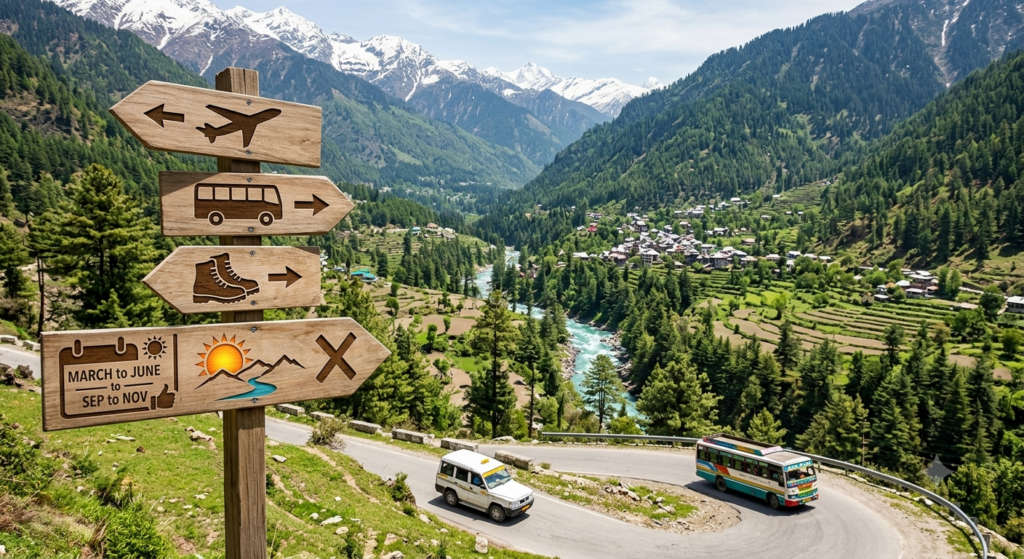
Kasol is a year-round village, but what you can actually do changes hard by season. Here is the honest month-by-month read.
| Season | Weather | Good for | Watch out for |
| Mar-Jun | Pleasant, ~15-25 C days | Treks open, rafting starts, best all-rounder | Peak crowds in May-Jun |
| Jul-Sep | Green, wet, humid | Lush valley, low rates | Landslides, treks and rafting risky |
| Oct-Nov | Crisp, cold nights | Clear skies, last Kheerganga window | Nights near freezing |
| Dec-Feb | Snow, ~0 to 8 C | Snowfall, cosy cafes | High treks closed, road delays |
Getting here is a single overnight hop from Delhi. This is the route most travellers take.
How to reach Kasol from Delhi, step by step
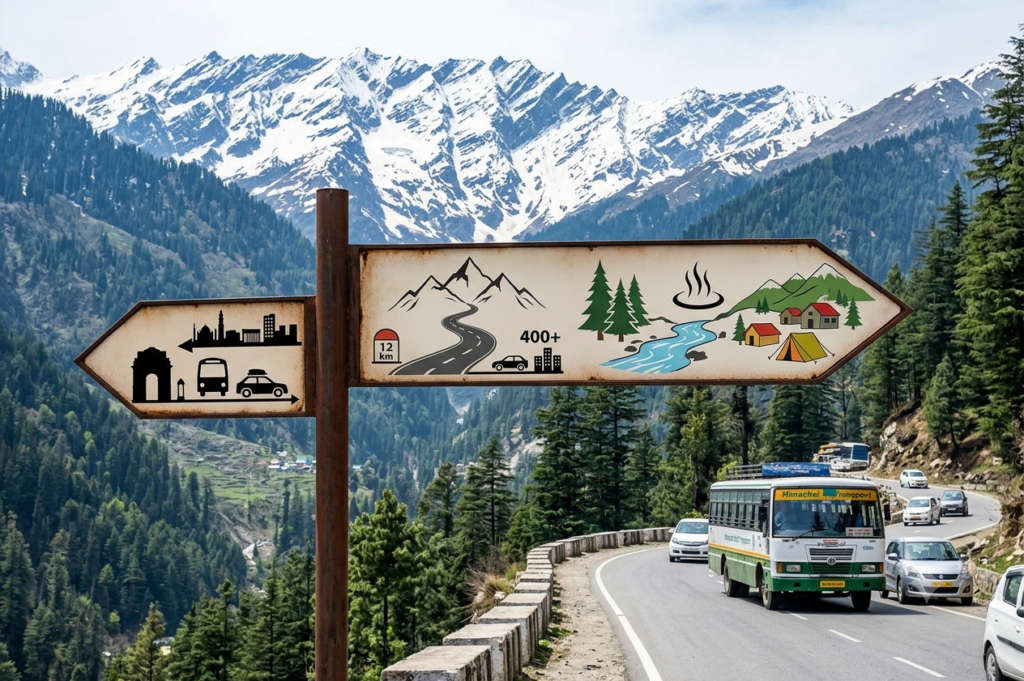
- Take an overnight Volvo or HRTC bus from Delhi (ISBT Kashmere Gate) toward Bhuntar or Manali. The road run is about 510 to 535 km and 12 to 13 hours.
- Get down at Bhuntar, the valley junction about 31 km before Manali. This is also where the nearest airport, Kullu-Manali (Bhuntar), sits, if you fly in via Delhi.
- From Bhuntar, take a local HRTC bus or shared cab up the Parvati Valley to Kasol, about 31 km and one hour.
- If you prefer train, the nearest broad-gauge railhead is Chandigarh (about 280 km away); continue by bus or cab from there.
- Base yourself in Kasol or across the bridge in Chalal, then use shared cabs for Manikaran, Tosh and the Kheerganga trailhead at Barshaini.
- For a deeper reach guide with fares and timings, see our Delhi to Kasol road trip guide, linked below.
Where to base yourself
Where you sleep shapes what you can do. Kasol village itself is the most convenient base, with the widest choice of cafes, camps and shared cabs to every trailhead. Across the bridge, Chalal is quieter and greener and suits travellers who want river calm over street bustle, at the cost of a short walk to town. If your trip is built around one big trek, a night in Barshaini puts you at the Kheerganga trailhead so you can start at first light. Book ahead in May, June and the new-year week, when beds in the good riverside places go fast.
For the full arrival guide, permits and where to stay, read our Kasol travel guide, and if this is your first trip, start with the first-timer’s guide to Kasol.
Looking for a sightseeing list instead of an activity plan? Our companion guide to the best places to visit in Kasol covers the viewpoints, villages and photo stops. This page stays focused on the things you actually do.
Planning your Kasol trip
Kasol rewards a plan that mixes one big effort with a lot of slow time: one trek, one river morning, and the rest spent by the water. Pick your season first, since it decides which of these 18 things are open, then build two or three days around a single trek. When you are ready to stop planning and just go, browse our Kasol tour packages and our wider Himachal tour packages to have the stays, cabs and treks arranged for you.
Kasol activities FAQ
The Kheerganga trek, a riverside walk to Chalal, and a soak at the Manikaran hot springs are the three most travellers rank first. Add river rafting on the Beas if you visit between April and June, a night of riverside camping for the stargazing, and a slow afternoon of cafe hopping over Israeli food. Together they cover trekking, water sport, faith, food and nightlife in one three to four day trip.
Three to four days is the sweet spot. That gives you one full day for the Kheerganga trek, a half day each for Chalal and Manikaran, an afternoon in the cafes, and a day trip to Tosh, without rushing. If you only want the village, cafes and one short walk, two days works. Add extra days if you plan a multi-day trek such as Sar Pass.
Nights in Kasol are mellow. The classic plan is a riverside camp with a bonfire and stargazing, since the valley sky is genuinely dark. In the village, cafes and small bars such as Panj Tara and The Himalayan Village have live music and stay open late. A few times a year, psytrance festivals bring overnight sets. It is more campfire and drum circle than club scene.
The Kheerganga trek is graded moderate. It is about 12 km one way from Barshaini, climbing to roughly 2,960 m, and takes five to six hours up for a reasonably fit walker. Beginners manage it with breaks. The trail is free, but a local guide runs about Rs 1,500 to 2,500 and is smart in shoulder season, and the camps at the top charge for a tent and meals. Carry cash and warm layers.
Most Kasol activities are cheap. Chalal, Manikaran and cafe browsing are effectively free. A guided Kheerganga trek costs about Rs 1,500 to 2,500, river rafting runs Rs 1,800 to 2,500, and a riverside camp with meals is Rs 800 to 1,500 a night. A multi-day trek such as Sar Pass is the big-ticket item at roughly Rs 8,000 to 10,000 [FACT-CHECK EDIT: ex-Kasol 5D/4N Sar Pass packages run about Rs 5,000-6,500 (universaladventures.in, madtrek.com, thedreamtrips.in); Rs 8,000-10,000 overstates unless it bundles Delhi transport]. Budget travellers can do a full trip on very little.
Yes, though the runs are on the Beas around Kullu and Pirdi, about 30 to 40 km down from Kasol rather than on the Parvati itself. Expect grade II to III rapids and a cost of about Rs 1,800 to 2,500 per person including gear and a guide. The season is short and snowmelt-driven, mostly April to June, and operators pause during heavy monsoon flow. Book a morning slot for calmer water.
Kasol is generally considered safe, and plenty of solo and female travellers visit each year. The usual hill-town sense applies: avoid unlit trails after dark, do not trek alone into remote areas without a guide, and keep to daylight for the longer walks. Steer well clear of the informal drug trade the valley is known for, which is illegal and draws unwanted attention. Book stays with good recent reviews.
March to June and October to November are the best windows. Spring and early summer open the treks and rafting and bring pleasant days around 15 to 25 degrees Celsius. Autumn is crisp and clear with the last comfortable Kheerganga window before snow. December to February brings snowfall and cosy cafes but closes the high treks. Monsoon from July to September is green and cheap but carries a real landslide risk.
Short walks like Chalal and Kheerganga need no permit, though you should register with your guide or camp. Longer high-altitude treks such as Sar Pass and Pin Parvati are almost always done through operators who arrange the paperwork and camping. Malana has its own local rules on what visitors may touch or enter, so read up and respect them. Always tell someone your plan before a long trek.
Yes. From December to February the higher slopes turn white and a good storm dusts the village itself. Winter Kasol is quieter and colder, many cafes stay open with a fire going, and the big treks close for the season. The Bhuntar approach road can shut for a few hours after heavy snow, so keep your plans flexible if you travel in deep winter.
Kasol earned the Mini Israel nickname from the large number of Israeli travellers who have visited and settled seasonally over the years, many after military service. Their influence shows in the food, with cafes serving shakshuka, hummus and pita, and in signage you will spot in Hebrew around the village. It gives Kasol a distinct, laid-back international feel unusual for a small Himalayan settlement.
Kasol is about 75 km from Manali, a drive of roughly two and a half hours via Bhuntar. Many travellers combine the two on one Himachal trip, basing in Kasol for the Parvati Valley treks and cafes, then moving to Manali for Solang and Rohtang. Shared cabs and HRTC buses connect the two through Bhuntar, the valley junction where the road to Kasol branches off.