
 5D / 4N
9% OFF


Kashmir, The Valley That Earned The Name Paradise
Kashmir is called heaven on earth for its snow-capped Himalayan valleys, mirror-still lakes like Dal and Nigeen, Asia’s largest tulip garden, saffron fields and Wazwan feasts, and its famously warm people. The Persian couplet ‘Agar firdaus bar roo-e zameen ast…’ (‘if there is a paradise on earth, it is here’) sealed the name centuries ago.
Ask why Kashmir is called heaven on earth and you get two answers at once. One is a line of Persian poetry that has followed the valley for centuries. The other is what you see the moment you land: Himalayan peaks ringing a green bowl of a valley, wooden shikaras cutting across a still lake, and Chinar trees that turn the whole place gold in October. This guide covers both. First the real story behind the name and who actually said it, then eight things you can stand in front of that prove it. If you want to turn the reading into a trip, we point you to the Kashmir tour packages at the end.
This guide draws on TravelTriangle’s Kashmir trip planning, and every place, price and season note below has been checked against current 2026 sources, from the tulip garden count to the Gulmarg gondola fares.
Key takeaways
- The name comes from poetry. A Persian couplet, popularly linked to Amir Khusrau and to Emperor Jahangir, gave Kashmir the ‘paradise on earth’ name. Who said it first is genuinely disputed.
- Eight things back it up: the Himalayan valleys, Dal and Nigeen lakes with shikaras and houseboats, Asia’s largest tulip garden, autumn Chinar, the Gulmarg gondola, Wazwan cuisine, winter snow and Kashmiri hospitality.
- Best time to see it: Tulips mid-March to mid-April, meadows and lakes April to October, snow and skiing December to February. Every season looks like a different postcard.
- Which place: Kashmir, in northern India, is the place the phrase points to. ‘Paradise on earth’ and ‘heaven on earth’ are used interchangeably for it.
India
Kashmir
The Persian couplet behind the name, who really said it, and 8 proofs you can see on a trip
Best Time
December - February
Select Package Type
Best Selling Packages


The 8 proofs at a glance
Here is the short version of why the name stuck. Each row is expanded further down the page.
| What earns the name | What you actually see | Best season |
| Himalayan valleys | Pir Panjal peaks above Gulmarg, Great Himalayan peaks around Sonamarg and Pahalgam | Apr to Oct |
| The lakes | Dal and Nigeen, shikaras, cedar houseboats, floating market | Apr to Oct |
| Asia’s largest tulip garden | Indira Gandhi Memorial Tulip Garden, about 1.8 million tulips (2026) | Mid-Mar to mid-Apr |
| Autumn Chinar | Whole valley turns gold, amber and crimson | Late Oct to Nov |
| Gulmarg gondola | One of the world’s highest cable cars up Apharwat | Dec to Feb, Jun to Sep |
| Wazwan and Kahwah | Multi-course royal feast, saffron tea from Pampore | All year |
| Snow and skiing | Gulmarg powder, Sonamarg and meadows under snow | Dec to Feb |
| The people | Kashmiri hospitality on houseboats and in homes | All year |
The real reason Kashmir is called heaven on earth
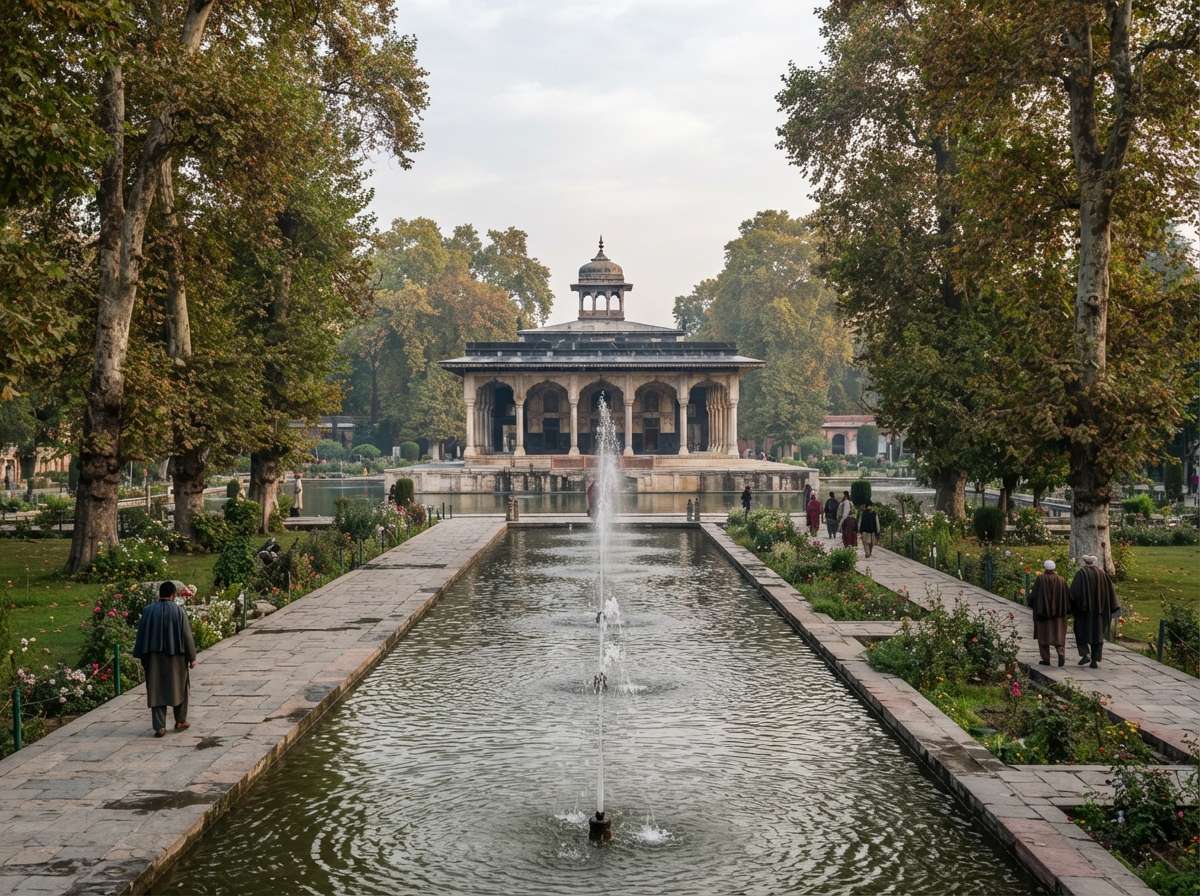
The name is older than any guidebook. It comes from a Persian couplet that reads, ‘Agar firdaus bar roo-e zameen ast, hameen ast-o hameen ast-o hameen ast’ which translates to ‘if there is a paradise on earth, it is here, it is here, it is here.’ Those three repeats are the whole point. The poet was not comparing Kashmir to paradise. He was saying there is nowhere else to look.
Here is the part most pages get wrong. The couplet is usually credited to Amir Khusrau (1253 to 1325), the Persian poet of the Delhi Sultanate court, and you will see that claim repeated everywhere. But scholars point out it appears in none of his surviving works, and the same lines are just as often tied to the Mughal emperor Jahangir, who loved Kashmir so deeply he is said to have spoken them of the valley itself. The verse is famously inscribed in the Diwan-i-Khas of Delhi’s Red Fort, built by Jahangir’s son Shah Jahan, and the Srinagar district administration records it on the Black Pavilion at Shalimar Bagh, the garden Jahangir laid out beside Dal Lake in 1619, though at least one writer who searched the pavilion reported finding no such inscription. So the honest answer to ‘who called Kashmir heaven on earth’ is that the phrase is centuries old and its author is disputed. What is not disputed is why it stuck. Whoever wrote it had clearly stood where you are about to stand.
Snow-capped valleys and the Himalayan backdrop
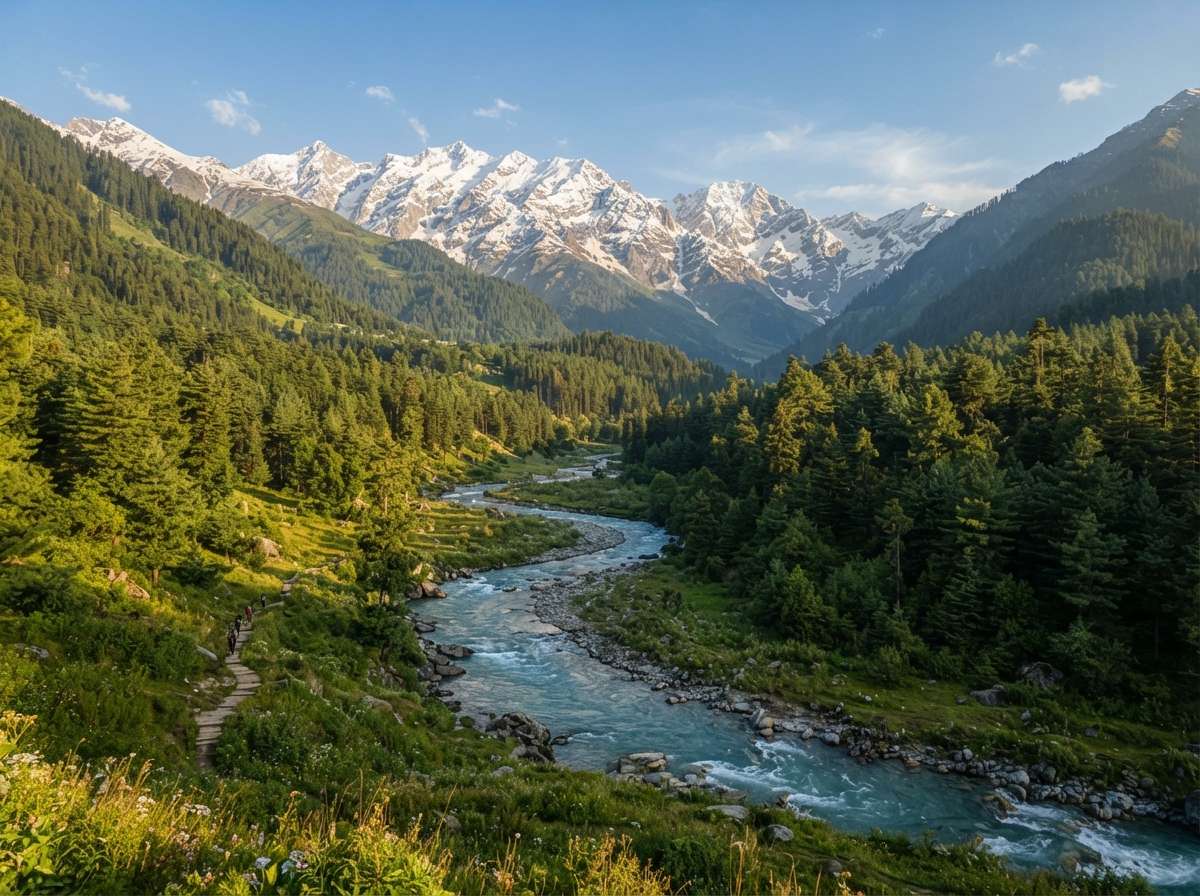
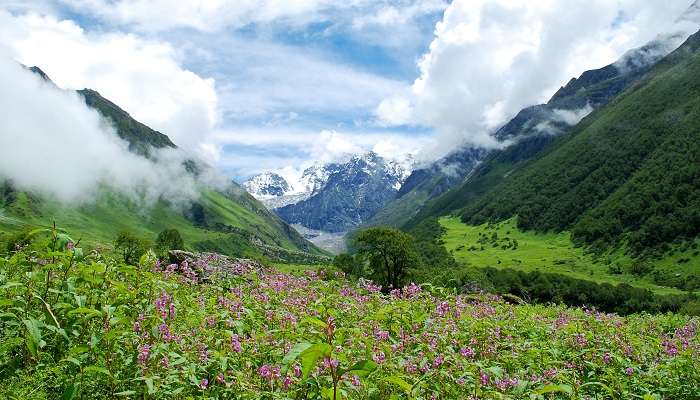
The first thing that hits you is the scale. The valley sits in a bowl held by the Pir Panjal range to the south-west and the Great Himalayan range to the north-east, so almost every view has a wall of snow-dusted peaks behind it. The meadows are the postcards: Gulmarg’s open grassland at about 2,650 m, Sonamarg’s ‘meadow of gold’ on the road to Ladakh, and Pahalgam where the Lidder river runs cold and fast past pine forest. Push a little further and you reach the quieter ones, Aru and Betaab valleys near Pahalgam, and Doodhpathri and Yusmarg on the other side, where you often have the grass to yourself. This is also trekking country. The Kashmir Great Lakes trek, roughly 72 km past seven alpine lakes including Vishansar, Gadsar and Gangbal, is rated one of the most beautiful walks in the country. You do not have to trek to feel it, though. A short drive out of Srinagar and the mountains are simply everywhere.
The lakes: Dal, Nigeen and the shikara life
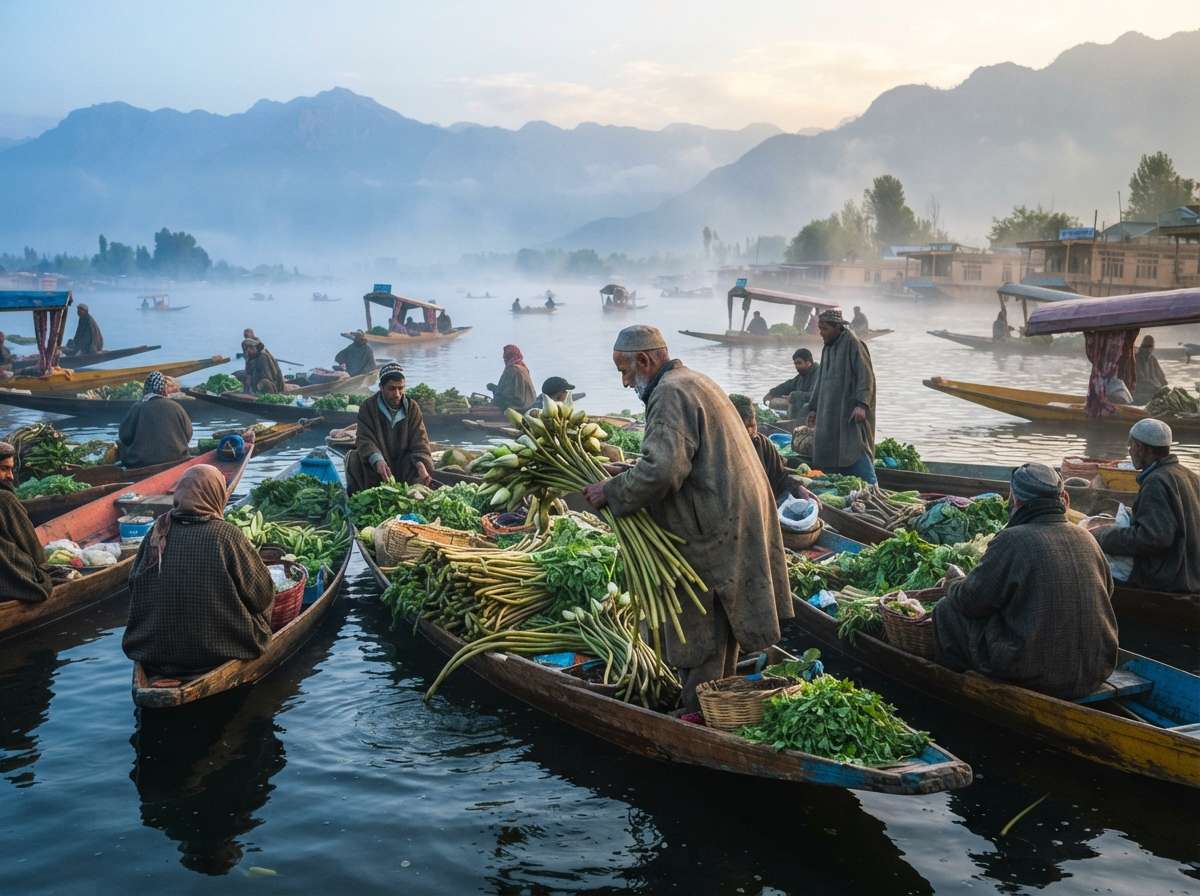
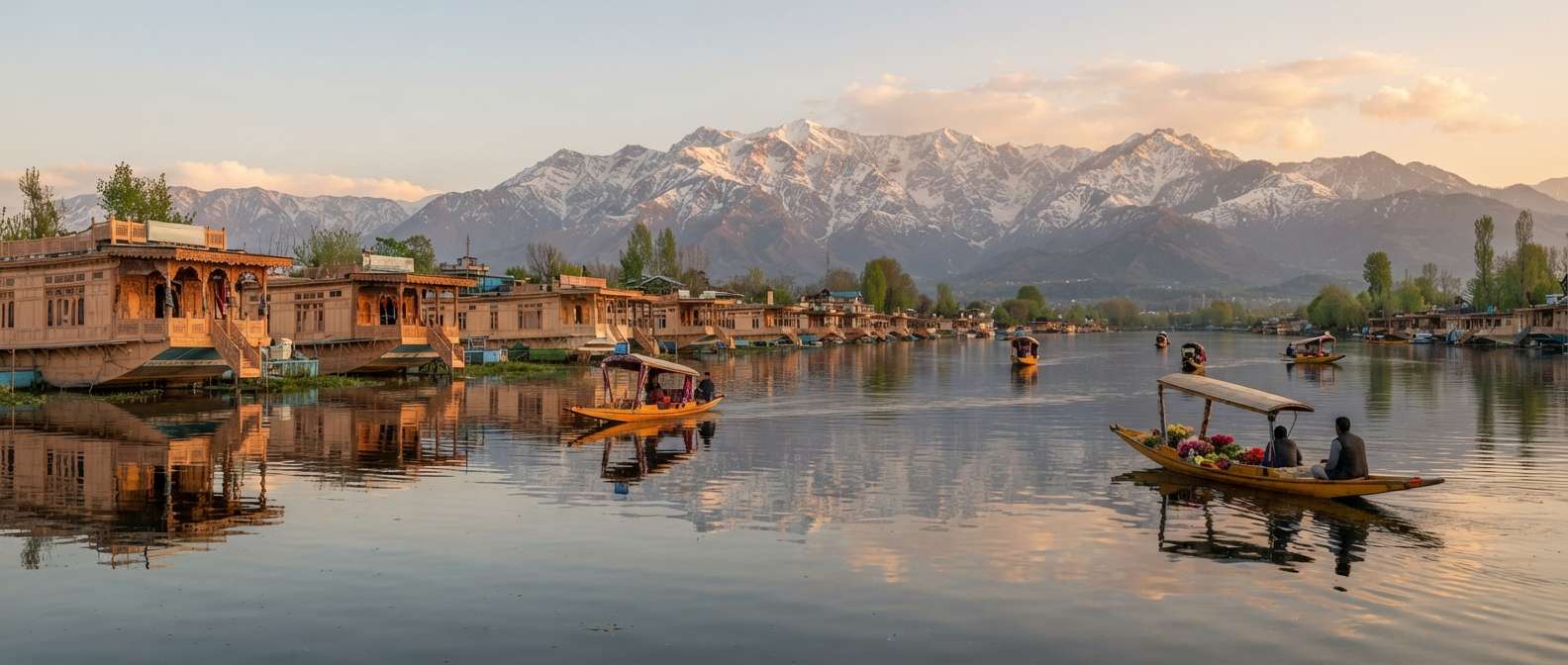
If one image sells the name, it is a shikara gliding across Dal Lake at first light. Dal is not really one lake but a network of open water, channels and floating gardens, and life happens on it. Cedar-wood houseboats, a British-era invention that stuck, line the banks with carved interiors and verandahs over the water. At dawn, a floating vegetable market forms where growers paddle up with lotus stems and greens grown on the lake itself. Just north, Nigeen Lake is the calmer, cleaner cousin, better if you want the houseboat experience without the traffic. Spend a night on the water and you understand the couplet without anyone explaining it. For more of the valley beyond the lakes, our guide to the best places to visit in Kashmir maps out the rest.
Asia's largest tulip garden and the Mughal gardens
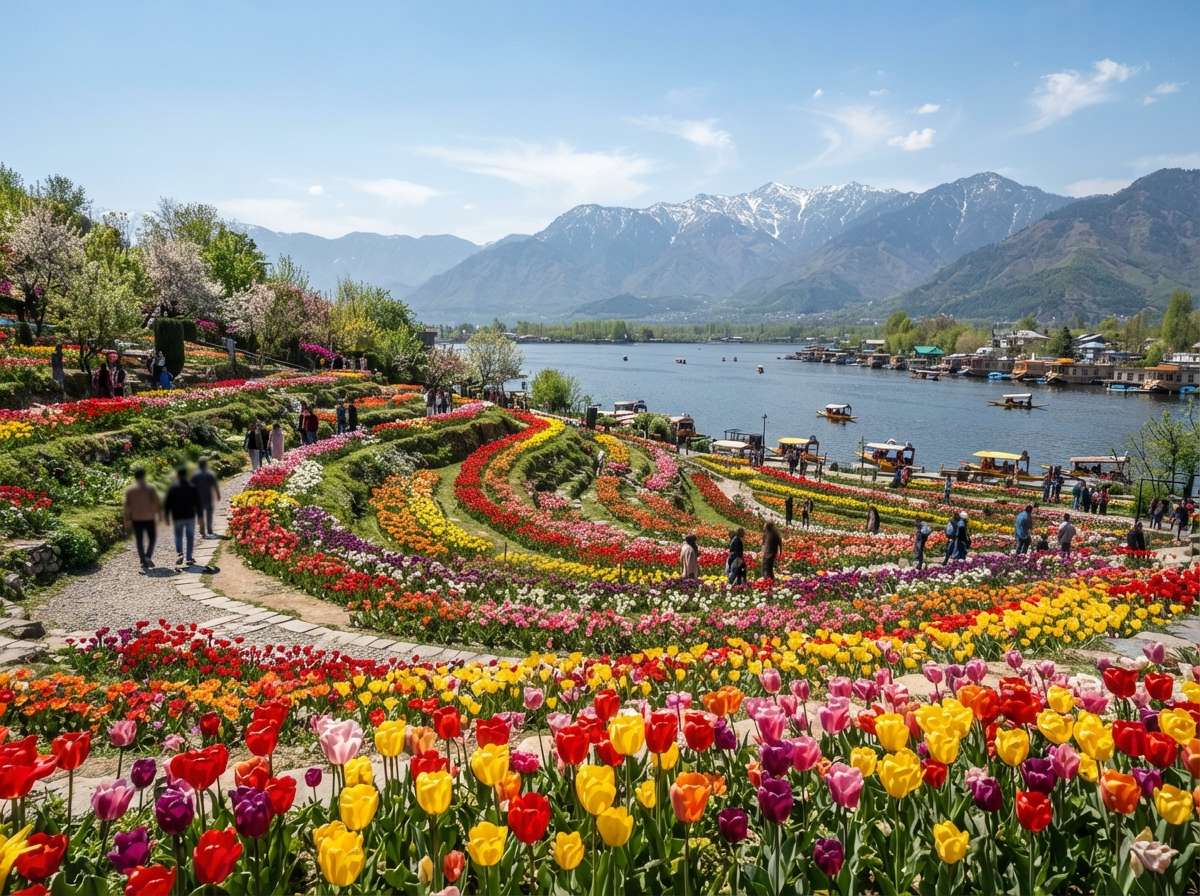
For about a month each spring, Kashmir turns into something even locals photograph. The Indira Gandhi Memorial Tulip Garden, laid out on the Zabarwan foothills overlooking Dal Lake, is the largest tulip garden in Asia, with about 1.8 million tulips across more than 70 varieties in the 2026 season, banked in colour up the slope. The bloom is short, usually mid-March to mid-April, and the annual Tulip Festival is timed to it. Nearby stand the Mughal gardens laid out by the emperors and their nobles four centuries ago, Shalimar Bagh, Nishat Bagh and Chashme Shahi, terraced with fountains and Chinar avenues. These are not a backdrop to the ‘paradise’ story. They are part of it, because the same court that laid out these gardens is the one the couplet is tied to
Autumn Chinar and Kashmir's four seasons
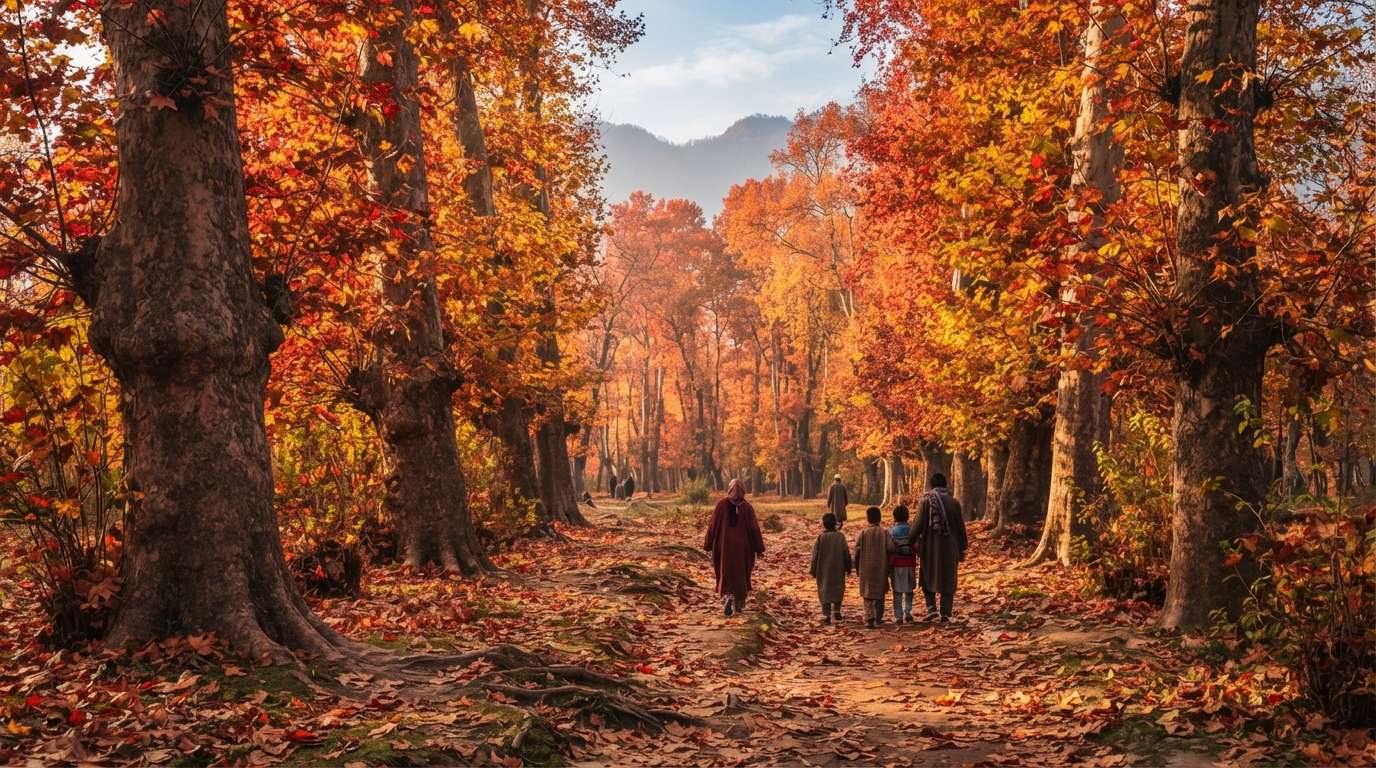
Most places have one good season. Kashmir has four, and each looks like a different country. The Chinar, the giant plane tree with maple-like leaves that the Mughals planted widely across the valley, is the clock. In late October its leaves turn crimson and gold, and for a few weeks the whole valley, Naseem Bagh’s centuries-old grove especially, glows. Here is what to expect through the year.
| Season | Months | What it looks like | Best for |
| Spring | Mar to early May | Tulips, almond blossom, gardens waking up | The tulip garden, mild sightseeing |
| Summer | May to Aug | Green meadows, full lakes, pleasant days | Shikaras, Gulmarg, family trips, treks |
| Autumn | Sep to Nov | Chinar turning gold and crimson | Photography, the classic ‘heaven’ look |
| Winter | Dec to Feb | Snow across meadows, skiing at Gulmarg | Snowfall, skiing, honeymoon |
Gulmarg, the gondola and the winter wonderland
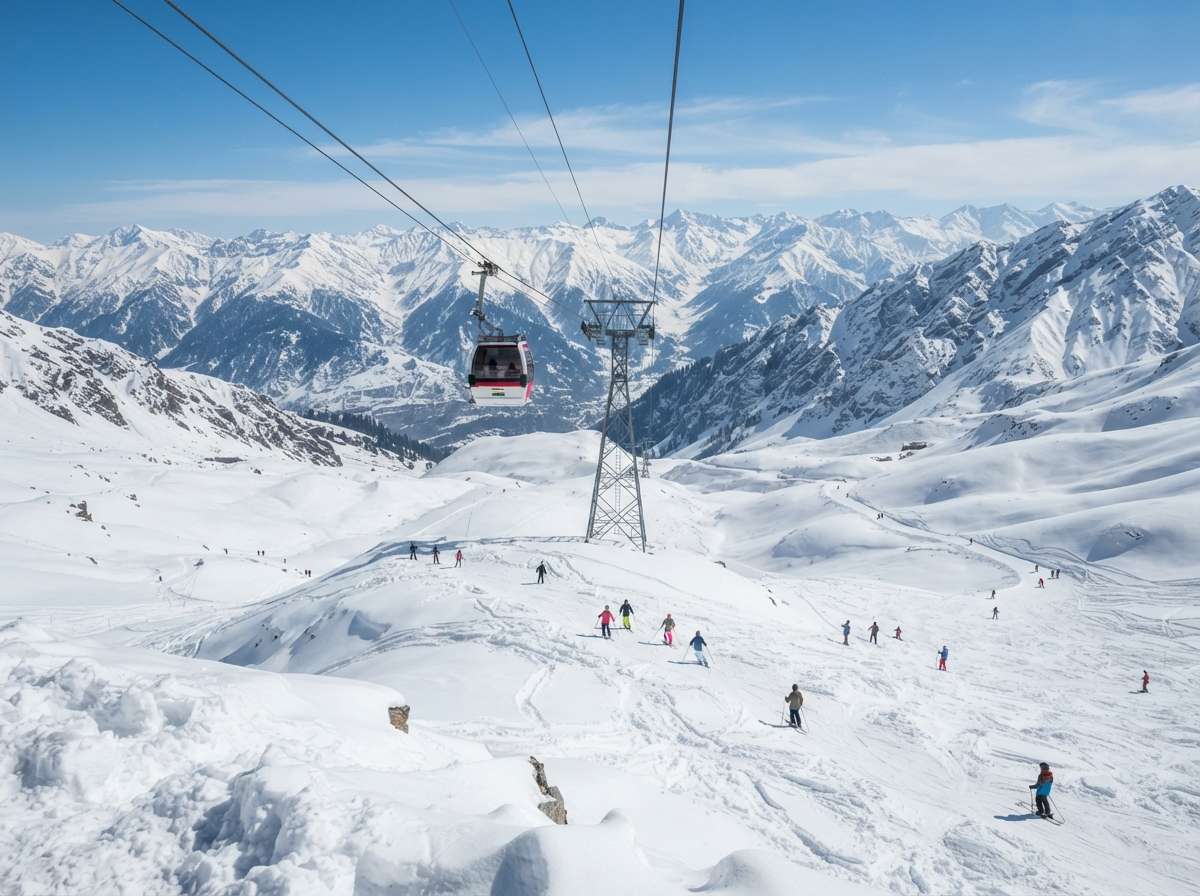
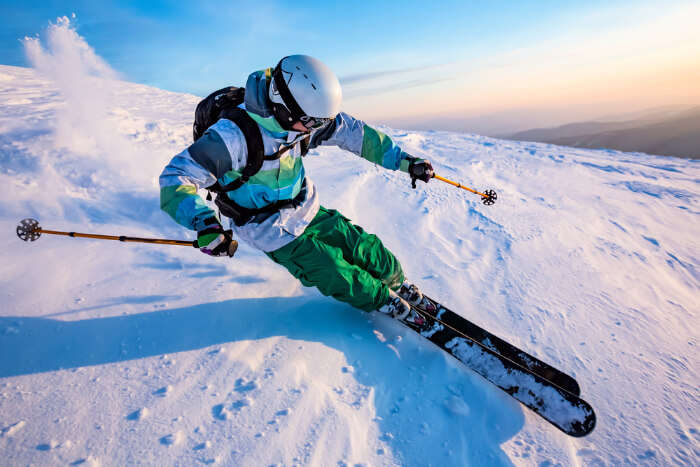
Come winter, the valley trades green for white and Gulmarg becomes one of Asia’s best-known ski resorts. The star ride is the Gulmarg Gondola, among the highest operating cable cars in the world, which climbs Apharwat Mountain in two stages. Phase 1 runs from Gulmarg to Kongdoori from around Rs 810 per adult, and Phase 2 carries you on toward the Apharwat ridge, at about 3,980 m (roughly 13,000 ft), from around Rs 1,010, or about Rs 1,820 for both. Fares are revised from time to time and tickets are booked online through the J&K Cable Car Corporation portal, so check the current rate before you go. In summer the top is a wildflower meadow; in winter it is a snowfield with skiers dropping off the shoulder. Even if you never clip into skis, riding above the treeline with the Himalayas stacked to the horizon is the single clearest ‘heaven on earth’ moment on the trip.
Wazwan, Kahwah and saffron: a taste of paradise
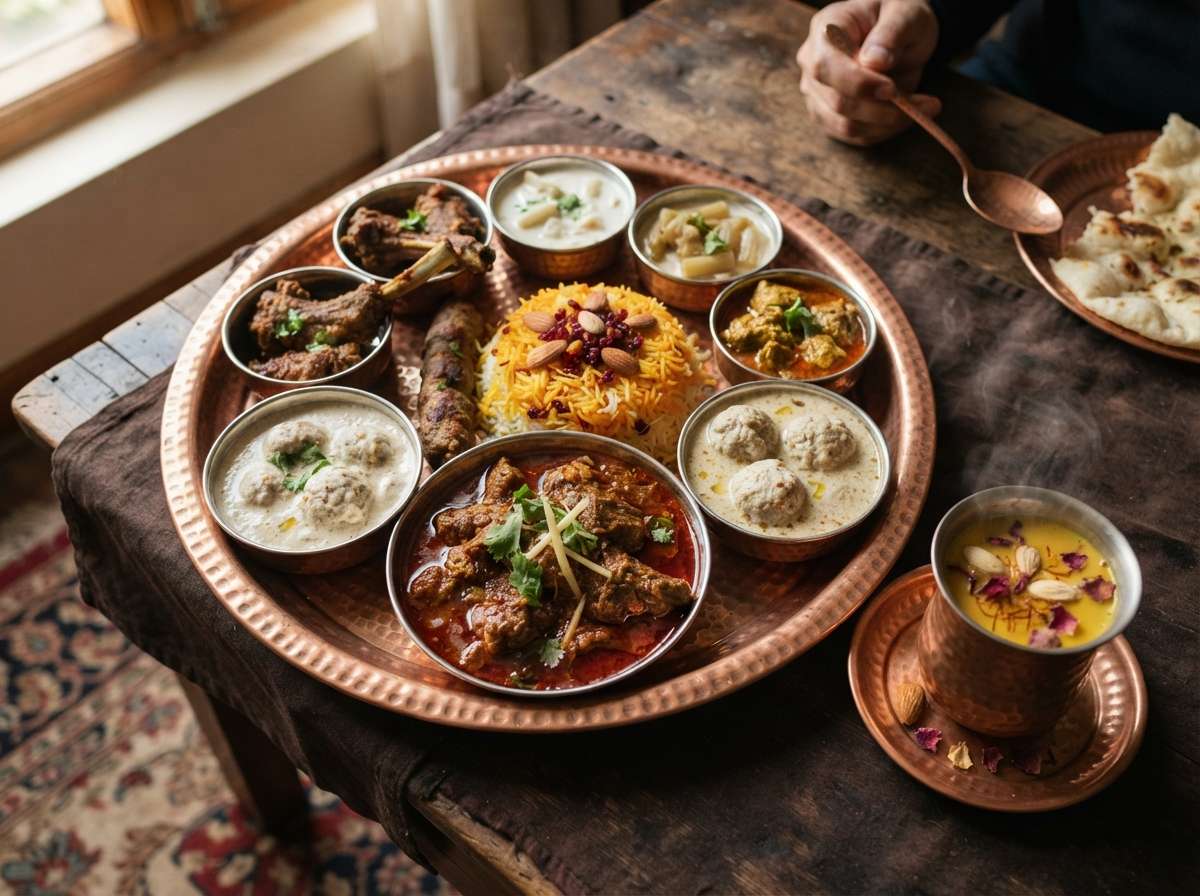
Paradise, it turns out, also tastes of something. Kashmiri food is its own tradition, shaped by Persian and Central Asian influences alongside the valley’s own Kashmiri Pandit kitchen, and it peaks with the Wazwan, a ceremonial feast of many courses, traditionally up to 36, prepared by a master chef called a waza and served on a shared copper platter. The dishes people travel for are Rogan Josh, the slow-cooked lamb curry, and Rista and Gushtaba, pounded-mutton meatballs in red and yoghurt gravies, now cooked the world over. Everything ends with Kahwah, a green tea steeped with saffron, cardamom and crushed almonds. That saffron is grown just outside Srinagar in the fields of Pampore, the heart of Kashmir’s GI-tagged saffron belt, which grows most of India’s saffron. To plan meals around the valley, see our guide to Kashmiri food and cuisine
Houseboats and the warmth of Kashmiri people
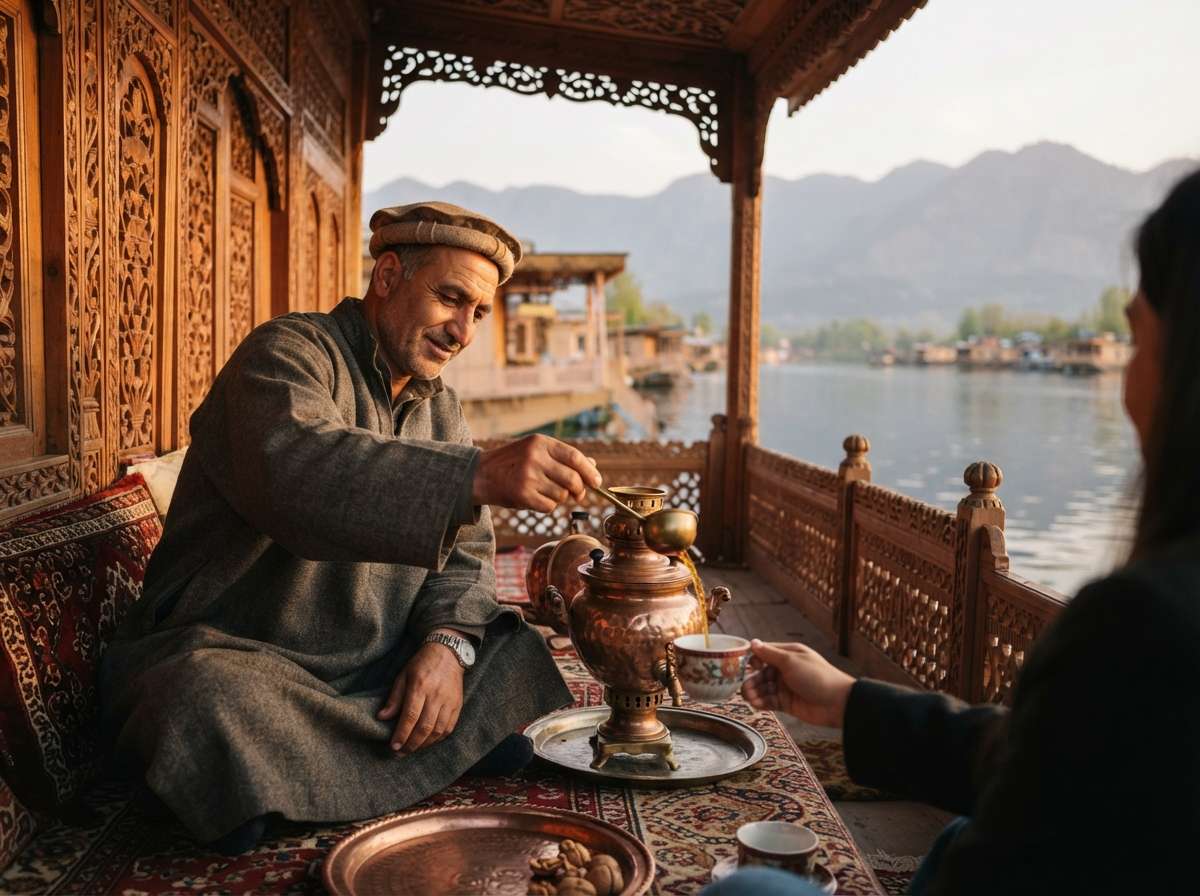
The last proof is the one that does not photograph well and matters most. Travellers come back talking less about the lakes than about the people. Stay on a houseboat and the family running it will feed you Kahwah before you have unpacked. Ask a shikara owner for directions and you often end up with a story and a cup of tea. Kashmiri hospitality is not a marketing line, it is the everyday texture of a trip here, and it is a big part of why visitors call the place heavenly when they get home. Beauty gets you to Kashmir. The warmth is what makes people say the couplet was right.
How to plan your trip to heaven on earth
If the reading has you ready to go, here is the short version of how a Kashmir trip comes together.
- Pick your base. Fly into Srinagar (SXR), or take the Vande Bharat train, which has run from Katra since June 2025 and from Jammu Tawi since May 2026 (under five hours to Srinagar), then base yourself on a Dal or Nigeen houseboat for the first night.
- Choose your season. Spring for tulips, summer for meadows and lakes, autumn for Chinar, winter for snow and skiing. The valley is worth it in all four.
- Map the classic loop. A first trip usually pairs Srinagar with Gulmarg, Pahalgam and Sonamarg. They sit in different directions from the city, Gulmarg about 50 km west, Pahalgam about 90 km south-east and Sonamarg about 80 km north-east, so they work as spokes from a Srinagar base rather than a loop. Allow seven days to cover all four without rushing, or five days if you drop Sonamarg.
- Book the set-pieces. Shikara ride, gondola tickets, tulip garden in season, and one Wazwan meal.
- Sort the practicalities. Check the latest local advisories close to travel and keep a warm layer even in summer at altitude. Prepaid SIM cards from outside Jammu and Kashmir do not work in the UT, so carry a postpaid connection or buy a local prepaid SIM on arrival. In Pahalgam, Sonamarg and Gulmarg, local sightseeing (Aru, Betaab, Chandanwari, Thajiwas and the like) is run by local taxi unions, so budget for a union cab there even if you arrive in a Srinagar car.
The easiest way to tie it together is a customisable Kashmir tour package, or read the wider Kashmir tourism guide first if you are still deciding
The last word
So why is Kashmir called heaven on earth? Because a Persian poet looked at it centuries ago and could not think of anything higher to compare it to, and because everything he saw is still there for you to stand in front of. The lakes, the tulips, the snow on Apharwat, the Kahwah poured before you ask. When you are ready to see it for yourself, browse our customisable Kashmir tour packages and build the trip around the season you want to catch
FAQs
Why Kashmir Is Called Heaven On Earth: Frequently Asked Questions
Quick answers on the couplet, who said it, what Kashmir is famous for and when to go
Kashmir, in the north of India, is the place most often called heaven on earth. The name comes from a Persian couplet describing the valley as an earthly paradise, and it fits the reality: Himalayan peaks, the lakes of Srinagar, Asia's largest tulip garden and a food culture few places match. The same phrase, 'paradise on earth', is used interchangeably for it.
This is genuinely disputed. The couplet 'Agar firdaus bar roo-e zameen ast...' is popularly credited to the poet Amir Khusrau (1253 to 1325), but it appears in none of his surviving works, and it is just as often attributed to Emperor Jahangir, who adored Kashmir. The lines are famously inscribed in the Diwan-i-Khas of Delhi's Red Fort, and the Srinagar district administration records them on the Black Pavilion at Shalimar Bagh. The honest answer is that the phrase is centuries old and its true author is uncertain.
For the combination you rarely find in one place: snow-capped valleys, still lakes you can sleep on, gardens the Mughals designed, saffron fields, a royal cuisine and unusually warm hospitality. Add the Persian poetry that named it centuries ago and the label stuck. 'Paradise on earth' and 'heaven on earth' mean the same thing here.
The name traces back to Persian poetry from the medieval and Mughal era, roughly the 13th to 17th centuries, depending on which attribution of the couplet you follow. The Mughal emperors and their nobles, who laid out the Shalimar and Nishat gardens beside Dal Lake in the 1600s, did the most to fix Kashmir's reputation as an earthly paradise in the popular imagination
The phrase points to a place rather than a whole country: the Kashmir Valley in northern India. When people say 'heaven on earth' in a travel context, they almost always mean Kashmir. India as a whole is sometimes described that way in tourism writing, but the specific origin of the phrase is the Kashmir couplet.
Dal Lake with its shikaras and houseboats, the Gulmarg gondola and ski slopes, the Indira Gandhi Memorial Tulip Garden, Pahalgam and Sonamarg valleys, Pashmina shawls and carpets, saffron from Pampore, and Wazwan cuisine. It is equally famous for its autumn Chinar colour and for the warmth of its people.
It depends on what you want to see. Mid-March to mid-April for the tulip garden, April to October for green meadows and lake life, and December to February for snow and skiing at Gulmarg. Autumn, roughly late October into November, gives you the classic golden-Chinar look. There is no bad season, only different postcards.
Seven days covers Srinagar plus Gulmarg, Pahalgam and Sonamarg without rushing, or five days if you drop Sonamarg. The three sit in different directions from the city (Gulmarg about 50 km west, Pahalgam about 90 km south-east, Sonamarg about 80 km north-east), so they work best as day trips or short stays from a Srinagar base, ideally starting with a night on a Dal or Nigeen houseboat.
Kashmir is a hugely popular tourist destination and lakhs of travellers visit the valley every year, with tourism actively encouraged. As with any trip, check the latest local advisories close to your travel dates, book stays and transport through established operators, and follow local guidance. Most visitors find the valley calm, welcoming and easy to travel in.