
"A big thank you to Pearl Andaman Tours And Travels for making our Andaman & Nicobar vacation a wonderful and memorable experience. Everything was taken care of very well, from the bookings and activities to…"
Everything to Know Before Going to Howrah Bridge
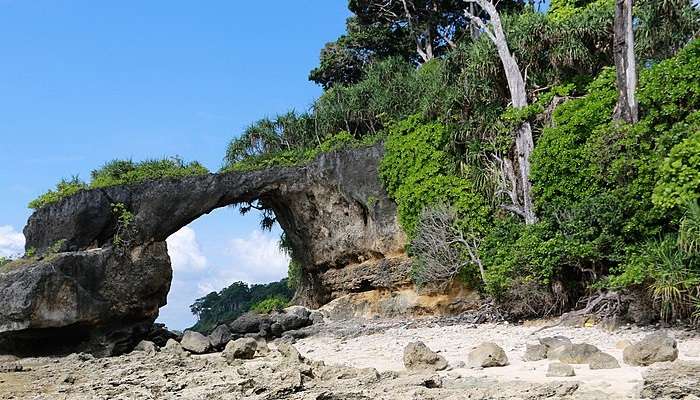
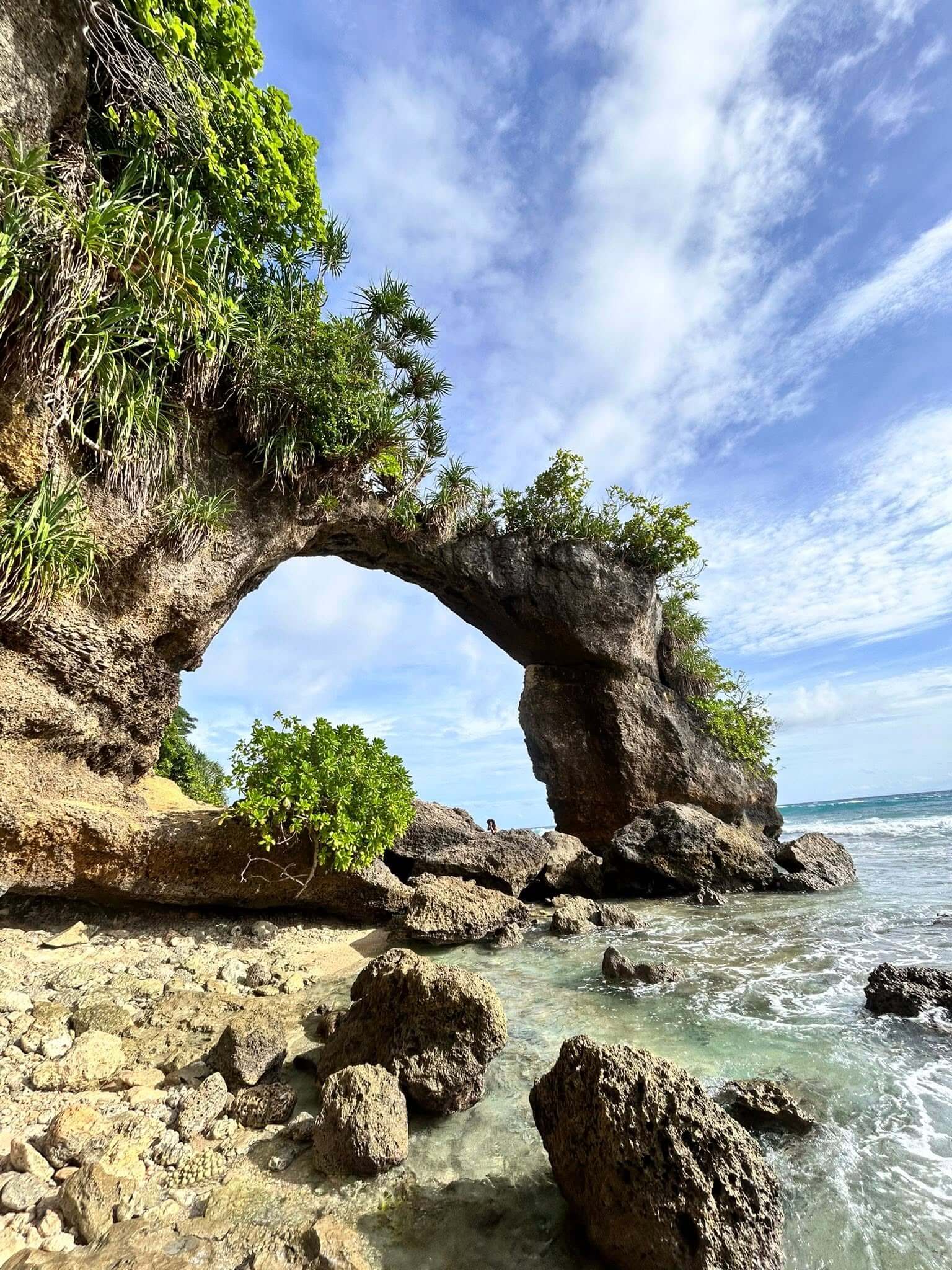
The Howrah Bridge in Andaman is a natural rock arch — not the man-made bridge in Kolkata — on the north-western edge of Neil Island, and the single thing you must know before you go is that it is only visible at low tide. The arch sits on the reef flat off Laxmanpur Beach No. 2, and at high tide the path is underwater and the formation is hard to see; at low tide the sea pulls back and you can walk out across the corals to it, with tide pools full of small fish, starfish, sea urchins and sea cucumbers along the way. Entry is free, there is no ticket counter and no fixed timing — the tide chart decides your window. This guide covers what the Howrah Bridge actually is, exactly where it is, how to reach it from Port Blair, how to read the tide so you don’t waste the trip, what to do there, and the best time of year to go.
Howrah Bridge Andaman
Andaman
Visit The Howrah Bridge Andaman in These Affordable Packages
Best Time
November - February
Select Package Type
Best Selling Packages
Howrah Bridge, Andaman at a glance
The quick facts a visitor actually needs before planning a Neil Island day. Prices are indicative per person and should be confirmed locally.
| Detail | What to know |
| What it is | A natural rock/coral arch (sea arch) carved by wave erosion — not a man-made bridge |
| Where | Laxmanpur Beach No. 2, NW Neil Island (Shaheed Dweep), Andaman |
| Entry fee | Free — no ticket counter |
| Visiting timing | No fixed timing — access depends entirely on the day’s LOW-TIDE window |
| Walk from car park | 300–400 m over a rocky/coral path (grippy footwear essential) |
| Time needed | 45–90 minutes at the site |
| From Neil jetty | 2 km — scooter, auto-rickshaw, cab or cycle |
| From Port Blair | Ferry to Neil Island, 1–2 hours |
| Best season | November to February (broadly the dry Oct–May season) |
| Best light | Early morning, or late afternoon into sunset (Laxmanpur faces west) |
What is the Howrah Bridge in Andaman?
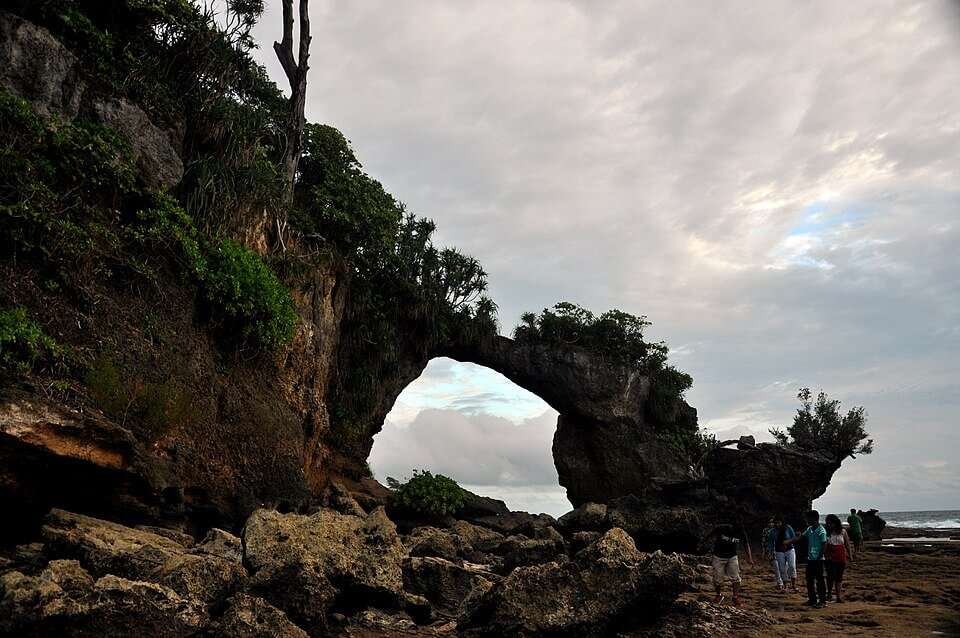
The Howrah Bridge in Andaman is a naturally formed rock arch on Neil Island, shaped over a long period by waves cutting through softer rock and exposed coral until an opening — an archway — was left standing. It is a coastal sea arch, the same family of formation you see at famous coastlines worldwide, and its surface is crusted with living coral, algae and shells. Bengali settlers on Neil Island nicknamed it the “Howrah Bridge” because its single span reminded them of the iconic cantilever bridge in Kolkata; in tourism listings you will also see it called the “Natural Bridge” or “natural rock formation.” All three names point to the same spot off Laxmanpur Beach No. 2.
Neil Island itself was officially renamed Shaheed Dweep in December 2018 (Havelock became Swaraj Dweep at the same time), so newer maps, ferry tickets and signboards may use Shaheed Dweep — the island, the beaches and the Howrah Bridge are unchanged. Neil is small and flat, known locally as the “vegetable bowl” of the Andamans for its farmland, which is why most visitors cover the Howrah Bridge, Laxmanpur, Bharatpur and Sitapur beaches comfortably in a single day. For the wider island, see our full Neil Island travel guide.
Is the Howrah Bridge in Andaman the same as Kolkata's Howrah Bridge?
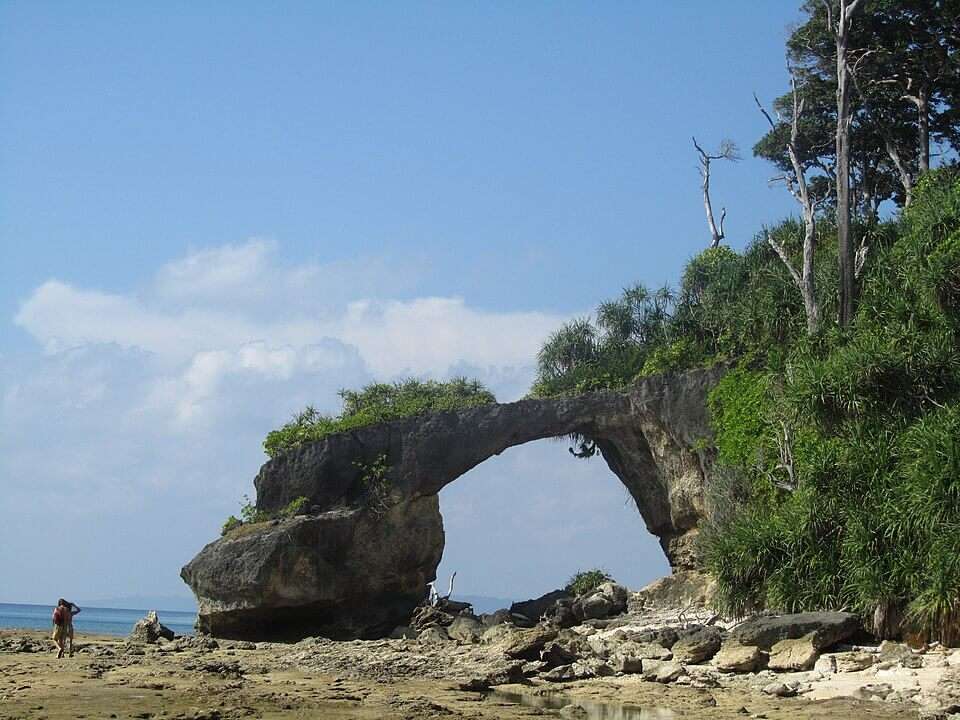
No — and this is the most common confusion, so it is worth clearing up. Kolkata’s Howrah Bridge (officially Rabindra Setu) is a man-made steel cantilever bridge over the Hooghly River, opened in 1943, carrying road traffic between Howrah and Kolkata. The Howrah Bridge in Andaman is a natural rock arch on a beach on Neil Island — there is no river, no traffic and no engineering; it was carved by the sea. They share only a name, borrowed because the shapes look alike. If you searched “Howrah Bridge” expecting Kolkata, the Andaman one is a completely different, much smaller coastal landmark you visit on foot at low tide.
Low tide is everything: how to time your visit
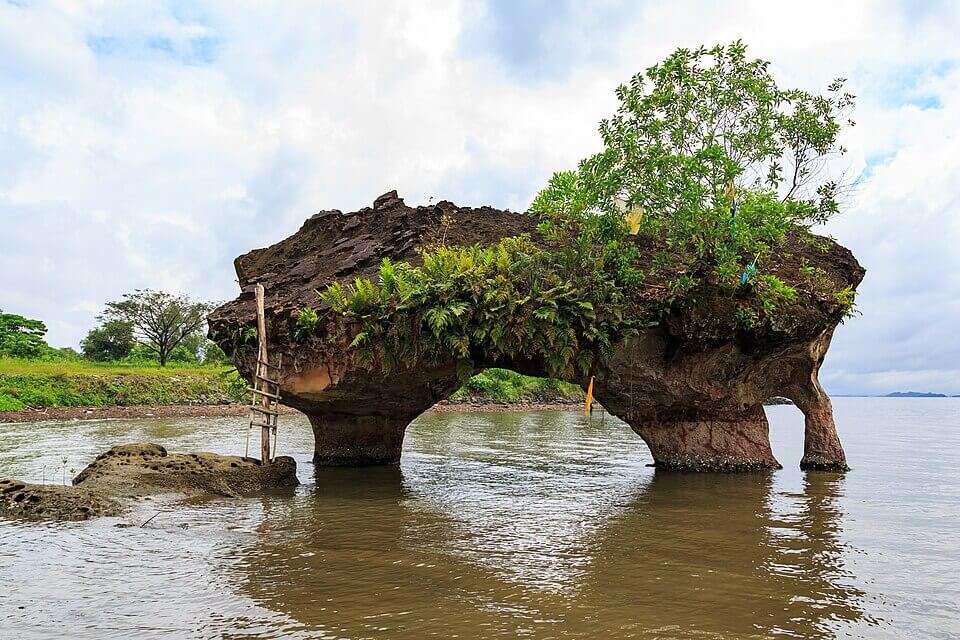
The Howrah Bridge is a tide-dependent attraction, and getting the timing right is the difference between a memorable visit and a wasted auto ride. At high tide the sea covers the reef flat, the walking path is submerged and the arch is mostly hidden by water. At low tide the sea retreats, the rocky path opens up, and you can walk out across the exposed reef to stand near or under the arch — which is also when the tide pools fill with marine life. Plan your trip around the day’s low-tide window, not around a clock.
There is no posted timing because the tide shifts by roughly 40–50 minutes each day. Check a tide chart for Neil Island / Port Blair the night before (any tide-prediction app or website covering the Andaman & Nicobar Islands works), and aim to arrive about an hour before the predicted low. The table below is what to expect at each tide state.
Low tide vs high tide at the Howrah Bridge
| Factor | Low tide (go now) | High tide (skip / wait) |
| The arch | Fully exposed; you can walk close to it across the reef | Base submerged; arch partly hidden, hard to photograph |
| The path | Rocky reef flat is walkable (grippy shoes needed) | Path under water — unsafe and not visible |
| Tide pools | Full of small fish, starfish, sea urchins, sea cucumbers | Covered by the sea — nothing to see |
| Photography | Clean shots of the full arch and reef | Water obscures the formation |
| What to do | Walk out, explore tide pools, shoot the arch + sunset | Stay on the sand at Laxmanpur, return at next low tide |
One safety note our writers learned the hard way. Don’t linger out on the reef as the tide turns. The water comes back across a flat reef faster than it looks, and the corals are sharp. Walk out near low tide, give yourself plenty of margin, and head back well before the sea returns.
Where it is and how to reach the Howrah Bridge
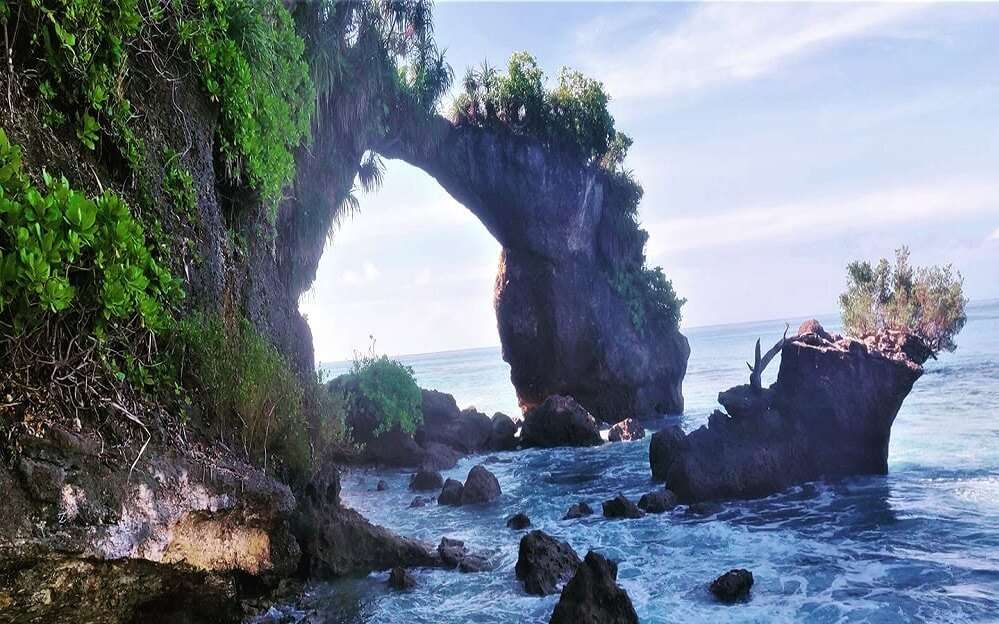
The Howrah Bridge sits at the far end of Laxmanpur Beach No. 2 on the north-western side of Neil Island, about 2 km from the Neil Island (Shaheed Dweep) jetty. Reaching it is a two-stage trip: first cross from Port Blair to Neil Island by ferry, then cover the short distance from the jetty to Laxmanpur and walk the last stretch to the arch.
Step 1: Port Blair to Neil Island by ferry
All visits start from Port Blair. Private air-conditioned catamarans and government ferries run daily to Neil Island; many travellers reach Neil as a hop between Port Blair and Havelock (Swaraj Dweep) since all three sit on the same ferry routes. Book the private catamarans a few days ahead in peak season, as seats sell out. Indicative options:
| Ferry type | Operators | Port Blair → Neil time | Indicative fare (one-way) |
| Private fast catamaran | Makruzz, Nautika | 1–1.25 hours | ₹1,200–2,200 pp |
| Private a/c ferry | Green Ocean | 1.5–2 hours | ₹900–1,500 pp |
| Government ferry | A&N Administration | 1.5–2 hours | ₹as low as a few hundred pp (book at the counter) |
For the full breakdown of getting to and around the islands, see our guide on
how to reach Andaman, and the Neil Island how-to-reach page for current ferry timings.
Step 2: Neil jetty to Laxmanpur Beach No. 2
From the jetty the Howrah Bridge is about 2 km. The easiest way around small, flat Neil Island is a rented scooter (roughly ₹500–600 a day plus fuel); autos, cabs and bicycles are also available. Ride or drive to the Laxmanpur Beach No. 2 parking area, then walk the final 300–400 m — about 10–15 minutes — along a rocky path through coastal scrub and over coral beds to the arch. This last stretch is why closed, grippy footwear matters; flip-flops slip on wet coral.
How to visit the Howrah Bridge at low tide — step by step
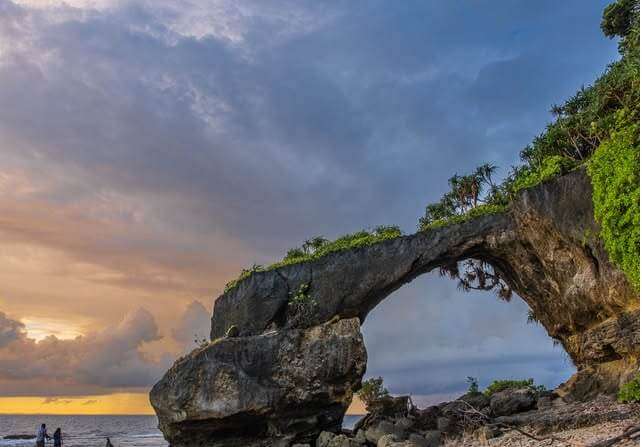
- Check the tide. the night before, check a Neil Island / Port Blair tide chart and note the next day’s low-tide time.
- Get to Neil. from Port Blair, take a morning catamaran or ferry to Neil Island (Shaheed Dweep).
- Arrange transport. at the jetty, hire a scooter, auto or cab for the ~2 km to Laxmanpur Beach No. 2.
- Time your arrival. plan to be at the Laxmanpur No. 2 car park about an hour before the predicted low tide.
- Walk to the arch. follow the 300–400 m rocky trail from the parking area to the reef; wear closed, grippy shoes.
- Explore at low tide. walk out across the exposed reef to the arch, explore the tide pools, and photograph the formation — keep an eye on the returning tide.
- Leave safely + catch sunset. head back before the sea returns, and stay on at Laxmanpur for the west-facing sunset.
Things to do at and around the Howrah Bridge
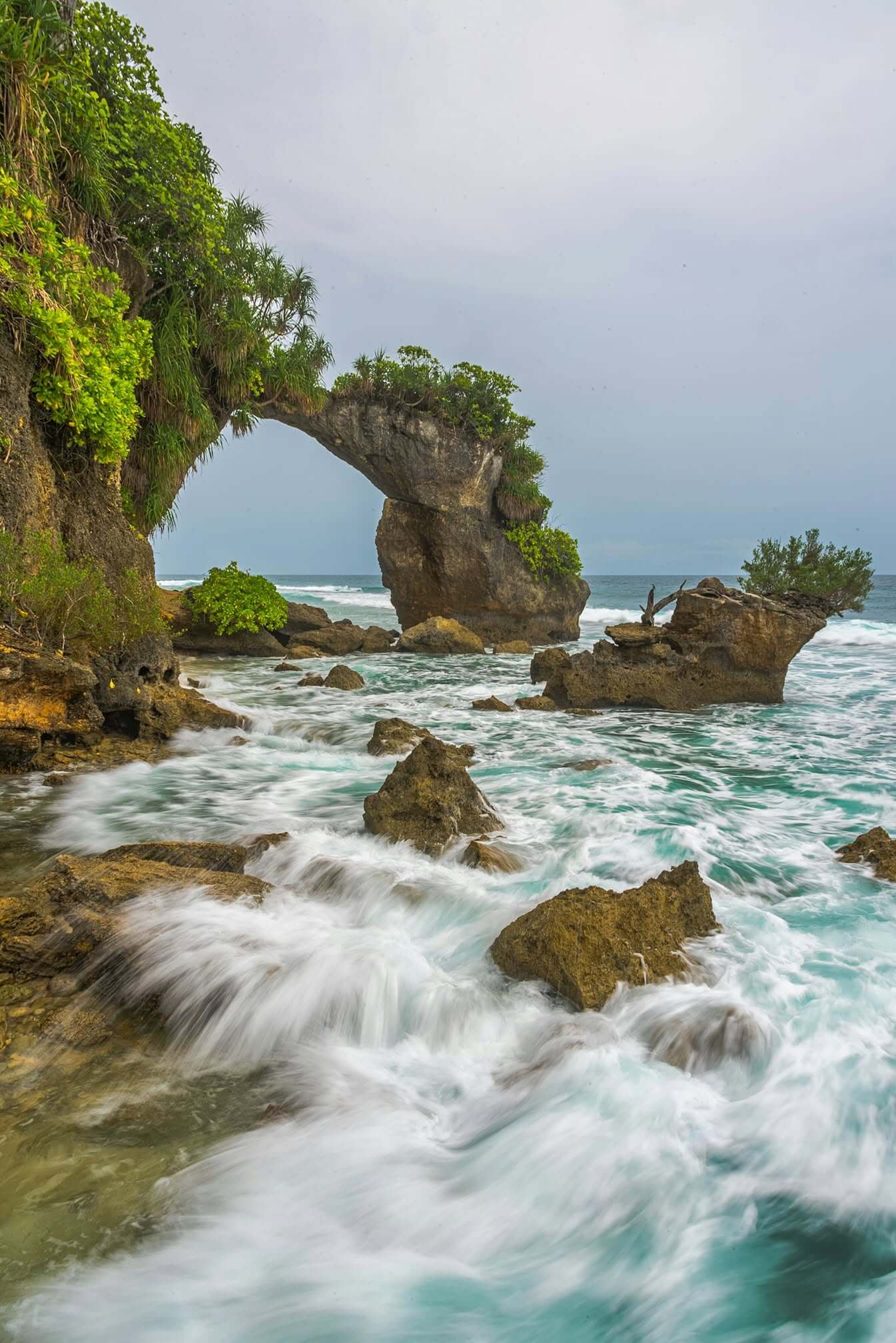
The arch is the headline, but Laxmanpur Beach No. 2 and the rest of Neil Island give you a full day around it.
- See and photograph the arch. walking out to the arch at low tide is the main event — the formation is most photogenic with the reef exposed and the light low.
- Explore the tide pools. the exposed reef is a natural aquarium at low tide: look for small reef fish, starfish, sea urchins, sea cucumbers and live coral. Look, don’t touch — standing on or handling coral kills it.
- Stay for sunset. Laxmanpur Beach No. 2 faces west and is one of the best sunset spots on Neil Island; many visitors time the Howrah Bridge for late afternoon so the walk and the sunset line up.
- Snorkel or dive nearby. the calm, shallow water around Neil is good for beginner snorkelling; intro snorkelling and scuba (no licence needed, depths around 10–12 m) are run mainly off Bharatpur Beach and on boats. Indicative intro-scuba cost is around ₹3,500–6,400 pp.
- Bioluminescent night kayaking. on a clear, moonless night between roughly November and February, operators run bioluminescent night kayaking near Neil where plankton lights up the paddle strokes — a separate booked activity, not part of the Howrah Bridge itself.
Beaches and places to visit near the Howrah Bridge
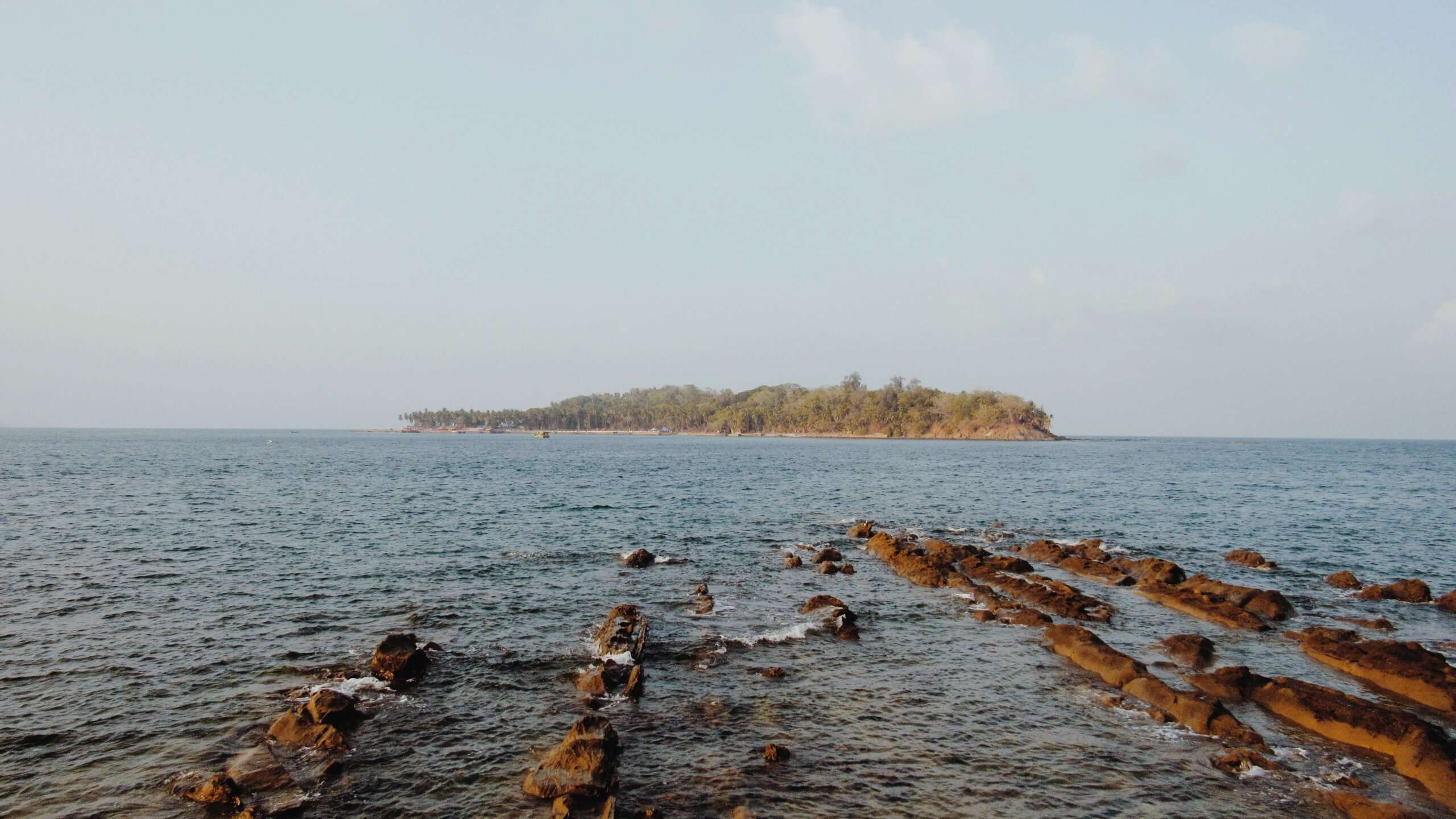
Neil Island is compact, so you can pair the Howrah Bridge with its other beaches in one day. Distances below are rough road distances from the Neil Island jetty.
| Place | ~Distance from jetty | Why go |
| Laxmanpur Beach No. 2 | 2 km | Home of the Howrah Bridge; best sunset point on the island |
| Laxmanpur Beach No. 1 | 2 km | Long white-sand beach for swimming and walks |
| Bharatpur Beach | 1 km | Closest to the jetty; calm, shallow water for snorkelling, glass-bottom boats and water sports |
| Sitapur Beach | 5–6 km | South-east tip; the island’s sunrise point, quieter and good for a swim |
| Natural Coral Reef (Rani Jhansi) | near Laxmanpur | Shallow coral viewing at low tide for snorkellers |
If you have more islands on your trip, Neil pairs naturally with Havelock (Swaraj Dweep) and Port Blair on the standard ferry circuit — see how it fits into a wider plan in our Neil Island guide and the Andaman tourism hub.
Best time to visit the Howrah Bridge, Andaman
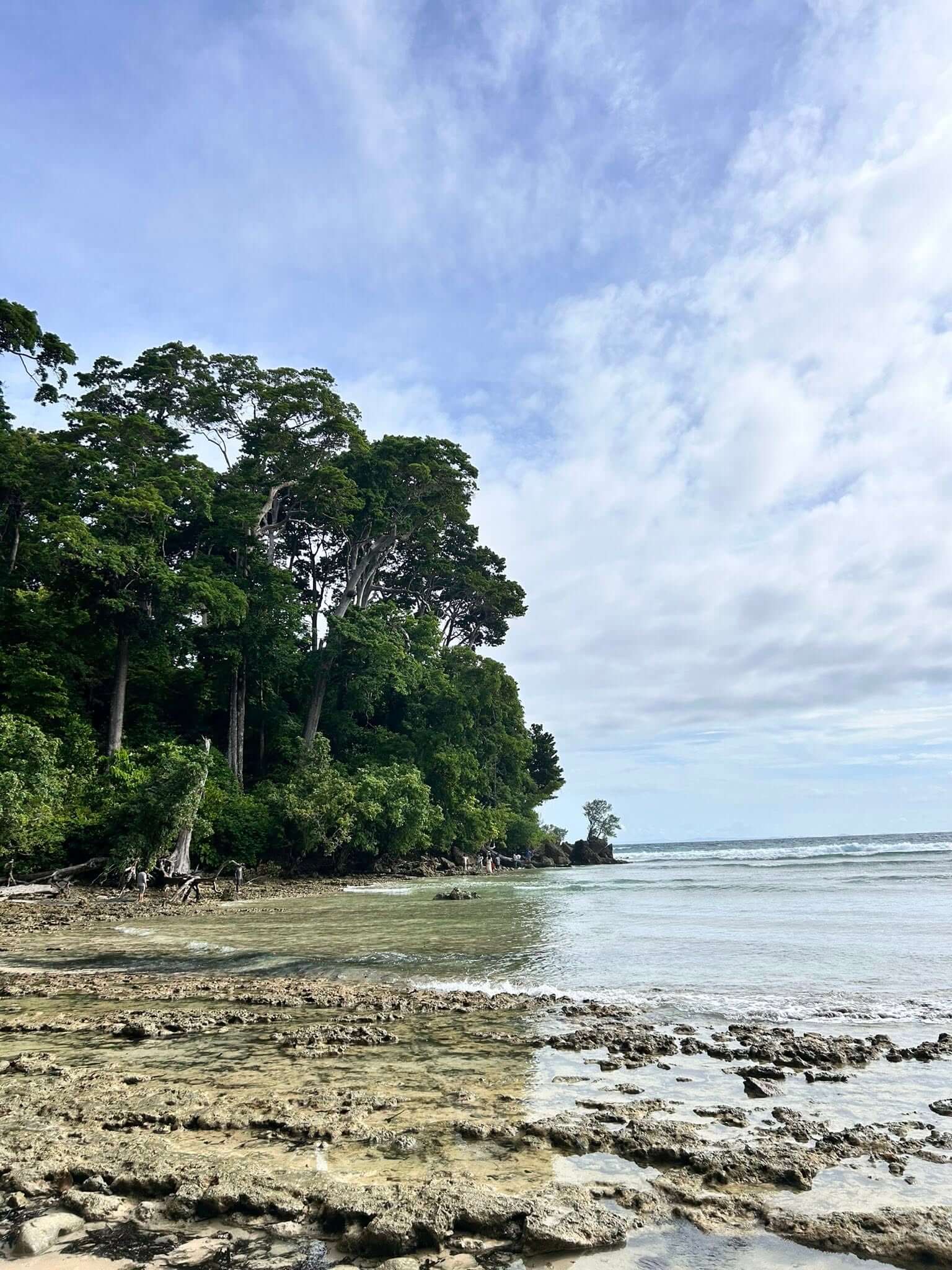
The Howrah Bridge is best between November and February, when the weather is dry, the sea is calm and daytime temperatures sit around 20–30°C. The wider visiting season runs from October to May; the islands largely shut to leisure travel during the south-west monsoon (roughly June to September), when seas are rough and ferries are disrupted. Whichever month you choose, the daily tide window still decides your exact visiting time.
| Season | Months | What it’s like at the Howrah Bridge |
| Peak winter | Nov–Feb | Best overall — calm seas, clear tide pools, comfortable for the reef walk; busiest |
| Warm/shoulder | Mar–May | Hotter and more humid, fewer crowds and lower fares; still fully visitable |
| Monsoon | Jun–Sep | Rough seas, ferry disruptions and poor visibility — avoid |
Practical tips for visiting the Howrah Bridge
- Time it to the tide. the formation only reveals itself at low tide — nothing else on this list matters if you arrive at high tide.
- Wear grippy, closed footwear. the reef is sharp and slippery; closed shoes with grip beat sandals or flip-flops.
- Bring water and sun cover. there are no shops or toilets at the arch and little shade on the walk — carry water, sunscreen and a hat.
- Don’t touch the coral. standing on or touching coral damages a living reef; stay on the rock, take only photos.
- Carry cash. Neil has limited ATMs and patchy card acceptance — carry enough cash for scooter hire, ferries and snacks (BSNL and Airtel give the most reliable signal).
- No entry fee. entry is free and there is no ticket counter — you only pay for transport and any activities you book.
Fitting the Howrah Bridge into your Andaman trip
Most travellers see the Howrah Bridge as part of a half-day or full-day on Neil Island, slotted between Port Blair and Havelock on a 5–7 day Andaman itinerary. Because everything hinges on the tide and the ferry schedule, it is one of those stops that is far easier on a planned, customisable trip than booked piecemeal on the day.
The Howrah Bridge rewards travellers who get one thing right — the tide. Arrive at low tide with the right shoes and an hour to spare, and you get a natural rock arch, a reef full of marine life and one of Neil Island’s best sunsets in a single short walk. If you would rather have the ferries, the Neil Island day and the tide-friendly timing handled for you, TravelTriangle can build it into a fully customisable Andaman tour package so the Howrah Bridge lands on a low-tide afternoon, not a wasted one.
Plan the rest of your Andaman trip
- Neil Island (Shaheed Dweep) travel guide — the full island, all its beaches and how to plan a day there.
- How to reach Andaman — flights, ships and the inter-island ferry network explained.
- Andaman tourism hub — best time, itineraries, costs and everything else for the islands.
- Andaman tour packages — customisable trips that build Neil Island and the Howrah Bridge into the right tide window.
FAQs
Frequently asked questions about the Howrah Bridge, Andaman
No. The Howrah Bridge in Andaman is a natural rock arch on Neil Island, carved by sea-wave erosion over a long period and crusted with coral. It shares only its name with Kolkata's man-made Howrah Bridge (Rabindra Setu), which Bengali settlers borrowed because the single span looks similar. There is no river, no steel and no engineering — it is a coastal sea arch you reach on foot at low tide.
It is at the far end of Laxmanpur Beach No. 2 on the north-western side of Neil Island (officially Shaheed Dweep), about 2 km from the Neil Island jetty. From the Laxmanpur No. 2 parking area you walk roughly 300–400 m along a rocky coral path to reach it. In listings it is also called the “Natural Bridge” or “natural rock formation” — all the same spot.
Yes, but only at low tide. When the sea recedes, the reef flat is exposed and you can walk out across it to stand close to and under the arch. At high tide the path is submerged and the base of the arch is under water, so the walk isn't possible. Always check the day's tide before going, and head back before the tide turns.
Whenever the day's low tide falls — the tide decides, not the clock. Check a Neil Island / Port Blair tide chart and aim to arrive about an hour before low tide. Many visitors try to line the low tide up with late afternoon, because Laxmanpur Beach No. 2 faces west and gives a strong sunset right after the reef walk.
No. Entry is free, there is no ticket counter and no posted opening or closing time. The only thing that limits access is the tide. You can go whenever the water is low enough to expose the reef and the path. You only spend money on the ferry to Neil, local transport and any activities you book separately.
Take a ferry from Port Blair to Neil Island (Shaheed Dweep) — private catamarans (Makruzz, Nautika) take about 1–1.25 hours, while Green Ocean and government ferries take roughly 1.5–2 hours. From the Neil jetty, hire a scooter, auto or cab for the ~2 km to Laxmanpur Beach No. 2, then walk the final 300–400 m to the arch.
About 45 to 90 minutes at the site itself — enough to walk out, explore the tide pools and take photos. Including the ride from the jetty and the walk in, budget around half a day, and pair it with the rest of Neil Island (Bharatpur, Laxmanpur No. 1 and Sitapur beaches) to fill a full day on the island.
At low tide the exposed reef becomes a natural aquarium. Travellers commonly spot small reef fish, starfish, sea urchins, sea cucumbers and live coral in the shallow pools. It is one of the easiest places in the Andamans to see marine life without getting in the water — just look, don't touch, as standing on or handling coral damages the reef.
Yes, if you time it to low tide. Visitors who arrive at high tide see only water and come away disappointed, which is where the attraction's mixed reviews come from. Plan around the tide chart and it delivers a striking natural arch, a living reef you can walk up to, and a top sunset spot — all in one short, free outing on Neil Island.
Closed, grippy footwear is the key item — the path and reef are rocky, sharp and slippery, and flip-flops don't cope. Carry water, sunscreen and a hat (there's little shade and no shops at the site), plus some cash for transport, since Neil has limited ATMs. A waterproof phone pouch or camera is handy for the reef walk.
Yes. “Howrah Bridge,” “Natural Bridge” and “natural rock formation” are three names for the same arch off Laxmanpur Beach No. 2 on Neil Island. “Howrah Bridge” is the local nickname; “Natural Bridge” is the name you'll see most often in official tourism listings. Searching any of them will lead you to the same spot.
It's best avoided. During the south-west monsoon (roughly June to September) the seas are rough, ferries between Port Blair and Neil are frequently disrupted, and visibility and conditions on the reef are poor. The reliable window is October to May, with November to February the best months for calm seas and clear tide pools.