8D / 7N
6% OFF


Pasikuda Beach: What to Know Before You Go
Pasikuda Beach sits on Sri Lanka’s east coast, roughly 310 km and a six to seven hour drive from Colombo, and it is famous for one feature above all: the sea stays shin to waist deep for well over a hundred metres out. An offshore coral reef wraps the bay, so the water arrives flat and warm, without the dumping surf you meet on the south coast. That calm is the whole draw. Families with small children, cautious swimmers and first-time snorkellers pick this stretch precisely because you can walk a long way out and still touch the bottom. This guide covers when to come, whether it is safe to swim, how to get there, where to stay on the sand, and the day trips worth saving a morning for.
Key takeaways
- Come between May and September, when the east coast is dry and the west and south are under monsoon.
- Wade out well past 100 m in flat, waist-deep water; the offshore reef keeps the bay calm and child-friendly.
- Drive about 6 to 7 hours (310 km) from Colombo, or fly to Batticaloa and transfer roughly 35 km.
- The main railhead for the beach is Valaichchenai, about 6 km from the sand.
- Sleep beachfront at Uga Bay, Amaya Beach, Maalu Maalu or Anantaya, then day-trip to Pigeon Island or Polonnaruwa.
Pasikuda Beach at a glance
Pasikuda (also spelled Passikudah) is a shallow, reef-sheltered bay in the Batticaloa District of Sri Lanka’s Eastern Province, next to its quieter twin, Kalkudah. Here is the quick orientation before the detail.
| Detail | What to know |
| Location | Batticaloa District, Eastern Province; next to Kalkudah Bay |
| Best time | May to September (east-coast dry season) |
| Water | Shallow and calm; waist-deep well past 100 m from shore |
| Nearest town | Valaichchenai (~4 km); Batticaloa city (~35 km) |
| Nearest airport | Batticaloa (BTC), about 35 km |
| Nearest railhead | Valaichchenai station, about 4 km |
| Ideal trip length | 2 to 3 nights |
| Best for | Families, calm swimming, snorkelling, honeymooners |
Sri Lanka
Sri Lanka
Best Time
December - April
Select Package Type
Best Selling Packages


Why the water is so calm and shallow
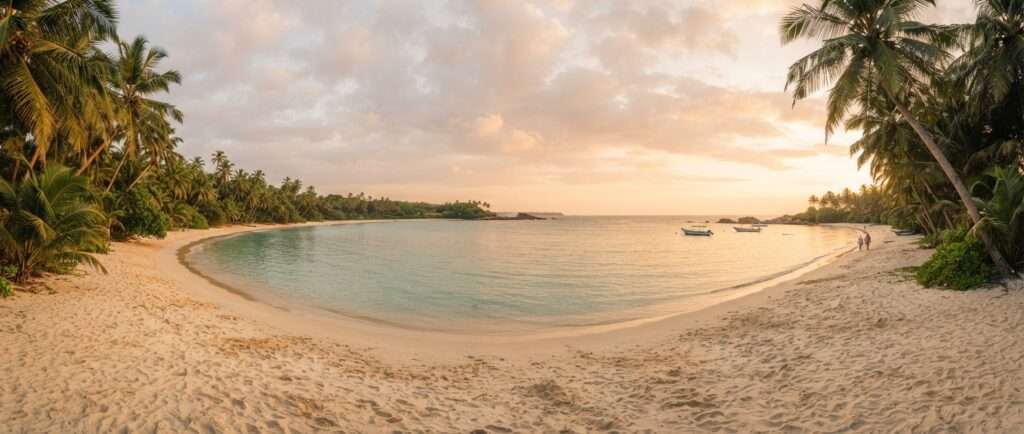
The reason Pasikuda works the way it does is the reef sitting a short way offshore. It runs almost the full length of the bay and breaks the incoming swell before it reaches the sand, which is why the water inside stays glassy even when the open sea is choppy. Behind that reef the seabed shelves very gently, so the depth builds by inches rather than metres. Locals and guidebooks describe this as one of the longest stretches of shallow coastline anywhere, and in practice it means you can walk a couple of hundred steps out and the water is still only at your waist.
That shallow shelf also makes snorkelling easy. You do not need a boat to reach living coral and reef fish; sections of patch reef sit close enough to swim to from the beach, though the best colour is on the outer reef where a guide is worth having. The reef took damage from the 2004 tsunami and later bleaching, so coverage is patchy in places and still recovering. Keep off it with your feet and wear reef-safe sunscreen.
Is Pasikuda Beach safe for swimming?
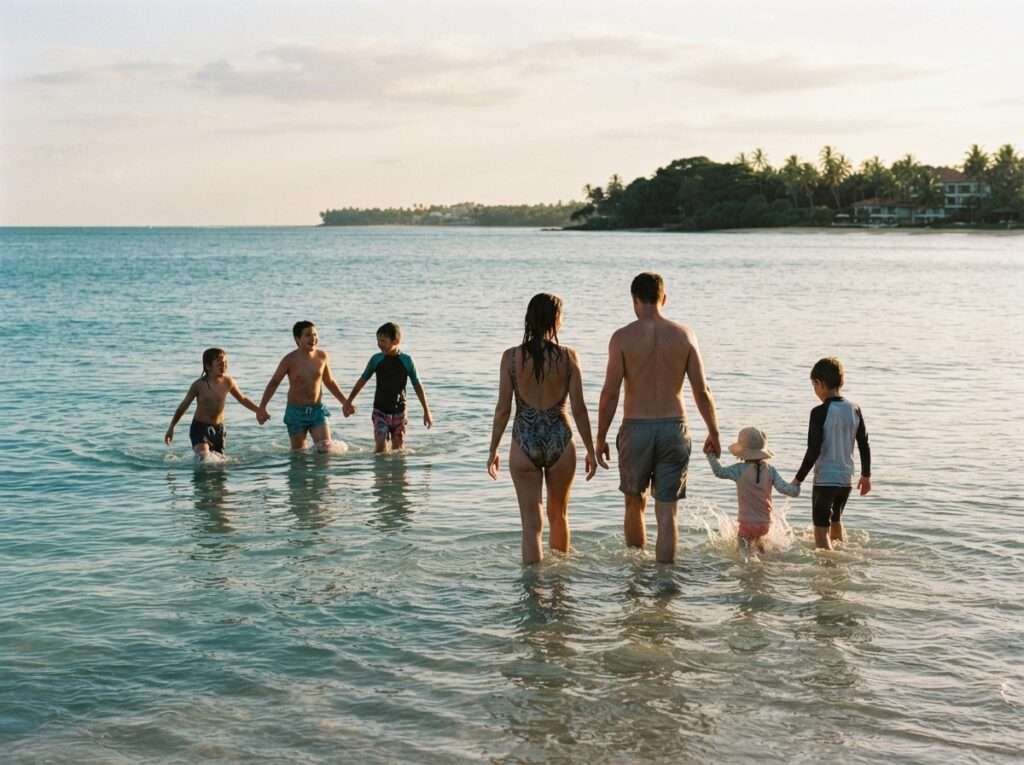
Yes. Pasikuda is widely rated one of the safest swimming beaches in Sri Lanka, which is exactly why it suits families and children. The offshore reef absorbs most of the wave energy, so there is rarely heavy surf and no strong shore-break to knock a child over. The gradual, sandy seabed means little ones can paddle near the edge while adults wade further out without a sudden drop.
A few sensible caveats still apply. Currents can pick up where gaps in the reef let the open sea through, so keep children within the inner bay rather than swimming out toward the reef line. The water deepens beyond the reef, and not every property has a lifeguard, so supervise young swimmers yourself. During the May to September window the sea is at its gentlest; outside it, the northeast monsoon can churn things up.
Things to do on the beach
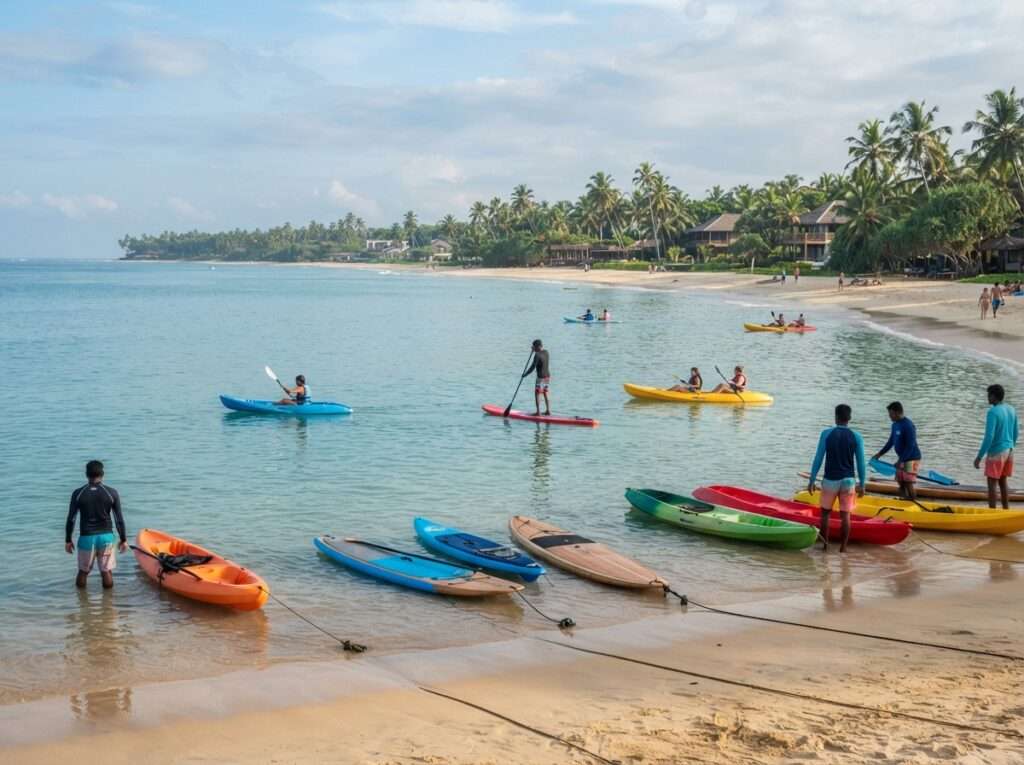
The bay itself keeps most visitors busy. Snorkelling is the signature activity thanks to the inshore reef, and the flat water is forgiving for first-timers. Beyond that you will find kayaks and stand-up paddleboards for hire, jet skis and windsurfing with instructors at the bigger resorts, gentle boat trips out over the reef, and long, easy beach walks toward Kalkudah. If you dive, the east-coast season lines up well; see our guide to scuba diving in Sri Lanka for sites and seasons.
For excursions beyond the sand, from the lagoon to the ancient cities inland, see our full guide to things to do in Pasikuda.
Best time to visit Pasikuda Beach
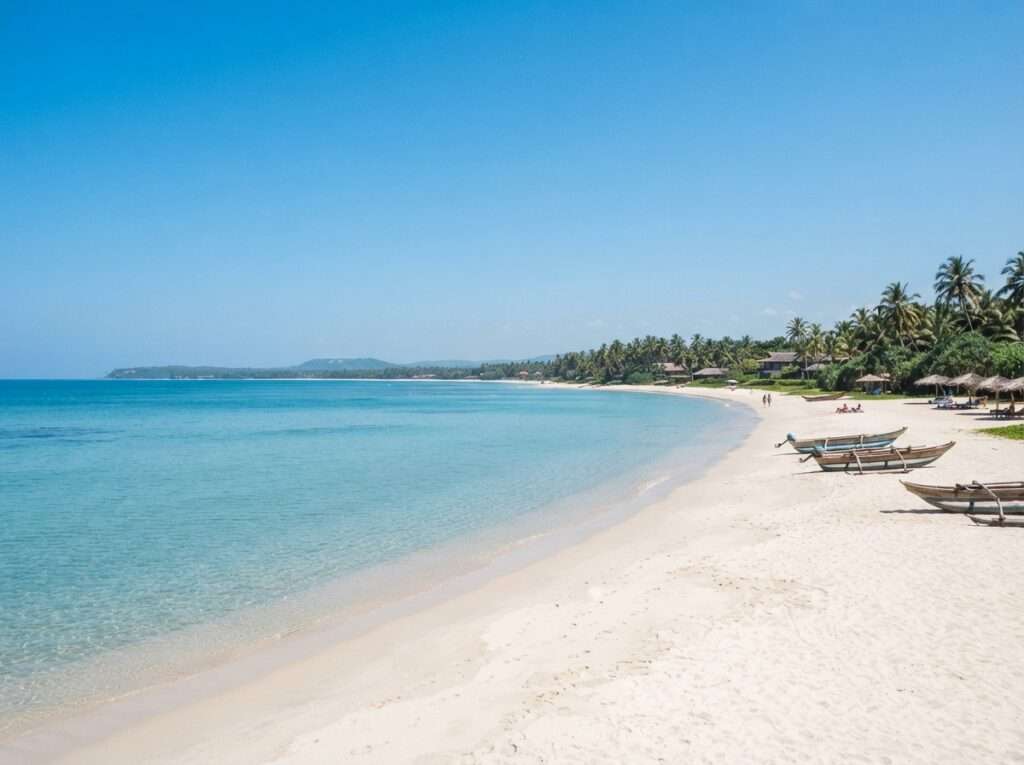
Plan for May to September. Sri Lanka’s east coast runs on the opposite schedule to the better-known south and west: when the southwest monsoon soaks Colombo, Galle and the hill country from May onward, the east stays dry, sunny and calm. That makes Pasikuda the smart choice for a mid-year beach break when half the island is wet. August is the reliable peak, with long settled spells and the lowest humidity. The flip side is the northeast monsoon from roughly October to December, which brings rain and a rougher sea; many beach properties wind down or close in this window.
| Months | Conditions | Verdict |
|---|---|---|
| May to September | Dry, calm sea, lowest humidity; east-coast peak | Best |
| August | Settled, sunny, driest spell | Peak |
| March to April | Warming shoulder, mostly dry | Good |
| October to December | Northeast monsoon; rain, rough sea | Avoid |
| January to February | Monsoon easing; some showers, quiet | Fair |
Where to stay on Pasikuda Bay
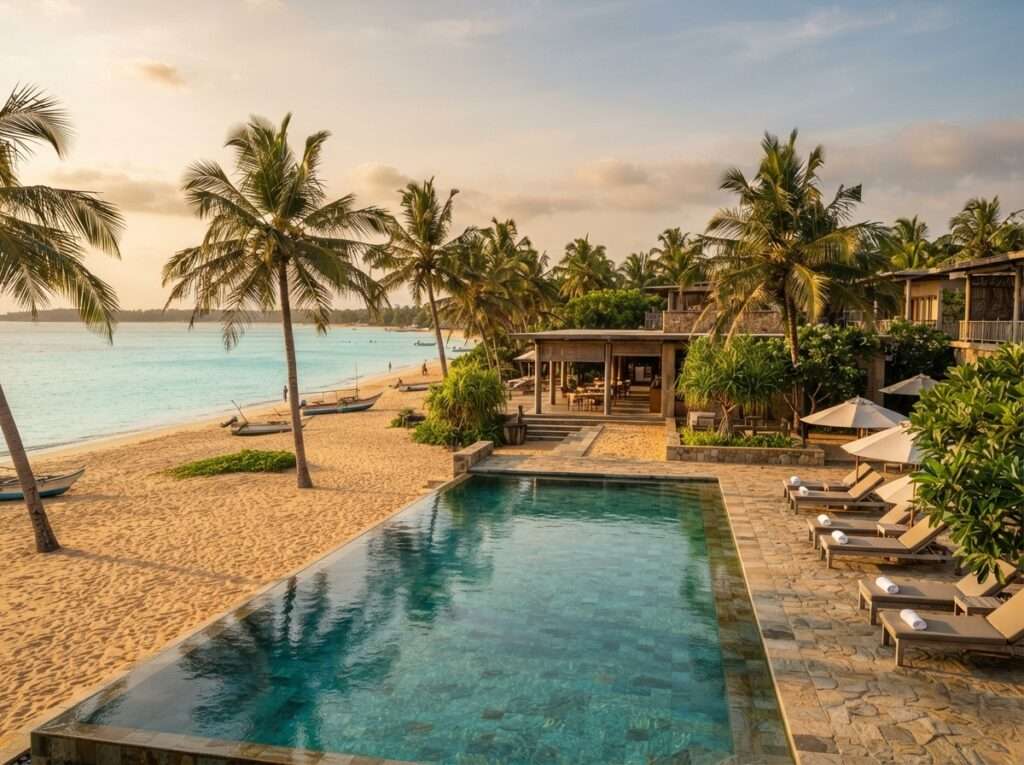
Pasikuda is one of the few east-coast beaches with a cluster of resorts right on the sand, so you can walk from your room to the water. Rooms are busiest and priciest in the May to September peak, so book ahead. The short list below runs from barefoot-luxury down to the guesthouses in Kalkudah village behind the beach.
| Stay | Tier | Why pick it |
|---|---|---|
| Uga Bay by Uga Escapes | Luxury | Design-led, beachfront, good for couples |
| Amaya Beach Pasikuda | Upper mid-range | Large pool, family-friendly, big grounds |
| Maalu Maalu Resort & Spa | Mid to luxury | Cabana style, snorkelling off the house reef |
| Anantaya Resort & Spa Passikudah | Mid-range | Family rooms, pool plus beach access |
| Kalkudah guesthouses | Budget | Simple rooms a short walk from the sand |
How to reach Pasikuda Beach
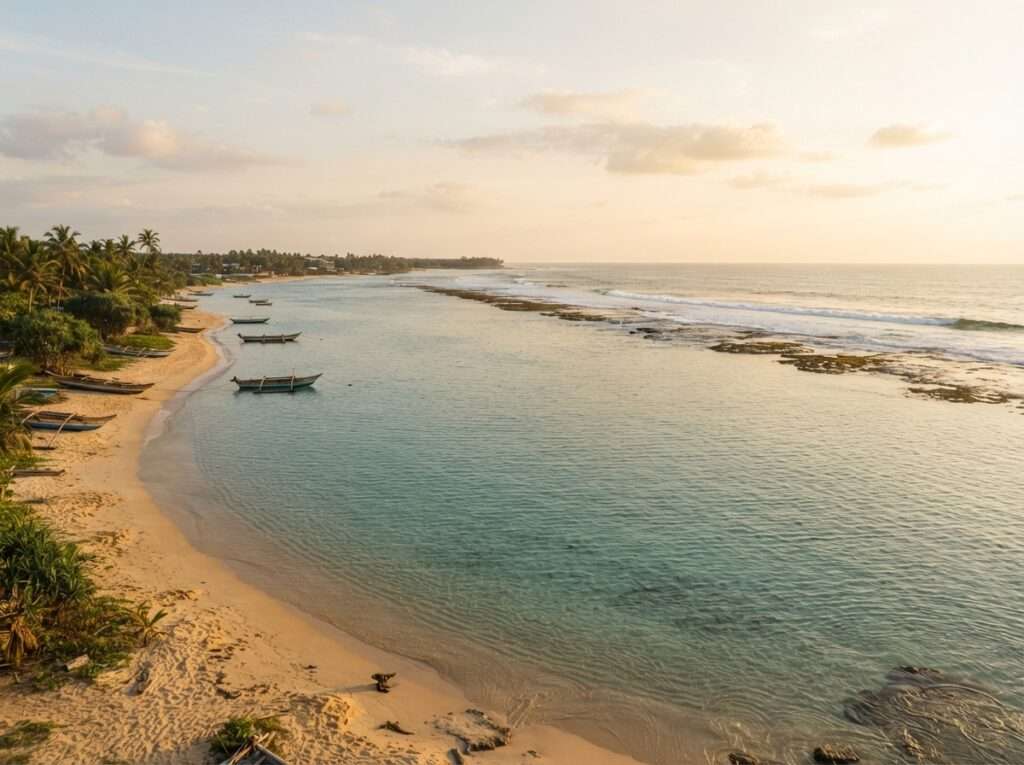
Pasikuda is a cross-island trip from the main tourist areas, so give the journey its due. The quickest option is a domestic flight to Batticaloa and a short transfer; the most common is a long drive from Colombo or a stop on an east-coast loop from Trincomalee.
| From | Distance | Time | Best mode |
|---|---|---|---|
| Colombo | ~310 km | 6 to 7 hours | Car, or train to Valaichchenai then taxi |
| Kandy | ~210 km | ~5 hours | Car |
| Trincomalee | ~110 km | ~2.5 hours | Car |
| Batticaloa | ~35 km | ~45 minutes | Car or taxi |
Getting there, step by step
- Choose your entry point: fly Colombo to Batticaloa (BTC) for the fastest route, or set aside 6 to 7 hours to drive from Colombo.
- If flying, arrange a taxi or resort transfer for the roughly 35 km hop from Batticaloa airport to the bay.
- If taking the train, book a seat to Valaichchenai, the main railhead, about 6 km from the beach.
- From Valaichchenai, grab a tuk-tuk or pre-booked car for the last few kilometres to the sand.
- Driving yourself, take the A6 through Kurunegala and Dambulla to Habarana, then join the A11 east through Polonnaruwa toward Batticaloa, and turn off for Kalkudah and Pasikuda.
- Confirm the last leg with your hotel, as signage thins out on the final approach to the beach.
Kalkudah Beach, the quieter sister bay
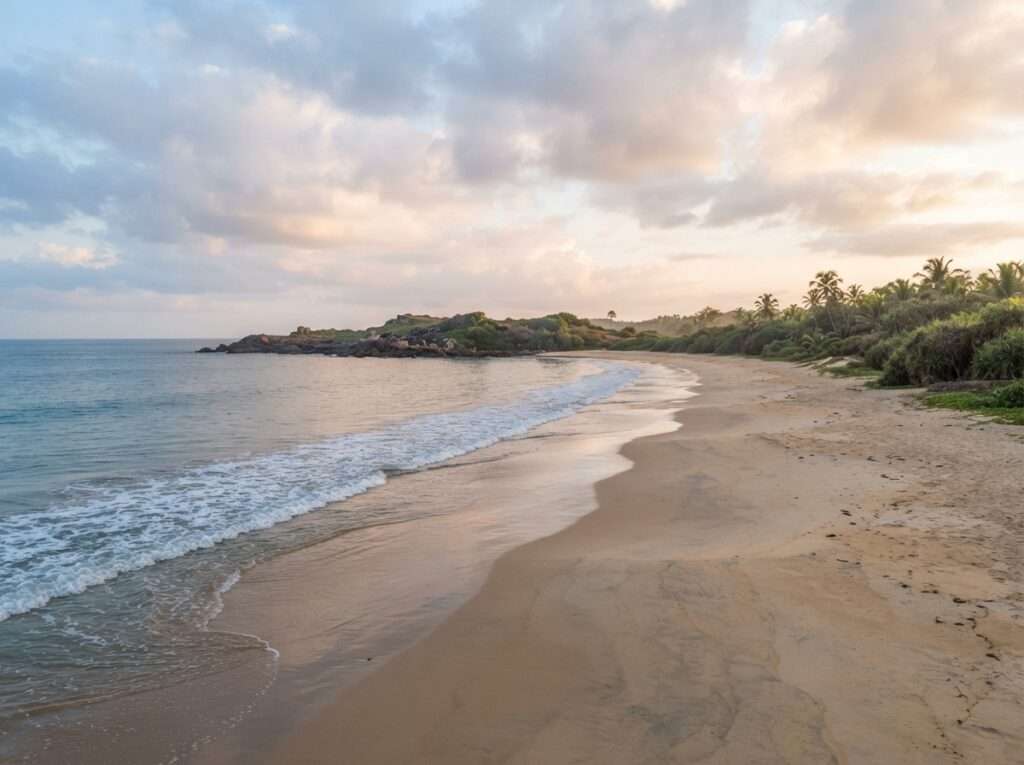
Right next door, separated by a low rocky headland, is Kalkudah Beach. It is longer and far less developed than its neighbour, with a wide open stretch of sand and only a scattering of small places to stay. Because it faces the open sea more directly, the water is a little livelier and better for a long walk than for toddler paddling. Many visitors stay at Pasikuda for the calm swimming and stroll over to Kalkudah at sunrise or sunset when it is almost empty. Together the two bays make the pair worth more than a single night.
Day trips and what is nearby

Two or three nights here leaves room for a morning or two inland and up the coast. The highlights below are close enough to visit and return the same day, though the furthest, like Pigeon Island, make for a full day out.
| Day trip | Roughly | What for |
|---|---|---|
| Kayankerni Marine Sanctuary | ~15 minutes north | Snorkel or dive a protected coral reef, far closer than Pigeon Island |
| Pigeon Island (via Nilaveli) | ~2.5 to 3 hours north | Snorkel a protected reef, spot blacktip reef sharks |
| Batticaloa lagoon & Dutch fort | ~45 minutes | Lagoon boat ride, 17th-century fort, singing fish lore |
| Polonnaruwa | ~1.5 to 2 hours | Ancient royal city, carved Buddhas, cycling the ruins |
| Trincomalee & Nilaveli | ~2.5 hours | Koneswaram temple, whale season, big open beaches |
| Minneriya / Kaudulla | ~2 hours | Evening elephant safari, seasonal Gathering |
Polonnaruwa is one of the island’s UNESCO World Heritage Sites, and for the full list of excursions around the bay, see our guide to things to do in Pasikuda, Sri Lanka.
The short version
Pasikuda rewards travellers who want flat, warm, swimmable sea and a slower pace than the south-coast crowd, and it is at its best from May to September. Pair two or three nights on the sand with a day trip inland and you have an easy, family-friendly slice of the east coast. When you are ready to turn it into a trip, our Sri Lanka tour packages can fold Pasikuda into a wider east-coast or island-wide route.
FAQs
Frequently Asked Questions
Pasikuda Beach, Sri Lanka
Pasikuda is on Sri Lanka's east coast, in the Batticaloa District of the Eastern Province, right beside Kalkudah Bay. The nearest town is Valaichchenai, about 6 km away, and Batticaloa city is roughly 35 km south. From Colombo it is about 310 km, a six to seven hour drive across the island.
The name comes from Tamil and translates roughly as 'green-algae bay', a nod to the seaweed on the inshore reef. You will see the beach written both Pasikuda and Passikudah; these are just different transliterations of the same Tamil and Sinhala sounds, so searching either spelling lands you in the same place. Batticaloa, which you will see nearby, is the name of the surrounding district and its main city, not another spelling of the beach.
Yes, it is one of the safest swimming beaches in the country. The offshore reef breaks the swell before it reaches shore, so there is rarely heavy surf, and the seabed shelves gently, which suits children and nervous swimmers. Keep little ones in the inner bay rather than near the reef gaps, and supervise them yourself, as not every stretch has a lifeguard.
Very shallow for a long way out. The gently sloping seabed and the sheltering reef mean the water stays around waist deep well past 100 m from the shore in much of the bay, which is unusual and the main reason families choose it. It does get deeper beyond the reef line, so strong swimmers have room too.
Aim for May to September. The east coast runs opposite to the south and west, staying dry and calm while the southwest monsoon soaks the rest of the island. August is the most settled, sunniest spell. Avoid October to December, when the northeast monsoon brings rain and a rougher sea and many resorts quieten down or close.
It is about 310 km from Colombo, which is a six to seven hour drive. The fastest option is a domestic flight to Batticaloa, then a roughly 35 km transfer. You can also take the train to Valaichchenai, the main railhead about 6 km away, and finish by tuk-tuk or taxi. Many travellers reach it on an east-coast loop from Trincomalee, around 2.5 hours north.
Several resorts sit directly on the bay, so you can step from your room onto the sand. For luxury, look at Uga Bay or Maalu Maalu; for family-friendly mid-range, Amaya Beach or Anantaya. Budget travellers will find guesthouses in Kalkudah village just behind the beach. Book well ahead for the May to September peak, when rooms fill fast.
They are neighbouring bays split by a rocky headland. Pasikuda is the calmer, shallower, more developed side with the resort cluster and the famous wade-out water, ideal for families. Kalkudah is longer, wilder and quieter, facing the open sea more directly, which makes it better for long walks than for toddler paddling. Most people stay at Pasikuda and visit Kalkudah for a stroll.