
 8D / 7N
6% OFF


Sri Lanka's World Heritage at a Glance
There are 8 UNESCO World Heritage Sites in Sri Lanka, 6 cultural and 2 natural, inscribed between 1982 and 2010. They are Anuradhapura, Polonnaruwa and Sigiriya (all 1982), Kandy, Galle and the Sinharaja Forest Reserve (1988), the Dambulla cave temple (1991) and the Central Highlands (2010). No new site has been added since 2010. Four of them sit within about 100 km of each other in the Cultural Triangle, which is why a 9-day loop can cover all 8. Indian passport holders pay the SAARC rate at the ticketed ancient cities, which is roughly half the foreign price. At Sigiriya that means USD 20 instead of USD 35, according to the Central Cultural Fund’s tariff.
Key Takeaways
- Count on 8 sites, 6 cultural and 2 natural, with the Central Highlands (2010) the newest addition.
- Carry your original passport to every ticket counter. Without it, Indians pay the full foreign rate.
- Budget roughly USD 90 to 110 per Indian adult for all 8 sites’ tickets, against about USD 160 to 175 for non-SAARC visitors.
- Plan 8 to 9 days to see all 8 without rushing, or 4 days for the Cultural Triangle plus Kandy.
- Go between late January and March, the one window when the dry north and the wet south-west are both in good shape.
All 8 Sites Side by Side
The table below puts the practical facts in one place. Fees are for one adult. Foreign means a non-SAARC passport, and SAARC covers India.
| Site | Type, year | Region | From Colombo | Adult fee (foreign / SAARC) | Time needed | Best months |
|---|---|---|---|---|---|---|
| Sacred City of Anuradhapura | Cultural, 1982 | North Central Province | 205 km, about 4.5 hrs | USD 30 / USD 15 | 1 full day | Feb to Sep |
| Ancient City of Polonnaruwa | Cultural, 1982 | North Central Province | 215 km, about 5 hrs | USD 30 / USD 15 | 5 to 6 hrs | Feb to Sep |
| Ancient City of Sigiriya | Cultural, 1982 | Central Province | 175 km, about 4 hrs | USD 35 / USD 20 | 3 to 4 hrs | Feb to Sep |
| Rangiri Dambulla Cave Temple | Cultural, 1991 | Central Province | 148 km, about 3.5 hrs | LKR 3,000 to 5,000 / no reliable SAARC rate | 1.5 to 2 hrs | Feb to Sep |
| Sacred City of Kandy | Cultural, 1988 | Central Province | 115 km, about 3 hrs | LKR 3,000 / LKR 2,500 (Temple of the Tooth) | 1 day | Jan to Apr, Jul to Aug for the Perahera |
| Central Highlands of Sri Lanka | Natural, 2010 | Central, Uva and Sabaragamuwa | 180 km to Horton Plains, about 5 hrs | Horton Plains about USD 25 / USD 20, plus vehicle and service charges | 1 to 2 days | Jan to Mar |
| Sinharaja Forest Reserve | Natural, 1988 | Sabaragamuwa and Southern | 150 km to Kudawa, about 4 hrs | Forest Department ticket plus a compulsory guide, paid at the gate | Half to full day | Jan to Apr |
| Old Town of Galle and its Fortifications | Cultural, 1988 | Southern Province | 125 km, about 1.5 to 2 hrs | Free to walk | Half day | Dec to Apr |
On a map, the tight cluster in the middle of the island is the Cultural Triangle. Kandy and the highlands sit just south of it, while Sinharaja and Galle are in the wet south-west.
Sri Lanka
Sri Lanka
Fees, the SAARC rate for Indians, best months and a 9-day route
Best Time
January - March
Select Package Type
Best Selling Packages


8 UNESCO Sites in Sri Lanka, North to South
The eight World Heritage Sites in the order the 9-day route visits them, then fees, best time, etiquette and the Tentative List.
Explore Popular Destination In Sri Lanka
01
Sacred City of Anuradhapura (1982)
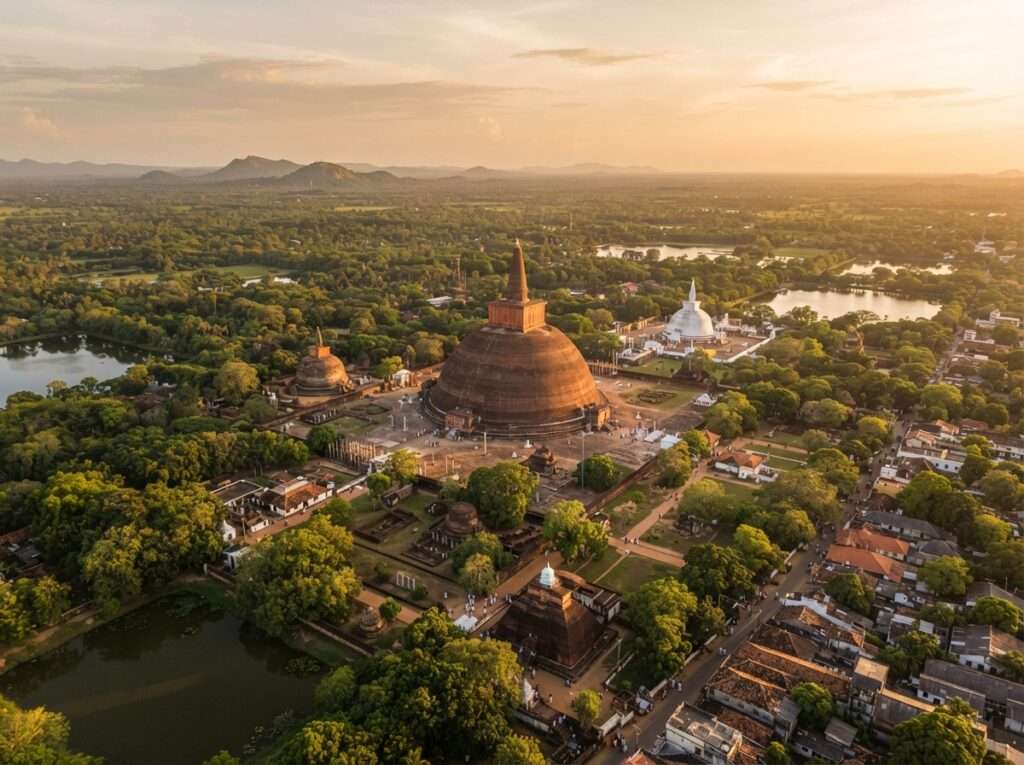
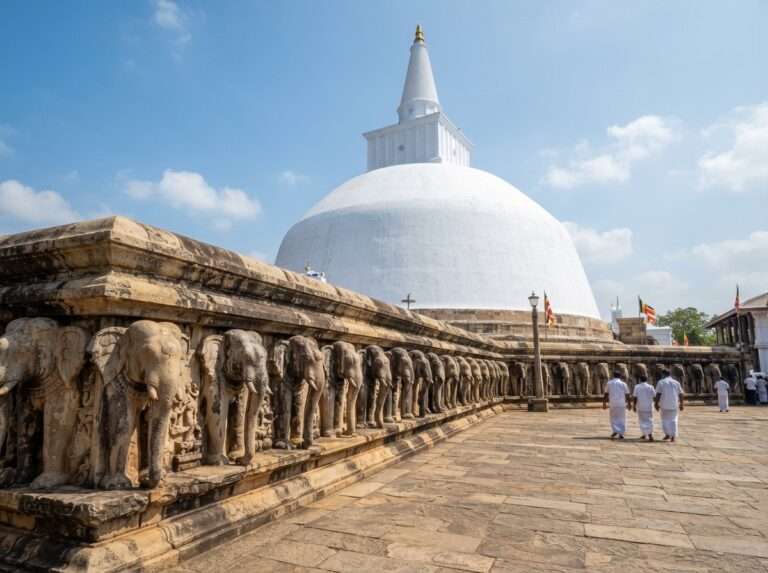
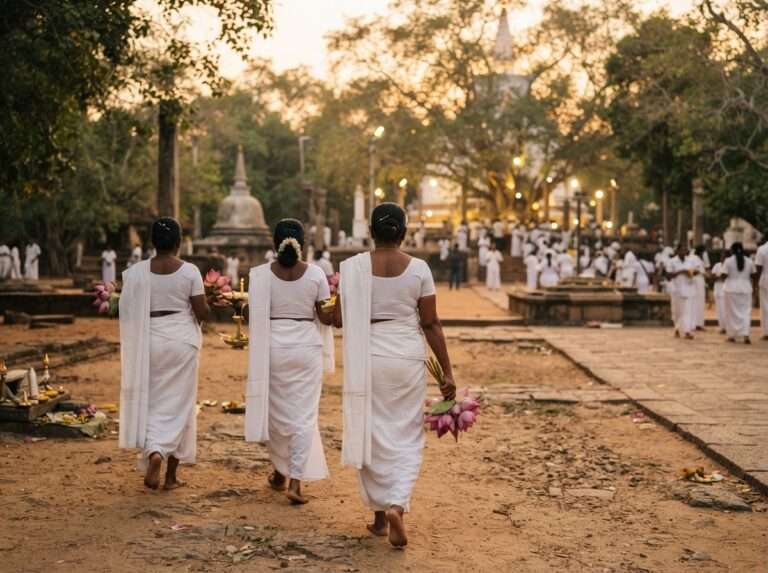
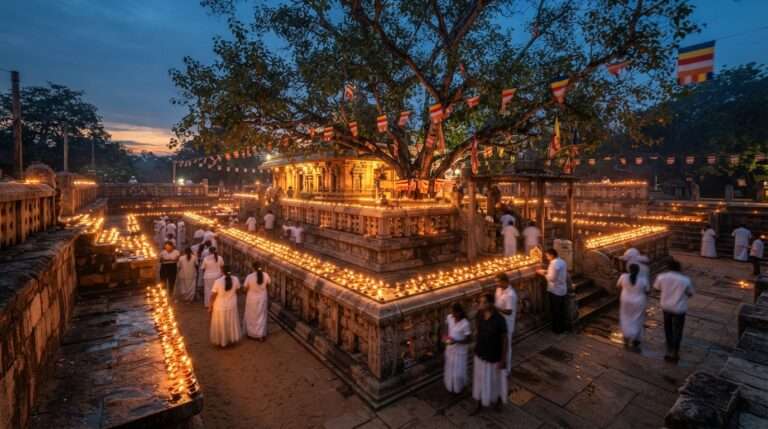
Anuradhapura was Sri Lanka’s first great capital. The Mahavamsa chronicle dates its founding as a royal city to King Pandukabhaya in the 4th century BCE, and it ruled the island for roughly 1,300 years until a Chola invasion in 993 CE pushed the court to Polonnaruwa. Many guides credit the city’s founding to Sanghamitta, but she arrived much later. What she brought, in the 3rd century BCE, was a sapling of the Bodhi tree from Bodh Gaya, and that tree is still here.
The Sri Maha Bodhi is the reason most Sri Lankan pilgrims come, and it is the oldest living tree in the world with a recorded planting date. Visit it in the early evening, when families in white bring lotus flowers and the oil lamps go on. From there, walk 10 minutes north to the Ruwanwelisaya, a white dome raised by King Dutugemunu in the 2nd century BCE and ringed by a wall of carved elephants. The brick Jetavanaramaya, built in the 3rd century CE, was among the tallest structures of the ancient world at around 122 m. Add the Abhayagiri monastery, the small Thuparamaya (the island’s oldest stupa) and the Isurumuniya rock temple with its carved “Lovers” panel.
The ruins are spread over several kilometres, so rent a bicycle or hire a tuk-tuk for the day rather than walking it. The Sri Maha Bodhi and Ruwanwelisaya are working temples that you enter without the archaeological ticket. Mihintale, 12 km east, is where Buddhism is said to have arrived in the 3rd century BCE. It is worth a sunrise climb, but it is not part of the World Heritage listing.
| Don't miss | Sri Maha Bodhi, Ruwanwelisaya, Jetavanaramaya, Abhayagiri, Isurumuniya |
| Entry fee | USD 30 foreign adult; USD 15 SAARC adult, paid in LKR (Central Cultural Fund) |
| Timings | Archaeological zone from about 7 am; temples open early until late evening |
| How to reach | 4.5 hrs by road from Colombo; trains from Colombo Fort run on the Northern Line |
| Getting around | Bicycle or tuk-tuk; allow a full day |
Related Tour Packages


❮
❯
02
Ancient City of Polonnaruwa (1982)
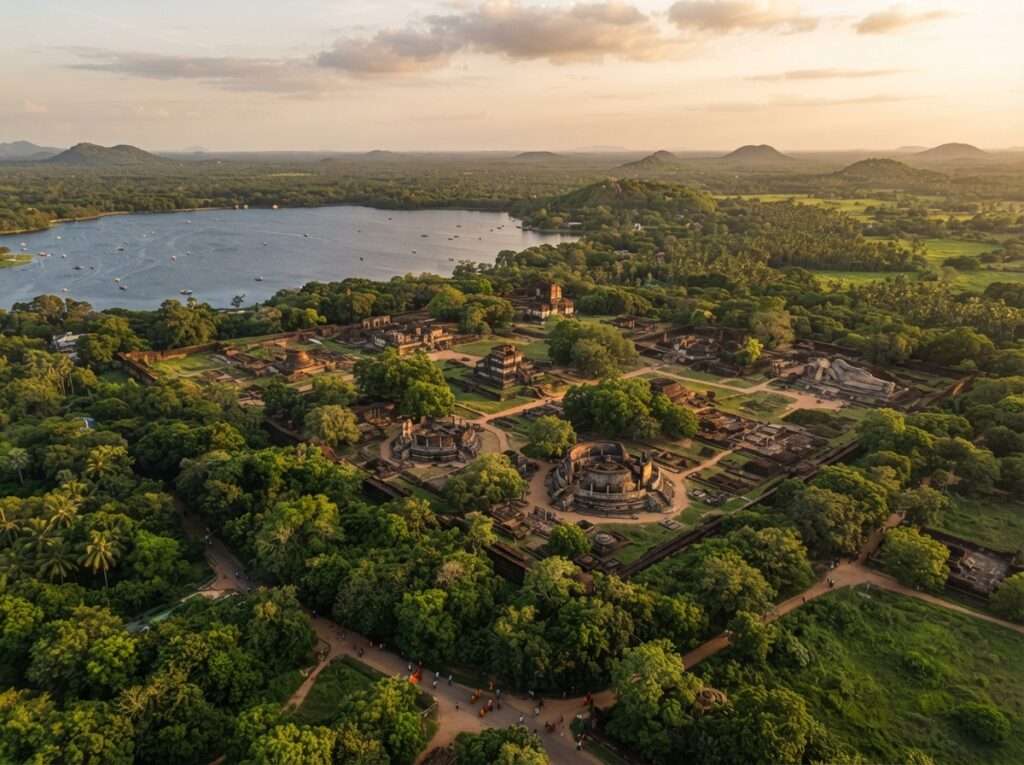
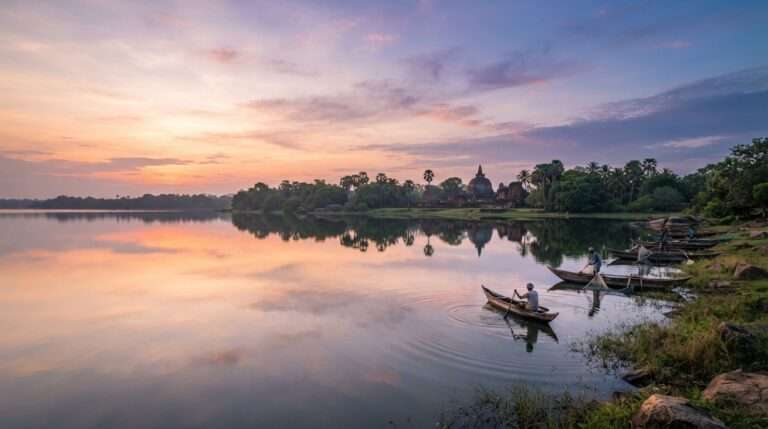
Polonnaruwa took over as capital after Anuradhapura fell and reached its peak under King Parakramabahu I in the 12th century. He is the king behind the Parakrama Samudra, a reservoir of more than 2,000 hectares that still irrigates the paddy around the town. Some guides credit it to King Vijayabahu, which mixes up two reigns.
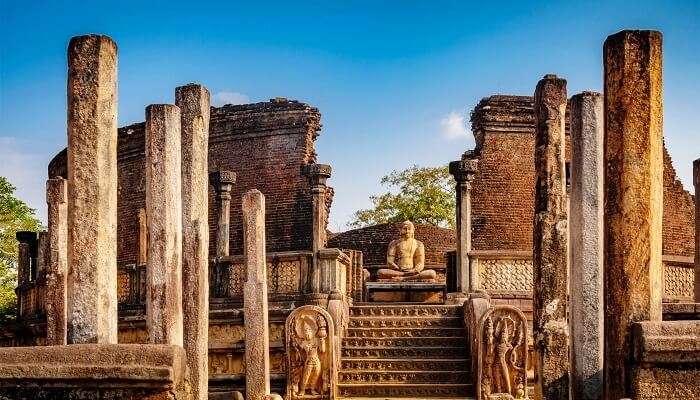
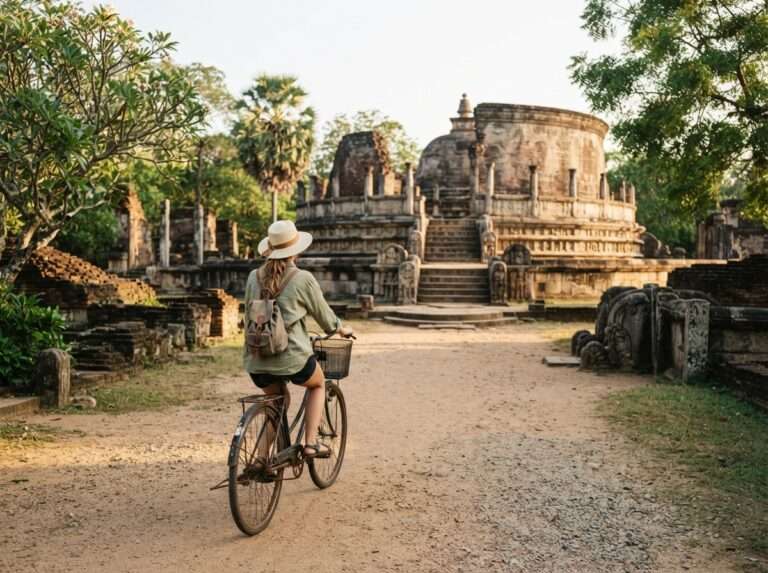
The site is more compact than Anuradhapura and better preserved, so it rewards a half day on a bicycle. Start at the archaeological museum, where you buy the ticket, then ride north. The Royal Palace of Parakramabahu still has walls 3 m thick with joist holes for upper floors. The Quadrangle holds the circular Vatadage, a relic house with four seated Buddhas facing the four entrances, and it is the most photographed ruin in Polonnaruwa. Further on are the Rankoth Vehera stupa, the tall brick shell of the Lankatilaka image house and, at the end of the road, the Gal Vihara.
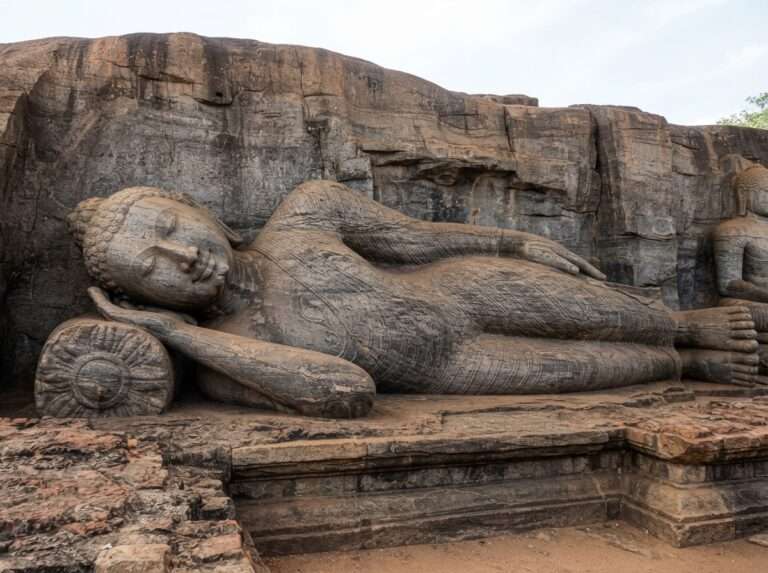
The Gal Vihara is the reason to come. Four Buddha figures are cut from a single granite face: a seated Buddha, a smaller one in a cave, a 7 m standing figure and a 14 m reclining Buddha. Get there before 9 am, before the tour buses, and you may have them almost to yourself. Shiva Devale No. 2, a small Chola-period Hindu temple, shows that Polonnaruwa was multi-faith long before the Europeans arrived. Indian visitors usually find it a familiar touch.
| Don't miss | Gal Vihara, the Vatadage in the Quadrangle, Royal Palace, Lankatilaka, Parakrama Samudra at sunset |
| Entry fee | USD 30 foreign adult; USD 15 SAARC adult, paid in LKR (Central Cultural Fund) |
| Timings | From about 7 am; buy the ticket at the museum before it closes in the late afternoon |
| How to reach | 1.5 hrs by road from Sigiriya or Habarana; 5 hrs from Colombo |
| Getting around | Bicycles are rented near the museum; the ruins run about 4 km end to end |
Related Tour Packages


❮
❯
03
Ancient City of Sigiriya (1982)
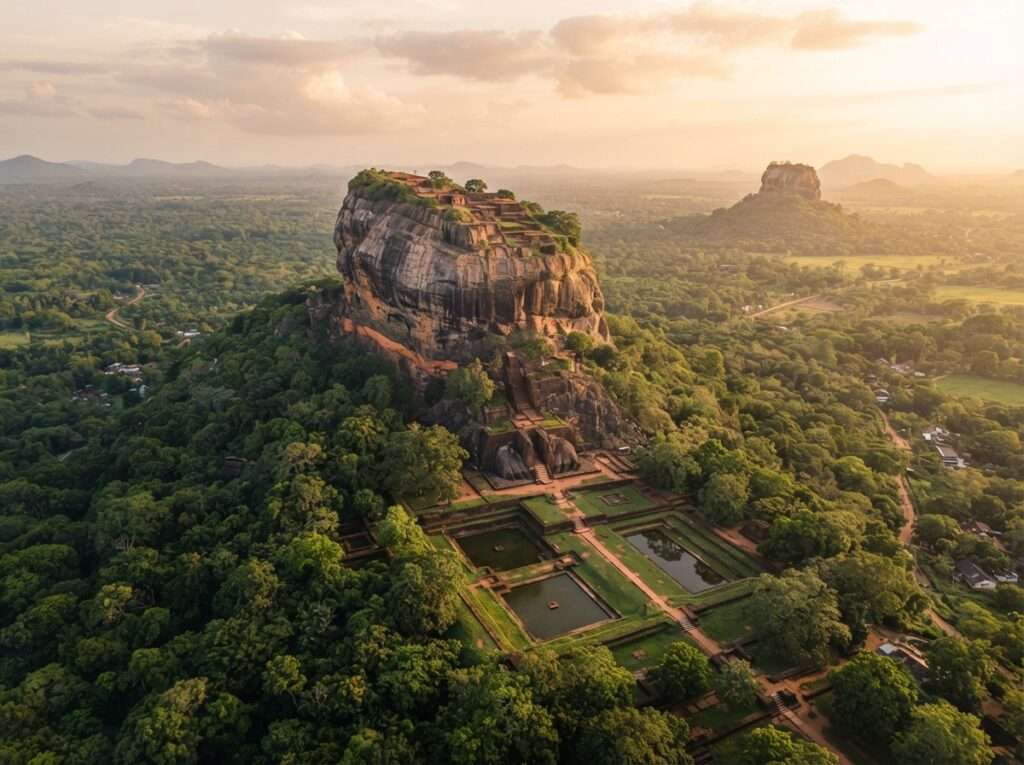
Sigiriya is a rock fortress and palace built by King Kashyapa in the 5th century CE on a granite outcrop that rises about 180 m from the surrounding plain. Monks had used the caves around its base for centuries before him, but the palace, gardens and moat date from his short reign, roughly 477 to 495 CE. After his death the site went back to the monks.
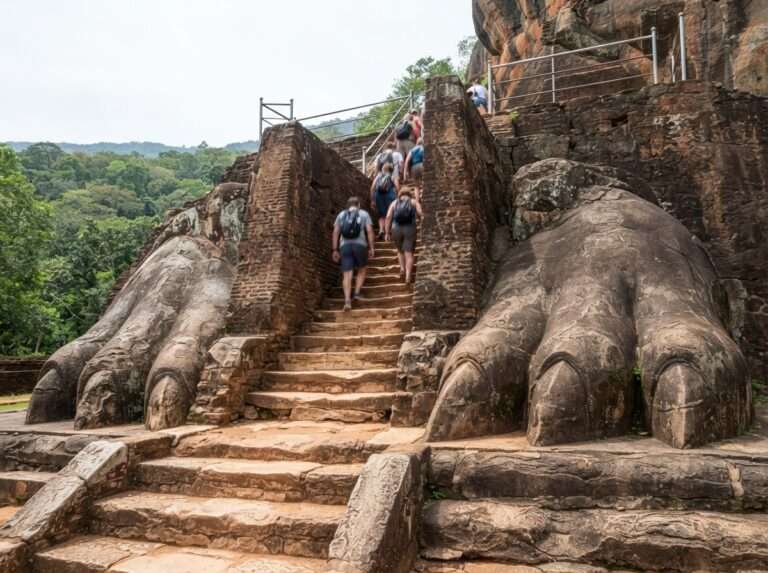
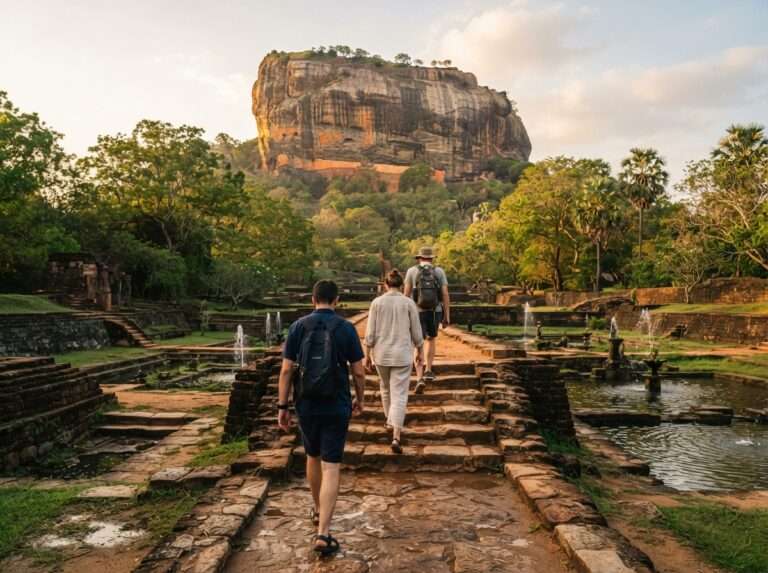
The climb is about 1,200 steps and it unfolds in stages. First come the water gardens, which are among the oldest landscaped gardens in Asia. Halfway up, a spiral iron staircase takes you to the frescoes of the “Sigiriya maidens”, painted in red and ochre on a sheltered overhang. Next is the Mirror Wall, once polished to a shine and now covered in verses scratched by visitors from the 8th century onwards. The giant Lion’s Paws mark the last stairway to the summit, where the palace foundations and a rock-cut pool look out over forest and the Sigiriya tank.
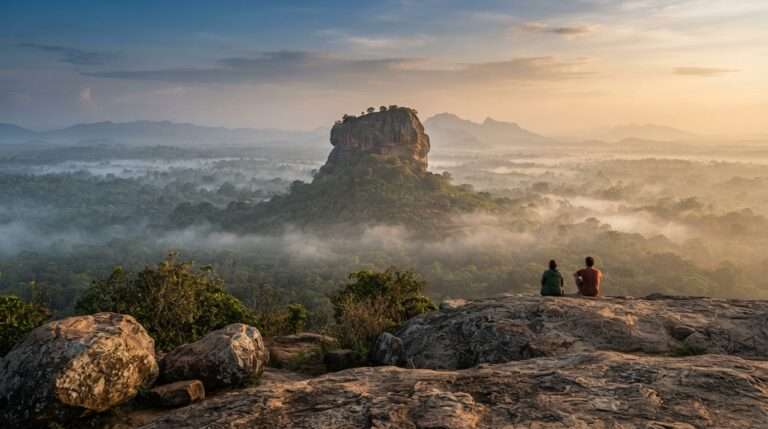
Be at the ticket counter when it opens, around 6:30 am. By 10 am the stairways are slow, single-file queues and the rock is hot to the touch. The full round trip takes 2 to 3 hours. Indian visitors pay USD 20 at the SAARC rate against USD 35 for other foreigners, as our Sigiriya Rock entry fee guide explains in detail. If you would rather look at Sigiriya than climb it, Pidurangala rock, 2 km north, has the best view of Lion Rock at sunrise for a small temple ticket.
| Don't miss | Water gardens, the frescoes, the Mirror Wall, the Lion's Paws, the summit palace |
| Entry fee | USD 35 foreign adult; USD 20 SAARC adult, paid in LKR (Central Cultural Fund) |
| Timings | Ticket counter from around 6:30 am to about 5 pm, daily |
| How to reach | 4 hrs by road from Colombo; 25 minutes (about 17 km) from Dambulla |
| Climb | About 1,200 steps; 2 to 3 hrs round trip; not suitable for anyone with a fear of heights at the spiral stair |
Related Tour Packages


❮
❯
04
Rangiri Dambulla Cave Temple (1991)
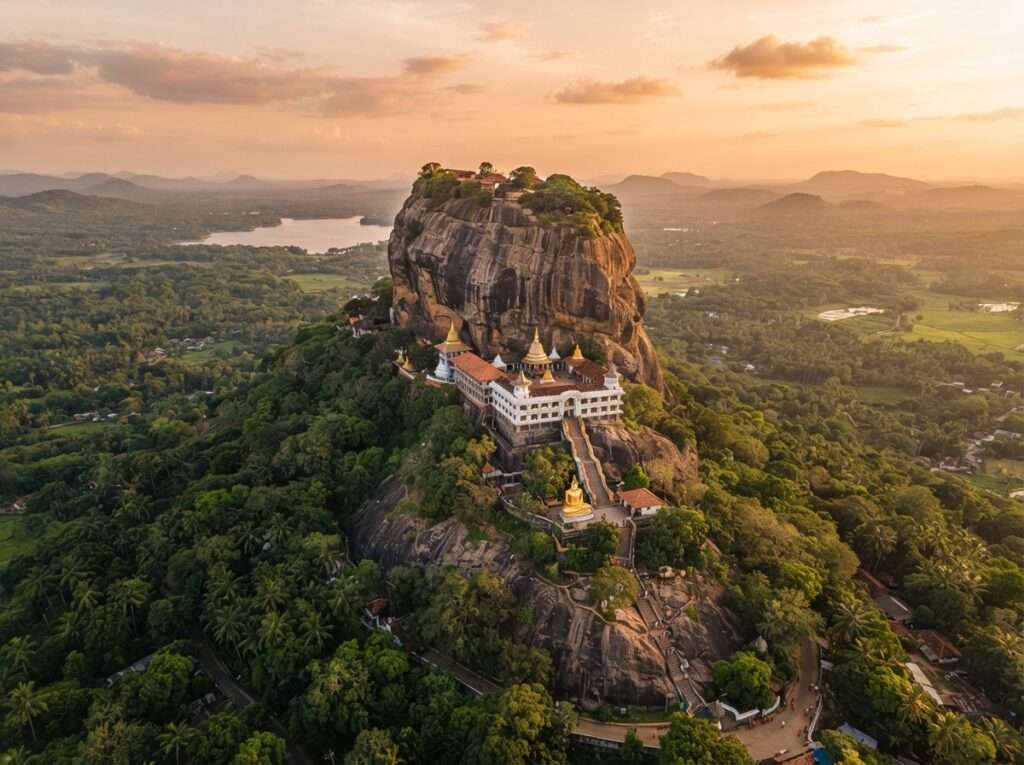
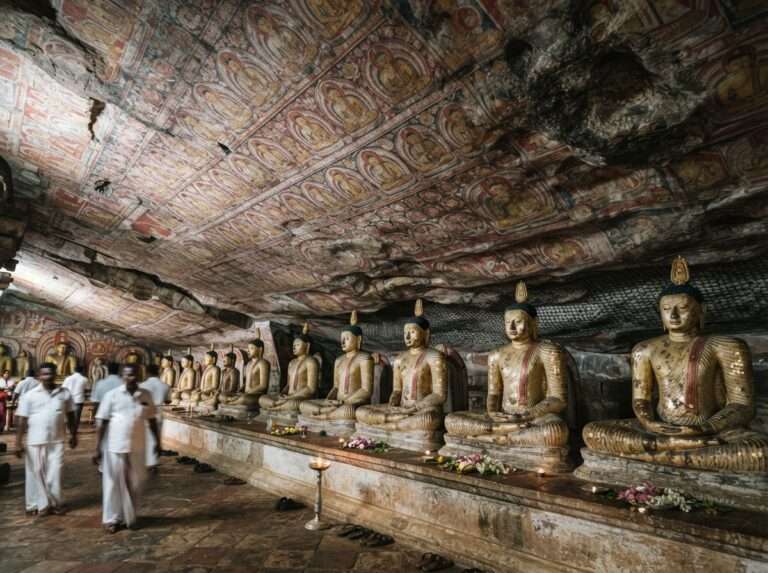
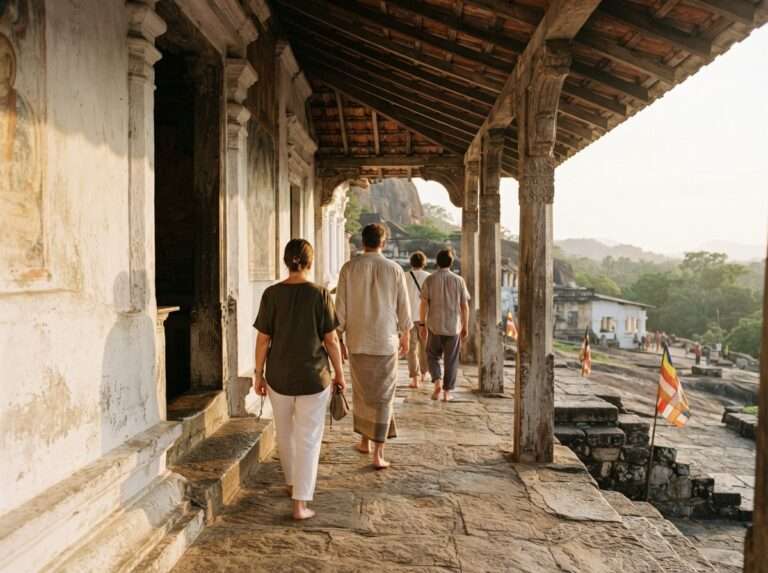
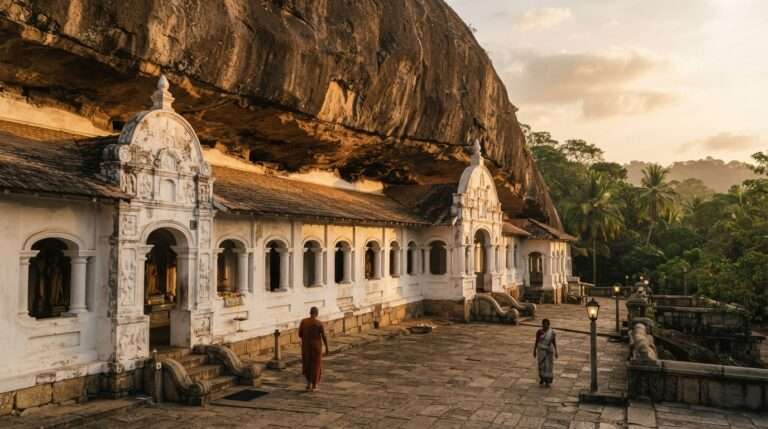
The Dambulla cave temple has been a working Buddhist monastery and pilgrimage site for about 22 centuries, according to UNESCO, and it is the largest and best-preserved cave temple complex in Sri Lanka. Tradition links it to King Valagamba, who is said to have hidden here in the 1st century BCE and later turned the caves into a temple. Five caves hold more than 150 Buddha statues, and paintings cover around 2,100 sq m of walls and ceilings.
Cave 1 holds a 14 m reclining Buddha carved from the rock. Cave 2, the Maharaja Vihara, is the largest and the one to linger in. Its ceiling is painted end to end, and a pot in one corner catches water that drips from a crack in the rock all year round. The modern Golden Temple at the foot of the hill, with its 30 m gold Buddha, is what most people photograph. It is also where the confusion starts, because it is not the listed site. The listed caves are a 20 to 30 minute climb up the rock behind it.
Buy your ticket at the counter near the base before you climb. Shoes come off at the cave entrance (a minder keeps them for about LKR 25), so wear socks if you visit after 11 am, when the rock gets hot. For the latest prices and counter hours, see our Dambulla Cave Temple entry fee guide.
| Don't miss | Cave 2 (Maharaja Vihara) ceiling murals, the 14 m reclining Buddha in Cave 1, the view over the plains from the terrace |
| Entry fee | Reported at LKR 3,000 to 5,000 for a foreign adult in 2026; the temple trust does not reliably give a SAARC rate, so carry cash for the full fare |
| Timings | From about 7 am; ticket counter usually stops selling around 5 pm |
| How to reach | 3.5 hrs by road from Colombo; 25 minutes from Sigiriya |
| Dress code | Shoulders and knees covered; sarongs rented at the gate |
05
Sacred City of Kandy (1988)
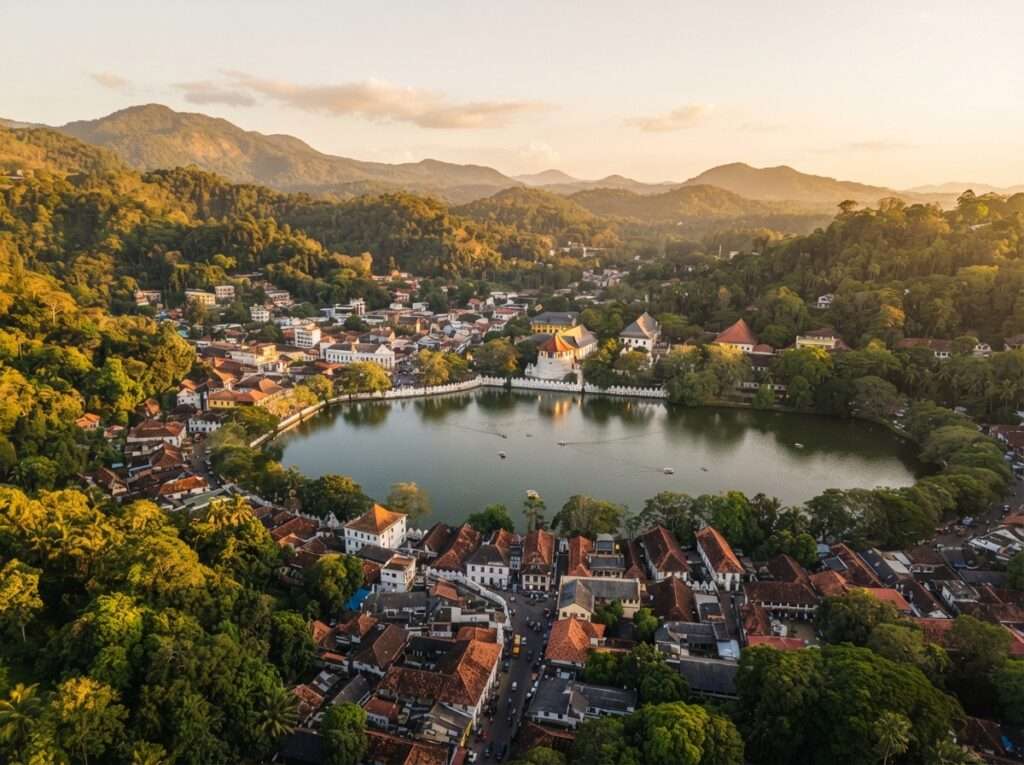
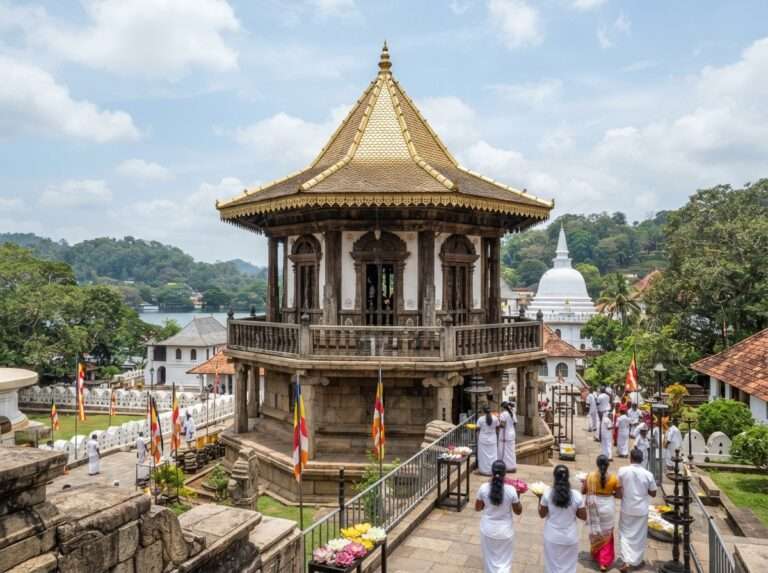
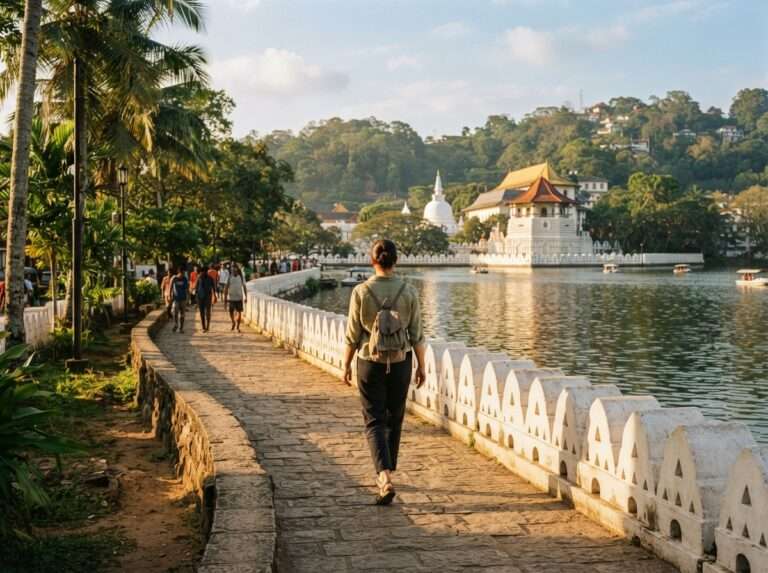
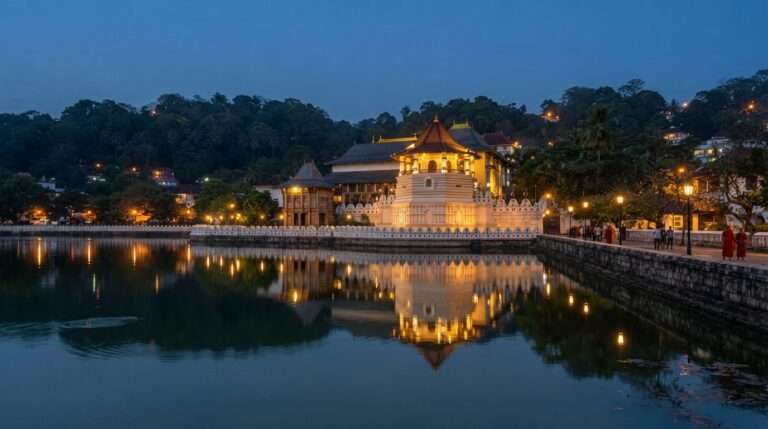
Kandy was the last royal capital of the Sinhala kings, from the late 16th century until the British took it in 1815. You will often read that Sinhala culture flourished here for 2,500 years. That figure belongs to Sinhala Buddhist history as a whole, not to this city, which is closer to 250 years old as a capital. UNESCO listed Kandy for the Temple of the Sacred Tooth Relic (Sri Dalada Maligawa) and the royal city that grew around it.
The temple holds a tooth relic of the Buddha, kept inside a set of nested gold caskets that pilgrims never see directly. Time your visit to a puja, when drummers play in the lower hall and the doors to the relic chamber open. The temple holds them at dawn, mid-morning and early evening, and the evening session is the busiest. The temple charges LKR 3,000 to foreign visitors and LKR 2,500 to SAARC visitors, according to its own site. For the layout and the ritual calendar, read our full Temple of the Tooth (Sri Dalada Maligawa) guide.
Kandy Lake, built in 1807 by the last king, Sri Wickrama Rajasinghe, sits in front of the temple and makes a 45-minute walk at dusk. The Royal Botanical Gardens at Peradeniya are 6 km away. Kandy’s big event is the Esala Perahera, ten nights of torch-lit processions with dancers, drummers and caparisoned elephants that end on the Esala full moon, usually in late July or August. Rooms in town sell out months ahead for those dates.
| Don't miss | Temple of the Tooth during a puja, the Royal Palace complex, Kandy Lake, Peradeniya gardens |
| Entry fee | Temple of the Tooth LKR 3,000 foreign, LKR 2,500 SAARC (sridaladamaligawa.lk) |
| Timings | Temple open from early morning to evening; pujas at dawn, mid-morning and evening |
| How to reach | About 3 hrs by road from Colombo; intercity trains from Colombo Fort |
| Dress code | White or light clothing, shoulders and knees covered, shoes left at the counter |
06
Central Highlands of Sri Lanka (2010)
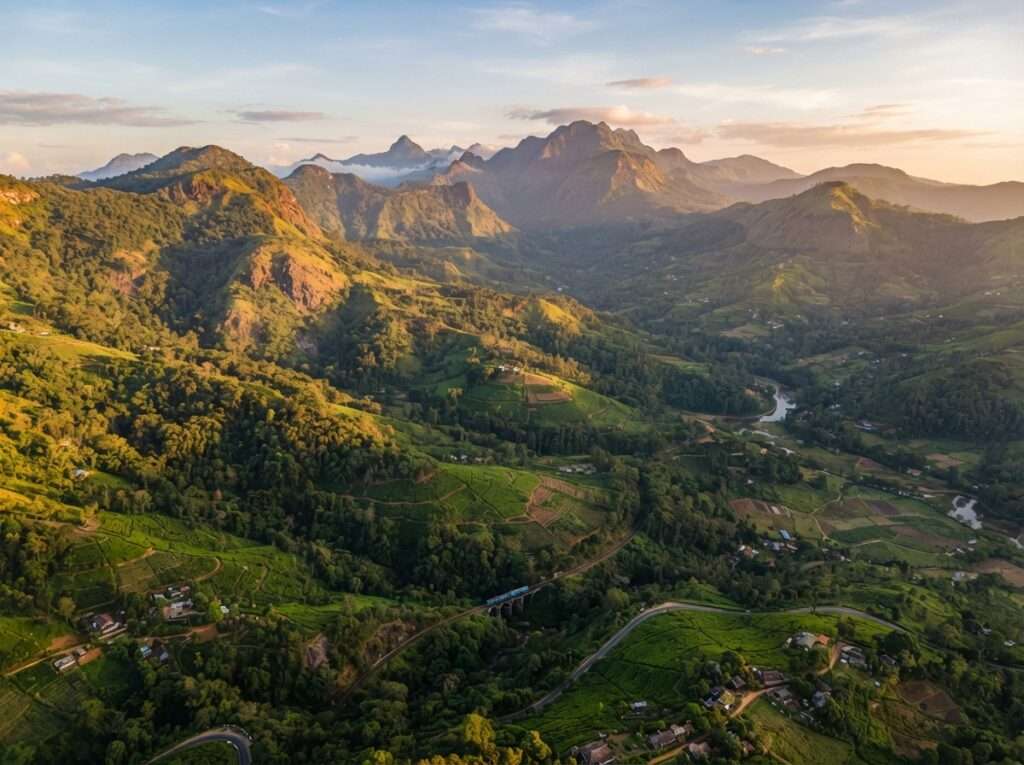
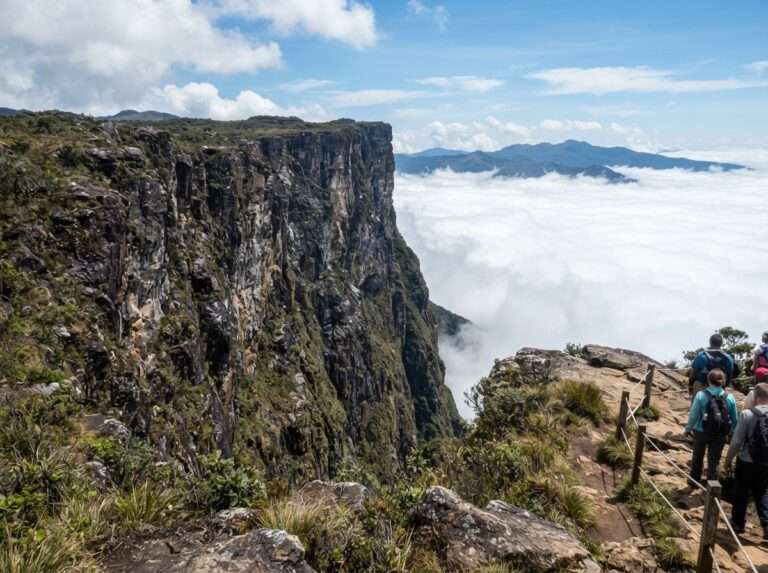
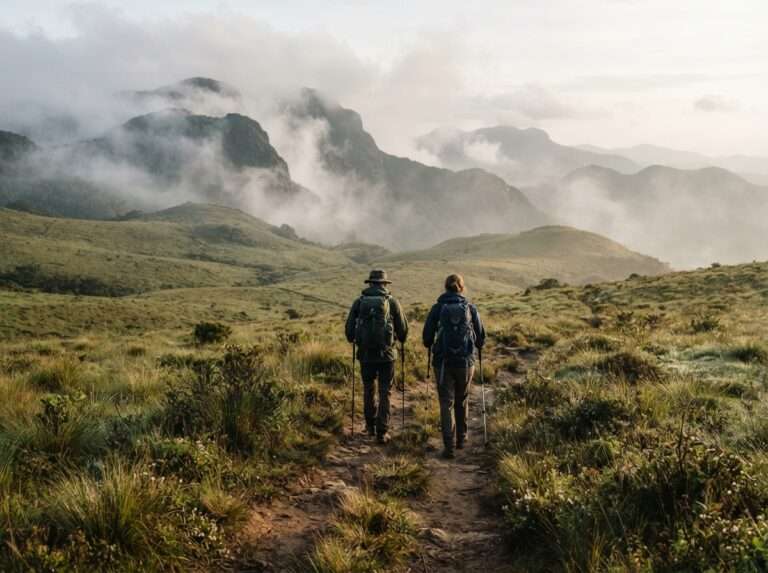
The Central Highlands are Sri Lanka’s newest World Heritage Site, inscribed in 2010, and the one most guides explain badly. It is not a single place. It is three protected areas in the mountains of the island’s south-central core: the Peak Wilderness Protected Area, Horton Plains National Park and the Knuckles Conservation Forest. UNESCO lists them for their montane forests, which reach about 2,500 m and hold more than half of Sri Lanka’s endemic vertebrates and over a third of its endemic trees, shrubs and herbs, according to UNESCO.
Horton Plains National Park is the easiest to visit. A 9.5 km loop walk crosses grassland and cloud forest to World’s End, a sheer drop of about 870 m, and back past Baker’s Falls. Be at the gate by 6 am. Mist usually rolls in by 10 am and the view from World’s End disappears. Look for sambar deer on the grassland and the bearded western purple-faced langur in the forest edges. The park is about 32 km from Nuwara Eliya, and staff search bags for plastic at the entrance. Our Horton Plains entry fee page and Horton Plains guide have the walking details.
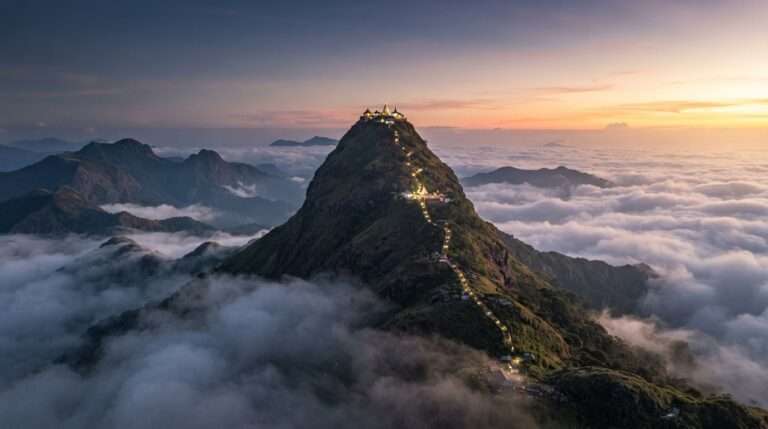
Peak Wilderness contains Adam’s Peak (Sri Pada), a 2,243 m summit with a footprint shrine sacred to Buddhists, Hindus, Muslims and Christians. Pilgrims climb about 5,500 steps through the night from Dalhousie to reach the top for sunrise, during the season that runs from the Unduvap full moon in December to Vesak in May. There is no ticket. See our Adam’s Peak guide before you go. The Knuckles range, north-east of Kandy, is the wildest of the three, with guided treks from Riverston and Deanston through cloud forest and old villages.
| Don't miss | World's End and Baker's Falls (Horton Plains), sunrise from Adam's Peak, a guided Knuckles trek |
| Entry fee | Horton Plains about USD 25 foreign, USD 20 SAARC, plus vehicle, service charge and VAT (Department of Wildlife Conservation); Adam's Peak free; Knuckles Forest Department ticket |
| Timings | Horton Plains gate from 6 am; Adam's Peak climbs start around 2 am in season |
| How to reach | Horton Plains is 1 to 1.5 hrs from Nuwara Eliya; Dalhousie is about 1.5 hrs from Hatton |
| Pack | A fleece and rain jacket: Horton Plains can drop below 10°C at dawn |
07
Sinharaja Forest Reserve (1988)
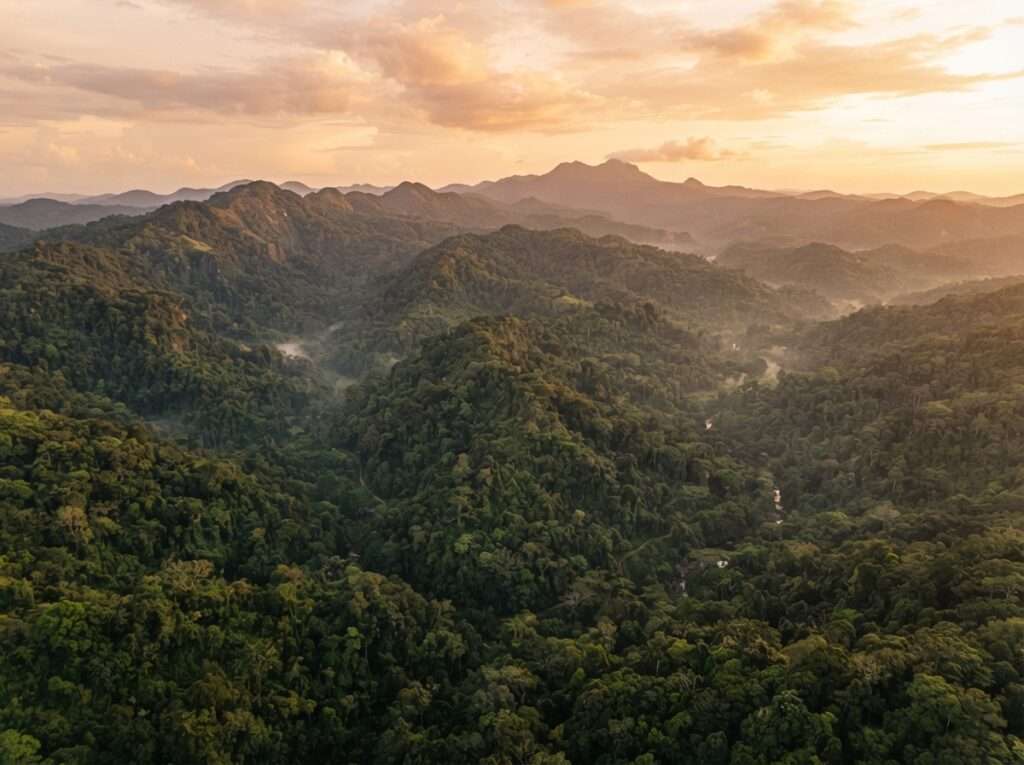
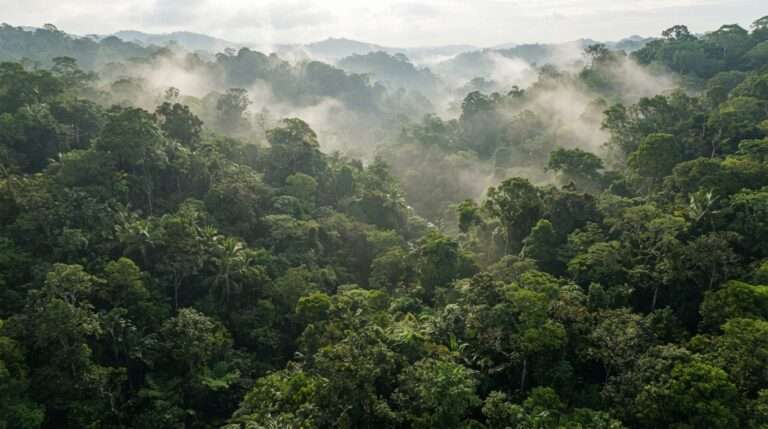
Sinharaja is the last viable area of primary lowland tropical rainforest in Sri Lanka and one of the two natural sites on the list. It is a forest reserve run by the Forest Department, not a national park, and it has been a UNESCO Biosphere Reserve since 1978. UNESCO records that more than 60% of its trees are endemic to Sri Lanka, and many of them are rare. The inscribed area at listing was 8,864 hectares.
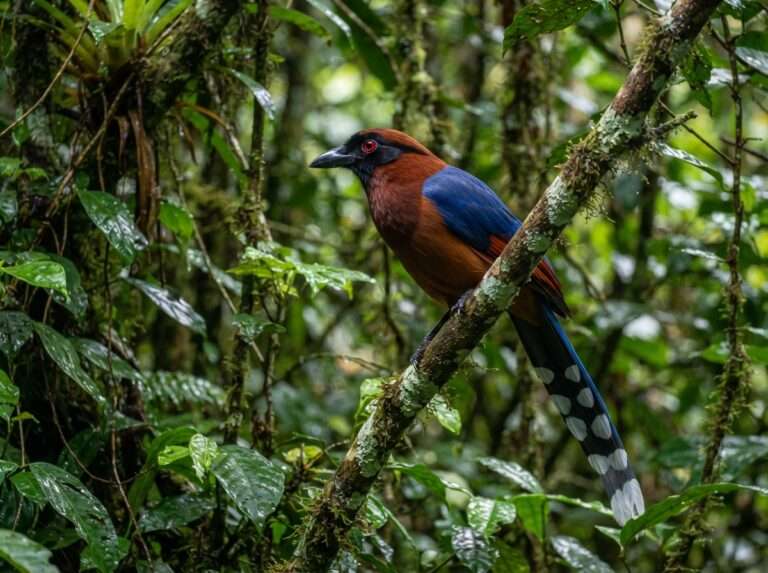
Birders come for the mixed-species feeding flocks, in which a dozen or more species move through the canopy together. The Sri Lanka blue magpie, red-faced malkoha and Sri Lanka spurfowl are among the endemics on most visitors’ lists. You will also see giant squirrels, purple-faced langurs, green pit vipers if your guide is sharp, and a lot of leeches. Leech socks, sold for a few hundred rupees in Kudawa and Deniyaya, are not optional in wet months.
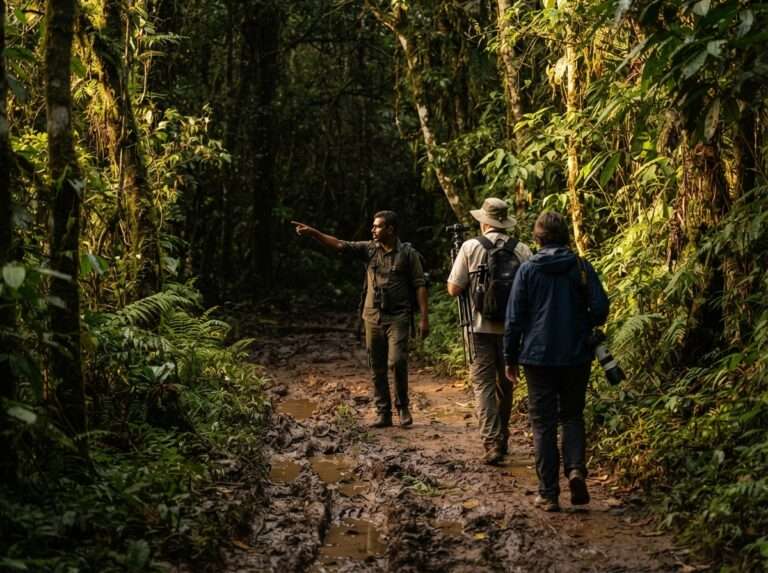
Entry is guided only. The main gates are Kudawa on the north-western side (the easier one from Colombo) and Pitadeniya near Deniyaya in the south. You pay the Forest Department ticket and a guide fee at the gate. Start by 7 am, when bird activity is highest, and plan for 4 to 6 hours on trails that are muddy for most of the year. Our Sinharaja Forest Reserve guide covers the trails and lodges.
| Don't miss | A mixed-species bird flock, the Sri Lanka blue magpie, the Kudawa research station trail |
| Entry fee | Forest Department ticket plus a compulsory local guide, paid at the gate |
| Timings | Gates open around 7 am; trails close by late afternoon |
| How to reach | About 4 hrs from Colombo to Kudawa; about 2.5 hrs from Galle to Deniyaya |
| Best months | January to April; August and September are a second, shorter window |
08
Old Town of Galle and its Fortifications (1988)
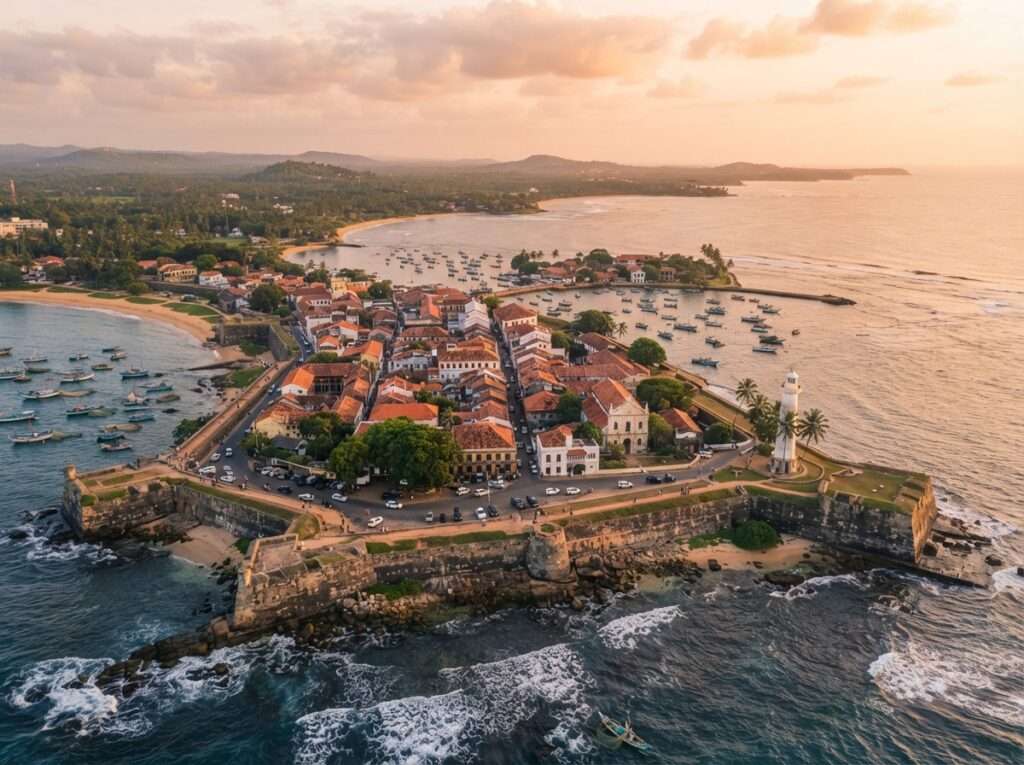
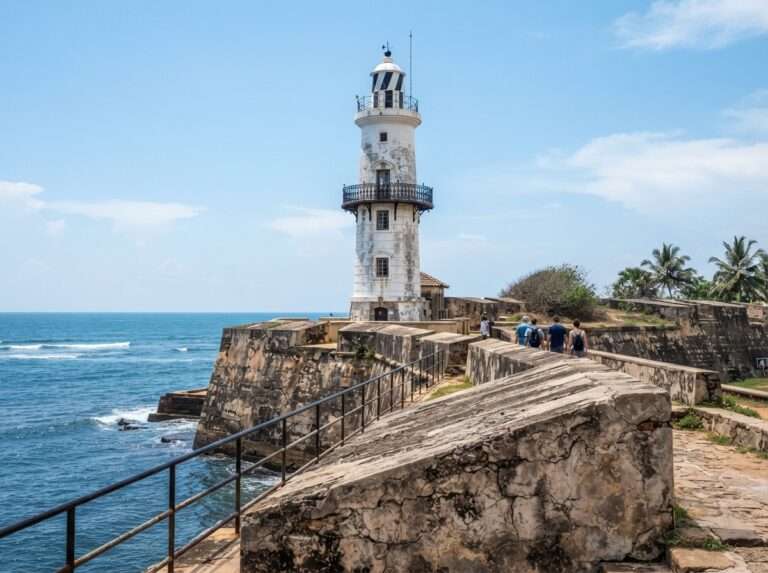
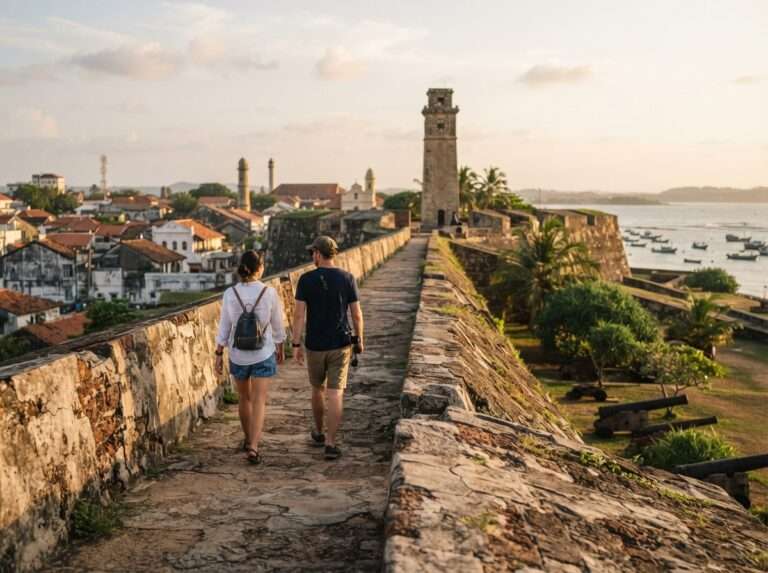
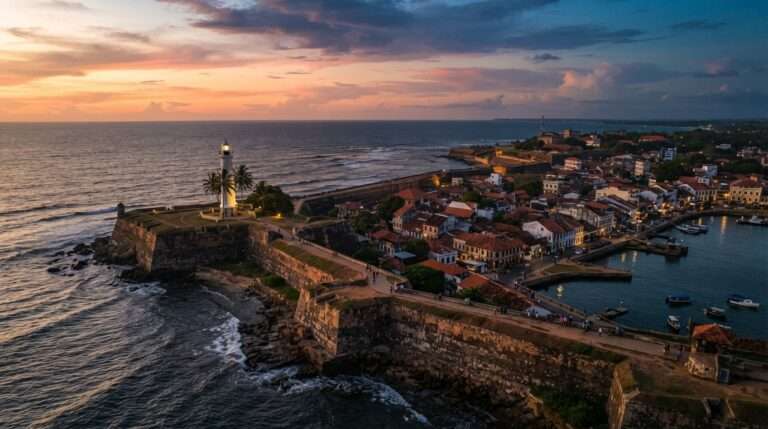
Galle Fort is the best surviving example of a fortified town built by Europeans in South and South-East Asia, in UNESCO’s words. The Portuguese founded it in the 16th century, and the Dutch took it in 1640 and, from 1649, rebuilt it into the walled town you see today. The British kept it as a living town after 1796.
What makes Galle different from the other seven sites is that people still live inside it. The fort walls enclose about 52 hectares of narrow streets, Dutch-era houses with deep verandas, mosques, churches, cafés and small shops. Walk the ramparts clockwise from the Clock Tower to the white lighthouse at Point Utrecht Bastion and on to Flag Rock, where local jumpers dive into the sea for tips. Inside, stop at the Dutch Reformed Church of 1755, whose floor is paved with old gravestones, and the National Maritime Museum in the old Dutch warehouse.
The fort is free to enter, and the best time to walk the walls is from 5 pm until sunset, when the heat goes out of the stone. It is the easiest site to reach from Colombo: about 125 km, or 1.5 to 2 hrs on the Southern Expressway.
For more on the streets and cafés, read our Galle Fort guide and our list of things to do in Galle.
| Don't miss | The ramparts at sunset, the lighthouse, the Dutch Reformed Church, the National Maritime Museum |
| Entry fee | Free to walk; the museums charge separately |
| Timings | Open all day; the walls are best from 5 pm |
| How to reach | 1.5 to 2 hrs from Colombo on the Southern Expressway; coastal trains take 2.5 to 3 hrs |
| Pair with | Sinharaja (2.5 hrs inland) or the south-coast beaches |
How to See All 8 Sites: A 9-Day Route
You can see all 8 UNESCO sites in Sri Lanka in 9 days by looping north through the Cultural Triangle, south through Kandy and the hills, and back to Colombo along the coast. The route below starts and ends at Bandaranaike International Airport and keeps most days under 5 hours of driving. Day 7, from Horton Plains down to the rainforest edge, is the long one; break it with a night in Haputale or Belihuloya if you prefer. Drive times are approximate and assume a car with driver.
| Day | Base for the night | Sites | Drive time |
|---|---|---|---|
| 1 | Anuradhapura | Arrive Colombo, drive north; Sri Maha Bodhi and Ruwanwelisaya at dusk | About 4.5 hrs |
| 2 | Sigiriya or Habarana | Anuradhapura by bicycle in the morning (Abhayagiri, Jetavanaramaya) | About 2 hrs |
| 3 | Sigiriya or Habarana | Sigiriya at opening time; Dambulla caves in the afternoon | 25 minutes each way |
| 4 | Sigiriya or Habarana | Polonnaruwa day trip; Gal Vihara before 9 am | About 1.5 hrs each way |
| 5 | Kandy | Drive south; Temple of the Tooth evening puja, Kandy Lake | About 2.5 hrs |
| 6 | Nuwara Eliya | Peradeniya gardens, then tea country | About 3 hrs |
| 7 | Deniyaya | Horton Plains at 6 am; drive south to the rainforest edge | About 5 hrs after the walk |
| 8 | Galle | Sinharaja guided trek from Pitadeniya; evening on the Galle ramparts | About 2.5 hrs |
| 9 | Fly home | Galle Fort in the morning, then the airport | About 2 hrs |
Short on time? Four days covers Sigiriya, Dambulla, Polonnaruwa and Kandy, which is four of the eight. Add a fifth day for Anuradhapura, and a sixth for Galle as a day trip from Colombo, and you reach six. Travelling between December and May? Swap the Horton Plains morning for an overnight Adam’s Peak climb from Dalhousie. Both count for the Central Highlands. Our Sri Lanka tour packages follow this Cultural Triangle, Kandy and south-coast pattern and can be stretched to include Sinharaja.
Car with driver, train or a package: how to get between the sites
The 8 sites are spread across five provinces, and public transport only reaches some of them. This is the decision most first-time visitors get wrong.
| Option | Covers all 8? | Cost guide | Best for | Catch |
|---|---|---|---|---|
| Car with driver | Yes | About USD 50 to 70 a day including fuel and the driver’s stay | Families, couples, anyone with 9 days or fewer | Most expensive per head for solo travellers |
| Train plus bus | No | Lowest; second-class rail fares are a few hundred rupees | Backpackers with 2 weeks or more | No rail to Sigiriya, Dambulla, Horton Plains gate or Sinharaja; hill-country services were disrupted after Cyclone Ditwah in late 2025 |
| Tuk-tuk hire per site | Partly | LKR 3,000 to 6,000 for a half-day around one site | Getting around inside Anuradhapura and Polonnaruwa | Not practical between regions |
| Tour package | Yes | Bundled with hotels and transfers | Travellers from India who want tickets, passports checks and drivers handled | Less flexible day to day |
Entry Fees, the SAARC Rate and How to Buy Tickets
The Central Cultural Fund (CCF), the government body that runs the ancient cities, prices its tickets in US dollars and collects them in Sri Lankan rupees at the day’s exchange rate. Its ticketing page states that SAARC nationals, which includes Indians, get a 50% discount. Sigiriya is the exception to a clean half: it charges USD 35 to foreigners and USD 20 to SAARC visitors. Ignore older guides that quote these fees in Indian rupees. No counter in Sri Lanka uses them.
| Site | Ticket sold by | Foreign adult | SAARC adult (India) | Pay in |
|---|---|---|---|---|
| Sigiriya | Central Cultural Fund | USD 35 | USD 20 | LKR at the counter |
| Anuradhapura | Central Cultural Fund | USD 30 | USD 15 | LKR |
| Polonnaruwa | Central Cultural Fund | USD 30 | USD 15 | LKR |
| Dambulla Cave Temple | Dambulla Raja Maha Viharaya (temple counter) | LKR 3,000 to 5,000 (reports vary) | Usually the full fare | LKR cash |
| Temple of the Tooth, Kandy | Sri Dalada Maligawa | LKR 3,000 | LKR 2,500 | LKR cash |
| Horton Plains | Department of Wildlife Conservation | About USD 25 plus charges | About USD 20 plus charges | LKR |
| Sinharaja | Forest Department | Gate ticket plus guide | Gate ticket plus guide | LKR cash |
| Galle Fort | None | Free | Free | None |
Do not plan around a combined Cultural Triangle “round ticket”. Counters now sell single-site tickets, and the CCF’s online portal lists the sites individually.
How to buy your tickets and get the SAARC price
- Carry your original passport every day. The SAARC price is given only when the counter sees the passport itself. A photocopy or phone photo is refused, and you are charged the foreign rate.
- Decide which sites to pre-book. Sigiriya, Anuradhapura and Polonnaruwa can be booked on the CCF e-ticket portal at eservices.ccf.gov.lk. Dambulla, the Temple of the Tooth, Horton Plains and Sinharaja are bought at the gate.
- Withdraw rupees in Colombo or Kandy. Card machines at the counters are unreliable, and Dambulla and Sinharaja take cash only. Keep small notes for shoe minders and sarong hire.
- Arrive at opening time. Sigiriya’s counter opens around 6:30 am and Horton Plains opens at 6 am. Late afternoon arrivals risk a closed ticket window.
- Ask for the SAARC ticket by name at the Central Cultural Fund sites and the Temple of the Tooth, and hand over your passport before you pay. Dambulla is run by its own temple trust and does not reliably give a SAARC rate, so budget for the full fare there.
- Keep the ticket until you leave the site. Staff check tickets at inner gates in Anuradhapura and Polonnaruwa, and at the museum in Sigiriya.
Best Time to Visit Each UNESCO Site
Sri Lanka has two monsoons that hit opposite sides of the island, so there is no single “dry season” for all 8 sites. The south-west monsoon soaks Galle, Sinharaja and the western highlands from about May to September. The north-east monsoon brings rain to the Cultural Triangle from about October to January. Late January to March is the one period when every site is reasonably dry. For month-by-month weather, see our guide to the best time to visit Sri Lanka.
| Site | Best months | Avoid | Why |
|---|---|---|---|
| Anuradhapura, Polonnaruwa, Sigiriya, Dambulla | February to September | November to December | North-east monsoon rains; April to August is hot, so start at dawn |
| Kandy | January to April | November | Esala Perahera falls in July or August, if you can book early |
| Horton Plains | January to March | May to September | Clear dawns; south-west monsoon brings mist, wind and rain |
| Adam’s Peak | December to May | June to November | Pilgrim season; the path is lit and tea stalls are open |
| Sinharaja | January to April | May to July | Fewer leeches, more birds; August to September is a second window |
| Galle | December to April | May to September | Calm seas and dry evenings on the ramparts |
Dress Code and Etiquette at Sri Lanka's Heritage Sites
Five of the eight sites are active Buddhist places of worship, and guards at Dambulla and the Temple of the Tooth do turn visitors away. The rules are simple. Cover your shoulders and knees. A light cotton shirt and trousers or a long skirt work everywhere. Take off shoes and hats wherever you see a shoe rack, which includes the stupa terraces in Anuradhapura and the Vatadage in Polonnaruwa. Socks are allowed and help on stone that reaches painful temperatures by noon.
Never pose for a photo with your back to a Buddha image, and never touch or climb on a statue. Sri Lanka takes this seriously, and foreign tourists have been deported for Buddha tattoos and disrespectful photos. Photography of any kind is banned at the Sigiriya frescoes, and flash is banned around the Dambulla murals. White clothing is customary at the Temple of the Tooth and the Sri Maha Bodhi, though not required. Point your feet away from shrines when you sit. For more temple-by-temple advice, read our guide to Buddhist temples in Sri Lanka.
Which Famous Places Are Not UNESCO Sites?
Several of Sri Lanka’s best-known places are often wrongly called World Heritage Sites. Yala National Park, Ella and the Nine Arch Bridge are not listed. Neither are Mihintale or Jaffna’s Nallur temple. Two places are listed, but only as part of a larger site. Adam’s Peak sits inside the Peak Wilderness component of the Central Highlands, and the Temple of the Tooth is the core of the Sacred City of Kandy. The tea estates around Nuwara Eliya are not inscribed yet, though they are now on the Tentative List (see below).
Sri Lanka's Tentative List: Which Sites Could Be Next?
A Tentative List is a country’s shortlist of places it plans to nominate. Sri Lanka’s currently has six entries, including two added in the last two years.
| Tentative site | Type | Year added |
|---|---|---|
| Seruwila Mangala Raja Maha Vihara | Cultural | 2006 |
| Seruwila to Sri Pada, the ancient pilgrim route along the Mahaweli river | Cultural | 2010 |
| Ancient Ariyakara Viharaya in the Rajagala Archaeological Reserve | Cultural | 2020 |
| Buddhist Meditation Monasteries of Ancient Sri Lanka (Padhanaghara monasteries) | Cultural | 2024 |
| Sri Lanka’s Tea Cultural Landscape | Cultural | 2025 |
| Ritigala Strict Nature Reserve | Natural | 2026 |
Being on the list does not guarantee a listing, and nominations take years of review. Ritigala, a forested mountain about 40 km south-east of Anuradhapura, is the easiest of these to add to a Cultural Triangle trip today. Its forest-monastery ruins, run by the Department of Archaeology, are open to visitors with a ticket, but the Strict Nature Reserve above them is closed to tourists and entered only by researchers with a permit.
Planning the Heritage Trip from India
Direct flights connect Colombo with Chennai (about 1 hr 20 mins), Bengaluru (about 1 hr 30 mins), Mumbai (about 2 hrs 30 mins) and Delhi (about 3 hrs 30 mins). Chennai is also linked to Jaffna in the north. If you are starting with the Cultural Triangle, ask your driver to meet you at the airport and head straight north. The airport sits north of Colombo, so you skip the city traffic entirely.
Indian passport holders need an Electronic Travel Authorization (ETA) applied for online at eta.gov.lk before travel. It has been free for Indians since 25 May 2026 under a 40-country scheme for a 30-day, double-entry stay. That waiver was announced as time-limited, so check the fee when you apply, and skip agent sites that charge a processing fee. Our Sri Lanka visa for Indians guide walks through the form, and our how to reach Sri Lanka page compares routes from every Indian metro.
For tickets alone, an Indian adult should budget roughly USD 90 to 110 to cover all 8 sites at SAARC rates, including Horton Plains’ vehicle and service charges and a Sinharaja guide. A non-SAARC visitor pays around USD 160 to 175 for the same set. Ramayana-trail travellers can combine the Kandy and Nuwara Eliya legs of this route with our Ramayana tour in Sri Lanka itinerary.
How This Guide Was Checked
This guide is compiled by TravelTriangle’s Sri Lanka team. For this November 2026 update, each site was cross-checked against its UNESCO World Heritage Centre listing, and the ticket figures against the bodies that sell them (the Central Cultural Fund for the ancient cities, the Department of Wildlife Conservation for Horton Plains and the Sri Dalada Maligawa for Kandy’s Temple of the Tooth) and against published 2026 rates.
- UNESCO World Heritage Centre, Sri Lanka state party page and the individual site listings: Anuradhapura, Polonnaruwa, Sigiriya, Sinharaja, Kandy, Galle, Dambulla, Central Highlands
- Central Cultural Fund, Sri Lanka, heritage site tickets and e-ticket portal
- Sri Dalada Maligawa, official site (Temple of the Tooth fees and puja times)
- Department of Wildlife Conservation, Sri Lanka, dwc.gov.lk (Horton Plains)
- Department of Immigration and Emigration, Sri Lanka, eta.gov.lk (ETA for Indian passport holders)
Sources
UNESCO World Heritage Centre, Sri Lanka state party page and the individual site listings: Anuradhapura, Polonnaruwa, Sigiriya, Sinharaja, Kandy, Galle, Dambulla, Central Highlands
- Central Cultural Fund, Sri Lanka, heritage site tickets and e-ticket portal
- Sri Dalada Maligawa, official site (Temple of the Tooth fees and puja times)
- Department of Wildlife Conservation, Sri Lanka, dwc.gov.lk (Horton Plains)
- Department of Immigration and Emigration, Sri Lanka, eta.gov.lk (ETA for Indian passport holders)
Plan Your UNESCO Heritage Trip
Sri Lanka packs 8 UNESCO World Heritage Sites, 2,000 years of Buddhist history and two rainforest-and-mountain wildernesses into an island you can drive across in a day. Give it 9 days, start every site at opening time and carry your passport for the SAARC rate, and you will see the whole list without rushing. If you would rather have the driver, hotels and tickets arranged in one go, our Sri Lanka tour packages cover the Cultural Triangle, Kandy and Galle, and the family and honeymoon versions pace it for kids or couples. For the wider island, start with our Sri Lanka travel guide.
FAQs
FAQs About UNESCO World Heritage Sites in Sri Lanka
Quick answers on how many sites there are, which is oldest and newest, fees for Indians, trip length, dress code and tickets.
Sri Lanka has 8 UNESCO World Heritage Sites: 6 cultural and 2 natural. The cultural sites are Anuradhapura, Polonnaruwa, Sigiriya, the Dambulla cave temple, Kandy and the Old Town of Galle. The natural sites are the Sinharaja Forest Reserve and the Central Highlands. They were inscribed between 1982 and 2010, and no new site has been added since then, although six more are on Sri Lanka's Tentative List.
The 8 sites are the Sacred City of Anuradhapura (1982), the Ancient City of Polonnaruwa (1982), the Ancient City of Sigiriya (1982), the Sacred City of Kandy (1988), the Old Town of Galle and its Fortifications (1988), the Sinharaja Forest Reserve (1988), the Rangiri Dambulla Cave Temple (1991) and the Central Highlands of Sri Lanka (2010). Four of them sit in the Cultural Triangle in the island's north-central plains.
Anuradhapura, Polonnaruwa and Sigiriya were Sri Lanka's first World Heritage Sites, all inscribed in 1982. By age of the place itself, Anuradhapura is the oldest. It was founded as a royal capital in the 4th century BCE, and its Sri Maha Bodhi tree was planted in the 3rd century BCE. That makes it the oldest living tree in the world with a recorded planting date.
The Central Highlands of Sri Lanka, inscribed in 2010, is the newest. It covers three protected areas: the Peak Wilderness Protected Area (which includes Adam's Peak), Horton Plains National Park and the Knuckles Conservation Forest. Sri Lanka has added sites to its Tentative List since then, most recently the Tea Cultural Landscape in 2025 and the Ritigala Strict Nature Reserve in 2026, but none has been inscribed yet.
The two natural sites are the Sinharaja Forest Reserve (1988) and the Central Highlands of Sri Lanka (2010). Sinharaja is the island's last primary lowland rainforest, where more than 60% of the trees are endemic. The Central Highlands protect montane forests up to about 2,500 m and include Horton Plains, Adam's Peak and the Knuckles range. Both are best visited between January and April.
Yes, as part of a larger site. Adam's Peak (Sri Pada) lies inside the Peak Wilderness Protected Area, one of the three components of the Central Highlands of Sri Lanka, inscribed in 2010. The 2,243 m summit is climbed by pilgrims overnight during the season from the December full moon to Vesak in May. There is no entry ticket, and most climbers start from Dalhousie around 2 am to reach the top for sunrise.
No. Yala is Sri Lanka's most visited national park and famous for leopards, but it is not on the World Heritage List or the Tentative List. The same goes for Ella, the Nine Arch Bridge and Mihintale. The only national park inside a UNESCO site is Horton Plains, which is part of the Central Highlands. If wildlife is your priority, Sinharaja and Horton Plains are the two UNESCO options.
Indians pay the SAARC rate at Sigiriya, which is USD 20 for an adult against USD 35 for other foreign visitors, according to the Central Cultural Fund. The ticket is priced in dollars but paid in Sri Lankan rupees, so the exact amount moves with the exchange rate. You must show your original passport at the counter to get the SAARC price. A photocopy or phone photo is not accepted.
Plan 8 to 9 days to see all 8 sites without rushing. A practical loop runs Colombo, Anuradhapura, Sigiriya and Dambulla, Polonnaruwa, Kandy, Nuwara Eliya and Horton Plains, Sinharaja and Galle, with most drives kept under 5 hours a day. With only 4 days, focus on Sigiriya, Dambulla, Polonnaruwa and Kandy, which covers four of the eight, and add a fifth day if you want Anuradhapura too. Galle works as a day trip from Colombo.
Four of the eight are in the Cultural Triangle: Anuradhapura, Polonnaruwa, Sigiriya and the Dambulla cave temple. Kandy is usually counted as the triangle's southern point, which makes five. Sigiriya and Dambulla are 25 minutes apart, and Polonnaruwa is about 1.5 hours from Sigiriya, so most travellers base themselves in Sigiriya or Habarana for three nights and visit the rest on day trips.
Wear clothing that covers your shoulders and knees, and be ready to remove shoes and hats at every shrine. This applies at the Temple of the Tooth, the Dambulla caves, the Sri Maha Bodhi and the stupa terraces in Anuradhapura and Polonnaruwa. Light cotton in white or pale colours is ideal. Carry socks for hot stone, never pose with your back to a Buddha statue, and skip the flash near murals.
No combined ticket covers the 8 sites. Each is run by a different body: the Central Cultural Fund for the ancient cities, the temple authorities for Kandy and Dambulla, the Department of Wildlife Conservation for Horton Plains and the Forest Department for Sinharaja. The old Cultural Triangle round ticket is no longer something to plan around. Buy single tickets at the counters or on the CCF e-ticket portal.