
 8D / 7N
6% OFF


A Traveller's Guide To Ceylon's Hill-Country Tea Estates
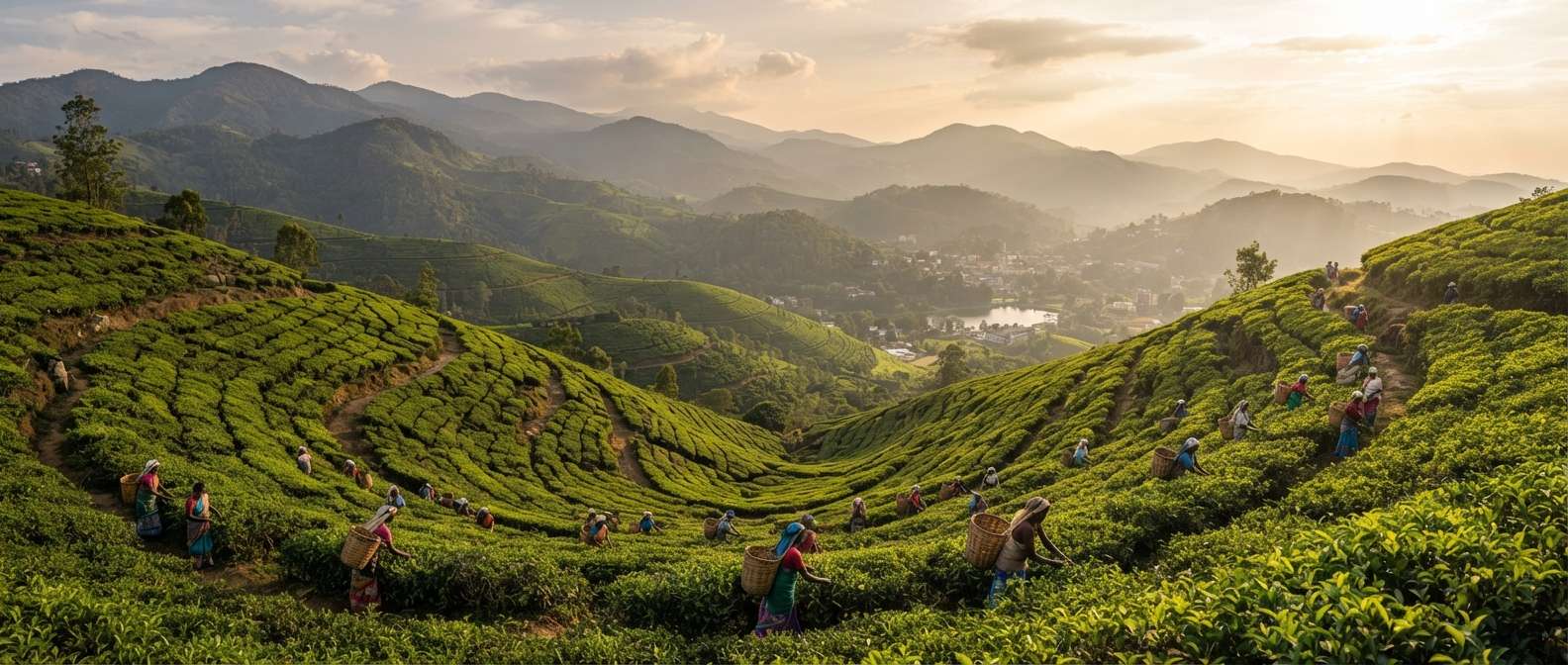
Sri Lanka grows some of the finest tea on earth, and the best of its plantations sit within a few hours’ drive of one another in the central highlands. The nine tea plantations and factories below are the ones worth your time, from the free roadside tours around Nuwara Eliya to Sir Thomas Lipton’s 1890 factory above Haputale and a rare white-tea estate near Galle. Most tours last 20 minutes to an hour, several are free, and the paid ones typically run from about LKR 250 to 3,000. Use the table to compare them at a glance, then read on for what each visit is actually like, how to reach tea country by the famous hill-country train, and the best months to go.
Key Takeaways
- Compare 9 plantations in one table below, with entry fee, hours and why each is worth visiting.
- Visit free: Damro Labookellie (formerly Mackwoods), Glenloch and Blue Field (Ramboda) all run free tours with a complimentary cup of tea.
- Budget roughly LKR 250 to 3,000 for the paid tours; Dambatenne is about LKR 500, Pedro around LKR 500 to 1,000, and the Ceylon Tea Museum about LKR 1,000.
- Ride the hill-country train: the Nanu Oya to Ella stretch (Nanu Oya is the station for Nuwara Eliya) is the most scenic and is running, while the upper Kandy to Nanu Oya section is closed for cyclone repairs at the time of writing.
- Go January to April for the driest hill-country weather, and tour in the morning before the cloud builds.
Sri Lanka Tea Estates At A Glance
Here is how the nine compare on the things that decide your day: where each sits, what it costs, when it is open, and the single reason to go.
| Tea estate | Region (elevation) | Entry / tour | Hours & closed days | Why visit |
|---|---|---|---|---|
| Ceylon Tea Museum | Kandy (mid-grown) | LKR 1,000 adult / 500 child | Tue-Fri 8:30-4, Sat-Sun 8-5; closed Mon | 4-floor museum and the James Taylor story |
| Kadugannawa Tea Estate | Kandy (mid-grown) | Free tour + tea | Daily, daytime | Easy half-day working factory 20 km from Kandy |
| Glenloch Tea Factory | Ramboda (high-grown) | Free tour + tea | Daily, daytime | 130-year-old factory; photography allowed |
| Damro Labookellie (ex-Mackwoods) | Nuwara Eliya (high-grown) | Free tour + tea | Daily ~8:30 AM to 5:30 PM | Modern lounge over the fields; strawberry cake |
| Blue Field, Ramboda | Central hills (high-grown) | Free tour + tea | Daily ~8 AM to 6 PM | Roadside stop; try picking tea yourself |
| Pedro Tea Estate | Nuwara Eliya (high-grown) | ~LKR 500 to 1,000 with tea | Daily 8 AM to 5 PM (lunch ~12:30 to 2) | A genuine 20-minute working-factory walk |
| Uva Halpewatte | Ella / Uva (high-grown) | from ~LKR 3,000 (USD 10) | Daily ~8 AM to 4:30 PM | Largest factory near Ella; rooftop views |
| Dambatenne + Lipton’s Seat | Haputale / Uva (high-grown) | Factory ~LKR 500; viewpoint ~LKR 500 | Tours in week; no processing Sun/Mon | Lipton’s 1890 factory and famous viewpoint |
| Handunugoda | Near Galle (low-grown) | ~LKR 1,000 tour + tasting | Daily, daytime | Home of rare Virgin White Tea near the coast |
All fees are per person and change from time to time, so carry small notes. The free estates only charge if you add a longer plantation walk or buy tea to take home.
Sri Lanka
Sri Lanka
Sri Lanka Tea Plantation
Select Package Type
Best Selling Packages


9 Sri Lanka Tea Plantations, Kandy To The South Coast
The nine estates in visiting order, grouped roughly from Kandy up through Nuwara Eliya and Ella to the south coast, followed by how a tour works, the tea regions, when to go, and the history of Ceylon tea.
-
Ceylon Tea Museum, Kandy
-
Kadugannawa Tea Estate, Kandy
-
Glenloch Tea Factory, Ramboda
-
Damro Labookellie Tea Centre (formerly Mackwoods), Nuwara Eliya
-
Blue Field Tea Gardens, Ramboda
-
Pedro Tea Estate, Nuwara Eliya
-
Uva Halpewatte Tea Factory, Ella
-
Dambatenne Tea Factory and Lipton's Seat, Haputale
-
Handunugoda Tea Estate, near Galle
Explore Popular Destination In Sri Lanka
01
Ceylon Tea Museum, Kandy
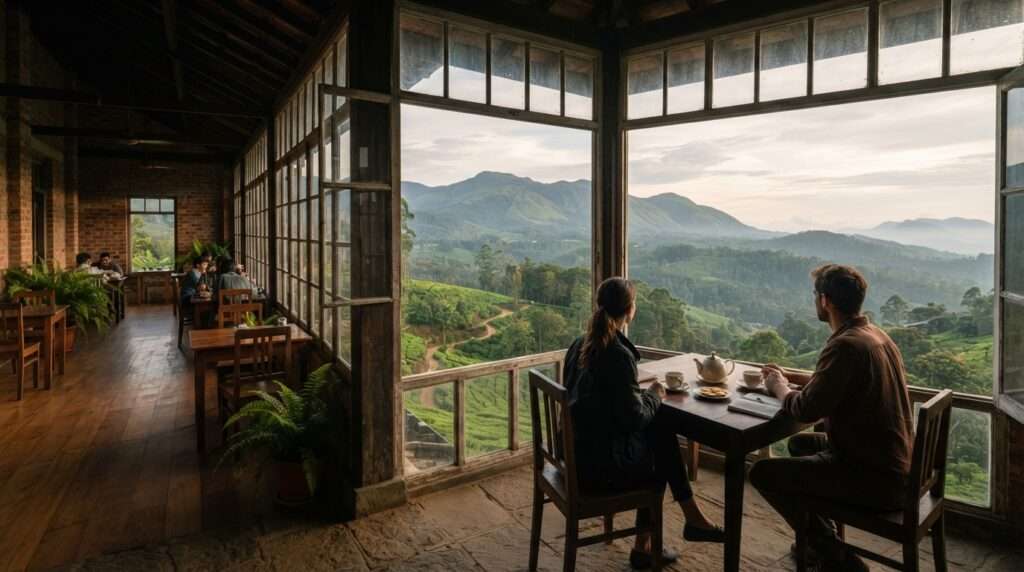
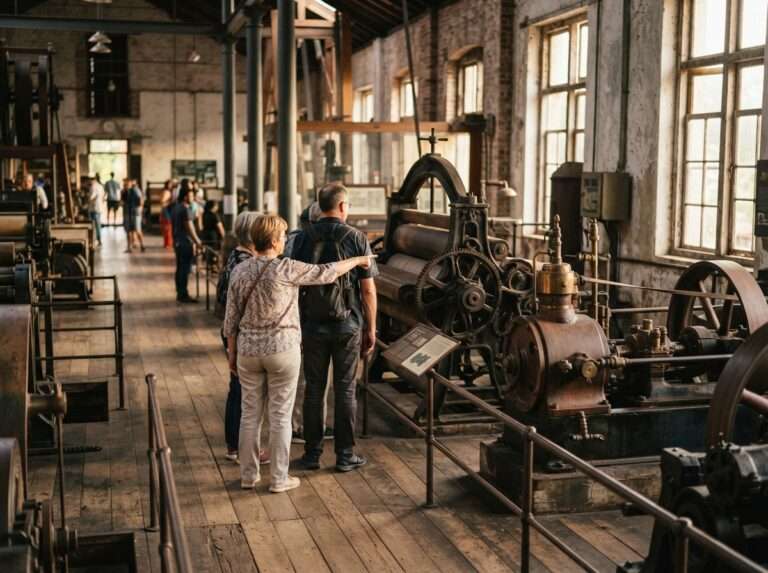
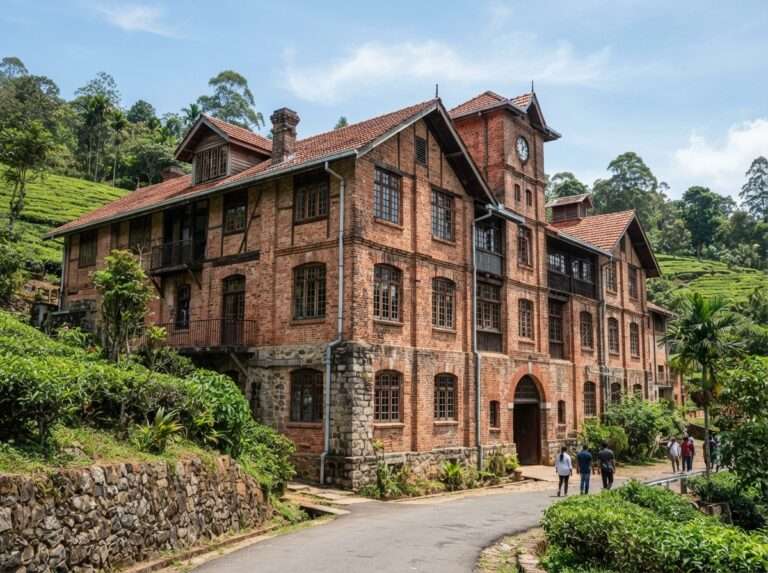
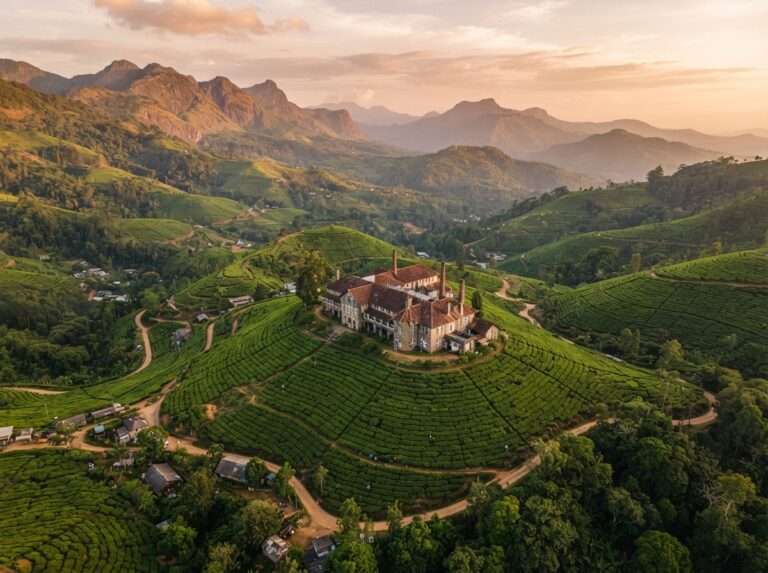
Set in a restored 1925 tea factory on Hantana Road, about 3 km south of Kandy, the Ceylon Tea Museum is the best place to start before you see a working estate. Four floors carry you from vintage rolling machines and a 19th-century steam engine up to a library on James Taylor, the Scot who planted Ceylon’s first commercial tea nearby. The top floor is a tea room with a view over the Hantana range, and a cup of estate tea comes with your ticket. Non-resident adults pay LKR 1,000 and children LKR 500. It opens Tuesday to Friday from 8:30 AM to 4 PM and at weekends from 8 AM to 5 PM, closing on Mondays, so allow about 90 minutes.
Related Tour Packages


❮
❯
02
Kadugannawa Tea Estate, Kandy
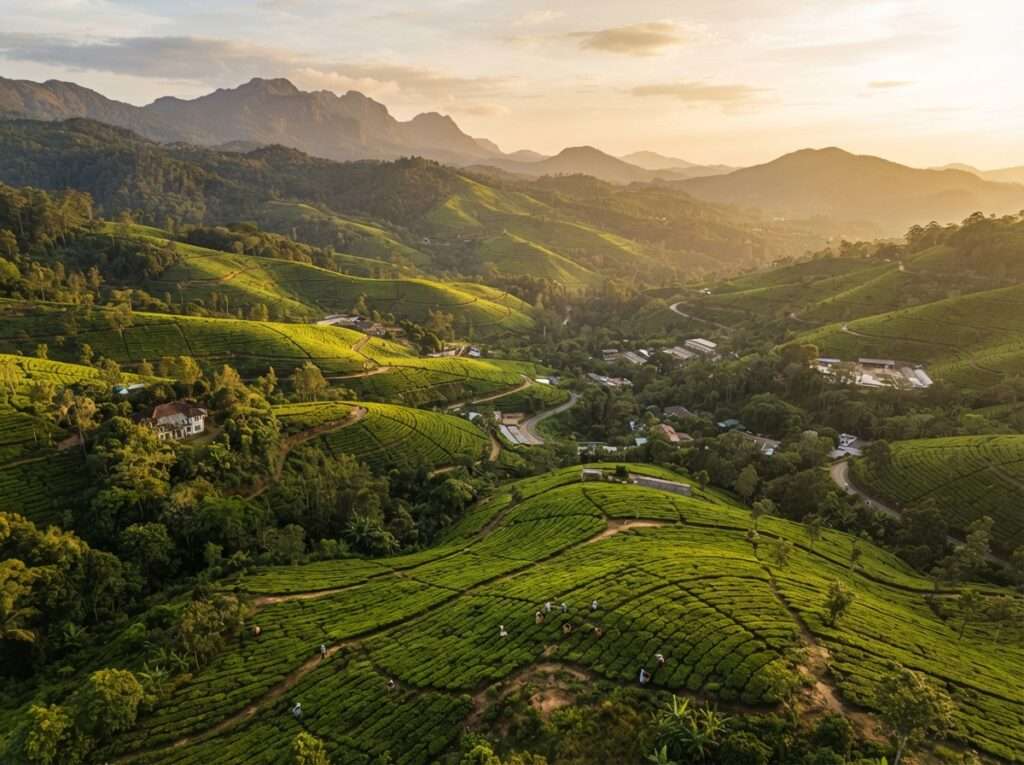
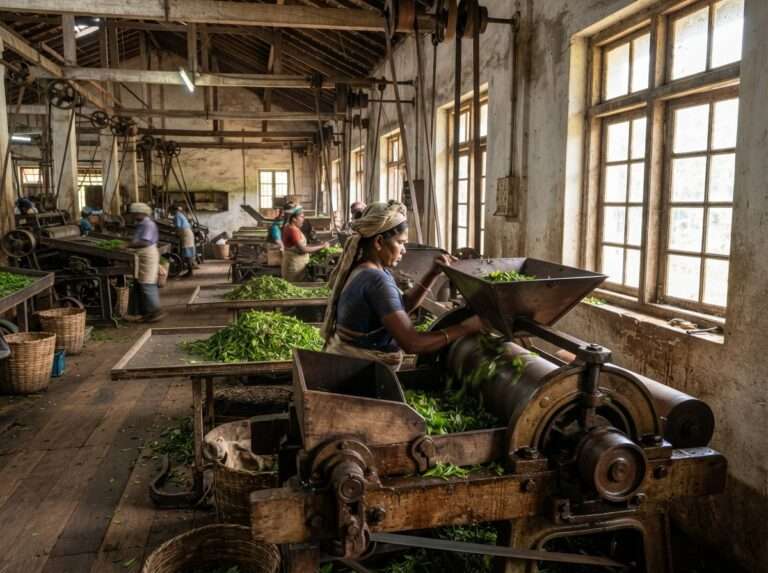
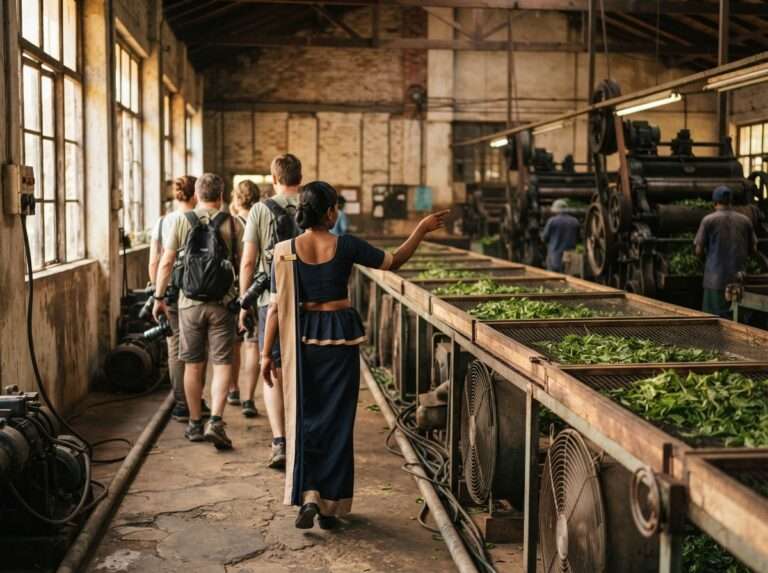
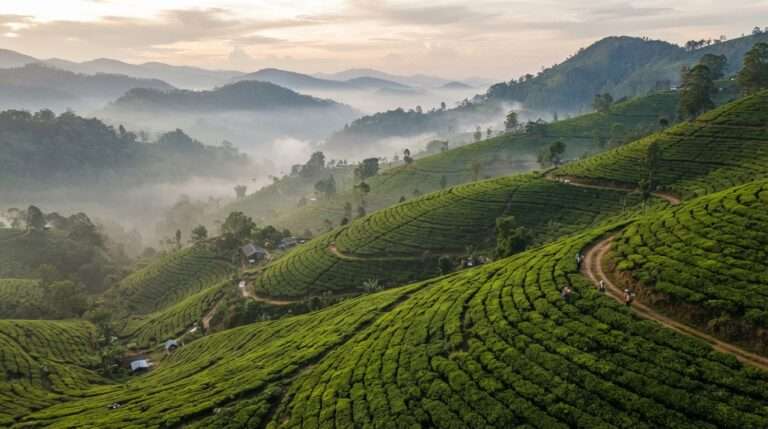
About 20 km west of Kandy, near the old Kadugannawa pass, this working estate runs short English-language tours that follow a leaf from the plucking baskets through withering, rolling and grading to the black and green teas you taste and buy at the end. It is an easy half-day from the city and pairs well with the railway museum at Kadugannawa if you are travelling with children. Tours are informal and free, ending with a cup of tea, and the factory opens daily from roughly 8:30 AM to 6 PM.
Related Tour Packages


❮
❯
03
Glenloch Tea Factory, Ramboda
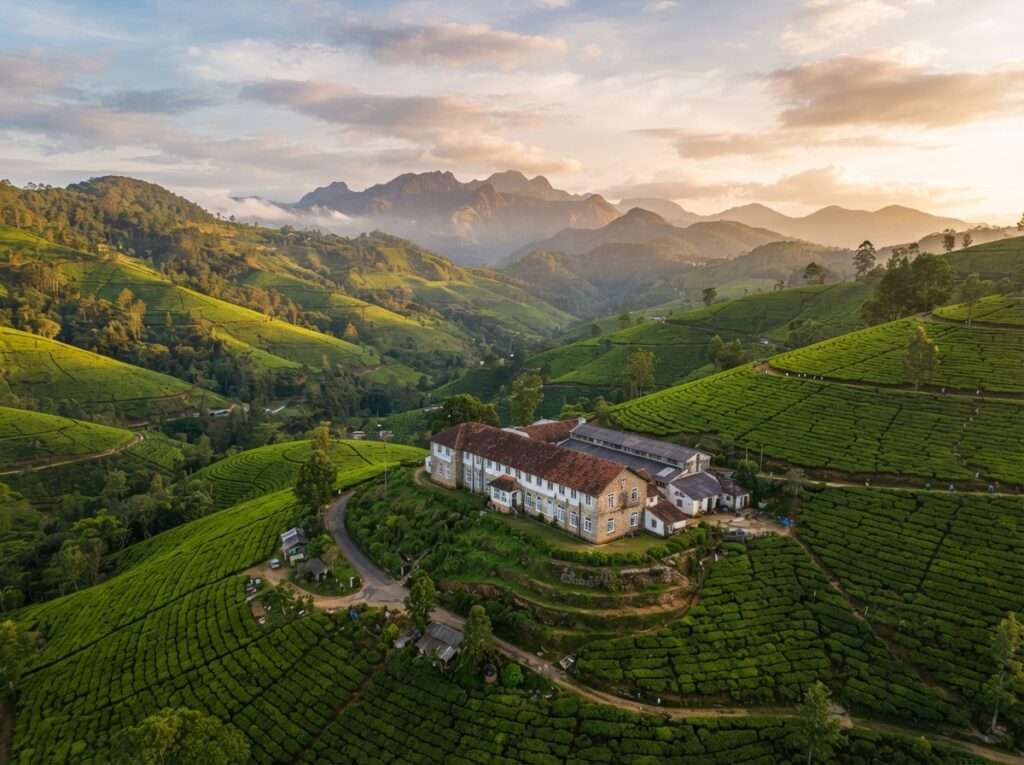
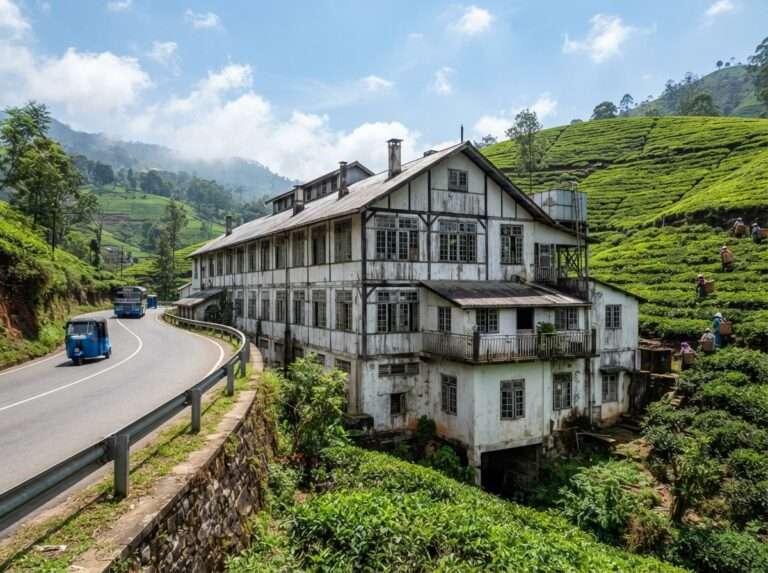
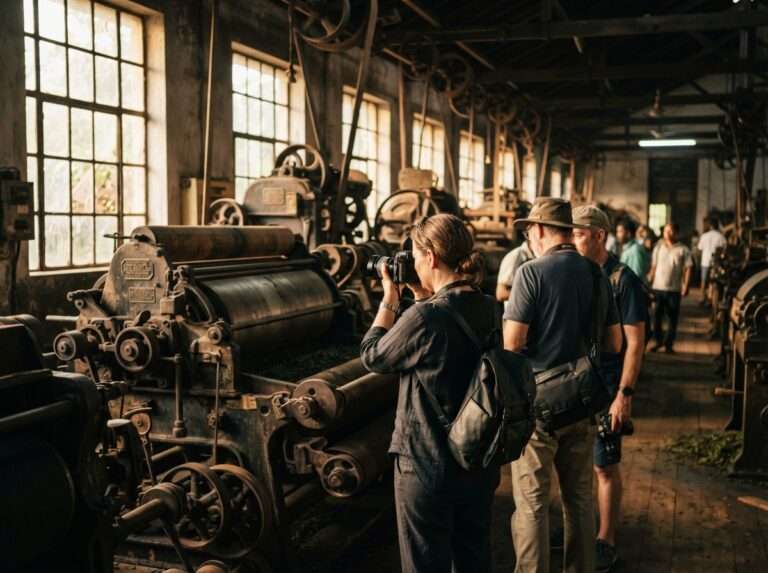
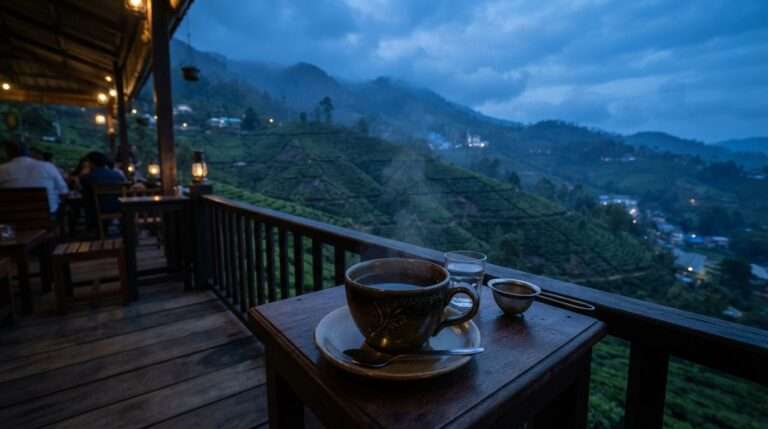
Between Kandy and Ramboda on the main road up to Nuwara Eliya, Glenloch has made tea for more than 130 years and still works the leaf on old British rolling and drying machines. The guided walk is free, takes a little under an hour, and ends with a complimentary cup of high-grown tea in the cafe; unusually, the staff are happy for you to photograph the machinery. It sits right on the main road between Kandy and the hill country, so it slots easily into a transfer day.
Related Tour Packages


❮
❯
04
Damro Labookellie Tea Centre (formerly Mackwoods), Nuwara Eliya
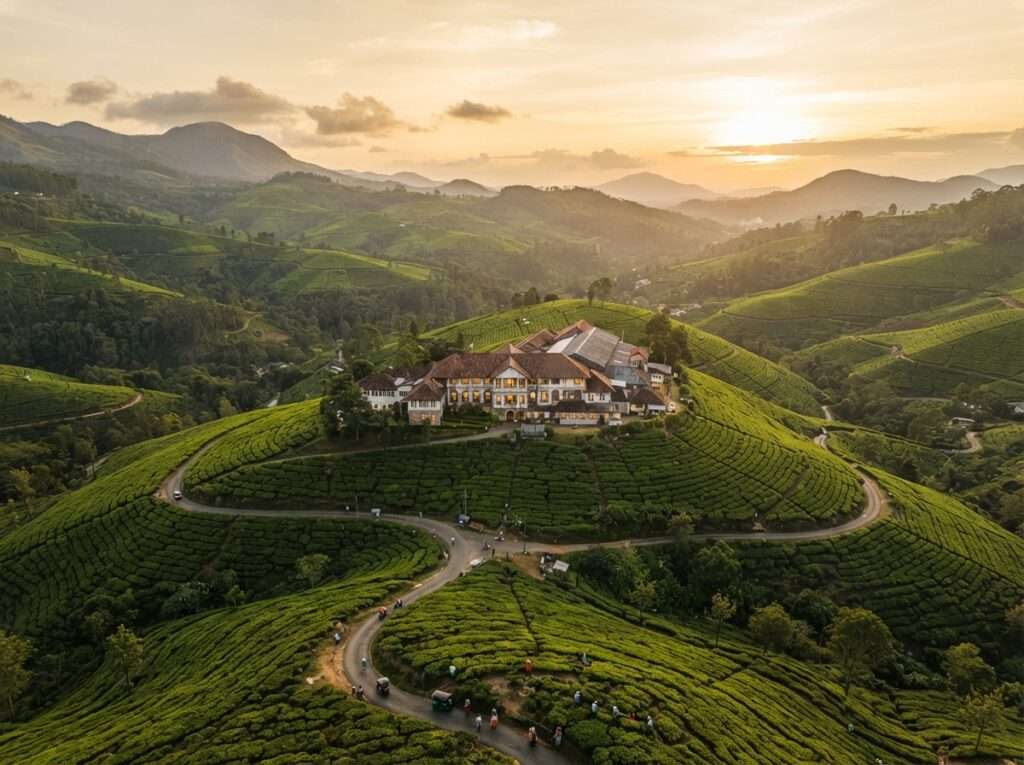
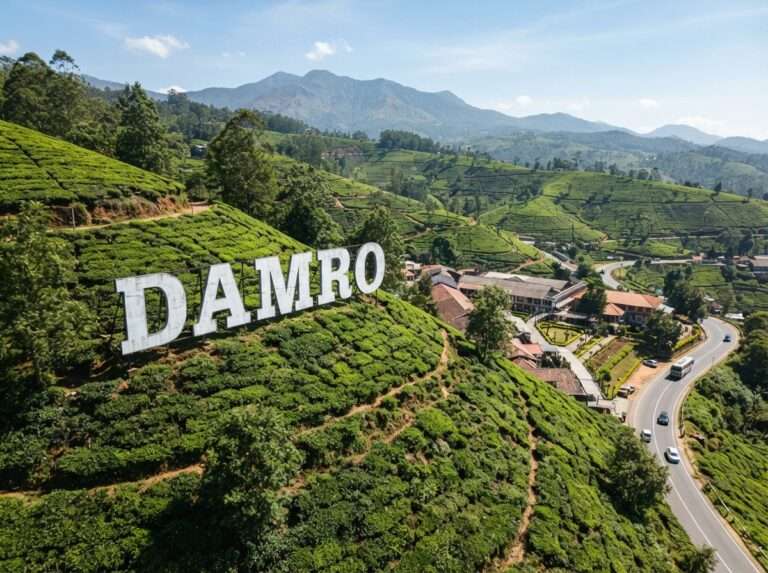
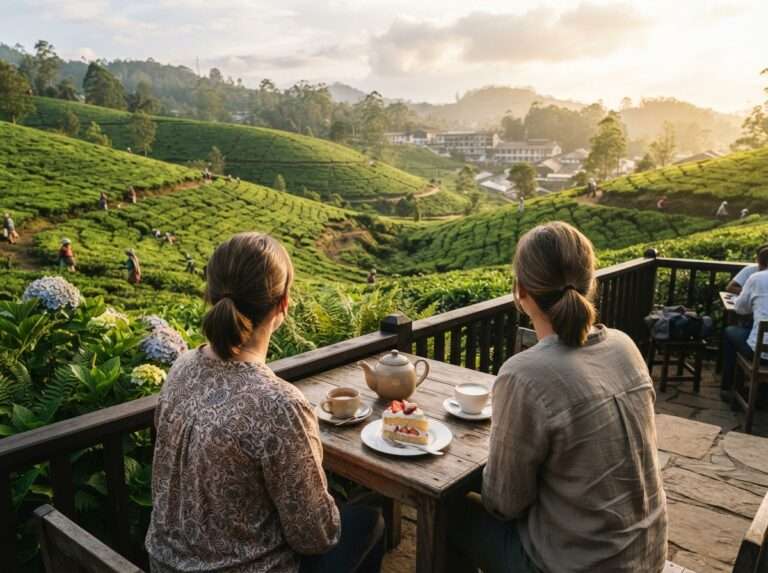
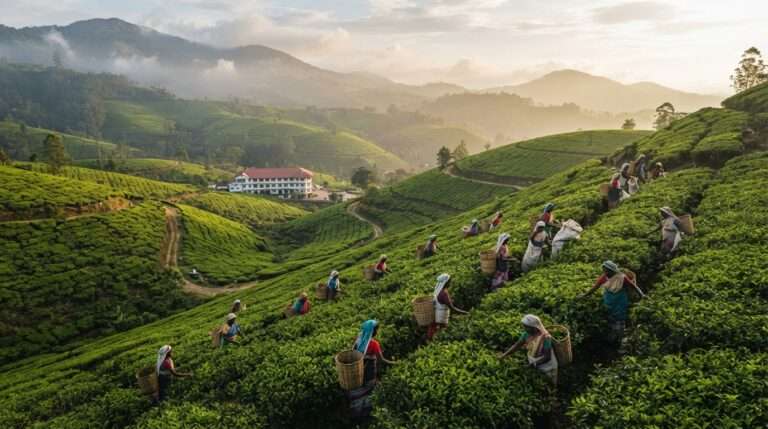
Long associated with the Mackwoods firm (established in 1841) and now run by the Damro group, the Labookellie estate on the A5 is the one most travellers stop at; the giant hillside sign that once read MACKWOODS now reads DAMRO, and the factory tour is free with a cup of tea. Many travellers come as much for the setting as the tea, since the tables look straight out over the plucking fields, and the strawberry-and-cream cake has a cult following. If you want more, the estate sells a longer walk into the plantations with tasting for an extra fee. It opens daily, roughly 8:30 AM to 5:30 PM. For the full rundown, see our guide to the Damro Labookellie tea centre.
05
Blue Field Tea Gardens, Ramboda
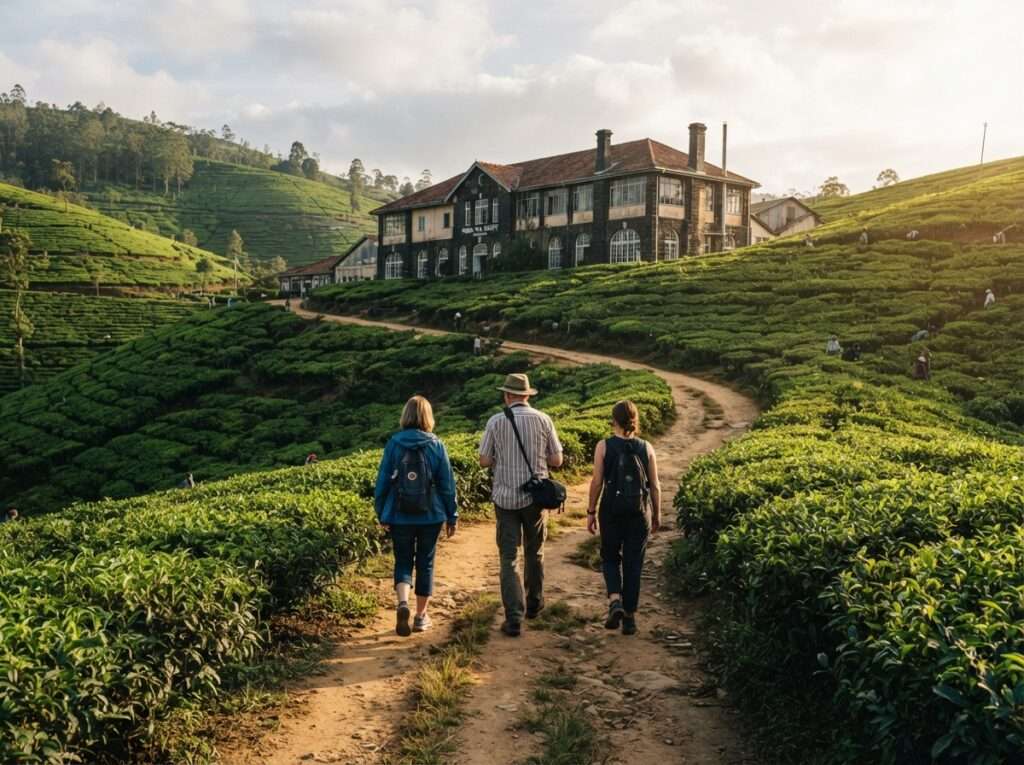
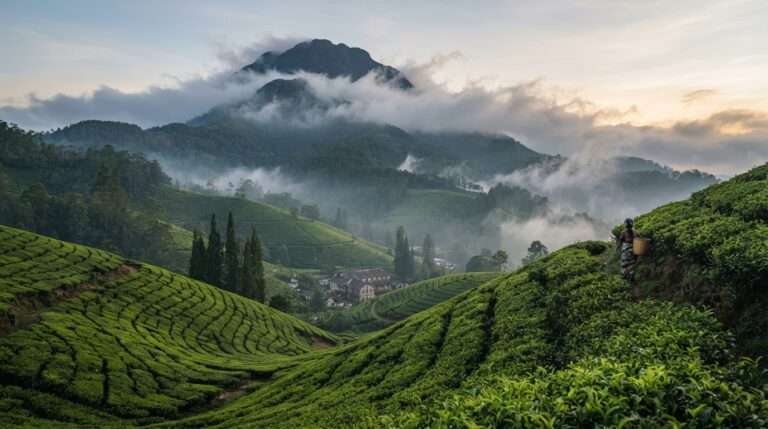
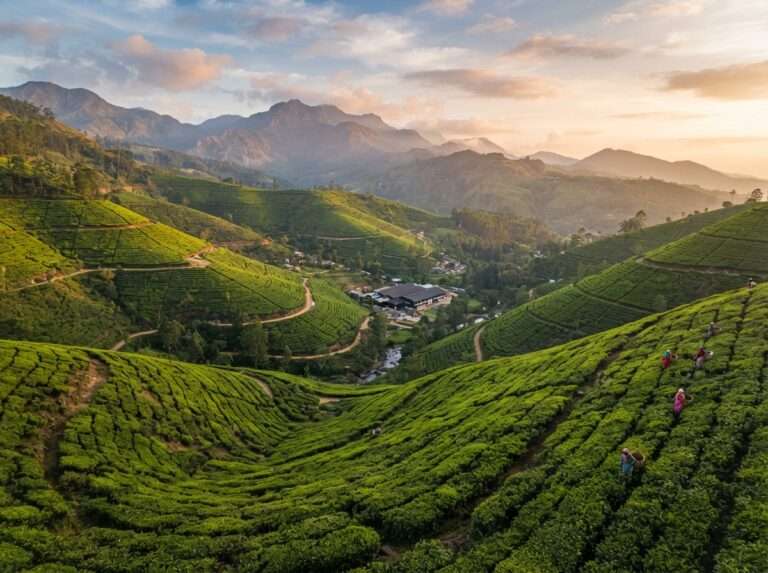
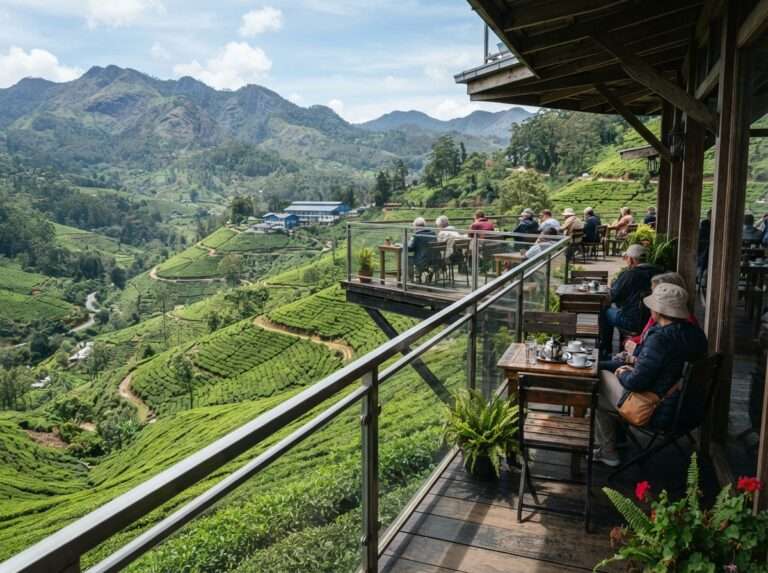
Halfway between Kandy and Nuwara Eliya at Ramboda, Blue Field is the roadside stop worth timing your drive around. The tour is free, the tea comes with cake in a cafe that hangs over the valley, and unlike most estates the staff will hand you a basket and let you try plucking two leaves and a bud in the field. It opens daily from about 8 AM to 6 PM, though there is no leaf processing on Sundays, so come on a weekday if you want to see the machines running.
06
Pedro Tea Estate, Nuwara Eliya
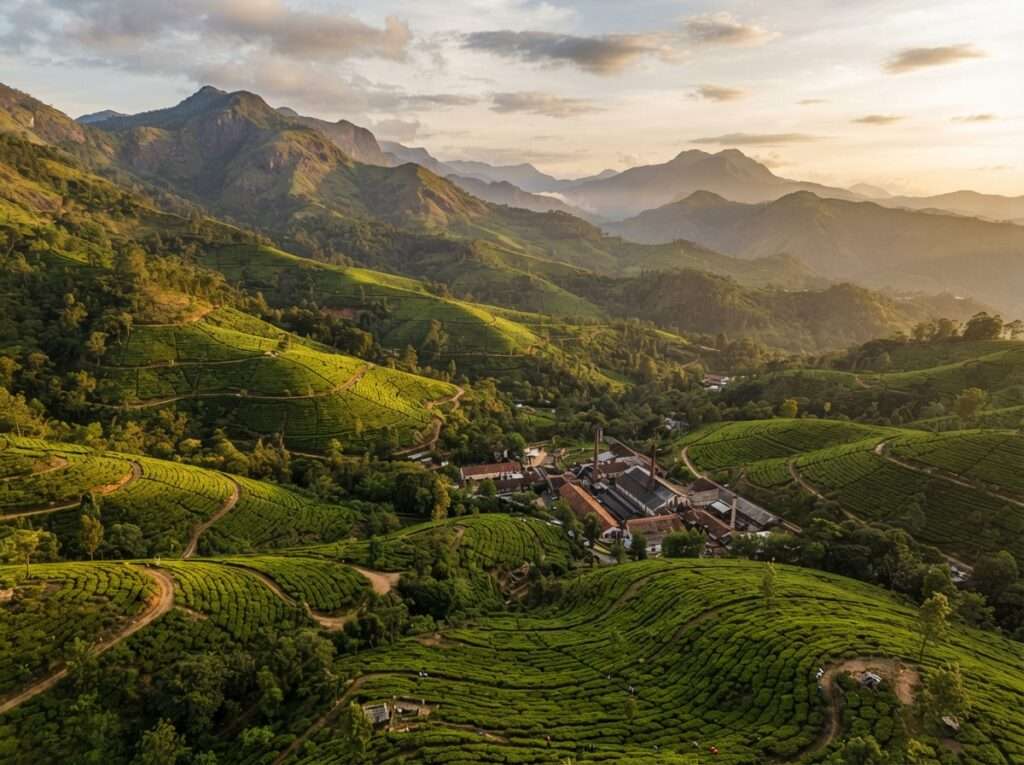
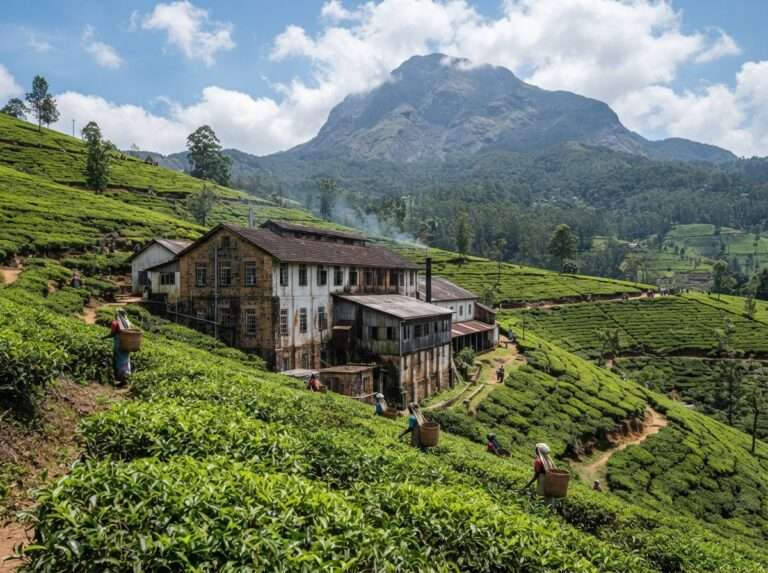
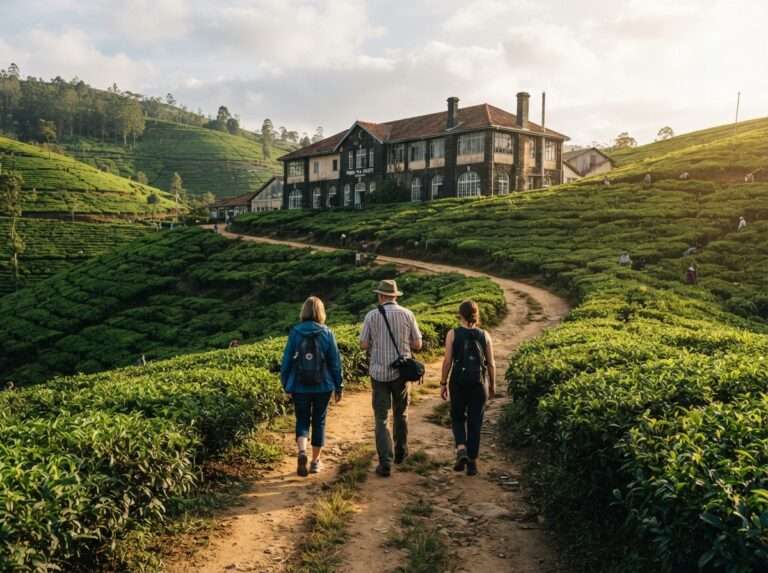
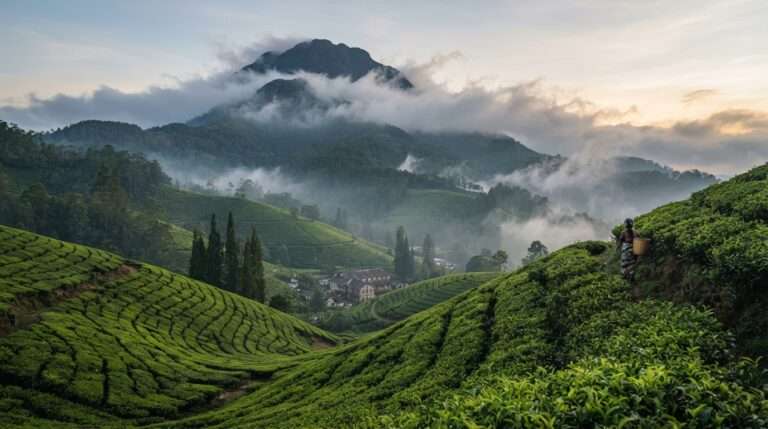
Spread across the slopes below Pidurutalagala, Sri Lanka’s highest mountain, Pedro has grown tea since 1885 and sits about 3.5 km east of Nuwara Eliya town. The 20-minute tour walks you through a genuine working factory rather than a showroom, though much of the processing runs at night, so the machines may be quiet during a daytime visit; it finishes with a tasting. Expect to pay around LKR 500 to 1,000 for the guided tour with a cup of tea. It runs daily from 8 AM to 5 PM but pauses over lunch, roughly 12:30 PM to 2 PM, so arrive either side of that.
07
Uva Halpewatte Tea Factory, Ella
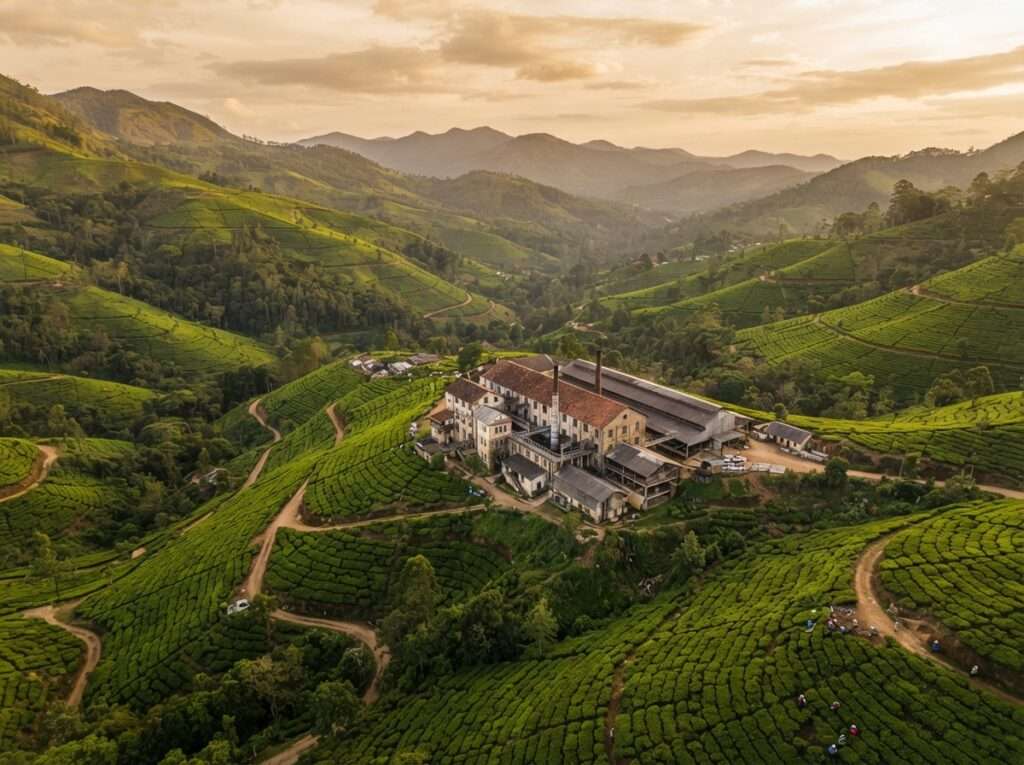
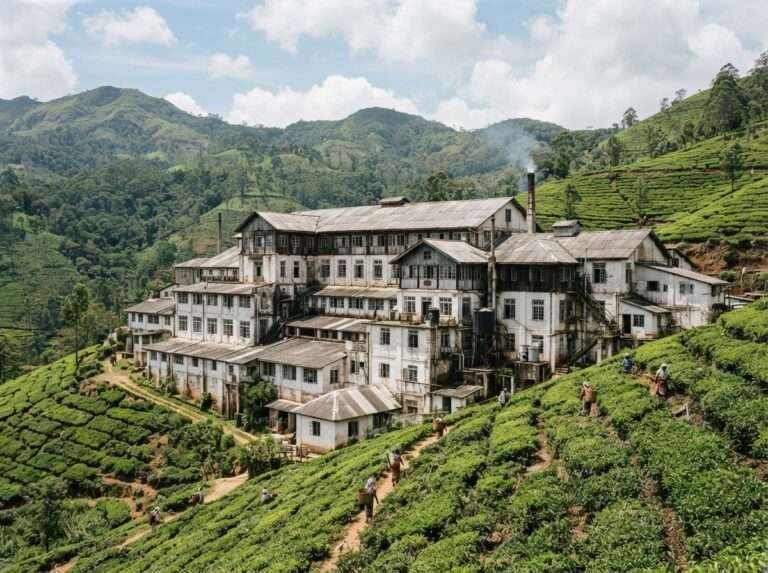
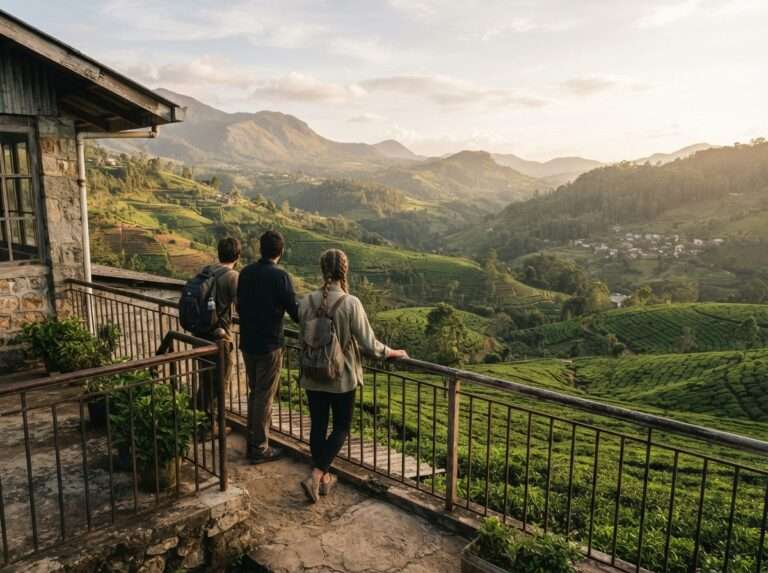
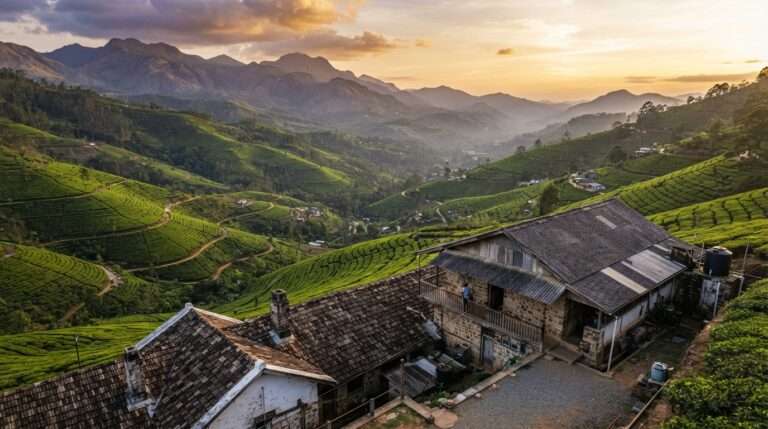
The largest factory near Ella, Uva Halpewatte was founded in 1940 and stands at about 1,230 m, with a rooftop terrace that looks across the Uva valley. The tour runs 40 minutes to an hour, covers the full high-grown process, and the on-site shop stocks the single-estate grades the factory is known for. It is roughly 5 km north of Ella, open daily from about 8 AM to 4:30 PM, though leaf is not processed early in the week, so the machines can be idle on a Monday. Tickets start from around LKR 3,000 (about USD 10) for the guided tour and tasting, so carry small notes.
08
Dambatenne Tea Factory and Lipton's Seat, Haputale
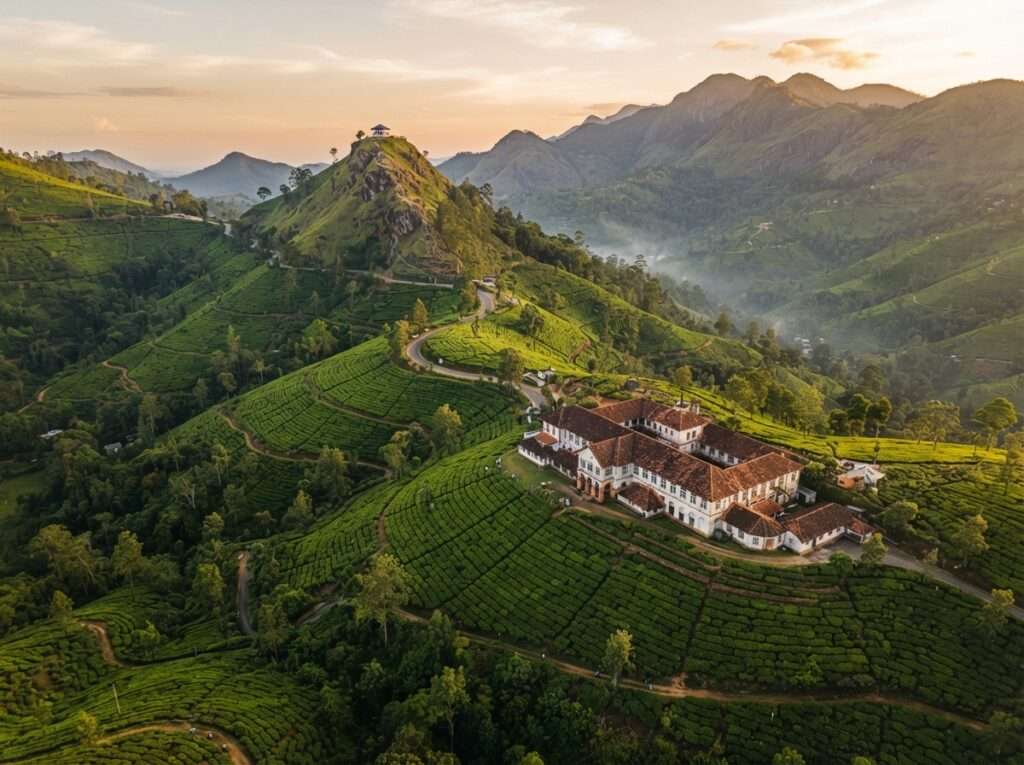
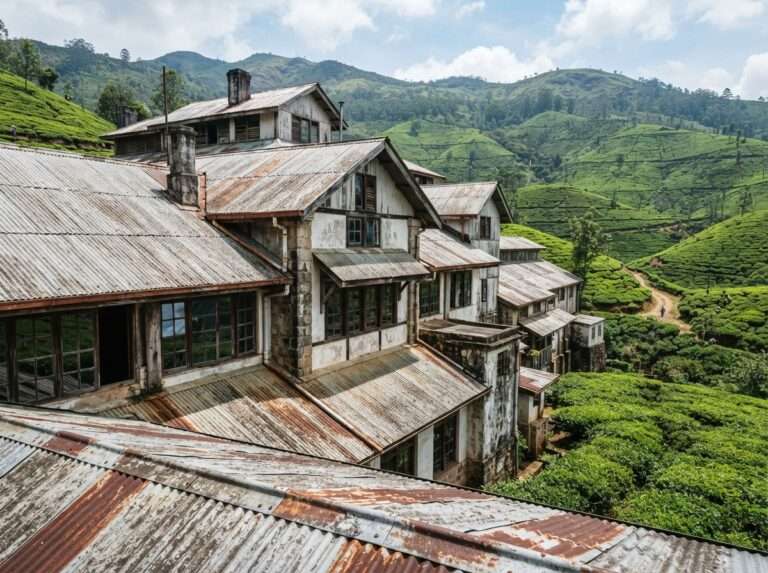
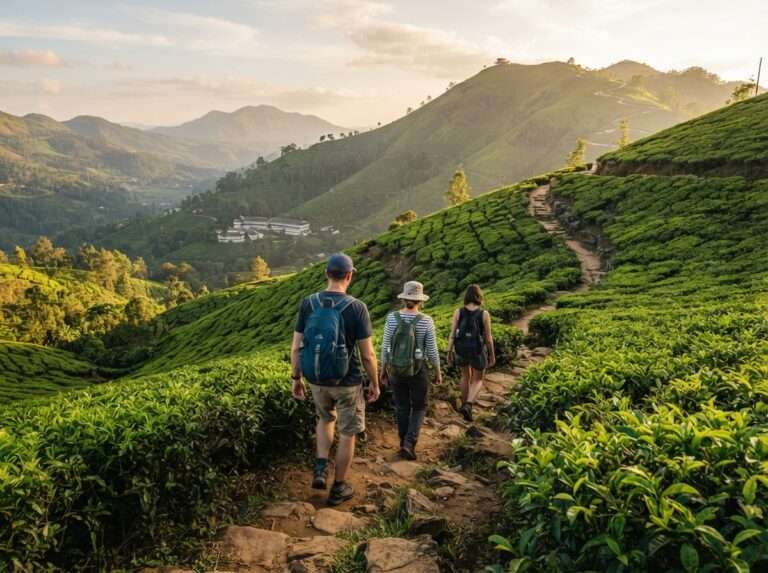
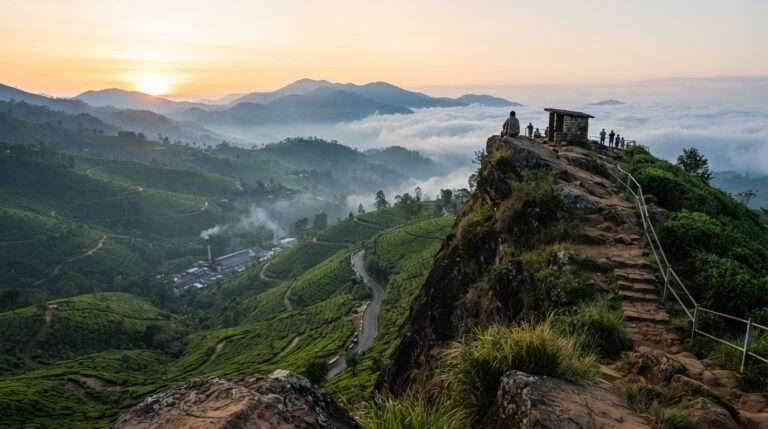
Sir Thomas Lipton built the Dambatenne factory in 1890, and it still processes tea much as it did a century ago, which makes the roughly LKR 500 tour one of the most atmospheric in the country. The real reason most people come, though, is above it: a steep 7 km climb, or a short tuk-tuk ride, up to Lipton’s Seat, the ridge where Lipton surveyed his estates; a small viewpoint gate fee of around LKR 500 applies at the top. Go at dawn before the cloud rolls in. The factory runs tours through the week but does not process leaf on Sundays or Mondays, so check before you climb.
09
Handunugoda Tea Estate, near Galle
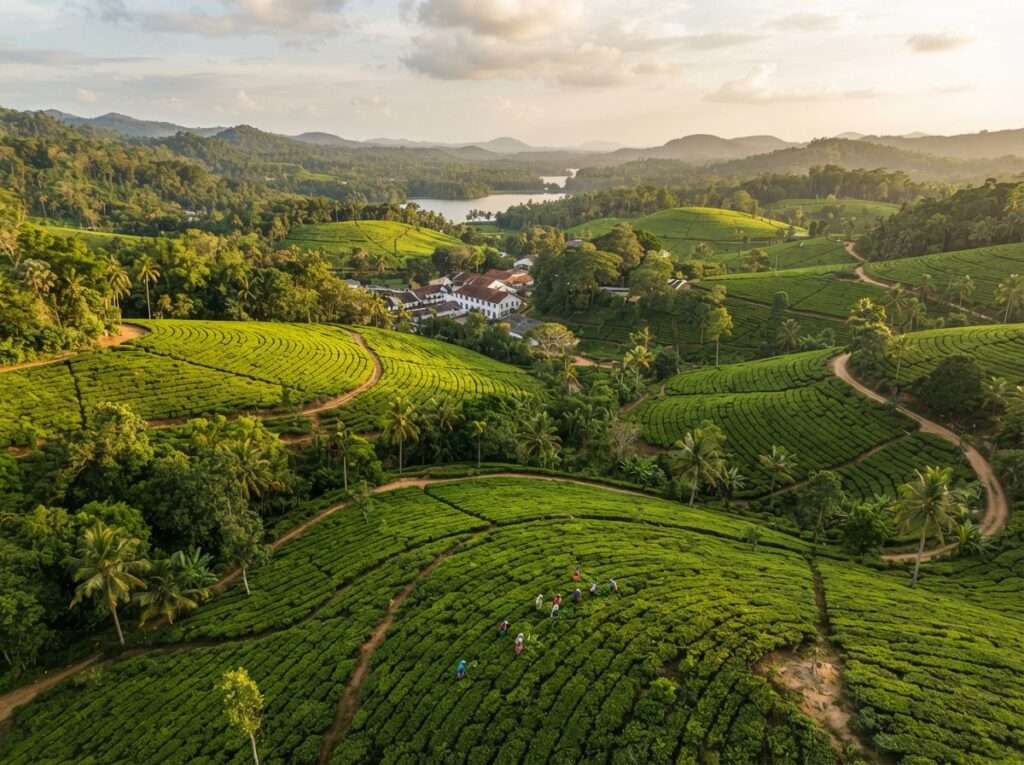
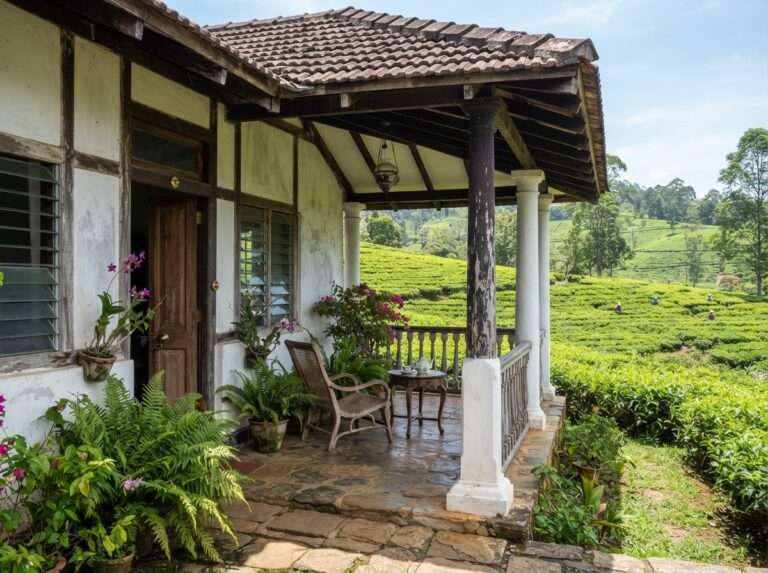
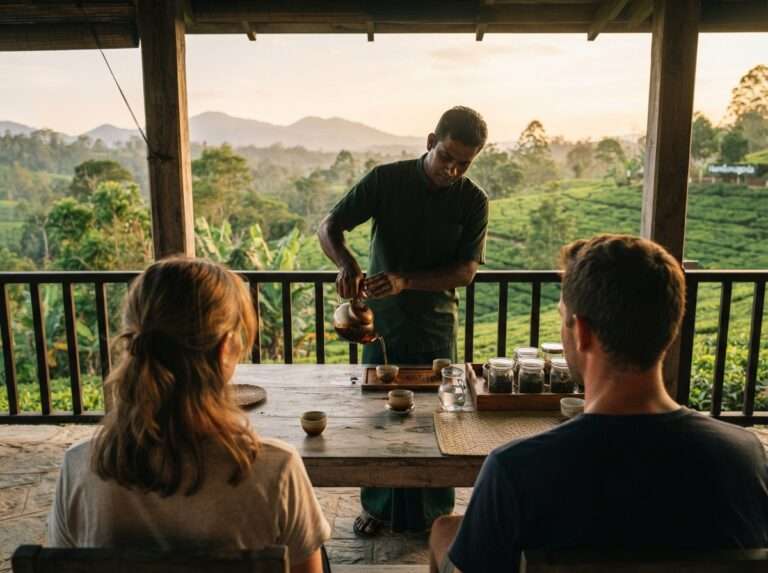
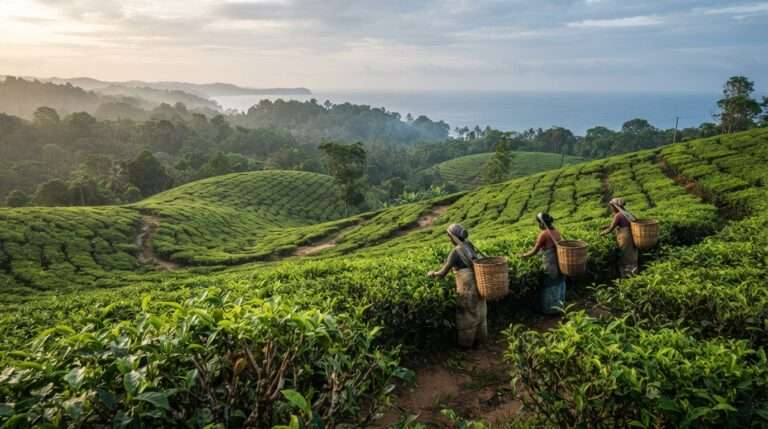
If you are spending time on the south coast rather than the hills, Handunugoda near Koggala is the one tea estate worth the detour. This is a low-grown, near-sea-level plantation famous for Virgin White Tea, a rare leaf picked and processed without being touched by hand. The owner’s guided tour is warm and unhurried, carries a nominal charge of around LKR 1,000 (free for children under 14), and ends with a tasting of more than a dozen single-estate teas by the colonial-era bungalow. It pairs naturally with a day around Galle Fort and the southern beaches.
What A Sri Lankan Tea Factory Tour Is Really Like
A factory tour follows the leaf from bush to cup, usually in about 45 minutes to an hour, and most finish with a free tasting. The machinery looks Victorian because much of it is: the rollers and dryers at estates like Dambatenne have barely changed in a century. Here is the process you will watch, step by step.
- Plucking: pickers take only the top two leaves and a bud, the tender growth that makes quality tea.
- Withering: the fresh leaf is spread on long troughs and left overnight to lose most of its moisture.
- Rolling: the withered leaf is twisted and broken to release its juices and begin oxidation.
- Oxidation: the rolled leaf is spread out and left to turn a deep copper, which develops the flavour.
- Firing: the leaf is dried with hot air to halt oxidation and lock in the taste.
- Grading and tasting: the dried tea is sorted into grades by leaf size, then you taste the result.
Come prepared for the cold and damp. Factories sit high in the hills, so bring a layer, wear closed shoes on the wet floors, and ask before photographing the machinery; several working factories, Pedro among them, do not allow photography inside the processing rooms at all. A few estates also ask you to leave bags at the counter.
Sri Lanka's Tea Regions And What Makes Each Different
Sri Lanka divides its tea into seven growing districts, but the simplest way to understand the cup is by elevation. The higher the garden, the lighter and brisker the tea; the lower it grows, the darker and stronger it gets.
| Elevation band | Where | Character | Best months |
|---|---|---|---|
| High-grown (above ~1,200 m) | Nuwara Eliya, Uva, Dimbula | Light, brisk, fragrant; Nuwara Eliya is called the Champagne of Ceylon tea | Jan to Mar (west); Jun to Sep (Uva) |
| Mid-grown (~600 to 1,200 m) | Kandy | Fuller bodied, coppery, rounded | Jan to Apr |
| Low-grown (below ~600 m) | Ruhuna, Sabaragamuwa, southern belt | Dark, strong, malty; used in many blends | Year round |
Nuwara Eliya and Ella both sit in high-grown country, which is why the central highlands hold the richest cluster of estates. The Uva side around Ella and Haputale peaks in quality when the dry eastern winds blow from June to September, while the western slopes around Nuwara Eliya and Dimbula are at their best from January to March.
Best Time To Visit And How To Reach Tea Country
January to April is the safest dry window across most of the hill country. The highlands around Nuwara Eliya and Dimbula are clearest from January to March, while the Uva region around Ella and Haputale is driest from June to September. Mornings are best everywhere, as the cloud and afternoon showers tend to build after lunch. For the wider picture, see our guide to the best time to visit Sri Lanka.
The classic way in is the hill-country train. The line climbs through Nanu Oya, the station for Nuwara Eliya, and on to Haputale and Ella, past terraced gardens with pickers working the slopes, and it is rightly rated one of the most scenic rail journeys in the world. Since the 2025 cyclone the upper Kandy to Nanu Oya section has been closed for repairs, so at the time of writing the ride runs Nanu Oya to Ella (roughly three hours); check Sri Lanka Railways for the status of the Kandy section before you plan. Book a reserved seat in 1st or 2nd class a few days ahead in peak season. To reach estates off the line, a car with a driver is more flexible, and tuk-tuks are ideal for short hops like the one up towards Lipton’s Seat.
A Short History Of Ceylon Tea
Tea arrived in 1824, when the British planted the island’s first bush at the Royal Botanic Gardens in Peradeniya. It stayed a curiosity until a blight destroyed the coffee estates in the 1860s and growers needed a new crop. In 1867 a Scottish planter named James Taylor laid out the first commercial tea at Loolecondera, near Kandy, and the industry took off. Sir Thomas Lipton bought estates around Haputale in 1890 and sold Ceylon tea to the world. Today Sri Lanka is among the largest tea exporters on earth, shipping more than 250 million kilograms a year under the Ceylon name.
Planning Your Tea Country Trip
In the hills, Sri Lanka packs a museum, a working factory and a free roadside stop within a few hours’ drive of one another, with the rare white-tea estate down on the south coast near Galle, so the only real question is how many you can fit around the rest of your trip. Walkers can also link the hill-country estates on foot along the Pekoe Trail, a waymarked route of about 300 km through tea country in 22 stages; register through the official Pekoe Trail app before you set out. Base yourself in Nuwara Eliya or Ella for the richest cluster, ride at least one leg of the hill-country train, and keep small notes handy for the gate fees. When you are ready to build it into a wider island itinerary, our Sri Lanka tour packages can fold tea country into the rest of your trip.
FAQs
Tea Plantations In Sri Lanka: Frequently Asked Questions
For a first visit, Damro Labookellie (formerly Mackwoods) near Nuwara Eliya is the easiest free tour, while Pedro Estate gives you the most authentic working factory. For heritage, Dambatenne and Lipton's Seat above Haputale are hard to beat, and the Ceylon Tea Museum in Kandy is the best all-round introduction. The best one really depends on whether you are based in Kandy, Nuwara Eliya, Ella or on the south coast.
Several are. Damro Labookellie (formerly Mackwoods), Glenloch and Blue Field at Ramboda all run free guided tours that end with a complimentary cup of tea. Others charge a small fee: Handunugoda near Galle is around LKR 1,000, Pedro is around LKR 500 to 1,000 with a tasting, Dambatenne about LKR 500, and the Ceylon Tea Museum LKR 1,000 for non-resident adults. Fees change, so carry small notes.
Most paid tours fall between LKR 250 and LKR 3,000 per person, usually including a guided walk and a cup of tea. Dambatenne is around LKR 500, Pedro around LKR 500 to 1,000, Uva Halpewatte from around LKR 3,000, and the Ceylon Tea Museum LKR 1,000 for non-resident adults and LKR 500 for children. The free estates only charge if you add a longer plantation walk or buy tea to take home.
The classic way is the hill-country train, one of the most scenic rail journeys in the world. Since the 2025 cyclone the upper Kandy to Nanu Oya section has been closed for repairs, so at the time of writing the running stretch is Nanu Oya (the station for Nuwara Eliya) to Ella, about three hours; check Sri Lanka Railways for the current Kandy section. Book a reserved 1st or 2nd class seat a few days ahead in peak season. To reach estates off the line, a car with a driver is more flexible, and tuk-tuks are ideal for short hops.
January to April is the safest dry window across most of the hill country. The western highlands around Nuwara Eliya and Dimbula are clearest from January to March, while the Uva region around Ella and Haputale is driest from June to September. Mornings are best everywhere, since the highland cloud and afternoon showers tend to build after lunch.
Yes, and it is usually cheaper and fresher than at the airport. Every estate shop sells its own single-estate grades, from everyday broken orange pekoe to tippy whole-leaf and, at Handunugoda, rare white tea. Factory shops take cards, but smaller counters prefer cash. If you want a specific grade, taste it on the tour first, as names like pekoe refer to leaf size, not quality.
Both sit in high-grown tea country, so you cannot go wrong. Nuwara Eliya has the greatest density of estates, with Damro Labookellie, Pedro and Blue Field all close by, plus the colonial hill-station feel. Ella is more relaxed and scenic, with Halpewatte on its doorstep and Dambatenne and Lipton's Seat a short drive west at Haputale. Many travellers ride the train between the two and see both.
Lipton's Seat is the viewpoint above the Dambatenne estate near Haputale where Sir Thomas Lipton looked out over his plantations. On a clear morning you can see across several provinces, and the walk up through the tea fields is the real reward. Go at dawn before the cloud closes in; you can climb the 7 km from the factory or take a tuk-tuk most of the way.
Most guided tours run 20 minutes to an hour. Pedro's working-factory walk is about 20 minutes, Damro Labookellie and Halpewatte are closer to an hour, and the Ceylon Tea Museum needs around 90 minutes for all four floors. Leave a little extra time for the tasting and the shop at the end.
Most welcome visitors daily, but several do not process leaf at weekends, so the machines may be idle. Dambatenne does not run its processing on Sundays or Mondays, Blue Field pauses on Sundays, and the Ceylon Tea Museum closes on Mondays. If seeing the factory in action matters to you, aim for a weekday morning.