4D / 3N
17% OFF
4D / 3N
17% OFF
Manali-Kasol Tour Package by Cab for Himachal (4D/3N) - At A Glance
- Hotel
- Meals
- Sightseeing
- Entry Tickets
- Cab Transfer
₹12,688
₹10,500 /pp
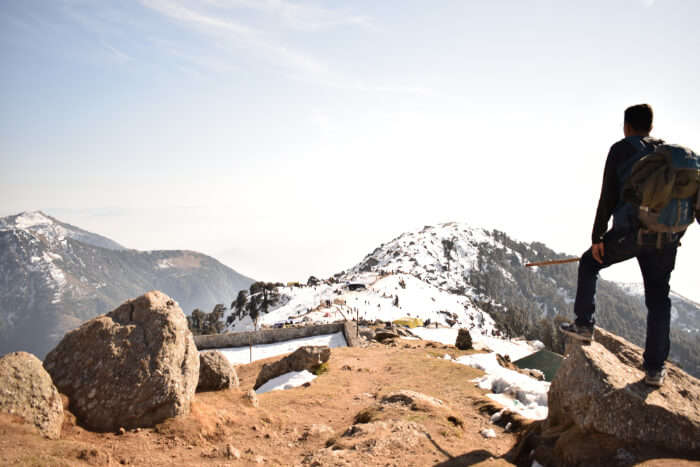


The Triund trek is a 9 km walk from McLeod Ganj up to a grassy ridge at about 2,850 m on the Dhauladhar range, and most people finish the climb in four to five hours. It is the trek that turns a Dharamshala weekend into a proper mountain trip, easy enough for a first-timer yet high enough to put the snow line of the Dhauladhar right in front of you. Start from the Gallu Devi Temple road head, walk through oak and rhododendron to the Magic View Cafe at the halfway mark, then up the switchbacks to a ridge that looks over the Kangra valley on one side and a wall of peaks on the other. Some people type it as tirund or search triund hill trek; it is the same climb. This 2026 guide has the full distance table, the route map step by step, the height and difficulty, the current camping rules, and a day-by-day itinerary. When you would rather have it arranged end to end, our Triund trek packages bundle the stay at McLeod Ganj, the guide and the campsite.
Key Takeaways
Triund Trek
Best Time
March - June
Select Package Type

3 Days & 2 Nights
₹9,043 /@pp
GET FREE QUOTE

.jpg?tr=w-600,h-300)

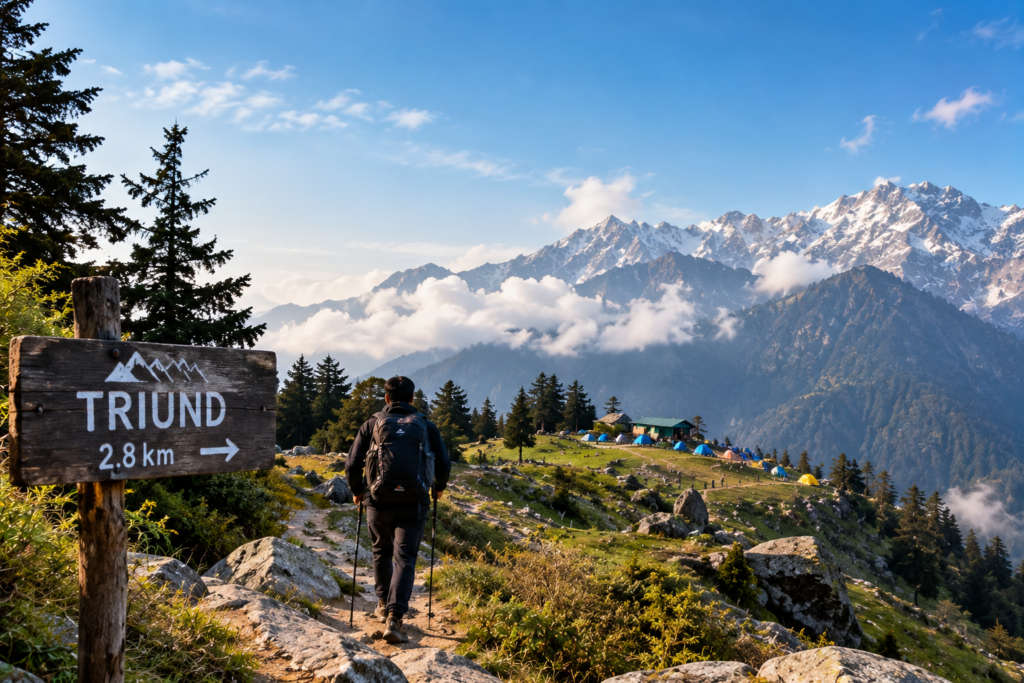
The whole trek in one screen. Each figure below is expanded in the sections that follow.
| Detail | Triund trek |
| Trek distance | ~9 km one way from McLeod Ganj (~7 km from Gallu Devi road head) |
| Height / altitude | ~2,850 m (9,350 ft) at the ridge |
| Elevation gain | ~1,000 m |
| Difficulty | Easy to moderate; fit beginners can do it |
| Time on foot | 4-5 hrs up, 3-4 hrs down |
| Starting point | Gallu Devi Temple, above McLeod Ganj |
| Base town | McLeod Ganj / Dharamshala |
| Best time | Mar-Jun and Sep-Nov (snow trek Jan-Mar) |
| Camping (2026) | Registered campsites and forest rest house only |
| Nearest airport | Gaggal (Kangra), ~13 km from Dharamshala |
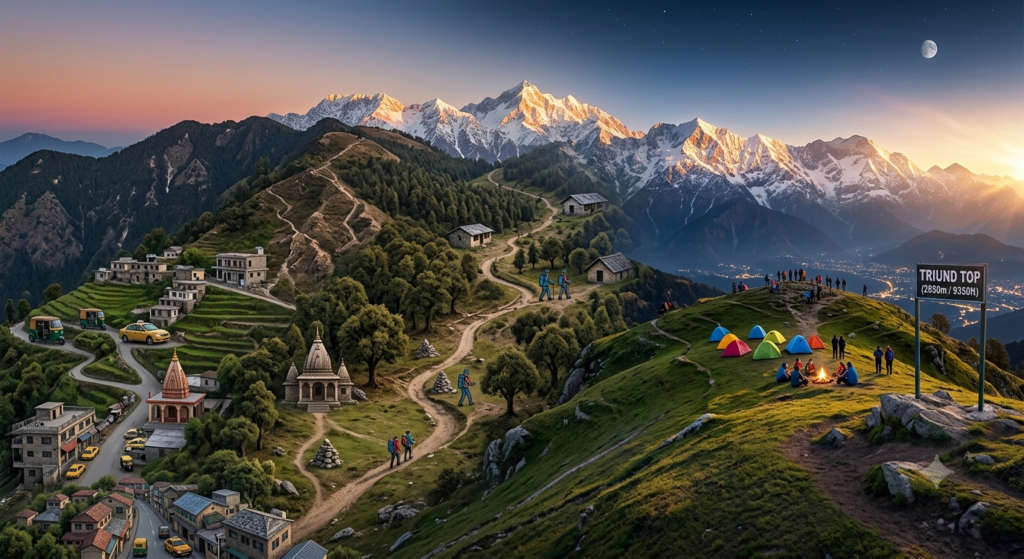
The short answer people search for first: the Triund trek is about 9 km one way from McLeod Ganj, or roughly 7 km if you drive up to the Gallu Devi Temple road head and start there. Below is the full distance table from every common start point, plus the road distances to the base if you are coming from Delhi or Chandigarh. Rival guides scatter these numbers through their prose. Here they are in one place.
| Start point | Distance to Triund (one way) | On foot or road | Typical time |
| Gallu Devi Temple (road head) | ~7 km | Trek | 3-4 hrs |
| McLeod Ganj | ~9 km (via Dharamkot & Gallu Devi) | Trek | 4-5 hrs |
| Dharamkot | ~8 km | Trek | 3.5-4.5 hrs |
| Bhagsu Nag | ~9-10 km (via Bhagsu waterfall) | Trek | 4-5 hrs |
| Dharamshala (town) | ~9 km road to McLeod Ganj, then the trek | Road + trek | Half day |
| Chandigarh | ~250 km road to Dharamshala, then the trek | Road + trek | ~7 hr drive + trek day |
| Delhi | ~500 km road to Dharamshala, then the trek | Road + trek | Overnight + trek day |
Getting to the base is straightforward. The nearest airport is Gaggal, also called Kangra Airport, about 13 km from Dharamshala, with flights from Delhi. The nearest broad-gauge railhead is Pathankot, roughly 85 km away, from where taxis and buses run up to McLeod Ganj. Most Delhi travellers take the overnight Volvo to Dharamshala and start walking the next morning. From McLeod Ganj it is a short 3 km drive or shared cab up to Gallu Devi Temple, where the trail proper begins. For a planned trip with transfers and a guide sorted, compare the current Triund trek packages or read the wider Himachal travel guide.
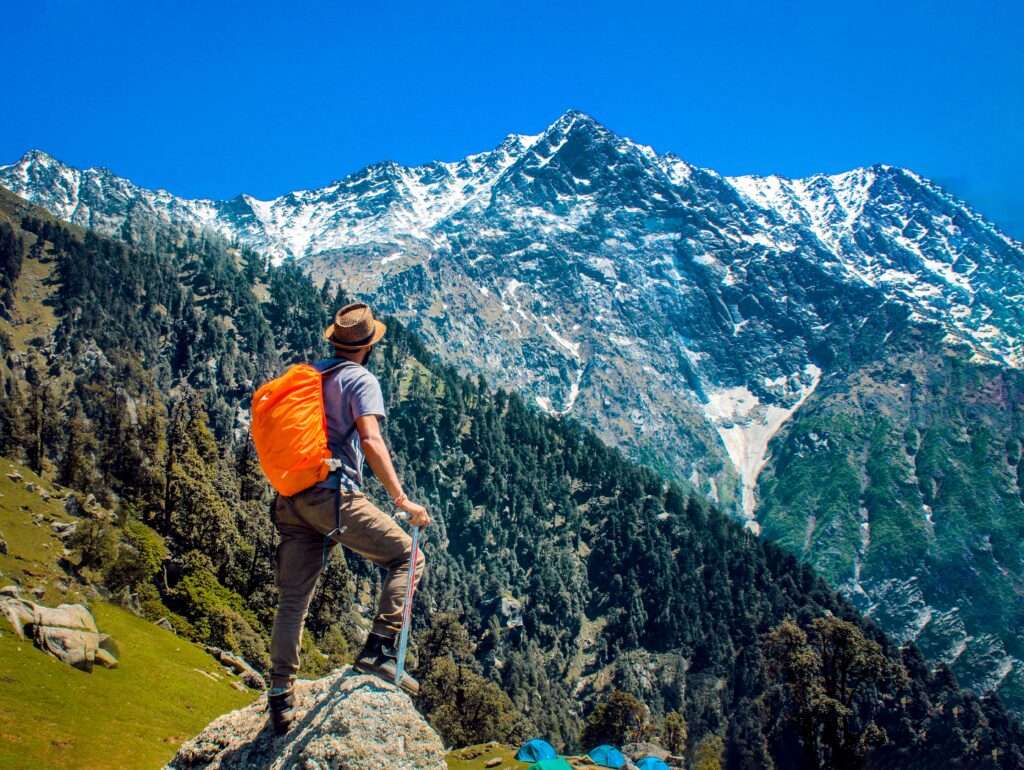
The route map is simpler than it looks on paper. From the Gallu Devi road head there is one main, well-marked trail up to the ridge, with two cafes on the way to break the climb. Here is how it unfolds.
Experienced trekkers use Triund as a launch pad for the harder stretch beyond, up past Laka Glacier and the Lahesh Cave toward the Indrahar Pass at about 4,342 m. That is a serious high-altitude route and needs a guide, gear and acclimatisation. For a first Triund trip, the ridge itself is the goal.
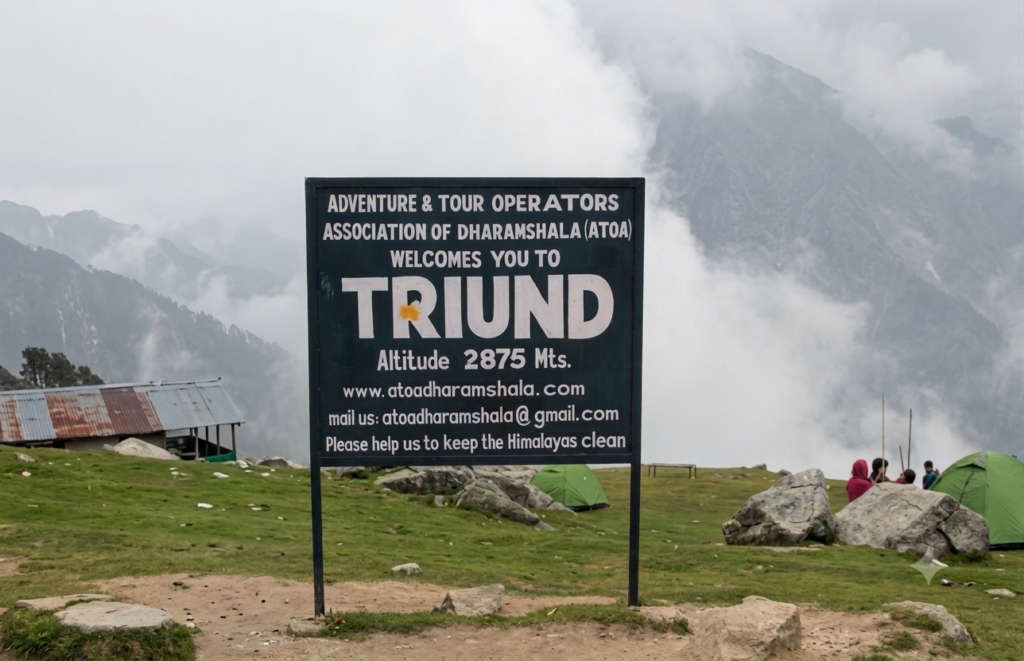
Triund sits at roughly 2,850 m (9,350 ft), with about 1,000 m of climb from the Gallu Devi road head. That height is what makes the views work: you are high enough to be level with the lower Dhauladhar snow, but not so high that altitude is a real worry for a fit walker. The grade is easy to moderate. The first 5 km are gradual and forgiving, then the 22 curves turn steep for the last stretch to the ridge.
Who can do it? Fit beginners, families with older children, and anyone who walks regularly will manage it with breaks. You do not need technical skill or prior trekking experience in the dry months. What you do need is steady legs for the switchbacks and enough water. In winter, from roughly January to March, snow and ice on the upper section make it harder and you should carry traction and, ideally, go with someone who knows the trail. It is not a dangerous trek in the usual season, but the monsoon makes the path slippery and is best avoided.
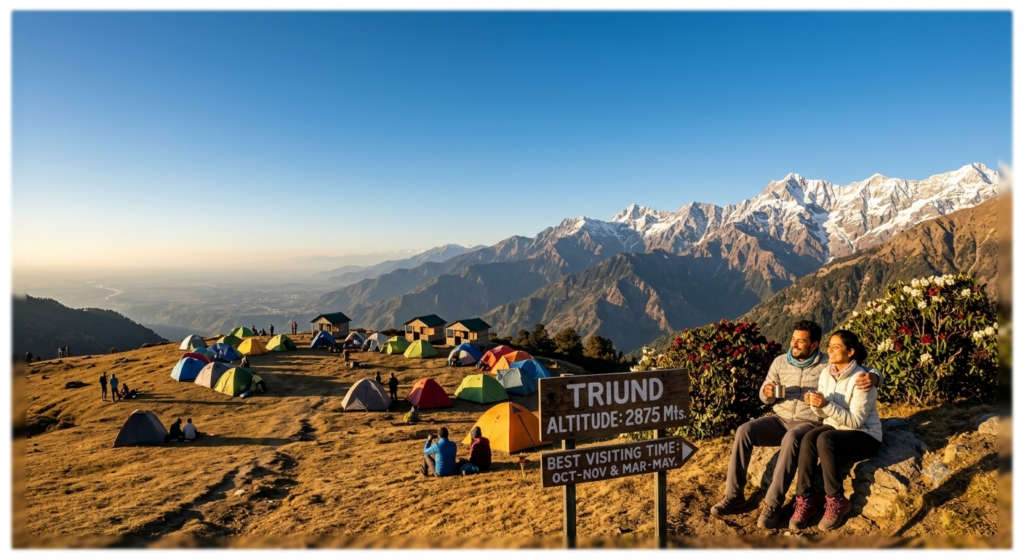
The best time to do the Triund trek is March to June, when the weather is mild and the rhododendrons are out, and again September to November after the monsoon, when the air is clear and crowds thin. If you specifically want snow, January to March puts white on the upper ridge, though the climb is tougher and colder. July and August bring the monsoon, when the trail is slippery and views are lost in cloud, so most guides advise against it. The ridge is cold and exposed after dark year round, so carry a warm layer even in summer.
| Season | Months | Conditions | Good for |
| Spring / summer | Mar-Jun | Mild days, clear views, rhododendron | First-timers, families, camping |
| Monsoon | Jul-Aug | Slippery trail, clouded views | Best avoided |
| Post-monsoon | Sep-Nov | Crisp, clear, fewer people | Best all-round window |
| Winter | Dec-Mar | Snow on the upper ridge, cold nights | Snow trekkers with gear |
On the question searchers ask most often in 2026, is the Triund trek open now: yes, the day trek is open through most of the year, with the monsoon the only stretch worth planning around. The overnight rules have changed, though, and it is worth knowing before you go. To protect the ridge, pitching your own tent on the open grassland at the top has been restricted. Overnight stays are now at the registered campsites run by licensed operators and at the Forest Department rest house, rather than wild camping wherever you like. A small forest entry fee, around Rs 50 per person, is collected at the Gallu Devi check post, and there is no separate permit needed for Indian trekkers on the standard day route. Confirm the current camping arrangement and fee with your operator when you book, since the forest office reviews these each season.
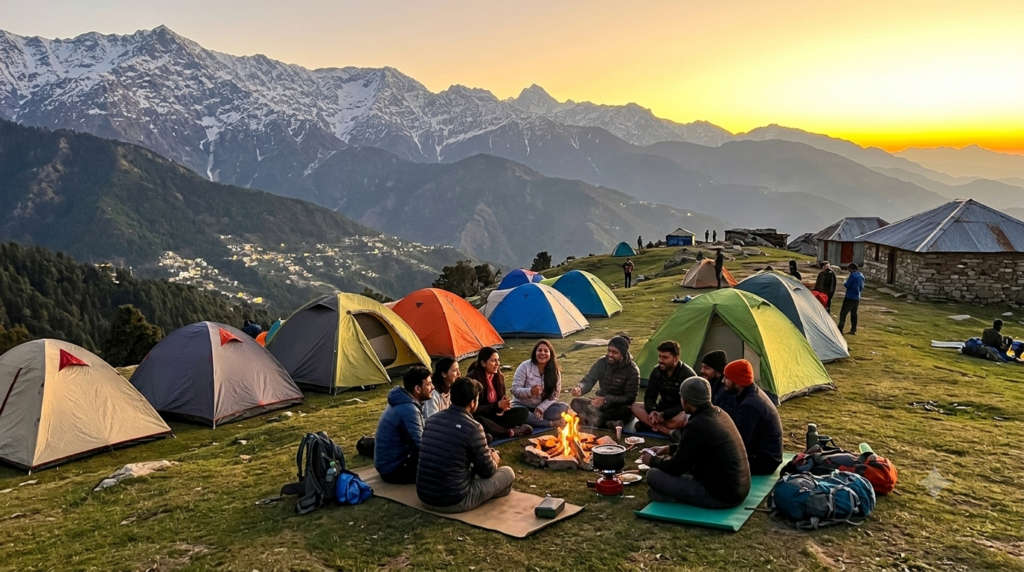
Can the Triund trek be done in one day? Yes. At about 9 km one way and four to five hours up, a reasonably fit walker can start early from McLeod Ganj, reach the ridge by midday, and be back down by evening. If that is your plan, leave by 7 am, carry lunch and water, and turn around by mid-afternoon so you are off the steep section before dark.
That said, the overnight version is the one most people remember. Reaching the ridge for sunset, watching the Dhauladhar turn gold, sleeping under a sky thick with stars and waking to sunrise over the peaks is the whole reason the trek has the following it does. If you have the time, keep two days for it and stay at one of the registered campsites. Book the camp in advance in peak season, because the licensed sites fill fast on weekends.
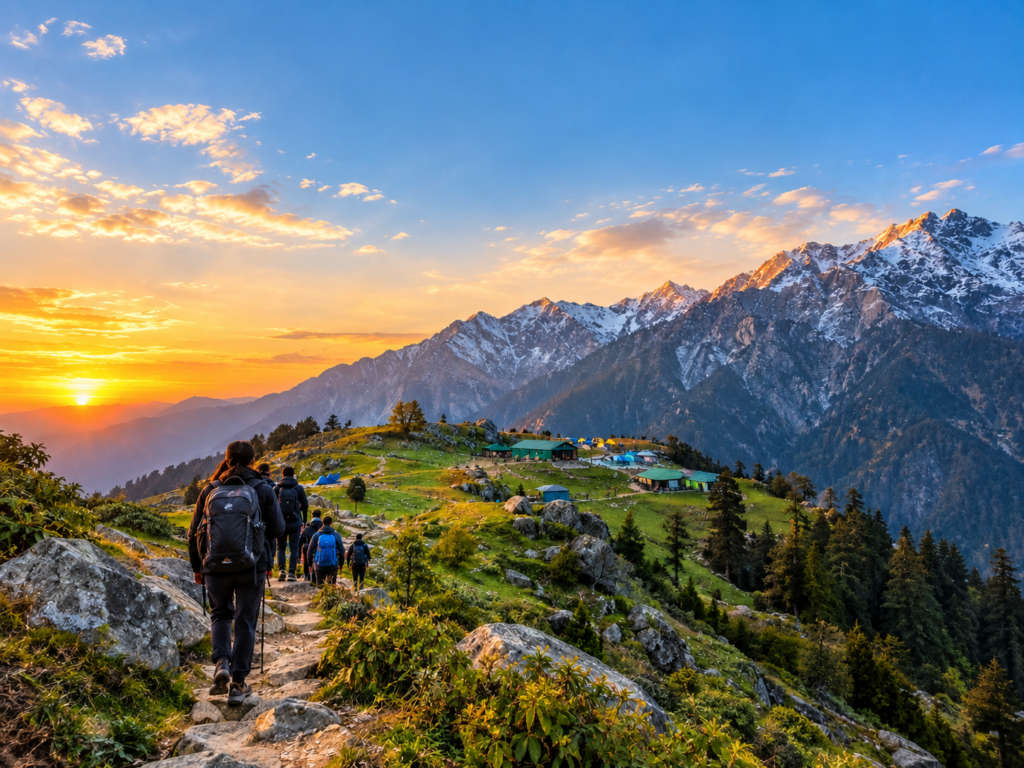
A few ground-truths save you trouble. Mobile network is patchy above Gallu Devi. You will get signal in McLeod Ganj and Dharamkot and the odd bar near the ridge on some networks, but plan to be largely offline once you start climbing, so download offline maps and tell someone your plan. Basic washrooms exist at the cafes and near the campsites at the top, but they are simple, so carry your own tissue and a small bag to pack out any litter.
For food and water, the Magic View Cafe roughly halfway up and Snowline Cafe near the top sell tea, Maggi, water and simple meals in season, but do not rely on them being open off-season or late in the day. Carry at least two litres of water per person and refill where you can. There is no ATM past McLeod Ganj, so draw cash in town for the fee, the cafes and the camp. Wear proper trekking shoes with grip, not sneakers, especially if there is any snow or damp on the switchbacks.
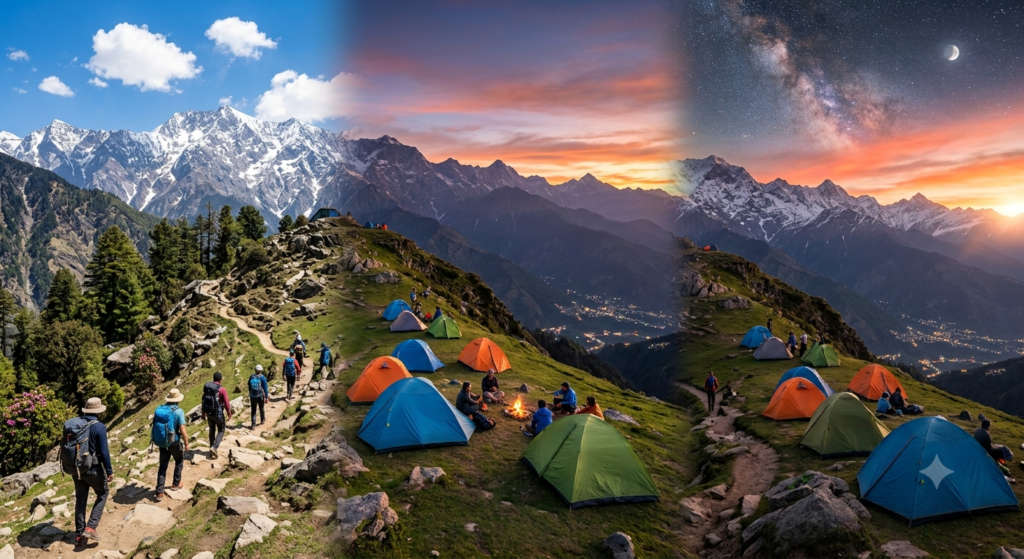
Day 1: McLeod Ganj to the Triund ridge
Start with an early breakfast in McLeod Ganj and drive the short 3 km to the Gallu Devi Temple road head. Register at the forest check post, then set off through the oak and rhododendron forest that shades the first couple of kilometres. Reach the Magic View Cafe around the halfway mark for tea and a rest, refill your water, then take on the 22 curves, the steep switchbacks that carry you up to the ridge. Aim to reach the top by mid to late afternoon so you can settle into your camp, watch the sun drop behind the Dhauladhar, and have dinner around the fire as the valley lights come on far below. The night sky here, well away from town glow, is the highlight for many trekkers.
Day 2: Sunrise, Laka Glacier viewpoint and the descent
Wake for sunrise over the snow peaks, which is worth the cold start. After breakfast, strong walkers can take the short onward climb toward the Laka Glacier viewpoint above Triund for a closer look at the Dhauladhar ice before turning back. Otherwise, begin the descent. Come down the way you climbed to Gallu Devi, or take the alternative route through Bhagsu Nag so you can finish at the Bhagsu waterfall, a good spot to cool off. You will be back in McLeod Ganj by early afternoon with time for a proper lunch. From here it is easy to add a night in McLeod Ganj and Dharamshala before heading on.
Triund is the rare Himalayan trek that a first-timer can finish in a day yet still feel they earned. Nine kilometres up from McLeod Ganj, a ridge at 2,850 m, the Dhauladhar close enough to touch and a night sky most city trekkers never see. Go in spring or after the monsoon, start early from Gallu Devi, and keep two days if you can spare them for the camp. When you would rather have the stay, the guide and the campsite arranged for you, browse our Triund trek packages or plan the wider trip with our Himachal tour packages.
The Triund trek is about 9 km one way from McLeod Ganj, or roughly 7 km if you start from the Gallu Devi Temple road head. Most people take four to five hours to climb and three to four hours to come down. It is short enough to do as a single day trek, though many keep two days so they can camp on the ridge.
The Triund ridge sits at about 2,850 m, which is 9,350 ft, on the Dhauladhar range above Dharamshala. You gain roughly 1,000 m from the Gallu Devi road head. That altitude gives you clear views of the Kangra valley below and the Dhauladhar snow peaks above, without the acclimatisation worries of a higher Himalayan trek.
Yes. At around 9 km one way and four to five hours up, a fit walker can start early from McLeod Ganj, reach the ridge by midday and return by evening. Leave by 7 am and turn back by mid-afternoon. That said, staying overnight at a registered camp for the sunset and sunrise is what most trekkers remember, so keep two days if you can.
It is graded easy to moderate. The first 5 km are gradual and manageable for fit beginners and families with older children. The last stretch, the 22 curves, is a set of steep switchbacks where the climb is felt. No technical skill is needed in the dry months. In winter, snow and ice on the upper section make it harder, so carry traction and go with someone who knows the route.
Indian trekkers do not need a special permit for the standard day route. A small forest entry fee, around Rs 100 per person, is collected at the Gallu Devi Temple check post, where you also register before starting. Amounts are reviewed by the forest office each season, so confirm the current fee with your operator or at the counter.
Camping is allowed, but the rules have tightened. To protect the ridge, pitching your own tent on the open grassland at the top has been restricted. Overnight stays are now at the registered campsites run by licensed operators and at the Forest Department rest house. Book a camp in advance in peak season, and check the current arrangement with your operator when you reserve.
The Triund day trek is open through most of the year. The monsoon, roughly July and August, is the main stretch to avoid because the trail turns slippery and the views are lost in cloud. In deep winter, snow can make the upper section tougher but the trek is still done with the right gear. Overnight camping follows the registered-site rules noted above.
March to June and September to November are the best windows, with mild weather and clear views. September to November after the monsoon is the quietest and clearest. If you want snow on the ridge, aim for January to March, though the climb is colder and harder. Avoid the July to August monsoon for the slippery trail and clouded views.
Mobile signal is patchy once you climb past Gallu Devi. You get coverage in McLeod Ganj and Dharamkot and the occasional bar near the ridge, so download offline maps and plan to be largely offline. Basic washrooms exist at the cafes and near the top campsites, but they are simple, so carry tissue and pack out your litter.
In the dry season the main trail is well marked and busy, so fit, experienced walkers often do it solo. It is a popular route and is considered safe for solo travellers and women, with plenty of other trekkers around. A local guide is a good idea in winter snow, if you are new to trekking, or if you plan to continue beyond Triund toward Laka Glacier or the Indrahar Pass.
Yes. The upper ridge holds snow from about December to March, and trekking in it is popular for the white Dhauladhar backdrop. Expect a colder, harder climb, carry traction for your shoes and warm layers, and start early. Outside those months the trail is clear, with the Dhauladhar snow visible above you rather than underfoot.
Real reviews from real travelers who booked with us.
View All Reviews