4D / 3N
17% OFF
4D / 3N
17% OFF
Manali-Kasol Tour Package by Cab for Himachal (4D/3N) - At A Glance
- Hotel
- Meals
- Sightseeing
- Entry Tickets
- Cab Transfer
₹12,688
₹10,500 /pp
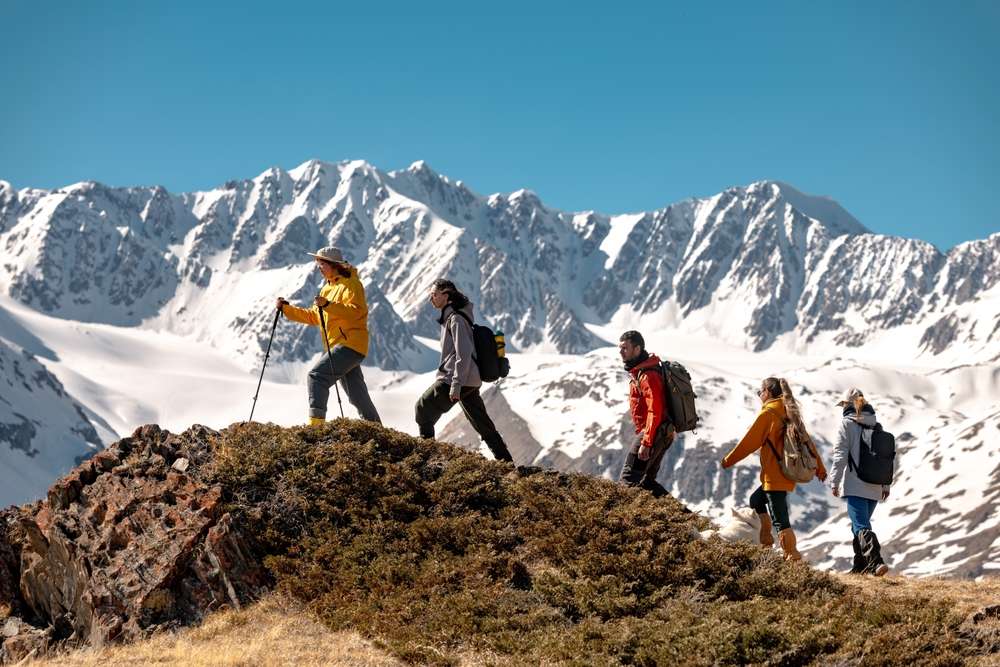


The best trekking places in Himachal run from a two-hour climb to a ridge above Dharamshala to a ten-day crossing into Spiti, and most of them open between May and October. Trekking in Himachal works because the state stacks three mountain worlds into one compact map, so a first-timer and a seasoned trekker can find the right trail in the same week. This guide ranks 20 of them by difficulty and by region, so you can match a trek to your fitness, the days you have in hand and the part of the state you are heading to. Every altitude, duration and best-month figure sits in one table up top, then each trek gets the detail that decides whether it suits you.
Key takeaways
trekking places in Himachal
Best Time
March - June
Select Package Type

3 Days & 2 Nights
₹9,043 /@pp
GET FREE QUOTE

.jpg?tr=w-600,h-300)

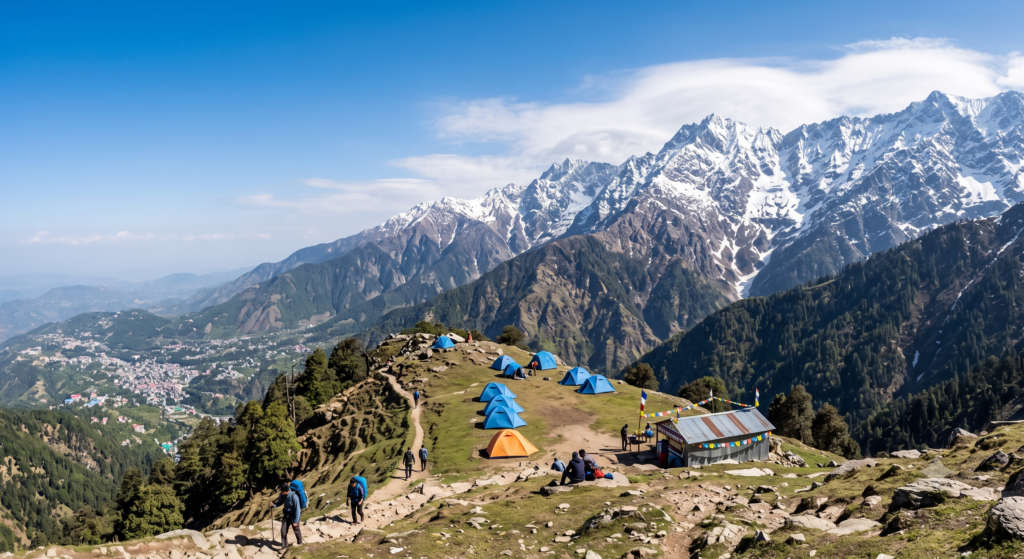
Skim the table first. Each of the 20 treks is grouped by difficulty, with its top altitude, how many days to keep aside, where it starts and the best months to walk it. Full detail on every trek follows below.
| Trek | Difficulty | Max altitude | Days | Base / region | Best months |
| Triund | Easy | 2,850 m (9,350 ft) | 2 | McLeod Ganj / Dharamshala | Mar-Jun, Sep-Nov |
| Prashar Lake | Easy | 2,730 m (8,960 ft) | 1-2 | Baggi village, Mandi | Mar-Jun, Sep-Nov |
| Kheerganga | Easy | 2,960 m (9,711 ft) | 1-2 | Barshaini / Kasol | Apr-Jun, Sep-Nov |
| Dainkund | Easy | 2,755 m (9,000 ft) | Half day | Dalhousie / Chamba | Mar-Jun, Sep-Nov |
| Bijli Mahadev | Easy | 2,460 m (8,070 ft) | Half day | Chansari, Kullu | Mar-Nov |
| Kareri Lake | Moderate | 2,934 m (9,600 ft) | 3 | Kareri village, Dharamshala | May-Jun, Sep-Oct |
| Beas Kund | Moderate | 3,700 m (12,139 ft) | 2-3 | Solang, Manali | May-Oct |
| Bhrigu Lake | Moderate | 4,300 m (14,100 ft) | 3 | Gulaba, Manali | May-Jun, Sep-Oct |
| Hampta Pass | Moderate | 4,270 m (14,010 ft) | 5 | Jobra, Manali | Jun-Sep |
| Chandrakhani Pass | Moderate | 3,660 m (12,000 ft) | 3 | Naggar (Rumsu), Kullu | May-Oct |
| Sar Pass | Moderate | 4,220 m (13,850 ft) | 4-5 | Kasol (Grahan) | May-Jun, Sep-Oct |
| Malana Village | Moderate | 2,650 m (village) | 1-2 | Jari, Parvati Valley | Mar-Jun, Sep-Nov |
| Chandratal Lake | Moderate | 4,300 m (14,100 ft) | 2-4 | Batal / Kunzum, Spiti | Jun-Sep |
| Indrahar Pass | Difficult | 4,342 m (14,245 ft) | 4-5 | McLeod Ganj, Dharamshala | May-Jun, Sep-Oct |
| Deo Tibba Base Camp | Difficult | 4,480 m (14,700 ft) | 5-6 | Jagatsukh, Manali | Jun-Oct |
| Buran Ghati | Difficult | 4,590 m (15,059 ft) | 7-8 | Janglik, Rohru (Shimla) | Jun-Oct |
| Bhaba (Pin Bhaba) Pass | Difficult | 4,915 m (16,105 ft) | 7-8 | Kafnu, Kinnaur to Mud, Spiti | Jul-Sep |
| Friendship Peak | Difficult | 5,289 m (17,353 ft) | 8-9 | Solang Valley, Manali | May-Jun, Sep-Oct |
| Pin Parvati Pass | Difficult | 5,319 m (17,450 ft) | 8-10 | Barshaini to Spiti | Jul-Sep |
| Kanamo Peak | Difficult | 5,960 m (19,553 ft) | 6-7 | Kibber, Spiti | Jun-Sep |
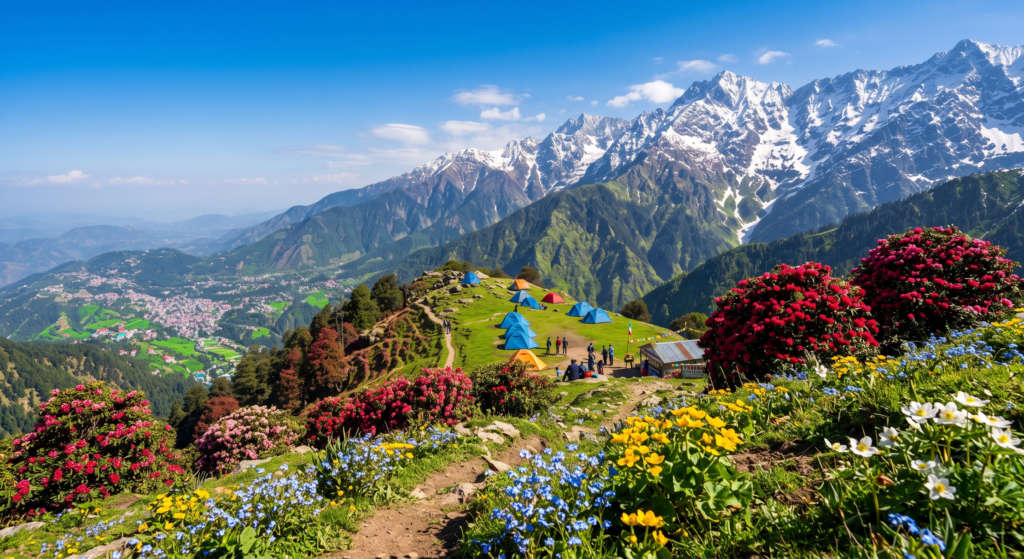
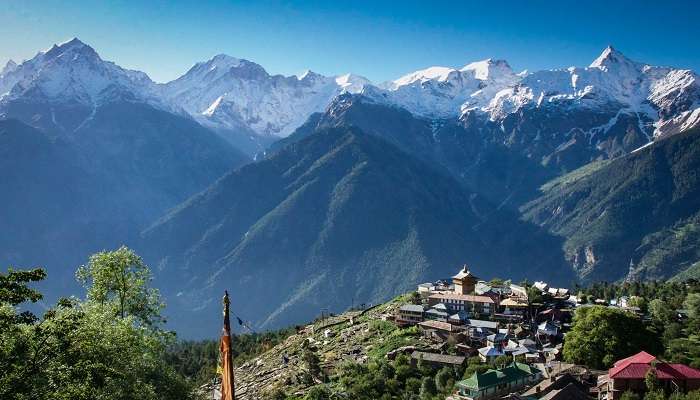
Himachal gives you three mountain worlds in one state. The Dhauladhar rises straight off the Kangra plains, so you gain height fast and stand above the clouds within a day. Behind it, the Pir Panjal holds the classic meadow-and-pass treks around Manali. Cross into Lahaul, Spiti and Kinnaur and the green stops abruptly at a cold high-altitude desert of ochre cliffs and whitewashed monasteries. Few regions in India let you walk between such different landscapes on trails this well established.
Season decides which trails are open and which are still under snow. The low walks such as Triund, Prashar and Dainkund are good from March, while the high passes only clear from June. Monsoon rain in July and August makes forest trails slippery and closes in the views, though the rain-shadow crossings toward Spiti stay drier. For firm ground and the sharpest peaks, aim for September and October.
| Season | Months | Temperature | What it suits |
| Spring | March to June | 10 to 25 C | Easy and moderate treks, meadows in bloom, best all-round window |
| Monsoon | July to mid-September | 15 to 22 C | Experienced trekkers only; slippery trails, landslide risk, drier toward Spiti |
| Autumn | Mid-September to November | 10 to 20 C | Clearest views and long treks; cold nights, pack layers |
| Winter | December to February | Below 0 to 10 C | Snow treks for prepared, guided groups; most high passes closed |
For the wider picture on seasons across the state, see our guide to the best time to visit Himachal.
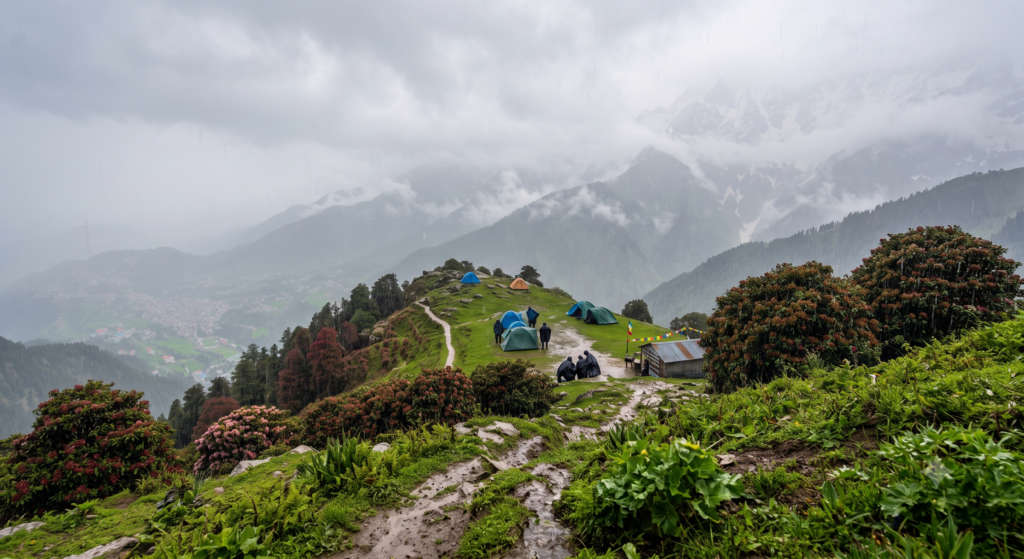
If your dates are fixed, work backwards from the season to a trek that is actually open and at its best. Here is the quick version of the table above, read by month.
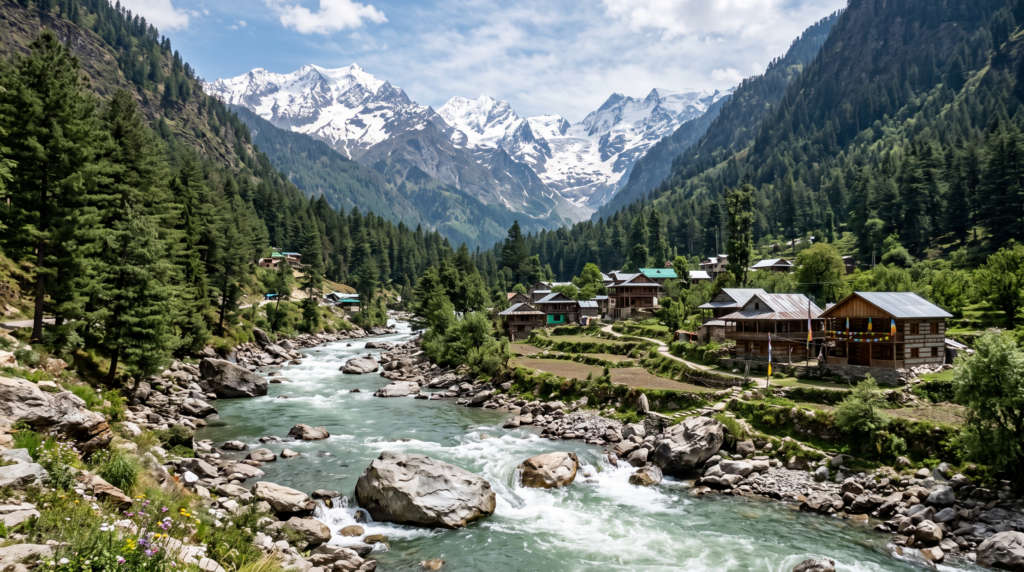
Which trek suits you often comes down to which corner of Himachal you can reach. Here is how the best trekking places split across the state, so you can build a trip around one base.
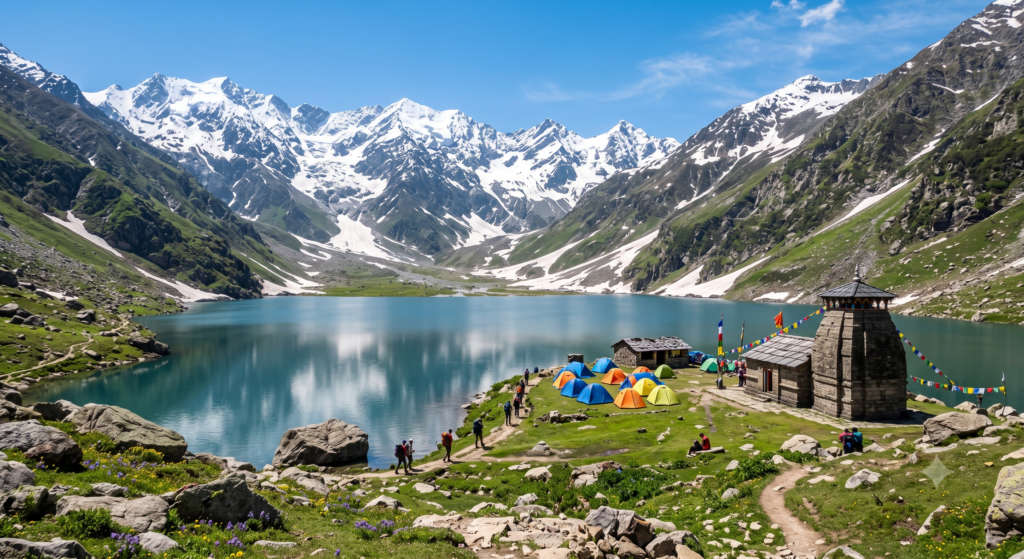
Short on time or new to the hills? Several of these trails need only a day or a weekend, sit under 3,000 m and start close to a road-head. They are the right first taste of trekking in Himachal before you commit to a high pass. If you have two or three days, you can string a couple together.
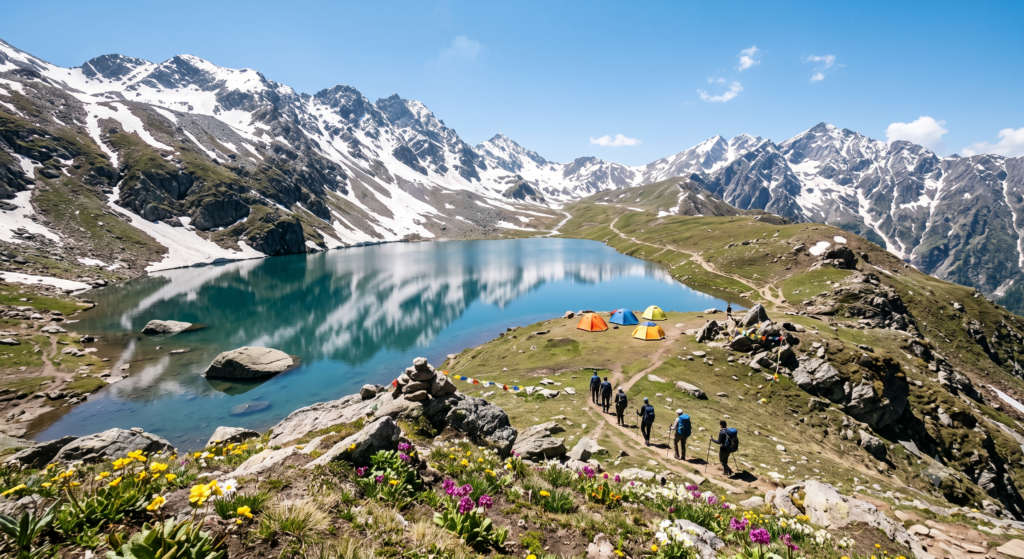
Some of the state’s best-loved trails end at water rather than a pass. If a high alpine lake is the goal, these are the ones to plan around, from an easy weekend to a full high-altitude camp.
Beas Kund near Manali belongs here too, a glacial pool at 3,700 m where the Beas river is born rather than a still lake, and an easy first high-camp along the way.
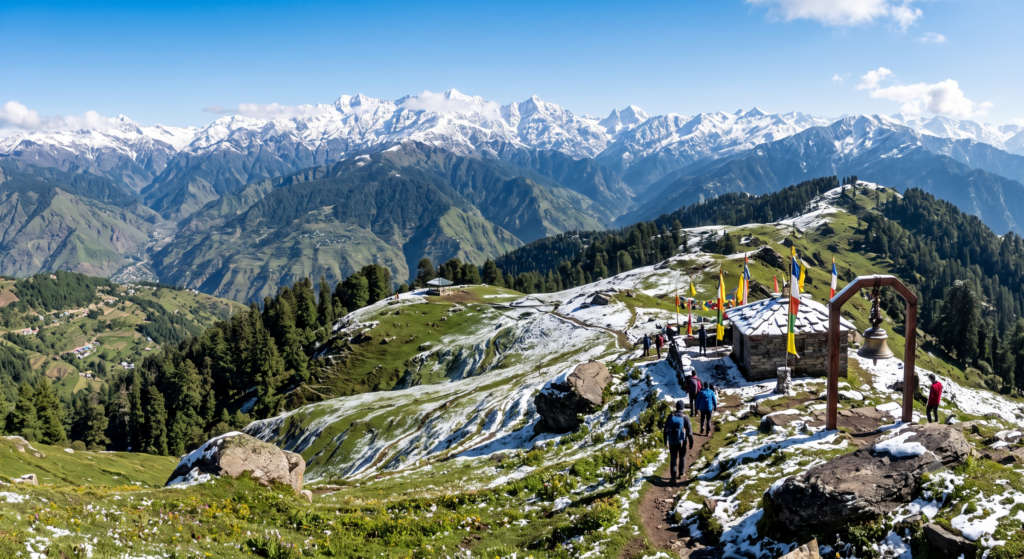
Easy treks for beginners
These five trails stay under 3,000 m and ask for little beyond a decent pair of shoes and a normal fitness base. Each starts within an hour or two of a hill-station road-head, and all make a good first trek.
Triund
Easy | 2,850 m (9,350 ft) | 2 days | from McLeod Ganj / Dharamkot
Triund is the most loved short trek in Himachal, a steady climb from Dharamkot above McLeod Ganj to a grassy ridge that looks straight up at the Dhauladhar wall. Most people walk up in four to five hours, camp or use a hut for the night, and come down the next morning. The trail is well trodden and safe in season, which makes it a favourite first Himalayan trek. Go on a clear evening and the sunset on the Dhauladhar behind you is the reason everyone remembers this walk.
Prashar Lake
Easy | 2,730 m (8,960 ft) | 1-2 days | from Baggi village, Mandi
Prashar pairs a small mountain lake with a three-tiered pagoda temple said to be centuries old, all at a gentle height above Mandi. The trail from Baggi village is short and open enough for first-timers, and the ridge above the lake gives a wide sweep of the Dhauladhar and Pir Panjal. Most trekkers do it over a weekend. In deep winter the lake freezes and the meadow fills with snow, a harder and colder version for those who come prepared.
Kheerganga
Easy | 2,960 m (9,711 ft) | 1-2 days | from Barshaini / Kasol
Kheerganga is the classic Parvati Valley walk, roughly 12 km from Barshaini through pine forest and past waterfalls, finishing at a hot spring at 2,960 m where trekkers soak off the climb. Reach the Kasol area the night before, start from Barshaini in the morning and give yourself five to six hours at an easy pace. You can turn it around in a day, but a night at the top under a clear sky is worth the extra effort.
Dainkund
Easy | 2,755 m (9,000 ft) | half day | from Dalhousie
Dainkund is the highest point around Dalhousie and the easiest trek in the Chamba region, a short climb to a breezy ridge with a small temple at the top. The walk from the road takes about an hour, and the reward is a wide view over the surrounding valleys and, on a clear day, distant snow peaks. It suits families and anyone based in Dalhousie who wants a first taste of trekking without a full day out.
Bijli Mahadev
Easy | 2,460 m (8,070 ft) | half day | from Chansari, Kullu
A short but steep climb from Chansari village leads to the Bijli Mahadev temple, set on a ridge that looks down both the Kullu and Parvati valleys. The temple is known for a tall staff that locals say draws lightning, and the 360-degree view from the top is one of the best you will get for so little effort. Reach the road-head from Kullu, then give yourself about two hours up. It suits families and anyone with only a morning to spare.
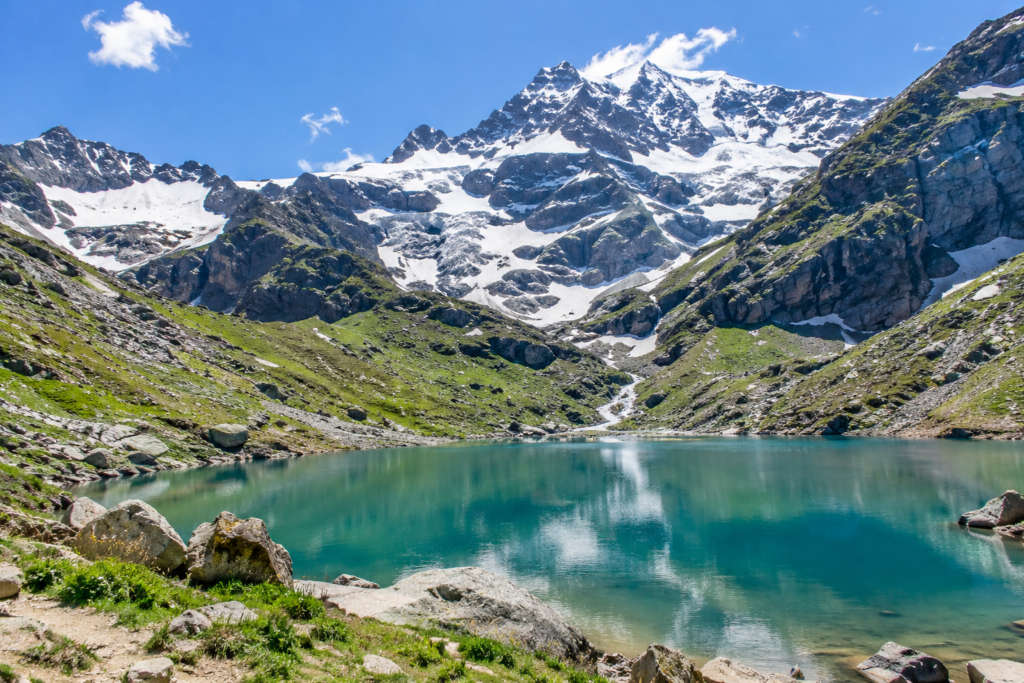
Step up to real altitude and longer days. These eight cross 3,600 to 4,300 m, involve some steep sections and a night or more in a tent, and reward the effort with meadows, alpine lakes and your first mountain passes. A few weeks of stair and hill training beforehand makes a big difference.
Kareri Lake
Moderate | 2,934 m (9,600 ft) | 3 days | from Kareri village, Dharamshala
Kareri Lake is a shallow, clear glacial lake below the Dhauladhar, fed by snowmelt from the ridge above and drained by a stream you follow most of the way up. From Kareri village the trail climbs through oak and rhododendron forest to open meadows and the lakeshore camp. Three days is comfortable, and the water is at its clearest in early summer and again after the monsoon. It is a natural step up from Triund for trekkers based around Dharamshala.
Beas Kund
Moderate | 3,700 m (12,139 ft) | 2-3 days | from Solang, Manali
This is where the Beas river is born, a glacial pool at 3,700 m below the Hanuman Tibba and Friendship peaks. From Solang near Manali the trek runs two to three days through the Dhundi and Bakarthach meadows. The gradient is kind for the altitude, which makes Beas Kund a popular first high-camp trek and a common warm-up before bigger objectives. May to October is the safe window once the snow has cleared.
Bhrigu Lake
Moderate | 4,300 m (14,100 ft) | 3 days | from Gulaba, Manali
Bhrigu trades forest for open alpine meadow fast, which is its charm. From Gulaba you climb to a high lake at around 4,300 m in three days, often walking on grass right up to the water. May and June bring wildflowers, September gives firm ground and clear views. The final push is steep and the altitude is real, so it earns its moderate grade despite the short duration. It is one of the quickest ways to reach true alpine country near Manali.
Hampta Pass
Moderate | 4,270 m (14,010 ft) | 5 days | from Jobra, Manali
Hampta Pass is the trek most people mean when they talk about crossing the mountains near Manali. In about five days you walk from the green, forested Kullu side over the pass and down into the stark brown of Lahaul, a change of scenery so sharp it feels like two countries. Many trekkers add a day trip to Chandratal at the end. The trail is well established and guided groups run through the summer. June to September is the window, once the pass is clear of snow.
Chandrakhani Pass
Moderate | 3,660 m (12,000 ft) | 3 days | from Naggar (Rumsu)
From Naggar through Rumsu, this three-day trek climbs to a 3,660 m pass with Deo Tibba and the Pir Panjal filling the skyline, then can drop down toward the old village of Malana. It is a gentler high trek than its altitude suggests, through thick forest and grazing meadows, and works well as a second or third trek once you have the basics. May to October is the season, with clear autumn skies the reward for a late trip.
Sar Pass
Moderate | 4,220 m (13,850 ft) | 4-5 days | from Kasol (Grahan)
Sar Pass is the popular Parvati Valley crossing that starts near Kasol and climbs through the old village of Grahan to a snow-covered pass at 4,220 m, famous for a short slide down the far side in early season. Over four to five days you move from pine forest to open snowfields, and the trek is run heavily by budget operators, so it stays social and well supported. May to June and September to October are the windows; the crossing day is long and needs a reasonable fitness base.
Malana Village
Moderate | around 2,650 m (village) | 1-2 days | from Jari
The short trek to Malana climbs from the road-head near Jari to one of the oldest and most self-contained villages in the region, known for its own customs and strict rules for visitors. Respect the local etiquette: do not touch the temples or many of the walls, as the village asks. The walk itself is a steady forest climb of a few hours, and the reward is a look at a way of life that has stayed apart for generations. Combine it with a night in nearby Kasol.
Chandratal Lake
Moderate | 4,300 m (14,100 ft) | 2-4 days | from Batal / Kunzum, Spiti
Chandratal, the moon-shaped lake, sits on the Spiti side of the Kunzum range at about 4,300 m. You can reach a car park within a short walk of the shore once the road opens, or arrive on foot at the tail of a Hampta Pass crossing, which is the more rewarding way to see it. Camping is restricted to the designated site a couple of kilometres back to protect the lake. The road and trail are only open from around June to September; outside that the whole area is snowbound.
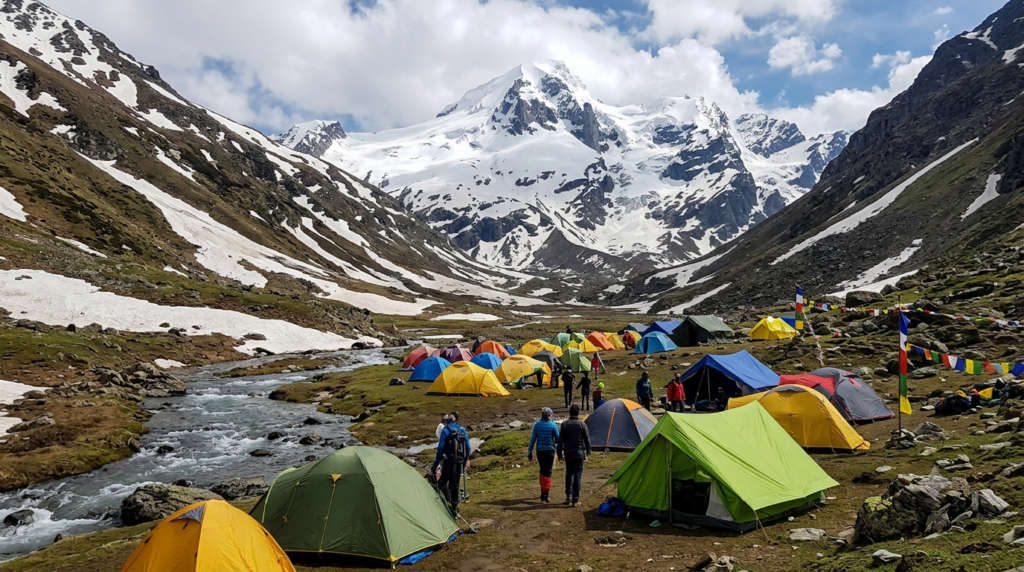
These seven are for trekkers with prior high-altitude days, real fitness and, on the big passes and peaks, a guided team. They cross 4,300 to 5,960 m, run for the better part of a week or more, and involve glacier travel, exposed passes and serious acclimatisation. Do not make one of these your first Himalayan trek.
Indrahar Pass
Difficult | 4,342 m (14,245 ft) | 4-5 days | from McLeod Ganj
The high point of the Dhauladhar above McLeod Ganj, Indrahar crosses a 4,342 m pass in four to five days, past the Lahesh caves and a stiff final climb to a ridge with Kangra on one side and Chamba on the other. Loose rock and a steep summit section push it into difficult territory. Clear early-summer or post-monsoon windows are essential, since weather turns fast on the ridge. It is the natural graduation trek for anyone who has worn out Triund.
Deo Tibba Base Camp
Difficult | 4,480 m (14,700 ft) | 5-6 days | from Jagatsukh, Manali
This five to six day trek from Jagatsukh near Manali climbs through the Chhika and Seri meadows to a base camp near 4,480 m under the Deo Tibba peak, which itself rises to 6,001 m. The reward is a natural amphitheatre of glaciers and seasonal lakes below the summit. Steady altitude gain and remote camps make it a proper high trek, best kept for those with a few Himalayan treks already behind them. June to October is the season.
Buran Ghati
Difficult | 4,590 m (15,059 ft) | 7-8 days | from Janglik, Rohru (Shimla)
Buran Ghati is the crossing that makes fit trekkers feel like mountaineers for a day. Starting from Janglik village near Rohru in the Pabbar Valley, the route walks through the Dayara and Litham meadows and the Chandranahan lakes before the pass itself, where the descent drops down a near-vertical ice wall that guided teams handle on a fixed rope and rappel. Seven to eight days of forest, meadow and snow make it one of the most varied treks in the state, and the rope section keeps it firmly in expert territory. June to October is the window, once the snow has settled enough for the wall to be safe.
Bhaba (Pin Bhaba) Pass
Difficult | 4,915 m (16,105 ft) | 7-8 days | from Kafnu, Kinnaur to Mud, Spiti
A true Himalayan crossover, the Pin Bhaba trek starts in the green Bhaba Valley at Kafnu in Kinnaur and finishes in the cold desert of Pin Valley at Mud in Spiti, over a pass at 4,915 m. It runs seven to eight days, and the crossing day is long and demanding with steep ascents, loose rock and likely snow. Walking from forest to high desert in one expedition is what makes it special, and difficult. July to September is the only safe window.
Friendship Peak
Difficult | 5,289 m (17,353 ft) | 8-9 days | from Solang Valley
Friendship Peak is the trekking peak that lets fit trekkers touch a real summit near Manali without full mountaineering experience, though the top section involves snow, a rope and an ice axe. From Solang the route climbs through Bakarthach and a series of high camps before a pre-dawn summit push to 5,289 m. It sits at the boundary between hard trekking and basic mountaineering, so go with a qualified guided team. May to June and September to October are the windows.
Pin Parvati Pass
Difficult | 5,319 m (17,450 ft) | 8-10 days | from Barshaini to Spiti
One of the hardest treks on this list, Pin Parvati is an eight to ten day crossing from the Parvati Valley near Barshaini over a 5,319 m pass into Spiti. Over the route you pass Kheerganga, cross glaciers and camp at Mantalai before the steep, exposed climb to the pass itself. Long remote days, glacier sections, river crossings and a committing pass make it strictly for experienced, well-acclimatised trekkers on a guided team. Get it right and you walk clean across the main Himalayan divide, from lush valley to high desert, with no bail-out road for days.
Kanamo Peak
Difficult | 5,960 m (19,553 ft) | 6-7 days | from Kibber, Spiti
Kanamo is the highest point on this list, a non-technical trekking peak above Kibber village in Spiti that tops out just short of 6,000 m. There is no glacier travel or roped climbing, which is what puts a peak this high within reach of a fit trekker, but the thin air and the long summit day make it seriously demanding, and the base village already sits above 4,200 m. From Kibber the route sets a high camp before a pre-dawn push to the top, where the whole brown sweep of Spiti and the Parvati and Kinnaur ranges open up. Acclimatise properly in Spiti first, and go with a guided team. June to September is the window.
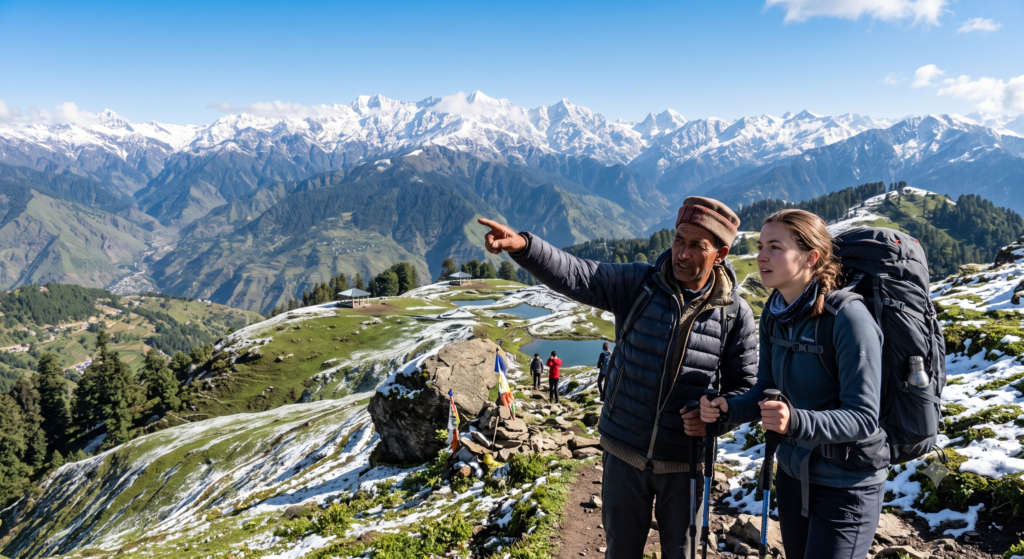
Most Himachal treks follow the same planning path whether you pick a half-day ridge walk or a high pass. Work through these six steps before you go.
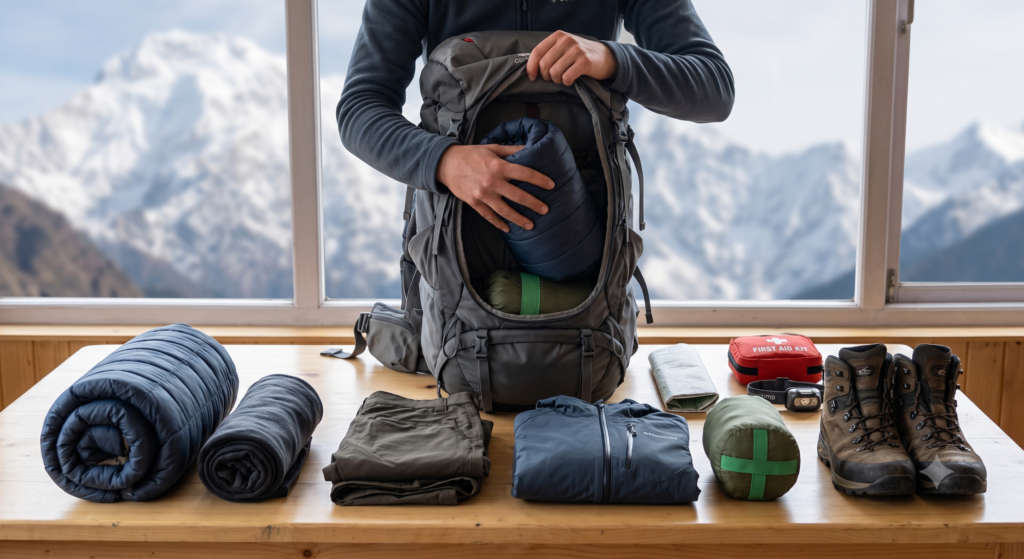
The kit list barely changes between an easy ridge walk and a high pass; the harder treks just need more of the warm layers and a stricter eye on weight. Build from this, then add trek-specific gear your operator asks for.
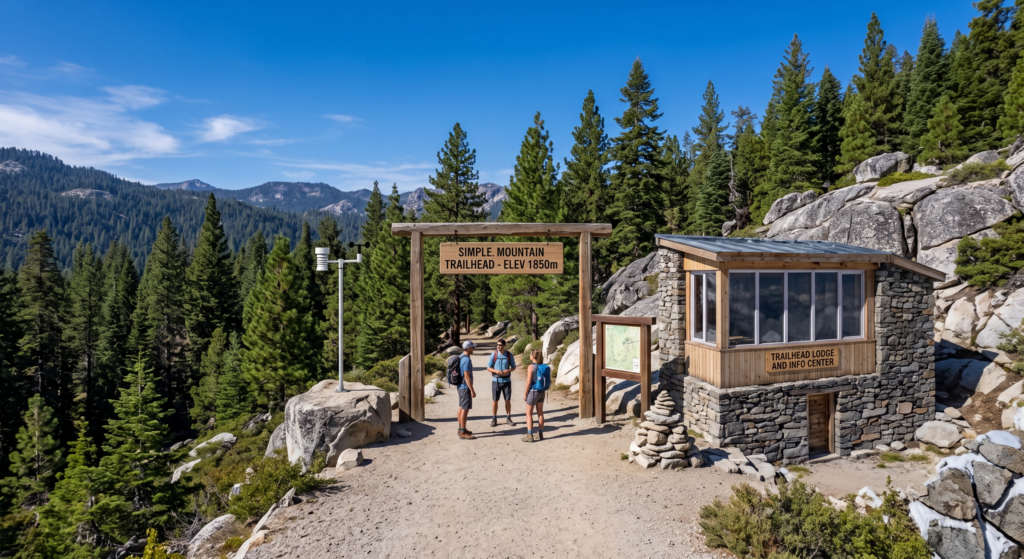
Himachal has three main gateways. For the Dhauladhar treks such as Triund, Kareri and Indrahar, fly or drive to Dharamshala and its Gaggal airport. For the Manali and Kullu treks (Beas Kund, Bhrigu, Hampta, Deo Tibba, Friendship Peak) and the Parvati Valley walks from Kasol (Kheerganga, Sar Pass, Malana, Pin Parvati), the nearest airport is Kullu-Bhuntar, with overnight Volvo buses from Delhi and Chandigarh. For the Spiti and Kinnaur crossings such as Pin Bhaba and Kanamo Peak, and for Buran Ghati in the Pabbar Valley, most trekkers approach through Shimla or over the Manali side once the passes open.
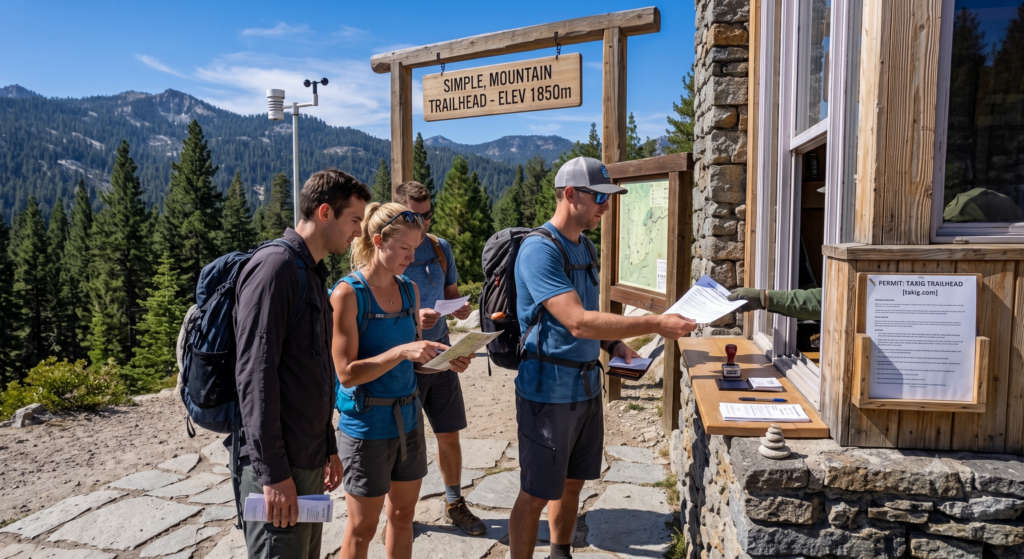
Fitness scales with the grade. For easy treks, a habit of brisk walking is enough; for moderate treks, train with stairs and hill walks for a few weeks; for the difficult passes and Kanamo Peak, you want a genuine cardio base, prior high-altitude nights and a slow acclimatisation plan, because most trouble above 4,000 m comes from climbing too fast rather than from the terrain. Domestic trekkers need no special permit for most trails, but the Rohtang axis, the protected area around Chandratal and some forest and wildlife stretches carry their own rules and small fees, so confirm the current position with your operator or the HP Forest Department before you set off. On the trail, the basics save lives: check the forecast, never trek a high pass alone, acclimatise before gaining serious height, stay hydrated, watch for signs of altitude sickness and turn back if the weather closes in.
Pick the trail that fits your fitness and your calendar, not the one with the biggest altitude number. A beginner who nails Triund or Prashar Lake in good weather has a far better trip than one who over-reaches on a high pass. Match the season to the region, train for the grade and give altitude the respect it demands. If you would rather warm up on a single valley first, our guides to trekking in Manali, the Triund trek, the Hampta Pass trek and the Kheerganga trek go deep on single routes. When you are ready to walk, our Himachal trekking packages cover guides, permits and gear for most of these routes, and the Himachal travel guide helps with everything around the trek itself.
Triund above McLeod Ganj and Prashar Lake near Mandi are the two easiest starts, both under 3,000 m and doable on a weekend. Kheerganga in the Parvati Valley, Dainkund above Dalhousie and the half-day climb to Bijli Mahadev near Kullu are the other gentle first treks. All five need only basic fitness and a decent pair of shoes, which makes them the right introduction before you attempt a high pass.
It depends on your level. Triund is the best easy trek, Hampta Pass is the standout moderate crossing near Manali, and Pin Parvati Pass is the finest expedition-grade route for experienced trekkers. If you want one trek that captures why people come here, Hampta Pass is the popular pick, since it walks you from green Kullu meadows over a pass and down into the desert of Lahaul in about five days.
Pin Parvati Pass is the hardest crossing, an eight to ten day route over a 5,319 m pass from the Parvati Valley into Spiti, with glaciers, river crossings and long remote days. Kanamo Peak (5,960 m) is the highest point on this list, and the ice-wall descent on Buran Ghati (4,590 m) and the Pin Bhaba crossing (4,915 m) are the next most demanding. All are for experienced, well-acclimatised trekkers on a guided team, and none should be anyone's first Himalayan trek.
For a single day or a weekend, Triund (2 days), Prashar Lake (1 to 2 days), Kheerganga (1 to 2 days) and Malana (1 to 2 days) are the pick, along with the half-day walks to Bijli Mahadev and Dainkund. If you have three days and some fitness, Kareri Lake, Beas Kund, Bhrigu Lake and Chandrakhani Pass are the best short high-altitude treks in the state.
March to June is the best all-round window, with pleasant weather and blooming meadows for the easy and moderate treks. The high passes such as Hampta, Pin Bhaba and Pin Parvati are safest from June to September once the snow clears, while September and October give the clearest mountain views. Avoid the high passes during peak monsoon in July and August, when trails get slippery and landslide-prone.
It swings with altitude and season more than with the calendar month. On the lower spring and autumn treks, days sit around 10 to 25 C and are pleasant for walking. Above 3,500 m, expect daytime figures of 10 to 18 C and nights that drop to freezing or below, even in summer, which is why a warm layer and a good sleeping bag matter on every high trek. Winter on the snow routes stays below zero for much of the day.
Easy treks take a day or a weekend and need only a brisk-walking habit. Moderate treks such as Bhrigu Lake or Hampta Pass run three to five days and reward a few weeks of stair and hill training. The difficult passes and Kanamo Peak take a week or more and need a real cardio base, prior high-altitude experience and a slow acclimatisation plan, since altitude, not terrain, is the usual limiter above 4,000 m.
Prashar Lake near Mandi is the easiest, a weekend walk to a small lake with an old pagoda temple. Kareri Lake below the Dhauladhar is a comfortable three-day glacial-lake trek, Bhrigu Lake near Manali reaches an alpine lake at 4,300 m in three days, and Chandratal, the moon-shaped lake in Spiti, crowns many a Hampta Pass crossing. Beas Kund, where the Beas river is born, is the pick if you want an easy high-camp near Manali.
Most Himachal treks need no special permit for Indian trekkers, but a few zones are regulated. Crossing the Rohtang axis requires a permit arranged online in advance, the protected area around Chandratal has its own rules, and some forest and wildlife stretches carry small fees. Rules change season to season, so confirm the current requirements with your operator or the HP Forest Department before you set out.
Yes. Registered operators run guided treks for most routes, including Hampta Pass, Beas Kund, Bhrigu Lake, Sar Pass, Deo Tibba, Buran Ghati, Pin Bhaba, Friendship Peak, Kanamo Peak and Pin Parvati. The popular lower treks like Triund, Kheerganga and Prashar are commonly done in season with a group, though you should never walk them completely alone off the main trail. For the high passes and peaks a guide is strongly advised, as route-finding, weather judgement and altitude management are hard to get right without experience.
Manali and the Kullu Valley are the best single base, with Beas Kund, Bhrigu Lake, Hampta Pass, Deo Tibba and Friendship Peak all within a couple of hours. Dharamshala and the Dhauladhar are best for a quick fix, with Triund and Kareri close to town and Indrahar Pass for the ambitious. The Parvati Valley around Kasol suits backpackers, while Spiti and Kinnaur hold the most remote high crossings and the Pabbar Valley near Rohru holds the ice-wall Buran Ghati.
Cost depends on the trek, its length and whether you go guided. Short walks like Triund or Bijli Mahadev can be done for the price of local transport and a night's stay, while a guided three-day trek such as Bhrigu Lake or Kareri Lake typically runs from roughly Rs 3,000 to 8,000 per person. Long expeditions like Pin Parvati, Kanamo Peak or Pin Bhaba cost more, from around Rs 18,000 to 25,000 and up, as they need porters, guides and many days of supplies.
For high altitude, Kanamo Peak (5,960 m), Pin Parvati (5,319 m), Friendship Peak (5,289 m) and Pin Bhaba (4,915 m) are the big ones, all needing acclimatisation and a guided team. For early-season snow, Sar Pass and Bhrigu Lake hold snowfields into June, and Buran Ghati keeps its ice-wall descent well into summer, while in deep winter lower routes such as Prashar Lake turn into short snow treks for prepared, guided groups.
The popular lower treks like Triund, Kheerganga and Prashar are commonly walked by solo travellers in season, as the trails are busy and well marked, but you should still join others on the trail rather than walk completely alone. For any moderate or difficult route, and especially the high passes and peaks, go with a group or a guided team: there is often no phone signal or road for days, and altitude and weather are far safer managed with company.
Real reviews from real travelers who booked with us.
View All Reviews