
 8D / 7N
6% OFF


A Food Lover's Guide to Sri Lanka's Iconic Dishes
Sri Lankan food is built on three things: rice, coconut and a dark, roasted curry powder that tastes like nothing else in South Asia. If you have eaten in Kerala or Tamil Nadu you will recognise the hoppers and the curd, but one bite of a proper rice and curry tells you this is its own kitchen. The island leans harder on coconut, sours its curries with goraka instead of tamarind, and hides a punch of dried Maldive fish in dishes you would never expect.
This guide draws on the Sri Lanka trips TravelTriangle plans every month and on the feedback travellers send back from Colombo, Kandy and the south coast. The dishes, prices and eating tips below are grounded in those real trips and cross-checked against standard Sri Lankan food references, rather than copied off a single menu.
Key takeaways
- Rice and curry is the national dish. A single plate stacks rice with 5 to 15 small curries, sambols and a pickle, and no two cooks make it the same way.
- Eat hoppers (appa) and string hoppers for breakfast, kottu for a loud street-food dinner, and watalappan for dessert. Those four alone cover the island’s range.
- Coconut does the work that ghee and cream do in India. Expect coconut milk in curries, grated coconut in pol sambol, and king coconut water to cool the heat.
- Budget roughly LKR 500 to 1,200 for a filling local meal in 2026, less at a roadside rice-and-curry shop.
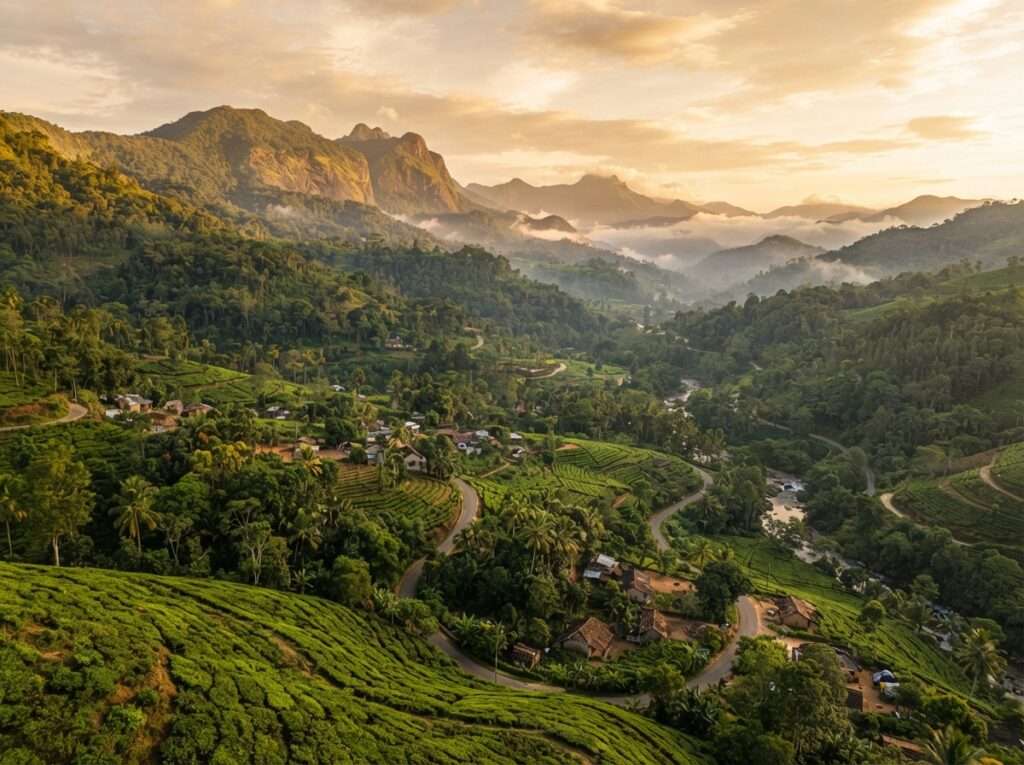
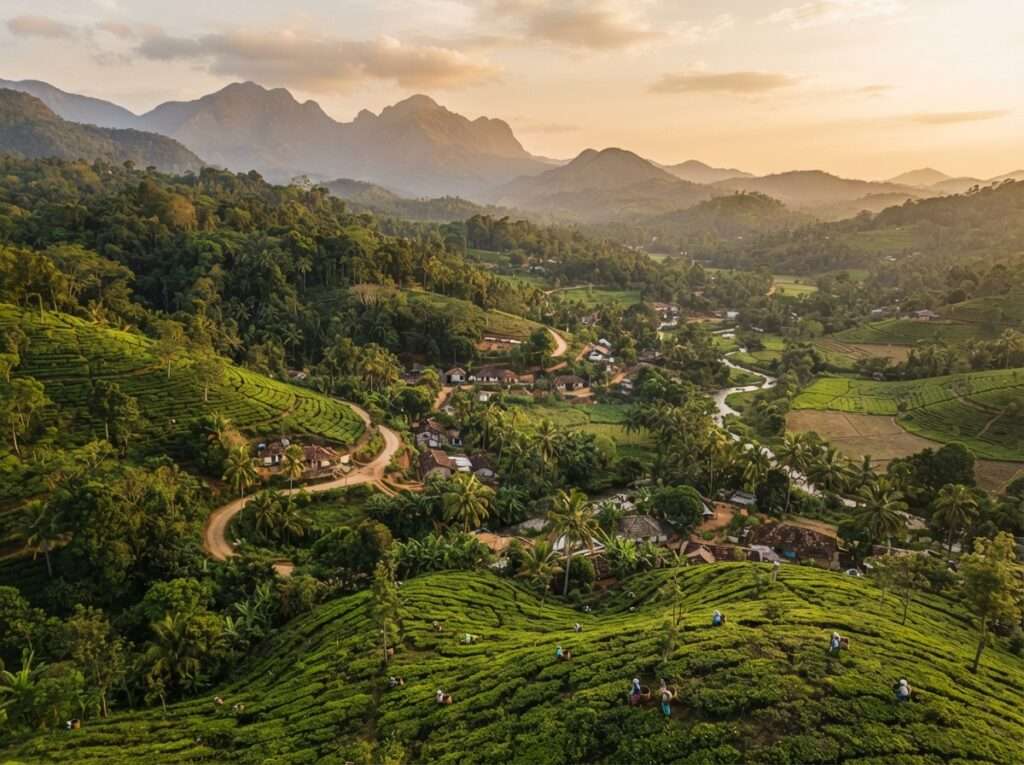
- Go for the sour fish curries down south, the fiery crab up in Jaffna, and Ceylon tea in the hill country around Nuwara Eliya.
Sri Lankan food at a glance: the 20 dishes
Scan this first, then jump to any dish below for the full story. Veg and non-veg are marked so vegetarians can plan fast.
| Dish | When to eat | What it is | Veg / non-veg |
|---|---|---|---|
| 1. Rice and Curry | Lunch / anytime (national dish) | Rice with 5-15 small curries, sambols and pickle | Veg or non-veg |
| 2. Hoppers (Appa) | Breakfast / dinner | Bowl-shaped fermented rice-coconut pancake, crisp rim | Veg |
| 3. Egg Hoppers | Breakfast | A hopper with an egg cracked into the middle | Non-veg |
| 4. String Hoppers | Breakfast / dinner | Steamed rice-flour noodle nests, eaten with dhal | Veg |
| 5. Pittu | Breakfast | Steamed cylinders of rice flour and grated coconut | Veg |
| 6. Kiribath | Festive mornings | Milk rice cut in diamonds, with lunu miris | Veg |
| 7. Pol Roti | Breakfast / snack | Dense coconut flatbread | Veg |
| 8. Kottu | Street dinner | Chopped godamba roti stir-fried with veg, egg or meat | Veg or non-veg |
| 9. Kukul Mas Curry | Lunch / dinner | Sri Lankan chicken curry in spiced coconut gravy | Non-veg |
| 10. Fish Ambul Thiyal | Lunch / dinner | Dry sour fish curry soured with goraka | Non-veg |
| 11. Polos | Lunch | Young green jackfruit curry, meaty texture | Veg |
| 12. Parippu (Dhal) | Everyday staple | Red lentils in coconut milk, mild and creamy | Veg |
| 13. Lamprais | Special lunch | Rice, meatballs and curries baked in a banana leaf | Non-veg |
| 14. Jaffna Crab Curry | Northern specialty | Mud crab in fiery Jaffna curry powder | Non-veg |
| 15. Pol Sambol | Side with everything | Grated coconut, chilli, lime and Maldive fish | Veg or non-veg |
| 16. Gotu Kola Mallum | Healthy side | Shredded pennywort greens with coconut | Veg |
| 17. Wambatu Moju | Sweet-sour side | Caramelised fried eggplant pickle | Veg |
| 18. Short Eats | Snack / tea time | Rolls, cutlets and isso vadai from a bakery case | Veg or non-veg |
| 19. Watalappan | Dessert | Steamed jaggery and coconut custard with spices | Non-veg (egg) |
| 20. Asmi | Festive sweet | Deep-fried rice-flour lattice drizzled with treacle | Veg |
Sri Lanka
Sri Lanka
Best Time
December - April
Select Package Type
Best Selling Packages


20 Iconic Sri Lankan Dishes, From Rice and Curry to Watalappan
The full list in eating order, from breakfast hoppers and string hoppers to late-night kottu, southern fish curries and watalappan for dessert.
-
Rice and Curry
-
Hoppers (Appa)
-
Egg Hoppers (Bittara Appa)
-
String Hoppers (Idiyappam)
-
Pittu
-
Kiribath (Milk Rice)
-
Pol Roti (Coconut Roti)
-
Kottu (Kottu Roti)
-
Kukul Mas Curry (Sri Lankan Chicken Curry)
-
Fish Ambul Thiyal
-
Polos (Green Jackfruit Curry)
-
Parippu (Dhal Curry)
-
Lamprais
-
Jaffna Crab Curry
-
Pol Sambol
-
Gotu Kola Mallum (Sambola)
-
Wambatu Moju (Eggplant Pickle)
-
Short Eats
-
Watalappan
-
Asmi
Explore Popular Destination In Sri Lanka
01
Rice and Curry
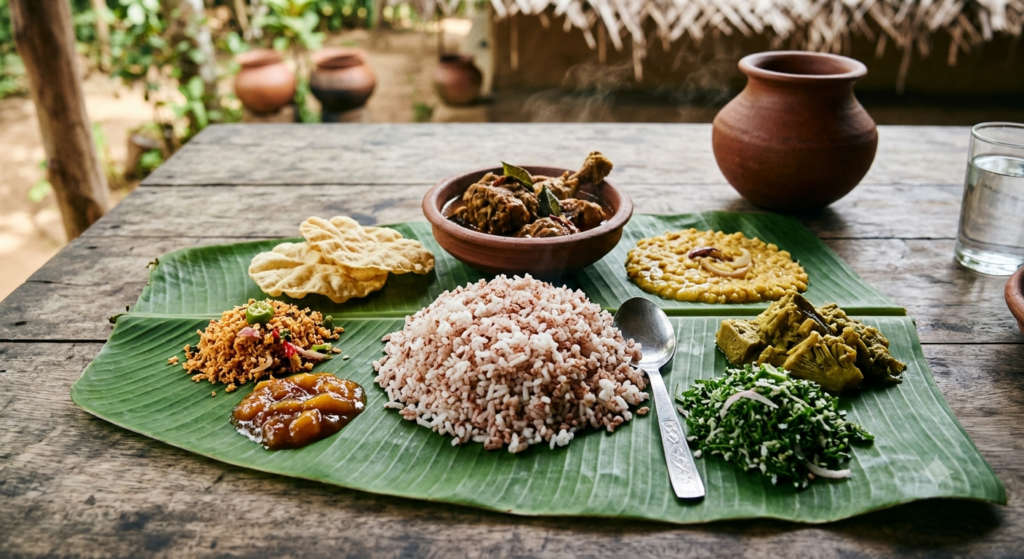
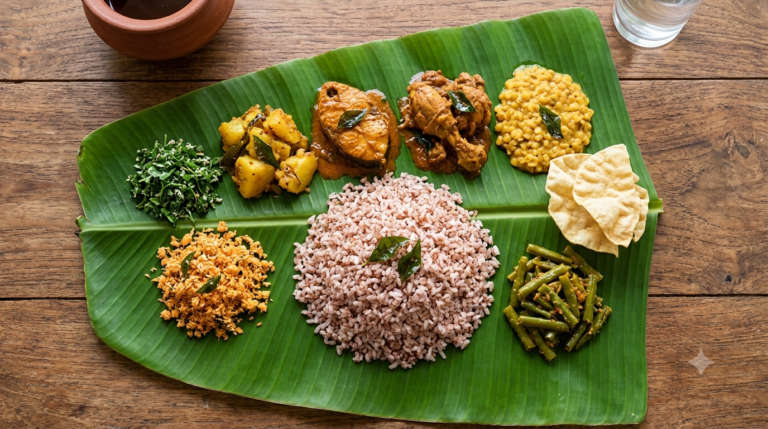
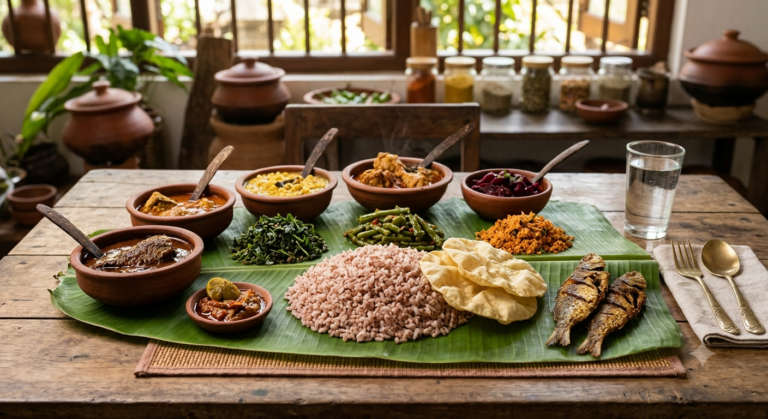
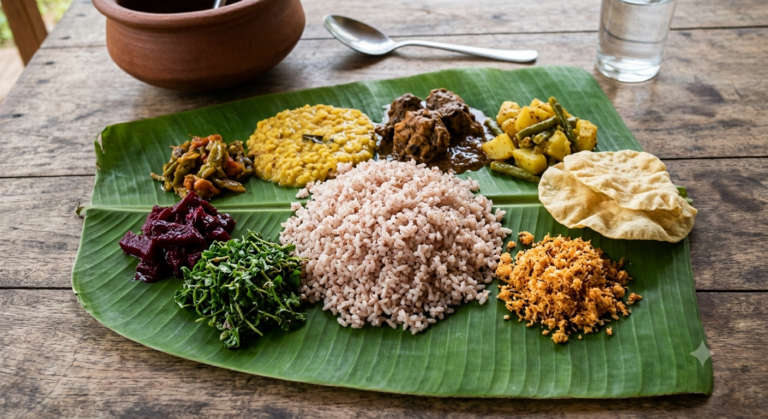
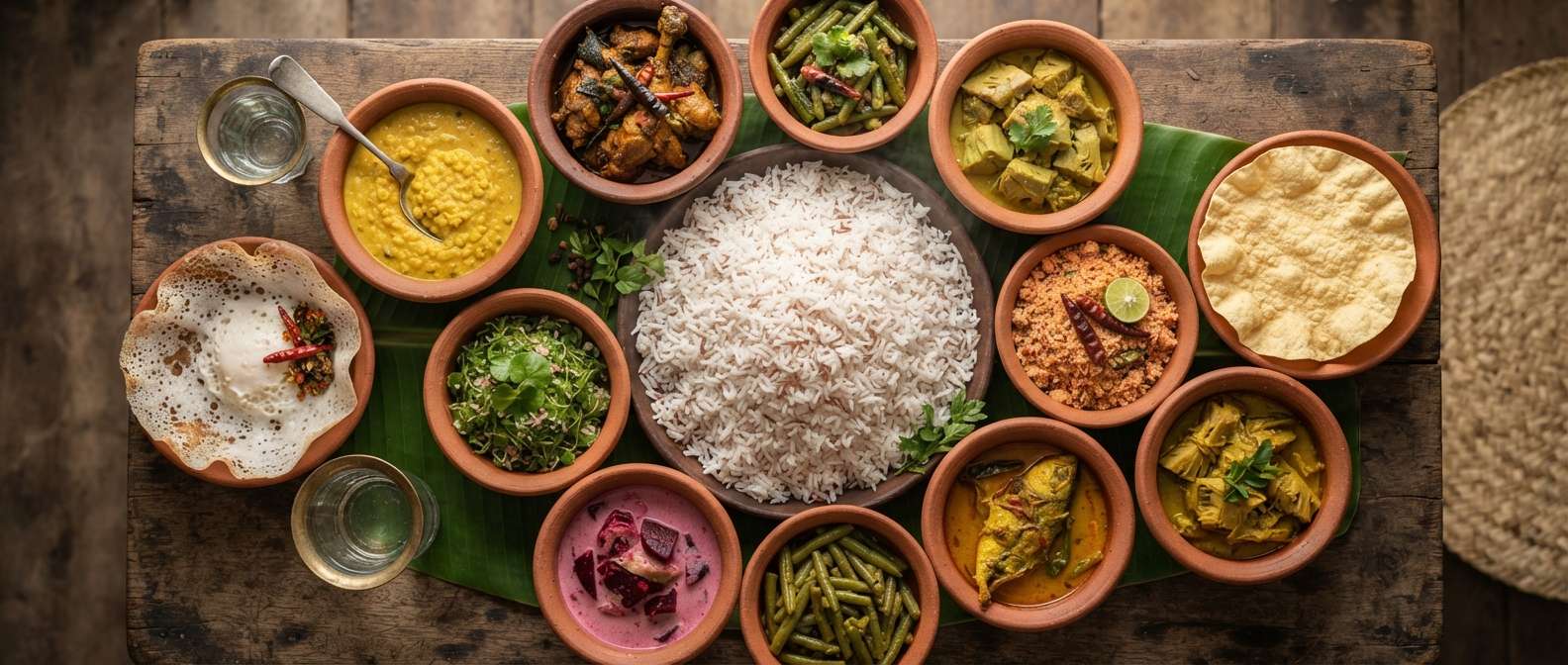
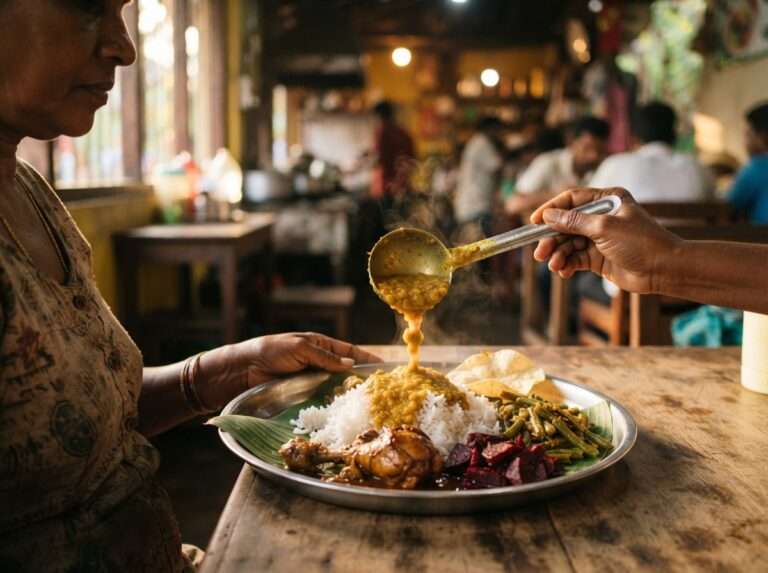
Ask any Sri Lankan what to eat and the answer is rice and curry, often before you finish the question. It is the national dish, eaten at lunch by nearly everyone on the island, and it is less a single recipe than a whole plate of them. A mound of rice sits in the middle, ringed by anything from five to fifteen small curries and sides. You might get a dhal, a fish or chicken curry, a jackfruit or a beetroot curry, a fiery pol sambol, a papadam and a tart pickle, all on one plate. The joy is that you mix your own mouthfuls with your right hand, dragging rice through one curry, then another. No two cooks build it the same way, which is why a rice-and-curry lunch at a roadside shop in the hill country tastes nothing like one on the south coast. This is also the dish that answers the question people search for most, and the reason it belongs at the very top of any honest Sri Lankan food list.
Related Tour Packages


❮
❯
02
Hoppers (Appa)
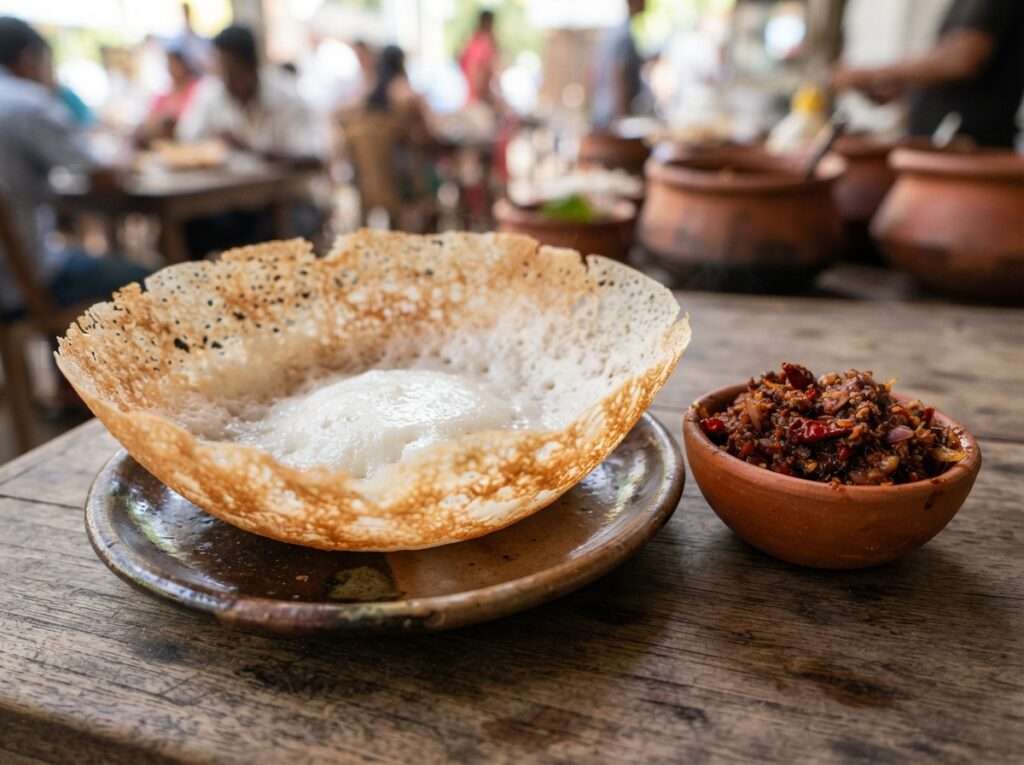

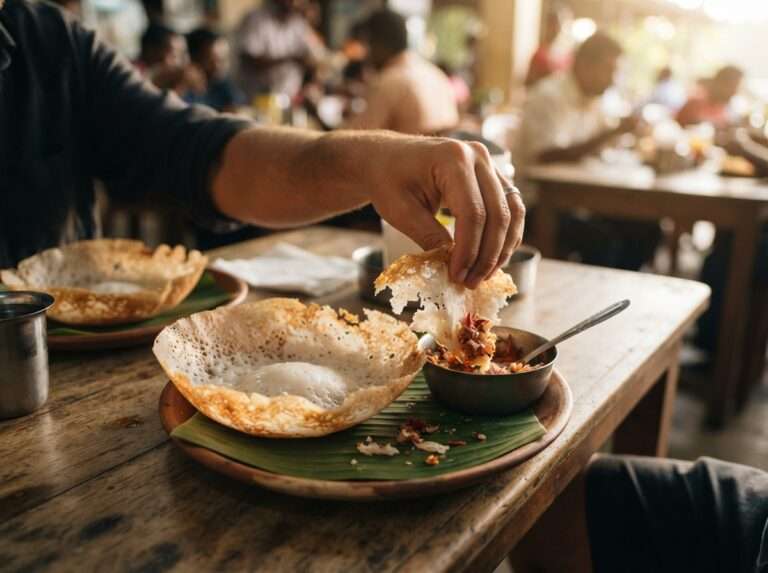
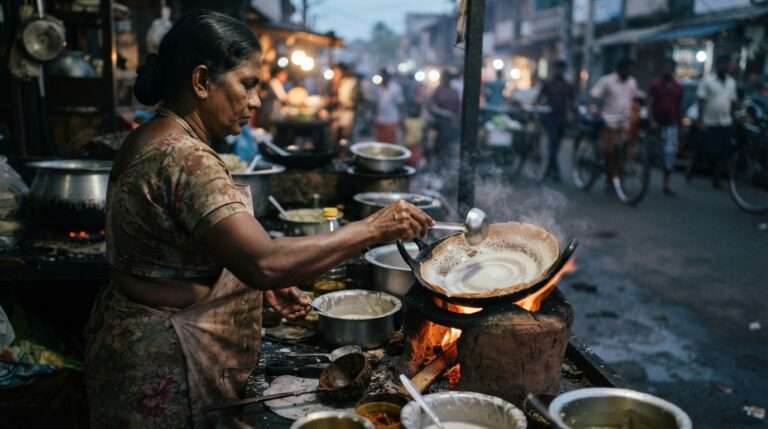
A hopper is a thin, bowl-shaped pancake made from a fermented batter of rice flour, coconut milk and a little sugar. The cook swirls the batter up the sides of a small curved wok, so the rim turns lacy and crisp while the centre stays soft and spongy. You tear off the edges and use them to scoop up lunu miris, a dark onion-and-chilli relish. It is the single most photographed thing on the island for good reason.
Related Tour Packages


❮
❯
03
Egg Hoppers (Bittara Appa)
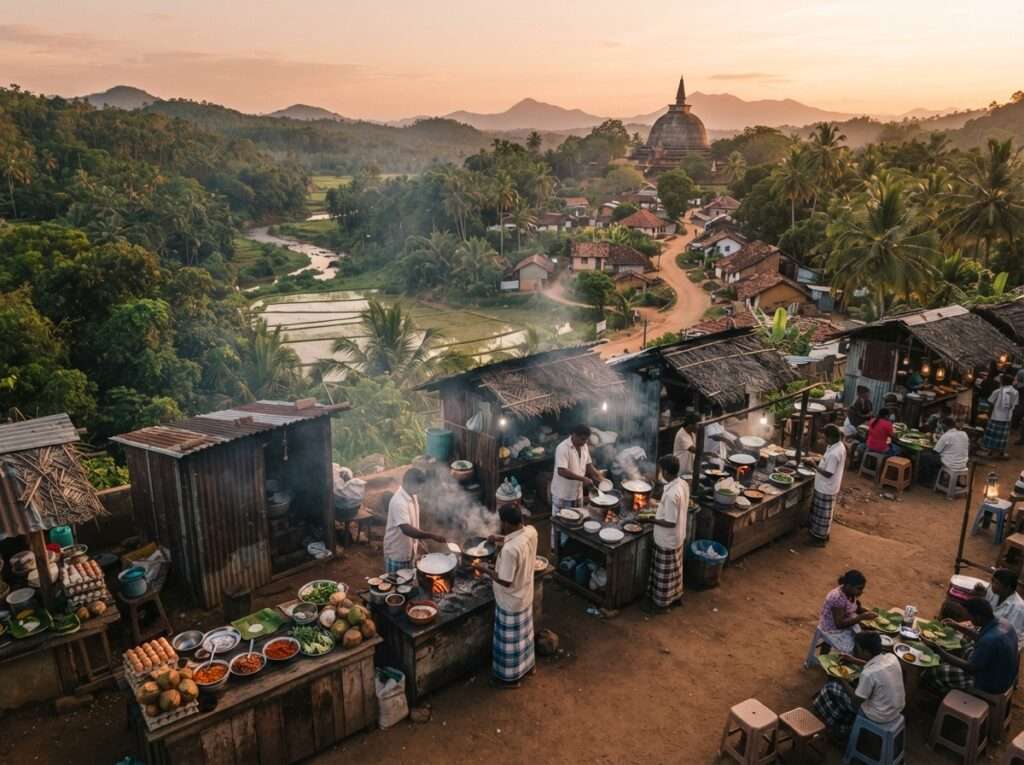
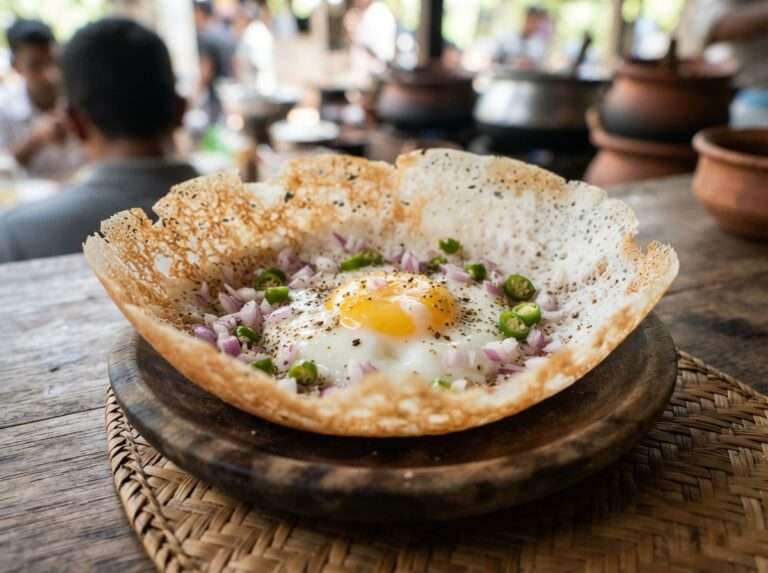
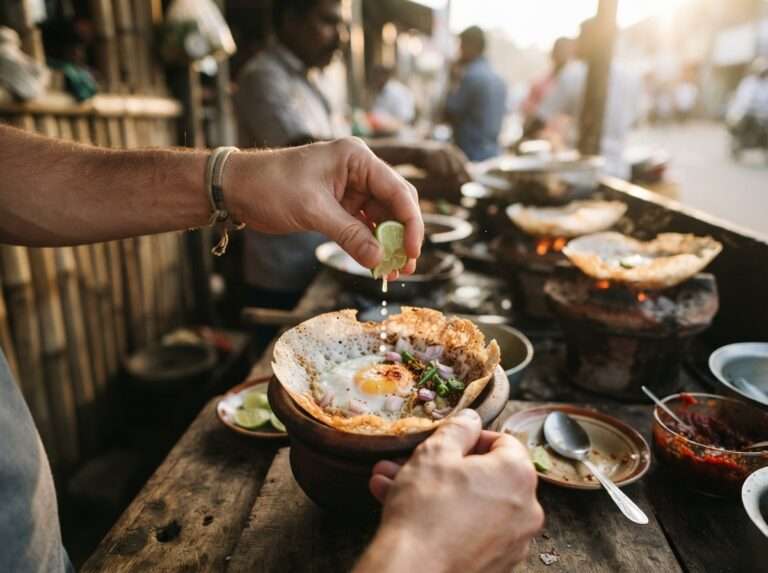
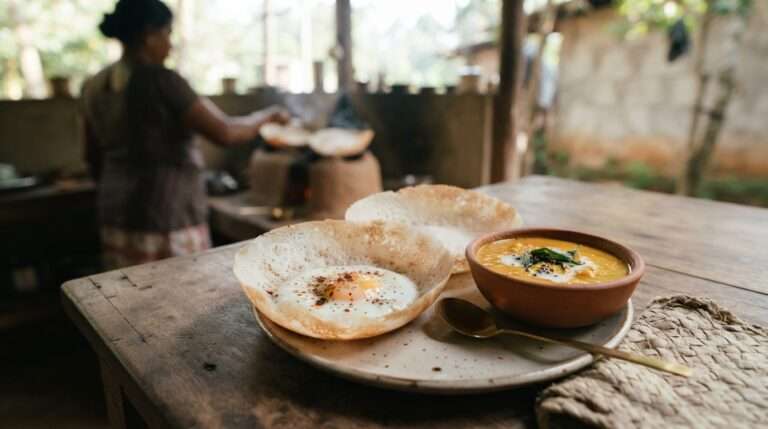
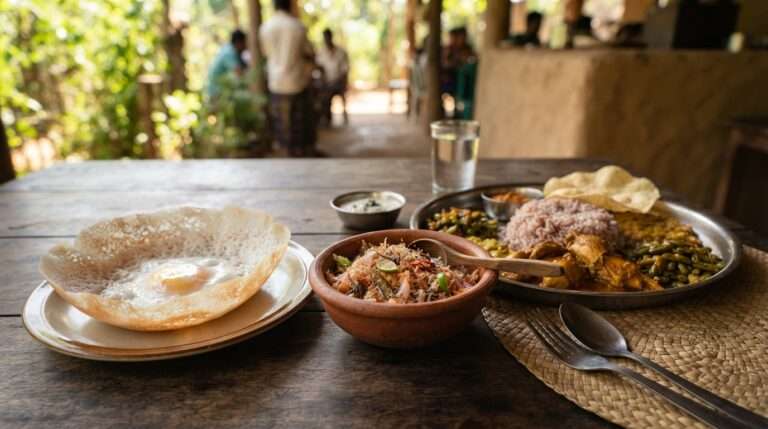
The same batter, but the cook cracks an egg into the hopper while it cooks, so you get a soft yolk sitting in an edible bowl. Garnish is a scatter of chilli, onion, a squeeze of lime and salt. Order one with a plain hopper and a dhal curry and you have the classic Sri Lankan breakfast.
Related Tour Packages


❮
❯
04
String Hoppers (Idiyappam)
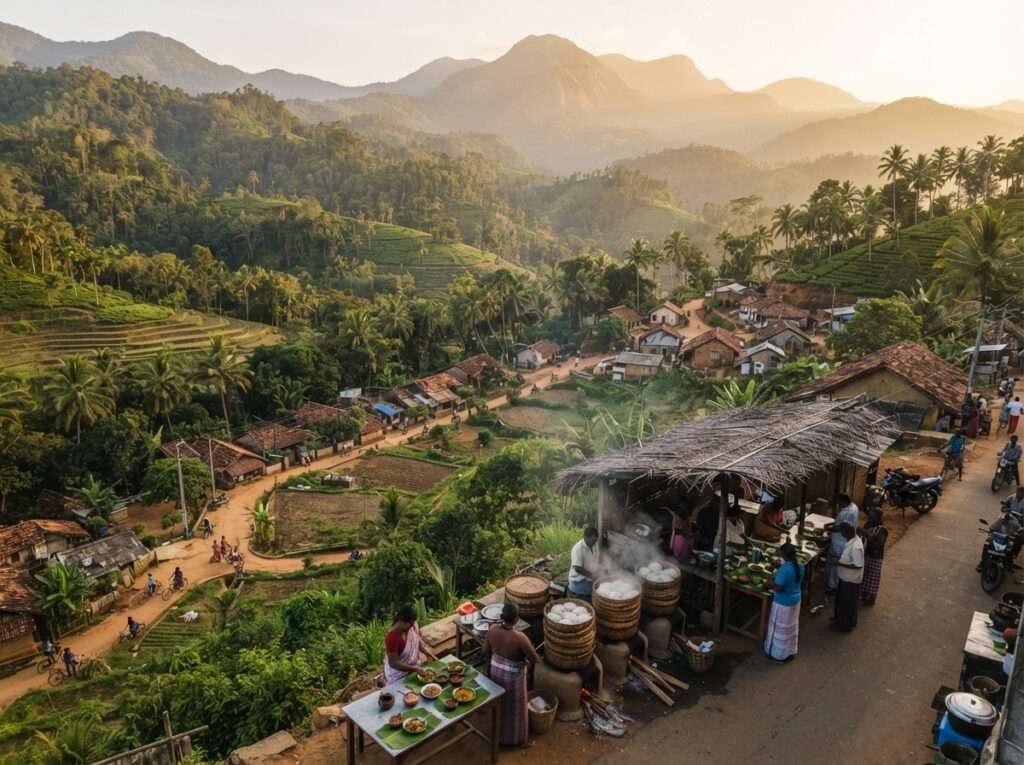
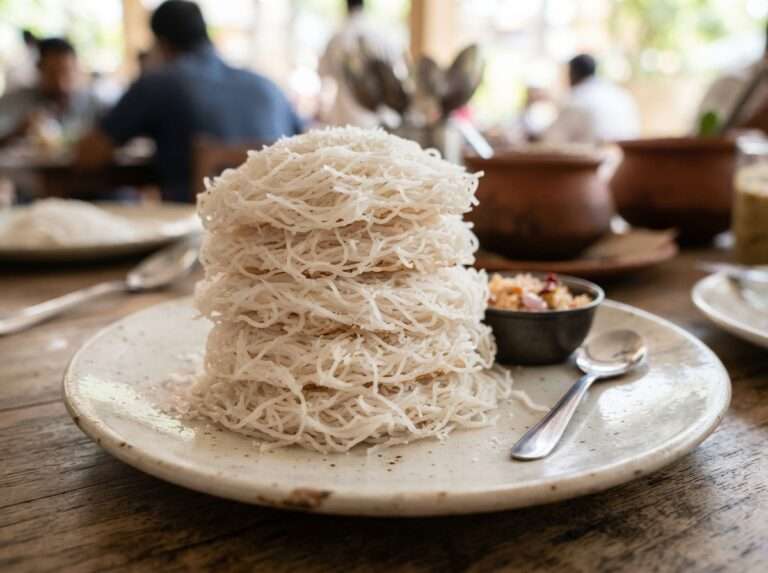
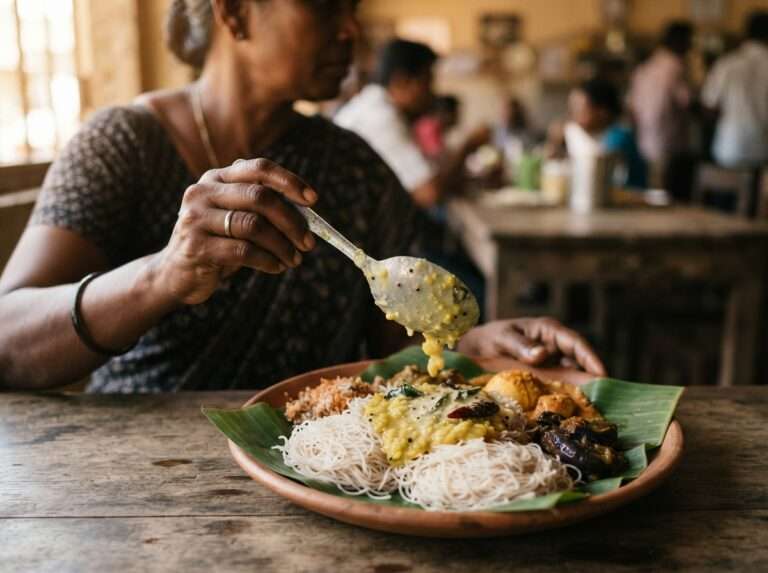
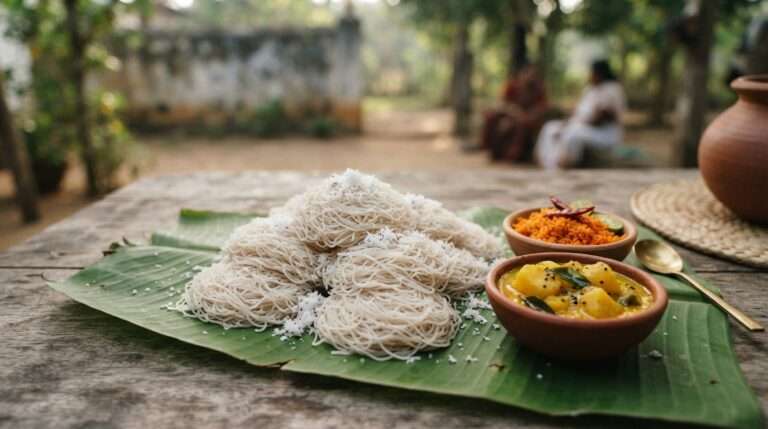
Rice-flour dough is pressed through a mould into fine noodles, coiled into little nests and steamed. They come stacked a dozen to a plate, pillowy and faintly sweet, and you eat them with a thin dhal, a coconut gravy called kiri hodi, and a sambol. Kerala travellers will know these as idiyappam, though the Sri Lankan version is usually served with more sambol fire.
05
Pittu

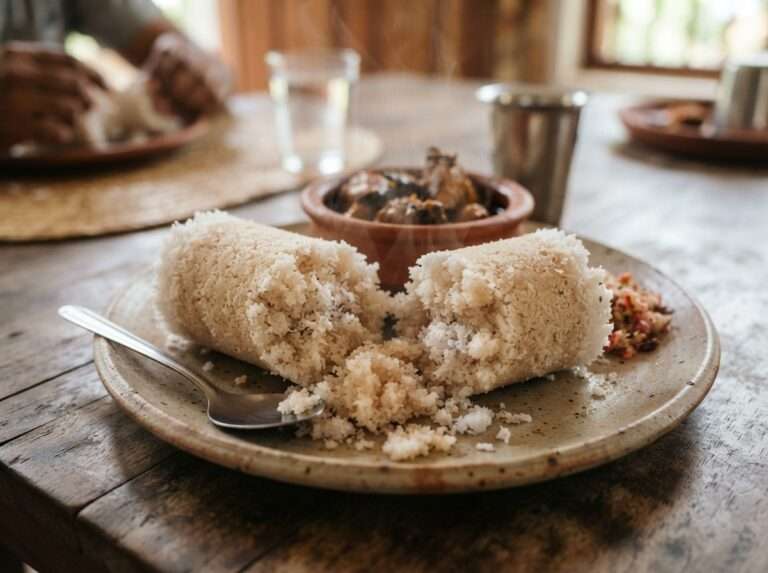
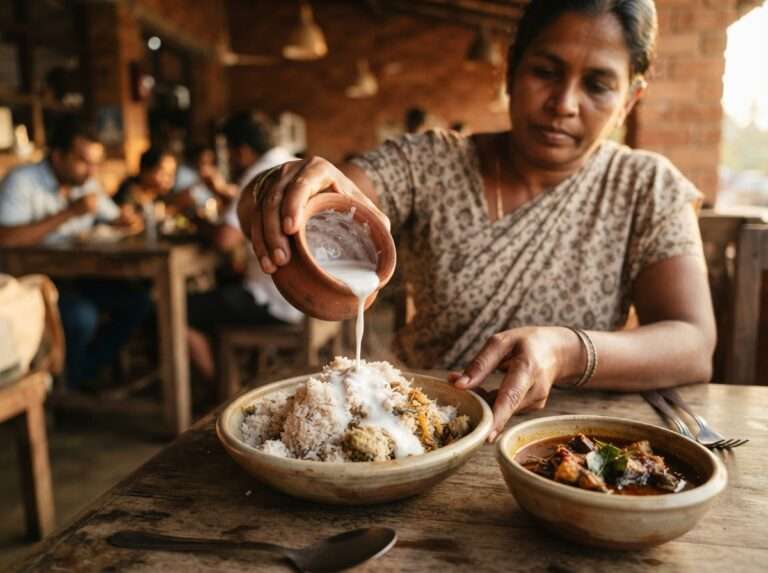
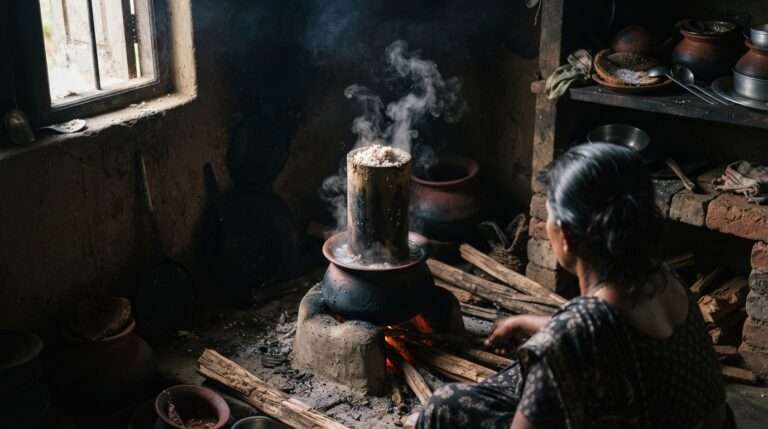
Steamed cylinders of rice flour layered with grated coconut, pittu is crumbly, mild and made to soak up gravy. Locals eat it with coconut milk and a fish or dhal curry, and some pour sweetened milk over it instead. It is essentially the same dish as Kerala’s puttu, rice flour and grated coconut steamed together in a cylinder.
06
Kiribath (Milk Rice)
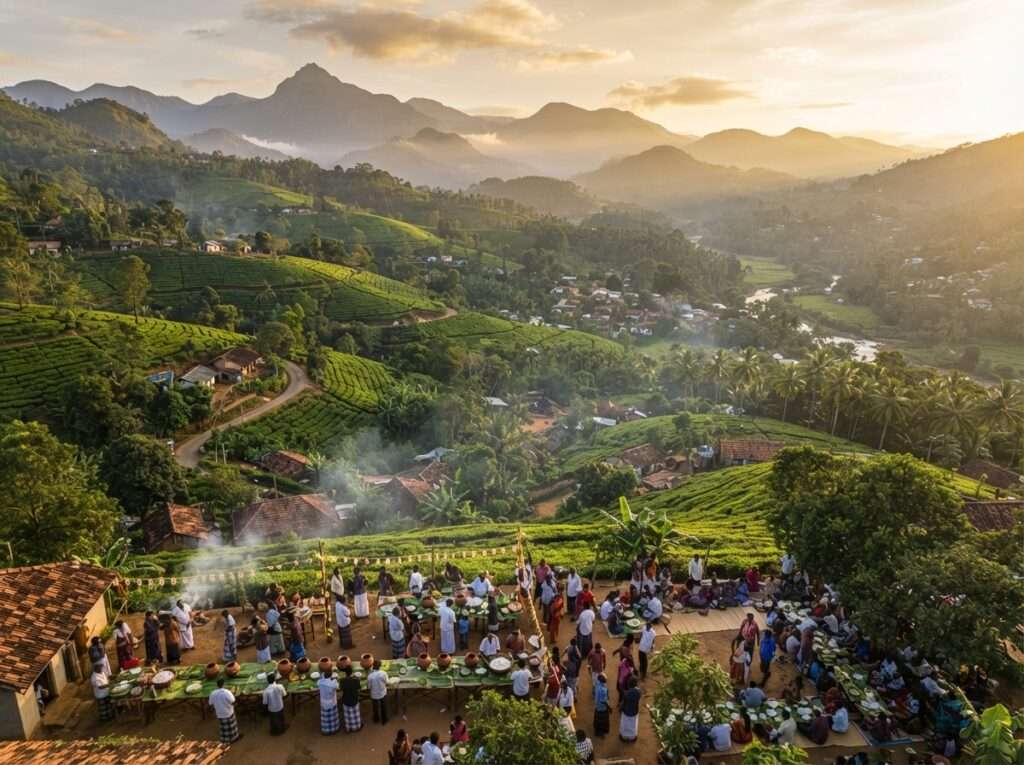
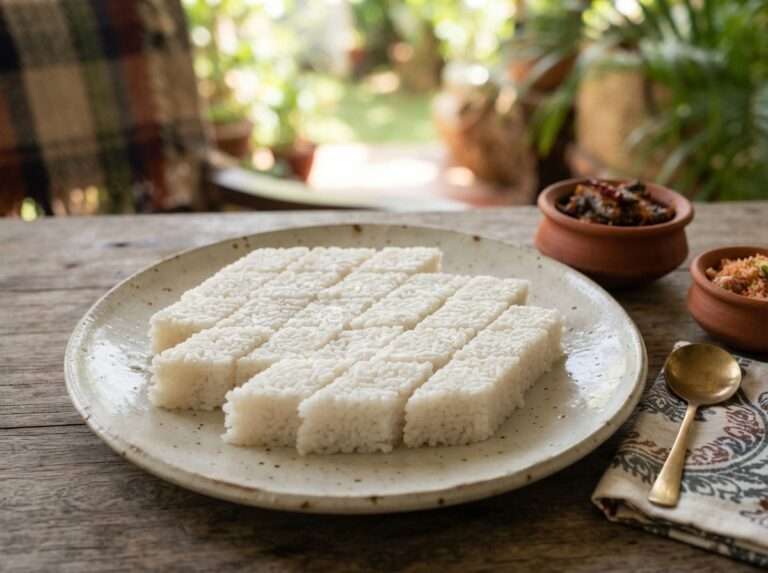
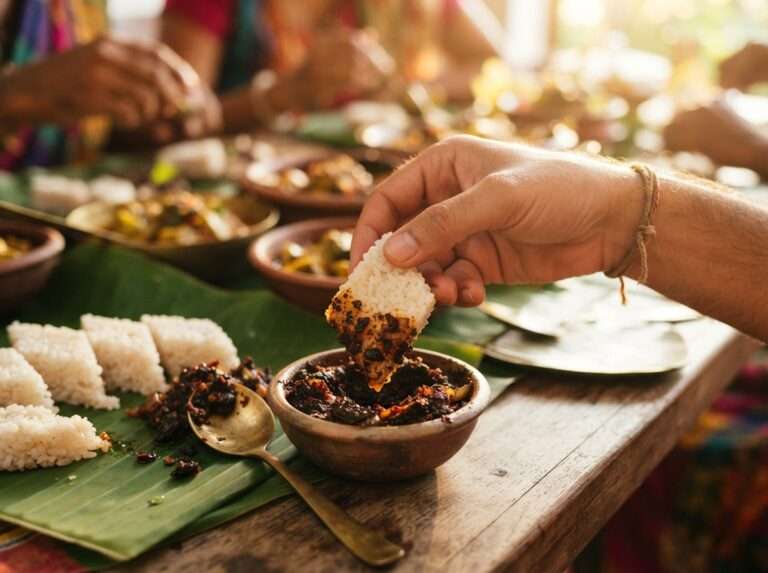
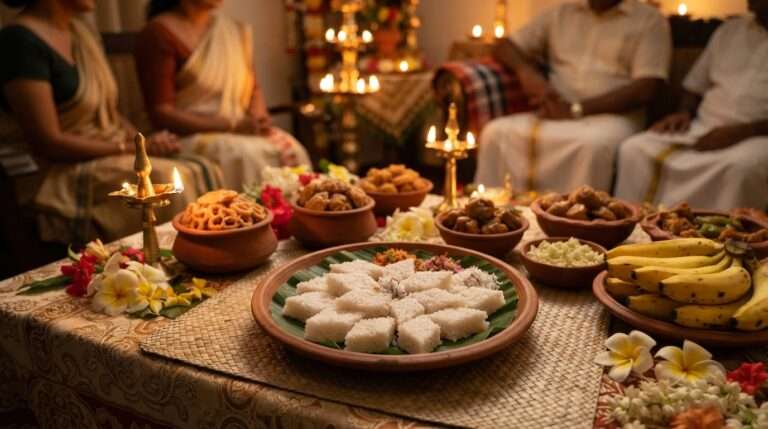
Kiribath is rice cooked down with thick coconut milk and a pinch of salt until it sets firm enough to cut into diamonds. It shows up at every milestone, from Sinhala and Tamil New Year to a new house or a baby’s first meal. Eat it with lunu miris for a salty-sweet-spicy bite, or with jaggery if you want it sweet.
07
Pol Roti (Coconut Roti)
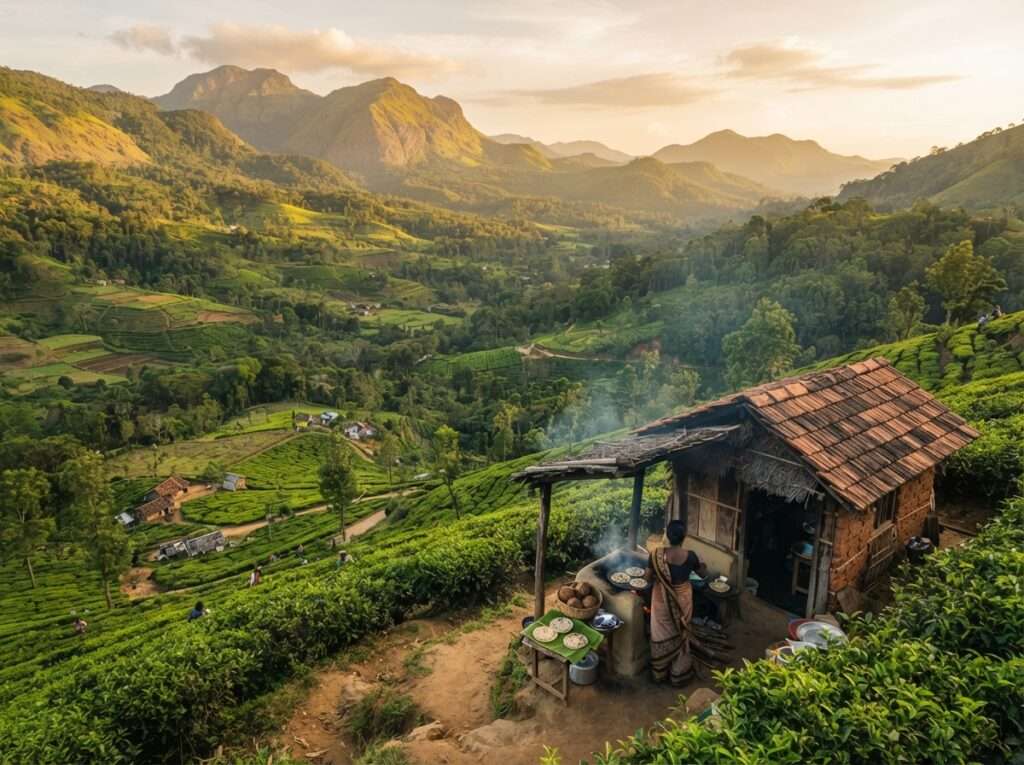
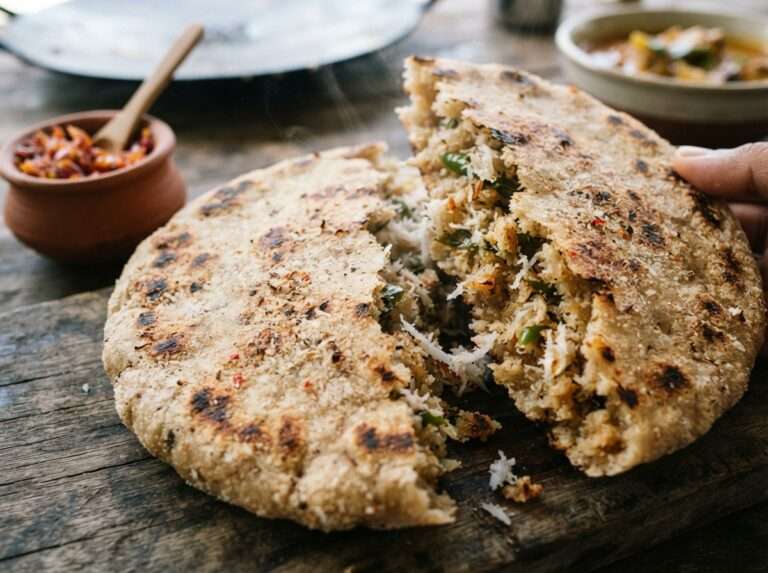
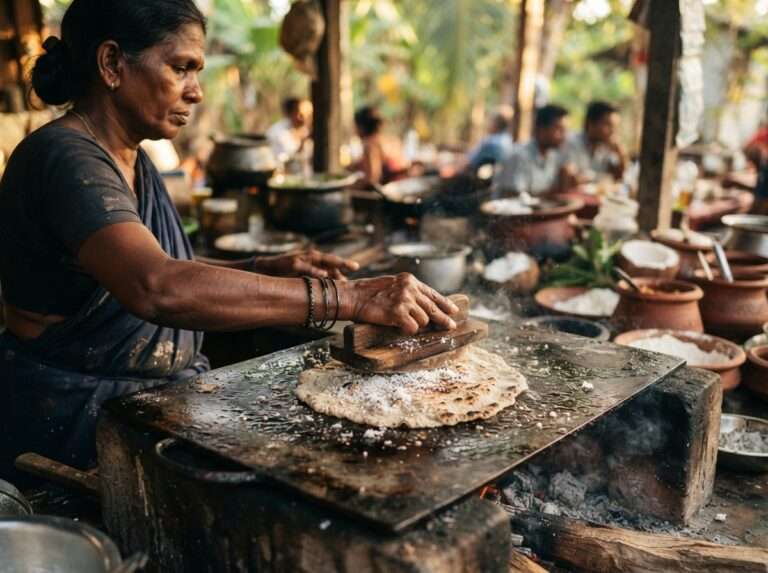
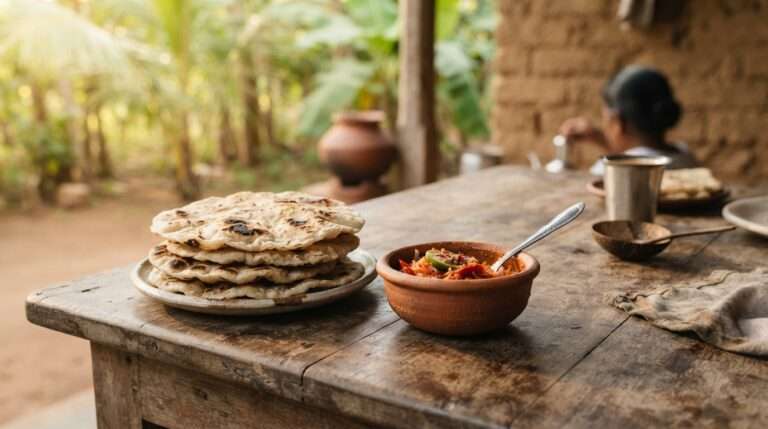
A dense flatbread of flour and freshly grated coconut, pol roti is cooked on a griddle until flecked brown. It is sturdy, a little chewy, and the everyday carb in many homes. Pair it with lunu miris or a leftover curry and it makes a quick breakfast or a late snack.
08
Kottu (Kottu Roti)
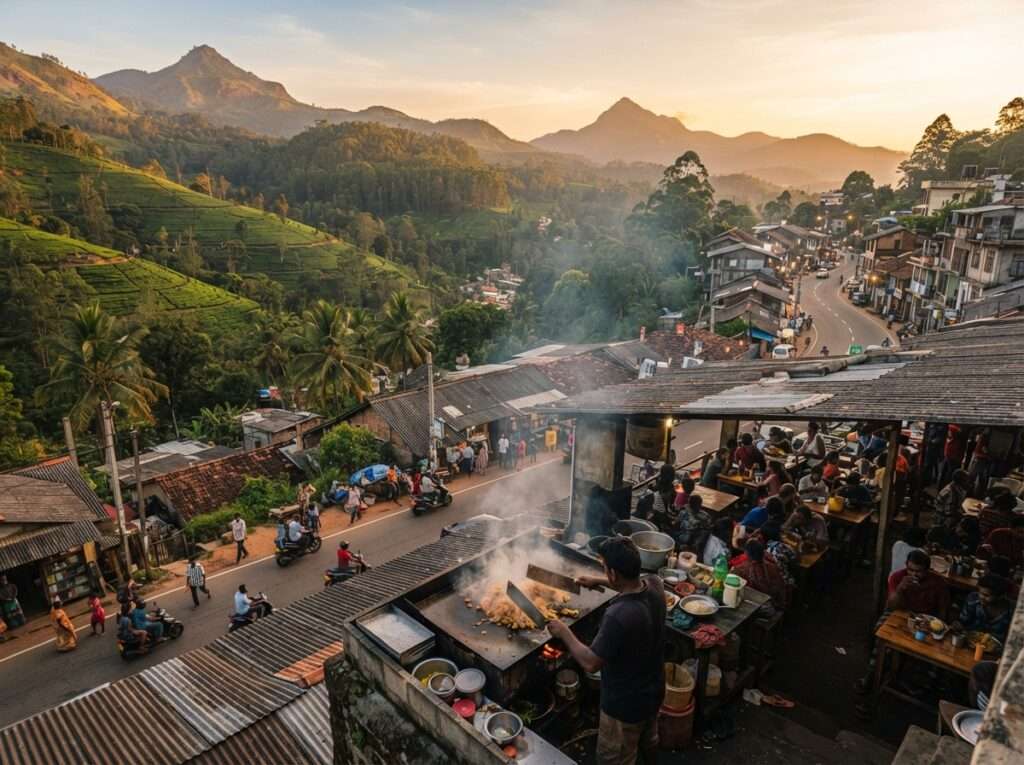
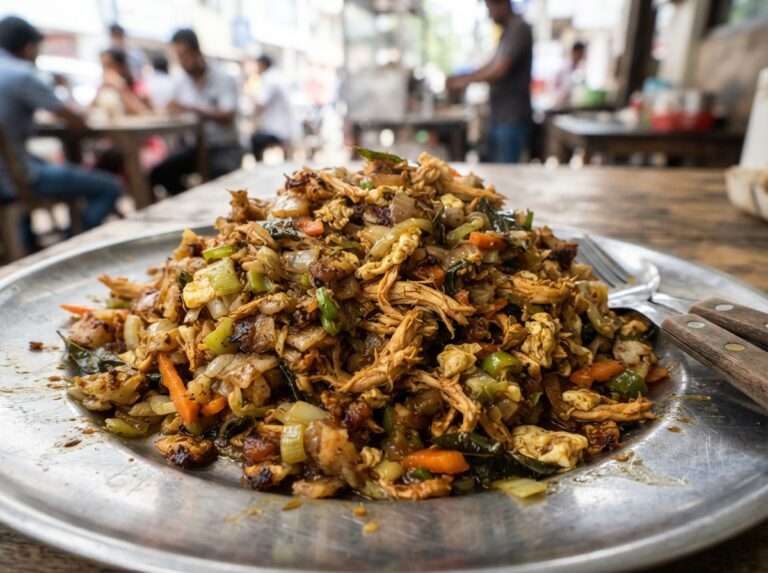
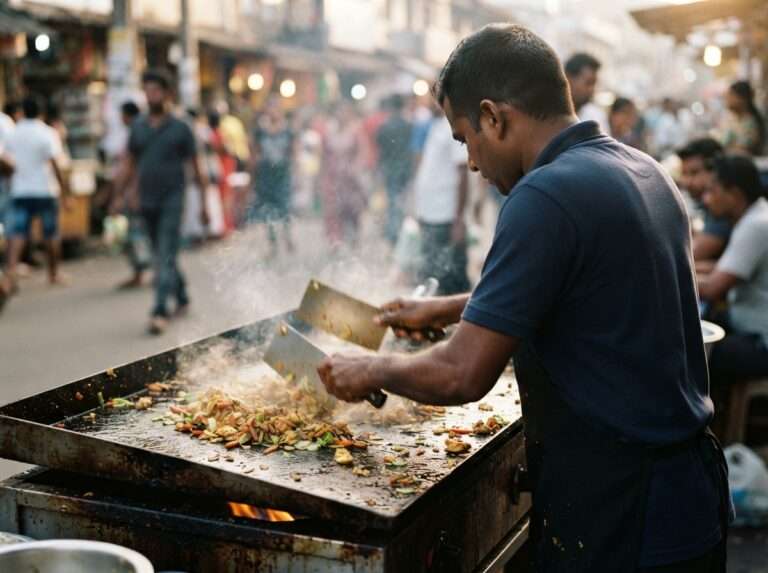
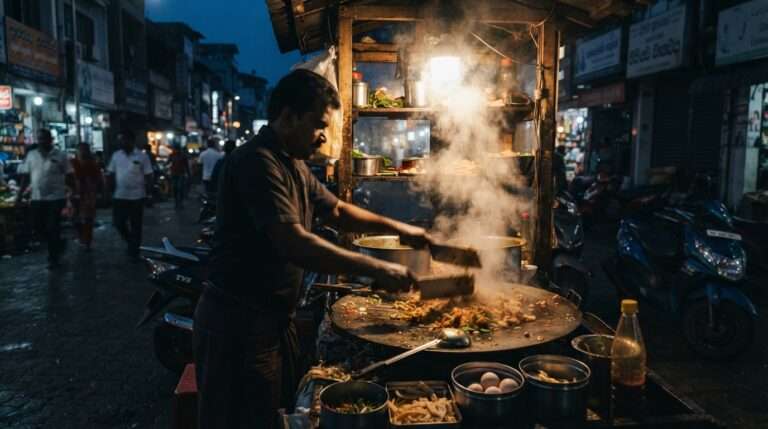
Kottu is the sound of a Sri Lankan evening. Cooks chop godamba roti on a hot griddle with two metal blades, folding in vegetables, egg, cheese or meat and a ladle of spicy curry sauce, and the rhythmic clang carries down the street. The result is a hot, savoury tangle somewhere between a stir-fry and a hash. It is the island’s favourite comfort food and its best cheap dinner. Chicken and cheese kottu is the gateway version for first-timers.
09
Kukul Mas Curry (Sri Lankan Chicken Curry)
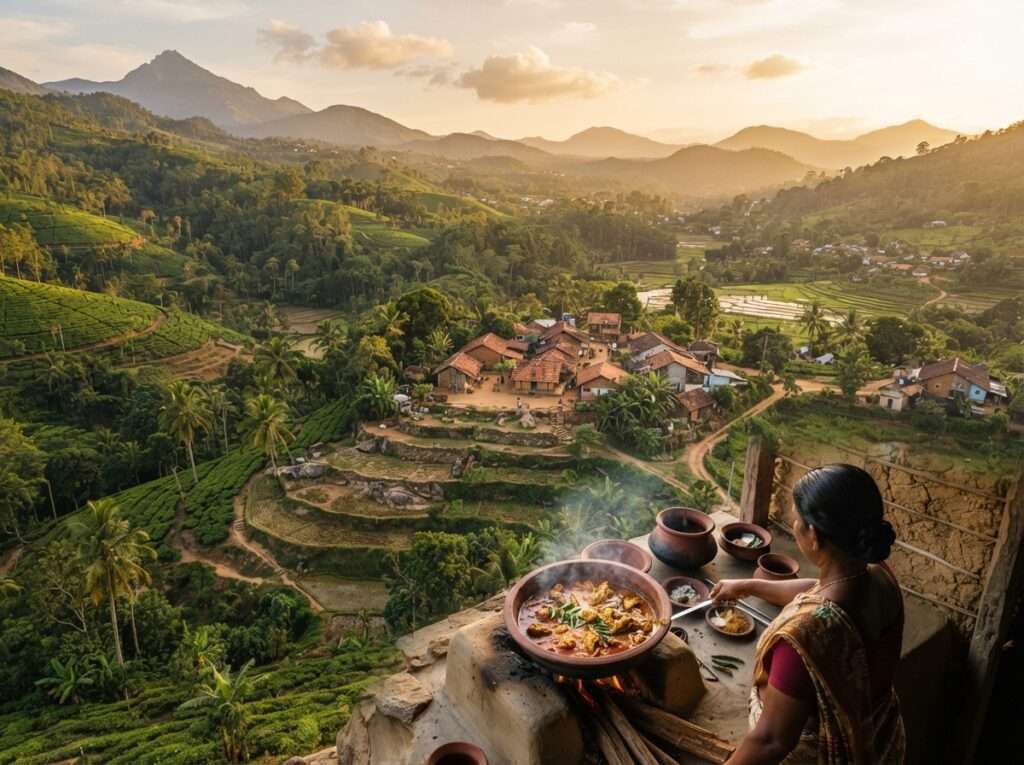
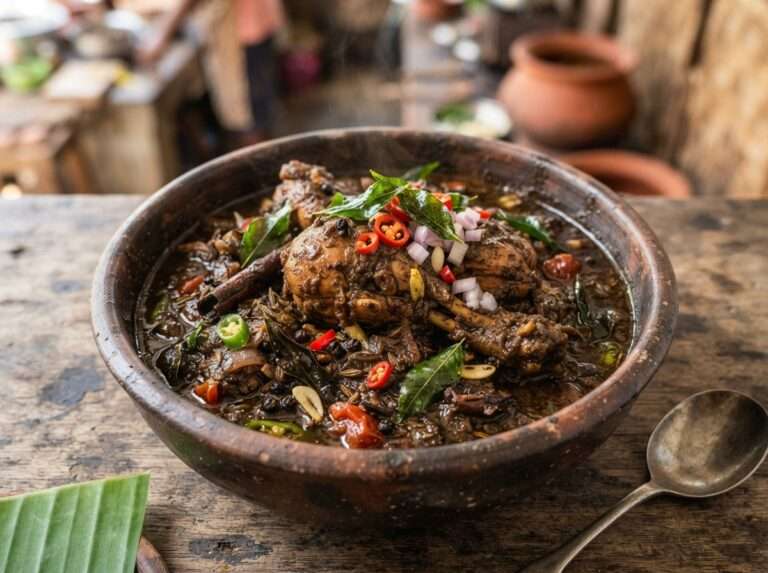
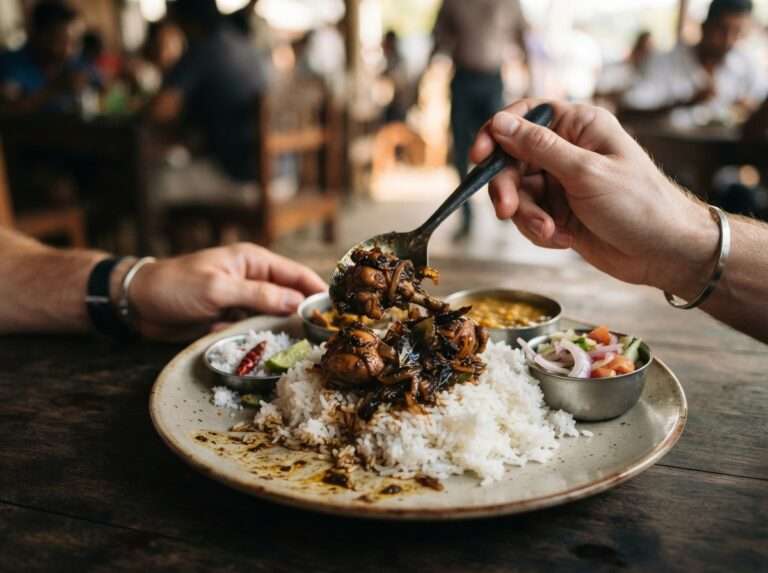
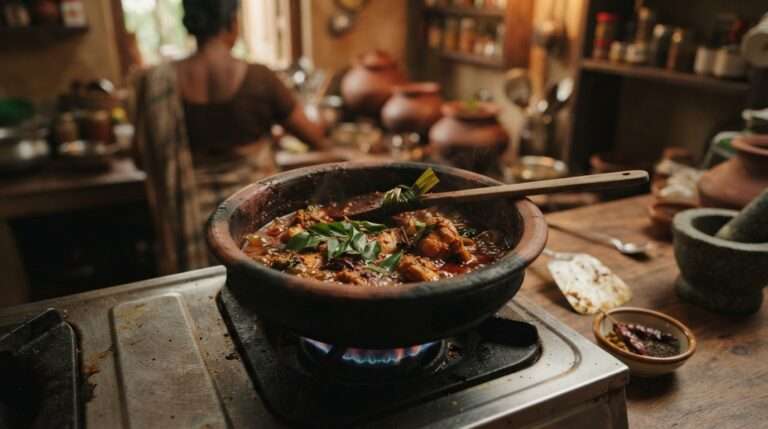
Chicken simmered in a gravy of roasted spices, coconut milk, curry leaves, pandan and lemongrass, kukul mas curry is darker and deeper than most Indian chicken curries thanks to that near-black roasted curry powder. It is rich without being heavy, and it tastes best mopped up with plain rice or a hopper.
10
Fish Ambul Thiyal

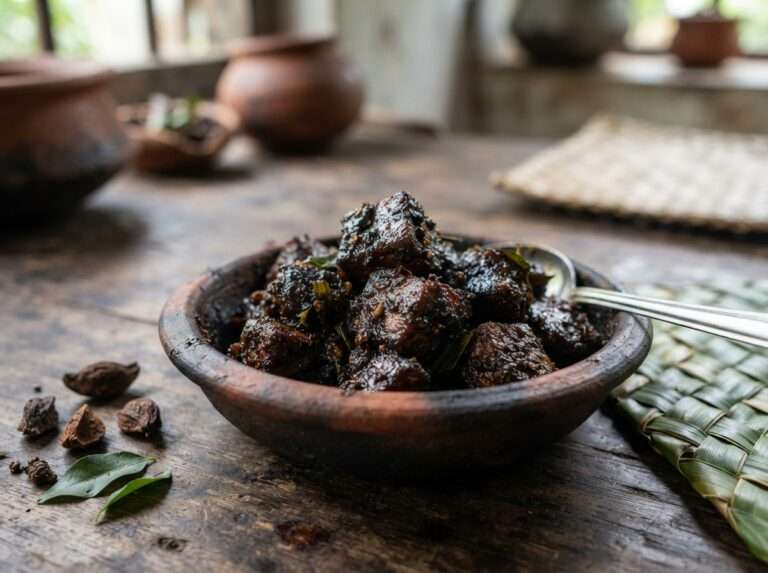
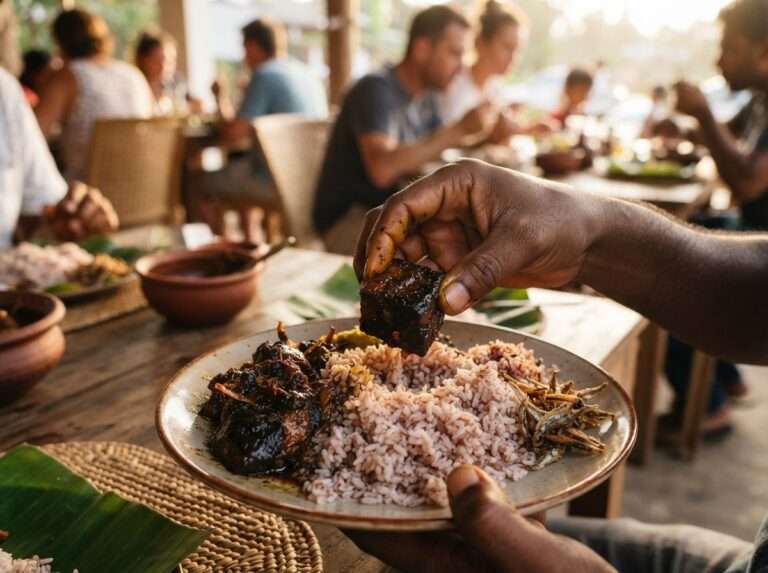
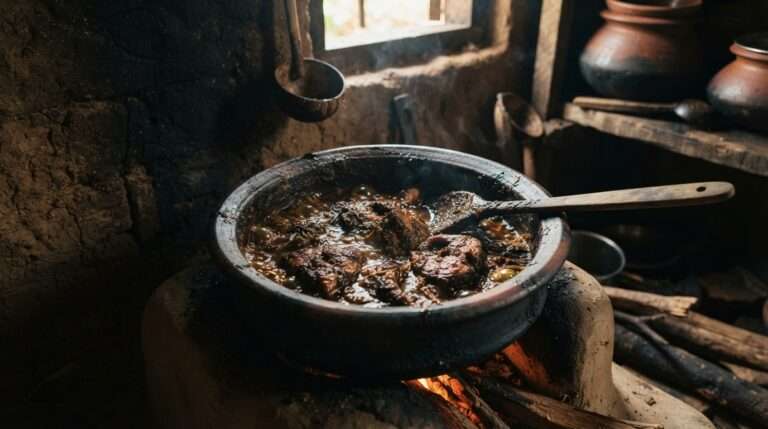
A southern specialty, fish ambul thiyal is a dry sour curry. Firm fish, usually tuna, is cubed and cooked with goraka until the liquid cooks away and the pieces turn dark and intensely tangy. Because it is nearly dry, it was traditionally a way to keep fish for days without refrigeration. It travels well and keeps its punch, which is why you still see it packed for long bus journeys.
11
Polos (Green Jackfruit Curry)

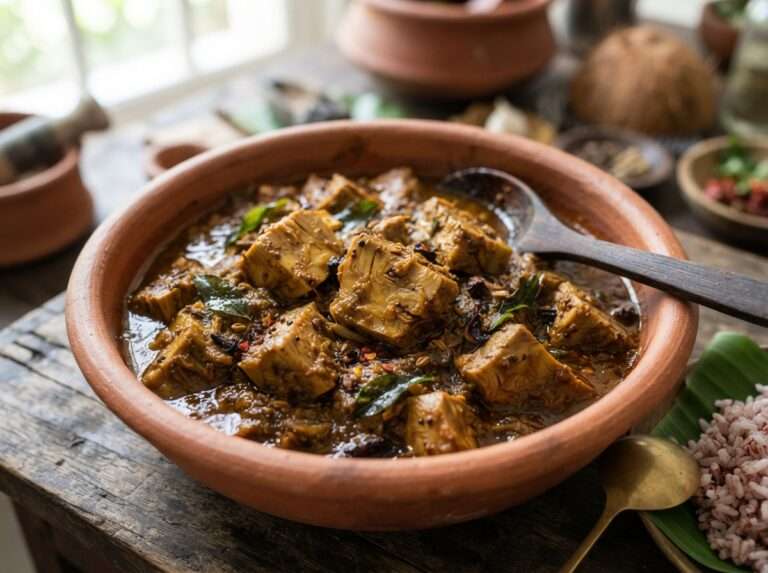
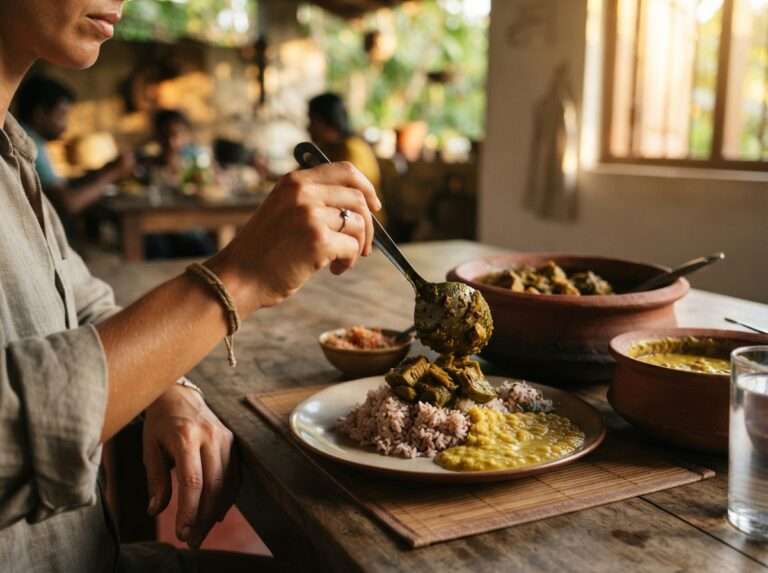
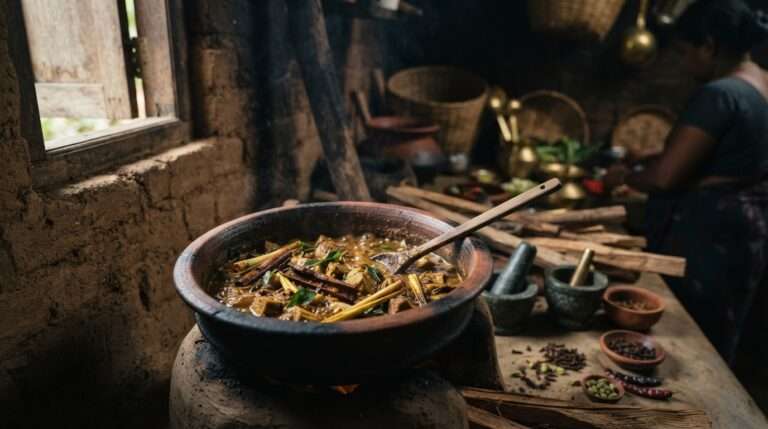
Young green jackfruit is simmered with roasted spices, garlic, lemongrass, cinnamon and coconut milk until the chunks go soft and meaty. Polos is a vegetarian dish that satisfies like a meat curry, which is exactly why it has travelled onto menus well beyond Sri Lanka. Eat it with rice and a dhal.
12
Parippu (Dhal Curry)
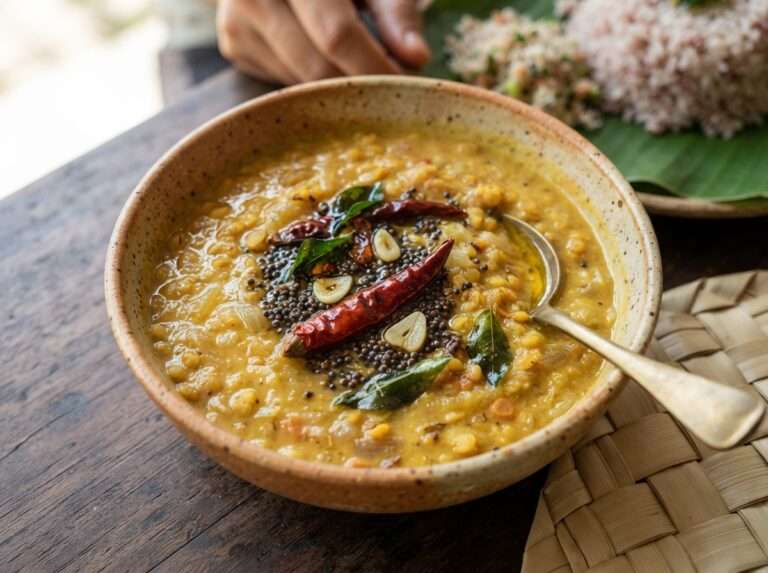
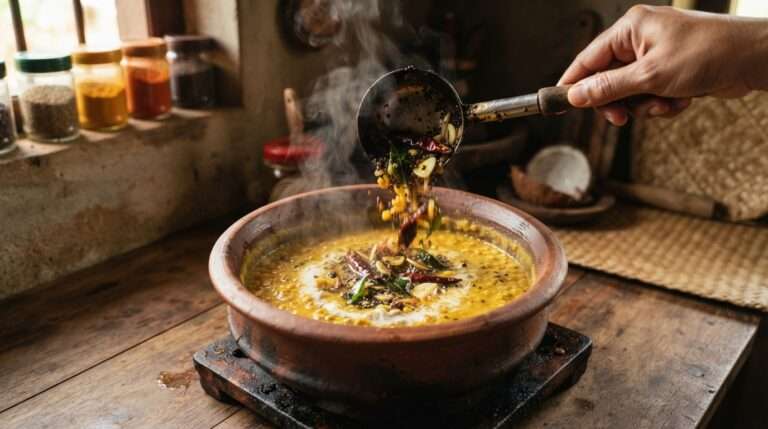
Parippu is the curry Sri Lankans eat most. Red lentils are simmered soft with coconut milk, turmeric, onion, garlic and curry leaves, then finished with a tempering of mustard seeds and dried chilli. It is mild, creamy and the anchor of nearly every rice-and-curry plate. If you try only one vegetarian curry here, make it this.
13
Lamprais
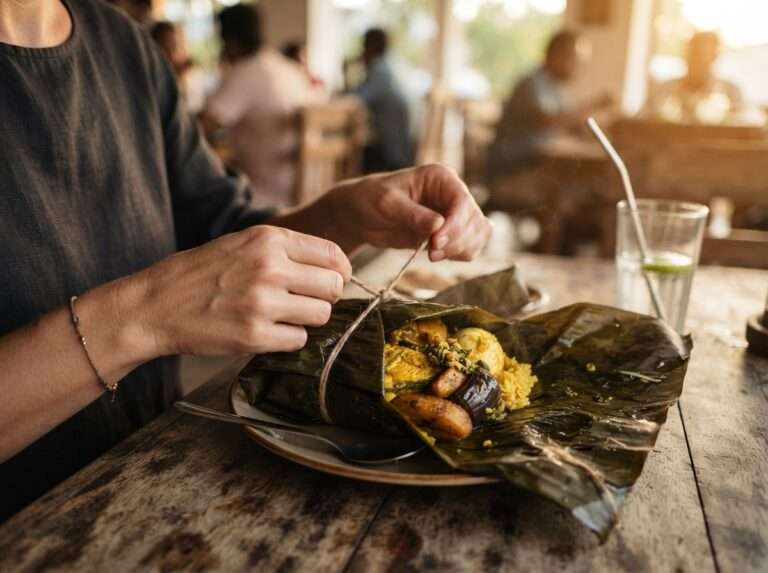
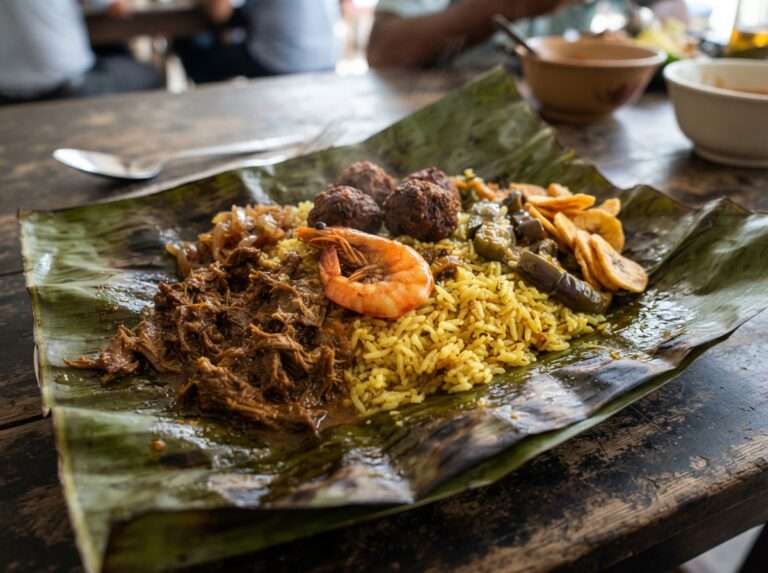
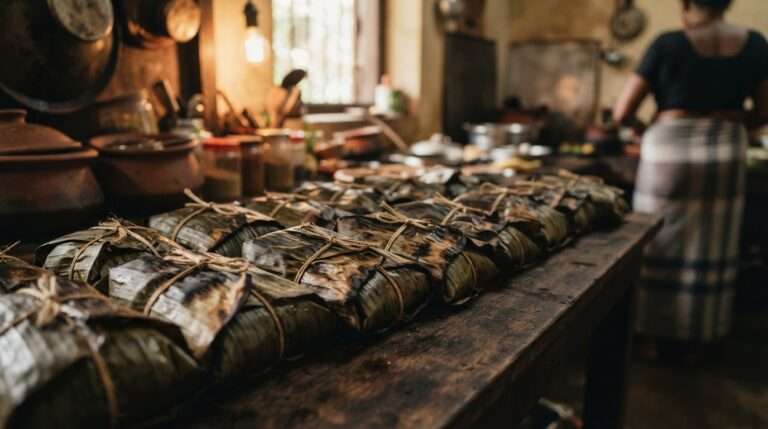
Lamprais is the island’s Dutch Burgher heirloom. Rice cooked in stock is parcelled up in a banana leaf with a dry meat curry, a couple of frikkadels (small meatballs), a prawn, an ash-plantain curry and a blachan sambol, then baked so the leaf perfumes everything inside. You unwrap it at the table and the smell alone is worth the order. It is a special-occasion dish, not an everyday one.
14
Jaffna Crab Curry
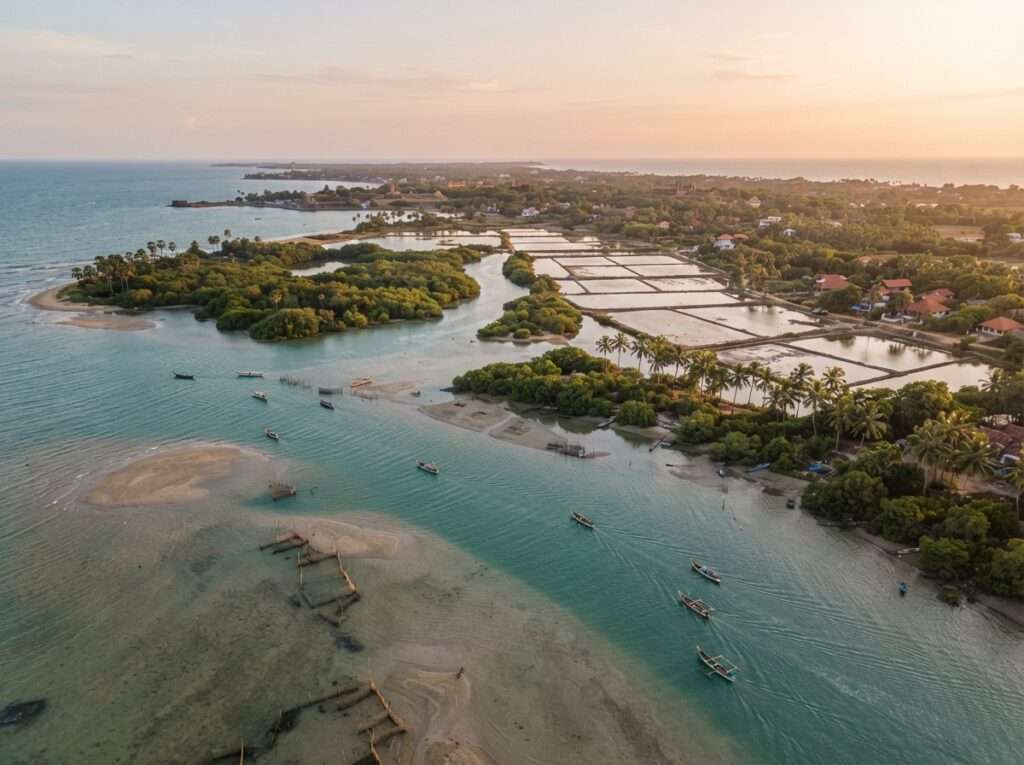
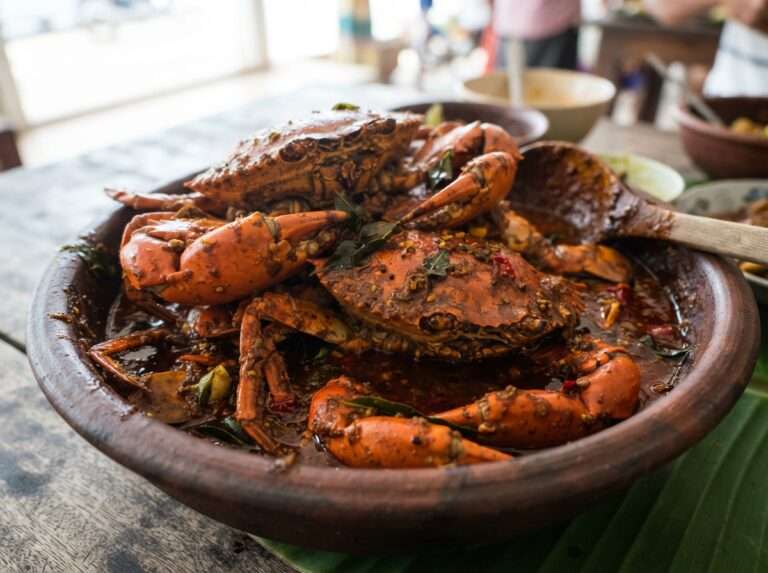
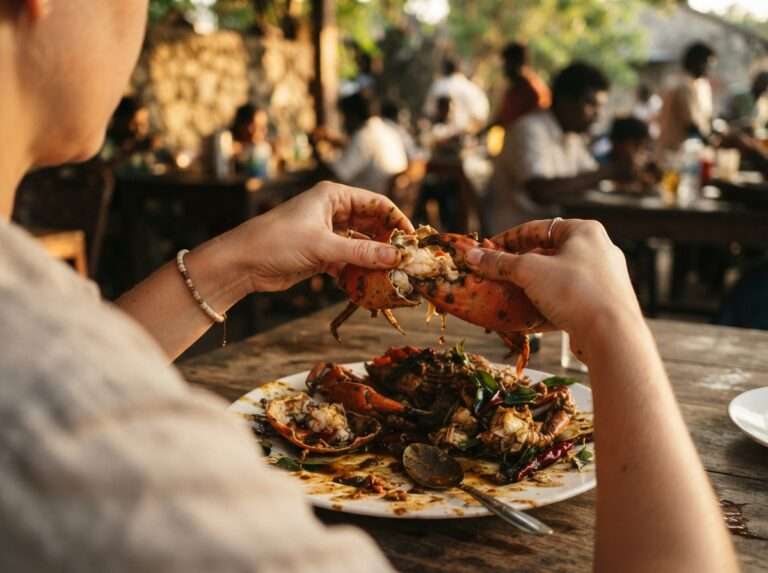
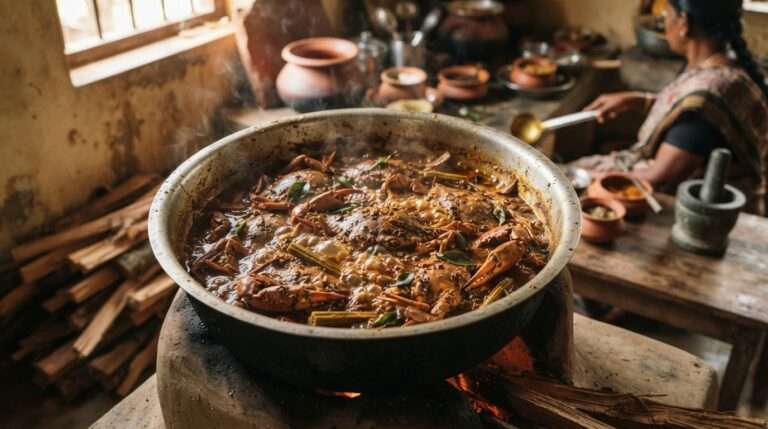
Up in the Tamil north, Jaffna does crab better than anywhere else on the island. Whole mud crabs are cooked in a fierce, dark gravy built on Jaffna curry powder, which runs hotter and more peppery than the southern blend. It is messy, hands-on and worth every bit of the work. If you are heading to Jaffna, this is the reason to go hungry.
15
Pol Sambol
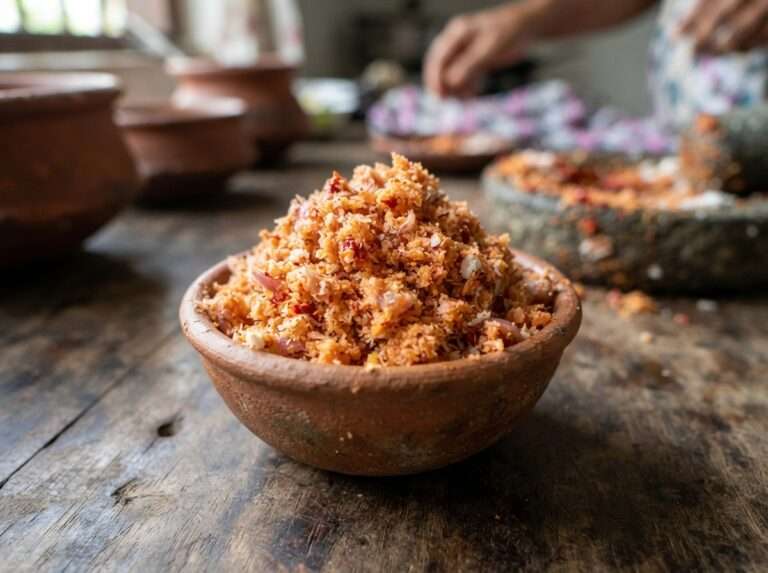
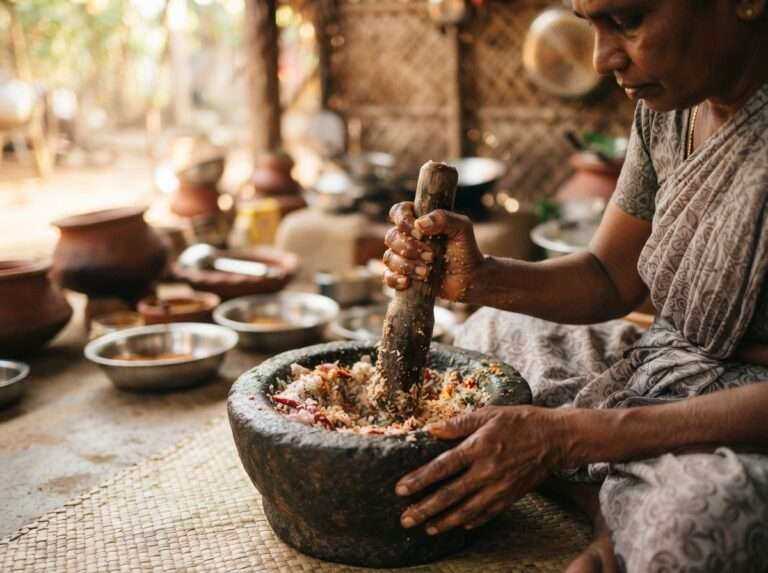
If one side defines the island, it is pol sambol. Freshly grated coconut is pounded with red chilli, lime, onion and a little Maldive fish until it turns a rusty pink. It is sharp, hot and faintly fishy, and it goes with absolutely everything, from a hopper at breakfast to a rice plate at lunch. Ask for it without Maldive fish if you want it vegetarian.
16
Gotu Kola Mallum (Sambola)
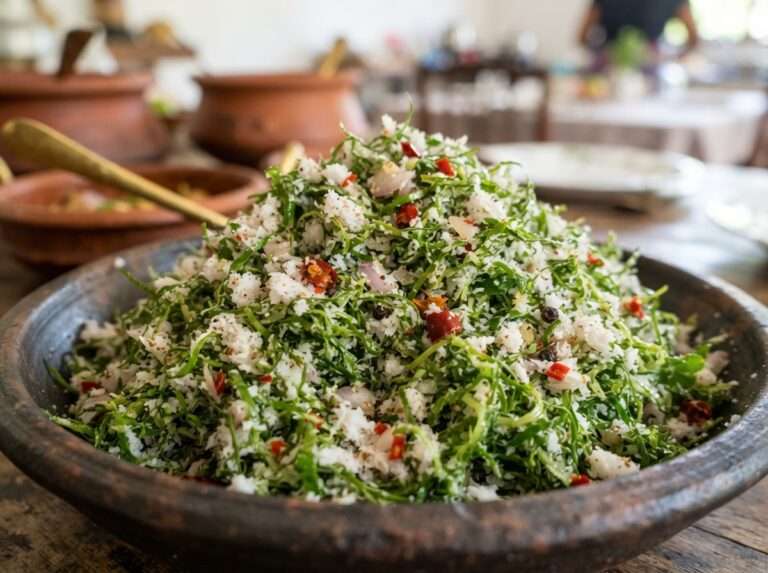
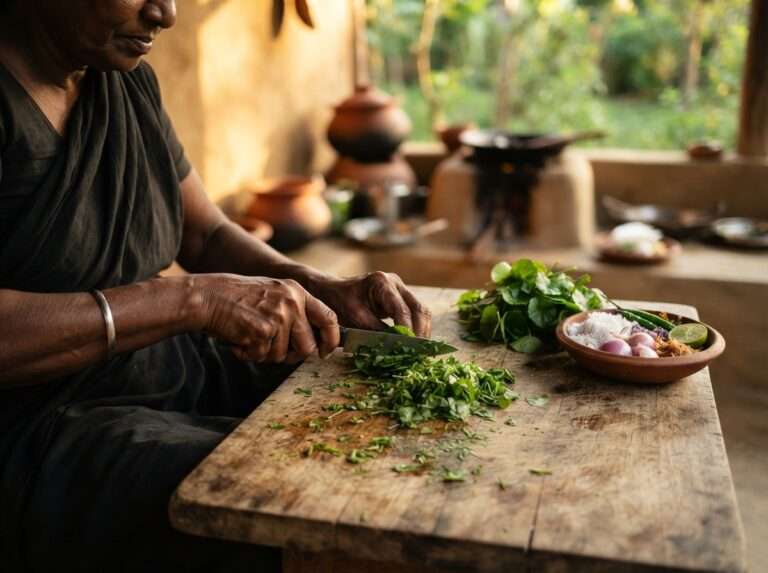
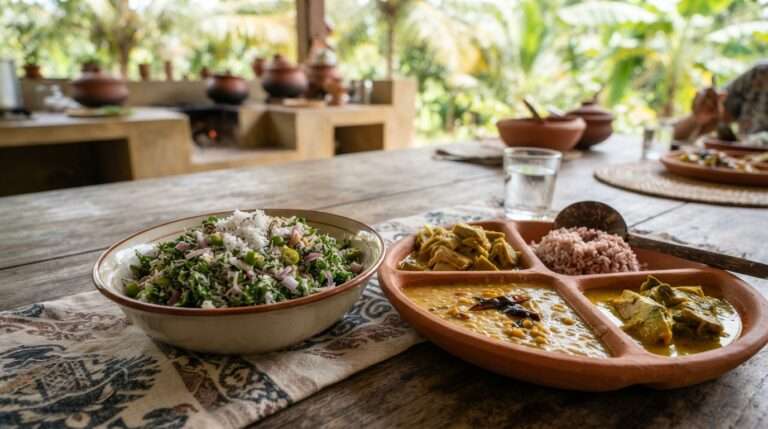
Mallum is Sri Lanka’s way of eating greens. Gotu kola (pennywort) is shredded fine and tossed with grated coconut, onion, green chilli, lime and sometimes a little Maldive fish. Unlike most mallums, which are lightly wilted in the pan, gotu kola is usually left raw, which is why it is also called gotu kola sambola. It is crunchy, herbal and cooling, the fresh counterpoint to a plate of rich curries, and it happens to be one of the healthiest things on the table.
17
Wambatu Moju (Eggplant Pickle)
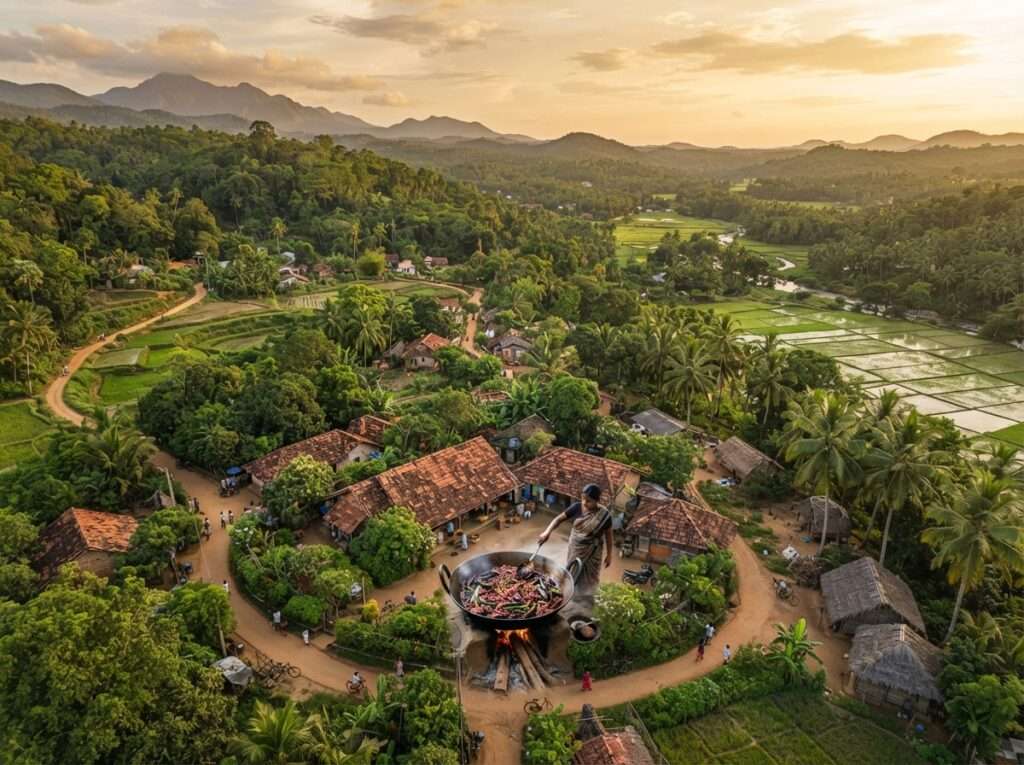
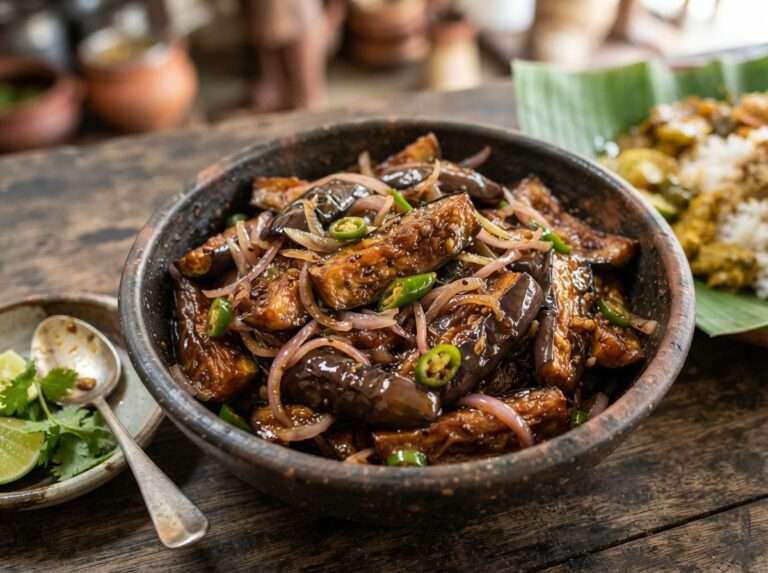
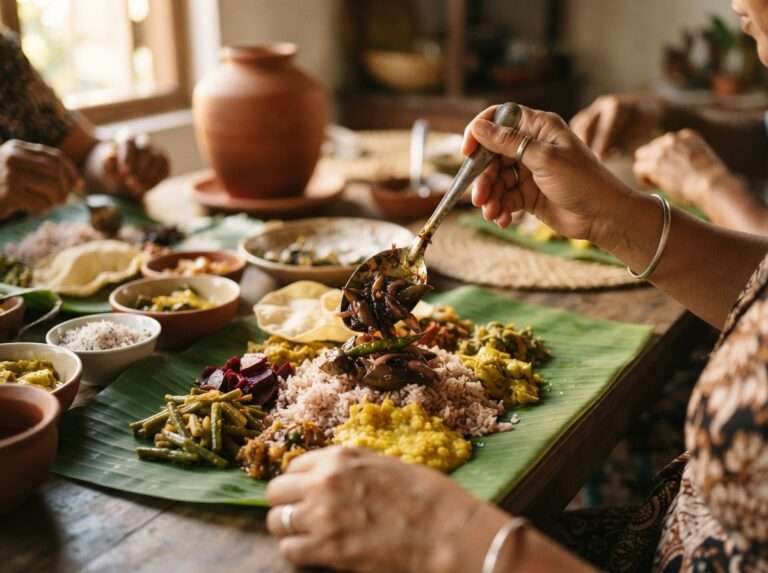
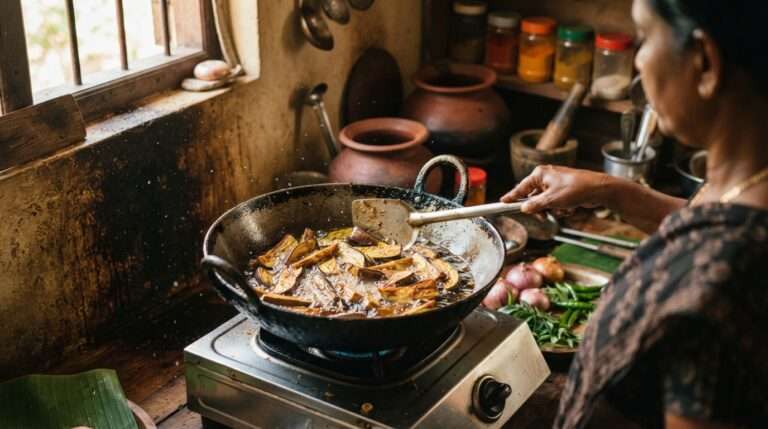
Eggplant is cut into wedges, deep-fried until crisp, then caramelised with sugar, vinegar, red onion, green chilli and mustard seeds. The result is sweet, sour, salty and hot all at once. Wambatu moju keeps for days and shows up on almost every special-occasion plate, including lamprais.
18
Short Eats
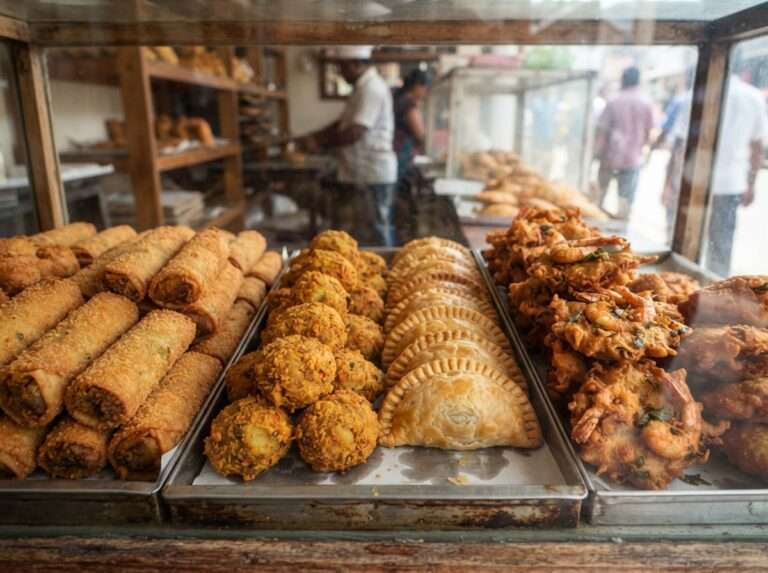
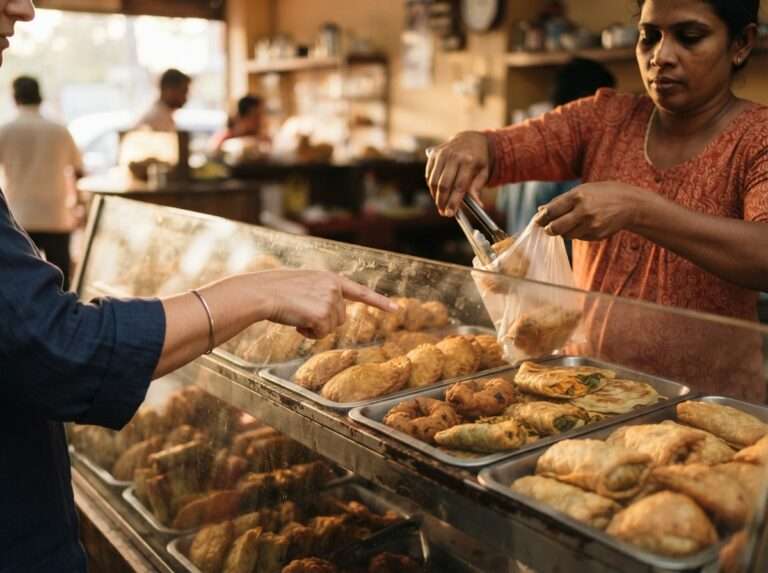
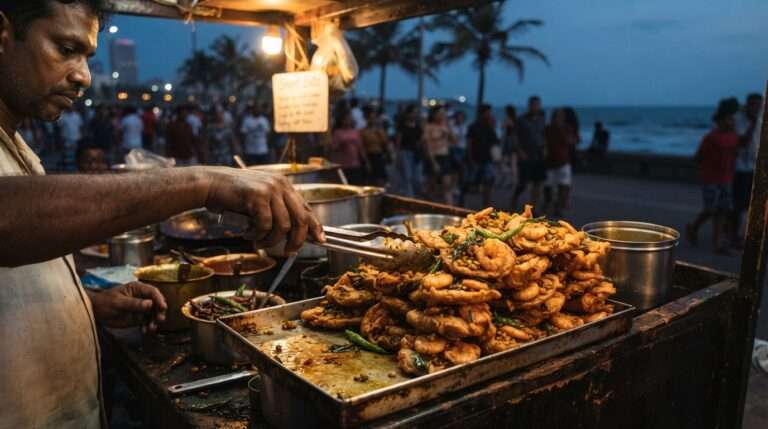
Short eats is the catch-all for the savoury snacks stacked in every Sri Lankan bakery case. Chinese rolls (a crumbed, deep-fried pancake wrap), fish cutlets, patties, and isso vadai (a crunchy lentil fritter topped with prawns, famous on Galle Face Green) are the ones to look for. They are cheap, portable and perfect with a cup of tea at 4pm. You point at what you want, they bag it, and you are back on the road in a minute.
19
Watalappan
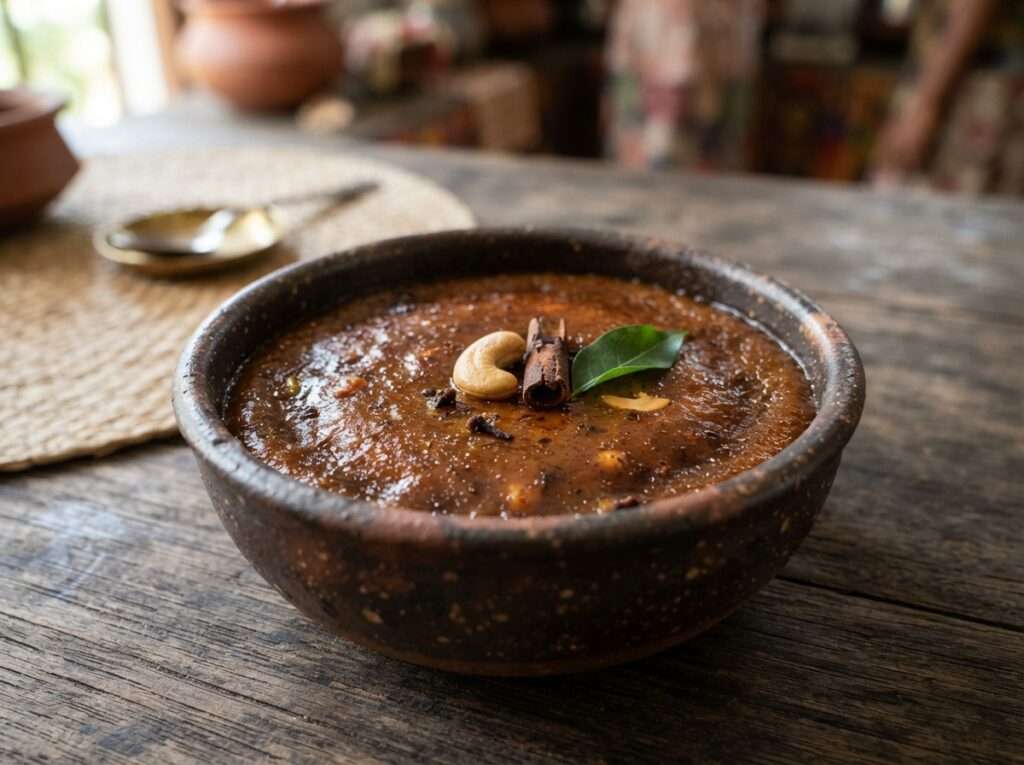

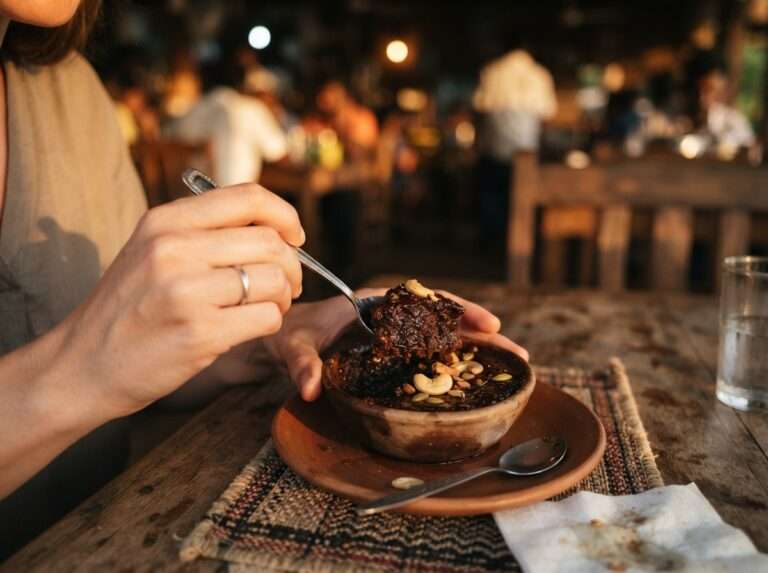
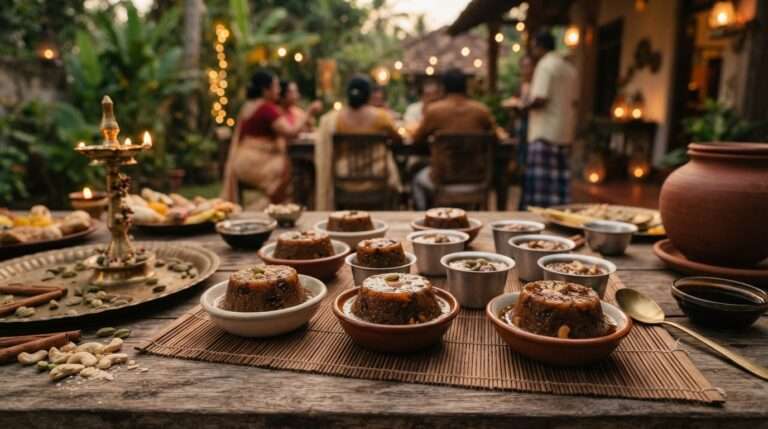
Watalappan is the dessert you will remember. It is a steamed custard of coconut milk and kithul jaggery, set with egg and scented with cardamom, clove and nutmeg, so it eats like a spiced, smoky creme caramel. Brought to the island by the Malay community, it is the sweet every Sri Lankan household makes for a celebration. Order it at the end of a rice-and-curry lunch.
20
Asmi
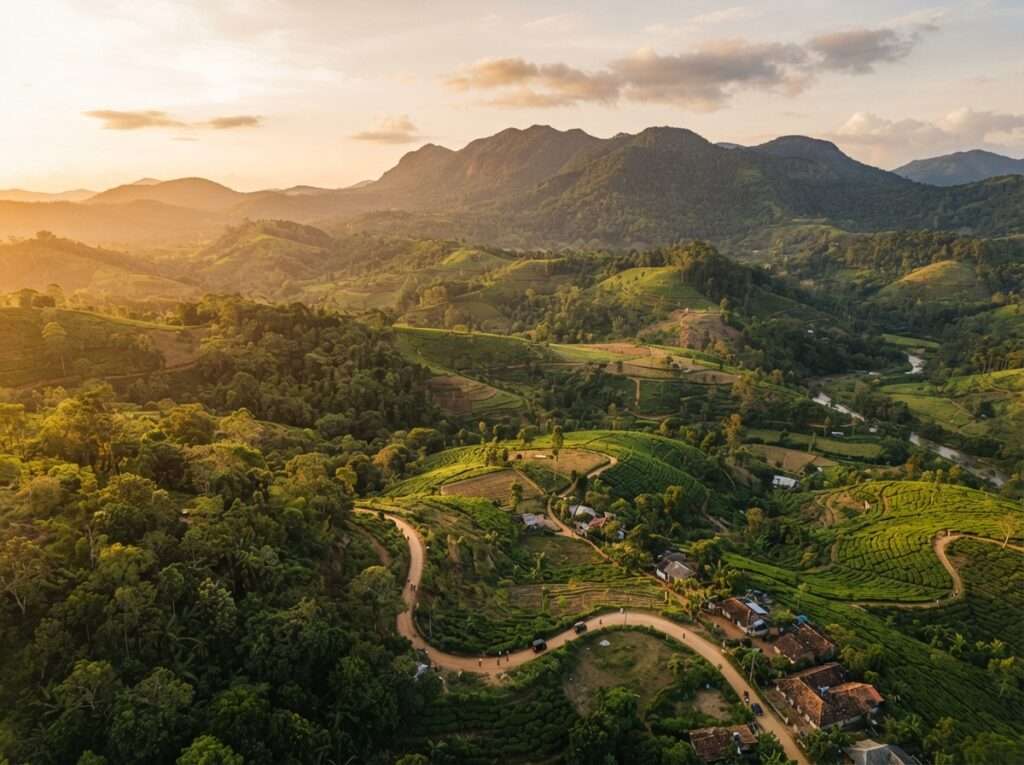
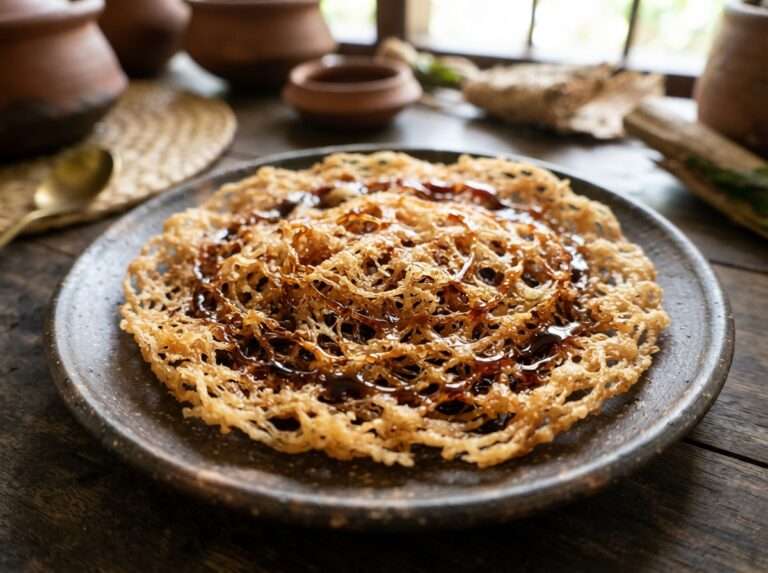
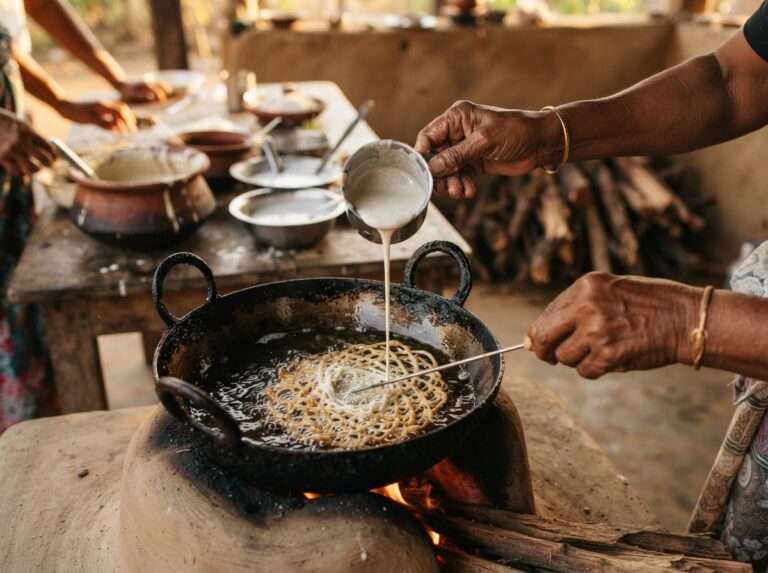
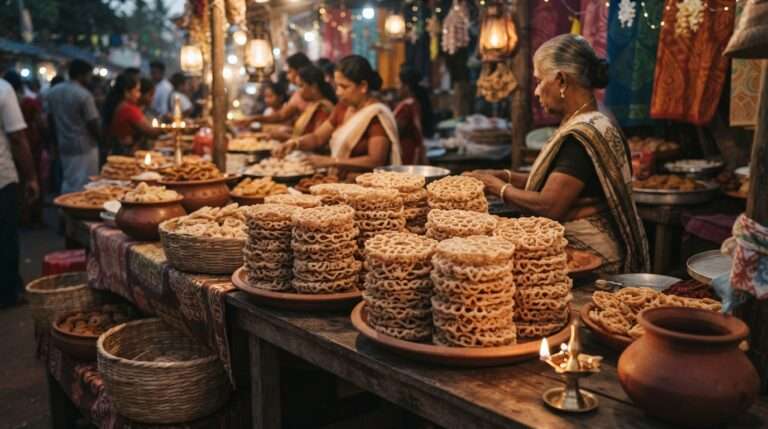
Asmi is festive-sweet theatre. A rice-flour and coconut-milk batter, bound and flavoured with wild cinnamon leaf, is drizzled by hand into hot oil in a lacy lattice, fried crisp and finished with treacle. It is light, crunchy and made mostly for New Year and weddings. If you see it at a sweet stall, buy more than you think you need.
What Makes Sri Lankan Food Different From Indian Food
Indian travellers are the ones who notice the difference fastest, because so much looks familiar. Hoppers sit right next to Kerala’s appam. Pittu is the twin of puttu. String hoppers are idiyappam by another name. And yet a Sri Lankan curry rarely tastes South Indian, and here is why.
Coconut is everywhere, and in more forms than most Indian kitchens use. It turns up as thick milk in curries, as grated flesh pounded into pol sambol, and as oil for frying. The souring is different too. Where a Chettinad or Kerala cook reaches for tamarind or kokum, a Sri Lankan cook uses goraka, a smoky dried fruit that gives fish ambul thiyal its black, tangy edge. The biggest surprise is umami. Dried Maldive fish, called umbalakada, is crumbled into vegetarian-looking sambols and curries, so a dish that reads veg often is not. Finally there is the curry powder itself, roasted dark until it smells of coffee, which is why a Sri Lankan chicken curry looks and tastes deeper than its Indian counterpart.
Sri Lankan Food vs South Indian Food, Side by Side
| Feature | Sri Lanka | South India |
|---|---|---|
| Main souring agent | Goraka (dried Garcinia) | Tamarind, kokum |
| Coconut | Milk, grated, and oil in almost everything | Common, but less dominant |
| Signature umami | Dried Maldive fish (umbalakada) | Mostly from spices and lentils |
| Curry powder | Roasted very dark, almost black | Lighter roast, more turmeric-forward |
| Heat level | High, chilli-forward | Varies, often tempered with coconut or curd |
| Closest cousins | Hoppers = appam, pittu = puttu, string hoppers = idiyappam | The originals of those three |
So if you love South Indian food, you will land on your feet here. Just expect everything to be a little hotter, a little more coconut-rich, and a lot more fish-forward than you bargained for.
How to Eat a Sri Lankan Rice and Curry Like a Local
If a plate arrives looking like a dozen bowls at once, here is the order that works.
- Start by spooning a little of each curry around the rice, not on top. You want to keep them separate so you can taste each one.
- Taste the pol sambol first on its own. It tells you how hot the rest of the meal will run.
- Mix with your right hand, pinching rice and one curry together into a small ball before eating. Cutlery is fine in restaurants, but your fingers read the temperature and texture better.
- Add the sambol and pickle in small amounts as you go, not all at once, so the heat builds instead of flattening everything.
- Keep a papadam on the side to add crunch and to cool a mouthful that got too spicy.
- Save a little plain rice and curd or a sweet for the end to settle the chilli.
A Few More Dishes Worth Chasing
Sri Lanka’s sweet table runs deep. Kavum (a dark oil cake), kokis (a crisp fried rosette borrowed from the Dutch) and aggala (jaggery-and-rice balls) crowd the New Year table. And then there is wood apple, a hard-shelled fruit the size of a large orange. You crack it open for a brown, tangy pulp that locals blend with jaggery and water into a thick, sour-sweet drink. It is an acquired taste, and a very Sri Lankan one. One sweet no local would leave off the list is curd and treacle: thick buffalo-milk curd, set in a clay pot and drizzled with kithul palm treacle, the everyday finish to a rice-and-curry lunch.
What to Drink in Sri Lanka
Ceylon tea is the obvious one, and the hill country around Nuwara Eliya is where to drink it at the source, strong and milky from a roadside stall after a walk through the estates. For heat relief, nothing beats a king coconut, or thambili, the bright-orange coconut cracked open and handed to you with a straw for a few rupees. If you drink alcohol, try arrack, a smooth spirit distilled from the sap of the coconut flower, usually mixed with soda and lime. A quick note on the law: drinking alcohol in public spaces such as streets, beaches and parks is prohibited in Sri Lanka, so keep it to licensed bars, restaurants and your hotel.
Where and How to Eat It All on a Sri Lanka Trip
The travellers we send to Sri Lanka come back talking about the food more than the beaches. The pattern that works: eat hoppers and string hoppers from a morning kade, do a proper rice-and-curry lunch inland (the hill country around Kandy and Ella is reliably excellent), chase seafood and sour fish curries down the south coast around Galle and Mirissa, and save Jaffna crab for the north if your route goes that far. Budget a roadside rice-and-curry at the low end and a sit-down seafood dinner at the higher end, and you will eat extremely well for very little. A good itinerary builds these food stops in rather than leaving them to chance, which is where a planned Sri Lanka tour package earns its keep.
If you want to bring a taste of the island home, our guide to shopping in Sri Lanka covers Ceylon tea, spices and where to buy them, and the Sri Lanka travel guide rounds up the rest of the trip.
The Short Version
Sri Lankan food rewards curiosity more than almost any cuisine in the region. Start with rice and curry, say yes to a hopper, brave a pol sambol, and finish with watalappan, and you will understand the island better than any guidebook can tell you. The best way to taste all 20 of these is on the ground, plate by plate, so when you are ready to plan the trip around the food, our Sri Lanka specialists can build an itinerary that puts the right dish in front of you in the right town.
FAQs
Sri Lankan Food: Frequently Asked Questions
Quick answers on the national dish, cost, spice levels, vegetarian options and what to eat where.
Rice and curry is the national dish of Sri Lanka. It is a plate of rice ringed by several small curries, sambols and a pickle, eaten by most Sri Lankans at lunch. The curries change from home to home and region to region, so no two plates are quite alike, but dhal, a fish or chicken curry and pol sambol are almost always there.
Hoppers (appa) and kottu are the two dishes most travellers come away raving about, alongside the national rice and curry. Hoppers are the crisp-edged bowl-shaped pancakes eaten at breakfast, while kottu is the chopped-roti street dinner you can hear being made from down the road. Fish ambul thiyal, kukul mas curry and lamprais round out the famous list.
It is close to South Indian food but clearly its own cuisine. Hoppers echo Kerala's appam, pittu mirrors puttu, and string hoppers are idiyappam. The differences are real, though. Sri Lanka uses far more coconut, sours curries with goraka instead of tamarind, roasts its curry powder almost black, and adds dried Maldive fish for umami. Expect it to run hotter than most Indian food.
A classic Sri Lankan breakfast is hoppers or string hoppers with a thin dhal curry, a coconut gravy called kiri hodi, and a chilli sambol. Pittu and milk rice (kiribath) are common too. On ordinary days, many locals simply eat rice and curry for breakfast, the same plate they will have again at lunch.
Watalappan is the dessert Sri Lanka is best known for. It is a steamed custard of coconut milk and kithul jaggery, set with egg and spiced with cardamom, clove and nutmeg, so it eats like a smoky creme caramel. It was brought to the island by the Malay community and appears at almost every celebration.
Yes, much of it is genuinely hot. Sri Lankan cooks use a lot of chilli, and sides like pol sambol and lunu miris are built around it. You can ask for dishes to be made less spicy (say 'not spicy' when you order), and coconut-based curries like dhal and polos are milder places to start. A king coconut or some curd cools the heat fast.
Very much so. Rice and curry is easy to order fully vegetarian, with dhal, jackfruit (polos), eggplant, greens (mallum) and sambols. The one thing to watch is dried Maldive fish, which is often added to sambols and some vegetable curries, so ask for pol sambol and mallum without it if you need the dish to be strictly vegetarian.
Kottu is the headline street food, chopped to order on a hot griddle. Beyond it, look for short eats from any bakery case: Chinese rolls, fish cutlets and patties. Isso vadai, a lentil fritter topped with prawns, is a Galle Face Green classic in Colombo. Egg hoppers from a morning stall count too, and cost very little.
In 2026, a filling meal at a local rice-and-curry shop or a plate of kottu costs roughly LKR 500 to 1,200. A sit-down meal at a mid-range restaurant runs higher, closer to LKR 1,500 to 3,000 a head. Street snacks and short eats are the cheapest way to eat, often under LKR 300. Confirm current prices locally, as they move with the exchange rate.
Many do, and arrack is well worth trying. It is a spirit distilled from the sap of the coconut flower, smooth and lightly sweet, usually served with soda and lime. A pint of local Lion Lager is the easy beer option. Just keep your drinking to licensed bars, restaurants and your hotel, since drinking alcohol in public spaces is prohibited by law. One thing to plan around is Poya (full moon) days, which fall monthly and are public holidays: the sale and service of alcohol is banned nationwide at all licensed premises, hotels and tourist resorts included, so bars and liquor shops close for the day.
Ceylon tea is the national drink, grown in the hill country and best enjoyed strong and milky at the source around Nuwara Eliya. For something non-alcoholic and cooling, king coconut (thambili) water, sold from roadside stalls, is the local favourite in the heat.
Head south, around Galle and Mirissa, for seafood and the sour fish curry ambul thiyal. Go north to Jaffna for its famous crab curry and a hotter, more peppery Tamil-style curry powder. The hill country in the middle is the place for a classic vegetable-heavy rice and curry and, of course, Ceylon tea.