
 8D / 7N
6% OFF


Where To Shop In Kandy, Sri Lanka
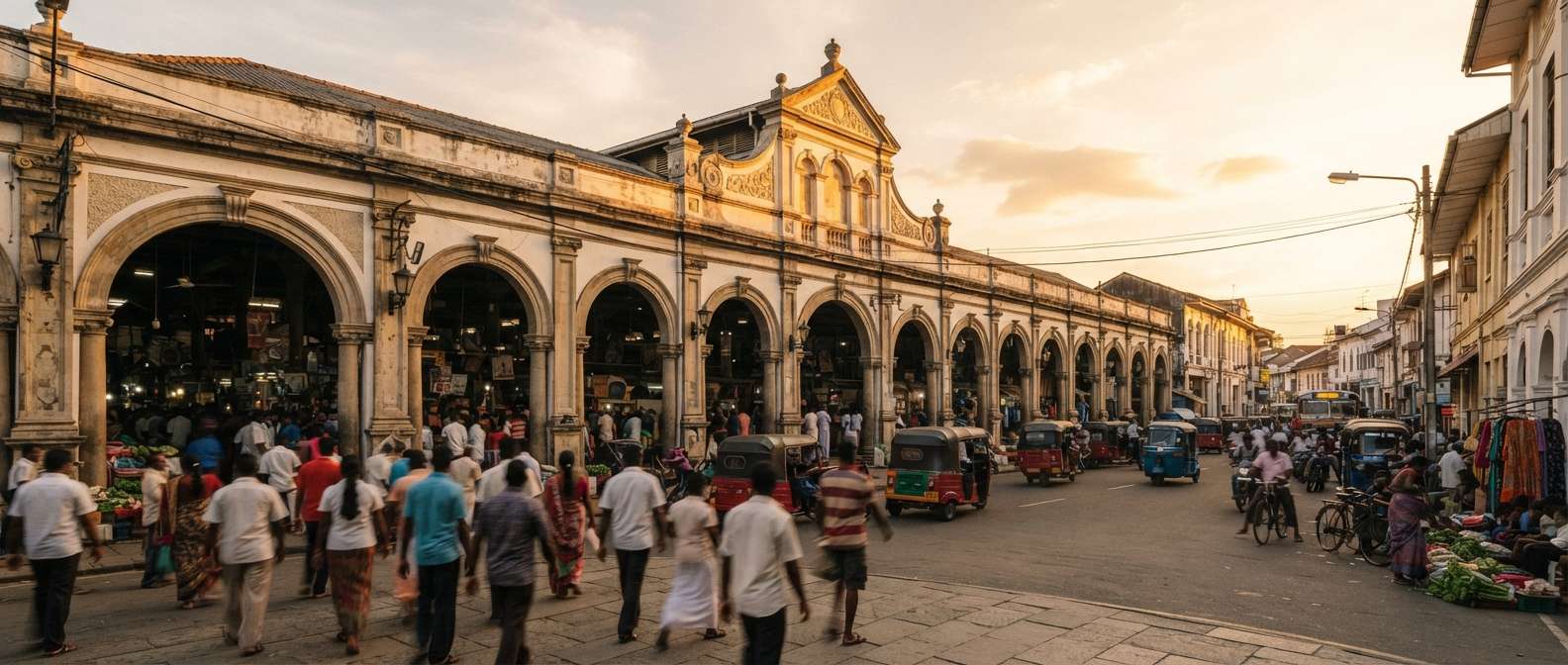
The best markets in Kandy sit within a 15-minute walk of the Temple of the Sacred Tooth Relic, and the one to start with is the Kandy Municipal Central Market, the covered Market Hall on Market Street. It opens around 7 am and runs to roughly 9 pm every day, entry is free, and its two floors hold everything from fresh produce and loose Ceylon tea on the ground floor to batik, brassware, and wood carvings on the balcony above. Around it you will find the modern Kandy City Centre mall, the government-run Laksala for fixed-price crafts, and Cargills Food City for spices to pack home. This guide covers where each one is, when it opens, and what is genuinely worth buying.
Key takeaways
- Start at the Kandy Municipal Central Market (the Market Hall) on Market Street, open about 7 am to 9 pm daily, free entry.
- Go early, between 7 and 10 am, for the freshest produce and the thinnest crowds.
- Buy Ceylon tea, batik, Dumbara mats, and brassware. These are the things Kandy does better than Colombo.
- Pay fixed prices at Laksala and the Kandyan Art Association if you would rather not haggle.
- Budget a half-day to combine the Central Market, the KCC mall, and one craft shop on foot.
Kandy markets at a glance
Six places cover almost everything a visitor wants to buy in Kandy, from a cheap bunch of bananas to a certified blue sapphire. Here is the quick comparison before the detail.
| Market | Best for | Opening hours | Where |
|---|---|---|---|
| Kandy Municipal Central Market (Market Hall) | Produce, Ceylon tea, batik, souvenirs | About 7 am to 9 pm daily, free entry | Market Street, city centre |
| Kandy City Centre (KCC) | Mall brands, ODEL, food court, AC comfort | Daily, late morning to evening | Dalada Veediya, central Kandy |
| Laksala | Government fixed-price crafts and tea | Daily, daytime | City centre |
| Kandyan Art Association | Authentic Kandyan brassware, Dumbara mats | Daily, daytime | Lakeside, Sangaraja Mawatha |
| Cargills Food City | Spices, tea, snacks, packaged food | Daily, until late evening | 3 Dalada Veediya |
| Evening street stalls | Cheap textiles, street food after dark | Evenings | Around the clock tower and bus stand |
Sri Lanka
Sri Lanka
Best Time
July - August
Select Package Type
Best Selling Packages


Six Kandy Markets, And Where To Shop For What
A quick map of Kandy's main markets and craft shops: what each one is best for, when it opens, and how to shop it without getting ripped off.
Explore Popular Destination In Sri Lanka
01
Kandy Municipal Central Market (the Market Hall)
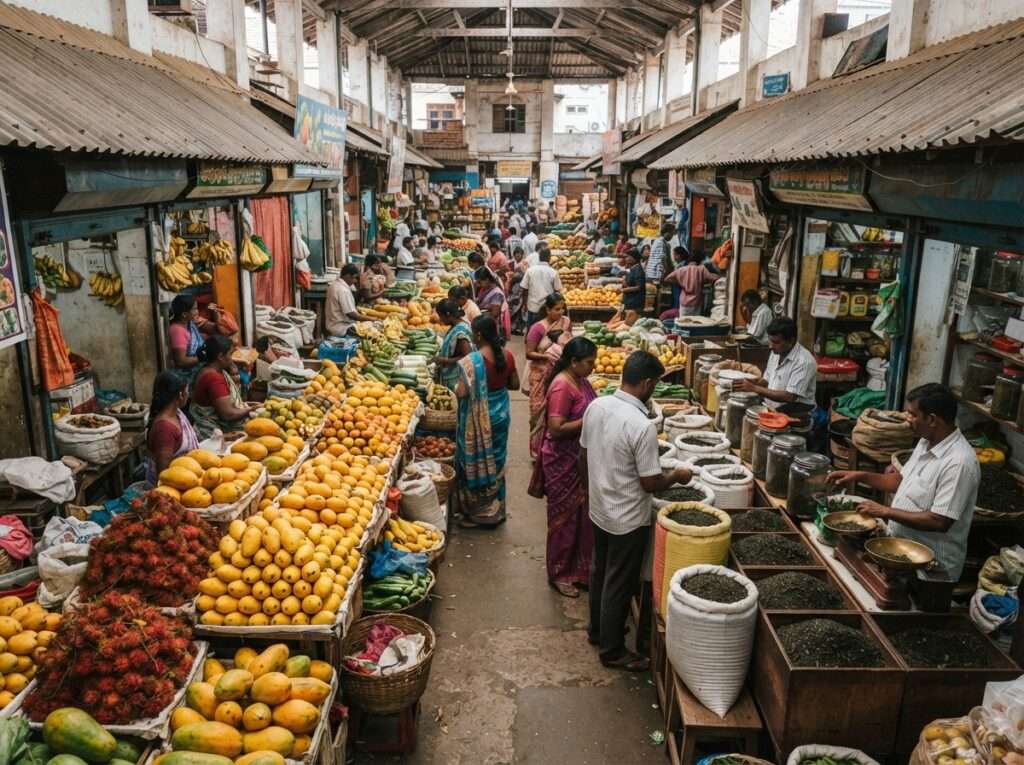
This is the market most people mean when they search for the Kandy market or the Kandy Market Hall. It is the covered Municipal Central Market on Market Street, a short walk west of the Temple of the Sacred Tooth Relic, and it is free to walk in. The ground floor is a working produce hall: pyramids of mango and rambutan, dried fish, curry powders measured out by the gram, and loose Ceylon tea sold by weight for a fraction of what the airport charges. Climb the stairs and the character changes completely. The balcony that rings the upper floor is wall-to-wall souvenir stalls selling batik, wood masks, lacquerware, brass, and spice boxes.
Come between 7 and 10 am. The produce is freshest, the light through the roof is good for photos, and you beat both the heat and the tour groups. Prices on the upper floor are not fixed, so the number you are first quoted is a starting point, not the price. The stalls sit close together, which makes it easy to compare three batik sellers in five minutes before you commit.
Related Tour Packages


❮
❯
02
Kandy City Centre (KCC) and ODEL
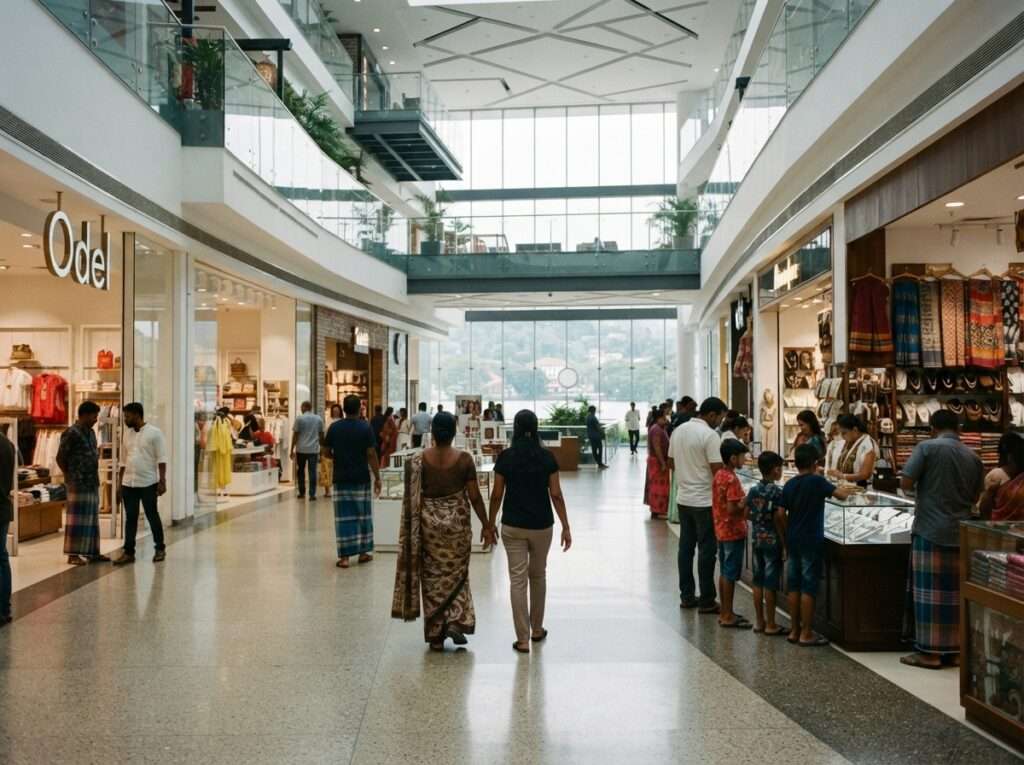
Kandy City Centre, known locally as KCC, is the air-conditioned mall on Dalada Veediya near Kandy Lake. It is the opposite experience to the Market Hall: fixed prices, familiar chains, a supermarket, a food court, and clean toilets, which matters on a long sightseeing day. Kandy’s big fixed-price name is ODEL, Sri Lanka’s best-known fashion and lifestyle store, which stocks well-made cotton and linen clothing, printed tees, and a reliable selection of packaged Ceylon tea and spices if you have run out of patience for haggling. For a fuller rundown of where else to shop in the city,
see our guide to shopping in Kandy. Treat KCC as the easy, no-bargaining option and the Market Hall as the one with the character.
Related Tour Packages


❮
❯
03
Laksala and the Kandyan Art Association: fixed-price, authentic crafts
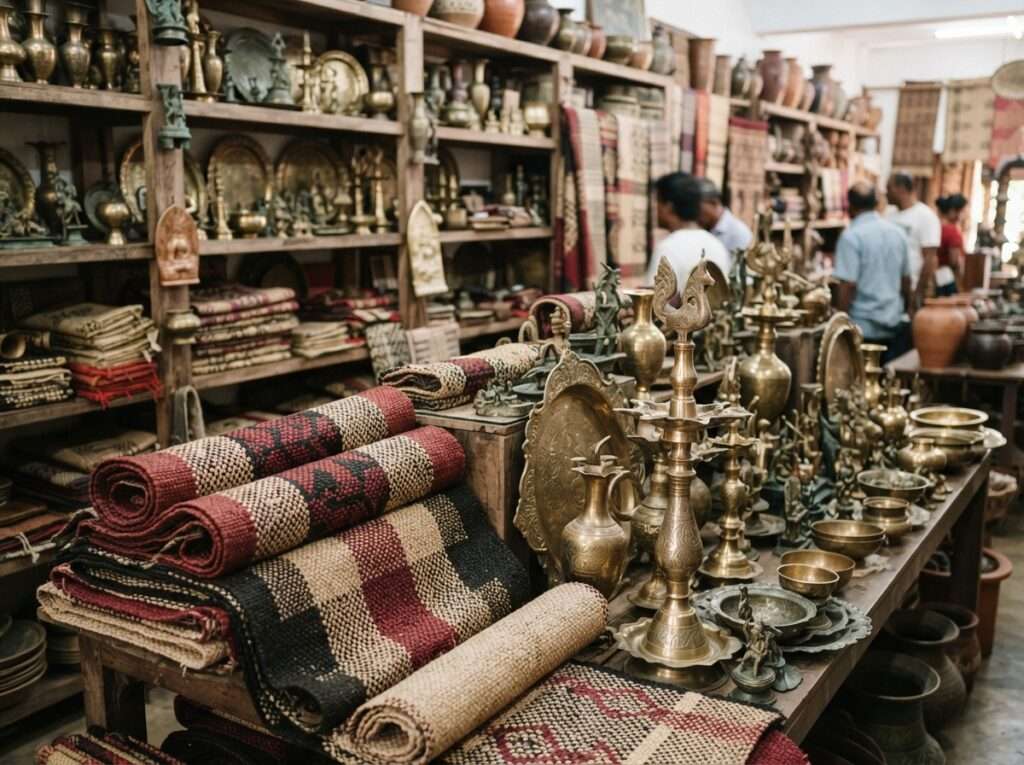
If the thought of negotiating puts you off, these two solve it. Laksala is the state-owned craft emporium, so every price is fixed and printed, and what you buy is genuine Sri Lankan work rather than an import. It is the safest place to pick up Ceylon tea, wooden masks, and lacquer without wondering whether you overpaid. The Kandyan Art Association, by the lake on Sangaraja Mawatha, is the other one worth the detour. It represents local artisans and is the most reliable place in Kandy for real Kandyan brassware from the Pilimathalawa foundries and hand-woven Dumbara mats, two crafts the souvenir stalls often fake with machine-made copies. You pay a little more than you might after hard bargaining elsewhere, but you know the piece is the real thing.
Related Tour Packages


❮
❯
04
Cargills Food City
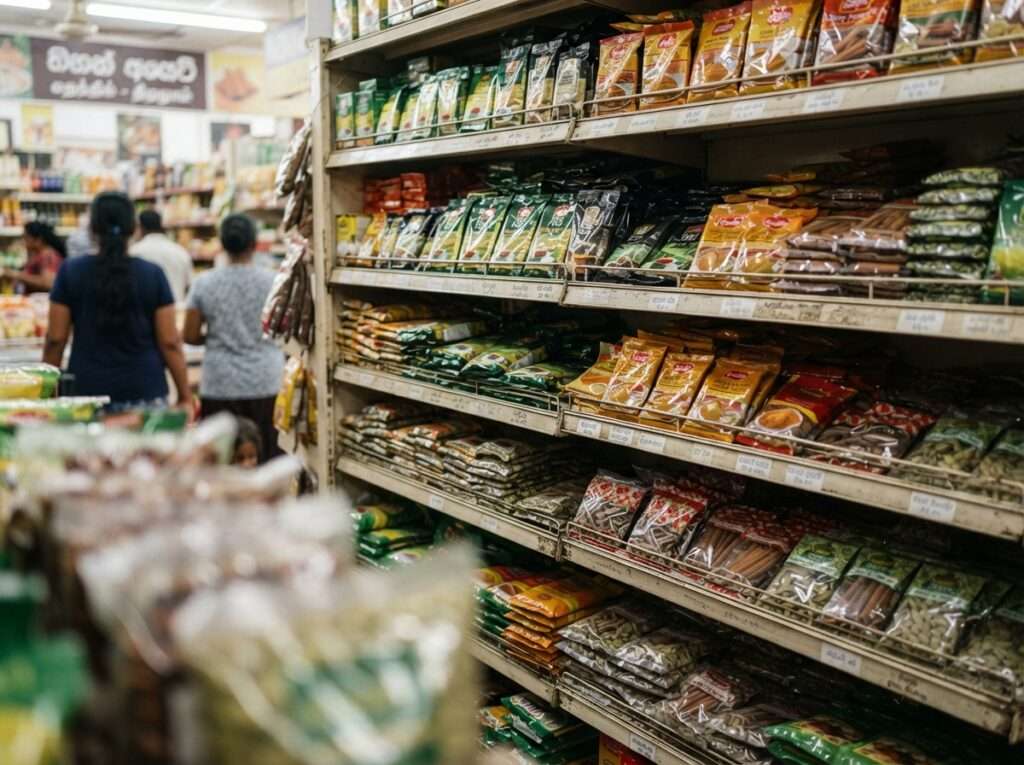
Cargills Food City on Dalada Veediya is a supermarket rather than a bazaar, and that is exactly why it is useful. This is where you buy the edible souvenirs that actually survive the flight home: sealed packets of Sri Lankan curry powder, cinnamon and cardamom, bottled chutneys and pickles, wood-apple and other local jams, and boxed Ceylon tea at set prices. Everything is labelled and air-conditioned, and it stays open late into the evening when the Market Hall has closed. It is the sensible last stop before you leave Kandy, and a good backup for anything you meant to buy at the market but ran out of time for.
05
Night and street markets around Kandy
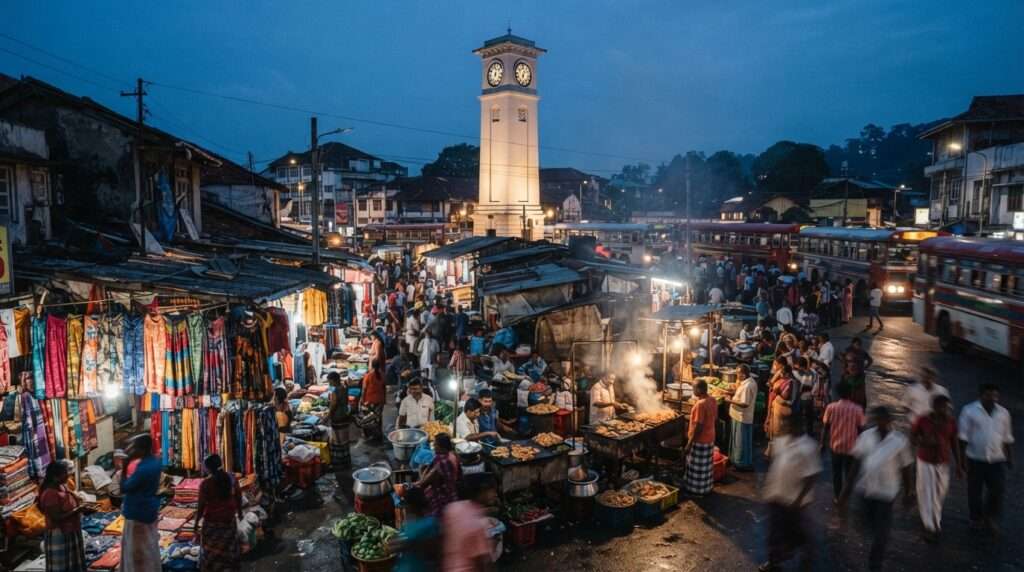
Kandy does not have a single dedicated night bazaar the way some Asian cities do, so if that is what you are searching for, set expectations. What it has instead are evening street stalls that cluster around the clock tower and the bus stand once the day market winds down, selling cheap textiles, phone accessories, fried snacks, and street food. They are good for a wander and for very cheap clothing, less so for quality crafts. For anything after dark that needs opening hours you can rely on, the KCC mall and Cargills are your real evening options. The genuine market experience in Kandy is a morning one.
What to buy in Kandy, and how to spot the real thing
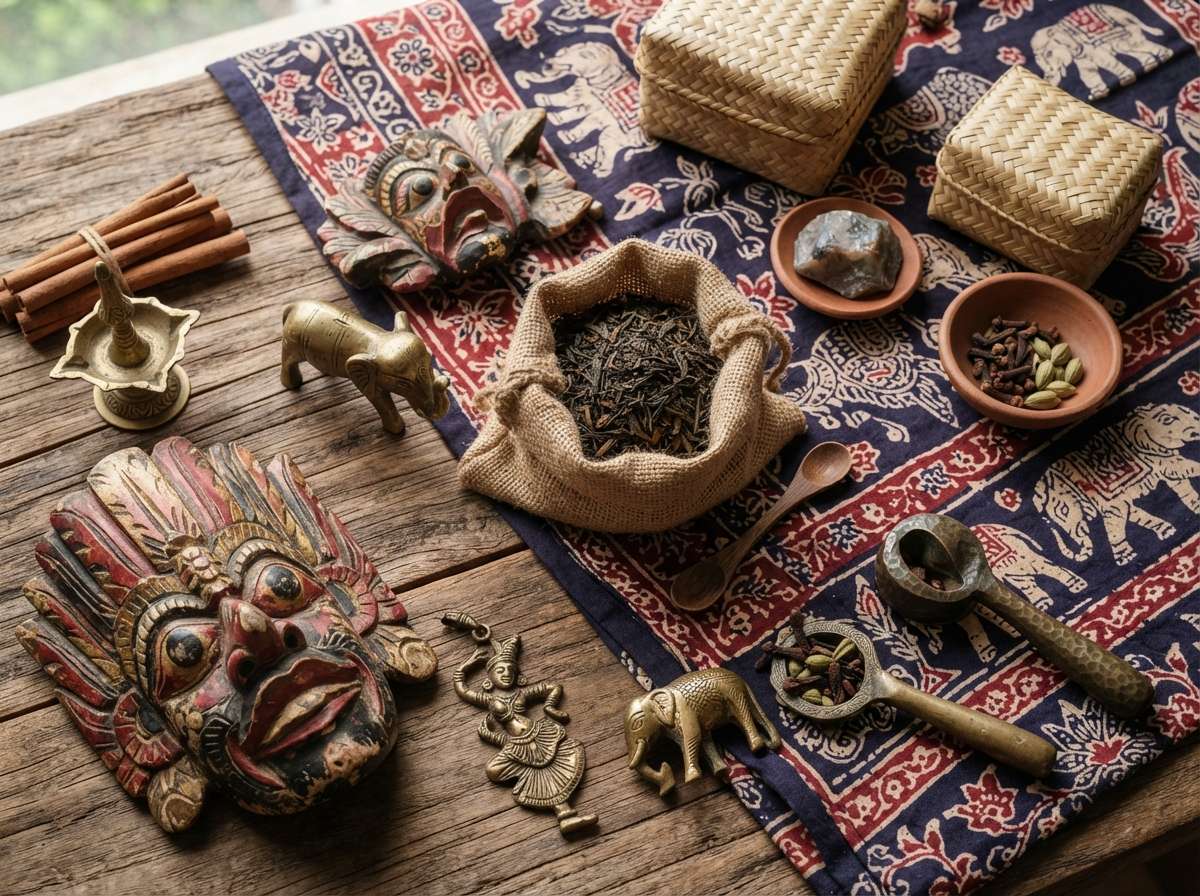
Kandy sits in the craft heartland of the hill country, so a handful of things are worth seeking out here specifically rather than buying generically in Colombo or at the airport.
| What to buy | What to look for | Where |
|---|---|---|
| Ceylon tea | Loose high-grown leaf sold by weight, not supermarket bags | Central Market ground floor, Laksala |
| Batik | Hand-waxed wall hangings and sarongs, not screen prints | Central Market, specialist batik studios |
| Dumbara mats | Hand-woven mats with geometric patterns | Kandyan Art Association |
| Brassware | Pilimathalawa cast-brass oil lamps and trays | Kandyan Art Association, Laksala |
| Wood carving and lacquer | Kandyan masks, turned bowls | Central Market upper floor |
| Gems and silver | Certified blue sapphire from a licensed dealer only | Established jewellers such as Hemachandras |
How to shop Kandy's markets without getting ripped off
- Decide first whether you want to haggle. If not, go straight to Laksala, the Kandyan Art Association, or KCC, where prices are fixed.
- At the Market Hall, treat the first quote as roughly double. Smile, counter at about half, and settle somewhere in the middle.
- Compare three stalls before you buy anything. They sit side by side on the upper balcony, so it costs you two minutes.
- Carry small rupee notes. Sellers rarely have change for large notes, and ‘no change’ is a classic way to round the price up.
- Buy gems only from an established, licensed jeweller with certification. Street ‘blue sapphire’ is the one souvenir in Kandy worth being firm about.
- Keep valuables zipped and in front of you in the crowded ground-floor lanes, the same as any busy produce market anywhere.
Planning your Kandy shopping day
Give yourself a morning at the Market Hall, a cool midday hour at KCC or Cargills, and one craft shop for the pieces you want to be sure are genuine, and you will have covered the best of shopping in Kandy without rushing. If you are still mapping out the wider trip, including the best season to travel and how Kandy links to Sigiriya and the coast,
our Sri Lanka travel guide has the full picture, and you can browse customisable Sri Lanka tour packages that fold a Kandy stop into a longer island itinerary.
FAQs
Frequently asked questions about markets in Kandy
The main Kandy Municipal Central Market (the Market Hall) opens around 7 am and runs to roughly 9 pm every day, and entry is free. Most craft shops and Laksala keep daytime hours, while the KCC mall and Cargills Food City open later in the morning and stay open into the evening. For the best of the market, aim to arrive between 7 and 10 am, when the produce is freshest and the crowds are thinnest.
No. The Kandy Municipal Central Market, often called the Market Hall or Central Market, is free to enter. You simply walk in off Market Street and browse both the ground-floor produce hall and the upper-floor souvenir balcony at no charge. You only pay for what you buy, and most of the upstairs stalls expect you to bargain on the price before you do.
Kandy is the place for loose Ceylon tea, batik, hand-woven Dumbara mats, Kandyan brassware, and carved wooden masks. For edible gifts that travel well, buy sealed curry powder, cinnamon, and cardamom from Cargills. If you want gemstones, especially blue sapphire, buy only from an established, licensed jeweller with certification rather than from a street seller.
Go to Laksala, the government-run craft emporium, or the Kandyan Art Association by the lake. Both sell genuine Sri Lankan crafts at set, printed prices, so there is no haggling and no guesswork about authenticity. The KCC mall and Cargills Food City are also fixed-price. Save the bargaining for the Market Hall's upper floor and the evening street stalls.
Not a dedicated night bazaar. After the day market closes, evening street stalls gather around the clock tower and the bus stand selling cheap textiles, snacks, and street food, which is fun for a wander but not the place for quality crafts. For reliable evening shopping with fixed hours, the KCC mall and Cargills Food City are your best bet. The real market experience in Kandy is a morning one.
Yes, at the Kandy Municipal Central Market's souvenir stalls and at the evening street stalls, bargaining is normal and expected. Treat the first price you are quoted as a starting point, counter at about half, and settle in the middle. Bargaining is not done at Laksala, the KCC mall, or Cargills, where prices are fixed, so you can shop those without any negotiation.
The Kandy Municipal Central Market, or Market Hall, is on Market Street in the centre of Kandy, a 10 to 15 minute walk west of the Temple of the Sacred Tooth Relic. It is easy to combine with a temple visit and sits close to the Kandy City Centre mall by the lake, so you can do all three on foot in a single morning.
Early morning, between 7 and 10 am, is the best time. The produce is at its freshest, the covered hall is cooler, the natural light is good for photos, and you arrive before the tour groups. Weekday mornings are quieter than weekends. If you only have an evening free, head to the KCC mall or Cargills instead, since the main market effectively winds down after dark.
Yes, and it is one of the best things to buy here. The ground floor of the Central Market sells loose high-grown Ceylon tea by weight, usually far cheaper and fresher than the boxed tea at the airport. Laksala and Cargills also stock sealed, fixed-price tea if you prefer a labelled packet for gifts. Buy loose leaf rather than tea bags for the better flavour.