7D / 6N
8% OFF


Which Markets Are In Kerobokan?
Kerobokan’s own market is Pasar Kerobokan, the traditional morning market at the Lio Square junction on Jalan Raya Kerobokan, in Kerobokan Kelod. It opens before 6 am, and the first three hours are when the canang offering sellers, flower ladies and fish stalls are at full stretch. After about 4 pm the food carts take over at Taman Sari Market, the same compound’s frontage on Jalan Gunung Tangkuban Perahu, and the sate smoke carries on until late. By day, though, Kerobokan is better known for teak and rattan furniture, made to size in the workshops along Jalan Raya Kerobokan and Jalan Mertanadi.
Many lists of markets in Kerobokan send you to Denpasar, Ubud or Canggu instead. This guide covers the 8 markets and shopping streets in Kerobokan and on its Dalung edge, then 4 worth the short drive, with hours, prices in rupiah and rupees, and what to eat if you are vegetarian, Jain or eat only halal.
Key takeaways
- Reach Pasar Kerobokan by 7 am. By 9 am the offering stalls are packing up and the scooter traffic at Lio Square has doubled.
- Go back after 5 pm for dinner at Taman Sari Market, where sate, bakso and nasi goreng cost IDR 10,000 to 25,000 (about ₹55 to ₹130) a plate.
- Carry IDR 2,000 to 50,000 notes. Neither the morning market nor the night stalls take cards.
- Order furniture on Jalan Raya Kerobokan in the first days of your trip. Made-to-size pieces take 2 to 6 weeks, and sea freight to India adds roughly a month on top.
- Drive 10 to 20 minutes to Seminyak for boutiques, or 25 to 40 minutes to Canggu on a Sunday for the Samadi farmers’ market.
Indonesia
Bali
Pasar Kerobokan at dawn, the Taman Sari night market, the teak and rattan workshops on Jalan Raya Kerobokan and four markets a short drive away
Best Time
April - October
Select Package Type
Best Selling Packages


12 Markets In And Near Kerobokan
The 8 markets and shopping streets inside Kerobokan come first, starting with Pasar Kerobokan and the night market at Lio Square, then the furniture strips, the beach-side boutiques, Pasar Dalung and the supermarkets. Four nearby markets in Seminyak, Canggu and Denpasar follow.
-
Pasar Kerobokan
-
Taman Sari Market (Kerobokan Night Market)
-
Open Night Market Kerobokan
-
Jalan Raya Kerobokan Furniture Strip
-
Jalan Mertanadi
-
Batu Belig And Petitenget Boutiques
-
Pasar Dalung
-
Pepito, Alive And Green Habit (Supermarkets)
-
Seminyak Village And Seminyak Square
-
Samadi Sunday Market
-
Love Anchor Canggu
-
Pasar Badung
Explore Popular Destination In Bali
01
Pasar Kerobokan
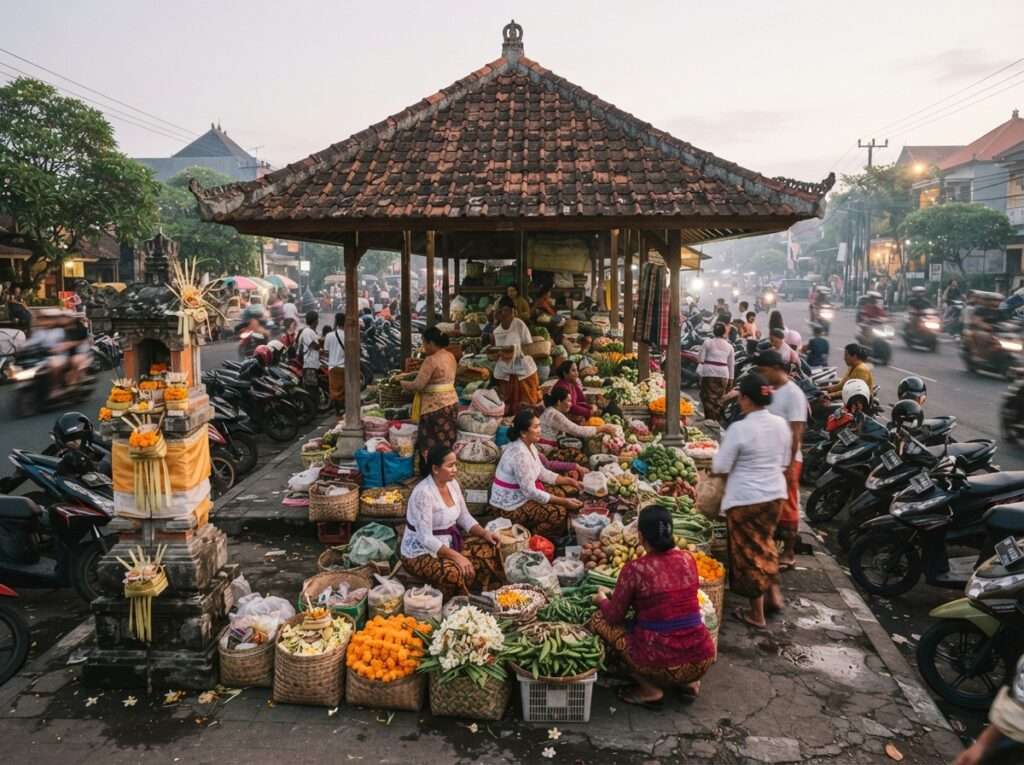
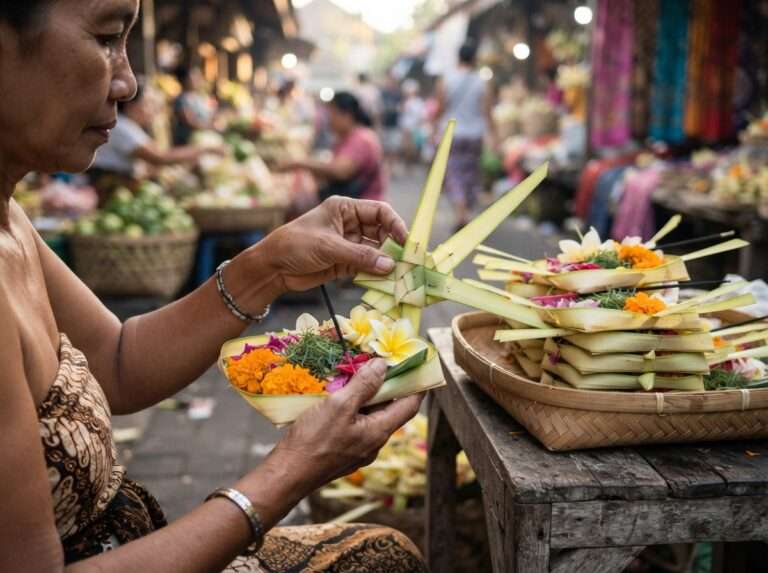
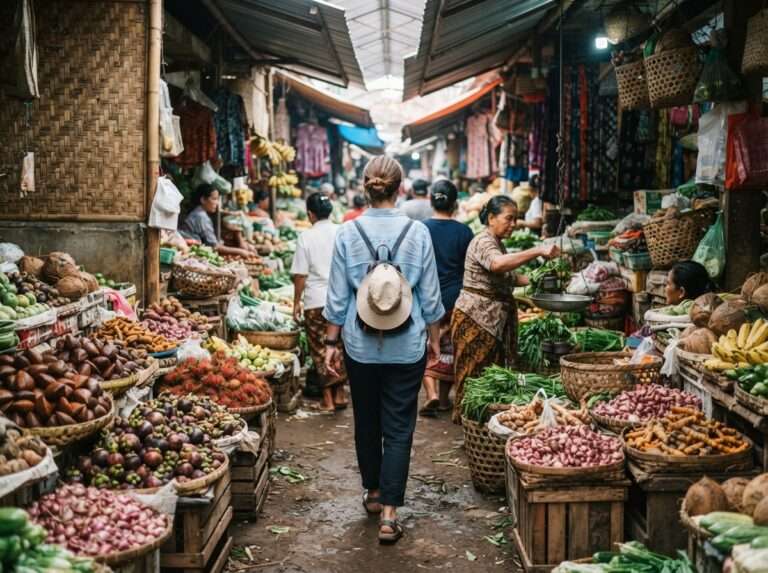
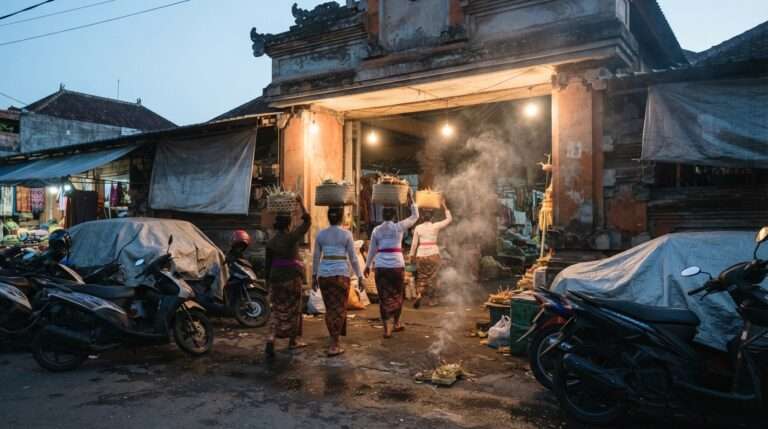
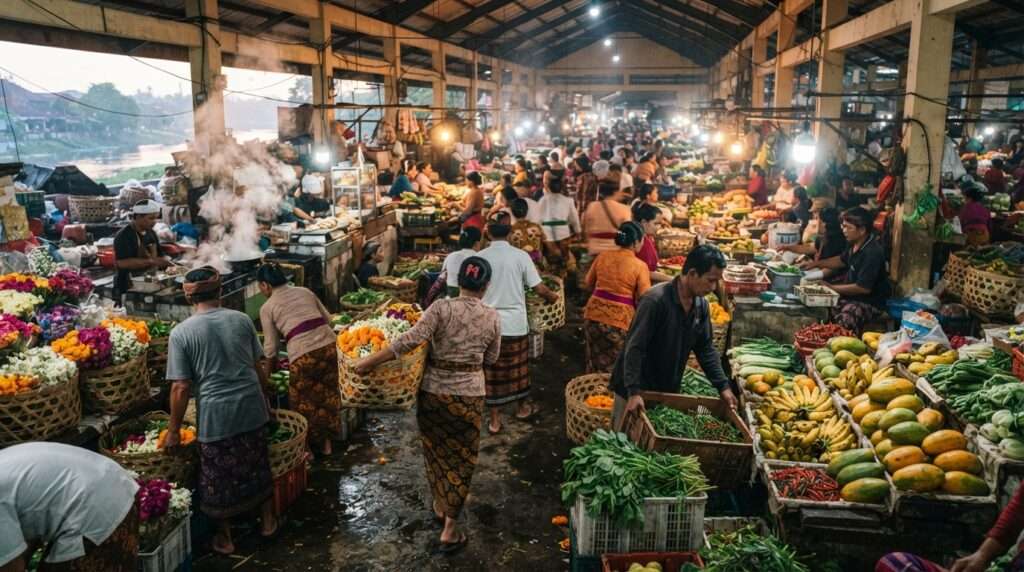
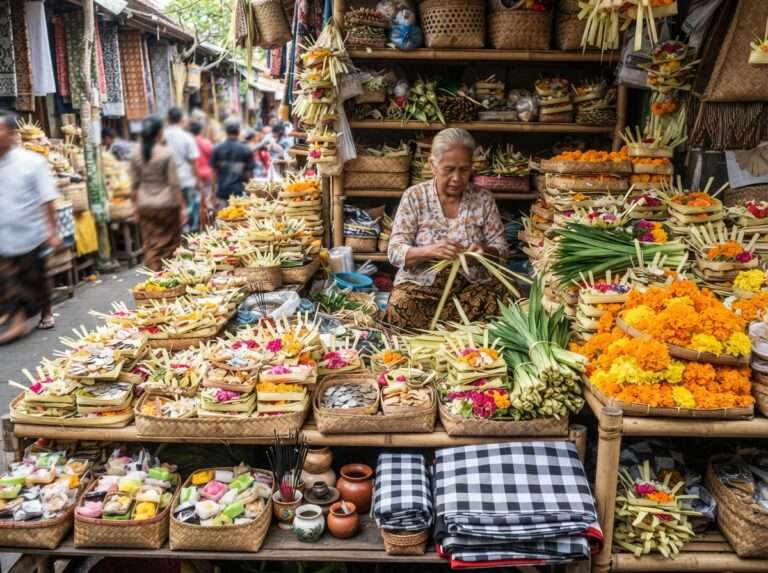
Pasar Kerobokan is the desa market for the whole village, and it sits right where Jalan Raya Kerobokan meets the roads to Umalas and Petitenget, the junction everyone calls Lio Square. Come at 6 am and the first thing you notice is colour. Women sit behind low trays of marigolds, frangipani and torn pandan, folding palm-leaf canang sari for the day’s offerings, and selling them by the dozen to households who will place them on shrines and doorsteps before breakfast.
Further in, the covered hall is fish on ice, slabs of pork, live chickens, mounds of shallots, galangal and turmeric, and bags of base genep, the Balinese spice paste, ground fresh. Snake fruit, mangosteen and rambutan are cheapest here between November and February. Look for the jajan Bali sellers near the front. Their green and pink rice cakes in banana leaf cost IDR 2,000 to 5,000 and are the easiest thing to buy with no shared language.
This is a market for residents, not a souvenir bazaar. Nobody will pull you into a stall, and prices are close to local. Ask before you photograph anyone, and step around the offerings on the ground rather than over them. Parking is a scramble after 7 am, so come by scooter or have your driver drop you at the junction and wait on Jalan Gunung Tangkuban Perahu. Two map pins carry the name Pasar Kerobokan. The one at Lio Square is the main desa market described here, and after about 4 pm its Taman Sari side becomes the night market below.
| Best for | Seeing a working Balinese morning market at dawn |
| Where | Lio Square junction, Jalan Raya Kerobokan, Kerobokan Kelod, Kuta Utara |
| Hours | From about 5 am daily. Busiest 5:30 to 9 am |
| Prices | Canang sari IDR 1,000 to 3,000 each. Fruit IDR 15,000 to 40,000 a kilo |
| Payment | Cash only |
Related Tour Packages


❮
❯
02
Taman Sari Market (Kerobokan Night Market)
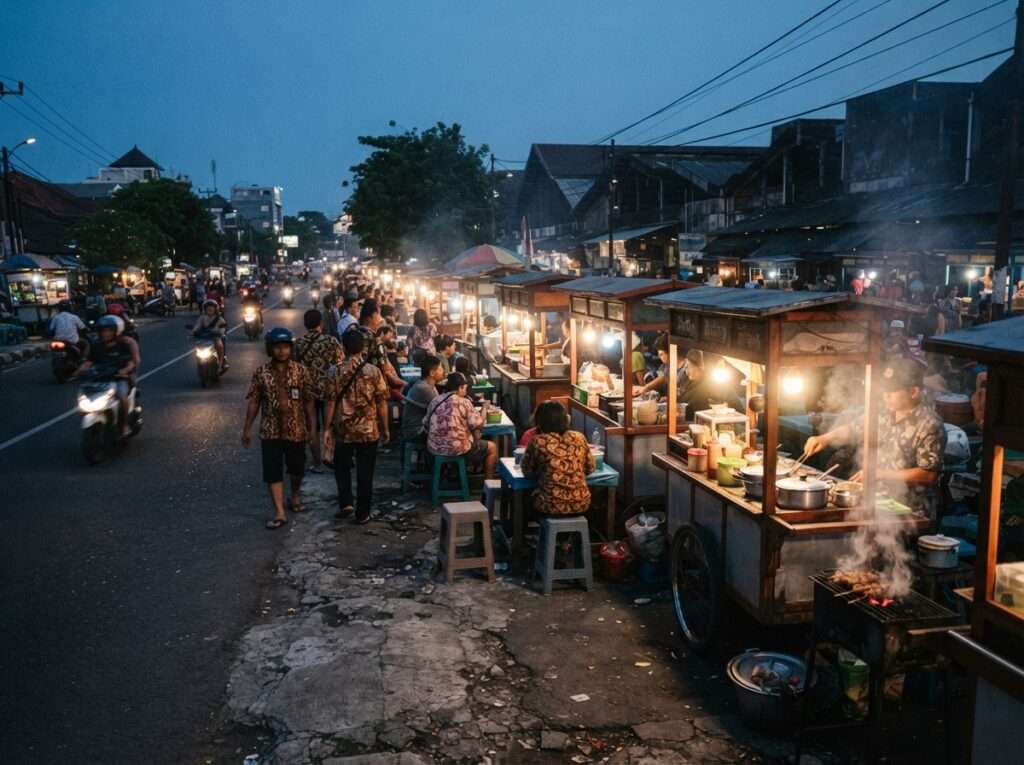
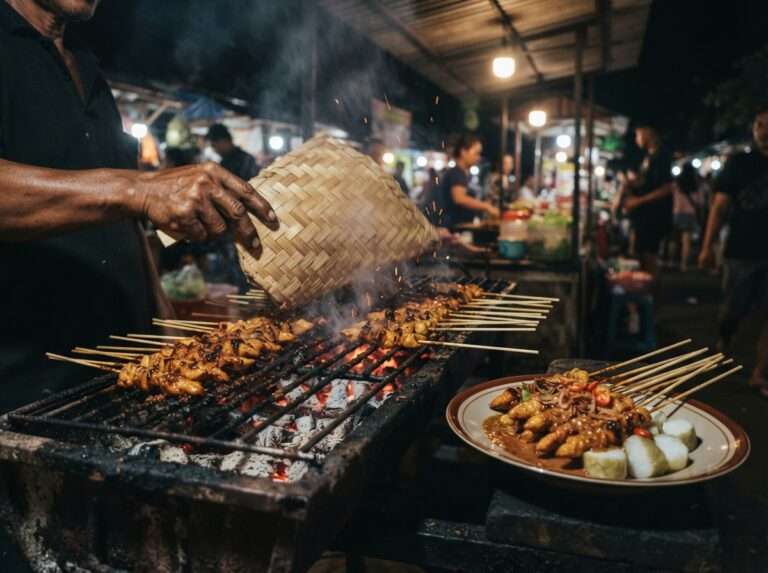
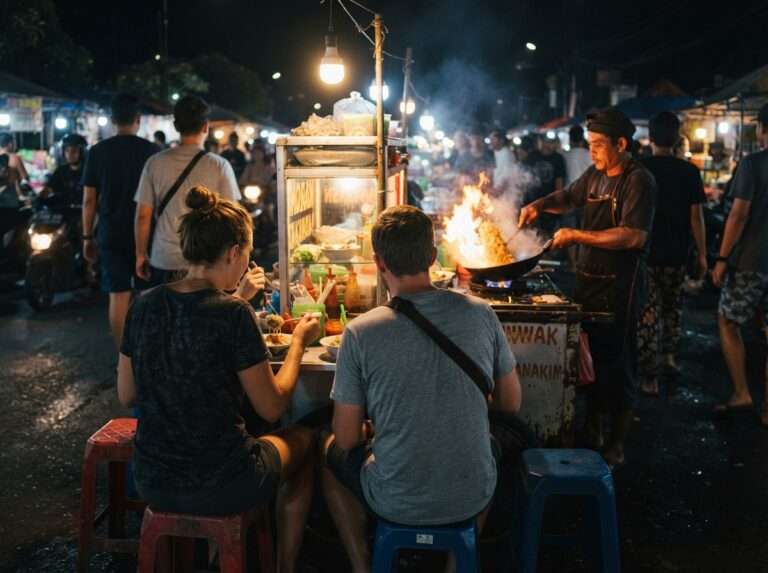
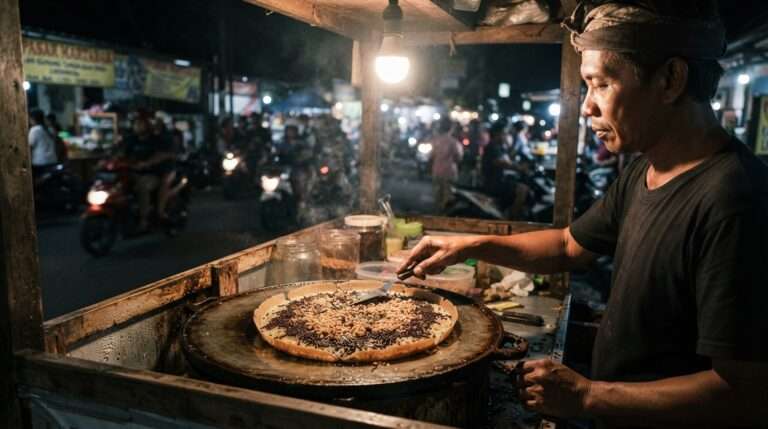
When people in Seminyak or Umalas say “the Kerobokan night market”, this is usually the one they mean. Taman Sari Market sits at the start of Jalan Gunung Tangkuban Perahu in the same market compound as Pasar Kerobokan, and many maps and guides use the two names interchangeably. By day it is part of the produce market. From around 4 pm the carts roll in, plastic stools come out, and the smell of charcoal and kecap manis drifts across the junction.
The crowd is mostly local families and drivers grabbing dinner, which is the best sign the food is fresh. Sate ayam and sate babi come in sets of 10 sticks with peanut sauce or sambal. There is bakso, the meatball soup, ladled into bowls with noodles and fried shallots, plus nasi goreng and mie goreng tossed to order and bubur ayam, the rice porridge. Finish with a slab of martabak manis, the thick sweet pancake folded around chocolate, cheese or peanuts.
Pick a stall with a queue and a fast wok. Food cooked in front of you is the safe choice for a sensitive stomach, and so is bottled water rather than ice from a cart. The market spills onto a busy road, so keep children close.
| Best for | A cheap local dinner of sate, bakso and nasi goreng |
| Where | Jalan Gunung Tangkuban Perahu, beside Lio Square, Kerobokan Kelod |
| Hours | Produce from early morning. Food carts from about 4 pm until late evening |
| Prices | Most plates IDR 10,000 to 25,000 (about ₹55 to ₹130) |
| Payment | Cash only |
Related Tour Packages


❮
❯
03
Open Night Market Kerobokan
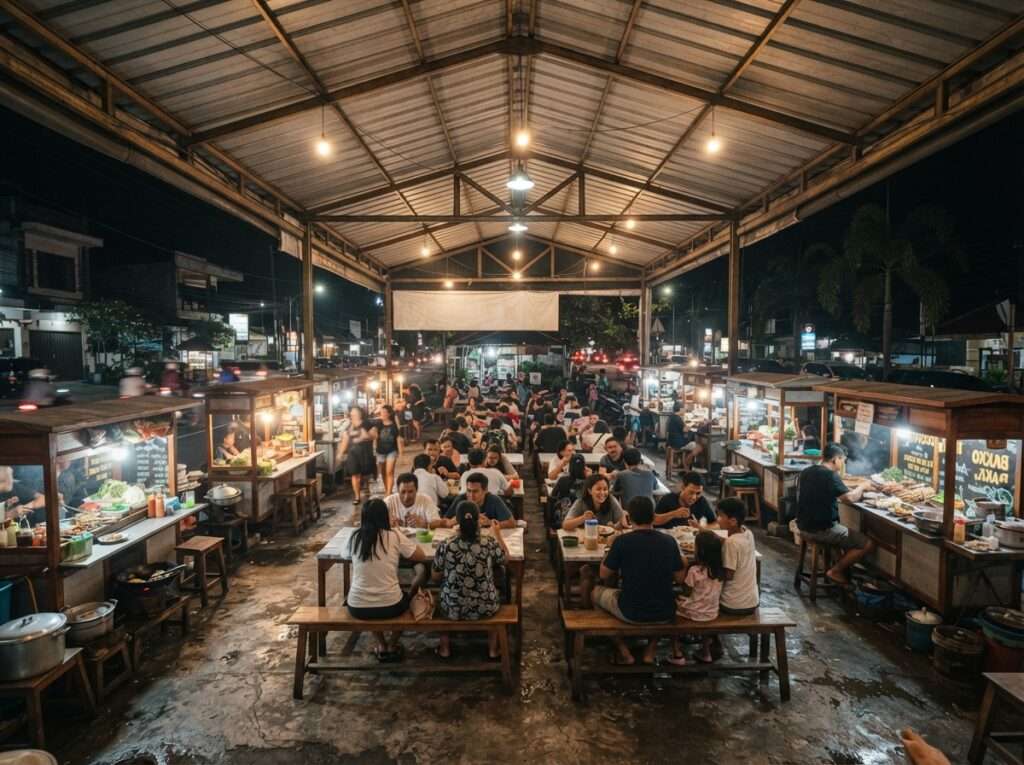
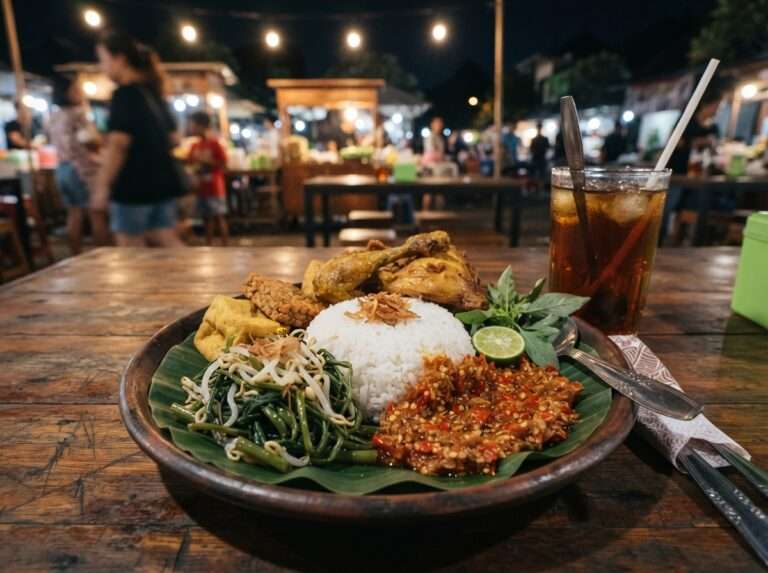
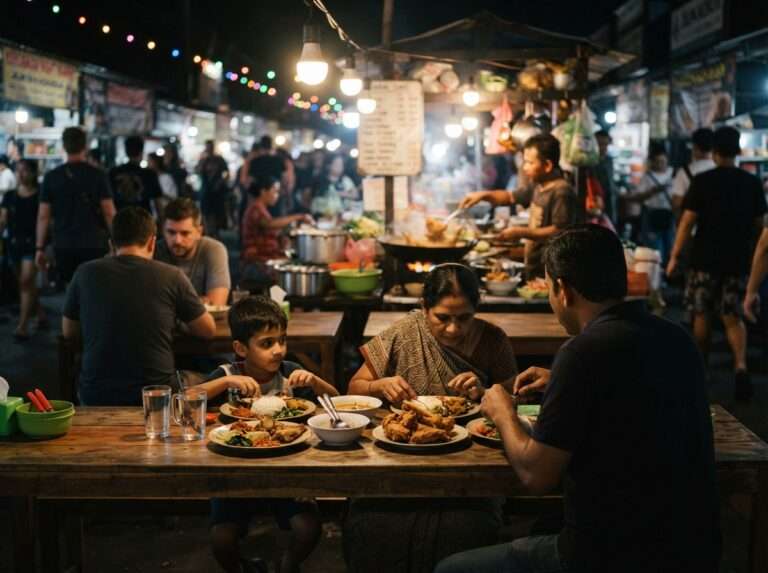
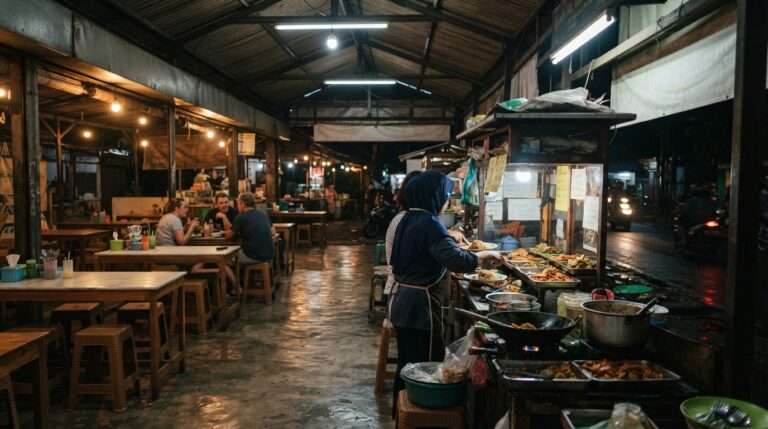
A short walk from Taman Sari along Jalan Raya Kerobokan, the Open Night Market is a smaller, covered cluster of food stalls with fixed tables. It suits a group that wants to sit down and order from several kitchens at once. Reviewers keep coming back for the nasi tempong, rice with fried chicken or fish and a fierce Banyuwangi sambal, and for ayam goreng cooked to order.
This is the more comfortable choice for Muslim travellers. Several stalls here are run by Javanese Muslim families and serve no pork. Look for the halal sign on the cart rather than assuming, because pork stalls trade a few metres away. QRIS, Indonesia’s scan-to-pay code, works at some stalls with an Indonesian e-wallet, but foreign cards will not.
| Best for | A sit-down night food court with halal stalls |
| Where | Jalan Raya Kerobokan, near Lio Square |
| Hours | Evening stalls from about 6 pm. Some open until after midnight |
| Prices | IDR 15,000 to 35,000 (about ₹80 to ₹185) a plate |
| Payment | Cash. A few stalls take QRIS |
Related Tour Packages


❮
❯
04
Jalan Raya Kerobokan Furniture Strip
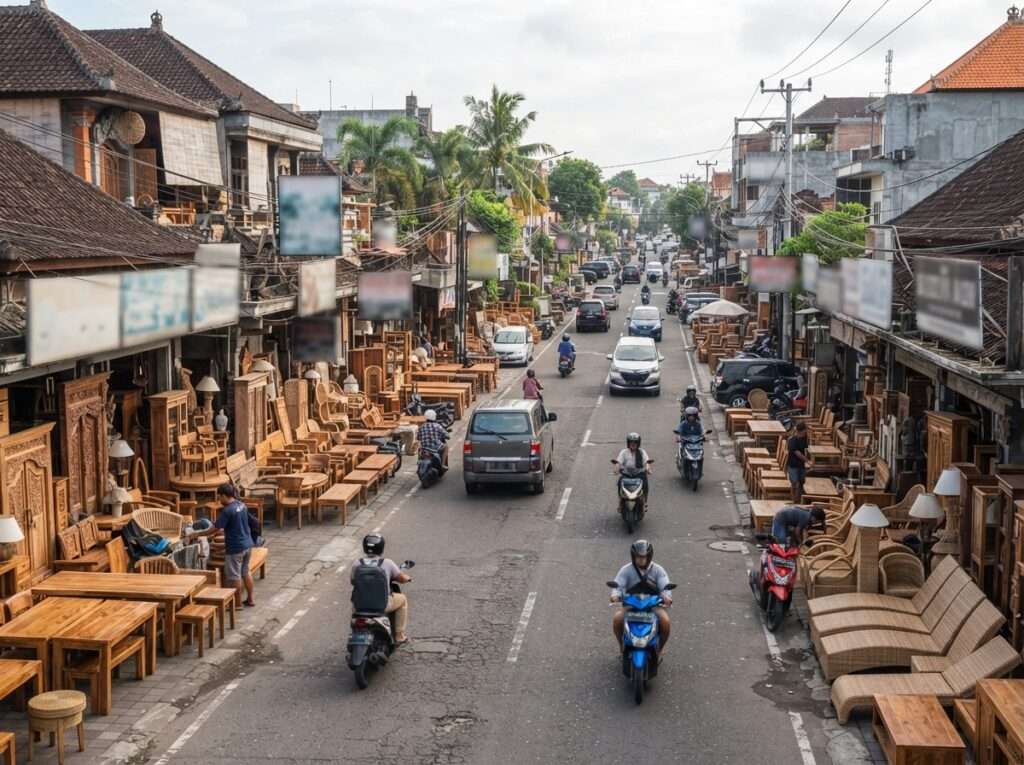
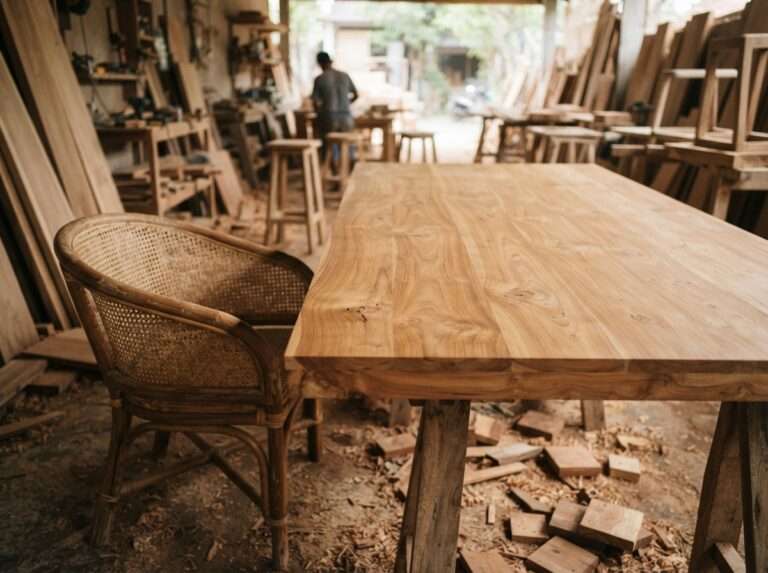
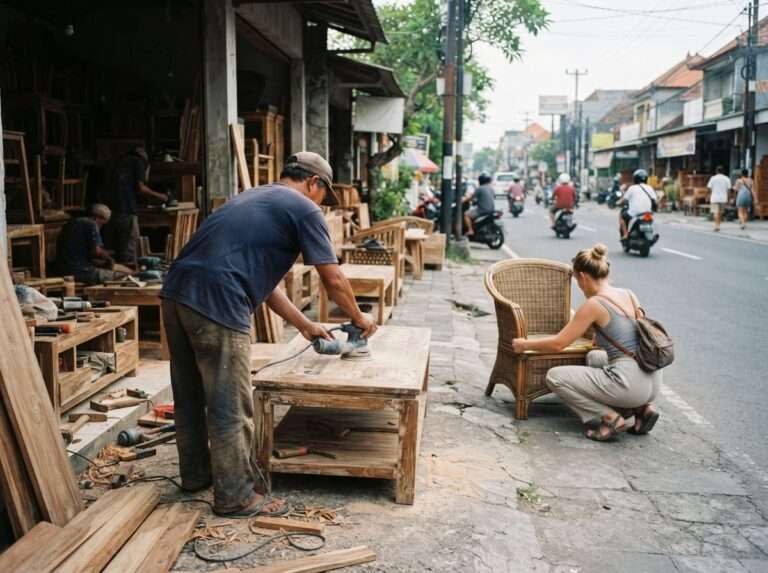
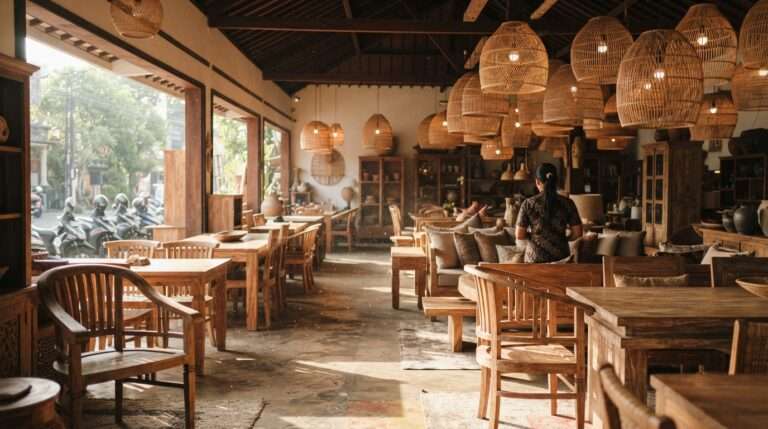
Jalan Raya Kerobokan is the reason most expats know the name Kerobokan. For most of its length, north and south of the junction, the road is lined with furniture showrooms and open-fronted workshops, where carpenters sand teak tables on the pavement and rattan loungers are stacked three high. Villa owners from across south Bali order here because almost everything can be made to size, finished in a stain you choose, and copied from a photo on your phone.
The bigger showrooms, such as Lio Collection, carry finished stock and quote fixed prices. The smaller workshops are where you bargain, and where a recycled-teak coffee table usually comes in well below the price of the same piece in a Seminyak store. Ask whether the wood is solid teak or teak veneer, and ask to see the kiln-dry certificate. Wet timber cracks once it reaches a dry, air-conditioned flat in Delhi.
Traffic here is slow in both directions from 4 to 7 pm. Shop in the morning, and see the shipping section below before you pay a deposit.
| Best for | Teak and rattan furniture, made to size |
| Where | Jalan Raya Kerobokan, both directions from Lio Square |
| Hours | Showrooms about 9 am to 5 pm. Workshops close Sunday |
| Prices | Rattan armchair about IDR 1.5 to 4 million. Teak dining table about IDR 6 to 20 million |
| Payment | Bank transfer or card at showrooms. 50% deposit is standard |
05
Jalan Mertanadi
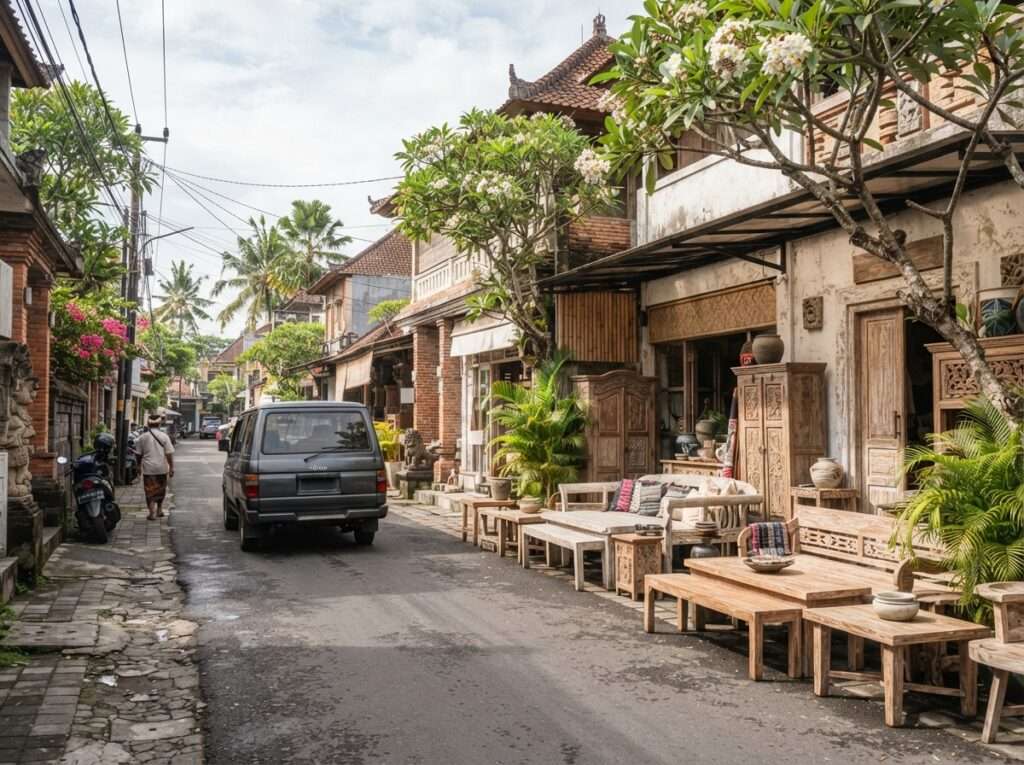
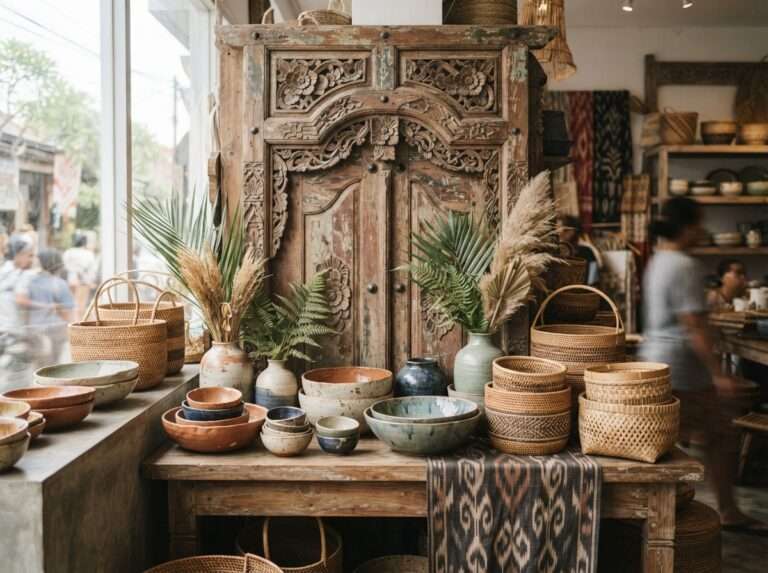
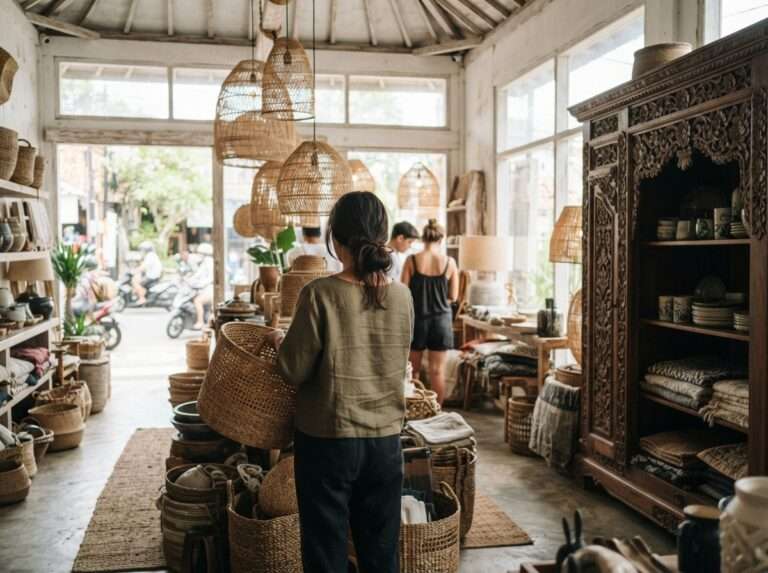
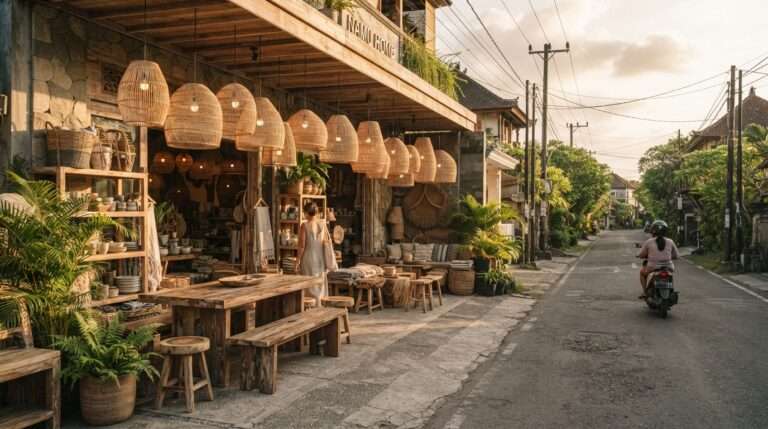
Jalan Mertanadi runs parallel to the main road, one block to the east, from the Lio Square end south towards Sunset Road. It is where the design-led shops moved when Seminyak rents climbed. Expect recycled-boat-wood furniture, carved doors, old Javanese cupboards, lamps, baskets and the handmade ceramics that end up in every Instagram villa. The shops are spread out, so this is a street to drive slowly down rather than walk.
Just over the Seminyak line on Jalan Raya Basangkasa, the main road’s continuation one block west, the Krakakoa chocolate cafe sells single-origin Indonesian bars and a good hot chocolate. It makes an easy gift to carry home, since chocolate packs flatter than a carved Ganesha.
| Best for | Homeware, decor, antiques and a chocolate stop |
| Where | Jalan Mertanadi, parallel to Jalan Raya Kerobokan, towards Sunset Road |
| Hours | Most shops 10 am to 5 pm |
| Prices | Ceramics from IDR 50,000. Decor pieces IDR 200,000 and up |
| Payment | Cards accepted at most shops |
06
Batu Belig And Petitenget Boutiques
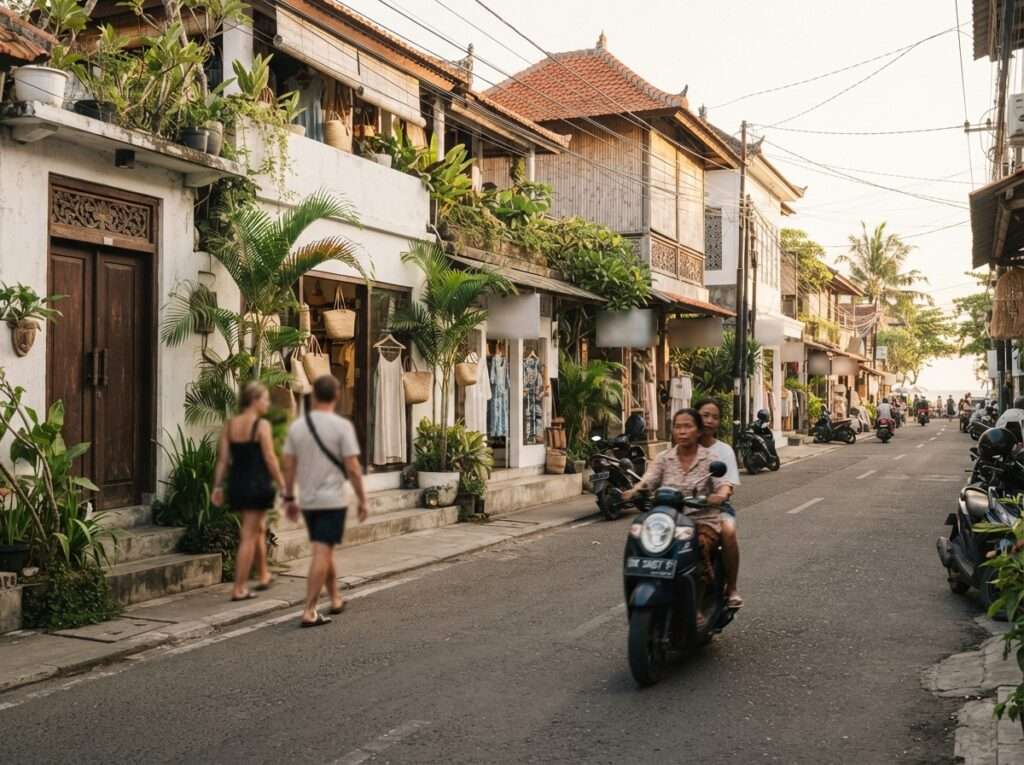
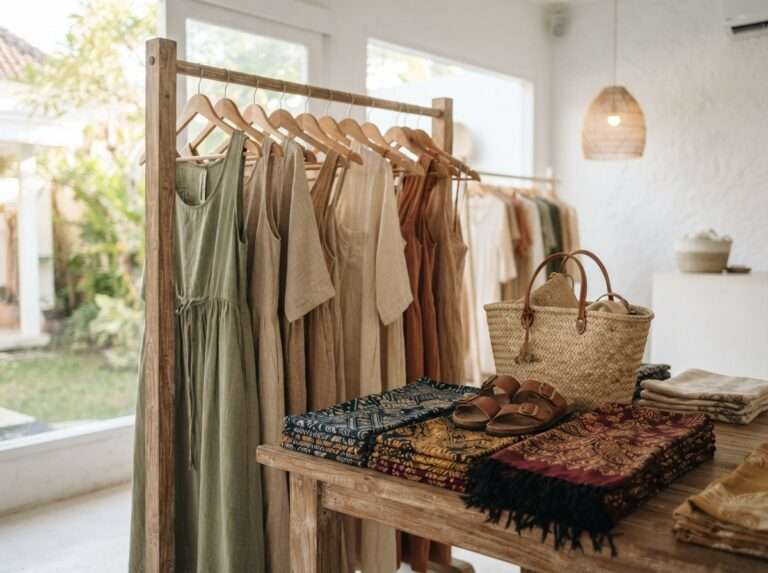
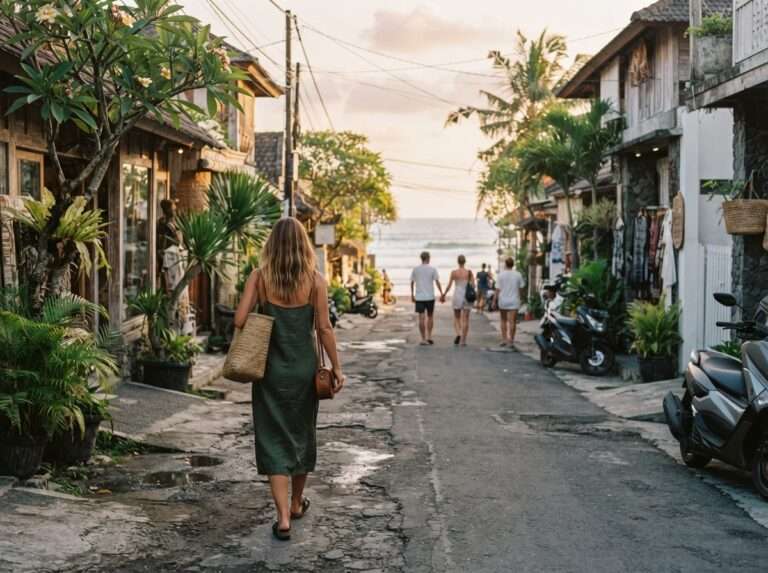

Few visitors realise that Batu Belig and much of Petitenget are part of Kerobokan Kelod. The beach-side roads hold the kind of shops people think of as Seminyak shopping, with linen, swimwear, leather sandals and homeware at boutique prices. Prices are fixed. This is where to buy a well-made sarong or a beach dress that will last, rather than the IDR 50,000 version.
For vintage clothes, head back inland to Lestari, a two-floor thrift shop with a cafe on the Kerobokan side of the main road. Pair a browse here with sunset on Batu Belig beach, which is quieter than Double Six. Our guide to beaches in Kerobokan covers that stretch.
| Best for | Resort wear, swimwear and homeware |
| Where | Jalan Batu Belig and Jalan Petitenget, Kerobokan Kelod |
| Hours | About 10 am to 8 pm |
| Prices | Linen shirts IDR 250,000 to 700,000 |
| Payment | Cards accepted |
07
Pasar Dalung
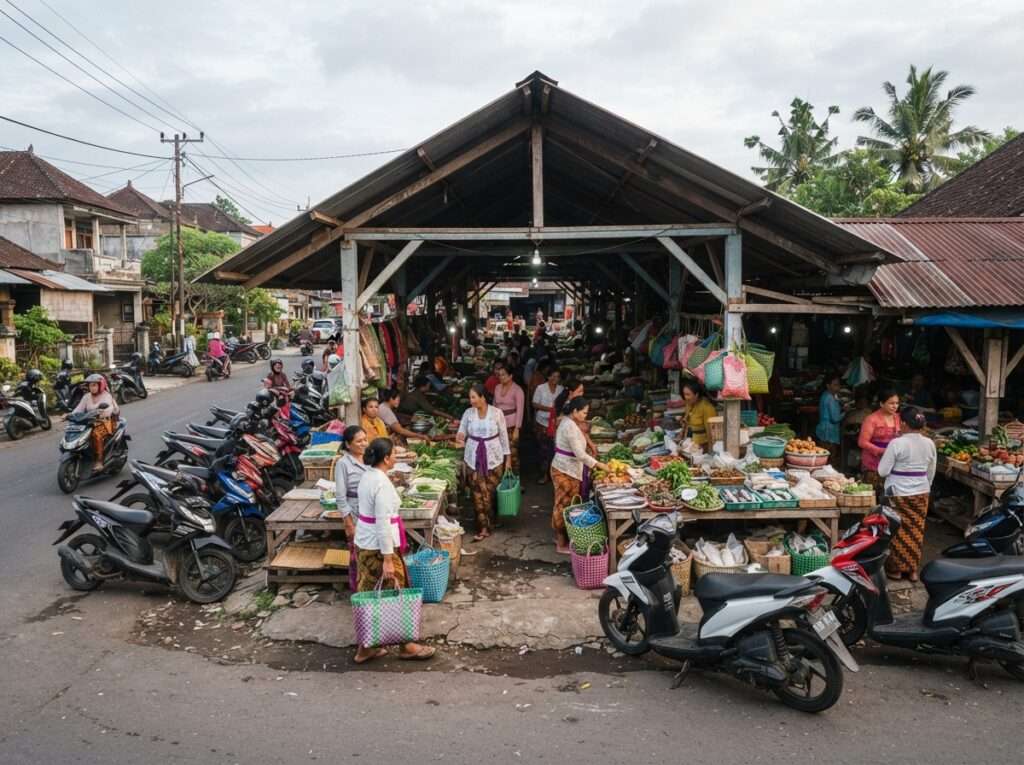
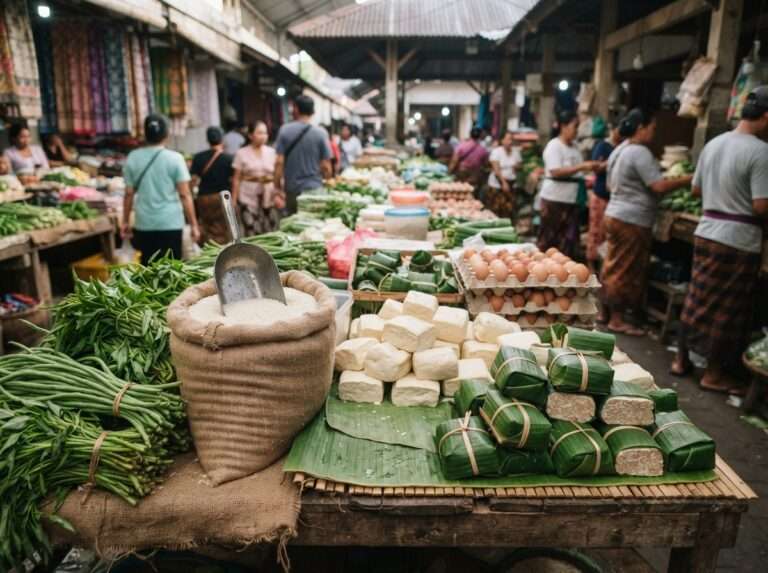
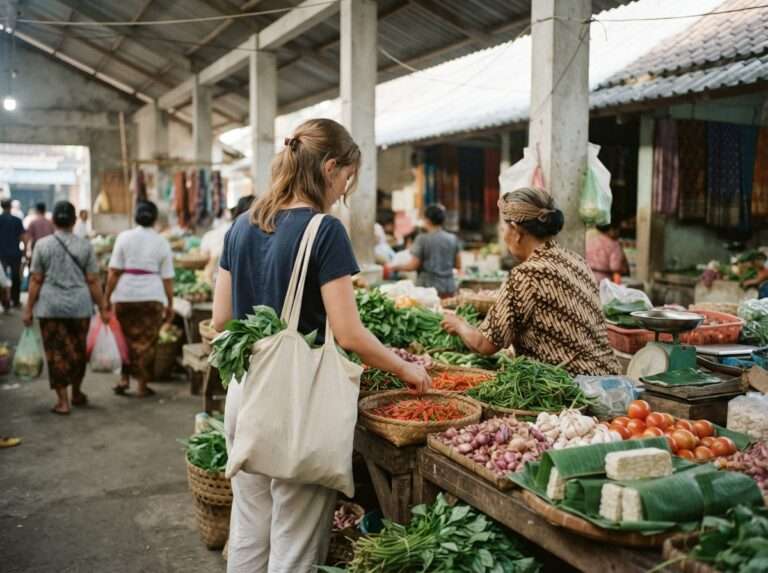
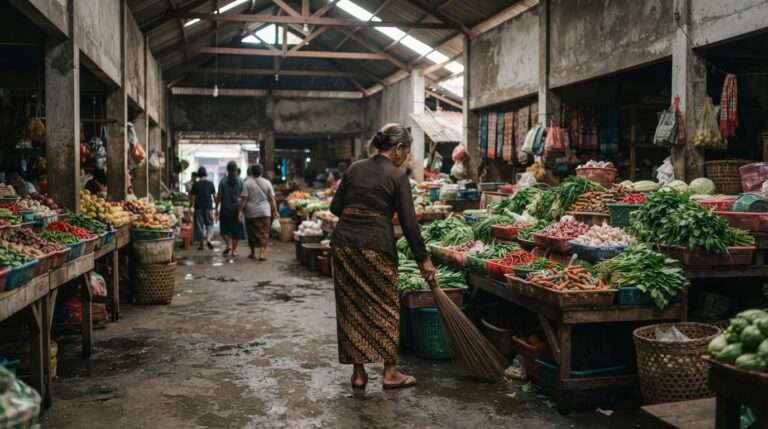
Pasar Dalung sits in the Dalung Permai housing estate, which straddles the Kerobokan Kaja and Dalung border, about 15 to 25 minutes from Lio Square, and it is what Pasar Kerobokan was before the villas arrived. It sells vegetables, tofu, tempeh, eggs, rice and household goods to the residential estates around it. Come here if you are cooking in a villa kitchen and want the lowest prices, or simply to see a Balinese market where you will be the only visitor. There are no souvenirs.
| Best for | An everyday village market with no tourists |
| Where | Jalan Perumahan Dalung Permai, on the Kerobokan Kaja and Dalung border |
| Hours | About 5 to 10 am |
| Prices | Local prices. Most produce IDR 5,000 to 30,000 |
| Payment | Cash only |
08
Pepito, Alive And Green Habit (Supermarkets)
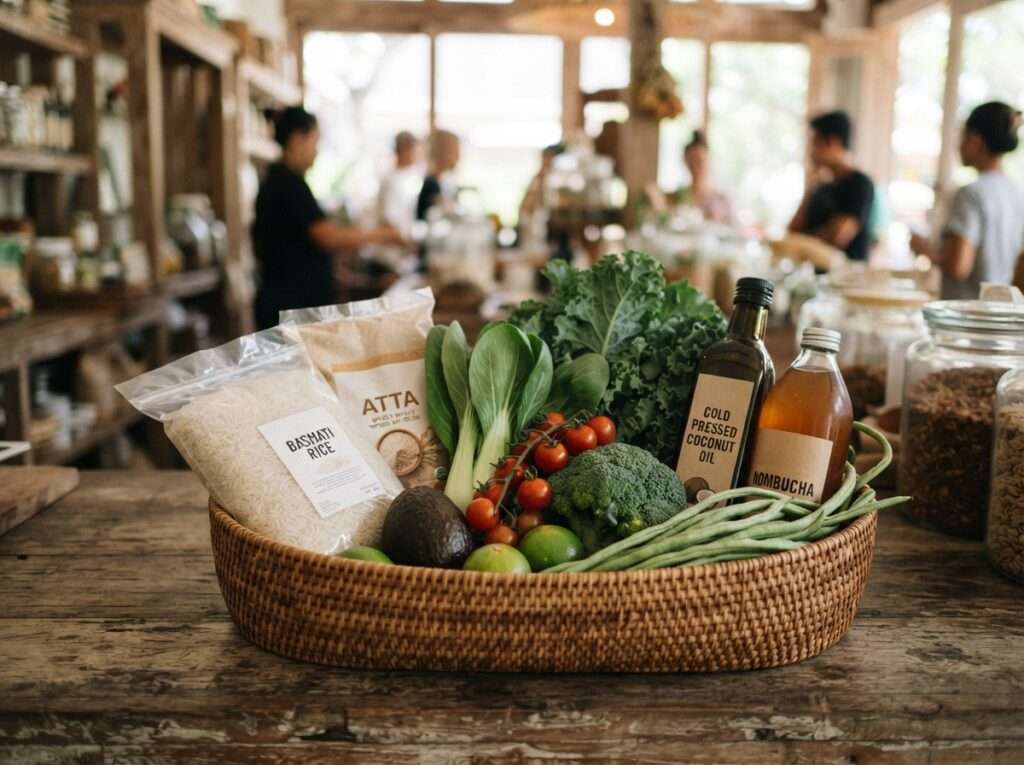

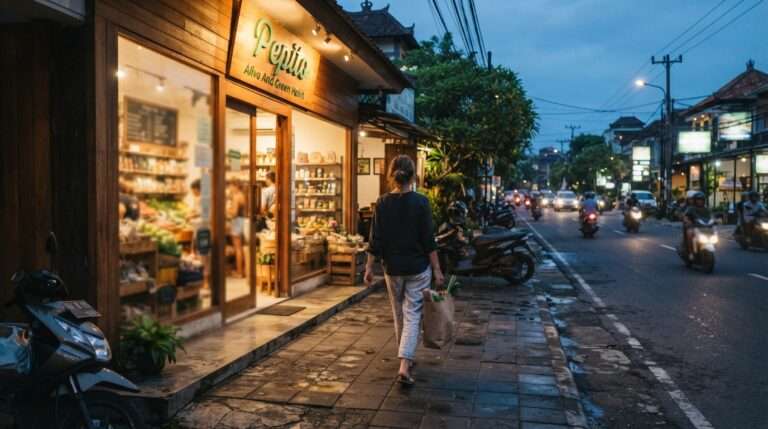
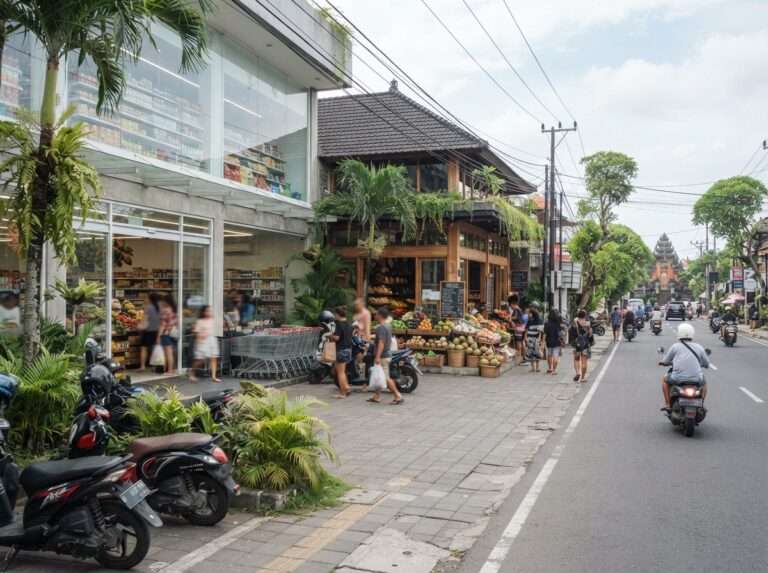
Not every shopping trip needs to be a market. Pepito Market has branches on and around Jalan Raya Kerobokan and stocks everything a villa kitchen needs, plus Indian staples such as basmati, atta and masala packets on a good day. Alive Wholefoods in Umalas and Green Habit in Kerobokan focus on organic and plant-based goods, useful for vegan and Jain travellers who want to check every ingredient label. They are the fallback when the morning market is closed for a holiday.
| Best for | Villa groceries, imported food and organic produce |
| Where | Jalan Raya Kerobokan, Umalas and Kerobokan Kelod |
| Hours | Pepito branches about 7 am to 11 pm |
| Prices | Imported goods cost more than in India |
| Payment | Cards accepted |
09
Seminyak Village And Seminyak Square
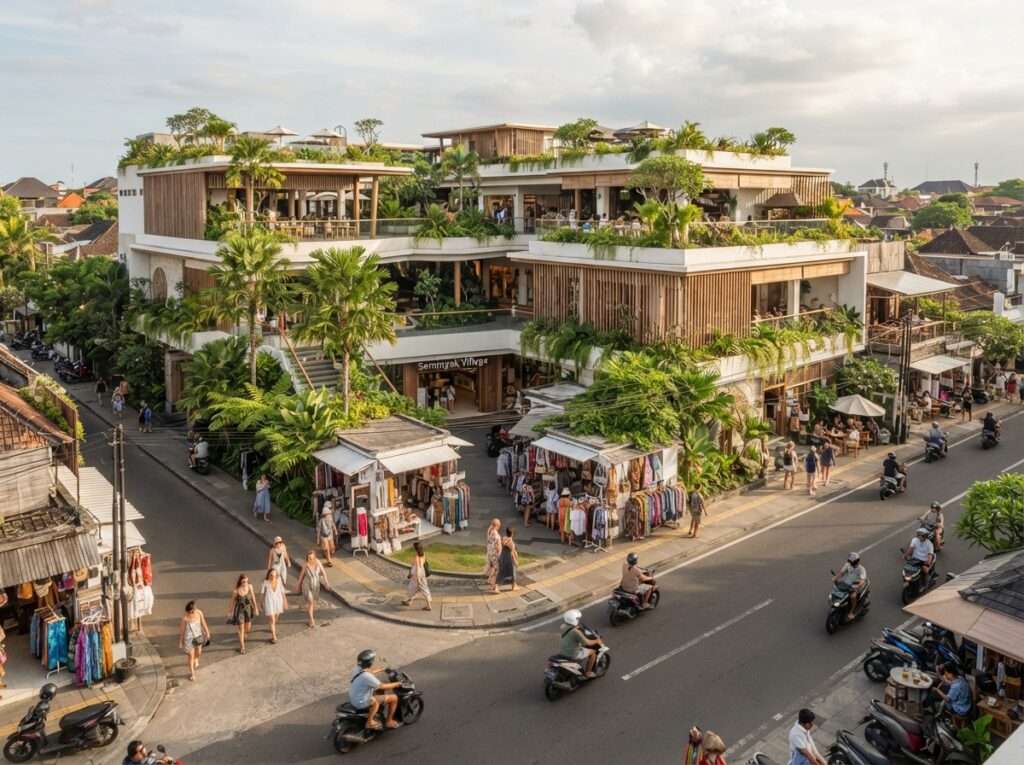
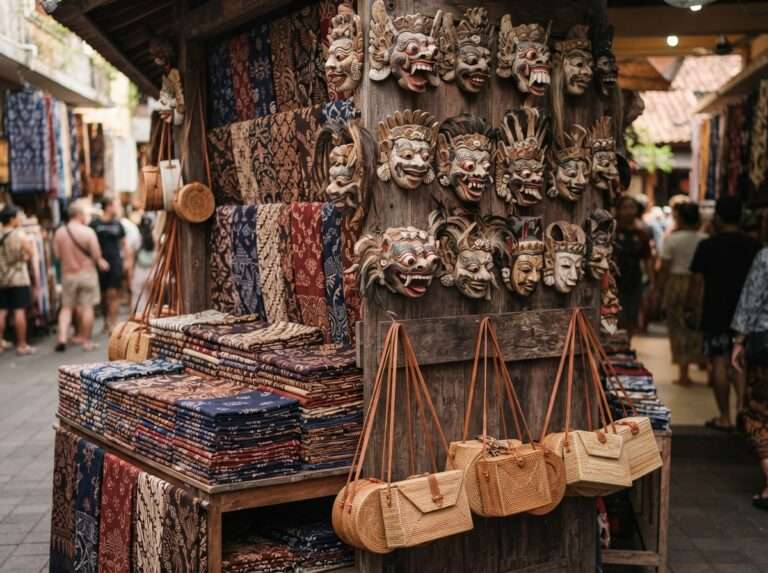

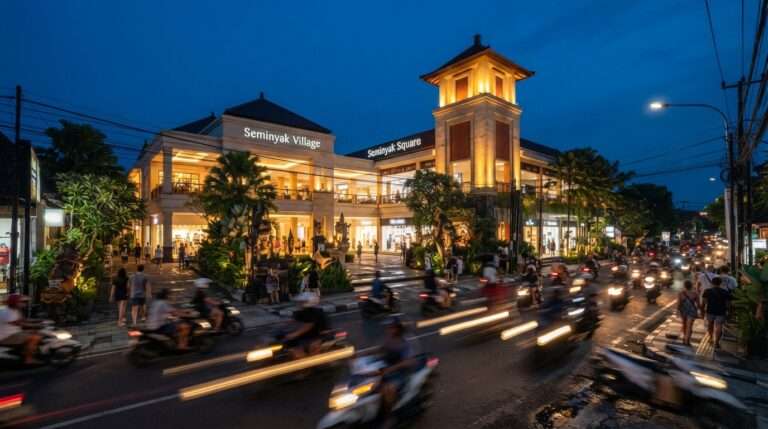
Seminyak Village is a three-storey mall and Seminyak Square is the cluster of shops and stalls around the corner on Jalan Kayu Aya, both 2 to 3 km by road from Lio Square. Allow 10 to 20 minutes by car, longer at sunset. Come here for swimwear brands, sarongs and the classic souvenirs that Kerobokan does not sell. Our guide to markets in Seminyak covers every stall and the bargaining rates in detail.
| Best for | Brands and air-conditioned shopping close to Kerobokan |
| Where | Jalan Kayu Jati (Seminyak Village) and Jalan Kayu Aya (Seminyak Square), Seminyak |
| Hours | About 10 am to 10 pm |
| Prices | Fixed prices in malls. Bargain in the Square's outdoor stalls |
| Payment | Cards in the mall. Cash in the stalls |
10
Samadi Sunday Market
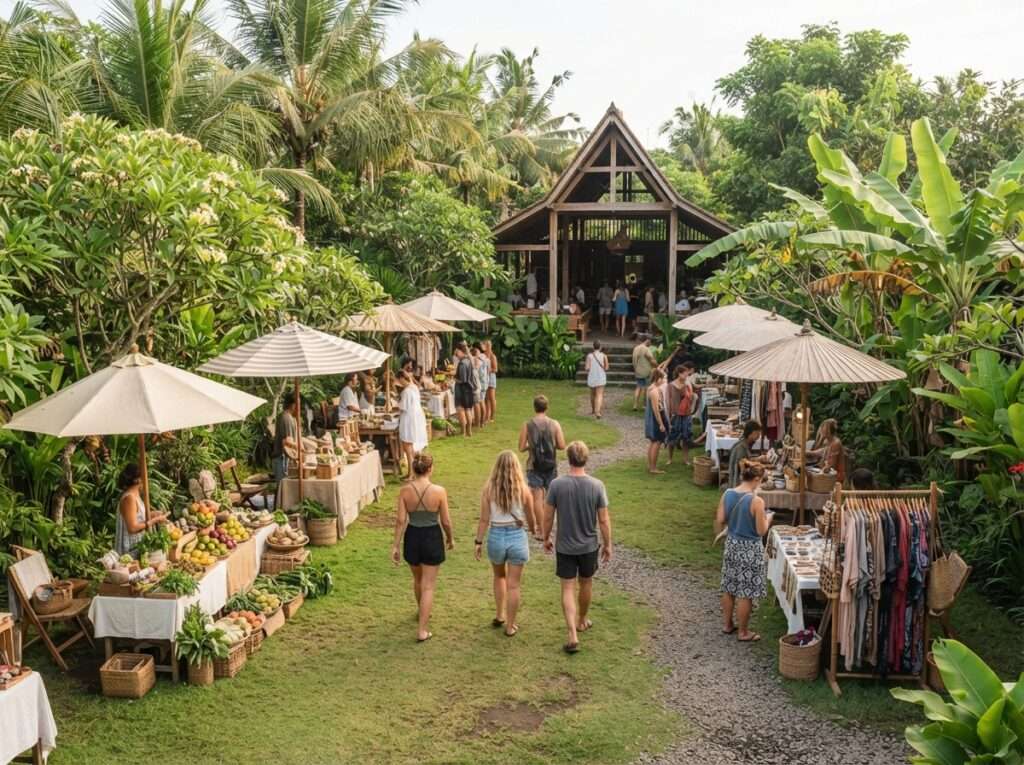
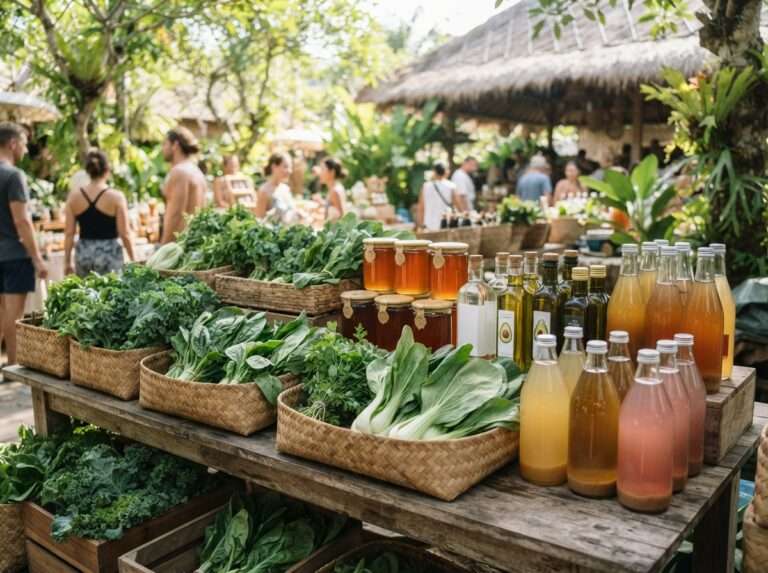
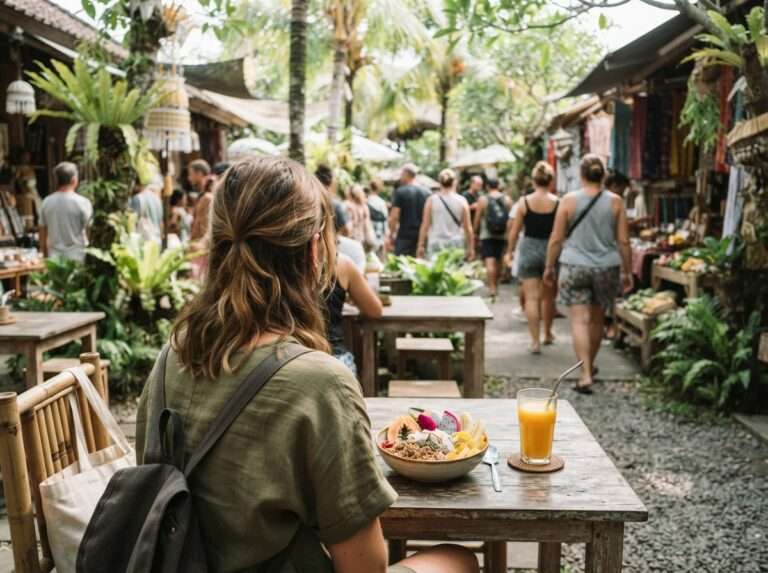
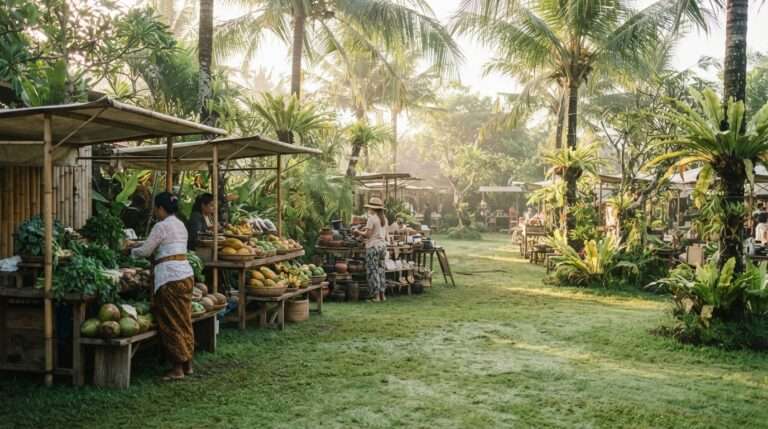
The Samadi Sunday Market runs in the garden of Samadi Bali, a yoga centre on Jalan Padang Linjong, about 25 to 40 minutes from Kerobokan. It began as a farmers’ market and is still one of the best places in south Bali to buy organic vegetables, cold-pressed oils, raw honey and kombucha from the people who make them. It is also an easy vegetarian breakfast, with plenty of vegan stalls. Arrive early for the produce. By noon it is mostly a brunch crowd.
| Best for | An organic farmers' market and Sunday breakfast |
| Where | Samadi Bali, Jalan Padang Linjong 39, Canggu |
| Hours | Sundays, 8 am to 4 pm (official hours). The best produce goes by late morning. |
| Prices | Breakfast plates IDR 40,000 to 90,000 |
| Payment | Cash and cards |
11
Love Anchor Canggu
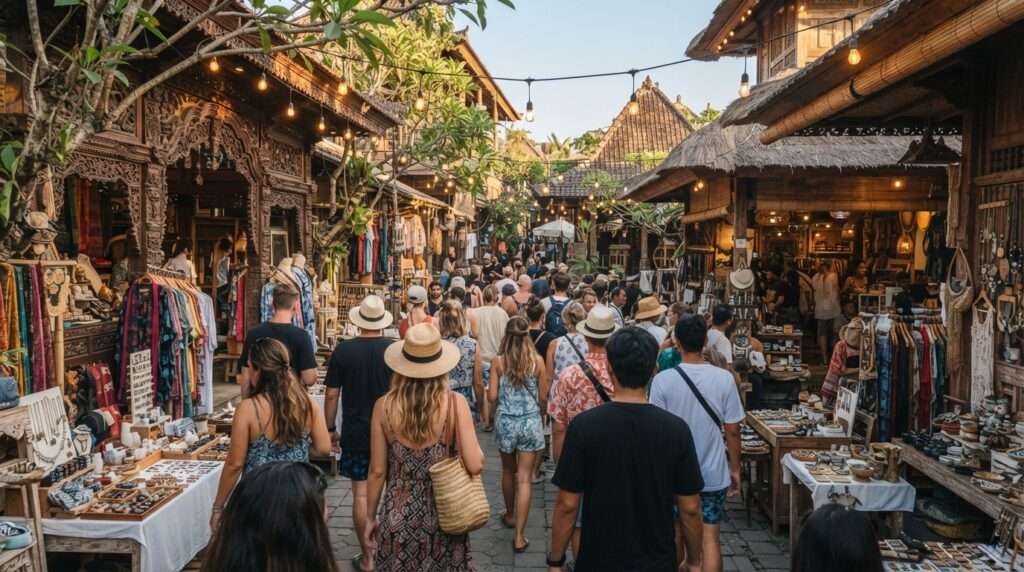
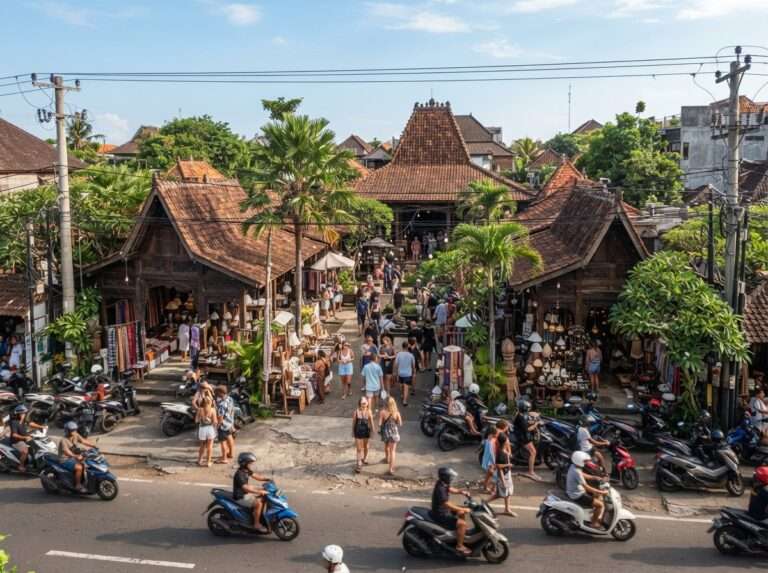
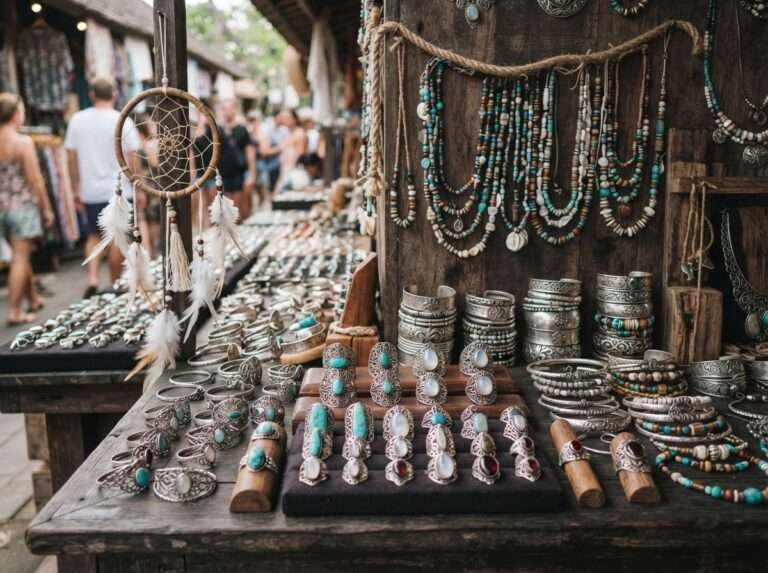
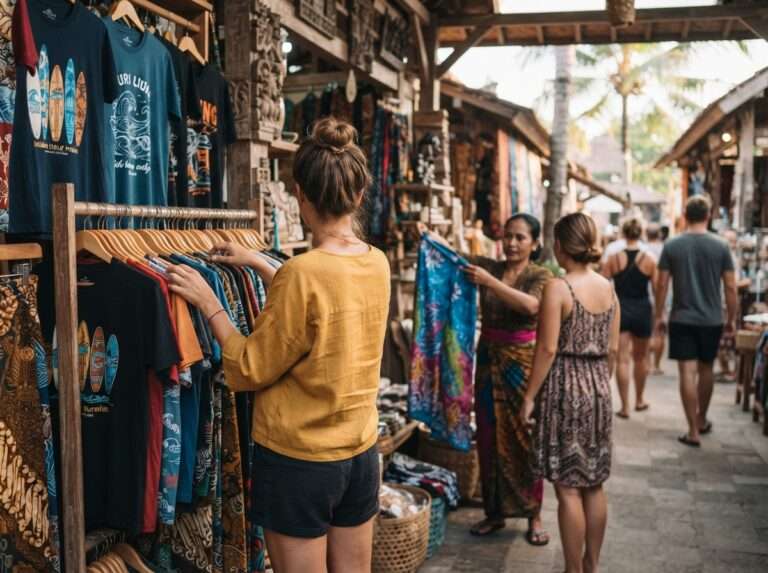
Love Anchor is a joglo-style complex of shops and cafes on the road down to Batu Bolong beach, about 30 to 45 minutes from Lio Square. Its courtyard has stalls every day, at their fullest at weekends, selling silver, beads, sarongs, dreamcatchers and printed T-shirts. Bargain from about half the first price. Our guide to markets in Canggu has the other Canggu markets and their days.
| Best for | Jewellery, clothes and souvenirs in Canggu |
| Where | Jalan Pantai Batu Bolong, Canggu |
| Hours | Shops and bazaar stalls daily. Busiest Friday to Sunday |
| Prices | Silver rings from IDR 75,000. Bargain on everything |
| Payment | Mostly cash |
12
Pasar Badung
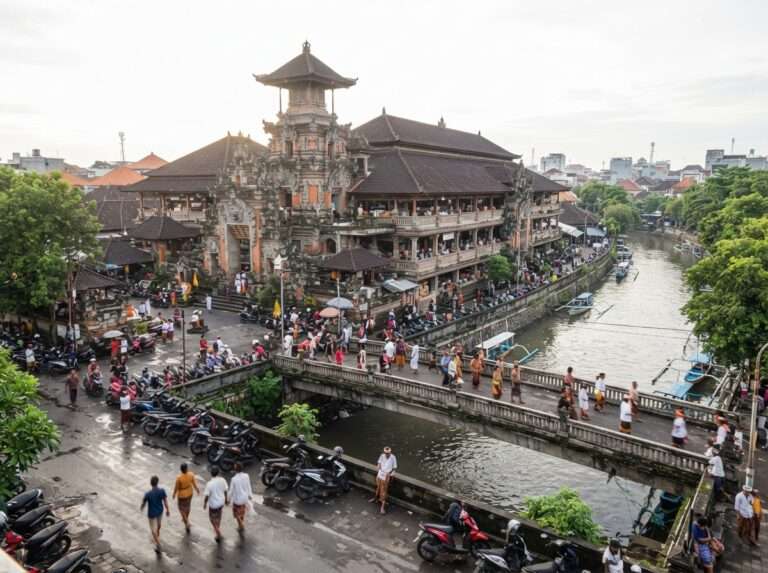
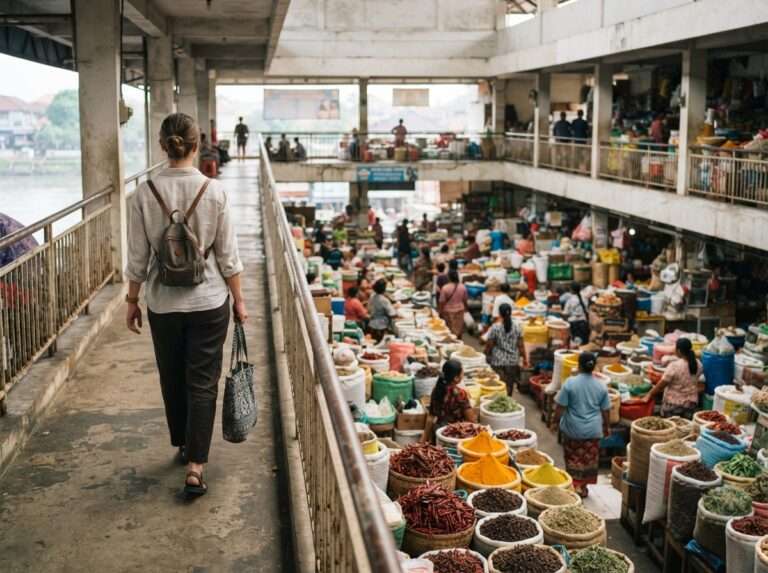
If Pasar Kerobokan whets your appetite, Pasar Badung in central Denpasar is the same thing at city scale. It burned down in 2016 and reopened in 2019 as a multi-storey building with lifts and parking. The ground floors sell produce, flowers and offerings, the upper floors spices, kitchenware and ceremonial cloth. Across the Badung river, Pasar Kumbasari sells sarongs, batik and handicrafts. It is about 7 to 10 km by road from Lio Square, depending on the route, so allow 30 to 45 minutes each way. For the rest of the city, see our guide to places to visit in Denpasar.
| Best for | Bali's biggest traditional market, as a half-day trip |
| Where | Jalan Sulawesi, Denpasar (not in Kerobokan) |
| Hours | Open around the clock. The morning trade is best, 6 to 10 am |
| Prices | Spices and produce at wholesale-level prices. Bargain for cloth |
| Payment | Cash. Use the official parking |
Where Exactly Is Kerobokan?
Kerobokan is a village area in Kuta Utara, Badung regency, wedged between Seminyak to the south, Canggu to the west and Denpasar to the east. It is split into three administrative villages, Kerobokan, Kerobokan Kelod and Kerobokan Kaja. Kerobokan Kelod, the southern part, takes in Petitenget, Batu Belig and part of Umalas, and holds Pasar Kerobokan and both night markets. Kerobokan Kaja, to the north, is more residential and leads on to Dalung. The Lio Square junction on Jalan Raya Kerobokan is the landmark every local uses for directions, which is why every distance in this guide starts there.
The practical upshot is that a Seminyak or Umalas villa is often in Kerobokan already. Many listings for “Seminyak” are a 5-minute scooter ride from Pasar Kerobokan. The one thing to plan around is the junction itself, which jams badly from 4 to 7 pm. A 2 km trip can take 25 minutes at that hour. For more to do in the area, see our guide to places to visit in Kerobokan.
What To Eat At The Kerobokan Night Market
The night stalls at Taman Sari and the Open Night Market sell Indonesian street food at local prices. A full dinner for two with drinks rarely tops IDR 100,000 (about ₹525). Prices below are compiled from recent traveller reports and directory listings, converted at IDR 190 to ₹1.
| Dish | What it is | Price (IDR) | Price (₹) | Vegetarian? | Halal? |
|---|---|---|---|---|---|
| Sate ayam | Chicken skewers, peanut sauce, 10 sticks | 15,000 to 25,000 | 80 to 130 | No | At halal-signed carts |
| Sate babi | Pork skewers, sweet soy glaze | 15,000 to 25,000 | 80 to 130 | No | No |
| Bakso | Beef or chicken meatball soup | 12,000 to 20,000 | 65 to 105 | No | Usually, check the sign |
| Nasi goreng | Fried rice, egg, prawn crackers | 15,000 to 25,000 | 80 to 130 | Ask for “sayur, tanpa terasi” | At halal-signed carts |
| Nasi tempong | Rice, fried chicken or fish, raw sambal | 20,000 to 35,000 | 105 to 185 | No | Often, Javanese stalls |
| Gado-gado | Vegetables, tofu, tempeh, peanut sauce | 15,000 to 20,000 | 80 to 105 | Usually (ask about terasi). No egg on request | Yes |
| Bubur ayam | Rice porridge with chicken | 10,000 to 18,000 | 55 to 95 | No | Usually |
| Martabak manis | Thick sweet pancake, chocolate or peanut | 20,000 to 40,000 | 105 to 210 | Yes, contains egg | Yes |
| Pisang goreng | Fried banana fritters | 5,000 to 10,000 | 25 to 55 | Yes | Yes |
| Es kelapa muda | Young coconut | 10,000 to 20,000 | 55 to 105 | Yes | Yes |
Vegetarian, Jain And Halal Food At Kerobokan's Markets
Vegetarians will eat well, but need to ask. Gado-gado, tahu and tempeh goreng, pisang goreng and martabak manis are reliably meat-free. Fried rice and noodles can be made without meat if you say “tidak pakai daging, tidak pakai ayam” (no meat, no chicken). Ask “tanpa terasi” too, because the shrimp paste in most sambal is not vegetarian.
Jain travellers have a harder time at the night stalls, since shallots and garlic go into almost every base and gado-gado usually includes potato. Say “tanpa bawang, tanpa kentang” (no onion or garlic, no potato), but expect shared woks. Fresh fruit at Pasar Kerobokan in the morning, plain rice, and the labelled goods at Alive Wholefoods or Green Habit are the safest options. Pack some ready-to-eat food from home.
For halal food, use the Open Night Market and look for the halal sign on each cart. Bali is mostly Hindu and pork is common, but Javanese-run stalls selling nasi tempong, bakso and ayam goreng are usually pork-free. Taman Sari has fewer halal carts.
Buying Furniture In Kerobokan And Shipping It To India
Furniture is the one thing worth buying in Kerobokan that you cannot buy as cheaply anywhere else in south Bali. Shipping it home takes planning. Most Indian buyers send it by sea freight as a shared container load (LCL) through a Bali consolidator, who collects from the workshop, packs, handles Indonesian export papers and books space to Nhava Sheva (Mumbai), Chennai or Mundra.
Follow these steps:
- Shortlist two or three workshops on Jalan Raya Kerobokan on day one or two of your trip, with photos and measurements of what you want.
- Agree the wood (solid teak, recycled teak or rattan), the finish and the price in writing. Ask for the kiln-dry certificate and confirm the timber carries an SVLK legality document, which Indonesia requires for wood exports.
- Pay a deposit of about 50% by bank transfer, never all of it up front, and get an expected completion date. Two to six weeks is normal.
- Get two quotes from Bali cargo consolidators that ship to India. Ask for a door-to-port or door-to-door price per cubic metre, including crating.
- Inspect the finished piece, or ask for a video of it, then pay the balance and let the consolidator collect.
- Check India’s customs rules before the goods arrive. Furniture shipped separately from your luggage is taxed on its declared value, and duty can add a large share to the bill, so ask your consolidator for the current rate before you ship. Keep every invoice.
Sea transit from Bali to Indian ports takes roughly 3 to 5 weeks after the container sails. If that is too much paperwork, rattan baskets, lamps and small carved pieces from Jalan Mertanadi travel well in checked luggage.
Before You Go: Hours, Cash, Bargaining And Etiquette
Go to Pasar Kerobokan between 5:30 and 9 am and to the night stalls between 5 and 10 pm. Midday is the wrong time for both. Carry small notes. Stallholders struggle to change IDR 100,000 at 6 am, and the ATMs along Jalan Raya Kerobokan and Jalan Raya Semer, a 5-minute walk from the junction, are the closest top-up.
Bargain at the furniture workshops, Love Anchor and the outdoor stalls of Seminyak Square, starting at about half the asking price and settling around 60 to 70%. Do not haggle over food, canang or produce at Pasar Kerobokan. Prices there are already local, and IDR 2,000 means far more to the seller than to you.
Dress as you would for a neighbourhood market at home, with shoulders covered, and wear closed shoes, since the floors are wet. Never step over an offering on the ground. Ask with a gesture before taking close-up photos of people. A smile and “boleh?” (may I?) works.
Nyepi, Galungan And Market Closures
Every market in Kerobokan shuts for Nyepi, the Balinese Day of Silence, when the whole island stays indoors for 24 hours from 6 am. In 2027 Nyepi falls on 8 March, so shop on 7 March, and expect the market to be packed that morning with ogoh-ogoh preparations.
Galungan is the opposite. The days before it, especially Penampahan, are the busiest of the year at Pasar Kerobokan, with offering ingredients, pork and banana leaves sold by the cartload. The next Galungan falls on 13 January 2027 and Kuningan on 23 January 2027. Some stalls close on the holiday itself, so go the day before.
Market Tour And Cooking Class In Kerobokan
The easiest way to understand what you are looking at in Pasar Kerobokan is to go with a cook. Several Balinese cooking schools in the Kerobokan and Seminyak area start their morning class with a guided walk round the market, buying the galangal, turmeric and lemongrass for base genep, then cook five or six dishes back at a family compound. Expect about 5 hours with hotel pickup, at roughly IDR 600,000 (about ₹3,150) per person. Ask for a vegetarian menu when you book. Most classes will swap meat for tofu and tempeh.
How We Checked This Guide
Our writers built this guide in November 2026 from the village’s own directions (Lio Square, Kelod and Kaja), the Kerobokan entry on Wikipedia, Google Maps and Lokasi Bali listings for each market, official pages such as Samadi Bali’s, Denpasar city tourism notes on Pasar Badung, and recent traveller reports for night-market prices. Road distances are measured from the Lio Square junction and quoted as ranges, because the junction’s traffic changes drive times far more than distance does. Hours at Balinese markets drift, so the times here are the windows that are reliable, not the longest a listing claims.
Making The Most Of The Markets In Kerobokan
Kerobokan rewards two short visits more than one long one. See Pasar Kerobokan at dawn for the offerings and the produce, then come back after dark for sate at Taman Sari, and leave a weekday morning for the furniture workshops if you want to bring something home. If you are building a week around south Bali, our Bali tour packages can base you in Seminyak or Kerobokan, and the Bali night markets guide and shopping in Bali cover the rest of the island.
FAQs
Markets In Kerobokan: Frequently Asked Questions
Yes. Pasar Kerobokan is the traditional village market at the Lio Square junction on Jalan Raya Kerobokan, in Kerobokan Kelod. It sells canang offerings, flowers, fruit, vegetables, fish, meat and spices from about 5 am, and is busiest until 9 am. Taman Sari Market next to it becomes a night food market from late afternoon. Kerobokan also has a long furniture shopping strip on Jalan Raya Kerobokan and design shops on Jalan Mertanadi.
Pasar Kerobokan opens at about 5 am every day, and the best time to visit is between 5:30 and 9 am. That is when the offering sellers, flower stalls and fish counters are fully stocked. Listings show the building open until evening, but most fresh stalls pack up by late morning. Go the day before Galungan or Nyepi to see it at its busiest, and expect it to be shut on Nyepi itself.
Yes, two. Taman Sari Market on Jalan Gunung Tangkuban Perahu, two minutes' walk from Lio Square, fills with food carts from about 4 pm selling sate, bakso, nasi goreng and martabak for IDR 10,000 to 25,000 a plate. The Open Night Market on Jalan Raya Kerobokan is a smaller covered food court with tables and several halal stalls. Both are cash only and used mainly by locals.
Pasar Kerobokan sells what a Balinese household needs each day. That means canang sari offerings for IDR 1,000 to 3,000 each, marigolds and frangipani, tropical fruit, vegetables, fresh fish and pork, and spices such as galangal, turmeric and fresh base genep paste. Jajan Bali rice cakes cost IDR 2,000 to 5,000. It is not a souvenir market, so buy sarongs and crafts in Seminyak or at Pasar Kumbasari instead.
Head to Jalan Raya Kerobokan, where showrooms and workshops line most of the road north and south of Lio Square. They sell teak, recycled teak and rattan pieces, and most will make furniture to your measurements. A rattan armchair runs about IDR 1.5 to 4 million and a teak dining table IDR 6 to 20 million. For decor, antiques and homeware, drive to Jalan Mertanadi, which runs parallel one block to the east.
Yes. Bali cargo consolidators send shared container loads to Nhava Sheva, Chennai and Mundra, collecting from the workshop and handling Indonesian export papers, including the SVLK timber legality document. Sea transit takes roughly 3 to 5 weeks after sailing, on top of 2 to 6 weeks to make the piece. Indian customs duty applies on the declared value, so get two freight quotes and check the duty before you pay a deposit.
It depends what you want. Kerobokan is better for furniture, homeware and a real local market, and its night stalls are far cheaper than Seminyak's cafes. Seminyak is better for clothing brands, swimwear, sarongs and souvenirs, with Seminyak Village mall and Seminyak Square 10 to 20 minutes from Lio Square. Most visitors staying in either area shop in both.
Yes. The Samadi Sunday Market at Jalan Padang Linjong 39 in Canggu is about 25 to 40 minutes from Kerobokan by car. It is an organic farmers' market with produce, honey, oils and a large vegetarian breakfast spread, running from 8 am to 4 pm, with the best produce gone by late morning. Love Anchor on Jalan Pantai Batu Bolong is busiest Friday to Sunday for clothes and jewellery.
Bargaining is expected at the furniture workshops, at Love Anchor and at outdoor souvenir stalls, where a fair final price is about 60 to 70% of the first quote. It is not done for food, offerings or produce at Pasar Kerobokan, where prices are already local. Showrooms such as Lio Collection and the boutiques on Batu Belig and Petitenget have fixed prices.
No, not at Pasar Kerobokan, Taman Sari Market or most night-market stalls. Carry cash in IDR 2,000 to 50,000 notes. A few stalls at the Open Night Market accept QRIS, which works with Indonesian e-wallets but not foreign cards. Furniture showrooms, Jalan Mertanadi shops, boutiques and supermarkets such as Pepito take cards. ATMs are on Jalan Raya Kerobokan and Jalan Raya Semer, near the junction.
Yes, both. Vegetarians can order gado-gado, fried tofu and tempeh, martabak manis, pisang goreng and meat-free nasi goreng ("tidak pakai daging"), and should ask for "tanpa terasi" to skip shrimp paste. For halal food, the Open Night Market on Jalan Raya Kerobokan has Javanese-run pork-free stalls. Check for the halal sign at each cart.
Partly. Pasar Kerobokan is the morning market at the Lio Square junction, busiest from 5:30 to 9 am. The night market most people mean is Taman Sari Market, in the same compound at the start of Jalan Gunung Tangkuban Perahu, where food carts set up from about 4 pm, and many maps use the two names interchangeably. The Open Night Market on Jalan Raya Kerobokan is a smaller covered food court with halal stalls. Map apps label more than one pin Pasar Kerobokan, so check the street name too.