4D / 3N
17% OFF
4D / 3N
17% OFF
Manali-Kasol Tour Package by Cab for Himachal (4D/3N) - At A Glance
- Hotel
- Meals
- Sightseeing
- Entry Tickets
- Cab Transfer
₹12,688
₹10,500 /pp
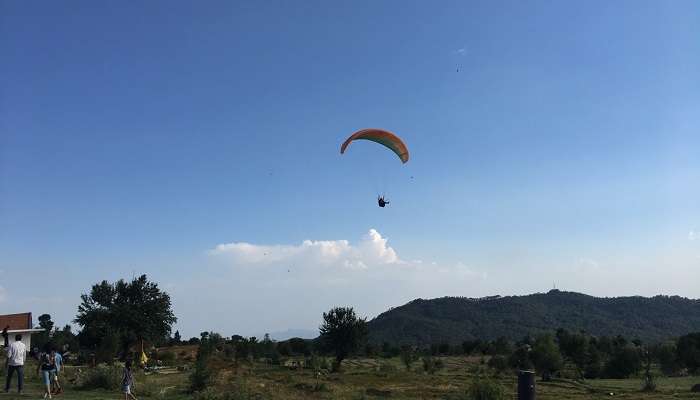


Bir Billing paragliding is the closest thing India has to a dependable flight. You take off from Billing, a grassy ramp at about 2,400 metres (roughly 8,000 feet) in the Dhauladhar range, and land 14 km downhill on the wide field at Bir. A standard tandem flight lasts 15 to 20 minutes, costs somewhere around Rs 3,000, and asks nothing of you beyond a short run off the edge. This is the site that hosted the Paragliding World Cup in 2015, and on a strong spring thermal a tandem wing can climb past 4,000 metres before drifting back over tea gardens and monastery roofs. Here is what it costs in 2026, when to come, how long you stay up, and how to book without overpaying.
Key takeaways
Paragliding in Bir Billing
Best Time
March - June
Select Package Type

3 Days & 2 Nights
₹9,043 /@pp
GET FREE QUOTE

.jpg?tr=w-600,h-300)

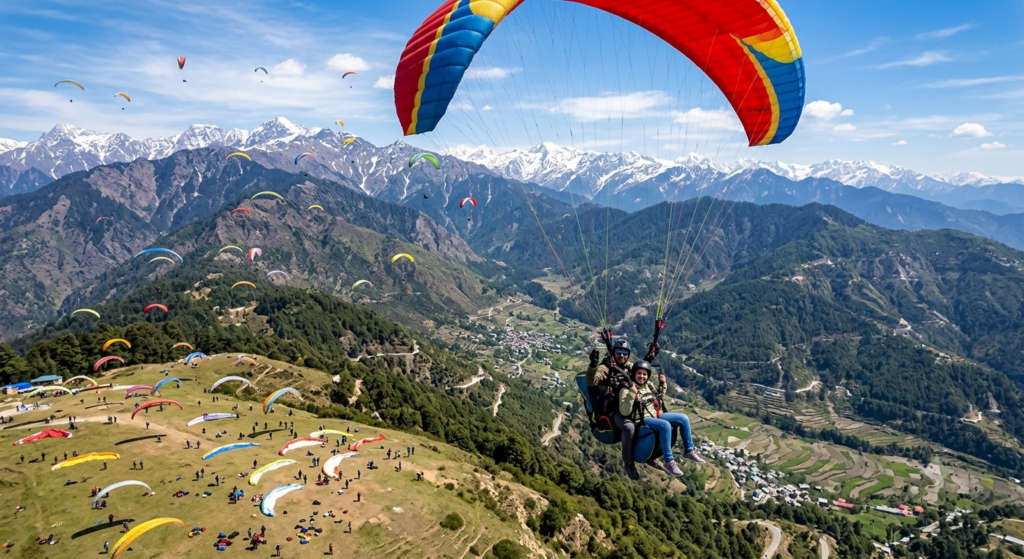
A tandem flight puts you in a harness in front of a certified pilot, under a nylon wing about the size of a small parachute. The pilot inflates the wing, you both run a few steps down the Billing slope, and within seconds your feet leave the ground. There is no jump and no engine. The wing simply rides the rising air, and the pilot steers with two brake handles while you sit back and look at the Kangra valley spread out below.
Billing works because of its aerology. The ramp faces the valley and catches steady winds that build into thermals as the slope warms through the morning. In May and June those thermals run 6 to 12 metres a second, strong enough to lift a tandem past 4,000 metres. In spring they are gentler, 4 to 8 metres a second, which many first-timers actually prefer for a smoother ride. The cloud base sits high here, between 4,000 and 6,000 metres, so there is room to climb. That combination of a clean launch, a huge landing field at Bir, and reliable lift is why Billing draws pilots from across the world and why it held the World Cup. For the wider region, our adventure tour packages in Himachal pair Bir with treks and other mountain sport.
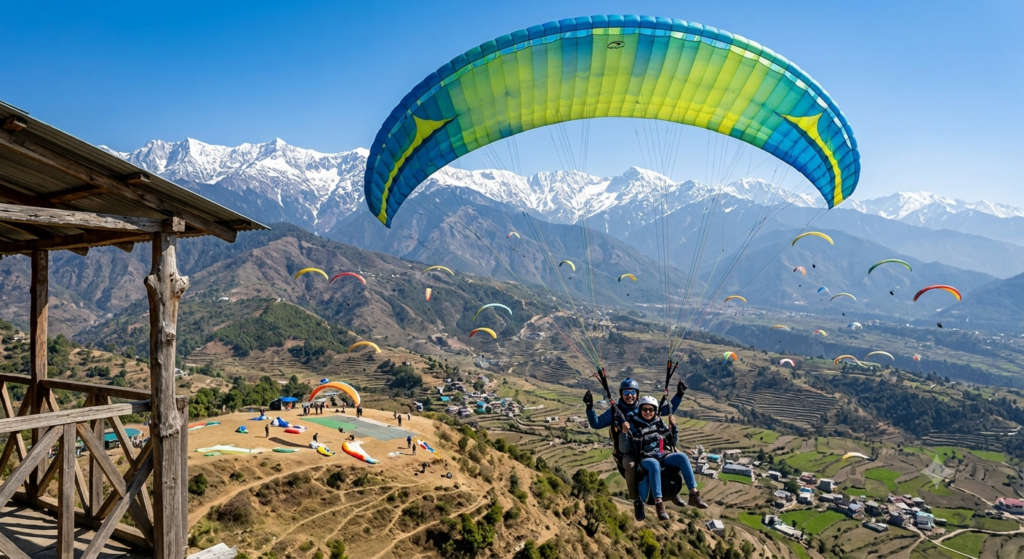
A standard tandem paragliding flight in Bir Billing costs about Rs 3,000 for 15 to 20 minutes in the air in 2026. Short joy rides start near Rs 1,600, and longer cross-country flights that stay up 30 to 60 minutes run Rs 5,500 to Rs 6,500. A GoPro video of your flight usually adds Rs 500 to Rs 800. Price tracks time in the air more than anything else, so pick your tier by how long you want to fly.
| Flight type | Time in air | Price (Rs) | Best for |
| Joy ride | 10-15 min | 1,600-2,500 | First-timers on a budget, kids |
| Standard tandem | 15-20 min | 2,790-3,500 | Most travellers, the classic Billing flight |
| Long tandem | 20-30 min | 4,000-4,500 | More air time and better photos |
| Cross-country | 30-60 min | 5,500-6,500 | Thermal soaring, bigger views |
| Adventure / extended | 60+ min | up to 25,000 | Experienced flyers, long soaring days |
Two add-ons are worth budgeting for. A GoPro clip of the flight is Rs 500 to Rs 800, and the shared jeep from Bir up to the Billing take-off is Rs 200 to Rs 400 for the 14 km climb. If you want to fly solo rather than tandem, schools run P1 and P2 pilot courses over several days; those are priced separately, so ask the school directly for current course fees. A word on the cheapest quotes: a sub-Rs 1,500 flight often means a very short hop or an unregistered pilot, so check what you are actually getting before you hand over cash.
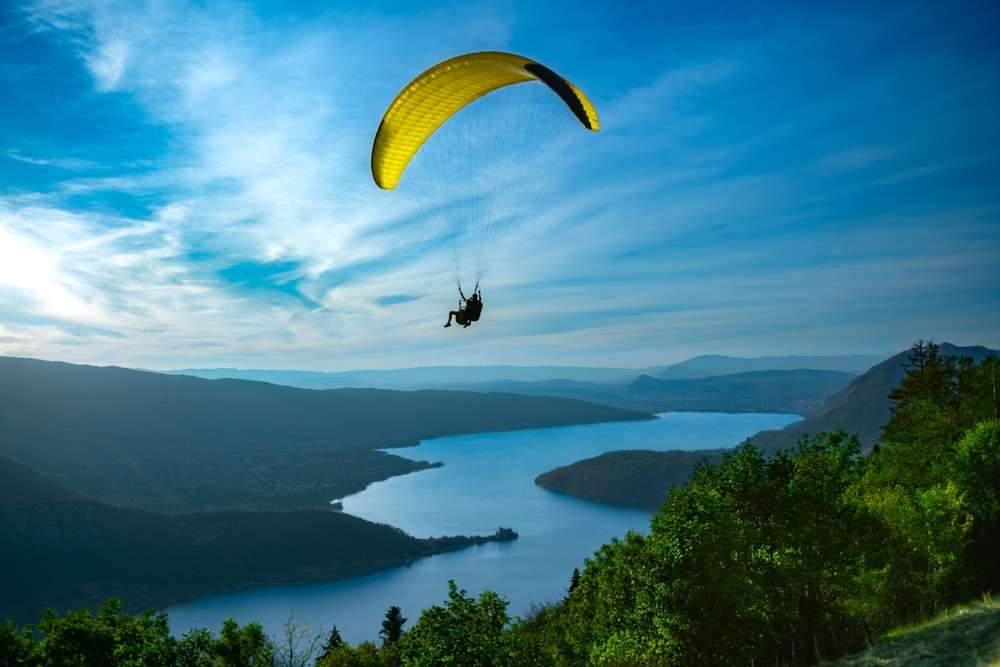
The best time for paragliding in Bir Billing is March to June and September to November, when the air is clear and the thermals are strong and predictable. Autumn, roughly October and November, is the marquee season and the one the World Cup uses. Spring gives you long, high flights with warmer weather. The one window to avoid is the monsoon, mid-July through August, when rain and low cloud shut flying down for days at a stretch.
| Season | Conditions | Flying |
| March to June | Strong spring thermals, warm, clear | Excellent, long high flights |
| Mid-July to August | Monsoon, rain, low cloud | Usually suspended |
| September to November | Crisp, stable, post-monsoon air | Peak, World Cup season |
| December to February | Cold, short days, snow at Billing | Open on clear days, shorter flights |
In the two peak bands, April to May and October to November, operator prices firm up and pilot slots book out, so reserve a day or two ahead. Bir sits low enough to stay green in winter, but Billing, 1,000 metres higher, catches snow, which is why December flights are shorter and weather-dependent.
When flights happen each day
Flying is tied to the sun, not the clock. Operators wait for the morning sun to warm the launch slope and set off the first thermals, which usually means the first window opens around 9 to 11:30 am. A second window runs roughly 12 to 3 pm, and most operators stop sending tandems up by about 4 pm as the air cools and stiffens. On a clear, stable day you have plenty of slots; on a marginal one the pilots may fly only the calm morning hour. Reach the take-off with time to spare, because a good weather window can pass quickly.
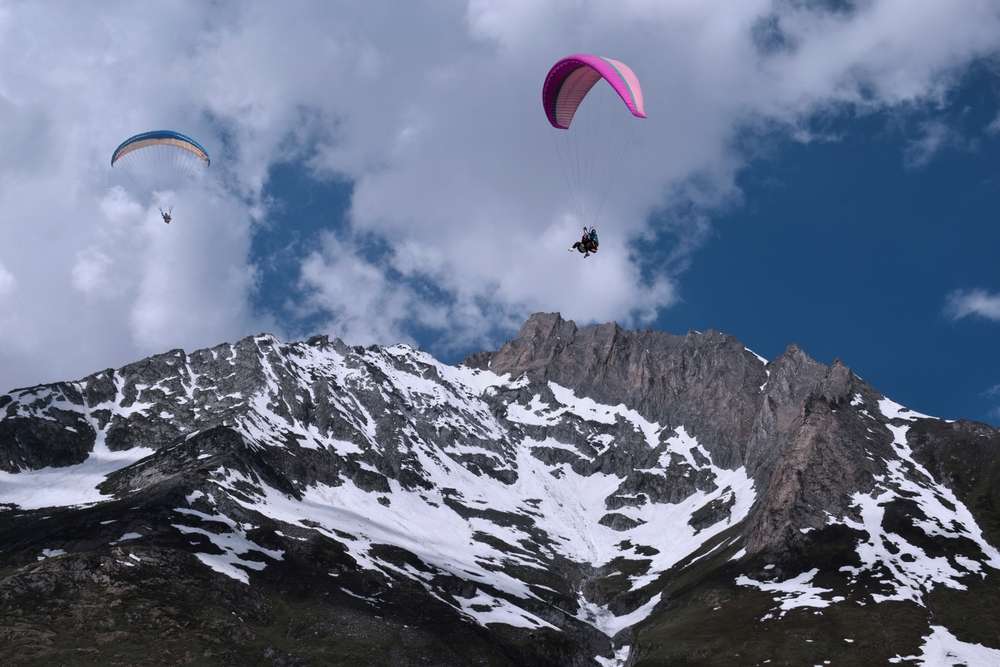
Booking is simple, and doing it a day ahead in season saves you standing in a queue at the ramp. Here is the sequence that works.
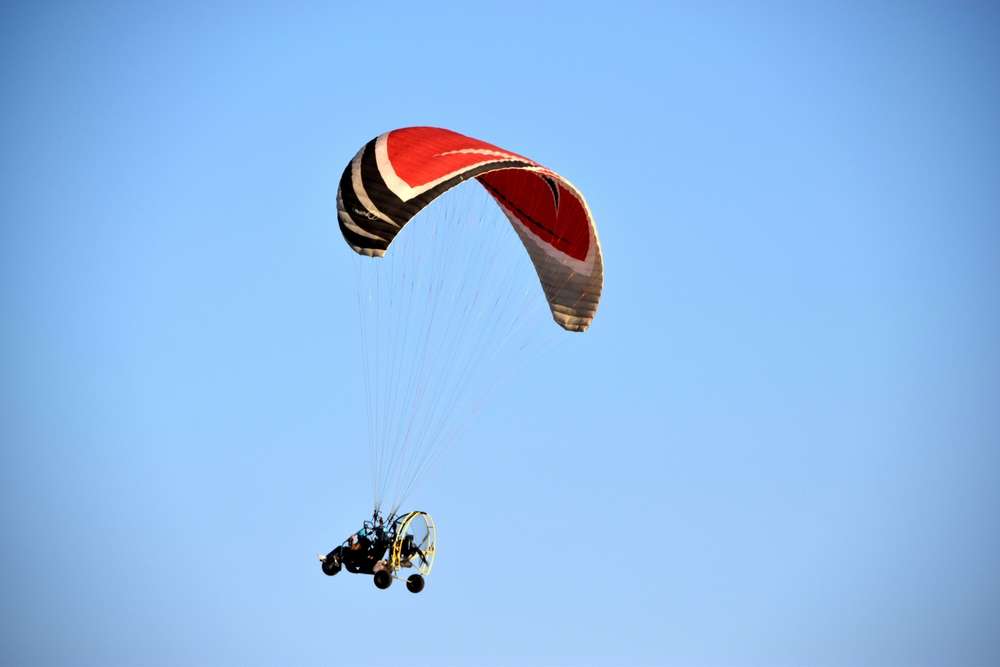
Tandem paragliding at Bir Billing is about as safe as adventure aviation gets, provided you fly with a certified pilot in fair weather. The pilots who work the ramp fly hundreds of tandems a season, and the better operators register with Himachal Tourism and hold APPI or FAI credentials. The landing field at Bir is large and open, which matters as much as the launch: it gives the pilot a wide, forgiving target to bring you down on.
The practical limits are straightforward. The weight limit is about 120 kg, and the usual age band is 12 to 60, with younger children and older travellers flying at the pilot’s discretion after a quick fitness check. Flights are grounded in rain or high wind, and a responsible operator will reschedule you to the next clear slot or refund the flight rather than push a marginal launch. If a pilot cancels on a rough day, take it as a sign you picked a good one. There are three real ways to experience Billing, and they suit very different travellers.
| Option | Experience needed | Time | Cost band (Rs) | Best for |
| Tandem joy flight | None | 15-30 min | 2,790-4,500 | Almost everyone, first-timers |
| Cross-country tandem | None, but longer in air | 30-60 min | 5,500-6,500 | Thrill-seekers wanting real soaring |
| Pilot course (learn solo) | Fitness and time | 3-14 days | Ask the school | Those who want to fly on their own |

Bir rewards a stay of two or three days even if your flight lasts twenty minutes. The village is a Tibetan settlement, and the Palpung Sherabling and Chokling monasteries, along with the Deer Park Institute, sit within a short walk or drive. The Tibetan colony cafes have quietly turned Bir into one of Himachal’s better slow-travel bases.
For walkers, the trail from Billing up to Rajgundha and Kukkargundha is a classic, a day or an overnight through meadow and pine to a cluster of shepherd hamlets. Barot valley, an hour and a half on from Bir, has trout fishing and old colonial waterworks. Closer in, the 9th-century Baijnath temple to Shiva is 12 km away, the Tatani hot spring is a 28 km drive plus a short walk, and the tea estates around Palampur are 29 km out. Serious trekkers use Bir as the roadhead for the long tribal route over to Bara Bhangal. For the full picture of the region, our Himachal Pradesh travel guide maps out how these places link up.
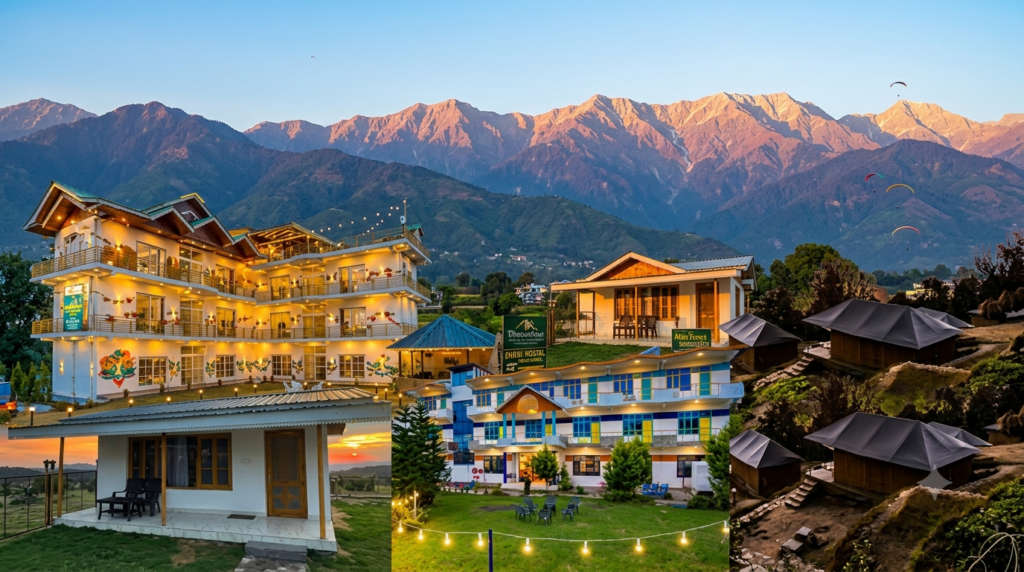
Bir has beds for every budget, most of them clustered around the landing ground and the Tibetan colony. Prices below are indicative for 2026 and climb in the October-November peak.
Budget
Hostels and family guesthouses in the Tibetan colony run roughly Rs 500 to Rs 1,200 a night. Zostel Bir is the reliable backpacker pick, with dorms and a lawn that looks straight at the landing field. This is where the pilots and the paragliding crowd stay.
Mid-range
Cottages and small resorts near Chaugan and the landing ground sit around Rs 1,500 to Rs 3,500 a night, often with a garden, a cafe and valley views. Book ahead in peak season, because the best-placed rooms go first.
Premium
Boutique stays and forest resorts toward Gunehar and Sherabling start around Rs 4,000 and climb from there, trading the colony bustle for quiet and space. Many of our Bir Billing tour packages bundle a stay like this with the flight and transfers, which saves the back-and-forth of booking each piece yourself.

Bir Billing sits in the Kangra valley, off the road between Mandi and Dharamshala. There is no direct train or airport in Bir itself, so most travellers bus or drive in, or fly to Kangra and finish by road. The table shows the main approaches.
| From | Distance | Time | How to get there |
| Delhi | ~520 km | 12-13 hr | Overnight Volvo or HRTC bus to Baijnath, then taxi (Bir is 12 km) |
| Chandigarh | ~285 km | 7-8 hr | Bus or drive via Bilaspur, Mandi and Jogindernagar |
| Manali | ~180 km | 5-6 hr | Drive or bus via Mandi and Jogindernagar |
| Dharamshala | ~68 km | 2-2.5 hr | Taxi or local bus via Palampur |
| Pathankot (railhead) | ~140 km | 4 hr | Train to Pathankot, then taxi or bus |
The nearest airport is Kangra (Gaggal), about 65 km away, with flights from Delhi. The nearest broad-gauge railhead is Pathankot, while the scenic narrow-gauge Kangra Valley line stops at Ahju and Baijnath Paprola, both a short hop from Bir. If you would rather not stitch the logistics together, our Himachal tour packages and the 3 nights 4 days Bir Billing tour handle transfers, stay and the flight in one booking.
Bir Billing is the rare adventure that delivers on its promise. You do not need training, the flight costs about what a nice dinner does, and for fifteen minutes you get the whole Kangra valley from an eagle’s line of sight. Come in spring or autumn, book a day ahead, fly with a certified pilot, and it will be the part of the trip you talk about for years. When you are ready to plan the whole thing, our Bir Billing tour packages put the flight, the stay and the transfers into one easy booking.
A standard 15 to 20 minute tandem flight costs about Rs 3,000 in 2026. Short joy rides start near Rs 1,600, longer cross-country flights run Rs 5,500 to Rs 6,500, and a GoPro video adds Rs 500 to Rs 800. Very cheap quotes usually mean a shorter flight or an unregistered pilot, so confirm the flight length and the operator before you pay.
March to June and September to November are the best months, with clear skies and strong, reliable thermals. October and November are the marquee autumn season used by the World Cup. Avoid the monsoon, mid-July through August, when rain and low cloud ground flying for days.
Flying follows the sun. The first window usually opens around 9 to 11:30 am once the slope warms, a second runs roughly 12 to 3 pm, and most operators stop sending tandems up by about 4 pm. On marginal days pilots may fly only the calm morning hour, so arrive early.
In the April-May and October-November peaks, yes. Pilot slots are limited and good weather windows fill fast, so book a day or two ahead. Off-peak you can often walk up and fly the same day, but booking still saves you a queue at the ramp.
Flights are grounded in rain or high wind. A responsible operator reschedules you to the next clear slot, often the same or the next day, or refunds the flight. Cancellation and refund terms vary by operator, so confirm the policy when you book.
For a tandem flight with a certified pilot in fair weather, yes. Billing has a clean launch and a large, open landing field at Bir, and experienced pilots fly hundreds of tandems a season. Fly with an operator registered with Himachal Tourism and never push for a launch a pilot has called off.
The usual maximum is about 120 kg for a tandem flight, though the exact limit can vary a little by operator and pilot. You will be weighed before launch. If you are near the limit, tell the operator when you book so they can pair you with the right pilot and wing.
The usual band is 12 to 60 years. Younger children and travellers over 60 can often fly at the pilot's discretion after a quick fitness check. There is no experience requirement for a tandem flight, and the pilot handles all the flying.
Wear closed sports shoes you can run in, and layers, because it is cold at 2,400 metres even in summer. Bring sunglasses and sunscreen, and keep phones and cameras on a strap or leave them with the operator. Skip a heavy meal right before your flight.
A standard tandem lasts 15 to 20 minutes in the air. Longer options run 20 to 30 minutes, and cross-country soaring flights can stay up 30 to 60 minutes or more when the thermals are strong. Actual time varies with weather and how the day's lift is holding.
Yes, on clear days. Winter flying is open but shorter and weather-dependent, since Billing catches snow at its higher altitude while Bir stays milder below. Dress for real cold and expect fewer, shorter flights than in the spring and autumn peaks.
The simplest way is an overnight Volvo or HRTC bus from Delhi to Baijnath, about 12 to 13 hours, then a taxi for the last 12 km to Bir. You can also drive the roughly 520 km, or fly to Kangra (Gaggal) airport and finish by road.
Bir is about 68 km from Dharamshala, a 2 to 2.5 hour drive via Palampur. Taxis and local buses run the route through the day, and it is an easy add-on if you are already visiting the Dharamshala and McLeodganj side of Kangra.
Real reviews from real travelers who booked with us.
View All Reviews