4D / 3N
17% OFF
Manali-Kasol Tour Package by Cab for Himachal (4D/3N) - At A Glance
- Hotel
- Meals
- Sightseeing
- Entry Tickets
- Cab Transfer
₹12,688
₹10,500 /pp


Chamunda Devi Temple in Chamba is an 18th-century wooden shrine to Goddess Chamunda, perched on the Shah Madar hill directly above the old town and the Ravi river. Raja Umed Singh had it built in 1762, and for most of its life pilgrims reached it by a steep flight of 378 stone steps rising from near the old bus stand. Today a 3 km road runs up to the door as well, but plenty of people still take the steps for the view they open up over Chamba’s slate roofs. One thing to settle first: this is not the famous Chamunda Devi Shakti Peeth near Kangra. That one is a separate, much older temple with its own story. If Kangra is what you are after, read our guide to the Chamunda Devi Shakti Peeth (Nandikeshwar Dham) near Kangra. This page is about the goddess who watches over Chamba town.
Key takeaways
Chamunda Devi Temple
Best Time
March - June
Select Package Type

3 Days & 2 Nights
₹9,043 /@pp
GET FREE QUOTE

9 Days & 8 Nights
₹36,484 /@pp
GET FREE QUOTE

| Detail | Chamunda Devi Temple, Chamba |
|---|---|
| Location | Shah Madar hill, above Chamba town and the Ravi, Himachal Pradesh |
| Built | 1762, by Raja Umed Singh |
| Deity | Goddess Chamunda, a fierce form of Durga |
| The climb | 378 stone steps, or a 3 km motorable road |
| Darshan timings | 6 AM to 9 PM (morning puja begins at sunrise) |
| Entry | Free; special-darshan ticket Rs 100 |
| Best time | Navratri (Sharad Navratri, October 2026); weekday mornings for quiet |
| Nearest railhead | Pathankot Junction, about 120 km |
| Nearest airport | Kangra-Gaggal (Dharamshala), about 172 to 180 km |
The confusion is common, so it is worth clearing up before you plan anything. Two different temples in Himachal are both called Chamunda Devi. The Chamba one is the town shrine on Shah Madar hill described on this page. The other, near Palampur and Dharamshala in Kangra district, is the Chamunda Nandikeshwar Dham, counted among the 51 Shakti Peeths and set on the Baner river. They are roughly 130 km apart by road and belong to different districts. Here is the quick side-by-side.
| Feature | Chamunda Devi Temple, Chamba (this page) | Chamunda Devi Shakti Peeth, Kangra |
|---|---|---|
| Where | Shah Madar hill, above Chamba town, on the Ravi | Near Palampur / Dharamshala, on the Baner |
| Also called | Chamunda Devi Temple, Chamba | Chamunda Nandikeshwar Dham |
| Built | 1762, by Raja Umed Singh | Far older; a long-established Shakti Peeth |
| A Shakti Peeth? | No | Yes, one of the 51 Shakti Peeths |
| Structure | Wooden shrine with a gabled roof | Stone temple complex |
| Nearest hub | Chamba town | Dharamshala / Palampur |
If you meant the Shakti Peeth, our full Kangra Chamunda Devi guide covers its timings and route. Everything below is Chamba.
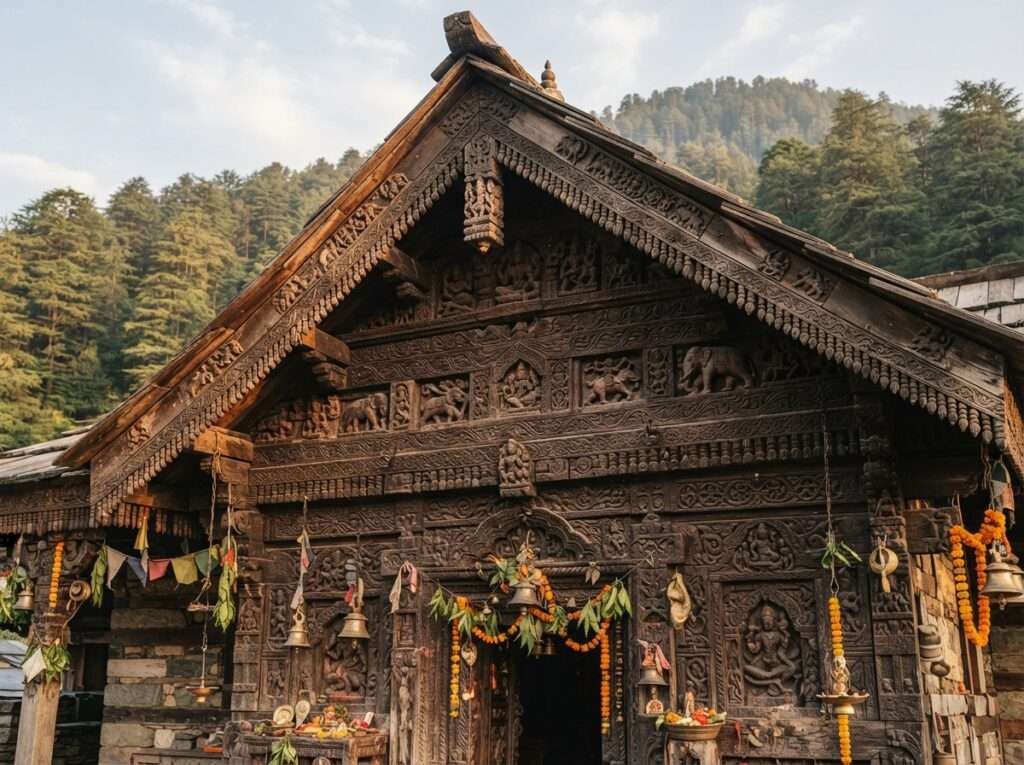
The temple’s own inscription dates it precisely. A Nagari record names it as an offering made by Pandit Vidhadhara to the goddess Chamunda, consecrated on 2 April 1762 under Raja Umed Singh. That makes it a relatively young shrine by Chamba’s standards, in a town where the Laxmi Narayan temples go back to the 10th century. [VERIFY: a grounded re-check (asi.nic.in) says this Nagari inscription is carried on a brass votive bell at the mandapa entrance – optional enrichment detail, confirm before adding]
Chamunda is Durga in her fierce aspect. The name comes from a battle in the Devi Mahatmya, where the goddess destroys the demon generals Chanda and Munda and takes their names as her own. Inside, the sanctum carries silver and brass work and the darker, martial imagery that suits the deity. What sets the building apart is the material: while nearly every old temple in Chamba is cut from stone in the north-Indian Nagara style, this is the town’s one wooden temple, single-storied under a sloping gabled roof that reads more like a Himachali hill house than a classical shrine.
The temple opens for darshan from 6 AM to 9 PM, with the morning puja beginning around sunrise. There is no entry fee. If you want a quicker, closer darshan on a busy day, a special-darshan ticket is available for Rs 100. During Navratri the queues lengthen and the aarti draws a crowd, so an early-morning slot is the calmer choice. Timings can shift a little by season, so confirm on the day if you are travelling for a specific aarti.
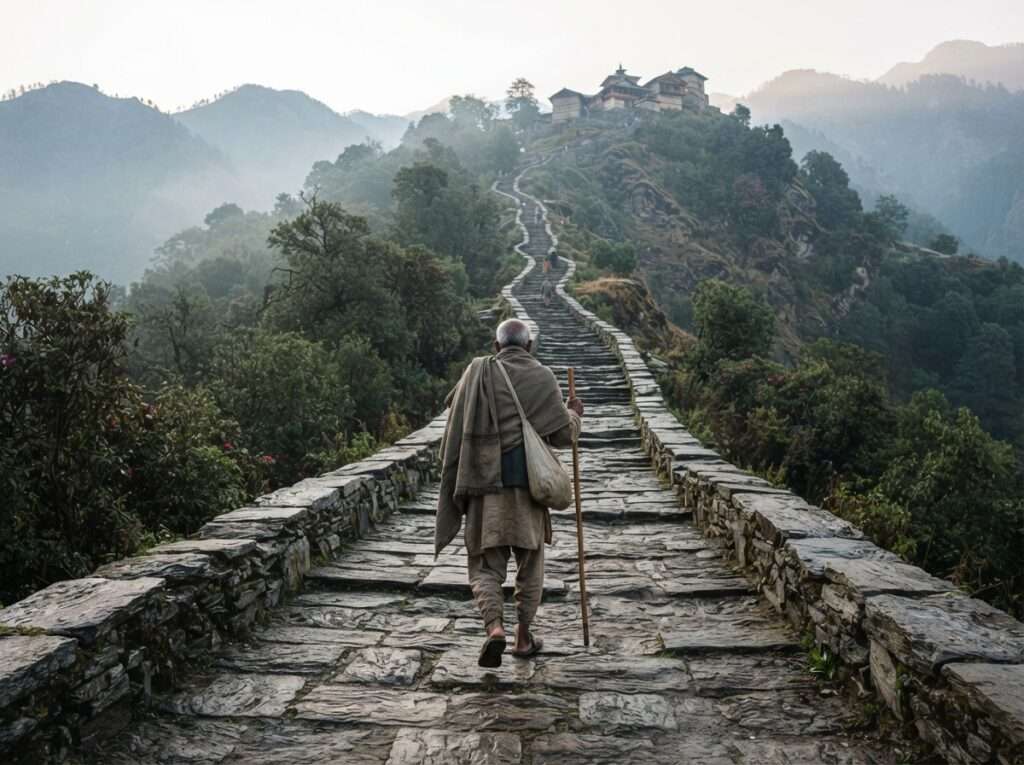
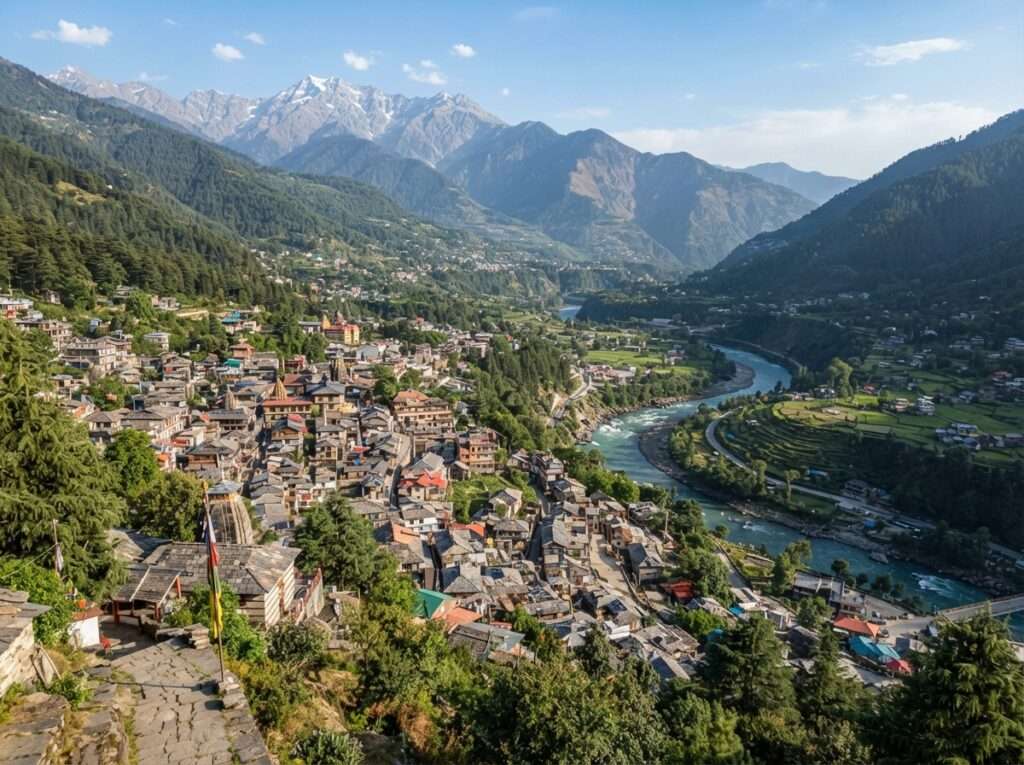
For most of its history the only way up was on foot. A stone-paved path of 378 steps climbs from near the old bus stand to the temple, steep enough that you will want to start early in summer and carry water. The steps are the older, better story: they pass small shrines and open out, near the top, onto a wide view of Chamba’s rooftops, the Chowgan green and the Ravi below. If the climb is not for you, a 3 km motorable road now reaches the temple, and a taxi from the town centre is the usual way up for families and older pilgrims. Our writers found the steps worth it in cooler months and the road the sensible call in peak summer heat.
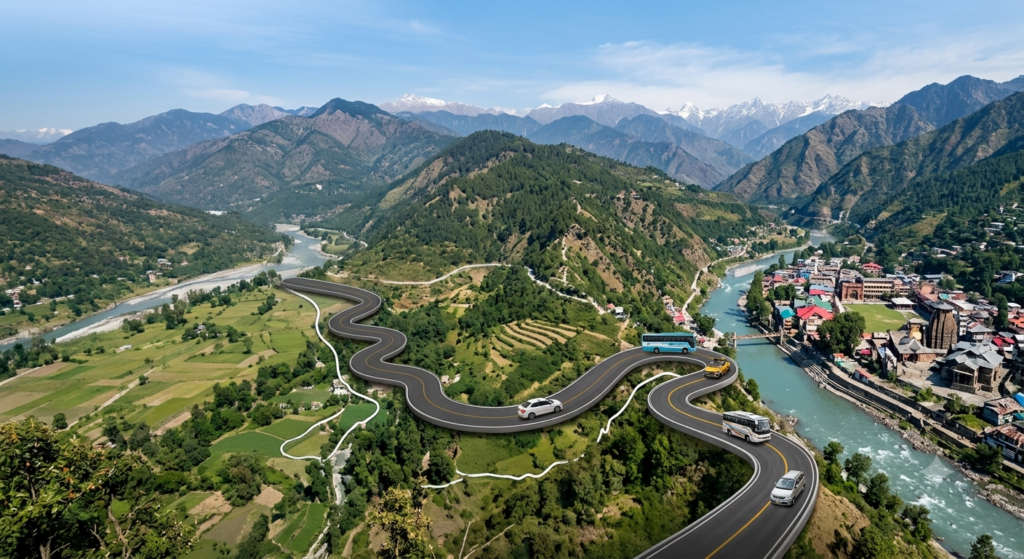
Chamba town sits deep in Himachal’s western hills, so the last leg is always by road. Here is the practical route.
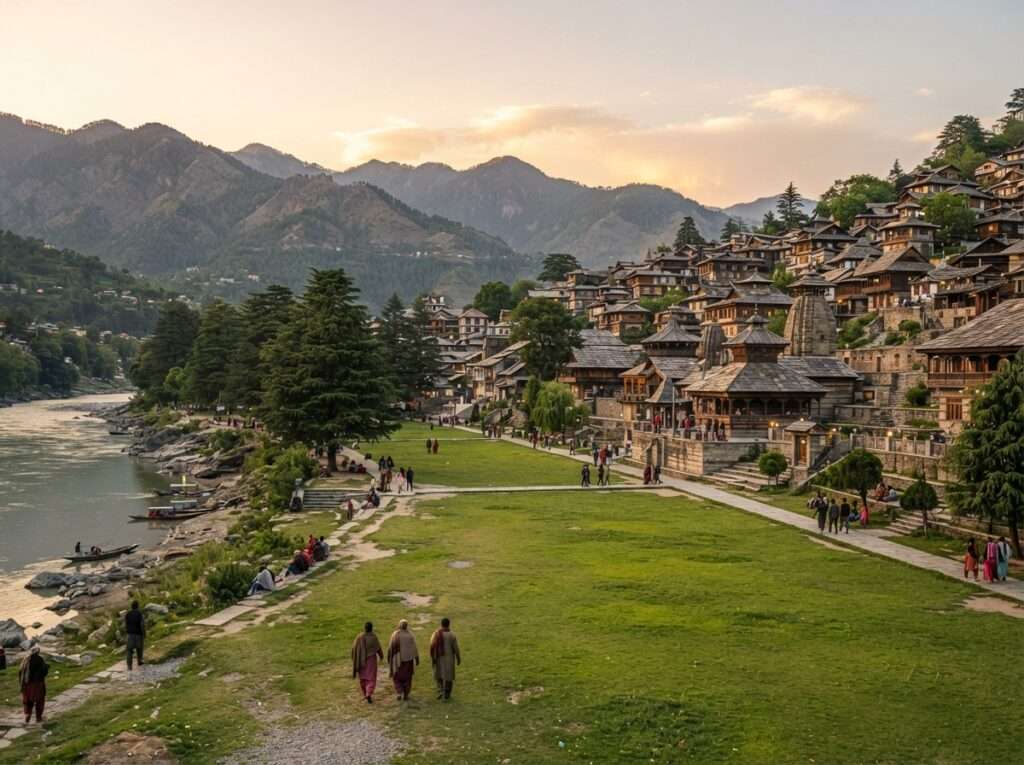
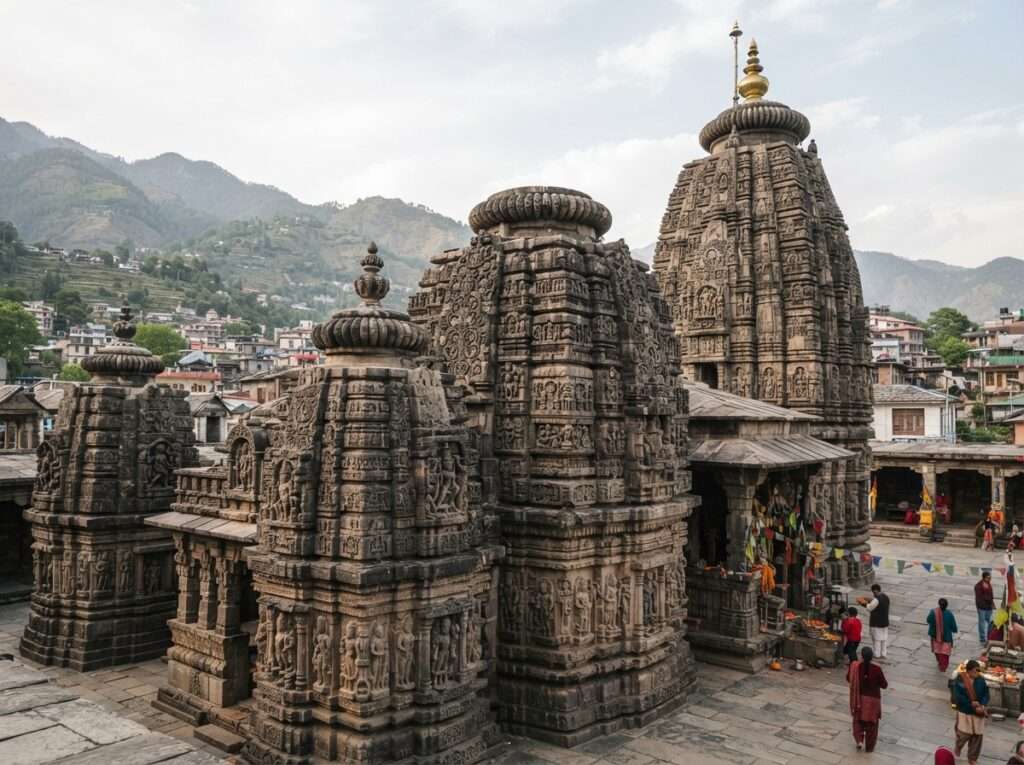
The temple sits above a genuinely old town, and half a day below it is easy to fill. Chamba was a princely capital for centuries, and the cluster around the Chowgan green is where that history is easiest to read. For a fuller list, see our guide to things to do in Chamba.
| Place | What it is | Timing |
|---|---|---|
| Laxmi Narayan Temple | Chamba’s principal shrine: a 10th-century row of six stone Shikhara temples | 6 AM to 12:30 PM, 2:30 to 8:30 PM |
| Bhuri Singh Museum | 1908 museum of Chamba and Kangra miniature paintings, coins and the famous Chamba rumal | Closed Mondays |
| Champavati Temple | Stone Shikhara shrine tied to the princess Champavati, near the treasury | Daylight hours |
| Hari Rai Temple | 10th-century bronze Vishnu shrine at the edge of the Chowgan | Daylight hours |
| Rang Mahal | 18th-century palace, now a handicrafts and rumal-weaving centre | Daytime |
| Akhand Chandi Palace | Former royal palace overlooking the Chowgan | Exterior, daytime |
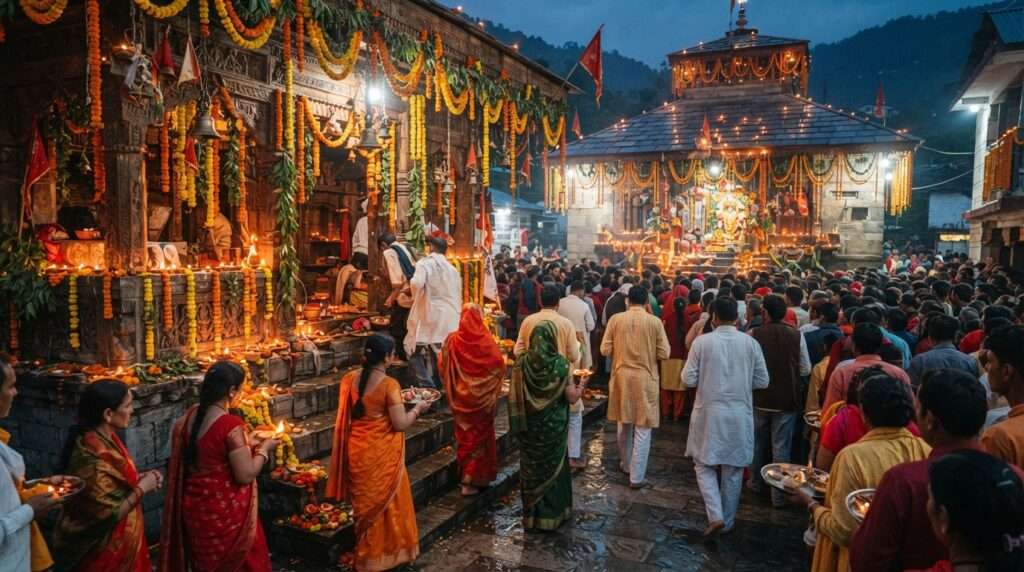
Navratri is the big one at the Chamunda temple. Over the nine nights of Sharad Navratri, which falls in October in 2026, the shrine stays busy with worship of the nine forms of Durga, and Dussehra and Diwali follow soon after. But Chamba’s calendar has two fairs that most temple write-ups miss, and they are worth timing a trip around. The Minjar Fair, held on the Chowgan over a week in late July or August, ends with a colourful procession down to the Ravi where silk tassels called minjar are cast into the river. The Suhi Mata Fair in spring honours a Chamba queen remembered for a local legend, and its processions are led largely by the town’s women and children. Both are pure Chamba, and you will not see them anywhere near Kangra.
Chamunda Devi is one of those temples that rewards the effort of getting there: a wooden shrine on a hill spur, a stiff climb or a short drive, and a view that puts the whole of old Chamba at your feet. Come for Navratri if you want the ritual at full volume, or a quiet morning if you want the goddess and the view to yourself. When you are ready to fold it into a wider trip through Dalhousie, Khajjiar and the Chamba valley, our Himachal tour packages and the Himachal travel guide are a good place to start.
The Chamba temple is the wooden, gable-roofed shrine on Shah Madar hill above Chamba town, built by Raja Umed Singh in 1762. The Kangra temple, near Palampur and Dharamshala, is the older Chamunda Devi Shakti Peeth, also called Nandikeshwar Dham, on the Baner river. They are separate temples about 130 km apart. This page covers Chamba; for Kangra, see our Shakti Peeth guide.
No. The Chamba temple is a revered 18th-century shrine to Goddess Chamunda, but it is not one of the 51 Shakti Peeths. The Shakti Peeth associated with Chamunda Devi is the one in Kangra district, a different and much older temple.
The temple is open for darshan from 6 AM to 9 PM, with the morning puja starting at sunrise. Timings can vary slightly by season, so confirm on the day if you are travelling for a particular aarti.
The historic approach is a flight of 378 stone steps climbing from near the old bus stand. It is steep but rewards you with a wide view over Chamba town and the Ravi. A 3 km motorable road now also reaches the temple for those who would rather drive.
There is no entry fee. A special-darshan ticket is available for Rs 100 if you want a quicker, closer darshan on a busy day.
Raja Umed Singh built it, and an inscription records its consecration on 2 April 1762 as an offering by Pandit Vidhadhara. It is the only wooden temple in a town otherwise full of stone Nagara-style shrines.
Reach Chamba town first: the nearest railhead is Pathankot, about 120 km away by the Dalhousie road, and the nearest airport is Kangra-Gaggal near Dharamshala. From the town centre, the temple is a short taxi ride up the 3 km road or the 378-step climb from the old bus stand.
There is no strict dress code, but modest, temple-appropriate clothing is expected. Comfortable shoes help if you plan to take the steps rather than the road.
Navratri, which in 2026 falls in October, is the temple at its liveliest. For a calmer visit, a weekday morning any time from March to June or September to November works well. Winters are cold and the climb can be icy.
Below the hill lie the Laxmi Narayan temple complex, the Bhuri Singh Museum, the Champavati and Hari Rai temples, Rang Mahal and the Akhand Chandi Palace, all around the Chowgan green. See our full guide to places to visit in Chamba to plan a half-day around them.
Real reviews from real travelers who booked with us.
View All Reviews