
 7D / 6N
8% OFF


Which Temples Can You Visit in Sanur?
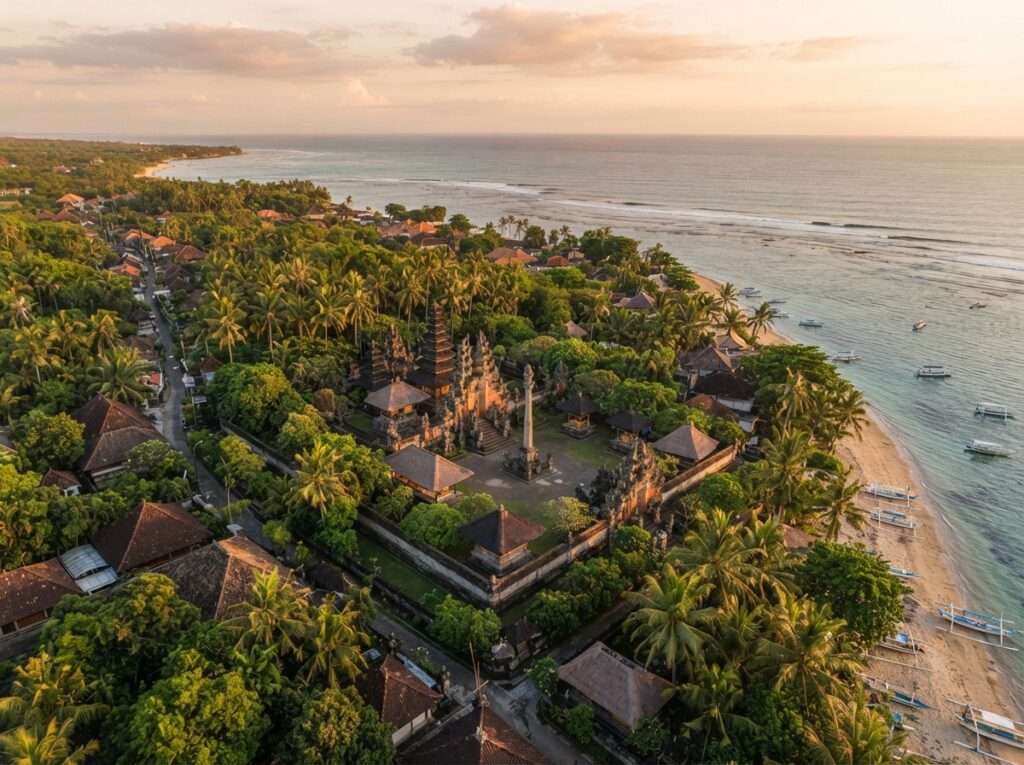
Four temple stops in Sanur are within walking or cycling distance of the beach: Pura Blanjong, whose 914 CE pillar is the oldest inscription in Bali to name its king, the coral-built sea temple Pura Segara (two temples of that name, both on the beach path), Pura Mertasari at the southern river mouth, and Pura Dalem Kedewatan in the old village. Five more sit 15 to 30 minutes away by car, including Pura Sakenan on Serangan Island. None of them sells a ticket. Bring a sarong and a small cash donation.
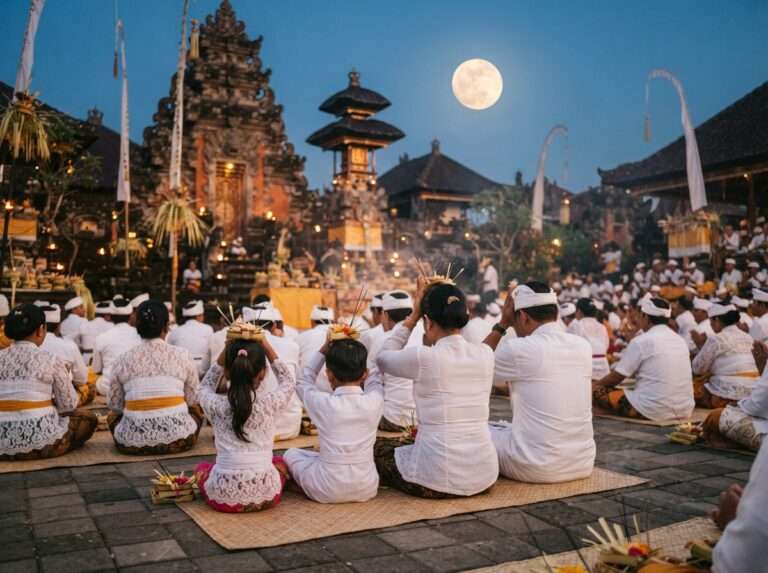
Sanur was one of the first places in Bali where kings, priests and Javanese settlers came ashore, and its temples still show it. These are working village temples, not monuments built for visitors. On most days you will share them with a temple caretaker sweeping leaves and a few women laying out offerings. On ceremony days the same courtyards fill with gamelan, white-clad families and towers of fruit carried on heads. This guide covers the nine temples a Sanur stay can reach, with the distance from Sindhu Beach in central Sanur, what you can actually see, and the dates that matter in 2026 and 2027. (For German readers: pura simply means Tempel.)
Key takeaways
- Start with Pura Blanjong. The stone pillar in its glass case is dated 4 February 914 CE and is the oldest inscription in Bali that names the king who set it up.
- Walk to Pura Segara from any beachfront hotel. Its oldest shrines are built from blocks of Sanur reef coral, not volcanic stone.
- Carry a sarong, a sash and IDR 10,000 to 20,000 (about ₹53 to ₹106) per temple in small notes. Sanur’s village temples rarely rent sarongs at the gate.
- Visit Pura Sakenan on Kuningan day (23 January 2027 or 21 August 2027), when thousands of pilgrims cross the Serangan causeway.
- Plan around Nyepi on Monday 8 March 2027. Every temple, road and beach in Bali closes for 24 hours, and the Melasti processions to Sanur’s shore come in the days before.
Sanur temples at a glance
All nine temples, in the order this guide covers them, with the approximate distance from Sindhu Beach in central Sanur and the best reason to go. Address, timing and entry details for each are in its own section below.
| Temple | Area | From Sindhu Beach | How to get there | Best for |
|---|---|---|---|---|
| Pura Blanjong | South Sanur, Jalan Danau Poso | About 2.5 km | 10 min by bicycle or taxi | The 914 CE king’s pillar |
| Pura Segara | Sanur beachfront (two temples) | 0.7 to 1 km | Walk along the beach path | Sunrise, coral shrines |
| Pura Mertasari | Southern tip of Sanur | About 3.5 km | 15 min by bicycle | Melukat purification, Melasti |
| Pura Dalem Kedewatan | North Sanur, off Jalan Hang Tuah | About 1.5 km | Walk or 5 min ride | Sacred dances on ceremony days |
| Pura Sakenan | Serangan Island | About 11 km by road | 20 to 25 min by car via the causeway | Kuningan festival |
| Pura Dalem Sidakarya | Sidakarya, south Denpasar | About 5 km by road | 15 min by car | The Topeng Sidakarya mask story |
| Pura Petilan | Kesiman, east Denpasar | About 7 km by road | 20 min by car | Ngerebong trance ritual |
| Pura Agung Jagatnatha | Central Denpasar, Puputan Square | About 7 km by road | 20 to 25 min by car | White coral Padmasana, Bali Museum next door |
| Pura Maospahit | Grenceng, Denpasar | About 9 km by road | 25 to 30 min by car | Majapahit-style red brick |
Indonesia
Bali
Temples in Sanur, Bali: 9 Sacred Sites From the Blanjong Pillar to Serangan
Best Time
April - October
Select Package Type
Best Selling Packages


9 Temples In And Near Sanur, Walkable Ones First
The four Sanur stops (five temples, as Pura Segara is a pair) come first, then the five within a 30-minute drive, followed by a half-day temple route, the 2026 to 2027 ceremony calendar, dress code and planning tips.
Explore Popular Destination In Bali
01
Pura Blanjong
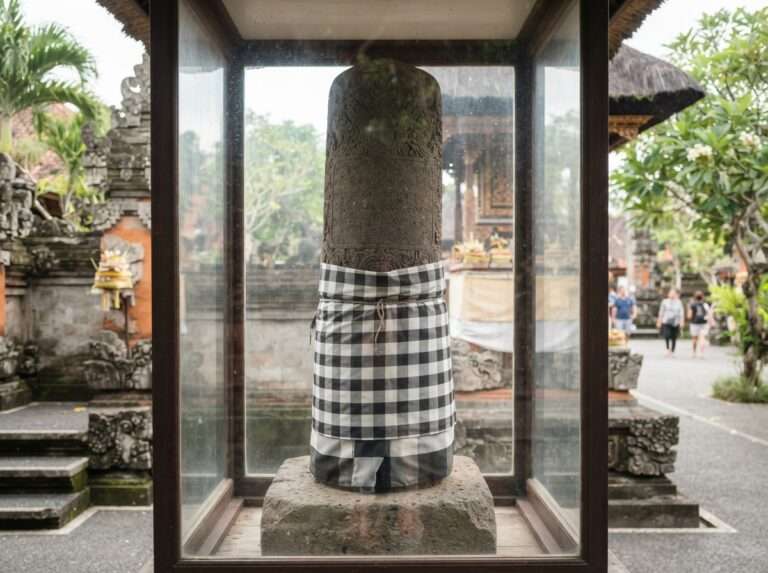
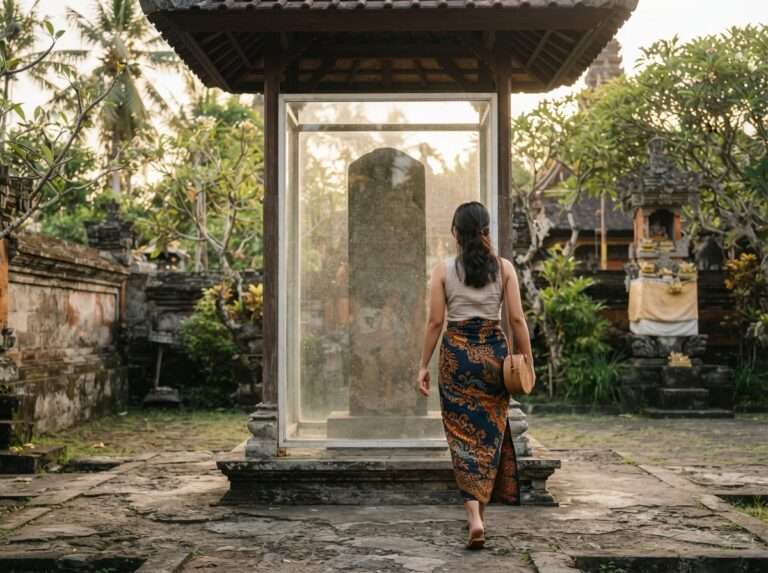
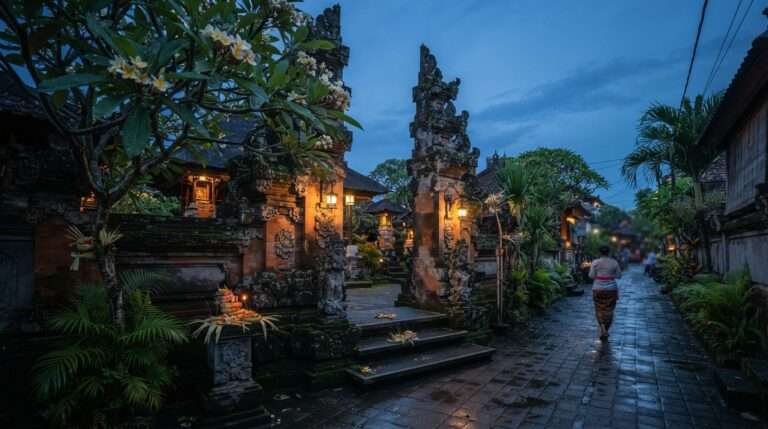
If you see only one temple in Sanur, make it this one. Pura Blanjong is a small village temple on a side street in south Sanur, and beside it, inside a glass enclosure, stands a stone pillar that changed how historians date Bali’s kings. The Blanjong pillar (Prasasti Blanjong) was found in 1932 and published by the Dutch scholar W.F. Stutterheim in 1934. Its inscription is dated Saka 835, which the epigrapher Louis-Charles Damais worked out as 4 February 914 CE (per the Wikipedia summary of Stutterheim, Goris and Damais). That makes it the oldest inscription in Bali in which a king records his own name. It also appears to name the island itself, as Vāli-dvīpa. (Older dated inscriptions exist, such as Sukawana in the Kintamani highlands, 882 CE, but none names its ruler.)
The text runs in two languages, Sanskrit and Old Balinese, on different faces of the stone. It records a king called Sri Kesari Warmadewa, founder of the Warmadewa line, and his campaigns against enemies at “Gurun” and “Suwal”. Scholars still argue about where those were. Stutterheim suggested Gurun could be Nusa Penida, the island you can see from Sanur’s beach. Goris preferred Lombok. NOW! Bali’s local history writers put the pillar at about 1.8 m, roughly head height.
Twenty minutes is plenty. Walk around the glass case, which lets you see all sides, and look for the carved rim near the top. On Hindu holy days the pillar is dressed in black-and-white checked poleng cloth with a yellow sash. The temple next door belongs to the local banjar (neighbourhood council), so keep to the outer courtyard unless someone invites you further in. The name Blanjong is said to come from belahan and ngejung, a legend about a fishing boat stranded on the nearby shore (per bali.com).
| Address | Jalan Danau Poso, Banjar Blanjong, Sanur Kauh |
| Open | Daylight hours. The pillar enclosure is in the temple forecourt |
| Entry | No ticket. A donation of IDR 10,000 to 20,000 is welcome |
| Time needed | 20 to 30 minutes |
| Pair it with | Pura Mertasari, 1.5 km further south |
Related Tour Packages


❮
❯
02
Pura Segara
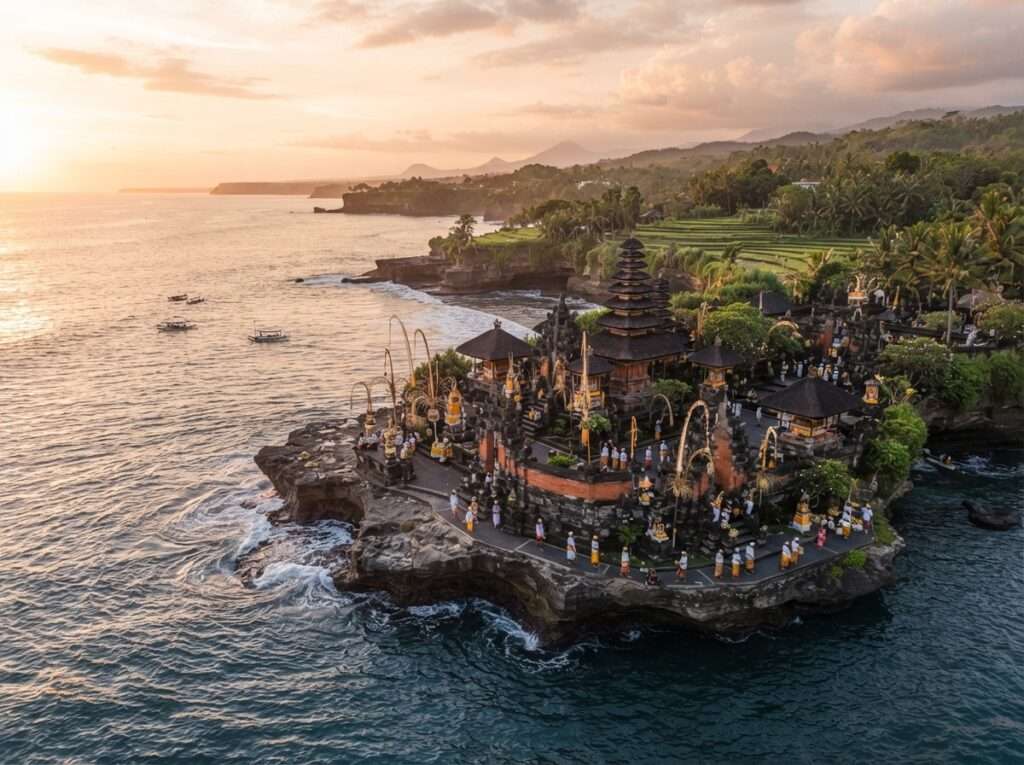
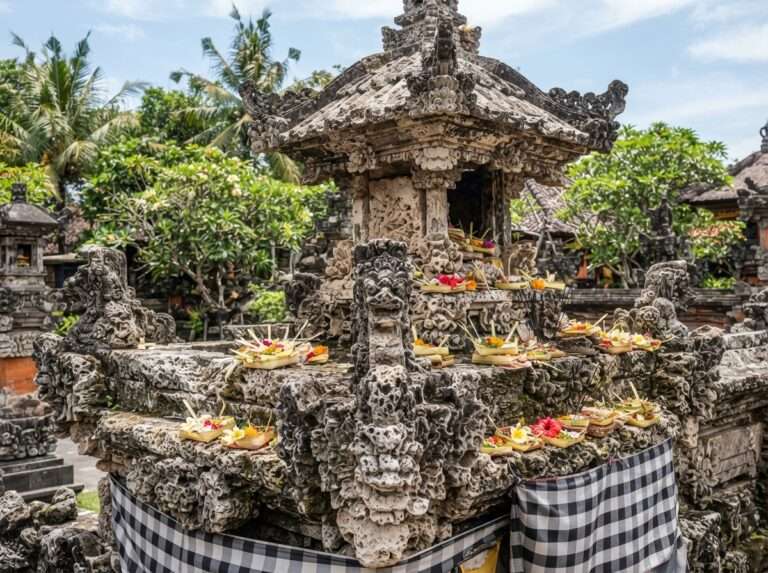
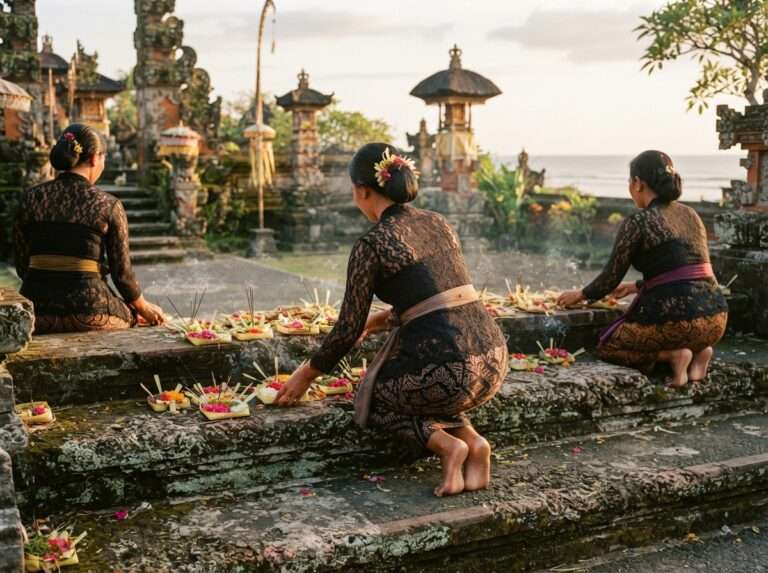
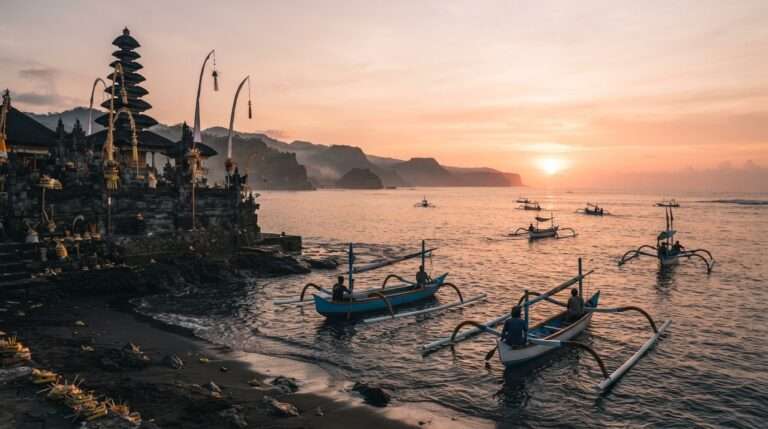
Sanur has two temples called Pura Segara (“sea temple”), and both face the reef. The older one, on Jalan Segara Ayu in central Sanur, is unusual anywhere in Bali. Its shrines are built from cut blocks of coral taken from the Sanur reef rather than the grey volcanic paras stone used almost everywhere else, and the i-discoverasia Sanur heritage walk describes it as a pre-Hindu village temple still in its original shape. Up close the coral looks like pale sponge, pitted and soft at the edges after centuries of salt air.
The second Pura Segara sits further north, near Jalan Hang Tuah and Matahari Terbit beach. Local tradition says Javanese settlers built it as soon as they landed, to protect the village from invaders and from what came out of the sea. That fear has a name in Balinese belief. Across the strait is Nusa Penida, home of Jero Gede Mecaling, the most feared sea spirit in Balinese cosmology, and Sanur’s fishermen still bring offerings here to keep him calm (per the same i-discoverasia walk notes).
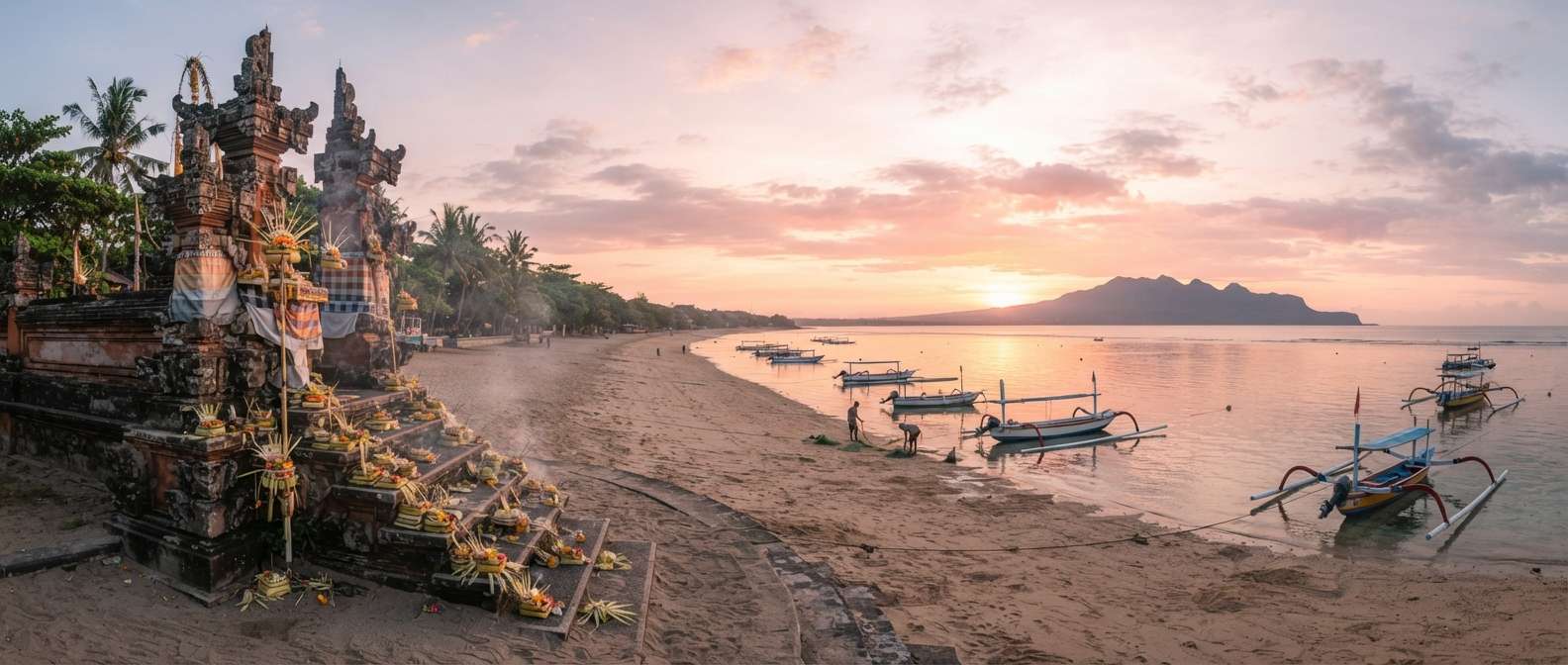
Both temples sit right on the paved beach path, so you can fold a visit into a morning walk. The beach faces east, which means the sun comes up almost directly over Nusa Penida. Arrive around 6 am and you will often see women placing canang sari on the shrine steps while the first jukung outriggers head out. In the days before Nyepi, Melasti processions bring village deities down to this shore to be cleansed in the sea.
| Address | Jalan Segara Ayu (central Sanur) and off Jalan Hang Tuah (north Sanur), both on the beach path |
| Open | Sunrise to sunset |
| Entry | No ticket. Donation box |
| Best time | 6 to 7.30 am, for sunrise over Nusa Penida |
| Know before you go | The inner shrines are for worshippers. Photograph from the outer court |
Related Tour Packages


❮
❯
03
Pura Mertasari
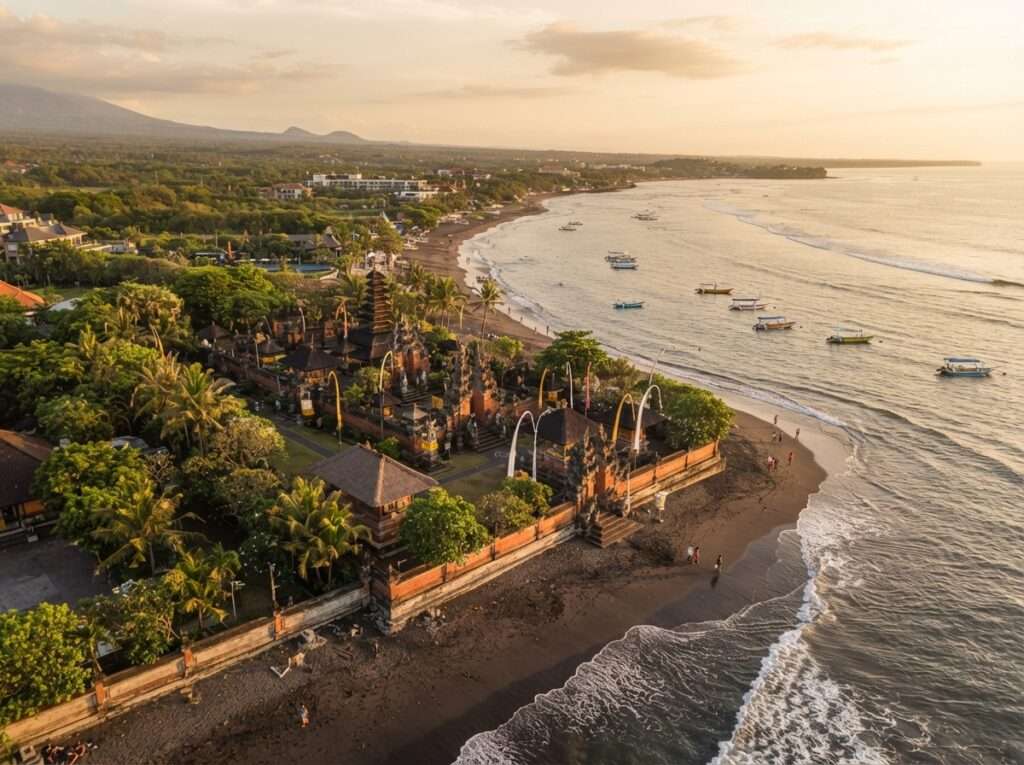
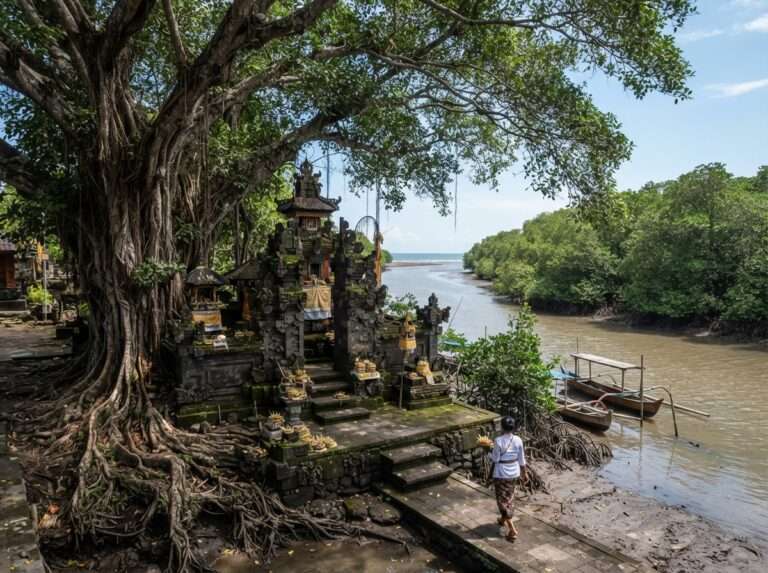
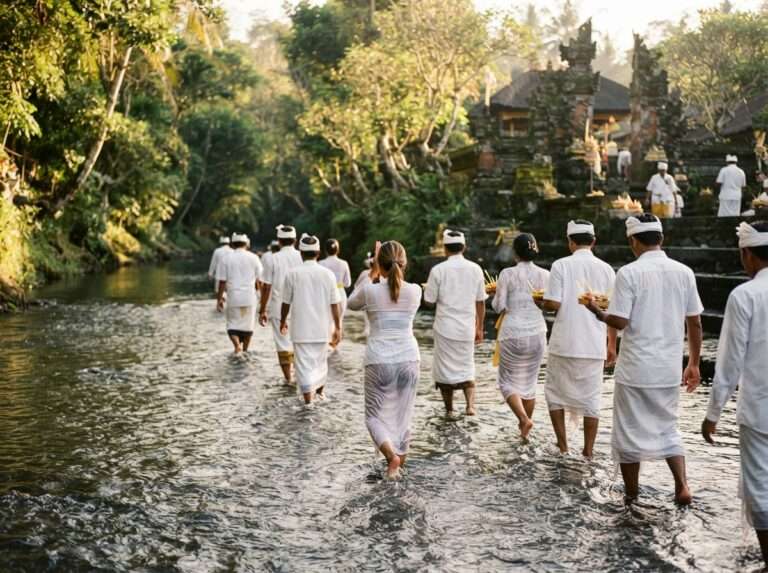
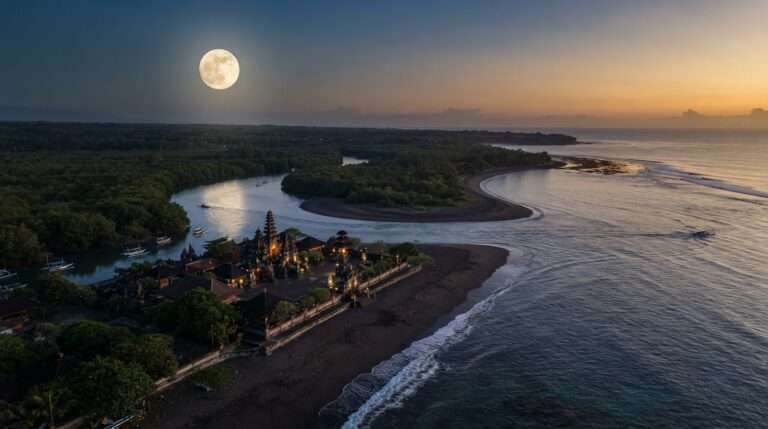
Pura Mertasari stands at Sanur’s southern tip, where a small river meets the sea beside the mangroves. Under a huge shade tree, it is a quiet, compact temple, and you could walk past without noticing it. To Sanur locals it matters far more than its size suggests. The i-discoverasia walk calls it the “head temple” of this part of town, and its position at the river mouth makes it a favoured place for melukat, the Balinese purification bath that washes away bad influences.
The temple is busiest on two occasions. The first is Purnama Kedasa, the full moon of the tenth Balinese month (usually March or April), when the temple fills with processions and offerings. The second is the run-up to Nyepi, when temple guardians carry sacred objects down to the beach for the Melasti cleansing. Since 2015 the beach in front has also hosted the Mertasari art festival, which mixes gamelan, local school groups and visiting musicians.
If you want to take part in a melukat, go with a local guide or ask your hotel to arrange it with a priest (pemangku). You will need a sarong, an offering and a change of clothes, and you should follow the priest’s lead on where to stand and when to pray. Some guides list this area under Pura Dalem Pengembak, the village death temple on nearby Jalan Pengembak. Ask locally which one is holding the ceremony you want to see.
| Address | Jalan Mertasari, Sanur Kauh, at Mertasari Beach |
| Open | Sunrise to sunset |
| Entry | No ticket. Melukat is by arrangement, with a donation to the priest |
| Best time | Purnama (full moon) mornings, or the days before Nyepi |
| Nearby | Mertasari Beach, the Sanur mangrove boardwalk area |
Related Tour Packages


❮
❯
04
Pura Dalem Kedewatan
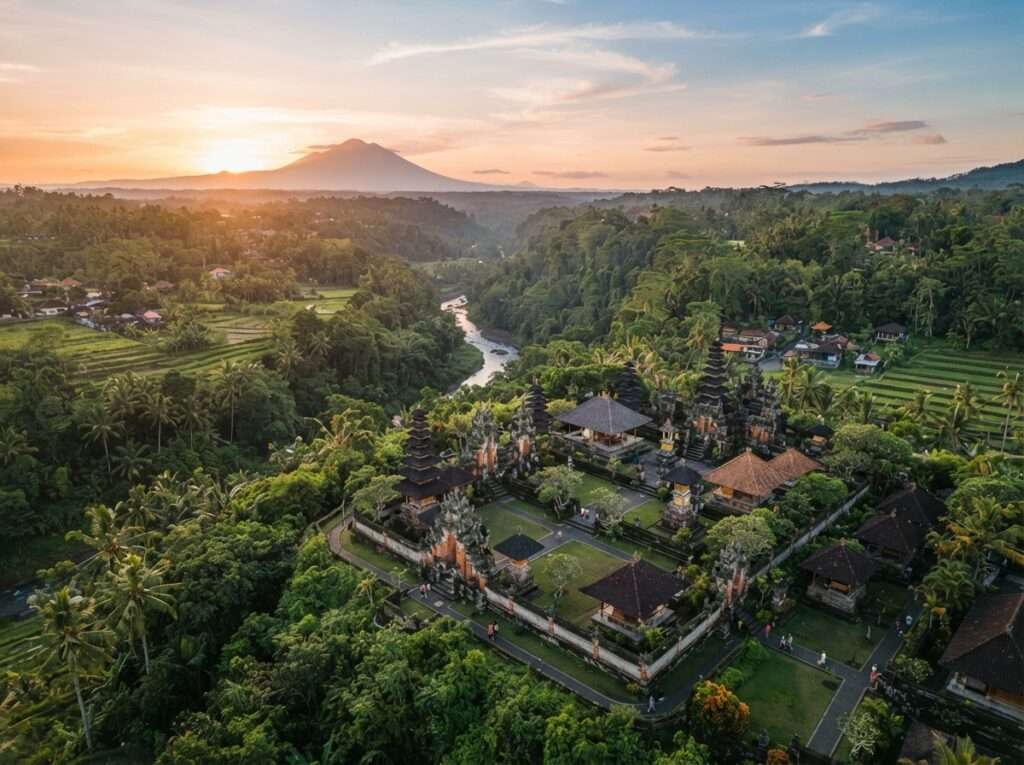
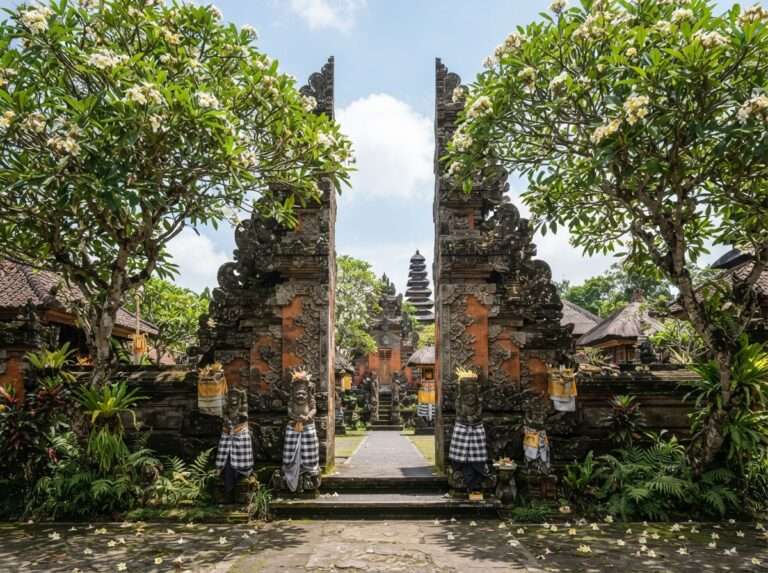
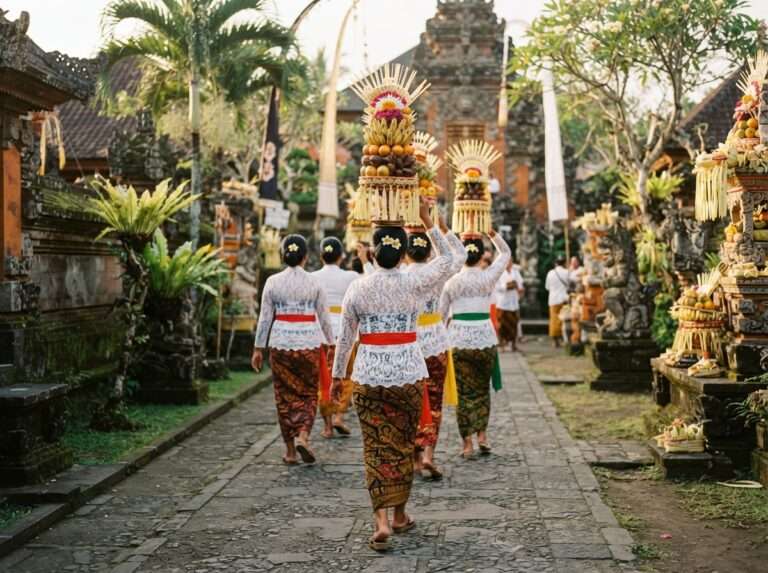
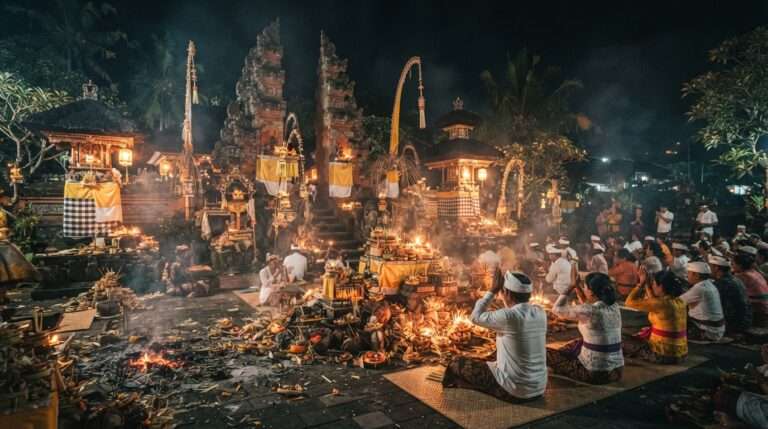
Pura Dalem Kedewatan is Sanur’s old village temple, and its story explains the town’s name. According to the Denpasar city tourism office, the temple first stood at Tangtu, on the bank of the Ayung River. When repeated floods stopped its ceremonies, villagers moved it south to higher ground at Tegal Asah. They saw a single holy light there, sa meaning one and nur meaning holy light, and that, by local telling, became “Sanur”. Bali.com notes that many locals link the temple to a grandson of the great 16th-century priest Dang Hyang Nirartha.
On an ordinary afternoon it is a peaceful walled compound with carved gates and frangipani. On its piodalan (temple anniversary), which falls on Tilem Kajeng, a new-moon day that also lands on Kajeng in the Balinese three-day week, it becomes one of the most dramatic places in south Bali. The sacred Sang Hyang dances are performed here, including Sang Hyang Jaran, in which an entranced dancer riding a hobby horse walks through burning coconut husks. The Denpasar tourism office records that the dance stopped in 1938 and was revived in 2016. On Melasti day, bali.com adds, the temple also stages the Baris Tumbak spear dance.
Visitors can watch from the outer courtyard if they are dressed properly and stay back from the performers. The day after the piodalan, women in white and yellow kebaya carry tall gebogan fruit offerings through the village in a procession called mepeed.
| Address | Off Jalan Hang Tuah, Sanur Kaja, north Sanur |
| Open | Daylight. Ceremonies follow the Balinese calendar |
| Entry | No ticket. Donation welcome |
| When to see the dances | Piodalan on Tilem Kajeng. Ask your hotel or the banjar for the next date |
| Know before you go | Trance dances are sacred. No flash, no drones, keep a clear path |
05
Pura Sakenan
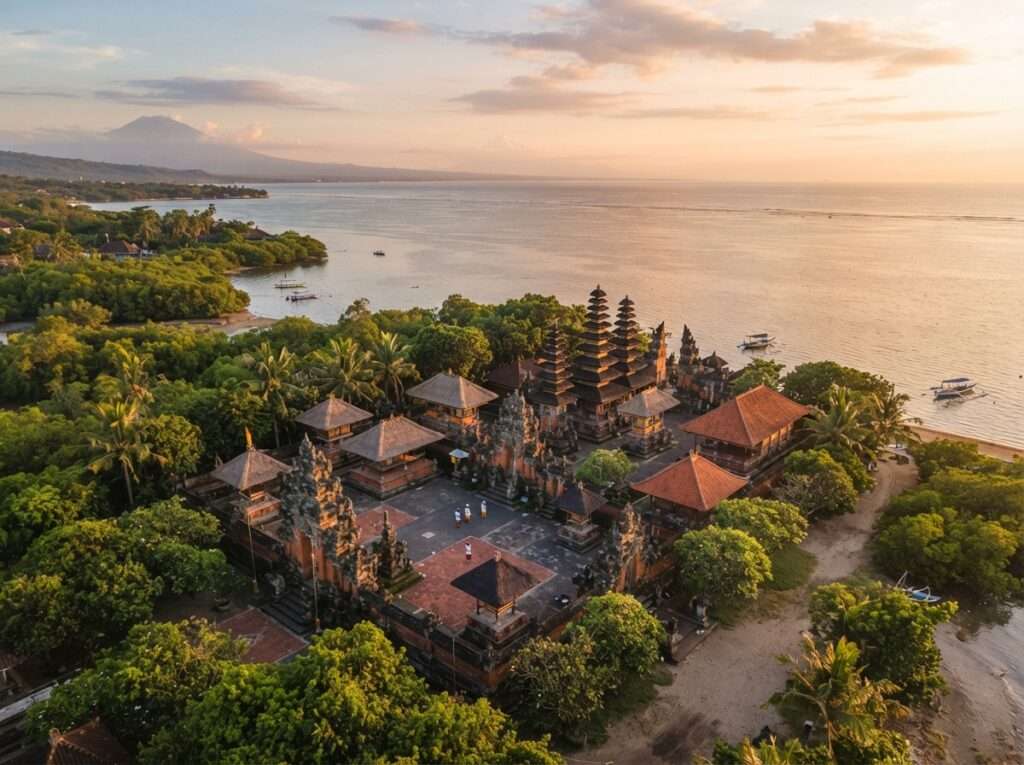
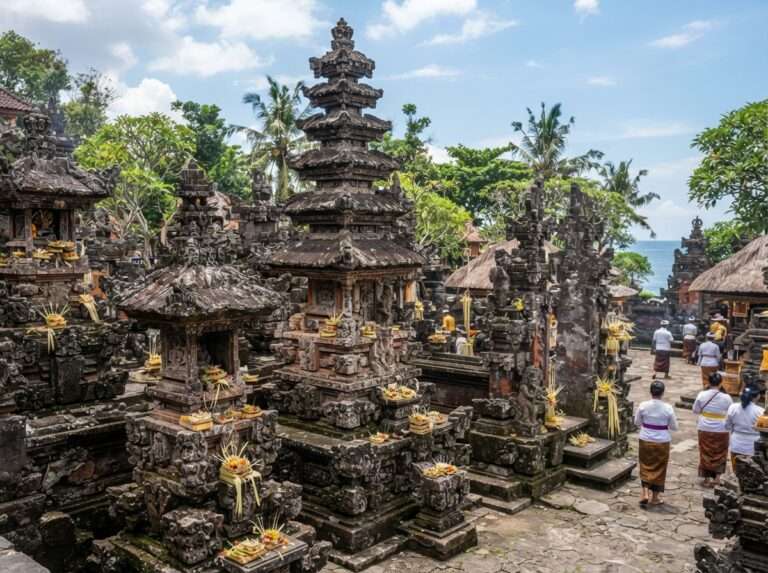
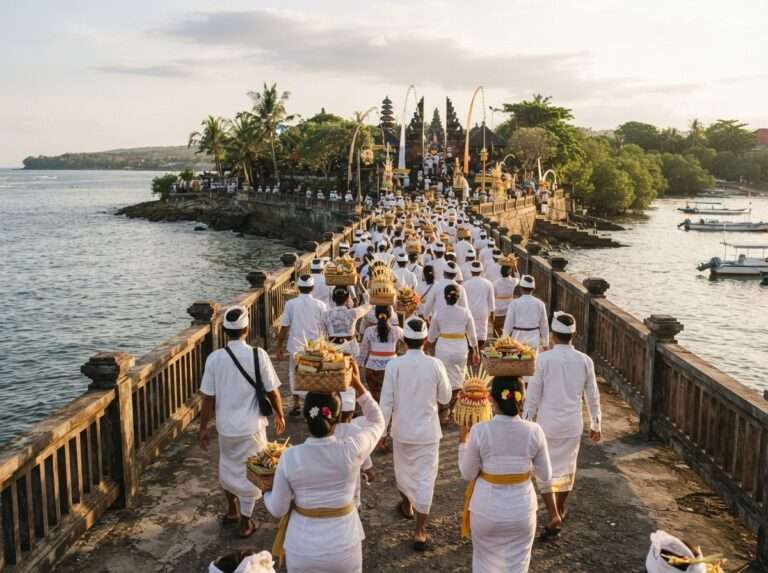
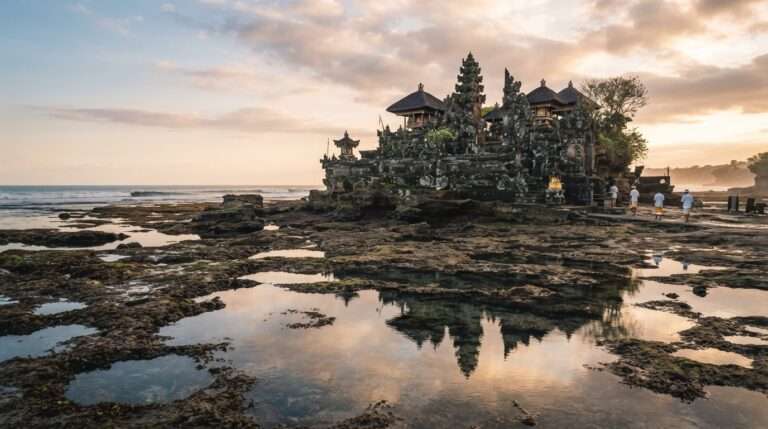
Pura Sakenan sits on Serangan Island, just south of Sanur, and is one of the most important sea temples in south Bali. Its origins are disputed: some histories credit the 11th-century priest Mpu Kuturan, others the 16th-century Dang Hyang Nirartha, who is said to have rested on Serangan during his travels around Bali’s coast. The temple is built of coral limestone and keeps shrines for Baruna, god of the sea.
Serangan was once a true island that pilgrims reached by wading or by boat at low tide. A causeway now links it to the mainland, so it is a 20 to 25 minute drive from central Sanur via the bypass. On most days Sakenan is calm and windswept, with a few fishermen nearby and the island’s turtle conservation centre a short drive away.
Kuningan, the Saturday ten days after Galungan, is a different day entirely. Sakenan’s temple festival falls that day, every 210 days, and pilgrims from across south Bali arrive in their thousands with offerings balanced on their heads. The next dates are 23 January 2027 and 21 August 2027. Expect heavy traffic on the causeway from early morning. We go into the history, layout and festival in detail in our full guide to Sakenan Temple.
| Address | Serangan Island, South Denpasar |
| Open | Daylight hours |
| Entry | No ticket. Donation and sarong required |
| Best time | Kuningan festival day, or a weekday morning for quiet |
| Getting there | Taxi or Grab, about 20 to 25 minutes from Sindhu Beach |
06
Pura Dalem Sidakarya
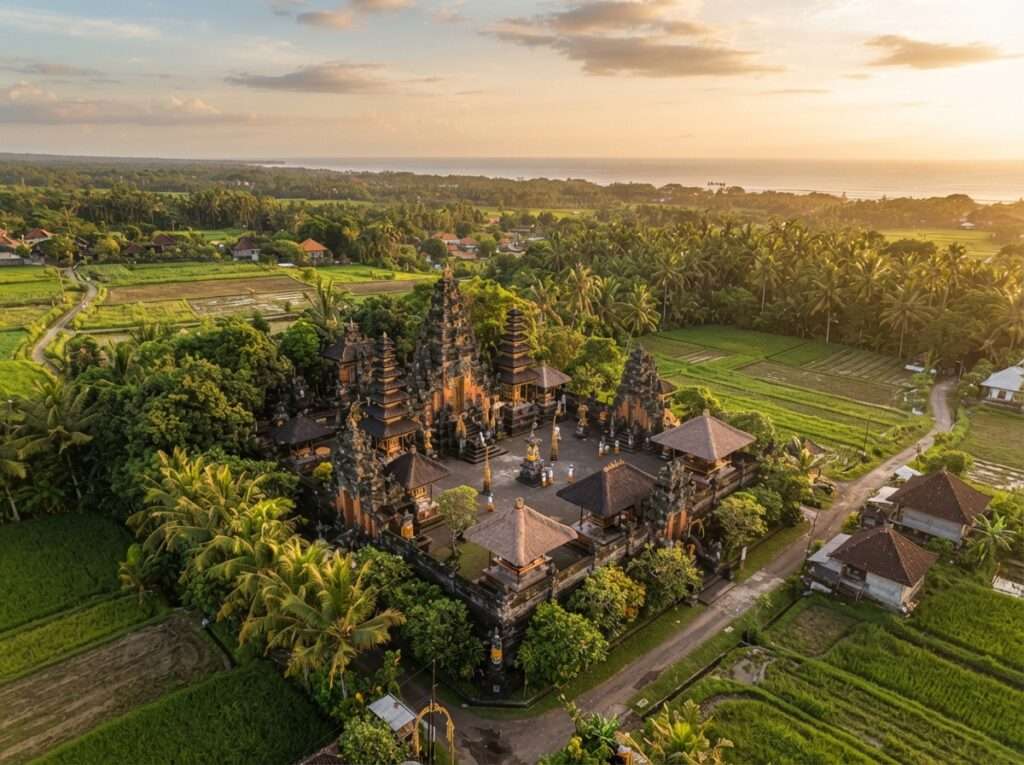
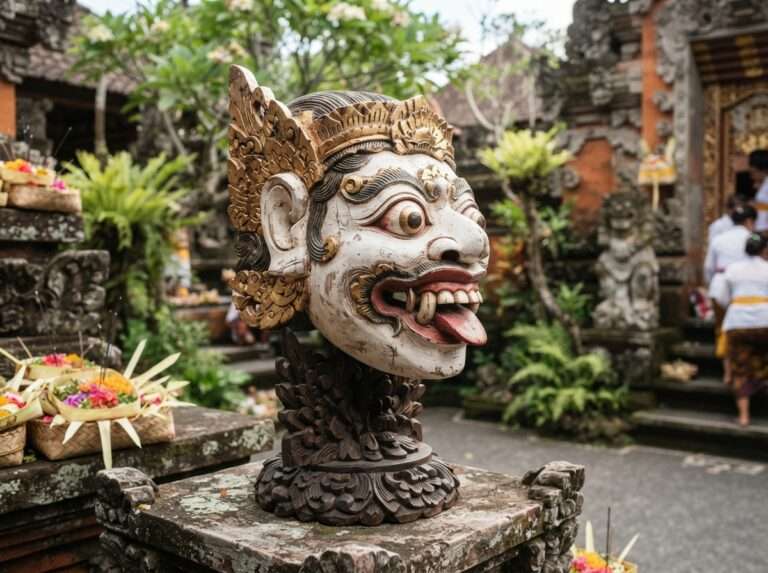
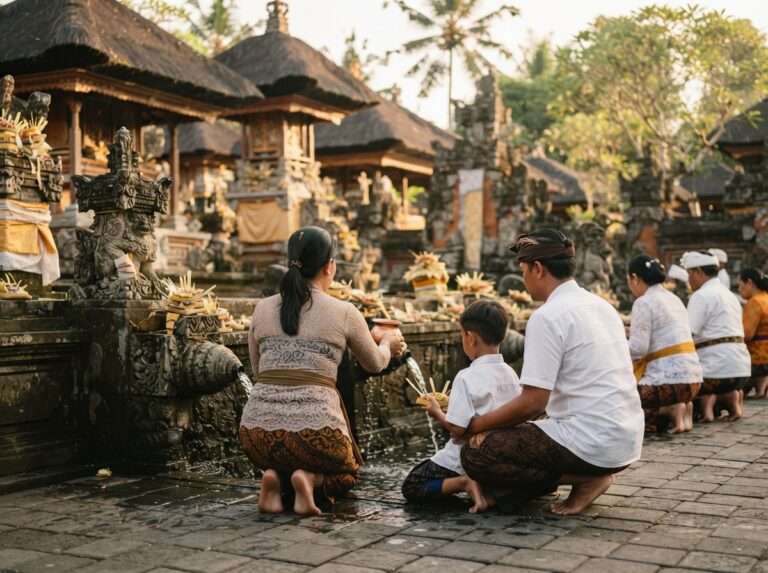
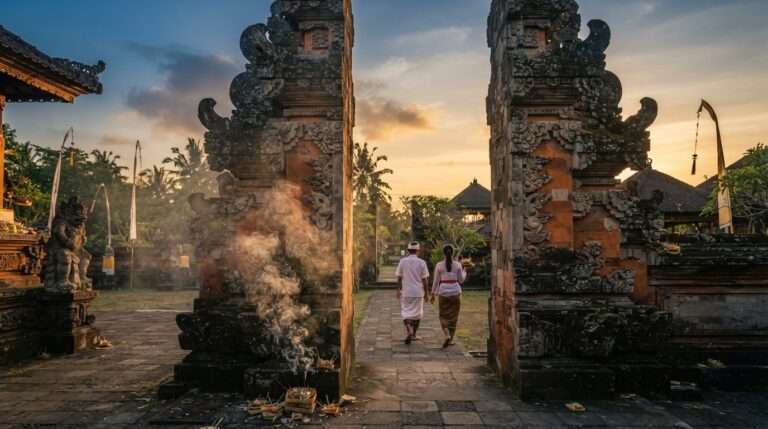
Pura Mutering Jagat Dalem Sidakarya, a 15-minute drive west of Sanur in south Denpasar, is where one of Bali’s best-known masks comes from. By tradition, a priest from Java called Brahmana Keling came to help King Dalem Waturenggong with a great ceremony at Besakih and was turned away by the court because of his ragged appearance. Plague and crop failure followed. Once the king recognised him, Brahmana Keling lifted the curse and was given the title Dalem Sidakarya, “the one who makes the ceremony succeed”.
Local accounts (collected by Budaya Bali) say the king ordered this temple built in 1518 in his honour. Treat that date as tradition rather than settled history. What is not in doubt is the living link. The Topeng Sidakarya, a white-faced, buck-toothed mask dancer, still closes major temple ceremonies all over Bali, and Balinese families still come here for tirta, holy water, before big rituals at home.
For a visitor, Sidakarya is less about architecture and more about seeing how one temple’s story runs through ceremonies across the island. If you watch a temple festival anywhere in Bali and a masked figure appears at the end scattering coins and rice for the children, that is the Sidakarya character.
| Address | Jalan Dewata, Sidakarya, South Denpasar |
| Open | Daylight hours |
| Entry | No ticket. Donation welcome |
| Time needed | 30 minutes |
| Combine with | Pura Mertasari and Pura Blanjong on the same south-side loop |
07
Pura Petilan
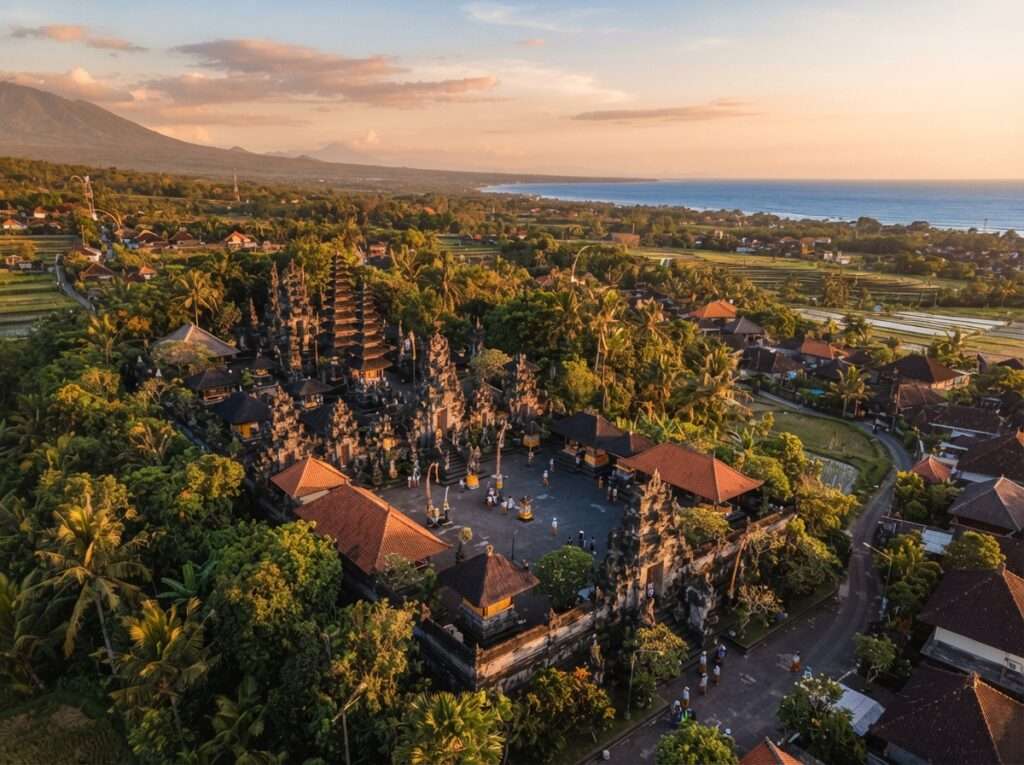
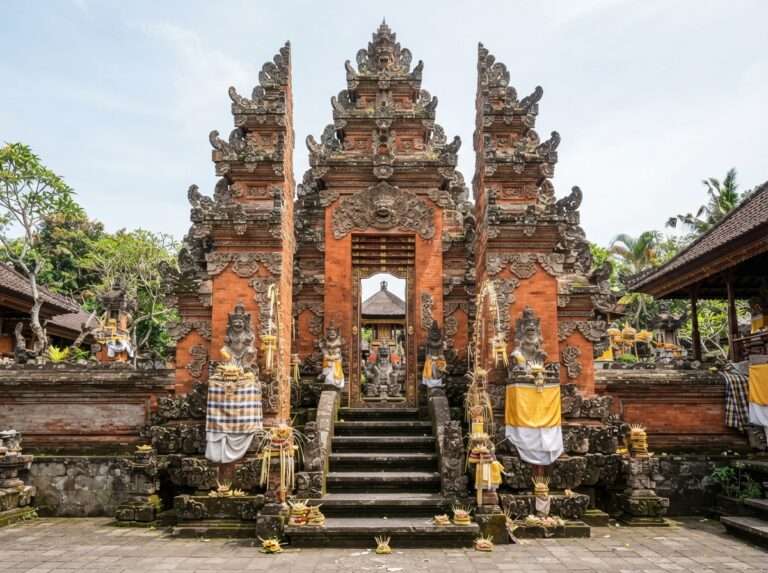
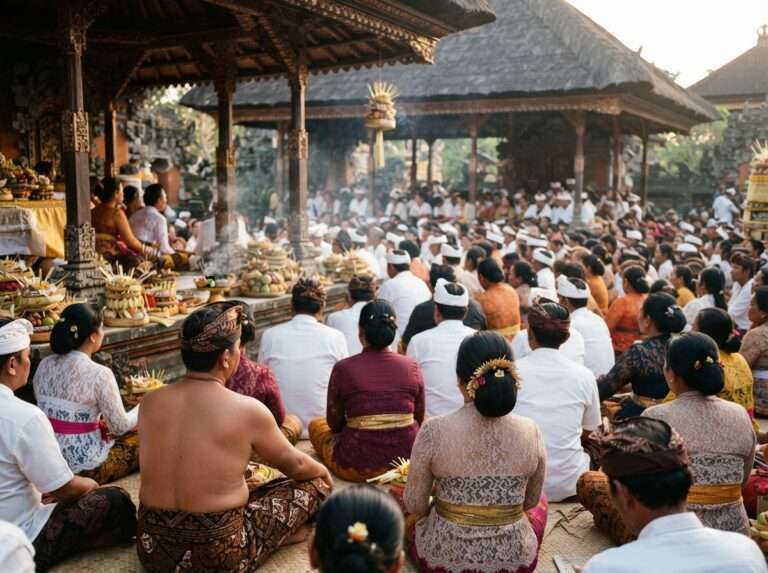
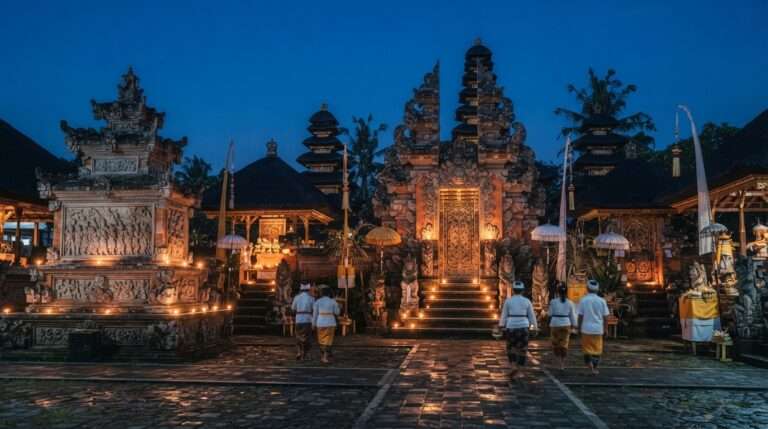
Pura Agung Petilan in Kesiman, east Denpasar, looks like a large, quiet temple for most of the year. Its open pavilions are built for crowds, and twice a year they get them. Eight days after Kuningan, on the Sunday the Balinese calendar calls Redite Pon Medangsia, the temple hosts Ngerebong. Sacred barong and rangda figures from temples across Kesiman village are brought here, gamelan builds to a pitch, and men in trance press keris daggers against their chests while circling the courtyard (per the Denpasar city tourism office).
The next Ngerebong dates are Sunday 31 January 2027 and Sunday 29 August 2027. The ritual begins in the afternoon, and the area is packed with locals. Visitors who are dressed properly and stand back are tolerated, but this is a ceremony and not a performance. Do not step into the courtyard path, and never touch the dancers or the sacred objects.
On other days the temple is worth a short stop for the brick kori agung gate between its courtyards and the 1966 Ngerebong monument in front of it. Kesiman is about 20 minutes from Sanur, so Petilan pairs easily with Jagatnatha.
| Address | Kesiman village, East Denpasar |
| Open | Daylight hours |
| Entry | No ticket. Donation welcome |
| Best time | Ngerebong Sunday, from early afternoon |
| Know before you go | Ceremony days bring road closures nearby. Leave the car and walk the last stretch |
08
Pura Agung Jagatnatha
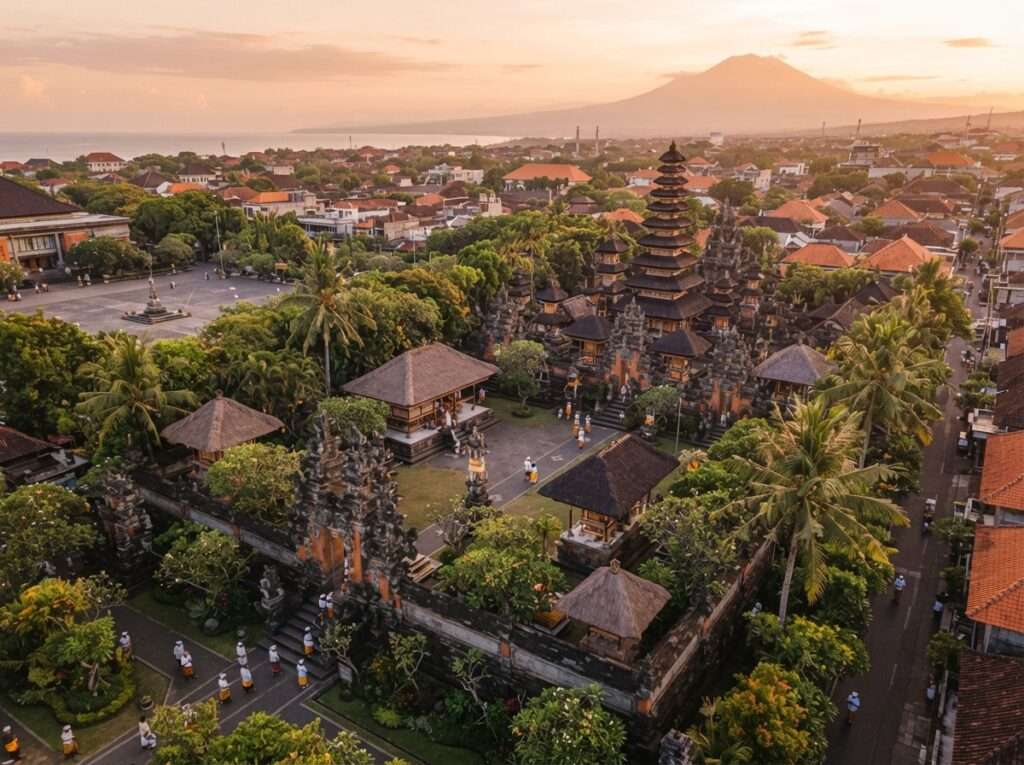
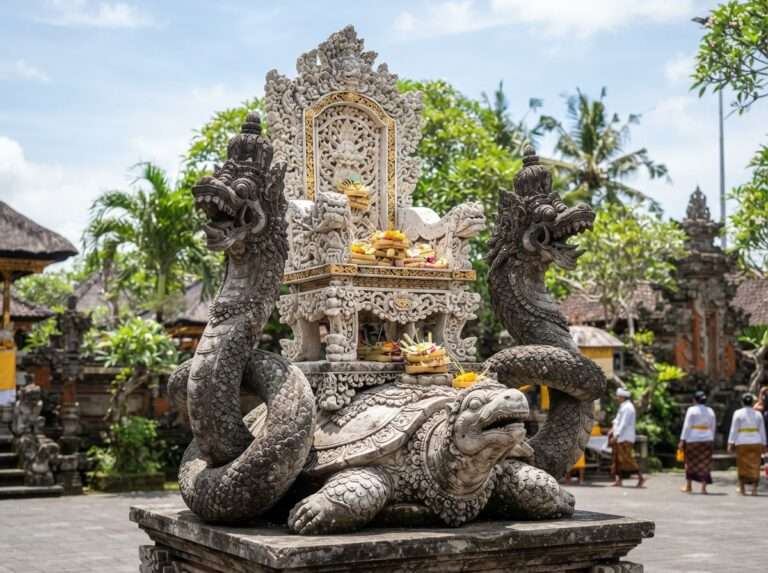
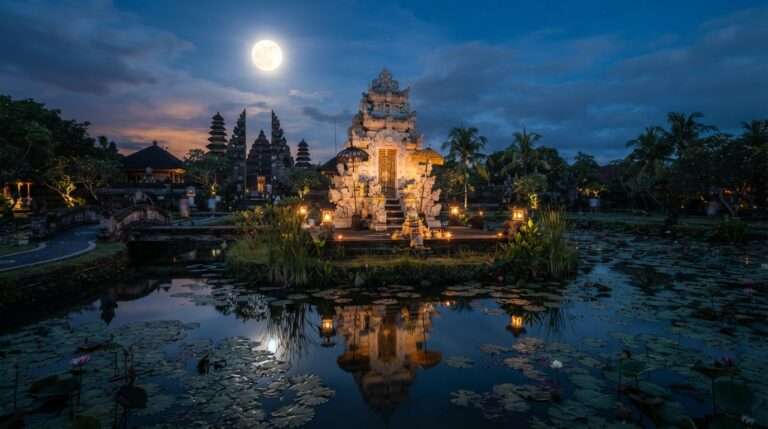
Pura Agung Jagatnatha is Denpasar’s state temple, on the east side of Puputan Square. Unlike village temples, which honour local ancestors and guardian spirits, Jagatnatha is dedicated to Sang Hyang Widhi Wasa, the one supreme god of Balinese Hinduism. Lonely Planet dates it to 1953, while the Denpasar city tourism office records an official inauguration on 13 May 1968 after construction resumed in the 1960s.
The reason to come is the Padmasana, a tall, empty throne of white coral stone. It rests on the cosmic turtle Bedawang Nala, wrapped by two naga serpents, and the empty seat represents a god who has no form. A lotus moat circles the inner court. The temple holds major prayers at every full moon (Purnama) and new moon (Tilem), when Denpasar families arrive in white and the outer court sometimes hosts wayang kulit shadow puppet shows.
The Bali Museum stands right next door, which makes this the easiest temple to combine with a morning of culture in the city. Across the road, the Puputan Square monument marks the 1906 stand of the Badung royal court against the Dutch army.
| Address | East side of Puputan Badung Square, beside the Bali Museum, Denpasar |
| Open | Daylight hours. Worship at all hours on holy days |
| Entry | No ticket. Wear a sarong and sash |
| Best time | Purnama or Tilem evening, for the prayers |
| Combine with | Bali Museum next door, Badung Market 10 minutes' walk away |
09
Pura Maospahit
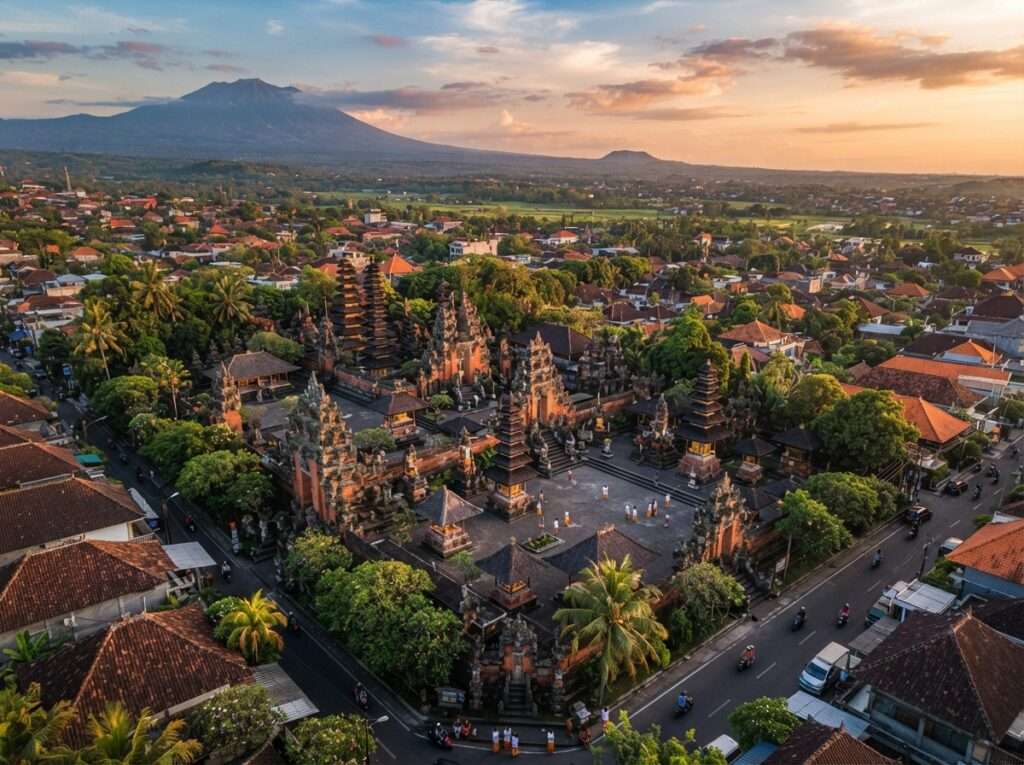
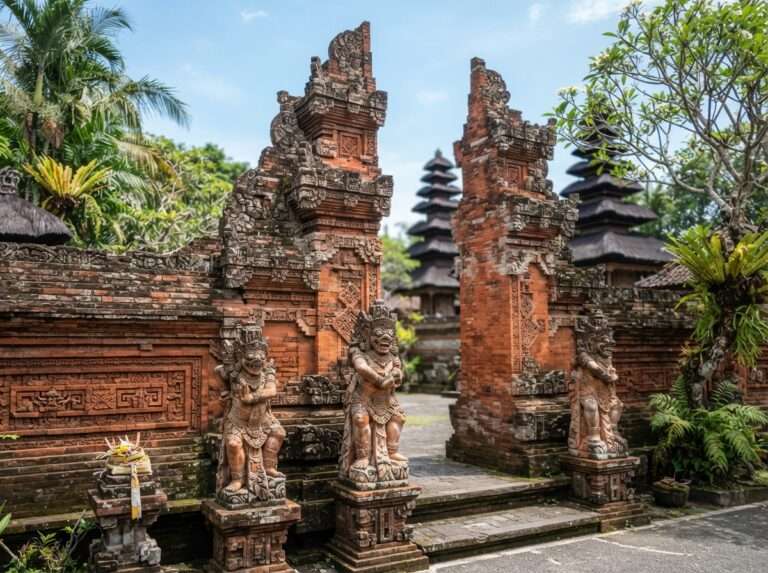
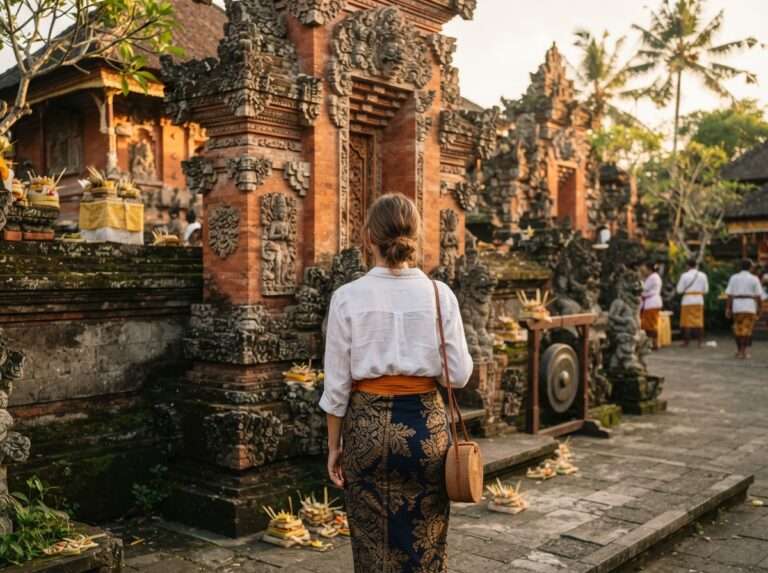
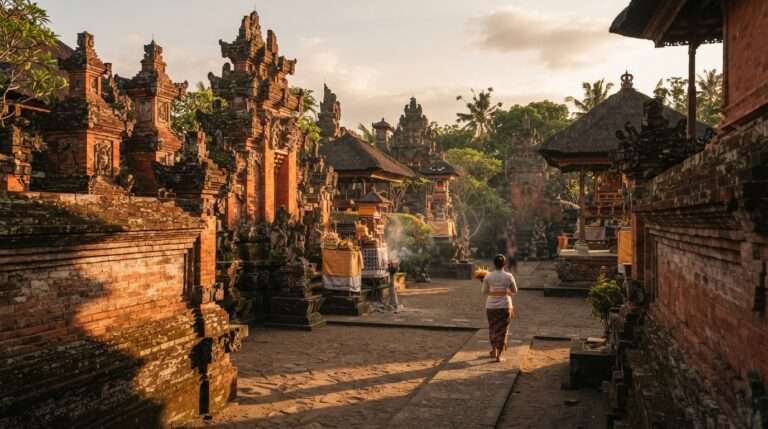
Pura Maospahit in Grenceng, central Denpasar, looks nothing like the temples around it. Its walls, gates and main shrine are built of red brick, with thick, stocky walls and plain geometric gateways that recall the old Majapahit capital at Trowulan in East Java. The name itself is a Balinese form of “Majapahit”.
How old it is depends on whom you ask. A traditional chronicle credits the legendary builder Kebo Iwa with the main red-brick shrine in Saka 1200 (1278 CE), and a second shrine is said to date from 1553 (per the Wikipedia entry and NOW! Bali, which both treat the earliest date with caution). Historians are more comfortable placing the complex between the 13th and 15th centuries. Either way, it is one of the best surviving examples of Javanese influence on Balinese temple building, and its plan uses five courtyards rather than the usual three.
Maospahit is a temple for architecture lovers rather than spectacle. Look for the clay guardian figures by the gates and the way the brick has been carved rather than moulded. It is a 25 to 30 minute drive from Sanur, so pair it with Jagatnatha and the Bali Museum.
| Address | Jalan Sutomo, Grenceng, Denpasar |
| Open | Daylight hours. The inner courts may be locked outside ceremonies |
| Entry | No ticket. Sarong and sash required |
| Time needed | 30 minutes |
| Combine with | Pura Agung Jagatnatha, 10 minutes away |
A Half-Day Sanur Temple Walk and Cycle Route
You can see Sanur’s in-town temples and Sakenan in one morning. The route below starts at Sindhu Beach at 6 am and finishes before the midday heat. Pick up a bicycle the evening before, since most Sanur hotels lend or rent them for around IDR 30,000 to 50,000 a day, and the paved beach path runs for about 5 km from north to south.
- 6.00 am. Pura Segara (Jalan Hang Tuah), a 5 minute ride north of Sindhu. Watch the sunrise over Nusa Penida from the beach path in front of the temple.
- 6.45 am. Pura Dalem Kedewatan, 5 minutes inland. See the carved gates before the village wakes up. Return to the beach path.
- 7.30 am. Pura Segara (Jalan Segara Ayu), about 10 minutes back south by bike, just north of Sindhu Beach. Look closely at the coral shrines while the light is low. Stop for breakfast at one of the beach warungs near Segara Ayu.
- 8.45 am. Pura Blanjong, 10 minutes south and a short way inland on Jalan Danau Poso. Spend 20 minutes with the 914 CE pillar.
- 9.30 am. Pura Mertasari, 10 minutes further south. Walk down to the river mouth and the mangroves behind the temple.
- 11.00 am. Pura Sakenan, 20 to 25 minutes by taxi from central Sanur. Ride back up the beach path to your hotel first (15 to 20 minutes) and drop the bikes, then take a Grab across the Serangan causeway.
- 12.30 pm. Back in Sanur. Lunch, a swim, and the rest of the day off.
On a Purnama morning, add 30 minutes at Mertasari. If you are short of time, steps 3, 4 and 5 alone take about two hours and cover the three temples most visitors come for.
Which Sanur Temple Should You Visit?
Each temple suits a different kind of visit. Use this as a quick decision guide.
| If you want | Go to | Why | Time needed |
|---|---|---|---|
| History in one stop | Pura Blanjong | The 914 CE pillar is the oldest inscription in Bali to name its king | 30 min |
| A sunrise and a temple together | Pura Segara | Coral shrines on the beach path, facing east | 45 min |
| To join a ritual | Pura Mertasari | Melukat by arrangement, full moon ceremonies | 1 to 2 hours |
| Dance and drama | Pura Dalem Kedewatan or Pura Petilan | Sang Hyang Jaran fire dance or Ngerebong, on fixed calendar days | Half a day |
| A festival crowd | Pura Sakenan | Kuningan brings thousands of pilgrims | Half a day |
| Architecture | Pura Agung Jagatnatha and Pura Maospahit | White coral Padmasana and Majapahit red brick, 10 minutes apart | 2 hours with the Bali Museum |
Sanur Temple Ceremony Calendar 2027
Balinese temple festivals follow two calendars at once. The 210-day Pawukon cycle sets Galungan, Kuningan and Ngerebong, so these dates move by about seven months each time. The lunar Saka calendar sets Purnama (full moon), Tilem (new moon) and Nyepi. The dates below come from the Pawukon cycle and the Nusa Penida ceremony calendar. Check with your hotel a week before, because village ceremonies can shift.
| Date | Occasion | Where to see it near Sanur | What happens |
|---|---|---|---|
| Around 24 November and 23 December 2026 | Purnama (full moon) | Pura Agung Jagatnatha, Pura Mertasari | Evening prayers in white. Confirm the exact day with your hotel |
| Wednesday 13 January 2027 | Galungan | Every village. Penjor bamboo poles line Sanur’s streets | Families pray at home and village temples |
| Saturday 23 January 2027 | Kuningan | Pura Sakenan, Serangan | Sakenan’s temple festival. Thousands of pilgrims |
| Sunday 31 January 2027 | Ngerebong | Pura Petilan, Kesiman | Barong procession and keris trance ritual |
| Early March 2027 (days before Nyepi) | Melasti | Sanur beach in front of Pura Segara and Mertasari | Deities carried to the sea for cleansing |
| Sunday 7 March 2027 | Pengerupukan | Sanur’s main streets | Ogoh-ogoh monster effigy parades at dusk |
| Monday 8 March 2027 | Nyepi | All of Bali | Island-wide silence for 24 hours from 6 am. No one may go out |
| Wednesday 11 August 2027 | Galungan | Every village | As above |
| Saturday 21 August 2027 | Kuningan | Pura Sakenan, Serangan | Sakenan’s temple festival |
| Sunday 29 August 2027 | Ngerebong | Pura Petilan, Kesiman | Barong procession and keris trance ritual |
| Every full and new moon | Purnama and Tilem | Pura Agung Jagatnatha, Pura Mertasari | Evening prayers. Mertasari is busiest at Purnama Kedasa |
On Nyepi, hotels stay open but guests must remain inside, with lights low, and the airport closes. If your flight lands on 8 March 2027, move it.
Temple Etiquette and Dress Code in Sanur
Every temple on this list is an active place of worship, and the rules are the same at all of them. Most come down to covering up and not getting in the way.
- Wear a sarong and a sash. Both men and women need a sarong (kamen) covering the legs and a sash (selendang) tied at the waist. Shoulders should be covered. Village temples in Sanur seldom rent sarongs, so buy one at Sindhu night market or any Sanur shop before you go.
- Leave a donation. There are no tickets. IDR 10,000 to 20,000 (about ₹53 to ₹106) in the box or to the caretaker is normal. Give more if a priest helps you with a blessing.
- Do not step on offerings. The small palm-leaf trays (canang sari) on steps and pavements are offerings. Walk around them.
- Stay out of the inner court unless invited. The innermost courtyard (jeroan) is for people who have come to pray. Photograph from the outer courts.
- Never climb on shrines or walls, and do not sit higher than a priest or point your feet at a shrine.
- Ask before photographing worshippers, and switch off the flash during ceremonies. Drones are not welcome over temples.
- Respect the purity rules. Balinese custom asks women who are menstruating, and anyone with an open wound or in mourning, not to enter temple grounds.
Bali also charges foreign visitors a one-time tourist levy of IDR 150,000 (about ₹798), payable online through the provincial Love Bali portal (lovebali.baliprov.go.id) before or on arrival. The province’s code of conduct for foreign visitors lists respectful dress and behaviour at sacred sites among its rules.
Best Time to Visit Sanur's Temples
Time of day. Go between 6 and 9 am. The light is soft, the beach path is cool, and you will see the morning offerings being laid. By 11 am the coral and stone courtyards are hot underfoot.
Season. Bali’s dry season runs roughly from April to October, which is the most comfortable time to walk and cycle between temples. The wet months from November to March bring short, heavy afternoon showers, but temple mornings are usually clear. Our Bali best time to visit guide covers the weather month by month.
Ceremony days. If you can, time your stay to include one festival from the calendar above. A Kuningan morning at Sakenan or a Purnama evening at Jagatnatha shows you more of Balinese religious life than a week of quiet visits.
Avoid. Nyepi (8 March 2027), when nothing is open, and the Indonesian school holiday weeks in late June and July, when the Sanur beach path is busiest.
Temples Beyond Sanur Worth a Day Trip
Sanur is a good base for Bali’s famous temples, but none of these is in Sanur, and each needs a car and driver for a half or full day.
| Temple | Where | Drive from Sanur | Known for |
|---|---|---|---|
| Uluwatu Temple | Bukit peninsula | About 1 hour | Clifftop sunset and the Kecak fire dance |
| Tanah Lot | Tabanan coast | About 1 hour 15 min | Sea temple on a rock, reachable at low tide |
| Pura Taman Ayun | Mengwi | About 1 hour | Royal temple with a moat and garden courts |
| Tirta Empul | Tampaksiring, near Ubud | About 1 hour | Holy spring bathing pools |
| Besakih | Slopes of Mount Agung | About 1 hour 45 min | Bali’s mother temple, 20 plus temples on one slope |
For Taman Ayun and the other temples around it, see our guide to temples in Mengwi. For the island-wide picture, start with our list of the best temples in Bali, and if you are staying on the west coast instead, our guide to temples near Seminyak covers that side.
Planning a Sanur Temple Trip From India
Sanur is about 30 minutes from Bali’s Ngurah Rai airport (DPS), and the airport has direct flights from India. Air India flies non-stop from Delhi in about 7 hours and IndiGo flies non-stop from Bengaluru in about 6.5 to 7.5 hours, depending on direction. Our page on how to reach Bali from New Delhi has the current options. Indian passport holders can get a visa on arrival or an e-VOA in advance, and our guide to the Bali visa for Indians explains the steps and fee.
Sanur suits temple-minded travellers better than Kuta or Seminyak. It is quieter, the beach is calm enough for older family members to swim, and four temples are walkable. Two or three nights here, with one full day for the temple route and one for Nusa Penida or Nusa Lembongan by fast boat from Sanur’s harbour, fits easily into a 6 to 7 day Bali trip.
For the rest of the town, see our guides to things to do in Sanur, the best beaches in Sanur, Sanur Beach itself and the markets in Sanur, where you can pick up a sarong. If your temple day stretches into Denpasar, our list of places to visit in Denpasar covers the city.
Planning Your Sanur Temple Day
Sanur’s temples reward an early start and a little respect more than a big budget. Four of the stops are on or near the beach path, none charges a ticket, and a king’s 914 CE inscription sits in a glass case on a quiet lane. Add Sakenan or one of the Denpasar temples, check the calendar for Kuningan or a Purnama, and pack a sarong the night before.
If you would like Sanur built into a longer trip, with a beach hotel, an airport transfer and a driver for the Denpasar temples, take a look at our Bali tour packages and ask for a Sanur stay to be included.
FAQs
Temples in Sanur: Frequently Asked Questions
Entry, dress code, timings and festivals at Sanur's temples
Sanur has dozens of temples, because every banjar (neighbourhood) and every family compound has its own. For visitors, four stops stand out inside Sanur: Pura Blanjong, Pura Segara (a pair of sea temples on the beach path), Pura Mertasari and Pura Dalem Kedewatan. Five more are within a 30-minute drive: Pura Sakenan on Serangan, Pura Dalem Sidakarya, Pura Petilan, Pura Agung Jagatnatha and Pura Maospahit in Denpasar. Together they make the nine covered in this guide.
Pura Blanjong holds Sanur's oldest dated object. The Blanjong pillar beside the temple carries an inscription dated 4 February 914 CE (Saka 835), the oldest in Bali in which a king records his own name. The temple buildings around it are much newer. Pura Segara on Jalan Segara Ayu is described locally as Sanur's oldest place of worship, a pre-Hindu sea temple built of reef coral, though it has no written date.
No. None of the nine temples in this guide sells tickets. A donation of IDR 10,000 to 20,000 (about ₹53 to ₹106) per person is customary and goes towards upkeep and offerings. If a priest guides you through a melukat blessing at Mertasari or elsewhere, offer more and ask your hotel or guide what is normal for that temple. Keep small notes, since caretakers rarely have change.
Wear a sarong that covers your legs, a sash tied around the waist and a top that covers your shoulders. This applies to men and women. Sanur's village temples seldom rent sarongs at the gate, unlike Uluwatu or Tanah Lot, so buy one before you go at Sindhu night market or a beach shop. White or light colours are a good choice if you plan to attend a ceremony.
Yes, for the four temples in town. Both Pura Segara temples sit on the paved beach path, and Pura Dalem Kedewatan is a few minutes inland. Pura Blanjong and Pura Mertasari are in south Sanur, about 2.5 and 3.5 km from Sindhu Beach, which is a pleasant bicycle ride. Sakenan and the Denpasar temples need a taxi, Grab or a hired driver.
Most are open in daylight, roughly from sunrise to sunset, and have no fixed ticket hours. Pura Segara and Pura Mertasari are on the beach and can be seen from early morning. Some inner courts are kept locked outside ceremony days, so arrive before 5 pm. On Nyepi, 8 March 2027, every temple and road in Bali closes for 24 hours.
Pura Sakenan's temple festival falls on Kuningan, the Saturday ten days after Galungan, and repeats every 210 days. The next dates are Saturday 23 January 2027 and Saturday 21 August 2027. Pilgrims start crossing the Serangan causeway early in the morning, so leave Sanur by 7 am and expect slow traffic. Dress in a sarong and sash and stay to the side of processions.
No. Pura Taman Ayun is in Mengwi, in Badung regency, about an hour's drive north-west of Sanur. It is a royal temple famous for its moat and garden courtyards, and it makes a good half-day trip combined with other central Bali temples. Within Sanur itself, the temples to see are Pura Blanjong, Pura Segara, Pura Mertasari and Pura Dalem Kedewatan.
The older Pura Segara, on Jalan Segara Ayu, has shrines built from blocks of coral cut from the Sanur reef, not the grey volcanic stone used in most Balinese temples. That gives it a pale, porous look that has weathered over centuries of sea air. The second Pura Segara, off Jalan Hang Tuah, was built by early Javanese settlers to protect the village from the sea.
Melukat is a Balinese purification ritual in which a priest pours or sprinkles holy water over the participant to cleanse away bad influences. Pura Mertasari, where a river meets the sea at Sanur's southern tip, is a favoured local spot for it. Visitors can take part if a priest agrees. Arrange it through your hotel or a guide, wear a sarong, bring an offering and a change of clothes, and leave a donation.
Pura Segara is the best choice. Both Segara temples sit on the east-facing beach path, so the sun rises almost straight over Nusa Penida in front of them. Be there by 6 am, when women lay the first offerings and the jukung fishing boats go out. If you want a sunset temple instead, Uluwatu on the Bukit peninsula is about an hour away by car.