8D / 7N
6% OFF


Where to See Sri Lanka's Living Buddhist Heritage
Nine years planning temple-focused Sri Lanka trips for Indian travellers, and most of these sites I have walked myself: the 6 a.m. climb up Pidurangala for the view across to Sigiriya, a full lap of the Anuradhapura sacred city on a rented bicycle, and the Esala Perahera night in Kandy when the Sacred Tooth casket leaves the temple. The fees, timings and etiquette below are the ones I check and update each season, because they change more often than any guidebook admits.
Sri Lanka has kept Buddhism alive without a break for more than 2,300 years, and its temples are where you feel it. The twelve below are the ones worth building a trip around: the Sacred Tooth Relic in Kandy, the giant dagobas and the oldest documented tree on earth at Anuradhapura, the cave murals at Dambulla, and the rock-carved Buddhas of Polonnaruwa. Most sit inside the Cultural Triangle, so you can string four or five together in a few days. Entry runs from free at working village temples to about US$25–30, roughly 7,500–9,000 LKR, at the big archaeological cities. Here is each one, what it is actually like, and what you pay to get in.
Key takeaways
- Start in the Cultural Triangle: Anuradhapura, Polonnaruwa, Dambulla, Mihintale and Sigiriya hold most of the island’s great temples within about a 90-minute drive of a central base like Sigiriya or Dambulla.
- Budget from a few hundred LKR at village temples up to about US$25–30 (~7,500–9,000 LKR) at the big archaeological cities; Anuradhapura and Polonnaruwa each sell one archaeological ticket covering their main monument zones.
- Dress rule is non-negotiable everywhere: shoulders and knees covered, shoes and hats off before you enter.
- Go at opening (around 6 a.m.) for cool stone and empty courtyards, and avoid the midday sun on bare feet.
- Full-moon (Poya) days are the most atmospheric but the busiest, and some sites restrict access.
Sri Lanka Buddhist Temples at a Glance
Use this to plan the route and the budget before you read the detail. Fees are the current foreign-visitor rate in Sri Lankan rupees and are best reconfirmed at the counter, since the archaeological sites adjust them each season.
| Temple | City / region | Why it matters | Entry fee (approx.) | Opening hours | Dress code |
|---|---|---|---|---|---|
| Ruwanwelisaya | Anuradhapura | King Dutugemunu’s great white dagoba, a top pilgrimage site | Free (active worship site) | 6:00 am to 9:00 pm | Shoulders & knees covered; shoes off; white encouraged |
| Jaya Sri Maha Bodhi | Anuradhapura | Oldest human-planted tree on record (3rd c. BC) | ~200 LKR (separate ticket) | 5:00 am to 7:00 pm | Shoulders & knees covered; shoes off |
| Jetavanaramaya | Anuradhapura | Once the tallest brick stupa in the world (~122 m) | ~US$25–30 (~8,000 LKR) | 7:00 am to dusk | Shoulders & knees covered; shoes off |
| Mihintale | near Anuradhapura | Where Buddhism arrived in Sri Lanka in 247 BC | ~1,000 LKR | 7:00 am to 6:00 pm | Shoulders & knees covered; shoes off |
| Gal Vihara | Polonnaruwa | Four colossal Buddhas carved from one granite wall | ~US$25–30 (~8,000 LKR) | 7:00 am to 6:00 pm | Shoulders & knees covered; shoes off |
| Dambulla Cave Temple | Dambulla | Five painted caves, a UNESCO World Heritage Site | ~3,000 LKR (US$10) | 7:00 am to 7:00 pm | Shoulders & knees covered; shoes off |
| Temple of the Sacred Tooth | Kandy | Houses the tooth relic of the Buddha | ~3,000 LKR (2,500 SAARC) | 5:30 am to 8:00 pm | Shoulders & knees covered; shoes off; white encouraged |
| Lankatilaka Vihara | near Kandy | 14th-century image house on a rock outcrop | ~250 LKR | 6:00 am to 6:00 pm | Shoulders & knees covered; shoes off |
| Pidurangala Royal Cave Temple | Sigiriya | Reclining Buddha and the best view of Sigiriya rock | ~1,000 LKR | 5:00 am to 7:00 pm | Shoulders & knees covered; shoes off |
| Gangaramaya (+ Seema Malaka) | Colombo | City temple museum plus a lake-set meditation pavilion | ~300 LKR (donation) | 6:00 am to 10:00 pm | Shoulders & knees covered; shoes off |
| Kelaniya Raja Maha Vihara | Colombo | Site the Buddha is believed to have visited; Duruthu Perahera | Free (donations welcome) | 5:30 am to 9:00 pm | Shoulders & knees covered; shoes off |
| Mulgirigala Raja Maha Vihara | near Tangalle (south) | Rock temple of seven terraced cave shrines | ~500 LKR | 7:00 am to 5:00 pm | Shoulders & knees covered; shoes off |
Sri Lanka
Sri Lanka
Twelve temples worth building a trip around, with fees, timings and etiquette
Best Time
December - April
Select Package Type
Best Selling Packages


Your Sri Lanka Temple Guide, Section by Section
An at-a-glance table, the Cultural Triangle temples, Kandy and central Sri Lanka, Colombo and the south, temple etiquette and dress code, how to plan the circuit and the FAQs.
-
Ruwanwelisaya, Anuradhapura
-
Jaya Sri Maha Bodhi, Anuradhapura
-
Jetavanaramaya, Anuradhapura
-
Mihintale
-
Gal Vihara, Polonnaruwa
-
Dambulla Cave Temple
-
Temple of the Sacred Tooth Relic, Kandy
-
Lankatilaka Vihara, near Kandy
-
Pidurangala Royal Cave Temple, Sigiriya
-
Gangaramaya Temple and Seema Malaka, Colombo
-
Kelaniya Raja Maha Vihara, Colombo
-
Mulgirigala Raja Maha Vihara, near Tangalle
Explore Popular Destination In Sri Lanka
01
Ruwanwelisaya, Anuradhapura
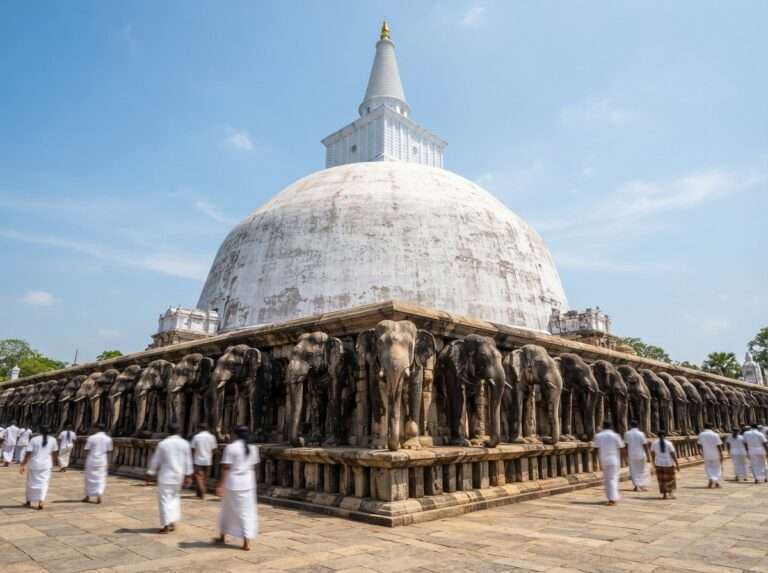
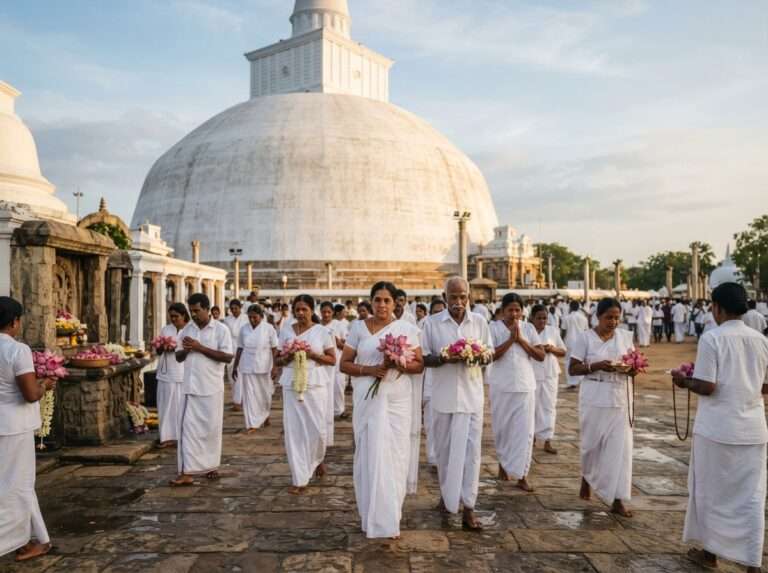
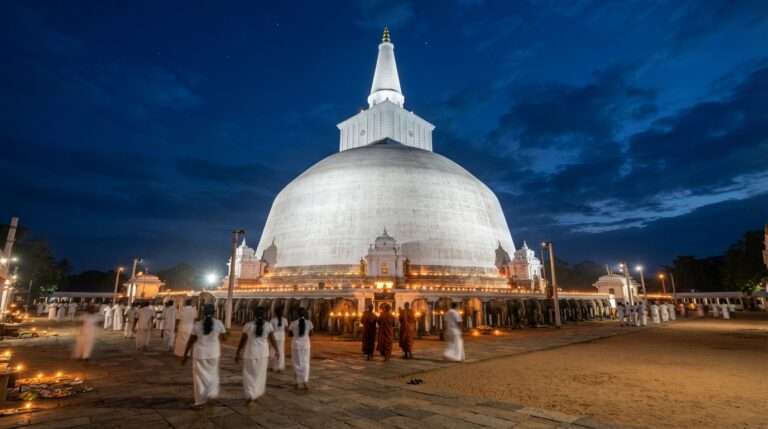
Most of Sri Lanka’s greatest Buddhist sites are packed into the Cultural Triangle, the old heartland between Anuradhapura, Polonnaruwa and Kandy. You can base yourself in Sigiriya or Dambulla and reach all of the following in day trips. See the full regional plan on the Sri Lanka tourism hub.
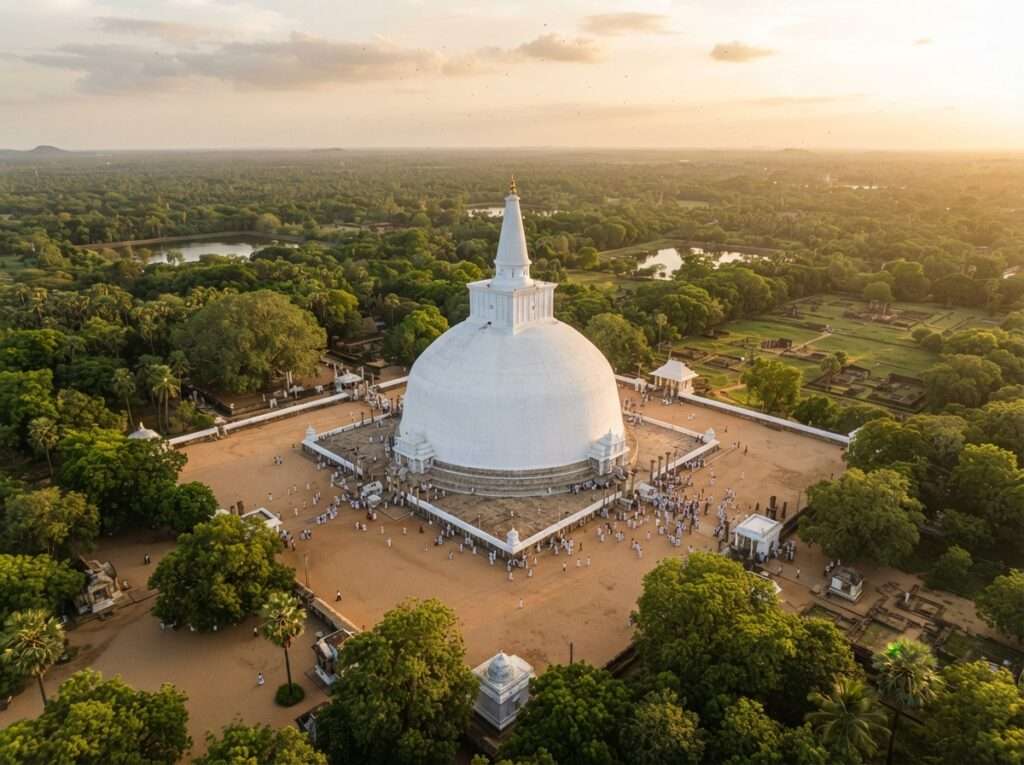
This is the dagoba most pilgrims picture when they think of Sri Lanka: a vast bell of whitewashed brick rimmed by a wall of stone elephants. King Dutugemunu raised it in the 2nd century BC and it still draws a steady line of white-clad worshippers laying lotus flowers at dusk, which is the hour to be here. Walk clockwise around the base at least once. It stands inside the Anuradhapura sacred city, and it is an active place of worship you can enter free. The Anuradhapura archaeological ticket (about US$25–30, roughly 7,500–9,000 LKR, paid in rupees at the day’s rate) is what you buy for the monument zone such as Jetavanaramaya and the museums; Ruwanwelisaya itself and the nearby Sri Maha Bodhi are not covered by it, and the Sri Maha Bodhi charges its own small ticket. Come by bicycle if you can; the ancient city is flat and the ride between monuments is half the pleasure.
Related Tour Packages


❮
❯
02
Jaya Sri Maha Bodhi, Anuradhapura
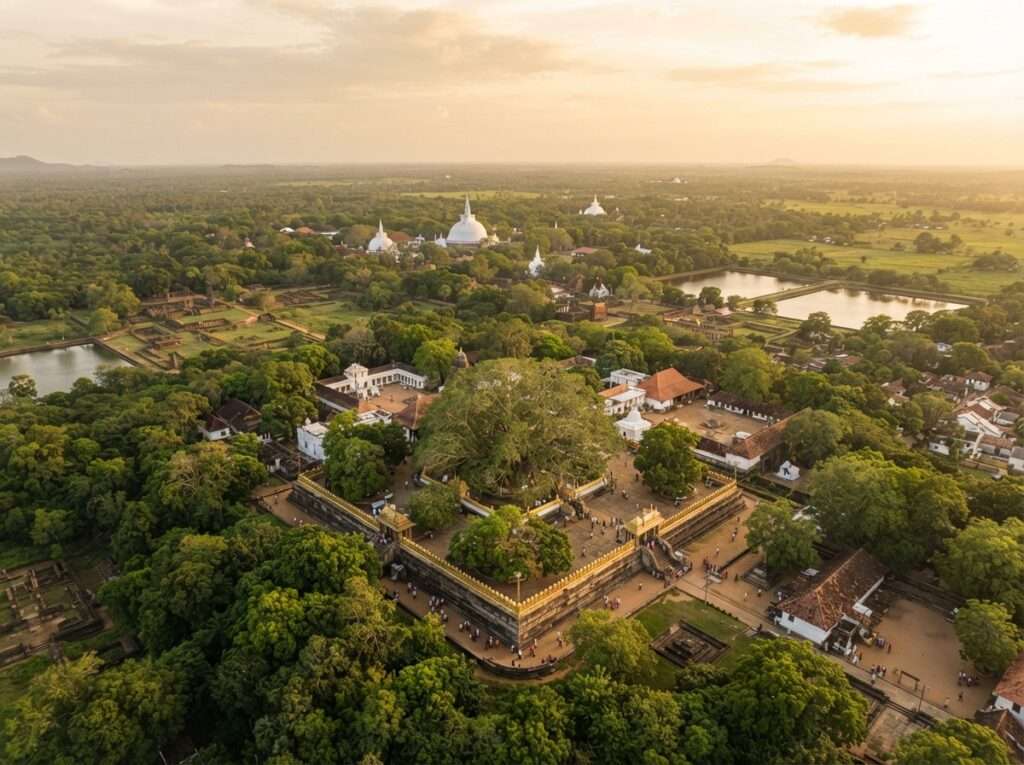
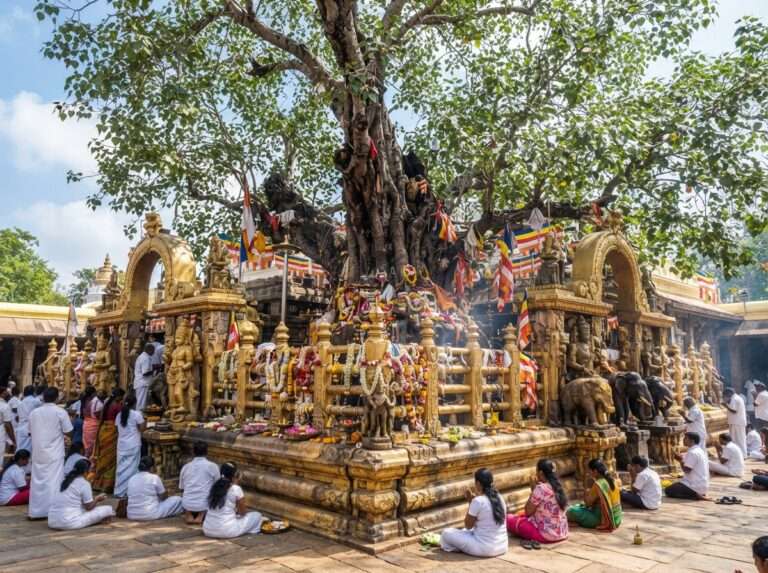
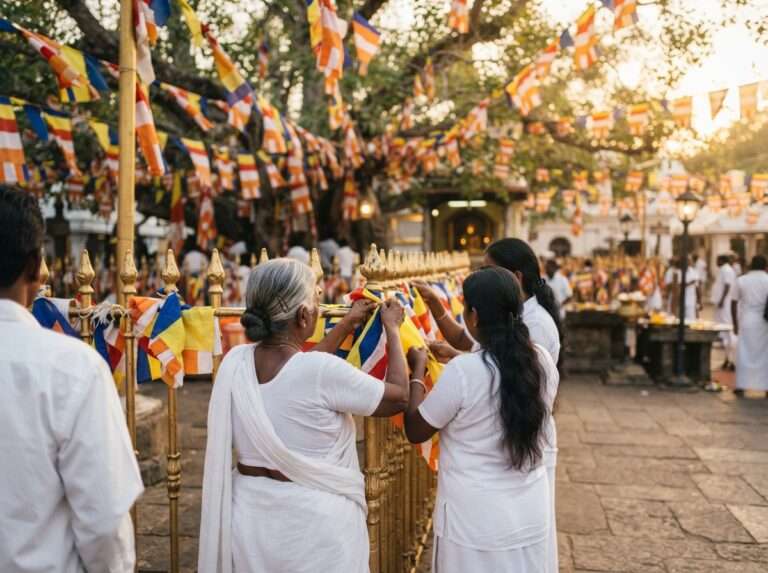
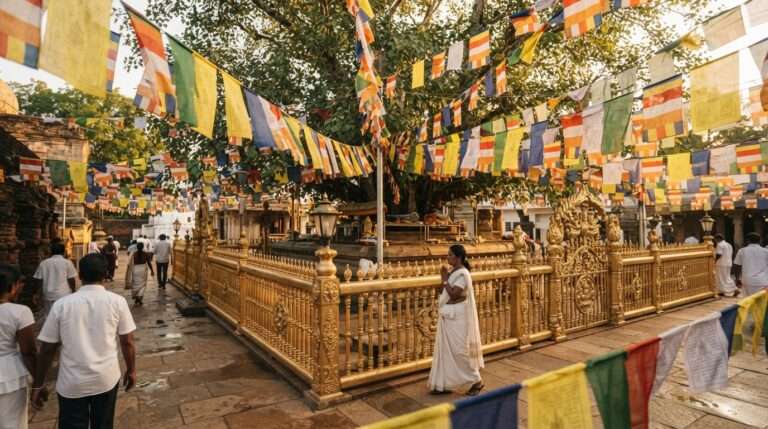
A short walk from Ruwanwelisaya grows the oldest planted tree with a written history anywhere on earth. It was raised from a cutting of the very Bodhi tree in Bodh Gaya under which the Buddha reached enlightenment, brought to the island by the nun Sangamitta in the 3rd century BC. The tree sits on a terraced platform hung with prayer flags, and the atmosphere here is quieter and more devotional than at the big stupas. A separate ticket of around 200 LKR is required here; it is not part of the Anuradhapura archaeological ticket. Dawn, before the heat, is when the chanting is loudest.
Related Tour Packages


❮
❯
03
Jetavanaramaya, Anuradhapura
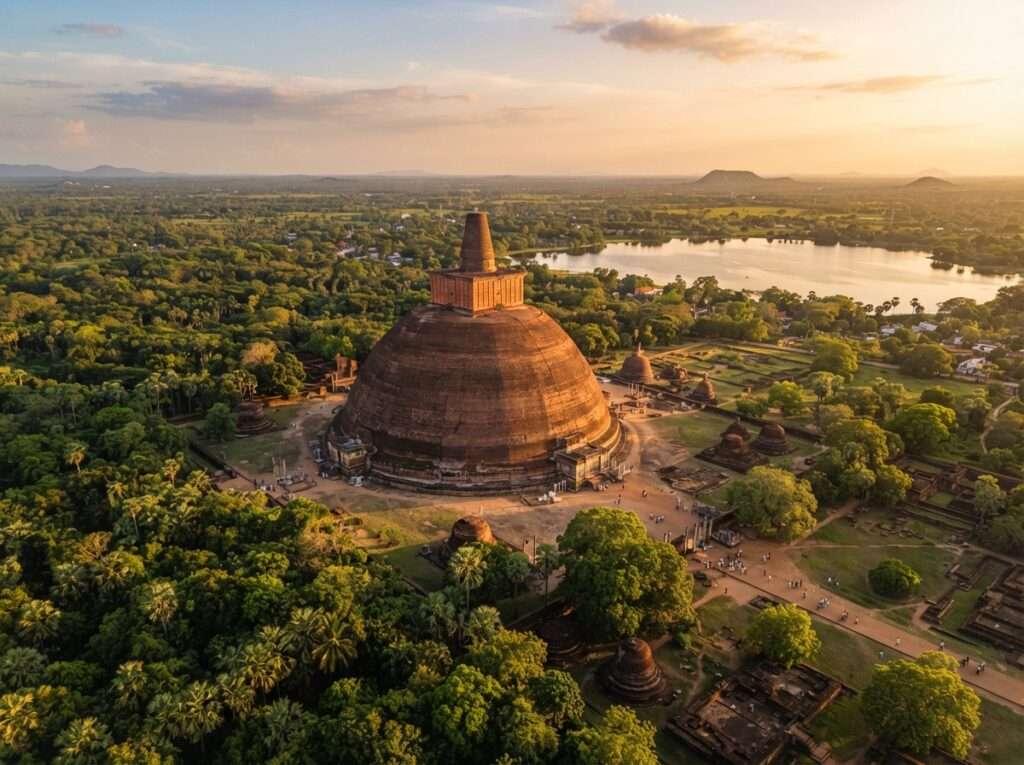
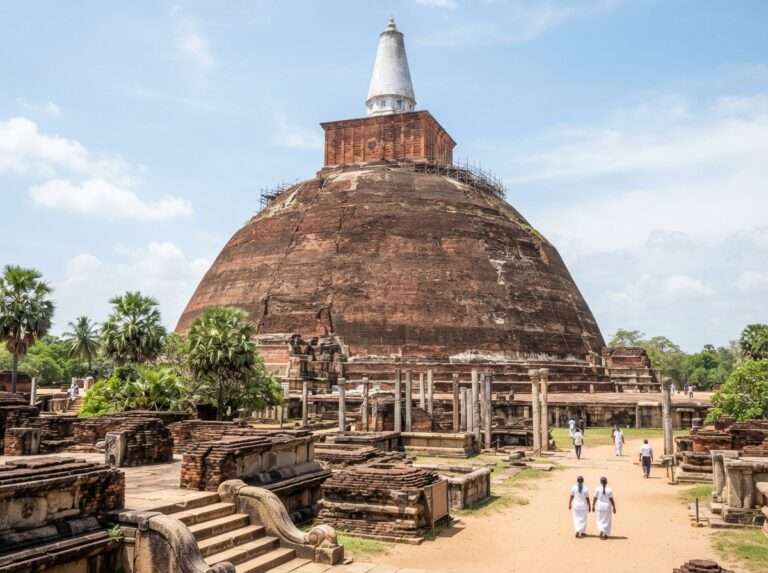
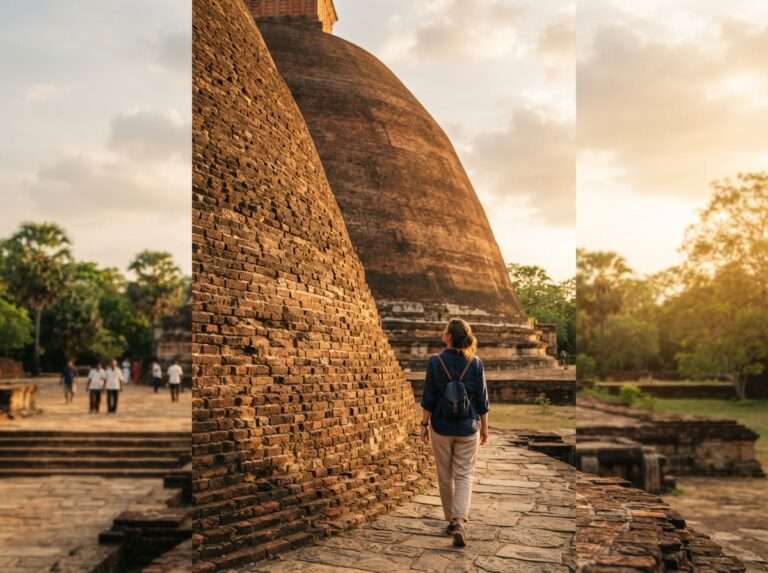
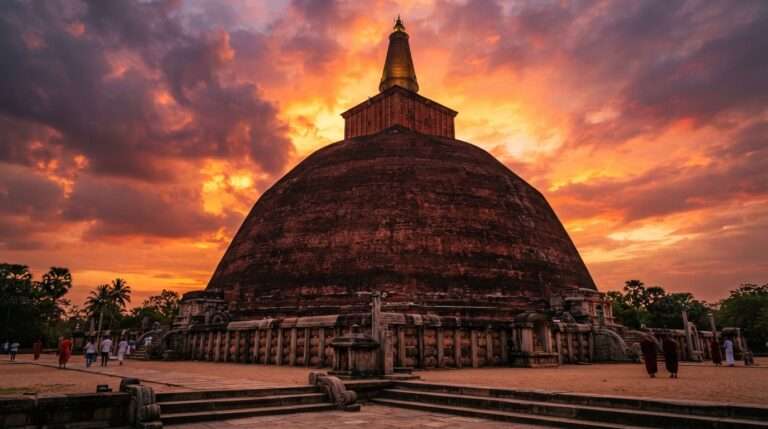
When it was finished in the 3rd century, this red-brick stupa rose about 122 metres and was, by most reckonings, the tallest structure in the ancient world after the two great pyramids at Giza. It is partly restored now and you can walk right up to the raw brickwork, which gives a real sense of the 90-odd million bricks that went into it. There is a small museum of relics found in the ruins. Entry is covered by the Anuradhapura ticket. Pair it with Ruwanwelisaya and the Sri Maha Bodhi, a short ride west in the Mahavihara quarter, to take in the great monuments in a single morning.
Related Tour Packages


❮
❯
04
Mihintale
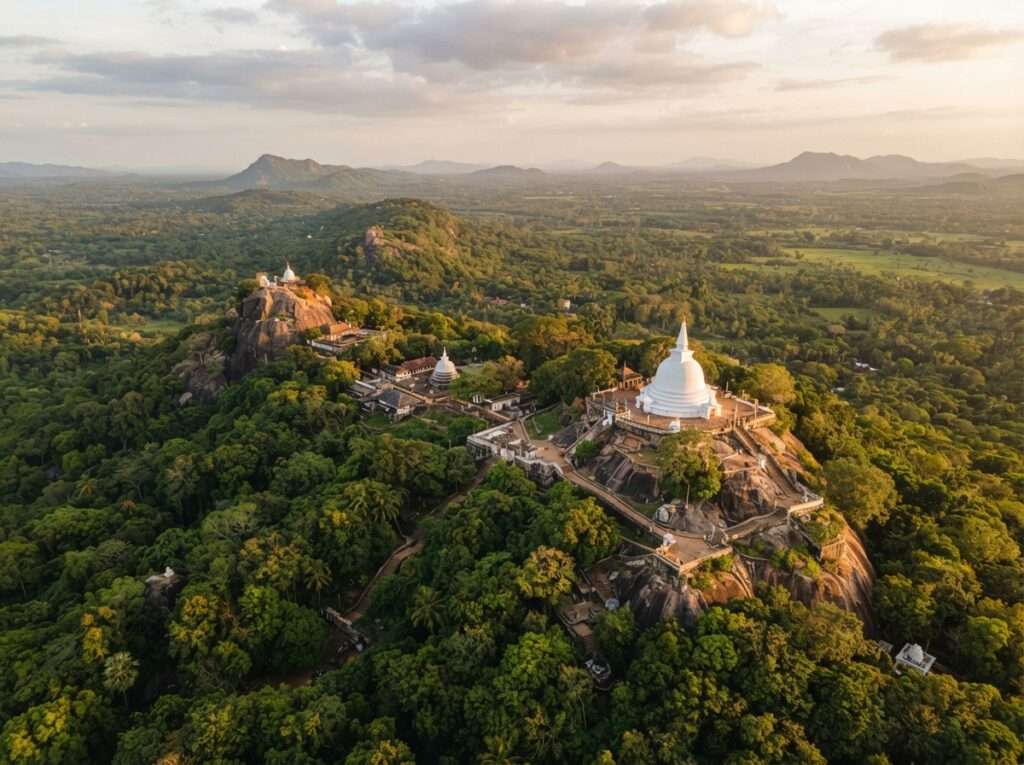
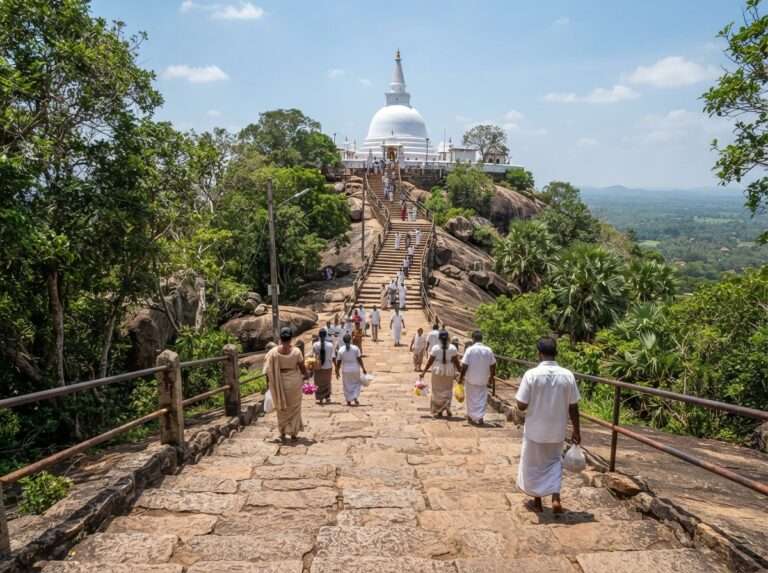
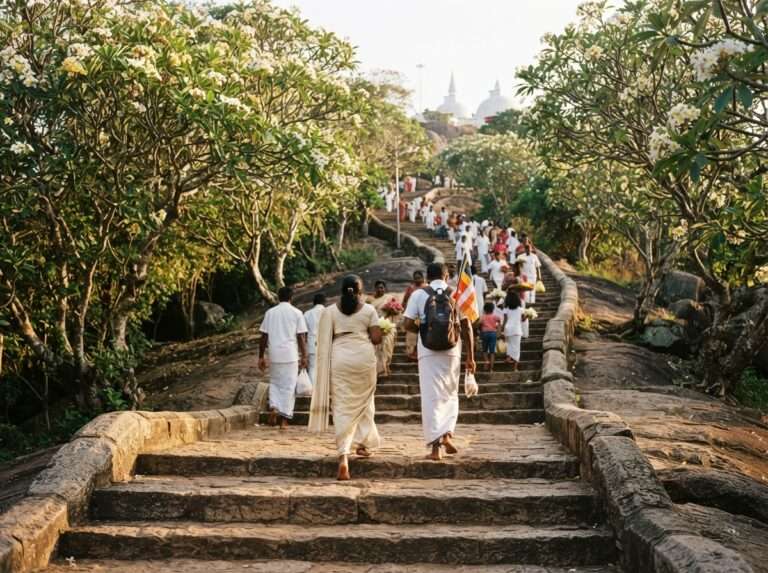
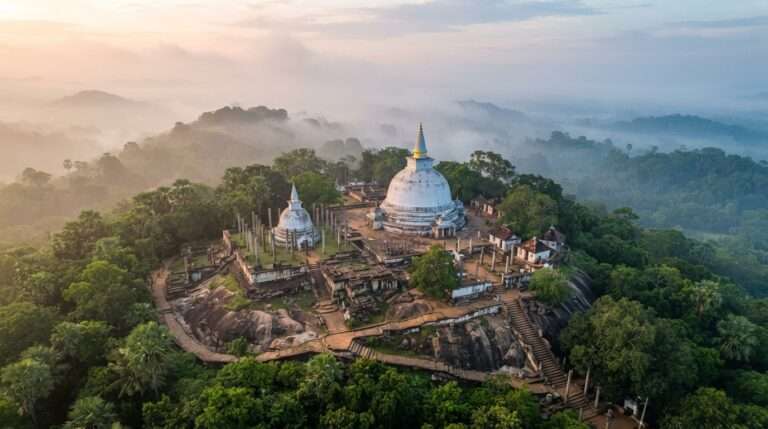
Mihintale is where it all began. In 247 BC, on the full-moon day of Poson, the missionary monk Mahinda met King Devanampiya Tissa on this hill and converted him, and with him the island. A long granite stairway of more than 1,800 steps climbs past dagobas and rock shrines to a summit with a wide view over the plain to Anuradhapura, about 13 km away. It is an easy climb if you start early and take it slowly. On Poson Poya in June the whole hill fills with pilgrims and lamps. Entry is around 1,000 LKR for foreign visitors.
05
Gal Vihara, Polonnaruwa
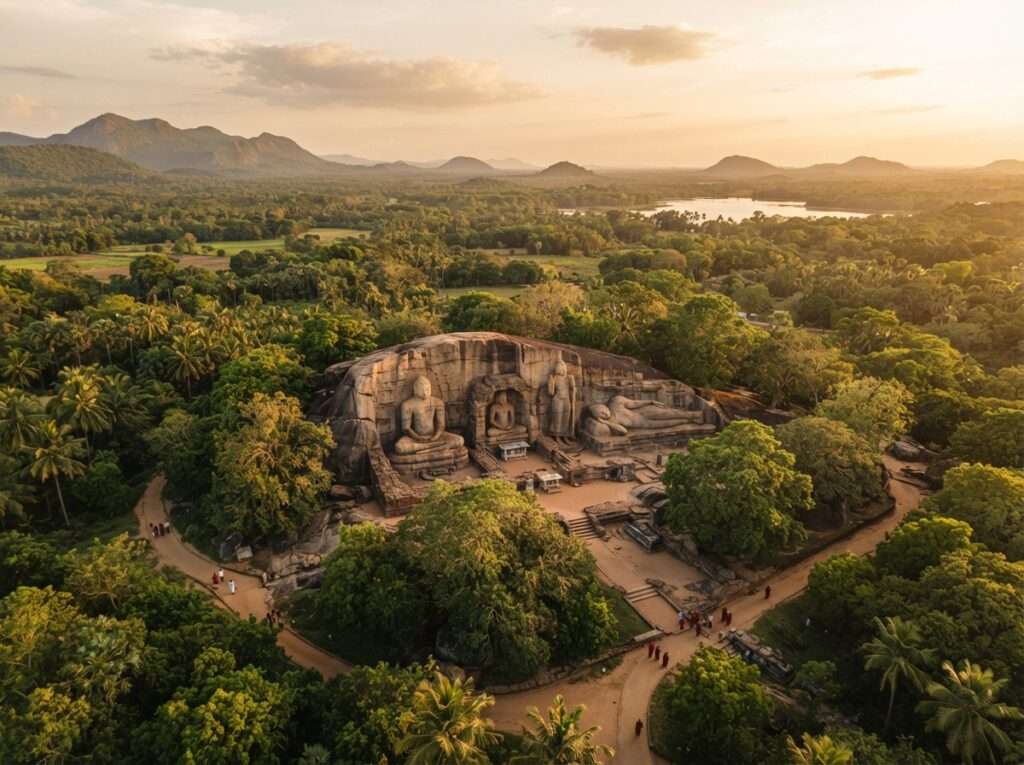
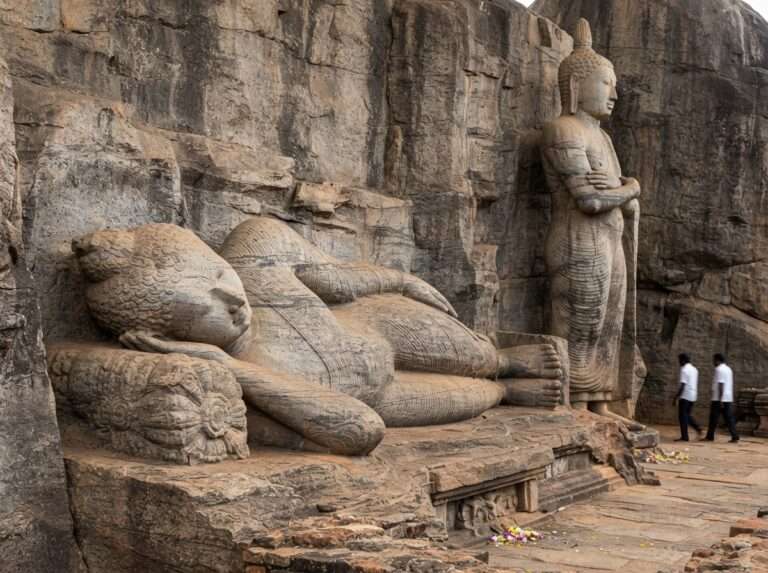
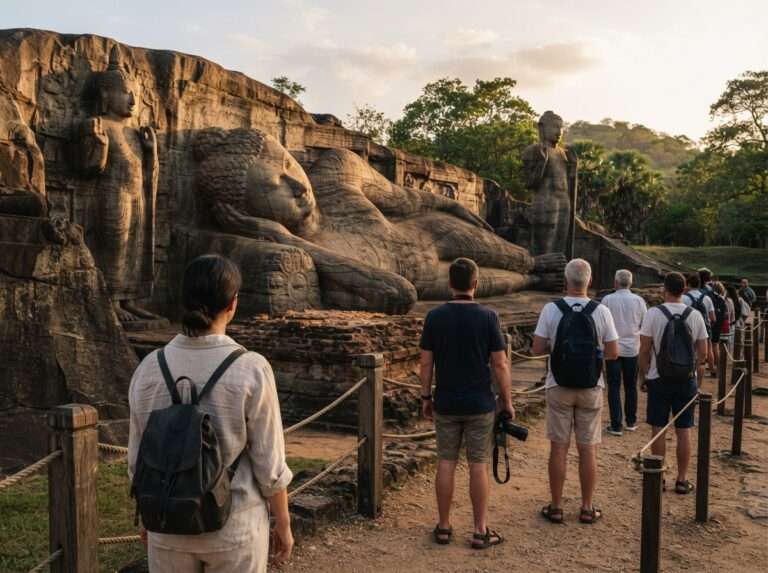
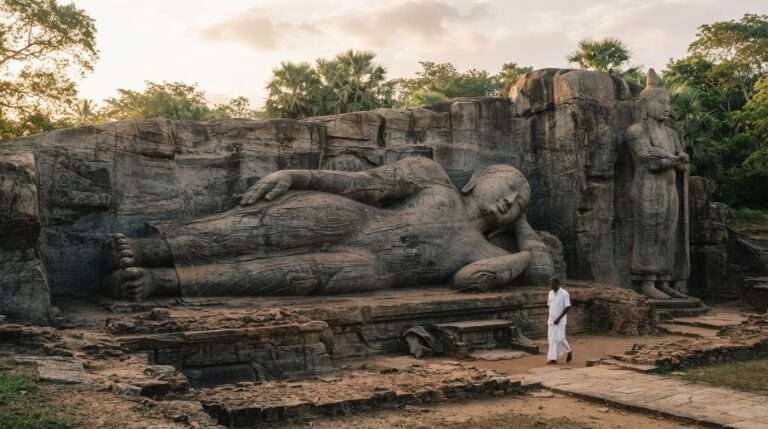
The single most beautiful thing in Polonnaruwa, Sri Lanka’s second ancient capital, is Gal Vihara: four giant Buddha figures cut from one long wall of grey granite in the 12th century. The 14-metre reclining Buddha and the standing figure beside it show a control of stone that no photograph quite conveys. The rest of Polonnaruwa, a compact field of palaces and shrines, is easily cycled in half a day. One combined site ticket of about US$25–30 (roughly 7,500–9,000 LKR) covers Gal Vihara and the whole archaeological park, so give yourself the morning rather than rushing one monument.
06
Dambulla Cave Temple
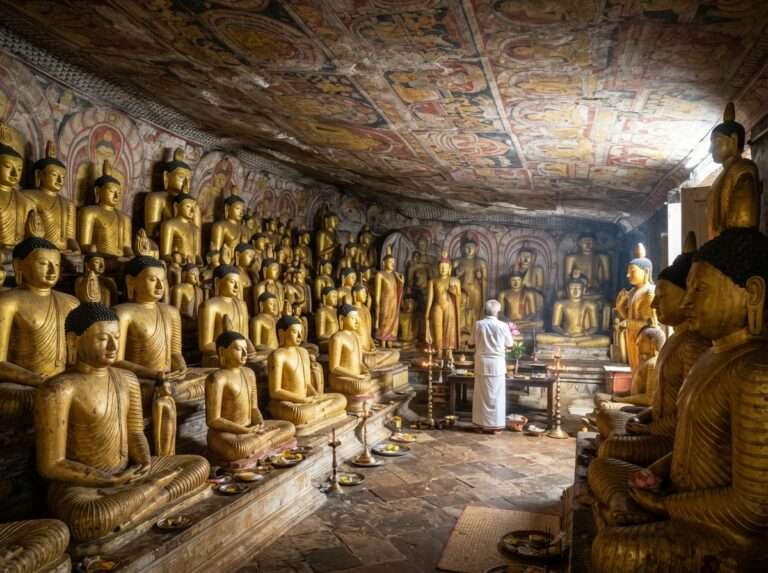
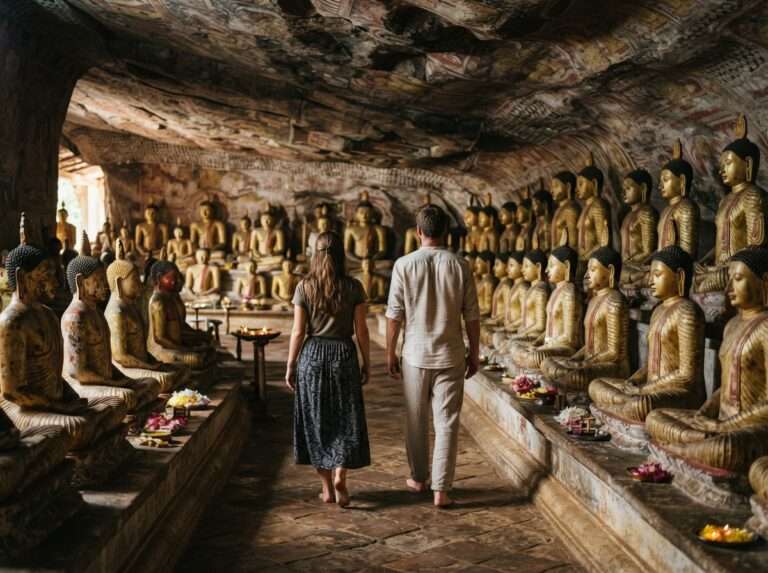
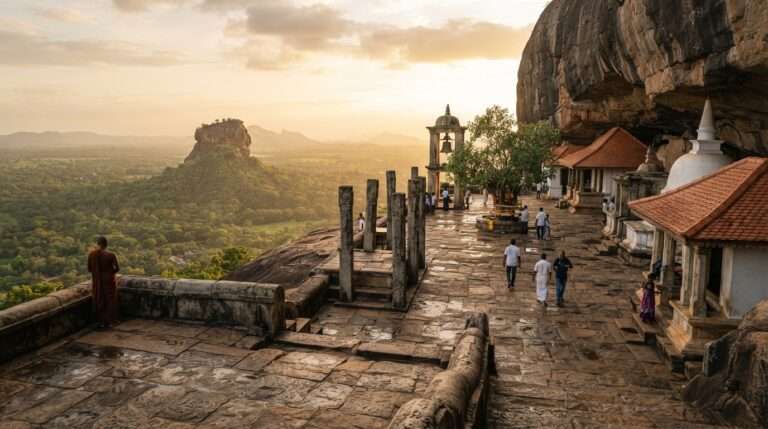
Dambulla is the best-preserved cave-temple complex in the country and a UNESCO World Heritage Site. Five caves hollowed into an overhanging rock hold more than 150 Buddha statues and ceilings painted edge to edge with murals, some going back over 2,000 years and retouched across the centuries. The climb to the entrance takes about 20 minutes and rewards you with a view back over the Dambulla plain to Sigiriya. Foreign entry is around US$10 (roughly 3,000 LKR), bought at the ticket counter at the base near the Golden Temple before you climb, since it closes in the late afternoon ahead of the caves. Shoes come off at the terrace before the caves, and the stone gets hot by midday, so mornings are kinder on bare feet.
07
Temple of the Sacred Tooth Relic, Kandy
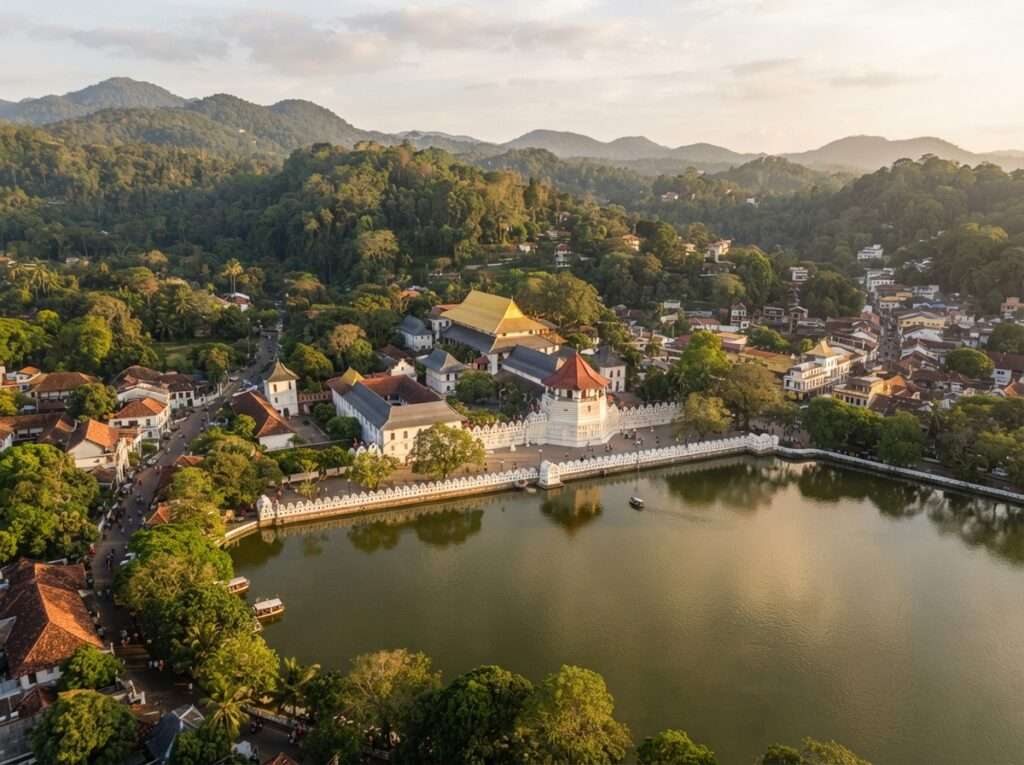
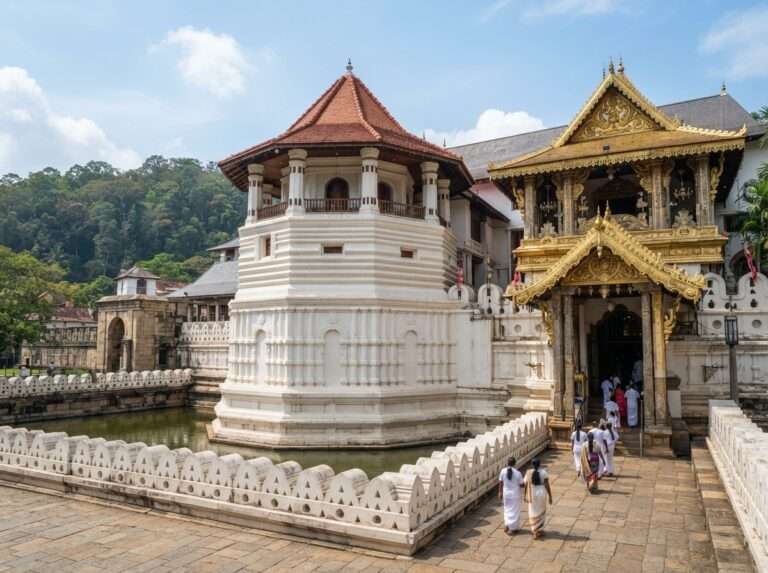
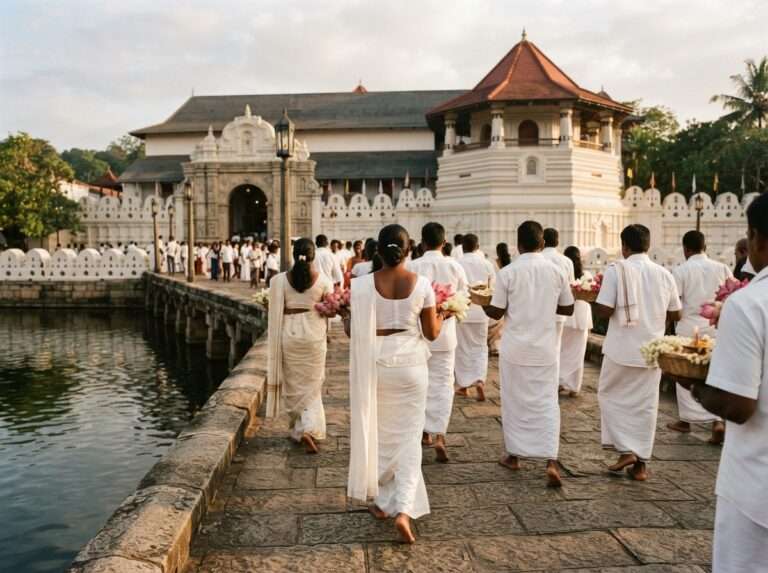
The last kingdom of the Sinhalese fell at Kandy, home to the holiest working temple on the island. Nearby Lankatilaka is a quiet hill temple the tour buses skip, while Pidurangala, the third temple in this section, actually lies further north near Sigiriya in the Cultural Triangle and is easiest to climb from a Sigiriya base.
Sri Dalada Maligawa is the single most important Buddhist temple in the country, because it holds a tooth relic of the Buddha. The relic is never shown, but during the three daily puja ceremonies, announced by drumming, the inner chamber opens and the queue of worshippers files past the gold casket that shields it. Time your visit for a puja (roughly 5:30 a.m., 9:30 a.m. and 6:30 p.m.) to see the temple at its most alive. Foreign entry is around 3,000 LKR, with a lower SAARC rate of about 2,500 LKR for Indian and regional visitors. Each July or August the Esala Perahera carries a replica casket through Kandy behind dancers and torch-lit elephants, one of Asia’s great processions.
08
Lankatilaka Vihara, near Kandy
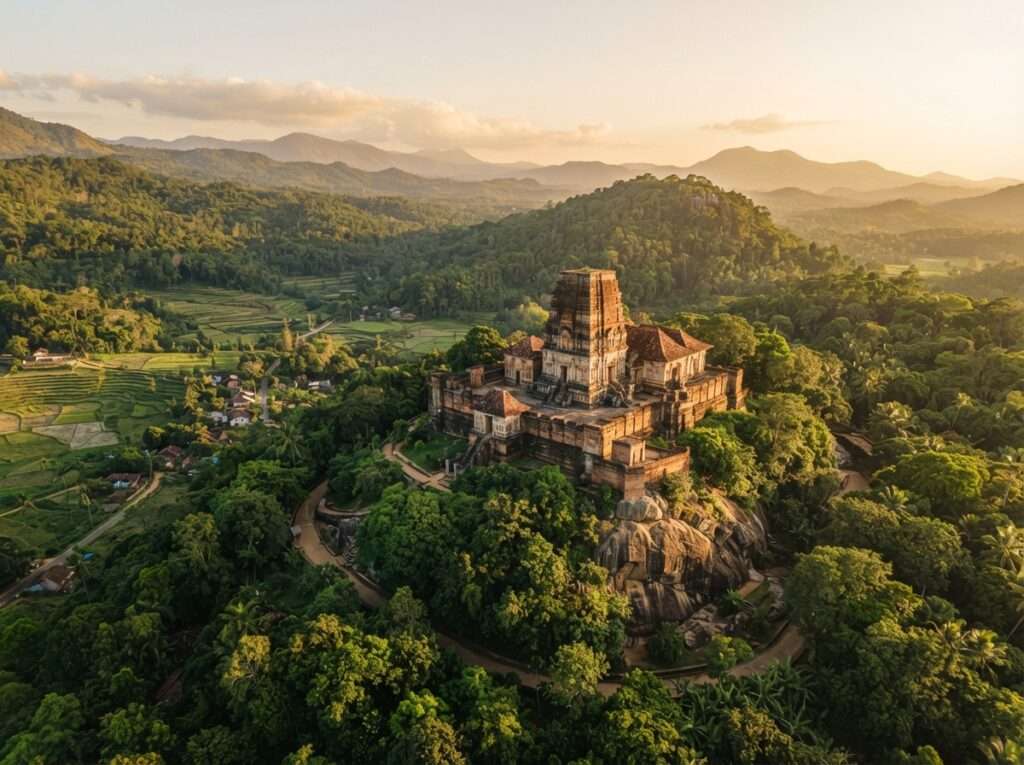
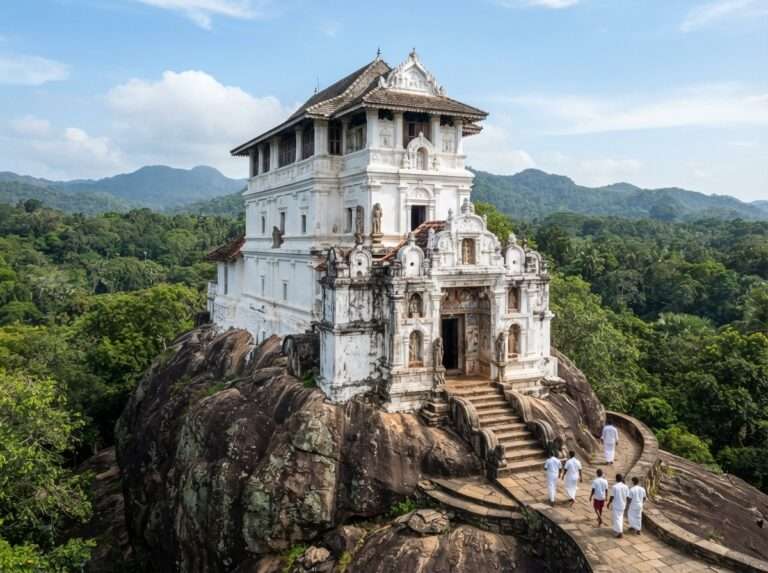
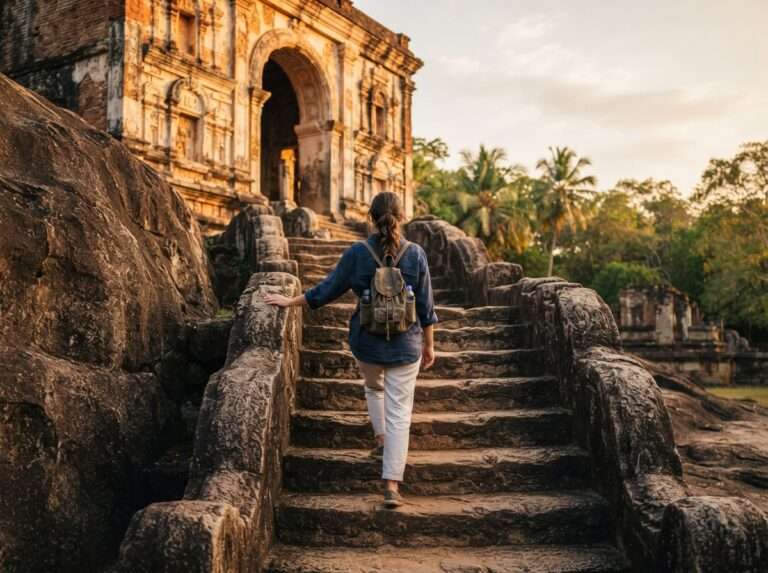
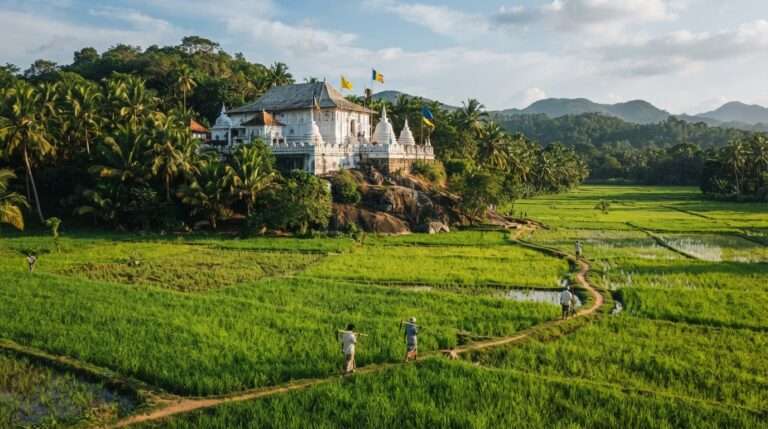
About 15 km southwest of Kandy, Lankatilaka is a 14th-century image house built onto a natural rock outcrop, its brick walls still carrying faded Kandyan-era paintings and a large seated Buddha inside. It is part of a loop with the nearby Gadaladeniya and Embekka temples that local drivers know well, and because it sees a fraction of the Sacred Tooth crowds you often have the terrace and its valley view to yourself. Entry is a token amount, around 250 LKR. The approach across paddy fields and up the rock-cut steps is worth the short detour from the city.
09
Pidurangala Royal Cave Temple, Sigiriya
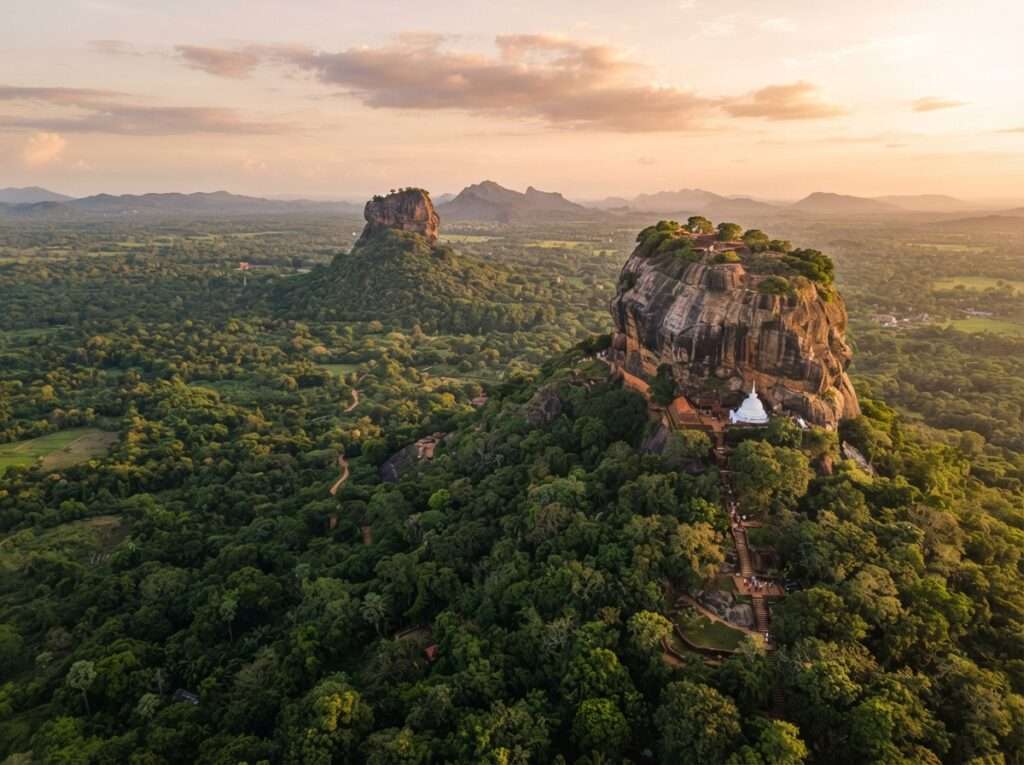
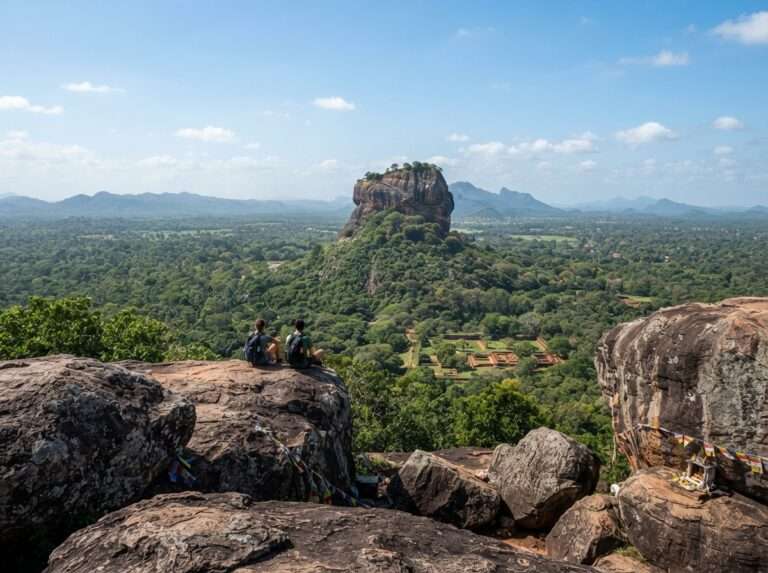
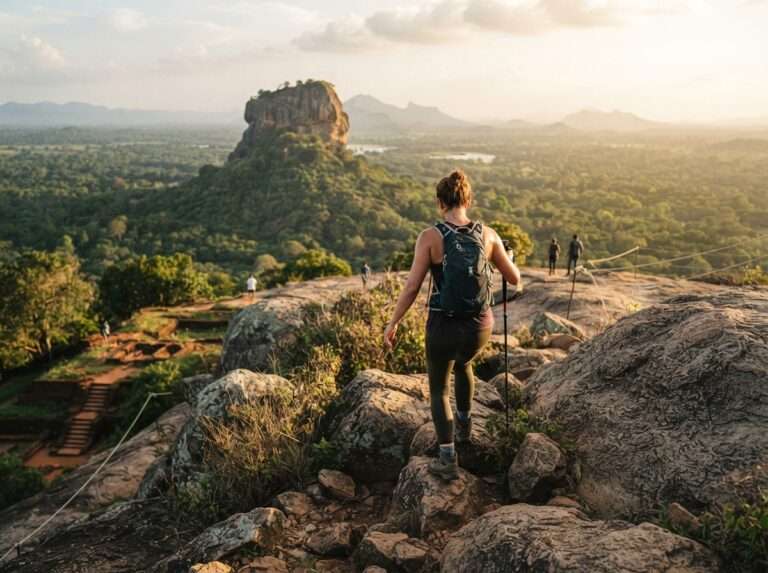
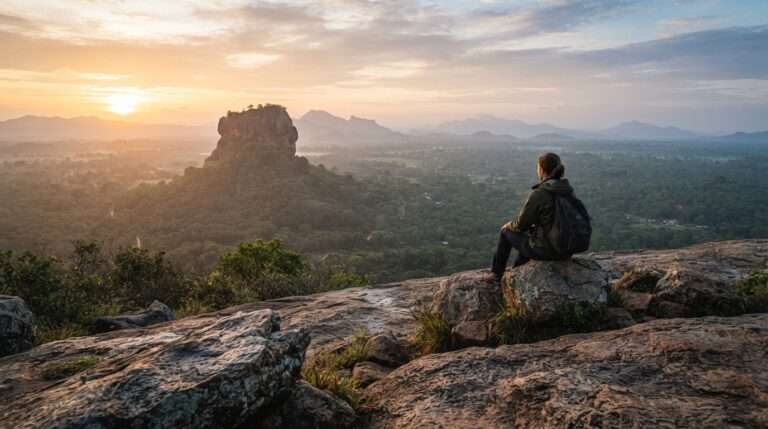
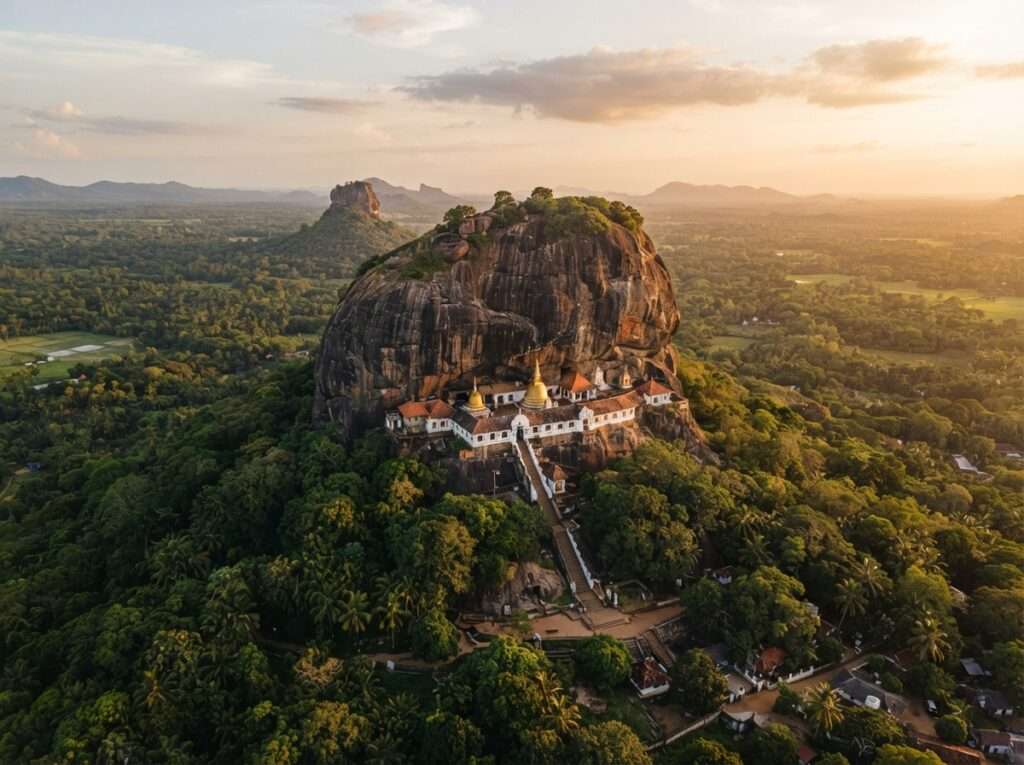
Next to the famous Sigiriya rock, Pidurangala is the temple climb people remember most. A working cave monastery sits partway up, with a long brick-built reclining Buddha in a shelter of boulders, and above it a scramble over rocks brings you to a flat summit that looks straight across at Sigiriya. Climb it for sunrise: you leave around 5 a.m. in the dark and watch the light come up over the Lion Rock. Entry is around 1,000 LKR, paid at the temple at the base, and because you pass through a working monastery at the base you need shoulders and knees covered through the temple section.
10
Gangaramaya Temple and Seema Malaka, Colombo
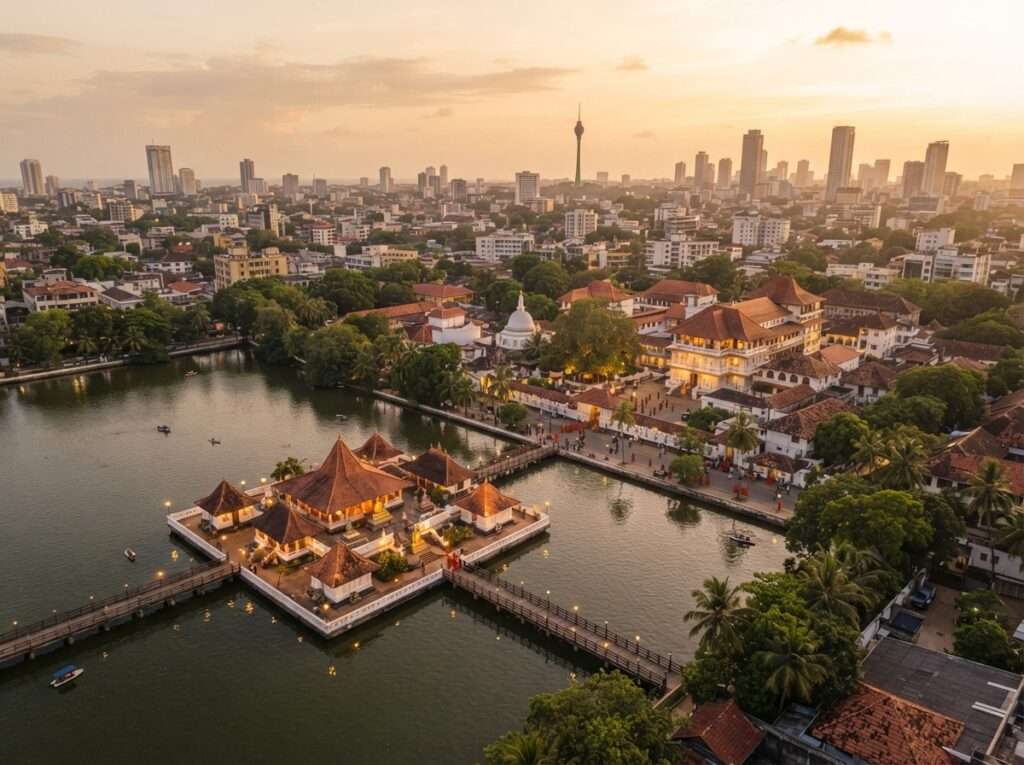
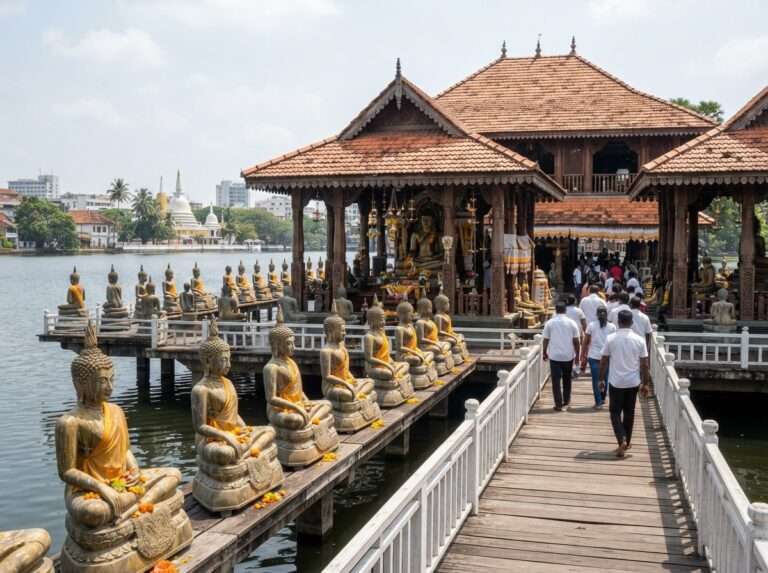
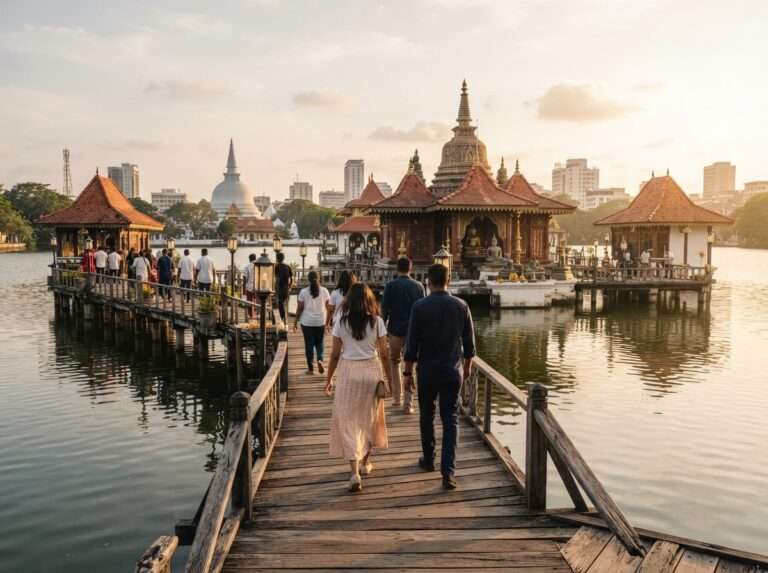
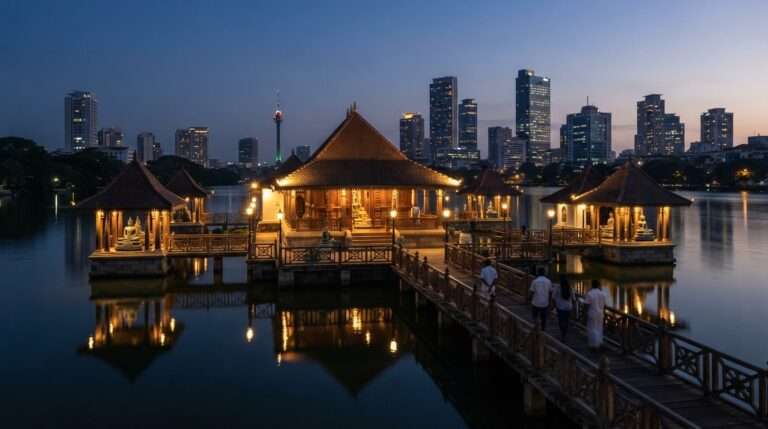
You do not have to leave the city to find living temples. Colombo has two of the island’s most visited, and the deep south hides a spectacular rock temple most itineraries miss.
Gangaramaya is Colombo’s busiest temple and the strangest in the best way: part working shrine, part museum, with a courtyard crammed with gifted Buddha statues, vintage cars, carved ivory and a resident elephant tusker’s relics. It is the engine of the Navam Perahera each February. A short walk away on Beira Lake sits its serene annexe, Seema Malaka, a set of pavilions designed by the architect Geoffrey Bawa that seem to float on the water, best at sunset. A small donation of around 300 LKR covers Gangaramaya. Together they make an easy half-day in the capital.
11
Kelaniya Raja Maha Vihara, Colombo
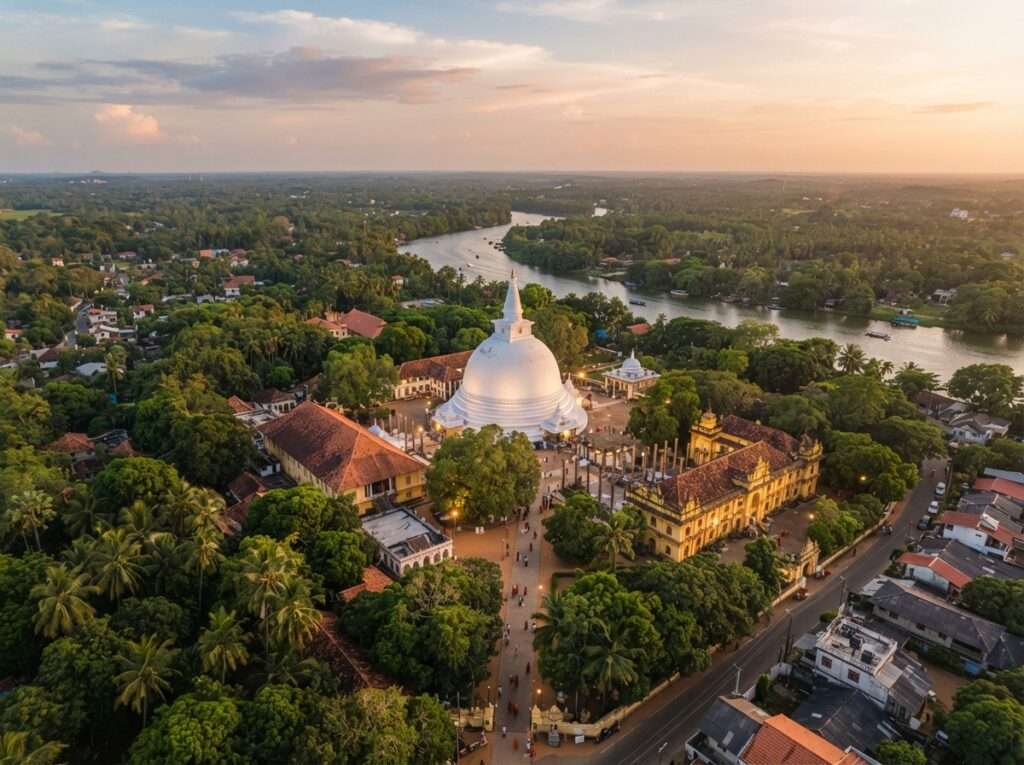
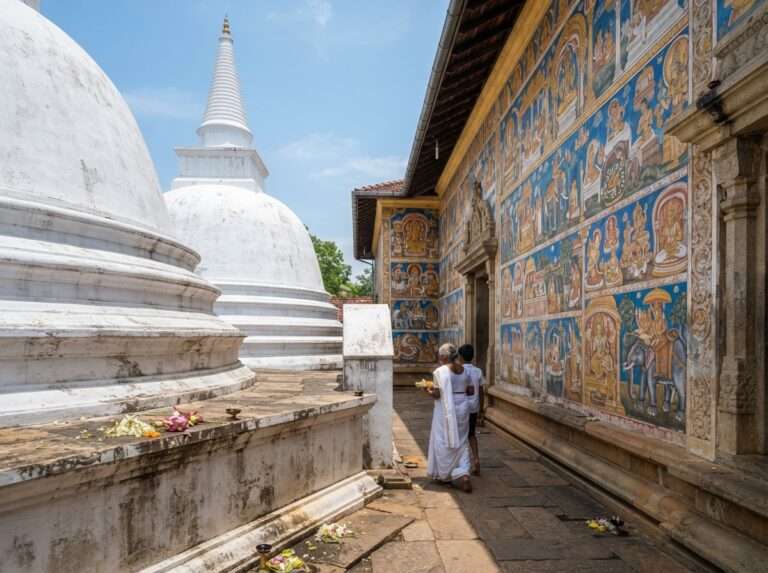
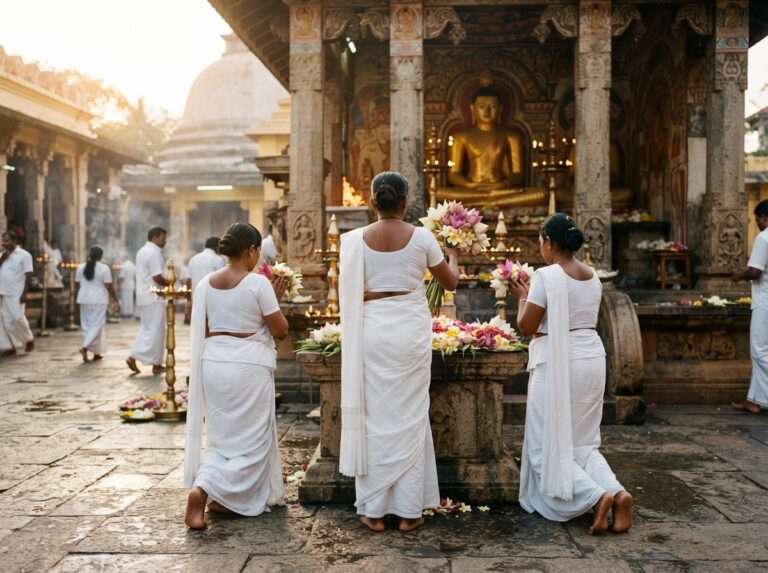
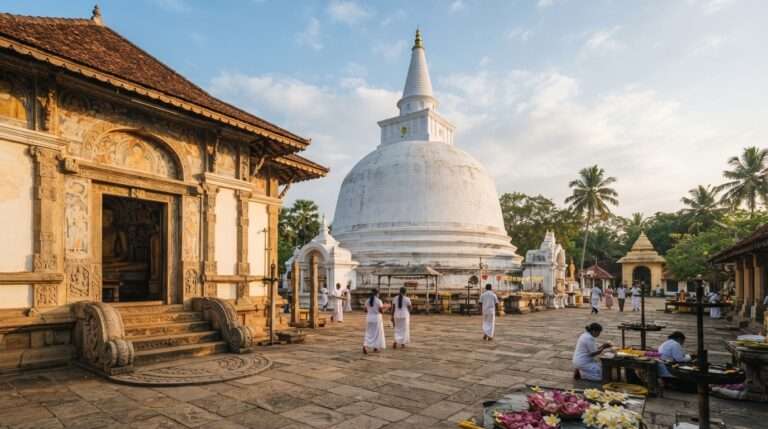
About 10 km northeast of central Colombo, Kelaniya is one of the three places tradition says the Buddha himself visited, which makes it among the most sacred sites on the island. The main shrine is covered inside with 20th-century murals by Solias Mendis telling stories from Sri Lankan Buddhist history, some of the finest temple paintings you will see anywhere here. There is no fixed entry fee, only a donation box. Come on Duruthu Poya in January if you can, when the Duruthu Perahera, the island’s first great procession of the year, winds through the grounds.
12
Mulgirigala Raja Maha Vihara, near Tangalle
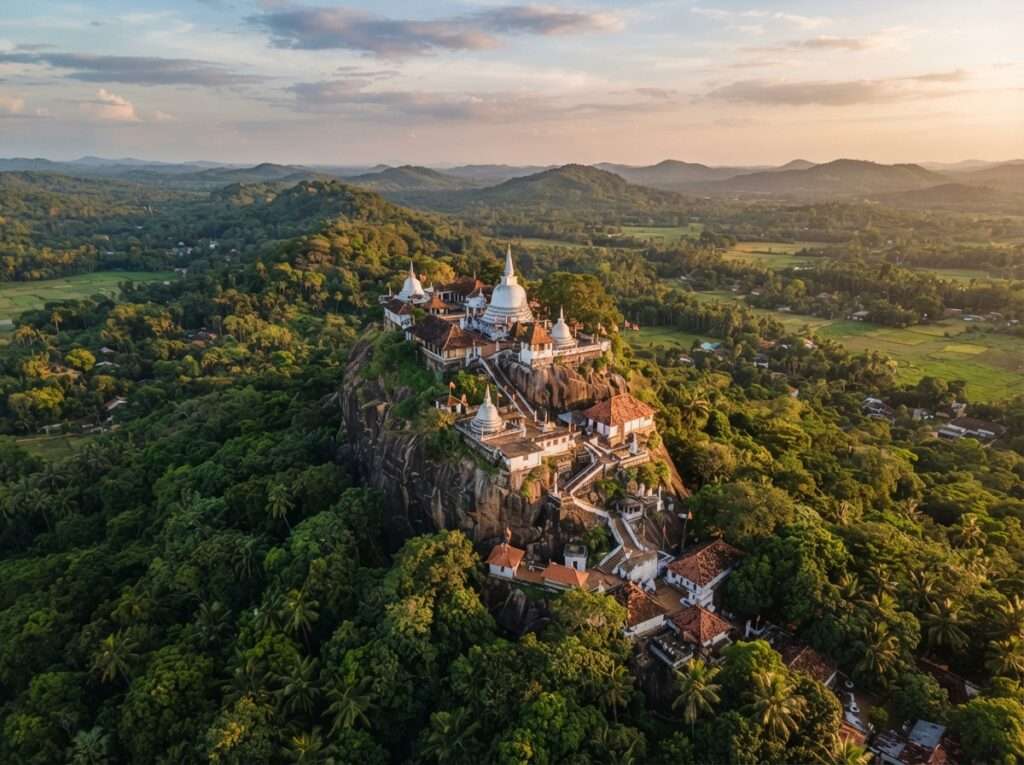
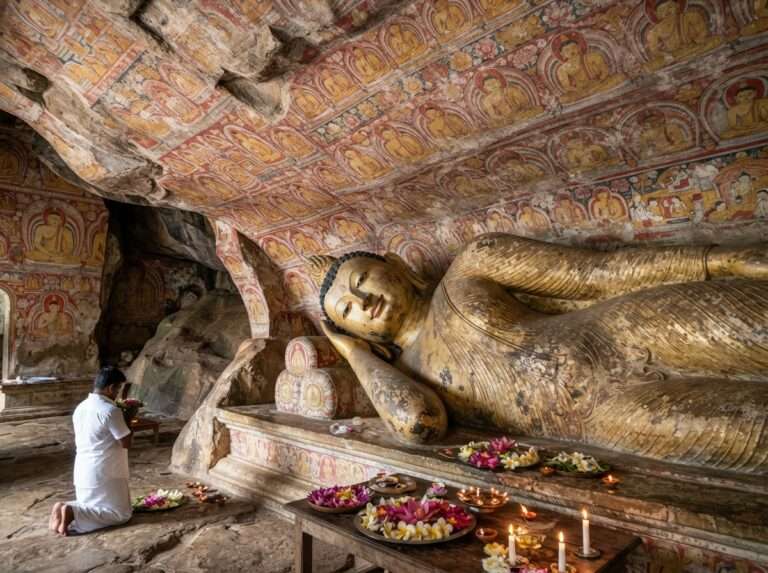
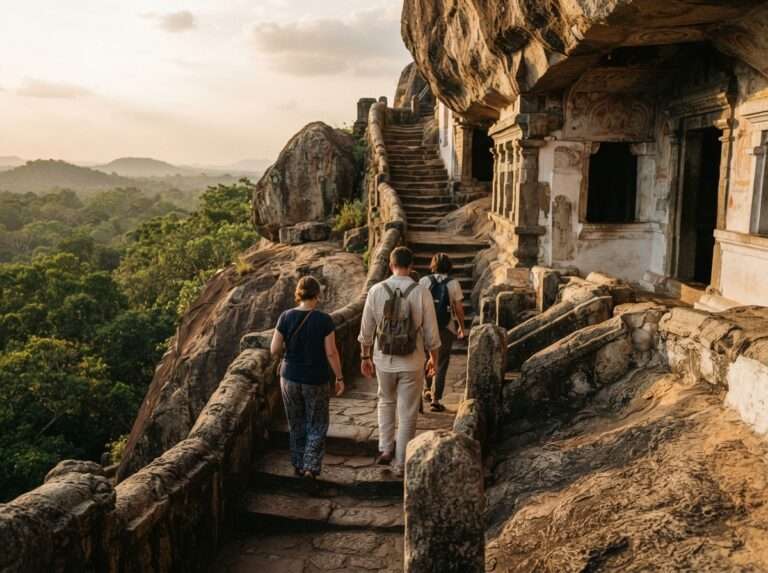
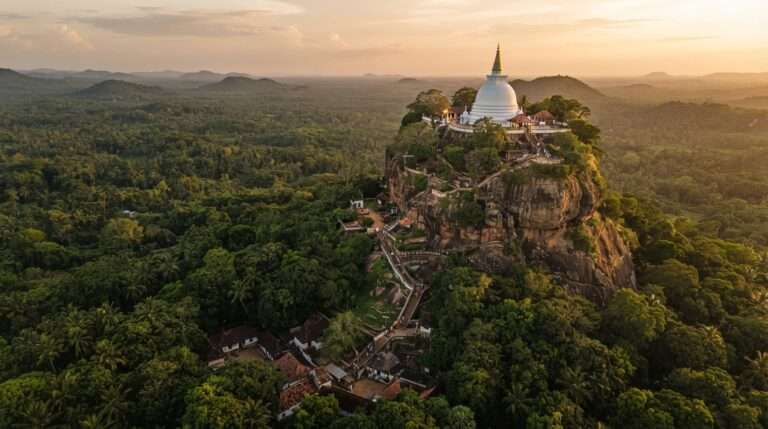
Far in the south near Tangalle, Mulgirigala is a 200-metre rock honeycombed with seven cave shrines set across a series of rock terraces, often called a smaller Sigiriya with temples instead of a fortress. You climb through level after level of reclining Buddhas and painted ceilings to a dagoba on the summit with a view over coconut country to the coast. It was here in 1826 that the palm-leaf manuscripts helped a British official decode the Mahavamsa chronicle. Entry is around 500 LKR, and because it is well off the main tourist track you will likely share it only with local pilgrims.
Temple Etiquette and Dress Code: How to Visit Respectfully
Sri Lankans take temple conduct seriously, and a little care means you are welcomed rather than waved away at the gate. These rules apply at every site above. Follow them in order and you will never be turned back.
- Dress modestly. Cover your shoulders and your knees. A long skirt or trousers and a sleeved top work for everyone; carry a light scarf as backup. Vests, shorts and short dresses are refused.
- Cover any Buddha tattoo, and avoid clothing printed with the Buddha’s image. Sri Lanka enforces this strictly: visible Buddha tattoos have had tourists refused entry, arrested or even deported, so keep them covered at temples and in public.
- Take off your shoes and your hat before you step onto temple ground, not just at the shrine door. Socks are fine and save your soles, because stone paving is scorching by midday.
- Never pose with your back to a Buddha statue, and do not point your feet or your finger at an image. Sit or stand side-on for photos. Avoid flash on old murals.
- Ask before photographing people at prayer or monks, and expect some inner chambers (like the Sacred Tooth relic room) to be off-limits to cameras.
- Mind Poya days. Every full moon is a public Buddhist holiday; temples are at their most beautiful but packed, some areas close to visitors, and a nationwide ban closes bars and liquor shops, so alcohol is not sold that day.
- Walk clockwise around a dagoba, keep your voice low, and drop a small note in the donation box. Buy a few lotus buds at the gate if you want to make an offering like the pilgrims around you.
Planning Your Sri Lanka Temple Trip
The smart way to see these is as one loop rather than a dozen separate trips. Fly into Colombo for Gangaramaya and Kelaniya, drive north to the Cultural Triangle for Anuradhapura, Mihintale, Polonnaruwa and Dambulla over two or three days, then finish in Kandy for the Sacred Tooth, with Pidurangala slotted in near Sigiriya. Five to seven days covers eleven of the twelve at a relaxed pace; Mulgirigala sits far south near Tangalle, so pair it with a separate south-coast leg rather than the northern loop. For when to go, the dry months of December to March suit the Cultural Triangle best; the best time to visit Sri Lanka page breaks it down by region, and our Sri Lanka itinerary guide maps out the driving days. If you would rather have the permits, tickets and driver arranged for you, browse our customisable Sri Lanka tour packages and build the temple circuit into your trip.
The Bottom Line
Sri Lanka’s temples reward a little planning more than almost anything else on the island, because the great ones cluster so tightly and each ticket covers so much. See the Cultural Triangle for scale and history, Kandy for living devotion, and Colombo for the easy city temples, and you will have met the heart of the country in under a week. When you are ready to turn the route above into a real trip, our Sri Lanka tour packages can handle the logistics so you can concentrate on the temples.
FAQs
FAQs About Buddhist Temples in Sri Lanka
What travellers ask before planning a temple trip around Sri Lanka
The Temple of the Sacred Tooth Relic (Sri Dalada Maligawa) in Kandy is the country's principal Buddhist temple. It holds a tooth relic of the Buddha, which makes it the holiest working shrine on the island and a pilgrimage destination for Buddhists worldwide. Try to visit during one of the three daily puja ceremonies, when the inner chamber opens, and foreign entry is around 3,000 LKR.
It depends on how you measure. Jetavanaramaya in Anuradhapura is the tallest, rising about 122 metres when built and once the highest brick structure on earth. Ruwanwelisaya, also in Anuradhapura, is the most revered of the giant dagobas. Both sit inside the Anuradhapura sacred city; Jetavanaramaya is covered by the archaeological ticket, while Ruwanwelisaya is an active shrine you can enter free.
Yes, and it is enforced. You must cover your shoulders and knees, and remove shoes and hats before entering temple grounds. Long trousers or a long skirt with a sleeved top work well; carry a scarf as backup. White clothing is appreciated at major pilgrimage sites such as the Sacred Tooth Temple and Ruwanwelisaya.
They range from free at working village temples like Kelaniya to about US$25–30 (around 7,500–9,000 LKR) at the big archaeological cities. Dambulla is around 3,000 LKR, the Sacred Tooth Temple around 3,000 LKR (about 2,500 for SAARC visitors), and Pidurangala around 1,000 LKR. Anuradhapura and Polonnaruwa each sell one archaeological ticket covering their main monument zones, so you pay once per site, not per temple — though a few active shrines such as Ruwanwelisaya are free, and Anuradhapura's Sri Maha Bodhi has its own small ticket.
Usually yes in the general areas, but with rules. Never pose with your back to a Buddha statue, do not use flash on old murals, and expect some inner sanctums, such as the Sacred Tooth relic chamber, to ban cameras entirely. Ask before photographing monks or people at prayer, and follow any signs or instructions from temple staff.
Early morning, around opening at 6 a.m., for cool stone, soft light and thin crowds. Season-wise the dry months of December to March are ideal for the Cultural Triangle. Full-moon Poya days are the most atmospheric for ceremonies but also the busiest, and some sites restrict access on those days.
The Cultural Triangle is the ancient heartland linking Anuradhapura, Polonnaruwa and Kandy, with Dambulla, Sigiriya and Mihintale in between. It holds most of the island's great temples: Ruwanwelisaya, Jaya Sri Maha Bodhi, Jetavanaramaya, Mihintale, Gal Vihara at Polonnaruwa and the Dambulla caves. Because they sit so close together you can see them across a few unhurried days from a single base.
Yes. Visitors of any faith are welcome at active temples as long as they dress correctly and behave respectfully. You are free to observe, and usually to join in gently, by offering lotus flowers or lighting a lamp. Keep your voice low, switch your phone to silent, and follow the lead of the worshippers around you.