5D / 4N
19% OFF
5D / 4N
19% OFF
Andaman Family Holiday For 4 Nights 5 Days
- Hotel
- Meals
- Sightseeing
- Transfers
₹23,574
₹18,990 /pp
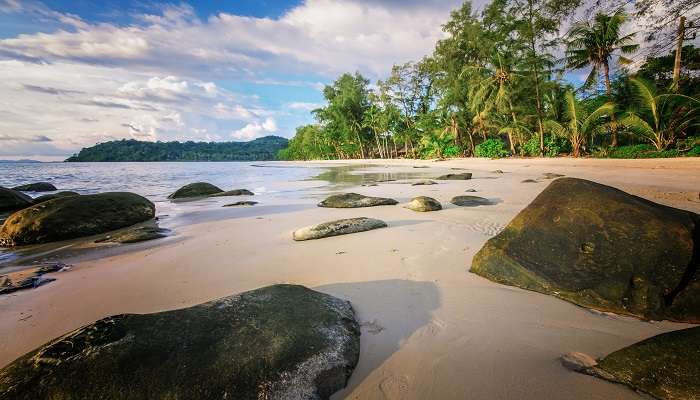


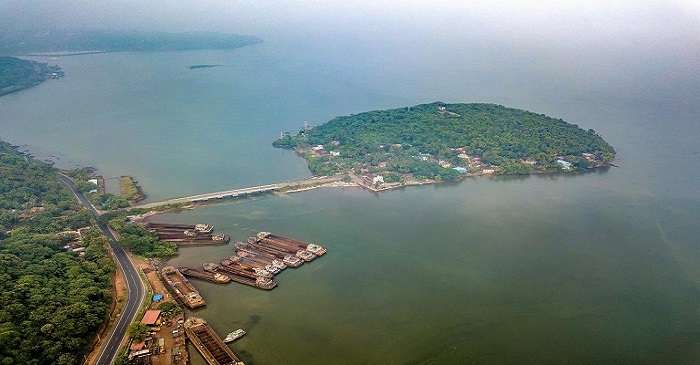
Little Andaman is a remote, forest-covered island about 120 kilometres south of Port Blair, reached only by a 6–8 hour government ferry to its single town and jetty, Hut Bay. It is the fourth largest island in the Andaman and Nicobar group and India’s surfing capital – the crescent of Butler Bay draws board-riders from around the world – yet it sees a fraction of the visitors of Havelock or Neil. There are no private catamarans, no luxury resorts and barely any working ATMs, which is exactly why the beaches, the two jungle waterfalls and the red oil-palm plantations stay so quiet. This guide covers how to reach Little Andaman, what to see, where to stay, the permits and crocodile rules to know, and the best time to go.
Top Andaman Packages you Must Explore
Best Time
October - May
Select Package Type


Getting to Little Andaman is the single biggest part of planning the trip, so settle this before you book anything else. For tourists there is really only one reliable route - the government ferry - and it is nothing like the fast private catamarans that run to Havelock and Neil.
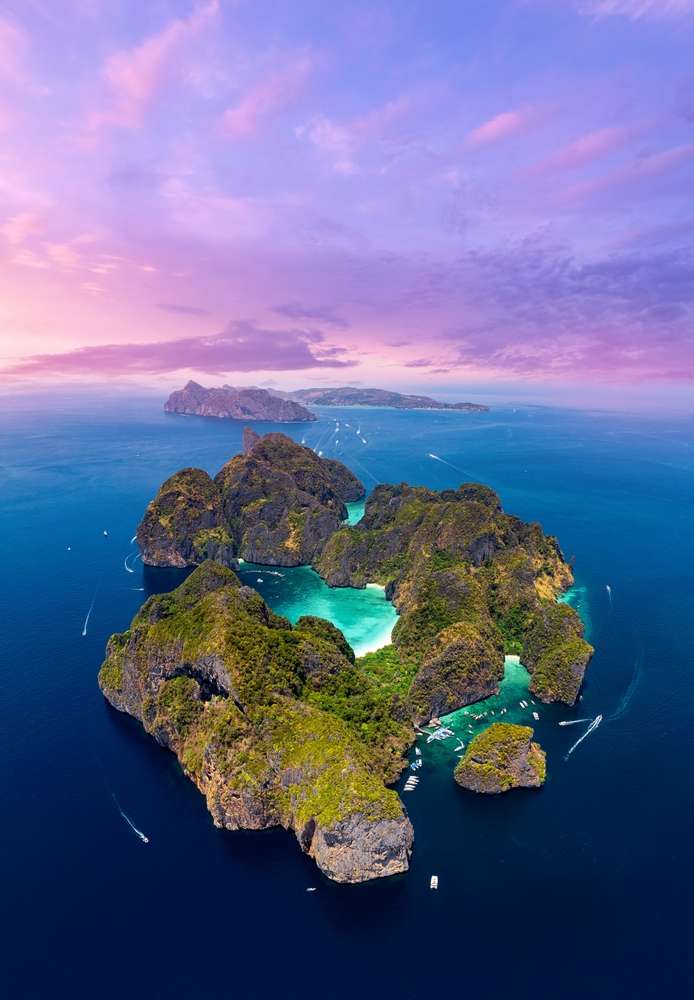
Before you commit to the crossing, here is the island in one screen – the numbers that decide whether Little Andaman fits your trip:
| Detail | What to know |
| Where it is | ~120 km by sea south of Port Blair (~100 km in a straight line); 4th largest island in Andaman & Nicobar |
| Main town & jetty | Hut Bay (Hutbay), on the east coast — where the ferry docks and life is based |
| How to get there | Government (DSS) ferry from Haddo Wharf, Port Blair → Hut Bay; 6–8 hours; ~3–5 sailings a week |
| Known for | Surfing (Butler Bay), two waterfalls (White Surf, Whisper Wave), red oil-palm plantations, empty beaches |
| Days needed | 2–3 nights to see the island without rushing the ferry timings |
| Best time | November to April; January–March for surf; avoid the June–September monsoon |
| Permit | Indian nationals: none for Hut Bay; foreign nationals register on arrival. Tribal reserves are off-limits to everyone |
| Money & network | Carry cash — ATMs are very limited; mobile signal is weak (BSNL is best) |
| Stay | Basic — a government guesthouse and budget huts; no luxury resorts |
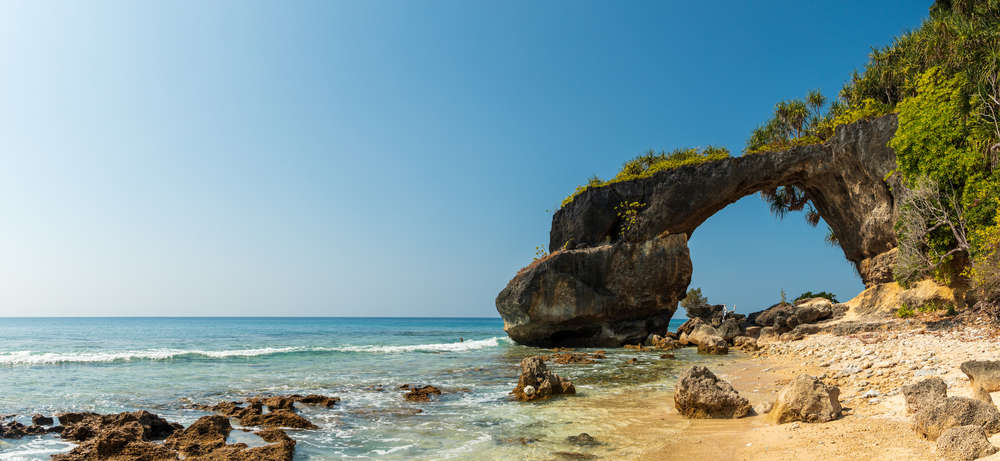
Little Andaman sits at the southern end of the Andaman group, separated from the main cluster by the open Duncan Passage. Hut Bay, on the east coast, is the only point of entry and the island’s only town – a small grid of a market, a few guesthouses, a fuel pump and the jetty. From there a single main road runs north past plantations and beaches toward Butler Bay, and south toward the quieter bays.
The reason it stays so quiet is simple. It is genuinely hard to reach. No private ferry company runs here, so the only practical option is the slow government ship, and the schedule bends to the weather. Large parts of the island are also protected – the Onge tribal reserve around Dugong Creek in the north and a Nicobarese settlement at South Bay are strictly off-limits, which keeps a big share of the coastline closed to tourism. What is left over is a handful of long, empty beaches, two waterfalls and India’s most consistent surf, shared with very few other travellers.
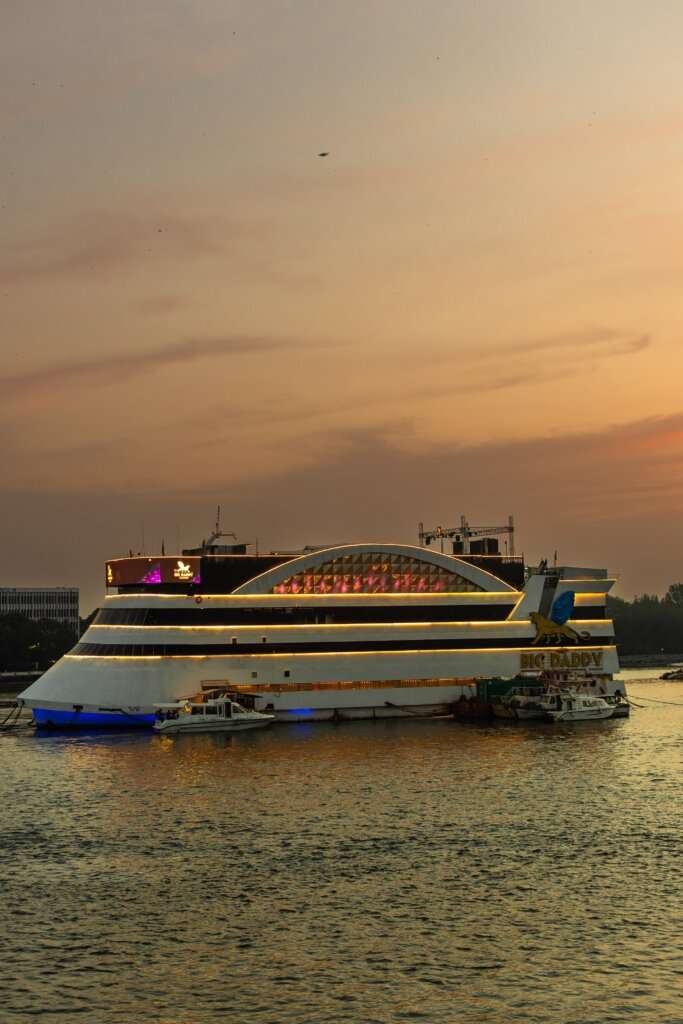
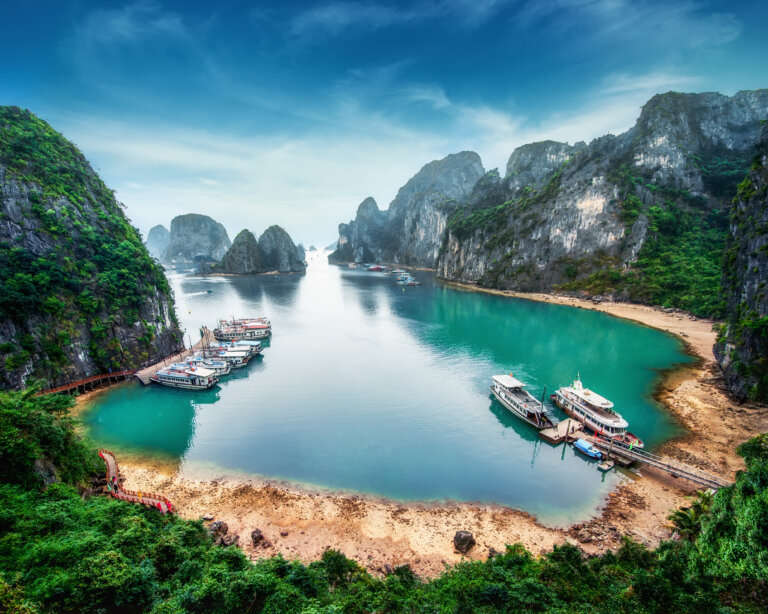
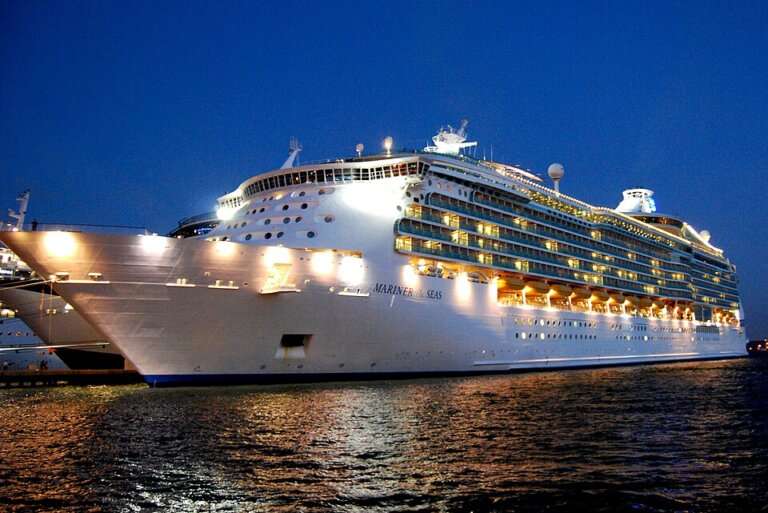
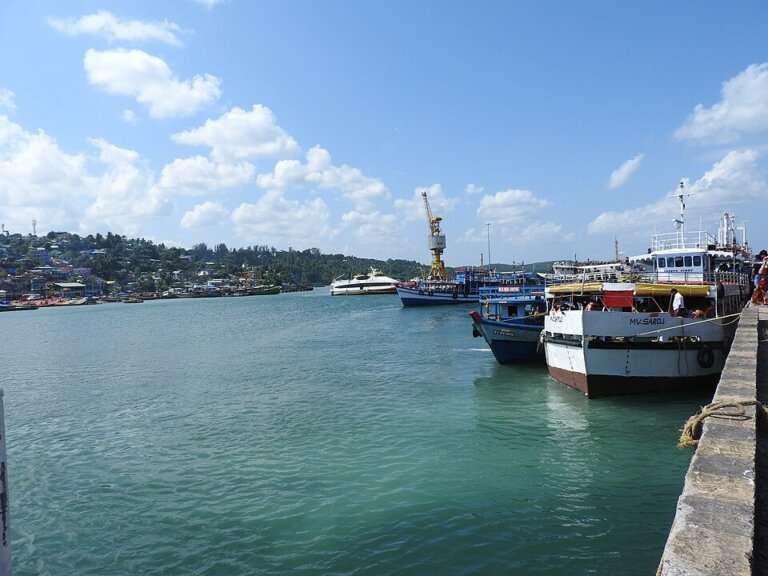
The Directorate of Shipping Services (DSS) runs the only passenger ferries to Little Andaman, departing from Haddo Wharf in Port Blair (not the Phoenix Bay jetty the private boats use). The crossing covers about 120 km and takes 6 to 8 hours, occasionally longer if the sea is rough. Sailings run roughly three to five times a week in fair weather and are cut back sharply during the monsoon, so there is no daily service to count on.
Tickets are sold at the DSS counter in Port Blair, usually only one to three days before departure, and they sell out – go in person as soon as the window opens, carry a government photo ID, and reach the wharf 60 to 90 minutes before sailing. The well-regarded vessels on the route, such as MV Coral Queen, offer a few comfort classes; choose by how long you want to be at sea:
| Class | What you get | Indicative one-way fare | Best for |
| Deck / seat (economy) | Open seating or deck space, basic | Lowest band (~₹150–400) | Short budgets, day sailings |
| Bunk / second class | A reclining berth or bunk to rest on | Mid band (~₹400–900) | The long daytime crossing |
| Cabin / first class | A private or shared cabin with a bed | Upper band (~₹1,000–1,500) | Overnight sailings, comfort |
Fares are modest but the classes and exact sailing times change with the season and the vessel, so confirm the current schedule and rates at the DSS counter or the official DSS website before you plan your return – and never book a same-day onward flight from Port Blair on your ferry-back day, because one weather delay can wipe it out.
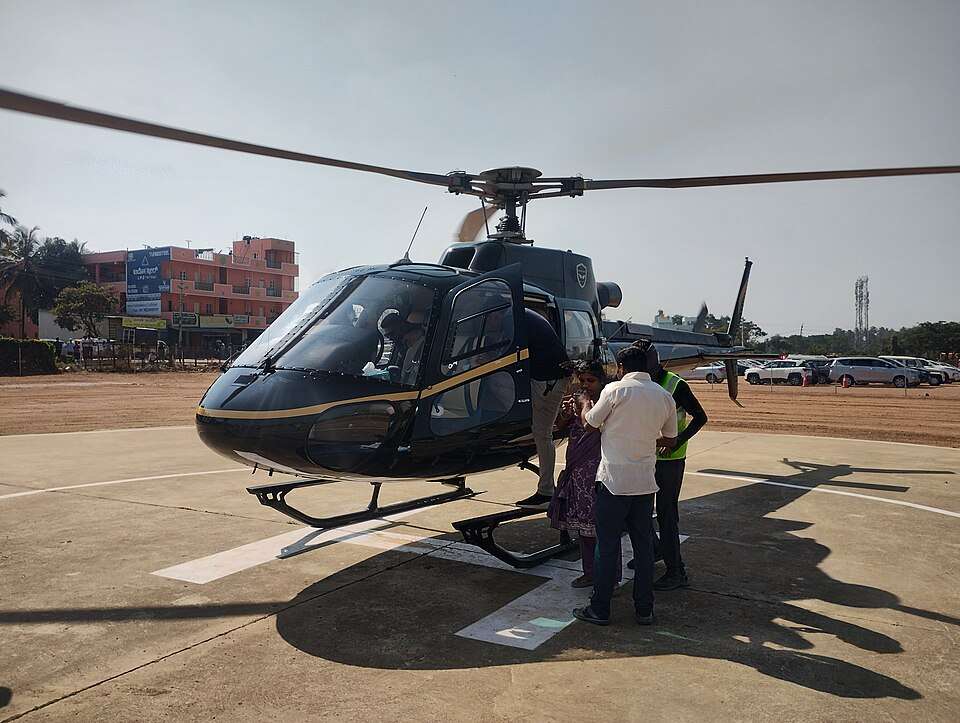
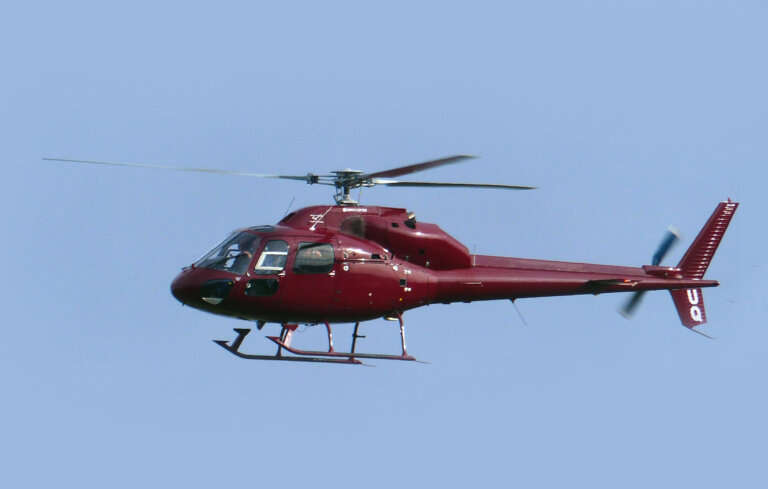
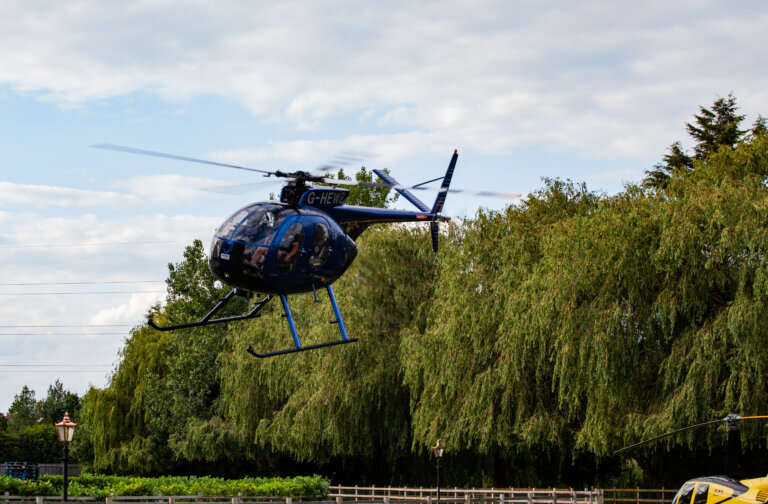
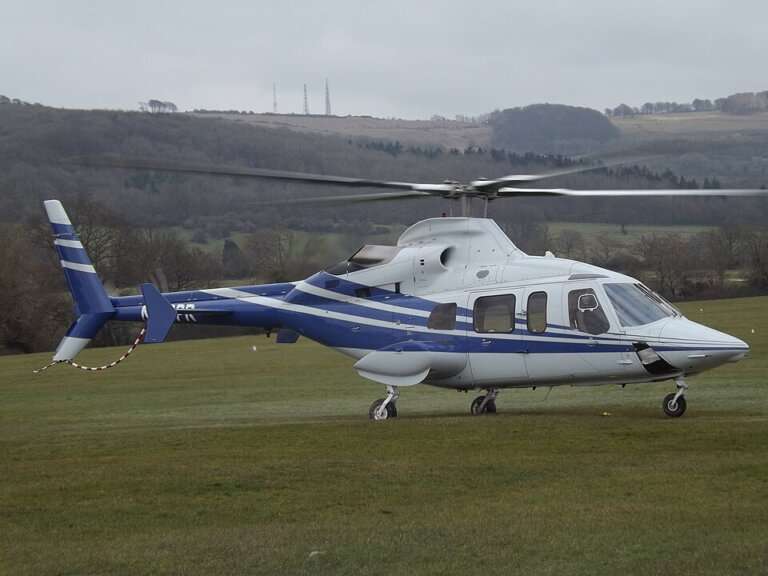
There is a Pawan Hans inter-island helicopter between Port Blair and Hut Bay, about 101 km and 30 to 45 minutes in the air — but it is not a tourist shuttle. Seats are very limited, priority goes to residents, medical cases and government staff, there are strict weight and luggage limits, and flights are grounded in poor weather. Treat it as a lucky bonus if a seat opens up, never as your plan for getting on or off the island.




For a tourist there is no real contest – the ferry is your plan and the helicopter is a long shot. The matrix below shows why:
| Factor | Government (DSS) ferry | Pawan Hans helicopter |
| Journey time | 6–8 hours | 30–45 minutes |
| Frequency | ~3–5 sailings a week (fewer in monsoon) | Few flights; tiny passenger quota |
| Who can use it | Any traveller with a ticket | Residents, medical & govt first; rare tourist seats |
| Booking | DSS counter, 1–3 days ahead, sells out | Not openly bookable by tourists; permission-based |
| Reliability in poor weather | Sails unless seas are rough | Grounded easily; weight & luggage limits |
| Plan around it? | Yes — this is your route | No — treat any seat as a bonus |


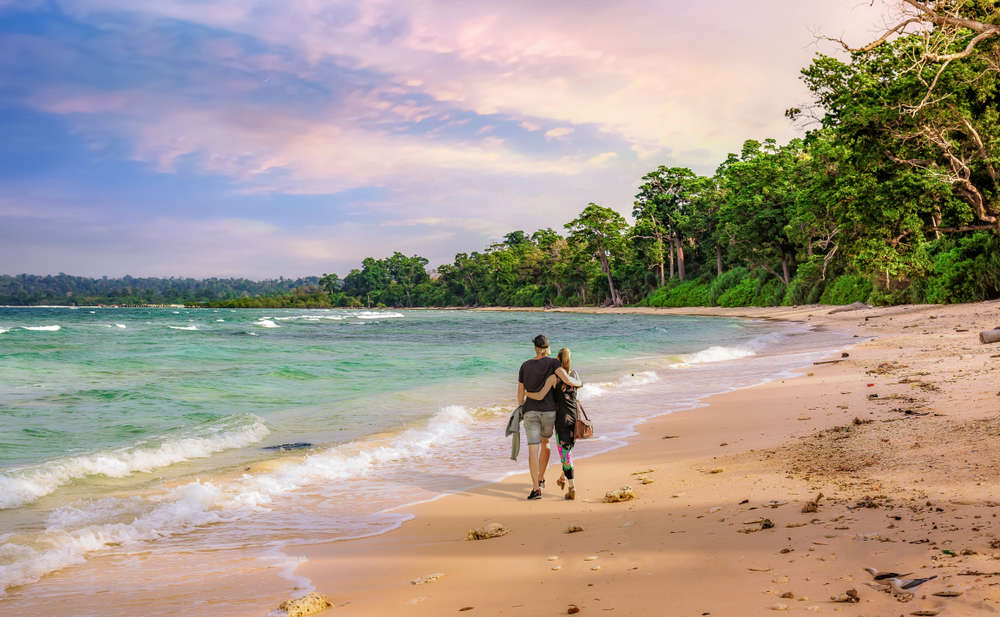
Work through these seven steps in order and the crossing becomes straightforward:
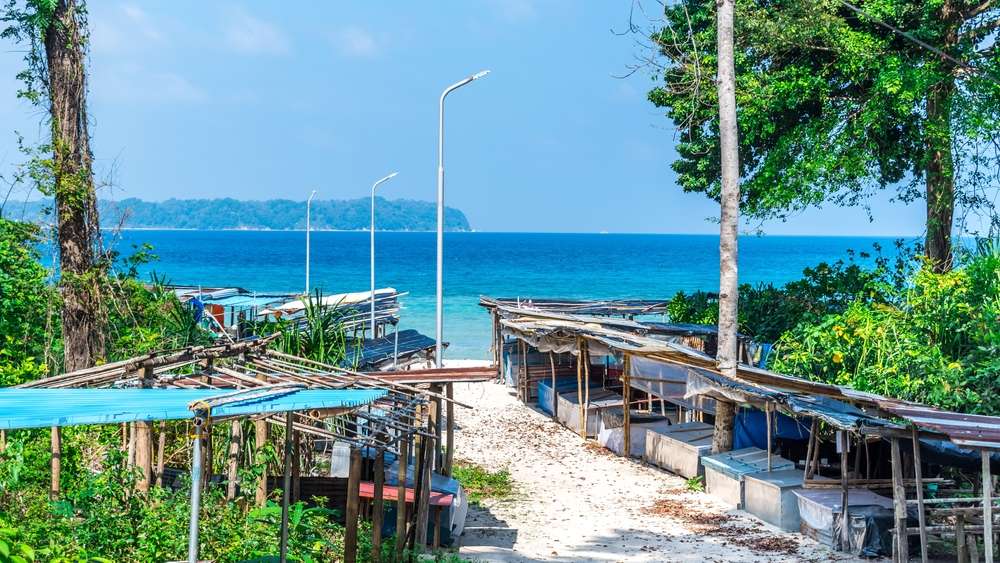
The island has one main road and almost no public transport to speak of, so the way to see Little Andaman is on two wheels. Guesthouses and shops in the Hut Bay market rent scooters and motorbikes for roughly ₹300–400 a day – check the brakes and fuel before you ride off, and fill up in town because there is no petrol pump out near the beaches. A few local buses run the main road for ₹7–15, and auto-rickshaws and shared jeeps cover short hops from the jetty, but their timings are loose. For a two- or three-day visit, a rented scooter is by far the most practical choice.
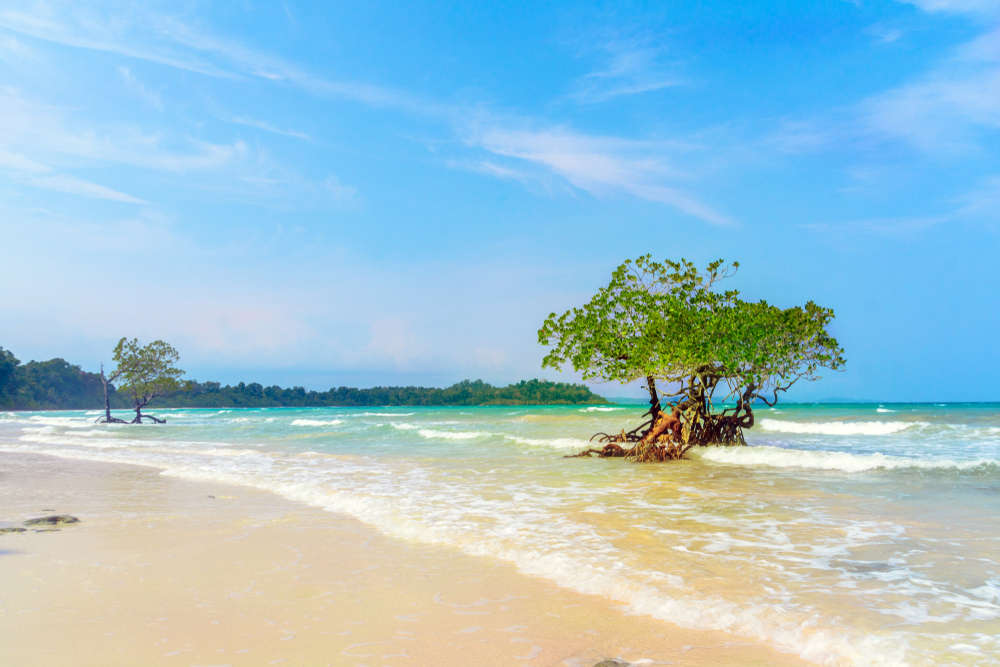
Little Andaman’s sights are spread along the eastern road out of Hut Bay, so plan your days around the distances rather than trying to see everything at once. Here is what is worth your time, and how far each is from the Hut Bay jetty:
| Place | Distance from Hut Bay | What it is | Time needed |
| Butler Bay Beach | ~14 km north | India’s premier surf beach — a long, curving bay of golden sand backed by palms | Half a day |
| White Surf Waterfall | ~6.5 km | A modest jungle waterfall reached by a short walk; cool, green, free to enter | 1–2 hours |
| Whisper Wave Waterfall | ~25 km | A remote, harder-to-reach fall — go with a local guide; crocodile country, so take care near water | Half a day |
| Red Oil Palm Plantation | Along the Hut Bay–Butler Bay road | Vast government oil-palm estates you pass en route to the beaches; workers often explain the process | 30–60 minutes |
| Harminder Bay | South of Hut Bay | A quiet southern bay good for a calm swim and light snorkelling | Half a day |
| Netaji Nagar / Kalapathar beach | North of Hut Bay | Long, empty sand stretches between the town and Butler Bay — good for a stop and a stroll | 1–2 hours |
Butler Bay is the headline. A wide, crescent-shaped bay roughly 14 km north of Hut Bay, it has the most consistent surf in India and a relaxed, undeveloped feel – golden sand, a palm fringe, a basic watchtower and very few people. Swimmers should stick to the gentler stretches and respect the currents, while surfers get clean waves in season. For a full breakdown of the breaks, boards and where to learn, see our dedicated guide to Butler Bay Beach.
Little Andaman’s two waterfalls sit inside dense evergreen jungle. White Surf, about 6.5 km from Hut Bay, is the easy one – a short, well-trodden walk leads to a small cascade where the spray and morning light often throw up a rainbow. Whisper Wave, roughly 25 km out, is the wild one: the track is longer and rougher, it is best done with a local guide, and because the area is crocodile habitat you keep well back from the water and follow your guide’s lead. Neither charges an entry fee, and both are daytime visits.
The drive north from Hut Bay runs through sweeping government oil-palm estates, one of the few places in India you will see palm oil grown and processed at scale. It is a working plantation rather than an attraction, but it breaks up the journey to Butler Bay, and the workers will sometimes walk you through how the fruit is pressed.

Little Andaman is, quietly, the surfing capital of India. Butler Bay produces the country’s most reliable waves, and a small but committed surf scene has grown up around it. The season runs broadly from January to March, when the swells are most consistent and the weather is dry; conditions suit beginners taking a first lesson as much as experienced riders chasing a longer wall. Boards and informal lessons can usually be arranged locally in Hut Bay, though supply is limited, so message ahead if you can. If diving rather than surfing is your thing, the Andamans’ main scuba diving sites are back around Havelock and North Bay, not here – Little Andaman is about the surf and the solitude.
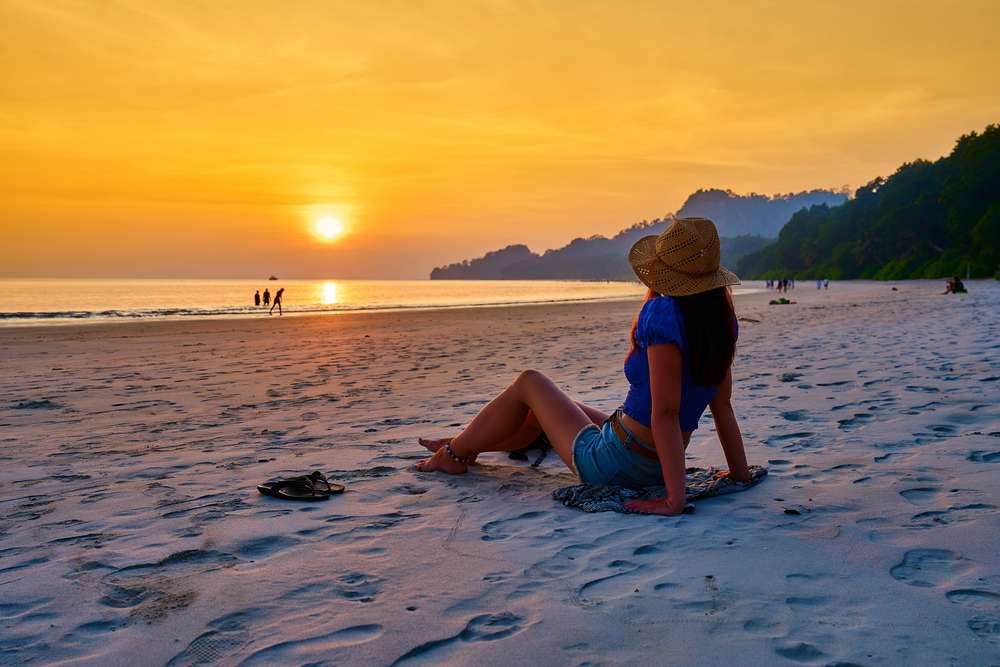
The island follows the wider Andaman seasons, but the ferry makes timing matter even more here – a rough sea does not just spoil a beach day, it can strand you. So come between November and April, chase the surf from January to March, and stay away during the monsoon.
| Season | Months | What it’s like | Verdict for Little Andaman |
| Peak / dry | November–February | Dry, calm seas, clear water, reliable ferries | Best overall — comfortable and dependable crossings |
| Surf season | January–March | Consistent swells at Butler Bay, warm and dry | Best for surfers; book boards ahead |
| Shoulder | March–April | Hot and humid but still calm and dry | Good value, quieter, dependable ferries |
| Pre-monsoon | May | Hot, sticky, first unsettled spells | Workable but watch the forecast |
| Monsoon | June–September | Heavy rain, rough seas, ferries cut/cancelled | Avoid — real risk of being stranded |
| Retreating monsoon | October | Green, washed-clean, seas settling | Improving — cheap and quiet, some ferry risk |
Whenever you go, treat the ferry schedule as the spine of your plan: pick your sailing dates first, then fit the beaches and waterfalls around them, not the other way round.
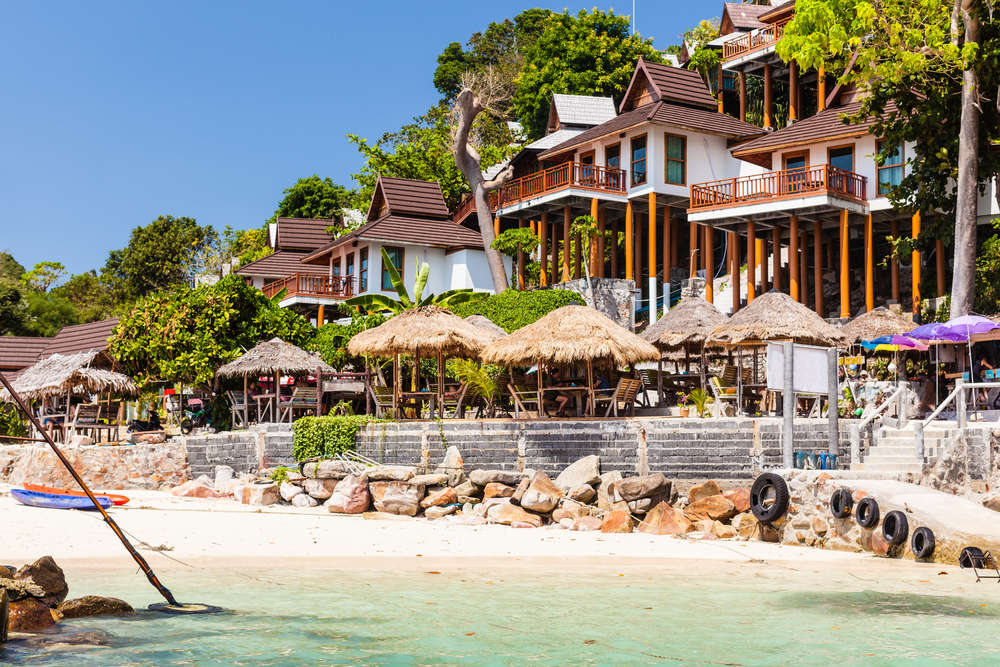
Accommodation is simple and limited – this is not an island of resorts. The main options are the government guesthouse (the APWD/PWD rest house, booked in advance through the administration) and a small number of privately run budget guesthouses and bamboo huts in and around Hut Bay, most with basic rooms and shared or simple bathrooms. Rates are low and many places give a discount for longer stays. There are no luxury hotels, no beachfront five-stars and no online-bookable chains, so plan to arrange a room directly, carry cash to pay, and keep your expectations set to clean-and-basic rather than polished.
Little Andaman is remote in a way the busier islands are not, and a few practical rules make the difference between an easy trip and a stuck one:
On permits, Indian nationals do not need a Restricted Area Permit for Hut Bay and the open tourist areas of Little Andaman, and have not since 2018 – just carry a government photo ID. Foreign nationals register on arrival in the Andamans. The closed tribal and protected zones above remain off-limits to all visitors, Indian and foreign alike.
Little Andaman is one of the last genuinely quiet corners of the Andamans — India’s surf island, where you trade resorts and easy access for empty beaches, jungle waterfalls and a slower pace. The trip lives or dies on logistics: lock the government ferry dates first, carry cash, build in a buffer day, and respect the crocodile and tribal-reserve rules. Get those right and you get a beach to yourself.
When you are ready to fit Little Andaman into a wider trip, customise an Andaman tour package that adds the southern islands to the Port Blair–Havelock–Neil circuit, or read up first — the Little Andaman place guide and our complete Andaman travel guide cover everything around it, while the best time to visit Andaman guide helps you lock your dates. For more offbeat islands, see Barren Island and Baratang Island.
The only reliable way for tourists is the government (DSS) ferry from Haddo Wharf in Port Blair to Hut Bay, the island's jetty. The crossing covers about 120 km and takes 6 to 8 hours, with roughly three to five sailings a week in fair weather. There is also a Pawan Hans helicopter, but it prioritises residents and emergencies and is not a dependable tourist option, so plan around the ferry.
Between 6 and 8 hours, occasionally longer in rough seas. Ferries leave from Haddo Wharf - not the Phoenix Bay jetty used by the private Havelock and Neil catamarans - and run only three to five times a week, with fewer sailings in the monsoon. Buy your ticket at the DSS counter in Port Blair one to three days ahead, as they sell out.
Yes, if you want surf, empty beaches and solitude and you don't mind a long ferry and basic facilities. Little Andaman is India's surfing capital, with the crescent of Butler Bay, two jungle waterfalls and almost no crowds. It is not for travellers who want resorts, nightlife or quick day trips - the appeal is exactly that it is remote and undeveloped.
Indian nationals do not need a permit for Hut Bay and the open tourist areas, and have not since the Restricted Area Permit was relaxed for Indians in 2018 - just carry a government photo ID. Foreign nationals register on arrival in the Andamans. The Onge tribal reserve at Dugong Creek and the Nicobarese area at South Bay are off-limits to everyone.
Two to three nights is the sweet spot. That gives you a full day at Butler Bay, a morning at White Surf Waterfall, time for a southern beach or the longer trek to Whisper Wave, and enough slack to work around the ferry timings. Because sailings are only a few times a week, your trip length is often decided by the schedule as much as by what you want to see.
November to April, when the seas are calm and the ferries run reliably. For surfing, aim for January to March, when Butler Bay's swells are most consistent. Avoid the June–September monsoon: rough seas cancel ferries with little notice and you risk being stranded. October is improving - green and quiet - but still carries some ferry risk.
Yes - it is the main draw. Butler Bay, about 14 km north of Hut Bay, has the most consistent surf in India and a small, friendly surf scene. The season runs roughly January to March, and conditions suit both beginners taking a first lesson and experienced riders. Boards and informal lessons can usually be arranged in Hut Bay, but supply is limited, so ask ahead.
Barely. ATMs are very limited and frequently out of cash or service, so withdraw enough money in Port Blair to cover your entire stay, including the return ferry. Mobile signal is weak and patchy across the island, with BSNL generally the most reliable - plan to be largely off-grid for a day or two.
Accommodation is basic and limited to a government guesthouse (booked in advance through the administration) and a handful of privately run budget guesthouses and bamboo huts in and around Hut Bay. Rooms are simple, rates are low, and longer stays often get a discount. There are no luxury hotels or online-bookable chains, so arrange a room directly and carry cash to pay.
Yes - saltwater crocodiles live in the island's creeks, mangroves and estuaries, including around the Whisper Wave waterfall area. Swim only at the designated open-sea beaches, never in creeks or estuaries, and keep well back from still water on jungle walks. Follow local guidance and any posted warnings; the open surf beaches like Butler Bay are the safe places to enter the sea.
Butler Bay (~14 km north of Hut Bay) is the standout - a long crescent of golden sand and India's best surf. White Surf Waterfall (~6.5 km) is an easy jungle walk to a small cascade, while Whisper Wave (~25 km) is a remote fall best reached with a guide. Harminder Bay in the south offers a calmer swim, and the Netaji Nagar and Kalapathar stretches give you empty sand close to town.
No - that is a common mix-up. The famous Andaman limestone caves are at Baratang Island, about 100 km north of Port Blair, reached by road and a mangrove-creek boat ride. Little Andaman's draws are its surf, its two jungle waterfalls and its beaches, not caves. If caves are on your list, plan a separate trip to Baratang from Port Blair.
Real reviews from real travelers who booked with us.
View All Reviews