
 7D / 6N
8% OFF


What Is There to See Near Tirta Empul?
The closest places to visit near Tirta Empul are the Presidential Palace at Tampaksiring, which sits on the ridge right above the temple, the Gunung Kawi rock shrines 2 km down the road, and the quiet spring temple of Pura Mengening about 2 km away, just beside Gunung Kawi. Within a 20-minute drive you reach the water garden at Gunung Kawi Sebatu and the Tegallalang rice terraces. Go a little further and you have the Bronze Age drum at Pejeng, the Elephant Cave at Goa Gajah, Penglipuran village and the Mount Batur viewpoint at Penelokan, all within 25 km by road.
Tirta Empul is in Manukaya village, Tampaksiring, in Gianyar regency, about 20 km north of Ubud. Most lists of nearby sights mix it up with places 60 km away. This guide sticks to the real neighbourhood. It covers 14 stops in order of road distance from the temple car park, grouped into three rings (within 5 km, 5 to 15 km and 15 to 25 km), with realistic drive times, how long to stay and what changes if you travel in March 2027, the month Bali goes silent for Nyepi.
Key takeaways
- Walk out of Tirta Empul and look up. The Presidential Palace is 200 m away, and Gunung Kawi’s 11th-century shrines are a 5 to 10 minute drive.
- Arrive at Tirta Empul for the 8 am opening, then do Gunung Kawi, Sebatu and Tegallalang before lunch. That loop is under 20 km.
- Keep Monday 8 March 2027 free of plans. Nyepi closes every temple, road and the airport for 24 hours.
- Expect domestic holiday crowds from 6 to 15 March 2027, when Idul Fitri and collective leave days follow Nyepi.
- Budget 3 to 4 hours for the near ring and a full day if you add Penglipuran and the Batur viewpoint.
Road distances are OSRM routing from the Tirta Empul car park, checked in November 2026. Drive times are our estimates, set at 1.5 to 2 times the routing app’s free-flow time to allow for traffic outside rush hour. They are not timed drives.
Indonesia
Bali
7 Tranquil Places To Visit Near Tirta Empul Bali In March In 2026!
Best Time
April - October
Select Package Type
Best Selling Packages


14 Places to Visit Near Tirta Empul, by Distance
The 14 places come first, in order of road distance from the temple car park. The first four are within 5 km in Tampaksiring, the next four sit 5 to 15 km away in Tegallalang, Pejeng and Bedulu, and the last six are 15 to 25 km out in Bangli, Kintamani and Ubud. After them you will find a 60-second guide to Tirta Empul itself, what changes in March 2027, three ready-made routes, a step-by-step morning plan, how to get there, temple etiquette, how to tell Tirta Empul from Tirta Gangga.
-
Istana Tampaksiring (Presidential Palace)
-
Gunung Kawi Tampaksiring
-
Pura Mengening
-
Gunung Kawi Sebatu
-
Tegallalang (Ceking) Rice Terraces
-
Pura Penataran Sasih
-
Pura Pusering Jagat
-
Goa Gajah and Yeh Pulu
-
Tibumana Waterfall
-
Penglipuran Village
-
Penelokan (Mount Batur Viewpoint)
-
Ubud Monkey Forest
-
Tukad Cepung Waterfall
-
Tegenungan Waterfall
Explore Popular Destination In Bali
01
Istana Tampaksiring (Presidential Palace)
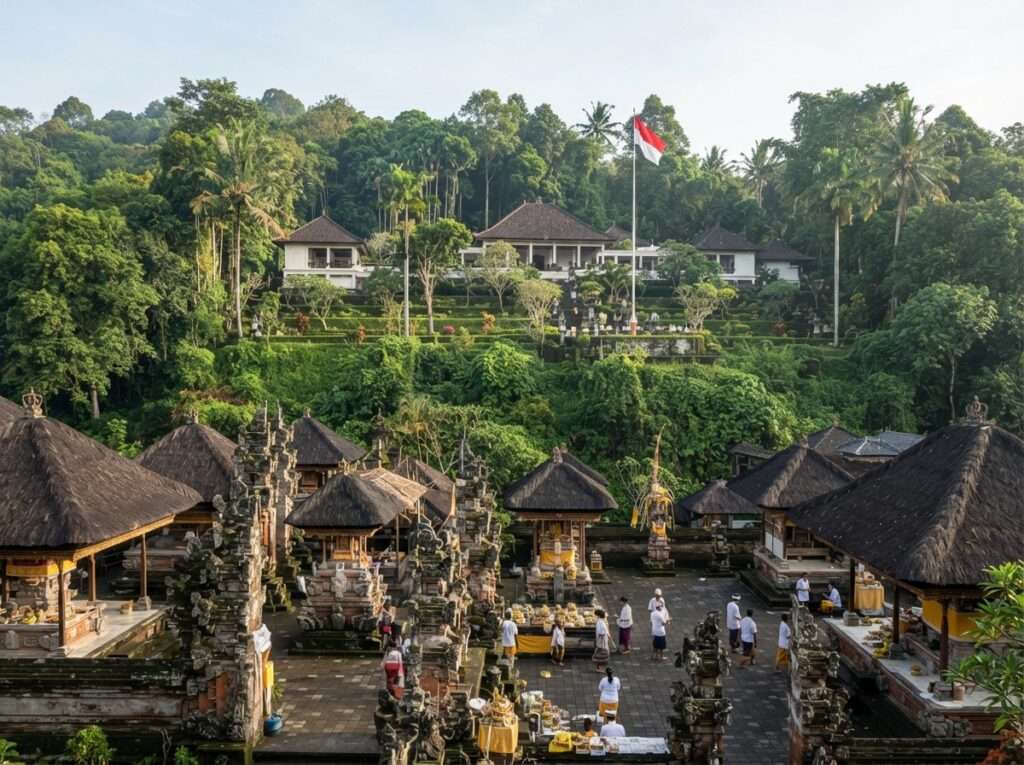
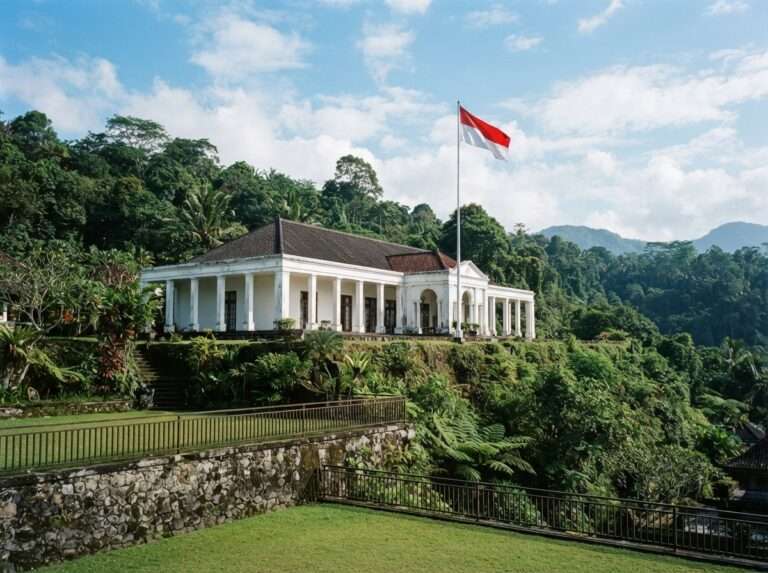
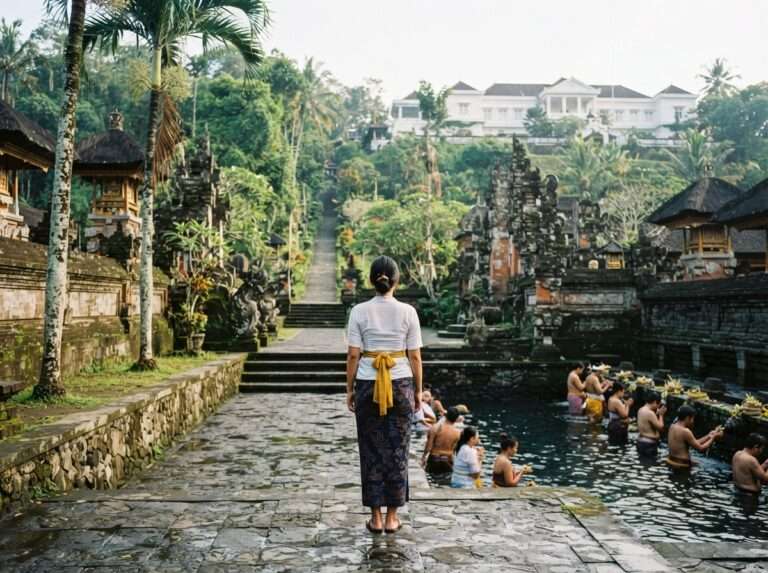
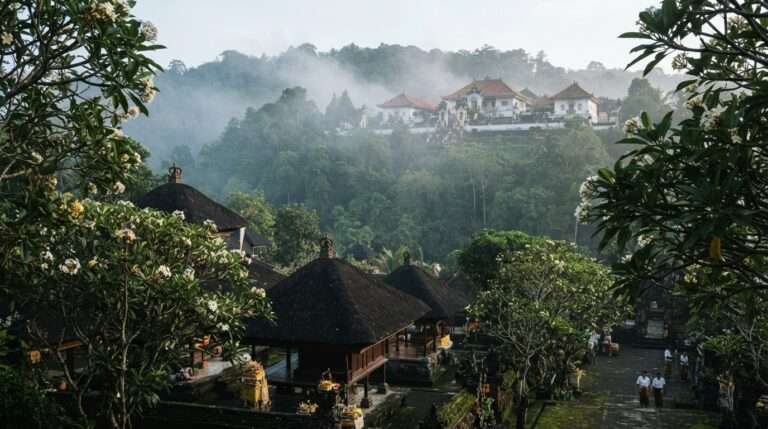
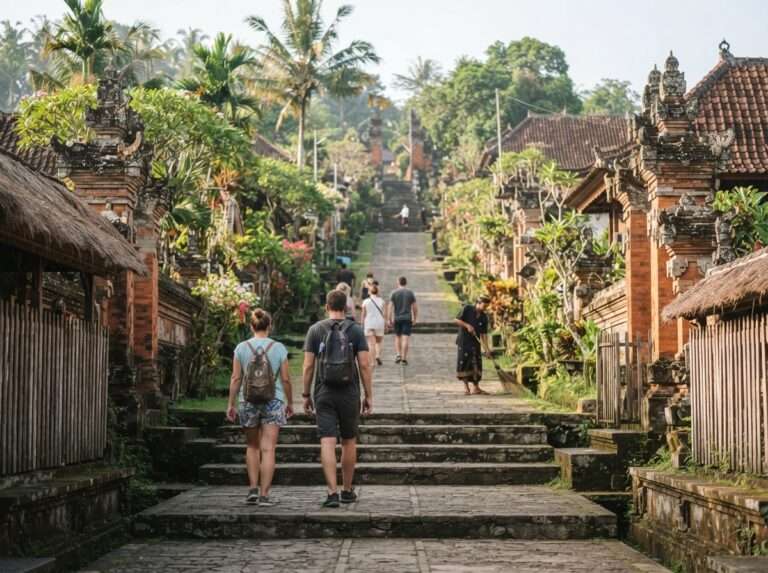
Stand in the outer courtyard of Tirta Empul and look up the slope to the west. The low white buildings on the ridge are Istana Tampaksiring, the only presidential palace in Bali. Sukarno, Indonesia’s first president, had it built on this hill above the spring between 1957 and 1960, and it is still used to host state guests.
It explains a lot about the temple. The palace is why the spring’s surroundings are so well kept and why you will see security on the hill road. Entry to the palace grounds is by arrangement, not a ticket, so treat it as a sight from below unless your hotel or driver has set up a visit. From the temple’s west side you can see the palace buildings on the ridge above the pools.
| Best for | Indonesian history, seen from the temple courtyard below |
| Location | On the hill directly west of and above Tirta Empul, Manukaya, Tampaksiring |
| Distance ring | Within 5 km (0.2 km, the closest sight to the temple) |
| Visiting | The grounds are a working state palace. Visits inside need prior permission from the palace, so most travellers see it from the temple below |
| In March | No change, but it stays closed to visits on Nyepi like everything else |
Related Tour Packages


❮
❯
02
Gunung Kawi Tampaksiring
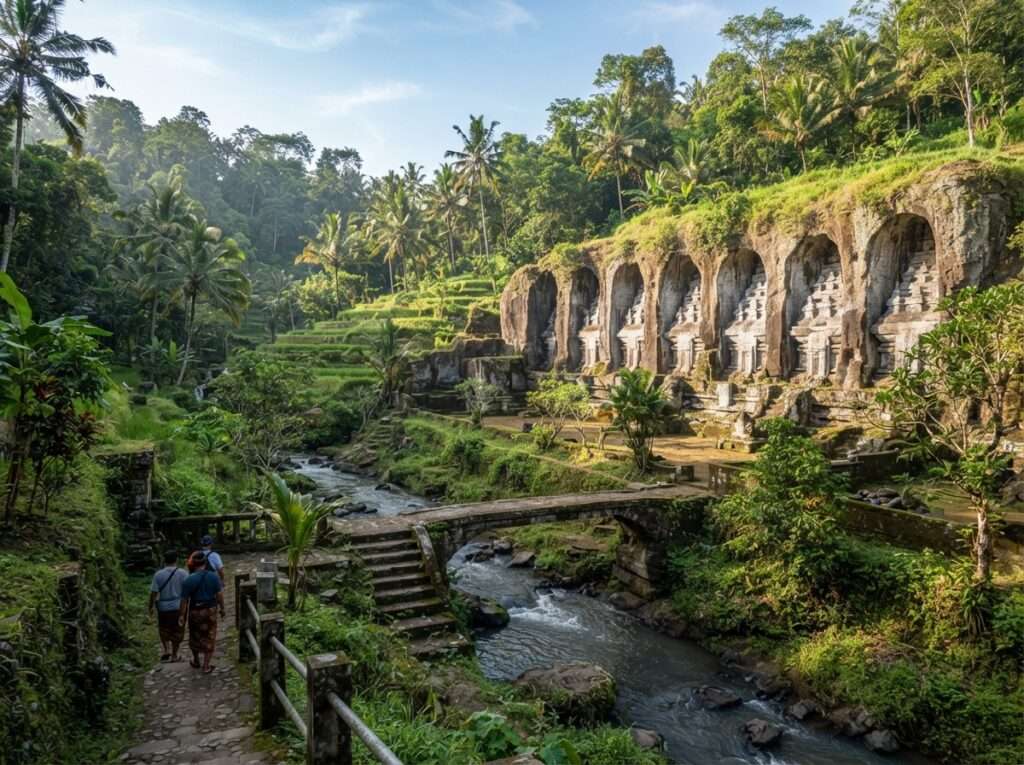
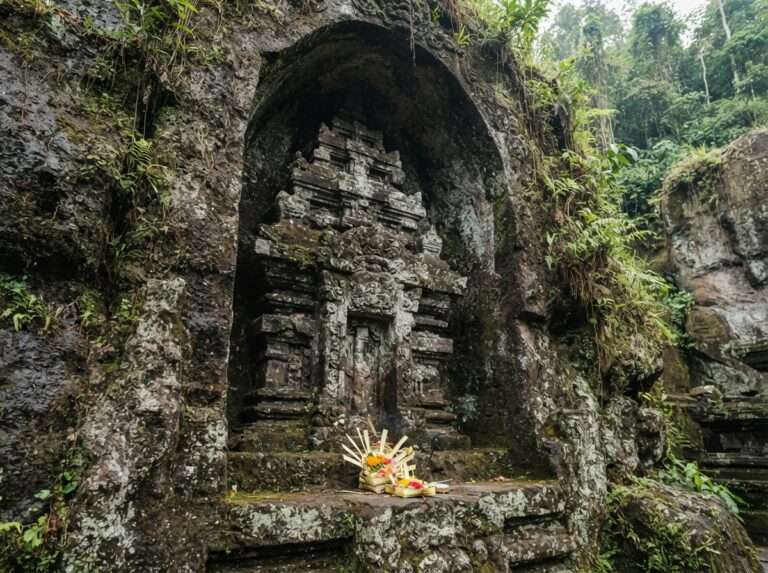
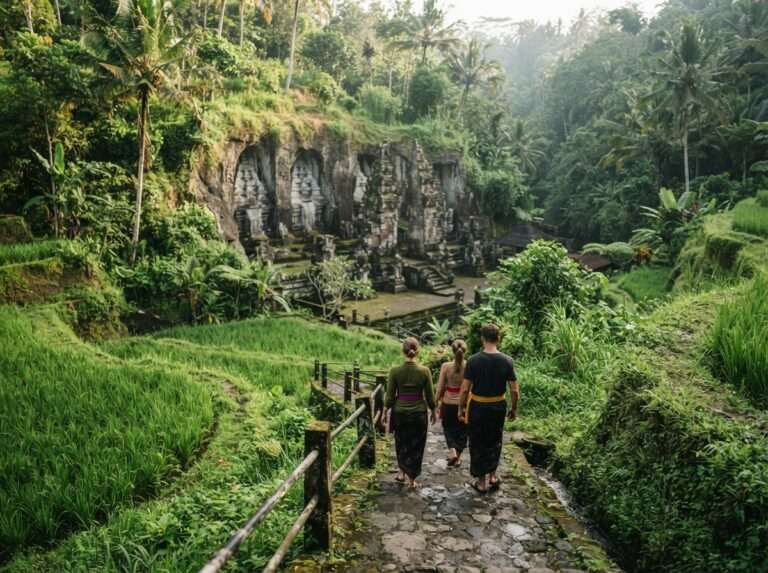
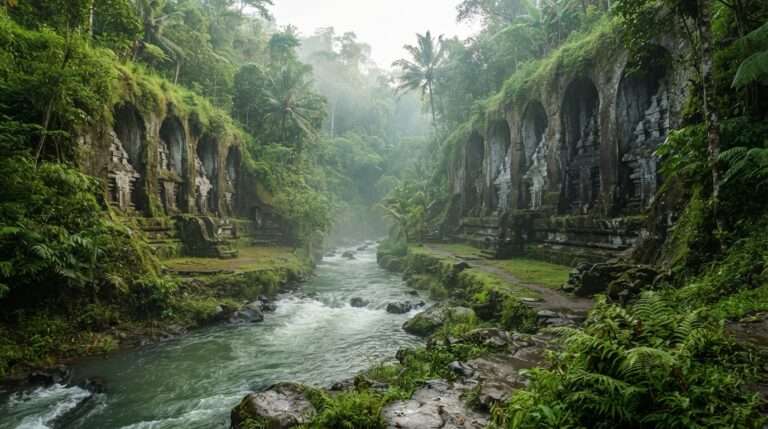
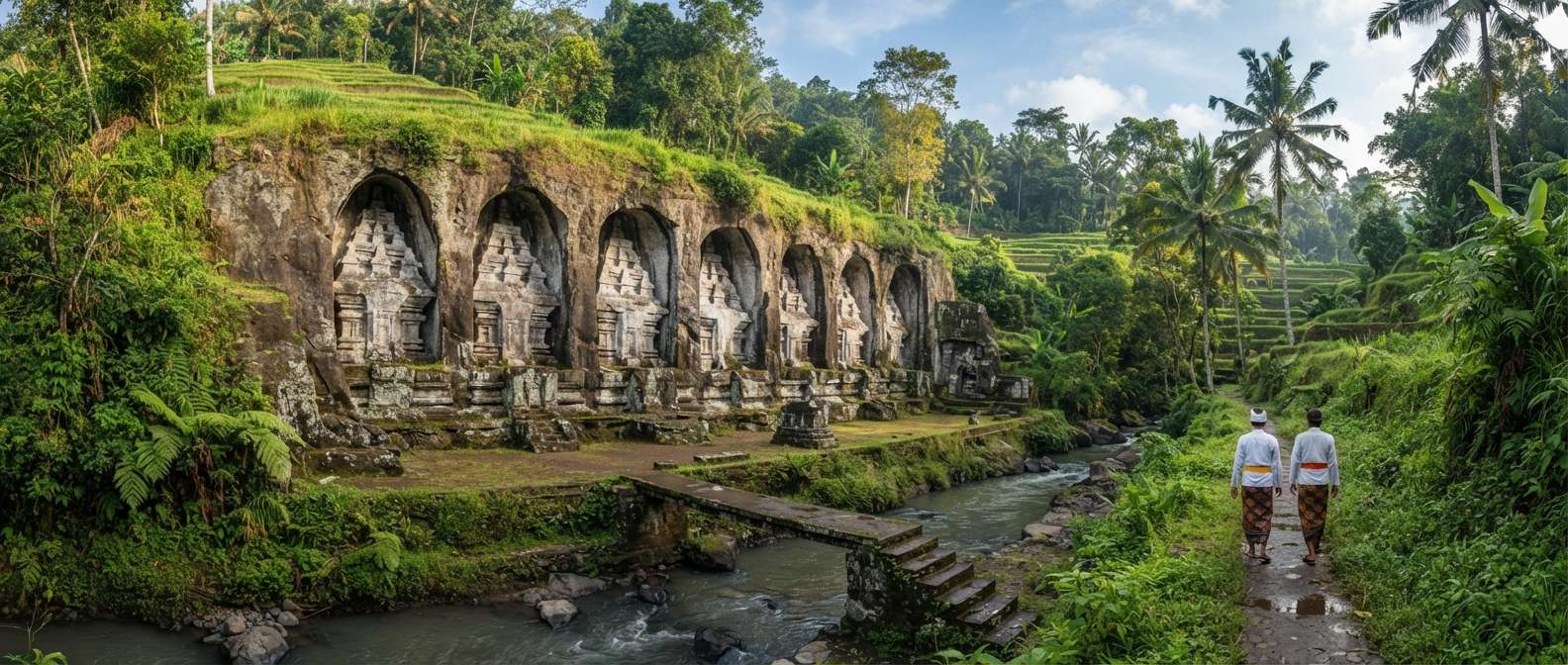
Gunung Kawi is the most important site near Tirta Empul and the one to pair it with if you only have time for one more stop. Ten shrines, each about 7 m tall, are cut straight into the rock in two rows that face each other across the Pakerisan river, the same river Tirta Empul’s spring feeds. They date to the 11th century and are thought to honour King Anak Wungsu and his family, although nobody is buried in them.
The walk is the experience. A stone stairway drops through rice terraces and a split gate into the gorge, and the sound of the river fills the valley at the bottom. Most people take 20 minutes to get down at an easy pace. The climb back is harder, so carry water and stop at the café at the top if you need to. You will be given a sarong at the entrance, as at Tirta Empul. Our full guide to Gunung Kawi covers the legends, fees and best photo spots.
| Best for | Ancient royal shrines carved into cliff faces, rice terraces on the walk down |
| Location | Banjar Penaka, Tampaksiring, on the Pakerisan river south of Tirta Empul |
| Distance ring | Within 5 km (2.0 km by road) |
| Getting there | Drive south on the main Tampaksiring road, then walk down from the car park |
| Effort | About 300 steps down to the river and the same back up |
| In March | Steps are wet and slippery after rain. Go in the morning before the afternoon showers |
Related Tour Packages


❮
❯
03
Pura Mengening
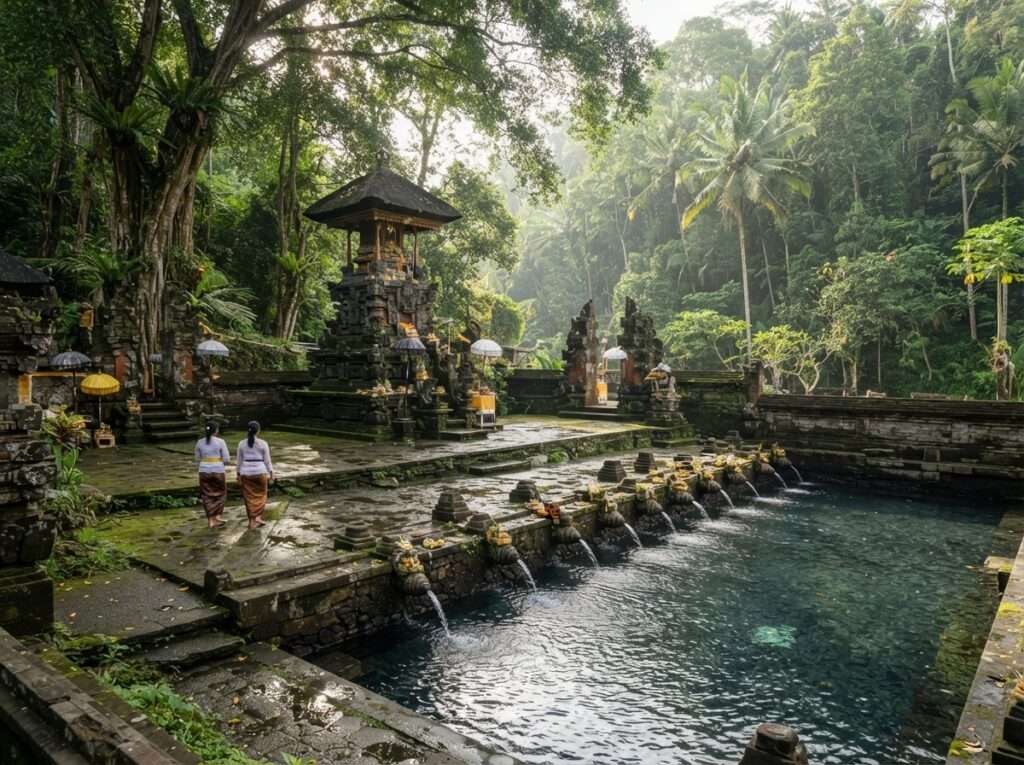
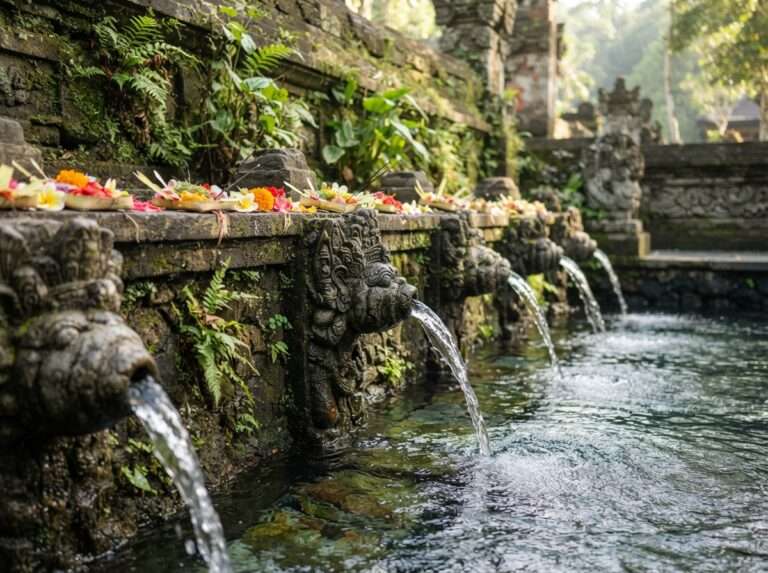
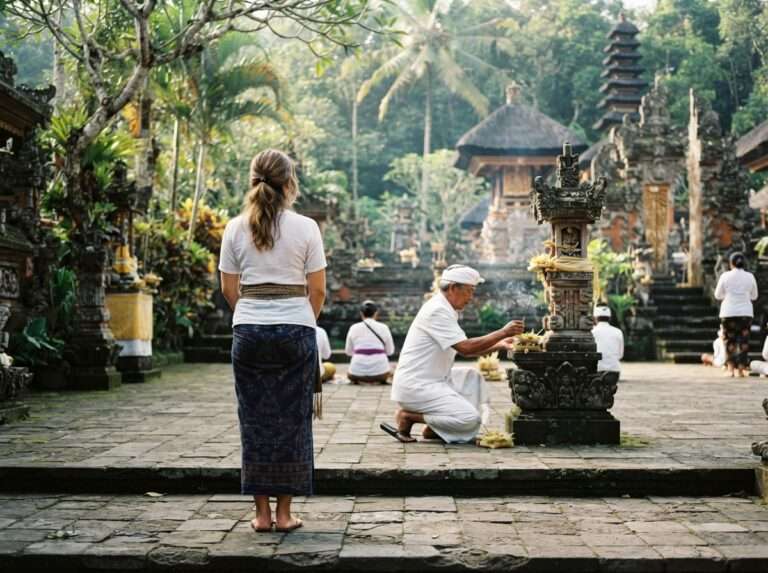
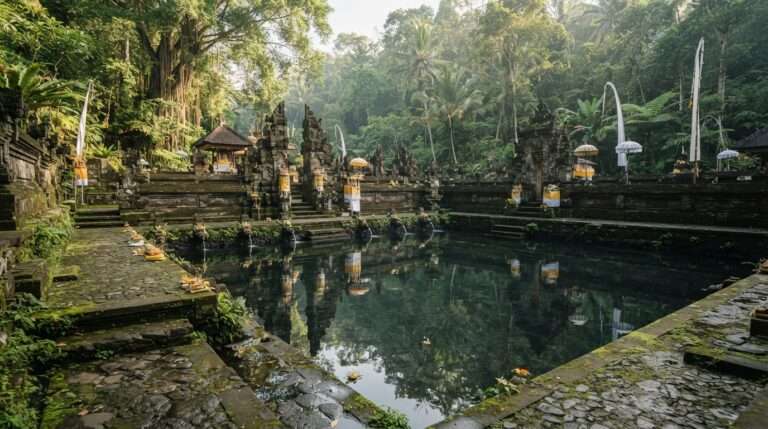
Pura Mengening shares the same story as Tirta Empul. Its spring also feeds the Pakerisan river, and local families come here for blessings away from the crowds. It is small. There is a spring pool with carved spouts, a restored stone candi (shrine tower) above it, and a shaded courtyard. On most mornings you will share it with a handful of local worshippers rather than tour buses.
That quiet is the reason to go. If the queue at Tirta Empul’s pools is long, Mengening gives you the same water-temple atmosphere without the crowd. Some visitors do take part in a melukat here. Ask the temple keeper (pemangku) at the entrance whether visitors can bathe that day, because it depends on the ceremonies running. Bring your own sarong and sash in case none are on loan.
| Best for | A quiet holy spring and a single stone candi, with far fewer visitors than Tirta Empul |
| Location | Saraseda, Tampaksiring, in the Pakerisan valley close to Gunung Kawi, about 3 minutes' drive from Tirta Empul |
| Distance ring | Within 5 km (about 2 km by road, a 10-minute walk from Gunung Kawi) |
| Visiting | A temple first and a sight second. Locals come here for melukat (purification) |
| In March | Paths around the spring are muddy after rain, so wear sandals with grip |
Related Tour Packages


❮
❯
04
Gunung Kawi Sebatu
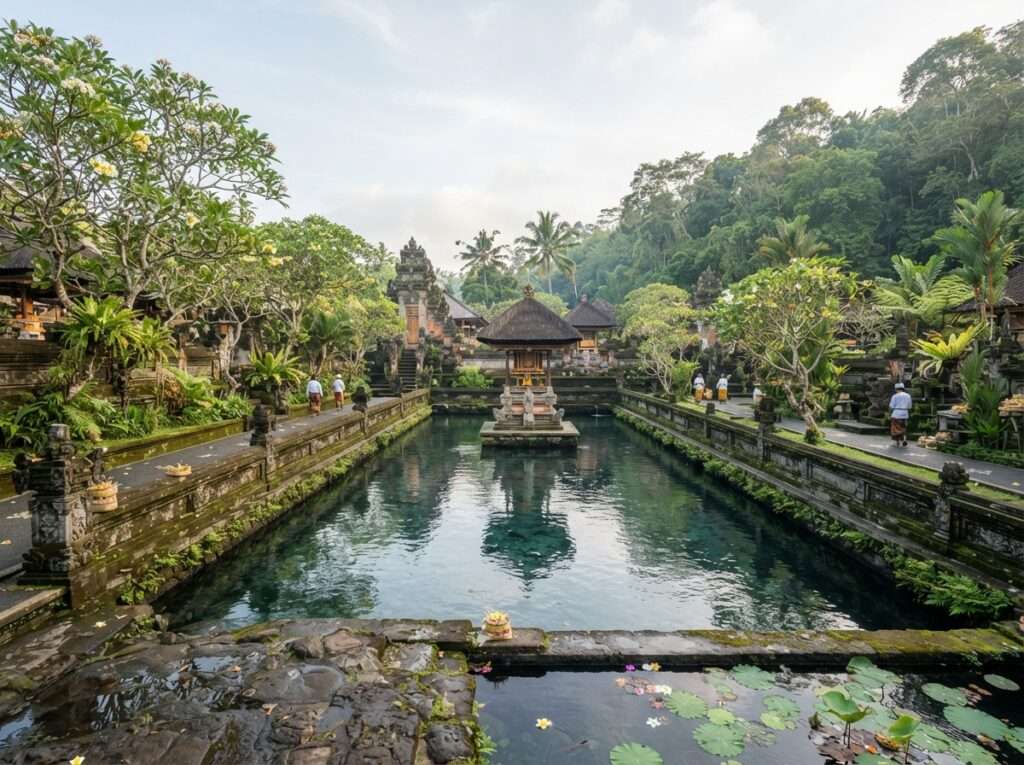
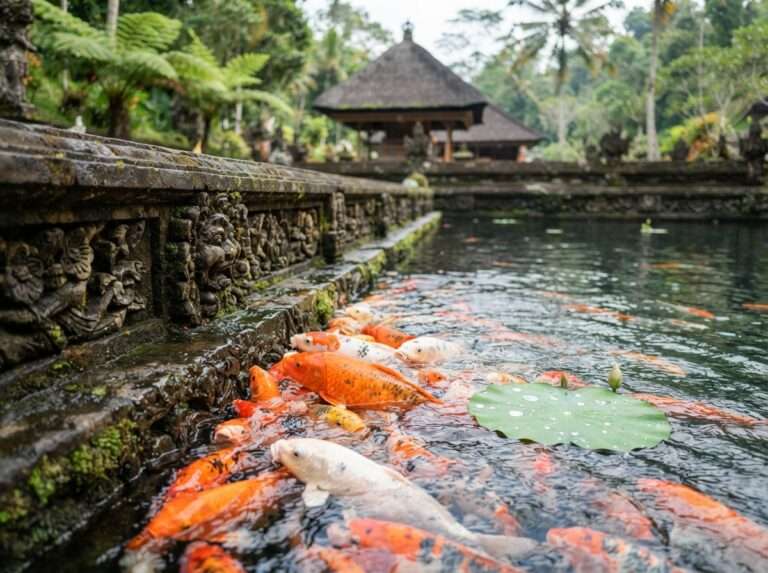
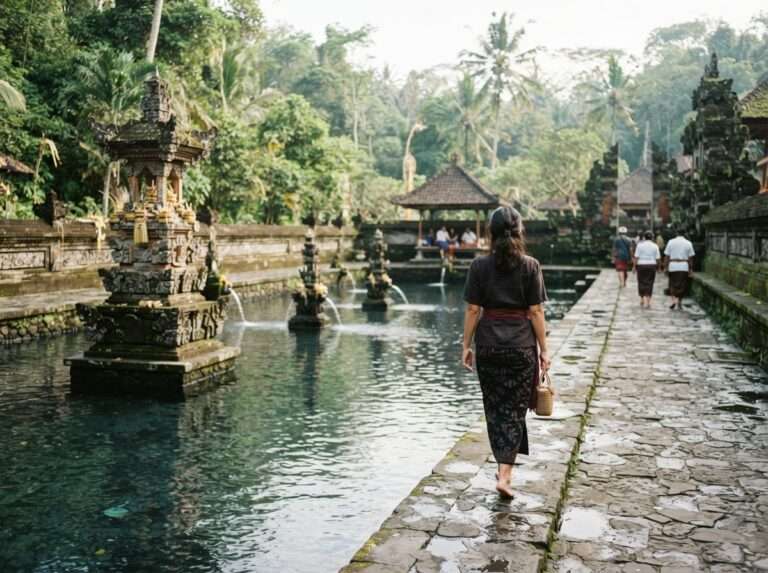
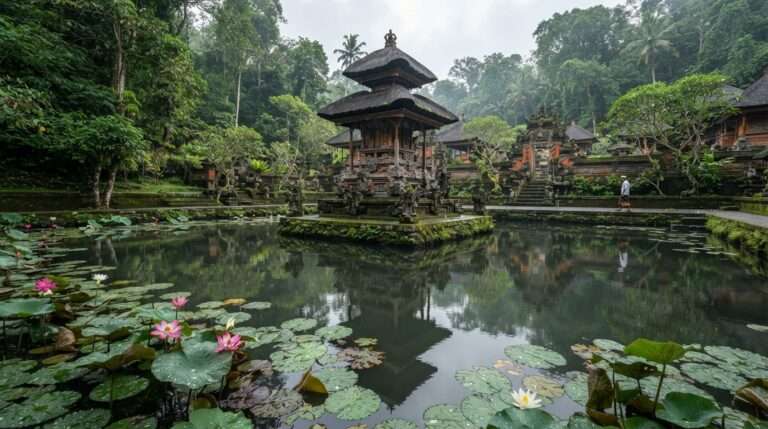
Gunung Kawi Sebatu is a different place from Gunung Kawi Tampaksiring, and drivers mix them up, so say “Sebatu” clearly. This one is a water temple built around a spring, with long rectangular pools, stone channels and a central shrine standing in water. It has no cliff carvings. Its appeal is the calm. The garden is green and quiet, and the pools are full of fat koi that crowd the edges when you walk past.
It works best straight after Tirta Empul. You will have seen how the spring water is used for blessing at the big temple, and Sebatu shows the same idea in a smaller, prettier setting. Allow 45 minutes. The men’s and women’s bathing pools are used by the village, so ask before you join a blessing and never photograph people bathing. Sebatu sits on the back road toward Tegallalang, which makes it a natural stop on the way to the rice terraces.
A coffee plantation stop also sits on this stretch. Several agrotourism gardens line the road between Tampaksiring and Tegallalang and offer a free tasting of Balinese coffee and teas. If they offer kopi luwak, ask how the civets are kept, because many are caged, and you can simply decline that cup.
| Best for | Spring-fed pools full of koi, lotus ponds and shaded shrines |
| Location | Sebatu village, Tegallalang district |
| Distance ring | Within 5 km (5.0 km by road) |
| Visiting | The bathing pools are used mainly by villagers and worshippers. Visitors can sometimes join a melukat in a bathing sarong, so ask at the entrance; otherwise walk the gardens and courtyards |
| In March | Wet-season water levels make the pools and channels at their fullest |
05
Tegallalang (Ceking) Rice Terraces
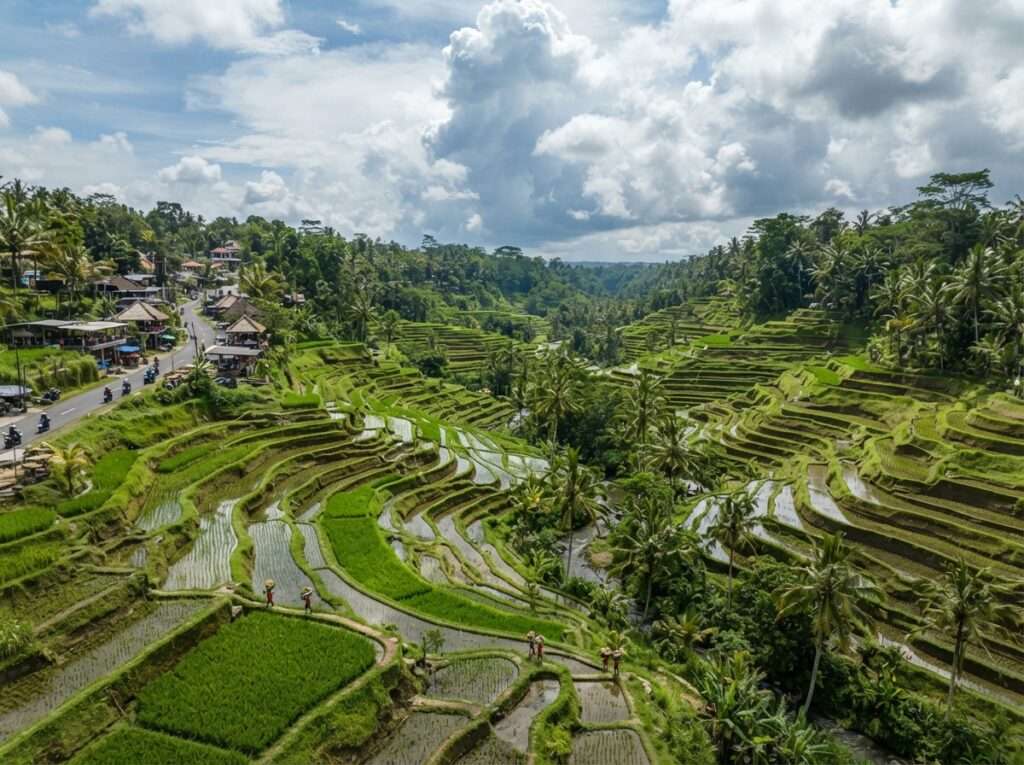
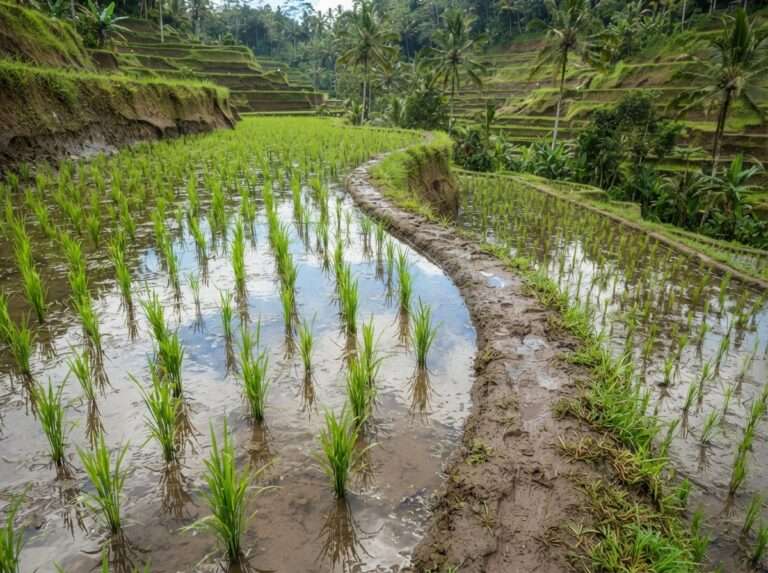
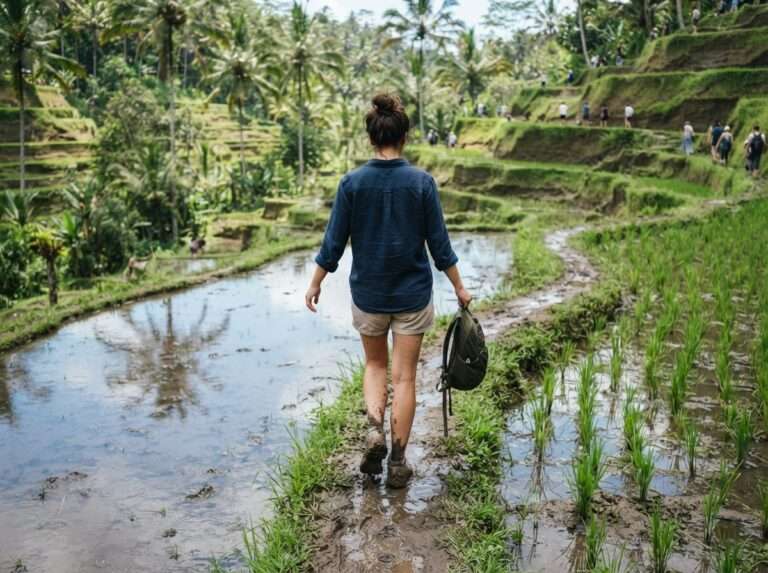
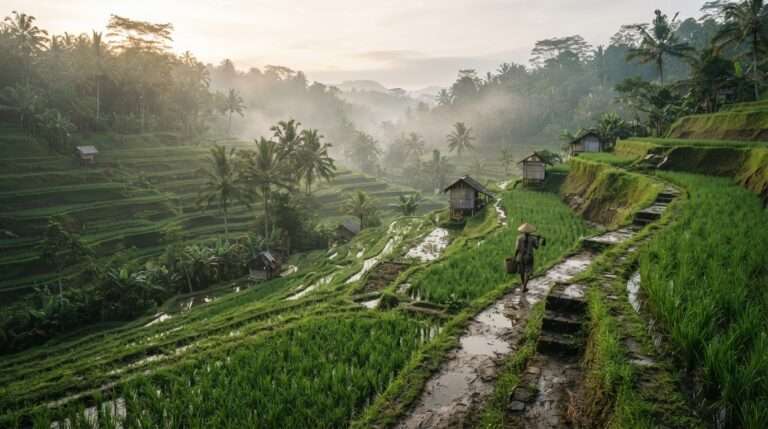
The Tegallalang terraces are the most photographed rice fields in Bali, and they are only 15 to 20 minutes from Tirta Empul. Some directories put them at 4.3 km, but that is a straight line across the valley. By road it is 7.2 km. The terraces fall down both sides of a narrow valley at Ceking, and paths run along the bunds between paddies, with small donation points where farmers ask for a few thousand rupiah to cross their land.
In March the fields can be at any stage. Some will be flooded and freshly planted, others green and tall. Both look good, but the paths will be wet. Wear shoes you do not mind getting muddy, and skip the steeper sections after heavy rain. The swing and “nest” photo spots on the terrace edge charge separately. Alas Harum, a larger agrotourism park with swings and a coffee garden, is on the same stretch of road if you want that kind of stop. Read our guide to the Tegallalang rice terraces for the fees and the best viewpoint cafés.
| Best for | The classic Bali rice terrace walk and viewpoint cafés |
| Location | Ceking, Tegallalang, on the main road between Kintamani and Ubud |
| Distance ring | 5 to 15 km (7.2 km by road) |
| Best time of day | Before 9 am, when the light is soft and tour groups have not arrived |
| In March | Terrace paths turn to slippery mud after rain, and farmers may be planting or harvesting |
06
Pura Penataran Sasih
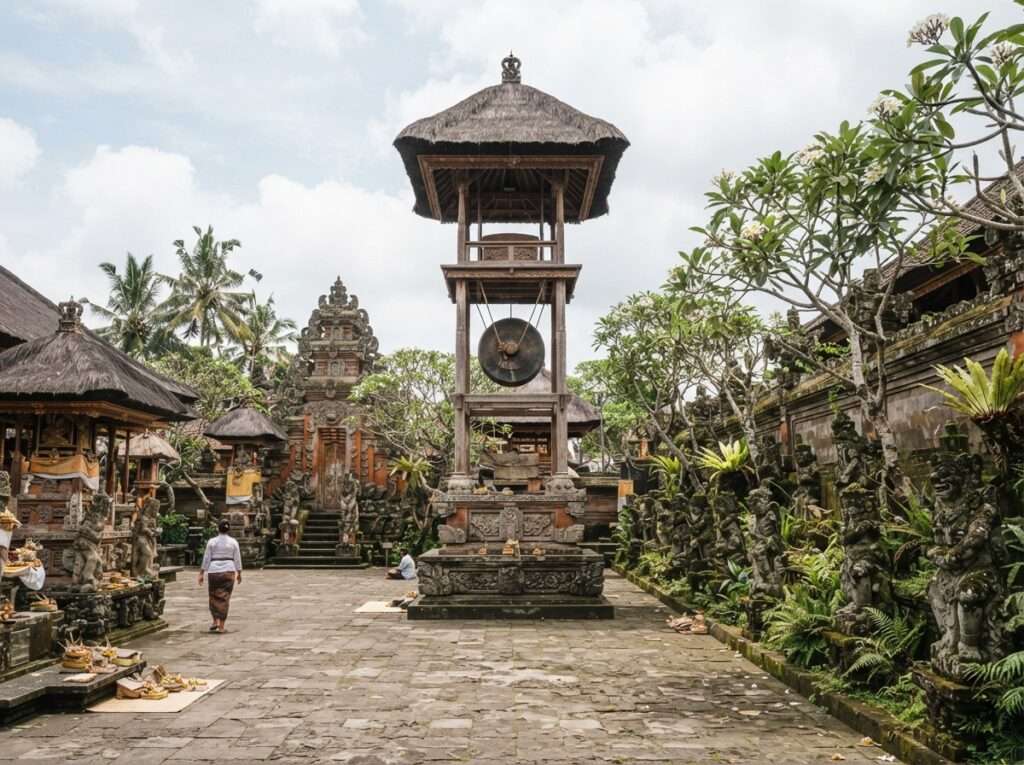
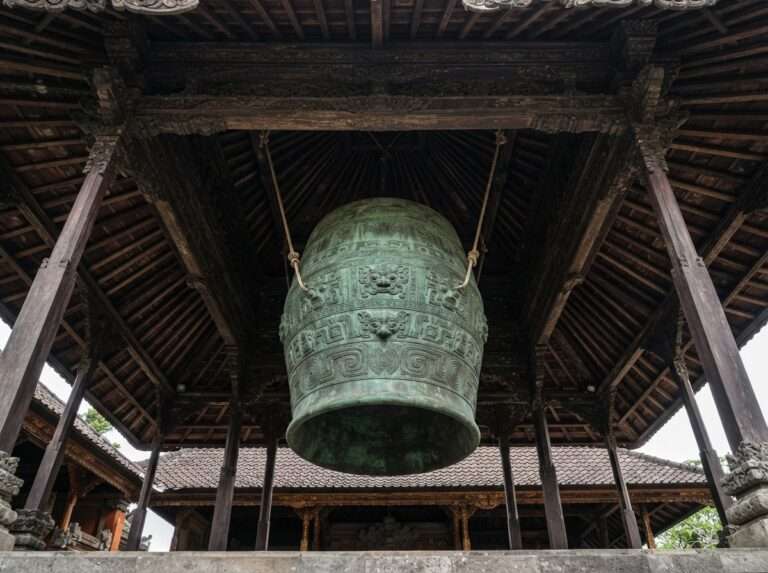
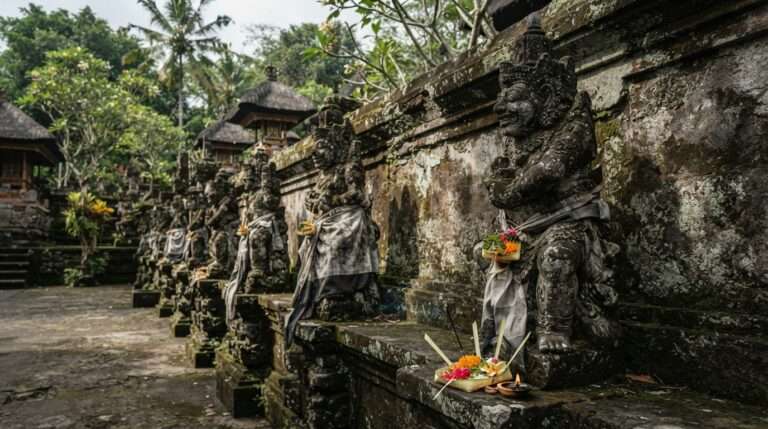
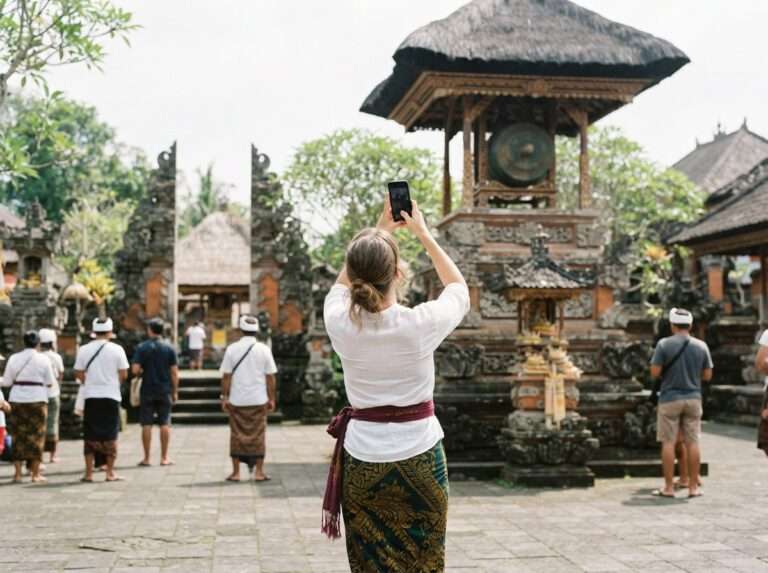
Pejeng was a royal centre long before Ubud mattered, and its temples hold some of the oldest objects in Bali. The most famous hangs in a tall pavilion inside Pura Penataran Sasih. The Moon of Pejeng is a bronze kettle drum about 1.86 m tall, often described as the largest single-cast drum of its kind in the world, made in the Dong Son tradition roughly 2,000 years ago. Legend says it was one of the wheels of the moon that fell to earth and was put out by a man who urinated on it.
You cannot get close to it. The drum sits high in its tower, so bring your phone zoom and look for the face patterns cast into its side. The courtyard also has rows of old stone statues worth a slow walk. Few tour groups stop in Pejeng, so you may have it almost to yourself. It sits right on the road south toward Goa Gajah, so it costs you only 30 minutes.
| Best for | The Moon of Pejeng, a Bronze Age kettle drum about 2,000 years old |
| Location | Pejeng village, Tampaksiring district, on the main road north of Bedulu |
| Distance ring | 5 to 15 km (12.8 km by road) |
| Visiting | A working village temple. A sarong and waist sash are often lent at the gate for a donation, but carry your own in case |
| In March | Ceremonies before Nyepi may limit access to the inner courtyard on some days |
07
Pura Pusering Jagat
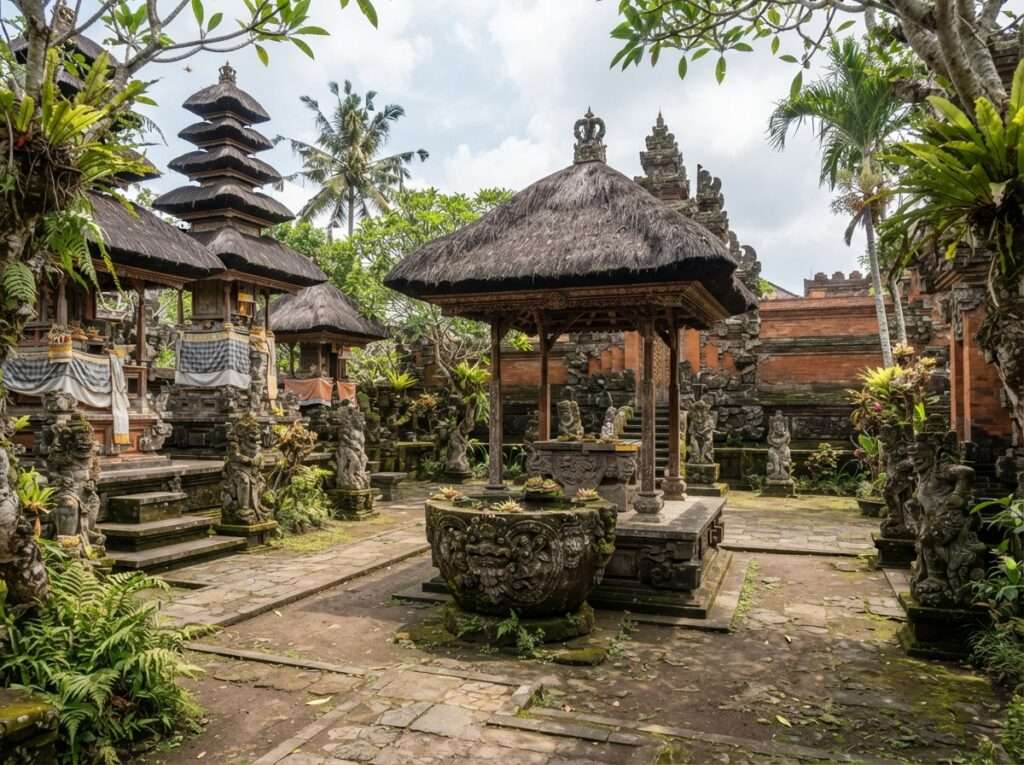
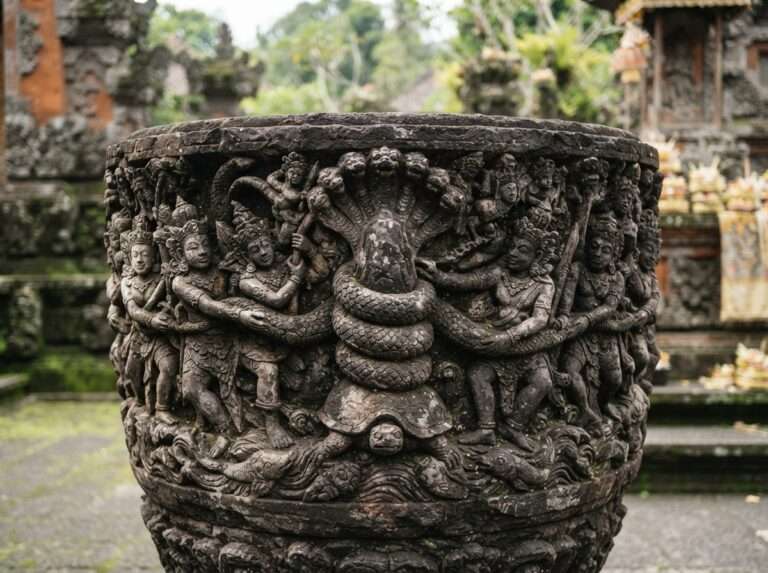
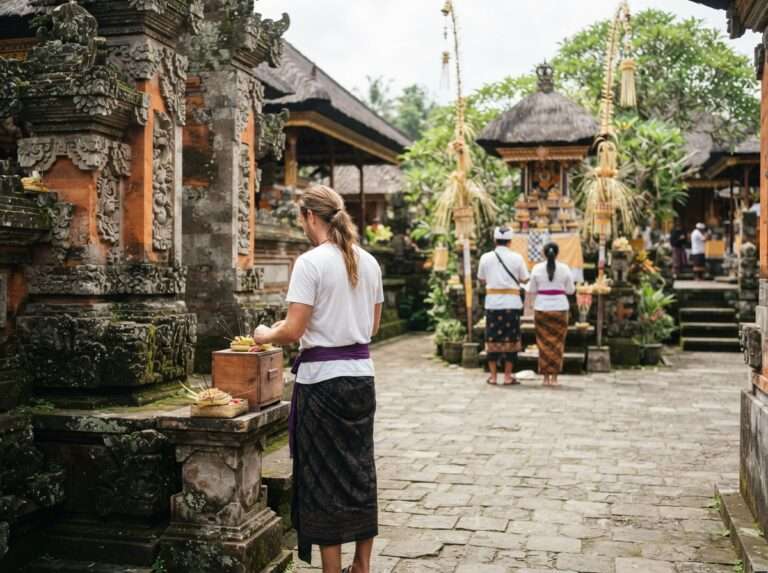
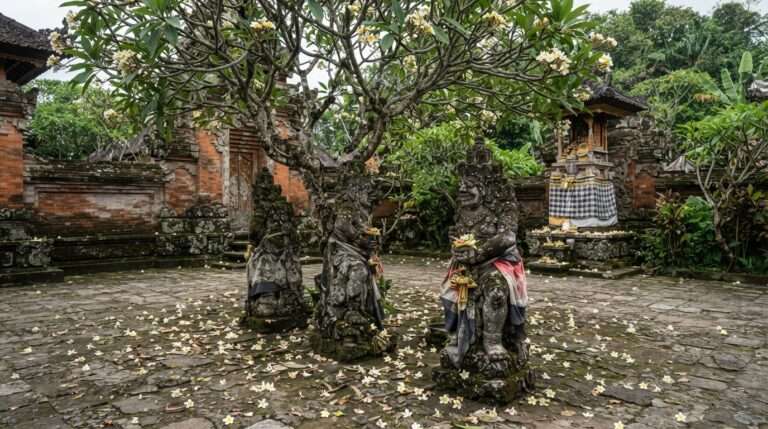
Pusering Jagat means “navel of the world”, and the name tells you how important Pejeng once was. The temple holds a carved stone water vessel decorated with gods and demons churning the sea of milk, a scene from Hindu myth, along with weathered stone figures that have stood here for centuries. Couples come to pray for children at its shrines.
It is a five-minute walk from Penataran Sasih, so see them together. Neither temple is set up for tourists, which is part of the appeal. There are no stalls and no queues. Leave a small donation, keep your voice down, and stay out of any courtyard where a ceremony is under way.
| Best for | Old stone sculpture and a carved water vessel used in temple rites |
| Location | Pejeng, a few hundred metres from Pura Penataran Sasih |
| Distance ring | 5 to 15 km (13.1 km by road) |
| Visiting | Village temple. Wear a sarong and sash as at Tirta Empul and ask before entering inner courts |
| In March | As at Penataran Sasih, check for pre-Nyepi ceremonies on the day |
08
Goa Gajah and Yeh Pulu
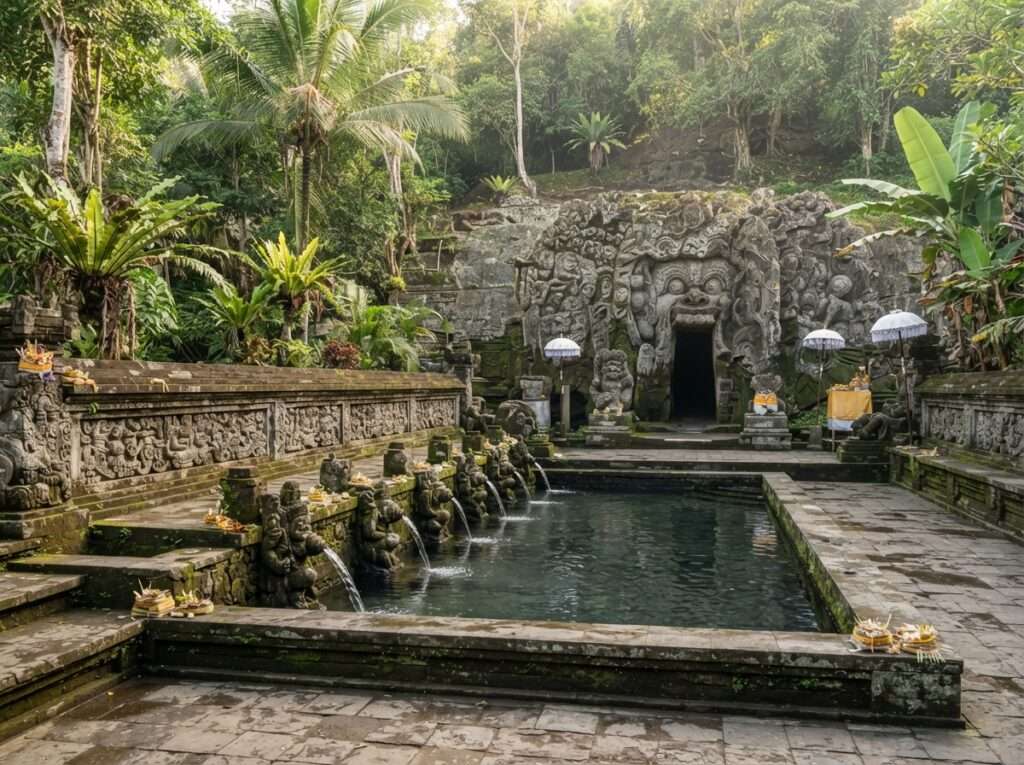
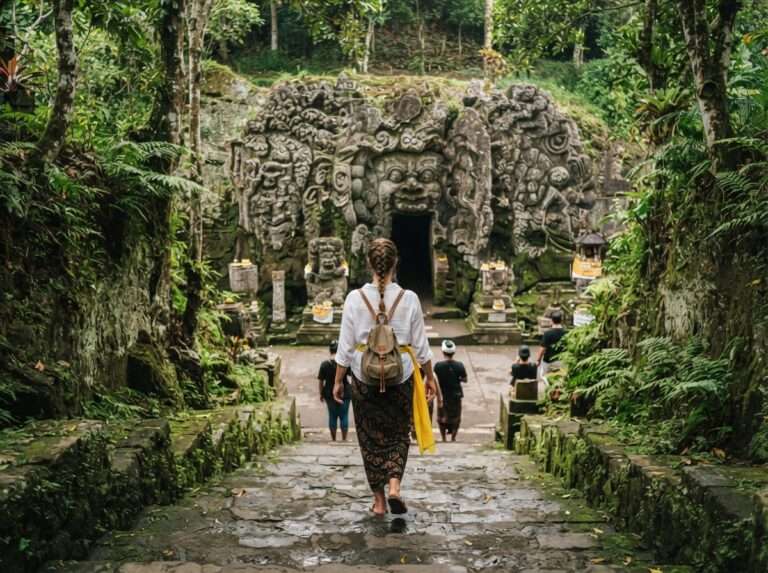
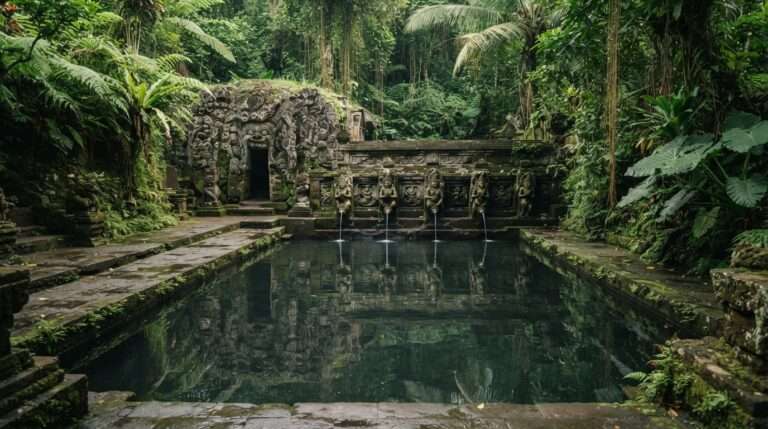
Goa Gajah, the Elephant Cave, is the second big heritage site south of Tirta Empul. You walk down to a courtyard with bathing pools fed by spouts held by stone figures, which were only dug out in 1954. Behind them a cave mouth is carved as a huge face, and inside the dark T-shaped passage are a statue of Ganesha and lingam shrines. The site is usually dated to between the 9th and 11th centuries. Our guide to Goa Gajah covers the fees and layout.
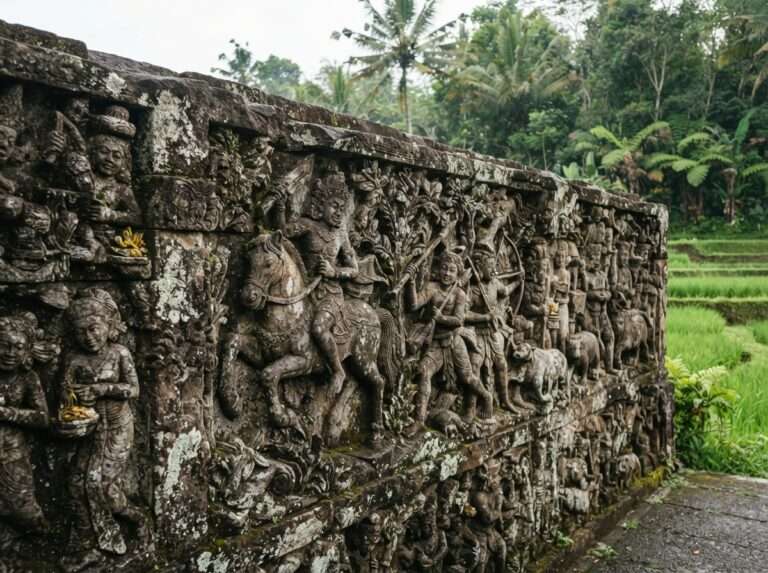
Yeh Pulu is the reason to add an extra 30 minutes. It is a 25 m frieze carved straight into a rock wall beside the rice fields, showing hunters, a horseman and scenes of village life, and it gets a fraction of Goa Gajah’s visitors. You reach it by a short walk from its own car park in Bedulu. Seen together, the two sites show both the sacred and the everyday side of old Bali.
| Best for | The Elephant Cave's carved demon mouth, old bathing pools, and a quiet rock frieze nearby |
| Location | Bedulu, Blahbatuh, Gianyar. Yeh Pulu is about 1 km south-east of Goa Gajah |
| Distance ring | 5 to 15 km (14.6 km to Goa Gajah, 14.8 km to Yeh Pulu) |
| Effort | Steps down to Goa Gajah. A 10-minute walk through rice fields to the Yeh Pulu frieze |
| In March | The stream path at Goa Gajah gets slippery, and Yeh Pulu's field path can flood after storms |
09
Tibumana Waterfall
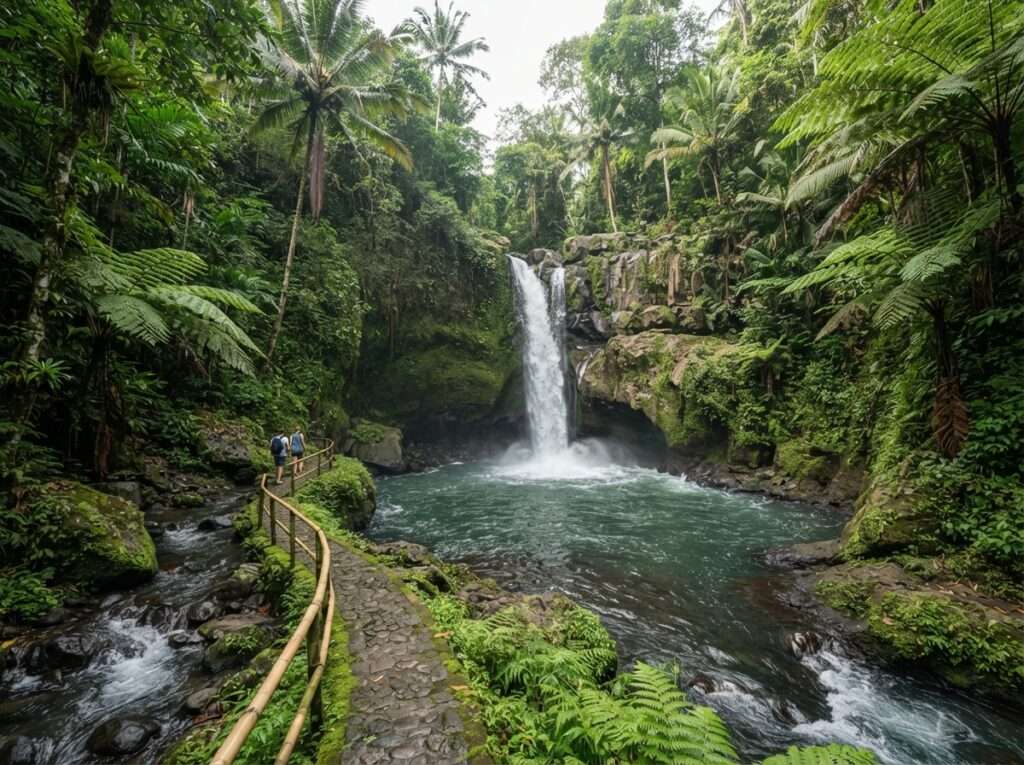
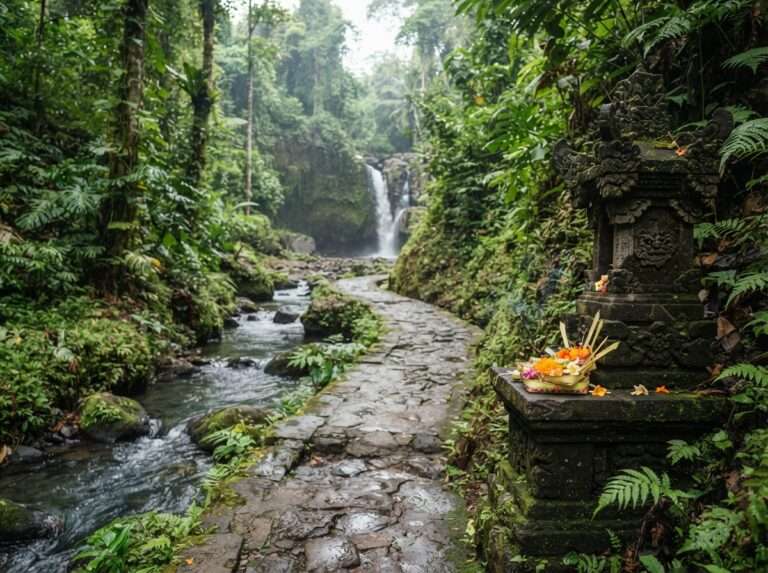
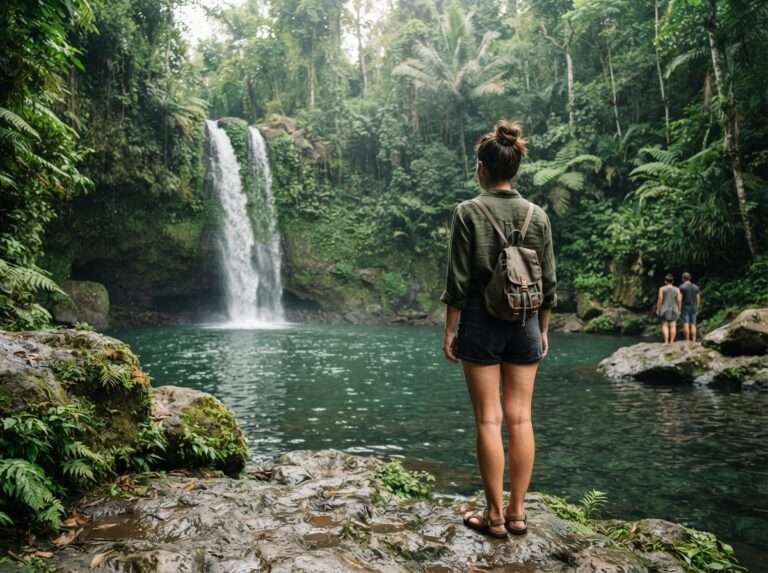
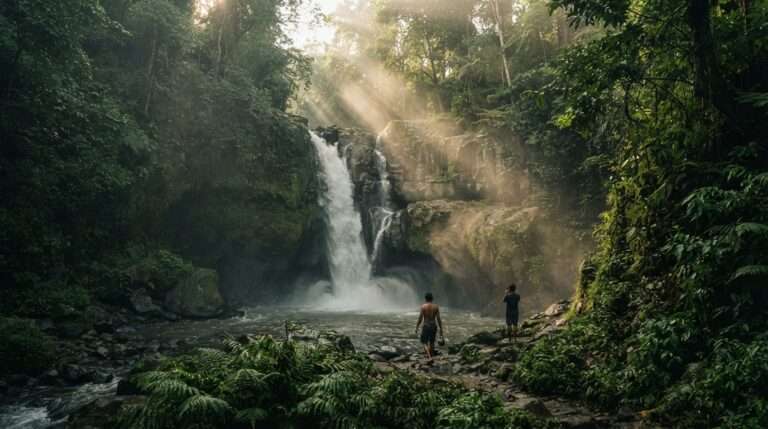
Tibumana is a single curtain of water dropping into a round pool, framed by ferns and palms. It takes about 10 minutes to reach on a paved path past a small shrine and a stream, which makes it one of the easiest waterfalls near Ubud and Tampaksiring. The road there winds through Bangli villages, which is why 16 km takes 30 to 40 minutes.
In March it looks its best and is least swimmable. The pool churns after rain, and staff can close the lower area when the river is high. Go in the morning, look at the colour of the water before you get in, and keep to the paths. Kanto Lampo waterfall is about 5 km south and Tukad Cepung about 17 km north-east, roughly 40 minutes, so waterfall lovers can link two in a morning.
| Best for | An easy waterfall walk through jungle, a good first waterfall for families |
| Location | Apuan village, Susut, Bangli |
| Distance ring | 15 to 25 km (16.2 km by road, through village lanes) |
| Effort | About 10 minutes on a paved path with some steps |
| In March | The fall is at full power. Swimming is unsafe after heavy rain, and it may close |
10
Penglipuran Village
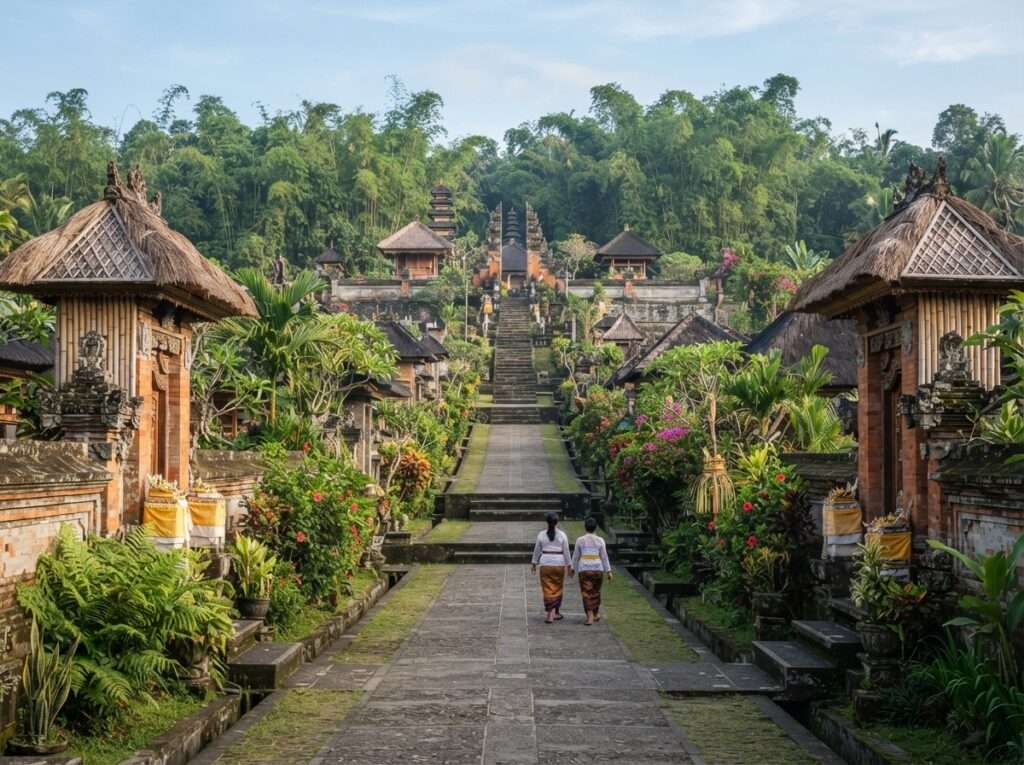
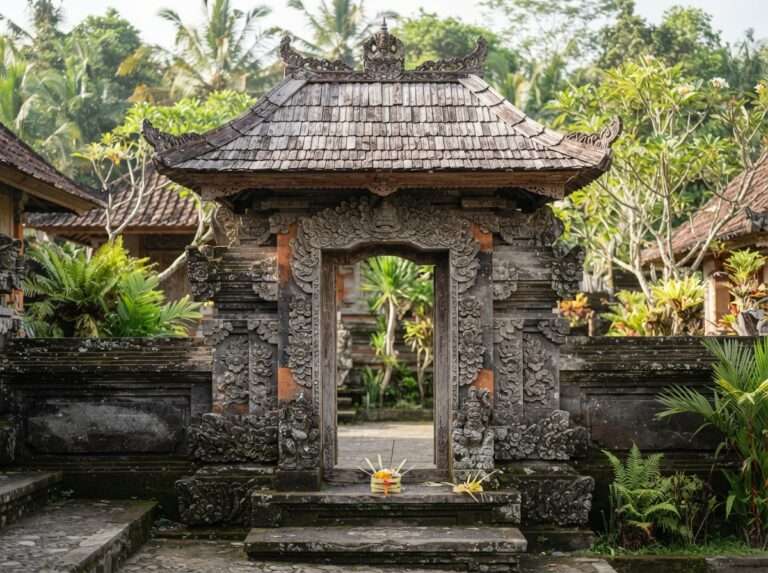
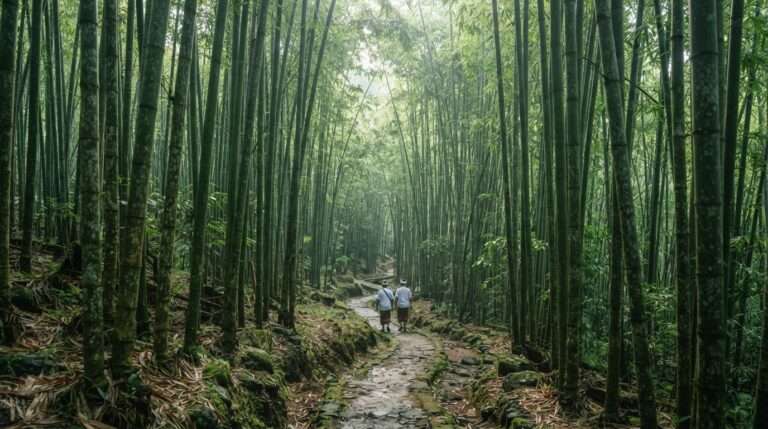
Penglipuran shows you a Balinese village the way it was planned. One straight, stepped street runs uphill, lined on both sides by family compounds behind identical bamboo-roofed gates. Cars are banned from the main street, so you walk it. At the top is the village temple, and behind the houses is a bamboo forest that villagers have protected for generations.
It is a working village, not a museum. Families live behind those gates, and some will invite you in to see the kitchen and the family shrine, often with loloh cemcem, a sour herbal drink made in the village, for sale. Go early, because it fills with school and tour groups by late morning. It sits on the route to Kintamani, so it fits well into a full-day loop with the Batur viewpoint.
| Best for | A traditional village layout and a walk in a bamboo forest |
| Location | Kubu, Bangli, on the road up toward Kintamani |
| Distance ring | 15 to 25 km (17.1 km by road) |
| Visiting | A living village. Some households open their compounds and sell snacks and drinks |
| In March | Expect domestic tour groups during the 6 to 15 March holiday run |
11
Penelokan (Mount Batur Viewpoint)
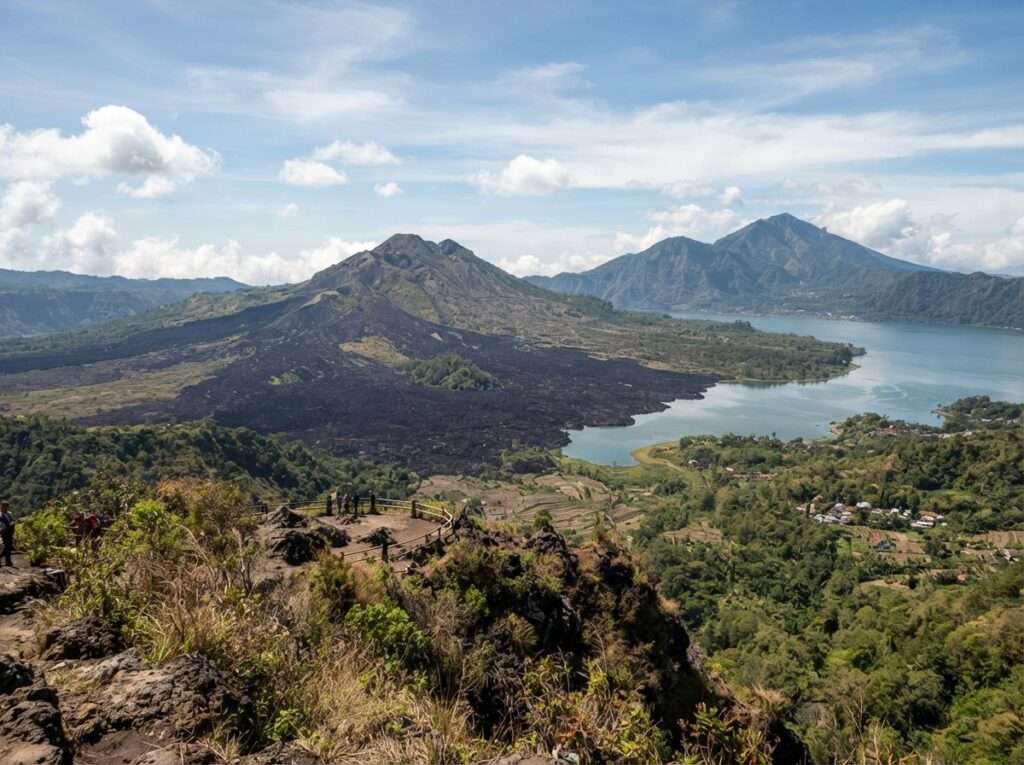
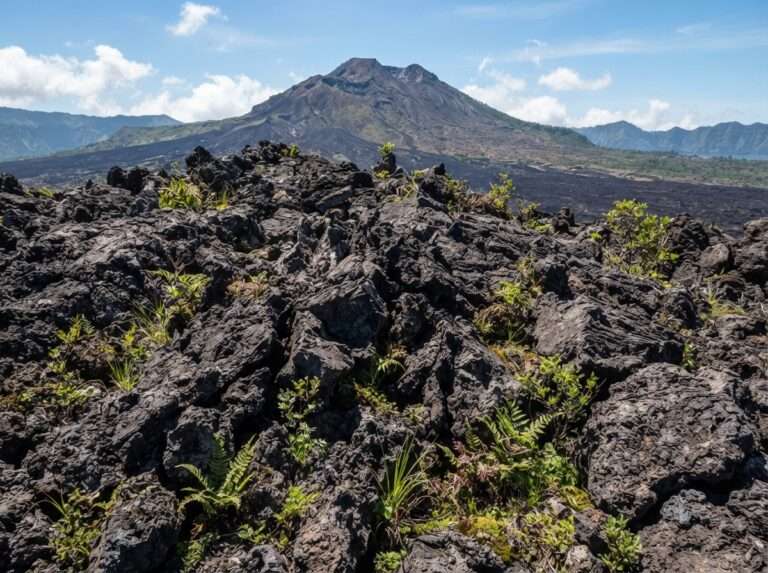
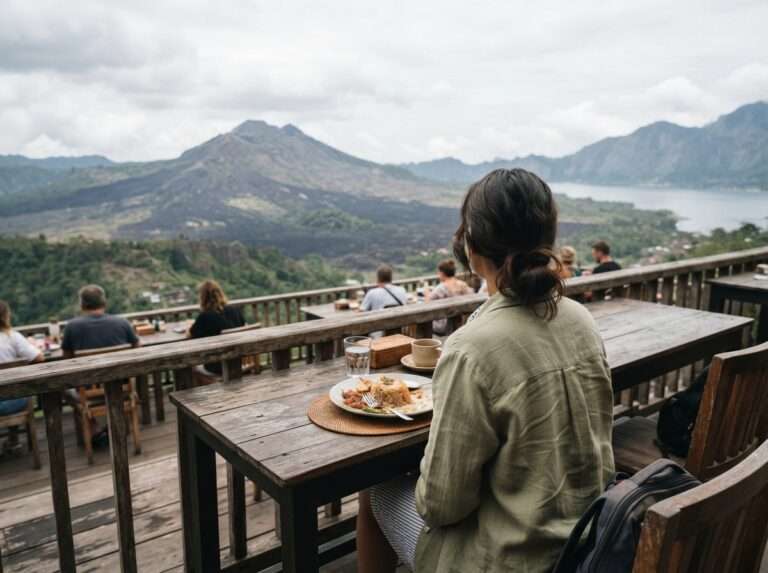
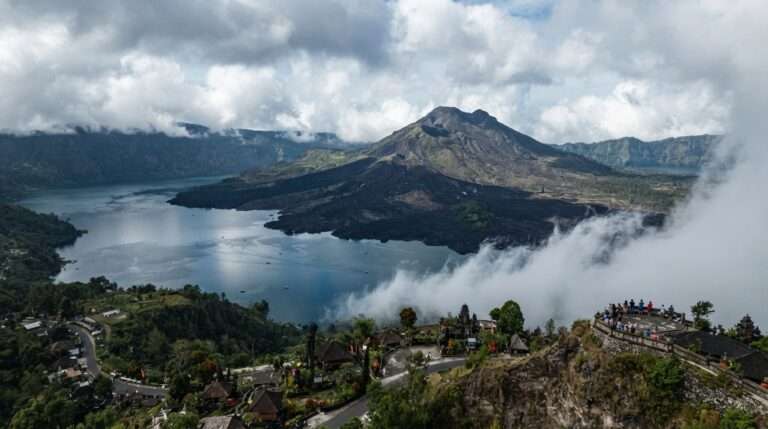
Penelokan means “place to look”, and it lives up to the name. The road climbs from Tampaksiring through fruit and vegetable farms to the rim of the Batur caldera, and the whole basin opens up at once. Mount Batur’s black lava fields sit in the middle, with Lake Batur curving around its eastern side. On a clear day you can see Mount Abang and the tip of Agung behind.
It is noticeably cooler up here, so bring a light layer. The rim road is lined with buffet restaurants facing the view, which makes Penelokan the natural lunch stop on a full-day loop. Pura Ulun Danu Batur, one of Bali’s most important temples, is 5 km further along the rim. This page does not cover the sunrise trek. Our Mount Batur guide has the trek, fees and best months.
| Best for | The view across the Batur caldera to the volcano and Lake Batur |
| Location | Penelokan, Kintamani, Bangli, on the caldera rim |
| Distance ring | 15 to 25 km (18.8 km by road, uphill) |
| Visiting | Viewpoint terraces and cafés line the rim road. Kintamani charges a visitor fee at the checkpoint |
| In March | Cloud often covers the rim by late morning. Arrive before 10 am for the clearest view |
12
Ubud Monkey Forest
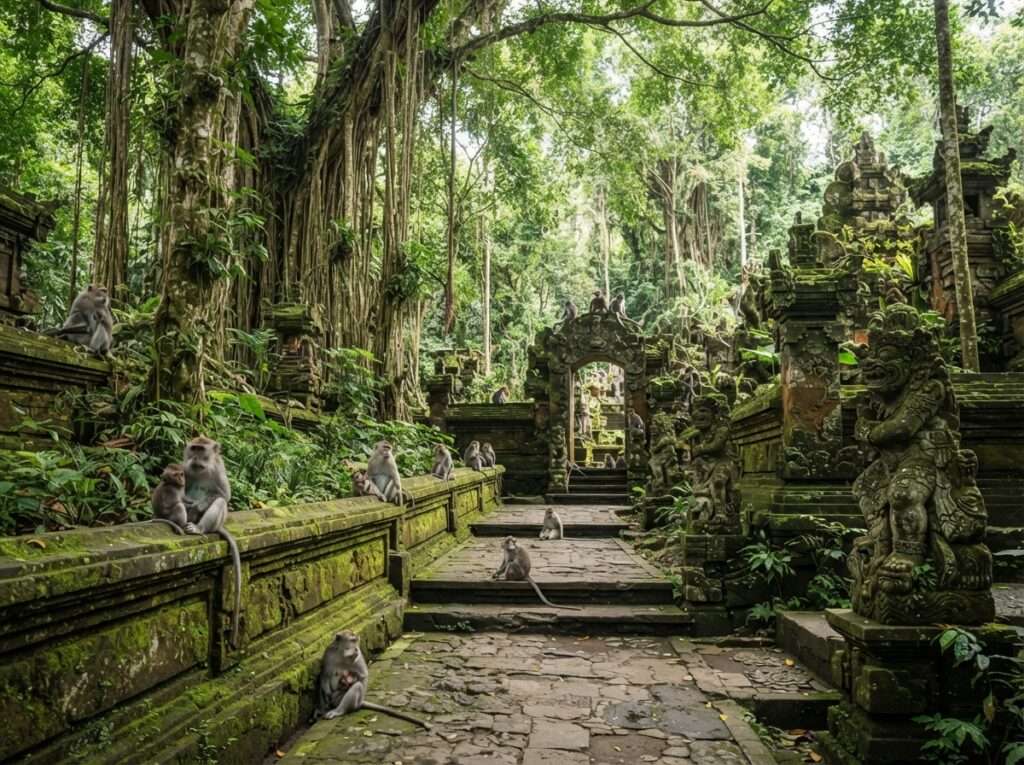
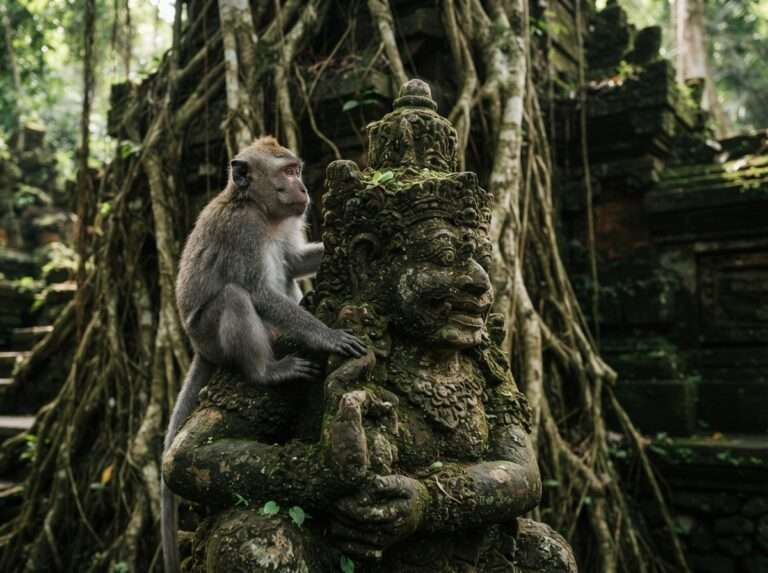
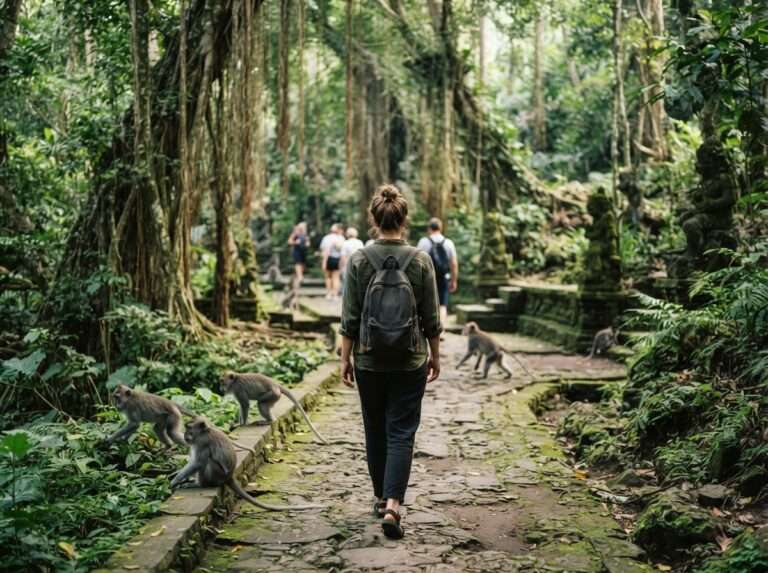
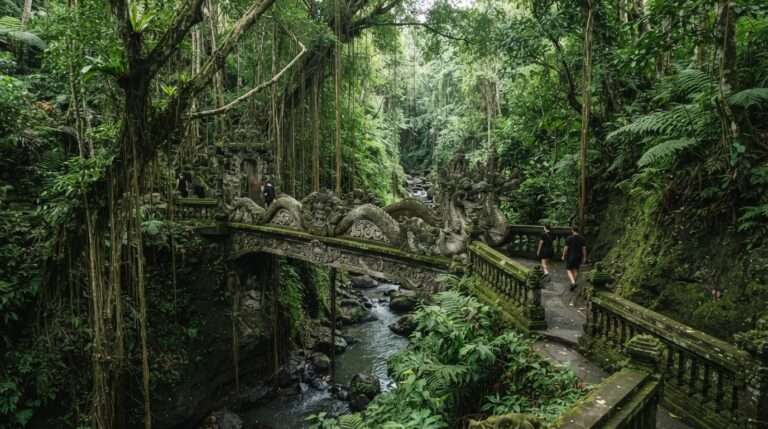
The Sacred Monkey Forest Sanctuary is the stop most people already have on their list, and it makes a good end to a day that starts at Tirta Empul because you finish in Ubud. Inside are three temples, a ravine with a dragon bridge and hundreds of long-tailed macaques living in troops across the forest. The forest is run by the village of Padangtegal, and it is protected as sacred land.
The monkeys are wild and quick. They grab water bottles, hats and anything that rustles. If one climbs on you, stay calm and let it jump off. Ubud Palace is about a 15-minute walk north, and the Campuhan Ridge Walk starts a short walk west of the palace if you have energy left.
Our guide to the Ubud Monkey Forest covers the fees and opening hours, and our list of places to visit in Ubud has the rest of the town.
| Best for | Long-tailed macaques, giant banyan trees and moss-covered temples |
| Location | Jalan Monkey Forest, Padangtegal, Ubud |
| Distance ring | 15 to 25 km (19.2 km by road) |
| Tips | Keep food, sunglasses and loose items in a closed bag. Do not touch or feed the monkeys |
| In March | Paths and stairs are wet and the forest stays shaded, so it is a good rainy afternoon stop |
13
Tukad Cepung Waterfall
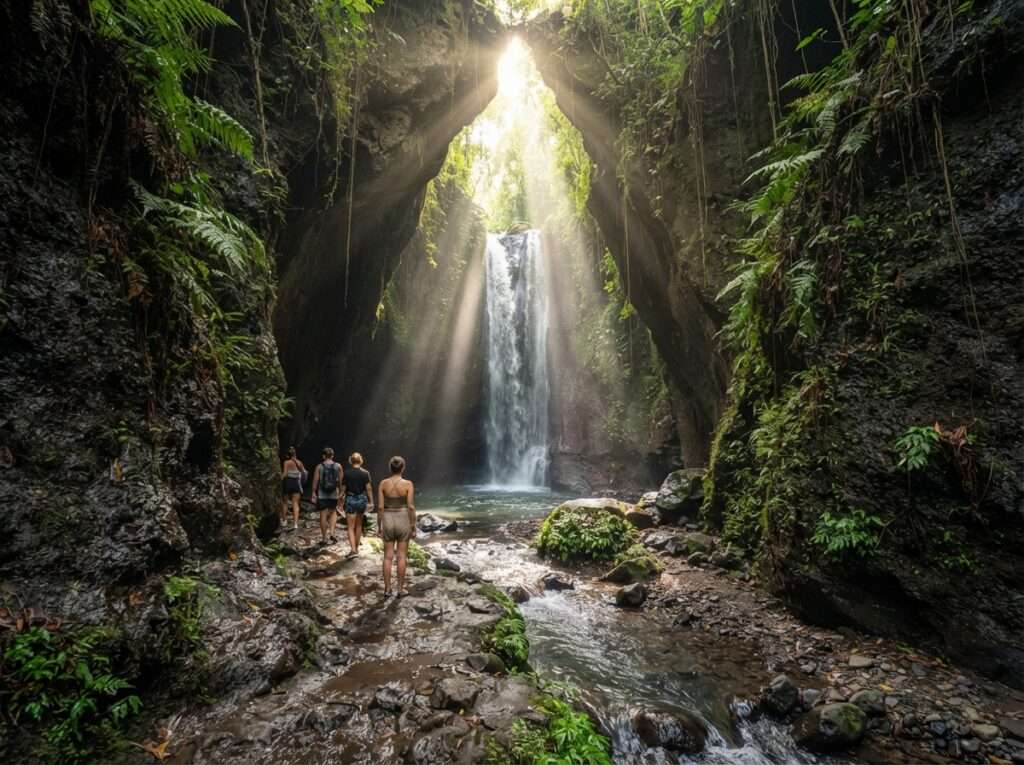
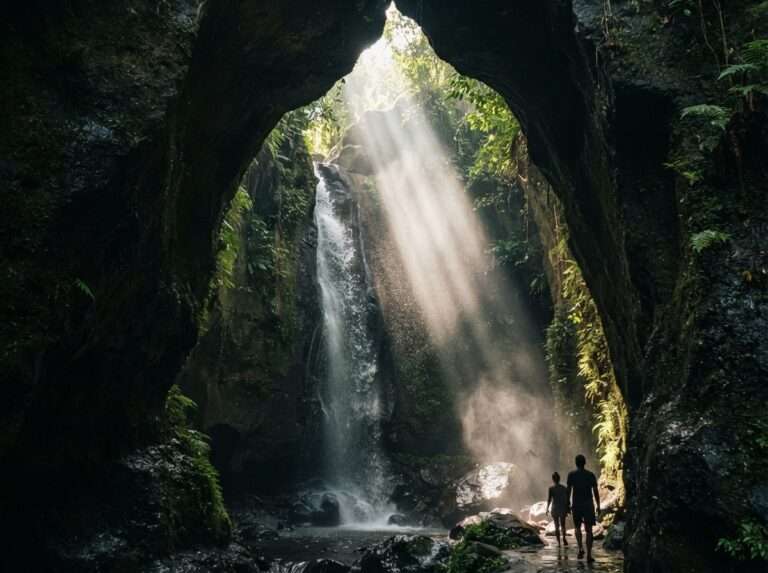
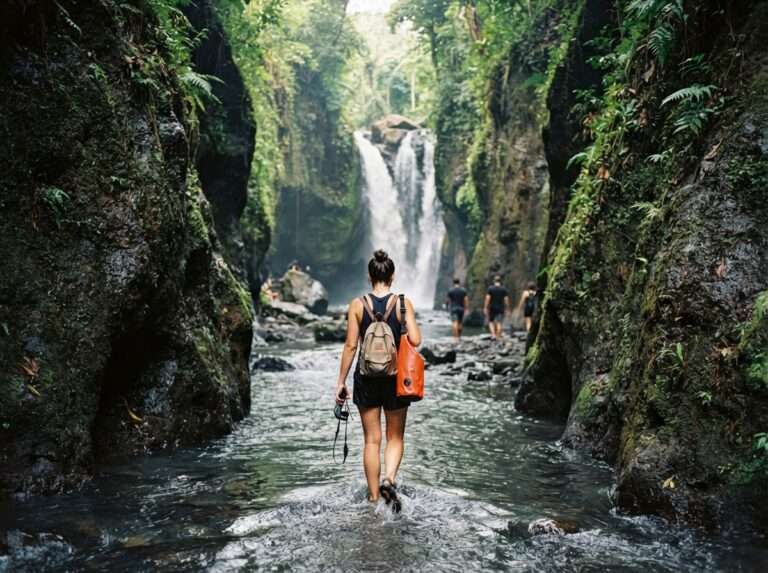
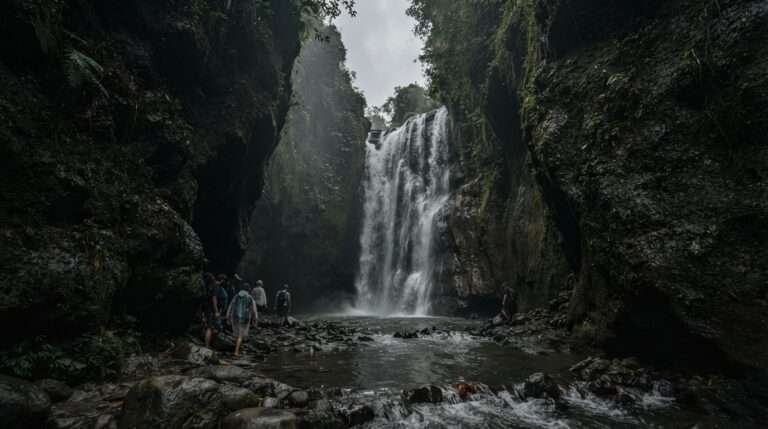
Tukad Cepung is one of Bali’s most photographed waterfalls because of what happens inside it. The fall drops through a hole into a cave-like canyon, and on clear mornings the sun shines down through the opening and lights up the spray in beams. The best window is roughly 9 to 11 am, and only on a sunny day.
March is a gamble here. Many mornings are cloudy, so the beams may not appear, and heavy rain upstream closes the canyon for safety. Ask your driver to check that it is open before you set off. You will get wet to your knees crossing the stream, so wear sandals and leave your phone in a dry bag. Directories list it as 8.4 km from Tirta Empul, which is a straight line. By road it is 21.1 km. Our Tukad Cepung waterfall guide has the walk-in detail.
| Best for | A waterfall inside a narrow rock canyon, with beams of light on sunny mornings |
| Location | Tembuku, Bangli |
| Distance ring | 15 to 25 km (21.1 km by road) |
| Effort | Steps down, then wading through a shallow stream into the canyon |
| In March | Overcast skies often mean no light beams, and the site closes when the stream is high |
14
Tegenungan Waterfall
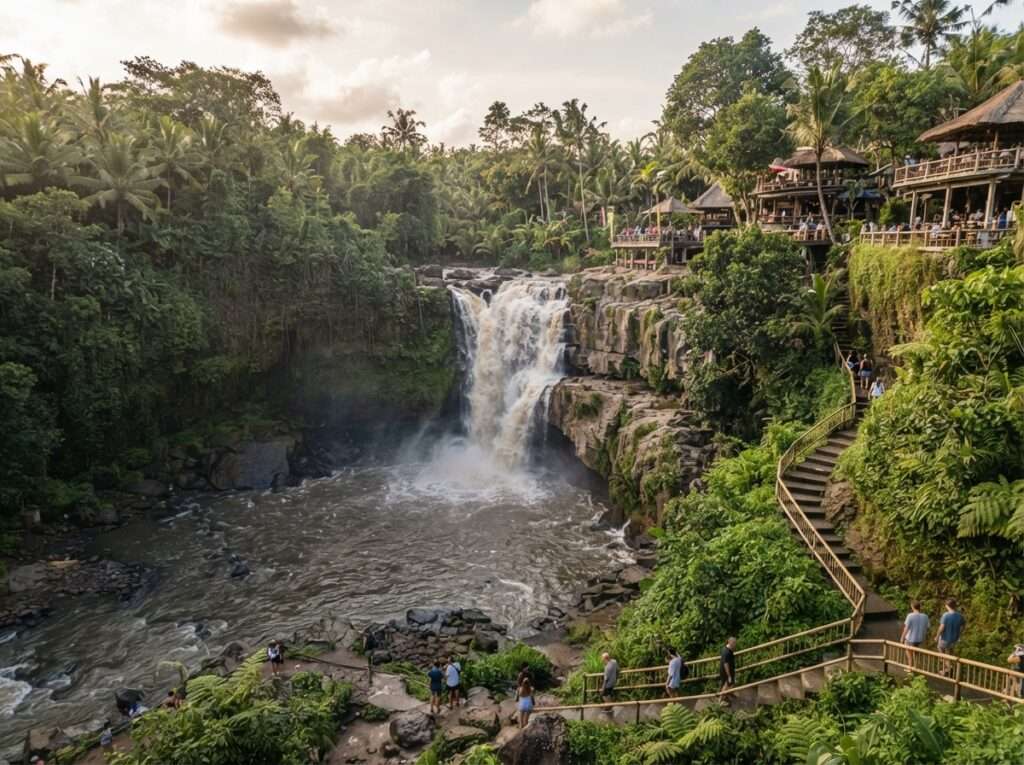
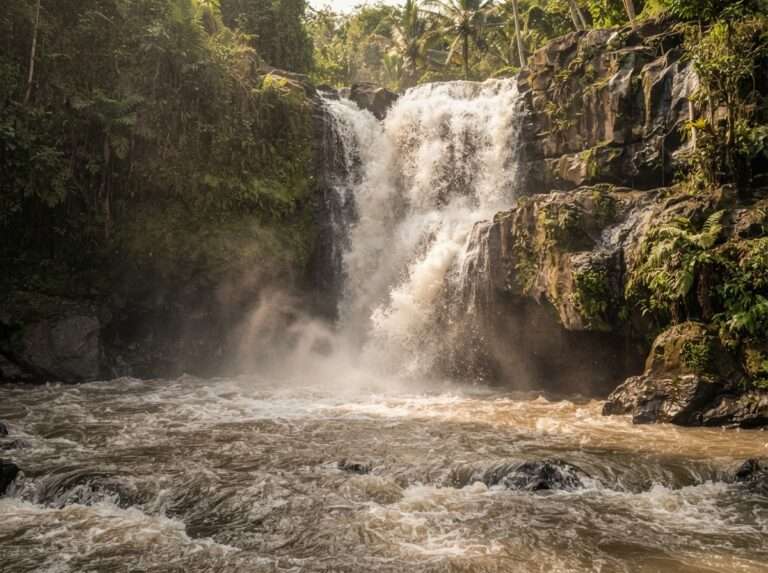
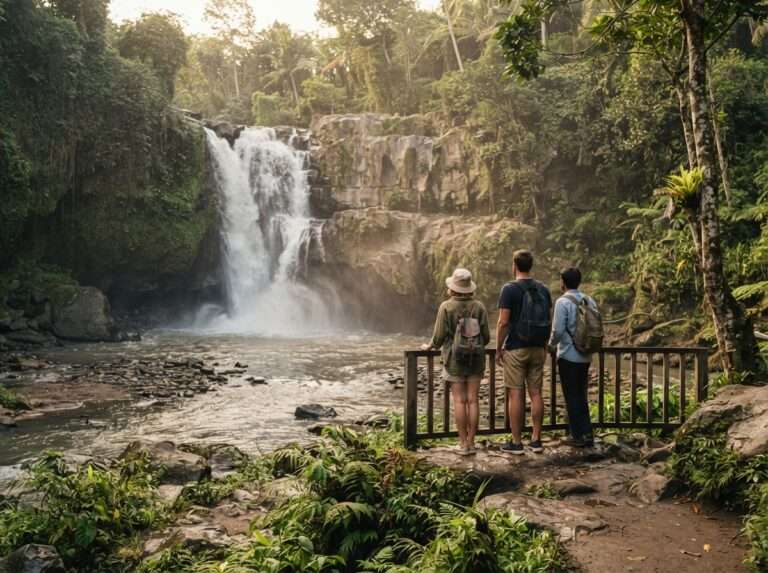
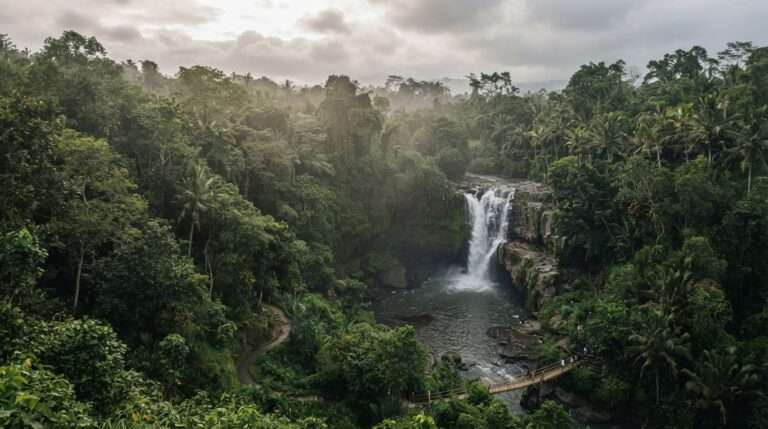
Tegenungan is the big, easy-to-reach waterfall south of Ubud and the furthest stop in this guide. A broad fall pours over a rock lip into a pool surrounded by jungle. You can see it from the viewpoint cafés at the top, or take the stairs down to the river bank. It is busier than Tibumana, and the swing and photo platforms around it charge separately.
It suits travellers heading back south to Sanur, Seminyak or the airport after a day at Tirta Empul, because it sits on the way. In March the water often runs brown and fast. Watch from the bank on those days. Our Tegenungan waterfall guide covers the fee and the best viewpoints. If you want a shopping stop on the same road, Sukawati Art Market is about 4 km further south (24.7 km from Tirta Empul), with sarongs, carvings and kites. See our Sukawati Art Market guide for bargaining tips.
| Best for | A wide, powerful waterfall with an easy viewpoint above |
| Location | On the Petanu river, reached from Kemenuh (Sukawati) or the Blangsinga side (Blahbatuh) |
| Distance ring | 15 to 25 km (21.5 km by road) |
| Effort | A long flight of steps down to the pool and back up |
| In March | Brown, fast water after rain. Do not swim when the flow is strong |
Tirta Empul in 60 Seconds
Tirta Empul is a Hindu water temple built around a holy spring in Manukaya village, Tampaksiring. Its name means “bubbling water”, and the spring has been sacred since at least the 10th century. Balinese Hindus come to bathe under the carved spouts of its long pool in a ritual called melukat, moving from spout to spout with an offering and a prayer at each one. Visitors can join after renting a bathing sarong. A few spouts are used for purification after funerals, so staff ask visitors to skip those.
The temple opens at 8 am. For tickets, timings, the bathing order and what to wear, read our Tirta Empul temple guide. For the history and the legend of the spring, see the story of Tirta Empul. This page is about everything around it.
Visiting Tirta Empul and Nearby Places in March 2027
March is the tail of Bali’s wet season. Mornings are usually clear, cloud builds over the hills by midday, and the heaviest showers come in the afternoon. Tampaksiring sits in the cooler uplands, so it feels fresher than the coast. Plan every outdoor stop for the morning and keep the Monkey Forest or a café for the afternoon.
March 2027 also has a calendar you need to plan around. These dates come from Indonesia’s joint ministerial decree on 2027 national holidays and collective leave.
| Date (2027) | What happens | What it means for you |
|---|---|---|
| Early March, by village | Melasti processions carry temple objects to the sea or to holy springs for cleansing | Expect processions on the roads and, at spring temples, possible closures to visitors for part of a day |
| Sunday 7 March, evening | Pengerupukan, the eve of Nyepi, with ogoh-ogoh demon effigies paraded through every village | Roads close in the evening. Watch a parade from your village and be back at your hotel early |
| Monday 8 March | Nyepi, the Day of Silence and Saka New Year 1949 | All of Bali stops for 24 hours from 6 am. Temples, shops and roads close, the airport shuts, and guests stay inside their hotels |
| Tuesday 9 March | Ngembak Geni, the day after Nyepi, and a collective leave day for Idul Fitri | Life restarts. Temples reopen, but expect visiting families |
| 10 and 11 March | Idul Fitri | National holiday. Domestic travellers fill Bali’s roads and big sights |
| Friday 12 and Monday 15 March | Collective leave days | With the weekends, the holiday run lasts from 6 to 15 March |
Two practical points follow from this. First, if you are flying in, do not land on 8 March, because the airport does not operate that day, and if you arrive on the 7th, your driver needs to have you at the hotel before the evening road closures. Second, if you want Tirta Empul and Tegallalang without crowds, travel in the first few days of March or from 16 March onward. Galungan, the other big festival, does not fall in March in 2027. It falls on 13 January and 11 August.
Late March brings one more long weekend: Good Friday is a national holiday on 26 March 2027, with a collective leave day on Thursday 25 March and Easter on Sunday 28 March, so expect busier roads again from 25 to 28 March.
Rain also changes some stops. Waterfalls are at full flow, swimming is often unsafe, and Tukad Cepung and Tibumana can close at short notice. Rice terrace and temple paths turn slippery. None of this is a reason to skip March. The fields are green, room rates are lower than in July and August outside the holiday week, and early starts beat both the rain and the crowds.
Half-Day and Full-Day Routes From Tirta Empul
You do not need to see all 14 places. Pick one of these three routes based on the time you have and what you like. Each one starts at Tirta Empul at 8 am, which means leaving Ubud by 7:15 am.
| Route | Stops in order | Total time | Driving | Best for | In March |
|---|---|---|---|---|---|
| Water temples half day | Tirta Empul, Gunung Kawi, Sebatu, Tegallalang | About 5 hours, back in Ubud by about 1.30 pm | About 12 km between stops after Tirta Empul, about 22 km if you end in Ubud | First-timers, families, anyone short on time | Done before the afternoon rain |
| Heritage half day | Tirta Empul, Penataran Sasih, Pusering Jagat, Goa Gajah, Yeh Pulu | About 5 to 6 hours | About 15 km to Yeh Pulu, 20 km if you end in Ubud, mostly downhill | History lovers, repeat visitors to Bali | Check for pre-Nyepi ceremonies at the Pejeng temples |
| Highlands full day | Tirta Empul, Gunung Kawi, Penelokan (lunch), Penglipuran, Tibumana | About 9 hours | About 53 km to Tibumana, about 70 km if you end in Ubud | Travellers with a full day and a driver | Drive straight up after Gunung Kawi to reach the rim by about 11 am, as cloud often builds by late morning. Penglipuran and the waterfall come after lunch, the waterfall only if it is open |
The water temples route is the one most travellers should do. It keeps all driving inside a small corner of Tampaksiring and Tegallalang, it gives you the three sacred springs back to back, and it ends at the rice terraces before the light gets harsh. For food on any of these routes, our guide to restaurants near Tirta Empul lists warungs by distance, including vegetarian options.
How to Plan a Morning at Tirta Empul and Gunung Kawi
This is the simplest way to see the two best sites near the temple in one morning.
- Book a car and driver the evening before for a 7:15 am pickup in Ubud. Agree the stops in advance so you are not taken to shopping stops you did not ask for.
- Pack for water and steps. Bring a change of clothes and a towel if you plan to bathe, a sarong and sash if you have your own, cash in small notes and a refillable water bottle.
- Arrive at Tirta Empul at 8 am and go straight to the bathing pool before the tour groups arrive from about 10 am. Allow 1.5 hours if you bathe and 45 minutes if you only walk the courtyards.
- Look up at the Presidential Palace from the west side of the temple before you leave. It takes five minutes.
- Drive 5 to 10 minutes south to Gunung Kawi. Walk down the 300 steps to the shrines, and allow an hour for the visit and the climb back.
- Continue 15 minutes to Gunung Kawi Sebatu for the quiet water garden, then 10 minutes on to Tegallalang if you still have energy.
- Eat by noon and head back before the afternoon showers, especially in March.
How to Get to Tirta Empul
Tirta Empul is about 20 km north of central Ubud, a 35 to 45 minute drive on the road through Tegallalang or the road through Pejeng. From Ngurah Rai Airport and the southern beach areas (Kuta, Seminyak, Sanur, Nusa Dua) it is about 40 to 55 km by road (about 52 km from the airport), which takes 1.5 to 2 hours depending on traffic. There is no useful public bus.
Most travellers hire a car with a driver for the day. It is the easiest choice because the sights in this guide are spread across back roads and you need someone to wait at each stop. Ride-hailing apps can get you there, but finding a ride back from Tampaksiring is hard, so arrange the return before you go. Riding a scooter yourself is possible from Ubud if you are experienced and licensed, but the hill roads are steep and slippery in the rain. For a ready-made itinerary that includes this day with a driver, look at our Bali tour packages.
Temple Etiquette Near Tirta Empul
Every temple in this guide is a working place of worship, and the same simple rules apply at all of them.
- Cover your legs with a sarong and tie a sash at the waist. Most temples lend one at the gate, and Tirta Empul has a separate bathing sarong for the pool.
- Step around the small palm-leaf offerings (canang sari) on the ground and never step over a person praying.
- Keep your head lower than the priest’s and do not climb on shrines or walls for photos.
- Balinese custom asks women who are menstruating not to enter temples, and people with open wounds are asked the same.
Tirta Empul or Tirta Gangga? Make Sure You Are in the Right Place
Tirta Empul and Tirta Gangga are different places about two hours apart. Tirta Empul is the holy spring temple in Tampaksiring, Gianyar, covered on this page. Tirta Gangga is a former royal water palace with pools and fountains in Karangasem, East Bali. Some lists of things near Tirta Empul include it, but you cannot fit both into a relaxed half day. Further east, the mother temple at Besakih is about 37 km from Tirta Empul by road. It is a full day in itself, so see our Besakih temple guide rather than adding it to this loop.
How We Checked This Guide
This guide was researched in November 2026. We started from every place that competing guides, directories and maps list near Tirta Empul, then removed anything more than 25 km away by road (several popular lists include Ulun Danu Bratan, almost 60 km away in Tabanan, and even Surabaya in Java). Distances are road distances calculated with OSRM from the Tirta Empul car park at Manukaya, not straight-line distances. Drive times are estimates scaled up from routing times, not timed drives, and we will replace them with measured times after our ground team drives the loop. March 2027 dates come from Indonesia’s joint ministerial decree on 2027 national holidays and collective leave, and the Galungan dates from the 210-day Balinese pawukon calendar. Fees and opening hours change often, so we link to our dedicated guides for each site instead of repeating them here.
Planning Your Day Around Tirta Empul
The best places to visit near Tirta Empul are close together. The Presidential Palace, Gunung Kawi, Pura Mengening and Sebatu all sit within 5 km, and Tegallalang is 15 minutes beyond them, so one early morning covers the heart of Tampaksiring. Add Pejeng and Goa Gajah for history, or Penglipuran and Penelokan for the highlands. In March 2027, keep Nyepi on 8 March clear and avoid the 6 to 15 March holiday run if you can. For more ideas around the temple, see our things to do near Tirta Empul, temples in Tampaksiring and things to do in Tampaksiring. When you are ready to plan the whole trip, our Bali tour packages can build this day into your itinerary, and the Bali travel guide covers the rest of the island.
FAQs
14 paces to visit near tirta empul temple, bali
The closest attraction is Istana Tampaksiring, the Presidential Palace, which stands on the hill about 200 m west of the temple. You can see it from the temple's west courtyard, but entry to the palace grounds needs prior permission. The closest site you can walk around freely is Gunung Kawi Tampaksiring, 2 km away by road, with Pura Mengening about 2 km away, a 10-minute walk from Gunung Kawi. All three are in Tampaksiring and take less than 10 minutes to reach by car.
Gunung Kawi Tampaksiring is 2 km from Tirta Empul by road, a 5 to 10 minute drive south. From the car park you walk down about 300 steps through rice terraces to the ten 11th-century shrines carved into the cliffs of the Pakerisan river. Allow 1 to 1.5 hours including the climb back up. Do not confuse it with Gunung Kawi Sebatu, a separate water temple 5 km away in Sebatu village.
You can, but most people drive. Pura Mengening is about 2 km from Tirta Empul by road, roughly 25 to 30 minutes on foot along village roads with traffic and no proper pavement in places. By car or scooter it is 5 to 10 minutes. If you want to walk, go early in the morning, carry water and ask a local to point out the lane toward Saraseda, because signage is limited.
No. Nyepi, the Balinese Day of Silence, falls on Monday 8 March 2027, and every temple on the island closes for 24 hours from 6 am, Tirta Empul included. Roads close, shops shut, the airport stops operating and visitors must stay inside their hotels. The temple reopens on 9 March. The evening before, Sunday 7 March, villages parade ogoh-ogoh effigies, so plan to be at your hotel early.
Yes, with planning. March is the end of the wet season, so mornings are often clear and the showers come in the afternoon. The fields are green and the springs are full. In 2027, avoid 8 March for Nyepi and expect crowds from 6 to 15 March, when Idul Fitri on 10 and 11 March and collective leave days bring domestic travellers to Bali. The first days of March and the second half of the month are calmer.
Plan about 1.5 hours at Tirta Empul if you bathe in the pools and 45 minutes if you only look around. Gunung Kawi needs another 1 to 1.5 hours because of the steps, and Sebatu or Mengening about 45 minutes each. A half day of 4 to 5 hours covers Tirta Empul, Gunung Kawi, Sebatu and Tegallalang. Add Penglipuran and the Batur viewpoint and it becomes a full day of about 9 hours.
Yes. The Tegallalang rice terraces are 7.2 km from Tirta Empul by road, about 15 to 20 minutes. Arrive at Tirta Empul at 8 am, stop at Gunung Kawi or Sebatu on the way, and reach Tegallalang by late morning. You will be back in Ubud for lunch. In March the terrace paths are muddy, so wear shoes with grip and skip the steeper sections after rain.
Tirta Empul is about 20 km from central Ubud, a 35 to 45 minute drive depending on traffic and which road you take. The Tegallalang road passes the rice terraces, and the Pejeng road passes Goa Gajah and the old Pejeng temples, so you can go one way and return the other. From the airport or the southern beaches it takes 1.5 to 2 hours, so staying in Ubud makes an early start much easier.
Start at Tirta Empul at 8 am, because it is the busiest and the pools get crowded from about 10 am. Then drive 5 to 10 minutes south to Gunung Kawi while you still have energy for the 300 steps. Finish at Gunung Kawi Sebatu, 15 minutes away, which is quiet at any hour and sits on the road toward Tegallalang and Ubud. This order also keeps the hardest walk out of the midday heat.
Wear clothes that cover your shoulders and knees, and expect to tie a sarong and sash at every temple. Tirta Empul and Gunung Kawi lend them at the entrance, and smaller village temples like Mengening may not, so carrying your own saves time. If you plan to bathe at Tirta Empul, you rent a separate bathing sarong, and you should bring a change of clothes and a towel. Wear sandals with grip for the wet steps.
Yes, four within about 22 km by road. Tibumana in Apuan, Bangli, is the closest at 16.2 km, with a 10-minute paved walk to the pool. Kanto Lampo is 19.9 km away, Tukad Cepung, the canyon fall with light beams on sunny mornings, is 21.1 km, and the wide Tegenungan fall south of Ubud is 21.5 km. In March all four run at full flow, so swimming is often unsafe and Tukad Cepung can close after heavy rain.