8D / 7N
6% OFF


A Traveller's Guide to Colombo's Mosques
The most famous mosque in Colombo is Jami Ul-Alfar, the candy-striped Red Mosque in the Pettah bazaar, and it is the single image most travellers carry home. It is far from the only one worth your time. Colombo’s Muslim quarter has prayed, traded and rebuilt on this ground for more than a thousand years, and the city holds a run of mosques that reach from a 948 AD tombstone site to white-minaret shrines wrapped in pigeons. This guide ranks eight of them, with the history, the architecture and the practical details most pages skip: opening hours, dress code, and how to find your way into Pettah.
Key takeaways
- Start at Jami Ul-Alfar (the Red Mosque) in Pettah, the city’s red-and-white signature landmark, built between 1908 and 1909.
- Visit the Grand Mosque of Colombo on New Moor Street for the oldest story in the city, tied to a tombstone dated 948 AD found nearby.
- Dress modestly: cover your shoulders, arms and legs (long trousers or a long skirt, not shorts), women add a scarf over the head, and take your shoes off at the door.
- Go mid-morning on a weekday and skip Friday around midday, when mosques fill for Jummah prayers.
- Enter free of charge at every mosque here; a small donation towards upkeep is welcome, never required.
Sri Lanka
Sri Lanka
Best Time
December - April
Select Package Type
Best Selling Packages


8 Mosques in Colombo, Ranked by What to See
The eight mosques covered in this guide, from the Red Mosque and the Grand Mosque to quiet neighbourhood masjids, plus dress code, visiting hours and what is nearby.
Explore Popular Destination In Sri Lanka
01
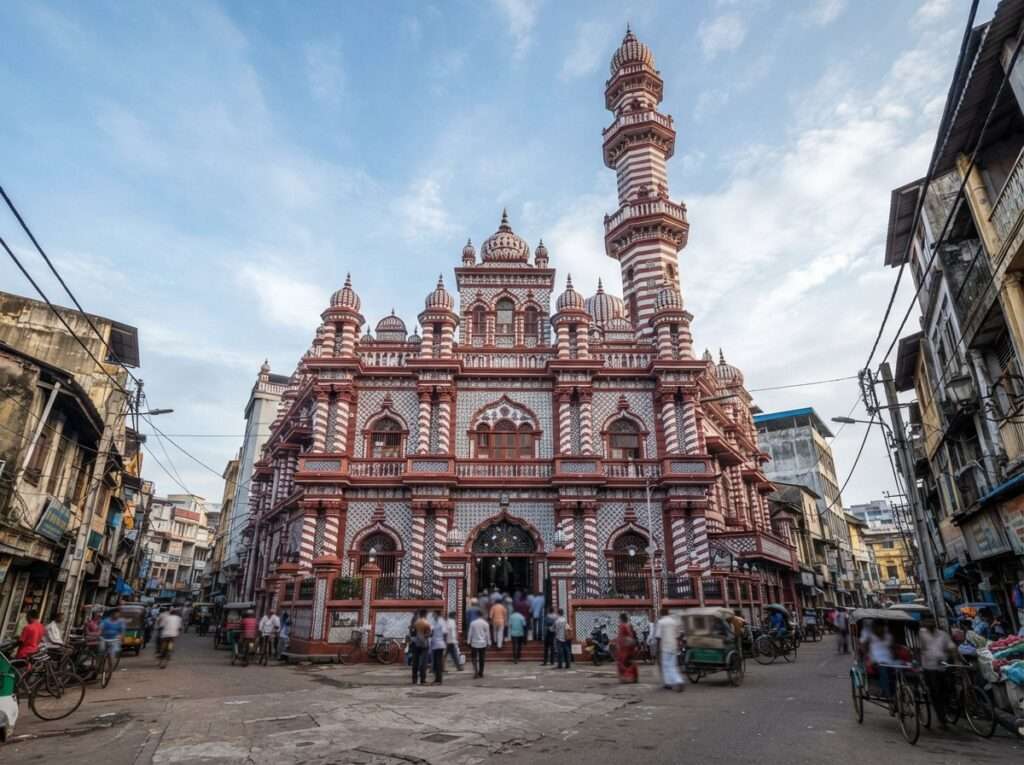
Jami Ul-Alfar, the Red Mosque: start here
Jami Ul-Alfar is the mosque that put Colombo on a thousand postcards. Locals call it Rathu Palliya, the red mosque, after the red-and-white brickwork that stripes it from the pavement to the top of its domes. It was built in the Pettah bazaar between 1908 and 1909 to a design by Habibu Labbe Saibu Labbe, and it borrows freely: Indo-Saracenic lines, Gothic arches, neo-classical detailing, and domes shaped like pomegranates. Sailors once used its outline to find the harbour. For years it ranked among the largest congregational mosques in the country, and a later wing pushed its capacity into the thousands.
You will find it on Second Cross Street, deep in the Pettah grid behind Colombo Fort station. Tourists are welcome outside the five daily prayer times, roughly 9 am to 5 pm from Saturday to Thursday. Fridays are given over to Jummah prayers, so plan to visit another day; tourists are usually only let in during the late afternoon, if at all. Entry is free. Cover shoulders, arms and legs, long trousers or a long skirt rather than shorts, women should carry a scarf, and leave your shoes at the rack by the door. Come early. The lanes around the mosque harden into a wall of market stalls by late morning, and the softer morning light does more for photos of the stripes.
Related Tour Packages


❮
❯
02
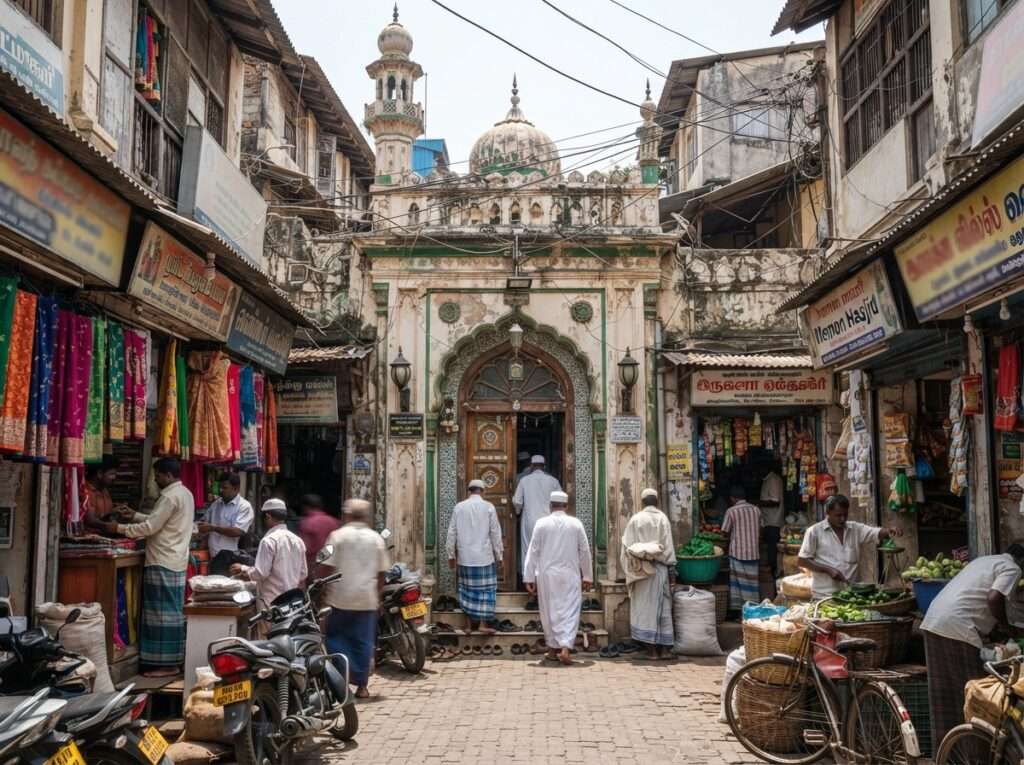
Grand Mosque of Colombo: the oldest
For sheer age, nothing in the city touches the Grand Mosque of Colombo on New Moor Street. A tombstone dated to 948 AD was found close by, which points to a Muslim presence here more than a thousand years before the capital took its modern shape. The mosque you see has been rebuilt more than once, including an early two-storey rebuild that was among the first of its kind, and a Muslim school grew up alongside it. This is a working congregational mosque rather than a polished monument, so visit quietly, keep to the courtyard, and ask before stepping anywhere near the prayer hall.
Related Tour Packages


❮
❯
03
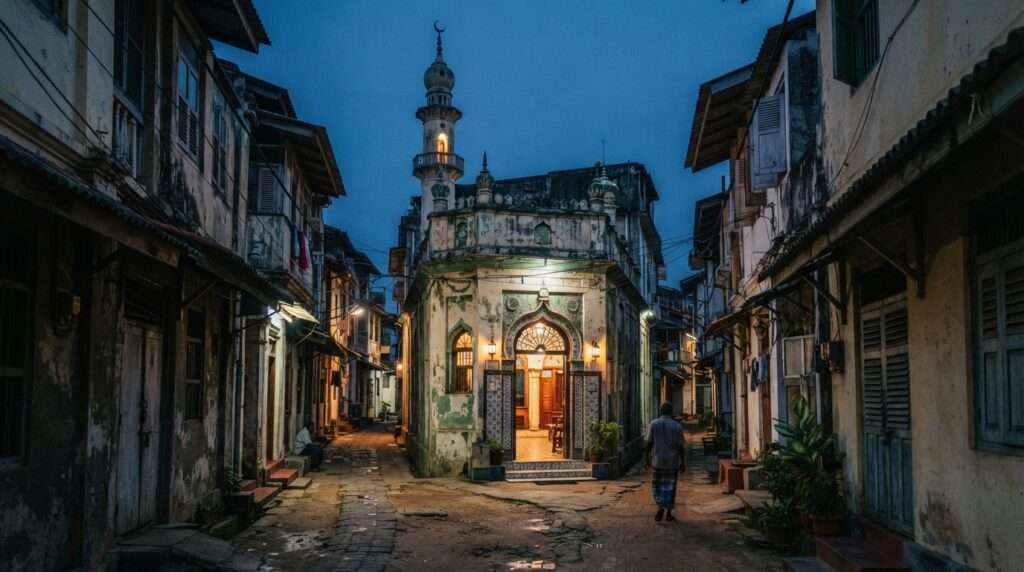
Dawatagaha Jumma Masjid: the shrine mosque
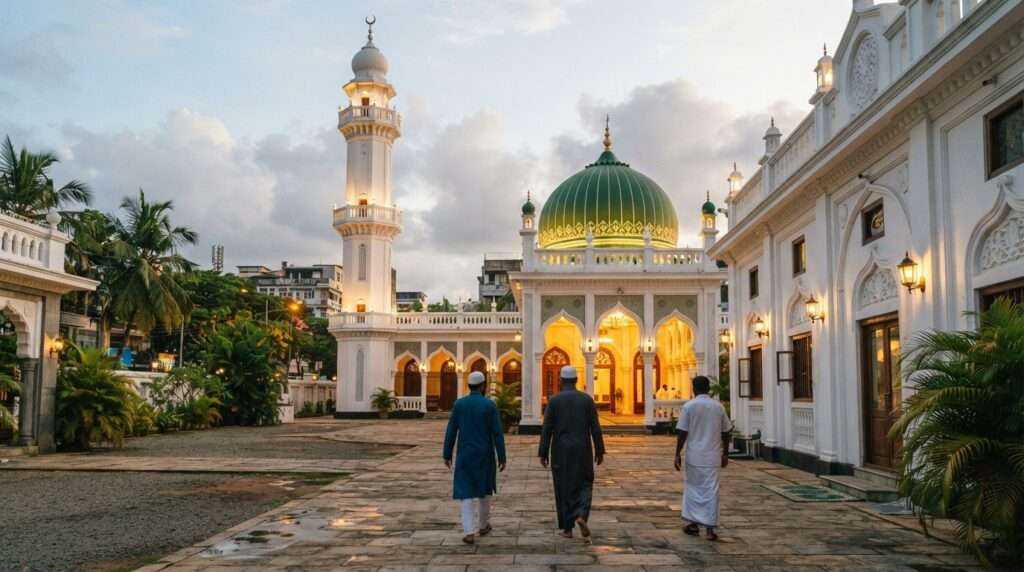
Near Lipton Circus in Colombo 7, Dawatagaha Jumma Masjid pairs a white minaret with the shrine of a revered saint, Sheikh Usman Siddique Ibn Abdurrahman (also known as Shaikh Usman Waliyullah), and that shrine draws people of several faiths who come to ask for help and healing. The courtyard is quiet between prayers and open to visitors through the day, which makes it one of the calmer places to pause in central Colombo. Pigeons settle in flocks across the forecourt, and that is exactly why photographers turn up at first light.
Related Tour Packages


❮
❯
Which mosques in Colombo are worth visiting?
If you only have a morning, see three. The Red Mosque (Jami Ul-Alfar) for its architecture, the Grand Mosque for its age, and Dawatagaha Jumma Masjid for its calm shrine courtyard. All three sit within a short tuk-tuk ride of Colombo Fort. The table below lines up all eight so you can match each mosque to the time you have and the thing you care about.
| Mosque | Area (postal zone) | Built / age | Known for |
|---|---|---|---|
| Jami Ul-Alfar (Red Mosque) | Pettah (Colombo 11) | 1908 to 1909 | Candy-striped red-and-white facade |
| Grand Mosque of Colombo | New Moor Street (Colombo 12) | Site linked to 948 AD | Oldest mosque heritage in the city |
| Dawatagaha Jumma Masjid | Lipton Circus (Colombo 7) | Around 200 years | White minaret and a revered saint’s shrine |
| Kollupitiya Jummah Mosque | Kollupitiya (Colombo 3) | Community mosque | Galle Road seafront neighbourhood |
| Maradana Mosque | Maradana (Colombo 10) | Local congregation | Busy mosque near Maradana station |
| Wekanda Jumma Mosque | Slave Island (Colombo 2) | Older neighbourhood mosque | Historic inner-city congregation |
| Memon Hanafi Masjid | Pettah (Colombo 11) | Trading-community mosque | Serves Colombo’s Memon merchants |
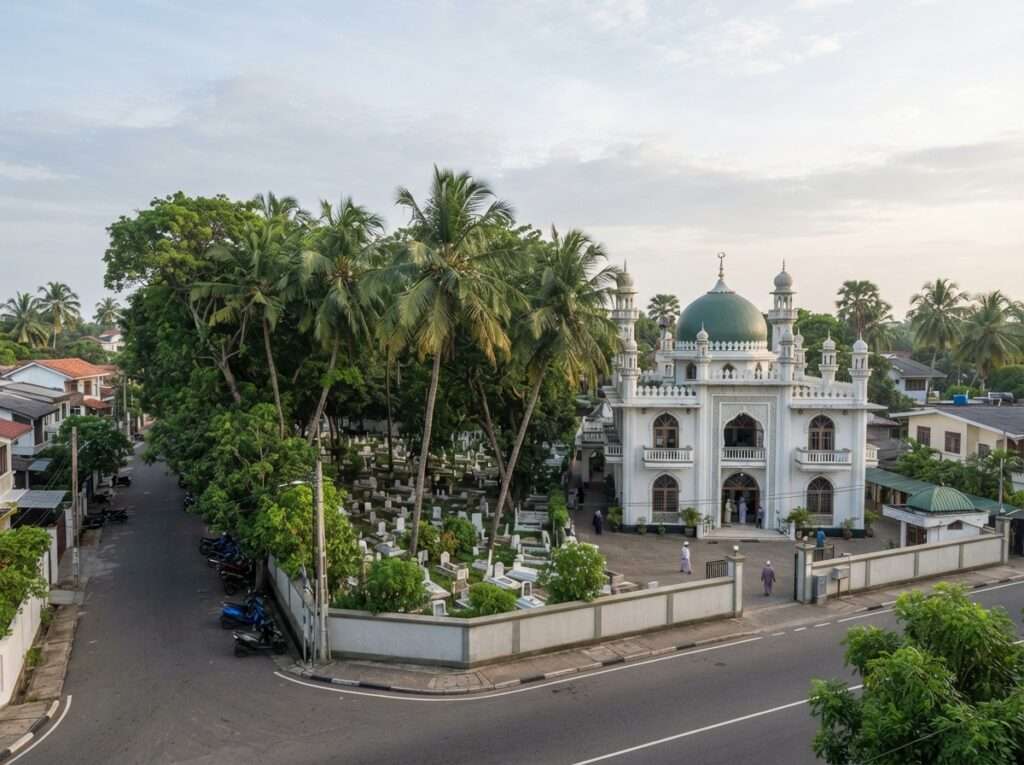
| Jawatte Mosque | Jawatte Road (Colombo 5) | Community mosque | Beside the large Jawatte Muslim cemetery |
More mosques worth seeing in Colombo
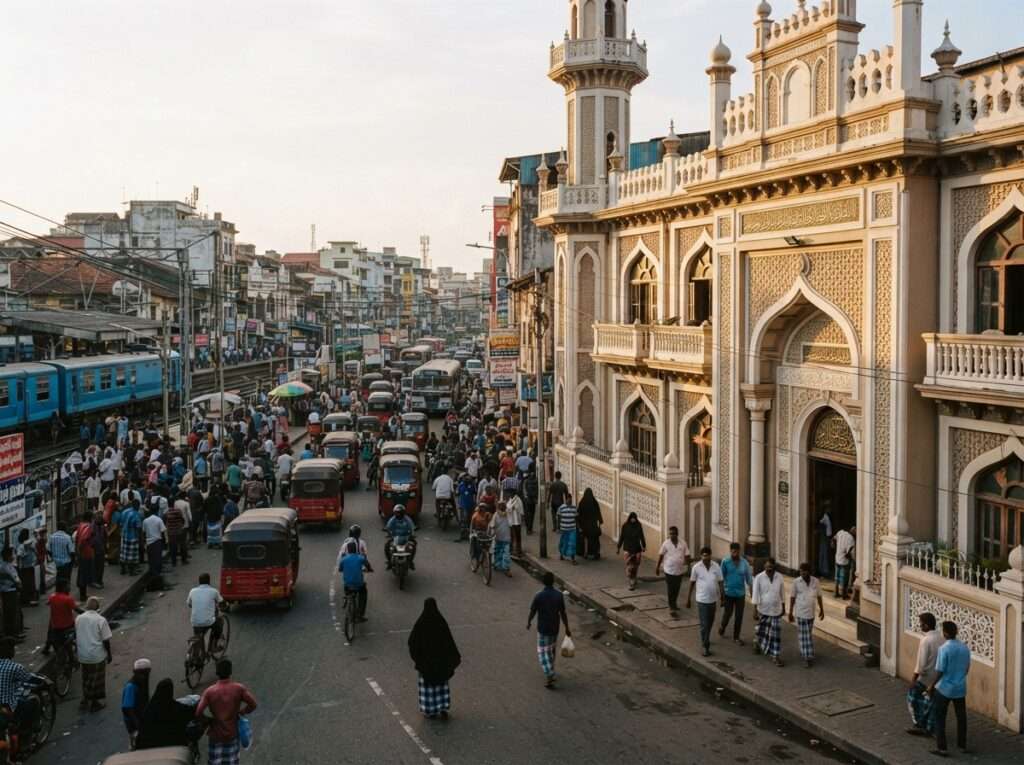
Beyond the famous three, a handful of neighbourhood mosques fill in the picture of Muslim Colombo. None are major tourist stops on their own, but together they show how the community threads through the city, from the old trading lanes to the quiet suburbs.
- Kollupitiya Jummah Mosque sits just off Galle Road in Colombo 3, serving the seafront neighbourhood between the city centre and the embassy district.
- Maradana Mosque anchors the crowded Maradana district beside the railway station, and fills fast for Friday prayers.
- Wekanda Jumma Mosque is one of the older mosques in Slave Island (Colombo 2), tucked into the lanes of this historic inner-city quarter.
- Memon Hanafi Masjid stands on Third Cross Street in Pettah, a block from the Red Mosque, and serves Colombo’s Memon trading families.
- Jawatte Mosque on Jawatte Road in Colombo 5 stands beside the large Jawatte Muslim burial ground, one of the main Islamic cemeteries in the city.
Visiting mosques in Colombo: dress code, hours and getting there
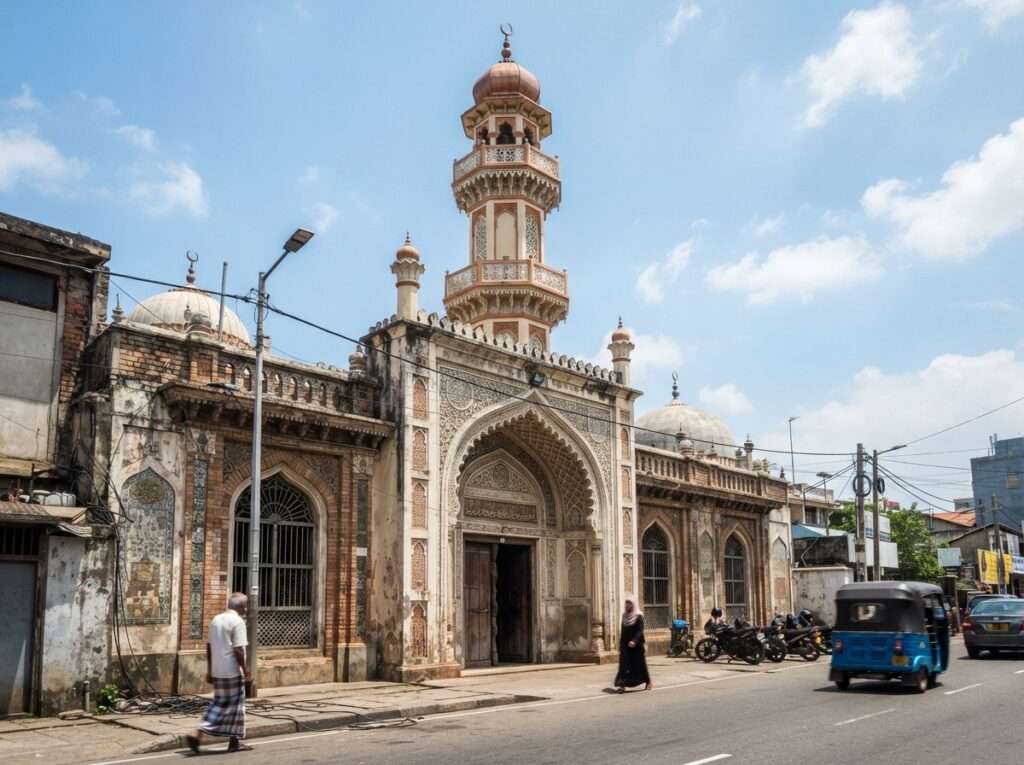
Mosques in Colombo welcome respectful visitors, non-Muslims included, as long as you come outside prayer times and dress the part. The rules hold whether you are at the Red Mosque or a quiet neighbourhood masjid.
| Practical | What to know |
|---|---|
| Dress code | Shoulders, arms and legs covered for everyone: long trousers or a long skirt, not shorts. Women cover the head with a scarf. Avoid vests and tight clothing. |
| Shoes | Removed at the entrance. There is usually a rack or shelf; socks are fine. |
| Visiting hours | Daytime, outside the five daily prayers. Mid-morning on a weekday is the easiest window. |
| Friday | Avoid roughly noon to 2 pm, when mosques fill for Jummah prayers. |
| Entry fee | Free at all of them. A small donation towards upkeep is appreciated, never required. |
| Photography | Usually fine in the courtyards. Ask before photographing people praying or the interior of the prayer hall. |
| Getting to Pettah | The Red Mosque is a 10 minute walk or a short tuk-tuk from Colombo Fort station. Pettah is a dense market, so go on foot once you are close. |
Things to see near the mosques
The best mosques cluster in and around Pettah and Fort, so you can fold them into a half-day on foot. Pettah itself is a market maze worth an hour on its own: the Khan Clock Tower, the covered bazaar lanes, and the restored Old Dutch Hospital in Fort, now a row of cafes and shops.
A short ride south brings you to the Gangaramaya Temple on Beira Lake, Galle Face Green for the sea breeze at dusk, and the Colombo Lotus Tower for the view over the city. History fans should keep an hour for the Colombo National Museum, and Independence Square makes a calm end to the day. For a full run-down, see our guide to the best places to visit in Colombo and the wider things to see in Colombo.
Making the most of Colombo's mosques
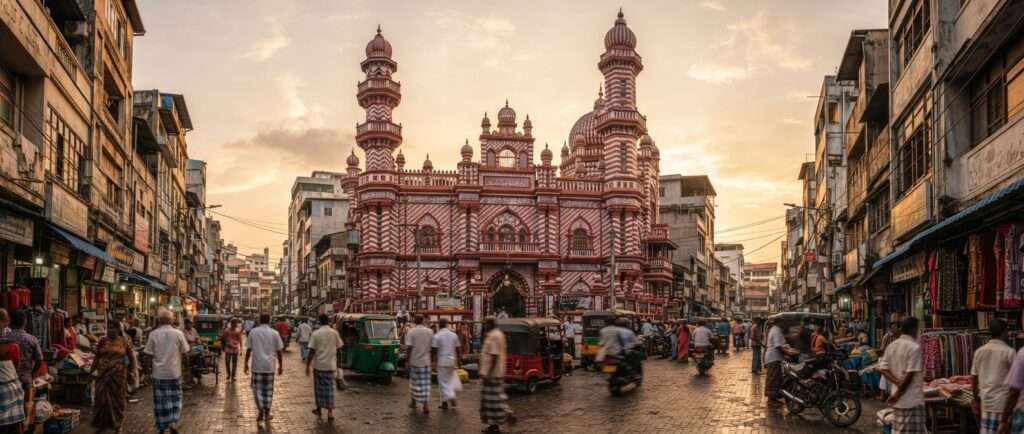
Colombo’s mosques are not a detour from the city; they are the city, layered over a thousand years of trade and faith. See the Red Mosque for the spectacle, the Grand Mosque for the history, and one quiet neighbourhood masjid to feel how it all still works day to day. When you are ready to build the capital into a longer trip, our Sri Lanka tour packages can fold Colombo’s heritage into a route that takes in the hill country, the south coast and the ancient cities. Pair this with our list of the most beautiful places in Sri Lanka to plan the rest.
FAQs
Frequently asked questions
Mosques in Colombo
Jami Ul-Alfar, the Red Mosque, in the Pettah bazaar. Its red-and-white striped facade is the most photographed mosque in Sri Lanka and the one most people mean by the famous mosque in Colombo. It stands on Second Cross Street, a short walk from Colombo Fort station, and is free to enter outside prayer times.
Its formal name is Jami Ul-Alfar Masjid. Locals call it Rathu Palliya in Sinhala, which simply means the red mosque, after the red-and-white brickwork that covers it from top to bottom. It was built in the Pettah bazaar between 1908 and 1909.
In Colombo, the Grand Mosque on New Moor Street carries the oldest story: a tombstone dated to 948 AD was found nearby, pointing to a Muslim community here more than a thousand years ago, though the building has been rebuilt several times since. For the whole island, the Masjidul Abrar (Al-Abrar) mosque in Beruwala, linked to the first Arab traders around the tenth century, is usually named the oldest mosque in Sri Lanka.
Yes. Visitors of any faith are welcome outside the five daily prayer times, and most mosques are happy to let respectful tourists look around the courtyard. Avoid Friday around midday, dress modestly, and follow any direction the caretakers give you.
Cover your shoulders, arms and legs: long trousers or a long skirt rather than shorts, and a loose top with sleeves. Women should also carry a scarf to cover the head, and everyone removes their shoes at the door. Loose, light cotton is the most comfortable choice in Colombo's heat. Leave shorts, vests and tight clothing for the beach.
Tourists are generally admitted during daylight outside prayer times, roughly 9 am to 5 pm from Saturday to Thursday. On Fridays the mosque is given over to Jummah prayers and is largely closed to tourists until the late afternoon, so it is best to visit another day. Mornings are the quietest and the best for photographs, and hours can shift, so confirm at the entrance when you arrive.
No. Entry is free at every mosque in this guide, and there is no ticket counter. A small donation towards the mosque's upkeep is welcomed if you want to give, but it is never expected of visitors.
Jami Ul-Alfar, the Red Mosque, is among the largest and best known congregational mosques in the city, and a later wing lifted its capacity into the thousands. Several other city mosques, including Maradana and Kollupitiya, also draw large Friday crowds.