4D / 3N
17% OFF
Manali-Kasol Tour Package by Cab for Himachal (4D/3N) - At A Glance
- Hotel
- Meals
- Sightseeing
- Entry Tickets
- Cab Transfer
₹12,688
₹10,500 /pp
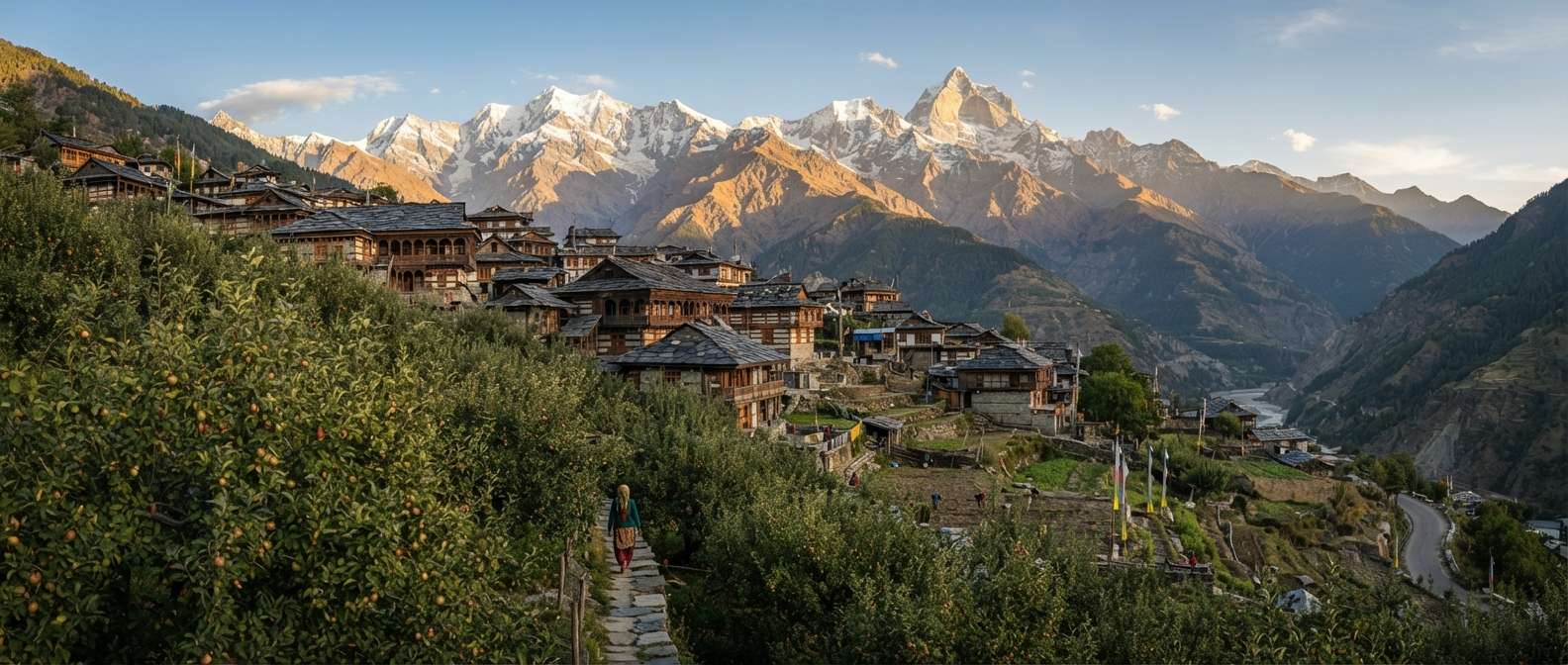


Kalpa village sits at about 2,760 metres in the Kinnaur district of Himachal Pradesh, and it is one of the few Himalayan settlements where you can watch the sun light up a 6,050-metre peak from your hotel balcony. That peak is Kinnaur Kailash, and the natural rock tower on its shoulder, the Kinnaur Kailash Shivling, turns gold at first light. Kalpa is a small apple-farming settlement, not a resort town. People come for the orchards, the old Kinnauri wood-and-stone houses, the Shivling sunrise, and slow day trips to Suicide Point and Roghi. This guide covers the best time to go, what is genuinely worth doing, and exactly how to reach Kalpa in 2026.
Key takeaways
Best Time
April - June
Select Package Type
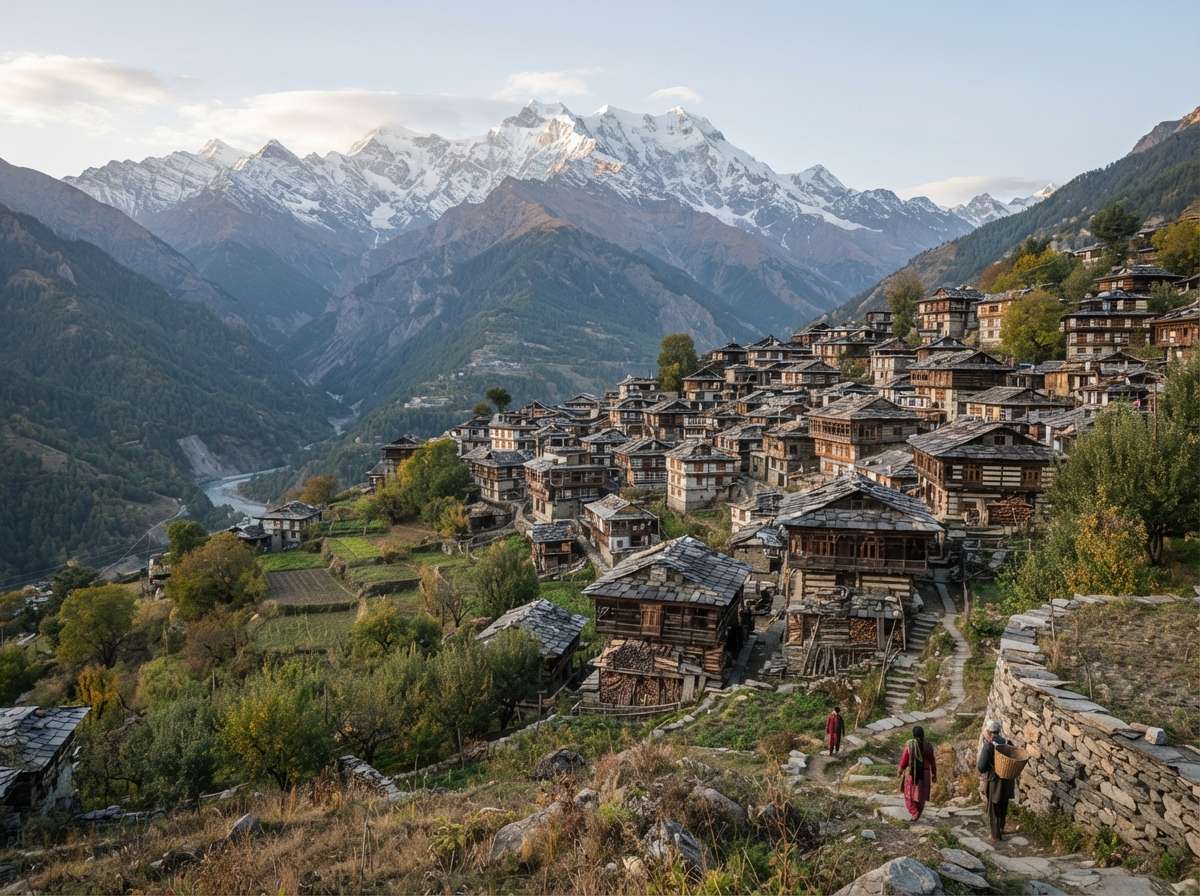
First, the mix-up that derails a lot of trip planning. Kalpa is in Kinnaur, Himachal Pradesh. It is not Kalap, the remote trekking village in Uttarakhand’s Garhwal region, which sits roughly 500 km away. If you searched ‘Kalpa Uttarakhand’ and landed here, this is the Himachal one, above the Sutlej river on the old Hindustan-Tibet road.
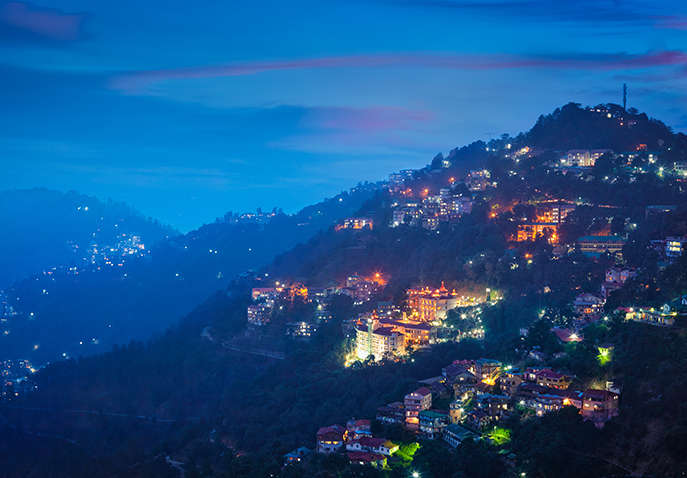
Kalpa is one of Kinnaur’s oldest inhabited villages and the district’s cultural heart. The houses are built the traditional Kinnauri way, layered timber and dry stone stacked without cement, with slate roofs and carved balconies. The slopes around town are apple and apricot orchards, threaded with chilgoza (Neoza) pine, whose pine nuts are a local cash crop alongside the apples that ship out to the rest of India each autumn. The people are Kinnauris, known for their green felt Kinnauri caps and a full calendar of local fairs. Reckong Peo, the district headquarters about 12 km downhill, is the base town where buses terminate, the last reliable fuel and ATMs sit before the higher valleys, and any permits are sorted (Indian nationals need no Inner Line Permit for Kalpa or Kinnaur; it is only foreign nationals and the protected areas near the Tibet border that require one).
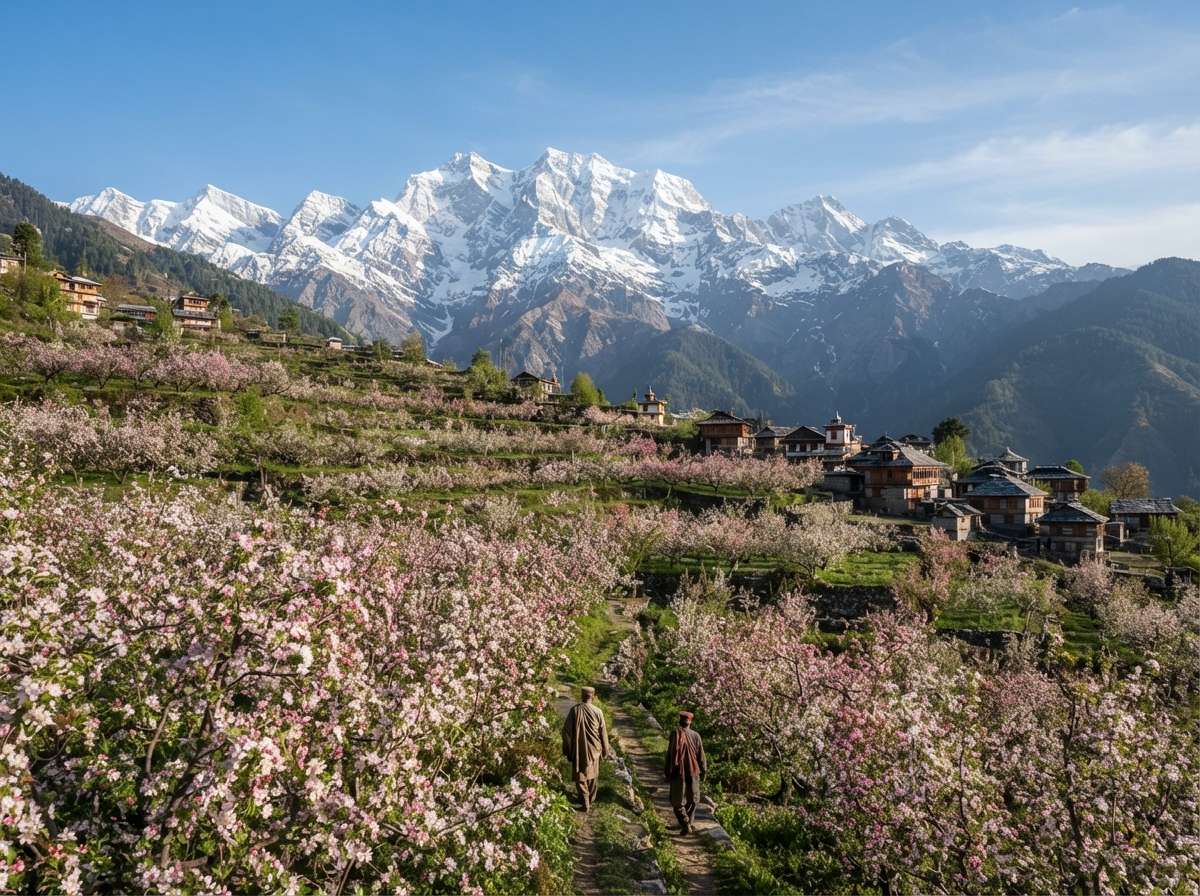
The best time to visit Kalpa is March to June for blossom and long clear-sky windows over Kinnaur Kailash, and late September to October for the apple harvest and quieter lanes. Avoid the July to early-September monsoon, when the road through Kinnaur is genuinely landslide-prone, and go in winter only if you specifically want snow and can accept road closures.
| Season | Months | Day temperature | What to expect |
| Spring & summer | Mar to Jun | 10 to 25 C | Peak season. Apple blossom in April, warm days, the clearest Shivling sunrises. Book stays ahead. |
| Monsoon | Jul to early Sep | 12 to 20 C | Rain, cloud over the peaks, and real landslide risk on NH-5. Buffer extra days; avoid tight itineraries. |
| Autumn | Late Sep to Oct | 8 to 18 C | Apple harvest, golden orchards, crisp air and the best light for photography. The connoisseur’s window. |
| Winter | Nov to Feb | -5 to 8 C day | Heavy snow, nights well below freezing, frequent road blocks. Beautiful but only for prepared travellers. |
Whatever the month, Kalpa’s nights are cold at this altitude. Carry a warm layer even in June.
Kalpa itself is walkable in a morning; the pleasure is the orchards, the viewpoints and a few short drives. Here is the quick-answer version, then the detail.
| Place | Best for | Distance from Kalpa | Time needed |
| Kinnaur Kailash Shivling | Sunrise on the sacred rock tower | Viewed from the village | Dawn, ~1 hr |
| Suicide Point | Sheer cliff-edge valley views | ~3 km | Half day |
| Roghi Village | Old Kinnauri houses, orchards | ~8 km | Half day |
| Hu-Bu-Lan-Kar Monastery | Buddhist heritage in the village | In Kalpa | ~1 hr |
| Narayan-Nagini Temple | Kinnauri wood-carved temple | ~1 km | 30 min |
| Chandika Devi Temple, Kothi | Local deity, valley setting | ~3 to 4 km | 1 to 2 hr |
| Apple orchard walk | Harvest, chilgoza pines | In & around Kalpa | Half day |
| Chaka Meadows trek | Short high-meadow hike | Trailhead near Kalpa | Half to full day |
| Kamru Fort, Sangla & Chitkul | Baspa Valley day-trip | ~40 to 60 km | Full day / overnight |
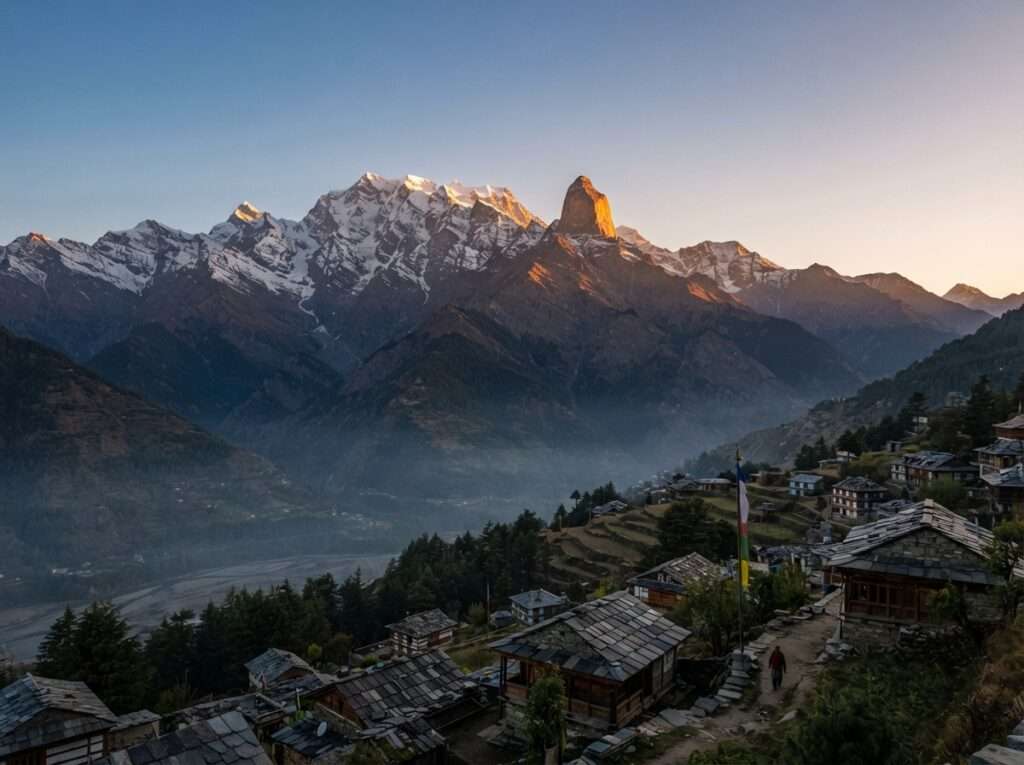
This is why you came. The Kinnaur Kailash Shivling is a near-vertical rock tower high on the Kinnaur Kailash massif, revered as a natural Shiva lingam. From Kalpa and Reckong Peo you look straight across the Sutlej gorge at it, and for a few minutes after dawn the first sun turns the rock and snow a deep gold. Be out on your balcony or at the Reckong Peo viewpoint by 5.45 am in summer. Clouds build through the day, so the morning window is the reliable one. Two different routes get called ‘the parikrama’ here. The out-and-back yatra to the Shivling and Parvati Kund starts from Tangling near Reckong Peo. The full Kinnaur Kailash Parikrama is a tougher multi-day crossover traverse that starts around Lambar or Thangi, crosses the Charang La pass (about 5,240 m) and finishes at Chitkul in the Baspa Valley. Both suit experienced, acclimatised trekkers only. [VERIFY: parikrama roadhead – the motorable road in the Tidong valley now reportedly reaches Charang (~3,500 m), so the walking start may be Charang rather than Lambar/Thangi; sources differ. Confirm the current trailhead. raachotrekkers.com]


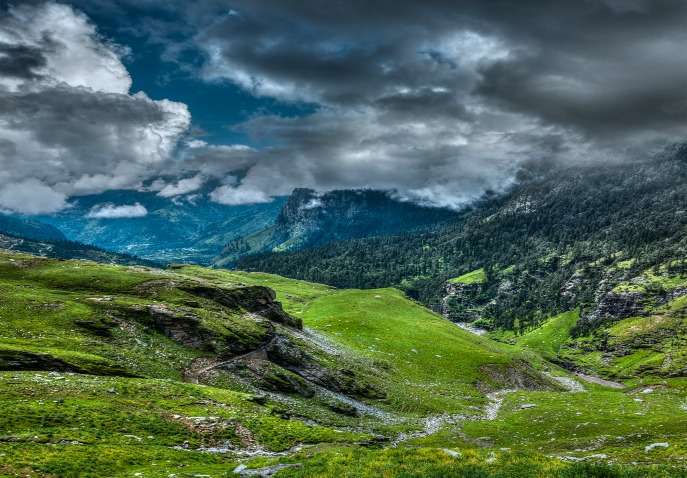

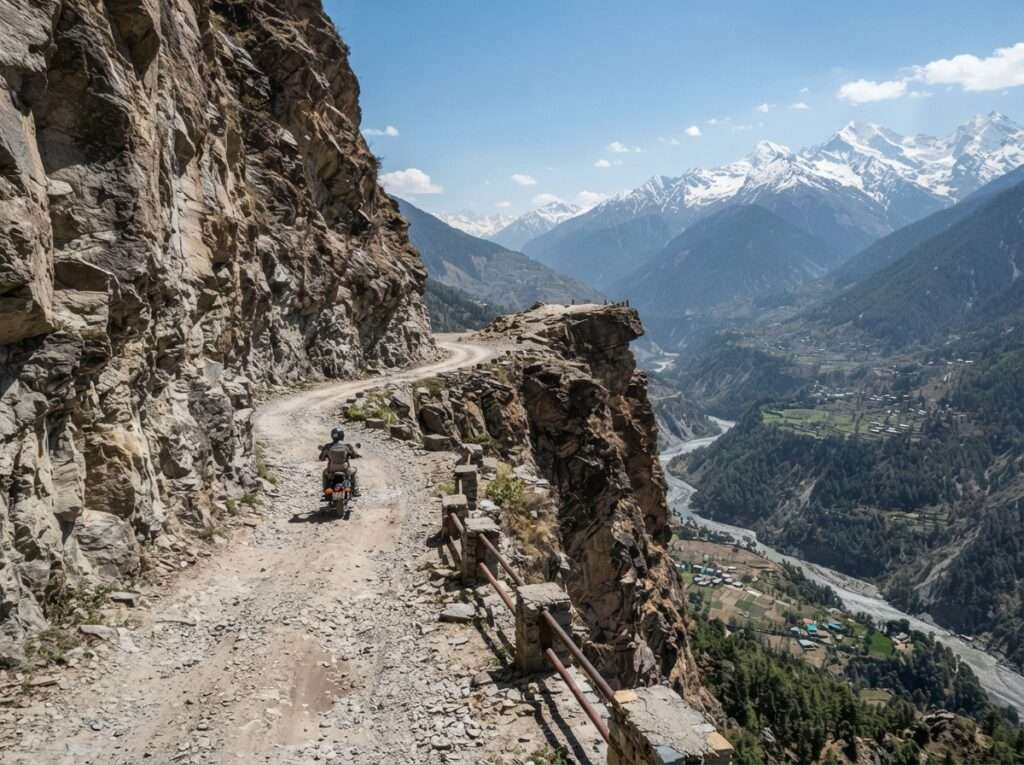
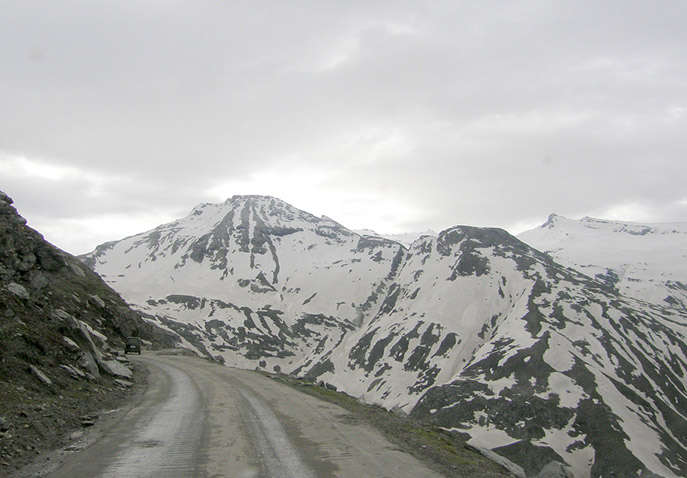
The road from Kalpa to Roghi is the classic half-day outing, about 7 to 8 km of narrow cliff-hugging tarmac where the deodars close overhead and the Sutlej runs far below. Roghi is a quiet apple-farming hamlet with the same timber-and-stone houses as Kalpa and fewer visitors. On the way sits Suicide Point, a viewpoint where the cliff drops clean away into the valley. There is now a concrete viewing platform with metal safety railings and an ‘I Love Kinnaur’ signboard, but the fall below is sheer, so keep well back from the edge, especially with children.


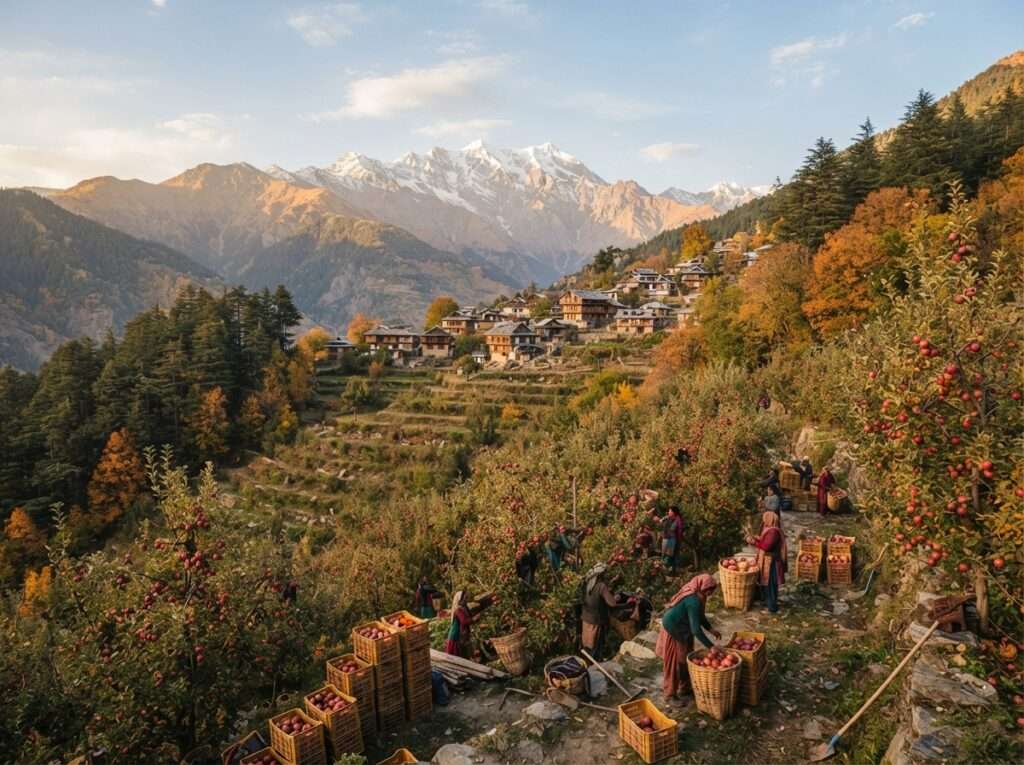
Kalpa is apple country, and the orchards are not a backdrop, they are the town’s living. If you come in late September or October you can watch the harvest, boxes stacking up by the roadside for the trucks to Shimla and Delhi. Ask a homestay host and you can usually walk the rows. The other local crop is the chilgoza pine nut, prised from the cones of the Neoza pine; you will find it sold by weight in Reckong Peo. It is one of the more expensive nuts in India, so taste before you buy a bagful.




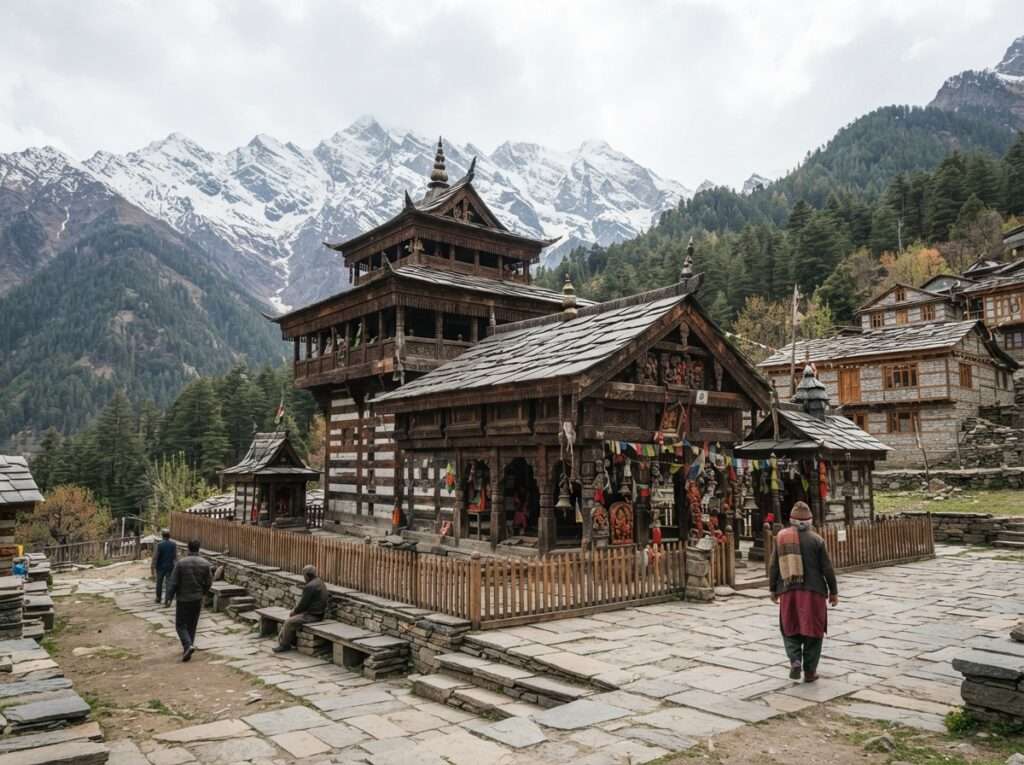
Kalpa’s spiritual life blends Hinduism and Buddhism. The Narayan-Nagini Temple, about 1 km from the village centre, is a fine example of Kinnauri temple carving, with intricately worked wooden doors and a calm courtyard. The Hu-Bu-Lan-Kar (Lochawa) Monastery in the village is a small Buddhist gompa traditionally linked to the translator Rinchen Zangpo. A short drive toward Kothi brings you to the Chandika Devi Temple, dedicated to the valley’s principal goddess and worth the detour for its setting.


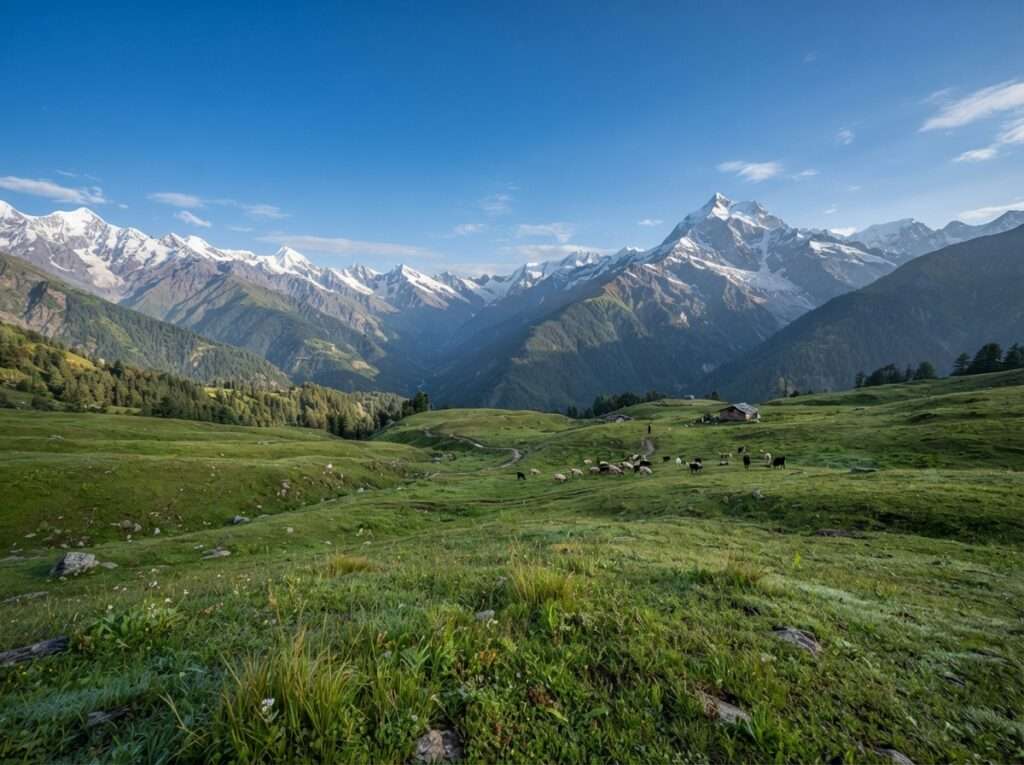
If you have the legs for it, the short Chaka Meadows walk climbs above Kalpa to open high pasture with a wraparound view of the ranges. For a bigger day, the Baspa Valley opens up about 40 to 60 km on: Kamru Fort and the old capital feel of Sangla, and, at the road’s end, Chitkul, the last inhabited village before the Tibet border. It makes a long day trip or a better overnight. You can fold all of it into a wider Kinnaur route with a Himachal tour package.
Most Kinnaur trips choose between three bases. Here is how they differ, so you can match the stop to your trip.
| Base | Altitude | Known for | Best for | Getting there |
| Kalpa | ~2,760 m | Kinnaur Kailash Shivling sunrise, apple orchards | Views, culture, an easy first Kinnaur stop | ~12 km above Reckong Peo |
| Sangla | ~2,680 m | Baspa river, Kamru Fort, meadows | Riverside stays, softer landscape | ~40 km, via Karcham |
| Chitkul | ~3,450 m | Last village before Tibet, raw high valley | Remoteness, big scenery, a night at altitude | ~60 km, end of the road |
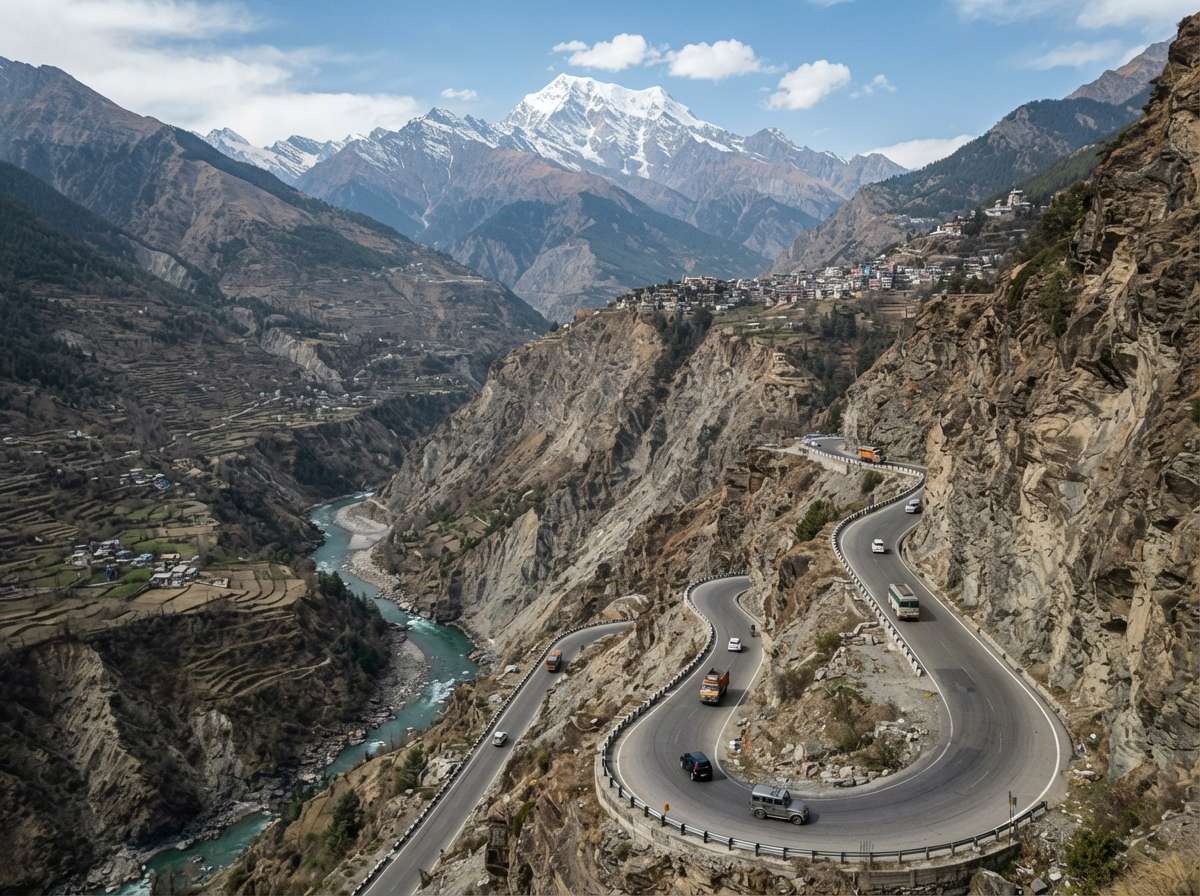
Kalpa has no airport and no railway station, so every route funnels through the Hindustan-Tibet road (NH-5) and, at the end, through Reckong Peo. Plan for a long mountain drive, not a quick hop.
By road: Kalpa is about 260 km from Shimla (8 to 10 hours) and about 335 to 350 km from Chandigarh via Narkanda, Rampur and Reckong Peo. HRTC and private buses run daily from Shimla to Reckong Peo; from Peo it is a short 12 km taxi or local bus up to Kalpa. Self-drivers should fuel up at Rampur and Reckong Peo, as pumps are sparse beyond.
By air: The nearest airport is Shimla (Jubbarhatti), with limited flights; Chandigarh is the more practical airport with far better connectivity. From either you continue by road to Reckong Peo and Kalpa.
By train: The nearest broad-gauge railhead is Kalka; the scenic Kalka to Shimla toy train ends at Shimla, from where the road journey to Kalpa begins. There is no rail beyond Shimla toward Kinnaur.
Reaching Kalpa step by step
Kalpa’s stays are homestays, small guest houses and a handful of hotels, most positioned for the Kinnaur Kailash view; HPTDC also runs a property near Kalpa. Book ahead in peak spring and the autumn harvest. A few practical notes: carry cash, as card acceptance and ATMs thin out past Reckong Peo. Mobile signal is patchy, with BSNL and Jio the most reliable. Nights are cold year-round, so pack a warm layer even in summer. And if you are continuing deeper into Kinnaur or toward Spiti, check current road status locally, since NH-5 can block after rain or snow.
Kalpa rewards the long drive with the one thing the crowds elsewhere in Himachal cannot offer: a quiet balcony, an apple orchard, and the Kinnaur Kailash Shivling turning gold at dawn. Time it for the spring blossom or the autumn harvest, keep a buffer day for the mountain road, and let Reckong Peo be your reset point. When you are ready to fold Kalpa into a wider Kinnaur and Himachal route without wrestling the logistics yourself, browse a customisable Himachal tour package or read the full Himachal travel guide to plan the surrounding valleys.
Kalpa is in the Kinnaur district of Himachal Pradesh, on the Hindustan-Tibet road above the Sutlej river, at about 2,760 metres. It is often confused with Kalap in Uttarakhand's Garhwal region, which is a different place roughly 500 km away. If you are planning a trip around Kinnaur Kailash, apple orchards and Reckong Peo, Kalpa in Himachal is the one you want.
March to June is peak season, with apple blossom, warm days and the clearest Kinnaur Kailash Shivling sunrises. Late September to October brings the apple harvest, golden orchards and thinner crowds. Avoid the July to early-September monsoon for landslide risk, and treat winter (December to February) as a snow trip only, since roads block frequently.
Kalpa is famous for its head-on view of the Kinnaur Kailash Shivling, a natural rock tower revered as a Shiva lingam that glows gold at sunrise. It is also known for its apple and apricot orchards, chilgoza pine nuts, traditional Kinnauri wood-and-stone houses, and its position as the cultural heart of Kinnaur. Kalpa was also the home of Shyam Saran Negi (1917 to 2022), independent India's first voter, who cast his ballot here in 1951.
Kalpa is about 260 km from Shimla, an 8 to 10 hour mountain drive, and roughly 335 to 350 km from Chandigarh. From Reckong Peo, the Kinnaur district headquarters, it is a short climb of about 12 km, or 30 to 40 minutes by taxi or local bus.
There is no airport or railway at Kalpa. Most travellers fly or train to Chandigarh or Shimla, then drive the NH-5 Hindustan-Tibet road through Narkanda, Rampur and Reckong Peo. Buses run from Shimla to Reckong Peo daily, and from Peo you take a taxi or local bus the final 12 km up to Kalpa.
The Kinnaur Kailash Shivling is a tall natural rock formation high on the Kinnaur Kailash massif, worshipped as a self-formed Shiva lingam. You can see it straight across the valley from Kalpa and Reckong Peo. Be out by around 5.45 am in summer, because the sunrise light is the best time and clouds tend to build later in the day.
Yes. The short Chaka Meadows walk above Kalpa gives high-pasture views for a half to full day. The serious options are the Kinnaur Kailash Shivling Yatra, an out-and-back pilgrimage from Tangling near Reckong Peo that runs as an official annual yatra with fixed dates and registration, and the full multi-day Kinnaur Kailash Parikrama traverse (starting around Lambar or Thangi, over the Charang La pass to Chitkul); both suit experienced, acclimatised trekkers with a guide only.
Kalpa offers homestays, guest houses and a few hotels, most facing the Kinnaur Kailash range, plus an HPTDC property nearby. Book ahead for the spring peak (March to June) and the autumn harvest (late September to October), when rooms with a view fill quickly. Carry cash, as ATMs and card payments are limited beyond Reckong Peo.
Kalpa Himachal Pradesh ke Kinnaur zile mein hai, Sutlej nadi ke upar Hindustan-Tibet road par, lagbhag 2,760 metre ki unchai par. Kalpa pahunchne ke liye Shimla ya Chandigarh se sadak marg (NH-5) se Reckong Peo tak aaiye (Shimla se karib 260 km, 8 se 10 ghante), aur Reckong Peo se 12 km upar taxi ya bus se Kalpa pahunchiye.
Real reviews from real travelers who booked with us.
View All Reviews