4D / 3N
17% OFF
4D / 3N
17% OFF
Manali-Kasol Tour Package by Cab for Himachal (4D/3N) - At A Glance
- Hotel
- Meals
- Sightseeing
- Entry Tickets
- Cab Transfer
₹12,688
₹10,500 /pp
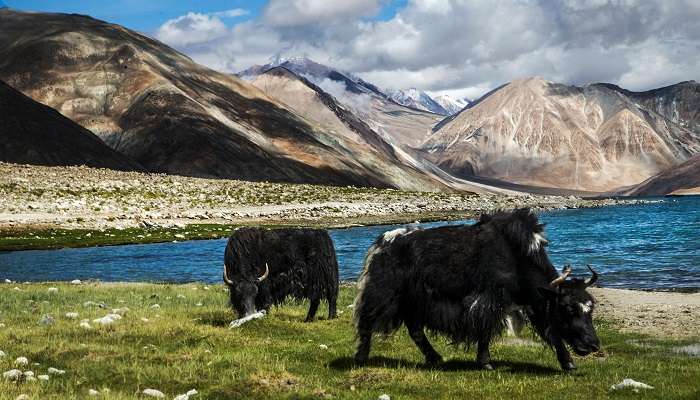


Himachal Pradesh has 5 national parks: the Great Himalayan National Park, Pin Valley National Park, Inderkilla National Park, Khirganga National Park and Simbalbara National Park. Together they protect roughly 2,700 sq km of the western Himalayas, from the snow-leopard cold desert of Spiti to the Sal forests of the Shivaliks. Entry ranges from free to Rs 200 for Indian visitors, and the walking season runs mainly April to June and September to November. Here is what each park protects, what it costs, and how to reach it.
Key takeaways
National Park in Himachal Pradesh
Best Time
March - June
Select Package Type

3 Days & 2 Nights
₹9,043 /@pp
GET FREE QUOTE

.jpg?tr=w-600,h-300)

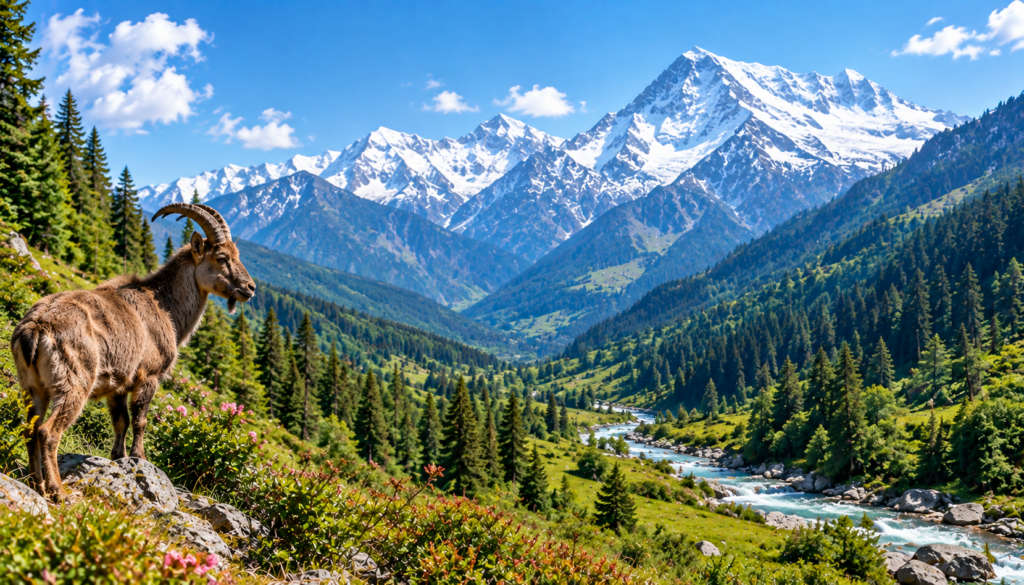
Himachal Pradesh has 5 national parks. Four sit in the greater Kullu and Spiti belt of the higher Himalayas, and the fifth, Simbalbara, lies far to the south in the Shivalik foothills of Sirmaur. The table below is the quick answer, with each park’s establishment year, size, district and what it is known for. Detailed sections follow.
| National park | Established | Area (approx.) | District | Known for |
| Great Himalayan | 1984 (UNESCO WHS 2014) | 1,171 sq km | Kullu | Largest; blue sheep, brown bear, western tragopan |
| Pin Valley | 1987 | 675 sq km | Lahaul & Spiti | Cold desert; snow leopard, Siberian ibex |
| Inderkilla | 2010 | 104 sq km | Kullu | Least explored; dense oak and deodar forest |
| Khirganga | 2010 | 710 sq km | Kullu | Parvati Valley; Kheerganga hot-spring trek |
| Simbalbara | 1958 sanctuary, 2010 park | 27.88 sq km | Sirmaur | Oldest; Sal forests, goral, sambar, spotted deer |
Himachal Pradesh has 5 national parks: Great Himalayan National Park, Pin Valley National Park, Inderkilla National Park, Khirganga National Park, and Simbalbara National Park. The Great Himalayan National Park is the largest and has been a UNESCO World Heritage Site since 2014, while Simbalbara is the oldest, having been protected as a sanctuary in 1958. In addition to these, the state is home to several wildlife sanctuaries and three Ramsar wetland sites.
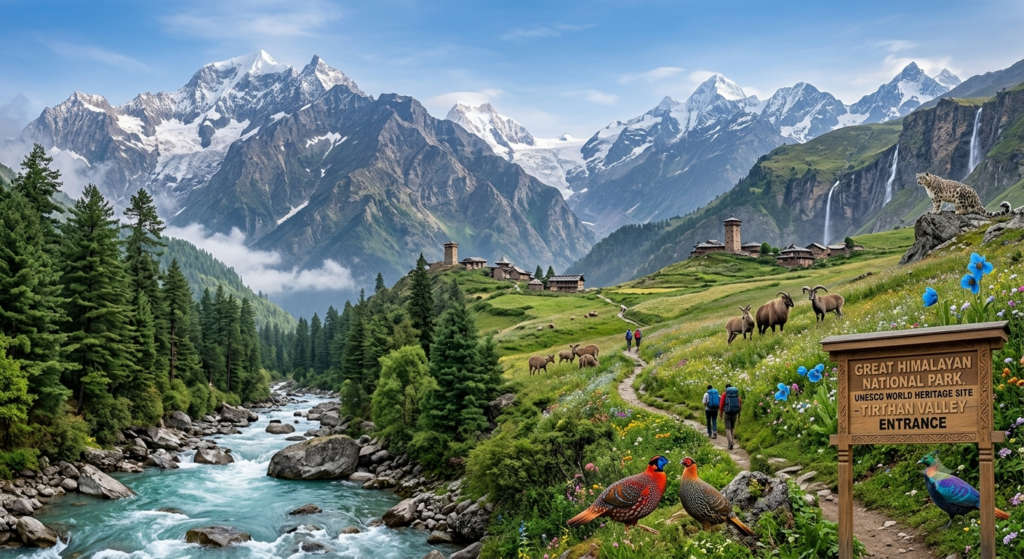
The Great Himalayan National Park is the state’s flagship and its largest, sprawling across roughly 1,171 sq km of the upper Beas and Sainj-Tirthan catchments in Kullu district. UNESCO added it to the World Heritage list in 2014 for its outstanding alpine biodiversity. This is genuine high mountain country: glacial ridgelines climb past 6,000 m, and the core zone has no roads, so you walk in. Wildlife you might spot includes blue sheep, Himalayan brown and black bear, and, for birders, the western tragopan, the elusive state bird. Most visitors start from Sai Ropa or Gushaini in the Tirthan Valley, pick up a permit at the range office, and trek the Tirthan or Sainj trails with a local guide.
| Detail | Information |
| Established | 1984 (UNESCO World Heritage Site, 2014) |
| Area | About 1,171 sq km including the ecozone |
| District | Kullu |
| Signature wildlife | Blue sheep, Himalayan brown bear, western tragopan, musk deer |
| Entry fee | Around Rs 200 per person (Indians), Rs 800 (foreign nationals); trek permit at the range office |
| Best time | April to June, then September to November |
| Getting there | Nearest airport Bhuntar (Kullu-Manali), about 50 km to the Sai Ropa gate; road via Aut and the Tirthan Valley |


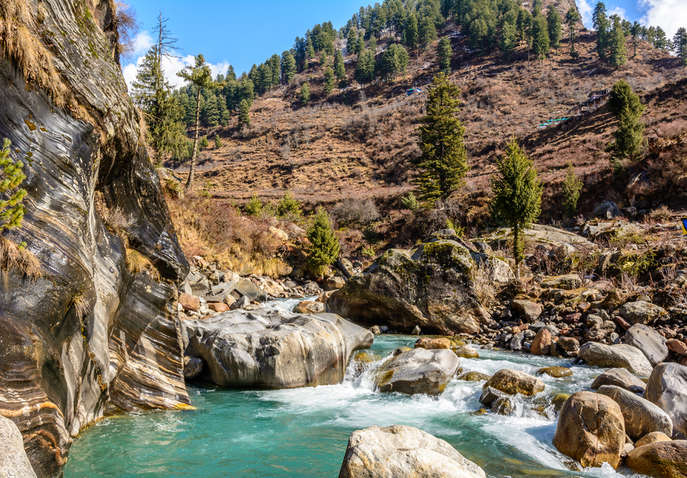
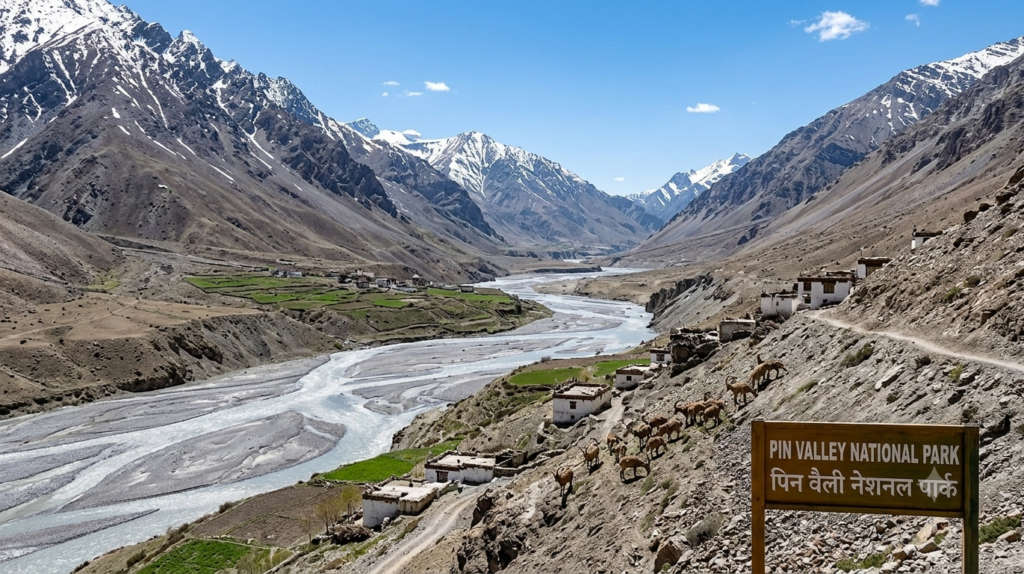
Cross into Spiti and the landscape flips from forest to high cold desert. Pin Valley National Park, set up in 1987 and covering about 675 sq km, sits inside the Cold Desert Biosphere Reserve near the Tibetan border, most of it between 3,500 m and above 6,000 m. This is one of the few places in India with a resident snow leopard population, alongside the Siberian ibex it hunts. Snow closes the valley for much of the year, so the window is short. Come in the Spiti summer, base yourself around Kaza or the villages of Mud and Sagnam, and expect thin air and long, quiet walks rather than crowds.
| Detail | Information |
| Established | 1987 |
| Area | About 675 sq km |
| District | Lahaul and Spiti |
| Elevation | 3,500 m to above 6,000 m |
| Signature wildlife | Snow leopard, Siberian ibex, red fox, Himalayan snowcock |
| Entry fee | Free (register at the check post) |
| Timings | 6 am to 6 pm |
| Best time | June to September (snowbound the rest of the year) |
| Getting there | Via Kaza in Spiti, reached from Manali (Atal Tunnel route) or Shimla via Kinnaur |


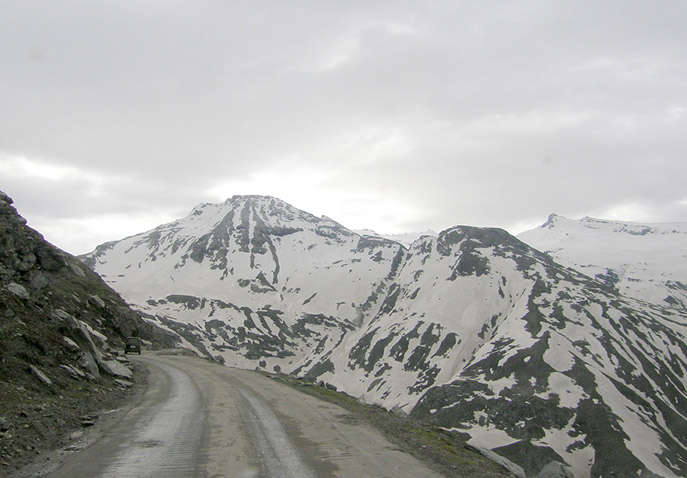


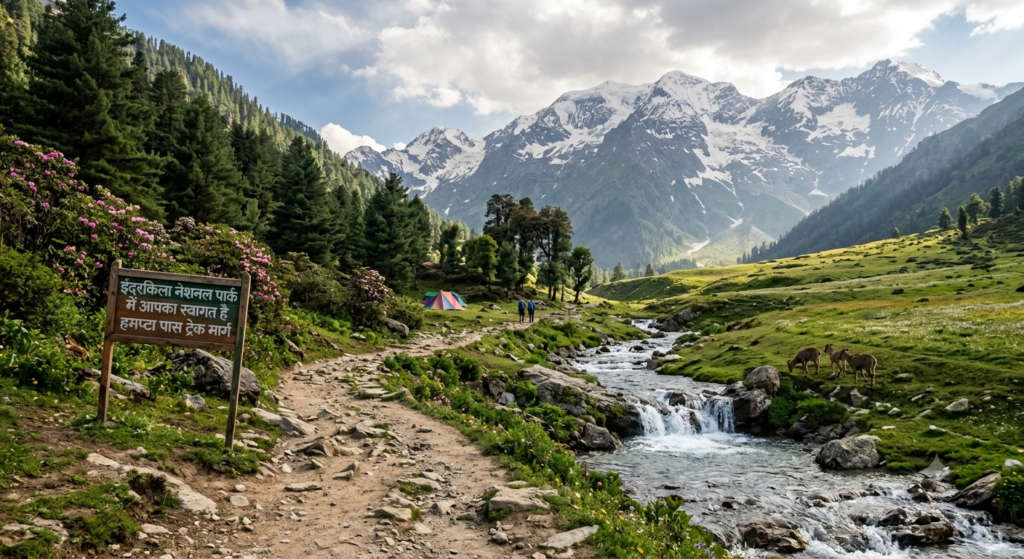
Inderkilla is the park almost nobody visits, and that is its appeal. Declared in 2010, it protects about 104 sq km of steep, densely wooded slopes in Kullu district, roughly 46 km from Kullu-Manali airport at Bhuntar. Oak, deodar and high-altitude scrub shelter Himalayan birds, monal and small mammals, but there is little tourist infrastructure inside, so treat it as a day of quiet forest walking rather than a safari. Ask locally in the Naggar and Kullu area about current access before you set out.
| Detail | Information |
| Established | 2010 |
| Area | About 104 sq km |
| District | Kullu |
| Terrain | Densely forested, steep hill slopes |
| Signature wildlife | Himalayan monal, high-altitude birds, small forest mammals |
| Entry fee | Free |
| Timings | 10 am to 5 pm |
| Best time | April to June and September to November |
| Getting there | About 46 km from Kullu-Manali airport (Bhuntar); road access from Kullu and Naggar |


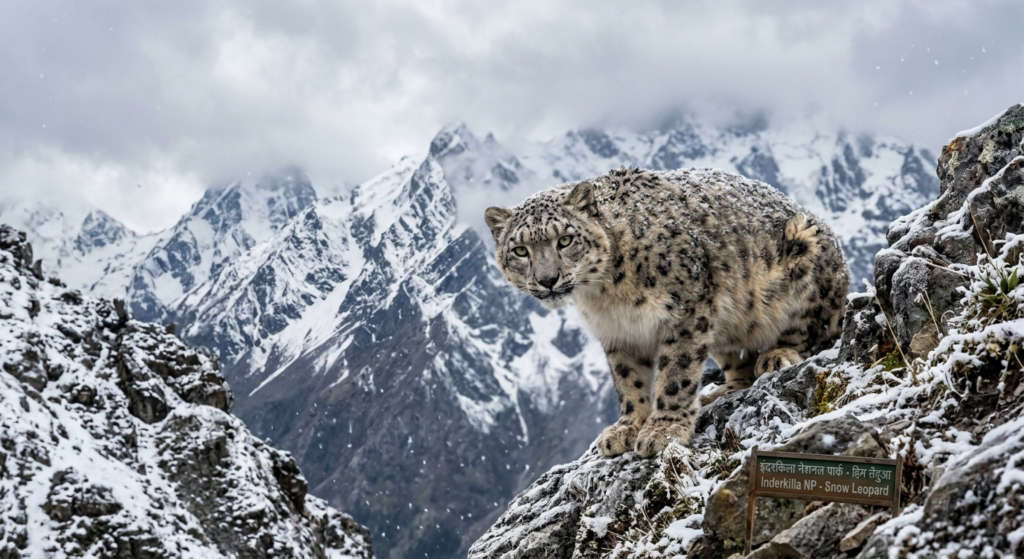
Khirganga National Park, also spelled Kheerganga, was notified in 2010 and covers roughly 710 sq km of the Parvati watershed in Kullu district, sharing a boundary with the Great Himalayan park. Most travellers know it for the Kheerganga trek: a steep half-day climb from Barshaini up to the hot springs and meadow at around 3,000 m, one of the most popular short treks in the Parvati Valley. The park itself protects bears and other high-forest wildlife across a big, rugged spread. Authorities have discussed merging it with the Great Himalayan park for easier management.
| Detail | Information |
| Established | 2010 |
| Area | About 710 sq km |
| District | Kullu (Parvati Valley) |
| Signature wildlife | Himalayan black bear, forest birds, high-altitude flora |
| Entry fee | From about Rs 50 per person (trek and camping charges extra at Kheerganga) |
| Timings | 10 am to 5 pm |
| Best time | April to June, then September to November |
| Getting there | Trailhead at Barshaini, reached via Kasol and Manikaran from Bhuntar |
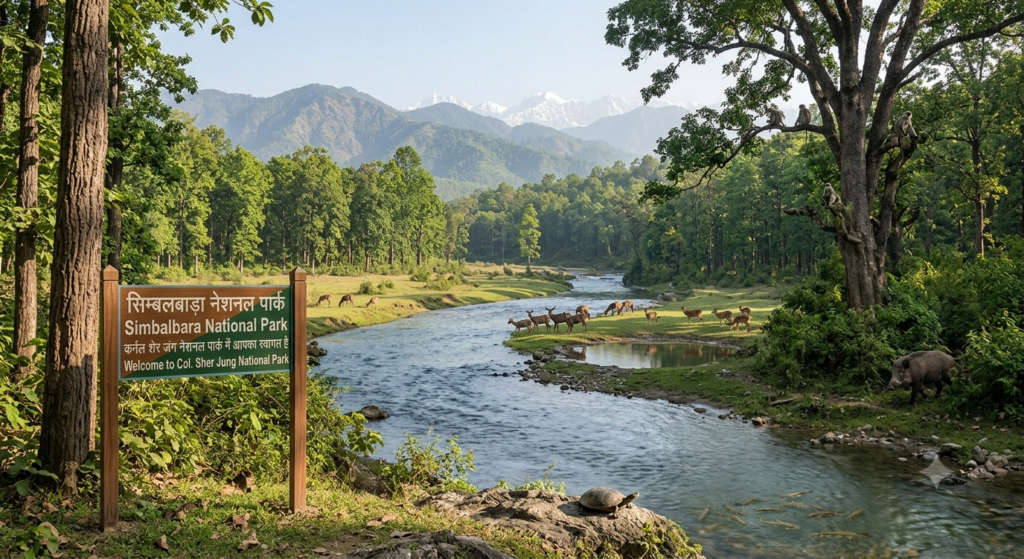
The odd one out sits far south of the snow peaks. Simbalbara, sometimes recorded by its formal name after Colonel Sher Jung, is the oldest protected area of the five: it was first notified as a wildlife sanctuary in 1958 and upgraded to a national park in 2010, when its area grew to about 27.88 sq km. You are in the Shivalik foothills of Sirmaur here, in thick Sal forest with grassy clearings and a year-round stream. It is easy, gentle walking country, good for spotting goral, sambar, spotted deer, Himalayan black bear and troops of langur. The nearest large towns are Paonta Sahib and Nahan.
| Detail | Information |
| Established | 1958 (as sanctuary), 2010 (as national park) |
| Area | About 27.88 sq km |
| District | Sirmaur |
| Forest type | Thick Sal forest with grassy undergrowth and a perennial stream |
| Signature wildlife | Goral, sambar, spotted deer, Himalayan black bear, Hanuman langur |
| Entry fee | Free |
| Timings | 10 am to 5 pm |
| Best time | October and November |
| Getting there | Near Dhaula Kuan and Paonta Sahib in Sirmaur; nearest airports Dehradun and Chandigarh |
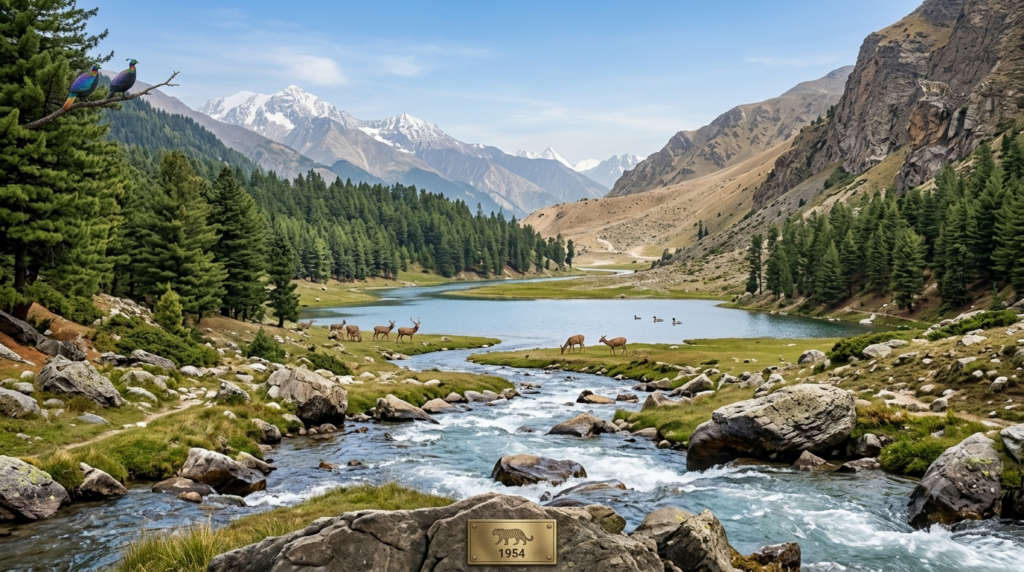
National parks are only part of the picture. Alongside its five parks, Himachal Pradesh protects more than two dozen wildlife sanctuaries and three internationally recognised Ramsar wetlands. If the parks are on your list, these are the sanctuaries worth knowing: Kalatop-Khajjiar and Kugti near Chamba, Kais and Kanawar around Kullu, Sechu Tuan Nala and Kibber in the Spiti belt, Renuka and Churdhar in Sirmaur, Pong Dam Lake in Kangra, and the high-altitude Chandratal near the Kunzum Pass. For the full picture of protected wildlife across the state, see our guide to wildlife sanctuaries in Himachal Pradesh.
The state’s three Ramsar wetland sites, wetlands of international importance for migratory birds, are Chandra Taal and Pong Dam Lake, and Renuka Lake. Chandra Taal doubles as one of the most photographed high-altitude lakes in Spiti, and Pong Dam draws large flocks of bar-headed geese and other migrants each winter.
Five parks, one state, and a spread that runs from Spiti’s cold desert to the Sal forests of the Shivaliks. The Great Himalayan park rewards trekkers, Pin Valley suits patient wildlife watchers, and Simbalbara is an easy add-on to a Sirmaur trip. Pair any of them with the classic valleys on a wider Himachal tour package, or read our guide to trekking in Himachal Pradesh to build the walking side of the trip.
Himachal Pradesh has 5 national parks: the Great Himalayan, Pin Valley, Inderkilla, Khirganga and Simbalbara national parks. The state also protects 28 wildlife sanctuaries and three Ramsar wetland sites, so its total network of protected areas is much larger than the park count alone.
Simbalbara is the oldest. It was first protected as a wildlife sanctuary in 1958, long before the others, and was upgraded to national park status in 2010. It lies in the Shivalik foothills of Sirmaur district.
The Great Himalayan National Park is the largest, covering about 1,171 sq km including its ecozone in Kullu district. Its scale and untouched alpine habitat are exactly why UNESCO named it a World Heritage Site in 2014.
Yes. UNESCO inscribed the Great Himalayan National Park on the World Heritage list in 2014, recognising its exceptional biodiversity across alpine meadows, forests and river valleys. It is the only national park in Himachal Pradesh with that status.
Pin Valley National Park in Spiti is the park most associated with snow leopards, along with the Siberian ibex they prey on. Sightings are rare and depend on winter tracking, but the cold desert habitat here is among the best snow-leopard country in India.
It varies by park. The Great Himalayan park charges around Rs 200 per person for Indian visitors and Rs 800 for foreign nationals, plus a trek permit. Khirganga starts at about Rs 50 per person. Pin Valley, Inderkilla and Simbalbara are free to enter, though you register at the check post. Confirm current rates at the range office before you go.
Himachal Pradesh has 28 wildlife sanctuaries in addition to its 5 national parks, plus three Ramsar wetlands (Chandra Taal, Pong Dam Lake and Renuka Lake). Together they make Himachal one of the most densely protected mountain states in India.
For most parks, aim for April to June or September to November, when the weather is settled and trails are open. Pin Valley in Spiti is the exception: it is snowbound for much of the year and only really accessible from June to September. Simbalbara in the south is pleasant from October into the cooler winter months.
Real reviews from real travelers who booked with us.
View All Reviews