4D / 3N
17% OFF
Manali-Kasol Tour Package by Cab for Himachal (4D/3N) - At A Glance
- Hotel
- Meals
- Sightseeing
- Entry Tickets
- Cab Transfer
₹12,688
₹10,500 /pp


Parvati Valley is a roughly 40 km river valley in Himachal Pradesh’s Kullu district, running east from Bhuntar along the Parvati River up to the meadow of Kheerganga. It is one of North India’s best loved backpacking regions, strung with villages like Kasol, Malana and Tosh, the hot-spring town of Manikaran, and trek trails that climb from about 1,580 m at Kasol to the 5,319 m Pin Parvati Pass. Most travellers come for three things: slow riverside cafe days, the Kheerganga hot-spring trek, and a base to reach a dozen old Himalayan hamlets. Here is how to plan the trip in 2026, village by village.
Key takeaways
Parvati Valley
Best Time
March - June
Select Package Type

3 Days & 2 Nights
₹9,043 /@pp
GET FREE QUOTE

9 Days & 8 Nights
₹36,484 /@pp
GET FREE QUOTE

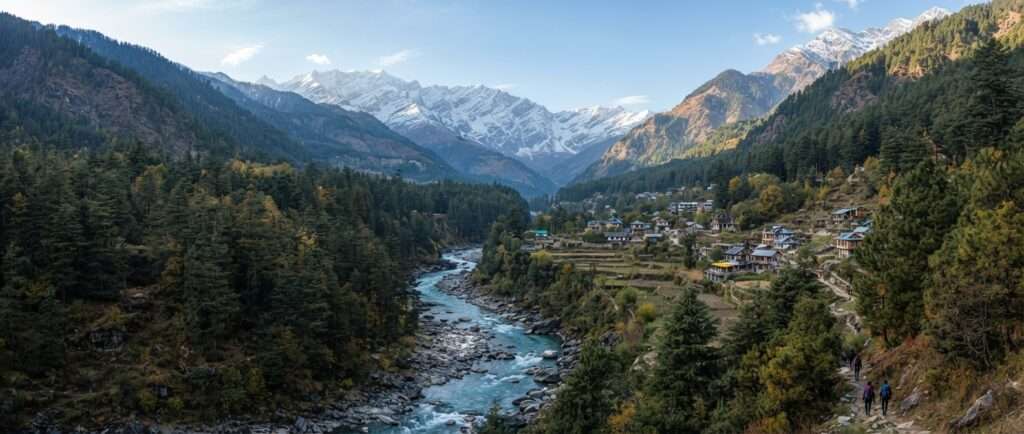
Parvati Valley sits in the Kullu district of Himachal Pradesh and stretches from Bhuntar (the airport and road gateway) up the Parvati River to Kheerganga. You reach it by bus or flight to Bhuntar, base in Kasol, and spend three to five days mixing village stays with the Kheerganga day-trek. The best months are September to November and April to June.
Use this table to pick where to sleep and what each place is best for. Altitudes and road distances below are drawn from Wikipedia’s village pages and Himachal tourism listings; treat the village-to-village timings as driving estimates on mountain roads.
| Place | Altitude | Best for | How to reach | Nights |
| Kasol | ~1,580 m | Cafes, riverside, day-trip base | 30 km / ~1 hr from Bhuntar | 1 to 2 |
| Chalal | ~1,600 m | Quiet riverside walk, cafes | 20 min walk from Kasol | 0 to 1 |
| Manikaran | ~1,760 m | Hot springs, Gurudwara, temple | 4 km / 15 min from Kasol | 0 to 1 |
| Rasol | ~3,000 m | Offbeat hilltop hamlet | 3 to 4 hr trek from Kasol | 1 |
| Grahan | ~2,350 m | Forest trek, quiet stay | 3 to 4 hr trek from Kasol | 1 |
| Malana | ~2,650 m | Ancient culture, day trek | 21 km + short trek from Kasol | 0 to 1 |
| Tosh | ~2,400 m | Views, chilled cafe nights | ~20 km from Kasol via Barshaini | 1 to 2 |
| Kalga / Pulga | ~2,280 / 2,210 m | Orchards, Kheerganga trailhead base | ~1 km walk above Barshaini | 1 |
| Barshaini | ~2,400 m | Road-head, trek gateway | ~18 km from Kasol | 0 to 1 |
| Kheerganga | ~2,960 m | Hot spring day-trek, Shiva temple | 12 to 13 km trek from Barshaini | day only |
The valley is really a chain of villages along one river road, each with a different pace. Below are ten worth planning around, from the busy hub of Kasol to the trailhead hamlets above Barshaini. Pick three or four rather than trying to see them all in one trip.
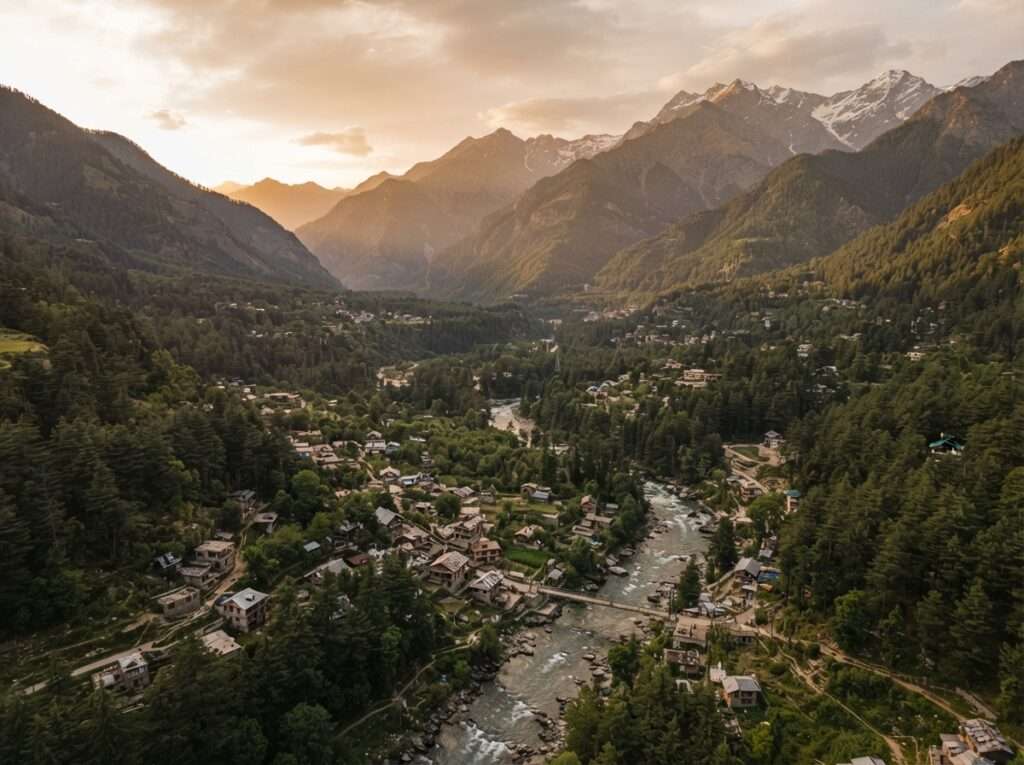
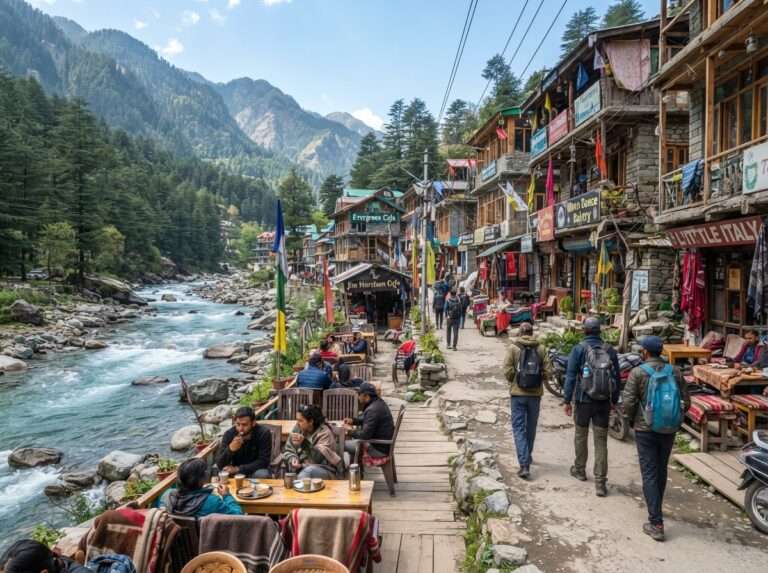
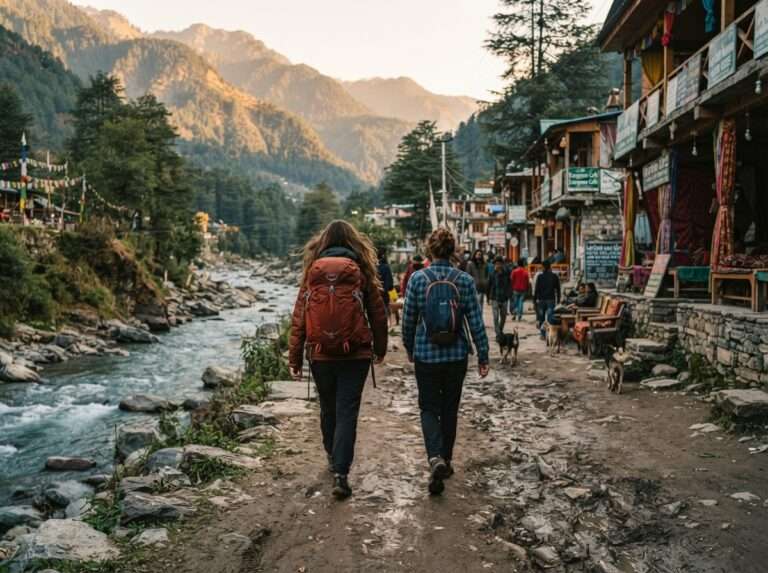
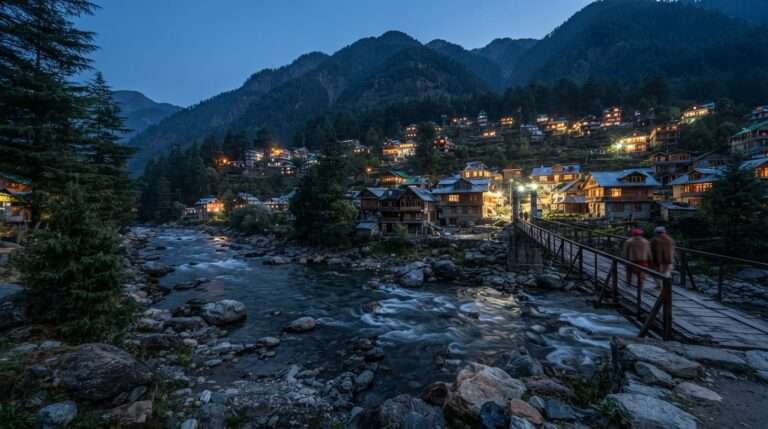
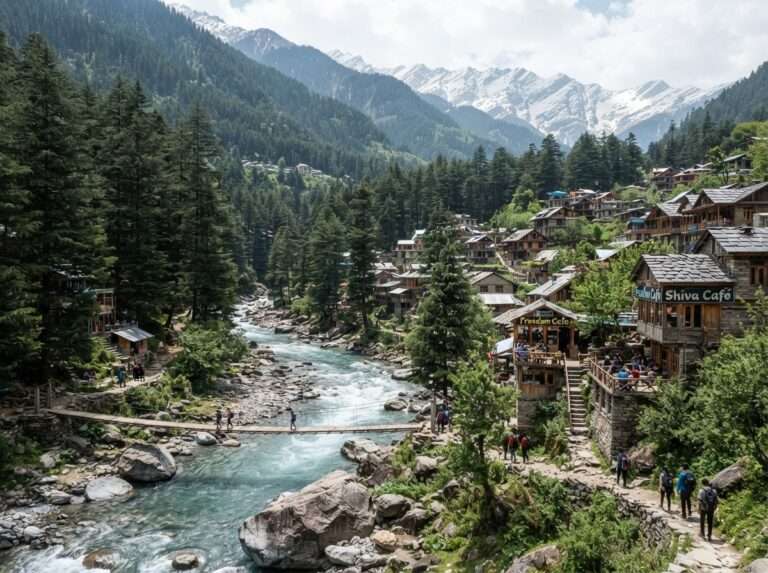
Kasol is the valley’s social hub, a riverside village about 30 km up from Bhuntar at roughly 1,580 m. It is often called the Amsterdam of India for its laid-back cafe culture, and the strip along the Parvati River is packed with Israeli and Italian bakeries, book shops and cheap guesthouses. It works best as a base: you can do Manikaran, Chalal and Tosh as day trips and still be back for dinner by the water. Come here first, get your bearings, then move higher.


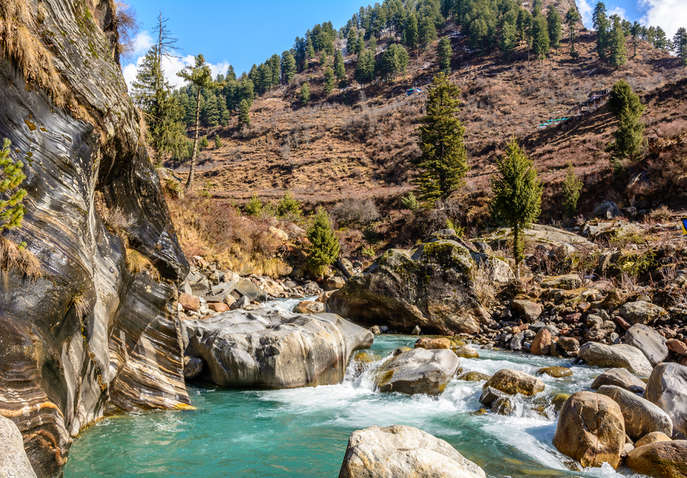
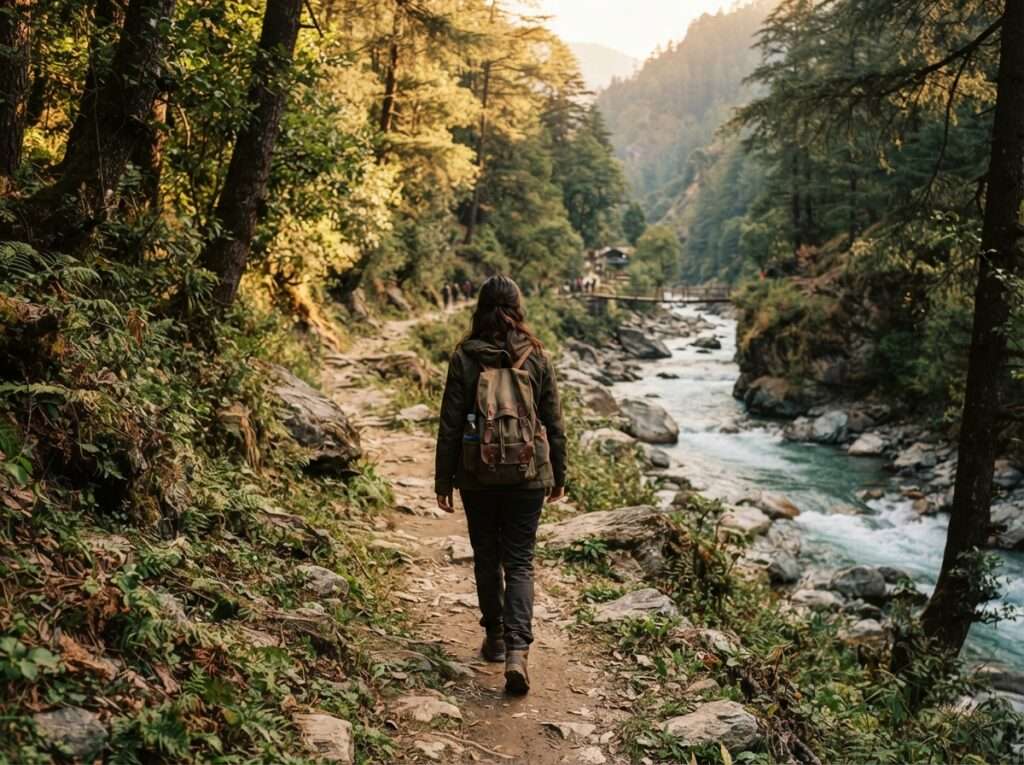
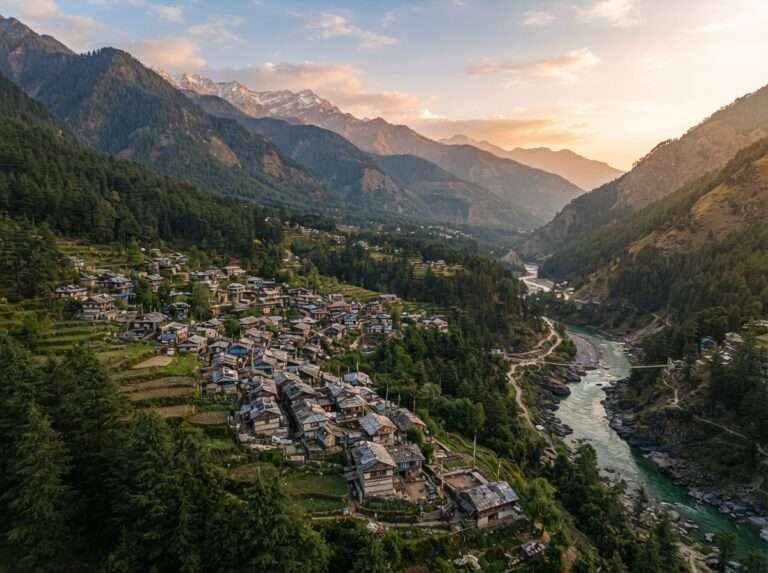
Chalal is a 20-minute walk from Kasol along the far bank of the river, and it is where people go when the main strip feels too busy. The trail runs through pine and past a few riverside cafes to a small village that has kept a slower rhythm. Locals sometimes call it Little Amsterdam. It makes an easy first-evening stroll and a gentle warm-up for the longer treks.


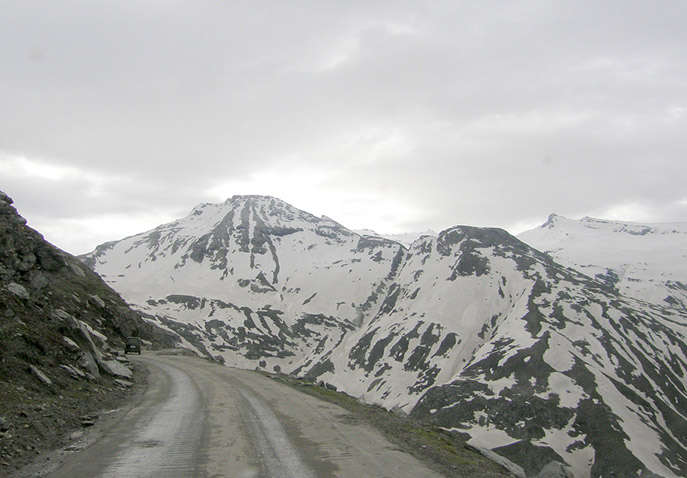


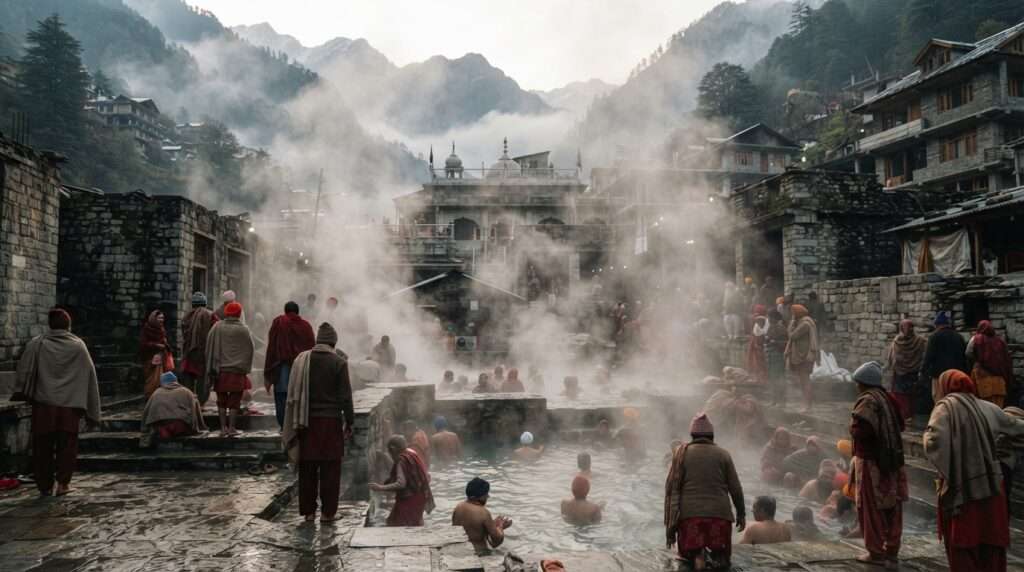
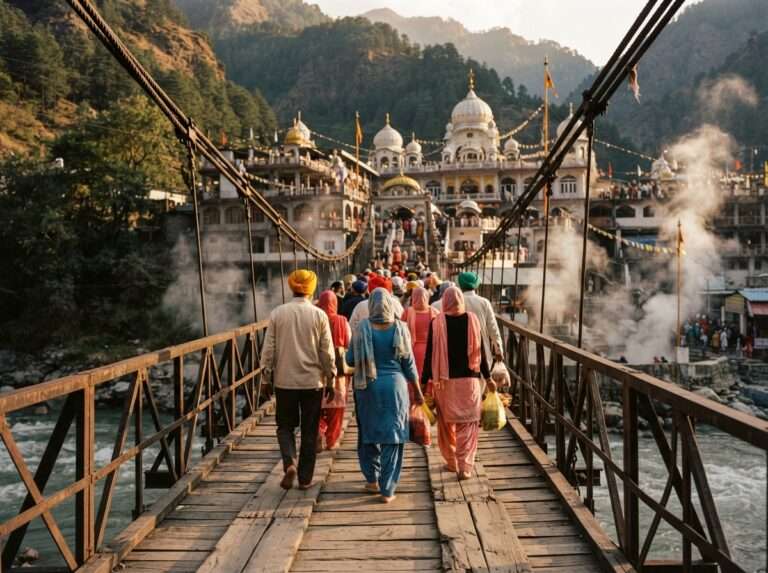
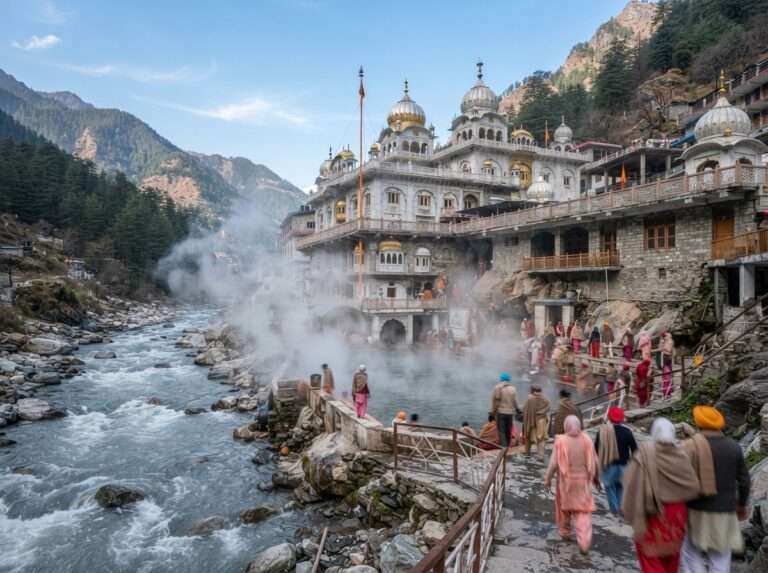
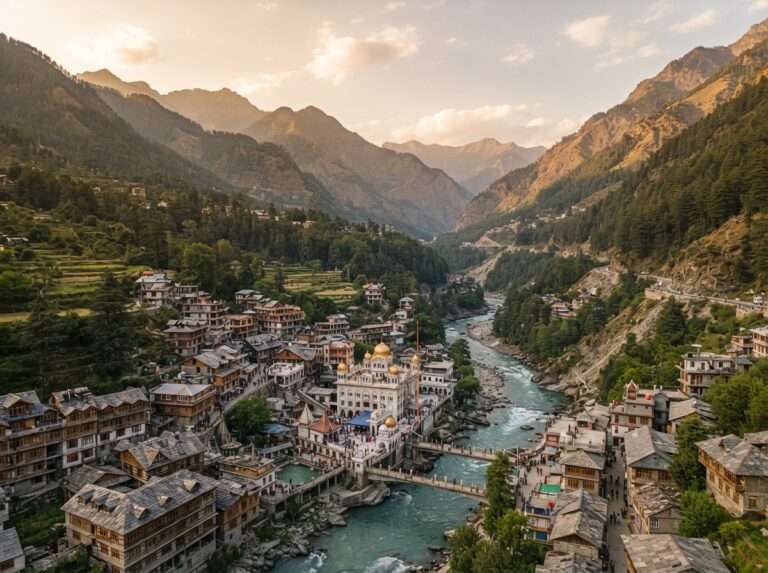
Manikaran is a pilgrimage town 4 km beyond Kasol at about 1,760 m, famous for hot springs so hot that pilgrims cook rice and dal in them. The Manikaran Sahib Gurudwara and the Ram temple both sit over the springs, and langar is served to everyone. It is a short, worthwhile half-day from Kasol. Dress modestly and cover your head at the Gurudwara.
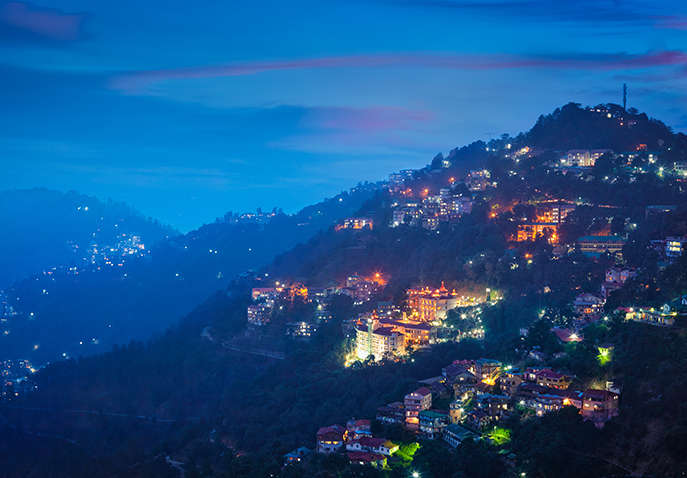


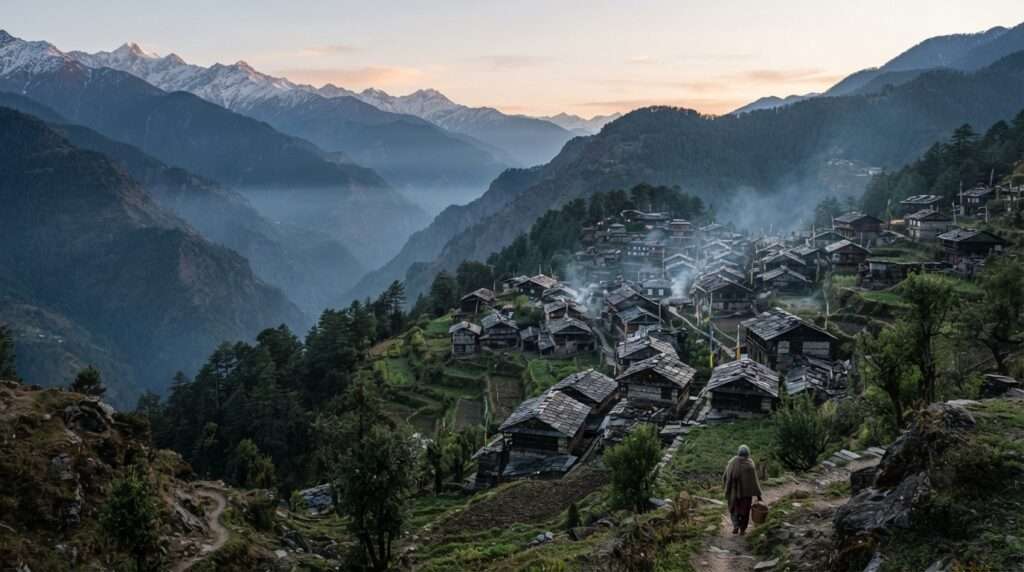
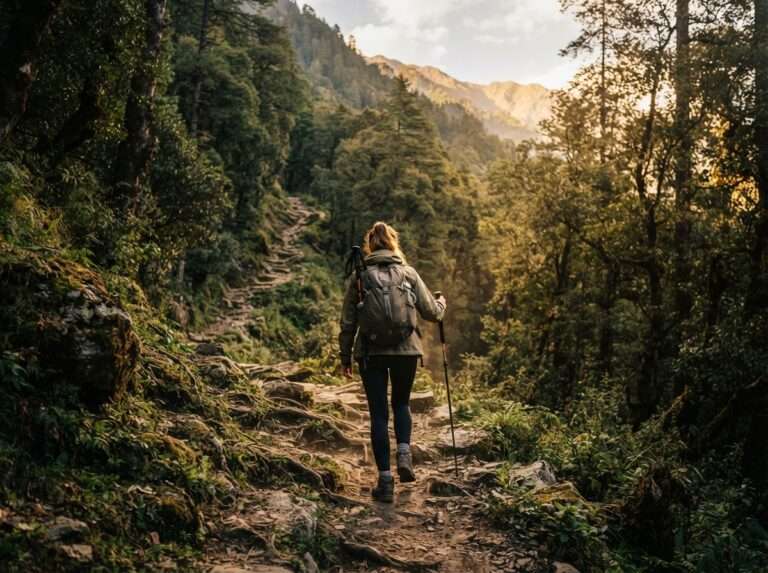
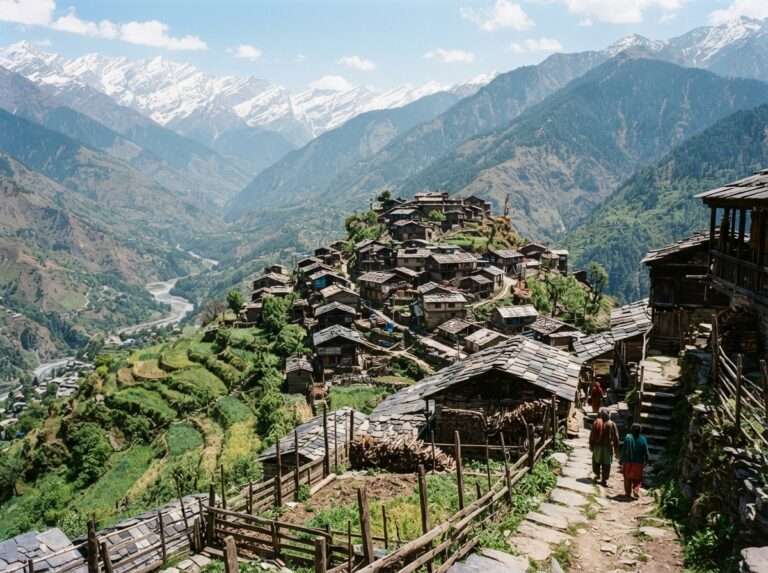
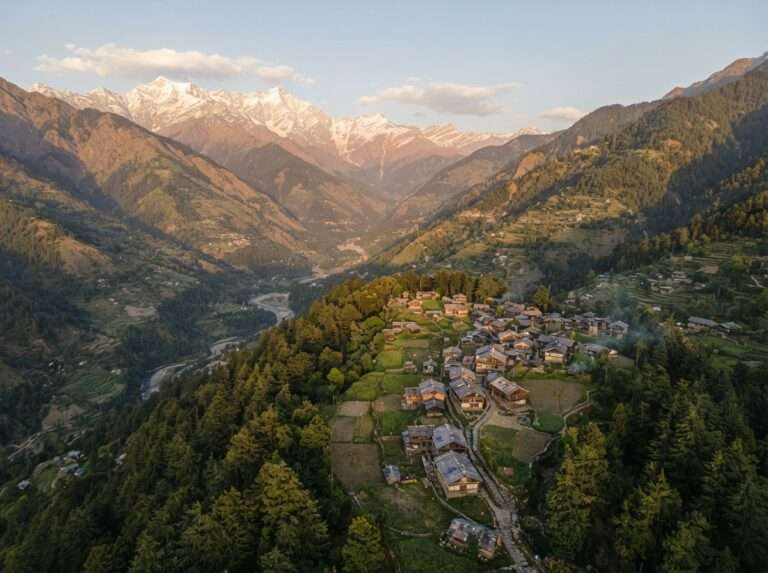
Rasol (also spelt Rashol) is a hilltop hamlet at around 3,000 m, reached by a steep three to four hour climb from Kasol or Chalal. It stays firmly off the main circuit, so the reward is silence, big views and a night in a simple homestay rather than nightlife. Go if you want an easy first trek that still feels remote.
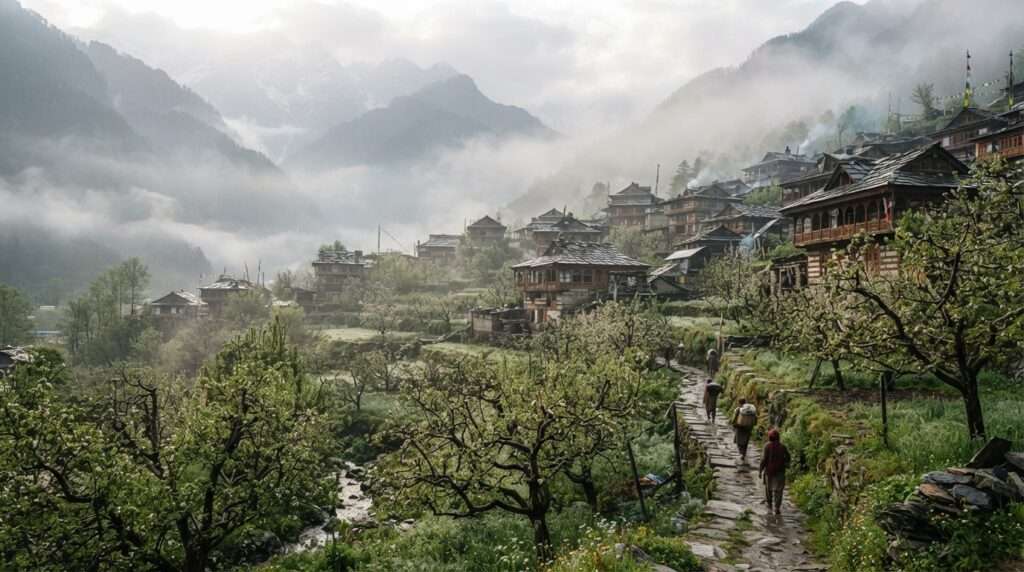
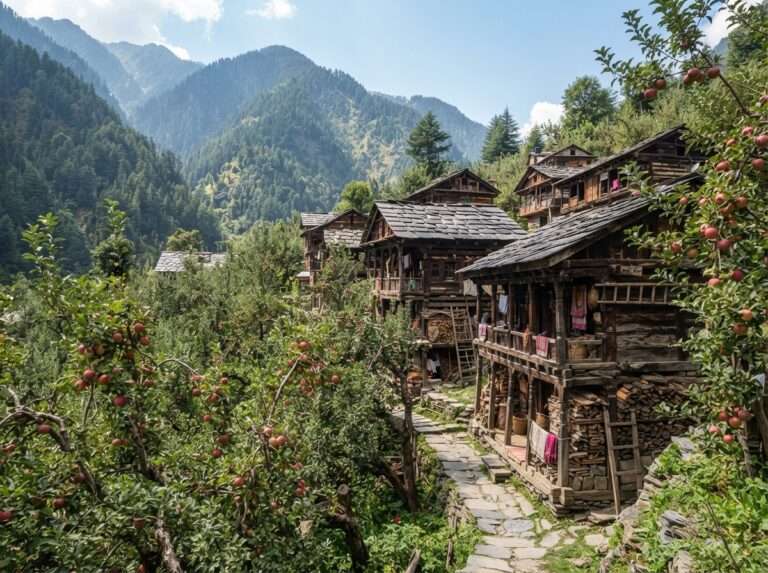
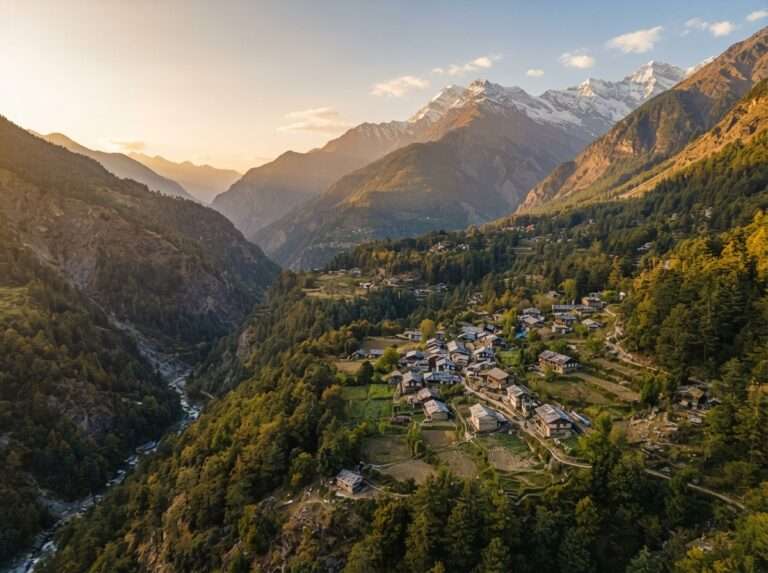
Grahan is an old village tucked in a side valley, about a three to four hour forest walk up from Kasol at roughly 2,350 m. Wooden houses, apple orchards and a very quiet pace make it a favourite overnight for trekkers acclimatising before Sar Pass, whose trail begins here. Carry cash: there is no ATM and little network once you leave Kasol.
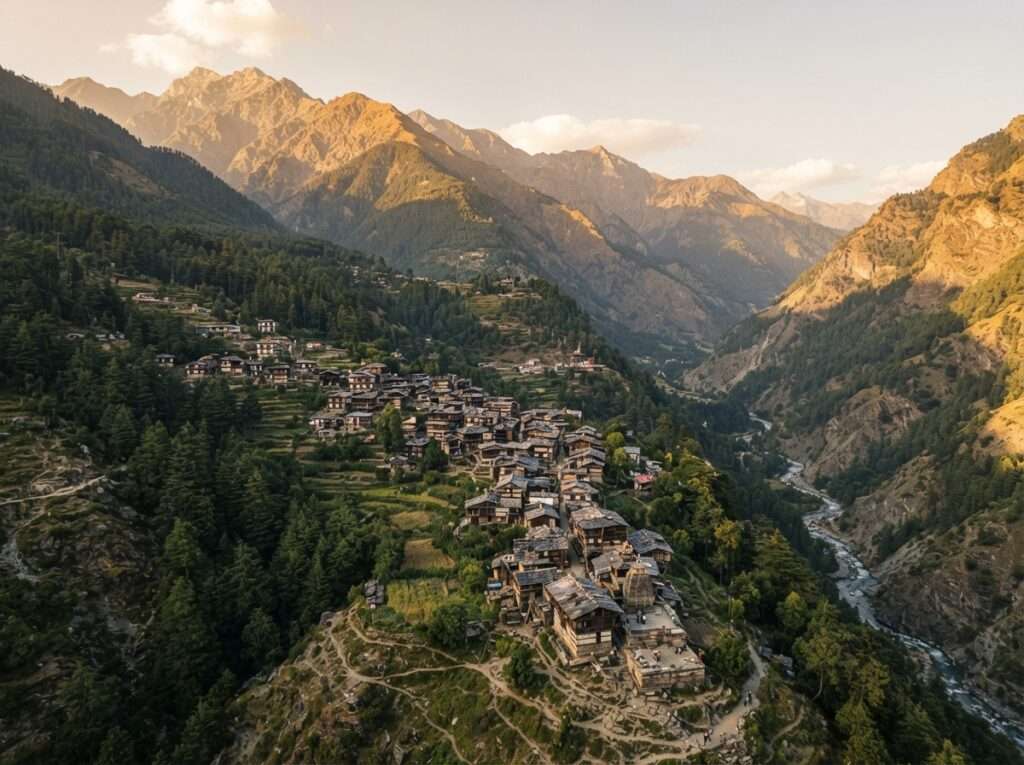
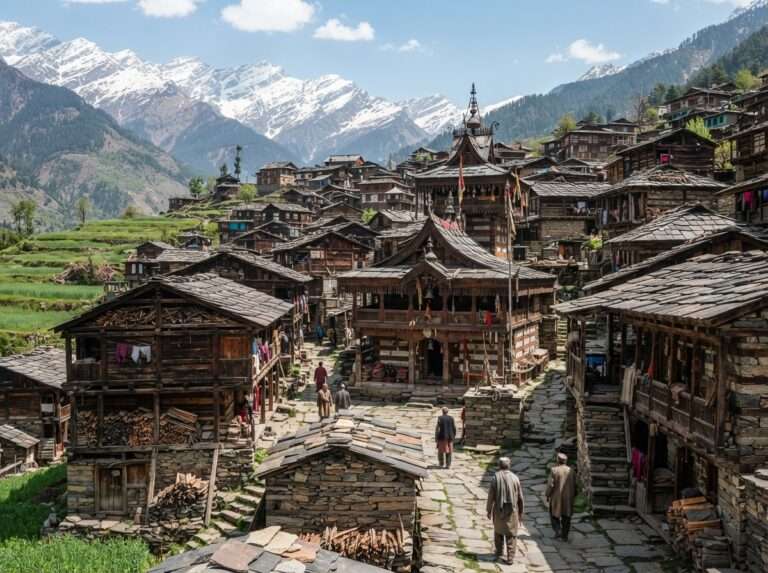
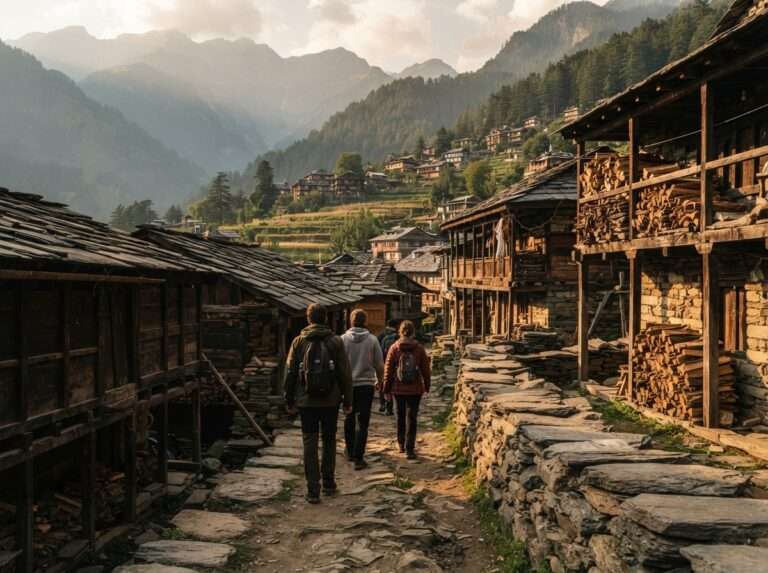
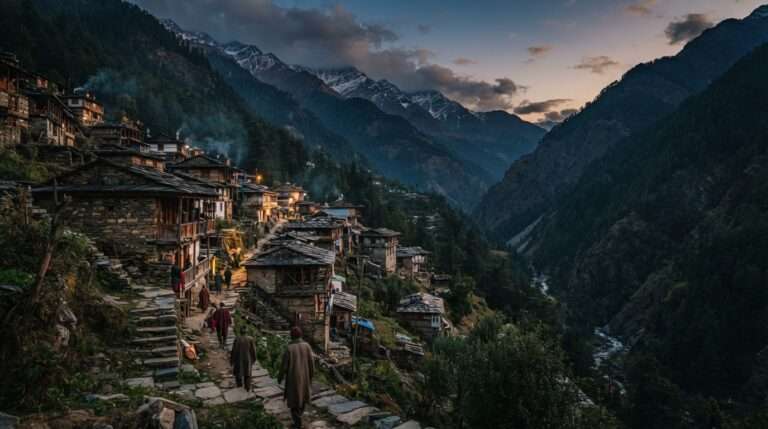
Malana is one of the oldest and most self-contained villages in the Himalayas, sitting at about 2,650 m in a side valley roughly 21 km from Kasol. It has its own governance, dialect and strict customs, and the Jamadagni (Jamlu) temple and the shrine of Renuka Devi are central to village life. Visitors are asked not to touch the temples, homes or residents, and photography is restricted in parts of the village. Overnight tourist stays inside the core village are not permitted by the village council, so treat it as a respectful day visit, follow the posted rules, and note that the region’s association with charas does not make anything legal.
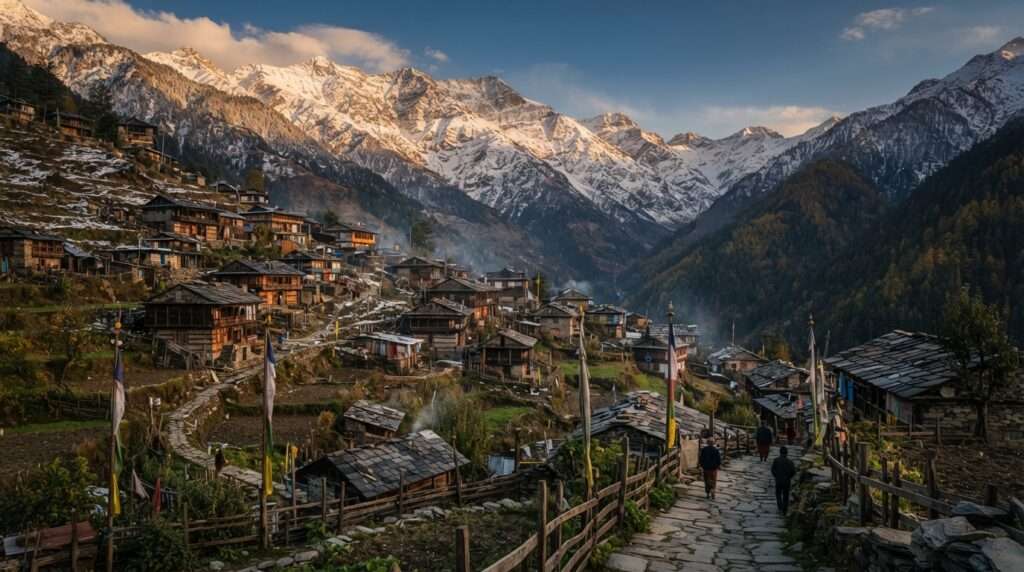
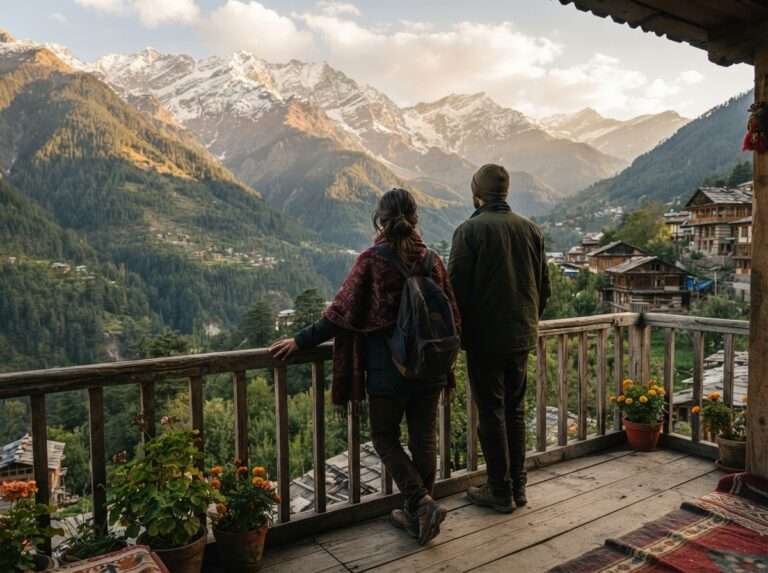
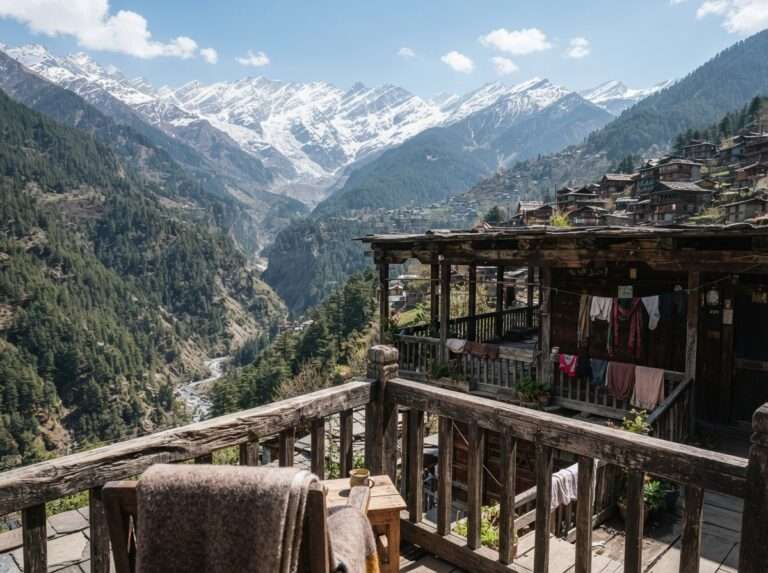
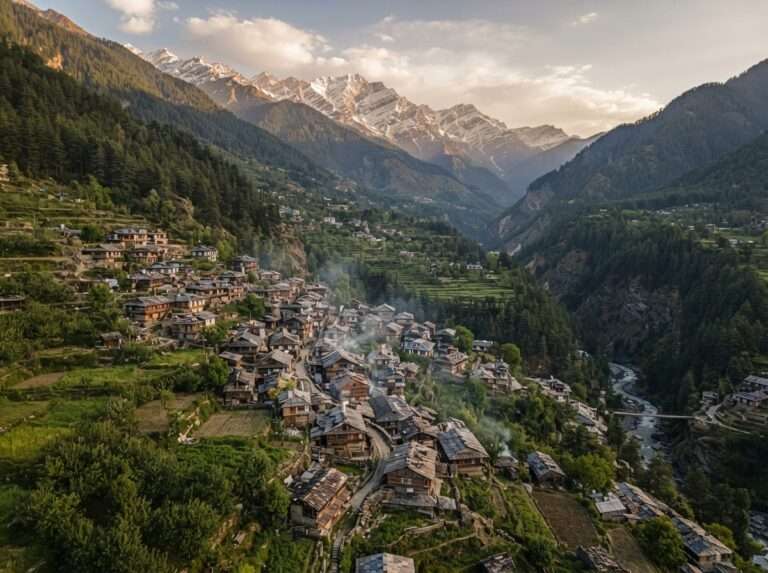
Tosh sits at about 2,400 m at the far end of the drivable valley, a short climb above Barshaini. It has grown from a sleepy hamlet into a favourite for travellers who want mountain views and guesthouse balconies over the Parvati without Kasol’s crowds. Snow-dusted peaks close in the valley head, and the walk down to the river is a lovely half-day. It is also a comfortable place to overnight before or after the Kheerganga trek.
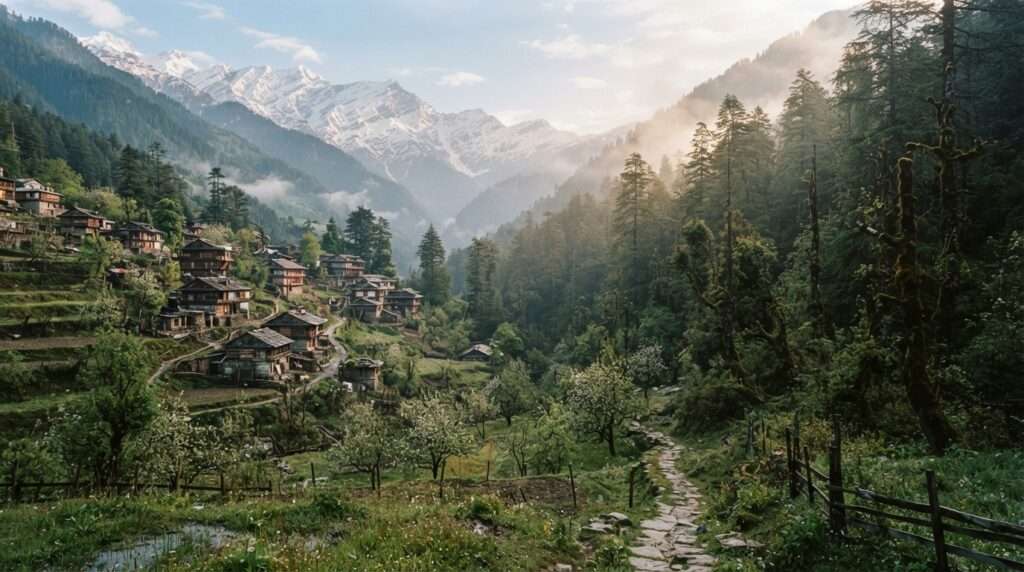
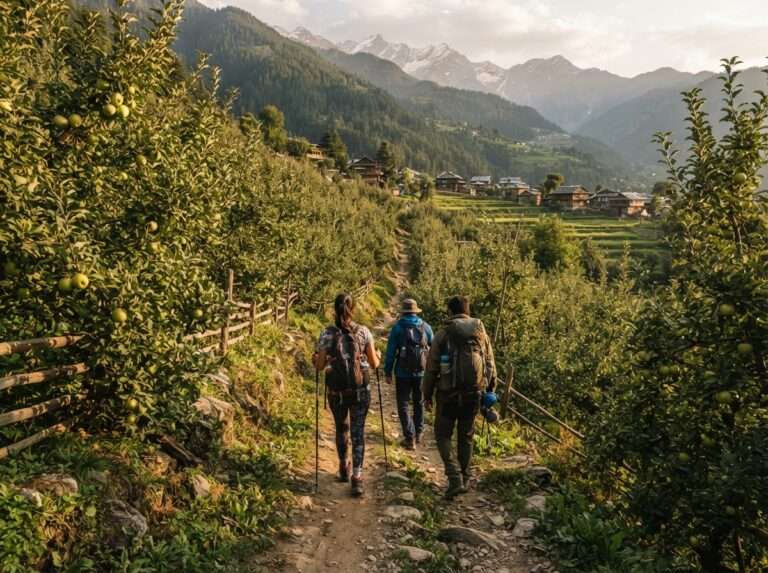
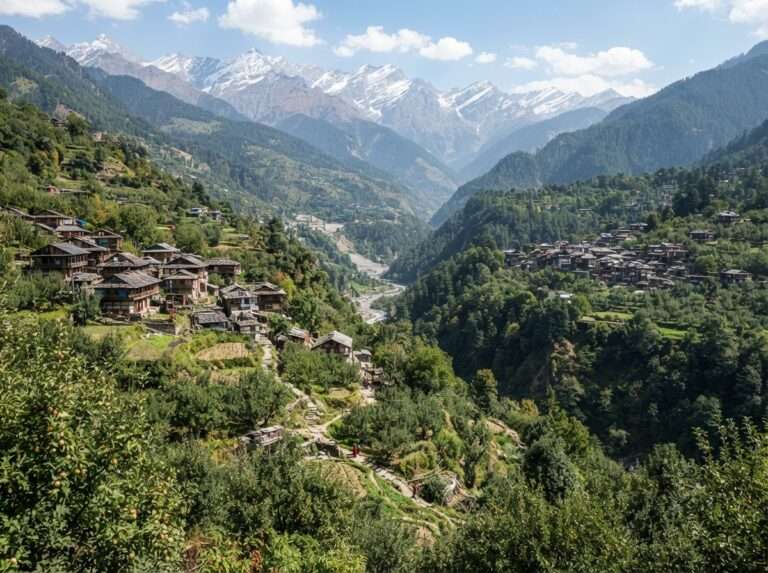
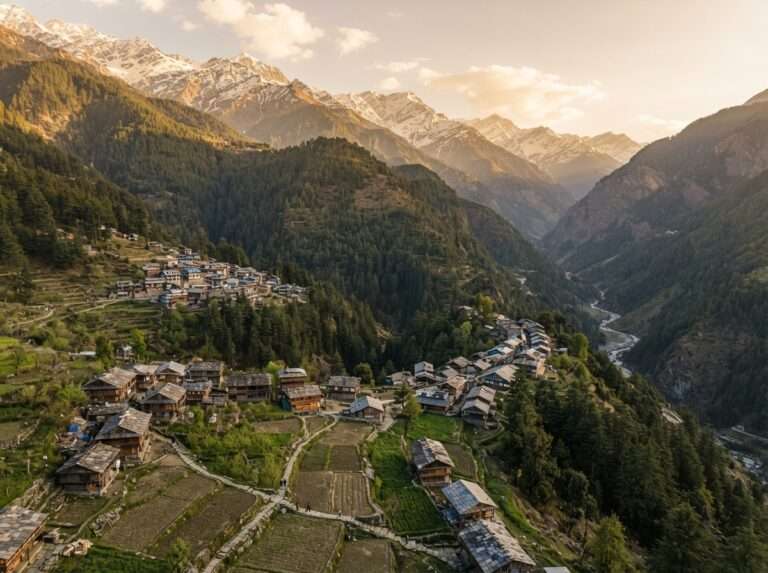
Kalga (about 2,280 m) and Pulga (about 2,210 m) are twin orchard villages a short uphill walk from Barshaini, on the opposite side to Tosh. They are the classic sleep-before-the-trek choice for Kheerganga, quieter than Tosh, with wooden homestays among apple trees and a small cluster of cafes. Pulga’s so-called Fairy Forest is a gentle add-on walk. Stay a night here and you can start the Kheerganga trek early enough to beat the 10 AM entry cut-off.
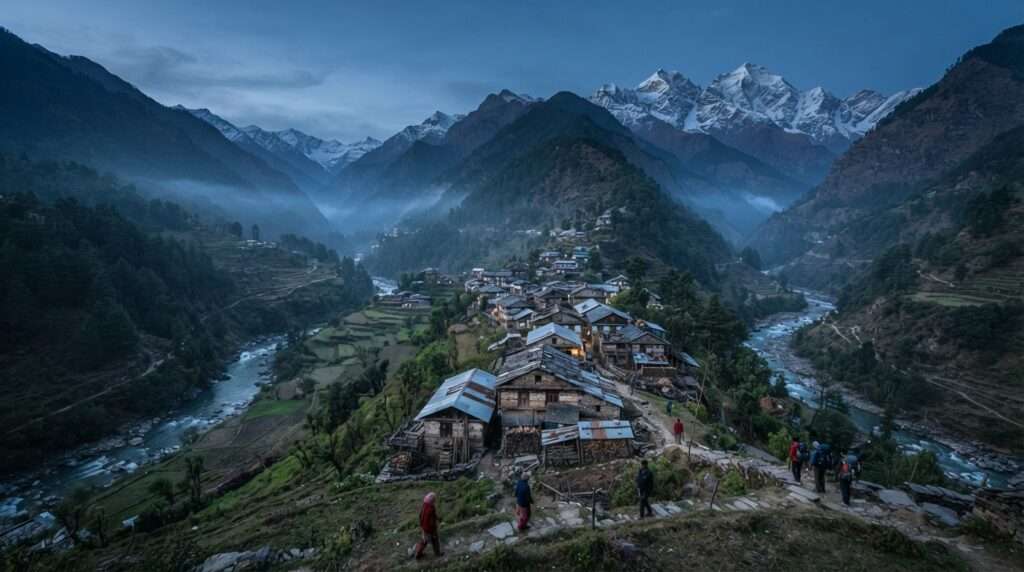
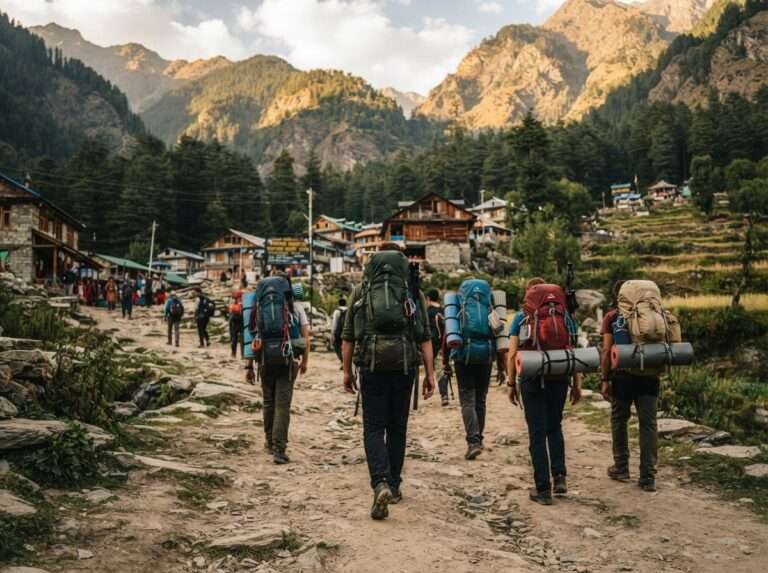
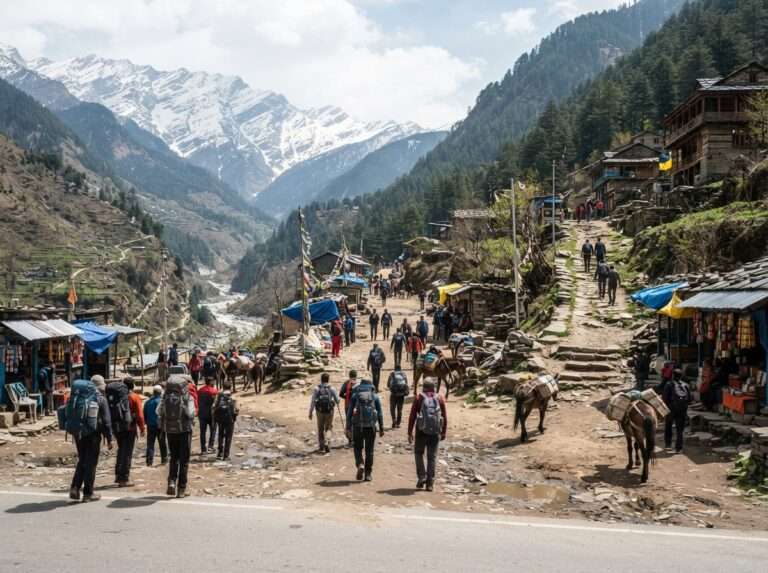
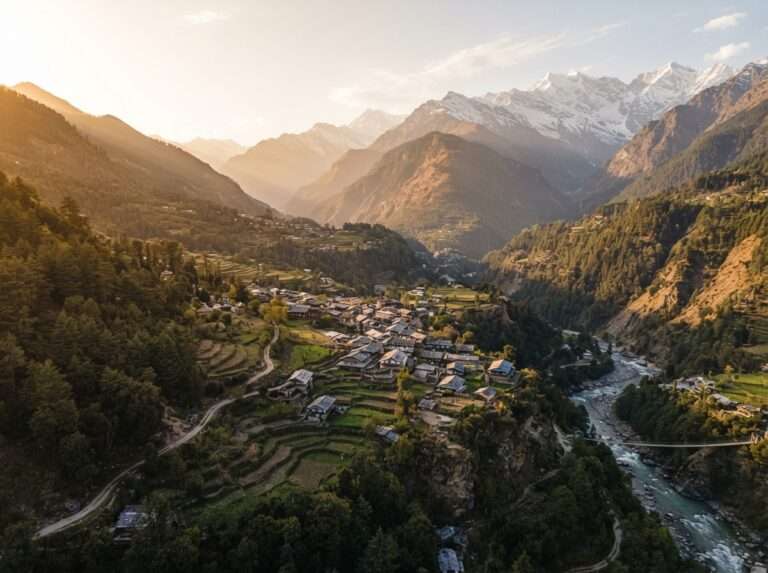
Barshaini at about 2,100 m is where the main valley road effectively ends (a rough track continues a few kilometres toward Tosh) and almost every serious trek begins. It is less a destination than a junction: buses and shared cabs from Kasol terminate here, and trails split off to Tosh, to Kalga and Pulga, and up to Kheerganga. Most people pass straight through, but it is the logistical heart of the upper valley, so it helps to know it by name when you book transport.
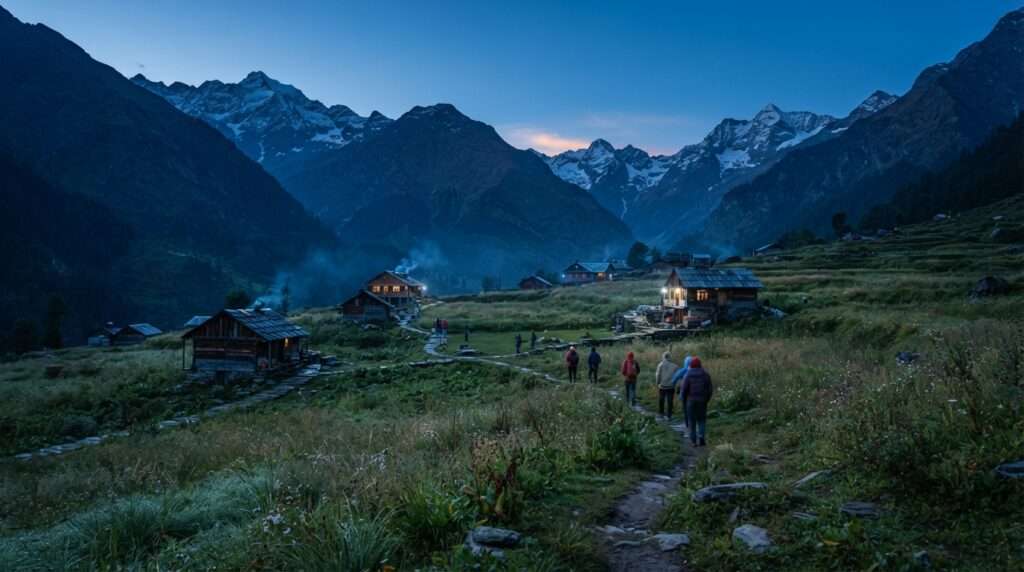
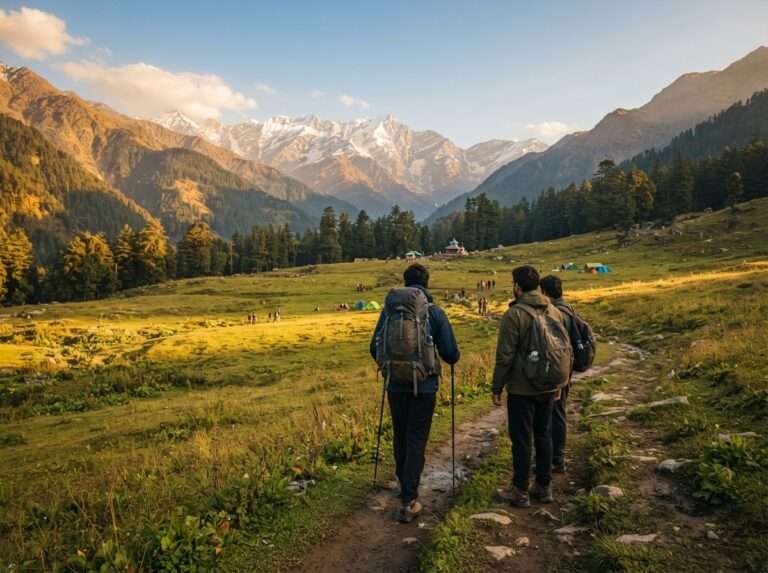
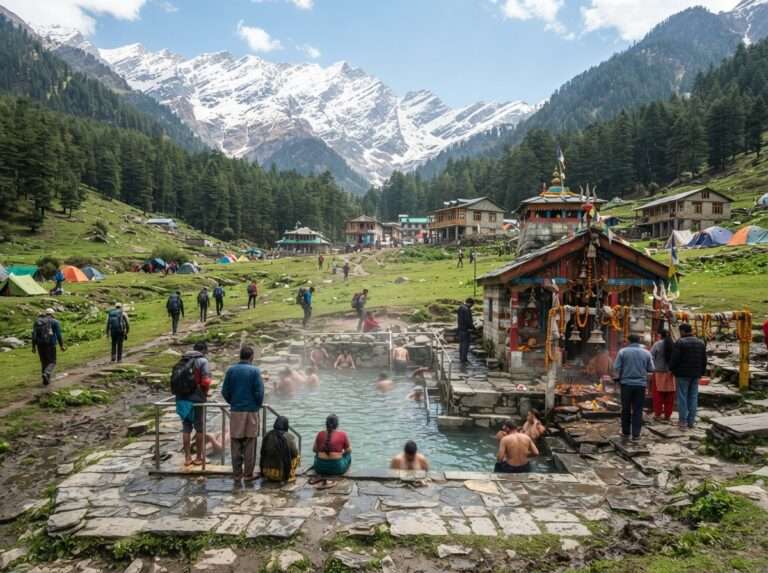
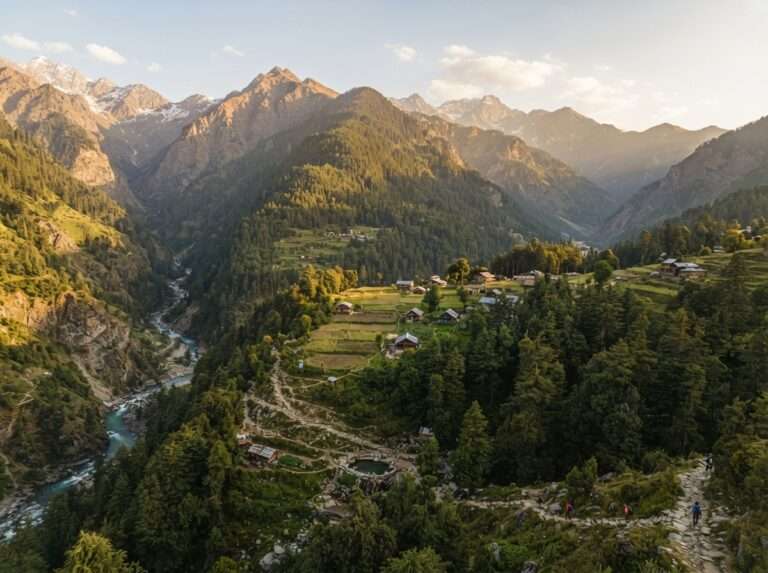
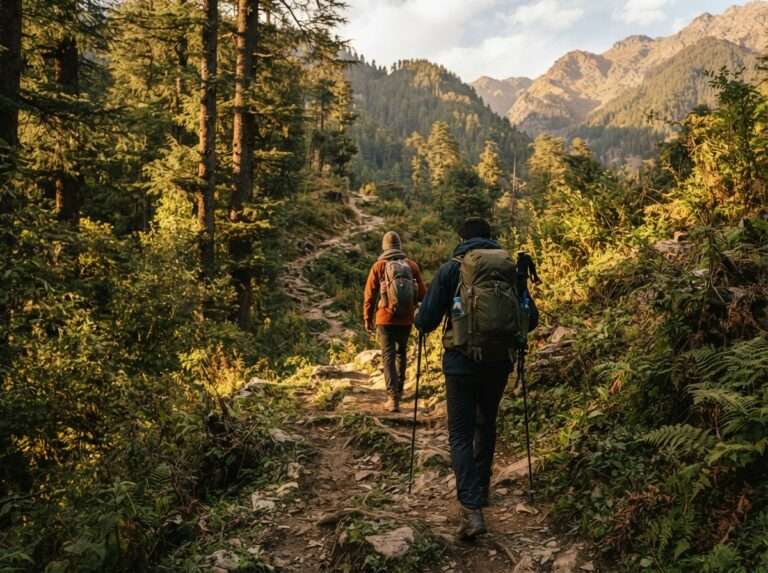
Kheerganga is the valley’s headline experience, a high meadow at roughly 2,960 m with natural hot springs and a small Shiva temple, reached only on foot. Pilgrims and trekkers have soaked in its spring for generations. Since July 2024 the Himachal Pradesh Forest Department has banned overnight camping here, so it is now strictly a day-trek. Enter the trail before 10 AM and be back down by 2 PM; full trek details are below.
Parvati is trekking country. The routes range from a half-day village walk to a serious week-long crossing into Spiti. Here are the main ones, easiest first, with the current rules that matter in 2026.
| Trek | Distance / duration | Difficulty | Max altitude | Trailhead |
| Kheerganga | 12 to 13 km, 4 to 6 hr one way (day-trek) | Easy to moderate | ~2,960 m | Barshaini |
| Grahan village | 8 to 9 km, 3 to 4 hr one way | Easy | ~2,350 m | Kasol |
| Malana | ~4 km climb after 21 km drive | Easy to moderate | ~2,650 m | Jari / Malana road-head |
| Sar Pass | ~48 km, 4 to 5 days | Moderate | ~4,220 m | Kasol / Grahan |
| Chandrakhani Pass | ~30 km, 3 to 4 days | Moderate | ~3,660 m | Naggar / Malana |
| Pin Parvati Pass | ~110 km, 9 to 11 days | Difficult | ~5,319 m | Barshaini |
The Kheerganga day-trek, step by step (2026 rules)
This is the trek most visitors come for, and the rules changed recently, so plan around them. Overnight camping and tents at the top have been banned by the Himachal Pradesh Forest Department since July 2024, and Kheerganga is now a day-trek only. Enter the trail before 10 AM and be back down by 2 PM. Because you cannot sleep at the meadow, stay the previous night lower down in Barshaini, Kalga, Pulga, Nakthan or Tosh.
Beginners in reasonable shape manage this trek comfortably in good weather. Carry water, a rain layer and cash, wear proper shoes, and do not attempt it in heavy monsoon rain when the path is slippery.
Longer and higher: Sar Pass, Chandrakhani and Pin Parvati
For multi-day trekkers, Sar Pass (about 4,220 m) is the popular moderate option, a four to five day loop that starts near Kasol and Grahan and is often recommended as a first Himalayan pass. Chandrakhani Pass (about 3,660 m) links Naggar with Malana over three to four days. The big one is the Pin Parvati Pass at 5,319 m, a demanding nine to eleven day crossing from Barshaini over to the Pin Valley in Spiti, best attempted only with a guided team and prior high-altitude experience. All high passes need a registered guide and are season-dependent, so book through a licensed operator.
The two sweet spots are mid-September to November and April to June. Autumn brings crisp air, golden foliage and clear mountain views, and it lines up with the pre-winter trekking window. Spring and early summer are green and mild, with snowmelt swelling the river and comfortable days for walking. Avoid July and August: the monsoon makes the Kullu roads landslide-prone and the trails dangerously slippery. Winter, from December to March, delivers snow and a quiet, magical valley, but nights are bitter and heavy snow can close the upper roads to Tosh, Barshaini and beyond, so check conditions before you go.
Almost every route funnels through Bhuntar, the valley’s gateway town and airport, about 30 km below Kasol. From there it is a short drive or local bus up the Parvati River road.
By bus: This is the cheapest and most popular option. Overnight Volvo and HRTC buses run from Delhi to Bhuntar, a road distance of about 500 km that takes roughly 10 to 12 hours. Many services continue to Kasol; otherwise change at Bhuntar for a local bus or shared cab. Book government HRTC or private Volvo seats in advance during peak season through hrtc.gov.in or a bus-booking site.
By air: The nearest airport is Bhuntar (Kullu-Manali airport), with limited flights from Delhi and Chandigarh. Flights are weather-dependent and often pricey, so many travellers instead fly to Chandigarh and drive the remaining stretch, about six to seven hours, up to Kasol.
By train: There is no broad-gauge railway into the valley. The nearest narrow-gauge railhead is Joginder Nagar, roughly four hours by road from Kasol. Most people pair a train to Chandigarh or Pathankot with an onward bus.
Getting around: Inside the valley, local HRTC buses and shared cabs run between Bhuntar, Kasol, Manikaran and Barshaini through the day, and villages like Tosh, Kalga and Pulga are reached on foot from the road-head. Mobile network is patchy above Kasol and effectively gone on the treks; postpaid connections work best, and ATMs are reliable only in Kasol and Bhuntar. Carry enough cash for your whole upper-valley stay.
Where to stay: Accommodation ranges from Rs 400 hostel dorm beds to riverside cottages and a handful of proper hotels. Kasol has the widest choice and the easiest booking. For quieter nights, book a wooden guesthouse in Tosh, Kalga or Pulga, or a simple homestay in Grahan or Rasol. Book ahead for the September to November and April to June peaks.
Trip cost: Parvati is a budget-friendly region. As an indicative guide, backpackers hostel-hopping and eating at cafes can manage on roughly Rs 1,500 to Rs 2,000 per person per day, while private rooms, cabs and guided treks push a mid-range trip to about Rs 2,500 to Rs 3,500 per day. A typical four to five day trip from Delhi, including the overnight bus both ways, lands in the Rs 8,000 to Rs 15,000 range per person. Treat these as planning figures and confirm current fares before you book.
Is it safe? The valley is generally safe, including for solo and women travellers. Use ordinary precautions: tell someone your trek plan, do not walk remote trails alone after dark, and keep valuables close in busy Kasol. In Malana, follow the touch and photography rules, and be aware that the area’s association with charas does not make possession legal anywhere in India. On the treks, respect the altitude, carry a rain layer, and turn back in bad weather rather than pushing on.
Day 1 – Arrive Bhuntar, settle into Kasol: Step off the overnight bus at Bhuntar and drive the 30 km up to Kasol. Walk the riverside strip, cross to Chalal for an afternoon coffee, and eat dinner by the Parvati. If you have energy, add the short hop to Manikaran for the hot springs and langar at the Gurudwara.
Day 2 – Manikaran to Tosh or the Kheerganga base: Move higher up the valley. Either settle into Tosh for balcony views, or push on to Barshaini and up to Kalga or Pulga so you are positioned for an early Kheerganga start. Wherever you land, this is your quiet mountain night.
Day 3 – Kheerganga day-trek, then return: Start from Barshaini before 10 AM and trek the 12 to 13 km up to Kheerganga, soak in the hot spring, visit the Shiva temple and begin your descent in time to be off the trail by 2 PM. Return to your village stay for the last night, or drop back to Bhuntar for the onward bus. Add a fourth and fifth day if you want Malana, Grahan or a longer pass trek.
Parvati Valley rewards a slow, village-by-village approach: a couple of Kasol nights, a quiet stay higher up, and the Kheerganga day-trek at the heart of it. Get the season and the 2026 trek rules right and the rest falls into place. When you are ready to turn this into dates, browse our Himachal tour packages for ready-made Kasol and Parvati trips, or read the wider Himachal travel guide to pair the valley with Manali, Spiti or Dharamshala.
Yes, but only as a day-trek. Overnight camping and tents at Kheerganga have been banned by the Himachal Pradesh Forest Department since July 2024, and that rule continues into the 2026 season. You must enter the trail before 10 AM and descend by 2 PM, and sleep the night before in a lower village such as Barshaini, Kalga, Pulga, Nakthan or Tosh. The 12 to 13 km trail from Barshaini and the hot spring at the top are all still open.
Three days covers the essentials: a day around Kasol, Chalal and Manikaran, a night higher up in Tosh or Kalga, and the Kheerganga day-trek. Give it four to five days if you also want Malana, an overnight at Grahan or Rasol, or a longer pass trek like Sar Pass.
Aim for mid-September to November or April to June. Autumn is crisp and clear with golden foliage and good trekking weather, while spring and early summer are green and mild. Avoid July and August, when the monsoon makes the roads landslide-prone and trails slippery. Winter is beautiful and snowy but very cold, and heavy snow can close the upper roads.
The simplest way is an overnight bus. HRTC and private Volvo services cover the roughly 500 km from Delhi to Bhuntar in about 10 to 12 hours, and many continue to Kasol. Otherwise fly or drive to Chandigarh and take a bus or cab onward, about six to seven hours up to Kasol. Book bus seats ahead in peak season.
Generally yes. Many women travel the valley solo and find it welcoming, especially around Kasol and the popular villages. Use normal precautions: share your trek plan with someone, avoid remote trails alone after dark, dress modestly in Manikaran and Malana, and keep an eye on your belongings in busy cafes. On treks, mind the altitude and the weather.
Only patchily. Reliable ATMs are in Bhuntar and Kasol, so withdraw cash before you head higher. Mobile signal thins out above Kasol and disappears on the treks; postpaid connections tend to work best. Carry enough cash for your whole upper-valley stay.
No special permit is needed for Indian travellers to visit Kasol, Manikaran, Tosh or to do the Kheerganga day-trek. High-altitude passes such as Sar Pass and Pin Parvati are done through registered trekking operators who handle forest and camping formalities. Foreign nationals should carry ID and check current local requirements. Always follow the Forest Department's posted trail rules.
Yes. Kheerganga is rated easy to moderate and is one of the most beginner-friendly Himalayan treks, about 12 to 13 km one way with 4 to 6 hours of climbing. Reasonable fitness, proper shoes, water and a rain layer are enough in good weather. Because it is now a day-trek, start early from Barshaini to keep the 10 AM entry cut-off and the 2 PM descent comfortable.
Kasol is the easiest base for cafes, ATMs and day trips. For quieter mountain nights, choose Tosh for views or Kalga and Pulga for orchard-side calm and an early Kheerganga start. Grahan and Rasol suit trekkers who want an offbeat homestay night. Most itineraries mix one or two Kasol nights with a night higher up.
You can, and the snow-covered valley looks magical, but plan carefully. December to March brings freezing nights and the risk of road closures above Kasol, so upper villages like Tosh and Barshaini may be hard to reach and some cafes shut. Kasol and Manikaran stay accessible in most winters. Check road and snow conditions before travelling and pack serious warm layers.
Real reviews from real travelers who booked with us.
View All Reviews