4D / 3N
17% OFF
Manali-Kasol Tour Package by Cab for Himachal (4D/3N) - At A Glance
- Hotel
- Meals
- Sightseeing
- Entry Tickets
- Cab Transfer
₹12,688
₹10,500 /pp


The best places to visit near Dharamshala are the day trips and weekend getaways scattered across the Kangra valley and the Dhauladhar range, and most of the good ones sit within about 100 km. Triund, the easy ridge trek, is barely 16 km away. The tea town of Palampur and the eighth-century Masrur temples are both around an hour and a half away. Bir Billing, Dalhousie and Khajjiar make comfortable one or two-night escapes. This guide lists 15 genuine places to visit near Dharamshala, grouped by how far each one is, with the real distance, the drive time and how many days it needs, so you can plan a half-day out or a long weekend without guesswork.
Key takeaways
Places To Visit Near Dharamshala
Best Time
March - June
Select Package Type

3 Days & 2 Nights
₹9,043 /@pp
GET FREE QUOTE

9 Days & 8 Nights
₹36,484 /@pp
GET FREE QUOTE

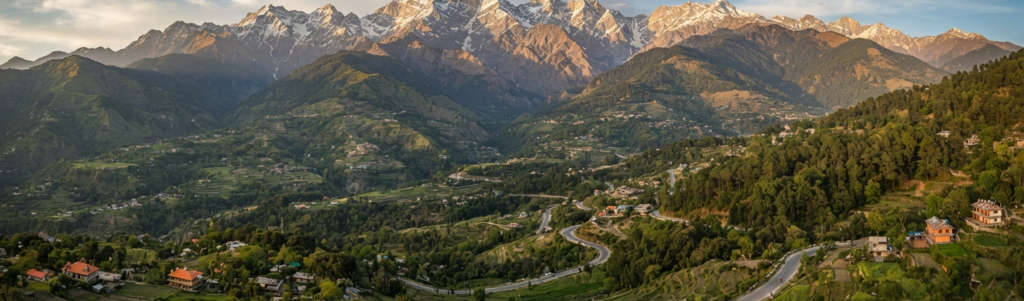
Here is the full shortlist in one view, ordered from nearest to farthest. Scan for the place that fits the time you have, then read its section below for the detail. Distances are road distances from Dharamshala; the six inside about 65 km work as day trips, and the rest are better as overnight getaways.
| Place | Distance | Drive time | Best for | Ideal trip length |
| Triund | ~16 km | ~30 min + trek | Easy Himalayan trek | Day trip or 1 night |
| Kangra Fort | ~20 km | ~45 min | History, valley views | Half day |
| Kareri Lake | ~22 km + trek | ~1 hr + trek | High-lake trek | 2 days |
| Masrur Temples | ~42 km | ~1.5 hrs | Rock-cut heritage | Half day |
| Palampur | ~45 km | ~1.5 hrs | Tea gardens, slow day | Day trip |
| Baijnath | ~54 km | ~2 hrs | Ancient Shiva temple | Half day |
| Bir Billing | ~65 km | ~2.5 hrs | Paragliding | 1 to 2 nights |
| Barot | ~110 km | ~4 hrs | River, trout, quiet | 1 night |
| Dalhousie | ~116 km | ~4 hrs | Colonial hill station | 2 nights |
| Khajjiar | ~120 km | ~4 hrs | Mini Switzerland meadow | Day from Dalhousie |
| Prashar Lake | ~120 km | ~5 hrs | High lake and temple | 1 to 2 nights |
| Mandi | ~145 km | ~4.5 hrs | Temple town | 1 night |
| Chamba | ~150 km | ~5 hrs | Old capital, museum | 2 nights |
| Naggar | ~210 km | ~7 hrs | Castle, Roerich gallery | Multi-day |
| Manali | ~234 km | ~7 to 8 hrs | Resort town, Solang | Multi-day |
These six are the easy wins: near enough to leave after breakfast and be back by evening, or to fold two together into one full day. If your Dharamshala trip is short, this is where to spend your spare day.
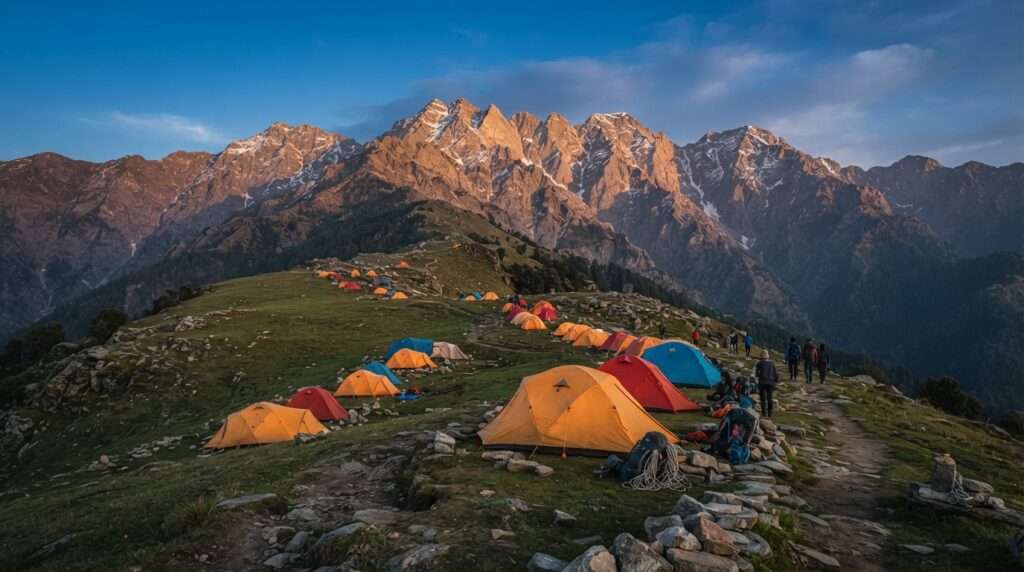
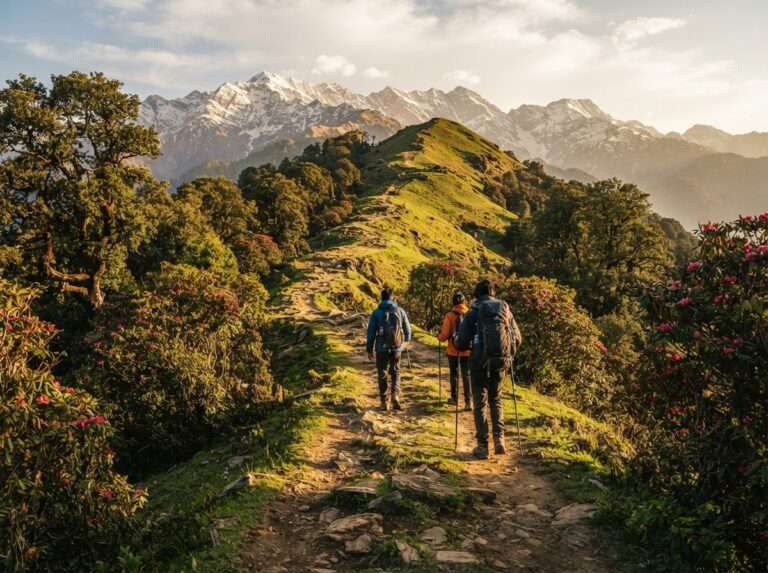
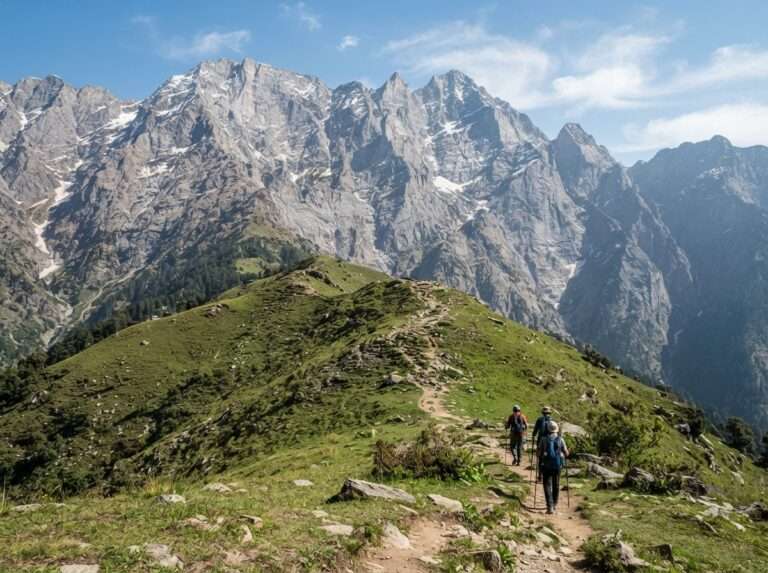
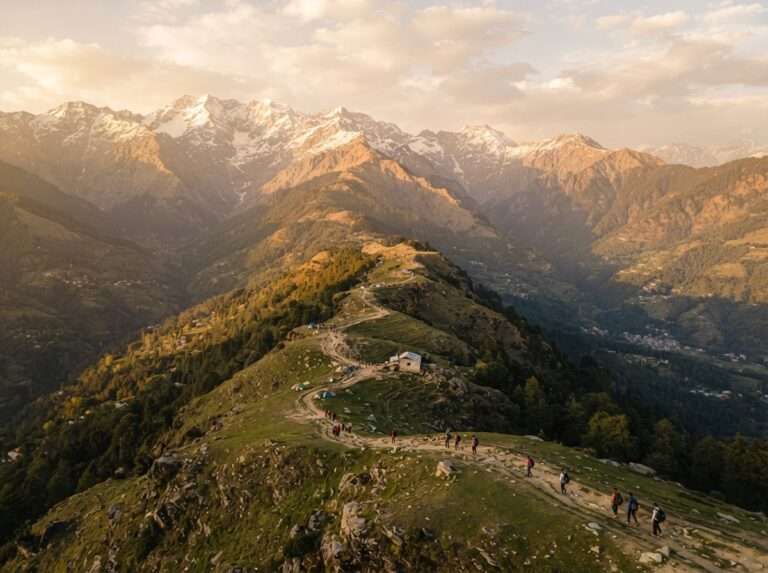
Triund is the trek everyone means when they say the easy Himalayan trek near Dharamshala. The trail starts above McLeodganj at the Galu Devi temple and climbs about 6 km from the Galu Devi trailhead (closer to 9 to 10 km if you start down in McLeodganj town) through oak and rhododendron to a grassy ridge at around 2,875 m, where the Dhauladhar wall rises straight up behind you and the Kangra valley drops away in front. Most walkers do it as a long day, up in three to four hours and back down by dusk. If you want the sunrise, a handful of seasonal tented camps let you stay the night on the ridge. [VERIFY: Triund overnight camping rules – HP Forest Dept regulates camping (registration + daily hiker/tent cap, licensed operators only); confirm current permit/fee and cap]
| Best time | April to June, September to November |
| Setting | Grassy ridge at about 2,875 m |
| Do not miss | Sunrise over the Dhauladhar wall |
| Getting there | Drive to Galu Devi above McLeodganj, then about a 6 km trek |


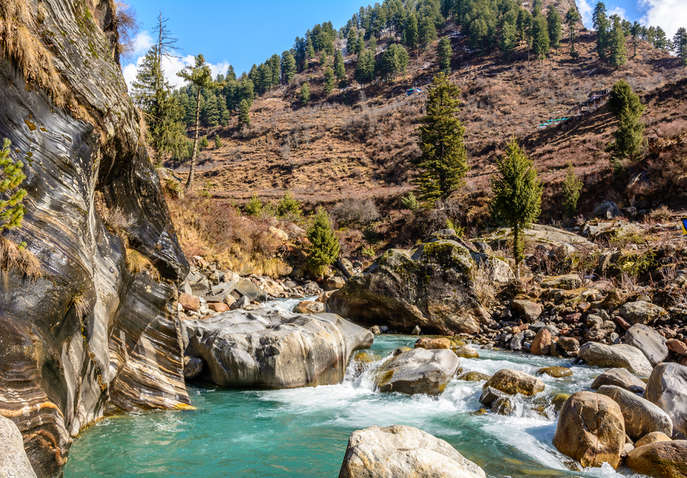
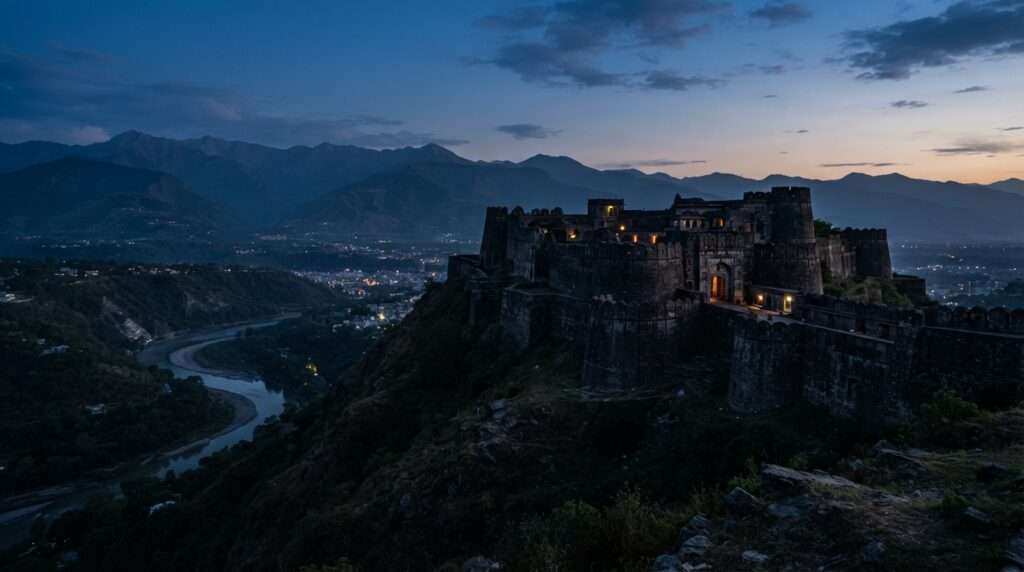
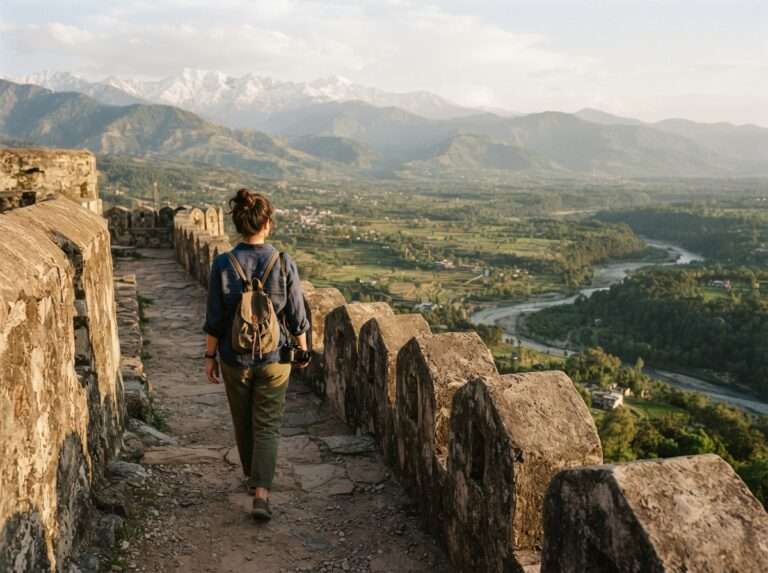
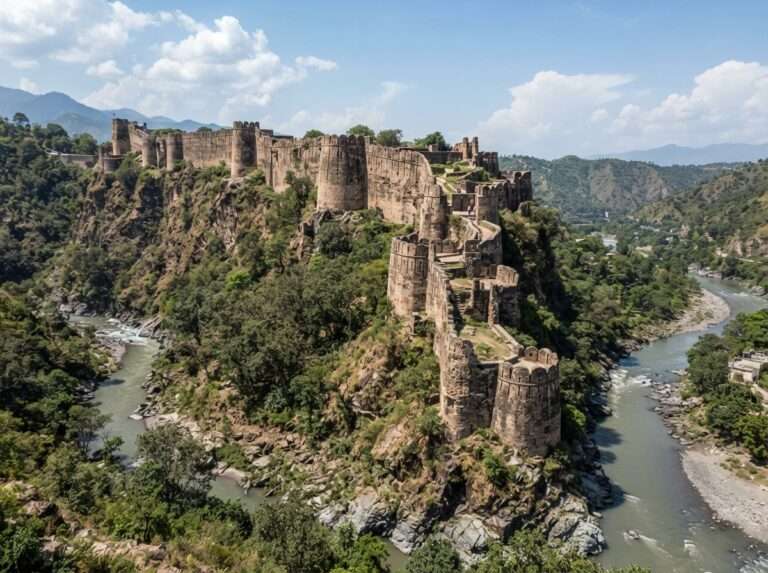
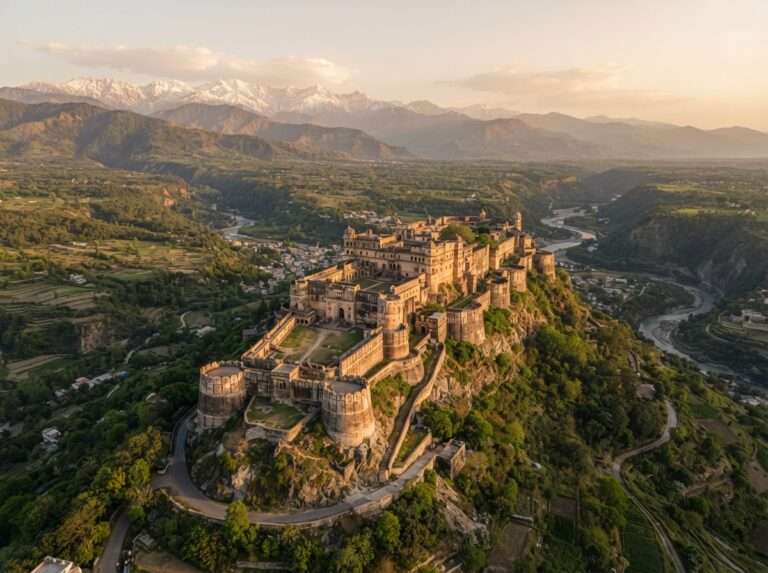
Kangra Fort is one of the oldest and largest forts in the Himalayas, raised by the Katoch dynasty of the ancient Trigarta kingdom on a spur above the meeting of the Banganga and Manjhi streams. You can walk the ramparts, the temples inside the walls and the viewpoints over the valley in a couple of hours, and the small museum near the gate fills in the Katoch story. It pairs neatly with the Masrur temples for a full day of Kangra history.
| Best time | September to November, March to June |
| Setting | Hilltop fort above two rivers |
| Do not miss | The rampart walk and valley viewpoints |
| Getting there | About a 45-minute drive from Dharamshala |


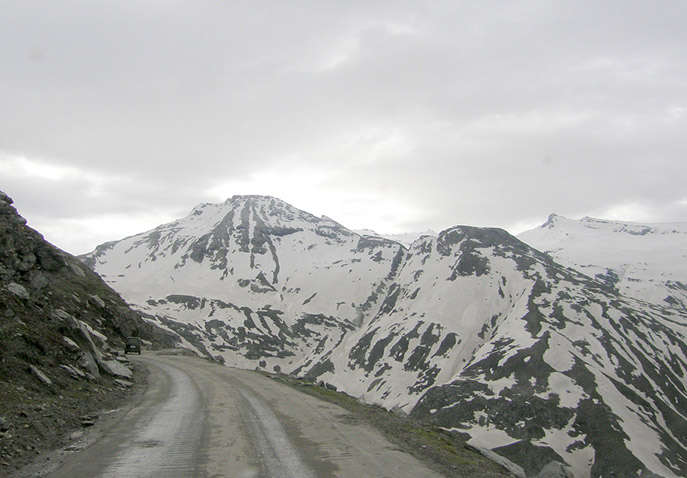


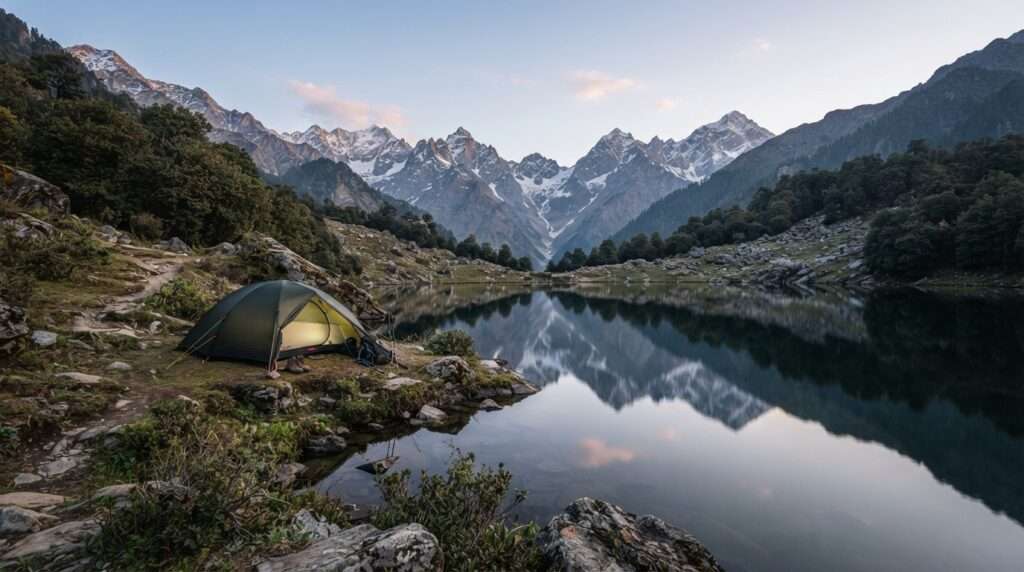
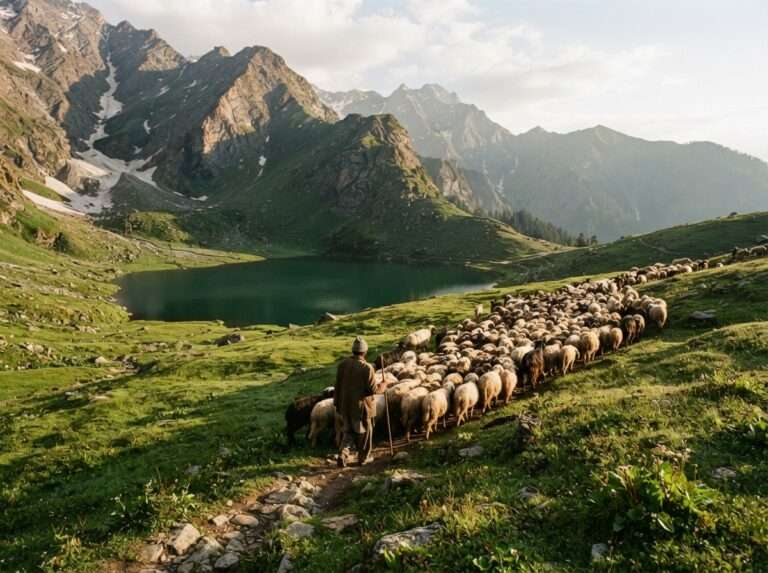
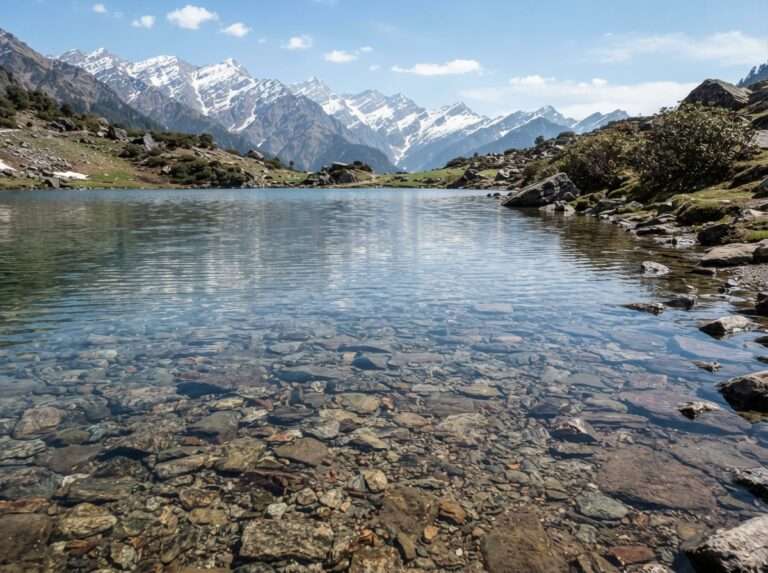
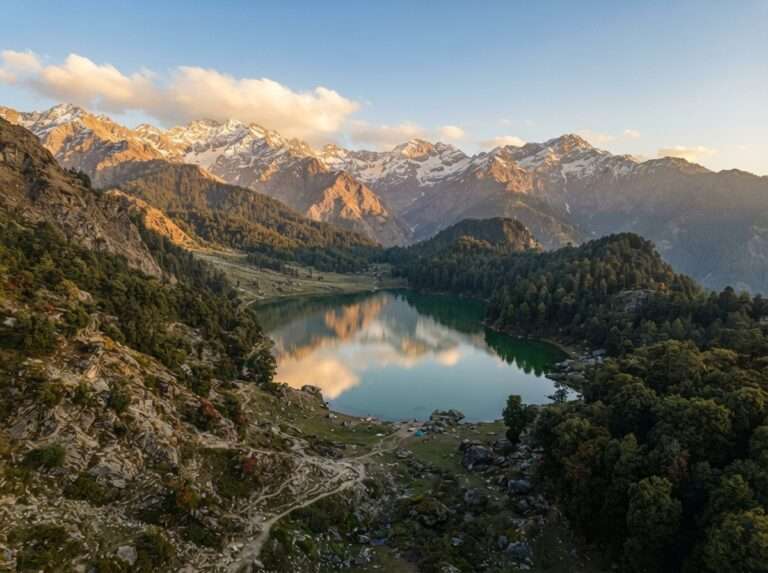
Kareri Lake is the quieter answer to Triund: a shallow, snow-fed lake at around 2,934 m below the Dhauladhar pass, reached by a moderate trek from Kareri village. The water runs clear enough to see the bottom, and in early summer the meadows around it fill with shepherds moving flocks up to high pasture. Drive the roughly 22 km to the village trailhead, then walk in and camp a night by the water. [VERIFY: Kareri roadhead – motorable road may now extend past Kareri village to the Nolli/Nauli bridge trailhead; confirm current road-end] It is best attempted between May and October.
| Best time | May to October |
| Setting | Snow-fed lake at about 2,934 m |
| Do not miss | An overnight camp on the shore |
| Getting there | Drive to Kareri village, then trek to the lake |


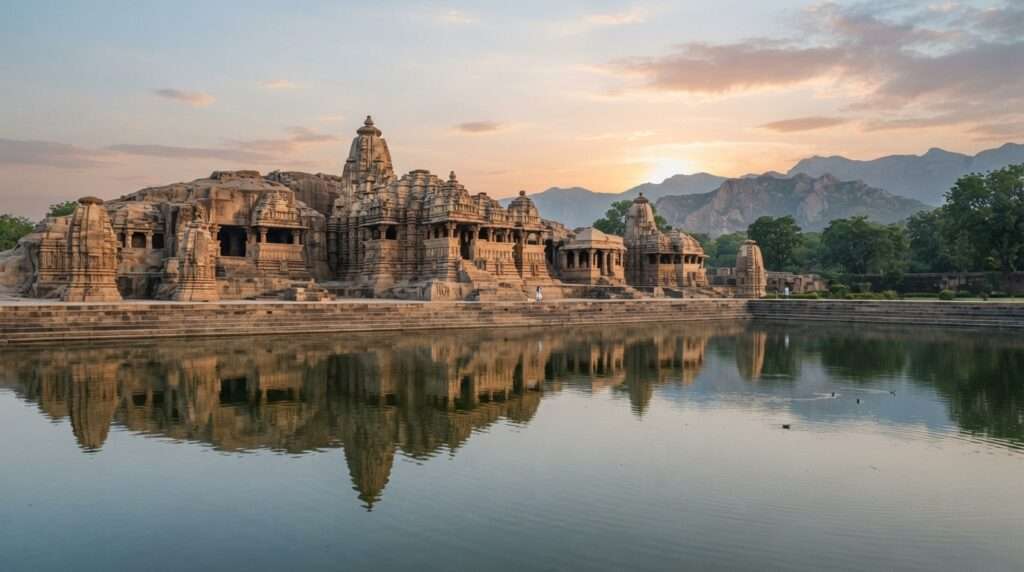
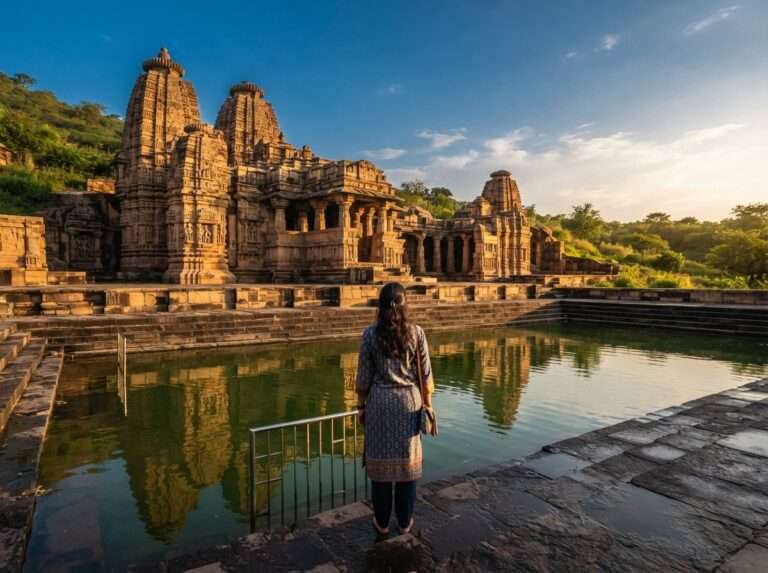
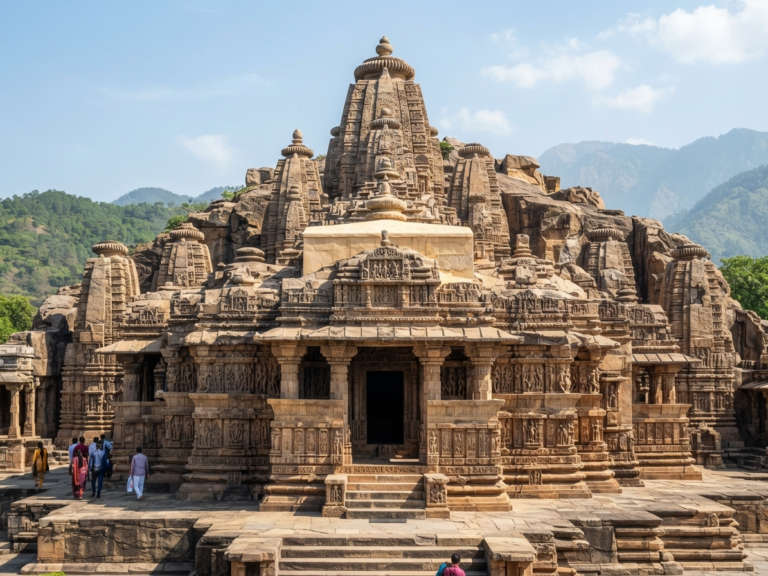
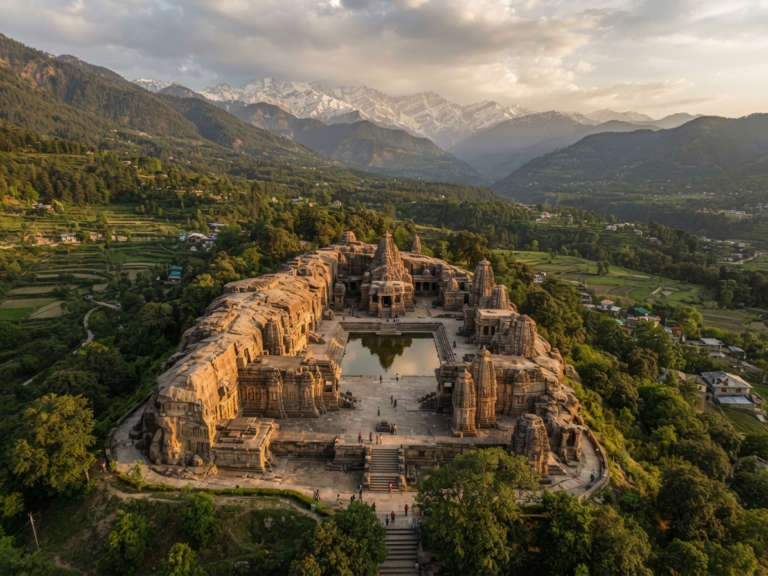
Masrur is the surprise on this list. It is a cluster of monolithic temples carved out of a single sandstone ridge in the early eighth century, often called the Himalayan pyramid and set alongside Ellora and Angkor Wat for its ambition. Fifteen shikhara-topped shrines, several still half-finished, are cut straight from the rock and face a sacred tank that mirrors them on a still morning. It is protected by the Archaeological Survey of India and rarely crowded, which is half its appeal.
| Best time | October to March |
| Setting | 8th-century rock-cut temple complex |
| Do not miss | The temples reflected in the front tank |
| Getting there | About 42 km, roughly 1.5 hours by road |
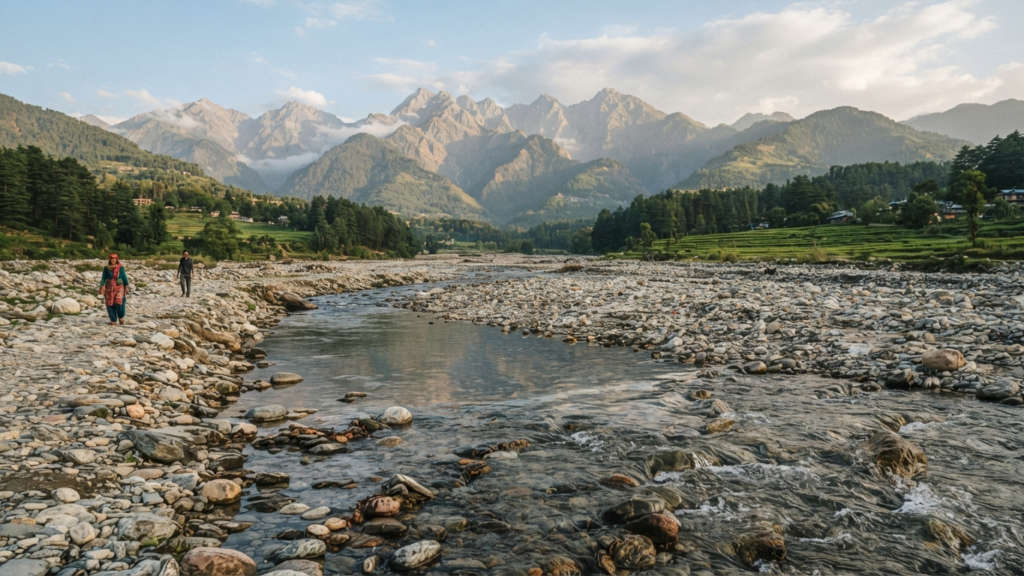
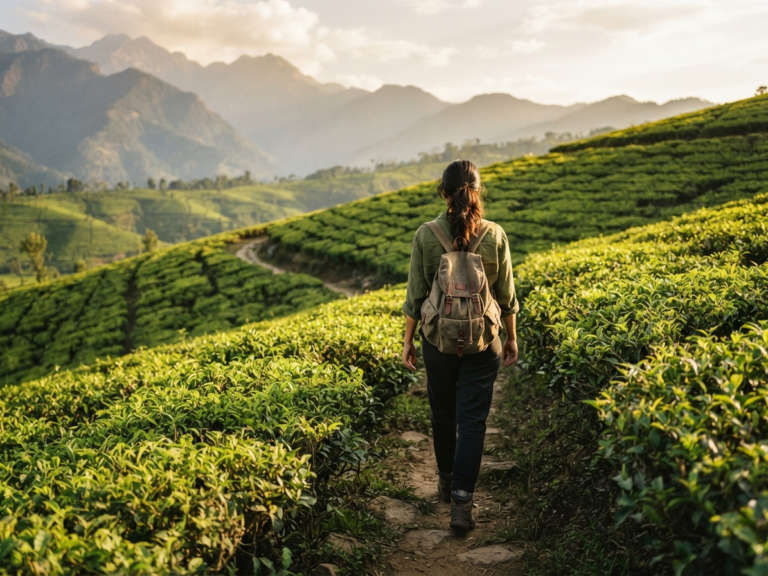
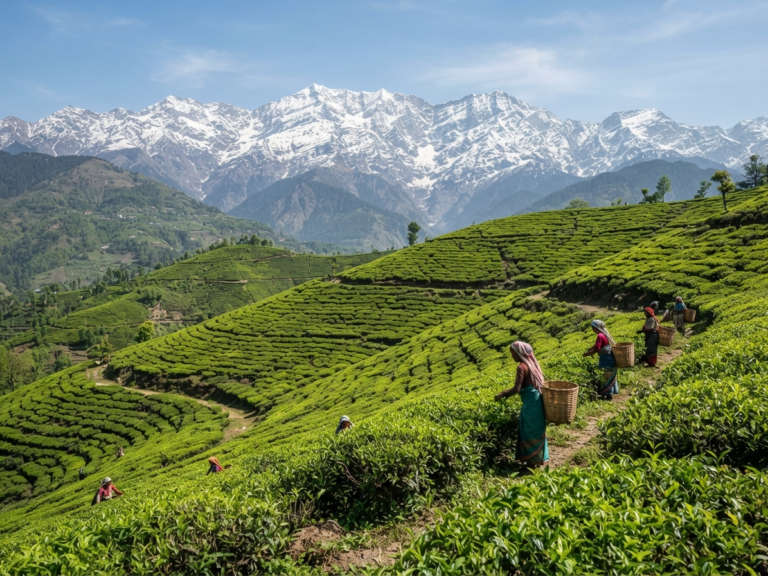
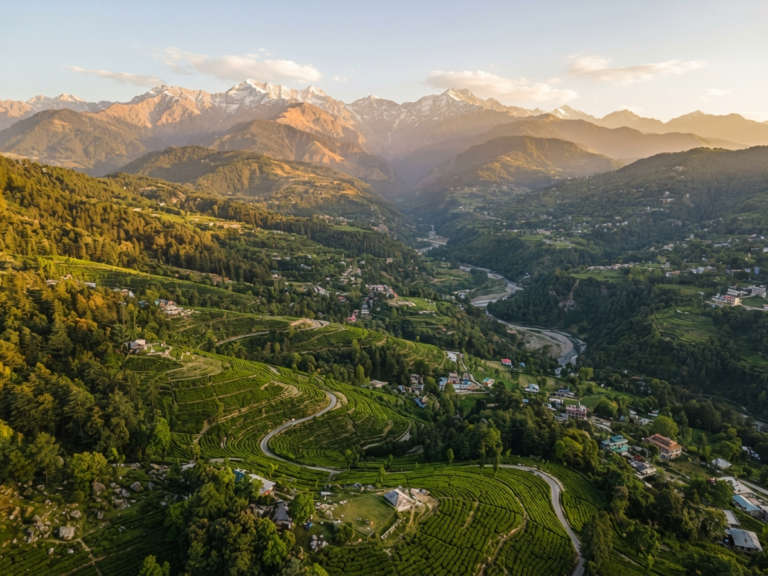
Palampur is the tea town, a green shelf of Kangra-valley gardens with the full sweep of the Dhauladhar behind it. The draw here is slow travel: walking the tea estates, following the Neugal Khad stream to where it opens into a wide pebbled bed under the peaks, and stopping at the Andretta pottery and art village nearby. At about 1,220 m the air is milder than in Dharamshala, which makes it a comfortable day out at almost any time of year.
| Best time | March to June, September to November |
| Setting | Tea town at about 1,220 m |
| Do not miss | Neugal Khad and the tea gardens |
| Getting there | About 45 km, roughly 1.5 hours by road |
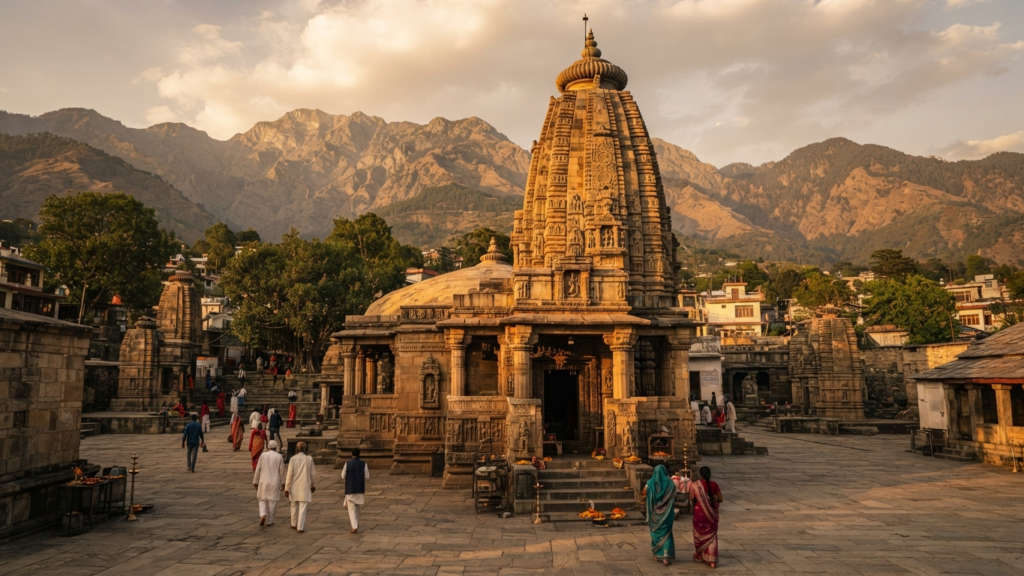
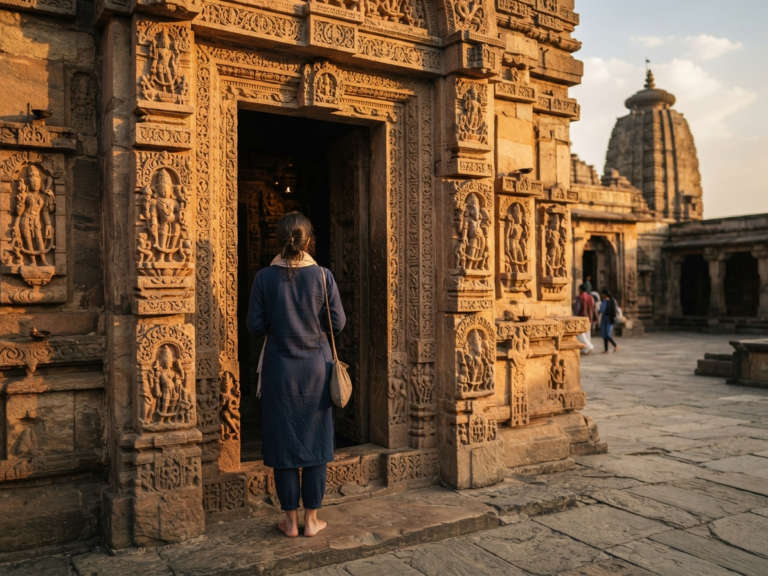
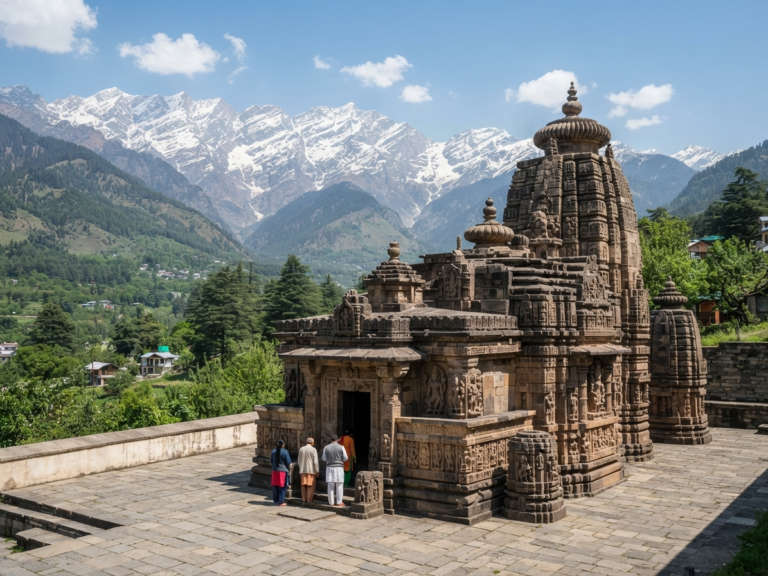
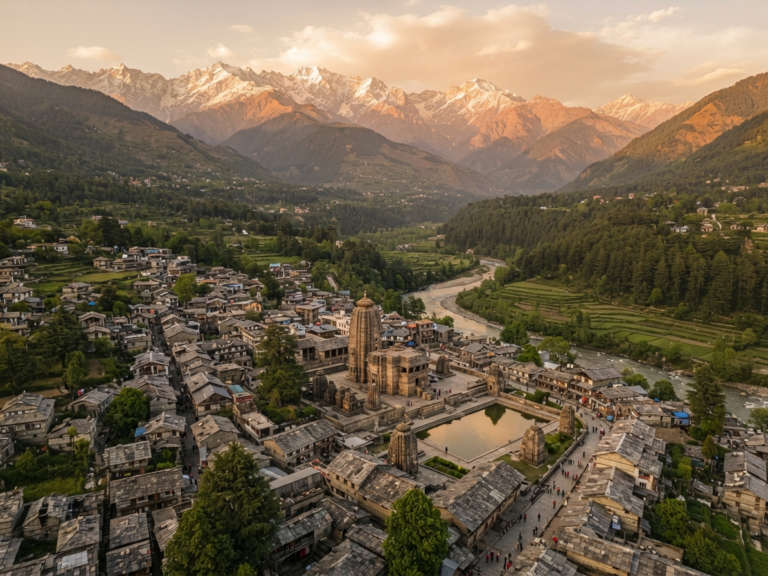
Baijnath earns its place for one thing above all: the Baijnath temple, a stone Nagara-style shrine to Shiva as Vaidyanath, the lord of physicians, built in 1204 CE and still in daily worship. It stands on a rise with the Dhauladhar behind it, and the carving on the doorway and the old inscriptions reward a slow look. Since Bir is only a short hop further along the same road, the two make an easy pairing.
| Best time | October to March |
| Setting | 13th-century Shiva temple |
| Do not miss | The 1204 CE shrine and its stone carving |
| Getting there | About 54 km, roughly 2 hours by road |
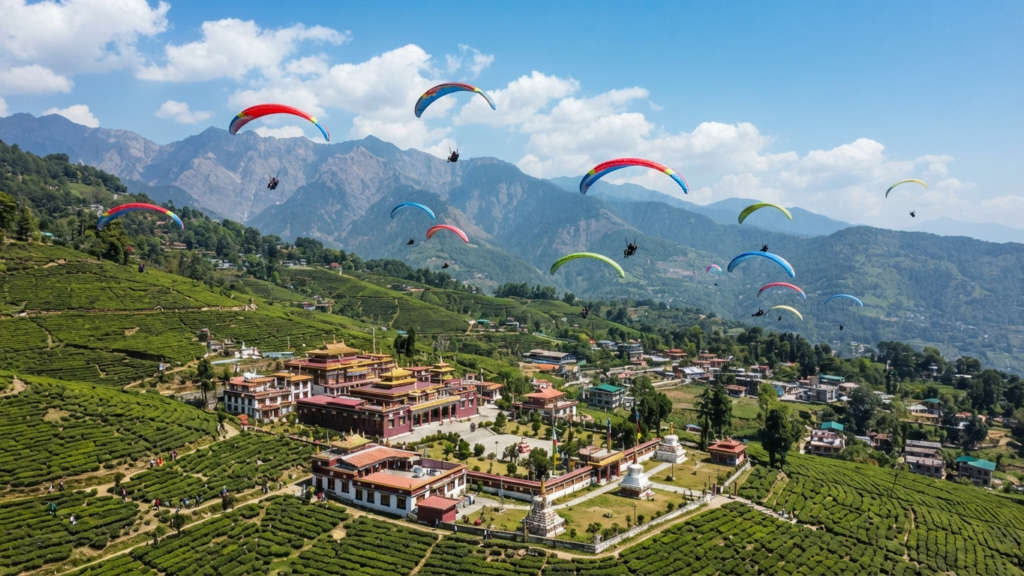
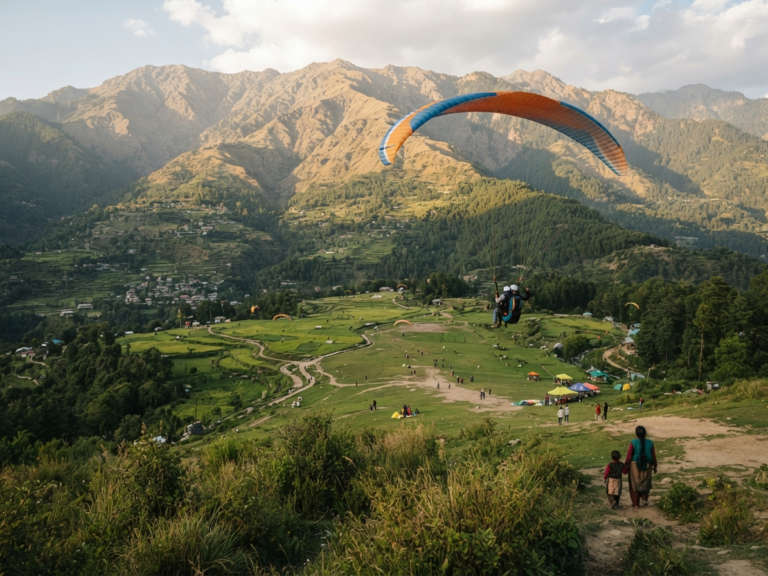
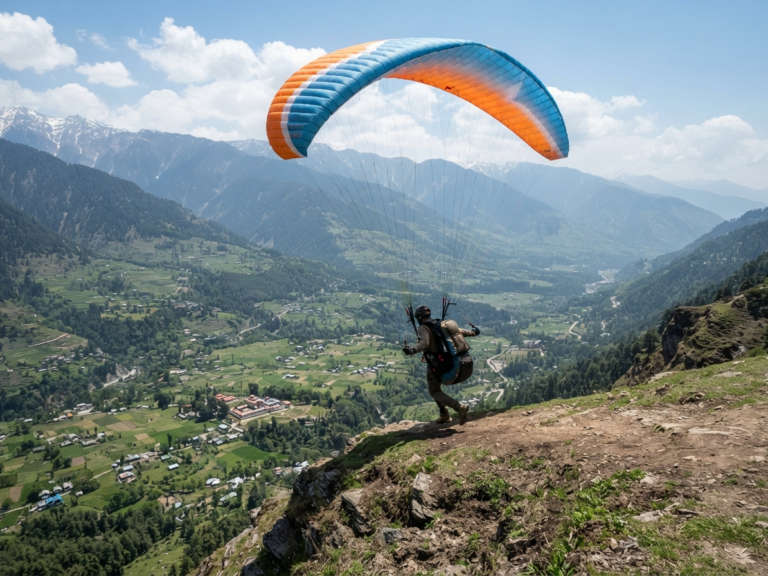
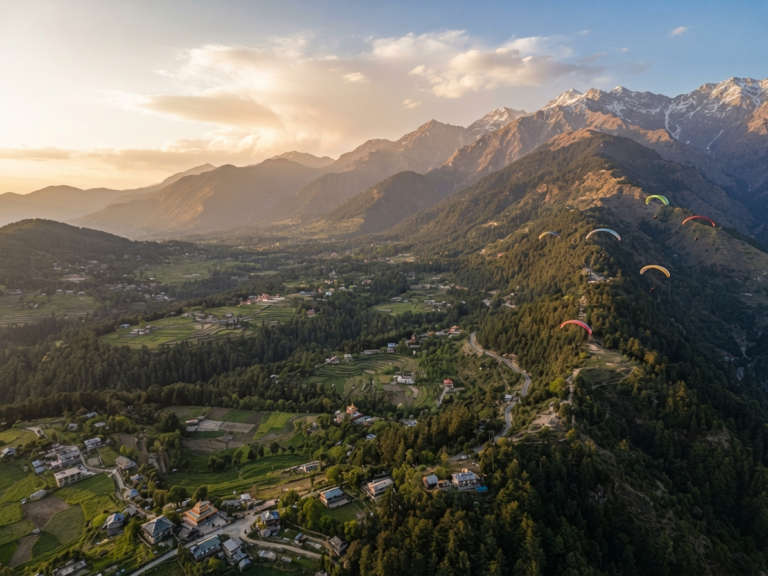
Bir is the paragliding capital of India. The landing meadow at Bir and the take-off at Billing, up at around 2,400 m, together make one of the best-known flying sites in the world and the venue for the Paragliding World Cup. Even if you never leave the ground, the Tibetan colony, the Chokling and Sherabling monasteries, the tea gardens and the cafe scene fill a proper weekend. Fly October to mid-November or March to May, when the air is stable.
| Best time | October to mid-November, March to May |
| Setting | Take-off at Billing, about 2,400 m |
| Do not miss | A tandem paragliding flight down to Bir |
| Getting there | About 65 km, roughly 2.5 hours by road |
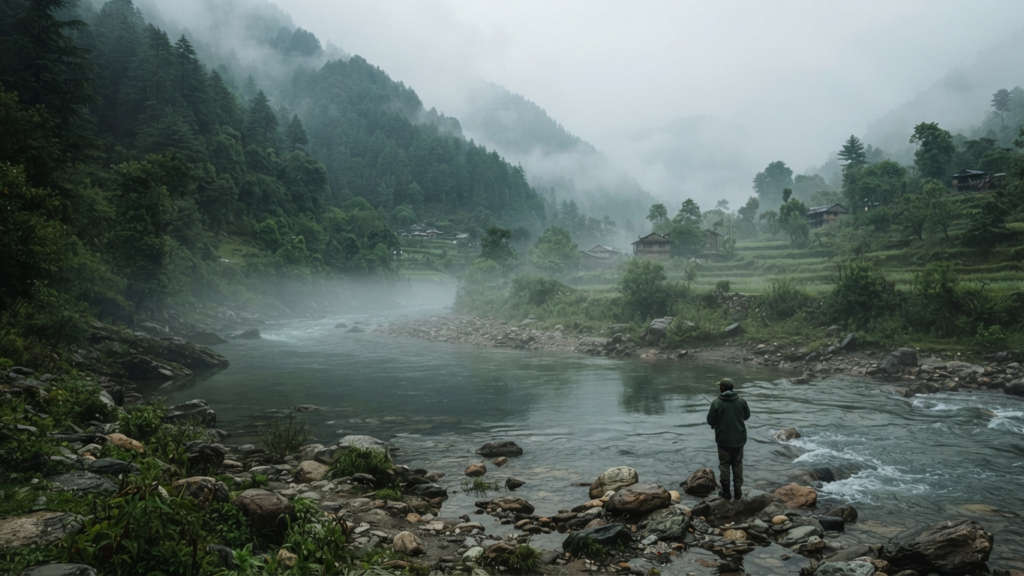
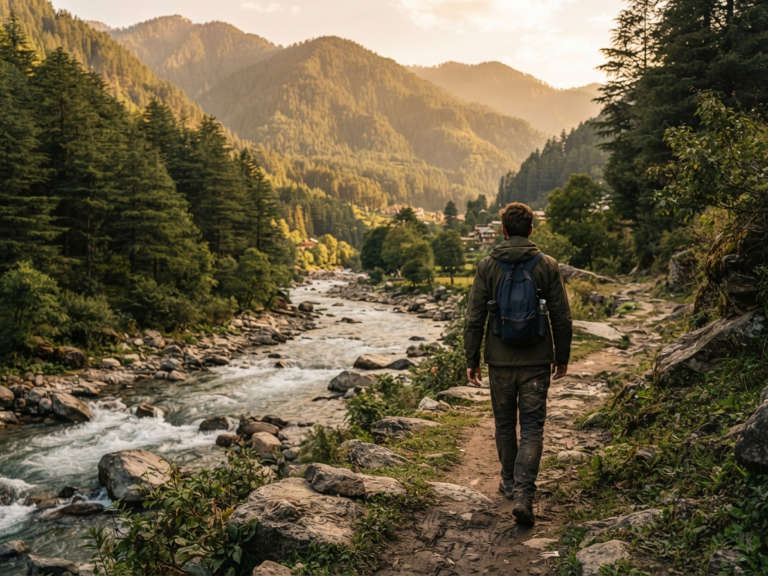
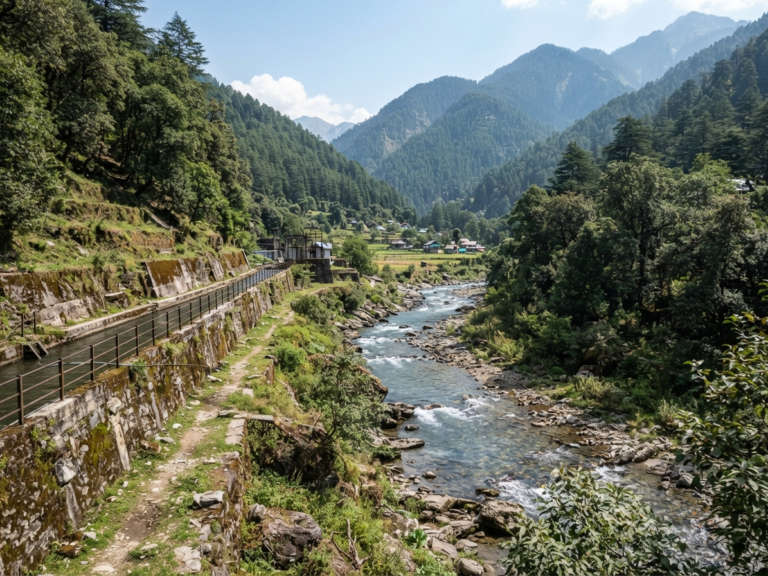
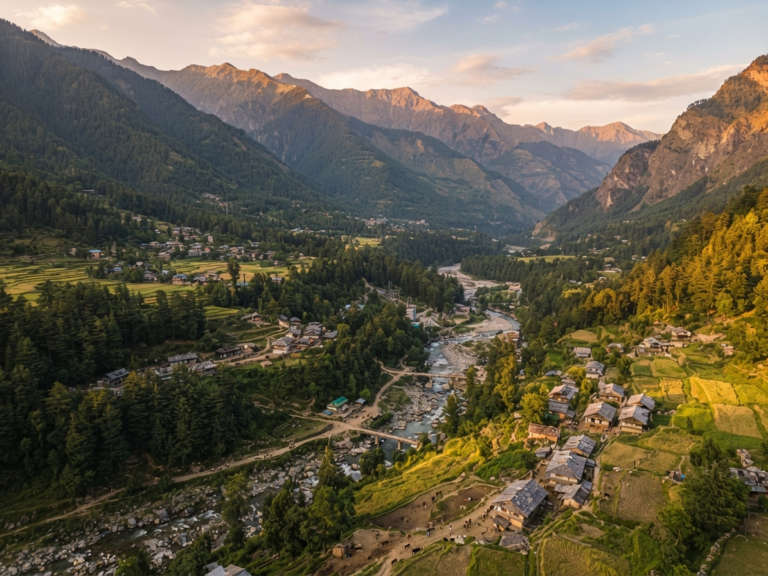
Barot is the off-radar valley pick. It is a small settlement on the Uhl river, built around the 1920s Shanan hydro project, with trout in the water, a fish farm you can visit and the Nargu Wildlife Sanctuary across the river. The slow road in keeps it green and quiet even in peak season. Come for a low-key overnight of river walks, fresh trout and cool mountain air.
| Best time | March to June, September to November |
| Setting | River valley on the Uhl |
| Do not miss | Trout at the river and the fish farm |
| Getting there | About 110 km, roughly 4 hours by road |
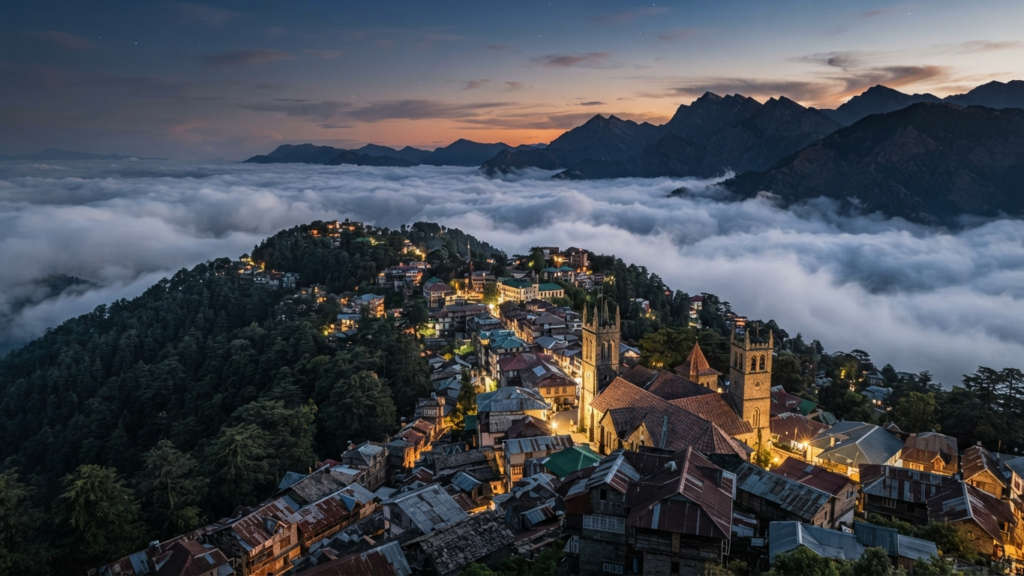
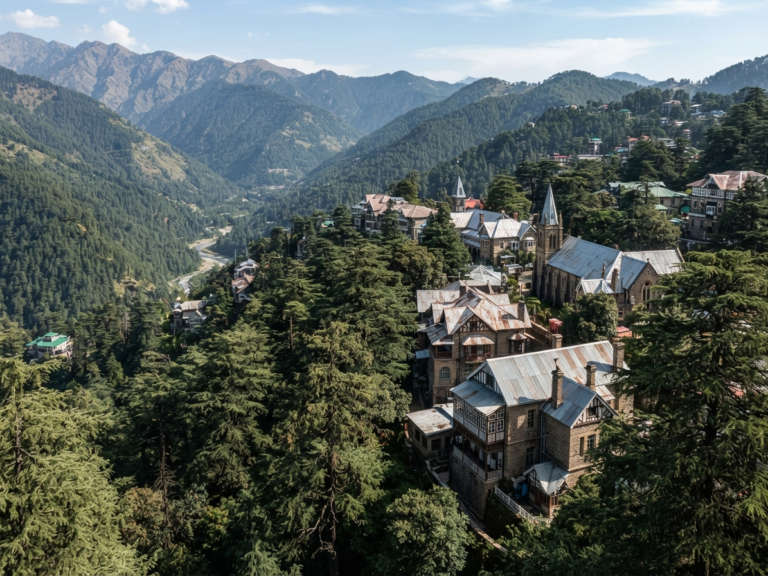
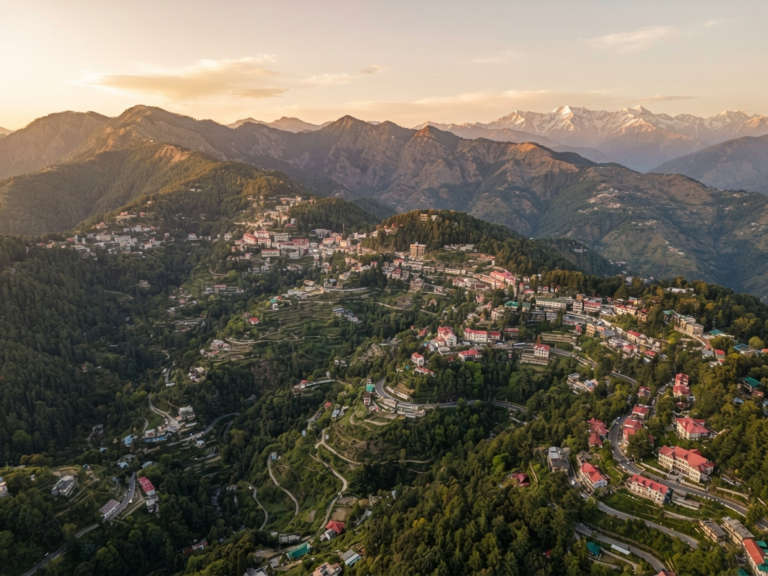
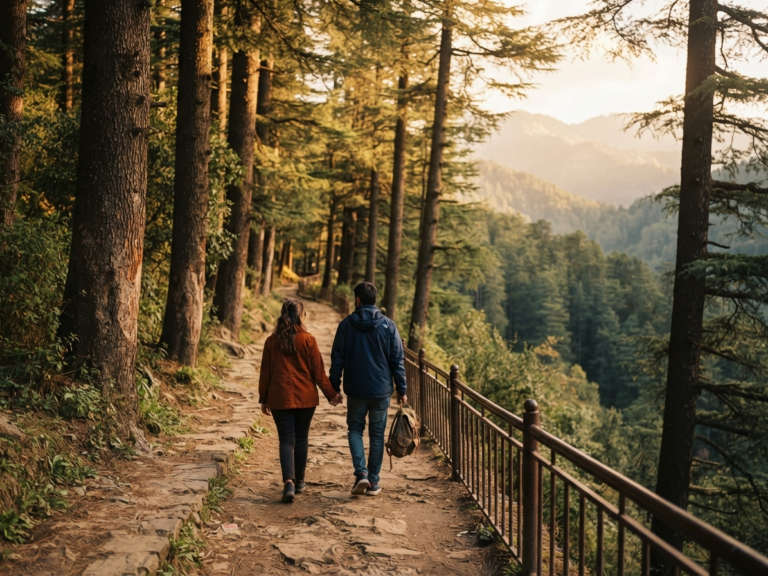
Dalhousie is the colonial hill station on the Chamba side, a set of forested ridges above the Ravi with Scottish and Victorian buildings, old churches and long deodar walks. It makes a relaxed two-day base and pairs naturally with Khajjiar and Chamba. Walk the Garam Sadak and Thandi Sadak loops, and drive up to Dainkund for the widest views.
| Best time | March to June, December to January for snow |
| Setting | Colonial hill station above the Ravi |
| Do not miss | The old churches and Dainkund Peak |
| Getting there | About 116 km, roughly 4 hours by road |
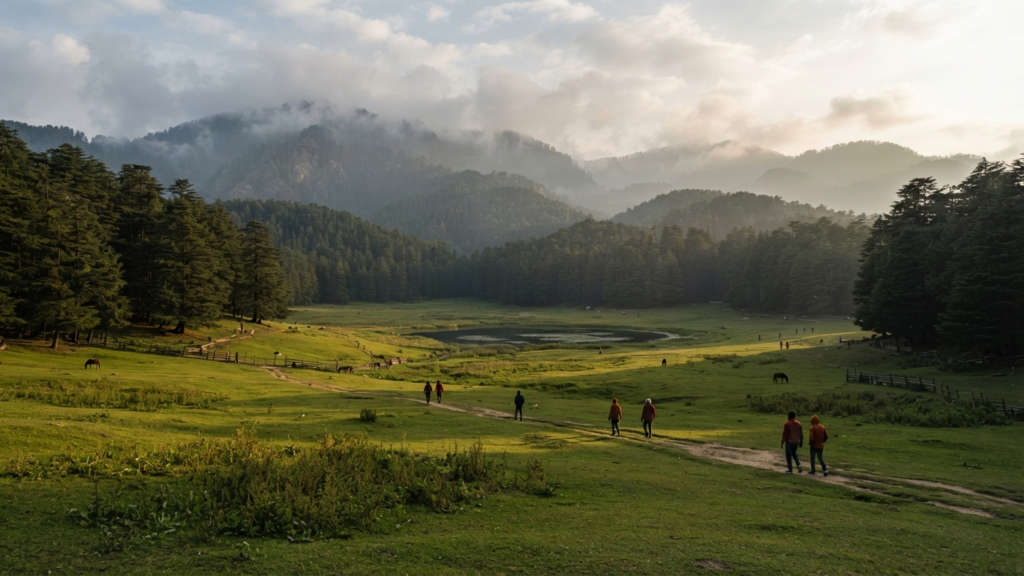
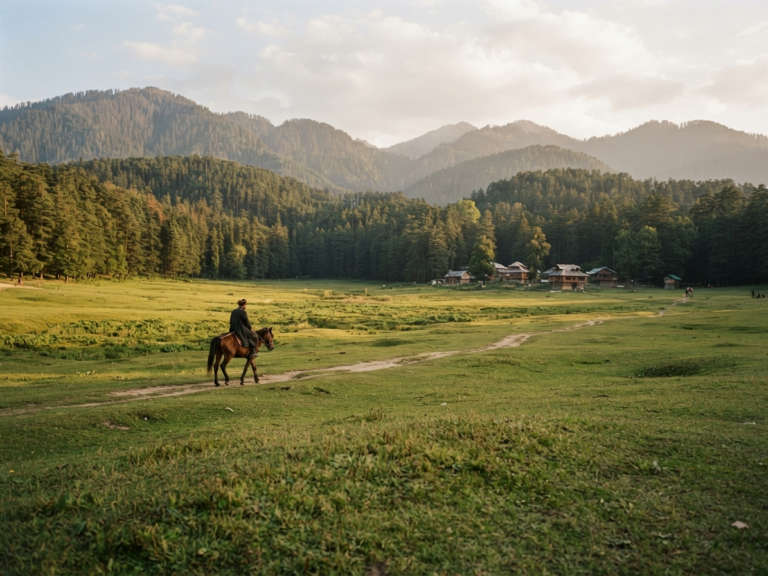
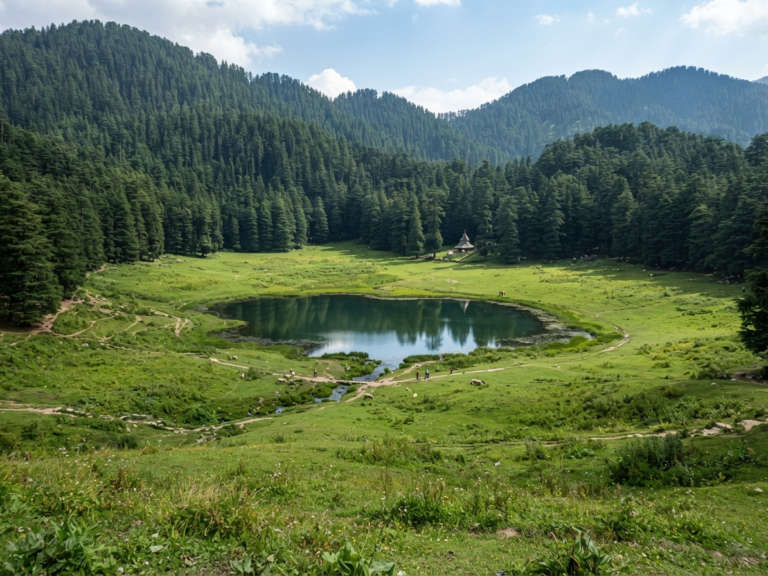
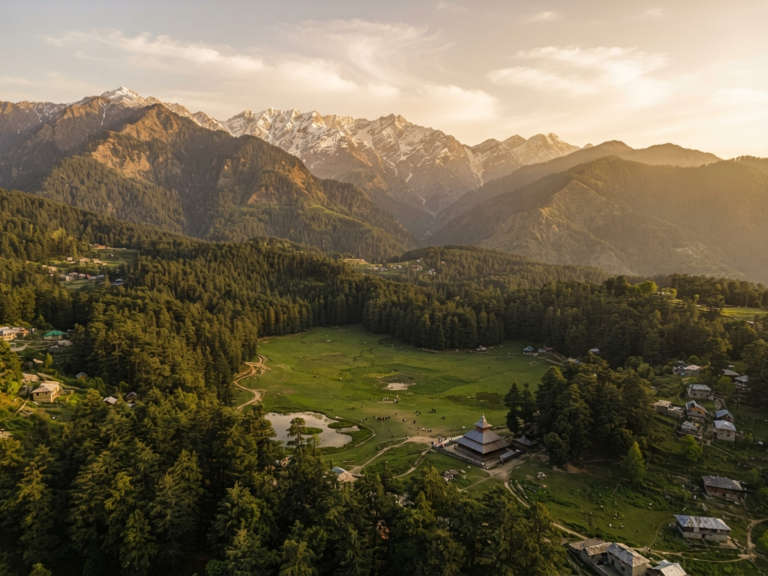
Khajjiar is the saucer-shaped meadow ringed by deodar that a Swiss diplomat once tagged the mini Switzerland of India, complete with a marker to prove it. At around 1,920 m, with a small lake set in the middle of the grass and cedar forest all around, it is the classic add-on to a Dalhousie weekend. Come for a picnic, a horse ride around the rim and the zorbing on the meadow, then drive back to Dalhousie for the night.
| Best time | March to June, September to November |
| Setting | Deodar-ringed meadow at about 1,920 m |
| Do not miss | A walk around the meadow and its lake |
| Getting there | About 120 km, usually via Dalhousie |
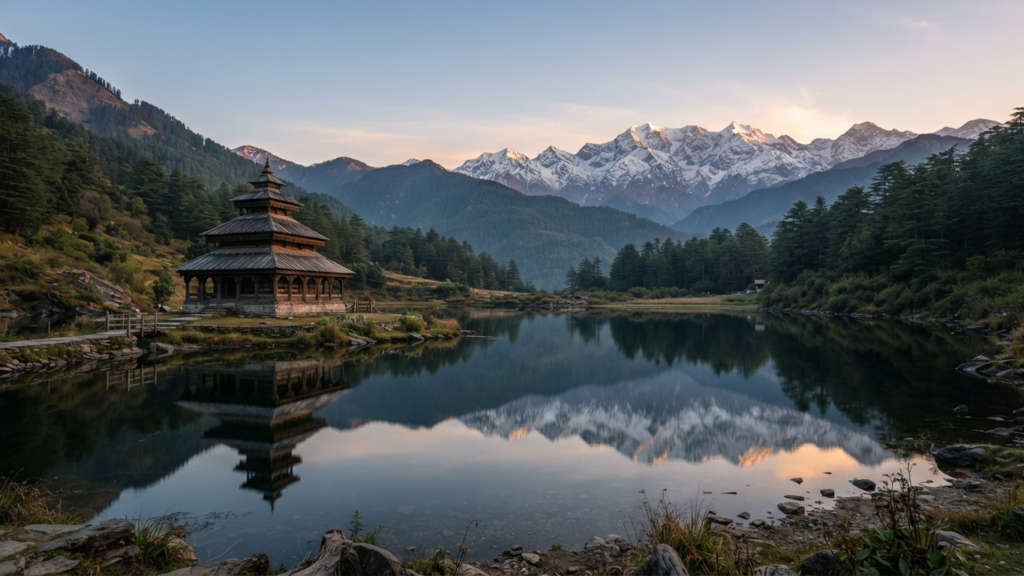
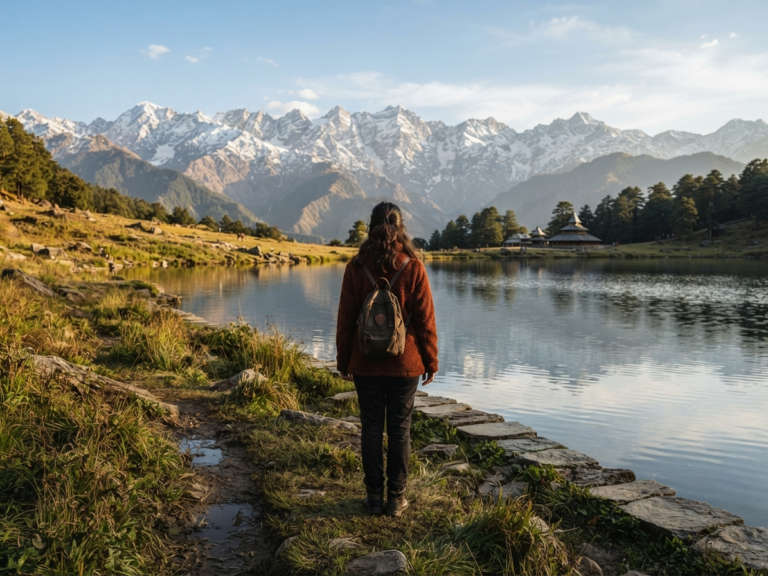
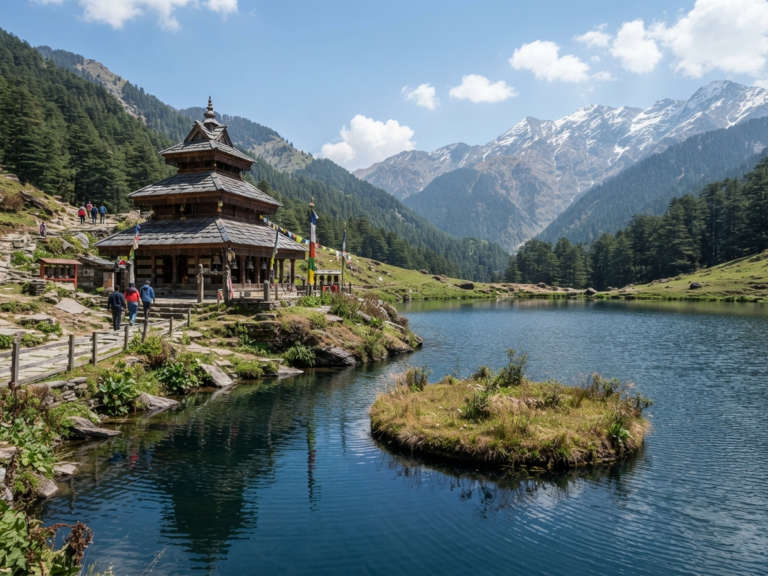
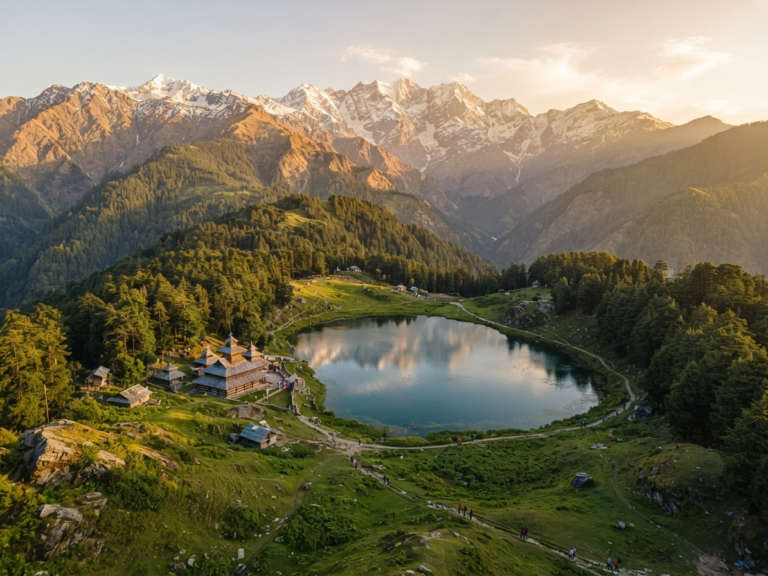
Prashar Lake sits high above Mandi at around 2,730 m, a small deep lake with a curious floating island that drifts across its surface and a three-tiered pagoda temple to the sage Parashar on its bank. The last stretch is a rough mountain road, which is exactly why the crowds stay thin. It is best from May to October; the approach can snow over in winter and the final climb turns tricky.
| Best time | May to October |
| Setting | High lake at about 2,730 m above Mandi |
| Do not miss | The floating island and the pagoda temple |
| Getting there | About 160 km via Mandi, roughly 6 hours |
These four are past the easy-weekend radius and deserve their own trip. Treat them as multi-day outings, ideally strung together into a loop so you are not driving the same road twice.
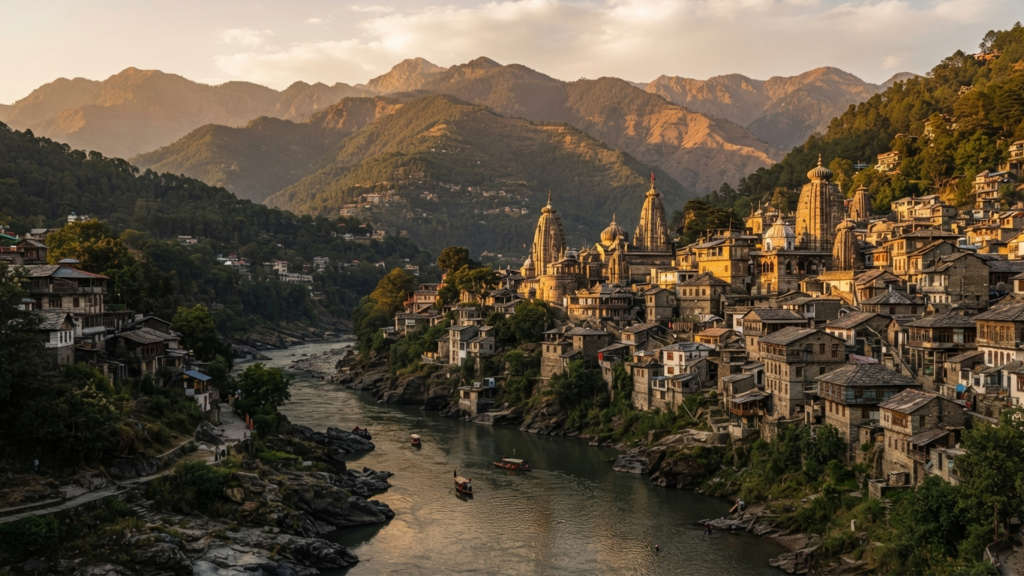
Mandi is the temple town on the Beas that locals call Chhoti Kashi, the little Varanasi, for its dense cluster of old stone shrines: Bhutnath, Triloknath and the Panchvaktra among more than eighty across the town. It is the gateway to Prashar Lake and the Kullu road, and a good overnight stop with real character rather than a resort feel. Wander the ghats along the Beas and the bazaar around the Bhutnath temple in the evening.
| Best time | March to June, September to November |
| Setting | Temple town on the Beas river |
| Do not miss | The Bhutnath temple and the old bazaar |
| Getting there | About 145 km, roughly 4.5 hours by road |
Chamba is the old capital on the Ravi, founded in the tenth century, and it wears its history openly. The Lakshmi Narayan temple complex, the Bhuri Singh Museum with its Pahari miniatures and Chamba rumal embroidery, and the grassy Chowgan promenade at its heart all sit within a short walk. Time a visit for the Minjar fair in summer if you can. It is best reached as part of a Dalhousie and Chamba loop, which the Dalhousie, Khajjiar and Chamba tour strings together end to end.
| Best time | March to June, September to November |
| Setting | 10th-century town on the Ravi |
| Do not miss | The Bhuri Singh Museum and Chowgan |
| Getting there | About 150 km, roughly 5 hours by road |
Naggar was the capital of Kullu before Sultanpur, and its castle, a 15th-century stone-and-timber fort built around 1460 by Raja Sidh Singh, still stands as a heritage hotel with wide valley views. The Nicholas Roerich art gallery, the home of the Russian painter who settled here, is the other reason to come. It is a full day’s drive from Dharamshala, so treat it as a stop on a longer Kullu and Manali trip rather than a quick hop.
| Best time | March to June, September to November |
| Setting | Castle town above the Beas in Kullu |
| Do not miss | Naggar Castle and the Roerich gallery |
| Getting there | About 210 km, a full day’s drive |
Manali is the big one, and the farthest. The Kullu-valley resort town sits at around 2,050 m with the Hadimba temple in its cedar forest, the Solang valley for snow and adventure, and the road over the Atal Tunnel into Lahaul. It is too far for anything but a multi-day trip from Dharamshala, and best strung together with Naggar and Kullu. If you would rather have it planned end to end, browse our Manali tour packages.
| Best time | March to June, October for autumn colour |
| Setting | Kullu-valley resort town at about 2,050 m |
| Do not miss | Hadimba temple, Solang valley, the Atal Tunnel |
| Getting there | About 234 km, a 7 to 8 hour drive |
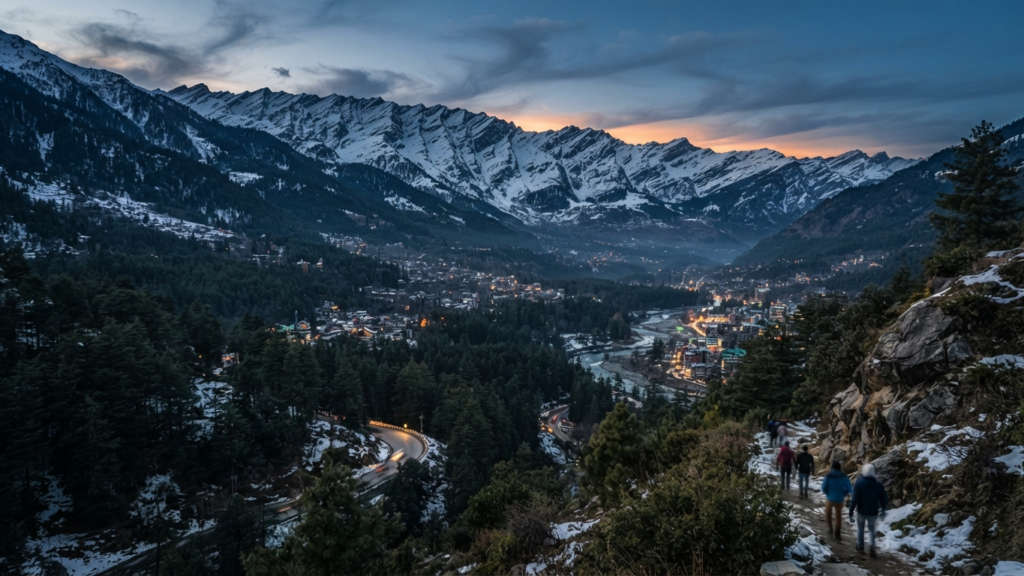
A quick word on the spots that are not on this list. McLeod Ganj, Dal Lake, Bhagsu Falls and the Namgyal Monastery all sit inside or right beside town, not out in the near-radius, so they belong on our companion guide to the best places to visit in Dharamshala itself. If you are after hill stations specifically rather than a mix of trips, our roundup of the hill stations near Dharamshala goes deeper on those. Keeping the in-town sights and the day trips separate makes both trips easier to plan.
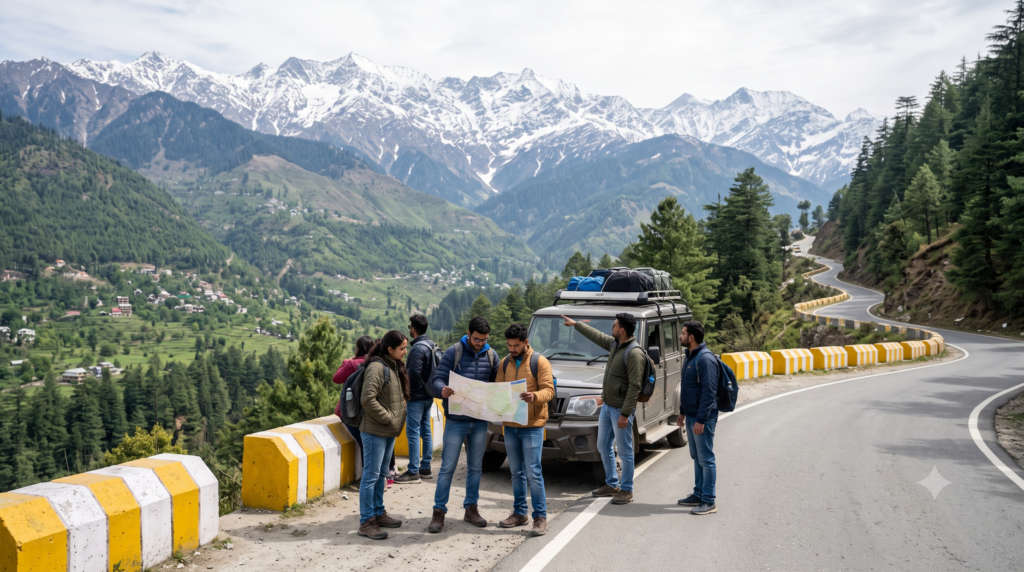
Getting around Kangra is straightforward once you plan around the distances rather than the map. Work through these five steps and you will land the right base, the right transport and the right number of days.
Start with the distances and the rest falls into place. Keep a spare day for Triund or Palampur, give a weekend to Bir or Dalhousie, and save Manali and Chamba for a longer loop. Travel March to June or September to November for the clearest roads and the most open trails. When you would rather have the sightseeing, transfers and stays planned around you in one go, browse our Dharamshala tour packages and build the trip around the places you most want to see. For the wider region, the Dharamshala travel guide has the season-by-season detail.
Within about 100 km the standouts are Triund for an easy Himalayan trek, Palampur for tea gardens, Kangra Fort and the Masrur rock-cut temples for history, Baijnath for its ancient Shiva temple, and Bir Billing for paragliding. A little further out, Barot on the Uhl river makes a quiet overnight. All of these are comfortable day trips or short getaways, with Bir and Barot best done as an overnight. The far picks, Dalhousie, Chamba and Manali, sit beyond 100 km and are better as multi-day trips.
For a single day, stay inside about 55 km. Triund works as a long day hike, up in three to four hours and back by dusk. Kangra Fort and the Masrur temples pair into one full day of Kangra history. Palampur is an easy day of tea gardens and the Neugal Khad, and Baijnath adds a 13th-century temple that combines well with a Bir visit. Leave after breakfast for any of these and you will be back in Dharamshala by evening.
Bir is the closest of the three at about 65 km, roughly a 2.5-hour drive, and it works as a long day trip or a better overnight. Dalhousie is about 116 km, close to four hours by road, and Khajjiar is a little beyond it, roughly 138 km when reached via Dalhousie, which is the usual approach. Because Dalhousie and Khajjiar are so far, plan on staying at least one night rather than trying to see them and return in a single day.
The best weekend getaways from Dharamshala are Bir Billing for paragliding and monasteries, Dalhousie and Khajjiar for colonial hill-station charm and the mini Switzerland meadow, Prashar Lake for a high lake and its pagoda temple, and Barot for a quiet river valley. Each of these is 65 to 120 km out, far enough to feel like a change of scene but close enough to reach in an afternoon's drive. Pick one per weekend and give it a night or two.
Triund is the most popular short trek near Dharamshala: about 6 km each way from Galu Devi above McLeodganj to a ridge at around 2,875 m, doable in a day or with one night at a tented camp. For something quieter and slightly tougher, Kareri Lake is a two-day trek to a snow-fed lake at about 2,934 m. Both are best from late spring to autumn, as the higher ground holds snow through winter and early spring.
Two to three days covers the day-trip radius comfortably: one day for Triund, one for the Kangra Fort and Masrur history circuit, and one for Palampur and Baijnath. Add a weekend to fold in Bir or a Dalhousie and Khajjiar overnight. If you want to reach Manali, Naggar or Chamba as well, plan a week and build it into a loop, since each of those is a full day's drive from Dharamshala.
March to June brings warm, clear days that are ideal for sightseeing, tea gardens and paragliding at Bir. September to November is the other sweet spot, with settled weather and thinner crowds after the monsoon. The July to September monsoon turns the valley green but can bring landslides on the hill roads, so check conditions before a long drive. December to February is cold and can bring snow, beautiful for Dalhousie and Khajjiar but closing the high trails at Triund, Kareri and Prashar.
Yes. Dalhousie, about 116 km away, is the flagship colonial hill station, paired with the Khajjiar meadow nearby. Palampur, at about 45 km, is a gentler tea-garden hill town, and Bir at 65 km doubles as a hill retreat and a paragliding base. For a dedicated rundown of the pure hill-station options, see our separate guide to the hill stations near Dharamshala, which goes into more depth on each one.
A car with a driver is the easiest way to reach the places near Dharamshala, because the Kangra roads are narrow and winding and the bus network thins out away from the main Pathankot to Mandi highway. Buses do run to the bigger towns like Palampur, Baijnath, Mandi and Dalhousie from the Dharamshala bus stand, but they are slow and infrequent for the trekking trailheads and smaller spots. For a multi-place trip or anything off the main road, hire a local cab or self-drive with hill experience.
Families do well with Palampur's tea gardens, the Kangra Fort, and a Dalhousie and Khajjiar weekend, where the meadow, horse rides and easy walks suit all ages. Couples tend to prefer the quieter, more scenic spots: a Triund sunrise camp, the high calm of Prashar Lake, the river valley at Barot, or a paragliding flight at Bir. Baijnath and Masrur suit anyone drawn to history and old temples, and all of these work at a relaxed pace rather than a rushed one.
Real reviews from real travelers who booked with us.
View All Reviews