
 8D / 7N
6% OFF


Where to Find Negombo's Temples
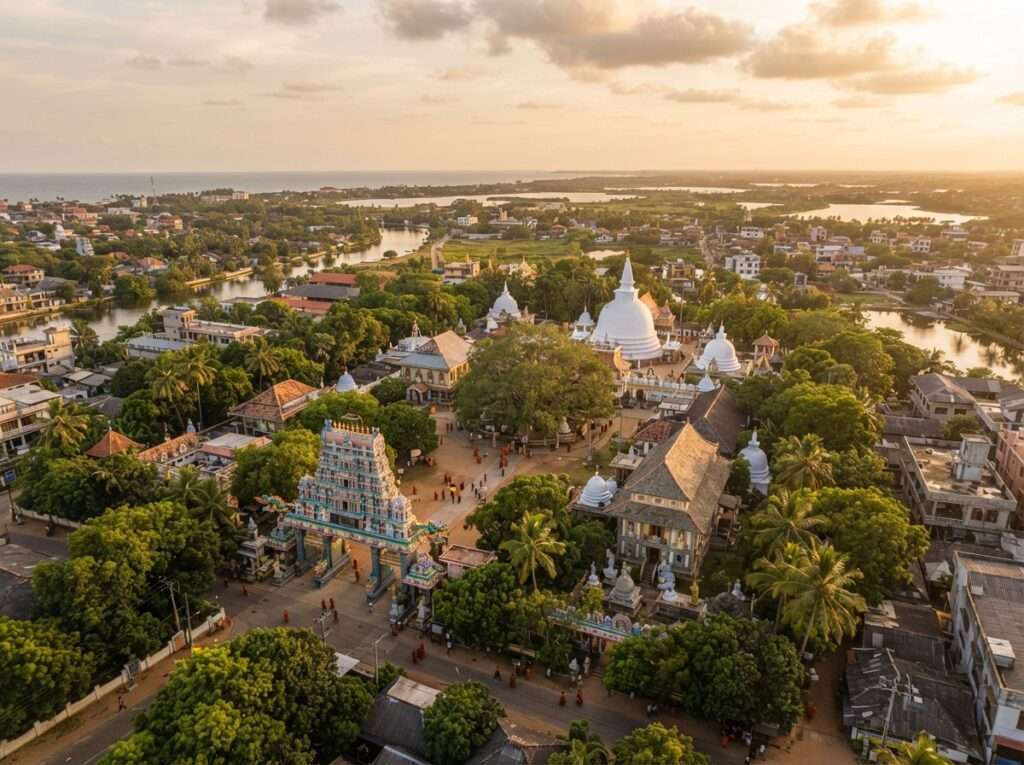
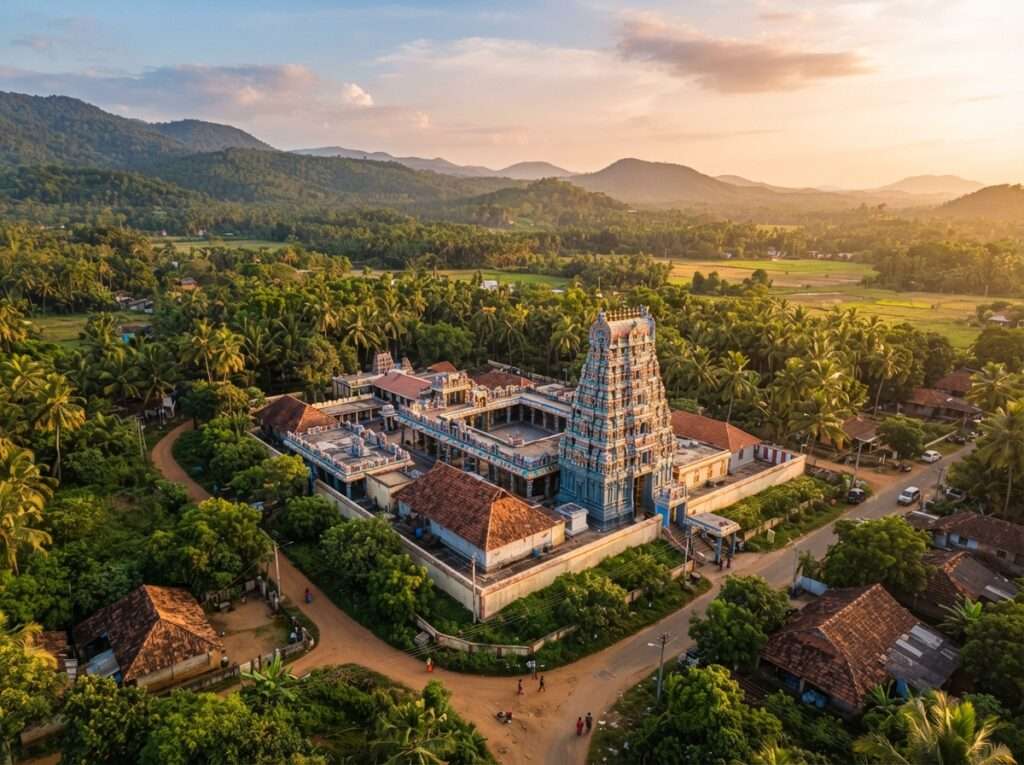
The best temples in Negombo are Angurukaramulla Temple (Bodhirajarama Maha Viharaya), where you walk in through a dragon’s open mouth beneath a six-metre Buddha, and the two Hindu kovils on Sea Street, Sri Muthumariamman and Sri Singama Kali Amman. All three sit within 2 km of each other, and a tuk-tuk between them costs LKR 200 to 400 (₹60 to ₹115).
That matters in a town where, per the 2012 census for the Negombo division, about two in three people are Roman Catholic and only about one in nine is Buddhist. The temples are few, small and very much in use. This guide covers seven temples in and around town and two worth a half-day drive, with hours, fees, what to wear and a route you can finish before lunch. Hours come from published listings checked in November 2026, cross-checked against a second source wherever one exists.
Key Takeaways
- Start at 6.30 am on Sea Street to catch the morning aarti at Sri Singama Kali Amman Kovil, then ride 1.7 km to Angurukaramulla before the heat sets in.
- Carry LKR 1,000 (about ₹290) in small notes. Foreign visitors at Angurukaramulla report anything from a donation to a LKR 1,000 ticket; the kovils are free.
- Cover shoulders and knees and leave shoes at the gate. Every temple on this list expects it. Take hats off at viharas and kovils alike, and at some kovils men are asked to remove their shirts before the inner shrine.
- Plan around Poya days. Duruthu Poya on 22 January 2027 and Vesak on 19 May 2027 bring crowds, white-clad worshippers and lanterns.
- Add a half-day trip for the big two. Kelaniya Raja Maha Vihara is about 30 km south and Munneswaram in Chilaw is about 48 km north.
Negombo Temples at a Glance
Here is how the nine temples compare on faith, distance from the beach hotels and when to go.
| Temple | Faith | From Negombo’s hotel strip | Best time to go | Entry |
|---|---|---|---|---|
| Angurukaramulla (Bodhirajarama Maha Viharaya) | Buddhist | 2.5 to 5 km, 10 to 15 min by tuk-tuk | 7 am to 9 am | Donation or up to LKR 1,000 |
| Abhayasekeraramaya | Buddhist | Next to Angurukaramulla | Same visit | Free |
| Sri Muthumariamman Kovil | Hindu | About 2 km, Sea Street | Morning or evening puja | Free |
| Sri Singama Kali Amman Kovil | Hindu | About 2 km, Sea Street | 6.30 am or 6 pm aarti | Free |
| Shantharamaya Temple | Buddhist | About 10 to 12 km south, Seeduwa | Early morning | Free |
| Sri Sitthi Vinayagar Kovil | Hindu | In town, ask your driver | 6.30 am or 6 pm aarti | Free |
| Kamacchi Amman Kovil | Hindu | In town, ask your driver | Before noon | Free |
| Kelaniya Raja Maha Vihara | Buddhist | About 30 km south, 45 to 60 min | Morning, or Duruthu Poya in January | Free; donations welcome |
| Munneswaram Temple, Chilaw | Hindu (Shiva) | About 48 km north, 1 hr 15 min | Mid-August to September festival | Free |
About this guide. TravelTriangle’s Sri Lanka desk writes our guides to the west coast, from Negombo’s lagoon to the temple towns inland. For this update, temple hours were checked against published listings in November 2026, with a second source wherever one exists, and Poya and festival dates come from the Central Bank of Sri Lanka’s 2027 holiday list.
Sri Lanka
Sri Lanka
Buddhist viharas and Hindu kovils with timings, fees, dress code and a one-morning route
Best Time
December - March
Select Package Type
Best Selling Packages


9 Negombo Temples, Then Etiquette, a Morning Route and Festival Dates
Seven temples in and around Negombo town and two worth a half-day drive, followed by how viharas and kovils differ, what to wear, a one-morning tuk-tuk route and the 2027 Poya and festival dates.
Explore Popular Destination In Sri Lanka
01
Angurukaramulla Temple (Bodhirajarama Maha Viharaya)
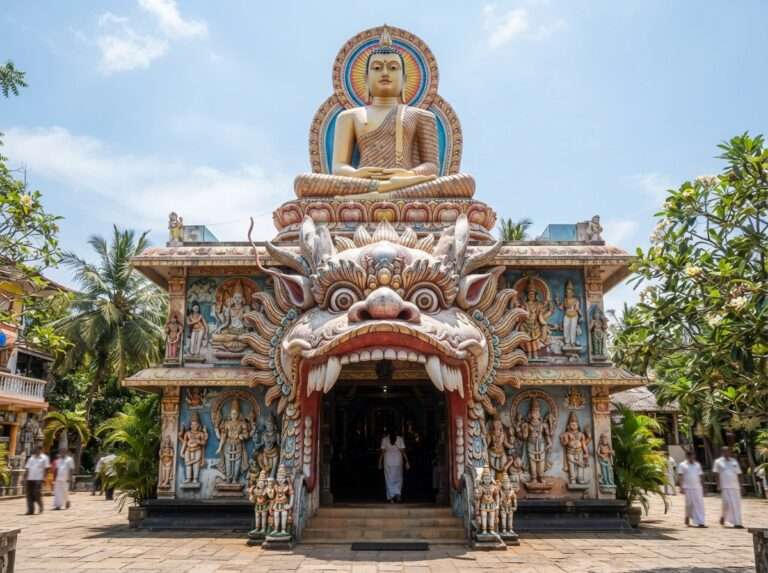
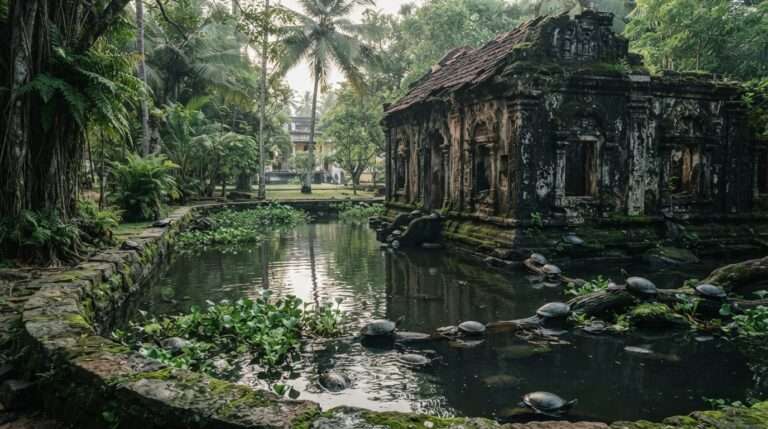
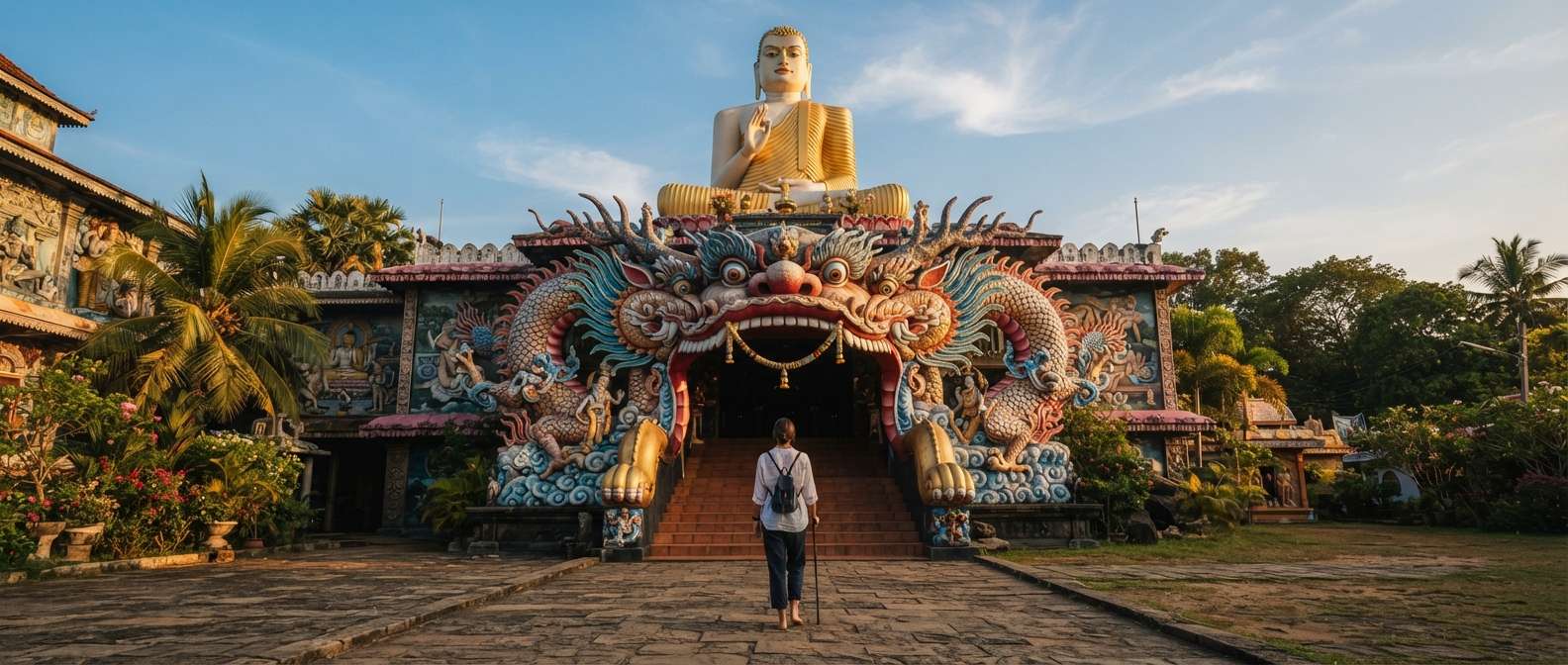
This is Negombo’s best-known Buddhist temple and the one most visitors come for. Its official name is Bodhirajarama Maha Viharaya, though everyone in town, tuk-tuk drivers included, calls it Angurukaramulla. You enter the main image house through a gaping dragon’s head; Love Sri Lanka notes the belief that walking through its mouth leaves evil spirits outside. A seated Buddha about six metres tall rises above the dragon’s head, and inside, nashaplaneta’s visit records a large reclining Buddha and a moonstone at the threshold.
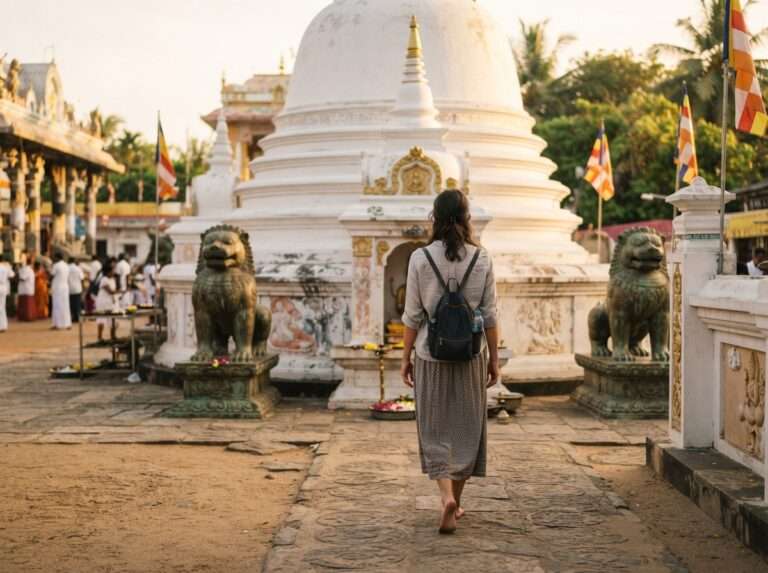
Give yourself time in the two shrine rooms. The Budu Ge is covered in paintings of the Buddha’s life and the Jataka tales, and the Pilima Ge holds life-size figures of every Sinhala king from Vijaya to Sri Wickrama Rajasinghe, the last king of Kandy (AmazingLanka). Ceiling panels follow the Buddha’s path to enlightenment. Outside you will find a white stupa guarded by two bronze lions, a pond full of turtles and the moss-covered ruin of an old temple library.
Hours run roughly from 6 am to 8 pm. The fee is the one thing nobody agrees on: some foreign visitors pay nothing beyond a donation, others are charged LKR 500 or LKR 1,000 at the gate. Carry LKR 1,000 and you are covered. The temple is on Temple Road near Harischandra Vidyalaya, a school named after the Negombo-born Buddhist leader Walisinghe Harischandra. A monk may offer to show you round and will expect a small donation afterwards.
| Location | Temple Road, near Harischandra Vidyalaya, Negombo |
| Hours | About 6 am to 8 pm daily |
| Entry | Donation, or LKR 500 to 1,000 (₹145 to ₹290) for foreign visitors |
| How to reach | Tuk-tuk from the beach hotels, LKR 200 to 400 |
| Don't miss | Dragon-mouth entrance, six-metre Buddha, Pilima Ge kings |
| Time needed | 45 minutes to 1 hour |
Related Tour Packages


❮
❯
02
Abhayasekeraramaya
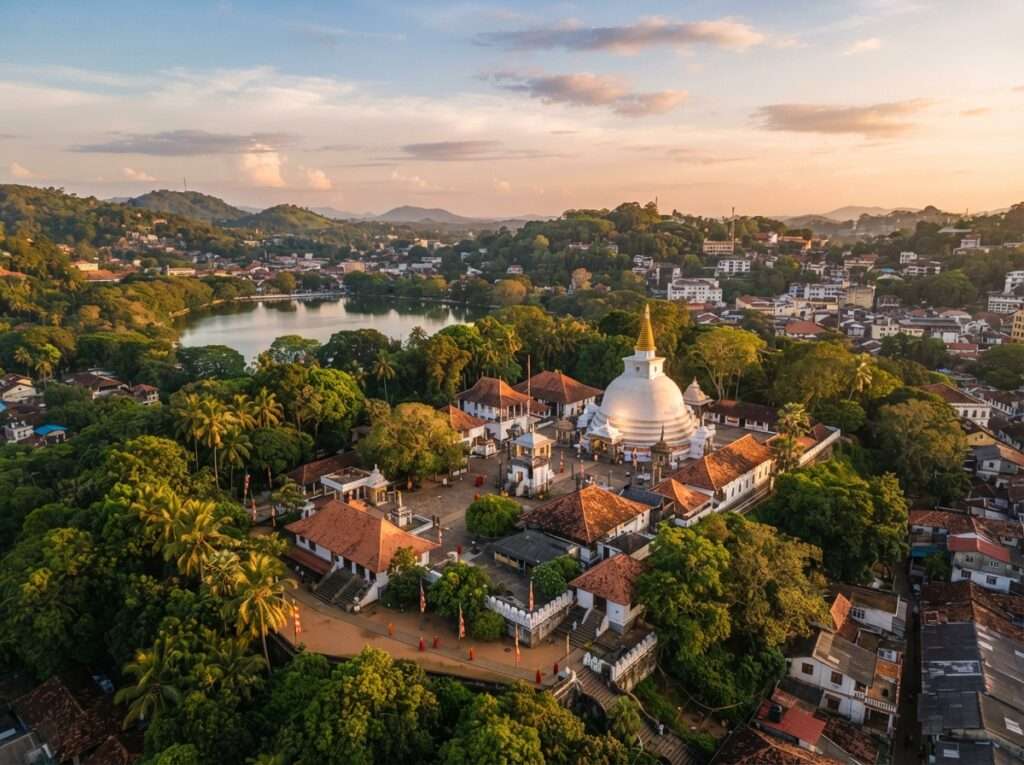
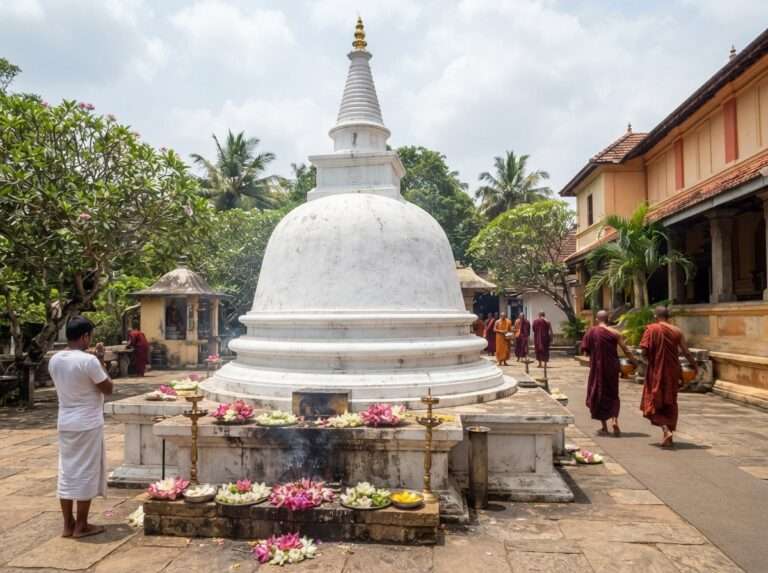
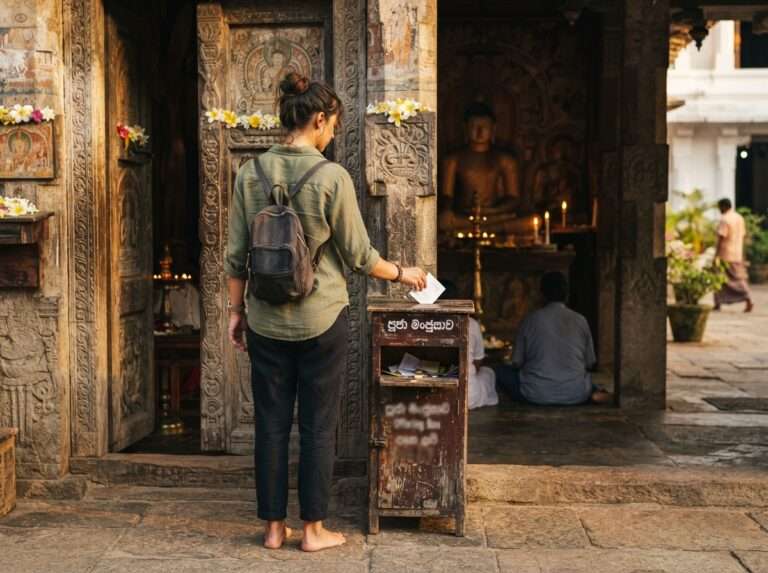
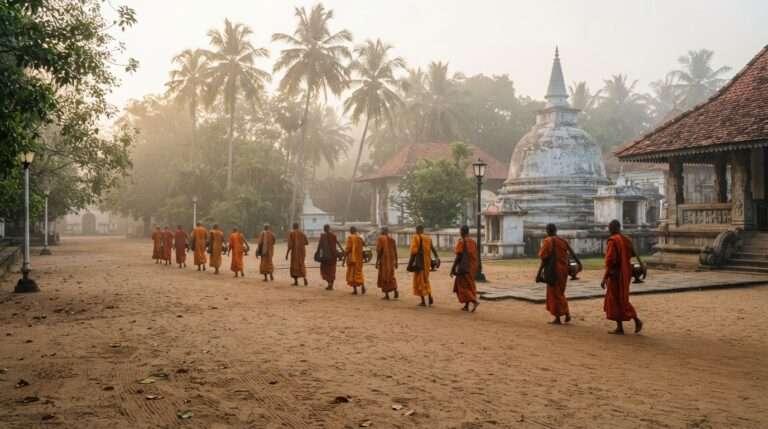
Most visitors walk straight past Abhayasekeraramaya, which stands, in AmazingLanka’s phrase, “a few fathoms” from Angurukaramulla. It deserves ten minutes. This was Negombo’s seat of Buddhist learning: after 1961 the monk Meegomuwe Jinawamsa Thera built its chaitya and turned the temple into a centre for higher studies, where Buddhists and non-Buddhists, Catholic clergy among them, came to study Pali and Sanskrit. There are no showpiece statues here. What you get is a working monastery, quieter than its neighbour, with a stupa and a few monks going about their day. Walk over after Angurukaramulla, keep your voice low near the living quarters, and leave a small note in the donation box if you went inside the shrine room.
| Location | Beside Angurukaramulla Temple, Negombo |
| Hours | Daylight hours |
| Entry | Free |
| Good for | A quiet ten minutes after Angurukaramulla |
Related Tour Packages


❮
❯
03
Sri Muthumariamman Kovil
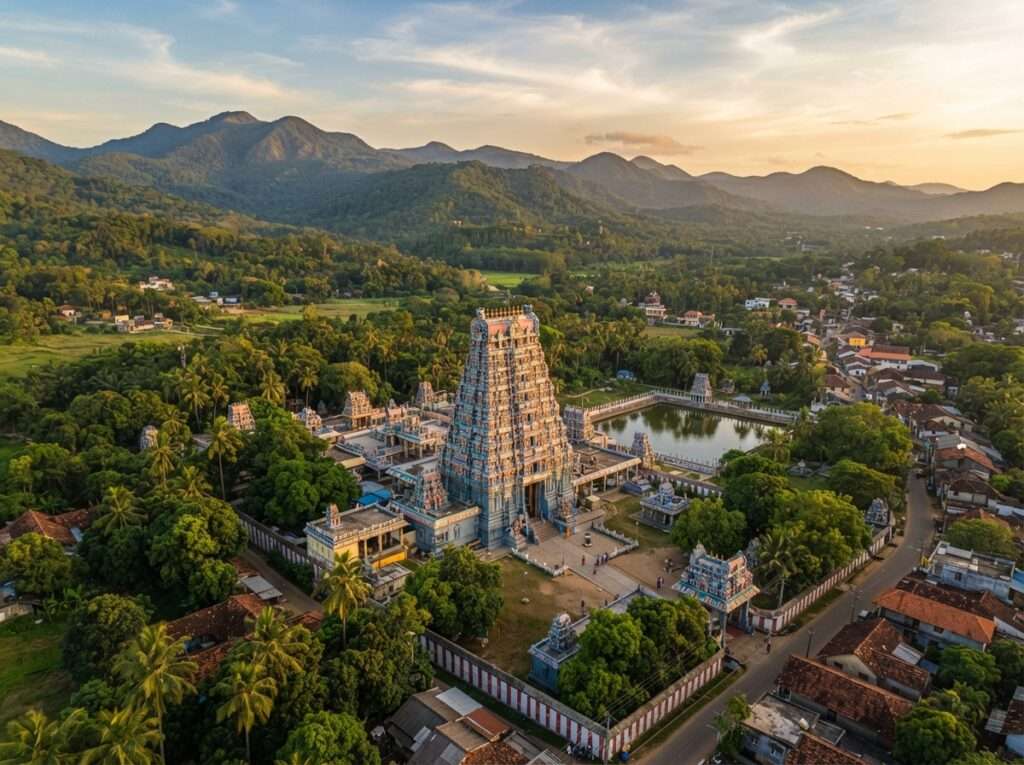
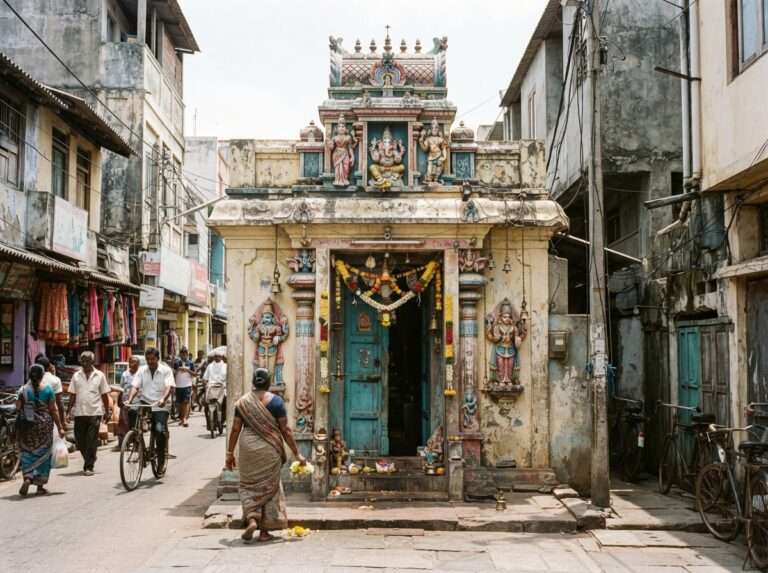
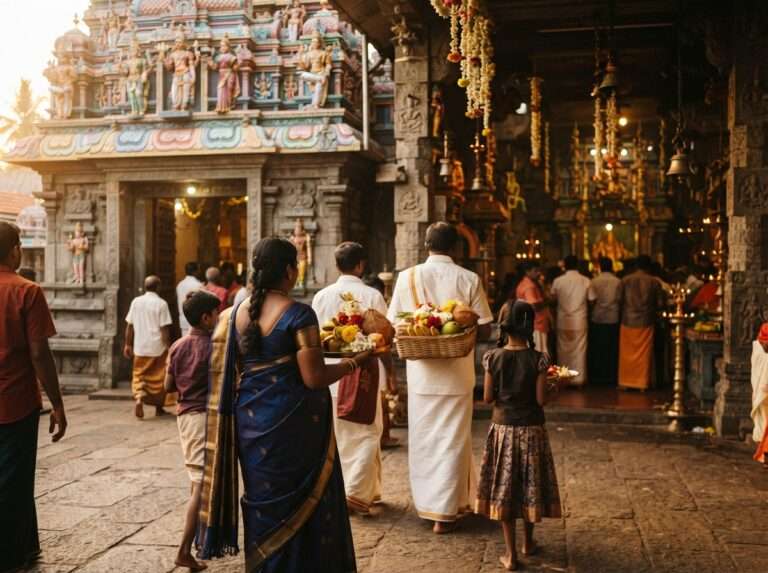
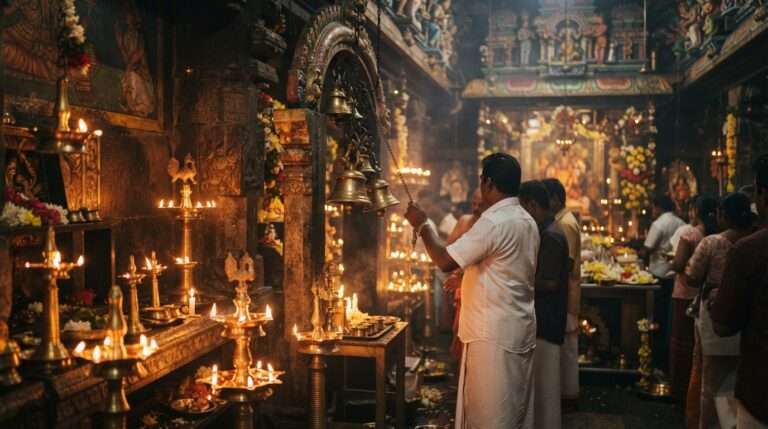
Negombo’s main Hindu temple stands on Sea Street, the town’s old Tamil trading lane. It is dedicated to Muthumariamman, the “pearl” form of the mother goddess Mariamman, whom devotees ask for rain, health, children and good marriages. Wikipedia’s now-deleted entry, preserved on mirrors, records that the Nattukottai Nagarathar (Chettiar) merchant community completed the present temple in 1952.
Don’t expect a towering painted gateway. Nashaplaneta’s reviewer found the frontage so plain that it is easy to walk past. The reward is inside, at puja time, when lamps are lit, bells ring and families bring flowers, fruit and coconuts. The central sanctum is for priests only, so watch from the hall.
One correction for anyone using an old guide: the address “680, 17 Kandy-Jaffna Highway” that still circulates online belongs to the Sri Muthumariamman Temple in Matale, about 130 km inland. The Negombo kovil is on Sea Street, an easy walk from the town centre, or LKR 300 by tuk-tuk from the hotels.
| Location | Sea Street, Negombo town |
| Hours | Morning and evening, around the two daily pujas |
| Entry | Free |
| Photography | Exterior fine; ask before photographing worshippers |
| Busiest | Fridays and new-moon days |
Related Tour Packages


❮
❯
04
Sri Singama Kali Amman Kovil
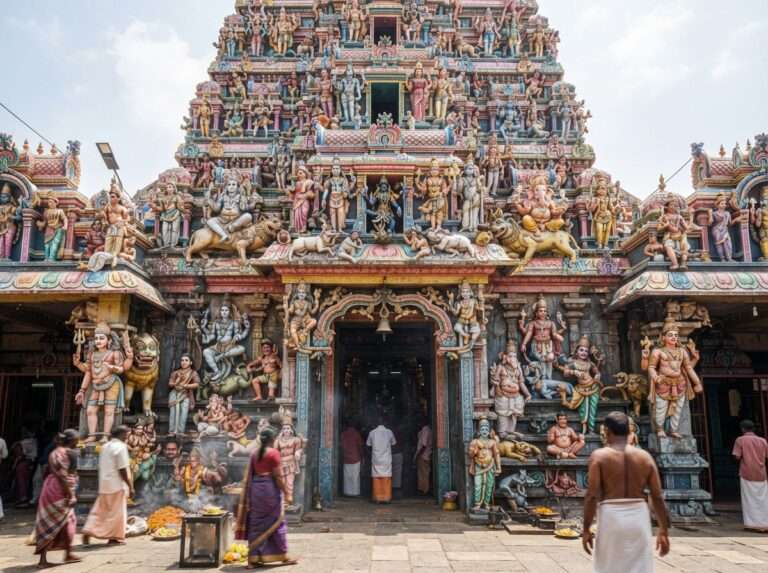
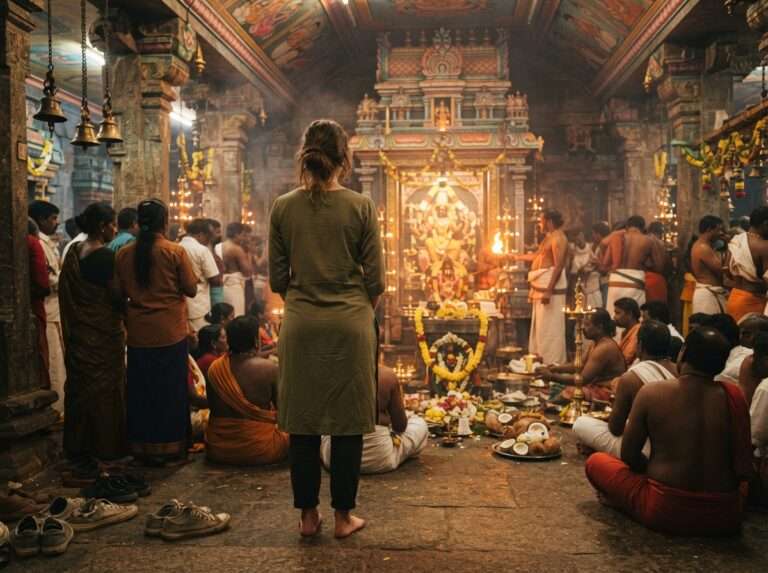
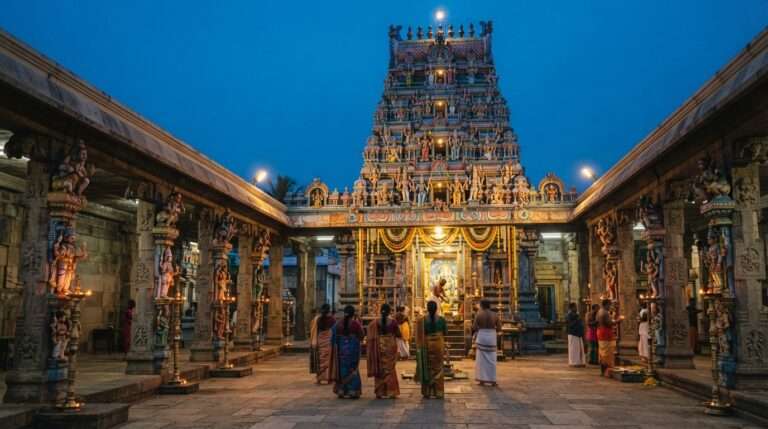
A few minutes down Sea Street, Sri Singama Kali Amman Kovil is the colourful one. The low tower over the entrance is crowded with painted figures, and columns around the courtyard carry statues of individual deities. The name tells you it honours Kali Amman, the fierce protective goddess, and visitors also report a Ganesha image in the inner sanctuary.
Timing is easy here because the schedule is published. Yatradham lists the doors open from 6 am to 12 noon and 4 pm to 8 pm, with aarti at 6.30 am and 6 pm. Arrive for the morning aarti and you will hear the drums before you reach the gate. It is 0.56 km from St Mary’s Church and 1.74 km from Angurukaramulla (srilankatravelpages), so it makes the natural first stop on a temple morning.
| Location | Sea Street, Negombo 11500 |
| Hours | 6 am to 12 noon and 4 pm to 8 pm |
| Aarti | 6.30 am and 6 pm, about 30 minutes each |
| Entry | Free |
| Photography | Ask first; many kovils don't allow photos of the shrines |
05
Shantharamaya Temple
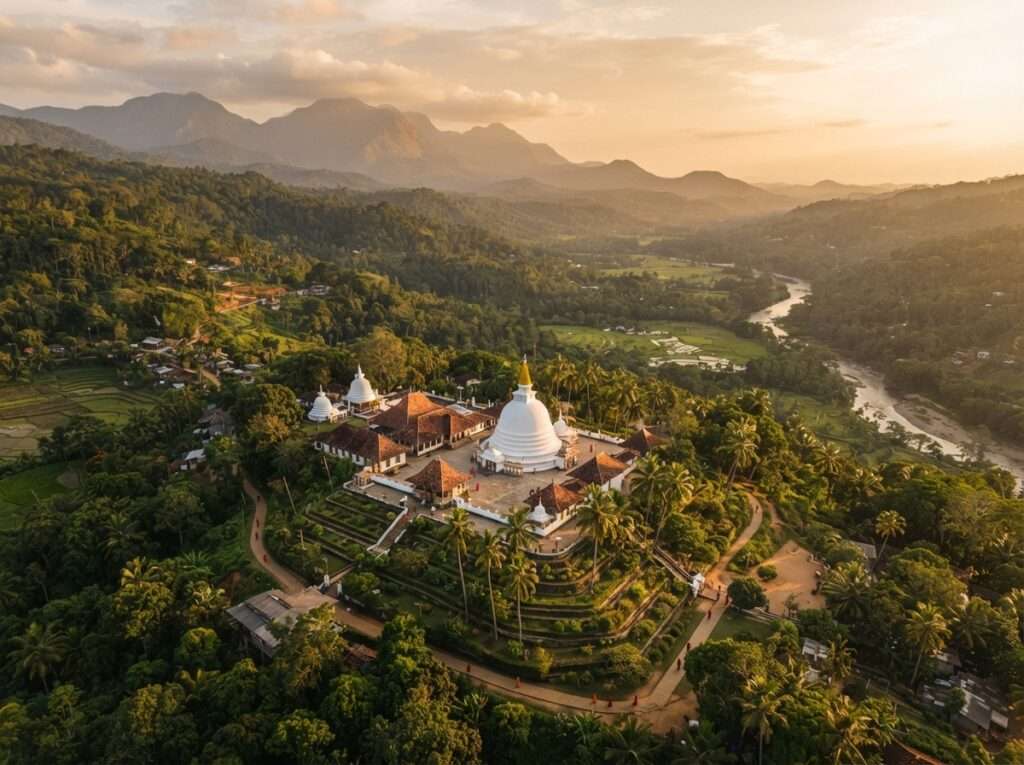
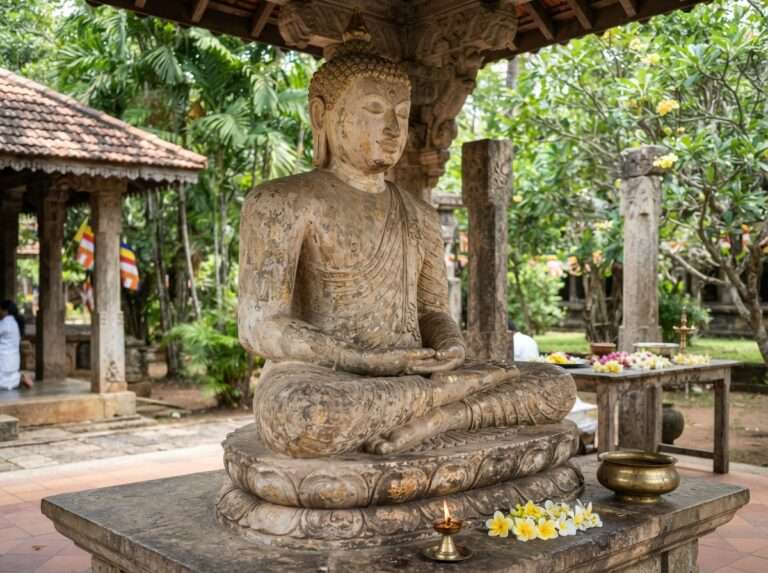
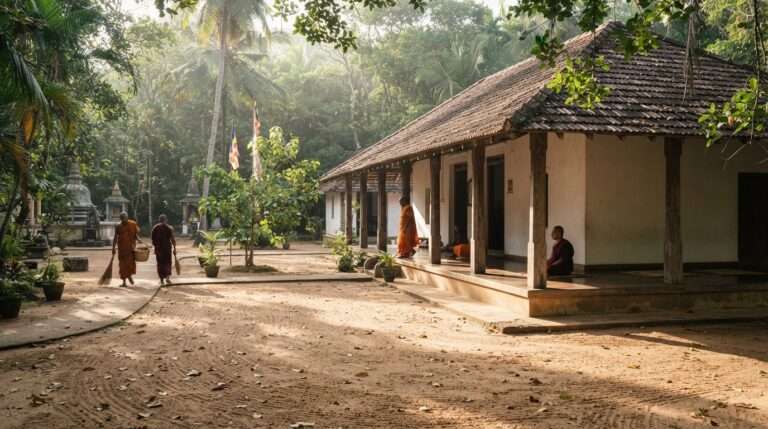
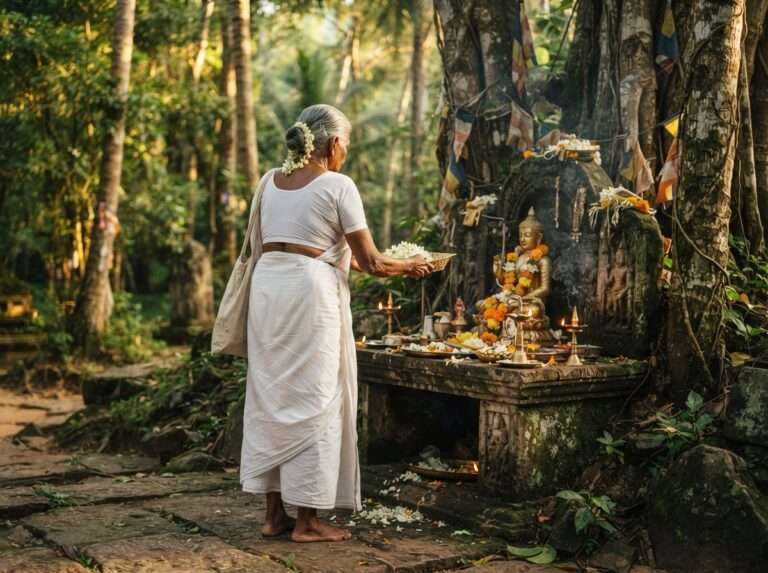
Shantharamaya is a neighbourhood vihara rather than a sight, and that is why it is on this list. You come here for the quiet. Yatradham describes a large Buddha statue, a meditation hall and shaded grounds with small shrines among the trees. On a weekday morning you may share it only with a few elderly devotees offering jasmine flowers. It sits outside the town centre, at Mookalangamuwa in Seeduwa, about 10 to 12 km south towards the airport, so show your tuk-tuk driver the name, Shantharamaya Viharaya, and agree the fare before you set off. Go early, before 9 am, when the light is soft and the grounds are swept. If a meditation session is running, sit at the back or come back later. Directory listings that say it is open 24 hours are best ignored; treat it like any vihara and visit in daylight.
| Location | Mookalangamuwa, Seeduwa, about 10 to 12 km south; show the driver "Shantharamaya Viharaya" |
| Hours | Daylight hours |
| Entry | Free; donations welcome |
| Good for | Meditation, a quiet half hour |
06
Sri Sitthi Vinayagar Kovil
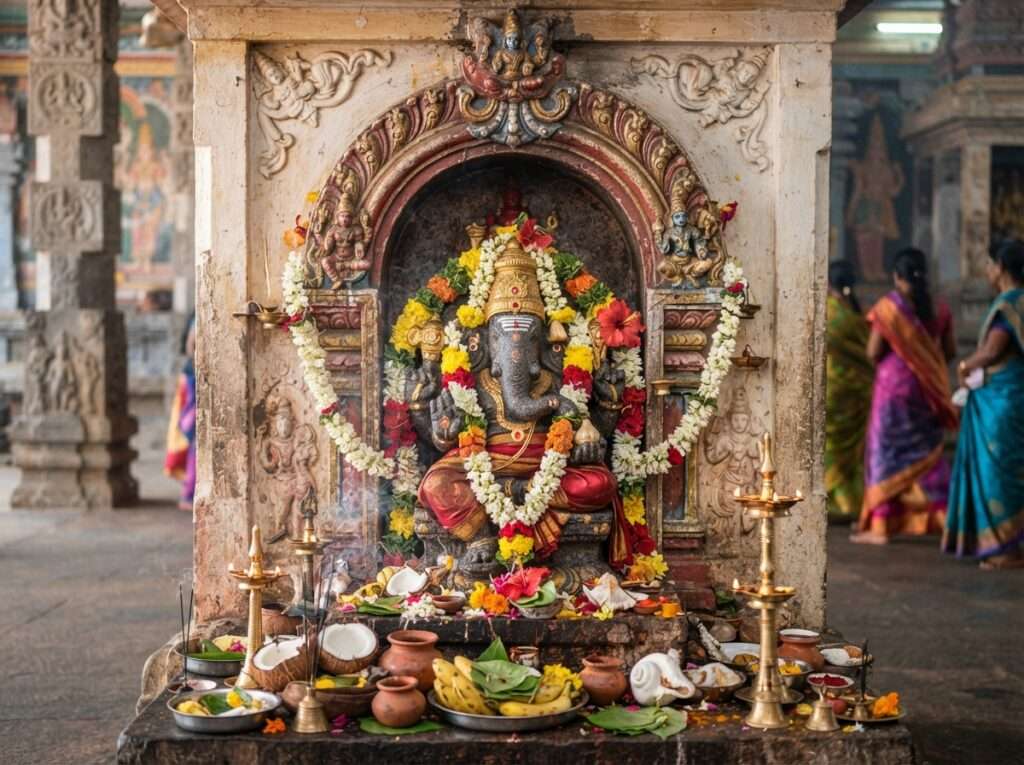
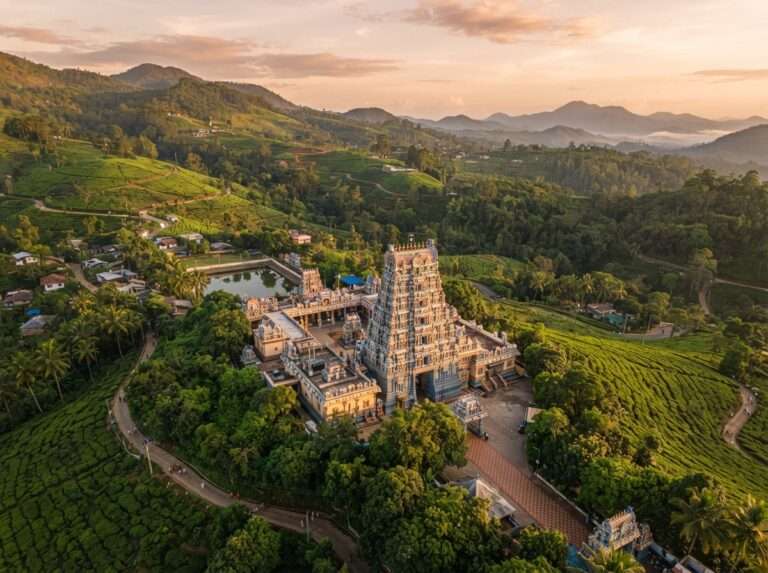
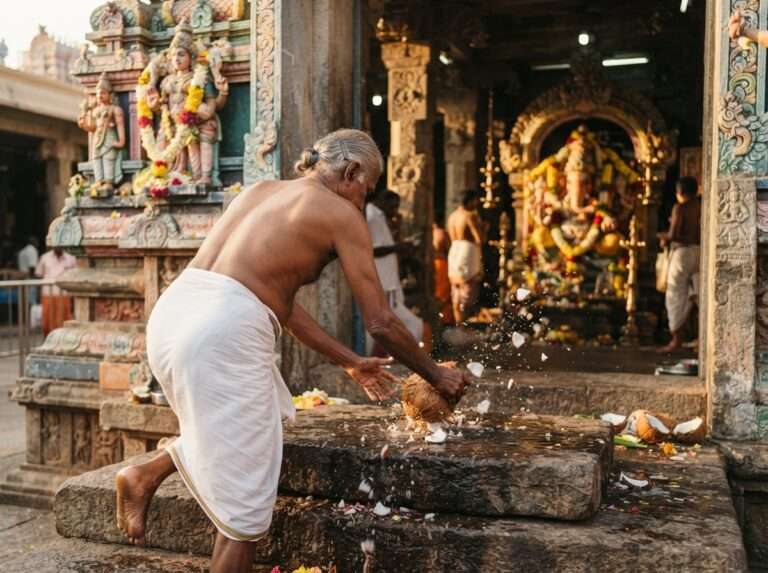
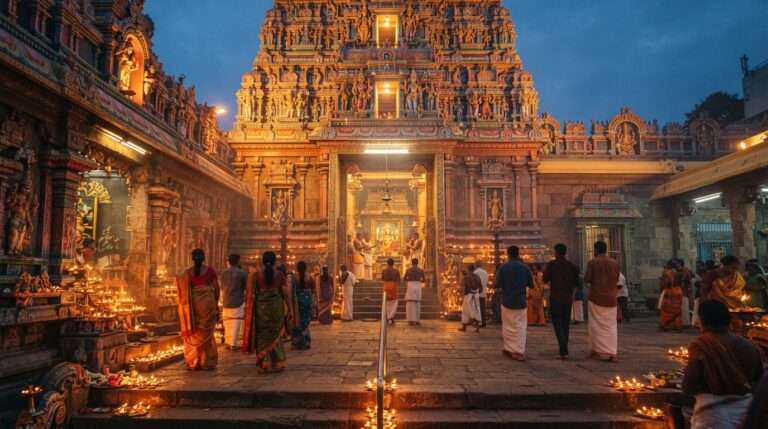
This small kovil belongs to Ganesha, called Vinayagar or Pillaiyar in Tamil, the god Hindus pray to before starting anything new. Local families come before exams, new jobs and long journeys, so you may see someone smashing a coconut at the entrance, a common offering to Ganesha. Yatradham lists hours of 6 am to 12 noon and 4.30 pm to 8.30 pm, with aarti around 6.30 am and 6 pm. It works as a short add-on to the Sea Street kovils if you are travelling with someone who wants to offer a prayer before a flight. We could not confirm a street address (tour listings place it a short ride from the fish market), so show the driver the Tamil name (சித்தி விநாயகர் கோவில்) or “Sitthi Vinayagar Kovil”.
| Location | Negombo town; show the driver the Tamil name |
| Hours | 6 am to 12 noon and 4.30 pm to 8.30 pm |
| Aarti | Around 6.30 am and 6 pm |
| Entry | Free |
07
Kamacchi Amman Kovil
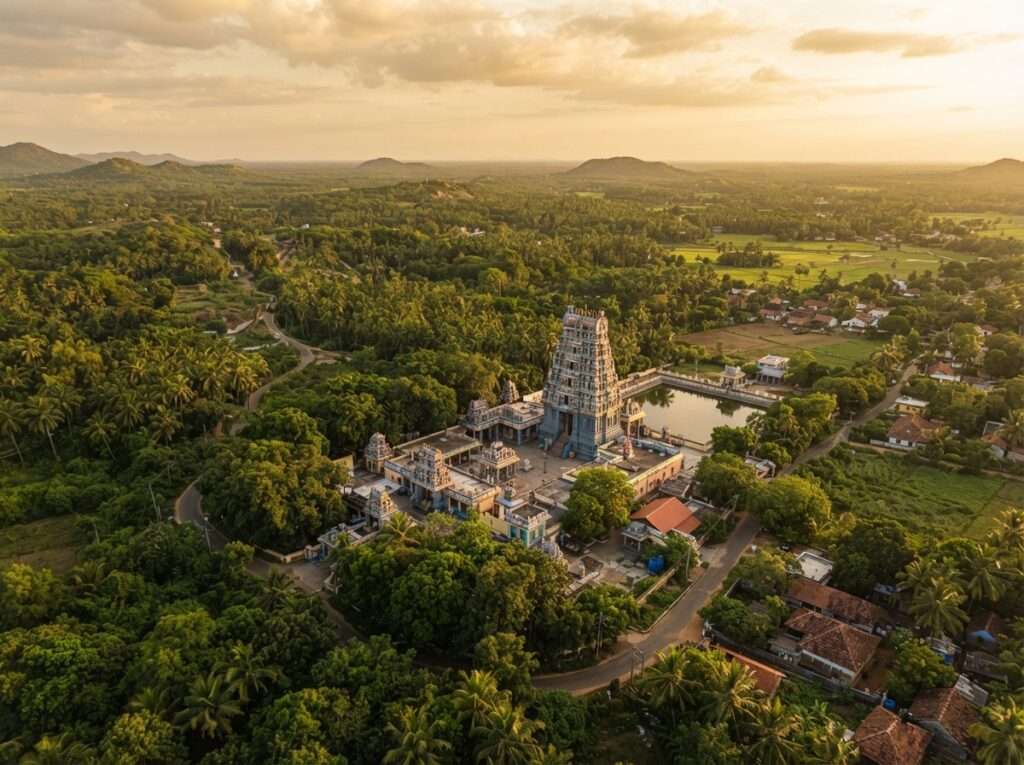
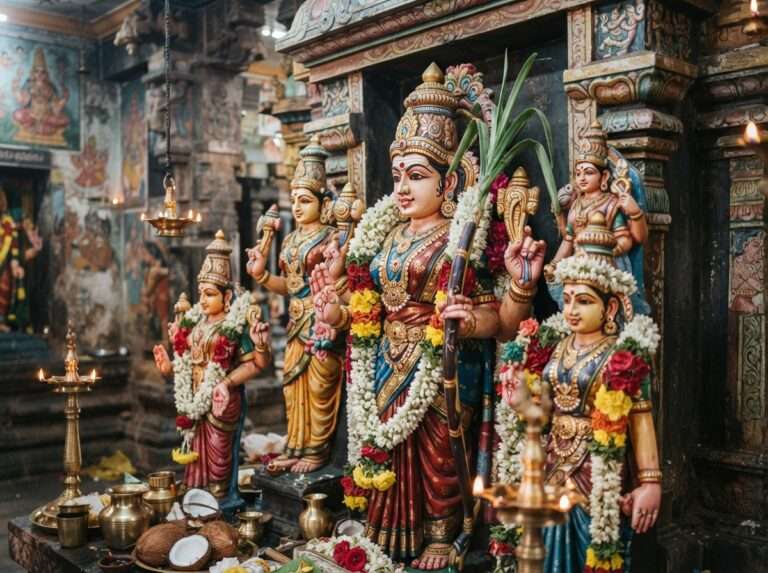
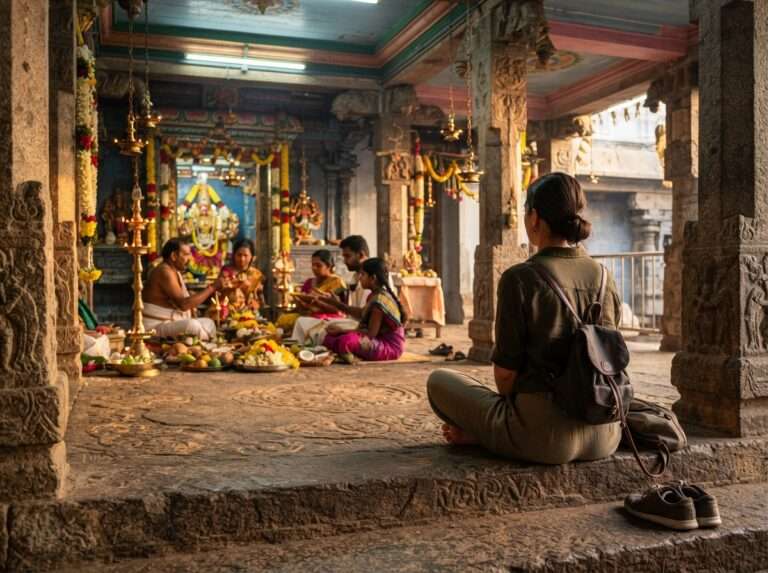
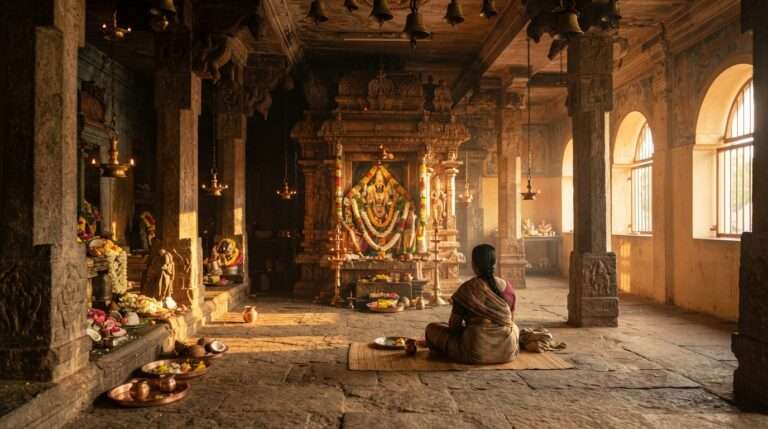
Kamacchi Amman Kovil is dedicated to Kamakshi, a gentle form of Parvati worshipped for compassion and family blessings. Yatradham describes painted statues in the South Indian style and a calm prayer hall, open from 6 am to 8 pm. Its value for a visitor is contrast. After the busier Sea Street kovils, this is where you can sit at the edge of the mandapam and watch a single family’s puja without a crowd. It’s a small temple; ten to fifteen minutes is enough. As with Sitthi Vinayagar, we could not confirm a street address, so show your driver the Tamil name (காமாட்சி அம்மன் கோவில்) and confirm before you go.
| Location | Negombo town; show the driver the Tamil name |
| Hours | 6 am to 8 pm |
| Entry | Free |
| Good for | Watching a quiet family puja |
08
Kelaniya Raja Maha Vihara
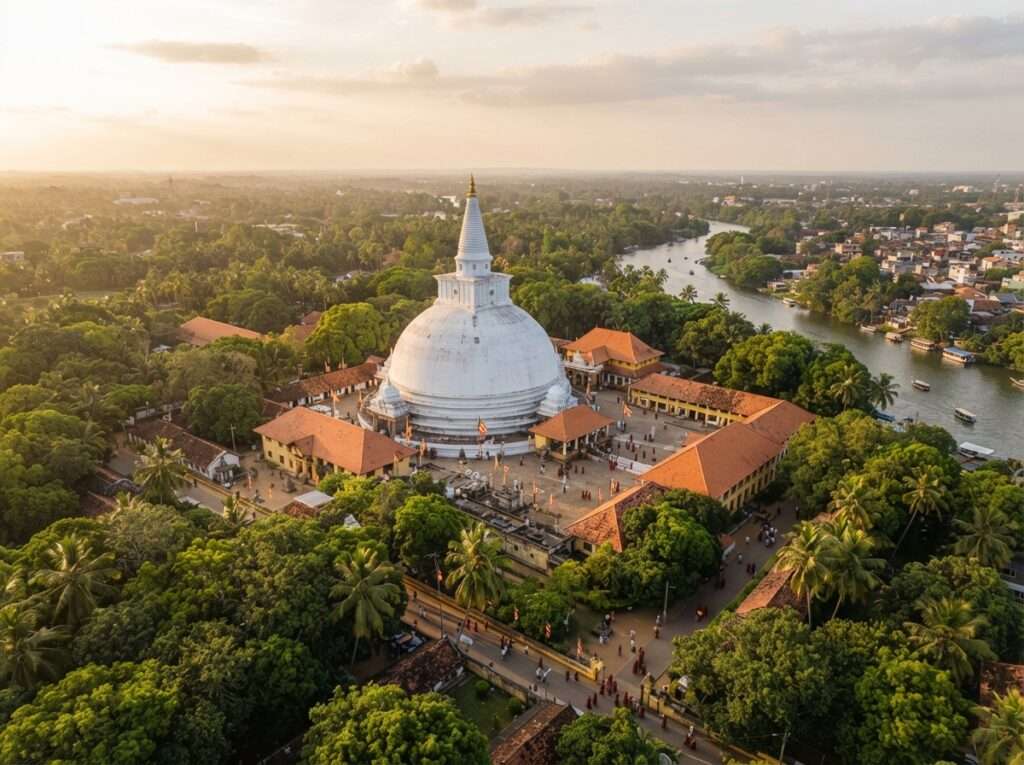
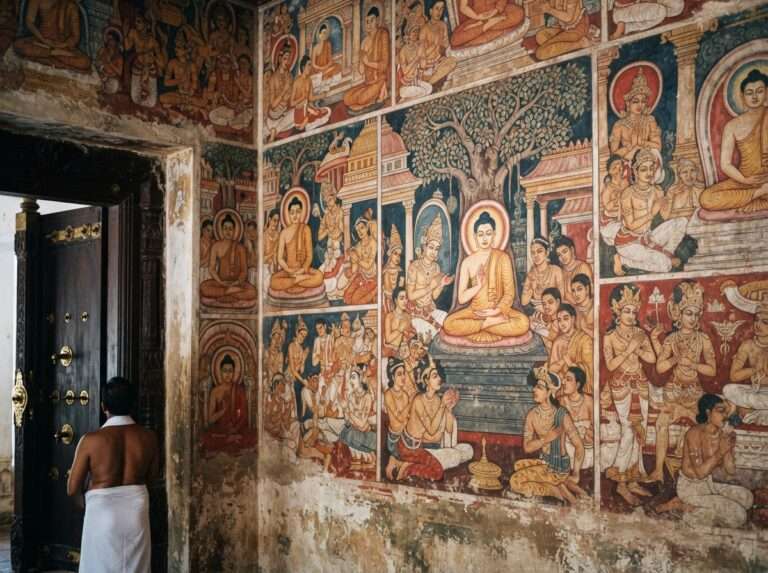
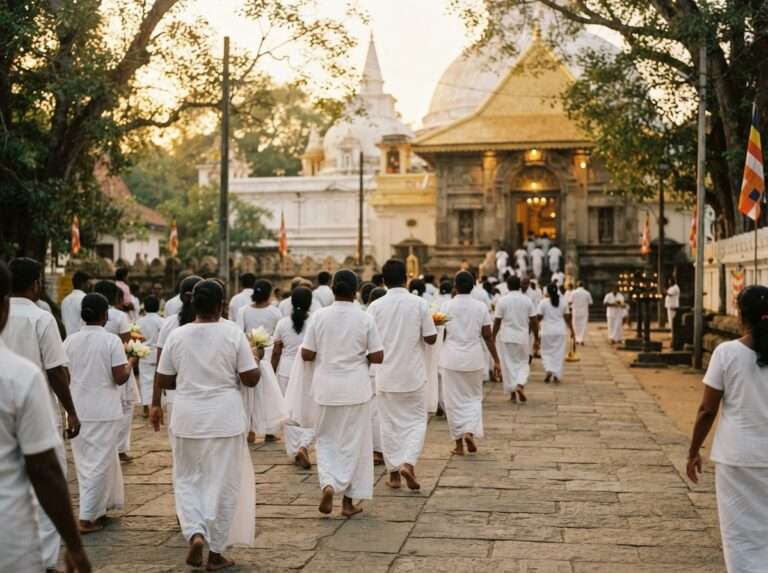
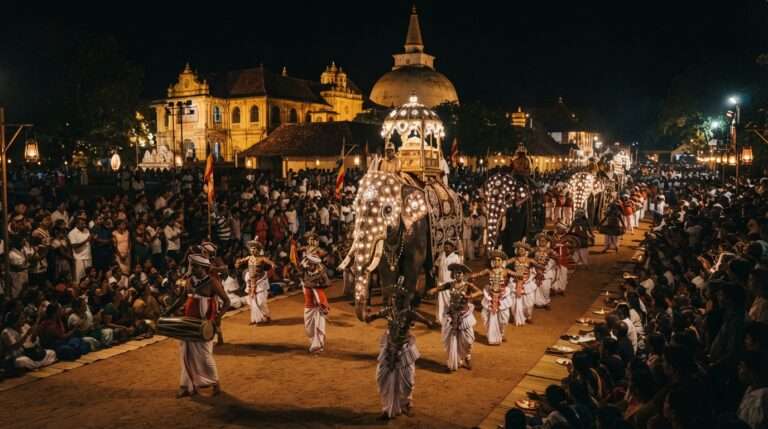
If you only make one temple day trip from Negombo, make it Kelaniya. The vihara stands on the bank of the Kelani River, about 10 km north-east of Colombo and roughly 30 km south of Negombo, and Buddhist tradition holds that the Buddha visited the site on his third journey to the island. The image house is the draw: its walls carry murals painted by Solias Mendis in the mid-20th century, covering the Buddha’s life and key moments in Sri Lankan Buddhist history.
Kelaniya is also home to the Duruthu Perahera, the January procession of elephants, drummers and dancers held around Duruthu Poya, which falls on 22 January 2027. Expect heavy traffic and huge crowds that week. Combine Kelaniya with a Colombo morning or slot it in on the way to the airport for a late flight; the drive takes 45 minutes to an hour depending on traffic. For the wider context, our guide to Buddhist temples in Sri Lanka covers the island’s other major viharas, and our list of temples in Sri Lanka adds the Hindu kovils of the north and east.
| Location | Kelaniya, about 10 km north-east of Colombo |
| Distance from Negombo | About 30 km, 45 to 60 minutes by car |
| Don't miss | Solias Mendis murals in the image house |
| Festival | Duruthu Perahera, around 22 January 2027 |
09
Munneswaram Temple, Chilaw
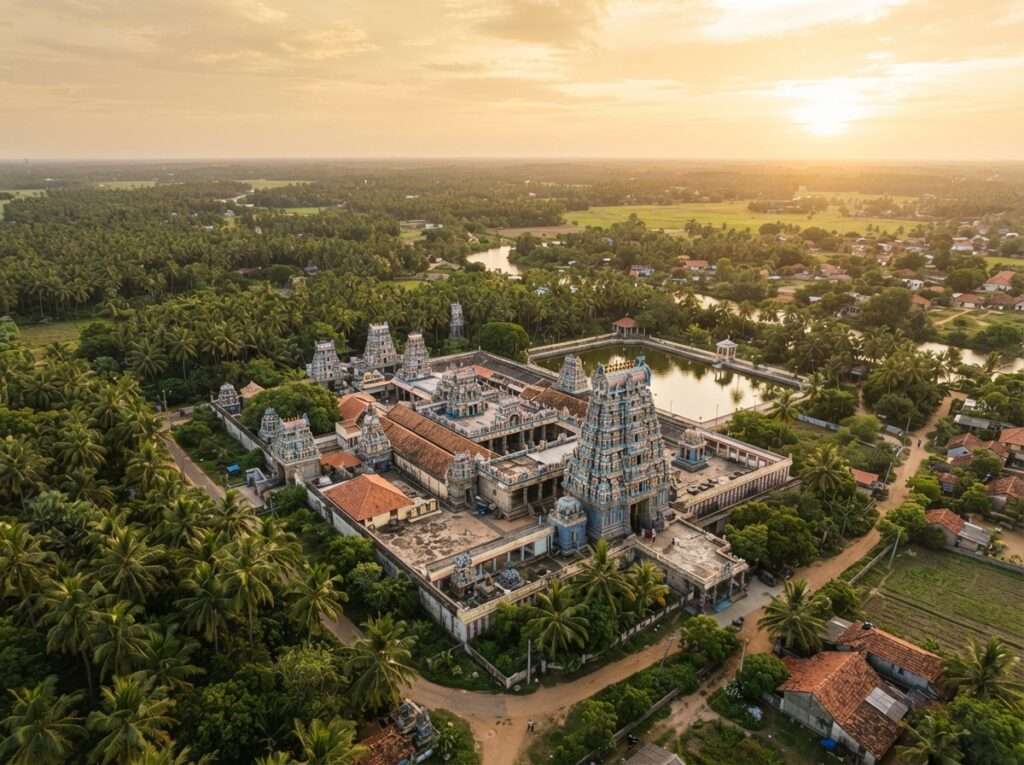
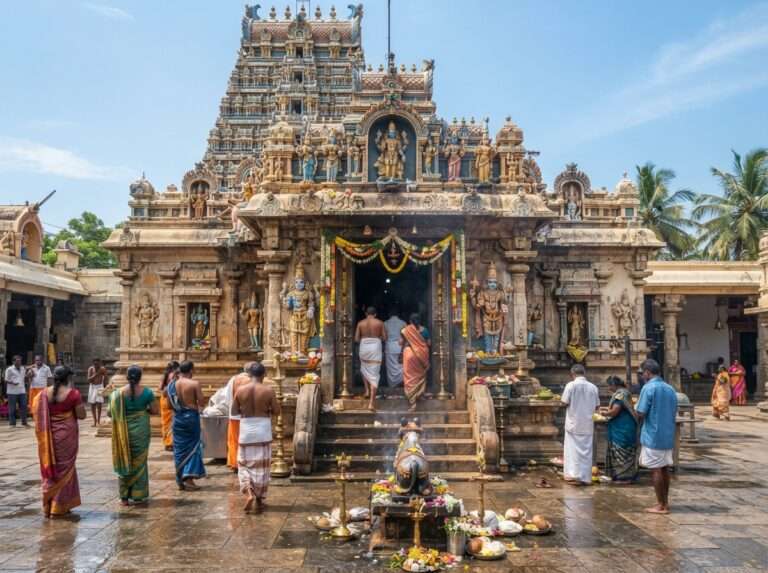
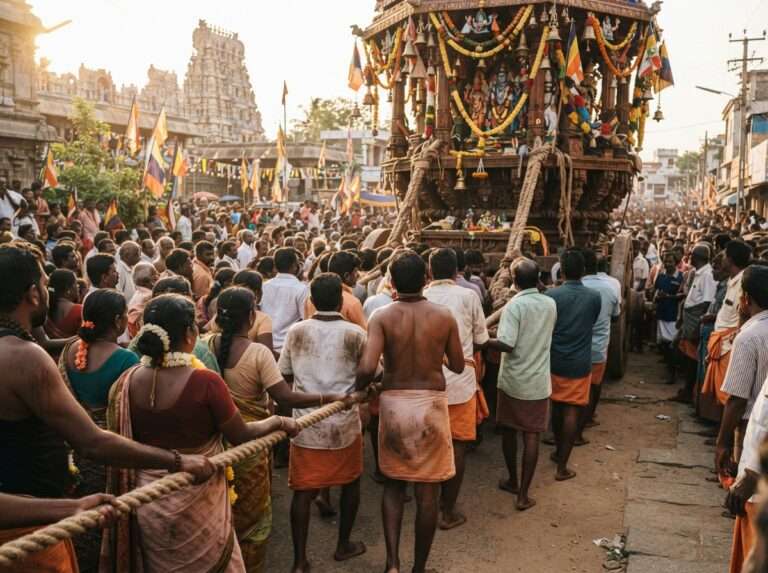
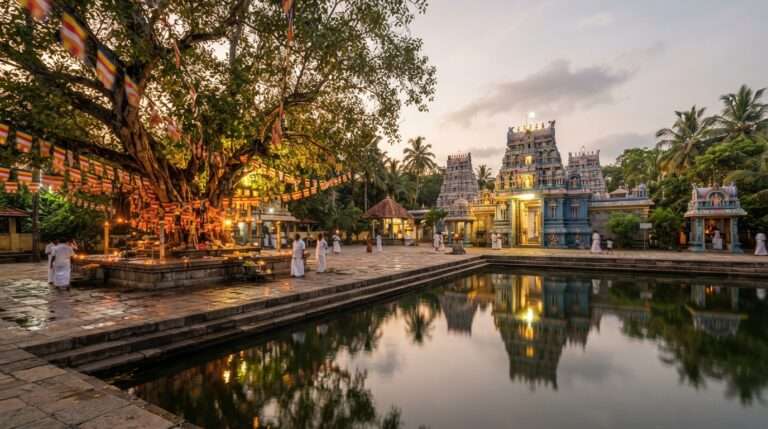
Munneswaram is one of Sri Lanka’s oldest Shiva temples and the biggest Hindu site within reach of Negombo. Despite listings that put it “in Negombo”, it is in a village 2.5 km east of the main roundabout in Chilaw, on Wariyapola Road, about 48 km north along the coast (nashaplaneta). The Portuguese destroyed it in 1578 and again in the early 1600s, and local devotees rebuilt it each time. Around the main Shiva shrine stand two Ganesha shrines, a Kali temple and a shrine to Ayyanayake (Ayyanar), and, unusually for a Hindu complex, a Buddhist vihara, Pushparamaya, shares the grounds. A bodhi tree and a sacred pond sit near the entrance. In Ramayana tradition, Rama prayed to Shiva here after the war with Ravana, which is why it features on most Ramayana trail itineraries.
Go between mid-August and September if you can. That is when the 28-day festival runs, starting with a flag-hoisting and ending with the deity pulled through the streets on a wooden chariot (Sunday Observer). Buses run from Negombo to Chilaw; take a tuk-tuk for the last 2.5 km.
| Location | Wariyapola Road, 2.5 km east of Chilaw town |
| Distance from Negombo | About 48 km, 1 hour 15 minutes by car |
| Entry | Free |
| Festival | 28 days from mid-August to September |
| Pair with | A drive north to Anuradhapura or Wilpattu |
Viharas vs Kovils: What Changes When You Visit
Negombo’s two kinds of temple feel very different, and the rules shift slightly between them. A vihara is a Buddhist temple, usually with a stupa, a bodhi tree and an image house. A kovil is a Hindu temple run around fixed puja times. This matrix covers what a first-time visitor needs to know.
| Buddhist vihara (Angurukaramulla, Shantharamaya, Kelaniya) | Hindu kovil (Sea Street, Sitthi Vinayagar, Kamacchi Amman, Munneswaram) | |
|---|---|---|
| Best time | Early morning, before the heat and the tour vans | Puja times, usually 6.30 am and around 6 pm |
| Shoes and hats | Both off at the entrance | Shoes off at the gate; hats off |
| Clothes | Shoulders and knees covered; white on Poya days | Shoulders and knees covered; men may be asked to remove shirts at some inner shrines |
| Inner shrine | Open to everyone | Sanctum for priests only; watch from the hall |
| Photos | Allowed in most areas, never with your back to a Buddha | Ask first; shrines often off limits |
| Offerings | Lotus or jasmine flowers, oil lamps | Flowers, fruit, coconuts, camphor |
| Fee | Donation, sometimes a ticket for foreigners | Free |
Temple Etiquette and Dress Code in Negombo
The dress rule is the same everywhere: cover your shoulders and knees. Love Sri Lanka’s advice for Angurukaramulla is to cover arms and legs, and Lakpura gives the same rule for the Sea Street kovils. A light cotton scarf and loose trousers or a long skirt solve it, and a sarong from the market costs a few hundred rupees. Leave shoes at the gate (the stone gets hot by 10 am, so socks help), and take off hats and sunglasses before you go in.
At viharas, never pose for a photo with your back to a Buddha statue. Sri Lanka treats it as disrespectful, and the authorities have deported tourists over Buddha tattoos. Don’t point your feet at a statue or a monk either. Women should not hand anything directly to a monk; place it down instead. At kovils, puja is a ritual, not a performance. Stand to the side, don’t block the priest’s path and ask before you lift a camera. If you are offered holy ash or a flower after the aarti, accept it with your right hand.
Poya days, the full-moon holidays, change the mood. Families arrive in white, alcohol sales stop island-wide and the viharas fill from dawn. It is a good day to see the temples alive, but a poor one for quiet photos.
How to Do a One-Morning Negombo Temple Trail
Negombo’s temples fit into one morning by tuk-tuk, finishing before the midday heat. The whole route, one way from Sea Street to the lagoon, is under 10 km. Nashaplaneta puts a full-day tuk-tuk hire at around LKR 5,000 (₹1,450), and a half-day morning should cost less, so expect to spend about LKR 2,000 to 3,000 including donations.
- Book the tuk-tuk the night before. Ask your hotel or use the PickMe app, and agree a half-day price for a 6 am pickup. Tell the driver the four stops so there are no surprises.
- Reach Sri Singama Kali Amman Kovil on Sea Street by 6.20 am. Leave shoes at the gate and stand at the side of the hall for the 6.30 am aarti, which lasts about half an hour.
- Walk to Sri Muthumariamman Kovil on the same street. Spend 15 minutes watching the morning offerings, then take a look at St Mary’s Church, a few hundred metres away, from outside.
- Ride 1.7 km to Angurukaramulla Temple. Arrive around 7.30 am, before the tour vans. Walk through the dragon’s mouth, see the seated Buddha and the Pilima Ge kings, then circle the stupa and the turtle pond.
- Walk next door to Abhayasekeraramaya. Ten quiet minutes is enough. Leave a small donation if you enter the shrine room.
- Finish at the lagoon. Ride back toward the Hamilton Canal or the fish market for breakfast by 10 am, or head to the airport if you are on a layover.
If you land at Bandaranaike International Airport, remember it is in Katunayake, about 10 km south of Negombo, not in Colombo. With a long daytime layover and a valid Sri Lanka visa (see our guide to the Sri Lanka visa for Indians), steps 2 to 5 fit into about three hours plus the drive.
Poya Days and Festivals at Negombo's Temples, 2027 Dates
Every full moon is a Poya holiday in Sri Lanka, and the big ones change what you will see at Negombo’s temples. These dates come from the Central Bank of Sri Lanka’s 2027 bank-holiday list; the Munneswaram dates follow the Tamil calendar and are announced by the temple each year.
| Date (2027) | Occasion | What happens at or near Negombo’s temples |
|---|---|---|
| 15 January | Thai Pongal | Sweet rice boiled in clay pots at the Sea Street kovils at sunrise |
| 22 January | Duruthu Poya | Duruthu Perahera at Kelaniya Raja Maha Vihara on the nights leading up to Poya; busy viharas in town |
| 19 May | Vesak Poya | Lanterns, pandals and free food stalls (dansal) around Angurukaramulla |
| 18 June | Poson Poya | Second-largest Buddhist festival; white-clad crowds at every vihara |
| Mid-August to September | Munneswaram festival | 28 days of puja ending in the chariot procession in Chilaw |
| 28 October | Deepavali | Oil lamps and special pujas at all the Hindu kovils |
Sri Muthumariamman also holds its own annual festival, when the goddess is carried through the surrounding streets and devotees carry kavadi. Ask at the kovil for that year’s date. For the island-wide calendar, see our guide to festivals in Sri Lanka.
Other Places of Worship in "Little Rome"
Negombo earned its nickname from its churches; AmazingLanka counts over 50 churches and shrines within the municipality. The two you will pass on a temple morning are St Mary’s Church on Grand Street, with its painted ceiling, and St Sebastian’s Church, a white Gothic-style church a short ride away.
Our guide to St Mary’s Church in Negombo covers mass times and the ceiling paintings. For the rest of the town, from the Dutch Fort to the lagoon, see the places to visit in Negombo, the full list of things to do in Negombo and the town’s monuments.
Planning a Temple Morning in Negombo
Negombo’s temples are few, but they are close together. One early morning covers the dragon gate at Angurukaramulla and both Sea Street kovils for under LKR 3,000, and the town is only 10 km from the airport, so it suits the first or last day of a trip. If you have more time, give Kelaniya or Munneswaram a half day each. Stay near the lagoon or the beach strip to keep the tuk-tuk rides short; our pick of resorts in Negombo helps with that. Our Sri Lanka travel guide covers the rest of the island. To fit Negombo into a longer trip with Kandy and the south coast, browse our Sri Lanka tour packages or the shorter Negombo tour packages, which can start with an airport pickup and a temple morning.
FAQs
FAQs About Temples in Negombo
Quick answers on Negombo's most famous temple, the Sea Street kovils, Angurukaramulla timings and fees, dress code, photos and layover visits.
Angurukaramulla Temple, officially Bodhirajarama Maha Viharaya, is Negombo's most famous temple. It is known for the dragon-head entrance you walk through, watched over by a seated Buddha about six metres tall, and for the Pilima Ge, which holds life-size figures of the Sinhala kings from Vijaya to Sri Wickrama Rajasinghe. It is on Temple Road, 10 to 15 minutes by tuk-tuk from the beach hotels, and opens roughly from 6 am to 8 pm.
Yes. Negombo has several kovils, and the two main ones stand on Sea Street in the town centre: Sri Muthumariamman Kovil, dedicated to the mother goddess Mariamman, and Sri Singama Kali Amman Kovil, known for its painted tower. Smaller kovils include Sri Sitthi Vinayagar (Ganesha) and Kamacchi Amman. All are free to enter. Go at puja time, around 6.30 am or 6 pm, to see them at their liveliest.
Angurukaramulla Temple opens roughly from 6 am to 8 pm every day. Sri Lankan worshippers enter free. Foreign visitors report paying anything from a voluntary donation to a LKR 500 or LKR 1,000 ticket (about ₹145 to ₹290), so carry LKR 1,000 in small notes. Arrive between 7 and 9 am to beat both the heat and the tour groups, and allow 45 minutes to an hour for the image house, stupa and turtle pond.
Wear clothes that cover your shoulders and knees, such as a T-shirt with sleeves and loose trousers or a long skirt. Shoes come off at the entrance of every temple and hats come off before you go inside. On Poya days local worshippers wear white, and you are welcome to do the same. A light scarf in your day bag handles any surprise stop. Socks help, because the stone floors get hot by mid-morning.
At Buddhist viharas like Angurukaramulla, photos are allowed in most areas, but never pose with your back to a Buddha statue, which Sri Lanka treats as disrespectful. At Hindu kovils, always ask before taking photos; the inner shrines are often off limits and many priests object to cameras during puja. Photographing the outside of the Sea Street kovils is fine, but ask before you photograph worshippers.
Yes, if your layover is long enough and you can clear immigration. Bandaranaike International Airport is in Katunayake, about 10 km south of Negombo, roughly 20 to 30 minutes by road. With five or more hours between flights and a valid Sri Lanka visa or ETA, you can see the Sea Street kovils and Angurukaramulla in about three hours and still be back early for check-in. Leave your main luggage at the airport or your transit hotel.
No. Munneswaram is near Chilaw, about 48 km north of Negombo, 2.5 km east of Chilaw town on Wariyapola Road. Some websites list it under Negombo because most visitors make the trip from there. Allow about 1 hour 15 minutes each way by car, or take a bus to Chilaw and a tuk-tuk for the last stretch. Its 28-day festival runs from mid-August into September.
Kelaniya Raja Maha Vihara and Munneswaram are the two worth the drive. Kelaniya, about 30 km south near Colombo, has Solias Mendis's murals and hosts the Duruthu Perahera in January. Munneswaram, about 48 km north in Chilaw, is one of Sri Lanka's oldest Shiva temples and a Ramayana trail stop. Do Kelaniya on your way to or from Colombo, and Munneswaram on a drive north to Anuradhapura.
Early morning is best. The kovils hold aarti around 6.30 am and the viharas are cool and quiet before 9 am, when tour vans start arriving. The second-best window is 5.30 to 6.30 pm for the evening puja on Sea Street. Avoid noon to 4 pm, when kovils such as Sri Singama Kali Amman close and the stone courtyards are too hot to walk barefoot.
Yes. Vesak Poya, on 19 May 2027, brings lanterns and free food stalls around Angurukaramulla, and Poson follows on 18 June. The Sea Street kovils mark Thai Pongal on 15 January and Deepavali on 28 October 2027, and Sri Muthumariamman holds an annual festival procession with kavadi bearers. Nearby, Kelaniya's Duruthu Perahera falls around 22 January and Munneswaram's chariot festival runs from mid-August to September.
Go to Angurukaramulla Temple (Bodhirajarama Maha Viharaya) on Temple Road. In an hour you can walk through the dragon-mouth entrance, see the six-metre seated Buddha and the Pilima Ge kings, and circle the stupa and turtle pond. It is 10 to 15 minutes by tuk-tuk from the beach hotels and about 25 minutes from the airport. If you would rather see a Hindu temple, the Sri Singama Kali Amman Kovil on Sea Street holds aarti at 6.30 am and 6 pm.