4D / 3N
17% OFF
Manali-Kasol Tour Package by Cab for Himachal (4D/3N) - At A Glance
- Hotel
- Meals
- Sightseeing
- Entry Tickets
- Cab Transfer
₹12,688
₹10,500 /pp


Mandi sits on the banks of the Beas in the middle of Himachal Pradesh, and most travellers drive straight through it on the way to Manali. That is their loss. The best things to do in Mandi range from the ridge-top trek to Prashar Lake to a walk through a 500-year-old temple town locals call Chhoti Kashi, the little Varanasi of the hills. It is quieter than Shimla or Manali, cheaper too, and it works as a base for the whole Kullu valley. Give it two days and you get high lakes, old stone temples, a Tibetan monastery and camping under a clear mountain sky.
Quick planning notes
| Thing to do | Where | Type | Best time |
| Trek to Prashar Lake | ~45 km NW | Trek + camping | May-Oct |
| Bir Monastery visit | Baijnath side, ~60 km | Culture / meditation | Year-round |
| Old-town markets | Mandi centre | Shopping | Year-round |
| Camp in Barot Valley | ~40 km via Jogindernagar | Camping / trout | Apr-Jun, Sep-Nov |
| Shikari Devi Temple trek | ~50 km, district high point | Trek / temple | Apr-Jun, Sep-Oct |
| Momos at Topchen, Rewalsar | Rewalsar, ~24 km | Food | Year-round |
| Sunken Garden | Seri, Mandi town | Heritage / leisure | Year-round |
| Nargu Wildlife Sanctuary | Barot belt, Uhl river | Wildlife | Apr-May, Aug-Oct |
| Stay at Raj Mahal Palace | Mandi town | Heritage stay | Year-round |
| Himachal Darshan Gallery | ~4 km, Manali highway | Museum | Year-round |
| Rewalsar Lake | ~24 km | Pilgrimage / lake | Mar-Oct |
| Bhima Kali Temple | Bhiuli, near town | Temple / museum | Year-round |
| Trek to Kamrunag Lake | Mandi-Karsog road | Trek / pilgrimage | May-Oct |
| Pandoh Dam | ~19 km, NH3 | Sightseeing / rafting | Mar-Jun, Sep-Nov |
| Chhoti Kashi temple trail | Mandi old town | Temple walk | Year-round |
Things To Do In Mandi
Best Time
March - June
Select Package Type

3 Days & 2 Nights
₹9,043 /@pp
GET FREE QUOTE

9 Days & 8 Nights
₹36,484 /@pp
GET FREE QUOTE

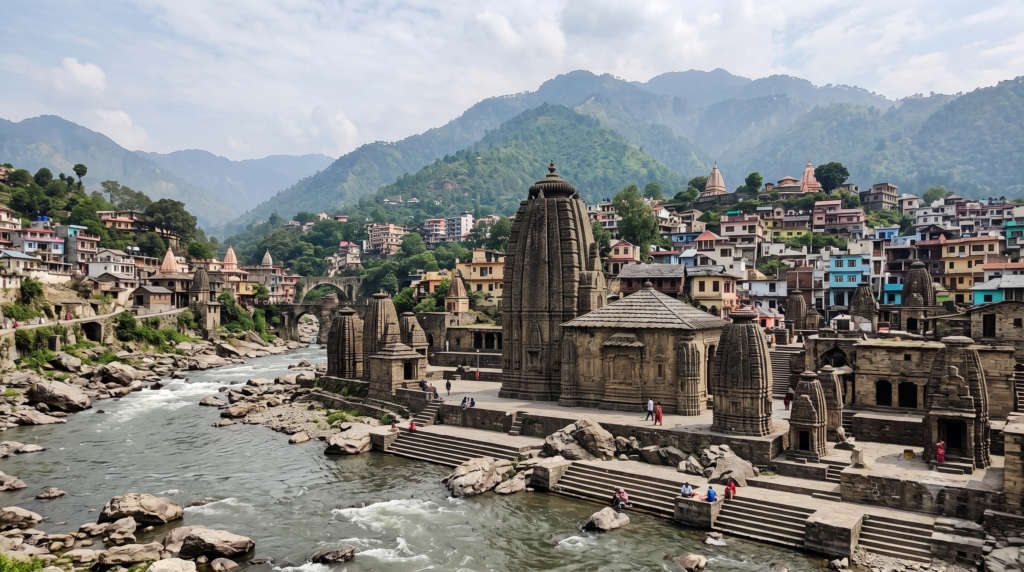
Ask anyone in town and the answer comes back the same way. Mandi is famous for its temples. The old town holds around 81 ancient stone shrines, most of them dedicated to Shiva and Shakti, which is why people have called it Chhoti Kashi, or the Varanasi of the hills, for centuries. The Raja who founded the town in the sixteenth century built it around the Bhootnath Temple, and that temple still anchors the market and the festivals.
The other thing Mandi is known for is its calendar. The International Mandi Shivratri Fair turns the town into a week-long gathering every February or March, when scores of village deities are carried down from surrounding hamlets to pay respects at the Bhootnath and Madho Rai temples. Add the high lakes at Prashar and Rewalsar, the dams on the Beas, and a spot on the Chandigarh-Manali highway that opens up the whole Himachal tourism circuit, and you have a town that punches well above its size. For the full attractions list, our guide to the best places to visit in Mandi covers where to go; this page is about what to actually do once you are there.
Fifteen experiences, sorted so you can plan a two or three day trip at a glance. Distances are from Mandi town.
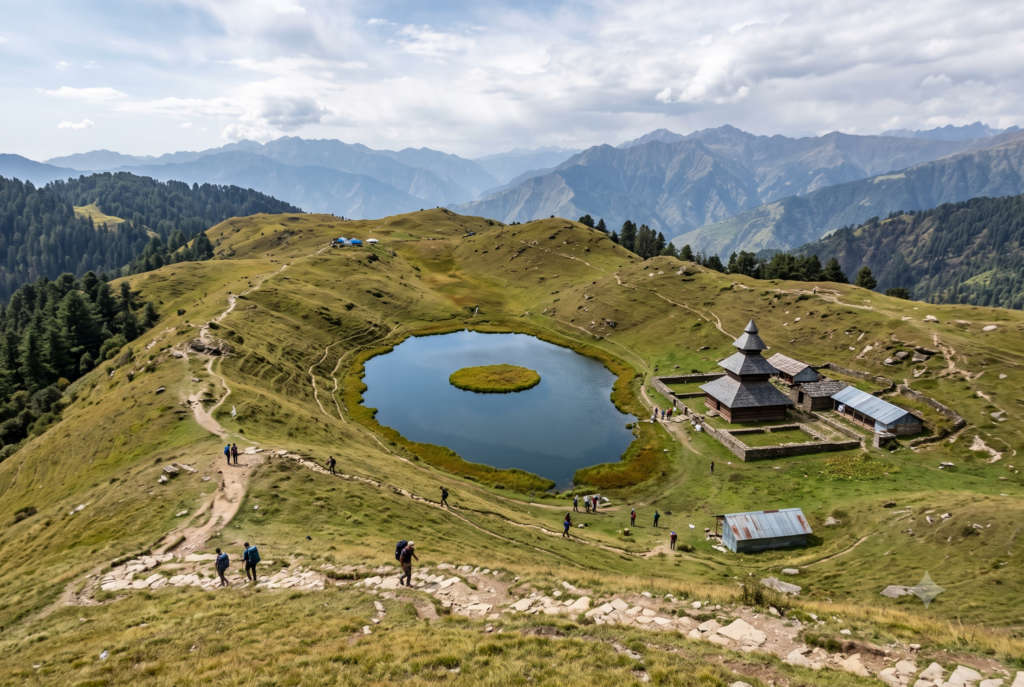
Prashar Lake is the one experience even locals send you to first. It sits at roughly 2,730 m, about 45 to 50 km northwest of Mandi, with a three-storey pagoda temple to the sage Prashar on its bank and a small island that shifts position on the water. The view opens onto the Dhauladhar and Pir Panjal ranges. You can drive most of the way and walk the last stretch, or do the fuller trek from Baggi village. Guided treks and overnight camps start at around Rs 2,500 per person. May to October is the window; snow closes the road in deep winter. Our detailed Prashar Lake trek guide has the route and camp options.


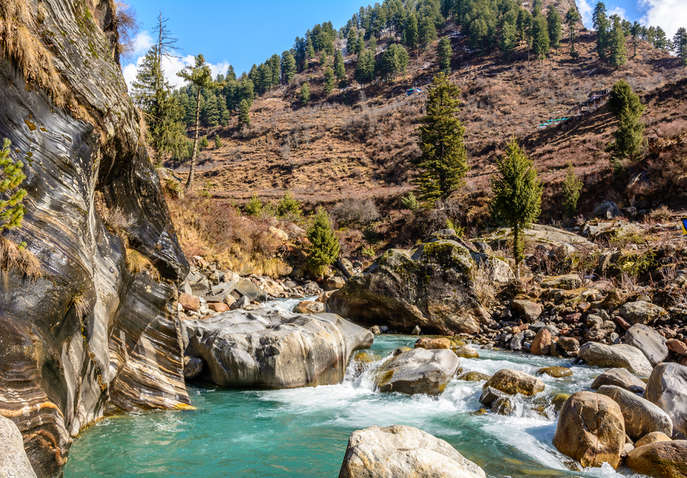
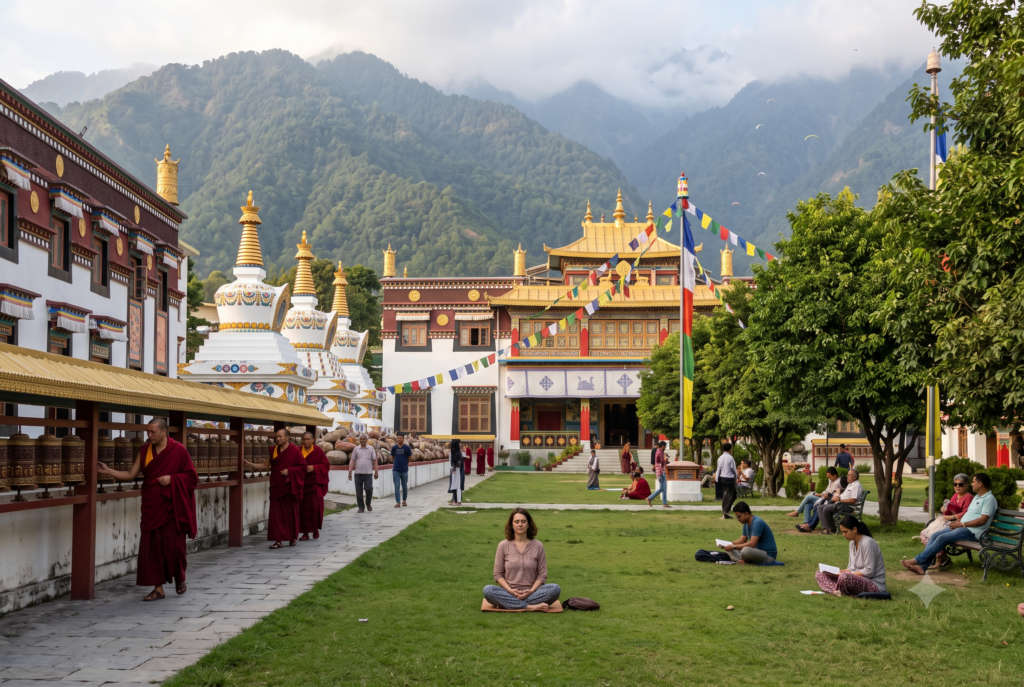
Toward Baijnath, about an hour from Mandi, the monasteries around Bir carry a calm that is hard to describe until you sit in one. The prayer halls are lined with Tibetan murals and gilded Buddha figures, and there is no entry fee. Bir is better known as a paragliding town, but the monastery courtyards are the quieter draw. Come early, before the day trippers, and you often have the place to yourself. It pairs naturally with a Mandi trip if you are already heading toward the Kangra side.


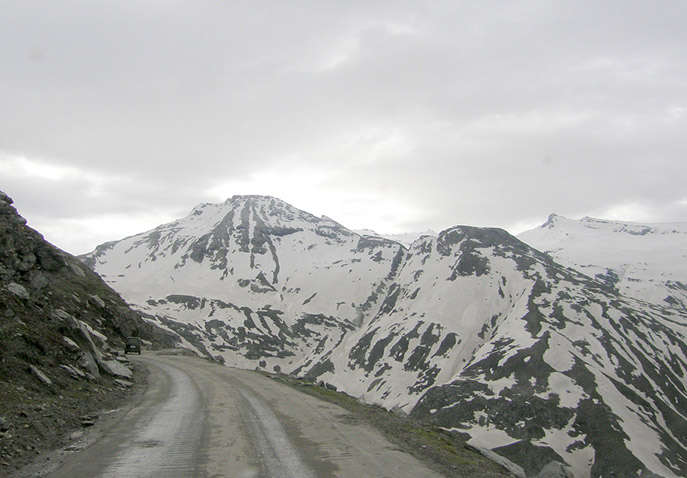


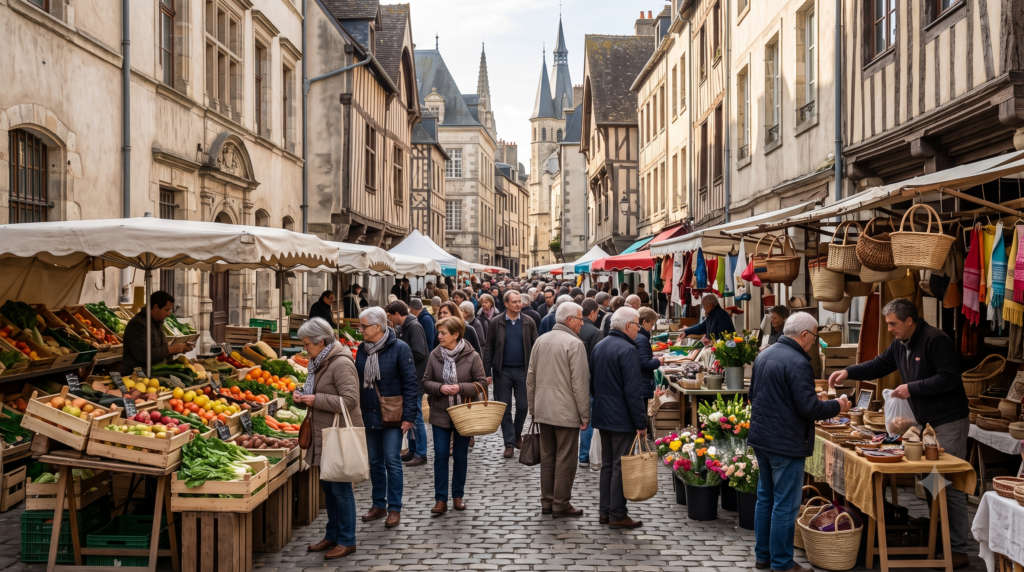
Mandi’s markets wrap around the Bhootnath temple and the old chowk. This is where you find Kullu shawls, hand-knotted rugs, pattu wraps, local caps and leather work, usually at prices below the Manali tourist rate. The Indira Market and the shops around the Sunken Garden complex are the easiest to browse on foot. Bargain politely, and look for the small workshops behind the main row where the weaving actually happens. An hour here doubles as the best short walk through the town’s daily life.
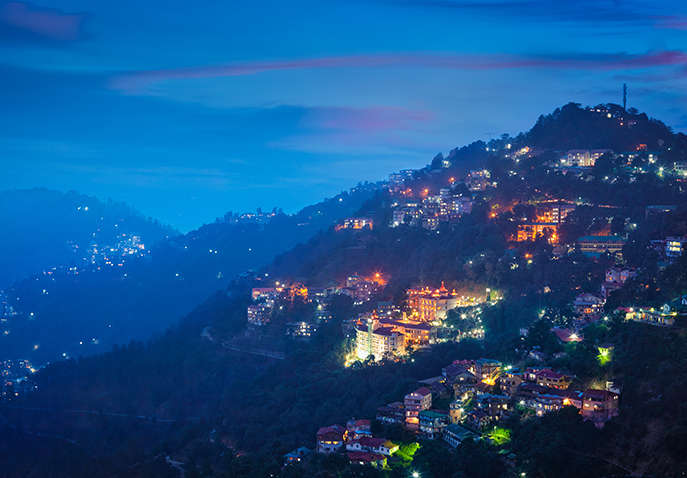


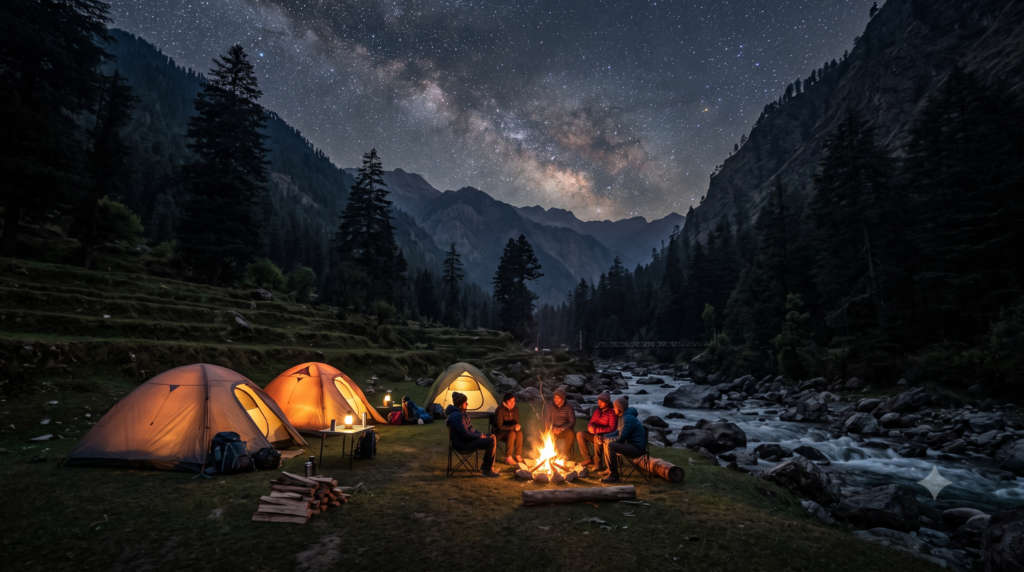
Barot is the green bowl about 40 km north of Mandi, reached over the Jogindernagar road and the old haulage trolley line. The Uhl river runs through it, there is a trout hatchery you can visit, and the meadows are made for camping. A night under canvas here costs around Rs 1,099 per person with most operators. April to June and September to November are the comfortable months. Give it two days if you can, and use our Barot Valley guide to line up a camp. From here you are also close to Janjehli, another quiet trekking base.
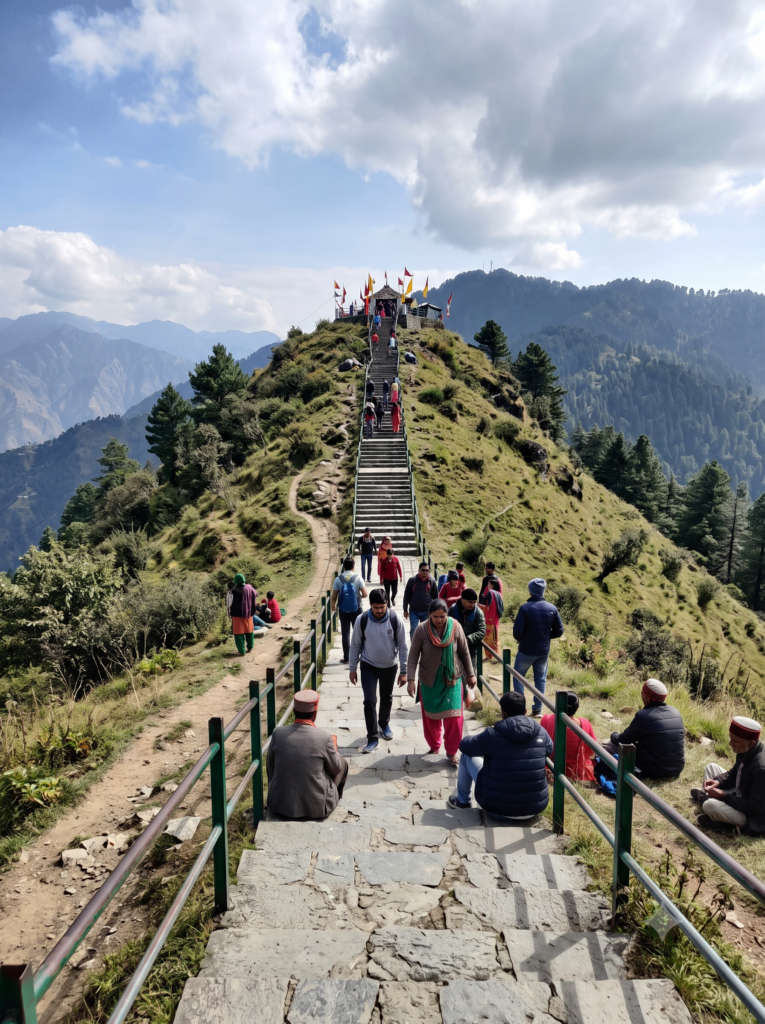
Shikari Devi sits on the highest peak in the Mandi district, near 3,359 m, and the shrine is famous for having no roof. The story goes that every attempt to build one has failed, so the idol sits open to the sky and the snow. The last stretch is a steep walk of around a thousand steps, and the reward is a 360-degree sweep of the Dhauladhar. The temple keeps daylight hours, roughly 6 am to 8 pm. Read our Shikari Devi temple guide before you go; the road is rough and best in the dry months.
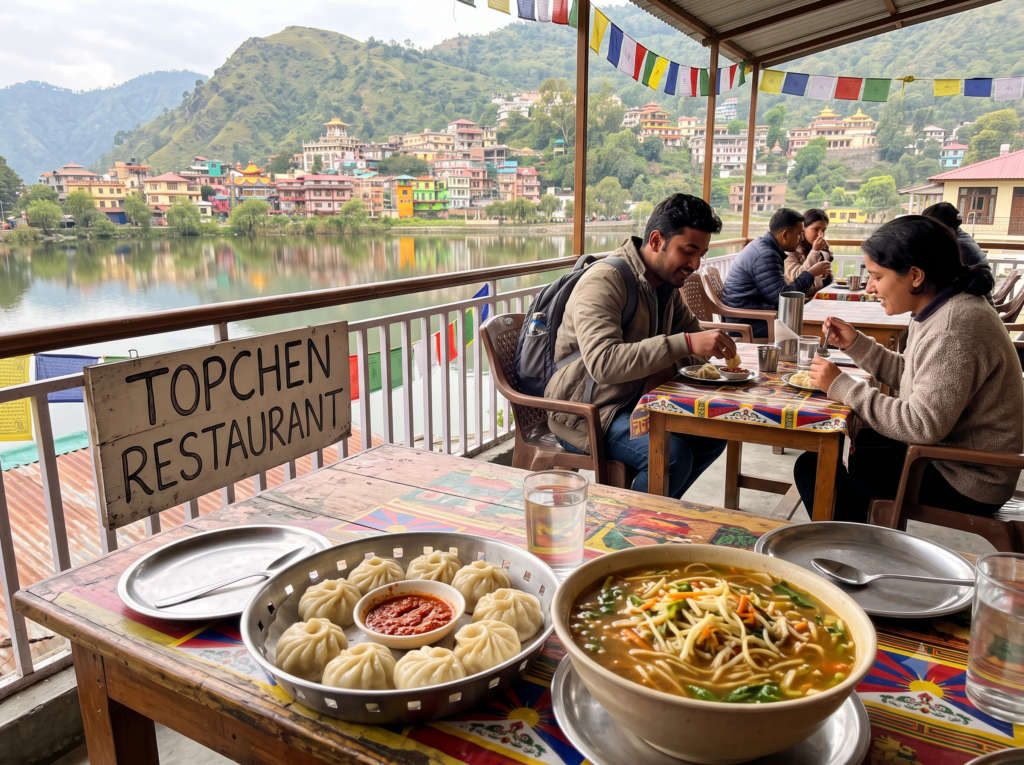
Rewalsar has a strong Tibetan community, and the food shows it. Topchen, near the lake, is the name most travellers remember for its steamed momos and a bowl of thukpa that is exactly right after a cold morning by the water. It is simple, cheap and honest hill food. If you want to build a proper food crawl, our roundup of restaurants in Mandi maps the town’s better kitchens, from Tibetan counters to Himachali dhaams.
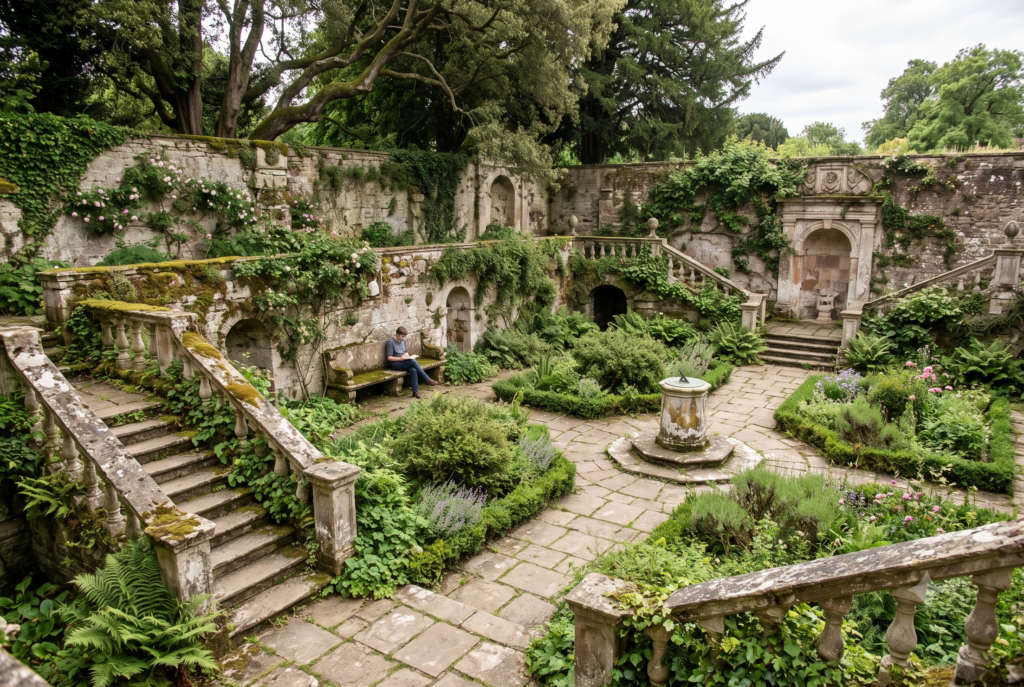
Right in the town at Seri, the Sunken Garden is a walled green square that has been here roughly five centuries, laid out below street level so it stays cool and quiet even when the bazaar is busy. There is no entry fee and it never really closes. Locals use it as a meeting ground, students revise on the benches, and it is the easiest place to slow down between temple visits. The shopping complex on its edge is handy for a quick browse.
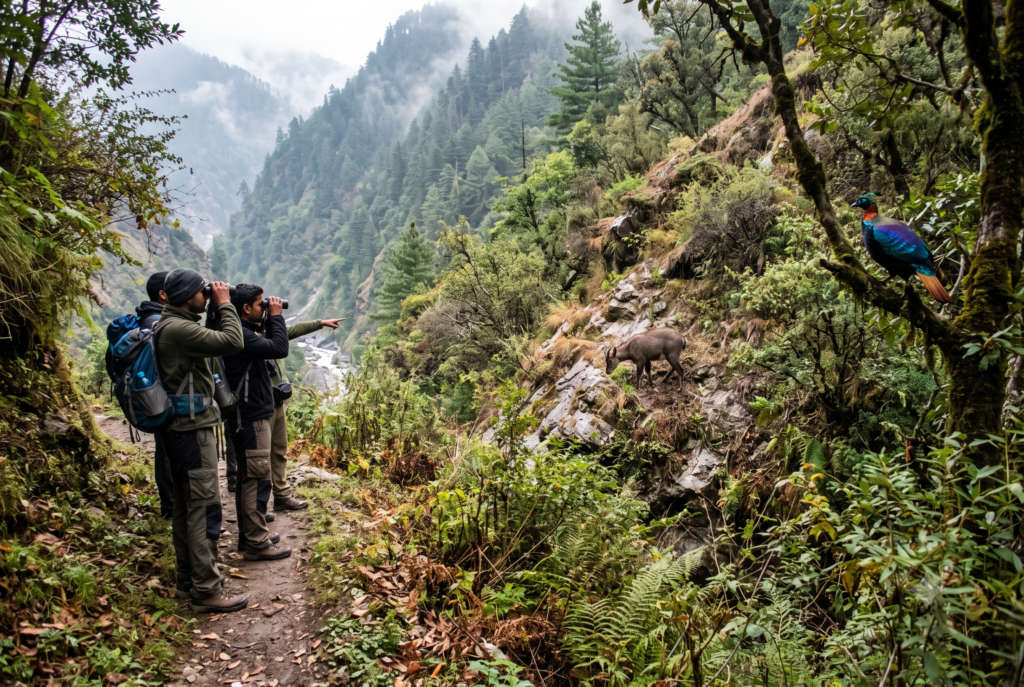
On the banks of the Uhl river near Barot, the Nargu Wildlife Sanctuary protects Himalayan black bear, musk deer, barking deer and the Himalayan monal. It is more a walk-and-watch place than a safari; you go on foot with a local, quietly, and let the forest do the rest. April to May and August to October give the best chances of a sighting. Pair it with a Barot camp so you are already close at first light, when the animals move.
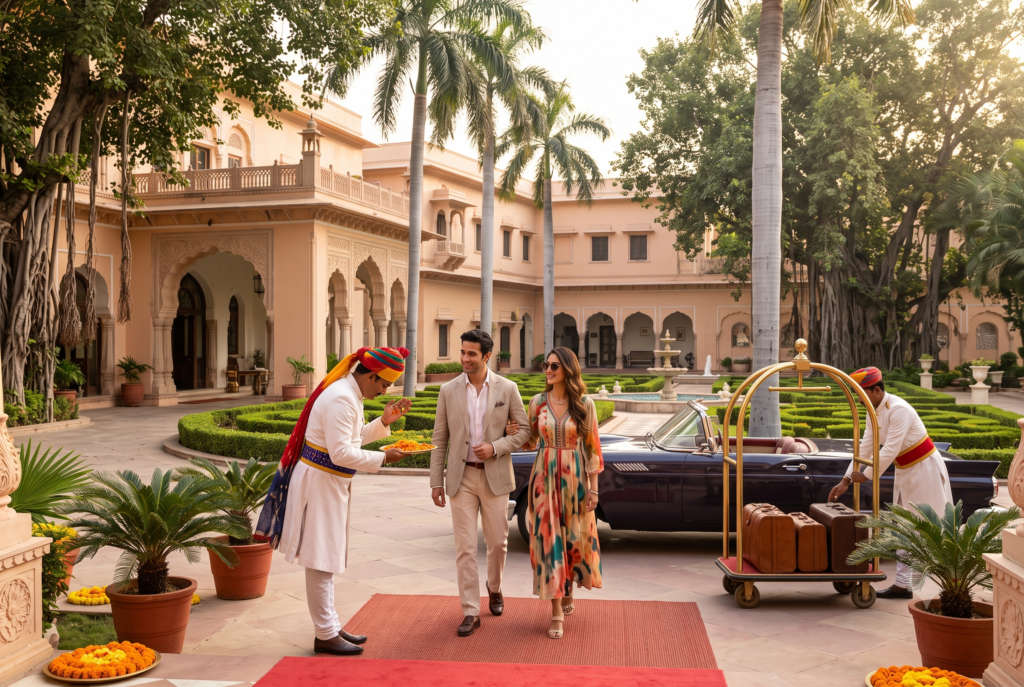
Hotel Raj Mahal Palace was the town residence of Mandi’s royal family, and parts of it date to the 1880s. The heritage wing still carries the old furniture, portraits and courtyards, so a night here is less a hotel stay than a walk into the town’s history. Even if you do not stay, the lobby and gardens are worth a look. It sits in the heart of the old town, a short stroll from the Bhootnath temple and the markets, which makes it a practical base as well as an atmospheric one.
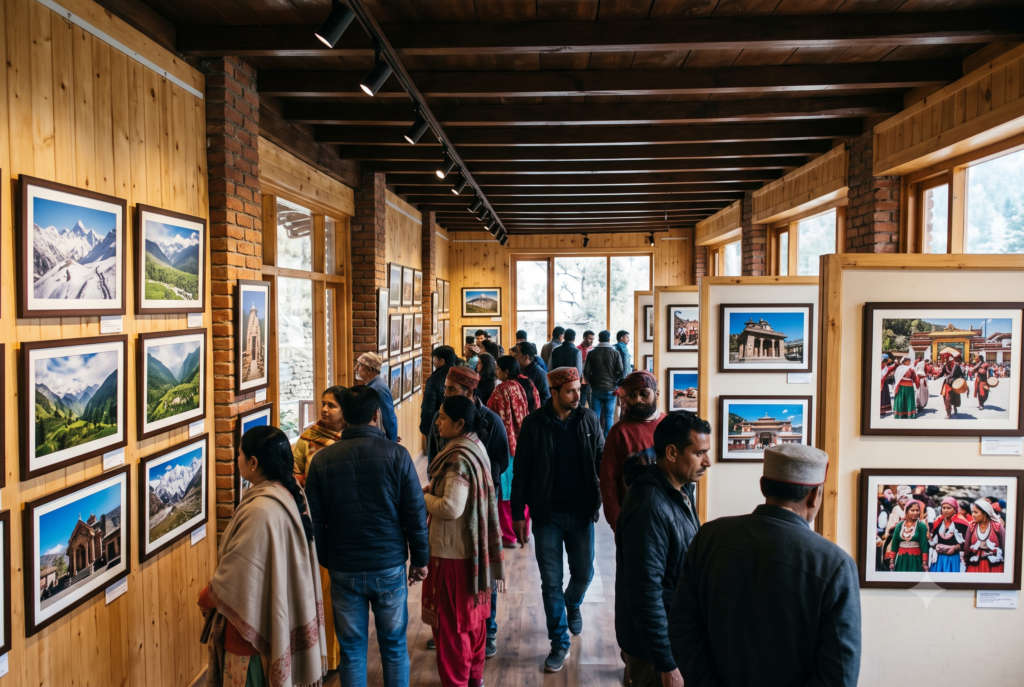
About 4 km out on the Chandigarh-Manali highway, the Himachal Darshan Photo Gallery is a small, genuinely offbeat stop. It is a private collection of photographs tracing the state’s landscapes, festivals and old royal life, curated by a local photographer. Half an hour here gives you context for everything else you are seeing on the trip, and it is the kind of place tour buses skip entirely. Good for a rainy hour or a slow morning before you push on toward Kullu.
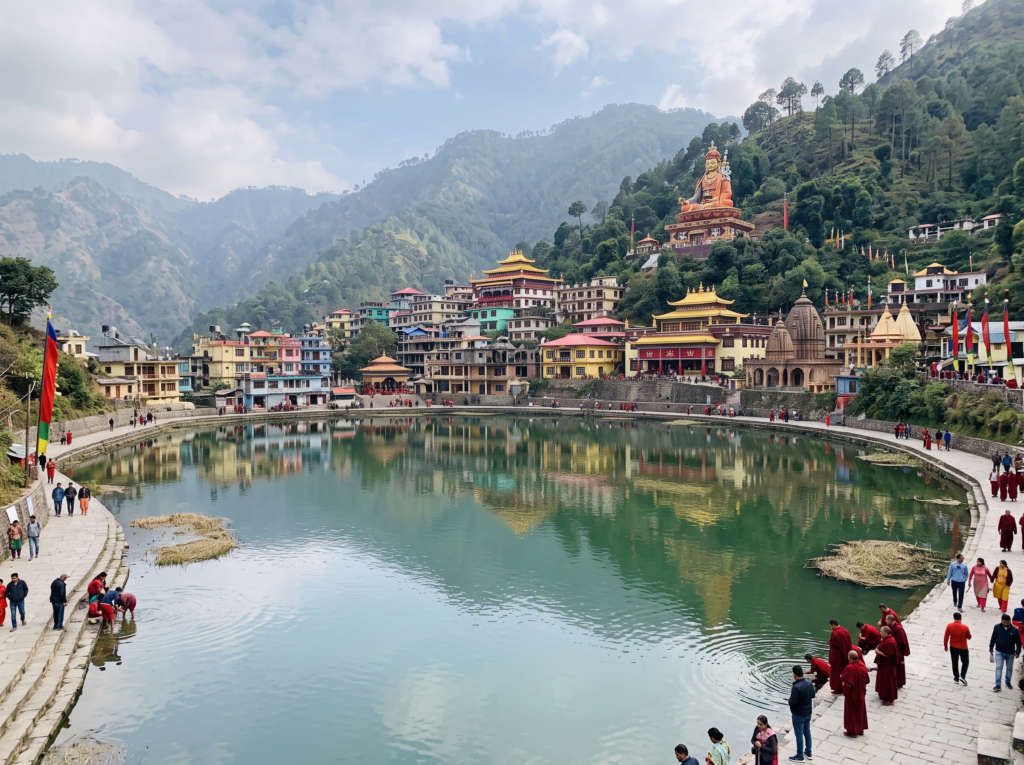
Rewalsar, about 24 km from Mandi, is one of the few lakes in India held sacred by Hindus, Sikhs and Buddhists at once. Temples, a gurudwara and Nyingma monasteries ring the water, a tall statue of Guru Padmasambhava looks down from the hill, and clumps of reed float on the surface, which legend ties to the saint himself. March to October is the season, and the Baisakhi fair in April is the liveliest time to visit. There is no entry fee. Our Rewalsar Lake guide has the temple and monastery details.
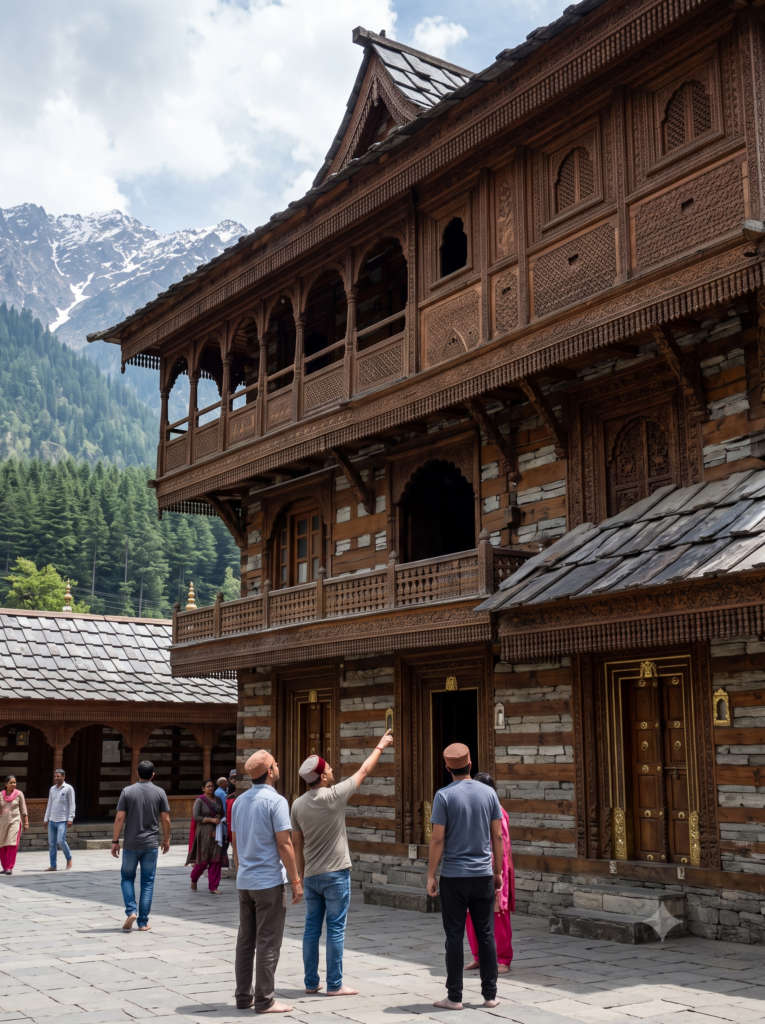
At Bhiuli, a short way from the town centre, the Bhima Kali temple honours a fierce form of Durga and is worth the visit for its woodwork alone. The old wooden carvings on the frames and the small museum of temple artefacts show the craft that once went into every shrine in the valley. It keeps roughly 6 am to 8 pm hours. Take it as part of the wider temple day rather than a separate trip; it fits neatly between the old-town shrines and a lunch back in the bazaar.
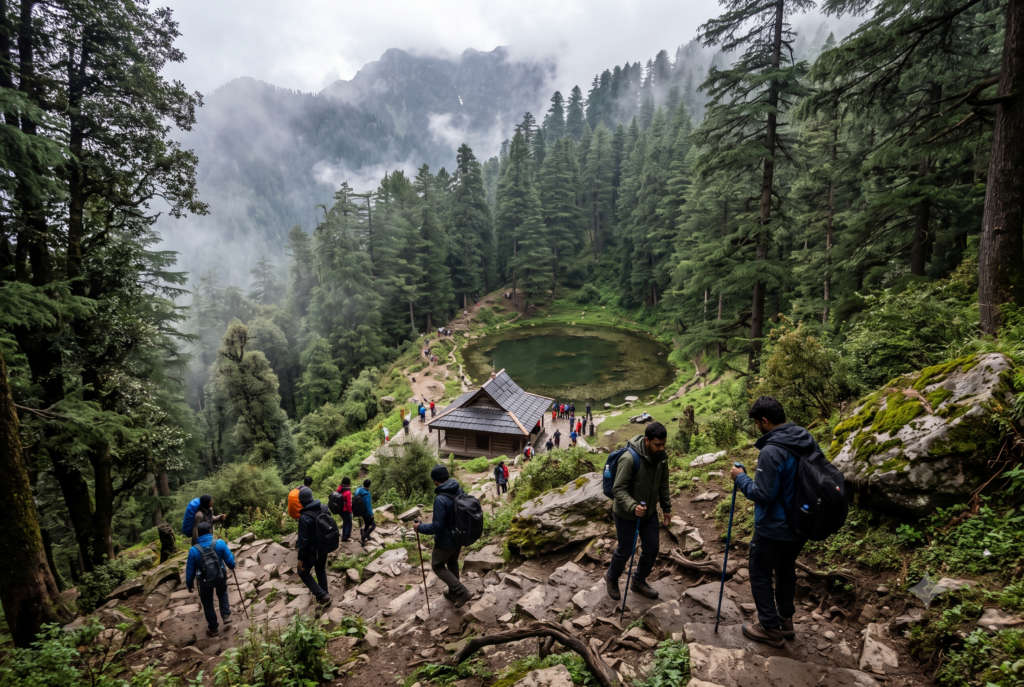
High on the Mandi-Karsog road, Kamrunag is a lake and temple to a rain deity that draws both trekkers and pilgrims. The local belief is that devotees have thrown gold and coins into the water for generations, so the lake supposedly holds a fortune no one disturbs. The walk up from Rohanda is the usual route, best done May to October. It is a proper day out, so start early and carry water and layers. Our Kamrunag Lake guide covers the trek and the temple fair.
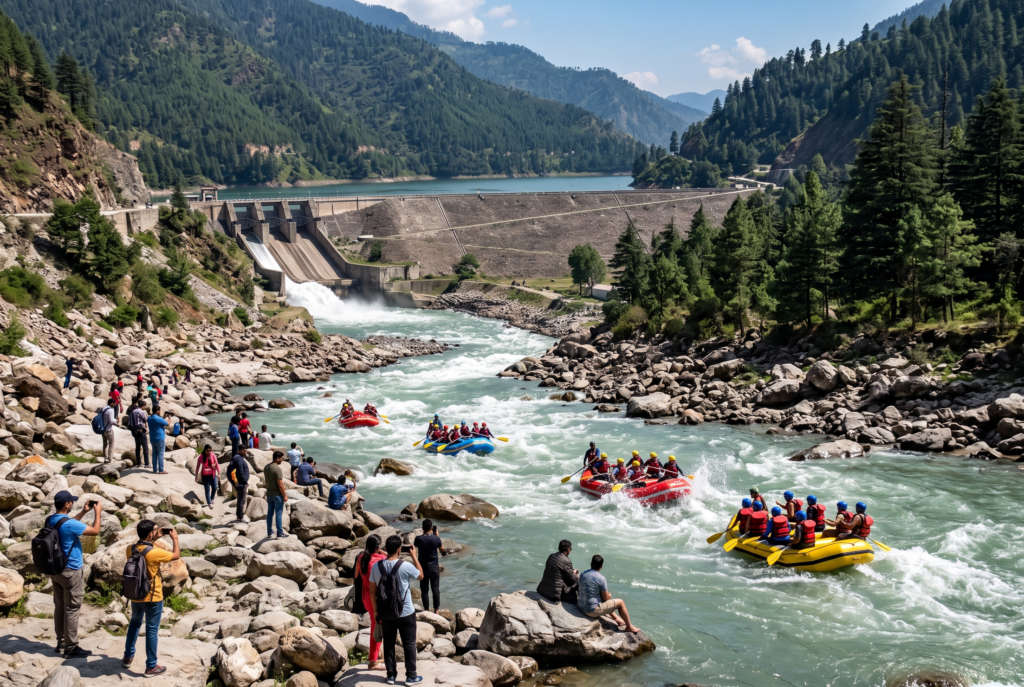
Pandoh Dam holds back the Beas about 19 km from Mandi on the main highway, and the turquoise reservoir against the brown hills is one of the most photographed stops on the drive. Photography from the road is free and open through the day, roughly 6 am to 6 pm. White-water rafting runs on permitted stretches of the Beas near here in the dry season; book only with a licensed operator and check the day’s water level, because releases from the dam change conditions fast. It is a natural pause between Mandi and Kullu.
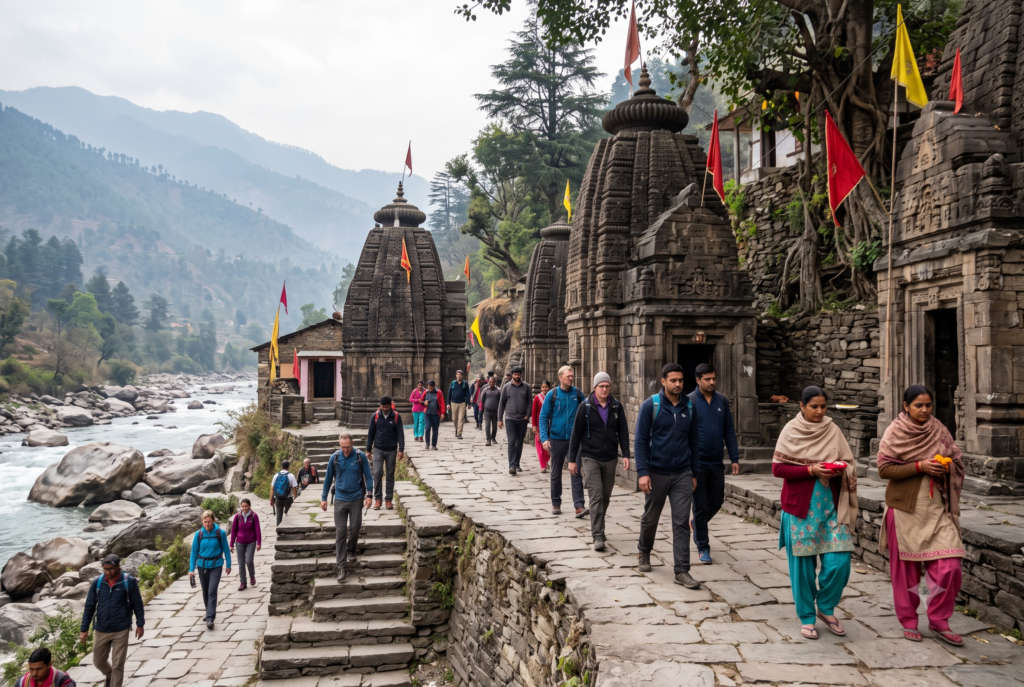
This is the walk that earns Mandi its Chhoti Kashi name, and the single thing most first-time visitors miss. Start at the Bhootnath Temple, the sixteenth-century Shiva shrine the town was built around, then work through Panchvaktra, the five-faced Shiva temple standing where the Beas meets the Suketi stream, Triloknath on the right bank with its finely carved shikhara, and Tarna Devi on the hill above town for the view. All four sit within a short auto ride of each other, and together they show why people count around 81 temples in this one small town. Do it on foot in a morning, ideally the day before the wider Mandi sightseeing loop.
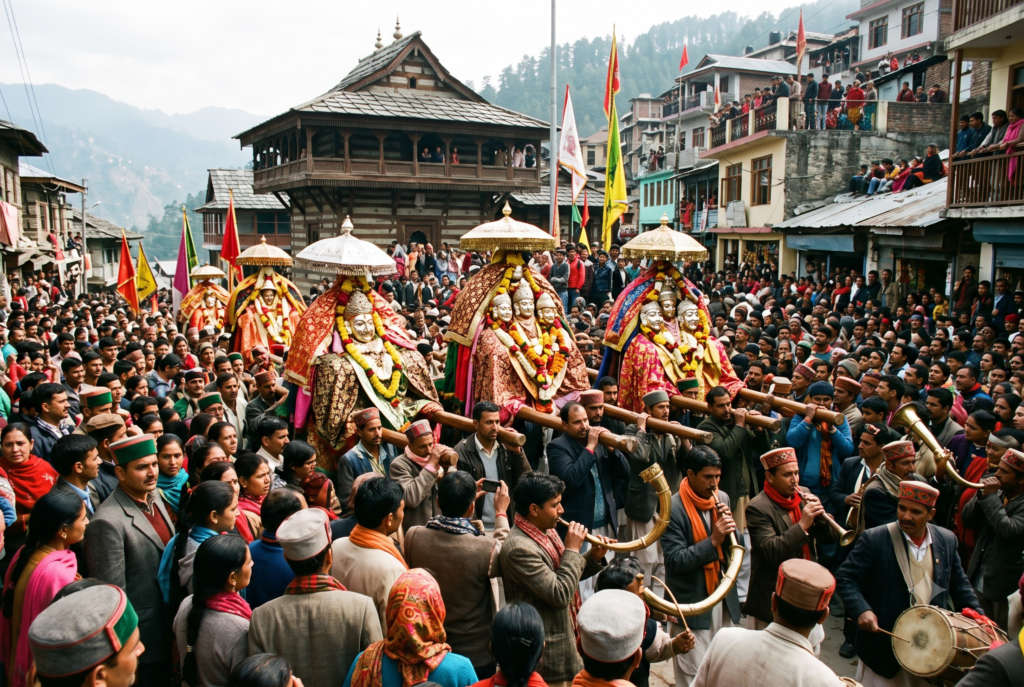
If you can pick your dates, aim for the International Mandi Shivratri Fair in late February or early March. Over about a week, more than 200 village deities are carried into town on decorated palanquins to pay their respects at the Bhootnath and Madho Rai temples, and the whole place fills with processions, folk music, craft stalls and a night market. It is the clearest window into the culture that gives Mandi its Chhoti Kashi identity, and it is exactly why the town is worth building a trip around rather than passing through. Book beds early; rooms sell out weeks ahead across the town.
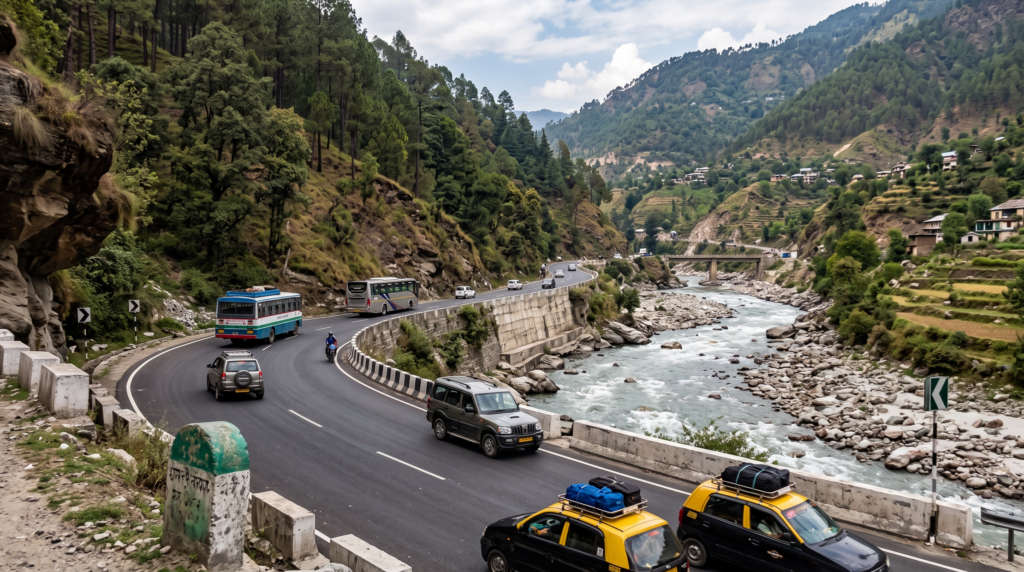
Mandi sits on the Chandigarh-Manali highway, so getting there is straightforward from anywhere in north India.
Once in town, autos and local taxis cover the temple trail and the nearer stops, while the lakes and Barot need a hired cab or a package. If you would rather not sort the logistics, our Himachal tour packages can be built around Mandi and the Kullu valley.
Mandi rewards travellers who stop instead of driving through. Give it a couple of days and it hands you 81 temples in a walkable old town, mirror-lakes on the ridges above, and a hill-country calm the bigger stations lost years ago.
When you are ready to book, our Himachal tour packages can be shaped around Mandi’s temple trail, its lakes and the wider Kullu valley, so you travel without sorting every detail yourself. Start with the Himachal tourism guide to see how the whole circuit links up.
The top things to do in Mandi are the trek to Prashar Lake, the Chhoti Kashi temple trail through Bhootnath, Panchvaktra and Triloknath, camping in Barot Valley, and a visit to the sacred Rewalsar Lake. Add Kamrunag and Shikari Devi if you want a longer trek, and Pandoh Dam on the drive toward Kullu.
Mandi is famous for its roughly 81 ancient Shiva temples, which is why it is called Chhoti Kashi, the Varanasi of the hills. It is also known for the week-long International Shivratri Fair, the high lakes at Prashar and Rewalsar, and its position as a base for the wider Kullu valley.
Mandi is called Chhoti Kashi, or little Kashi, because of the density of Shiva temples packed into its old town, echoing Varanasi on the Ganga. Locals count around 81 ancient stone shrines here, and the town grew up in the sixteenth century around the Bhootnath Temple, its spiritual centre.
Mandi town is said to hold around 81 ancient temples, most of them dedicated to Shiva and Shakti, spread along both banks of the Beas. The best known are Bhootnath, Panchvaktra, Triloknath, Tarna Devi and Bhima Kali, and you can walk the main cluster in a single morning.
The International Mandi Shivratri Fair is held over about a week in late February or early March, on and around the Maha Shivratri date. More than 200 village deities are carried into town for processions at the Bhootnath and Madho Rai temples, alongside folk music, crafts and a night market.
The nearest airport is Bhuntar (Kullu), about 60 km from Mandi. By train, the closest railheads are Chandigarh (about 180 km) and the narrow-gauge Jogindernagar line. By road, overnight buses reach Mandi from Delhi in 10 to 12 hours and from Chandigarh in 4 to 5 hours on the Manali highway.
The best time to visit Mandi is March to June and September to November, when days are pleasant, roughly 15 to 30 degrees Celsius, and the treks and lakes are open. July to September is monsoon, and winter brings cold and occasional snow, though it also holds the famous Shivratri fair in late February or March.
Two days cover Mandi comfortably. Spend one on the Chhoti Kashi temple trail and the town markets, and a second at Prashar or Rewalsar lake. Add a third day for Barot Valley or Janjehli, and a fourth if you want to trek to Kamrunag or Shikari Devi.
Yes. Mandi is worth visiting for travellers who like temples, lakes and offbeat hill country away from the Manali crowds. Its temple trail, its lakes at Prashar and Rewalsar, and its role as a base for the Kullu valley make it a rewarding two to three day stop, and it is cheaper than the bigger stations.
The best temples to visit in Mandi are Bhootnath, the town's central Shiva shrine, Panchvaktra at the river confluence, Triloknath with its carved tower, Tarna Devi on the hill above town, and Bhima Kali at Bhiuli for its woodwork. Together they form the walkable Chhoti Kashi trail.
Mandi offers trekking to Prashar, Kamrunag and Shikari Devi, camping and trout fishing in Barot Valley, wildlife walks in the Nargu sanctuary, and white-water rafting on permitted stretches of the Beas near Pandoh. Paragliding is available on the nearby Bir side. Always book adventure activities with licensed operators.
Mandi is about 108 to 124 km from Manali on the main highway, a drive of roughly three to four hours depending on traffic and the tunnel route. The road along the Beas is one of the more scenic stretches in Himachal, which makes Mandi an easy and worthwhile stop on any Manali trip.
Real reviews from real travelers who booked with us.
View All Reviews