5D / 4N
9% OFF


How Many Wildlife Sanctuaries Are in Jammu and Kashmir?
Jammu and Kashmir has 14 wildlife sanctuaries, 4 national parks and 30 conservation reserves. Older copies of the J&K Department of Wildlife Protection’s list still include Trikuta, in the Vaishno Devi hills, which was fully denotified by a February 2024 government order after Tata Kutti in Poonch was declared in its place in 2012 and finally notified in 2024. They also leave out Bani in Kathua, notified in 2019, which is the 14th sanctuary today. The department’s last published total for all protected areas is about 4,777 km², roughly 11% of the Union Territory.
The eight in the Kashmir Valley are Overa-Aru, Hirpora, Thajwas (Baltal), Gulmarg, Tral, Lachipora, Limber and Rajparian (Daksum). The other six, Ramnagar Rakh, Nandini, Surinsar-Mansar, Jasrota, Tata Kutti and Bani, are in the Jammu region. The largest is Overa-Aru near Pahalgam, at 425 km². The best-known wildlife site of all is not a sanctuary. Dachigam National Park, 22 km from Srinagar, holds the last real population of the hangul, 323 deer in the 2025 census. Hemis and Changthang, often listed with J&K, have been part of Ladakh since 2019.
For this guide every sanctuary was checked against the J&K Department of Wildlife Protection’s list of protected areas, the wetland entries against the Ramsar list published by the Ministry of Environment, and the hangul figures against the 2023 and 2025 census results. Where a site has restricted access, we say so rather than suggest a visit you cannot make.
Key takeaways
- Count 14 sanctuaries (Bani has replaced the denotified Trikuta), 4 national parks and 30 reserves in J&K. Lists that say 17 are mixing in wetlands or Ladakh.
- Go to Dachigam for the hangul, Hirpora for the markhor and Hokersar for winter waterbirds.
- Visit the Valley sanctuaries from May to October and the Jammu sanctuaries from October to March.
- Check Dachigam’s status before you travel. It can close during the autumn hangul rut and the March census week.
- Use Gulmarg, Pahalgam and Sonamarg as bases. Three sanctuaries start at the edge of these towns.
All 14 Wildlife Sanctuaries in Jammu and Kashmir at a Glance
District, area and notification year are from the J&K Department of Wildlife Protection list. Bani’s area and year are from its 2019 notification as reported. Trikuta, denotified in 2024, is no longer listed. Distances are approximate road distances from Srinagar (Valley) or Jammu (Jammu region).
| Sanctuary | Region and district | Area (km²) | Notified | Animals to look for | Best months | Distance |
|---|---|---|---|---|---|---|
| Overa-Aru | Kashmir Valley, Anantnag | 425.00 | 1981 | Hangul, Himalayan brown bear, musk deer, ibex | May to October | About 105 km from Srinagar (12 km beyond Pahalgam) |
| Hirpora | Kashmir Valley, Shopian | 341.25 | 1987 | Pir Panjal markhor, black bear, leopard | May to October | About 70 km from Srinagar on the Mughal Road |
| Thajwas (Baltal) | Kashmir Valley, Ganderbal | 203.00 | 1987 | Brown bear, musk deer, Himalayan monal | May to October | About 80 km from Srinagar at Sonamarg |
| Gulmarg | Kashmir Valley, Baramulla | 180.00 | 1987 | Black bear, musk deer, leopard, grey langur | April to October | About 50 km from Srinagar |
| Tral | Kashmir Valley, Pulwama | 154.15 | 2019 | Hangul, black bear, leopard | April to November | About 40 km from Srinagar |
| Lachipora | Kashmir Valley, Baramulla | 93.50 (27.77 in the 2022 MoEFCC notification) | 1987 | Markhor, goral, musk deer | May to October | About 90 km from Srinagar in Uri tehsil |
| Limber | Kashmir Valley, Baramulla | 43.75 (12 in the 2022 MoEFCC notification) | 1987 | Markhor, musk deer, black bear | May to October | About 85 km from Srinagar |
| Rajparian (Daksum) | Kashmir Valley, Anantnag | 20.00 | 1981 | Black bear, musk deer, monal | May to October | About 85 km from Srinagar |
| Ramnagar Rakh | Jammu region, Jammu | 31.50 | 1990 | Barking deer, wild boar, peafowl | October to March | About 6 km from Jammu city |
| Nandini | Jammu region, Jammu | 33.34 | 1990 | Pheasants, red junglefowl, goral | October to March | About 28 km from Jammu near Nagrota |
| Surinsar-Mansar | Jammu region, Udhampur, Samba, Jammu | 97.82 | 1990 | Goral, leopard, waterbirds | October to April | About 42 km (Surinsar) and 62 km (Mansar) from Jammu |
| Jasrota | Jammu region, Kathua | 10.04 | 1987 | Chital, barking deer, wild boar | September to May | About 60 km from Jammu |
| Bani | Jammu region, Kathua | 99.76 | 2019 | Himalayan tahr, goral, musk deer, leopard | April to June, September to November | Upper Kathua via Basohli, a full day’s drive from Jammu |
| Tata Kutti | Jammu region, Poonch | 66.27 | 2012 (final 2024) | Musk deer, black bear, monal | May to October | Upper Poonch, along the Pir Panjal |
India
Kashmir
All 14 sanctuaries, 4 national parks and the Ramsar wetlands, with animals and best months
Best Time
May - October
Select Package Type
Best Selling Packages


Wildlife Sanctuaries in Kashmir and Jammu, Then Parks, Animals and Permits
The list runs through the eight Kashmir Valley sanctuaries first, then the six in the Jammu region. After it come the national parks, the wetlands, the animals and how to plan a visit.
-
Overa-Aru Wildlife Sanctuary, Pahalgam
-
Hirpora Wildlife Sanctuary, Shopian
-
Thajwas (Baltal) Wildlife Sanctuary, Sonamarg
-
Gulmarg Wildlife Sanctuary, Gulmarg
-
Tral Wildlife Sanctuary, Pulwama
-
Lachipora Wildlife Sanctuary, Uri
-
Limber Wildlife Sanctuary, Uri
-
Rajparian (Daksum) Wildlife Sanctuary, Anantnag
-
Ramnagar Rakh Wildlife Sanctuary, Jammu
-
Nandini Wildlife Sanctuary, Nagrota
-
Surinsar-Mansar Wildlife Sanctuary, Udhampur and Samba
-
Jasrota Wildlife Sanctuary, Kathua
-
Bani Wildlife Sanctuary, Kathua
-
Tata Kutti Wildlife Sanctuary, Poonch
Explore Popular Destination In Kashmir
01
Overa-Aru Wildlife Sanctuary, Pahalgam
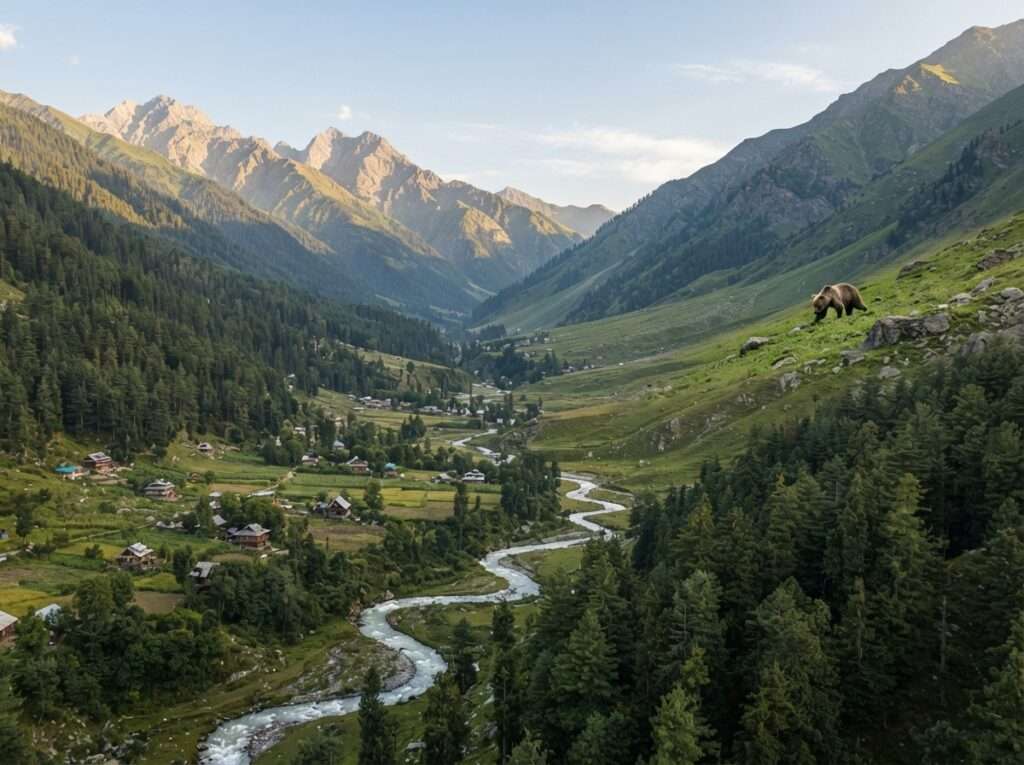
Overa-Aru is the largest of the 14 wildlife sanctuaries in Jammu and Kashmir, at 425 km² on the official list. It climbs from the Lidder river near Pahalgam up through deodar and fir to juniper scrub and alpine meadow above 3,500 m, and the road to Aru village runs along its edge. That makes it the easiest high-altitude sanctuary to reach without a trek. More than 100 bird species have been recorded here. Mammals include the Himalayan brown bear, Asiatic black bear, musk deer, Asiatic ibex on the upper crags, Himalayan serow and small numbers of hangul. The realistic plan for most visitors is a morning walk out of Aru towards the Lidderwat trail with a local guide, scanning the far slopes with binoculars. Bears are most often reported on the meadows in late spring and autumn.
Pair it with our Pahalgam guide, since you will base yourself there.
| Region and district | Kashmir Valley, Anantnag |
| Area and notified | 425 km², 1981 |
| Distance | About 105 km from Srinagar via Pahalgam |
| Best months | May to October |
| Animals to look for | Brown bear, black bear, musk deer, ibex, hangul |
| Access | Road to Aru, then on foot with a guide |
Related Tour Packages


❮
❯
02
Hirpora Wildlife Sanctuary, Shopian
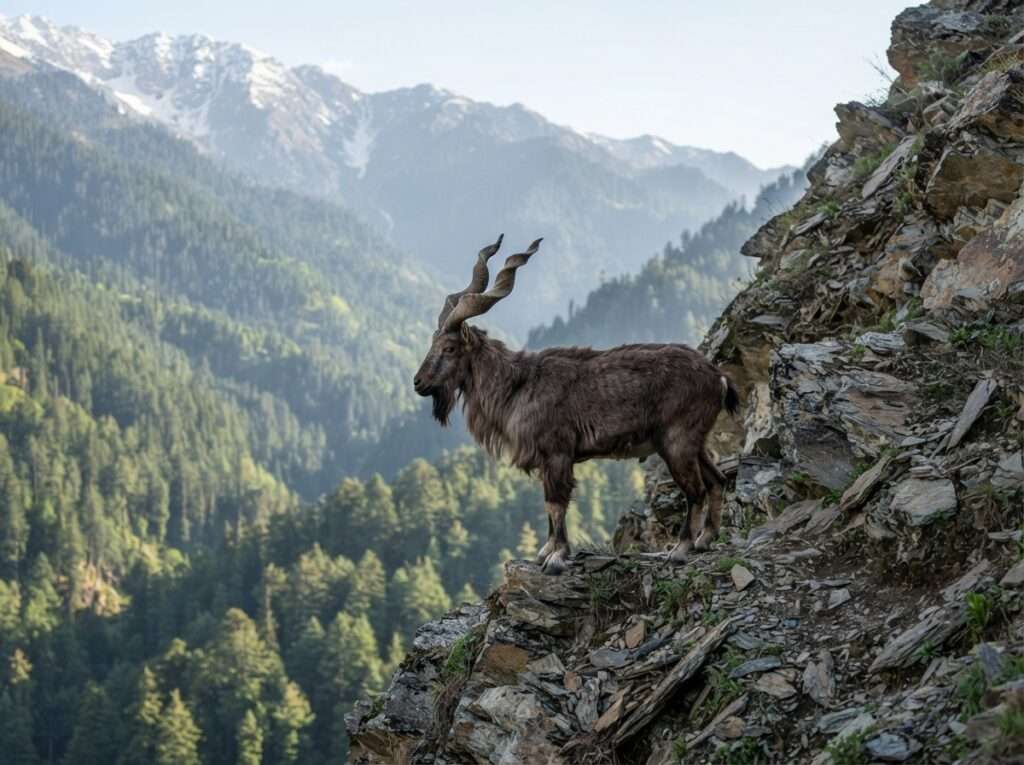
Hirpora is where you go for the markhor. The sanctuary covers 341 km² of the Pir Panjal slopes in Shopian district, and the Mughal Road from Shopian to Poonch cuts straight through it on the way up to Peer Ki Gali. Its eastern slopes are gentle and forested with kail pine, spruce and fir, while the northern and western faces turn into cliffs. That broken cliff country holds one of the last populations of the Pir Panjal markhor, the wild goat with corkscrew horns, alongside Himalayan black and brown bear, leopard, musk deer and Tibetan wolf. You are most likely to see markhor on the open ridges in early morning with a spotting scope. The Mughal Road closes in winter snow, usually from December until late spring, so plan for May to October and check the road status in Shopian before you leave.
| Region and district | Kashmir Valley, Shopian |
| Area and notified | 341.25 km², 1987 |
| Distance | About 70 km from Srinagar |
| Best months | May to October (Mughal Road open) |
| Animals to look for | Pir Panjal markhor, black bear, brown bear, leopard |
| Access | Mughal Road from Shopian |
Related Tour Packages


❮
❯
03
Thajwas (Baltal) Wildlife Sanctuary, Sonamarg
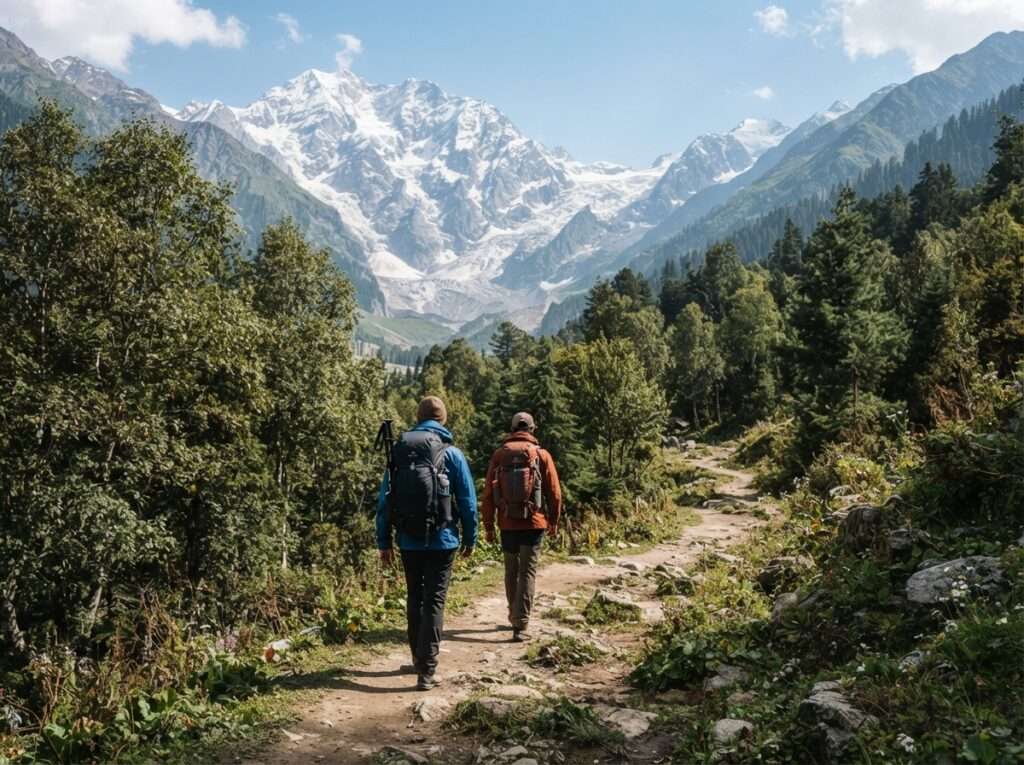
Thajwas, also listed as Baltal, wraps around Sonamarg in Ganderbal district and covers 203 km² of glacier valleys, birch and fir forest and high pasture. Most travellers walk or ride a pony up to the Thajiwas glacier, about 3 km from the Sonamarg market, without realising they are inside a sanctuary. Go higher and quieter than the pony trail and you have a fair chance of Himalayan monal on the scree slopes, plus musk deer and brown bear on the upper meadows. Baltal at the eastern end is the base camp for the Amarnath Yatra, so July and August bring heavy traffic, security restrictions and camps. For wildlife, June and September are the better windows.
Read our Sonamarg guide for where to stay.
| Region and district | Kashmir Valley, Ganderbal |
| Area and notified | 203 km², 1987 |
| Distance | About 80 km from Srinagar |
| Best months | June and September (avoid Yatra weeks) |
| Animals to look for | Himalayan monal, musk deer, brown bear |
| Access | Road to Sonamarg, trail to Thajiwas |
Related Tour Packages


❮
❯
04
Gulmarg Wildlife Sanctuary, Gulmarg
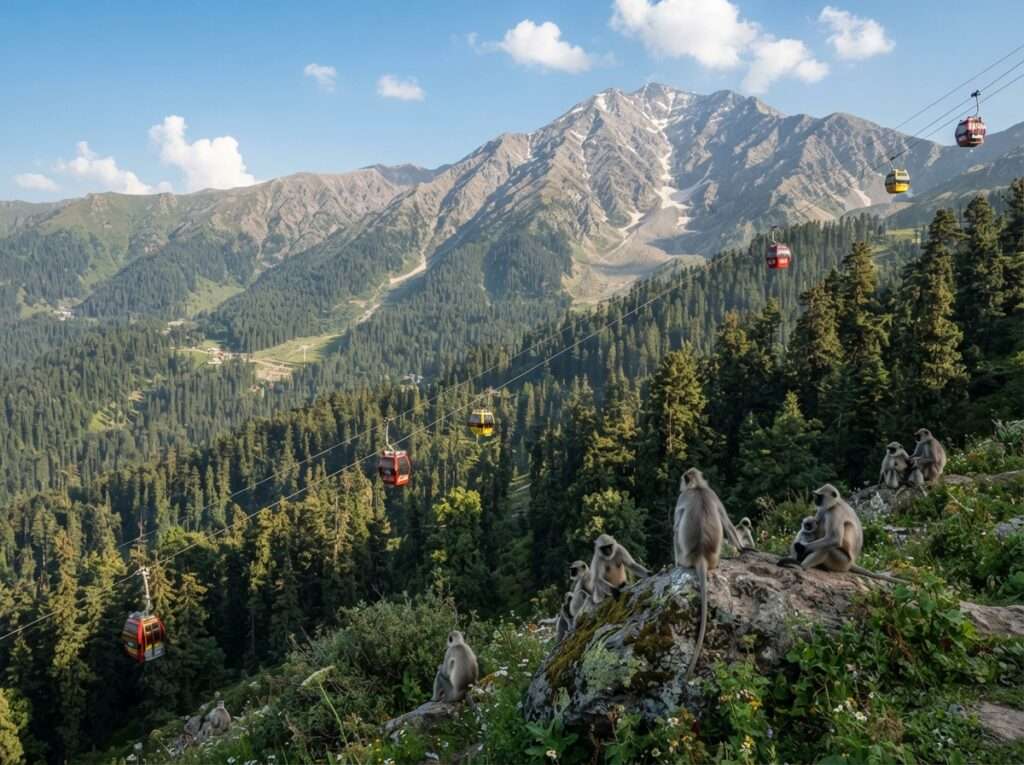
Gulmarg Wildlife Sanctuary covers 180 km² of the Pir Panjal around the resort, and the golf course and the gondola line both sit inside it. The lower slopes are fir and pine, giving way to sub-alpine forest and then bare ridges near Apharwat. The gondola is the cheapest wildlife trick in Kashmir. Phase 1 lifts you to Kongdoori, from where the forest edges are a short walk away, and Phase 2 climbs to Apharwat, above 3,900 m. The sanctuary holds Himalayan black and brown bear, musk deer, leopard, Kashmir grey langur, red fox and yellow-throated marten. Langur troops in the forest below the Gulmarg bowl are the most reliable sighting. Some older lists put Gulmarg in Jammu, but it is in Baramulla district of the Kashmir Valley.
See our Gulmarg guide.
| Region and district | Kashmir Valley, Baramulla |
| Area and notified | 180 km², 1987 |
| Distance | About 50 km from Srinagar |
| Best months | April to October |
| Animals to look for | Kashmir grey langur, black bear, musk deer, leopard |
| Access | Road to Gulmarg, gondola to Kongdoori |
05
Tral Wildlife Sanctuary, Pulwama
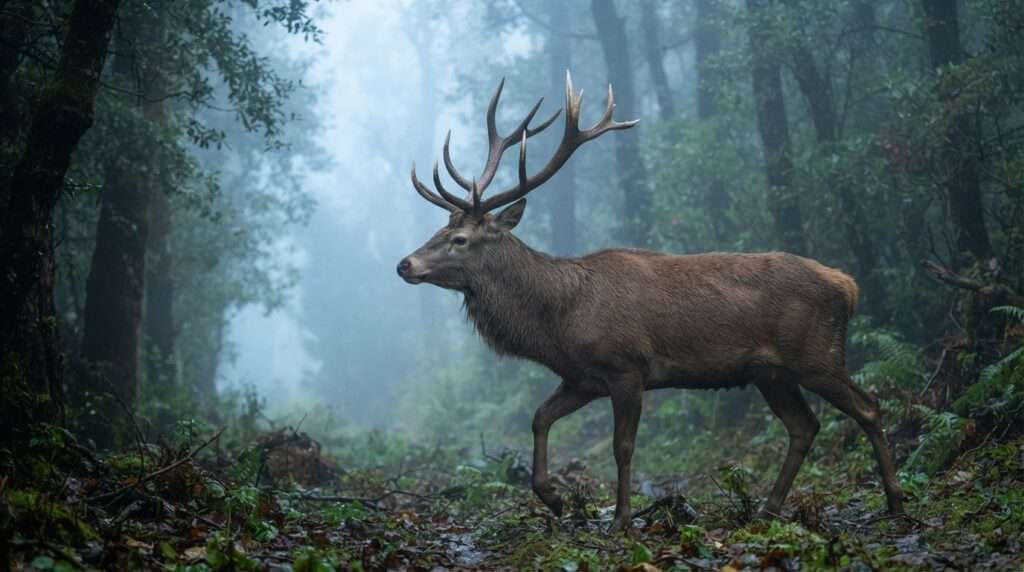
Tral is one of the two newest sanctuaries on the list, notified in 2019 over 154 km² of the Shikargah forests above Tral town in Pulwama. It matters because it is the hangul’s lifeline beyond Dachigam. The forests link Dachigam to Overa-Aru along the Zabarwan range, and deer use the corridor to move between them. The 2023 hangul census recorded 14 animals in the Shikargah area of Tral, a small but breeding outlier population. Black bear and leopard are also present. Tral sees very few tourists, so treat it as a specialist visit. Contact the Wildlife Warden’s office in Srinagar before you go, and expect to walk with a forest watcher rather than drive.
| Region and district | Kashmir Valley, Pulwama |
| Area and notified | 154.15 km², 2019 |
| Distance | About 40 km from Srinagar via Awantipora |
| Best months | April to November |
| Animals to look for | Hangul, black bear, leopard |
| Access | With a forest watcher, permission from the Wildlife Warden |
06
Lachipora Wildlife Sanctuary, Uri
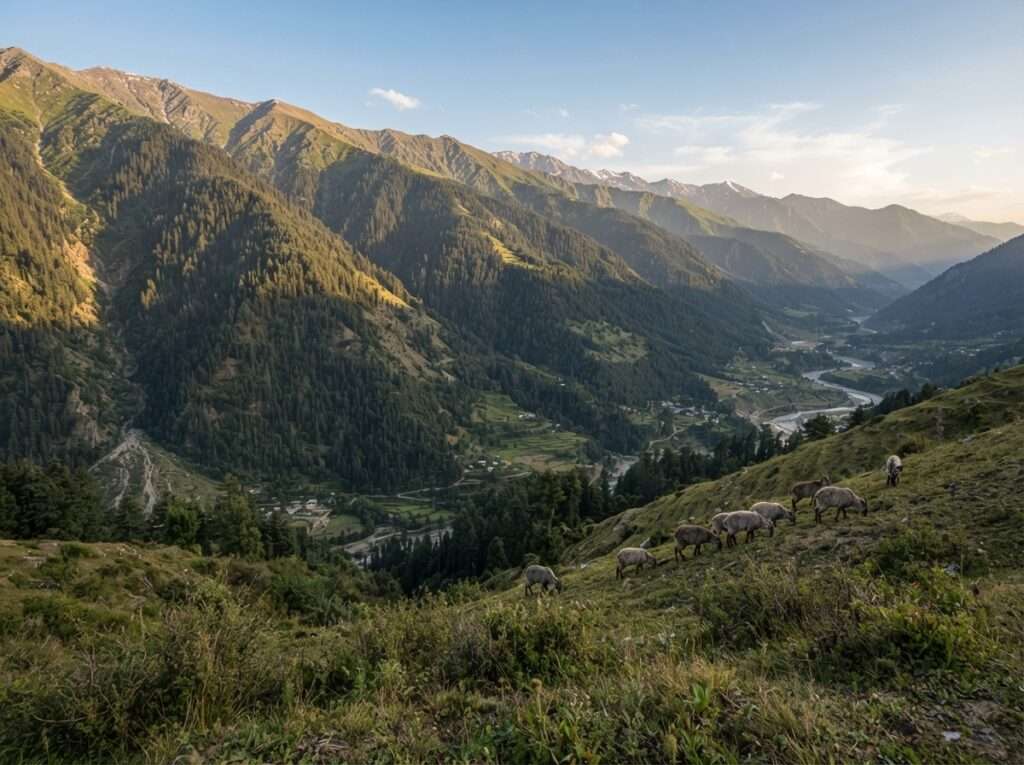
Lachipora sits in Uri tehsil of Baramulla district. The J&K list still gives its original 93.5 km², but the 2022 MoEFCC eco-sensitive zone notification puts it at 27.77 km² after part of it went into Kazinag National Park. It forms one block with Limber Wildlife Sanctuary and Kazinag National Park. Together they protect the second stronghold of the markhor in Kashmir after Hirpora. The wild goat here is the markhor, and the population on the Indian side of the Kazinag range is one of the reasons the area was protected. Goral, musk deer, leopard and both bears also occur. Uri sits close to the Line of Control, so visitor access is controlled. Ask the Wildlife Warden in Baramulla about current permission before planning a visit, and do not expect tourist facilities.
| Region and district | Kashmir Valley, Baramulla |
| Area and notified | 27.77 km² (93.5 km² on older lists), 1987 |
| Distance | About 90 km from Srinagar |
| Best months | May to October |
| Animals to look for | Markhor, goral, musk deer, leopard |
| Access | Controlled, near the LoC. Check with the Baramulla wildlife office |
07
Limber Wildlife Sanctuary, Uri
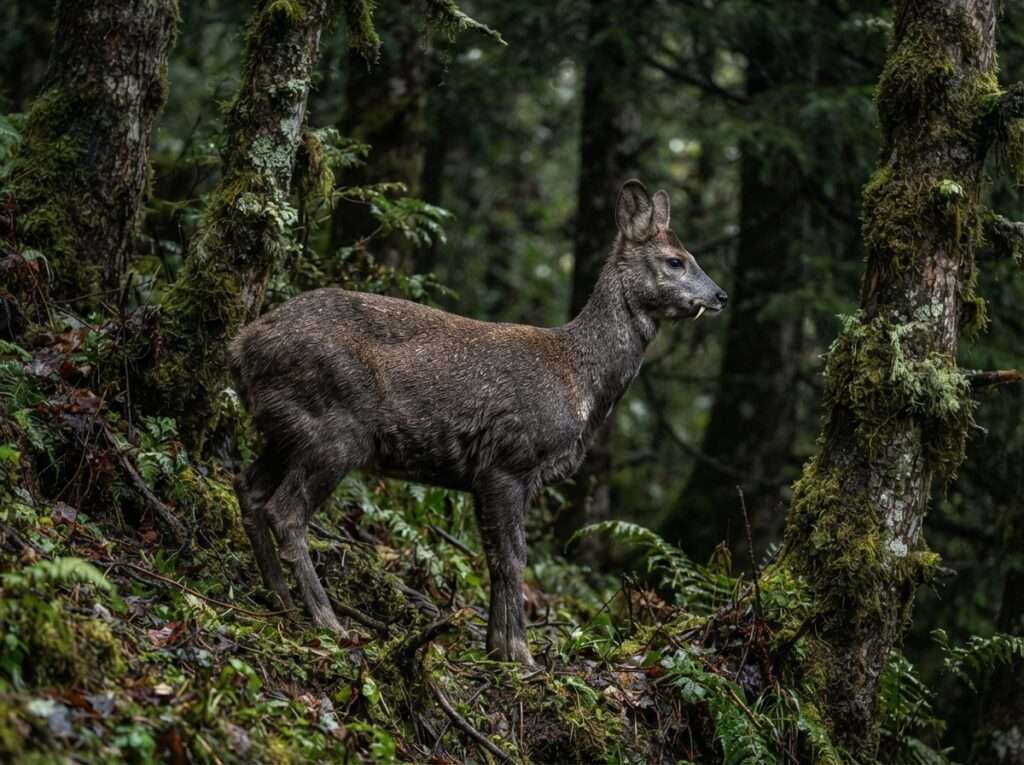
Limber is the smallest of the Uri trio, 12 km² in the 2022 MoEFCC eco-sensitive zone notification (older lists give 43.75 km²), tucked against the Kazinag range above the Jhelum in Baramulla district. Its steep conifer slopes and alpine meadows carry markhor, Himalayan musk deer, black bear, leopard and Himalayan monal. Like Lachipora, it lies in a border zone, and it has no visitor infrastructure. Its value on this list is ecological rather than touristic. If your interest is the markhor and you cannot get permission here, Hirpora on the Mughal Road is the more practical option.
| Region and district | Kashmir Valley, Baramulla |
| Area and notified | 12 km² (43.75 km² on older lists), 1987 |
| Distance | About 85 km from Srinagar |
| Best months | May to October |
| Animals to look for | Markhor, musk deer, black bear, monal |
| Access | Controlled, near the LoC |
08
Rajparian (Daksum) Wildlife Sanctuary, Anantnag
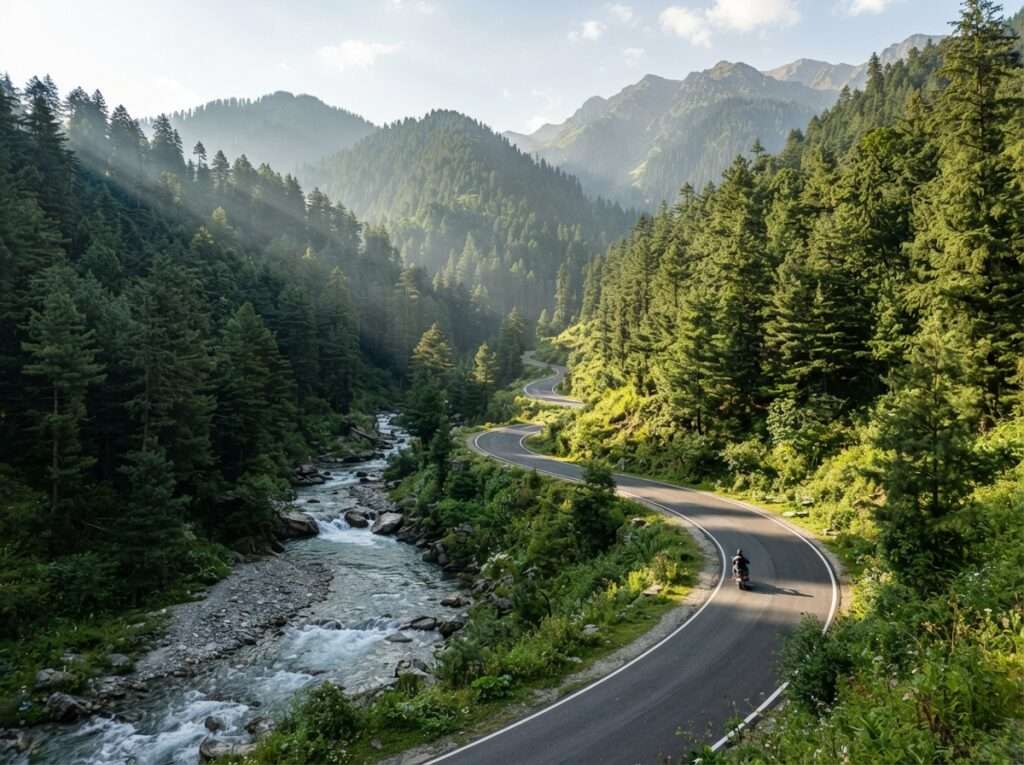
Rajparian, better known by the name of its village, Daksum, is a 20 km² sanctuary on the Kokernag to Sinthan Top road in Anantnag district. At about 2,400 m, it is a valley of thick fir and spruce with a fast trout stream down the middle, and the road runs right through it. That makes it the easiest sanctuary in Kashmir to see from a car window. Himalayan black bear come down to the forest edges in autumn, and musk deer and pheasants such as monal and koklass are present on the upper slopes. Combine it with Kokernag’s springs and the drive over Sinthan Top, which is usually open from late spring to October.
| Region and district | Kashmir Valley, Anantnag |
| Area and notified | 20 km², 1981 |
| Distance | About 85 km from Srinagar via Kokernag |
| Best months | May to October |
| Animals to look for | Black bear, musk deer, monal, koklass |
| Access | Road through the sanctuary to Sinthan Top |
09
Ramnagar Rakh Wildlife Sanctuary, Jammu
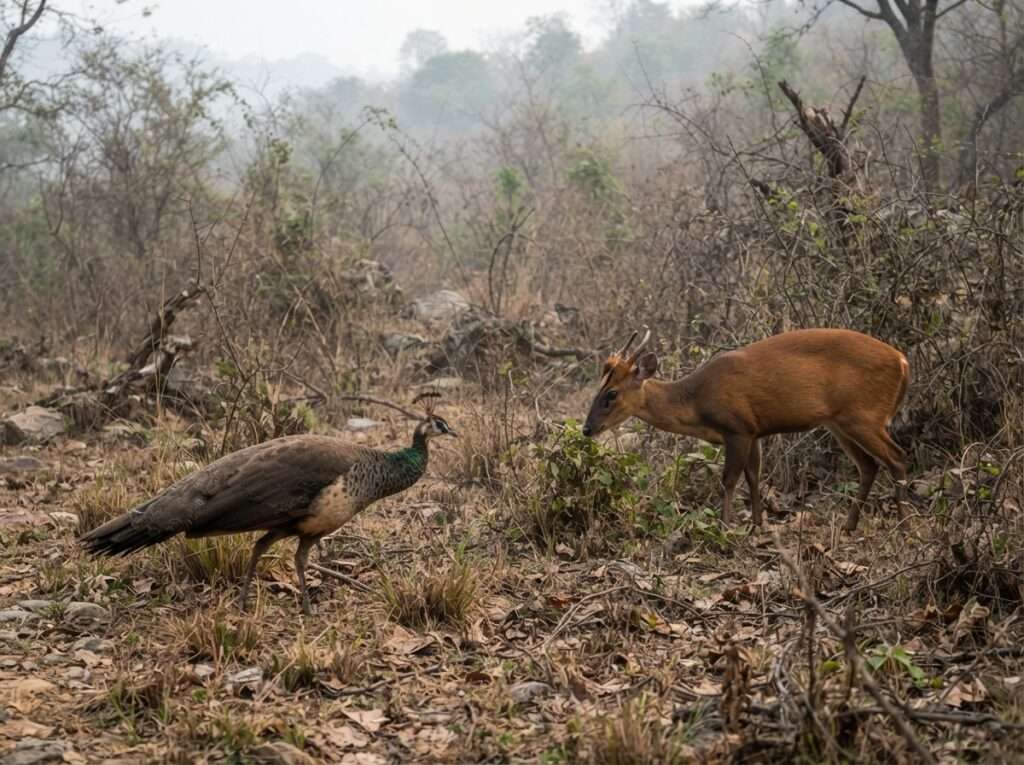
Ramnagar Rakh is the closest sanctuary to Jammu, about 6 km from the city, and covers 31.5 km² of dry Shivalik scrub and low forest. ‘Rakh’ is the old Dogra word for a protected grazing reserve. It is the easiest wildlife outing in the Jammu region, a two or three hour morning walk with barking deer, wild boar, rhesus macaque and peafowl, and birds such as the white-cheeked bulbul, golden oriole and red junglefowl. Summer here is brutal, with afternoon highs above 40 °C, so go between October and March and start early. Lists that describe all of J&K’s sanctuaries as cold all year are wrong about this one.
| Region and district | Jammu region, Jammu |
| Area and notified | 31.5 km², 1990 |
| Distance | About 6 km from Jammu |
| Best months | October to March |
| Animals to look for | Barking deer, wild boar, peafowl, red junglefowl |
| Access | Road from Jammu city |
10
Nandini Wildlife Sanctuary, Nagrota
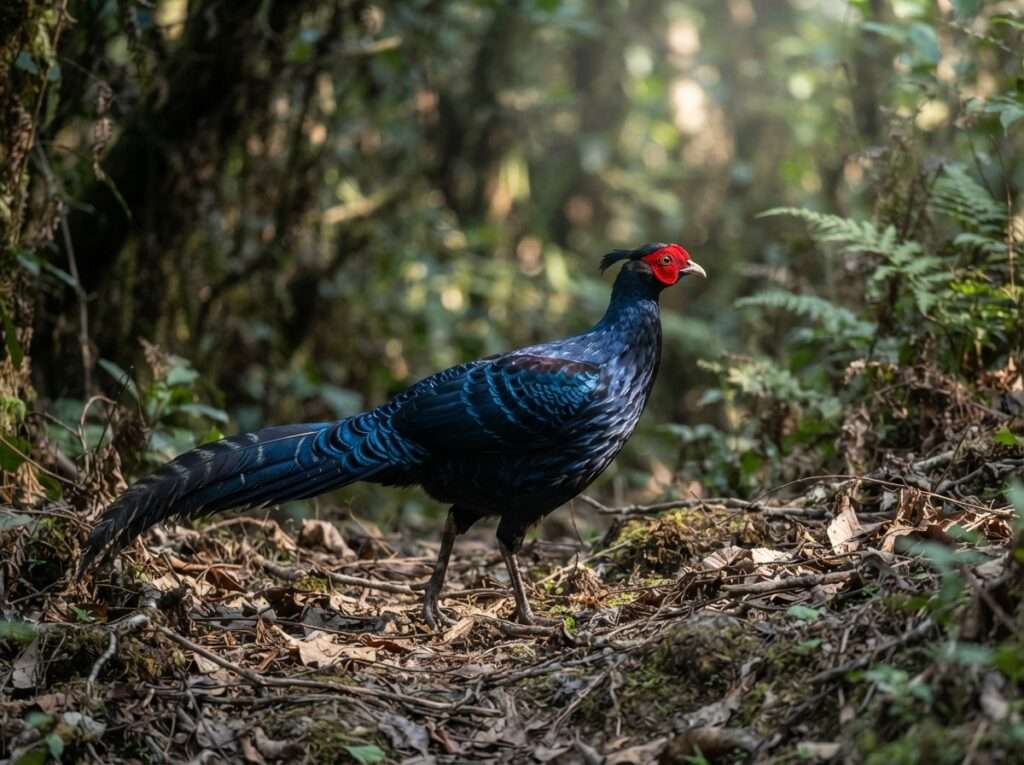
Nandini takes its name from Nandini village and covers 33.34 km² of hills off the Jammu to Udhampur highway near Nagrota. It was protected mainly for its pheasants, and it is still the best bird sanctuary in the Jammu region. Expect red junglefowl, peafowl, chukar, black partridge and kalij pheasant in the scrub, with goral on the steeper slopes and leopard, wild boar and grey langur in the forest. It sits on the main road towards Patnitop and Srinagar, so it works as a dawn stop on the first morning of a road trip north. Some lists place it in Kashmir, but it is in Jammu district.
| Region and district | Jammu region, Jammu |
| Area and notified | 33.34 km², 1990 |
| Distance | About 28 km from Jammu |
| Best months | October to March |
| Animals to look for | Kalij pheasant, red junglefowl, goral, leopard |
| Access | Off NH44 near Nagrota |
11
Surinsar-Mansar Wildlife Sanctuary, Udhampur and Samba
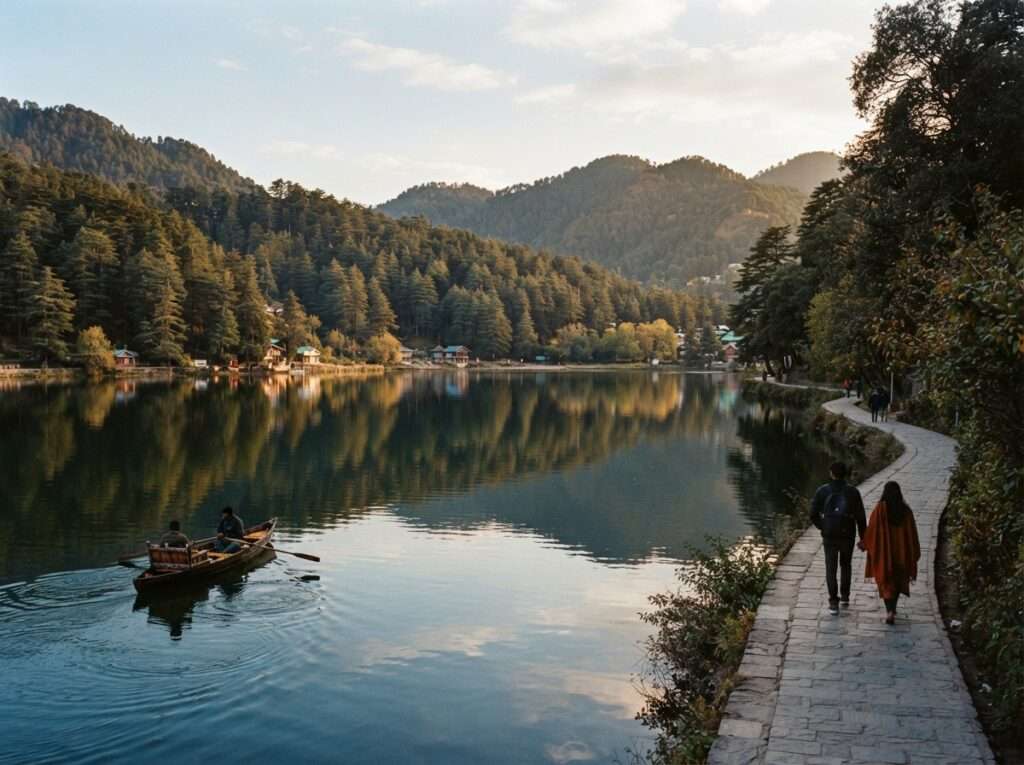
Surinsar-Mansar spreads over 97.82 km² of pine-covered hills between two lakes, Surinsar and Mansar, across Udhampur, Samba and Jammu districts. The lakes themselves were listed together as a Ramsar wetland of international importance in November 2005. Mansar, the larger lake, is also a pilgrimage site and has a boating jetty and a lakeside walk, which makes it the most visitor-friendly sanctuary in the Jammu region. In winter the lakes draw ducks and coots. In the forest you can find goral, wild boar, barking deer and leopard, and black partridge and peafowl in the scrub.
Our Mansar Lake guide covers timings and the temple.
| Region and district | Jammu region, Udhampur, Samba and Jammu |
| Area and notified | 97.82 km², 1990 |
| Distance | 42 km (Surinsar) and 62 km (Mansar) from Jammu |
| Best months | October to April |
| Animals to look for | Goral, barking deer, wintering ducks, peafowl |
| Access | Road to both lakes |
12
Jasrota Wildlife Sanctuary, Kathua
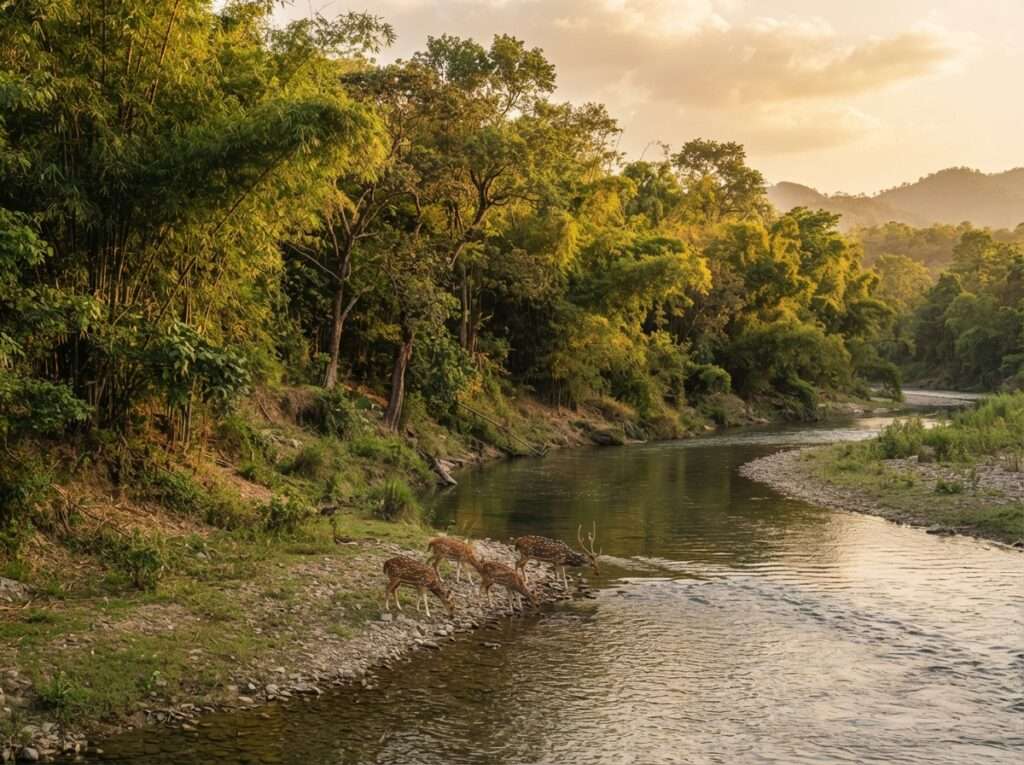
Jasrota is a 10 km² patch of sub-tropical forest and bamboo on the banks of the Ujh river in Kathua district, about 60 km from Jammu. It is lowland country, nothing like the Valley sanctuaries. Shisham, khair and bamboo shelter chital, barking deer, wild boar and rhesus macaque. Bird life peaks between March and May, while mammals are easiest to see from September to March when the undergrowth thins. It is small enough to cover in a morning and makes sense if you are driving between Pathankot and Jammu.
| Region and district | Jammu region, Kathua |
| Area and notified | 10.04 km², 1987 |
| Distance | About 60 km from Jammu |
| Best months | Mammals September to March, birds March to May |
| Animals to look for | Chital, barking deer, wild boar |
| Access | Road via Kathua |
13
Bani Wildlife Sanctuary, Kathua
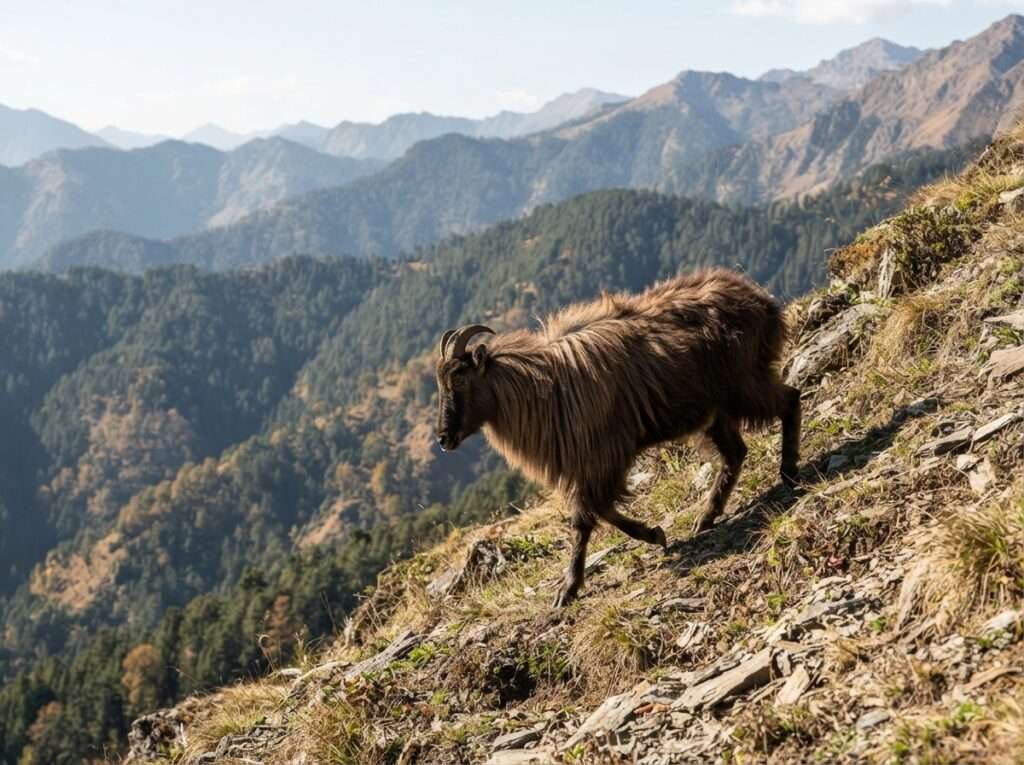
Bani is the newest sanctuary in the Jammu region, notified in 2019 over about 99.76 km² of upper Kathua district, where the Jammu hills rise towards the Himachal Pradesh border. It was set up chiefly for the Himalayan tahr, a wild goat that is rare in J&K, on slopes that adjoin tahr habitat across the border in Himachal. A bird checklist published in the Journal of Threatened Taxa in 2024 recorded 135 species here, and the mammals include Himalayan goral, Kashmir musk deer, leopard and Asiatic black bear. Bani has no visitor facilities and is a long drive from Jammu via Basohli, so treat it as a specialist trip and check with the Wildlife Warden in Kathua before you go. Older lists of J&K sanctuaries leave it out, which is why many still show Trikuta instead.
| Region and district | Jammu region, Kathua |
| Area and notified | 99.76 km², 2019 |
| Location | Upper Kathua, via Basohli, a full day's drive from Jammu |
| Best months | April to June, September to November |
| Animals to look for | Himalayan tahr, goral, musk deer, leopard |
| Access | Remote. Check with the Kathua wildlife office first |
14
Tata Kutti Wildlife Sanctuary, Poonch
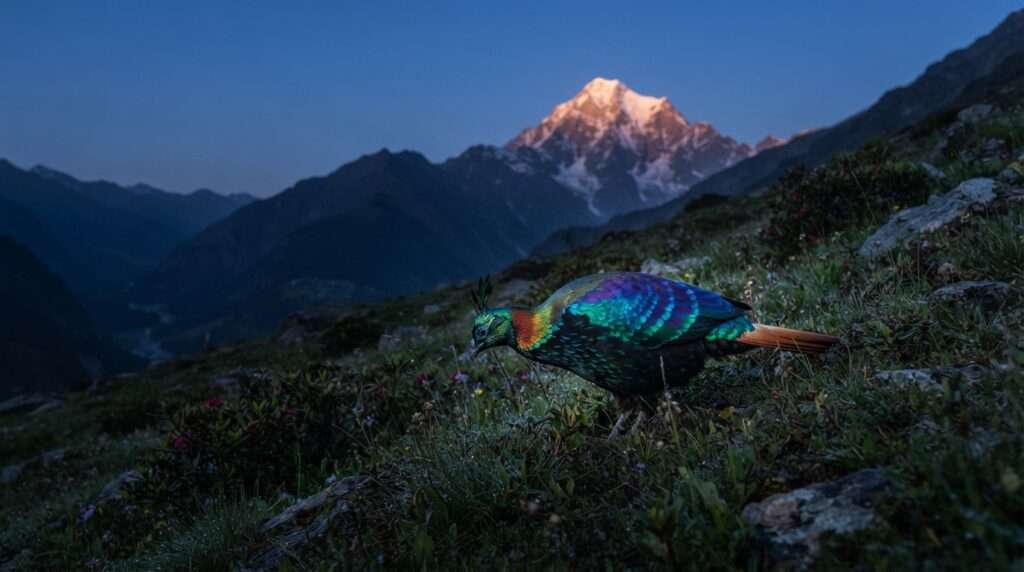
Tata Kutti protects 66.27 km² of the Pir Panjal high country in Poonch district, named after the Tatakuti peak that rises above the Poonch side of the range. It is high forest and alpine meadow, so its wildlife matches the Valley side rather than the Jammu plains, with musk deer, black bear, leopard and Himalayan monal. It is the least visited sanctuary on this list and almost no list-style article names it, but it is on the official register. It was first declared in 2012 (SRO 47) in place of Trikuta, and the final notification followed in February 2024. Access is by trek from the Poonch side between May and October, and you should check with the Wildlife Warden in Rajouri-Poonch first.
| Region and district | Jammu region, Poonch |
| Area and notified | 66.27 km², declared 2012, final notification 2024 |
| Location | Pir Panjal, upper Poonch |
| Best months | May to October |
| Animals to look for | Musk deer, black bear, monal |
| Access | Trek only. Check with the wildlife office first |
Trikuta Hills, Katra: The Sanctuary That Was Denotified
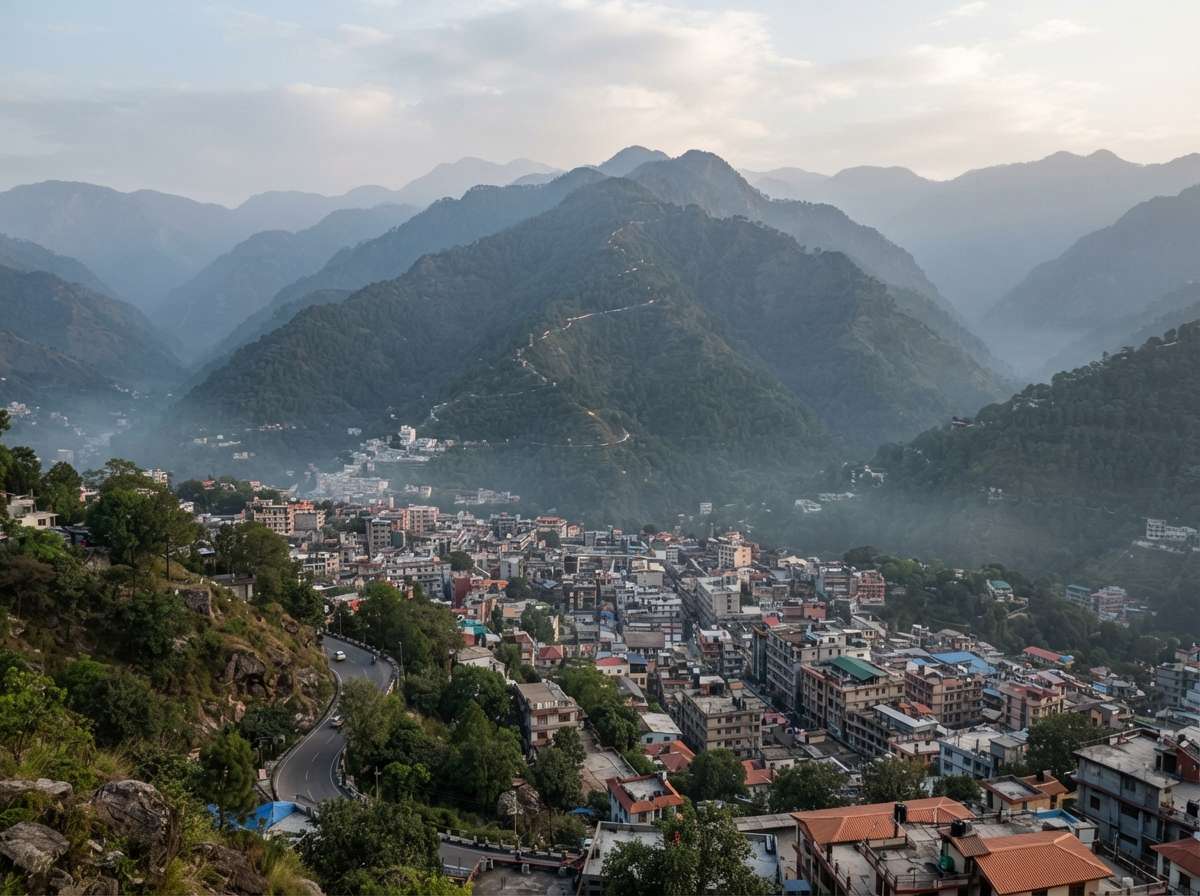
Trikuta was a 31.77 km² sanctuary in the Trikuta hills of Reasi district, the same hills that hold the Vaishno Devi shrine above Katra. Tata Kutti in Poonch was declared in 2012 to replace it, the Supreme Court allowed the denotification in 2013 so the Shrine Board could expand pilgrim facilities, and a J&K government order of February 2024 records the whole sanctuary as denotified. The forest is still there, and millions of pilgrims walk through it each year. The hills still hold leopard, barking deer, goral, wild boar and grey langur, along with pheasants and the Himalayan birds that come down in winter. There is no safari here. The way to experience it is the quieter Ardhkuwari to Bhawan stretch at dawn, or the forest walk near Katra, between October and March.
If you are combining wildlife with the yatra, our Vaishno Devi guide covers registration and the track.
National Parks in Jammu and Kashmir
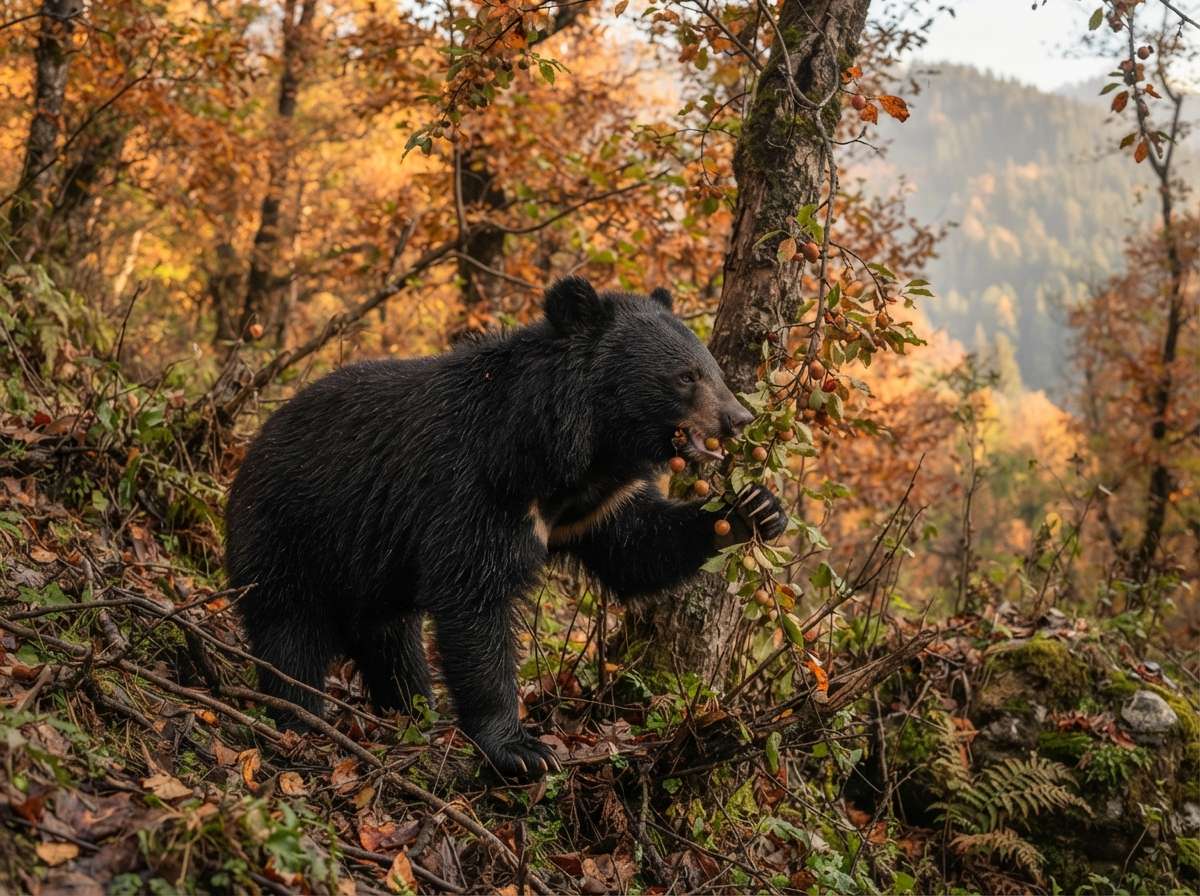
Jammu and Kashmir lists four national parks: Dachigam, Kishtwar, Kazinag and Salim Ali, though Salim Ali survives largely on paper and the department’s own area total counts only the other three. A national park carries stricter protection than a sanctuary, with no grazing or other rights allowed inside, which is why the two best places for wildlife in the UT are both parks. For the full park-by-park guide, see our article on national parks in Kashmir.
| National park | District | Area (km²) | Notified | Known for |
| Dachigam | Srinagar, Pulwama | 141.00 | 1981 | Hangul, black bear, leopard |
| Kishtwar | Kishtwar | 2,191.50 | 1981 | Snow leopard, brown bear, musk deer |
| Kazinag | Baramulla | 89.00 | 2007 (some lists say 1992) | Markhor |
| Salim Ali | Srinagar | 9.07 | 1986 | City forest (largely a golf course today) |
Dachigam National Park
Dachigam, about 22 km from Srinagar via the Harwan gate, covers 141 km² of the Zabarwan range. It has been protected since 1910, first as a royal hunting reserve and a catchment for Srinagar’s water supply, and became a national park in 1981. It is the only place where the hangul survives in viable numbers. The March 2025 census, run by the Department of Wildlife Protection with the Wildlife Institute of India, counted 323, up from 289 in 2023, as reported by Mongabay India. Lower Dachigam is the visitor zone, where Himalayan black bears are often seen in autumn and leopard, langur and over 150 bird species occur. Upper Dachigam, around Marsar lake, needs separate permission. In the Wildlife Institute of India’s latest management effectiveness evaluation, Dachigam scored 92.97%, the highest of 438 protected areas assessed, per ETV Bharat. Our Dachigam National Park guide covers the trails in detail.
Kishtwar National Park
Kishtwar High Altitude National Park is the largest protected area in J&K at 2,191.5 km², rising from about 1,700 m to over 4,800 m in the Chenab valley. There are no roads inside. It is trekking country for snow leopard, brown bear, musk deer and Himalayan snowcock, and it is best approached from Kishtwar town between June and September. See our Kishtwar National Park guide.
Kazinag National Park
Kazinag protects 89 km² of the Kazinag range in Baramulla, next to Limber and Lachipora, and was notified as a national park in December 2007, partly from land carved out of Lachipora. It was set up chiefly for the markhor, after field surveys showed a surviving population on the range. Like its neighbouring sanctuaries it is close to the Line of Control, and visitor access is limited.
Salim Ali National Park
Salim Ali National Park, or City Forest, notified in 1986, was a 9.07 km² park near the Dal Lake shore in Srinagar, named after the ornithologist. Most of it was turned into the Royal Springs Golf Course between 1998 and 2001, though it still appears on the official list. Read the story in our Salim Ali National Park article.
One more correction. Hemis National Park and the Changthang and Karakoram (Nubra-Shyok) wildlife sanctuaries are in the Union Territory of Ladakh, not J&K, since the reorganisation of 31 October 2019.
Wetland Reserves and Ramsar Sites Near Srinagar
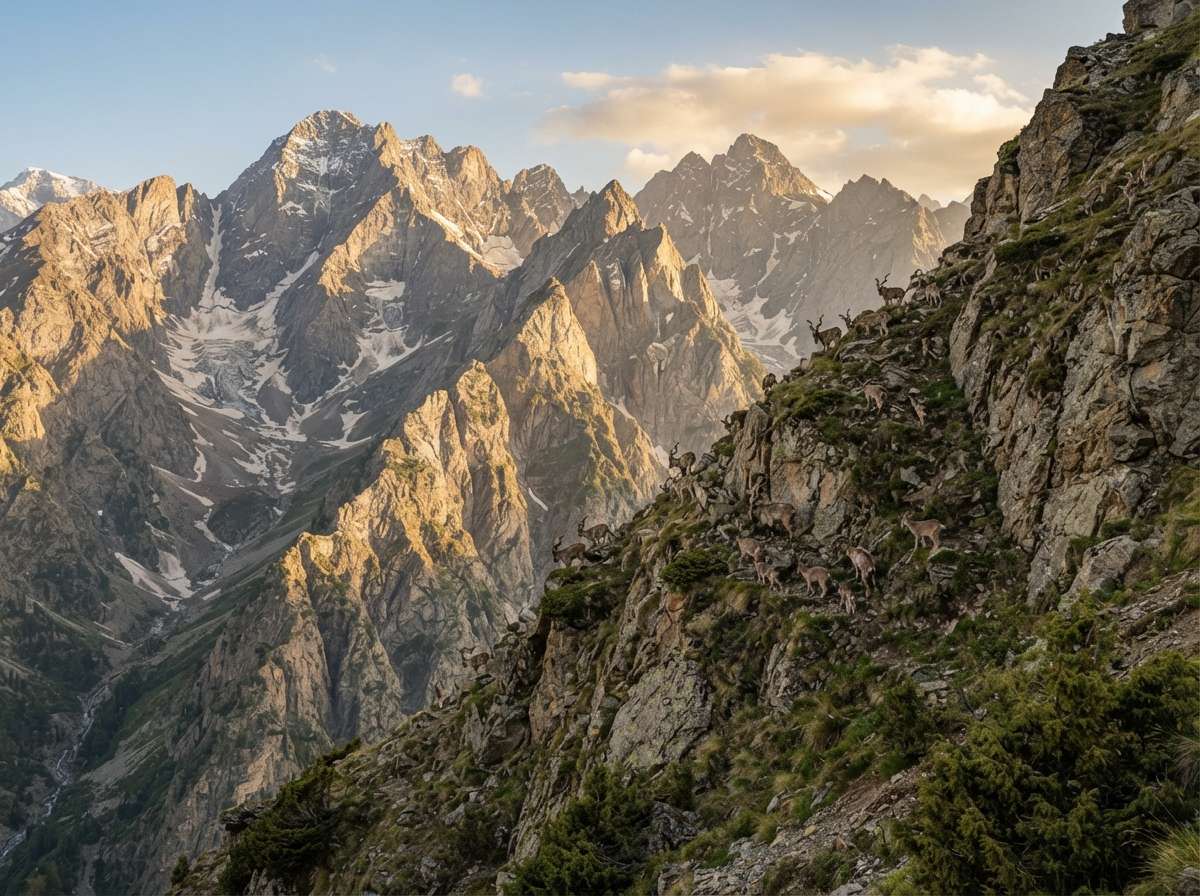
Hokersar is a wetland reserve and a Ramsar site, not a wildlife sanctuary. It is one of 14 wetland conservation reserves on the J&K list, and in winter these wetlands are where you see the most wildlife in Kashmir in a single morning. Between November and March, tens of thousands of ducks and geese arrive from Central Asia and Siberia, including mallard, northern pintail, common teal, gadwall and greylag goose. J&K has five Ramsar sites, all listed below, as per the Ministry of Environment’s Ramsar list.
| Wetland | District | Ramsar listing | Distance from Srinagar | What to see |
|---|---|---|---|---|
| Hokersar (Hokera) | Srinagar, Budgam | 2005, 13.75 km² | About 10 km | Pintail, mallard, teal, greylag goose |
| Shallabugh | Ganderbal | 2022, 16.75 km² | About 25 km | Wintering ducks, herons, marsh harriers |
| Hygam | Baramulla | 2022, 8.02 km² | About 45 km | Waterfowl, reed-bed birds |
| Wular Lake | Bandipora, Baramulla | 1990, 189 km² | About 55 km | One of India’s largest freshwater lakes, waterbirds |
| Surinsar-Mansar lakes | Samba, Udhampur | 2005, 3.5 km² | Jammu side, 42 to 62 km from Jammu | Wintering ducks and coots |
Hokersar is the one to do if you have a single free morning in Srinagar. Reach it before 8 am on the Srinagar to Baramulla road near Zainakote and walk the bund with binoculars. For the lake itself, our Wular Lake guide covers boating and the drive via Bandipora.
Animals of Kashmir: What You Can Actually See
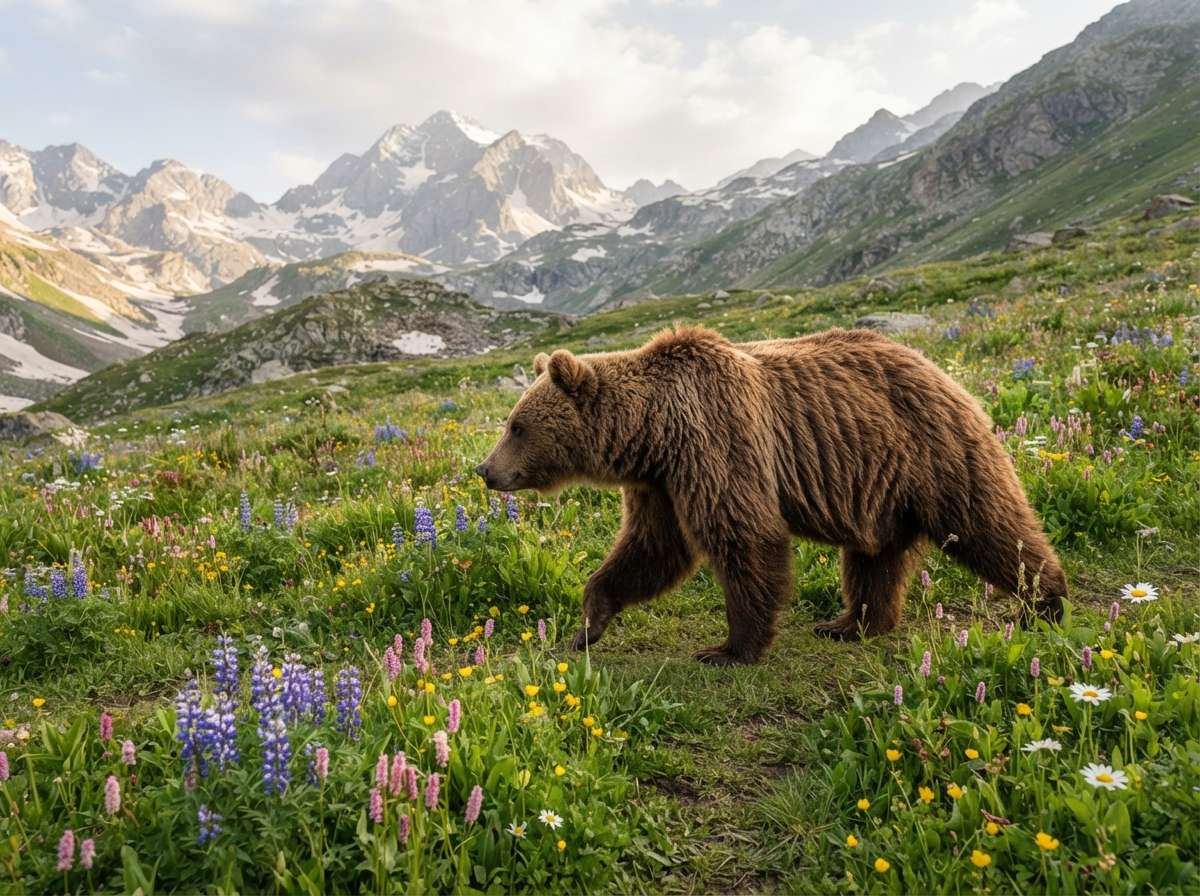
The animals of Kashmir are mountain species. Deer, wild goats, bears and pheasants that live between 1,600 m and the snowline, plus a separate lowland set in the Jammu region. The table lists the ones visitors ask about, where they live and when you have the best chance. IUCN status is from the global Red List. The flora that shelters them changes with height, from chir pine and scrub in the Jammu hills to deodar, blue pine, fir and birch in the Valley, then alpine meadow.
| Animal | Status | Where to see it | Best season |
|---|---|---|---|
| Hangul (Kashmir stag), state animal | Critically endangered | Dachigam, Tral, Overa-Aru | November to February (Lower Dachigam) |
| Pir Panjal markhor | Near threatened | Hirpora, Kazinag, Limber, Lachipora | May to October, early morning ridges |
| Himalayan black bear | Vulnerable | Dachigam, Gulmarg, Daksum | Autumn, at fruiting trees |
| Himalayan brown bear | Least concern globally, rare locally | Overa-Aru, Thajwas, Kishtwar | May to June, alpine meadows |
| Snow leopard | Vulnerable | Kishtwar National Park | Winter, very rarely seen |
| Common leopard | Vulnerable | Most sanctuaries, Trikuta hills | Year round, mostly signs not sightings |
| Himalayan musk deer | Endangered | Overa-Aru, Thajwas, Gulmarg | May to October |
| Himalayan serow and goral | Vulnerable / near threatened | Overa-Aru, Nandini, Surinsar-Mansar | October to April (goral, Jammu side) |
| Asiatic ibex | Near threatened | Upper Overa-Aru | June to September |
| Kashmir grey langur | Endangered | Gulmarg, Dachigam | Year round |
| Himalayan monal | Least concern | Thajwas, Daksum, Dachigam | May to October |
| Kashmir flycatcher | Vulnerable | Dachigam, Gulmarg forests | May to August (breeding visitor) |
The hangul deserves its own line. It is a Central Asian red deer found nowhere else in India, and it once ranged across the Valley in thousands. Habitat loss and poaching pushed numbers under 200 in the 2000s. The recovery to 323 by 2025 is the best wildlife news Kashmir has had in decades, and it is why Dachigam was shut to visitors during the 2026 autumn rut. The rest of the Valley’s story is similar. Every large mammal on this list depends on the same few forest blocks, which is why so many of the 14 sanctuaries sit on the Pir Panjal and Zabarwan ranges.
Kashmir Valley vs Jammu Region Sanctuaries
The two halves of J&K offer completely different wildlife trips. Choose by season and by what you want to see.
| Kashmir Valley sanctuaries | Jammu region sanctuaries | Srinagar wetlands | |
|---|---|---|---|
| Sanctuaries | Overa-Aru, Hirpora, Thajwas, Gulmarg, Tral, Lachipora, Limber, Rajparian | Ramnagar Rakh, Nandini, Surinsar-Mansar, Jasrota, Tata Kutti, Bani | Hokersar, Shallabugh, Hygam, Wular |
| Terrain | Conifer forest and alpine meadow, 1,800 to 4,000 m | Shivalik scrub, sub-tropical forest, lakes | Reed beds and open water |
| Signature wildlife | Hangul, markhor, bears, musk deer, monal | Barking deer, chital, goral, pheasants, peafowl | Migratory ducks and geese |
| Best months | May to October | October to March | November to March |
| Base town | Srinagar, Pahalgam, Gulmarg, Sonamarg | Jammu, Katra | Srinagar |
| Best for | Mountain wildlife on a Kashmir holiday | Short outings on a Jammu or Vaishno Devi trip | Birders, winter visitors |
Best Time to Visit Wildlife Sanctuaries in Kashmir
There is no single best month. Altitude decides it. The high Valley sanctuaries open up as the snow melts in May, Dachigam is best when the hangul come down in winter, and the Jammu sanctuaries are pleasant only in the cool months.
| Months | Valley sanctuaries | Dachigam | Jammu sanctuaries | Wetlands |
|---|---|---|---|---|
| December to February | Snowbound, Gulmarg ridge only | Good, hangul in lower valley | Good, cool mornings | Peak waterbirds |
| March to April | Lower forests open, snow above | Good, spring birds | Good | Birds leaving |
| May to June | Best, meadows open, bears active | Good | Too hot after mid-April | Quiet |
| July to August | Good, but Yatra crowds at Baltal | Good, lush and green | Monsoon, poor | Quiet |
| September to October | Best, autumn colour, bears feeding | Check first, can close for the rut | Good from October | First arrivals |
| November | Upper areas closing | Good, hangul descending | Good | Good |
For the general season guide, including snow and the tulip weeks,
see our best time to visit Kashmir page and the seasonal notes in places to visit in Kashmir.
Permits, Entry Fees, Timings and Rules
Dachigam has the most formal entry system of any wildlife site in Kashmir, and Thajwas around Sonamarg now has an online booking portal of its own. Permission comes from the Department of Wildlife Protection, through the Wildlife Warden, Central Division, in Srinagar or at the Harwan gate. Entry is booked online through the department’s Dachigam booking portal, from around Rs 100 per Indian and Rs 500 per foreign visitor (Rs 15 for Indian students, free under 10), with still cameras charged extra. Groups are capped at 15, one person’s photo ID is uploaded at booking (a passport copy for foreigners), bookings cannot be changed, and the park is closed every Tuesday. Entry is during daylight only, so confirm gate hours with the warden’s office. Upper Dachigam needs separate written approval. The park also closes for set periods. In 2026, for example, all entry was suspended until 31 October during the hangul rut, on the recommendation of the Wildlife Warden, Central Division, as reported by UNI. It has also closed during census weeks in March.
The department’s Thajwas Wildlife Sanctuary booking portal lists the same fee schedule as Dachigam, from around Rs 100 per Indian visitor, so check whether your Sonamarg walk needs a booking before you go. The other roadside sanctuaries, Gulmarg, Daksum and Overa-Aru along the Aru road, have no separate entry ticket for walking public trails, though the Gulmarg gondola and local pony rides are paid. Lachipora, Limber, Kazinag, Tata Kutti and Bani are in sensitive border or remote areas, so ask the district wildlife office before planning anything there.
Rules Inside Every Protected Area
- No drones without written permission from the Department of Wildlife Protection.
- No plastic, no litter and no feeding animals. Bears that learn to raid bins near Gulmarg and Pahalgam end up in conflict.
- Keep to marked trails and go with a local guide or forest watcher in Dachigam and the remote sanctuaries.
- Wear muted colours, keep voices low and carry binoculars. Most sightings here are at distance.
- Leave if you meet a bear on the trail. Back away slowly and never get between a mother and cubs.
How to Plan a Wildlife Day Out From Srinagar
These six steps work for Dachigam, Hokersar or any of the Valley sanctuaries.
- Pick the animal, then the site. Hangul means Dachigam, markhor means Hirpora, waterbirds mean Hokersar, and bears mean Dachigam in autumn or Overa-Aru in spring.
- Check closures the week you travel. Look for Dachigam’s Tuesday closure and any rut or census closure, Mughal Road status for Hirpora, and Amarnath Yatra restrictions around Baltal in July and August.
- Get permission where needed. For Dachigam, book online or through the Wildlife Warden’s office in Srinagar ahead of your visit, with a photo ID for every visitor (passport copy for foreigners).
- Book a local guide or forest watcher. They know where the hangul have been feeding that week, which matters more than any map.
- Start at first light. Leave Srinagar by 6 am for Dachigam or Hokersar. Activity drops sharply by 10 am.
- Pack for distance viewing. Carry 8x or 10x binoculars, a telephoto lens, a warm layer, water and your own rubbish bag.
Sample Wildlife Itineraries in Jammu and Kashmir
These routes fit wildlife into a normal Kashmir or Jammu holiday rather than a dedicated expedition.
| Plan | Route | Season | What you will likely see |
|---|---|---|---|
| 1 day from Srinagar | Hokersar at dawn, then Lower Dachigam (when open) | November to March | Waterbirds, hangul, langur |
| 3 days in the Valley | Day 1 Dachigam from a Srinagar base (closed Tuesdays), Day 2 Gulmarg day trip for the first gondola and a forest walk, Day 3 drive to Pahalgam (about 3 hours) for Aru and Overa-Aru, staying the night | May to October | Black bear, monal, musk deer signs, langur |
| Mughal Road day | Srinagar to Shopian, Hirpora and Peer Ki Gali, return | May to October | Markhor on the ridges, raptors |
| Jammu weekend | Day 1: Ramnagar Rakh at dawn, then Surinsar and Mansar lakes. Day 2: Nandini at dawn, or the Trikuta hills from Katra if you are on the yatra | October to March | Barking deer, pheasants, goral, wintering ducks |
If you are heading north from Jammu by road, our Jammu travel guide and Patnitop guide cover stops between the plains and the Valley. For getting to Srinagar in the first place, see how to reach Kashmir.
Planning Your Kashmir Wildlife Trip
Jammu and Kashmir’s 14 wildlife sanctuaries split cleanly into two trips. The Valley sanctuaries reward a summer or autumn visit built around Pahalgam, Gulmarg and Sonamarg. The Jammu sanctuaries suit a winter break around Jammu and Katra. Add Dachigam for the hangul and Hokersar for winter birds, and you have seen the best of Kashmir’s wildlife without a single expedition. If you would like the hotels, transfers and a Dachigam morning arranged together, our Kashmir tour packages can be customised around these sanctuaries, and the Kashmir travel guide covers everything else.
FAQs
Wildlife Sanctuaries in Kashmir: Frequently Asked Questions
Short answers to what travellers and students ask most about wildlife in Jammu and Kashmir.
Jammu and Kashmir has 14 wildlife sanctuaries, along with 4 national parks and 30 conservation reserves. Eight are in the Kashmir Valley and six in the Jammu region. Older lists still include Trikuta near Katra, which was denotified in 2024, and leave out Bani in Kathua, notified in 2019. Together the protected areas cover about 4,777 km², roughly 11% of the Union Territory. Older articles quoting 17 sanctuaries usually count Hokersar, Achabal or Ladakh's sanctuaries, which are not on the current J&K list.
Overa-Aru Wildlife Sanctuary near Pahalgam is the largest, at 425 km² on the official list (some sources give 511 km² including the Aru extension). Hirpora in Shopian is second at 341 km². If you count national parks too, Kishtwar National Park is far bigger than any sanctuary at 2,191.5 km², making it the largest protected area in J&K.
For most travellers, Dachigam National Park near Srinagar is the best wildlife visit in Kashmir, because it is close, organised and the only reliable place to see the hangul. Among the 14 sanctuaries, Overa-Aru near Pahalgam and Gulmarg are the easiest to combine with a normal Kashmir trip, while Hirpora on the Mughal Road is the pick for the markhor.
Dachigam National Park, 22 km from Srinagar, is the hangul's last stronghold. The March 2025 census counted 323 hangul, up from 289 in 2023. Small numbers also live in Tral Wildlife Sanctuary and Overa-Aru. Winter, from November to February, is the best time, when the deer move down into Lower Dachigam. The park can close to visitors during the autumn rut, so check with the Wildlife Warden before you go.
Dachigam is a national park, not one of the 14 sanctuaries. It has been protected since 1910 and was made a national park in 1981, covering 141 km². The park can close at short notice. In 2026, for example, entry was suspended until 31 October to protect the hangul during the rut, per an order reported by UNI. Confirm with the Wildlife Warden, Central Division, Srinagar before you go.
For Dachigam, yes. Entry needs permission from the Department of Wildlife Protection, and Upper Dachigam needs separate approval. Roadside sanctuaries such as Gulmarg and Daksum can be visited without a separate permit on public roads and trails. Thajwas around Sonamarg has its own online booking portal, so check it before a walk beyond the Thajiwas glacier trail. Remote sanctuaries near the Line of Control, such as Lachipora and Limber, have controlled access, so check with the district wildlife office first.
Kashmir's best-known animals are the hangul (Kashmir stag), the Pir Panjal markhor, the Himalayan black bear and brown bear, the Himalayan musk deer, the snow leopard, the common leopard, the Himalayan serow, the goral, the Asiatic ibex and the Kashmir grey langur. Notable birds include the Himalayan monal, the koklass pheasant and the Kashmir flycatcher, plus large flocks of wintering ducks and geese on the wetlands around Srinagar.
Four sanctuaries are within a short drive of Jammu. Ramnagar Rakh is 6 km from the city, Nandini 28 km near Nagrota, Surinsar-Mansar 42 to 62 km, and Jasrota about 60 km in Kathua. The forested Trikuta hills at Katra were a sanctuary until their denotification in 2024 and still hold leopard and barking deer. All are best visited between October and March, when the plains are cool.
No. Hokersar is a wetland conservation reserve and a Ramsar site (listed in 2005 as the Hokera wetland), about 10 km from Srinagar, not one of the 14 notified wildlife sanctuaries. It is still one of the best places in Kashmir to watch migratory waterbirds such as pintail, mallard, teal and greylag goose between November and March.
No. Hemis National Park, along with Changthang and Karakoram (Nubra-Shyok) wildlife sanctuaries, has been in the Union Territory of Ladakh since 31 October 2019, when the former state was reorganised. Many older lists still put them under J&K. J&K now has 14 sanctuaries and 4 national parks, none of them in Ladakh.
May to October suits the high-altitude Valley sanctuaries such as Overa-Aru, Hirpora, Thajwas and Gulmarg, when roads and trails are open. November to February is best for the hangul in Lower Dachigam and for migratory birds at Hokersar. The Jammu region sanctuaries are best from October to March, because summer there crosses 40 °C.
The hangul, or Kashmir stag, is the state animal of Jammu and Kashmir. It is a red deer with antlers that usually carry five or more tines, and it now survives almost entirely in and around Dachigam National Park. Its numbers fell from several thousand in the 1940s to under 200 in the 2000s, and have recovered to 323 in the 2025 census.