
 5D / 4N
9% OFF


What Is Worth Buying in Vietnam?
Shopping in Vietnam pays off when your souvenirs are things Vietnam makes: coffee, silk, tailored clothes, lacquerware, ceramics, hand embroidery and herbal balms. A 20-sachet box of G7 instant coffee costs about 55,000 VND (around ₹205) in a Vietnamese supermarket and ₹701 on Flipkart. Brand-name clothes, phones and gold are not cheaper than in India, so skip them. Hanoi is the place for lacquer, ceramics and silk streets, Hoi An for tailoring, and Ho Chi Minh City for the biggest markets. Carry cash for markets, bargain at stalls but not in shops with printed prices, and keep your total under India’s ₹75,000 duty-free limit. All rupee figures here use ₹1 = 270 VND, the rate on 1 November 2026.
Key takeaways
- Buy Vietnamese-made goods. Coffee and a phin filter cost a third or less of their Flipkart price.
- Give Hoi An 2 nights if you want clothes made. Tailors need 24 to 48 hours and at least one fitting.
- Carry 1,000,000 to 2,000,000 VND (₹3,700 to ₹7,400) in cash per market day. Stalls rarely take cards and UPI doesn’t work in Vietnam yet.
- Spend 2,000,000 VND or more at one enrolled shop in a day and you can claim back part of the VAT at the airport.
- Keep receipts. Indian residents flying home can bring ₹75,000 of goods duty-free under the Baggage Rules 2026.
Vietnam
Vietnam
What to buy, where to shop, prices in rupees, paying, VAT refund and customs
Best Time
November - April
Select Package Type
Best Selling Packages


What to Buy in Vietnam: Items, Prices and Where to Find Them
The best things to buy in Vietnam are the ones made there, sold where they are made. The table below lists typical 2026 prices. VND figures come from LocalVietnam’s 2026 shopping guide, The Ordinary Katalog’s supermarket receipts and vietnamtour.in’s price lists. The rupee column is our conversion at ₹1 = 270 VND, rounded.
| Item | Where to buy | Typical price (VND) | About (₹) | Check before you pay |
|---|---|---|---|---|
| Ground coffee, 500 g | Supermarkets, Trung Nguyen shops, Da Lat | 80,000 to 150,000 | ₹300 to ₹555 | Robusta is strong. Ask for a blend if you drink filter coffee at home |
| G7 3-in-1 instant coffee, 20 sachets | Lotte Mart, GO!, WinMart | about 55,000 | about ₹205 | The easiest gift. Same box, same price in every city |
| Phin coffee filter | Markets, coffee shops | 30,000 to 50,000 | ₹110 to ₹185 | Steel ones last. Aluminium dents in a suitcase |
| “Weasel” coffee, 100 g | Tourist shops | about 500,000 | about ₹1,850 | Most of it is flavoured, not from civets |
| Lotus tea | Hanoi tea shops, supermarkets | from about 50,000 | from about ₹185 | Hand-scented West Lake grades cost many times more |
| Silk fabric, per metre | Hoi An, Hang Gai street in Hanoi | about 230,000 to 870,000 | ₹850 to ₹3,200 | Scarves at 50,000 to 100,000 VND are almost never silk |
| Custom ao dai | Hoi An tailors | about 430,000 to 2,900,000 | ₹1,600 to ₹10,700 | Price depends on fabric. Agree it before measuring |
| Tailored linen suit | Hoi An tailors | from 2,500,000 | from ₹9,250 | Allow 24 to 48 hours and 2 fittings |
| Tailored dress | Hoi An tailors | from 800,000 | from ₹2,950 | Bring a photo of the style you want |
| Lacquerware, small pieces | Hanoi Old Quarter, Ho Chi Minh City | from 150,000 | from ₹555 | Bowls and trays travel well. Large panels need crating |
| Bat Trang ceramic tea set | Bat Trang village near Hanoi | about 175,000 to 490,000 | ₹650 to ₹1,800 | The same set costs about twice as much in the Old Quarter |
| Non la conical hat | Markets everywhere | about 45,000 to 115,000 | ₹165 to ₹425 | Bulky. Carry it by hand on the plane |
| Silk lantern, small foldable | Hoi An Old Town and night market | from about 50,000 | from about ₹185 | Ask for the folding frame so it packs flat |
| Phu Quoc fish sauce, large bottle | Phu Quoc, supermarkets | 80,000 to 150,000 | ₹300 to ₹555 | Checked bag only, in a taped foam box |
| Phu Quoc pepper, bag | Phu Quoc pepper farms, markets | 50,000 to 120,000 | ₹185 to ₹445 | A gift, not a saving. Kerala pepper costs about the same |
| Cultured pearl necklace | Certified Phu Quoc pearl shops | 500,000 to 1,500,000 | ₹1,850 to ₹5,550 | Buy only with a certificate. Market “pearls” are often glass |
| Propaganda poster reproduction | Hanoi and Saigon gallery streets | 100,000 to 300,000 | ₹370 to ₹1,100 | Originals start near 1,000,000 VND |
| Oil painting, copy or street scene | Hang Trong street in Hanoi, Hoi An galleries, Dong Khoi in Ho Chi Minh City | from about 1,000,000 | from about ₹3,700 | Ask for it rolled in a tube. A frame triples the weight |
| Hand embroidery, small piece | Hang Gai in Hanoi, Hoi An, Hue | from about 100,000 | from about ₹370 | Turn it over. Hand stitching leaves small knots on the back |
| Star anise or ginger oil | Pharmacies, markets | about 45,000 to 70,000 | ₹165 to ₹260 | Small bottles fit the cabin liquids rule |
| Instant pho, per pack | GO!, Lotte Mart | 7,100 to 9,300 | ₹26 to ₹35 | Read the label. Pho bo has beef stock |
Coffee and Tea
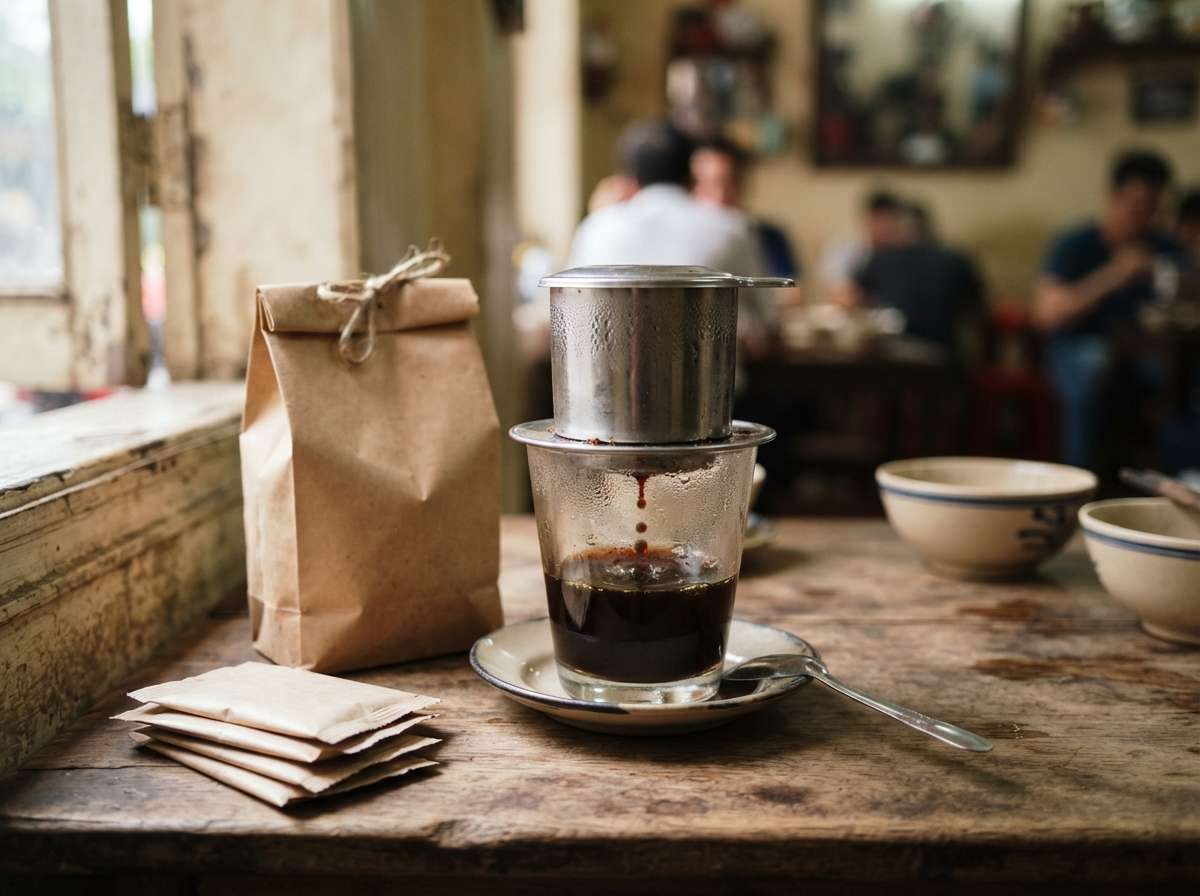
Vietnam is the world’s second-largest coffee producer, and coffee is the one gift almost every Indian traveller brings back. Buy ground coffee by the 500 g bag from a supermarket or a Trung Nguyen outlet, where the price is printed, rather than from a market stall that weighs it out of an open sack. Add a phin, the small steel drip filter Vietnamese cafés use. It works like a South Indian filter and costs less than a cup of coffee at an Indian airport. Skip “weasel” or “civet” coffee unless you want the story. Most packs sold to tourists are flavoured beans, and genuine civet coffee raises animal-welfare questions. For tea, lotus tea from Hanoi and oolong or artichoke tea from Da Lat come in gift boxes that survive a suitcase.
Silk, Ao Dai and Tailoring
Vietnamese silk is good value, but the cheap scarves hanging outside every Old Quarter shop are mostly polyester. Genuine silk fabric runs from about 230,000 VND a metre in Hoi An and on Hang Gai street in Hanoi. To test it, ask the seller to burn a loose thread. Silk smells like burnt hair and turns to soft ash. Synthetic fabric melts into a hard bead and smells of plastic. Honest shops agree. Shops that refuse are telling you something.
Tailoring is where Vietnam beats India on time, not just price. Hoi An has hundreds of tailors around Tran Phu and Le Loi streets who will make an ao dai, a suit or a copy of your favourite kurta in 24 to 48 hours. Choose the fabric first, agree the price before you are measured, and book the first fitting on the day you arrive. You need a second visit for alterations, so 2 nights in Hoi An is the minimum. Hanoi and Ho Chi Minh City have good tailors too, but nowhere else packs so many into a few streets.
Lacquer, Ceramics, Art and Handicrafts
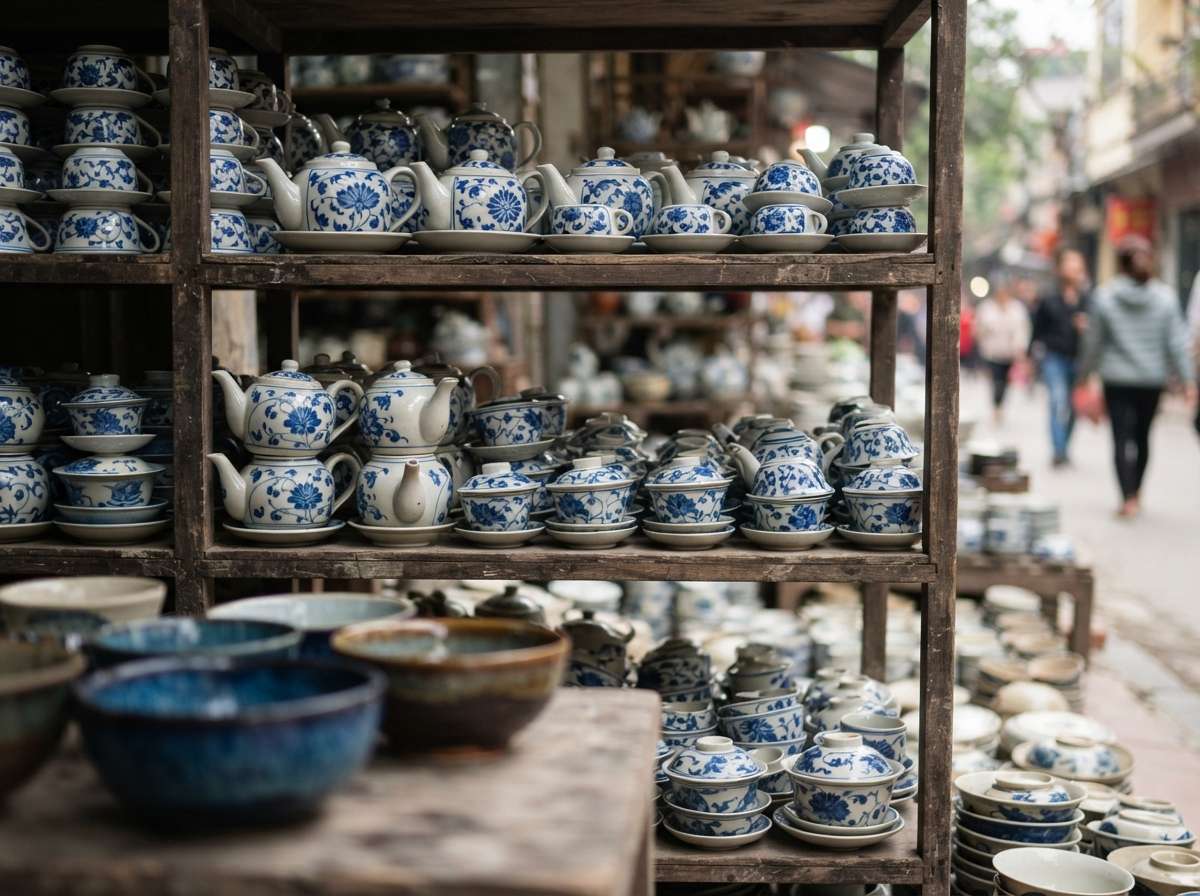
Lacquerware is built up in many thin layers of resin and polished by hand. Small bowls and trays start at about 150,000 VND and pack flat in a suitcase. Bat Trang, a pottery village about 15 km from central Hanoi, sells blue-and-white tea sets for about 175,000 to 490,000 VND that can cost twice as much in Old Quarter shops. If you are in Hanoi for 3 days, a half-day trip there pays for itself on one tea set. Van Phuc, on the city’s south-west edge, is the silk-weaving village. It is on the opposite side of Hanoi, so give it a separate half-day. Non la hats, bamboo fans and carved chopstick sets are the cheap, light extras.
Paintings are the souvenir few people plan for, and plenty fly home with one. Hang Trong street and the lanes around Hoan Kiem Lake in Hanoi are lined with galleries selling oil and lacquer paintings, from copies of famous works at about 1,000,000 VND to signed originals priced in hundreds of dollars. Buy a copy for the wall. Pay for an original only with the artist’s name on a receipt, and ask the gallery for the export paperwork. Either way, have the canvas taken off its frame and rolled in a tube for the flight.
Hand embroidery is the lighter option. Hang Gai has sold embroidered tablecloths, cushion covers and framed silk pictures for decades, and Tan My, at No. 61, is the best-known name on the street. Small pieces start around 100,000 VND. Turn the piece over before you pay. Hand work leaves small knots and uneven threads on the back, and machine embroidery looks perfectly regular.
Food Gifts, Balms and Pearls
Cashews, dried jackfruit, coconut candy from the Mekong and instant pho are easy, cheap gifts with printed prices in any supermarket. Fish sauce is the one food gift that needs care. Buy it sealed in a plastic bottle and pack it in checked baggage only. Vietnamese airlines ask for fish sauce to be taped shut and carried in a sealed foam box, so ask the shop to box it for the flight. Herbal balms such as Golden Star (Cao Sao Vang) and Truong Son are the light gift that families back home ask for again. Pearls from Phu Quoc are worth buying only from certified shops that give a written certificate. Rub two beads together. Real pearls feel slightly gritty, and glass or plastic ones slide smoothly.
What Is Cheap in Vietnam? (Vietnam Me Kya Sasta Hai)
Vietnamese-made coffee, phin filters, silk, tailoring, lacquer, ceramics, balms and street clothing are cheap in Vietnam for Indian shoppers. Imported goods are not. We checked four common buys against Flipkart on 1 November 2026, and the result shows why “everything is cheap in Vietnam” is the wrong rule.
| Item | Price in Vietnam | About (₹) | Flipkart, 1 Nov 2026 | Our verdict |
|---|---|---|---|---|
| G7 3-in-1 instant coffee, 20 sachets | about 55,000 VND at Lotte Mart | about ₹205 | ₹701 | Buy in Vietnam. About a third of the Indian price |
| Trung Nguyen steel phin filter | 30,000 to 50,000 VND | ₹110 to ₹185 | ₹668 | Buy in Vietnam |
| Fish sauce, bottle | 80,000 to 150,000 VND for Phu Quoc grade | ₹300 to ₹555 | ₹238 to ₹250 for Thai brands | No saving. Buy it for the quality, not the price |
| Black pepper | 50,000 to 120,000 VND a bag | ₹185 to ₹445 | ₹210 for 200 g of Kerala pepper | No saving. India grows its own |
Market basics are also cheap. Cotton shirts and trousers cost about 80,000 to 150,000 VND (₹300 to ₹555) at local markets, sandals 50,000 to 150,000 VND, and a rain poncho 10,000 to 20,000 VND, per LocalVietnam’s 2026 price list. Daily spending is low too, which is how most Indian travellers end up with more bags than they planned.
For a full trip budget, see our Vietnam travel guide.
What Is Not Cheaper Than in India
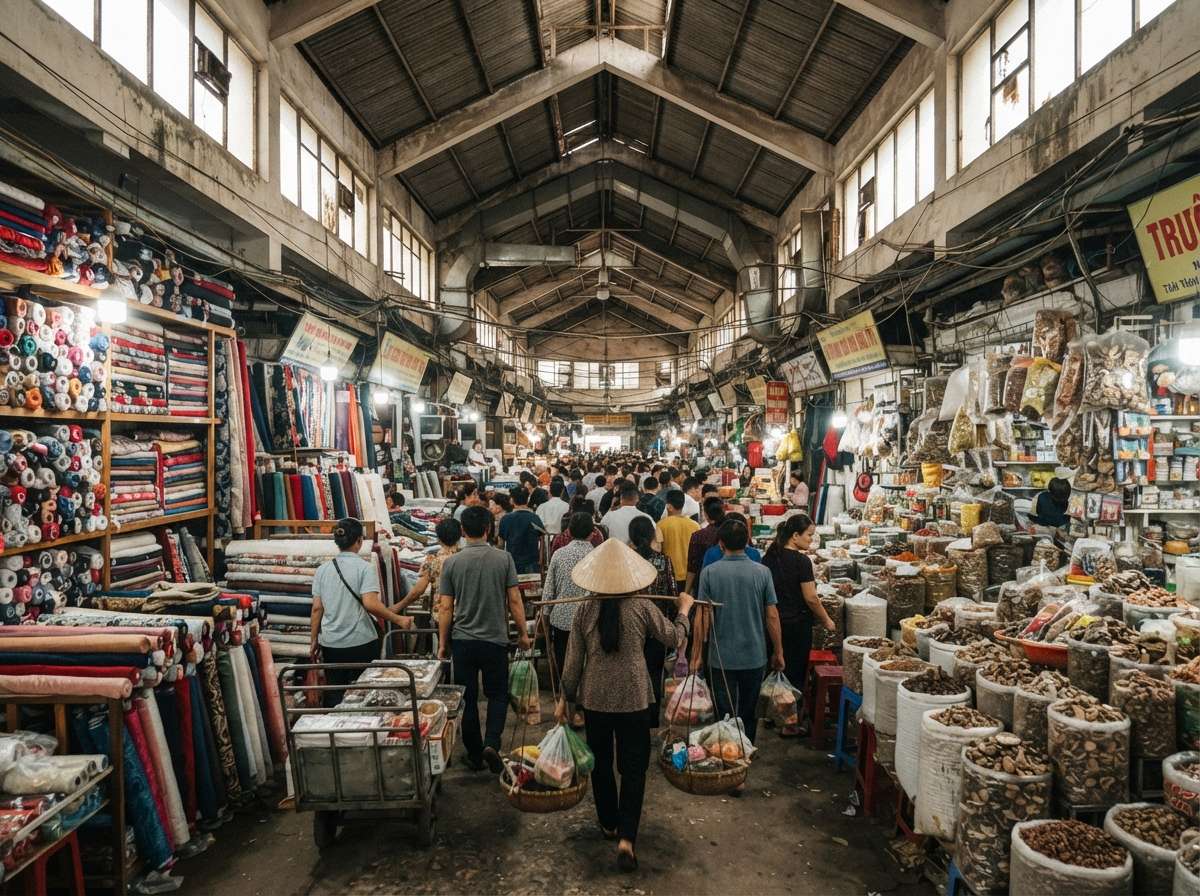
Branded clothes, electronics, imported cosmetics, imported alcohol and gold are usually not cheaper in Vietnam than in India. Uniqlo, Zara and H&M price their Vietnam stores close to their Indian ones. Phones and laptops carry similar taxes, and a warranty bought in Vietnam may not be honoured in India.
The grey zone is “factory surplus” clothing. Saigon Square in Ho Chi Minh City built its name on North Face jackets and branded sportswear said to be overruns from Vietnamese factories. Some are. Many are copies. Check seams, zips and stitching on the label before you pay, and assume nothing is genuine because of a logo. Counterfeit branded goods can be seized at Indian customs, and nobody refunds a fake. Buy them as cheap clothes, never as brands.
Where to Shop in Vietnam, City by City
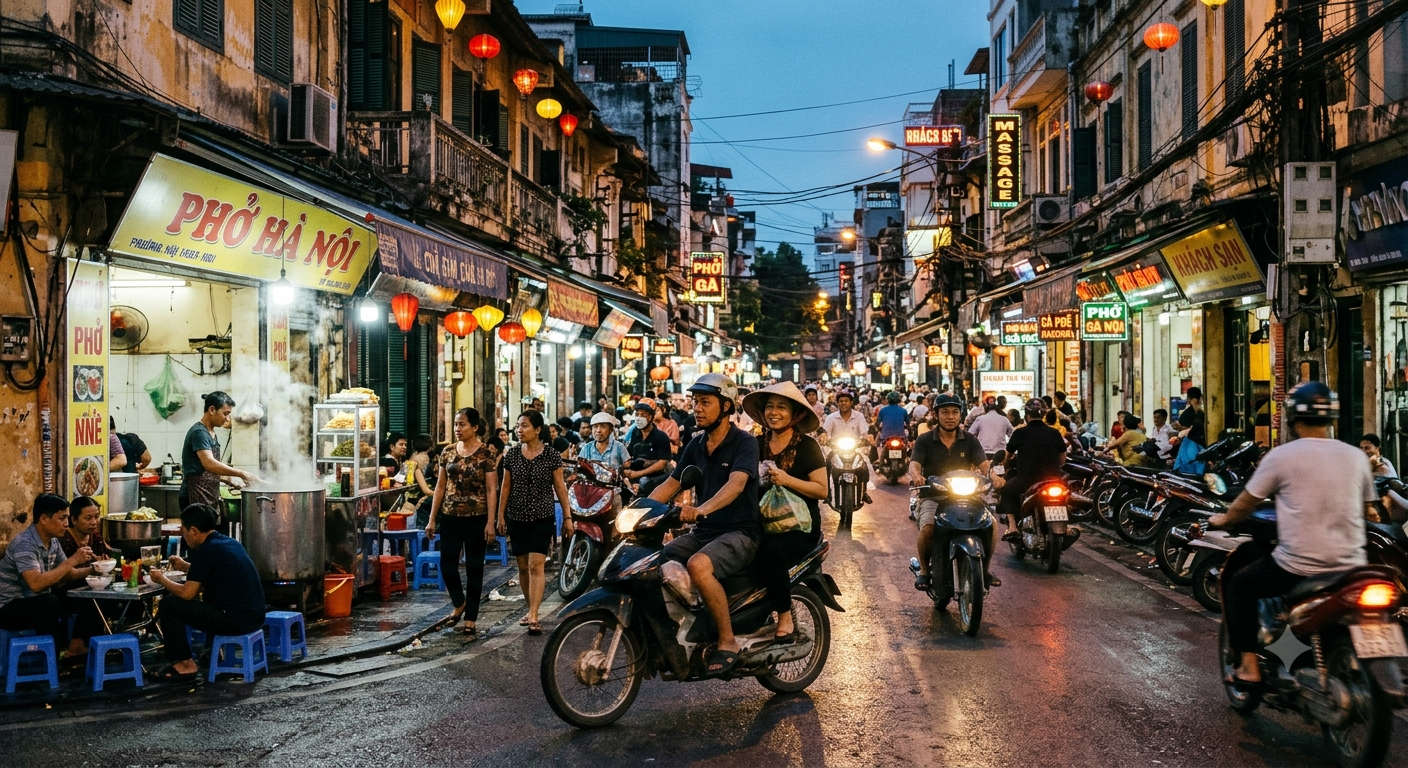
Vietnam shopping changes by city, and each city has one kind of shopping it does better than the rest. The hours below are the ones most sources agree on. Stalls keep their own hours, so treat them as a guide.
Hanoi
Hanoi is best for silk, lacquer, ceramics and the weekend night market. Start in the Old Quarter, where streets are still named after what they sold. Hang Gai has silk and tailors, Hang Bac has silversmiths, and Hang Ma sells paper decorations and lanterns. Dong Xuan Market, the city’s biggest covered market, opens about 6 am to 6 pm daily and sells wholesale fabric, dried food and cheap souvenirs. See our Dong Xuan Market guide for floor-by-floor detail.
On Friday, Saturday and Sunday evenings the streets from Hang Dao, near Hoan Kiem Lake, up to Dong Xuan close to traffic and turn into the weekend night market from about 6 pm. Sources disagree on the closing time (11 pm or midnight), so go by 8 pm for the full run of stalls. It is the same market some guides list twice as “Hanoi Night Market” and “Old Quarter Night Market”. Bat Trang and Van Phuc each make a good half-day out, but they sit on opposite sides of the city, so do not try both in one morning. Our shopping in Hanoi guide goes street by street, and shopping malls in Hanoi covers Vincom and AEON for rainy afternoons.
If your route includes Sapa, plan one Sunday around Bac Ha market, about 100 km from Sapa. Flower H’mong families come in from the hills to sell brocade, embroidered bags and indigo cloth from early morning until about 2 pm, and it is often called the biggest ethnic-minority market in the northwest. Some recent guides say the livestock section now trades on Saturday, so ask your homestay before you go.
Ho Chi Minh City
Ho Chi Minh City has the most markets and the widest choice. Ben Thanh Market in District 1 (officially Ben Thanh ward since July 2025, though everyone still says District 1) trades from about 6 am to 6 pm, with a night market outside until about 10 pm. Prices start high for tourists, so bargain. Binh Tay Market in Cholon, the Chinese quarter, is the wholesale market, open about 7 am to 6 pm and busiest early in the morning. Go there for dried fruit, spices, tea and coffee by the kilo at prices well below Ben Thanh.
Saigon Square, at 77 to 89 Nam Ky Khoi Nghia, sells surplus and copy clothing, bags and shoes. A 2025 market-management raid shut some stalls, so expect a thinner market than older guides describe. For art and lacquer, walk Dong Khoi street. For fixed prices and air-conditioning, Saigon Centre with Takashimaya sits on Le Loi, and Diamond Plaza is at 34 Le Duan, a short walk from Notre Dame Cathedral. More in our Ho Chi Minh City shopping guide and shopping malls in Ho Chi Minh City.
Hoi An
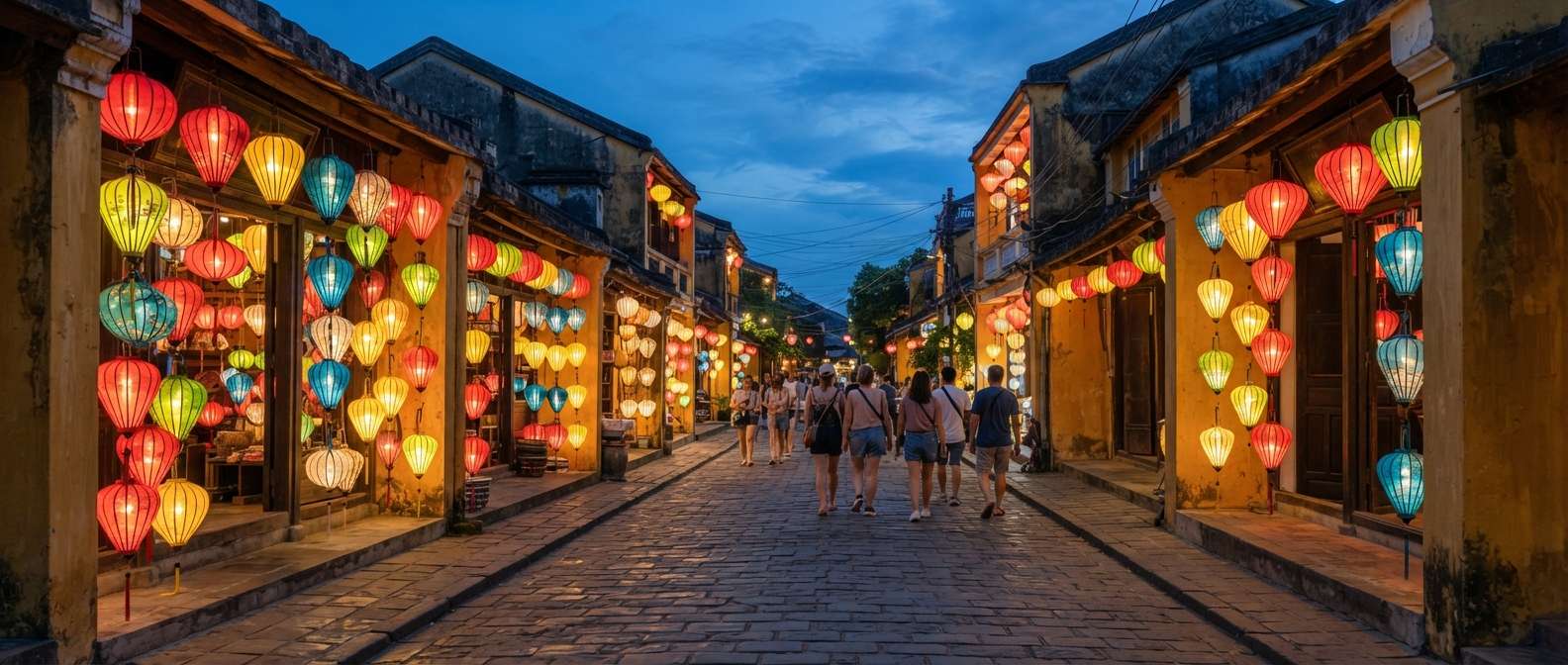
Hoi An is Vietnam’s tailoring town and the best place to buy silk lanterns. Tailors cluster around Tran Phu and Le Loi streets, and the cloth market by Hoi An Central Market sells fabric by the metre if you want to choose your own. The night market on Nguyen Hoang street, across the river on An Hoi, opens in the late afternoon and runs into the evening with lanterns, bags and snacks. Our Hoi An night market guide covers what each stall row sells.
Da Nang
Da Nang is a 45-minute drive from Hoi An and is better for practical buys than crafts. Han Market, on the riverfront, sells dried squid, coffee, fabric and ready-made clothes from early morning to early evening. Con Market, on Hung Vuong street, is where Da Nang itself shops, from about 7 am to 7:30 pm (some stalls open by 6 am). It is bigger and cheaper than Han Market for dried fish, rice-paper snacks and everyday clothes, and its food stalls serve mi Quang for less than a cafe charges for coffee. See shopping in Da Nang, our Han Market guide and shopping malls in Da Nang.
Hue
Hue’s Dong Ba Market, by the Truong Tien bridge, is the place for conical hats (Hue’s poem hats have verses visible against the light), sesame candy and royal-style tea. It is a daytime market. Read shopping in Hue for the rest.
Nha Trang
Nha Trang has two markets that older guides mix up. Dam Market, the round covered market in the north of the city, is a day market, open from about 5 am to about 6:30 pm, for dried seafood, coffee and souvenirs. The night market near the beachfront sells clothes and trinkets in the evening. Our shopping in Nha Trang guide separates the two.
Phu Quoc, Da Lat and the Mekong
On Phu Quoc island, buy pepper at a farm, fish sauce from a factory shop and pearls only from a certified showroom. Dinh Cau night market in Duong Dong is for seafood dinners and small souvenirs. Da Lat, in the highlands, has a night market around its central market where coffee, artichoke tea, dried strawberries and wool jumpers are the buys. In the Mekong Delta, Cai Rang floating market near Can Tho is a dawn sight more than a shop. Boats sell fruit wholesale. For gifts, the coconut candy workshops in Ben Tre, a stop on most Mekong day tours from Ho Chi Minh City, are the better bet.
For malls and outlets across the country, use our shopping malls in Vietnam guide.
Is Hanoi or Ho Chi Minh City Better for Shopping?
Hanoi is better for crafts, silk and character. Ho Chi Minh City is better for choice, wholesale prices and malls. If your trip covers both, buy crafts in Hanoi and clothes and bulk food in Ho Chi Minh City, and save the heavy or fragile buys for the city you fly home from.
| Hanoi | Ho Chi Minh City | |
|---|---|---|
| Best for | Silk, lacquer, Bat Trang ceramics, lotus tea | Clothes, bulk dried food, coffee by the kilo, malls |
| Main market | Dong Xuan, plus the weekend night market | Ben Thanh, Binh Tay |
| Craft villages nearby | Bat Trang, Van Phuc | Lacquer workshops in the former Binh Duong province, about an hour north |
| Fixed-price shopping | Vincom, AEON Mall | Saigon Centre with Takashimaya, Vincom |
| Night shopping | Fri to Sun only, Old Quarter | Every night outside Ben Thanh |
Supermarket Souvenirs: Lotte Mart, GO! and WinMart
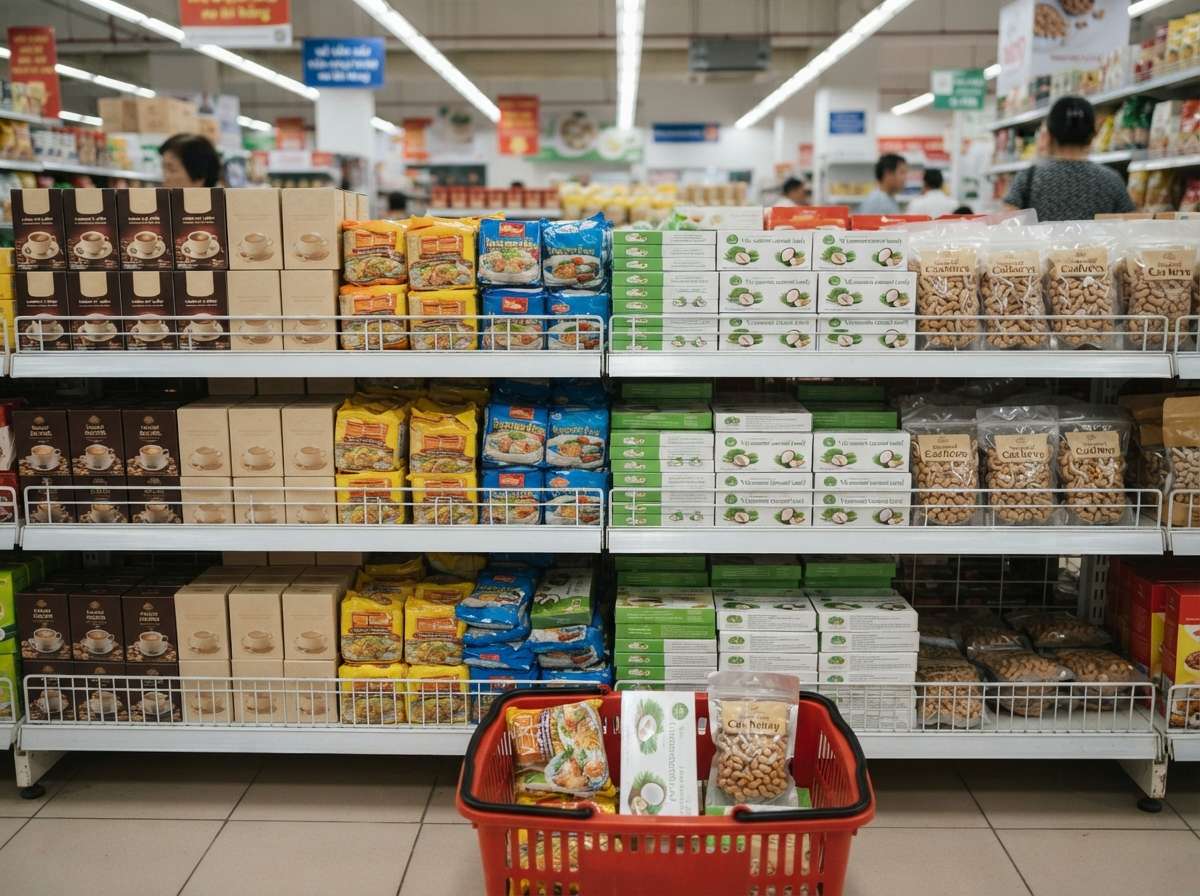
A supermarket is the easiest place for Indian first-timers to buy gifts in Vietnam, because prices are printed and nobody expects you to bargain. Lotte Mart, GO! (the old Big C) and WinMart are in every big city, and Co.opmart is common in the south. The Ordinary Katalog’s 2026 receipts show what you can expect at the till.
| Supermarket buy | Price seen (VND) | About (₹) |
|---|---|---|
| G7 instant coffee, box of 20 sachets | 54,900 at Lotte Mart | ₹205 |
| Instant pho, one pack | 7,100 to 9,300 at GO! | ₹26 to ₹35 |
| Coconut candy, one box | 32,400 to 36,000 | ₹120 to ₹135 |
Pharmacy chains such as Long Chau and Pharmacity sell Golden Star balm and star anise oil at fixed prices too. Vegetarians should read labels. Many instant noodles and snacks contain fish sauce or meat stock, even the ones with vegetables on the pack.
Buying Online During Your Trip
Vietnamese shop online on Shopee, Lazada and TikTok Shop, and GrabMart delivers supermarket orders to hotels. These apps need a Vietnamese phone number and usually a local payment method, so for most visitors they are useful mainly for comparing prices. If your hotel will receive a parcel, ask reception to pay cash on delivery and settle with them.
How to Bargain in Vietnam
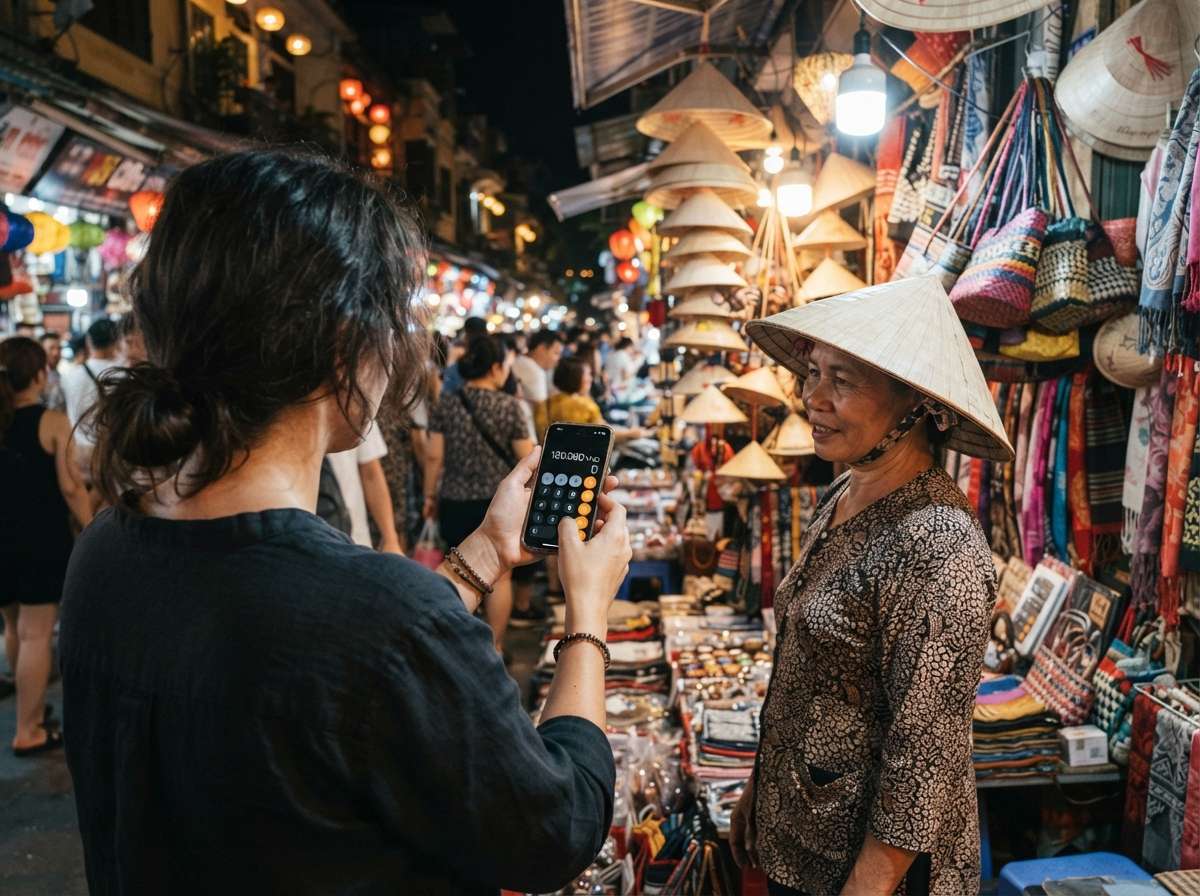
Bargaining is part of shopping in Vietnam at market stalls and street shops. Do not bargain in supermarkets, malls, pharmacies or any shop with printed price tags. Open at 40 to 60 percent of the first price, the range Asia Tour Advisor and LocalVietnam both give, and settle somewhere near 60 to 75 percent. Smile, keep it light, and walk away if you are far apart. A seller who calls you back has just named a fair price.
| Where you are | Bargain? | What works |
|---|---|---|
| Ben Thanh, Dong Xuan, night markets | Yes, hard | Open at half. Buy several items from one stall for a better rate |
| Old Quarter and Hoi An souvenir shops | Yes, gently | Ask for a discount on 2 or more items |
| Tailors | On fabric, not on labour | Compare 2 shops before you choose. Very cheap quotes mean weak stitching |
| Supermarkets, malls, pharmacies | No | Prices are fixed |
| Craft villages | A little | Prices are already close to cost |
Three phrases help. “Bao nhieu?” means how much. “Dat qua” means too expensive. “Giam gia duoc khong?” asks for a discount. Counting on a phone calculator works with every seller.
Paying in Vietnam: Cash, Cards, VietQR and ATMs
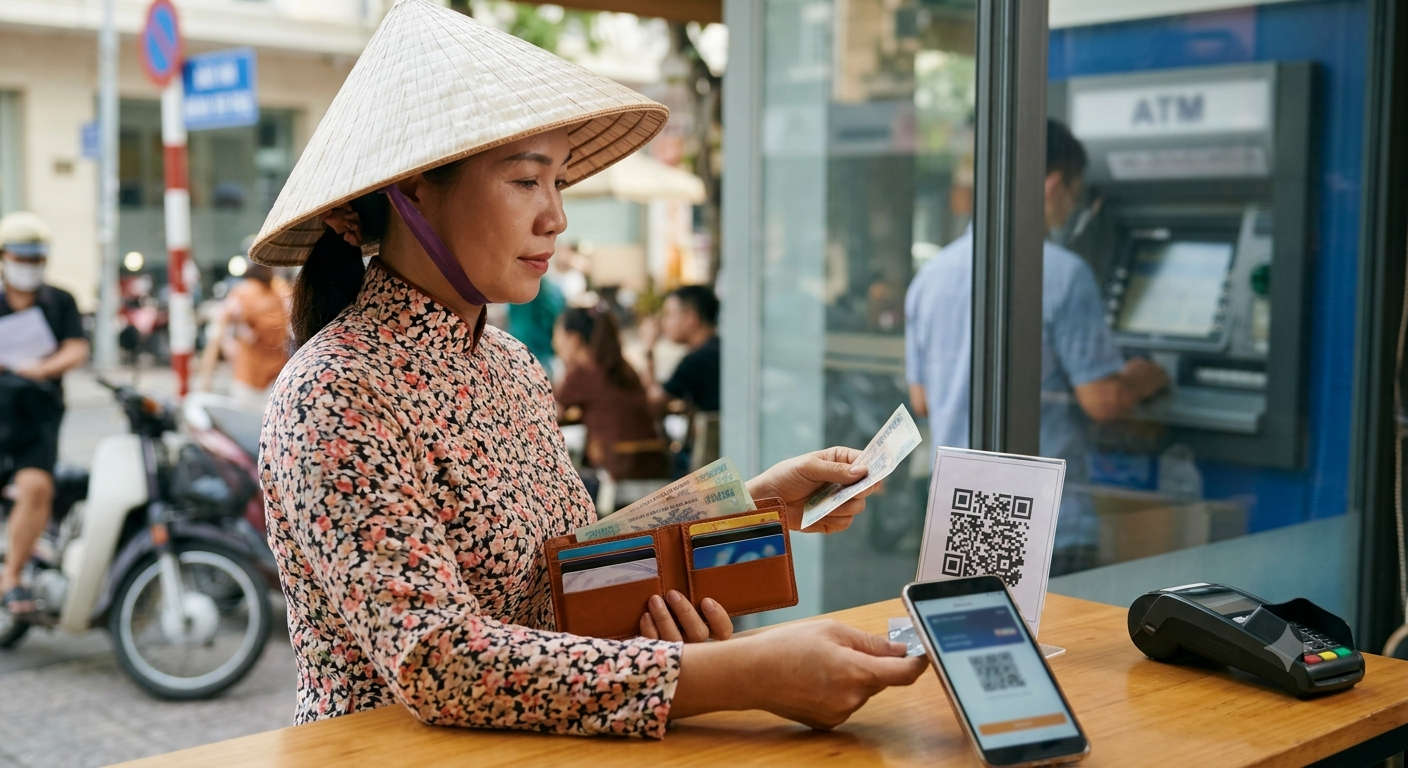
For most shopping in Vietnam, cash in Vietnamese dong is how you pay at markets, street stalls and small shops. Cards work in malls, supermarkets, hotels and bigger restaurants. Indian rupees are not accepted anywhere, and US dollars get a poor rate.
Many stalls also show a VietQR code, the national QR system. It only works from a Vietnamese bank app, so it does not help most visitors. UPI does not work in Vietnam yet. NPCI International and Vietnam’s payment network NAPAS signed an agreement on cross-border QR payments in May 2026, but no launch date or list of Indian apps has been announced. Check before you fly, as this may change.
Use a bank ATM inside a bank branch or mall rather than a stand-alone street machine. Vietnamese ATMs charge a fee for each withdrawal, and many cap a single withdrawal at a few million dong, so take out larger amounts less often. A forex card loaded in US dollars, or a zero-markup travel card, beats an ordinary debit card on fees for most Indian travellers. Carry small notes (10,000 to 50,000 VND) for markets, because stalls rarely have change for a 500,000 note.
Vietnam VAT Refund for Tourists
Foreign tourists can claim back part of the VAT on goods bought at enrolled shops if they spend at least 2,000,000 VND (about ₹7,400) at one shop in one day and carry the goods out by air or sea. The scheme now runs on Circular 84/2026/TT-BTC, in force since 1 July 2026, with an electronic system linking customs, shops and the refund banks. The conditions in Decree 181/2025/ND-CP require the purchase within 60 days before you leave.
Be realistic about the amount. Vietnam’s standard VAT is 10 percent, and many goods are on a reduced 8 percent rate until 31 December 2026. You get back 85 percent of the VAT, and the agent bank keeps the other 15 percent as its fee (Decree 181/2025/ND-CP, Appendix IV). On a 2,000,000 VND bill that works out to about 125,000 VND (₹460) at 8 percent or 155,000 VND (₹575) at 10 percent. It is worth claiming on a suit, a lacquer set or a big ceramic order. It is not worth chasing for coffee.
How to Claim the VAT Refund
- Shop at a store displaying the “VAT refund” sign and spend at least 2,000,000 VND there in one day.
- Show your passport at the till and ask for the VAT refund invoice. Check that your name and passport number are correct.
- Keep the goods unopened and with you. Customs must be able to see them.
- At the departure airport, go to the customs VAT refund counter before check-in, with your passport, boarding pass, invoices and the goods.
- After customs checks the claim, go through immigration and collect the refund from the agent bank’s counter airside.
- Leave enough time. Counters can queue in the evening rush of international flights, and Circular 84/2026 requires you to hand in the invoices and show the goods to customs at least 30 minutes before the flight leaves.
Noi Bai (Hanoi) and Tan Son Nhat (Ho Chi Minh City) have run refund counters the longest. If you fly home from Da Nang, Cam Ranh or Phu Quoc, ask the shop whether your airport has a counter before you rely on the refund.
Bringing It Home: India Customs and Baggage

Indian residents returning by air or sea can bring goods worth up to ₹75,000 duty-free under the Baggage Rules 2026, in force since 2 February 2026. The limit was ₹50,000 before. Foreign tourists visiting India get ₹25,000. Goods above the limit are taxed, so keep receipts and declare at the red channel rather than risk a penalty at the green channel.
Coffee, tea, sealed sauces, spices and packed snacks are fine in personal quantities. Seeds, fresh fruit, plants and soil-bearing items need declaring and may be refused. Alcohol and tobacco have their own limits outside the ₹75,000, so check the current CBIC baggage guidance before buying bottles. Counterfeit branded goods can be seized.
Baggage is the other limit. Check whether your ticket includes checked baggage before you shop. VietJet sells many international fares with only a 7 kg cabin bag, and adding kilos online before the flight costs less than paying at the airport. Wrap ceramics and lacquer in clothing in the middle of a hard suitcase. Liquid balms over 100 ml go in checked baggage, sealed in zip bags. Fish sauce goes in checked baggage only, in a taped foam box, and some airlines refuse it outright, so ask yours. If you overbuy, a cheap wheeled bag from Dong Xuan or Binh Tay is easier than paying excess at the counter.
Our Vietnam how-to-reach guide lists the flights from Indian cities.
Scams and Mistakes to Avoid
- Fake silk. Ask for the burn test on a loose thread. Anything under about 230,000 VND a metre that calls itself silk is suspect.
- Glass pearls. Rub two beads. Buy on Phu Quoc only from shops that give a certificate.
- “Weasel” coffee. Mostly flavoured beans at a high price.
- Confusing notes. 20,000 and 500,000 VND notes are both blue, and 50,000 and 500,000 differ by one zero. Count the zeros before you hand over a note.
- Shop commissions. A driver who insists on a “special” silk or lacquer shop is often paid by it. Choose your own.
- Paying in dollars. Stalls that “charge in USD” use a rate that favours them. Pay in dong.
- Old Quarter mark-ups. The same Bat Trang tea set costs about twice as much a few streets from Hoan Kiem Lake as in the village.
Shopping Budget for an Indian Traveller
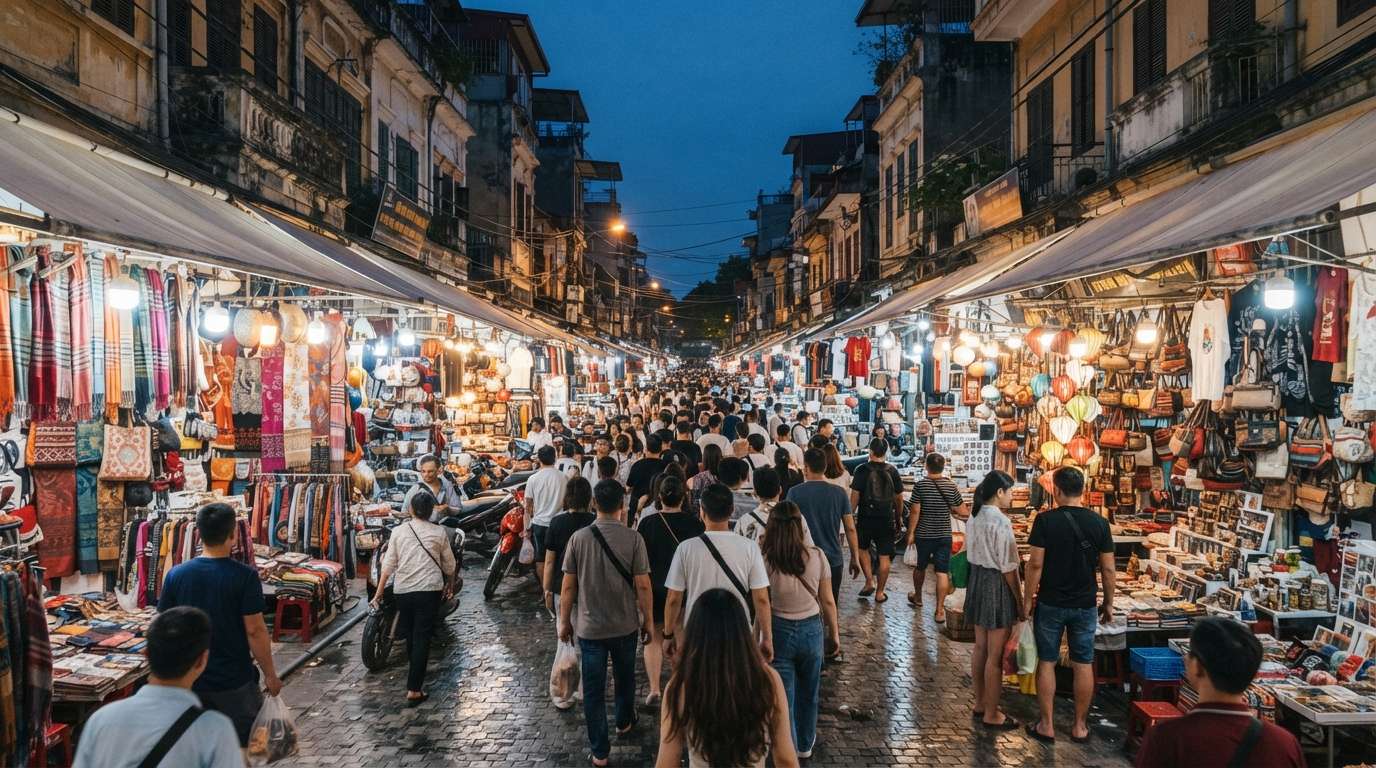
How much to keep aside depends on whether you are buying gifts or clothes. These tiers are our own estimate from the prices above.
| Shopper | What it buys | Budget per person |
|---|---|---|
| Gifts only | 5 boxes of coffee, 2 phin filters, balms, 2 small lacquer pieces, a hat | ₹4,000 to ₹8,000 |
| Gifts plus one tailored item | The above, plus an ao dai or tailored dress and 2 metres of silk | ₹15,000 to ₹30,000 |
| Big shop | Gifts, a suit and 2 outfits, a Bat Trang tea set, art and pearls | ₹40,000 to ₹70,000 |
Above ₹75,000 you cross the duty-free limit. Leave a little cash for things you’ll need on the trip itself. A local SIM costs about 100,000 to 200,000 VND (₹370 to ₹740) and a poncho is worth having from May to October.
Plan Shopping Into Your Trip
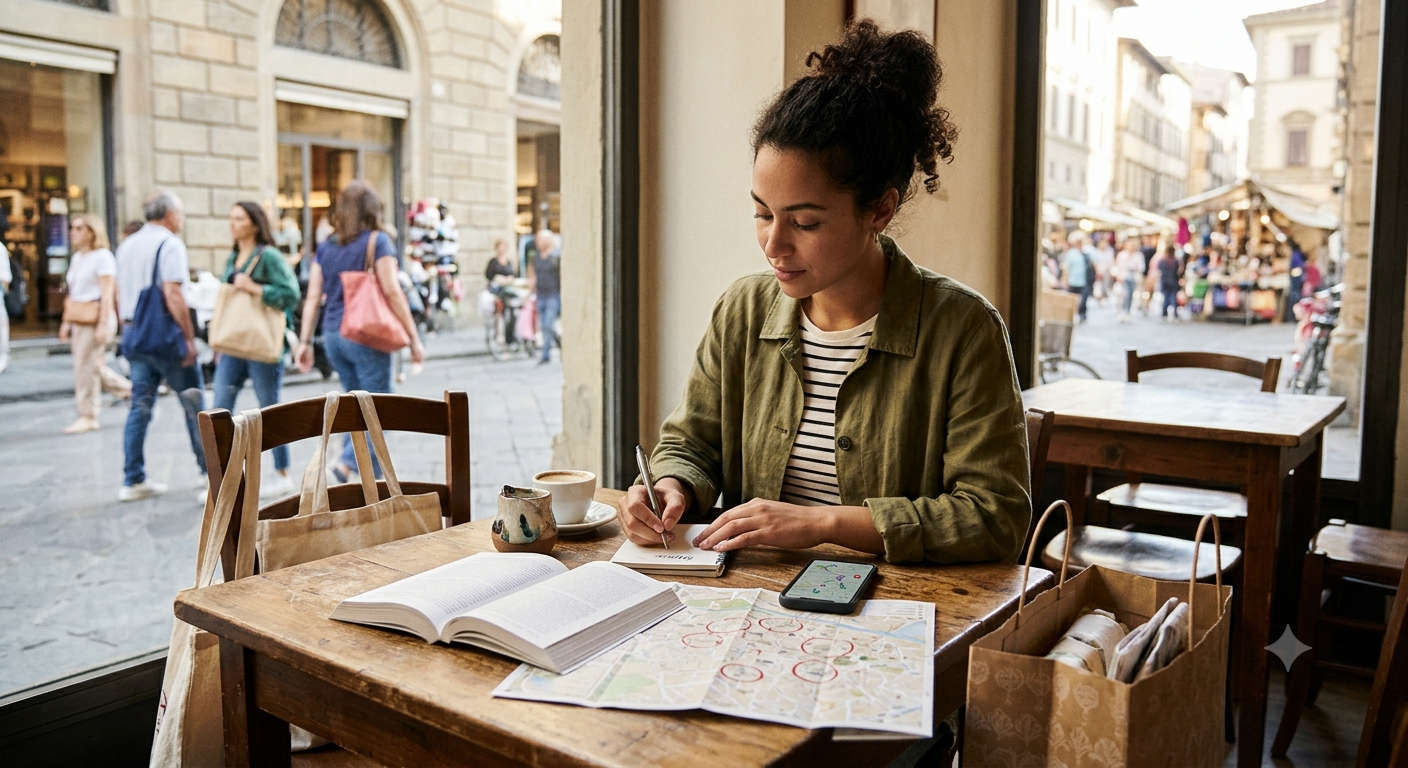
Good shopping in Vietnam depends on where your nights fall. Put a Friday, Saturday or Sunday night in Hanoi for the weekend market, give Hoi An 2 nights so the tailor can finish, and keep your last stop in the city where you’ll buy the heavy things. Our Vietnam tour packages can be built around free evenings for markets, and the budget Vietnam packages leave room in the spending money for a suit in Hoi An.
For more ideas, see things to do in Vietnam and our Vietnam nightlife guide for the after-market evenings.
How We Built This Guide

We took item prices in dong from LocalVietnam’s 2026 shopping guide, The Ordinary Katalog’s 2026 supermarket receipts and vietnamtour.in’s 2026 price lists, used two sources per row where we could, rounded dong figures that a source had worked out from rupees at an older rate, and converted at ₹1 = 270 VND, the rate on 1 November 2026. Indian prices are Flipkart listings checked on 1 November 2026. Customs rules come from India’s Baggage Rules 2026, and the VAT refund section from Vietnam’s Decree 181/2025/ND-CP and Circular 84/2026/TT-BTC. Market hours are the ones most published sources agree on. Prices move, so we recheck this Vietnam shopping guide every quarter.
Your Vietnam Shopping List, Sorted
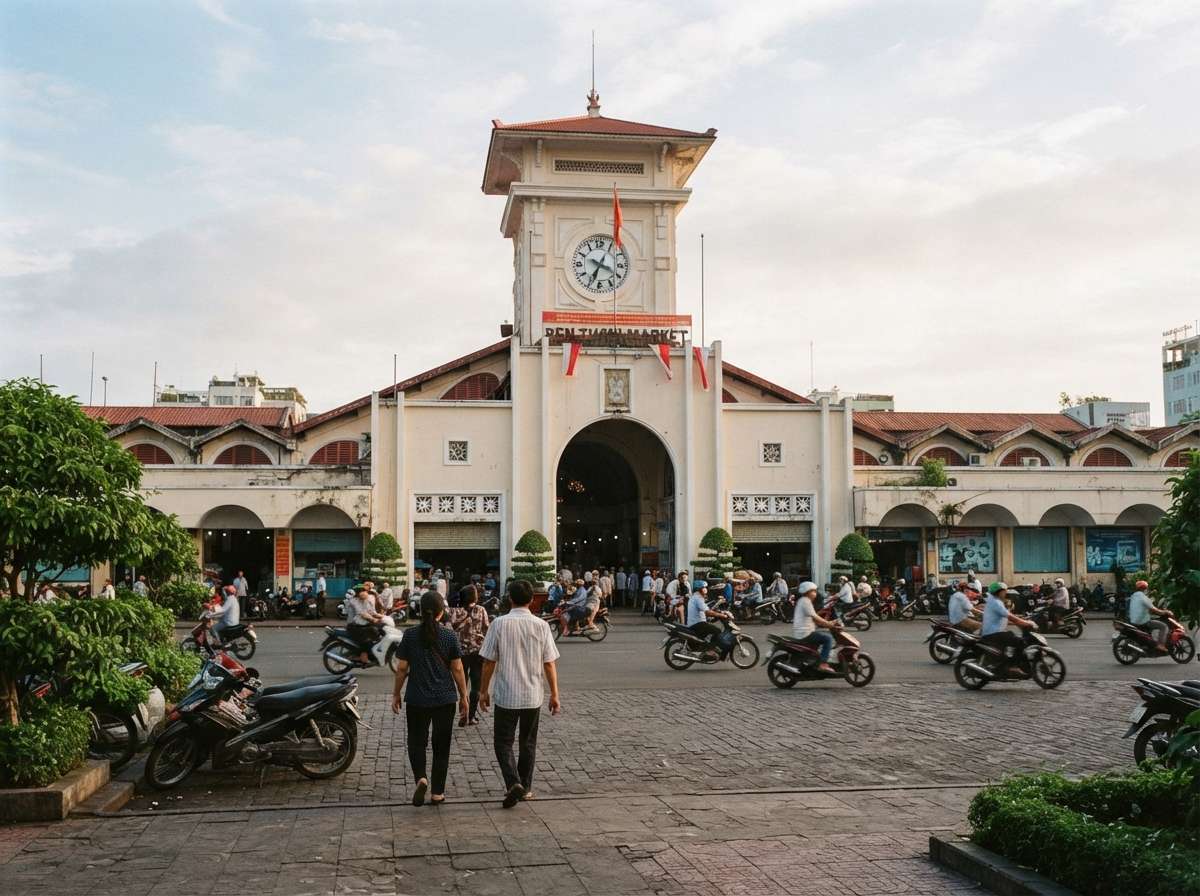
Buy what Vietnam makes, in the place that makes it, and pay in dong. Coffee, silk, tailoring, lacquer and ceramics are where the savings are, while brands, electronics and gold are not. If you are still shaping the route, our Vietnam tour packages can add a Hoi An tailoring stop and a weekend night in Hanoi, and the Vietnam tourism guide covers the rest of the trip.
FAQs
Shopping in Vietnam: Frequently Asked Questions
Quick answers on prices, paying, the VAT refund and India customs for Indian travellers
Coffee and herbal balms are the cheapest worthwhile buys. A 20-sachet box of G7 instant coffee costs about 55,000 VND (around ₹205) in a supermarket against ₹701 on Flipkart. A small tin of Golden Star (Cao Sao Vang) balm from any pharmacy is another light, low-cost gift. A phin coffee filter is 30,000 to 50,000 VND. Street food is cheaper still. A glass of iced tea at a stall costs a few thousand dong.
Yes for Vietnamese-made goods, no for imported brands. Coffee, phin filters, silk, tailoring, lacquer, ceramics and market clothing cost far less than in India. A phin filter is about a quarter of its Flipkart price. Brand-name clothes, phones, laptops, imported cosmetics and gold cost about the same as at home or more, and some, like fish sauce and pepper, offer no saving at all.
No. Uniqlo, Zara and H&M price their Vietnam stores close to India. The cheap "branded" jackets and sportswear at Saigon Square and night markets are a mix of factory surplus and copies. Check seams, zips and labels, treat them as cheap clothing rather than brand purchases, and remember that counterfeit goods can be seized at Indian customs.
Hanoi is better for crafts, silk, lacquer and Bat Trang ceramics, plus the Friday to Sunday night market. Ho Chi Minh City is better for clothing, bulk dried food and coffee by the kilo, and malls. If Hanoi is your first stop, keep crafts small and light there and leave bulk buys for the city you fly home from.
Visa and Mastercard work in malls, supermarkets, hotels and bigger restaurants. Markets and street stalls want cash in dong. UPI does not work in Vietnam yet. NPCI International and NAPAS signed an agreement on cross-border QR payments in May 2026, but no launch has been announced. Carry a forex card and withdraw dong at bank ATMs.
Indian residents returning by air or sea can bring goods worth ₹75,000 duty-free under the Baggage Rules 2026, in force since 2 February 2026. The old limit was ₹50,000. Goods above it are taxed, so keep receipts and declare at the red channel. Alcohol and tobacco have separate limits, and the allowance is per traveller.
Yes. Spend at least 2,000,000 VND at one enrolled "VAT refund" shop in one day, get the refund invoice with your passport, show the goods and invoices at the customs refund counter at your departure airport before check-in, then collect the cash at the bank counter after immigration. The refund is 85 percent of the VAT, so on a 2,000,000 VND bill you get back roughly 125,000 to 155,000 VND (₹460 to ₹575), depending on whether the goods carry 8 or 10 percent VAT. Noi Bai and Tan Son Nhat have the longest-running counters.
Most Hoi An tailors finish an ao dai, dress or suit in 24 to 48 hours, with one or two fittings. Book the first fitting on the day you arrive and stay 2 nights so there is time for alterations. Choose your fabric, agree the full price before measuring, and bring a photo of the style you want copied.
Yes. Roasted and ground coffee, instant coffee and tea are allowed in personal-use quantities and count towards your ₹75,000 duty-free allowance. Keep them sealed in their retail packs. Raw green coffee beans, as seeds of a plant, are better declared or avoided.
Ben Thanh and Binh Tay in Ho Chi Minh City, Dong Xuan and the Old Quarter weekend night market in Hanoi, the Hoi An night market, Han Market in Da Nang, Dong Ba in Hue, Dam Market in Nha Trang and Dinh Cau night market on Phu Quoc. The Hanoi night market runs only on Friday, Saturday and Sunday evenings.
20,000 VND is about ₹75. It buys a street iced coffee, a banh mi at many stalls, two or three packs of instant pho, or a rain poncho. It is also the note you want in your pocket at markets, because stall holders often can't change a 500,000 VND note.
Hoi An and Hang Gai street in Hanoi's Old Quarter are the two best places, with Van Phuc silk village just outside Hanoi for weaving. Genuine silk costs from about 230,000 VND (₹850) a metre. Ask for the burn test. Real silk smells like burnt hair and turns to ash, while synthetics melt into a hard bead.
Coffee with a steel phin filter is the gift almost everyone brings back, followed by lotus tea, a silk scarf, a tin of Golden Star (Cao Sao Vang) balm and a non la hat. For something that lasts, buy small lacquer bowls or a Bat Trang tea set in Hanoi, a piece of hand embroidery from Hang Gai or a painting rolled in a tube. Hoi An adds tailored clothes and folding silk lanterns. Leave the "weasel" coffee and market "pearls" on the shelf. Most of them are not what the label says.
For gifts, yes. ₹10,000 is about 2,700,000 VND, which covers the gifts-only list in our budget table (₹4,000 to ₹8,000) with room for a silk scarf. It is not enough for tailoring as well. A linen suit in Hoi An starts near 2,500,000 VND, so add ₹10,000 to ₹20,000 if you want clothes made. People asking whether US$100 is a lot in Vietnam are asking the same question. It is about 2,600,000 VND, a good gift budget and a thin tailoring one.