
 5D / 4N
9% OFF


Should You Plan a Summer Trip to Vietnam?
Summer in Vietnam is a good trip if you pick the right region. The central coast from Hue to Nha Trang is the safest base, hot and mostly dry until late August. The north is wet but workable, and Phu Quoc is the one stop to skip for a beach week.
The difference is large. In July, Da Nang gets 93 mm of rain and about 22 days with none, while Phu Quoc gets 419 mm and about 9. This guide gives you one table of 15 stops across five months, then which rain merely annoys and which breaks a trip. After that come a 2027 heat outlook and costs in rupees. For the other seven months, see our guide to the best time to visit Vietnam.
Key Takeaways
- Base a June to August beach trip at Da Nang, Nha Trang or Quy Nhon, where heavy-rain days are rare.
- Skip Phu Quoc for a beach week from May to September. It has more days of 50 mm rain in July than any other stop in our table.
- Book Ha Long for May or June, not August, its wettest and riskiest summer month.
- Leave one spare day before your flight home, because six of the seven summer events we list struck the north or north-central coast.
- Budget from about ₹42,000 a person for a tight week, or about ₹75,000 mid-range, with international flights and visa included. Domestic flights and a cruise cost extra.
Vietnam
Vietnam
Month-by-month weather by region, heat plan and costs in rupees
Best Time
April - August
Select Package Type
Best Selling Packages


Which Month, Which Region: Vietnam Summer Weather Table
No single summer forecast fits Vietnam, so read the row for your stop. Each cell shows the normal daytime high in °C, then monthly rain in mm, then the days in that month with no rain.
| Stop | Best month | April | May | June | July | August |
|---|---|---|---|---|---|---|
| Sapa | April, late May for terraces | 21 / 213 / 12 | 22 / 341 / 9 | 23 / 381 / 6 | 23 / 461 / 6 | 23 / 452 / 8 |
| Ha Long Bay | May, June | 26 / 86 / 20 | 30 / 183 / 20 | 32 / 297 / 15 | 32 / 364 / 15 | 31 / 431 / 13 |
| Hanoi | May | 28 / 92 / 17 | 32 / 185 / 17 | 33 / 253 / 16 | 33 / 280 / 15 | 33 / 309 / 15 |
| Ninh Binh | May | 27 / 74 / 19 | 31 / 169 / 19 | 33 / 211 / 17 | 33 / 236 / 18 | 32 / 315 / 15 |
| Phong Nha (Dong Hoi) | June, July | 29 / 61 / 22 | 32 / 116 / 22 | 34 / 79 / 23 | 34 / 76 / 25 | 33 / 166 / 21 |
| Hue | April, July | 31 / 59 / 22 | 34 / 111 / 20 | 35 / 103 / 21 | 35 / 95 / 23 | 34 / 139 / 21 |
| Da Nang and Hoi An | April to July | 31 / 35 / 25 | 33 / 81 / 22 | 35 / 83 / 22 | 34 / 93 / 22 | 34 / 141 / 20 |
| Quy Nhon | April to August | 31 / 34 / 26 | 33 / 85 / 23 | 34 / 62 / 24 | 34 / 44 / 25 | 34 / 77 / 23 |
| Nha Trang | April to August | 31 / 42 / 25 | 32 / 82 / 22 | 33 / 50 / 22 | 33 / 42 / 23 | 33 / 52 / 22 |
| Da Lat | April, May | 25 / 170 / 20 | 25 / 212 / 14 | 24 / 204 / 11 | 23 / 233 / 9 | 23 / 238 / 8 |
| Mui Ne (Phan Thiet) | April | 32 / 30 / 27 | 33 / 144 / 18 | 32 / 143 / 15 | 32 / 172 / 14 | 32 / 166 / 13 |
| Ho Chi Minh City | April | 35 / 57 / n/a | 35 / 202 / n/a | 34 / 224 / n/a | 33 / 231 / n/a | 33 / 219 / n/a |
| Can Tho and the Mekong | April | 34 / 42 / 25 | 33 / 181 / 16 | 32 / 210 / 11 | 31 / 236 / 11 | 31 / 238 / 10 |
| Phu Quoc | April | 33 / 148 / 18 | 32 / 281 / 13 | 30 / 382 / 9 | 30 / 419 / 9 | 30 / 486 / 8 |
| Con Dao | April | 32 / 39 / 25 | 32 / 210 / 17 | 31 / 289 / 12 | 31 / 297 / 13 | 31 / 298 / 12 |
Figures are normals from Vietnam’s building code climate tables (QCVN 02:2022/BXD), tables A.3, A.25 and A.29. Hoi An uses the Da Nang station, Phong Nha uses Dong Hoi on the coast and Mui Ne uses Phan Thiet. The code’s temperature and rain tables have no row for Ho Chi Minh City, so that row uses Vietnam Institute for Building Science and Technology highs and World Meteorological Organization rain, with no rain-free count. The Best month column is our judgment. Da Lat’s rain-free counts run high. Added to the code’s rainy-day table they make 32 to 34 days a month from April to July, so read them as upper limits.
Is Summer a Good Time to Visit Vietnam?

Yes, for most trips, but only one region is at its best. Vietnam has no single summer, because the south-west monsoon soaks the south from May and the north from June, while the Truong Son mountains shelter the central coast until September. Most guides treat summer as May to August, and we add April because it is the last month that suits almost everywhere.
Crowds split the same way. Foreign arrivals are lower than in winter, so Hanoi and Ho Chi Minh City hotels are often better value. Vietnamese schools are out from June to August, though, and beach towns fill with families at weekends. Treat any claim that summer is simply “cheap” with care. June to August is the domestic peak at the beach, and VnExpress reported in 2022 that Da Nang fares fell 50 to 60 per cent only once that peak ended.
| Traveller | Go to | Best months | Leave out |
|---|---|---|---|
| Family on school break | Nha Trang, Da Nang, Hanoi mornings | May, June | Phu Quoc as the only stop |
| Honeymooners | Hoi An, Da Nang, Ha Long by cruise in May or June | May to July | A cruise in August |
| First-timers | Hanoi, Ninh Binh, Hoi An | April, May | Both big cities on a short trip |
| Trekkers | Sapa, Mu Cang Chai, Phong Nha | Late May, June | Ha Giang in July, the north’s heaviest-rain spot |
| Beach-first trip | Nha Trang, Quy Nhon, Da Nang | June to August | Phu Quoc, Mui Ne |
Vietnam in Summer, Month by Month
Each block below gives the decision for that month. Our May, June and August guides go deeper.
April
April is the safest month for a route across the whole country, and the only summer-side month that suits Phu Quoc, with 148 mm and about 18 rain-free days. The north pays for it. Hanoi and Ha Long get under 3 hours of sun a day, so the air is mild but the sky is often grey, and limestone views suffer. Da Nang has 7 hours a day and Nha Trang 8.6. The south is at its hottest, with Ho Chi Minh City near 34.5 °C, but its rain has not started. Avoid 30 April and 1 May if you can, because Reunification Day and Labour Day are a national travel peak. Hung Kings Day falls around 16 April in 2027 by our calculation.
May
May is the fork. The south turns within weeks, with Can Tho going from 42 to 181 mm and Con Dao from 39 to 210 mm. The north doubles its rain but gains sun, and Hanoi climbs to 5.6 hours a day. Ha Long is at its summer best, with about 20 rain-free days. Delhi families get the biggest relief this month, as the comparison further down shows. Hue is the hot spot, and its May record of 41.3 °C is the highest in our table. See Vietnam in May for the detail.
June
June is the central coast’s month. Da Nang averages 8.1 hours of sun with 83 mm of rain, and Nha Trang records no heavy-rain days on the table. Rice terraces at Mu Cang Chai are newly flooded, and West Lake’s lotus season peaks around now. Da Nang’s fireworks festival ran from 30 May to 11 July in 2026, and 2027 dates are not out. Heat is the price, so plan mornings and evenings. Our Vietnam in June guide splits the month into 10-day blocks.
July: Best Places to Visit
The best places to visit in Vietnam in July are on the central coast, from Phong Nha and Hue down to Da Nang, Hoi An, Quy Nhon and Nha Trang. Da Nang gets 93 mm, Hue 95 mm, Quy Nhon 44 mm and Nha Trang 42 mm, and Dong Hoi, the station for Phong Nha, has about 25 rain-free days, the most on our table that month along with Quy Nhon. The real warnings sit elsewhere. Sapa has about 6 rain-free days and Phu Quoc about 9, and the Vinh Xanh 58 capsized at Ha Long on 19 July 2025. Hanoi still has about 15 rain-free days, and Hanoi in July works with a morning plan. Mu Cang Chai turns green from now. Hoi An’s lantern night falls on 17 July in 2027 by our lunar calculation, and our July trip story shows how the month felt to one couple.
August
August is the last safe month on the central coast and the worst in the north, so the best places to visit in Vietnam in August are in the centre. Ha Long gets 431 mm, only about 13 rain-free days and 2.6 days of 50 mm or more, its worst summer month, so move the cruise or drop it. Hanoi reaches 309 mm, and Hanoi in August explains how to work around it. Da Nang rises to 141 mm but keeps about 20 rain-free days, and Nha Trang stays at 52 mm.
When Summer Ends: September
The centre closes in September, from north to south, not in August as many guides say. Days of 50 mm or more jump at Dong Hoi from 0.8 in August to 2.6, at Hue from 0.7 to 2.2 and at Da Nang from 0.7 to 2.0. Further down the coast the change comes later and smaller, with Quy Nhon going from 0.2 to 1.2 and Nha Trang from 0.0 to 0.7. So a late-August trip should lean south along the coast. Our Vietnam in September guide takes it from there.
Vietnam Weather in Summer by Region

The table above carries the numbers, so here is how each region feels.
Northern Vietnam and the Mountains
Rain in the north comes in bursts, and Hanoi still has about half the month free of it from June to August. Afternoons are hot and humid at 80 per cent. Sapa is the opposite, cool at 23 °C but cloudy, with under 4 hours of sun a day from June to August.
Central Coast
Hot air crossing the mountains from Laos drives afternoons up and keeps the rainy season away. Humidity is the lowest of the big regions, at about 76 per cent in Da Nang in June and July. Most days are long and bright, and the sea is usually calm.
Central Highlands
Da Lat stays near 23 to 25 °C all summer. It is not a dry escape, since rain-free days fall from about 20 in April to about 8 in August.
Southern Vietnam and the Islands
The rainy season runs from May, with short afternoon showers on the mainland. Mornings usually stay clear in Ho Chi Minh City and the Mekong Delta. The islands behave differently, as the next section shows.
Rainy or Risky? How Much a Summer Month Can Vary
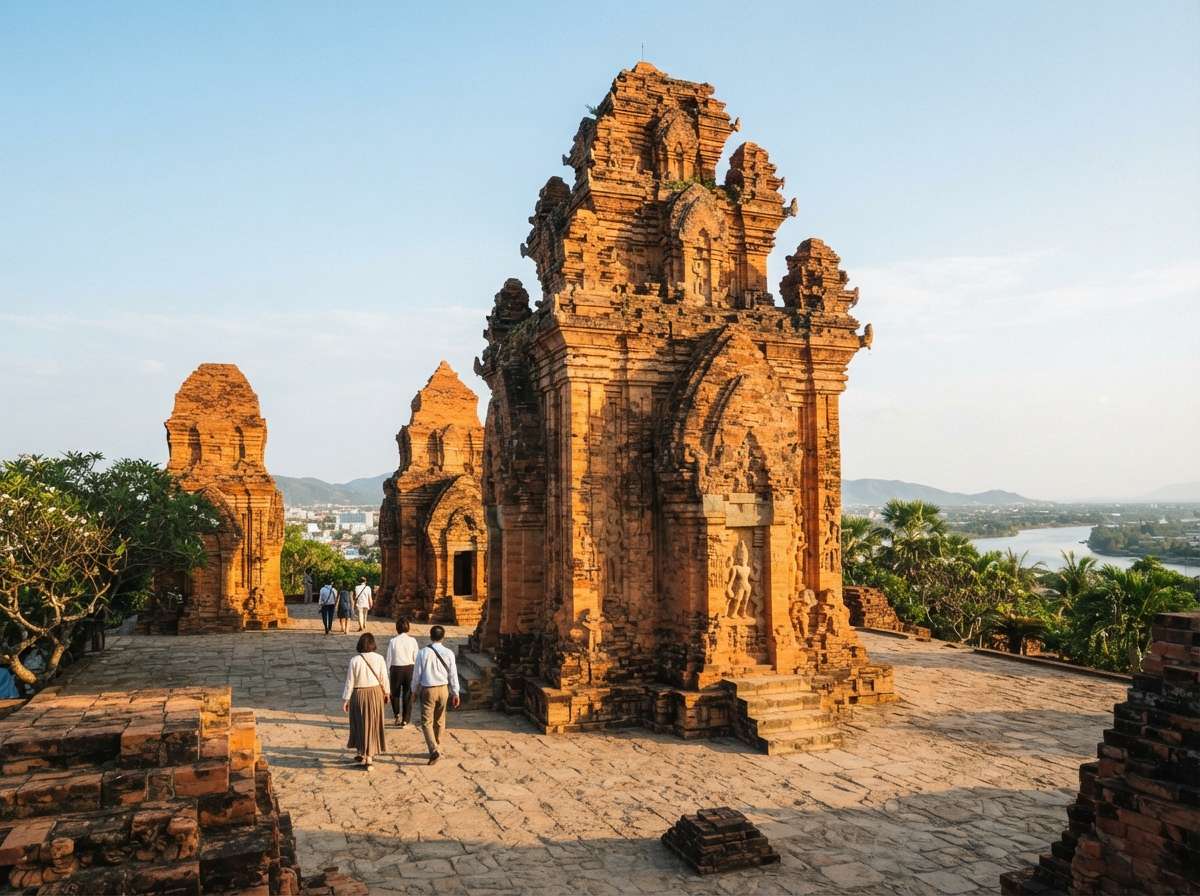
Count heavy days, not just rainy ones. A wet month of short showers is an inconvenience. A month with several days of 50 mm or more is the one that cancels boats and closes trails. The table shows days of 50 mm or more from June to August, then what QCVN’s table A.30 gives for a dry year and a wet year, meaning the rain expected to be beaten in 9 years of 10 and in 1 year of 10.
| Place | Heavy days, June to August | July: dry year to wet year | August: dry year to wet year |
|---|---|---|---|
| Phu Quoc | 6.6 | 190 to 653 mm | 298 to 760 mm |
| Sapa | 6.4 | 301 to 583 mm | 249 to 685 mm |
| Ha Long Bay | 6.1 | 125 to 633 mm | 166 to 680 mm |
| Hanoi | 4.4 | 142 to 415 mm | 137 to 515 mm |
| Can Tho | 1.5 | 116 to 361 mm | 123 to 307 mm |
| Hue | 1.5 | 19 to 198 mm | 23 to 264 mm |
| Da Nang | 1.3 | 20 to 190 mm | 56 to 262 mm |
| Nha Trang | 0.0 | 8 to 86 mm | 12 to 93 mm |
Four results change how you should plan.
- Phu Quoc is rainy and risky. July has about 9 rain-free days and 2.4 heavy days, the most of any stop here. Even a dry August brings 298 mm.
- The Mekong is rainy but not risky. Can Tho has about 11 rain-free days in July yet only 0.6 heavy days. “Short showers” holds here and not at Phu Quoc, and most guides blur the two as one “south”.
- Sapa’s risk is underfoot. Its 6.4 heavy days fall on red-mud trails, so keep walks short after rain.
- Nha Trang’s 0.0 is an average, not a promise. It rounds to zero, and one storm can still reach any coast.
These are long-run station averages, not forecasts.
How Hot Is Vietnam in Summer?

Expect 30 to 35 °C by day in the lowlands, with humidity that makes it feel hotter. Afternoons can go well past that. The highest readings in the building code are 41.8 °C for Hanoi and 41.3 °C for Hue.
| Place | Peak normal high | April to August record | Hot days at 35 °C or more, in the peak month |
|---|---|---|---|
| Hue | 34.7 °C (June) | 41.3 °C | About 11 to 13 |
| Hanoi | 33.4 °C (June) | 41.8 °C | About 8 to 12 |
| Ninh Binh | 32.9 °C (June) | 40.4 °C | About 11 to 13 |
| Da Nang | 34.5 °C (June) | 40.6 °C | About 5 to 8 |
| Nha Trang | 32.7 °C (June) | 37.9 °C | About 2 to 8 |
| Ho Chi Minh City | 34.9 °C (May) | Not in these tables | About 6 to 7 |
| Phu Quoc | 32.5 °C (April) | 37.0 °C | 0 |
| Sapa | 23.0 °C (July) | 29.6 °C | 0 |
Highs and records come from QCVN. Hot days are the 2016 to 2025 average from Open-Meteo’s historical weather data, shown as a range across its ERA5 and default blended models because the two disagree. Read them as rounded guides.
For Indian travellers the surprise is how the months line up against home, using India Meteorological Department normals.
| Month | New Delhi high | Hanoi high | Da Nang high | Mumbai rain | Da Nang rain |
|---|---|---|---|---|---|
| May | 39.9 °C | 31.9 °C | 33.3 °C | 7 mm | 81 mm |
| June | 39.0 °C | 33.4 °C | 34.5 °C | Over 500 mm | 83 mm |
| July | 35.6 °C | 33.4 °C | 34.4 °C | About 920 mm | 93 mm |
A Delhi family in May lands about 8 °C cooler in Hanoi and 6.6 °C cooler in Da Nang, in much stickier air. A Mumbai family in July gets about a tenth of home’s rain in Da Nang.
Plan the day around it. Go out by 7 am, stay in from 11 am to 3 pm, and go out again after 4 pm. Carry 2 litres of water a person on a walking morning. Keep children and older parents to one site a morning, and ask a doctor about heat first if anyone has a heart, kidney or blood-pressure condition.
Summer 2027: What Forecasters Say
Plan for a hot one. In October 2026, Vietnam’s national forecaster said El Niño should stay very strong through January, then ease to moderate-to-strong from February to April, with temperatures 1 to 2 °C above average in those months. A forecaster quoted by VietnamNet said it could persist into the start of summer 2027. In September, forecasters expected more hot days in summer 2027 than both the long-term norm and 2026, and did not rule out new records. A southern outlook reported on 13 October warned of long spells at 35 to 38 °C in the south in March and April 2027, so an April trip to Ho Chi Minh City may run hotter than our table.
None of this forecasts your dates, and we found no official outlook yet for summer 2027 rain, so we make no rain claim. Lean toward Nha Trang or Da Lat if heat worries you, and check the National Centre for Hydro-Meteorological Forecasting again in April.
Typhoons and Sea Safety in Summer
Most summer trips never meet a storm, but the last two summers show where they strike. Six of these seven events came in the north or on the north-central coast, including one squall that needed no storm at all. The exception is Wutip, which hit the central coast in June. This is a list of the events that most disrupted travel, not of every storm.
| When | Event | What happened |
|---|---|---|
| 11 to 14 June 2025 | Storm Wutip | Rain of 250 to 550 mm from southern Ha Tinh to Quang Nam, nine dead by 16 June |
| 19 July 2025 | Vinh Xanh 58 | Tourist boat capsized at Ha Long in a sudden squall, 39 dead |
| 20 to 22 July 2025 | Storm Wipha | Ha Long departures stopped, then floods in Nghe An left four dead |
| 25 August 2025 | Typhoon Kajiki | Landfall between Nghe An and Ha Tinh, Hanoi streets flooded the next day |
| 30 August 2025 | Storm Nongfa | Landfall between Ha Tinh and Quang Tri, with more than 300 mm in places from Nghe An to Da Nang |
| 3 to 5 July 2026 | Typhoon Maysak | Overnight cruise permits stopped from noon on 3 July, boats running again by 5 July |
| 23 to 25 August 2026 | Typhoon Narra | No landfall in Vietnam, but floods in northern provinces and Trang An shut |
Follow these five steps and a storm should cost you a day, not the trip.
- Leave one free day before your flight home. Spend it in the city you fly out from, not on a boat or island.
- Put the cruise early in the route, so a cancelled sailing can still move.
- Get written change terms before you pay, for the cruise and any domestic flight. Quang Ninh and Hai Phong stop boats by official order, and Wipha cancelled sailings in both Ha Long and Lan Ha.
- Check the national forecast 72 hours out, then again at 24 hours. Move inland or fly to another region if a storm is named near your route.
- Buy travel insurance when you book. Cover for a named storm usually ends once it is forecast, so read the natural-disaster clause.
On any boat, wear the life jacket and take crew warnings seriously, and sail in the morning where you can, as squalls build later.
Best Places to Visit in Vietnam in Summer
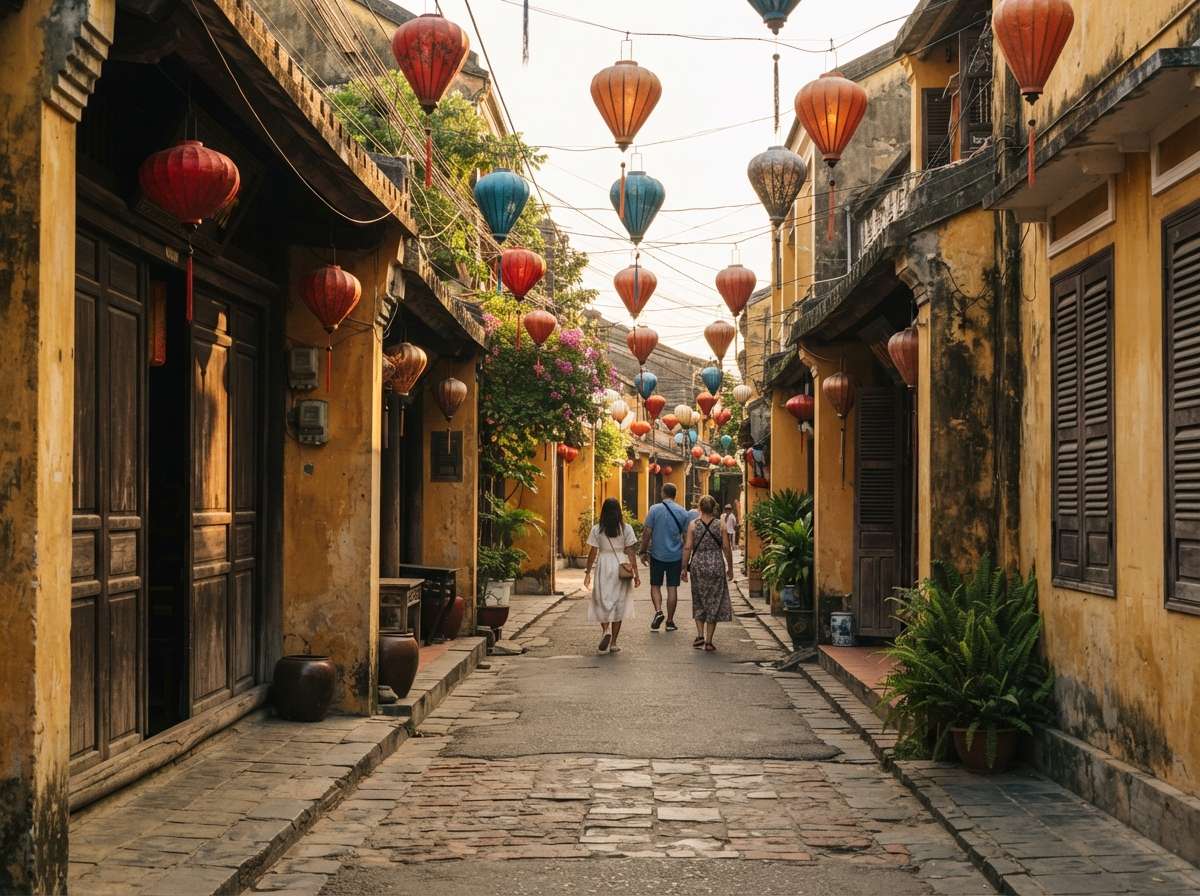
These 13 picks run best first, weighing reliable weather against what summer adds. For the full country list, see our guide to places to visit in Vietnam.
Da Nang and Hoi An
Best from April to July, and still fine in August. My Khe Beach fills the mornings, and Hoi An’s Ancient Town is at its best after 4 pm, with An Bang Beach nearby. See things to do in Da Nang and places to visit in Hoi An. Domestic crowds peak at weekends.
Nha Trang
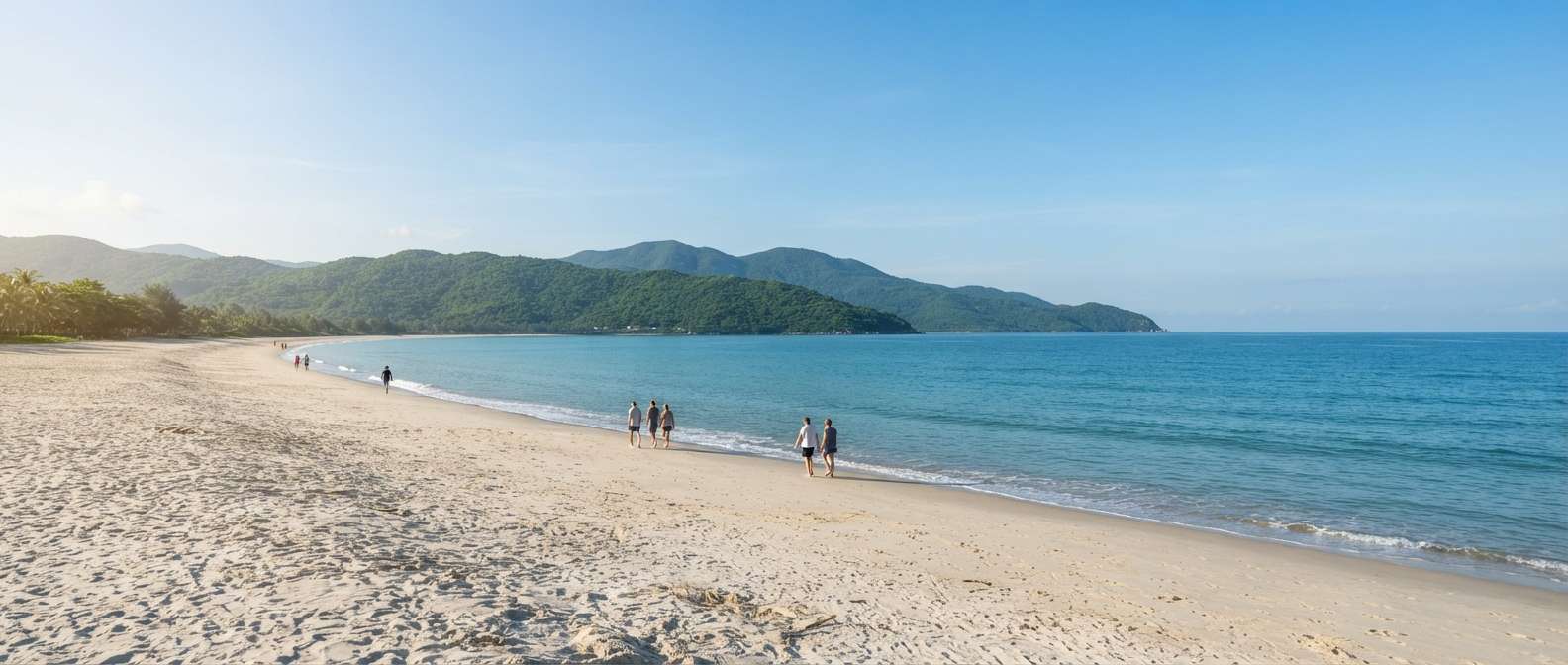
Best from April to August, and the mildest heat of the dry beaches. Come for island boats, Po Nagar Tower at 4 pm and VinWonders with children. Compare the coast in our best beaches in Vietnam guide.
Quy Nhon
Best from April to August, with heavy-rain days at 0.1 to 0.2 a month. It is quieter than Da Nang and hotter than Nha Trang, so it suits couples more than young children.
Hue
Best in April or July. Reach the Imperial City at opening time, see the tombs by car, and rest in the middle of the day. See things to do in Hue.
Phong Nha
Best in June and July, when the Dong Hoi station shows its most rain-free days. Caves solve the midday heat, and Paradise Cave stays cool all day. Son Doong runs only with Oxalis Adventure, in a season that usually ends in August, with about 1,000 places a year, so book well ahead and check current dates.
Hanoi
Best in May. Go to West Lake at dawn in lotus season and keep indoor plans for storm hours. Afternoons are the hard part.
Ninh Binh
Best in May to early June, when the Tam Coc harvest turns the fields gold. Bai Dinh Pagoda and Ninh Binh‘s cave boats suit a morning. Check that boats are running, because Trang An closed twice in 2026.
Ha Long Bay
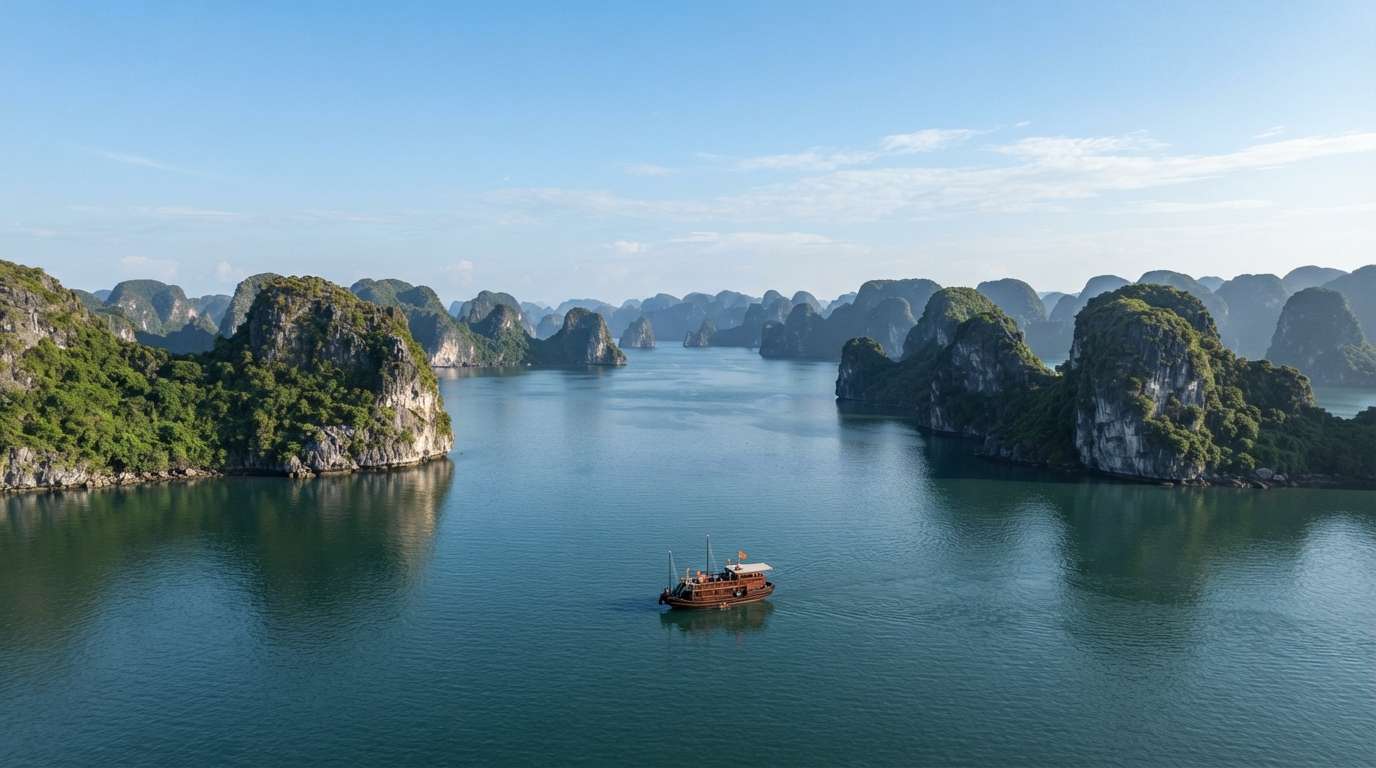
Best in May and June. A night on board starts from about ₹13,000 a person, on VietnamSpot’s 2026 list. Our cruise packages show current options. Keep a free day later in the trip, and avoid August if you can.
Sapa and Mai Chau
Best in April for views and late May to June for flooded terraces. Sapa is the coolest stop on this list, and the Fansipan cable car is worth it only on a clear day. See things to do in Sapa. Mai Chau is the quieter option for cycling through rice fields and homestays. It has no station of its own, so check the forecast.
Da Lat
Best in April and May, and the coolest escape in the south. Walk around Xuan Huong Lake in the morning and keep afternoons for cafes, as rain usually arrives later in the day.
Con Dao
Best in April, with turtle tours through the national park from about June. Fly in, keep a buffer day, and remember that sightings are never guaranteed.
Ho Chi Minh City and the Mekong Delta
Best in April for dry days, and fine after that with a morning plan. Showers are short, the museums are indoors, and the Mekong Delta is green. Take the early boat.
Phu Quoc
Best in April, and last here for May to August. It is a good island in the wrong season for a beach holiday. Treat a summer stay as a resort rest, not a snorkelling trip. Read our Phu Quoc Island guide for the dry-season plan.
A 7-Day Summer Route From India

Pick the version that matches your month. Both keep the last day spare, but both are fast, with two domestic flights and three or four hotel changes. Each also has about 11 to 13 hours on the road across the week. To slow down, drop Ninh Binh from the first or Hue from the second, or keep to the north or the centre alone.
| Day | May to June | July to August |
|---|---|---|
| 1 | Arrive Hanoi, Hoan Kiem Lake in the evening | Arrive Hanoi, Hoan Kiem Lake in the evening |
| 2 | Drive to Ninh Binh, boats, night there | West Lake at dawn, fly to Hue |
| 3 | Early drive to Ha Long, overnight cruise | Imperial City at opening, tombs by car |
| 4 | Morning on deck, drive to Hanoi, evening flight to Da Nang, night in Hoi An | Road over the Hai Van Pass to Hoi An |
| 5 | Hoi An Ancient Town after 4 pm | My Son at first light, old town at dusk |
| 6 | My Son at first light, evening flight to Hanoi or Ho Chi Minh City | My Khe Beach in the morning, evening flight to Ho Chi Minh City |
| 7 | Spare day in the city you fly from, late flight home | Spare day in Ho Chi Minh City, late flight home |
The July to August version drops Ha Long and flies home from the south on purpose, away from the storm track. If you want flights, hotels and transfers on one quote, our 7-day Vietnam tour package covers Hanoi, Ha Long and Ho Chi Minh City instead, and families can look at our Vietnam family packages.
Cost of a Summer Trip in Rupees
Plan on ₹2,500 to ₹7,000 a person per day on the ground. Figures use ₹1 to about 270 VND, with sample prices from VietnamSpot’s 2026 list and current flight listings.
| Travel style | Per day | 7 days on the ground | Week with international flights and visa |
|---|---|---|---|
| Budget | ₹2,500 to ₹4,000 | ₹17,500 to ₹28,000 | From about ₹42,000 |
| Mid-range | ₹4,000 to ₹7,000 | ₹28,000 to ₹49,000 | About ₹75,000 |
| Comfort | ₹10,000 and up | ₹70,000 and up | About ₹1,00,000 and up |
Return flights run about ₹22,000 to ₹55,000 and the e-visa is US$25 (about ₹2,400). An overnight Ha Long cruise adds about ₹13,000.
These totals leave out the two domestic flights on our route, so price those separately. Indian school-break dates are the first to sell, so book those flights early. In 2026 the break ran about 11 May to 30 June in Delhi, 2 May to 15 June in Maharashtra and 4 to 28 May in Karnataka. Check your own school’s 2027 calendar.
What to Pack and Tips for Indian Travellers

Pack for your hottest stop and add one layer for your coolest.
| Region | Pack |
|---|---|
| Sapa, Da Lat | Light fleece, rain jacket, shoes with real grip |
| Hanoi, Ninh Binh, Ha Long | Cotton shirts, compact umbrella, sandals that can get wet |
| Hue, Hoi An, Da Nang, Phong Nha | Loose linen, wide hat, SPF 50, water shoes for caves |
| Nha Trang, Quy Nhon | Swimwear, rash vest, reef-safe sunscreen |
| Ho Chi Minh City, Mekong, Phu Quoc | Light cotton, poncho, insect repellent |
Temples ask for covered shoulders and knees, and strict sites want real sleeves, not a scarf over bare shoulders, so keep a T-shirt in your day bag. Take off shoes and hats before entering a main hall.
Nonstop flights link Vietnam with Delhi, Mumbai, Kolkata, Ahmedabad, Bengaluru, Hyderabad and Kochi, and our page on how to reach Vietnam lists the routes. Indian passport holders need a visa, except for a stay of up to 30 days confined to Phu Quoc. The official e-visa portal charges US$25 for a single entry, so apply a week ahead and see our Vietnam visa for Indians guide.
Vegetarians can say “tôi ăn chay” and look for “cơm chay” signs, and should ask about fish sauce in broths. Jain travellers should also ask about garlic and onion, or use the Indian restaurants in Vietnam we list. Carry some US dollars to change in the city, and install Grab for taxis.
How We Built This Guide
Monthly highs, rain, rain-free days and heavy-rain days come from Vietnam’s building code, the same source as our other Vietnam month guides, so months compare fairly. Station averages are not forecasts, and nearby towns can differ. Hot-day counts are model estimates, and the storm table comes from Vietnamese press and international reports. Lunar dates are our calculation. Prices are 2026 figures, so use them as a guide. An older version of this page said the mercury stays under 35 °C, that July should be avoided and that Phu Quoc suits summer. All three are corrected here.
Plan Your Summer Trip to Vietnam
Vietnam in summer rewards a route built around the weather. Choose April if you want the whole country, May or June if the north matters, and July or August if you can stay on the central coast. Keep one day spare, and take the heat in the morning and evening. If you would like hotels, transfers and a cruise arranged around those months, our Vietnam tour packages can be built that way, and our Vietnam tourism guide covers the rest of the country.
FAQs
Vietnam in Summer: Frequently Asked Questions
Quick answers on weather, heat, typhoons, beaches, families and costs for Indian travellers
Yes, if you choose your region. The central coast from Hue to Nha Trang is hot and mostly dry from June to August, with about 20 to 25 rain-free days a month. The north is wet but workable, as Hanoi has about 15 rain-free days a month. The south is in its rainy season from May, and Phu Quoc is the one stop to avoid for a beach week.
May is the best all-round month if your route includes the north and the centre. Ha Long has about 20 rain-free days, Hanoi about 17 and Da Nang about 22, and rain in the south has only just begun. Choose April if you want Phu Quoc, and July for a central coast trip.
It depends on altitude. Lowland stops average daytime highs of 30 to 35 °C from May to August, with Hue at 34.7 °C in June and July, Hanoi at 33.4 °C and Phu Quoc near 30 °C. Sapa and Da Lat stay near 23 °C. The highest readings in the building code are far above that, at 41.8 °C in Hanoi and 41.3 °C in Hue, and humidity makes afternoons feel hotter.
Not if you are coming from Delhi. New Delhi's normal May high is 39.9 °C, against 31.9 °C in Hanoi and 33.3 °C in Da Nang. Vietnam is far more humid, though, so it does not feel 8 °C easier. Against Mumbai, at about 34 °C in May, Vietnam's lowlands feel much the same. Sapa and Da Lat are the true escapes from Indian summer heat.
No. Hanoi has about 15 rain-free days a month from June to August, and Da Nang about 20 to 22. Sapa is the wettest pattern, with about 6 rain-free days in July. In the south, Can Tho has about 11, but rain there often comes as a short afternoon shower, so the morning usually stays free.
Yes, on the central coast. Da Nang gets 93 mm of rain, Nha Trang 42 mm and Quy Nhon 44 mm, with about 22 to 25 rain-free days. July is harder in Sapa and Phu Quoc, which have the wettest patterns of the month. Hanoi works with a morning plan. Keep a spare day, because storms such as Wipha and Maysak hit the north in July.
Yes on the central coast, less so in the north. Da Nang gets 141 mm with about 20 rain-free days, and Nha Trang only 52 mm. Ha Long has its worst summer month, with 431 mm and 2.6 days of 50 mm or more, and Hanoi reaches 309 mm. Keep a spare day, because Kajiki, Nongfa and Narra all came in late August.
Not in the north or on the central coast. Hanoi's normal high is about 28 °C and Da Nang's 31 °C. The south is the hot end, with Ho Chi Minh City near 34.5 °C, and a forecast for 2027 warns of 35 to 38 °C there. Keep midday indoors in the south.
Yes, on the central coast. Nha Trang records almost no heavy-rain days from June to August, Quy Nhon only 0.1 to 0.2 a month, and Da Nang under 1 a month. Avoid Phu Quoc and Mui Ne in these months. Vietnamese schools are out, so central beach hotels fill at weekends. Book early and use weekdays where you can.
Not for a beach holiday from May to September. July has 419 mm of rain, about 9 rain-free days and 2.4 days of 50 mm or more, the highest count of the 14 stops with heavy-rain data. April is the exception, with 148 mm and about 18 rain-free days. If you do go in summer, treat it as a resort rest and expect cancelled boat trips.
Yes, and May and June are the best months. August is the weakest, with 431 mm of rain and 2.6 days of 50 mm or more. Authorities stop boats when a storm nears, as they did for Maysak in July 2026, and a sudden squall capsized the Vinh Xanh 58 in July 2025, killing 39 people. Choose written change terms, wear the life jacket and leave a day before your flight home.
Plan for them, but do not cancel over them. Most trips never meet one, and a storm usually disrupts a region for a few days. July and August risk sits mainly in the north and north-central coast. Leave one spare day, keep the cruise early in the route, check the national forecast 72 hours out, and buy insurance when you book.
Yes, especially from May to mid-June, which fits most Indian school breaks. Nha Trang has the mildest heat of the dry beaches, and Da Nang has the most to do. Keep outings before 10 am and after 4 pm, book reliable air conditioning, and limit the trip to two regions. Skip long trekking days in Sapa with young children, as trails are muddy.
Yes, for a tight week. That needs a return fare under about ₹25,000, the e-visa at about ₹2,400 and about ₹3,000 a day on the ground, for a total of about ₹48,000. It covers guesthouses, street food and buses but not an overnight cruise. A mid-range week with flights is closer to ₹75,000, and beach hotels cost more in the June to August domestic peak.