
 7D / 6N
8% OFF


How Many Temples Are in Padangbai?
There are at least 11 temples in Padangbai, not the four you often see listed. The ones worth your time sit together on the small headland east of the harbour, where Pura Silayukti marks the 11th-century home of the priest Mpu Kuturan. You can walk there from the ferry port in about 20 minutes and see all five headland shrines in an hour. The famous bat-cave temple, Pura Goa Lawah, is 7.9 km west by road, just over the border in Klungkung.
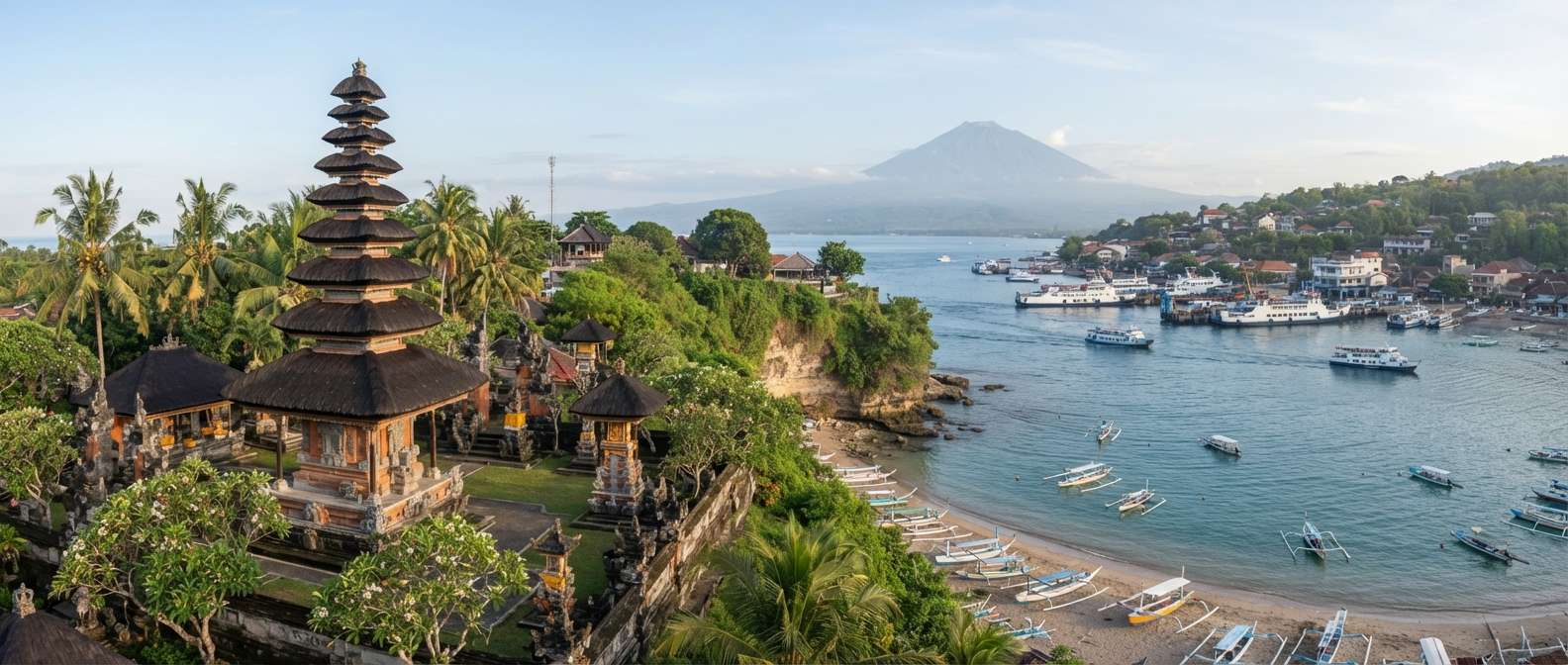
Padangbai is a fishing village and ferry port in Manggis district, Karangasem, about 56 km from the airport. Most visitors pass through on the way to Lombok, the Gilis or Nusa Penida and never look past the jetty. That is a pity, because the village has one of the oldest temple sites on Bali sitting above its bay. This guide runs in order of distance from the harbour. It starts with the five shrines on the Silayukti headland, moves to three temples in town, and ends with Goa Lawah and the Candidasa temples down the coast. For temples elsewhere on the island, see our guide to Bali temples.
Key takeaways
- Walk about 1.3 km east along Jalan Silayukti from the ferry jetty to reach Pura Silayukti. It takes 15 to 20 minutes, and the whole headland loop with all five shrines fits in 75 to 90 minutes.
- Bring your own sarong and sash for the headland. There is no ticket booth there, and entry is free.
- Pay IDR 30,000 (about ₹160) in cash at Goa Lawah, sarong and sash included. Arrive by 5.30 pm, before the 6 pm close, to see the bats stir.
- Plan for the Silayukti odalan on Wednesday 17 February 2027. Pilgrims from all over Bali come, and cars fill the pier car park.
- Skip Besakih and Lempuyang if you only have a ferry wait. Each is about 40 km and an hour or more away.
Temples in Padangbai at a glance
| Temple | What it is | Distance from the harbour | Entry (foreign adult) | Time to allow |
| Pura Silayukti | Dang Kahyangan temple of Mpu Kuturan, 11th century | About 1.3 km, 15 to 20 min walk | Free, small donation | 20 to 30 min |
| Pura Peyogaan | Cave shrine below Silayukti | Steps down from Silayukti | Free | 10 min |
| Pura Telaga Mas | Temple joined to Silayukti by a path | Beside Silayukti | Free | 5 to 10 min |
| Pura Tanjung Sari | Shrine of Mpu Baradah | About 100 m south of Silayukti | Free | 10 min |
| Pura Tirta Segara Muncar | Water temple at sea level on the tip | End of the headland | Free | 10 min |
| Pura Penataran Agung | Village temple linked to Dang Hyang Nirartha | 0.4 km, 5 min walk | View from the gate | 10 min |
| Pura Dalem | Temple of the dead | 0.2 km, 3 min walk | View from the gate | 5 min |
| Pura Segara and the village temples | Beach temple plus Pesamuhan, Mumbul and Puseh | Under 1 km | View from the gate | 10 to 20 min |
| Pura Goa Lawah | Bat-cave temple, one of Bali’s Sad Kahyangan | 7.9 km, 12 to 15 min drive | IDR 30,000 incl. sarong | 45 min |
| Candidasa temples and Tenganan | Hilltop and lagoon temples, old Bali Aga village | 13 to 19 km, 20 to 35 min drive | Free to small donation | Half a day |
Fees are the 2026 foreign-adult rates and change often, so check at the gate. Rupee figures use IDR 190 to ₹1. Drive times assume a car or scooter from the harbour with no ceremony traffic.
Indonesia
Bali
Temples in Padangbai, Bali: Silayukti, Goa Lawah and a Walk from the Ferry
Best Time
May - September
Select Package Type
Best Selling Packages


10 Temples In And Near Padangbai
The list starts with the five shrines on the Silayukti headland east of the harbour, moves into Padangbai town for Penataran Agung, Pura Dalem and Pura Segara, and ends with Goa Lawah and the Candidasa temples down the coast. After them come Besakih and Lempuyang as day trips, the headland walk from the ferry, temple etiquette, ceremony dates, a half-day route, how we checked this guide and the FAQ
Explore Popular Destination In Bali
01
Pura Silayukti
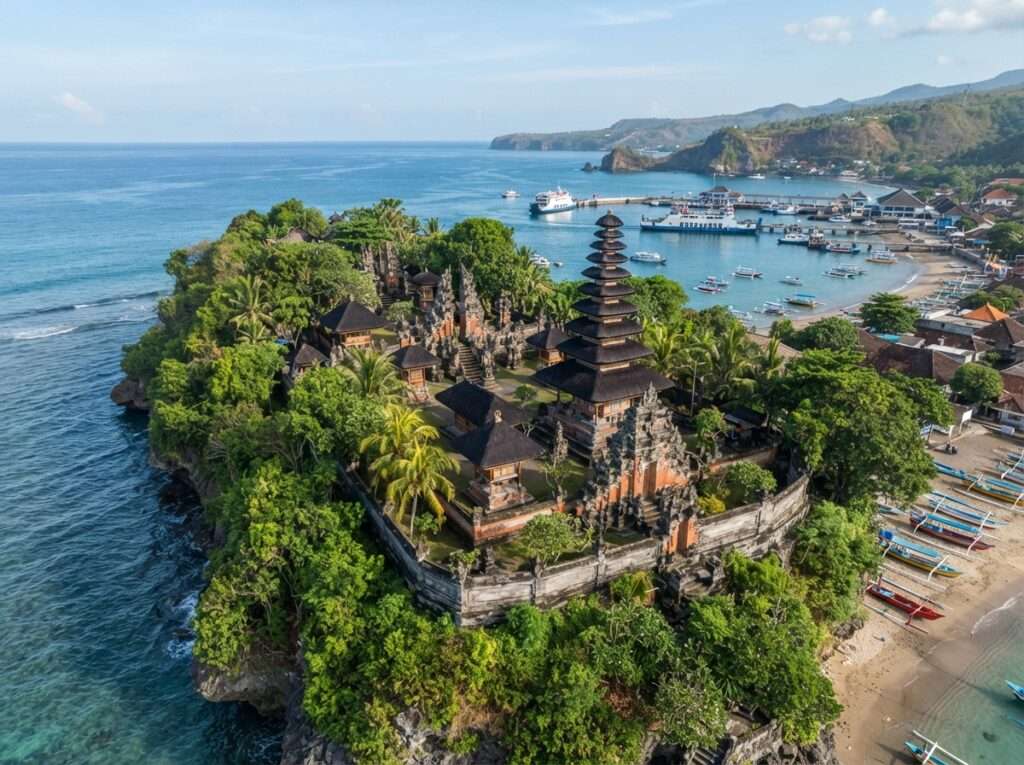
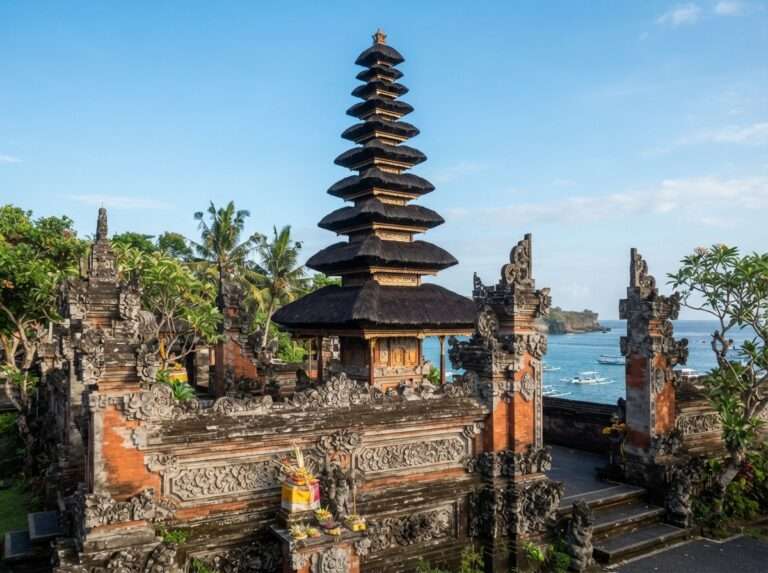
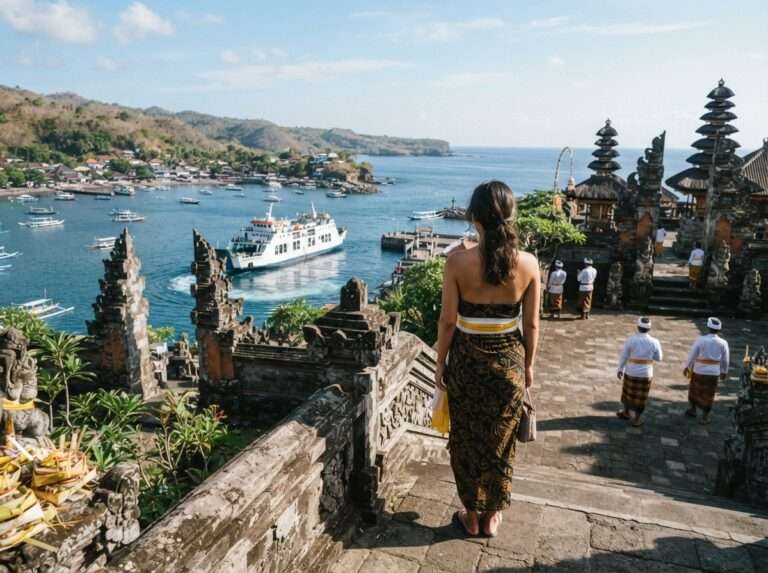
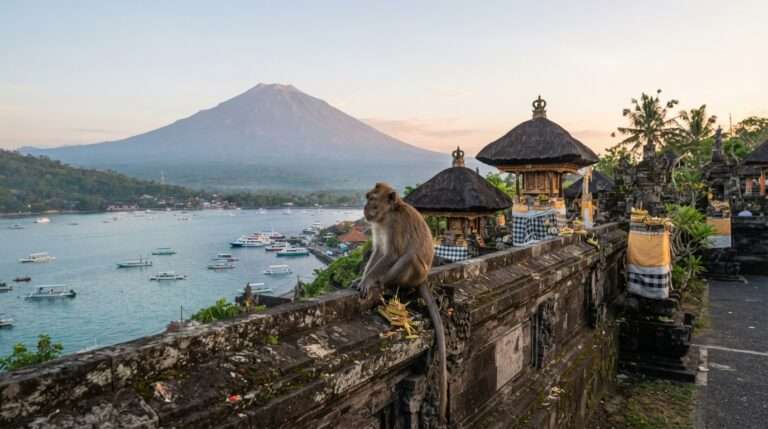
Pura Silayukti, also called Pura Luhur Silayukti, is the reason Padangbai matters to Balinese Hindus. Tradition holds that Mpu Kuturan, the Javanese priest who reshaped Bali’s religious life in the 11th century, lived and meditated here and reached moksha, release, on this hill. He is credited with the system of three village temples that every Balinese village still keeps, and Wikipedia’s article on Padangbai says he brought the caste system to the island. The Balinese culture site budayabali makes a point most guides miss. “Mpu Kuturan” is a title, not a personal name. The man who held it is remembered as Mpu Rajakerta.
The name breaks into two Sanskrit words, sila (foundation) and yukti (what is true). Those who pray here are meant to keep to the true teaching. Inside the walls you will see a meru, the tiered shrine tower, set against the sky above Padangbai bay. From the outer courtyard you look west over the harbour, with the Lombok ferries swinging in and Mount Agung behind the village on a clear morning.
Be honest with yourself about what you are visiting. This is a working temple, not a monument. The architecture is modest, and a careful look takes 20 to 30 minutes. What makes it special is the age of the site and the view. Long-tailed macaques live on the headland, so keep food in your bag and sunglasses off your head. On odalan days, pilgrims come from all over Bali for a festival that runs about four days, and the priest may offer you a sprinkle of holy water if you are dressed properly.
| What it is | A Dang Kahyangan temple honouring Mpu Kuturan, dating from the 11th century |
| Where | On the hill at the east end of Jalan Silayukti, above the sea |
| From the harbour | About 1.3 km, a 15 to 20 minute walk or 5 minutes by scooter |
| Entry | Free. Leave IDR 10,000 to 20,000 in the box if there is one |
| Hours | Daylight hours. There is no posted timetable or ticket booth |
| Odalan | Buda Kliwon Pahang, every 210 days. Next: 17 February 2027 and 15 September 2027 |
Related Tour Packages


❮
❯
02
Pura Peyogaan Cave Shrine
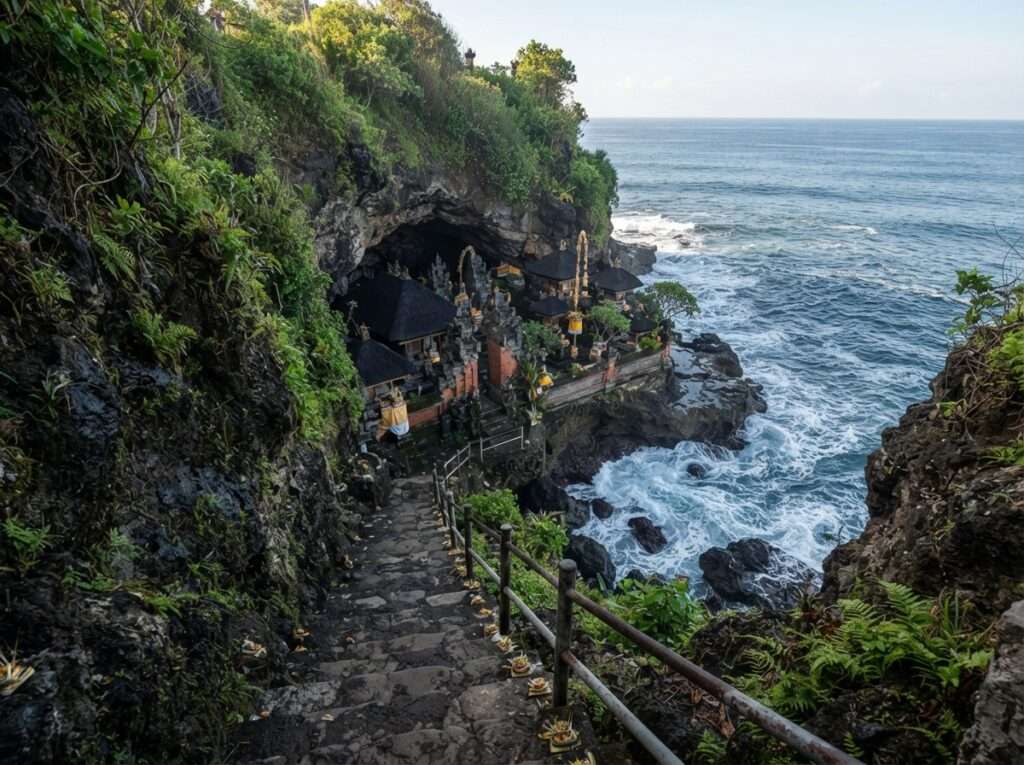
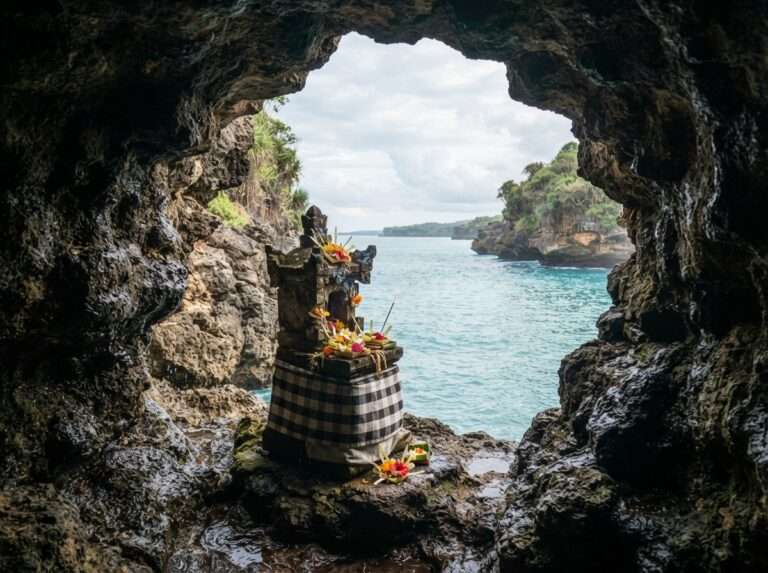
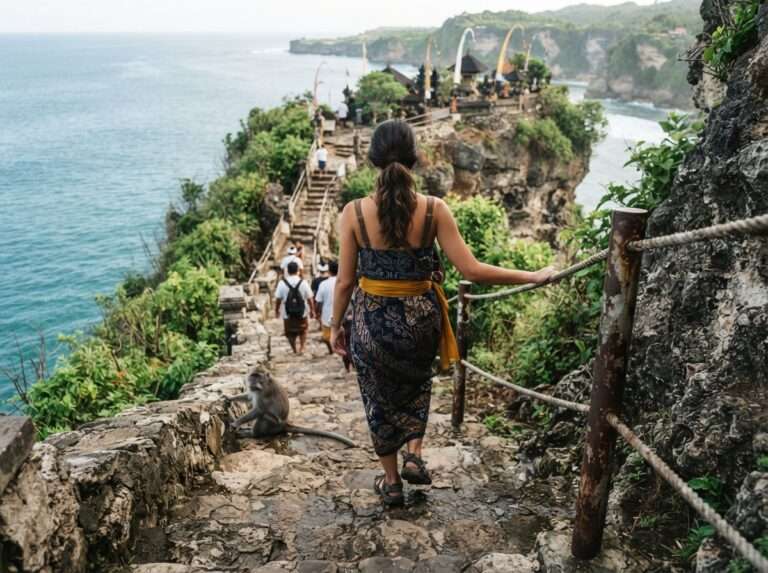
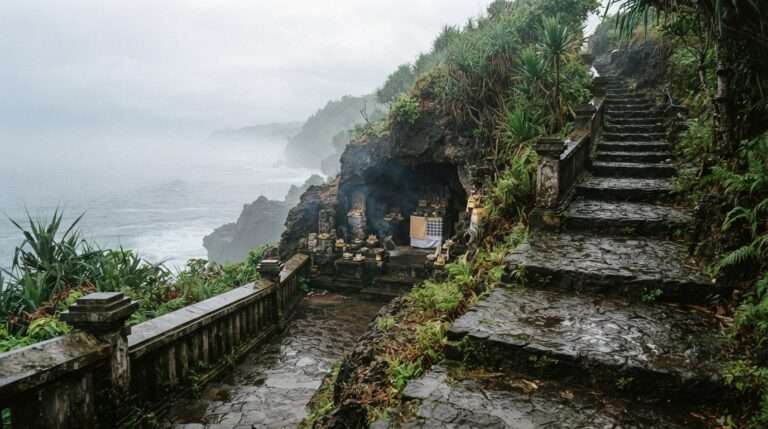
Pura Peyogaan is the shrine most visitors walk straight past. An easy-to-miss staircase drops from the Silayukti side of the hill to a small cave in the cliff face, where a shrine is set into the rock above the water. The name comes from the same root as yoga. It is read as the place where Mpu Kuturan withdrew to meditate, which makes it the quietest stop on the headland.
Go down only in shoes with grip, and hold the rail where there is one. The steps are worn and damp in the wet season (November to March). You will not go inside the shrine itself. Stand at the entrance, take in the sea view, and climb back up the way you came. The monkeys sit on this staircase, so carry nothing in your hands.
| What it is | A small shrine set in a cliff cave, used for meditation (yoga) |
| Where | Down a narrow staircase from the Silayukti compound, toward the sea |
| From the harbour | Part of the Silayukti visit, about 1.4 km |
| Entry | Free |
| Watch out for | Steep, uneven steps that are slippery after rain, and monkeys |
Related Tour Packages


❮
❯
03
Pura Telaga Mas
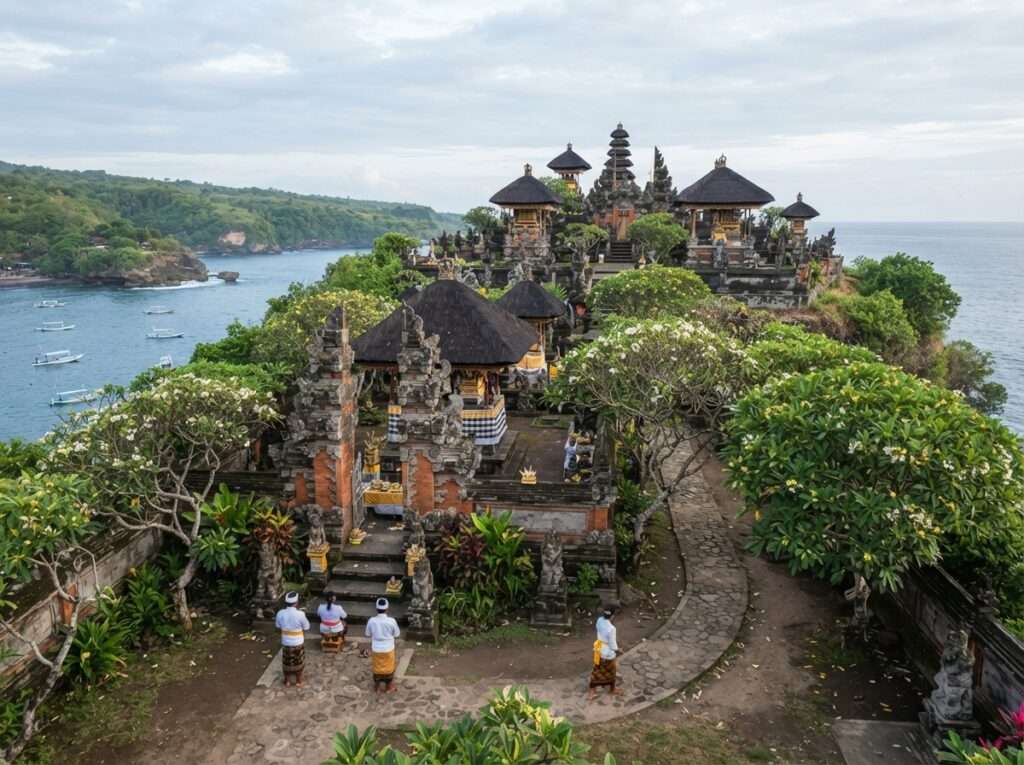
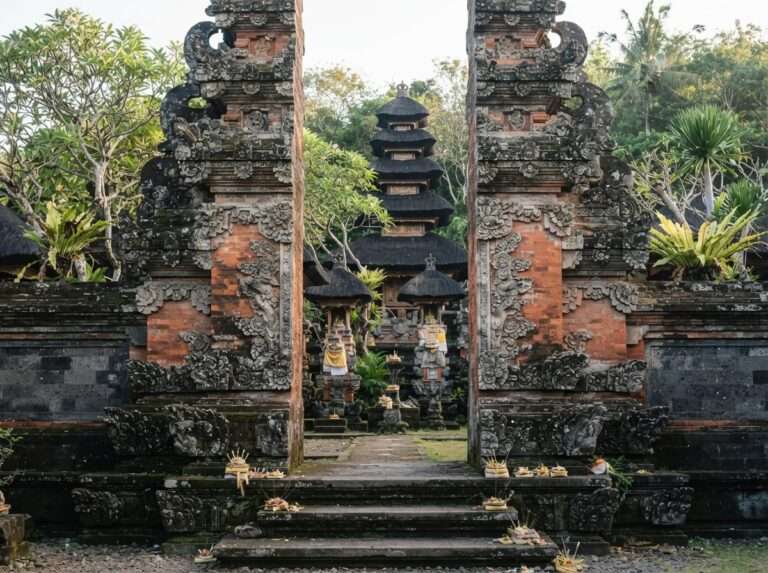
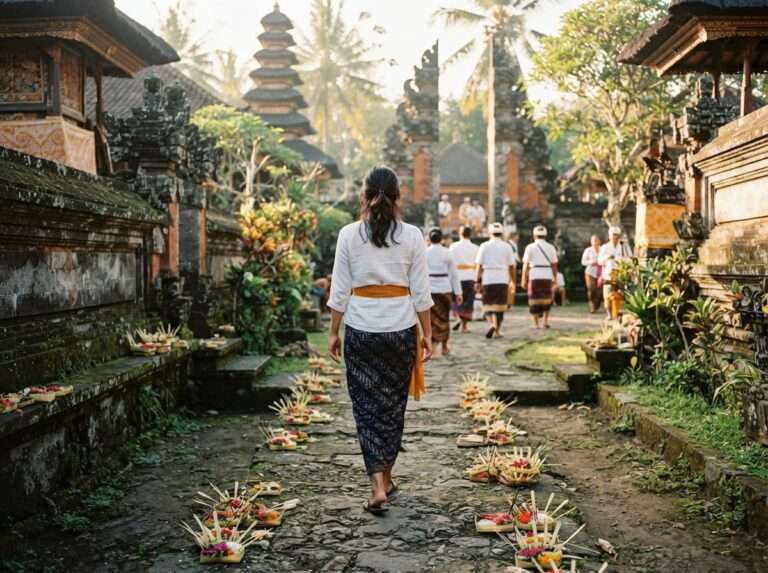
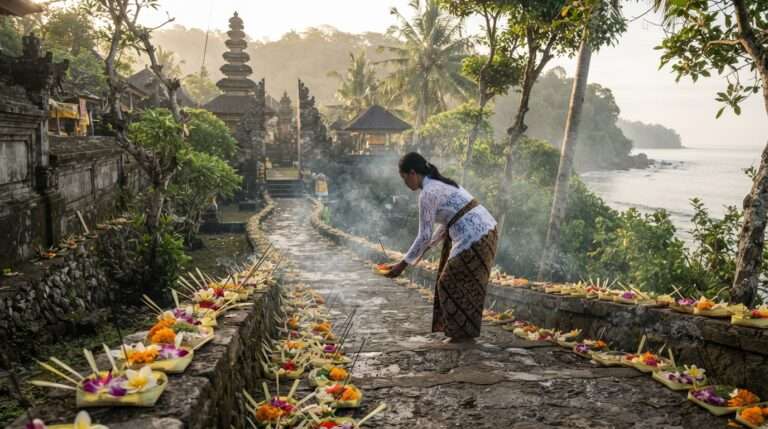
Pura Telaga Mas, “golden lake” in Balinese, sits immediately north of Silayukti, and a short path joins the two. Older guides describe it as standing behind Silayukti, so you pass it naturally as you circle the hill. It is a small walled compound with a split gate. Treat it as part of one visit to Silayukti rather than a separate trip. Pilgrims coming for the Silayukti odalan pray at Telaga Mas too, so on ceremony days the path between the two is lined with offerings. Walk around them, never over them.
| What it is | A temple directly beside Silayukti, linked to it by a path |
| Where | Immediately north of Pura Silayukti, on the inland side of the hill |
| From the harbour | About 1.3 km, reached before or after Silayukti |
| Entry | Free. View from the gate |
| Best time | Early morning, when offerings are laid |
Related Tour Packages


❮
❯
04
Pura Tanjung Sari, Padangbai
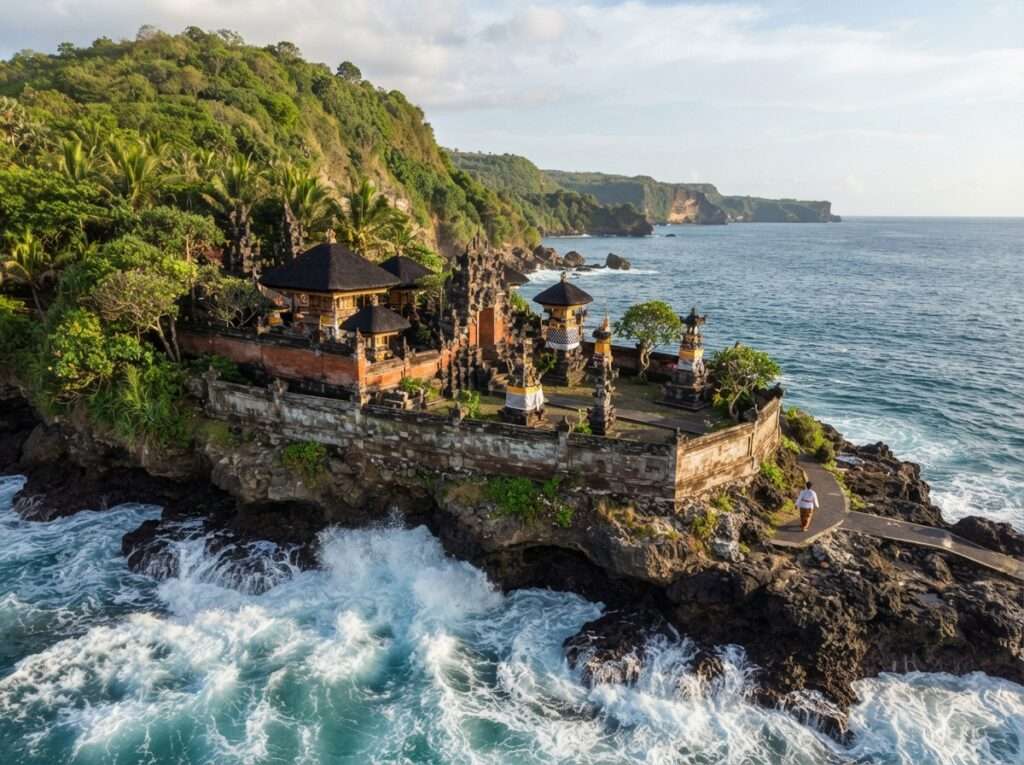
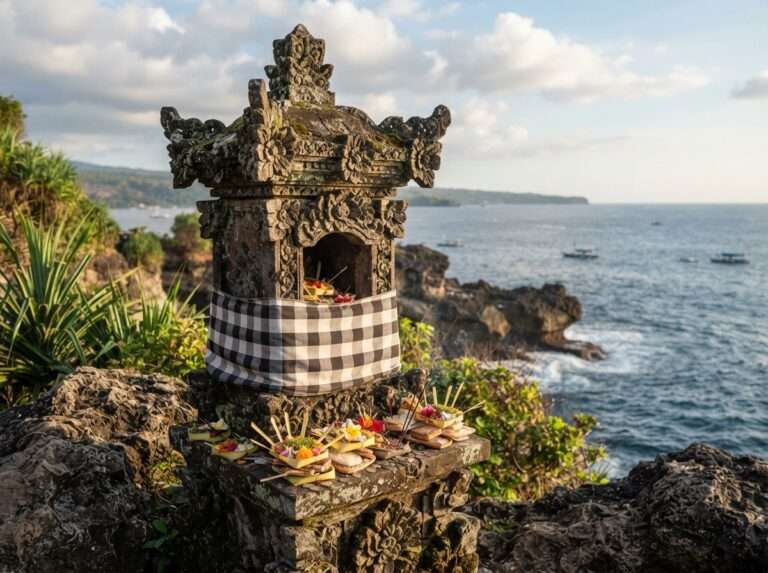
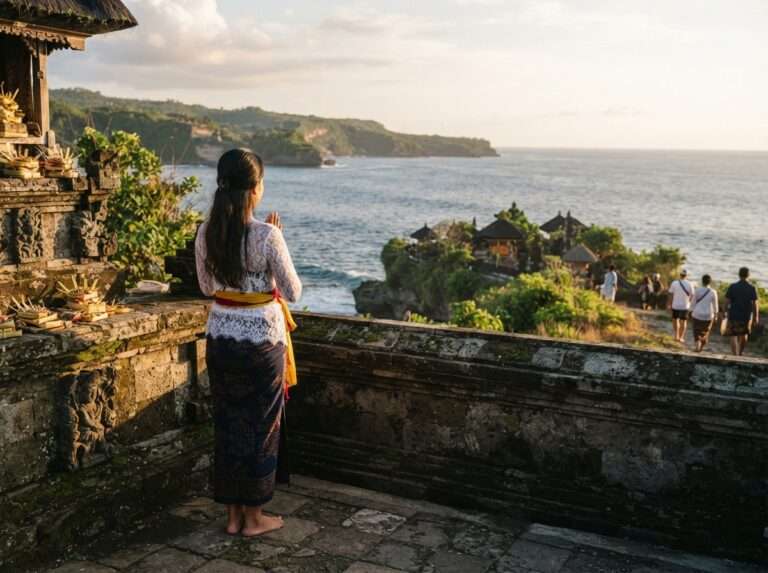
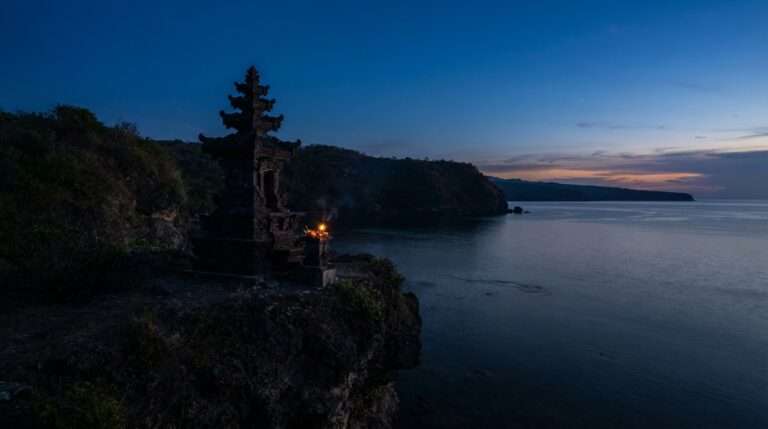
Pura Tanjung Sari stands on the point where the hill meets the sea, about 100 m south of Silayukti. It honours Mpu Baradah. As budayabali tells it, the East Javanese king Airlangga sent Mpu Baradah to Bali to ask Mpu Kuturan to install one of Airlangga’s sons as king of Bali. Kuturan refused, and the Warmadewa line kept the Balinese throne. The temple marks that meeting, and its piodalan on Buda Kliwon Matal commemorates Baradah’s arrival. A 2007 guide on baliblog calls Baradah Kuturan’s brother, which is how many locals tell it.
Not the Sanur temple of the same name. Sanur, about 40 km away by road, has a different and better-known Pura Tanjung Sari on its beachfront. If you landed here looking for that one, see our guide to temples in Sanur.
| What it is | A shrine honouring Mpu Baradah, the priest sent from Java to meet Mpu Kuturan |
| Where | At the southern foot of Silayukti hill, about 100 m from Silayukti, facing the sea |
| From the harbour | About 1.4 km |
| Entry | Free |
| Piodalan | Buda Kliwon Matal, every 210 days. Next: 24 March 2027 and 20 October 2027 |
05
Pura Tirta Segara Muncar
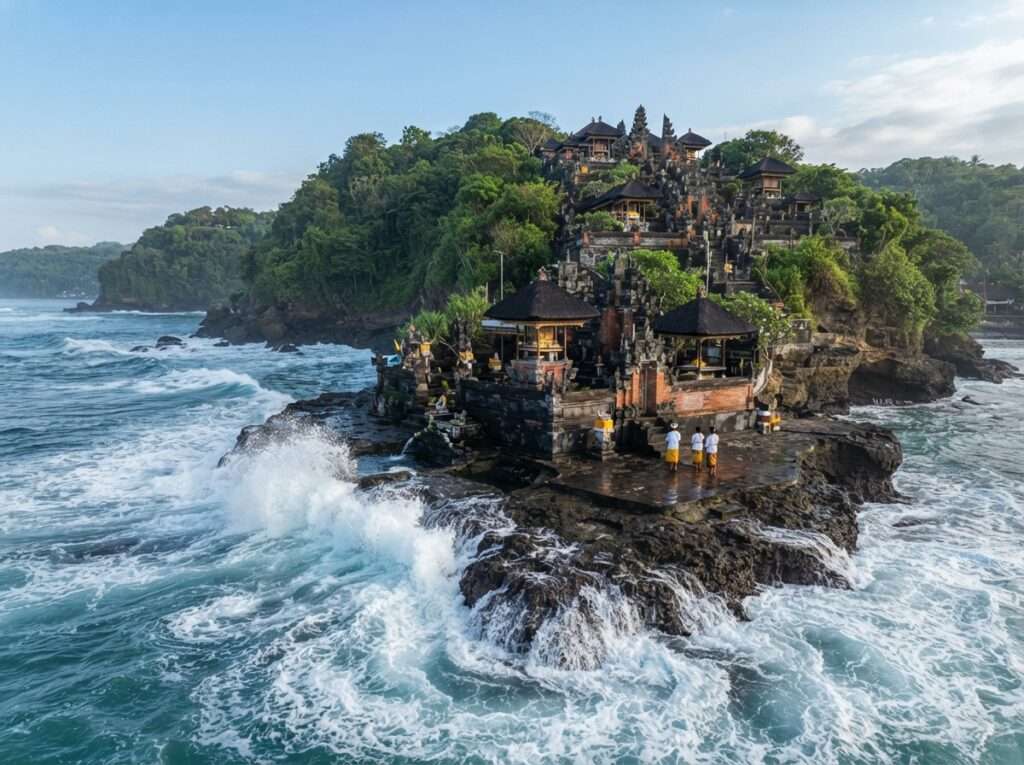
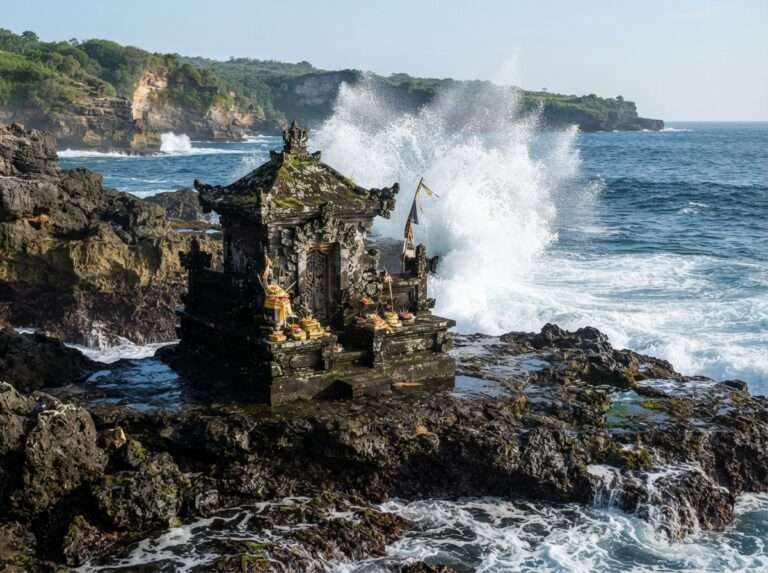
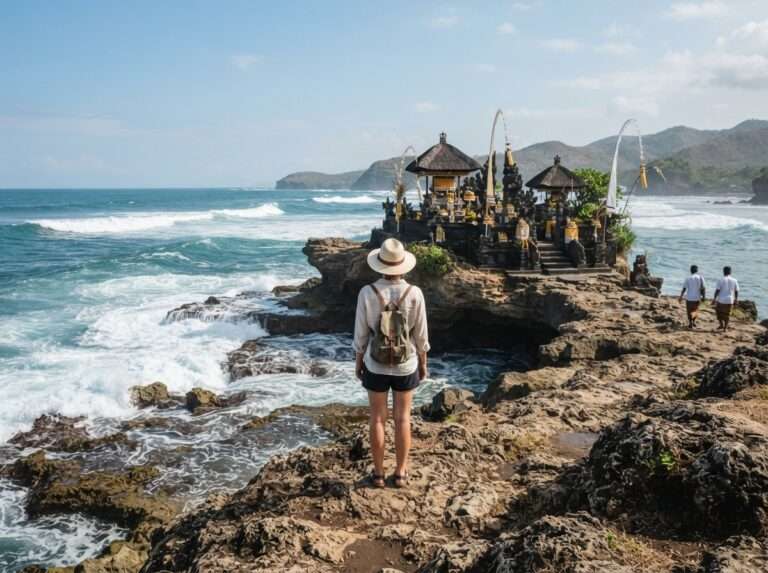
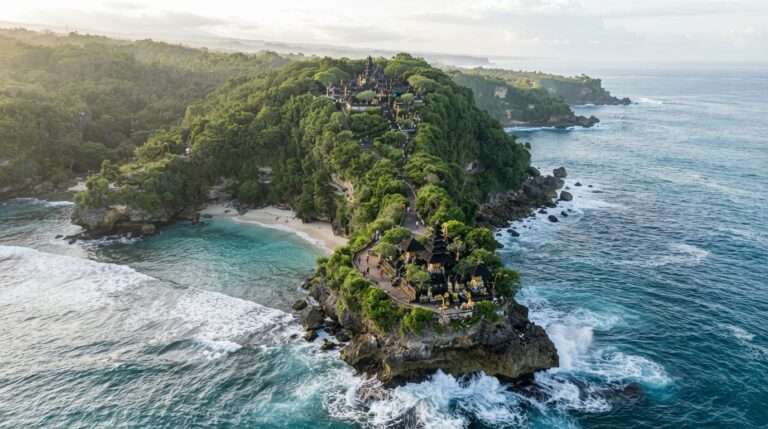
Pura Tirta Segara Muncar sits at the tip of the peninsula, almost at sea level. Tirta marks it as a water temple, a place for holy water, and segara means sea. It is the turning point of the walk and the best spot to stand and look back at the whole headland, with Silayukti above you and the Blue Lagoon cove just around the headland. The rocks here are wet and the swell comes in hard. Check the tide before you scramble down, and stay out of the inner area if a ceremony is on.
A 2007 account on baliblog describes a path from Silayukti to an ancient sea-facing shrine with a split gate, cloth-wrapped stones and a turtle-shaped stone coffin above the waves. We could not confirm that the coffin is still there. If you find it, look, do not touch.
| What it is | A water temple (tirta) at the very end of the headland |
| Where | At the tip of the Silayukti peninsula, close to sea level |
| From the harbour | About 1.5 km, the turning point of the headland walk |
| Entry | Free |
| Watch out for | Wet rock and waves at high tide |
06
Pura Penataran Agung Padangbai
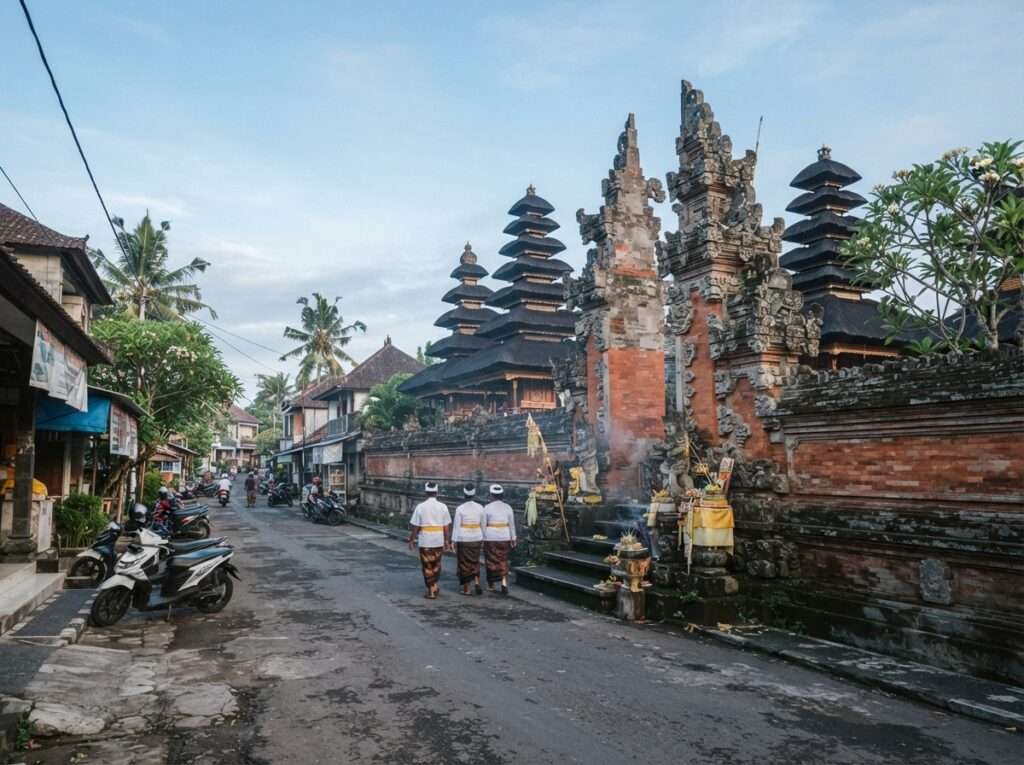
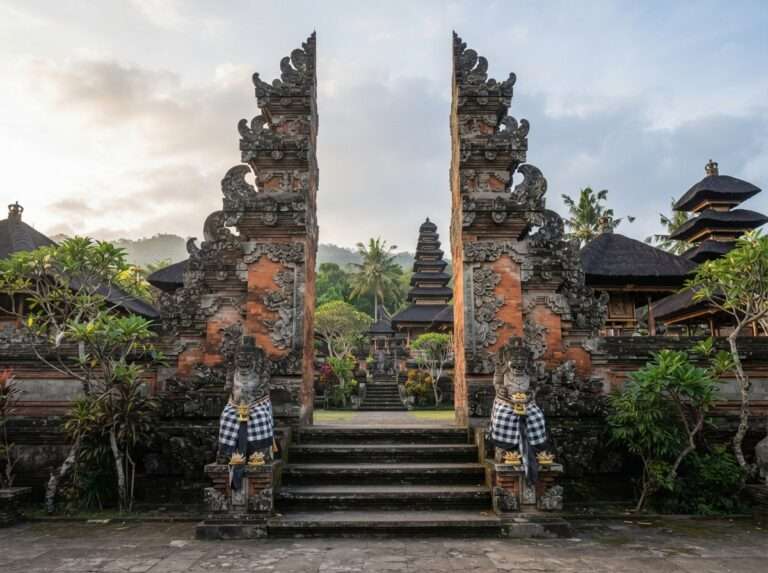
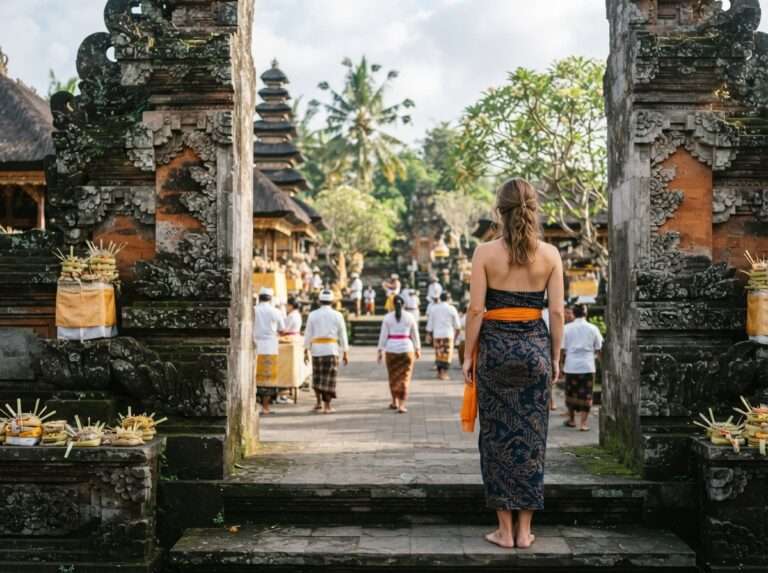
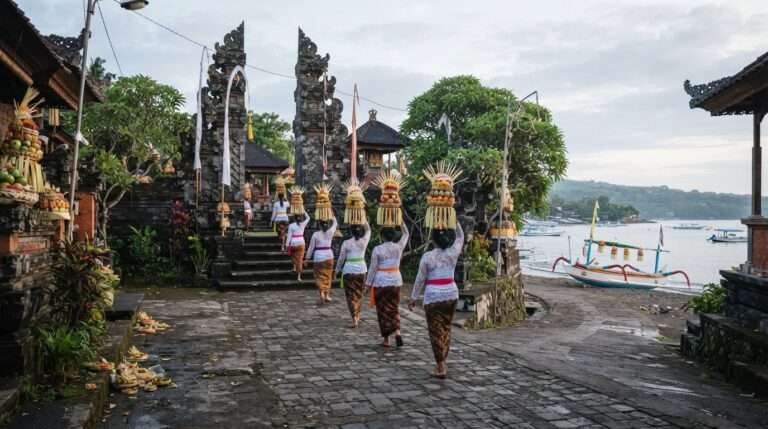
Pura Penataran Agung is the village’s own great temple, a short walk west of the ferry terminal. According to the Wikipedia article on Padangbai and a February 2026 essay on budayabali, it goes back to the 16th century and was founded by Dang Hyang Nirartha, the Javanese priest also known as Dang Hyang Dwijendra, who built or inspired Uluwatu, Tanah Lot and dozens of other Bali temples. For a port village, the more telling detail is who prays here. Fishermen and sailors came to ask Dewa Baruna, the god of the sea, for safe crossings. The temple is also said to keep a sacred link with Pura Penataran Ped across the strait on Nusa Penida.
You will usually see it from the street, and that is fine. Look for the carved gate and the tall shrines behind the wall. If the gate is open and someone waves you in, wear your sarong and stay in the outer courtyard.
| What it is | The main village temple (Pura Penataran Agung Desa Adat Padangbai) |
| Where | West of the harbour, off Gang Melanting Raya II |
| From the harbour | 0.4 km, a 5 minute walk |
| Entry | View from the outer gate unless invited in |
| Linked to | Dang Hyang Nirartha (16th century) and Pura Penataran Ped on Nusa Penida |
07
Pura Dalem Padangbai
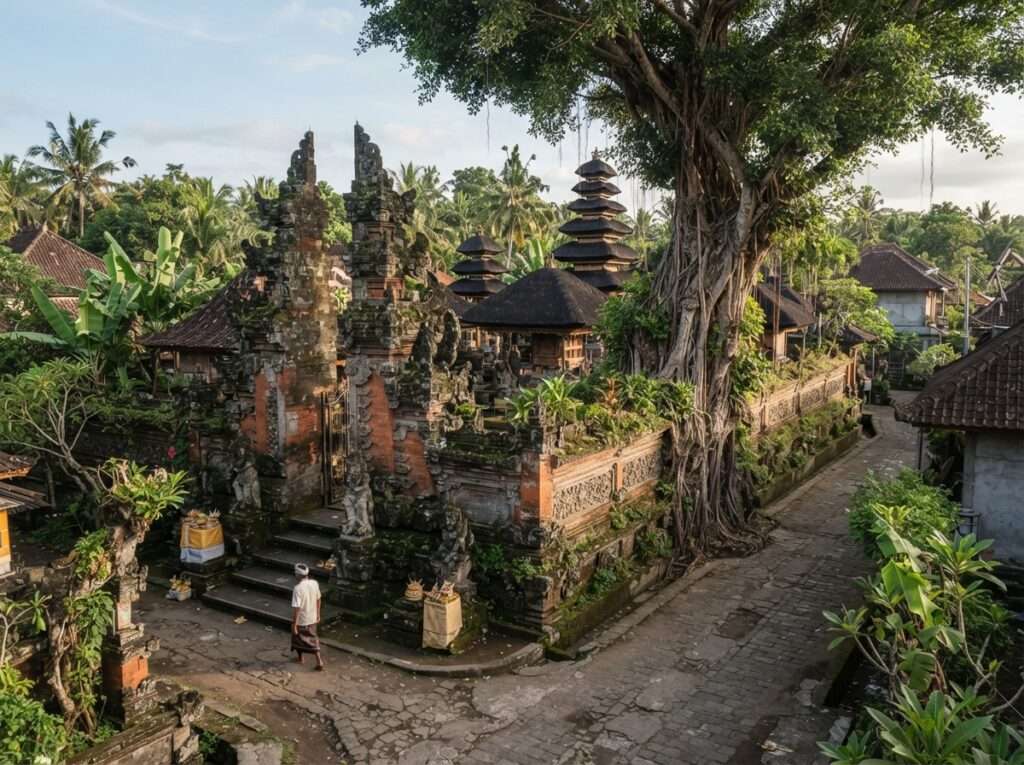
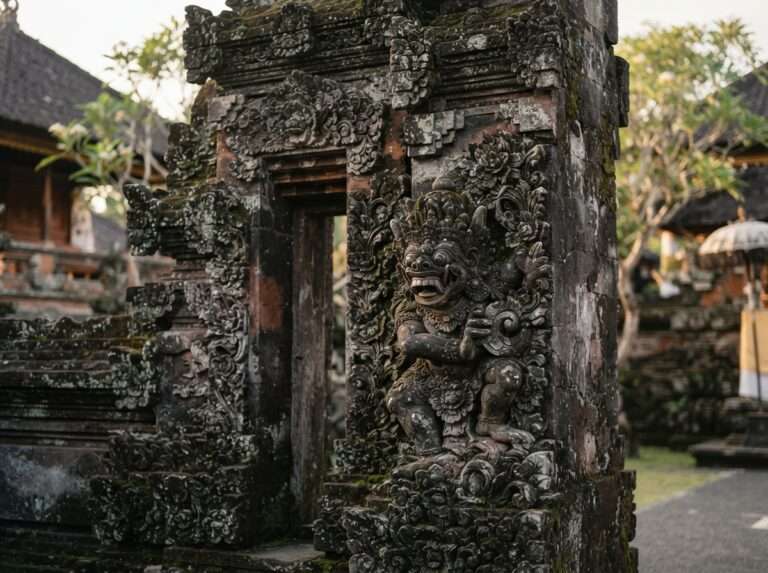
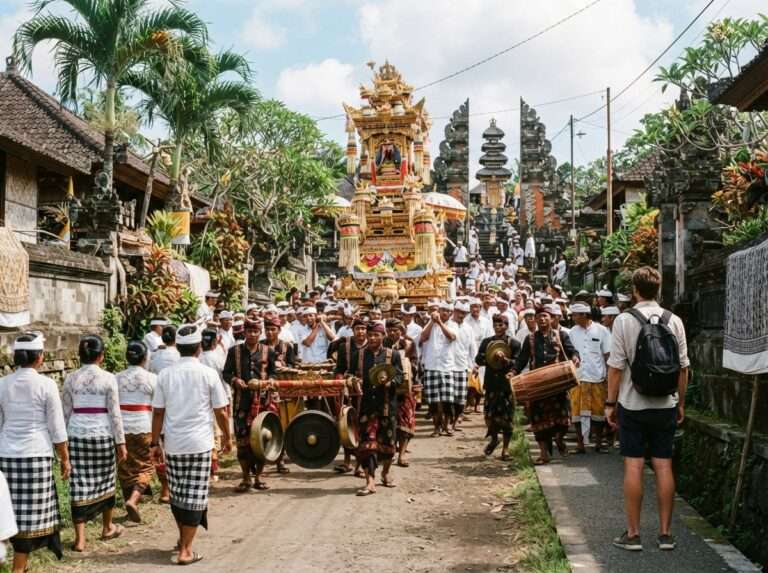
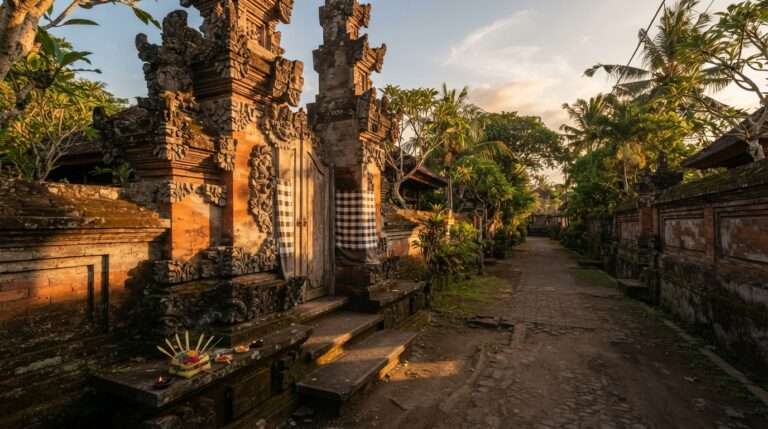
Every Balinese village has a Pura Dalem, the temple of the dead, dedicated to Shiva in his destroying form. Padangbai’s is a three- or four-minute walk from the jetty. It is where cremation ceremonies centre, and if you are lucky, or unlucky with your ferry delay, you may see a procession leave from here with a tall tower carried on shoulders, gamelan playing and the whole village following. Watch from the side of the road and let the procession pass. Do not walk into the middle of it for a photo.
| What it is | The temple of the dead, linked to the cremation ground |
| Where | In town, north of the harbour, on Gang Segara I |
| From the harbour | 0.2 km, a 3 minute walk |
| Entry | View from the road |
| You might see | A cremation procession, announced days ahead in the village |
08
Pura Segara And The Village Temples
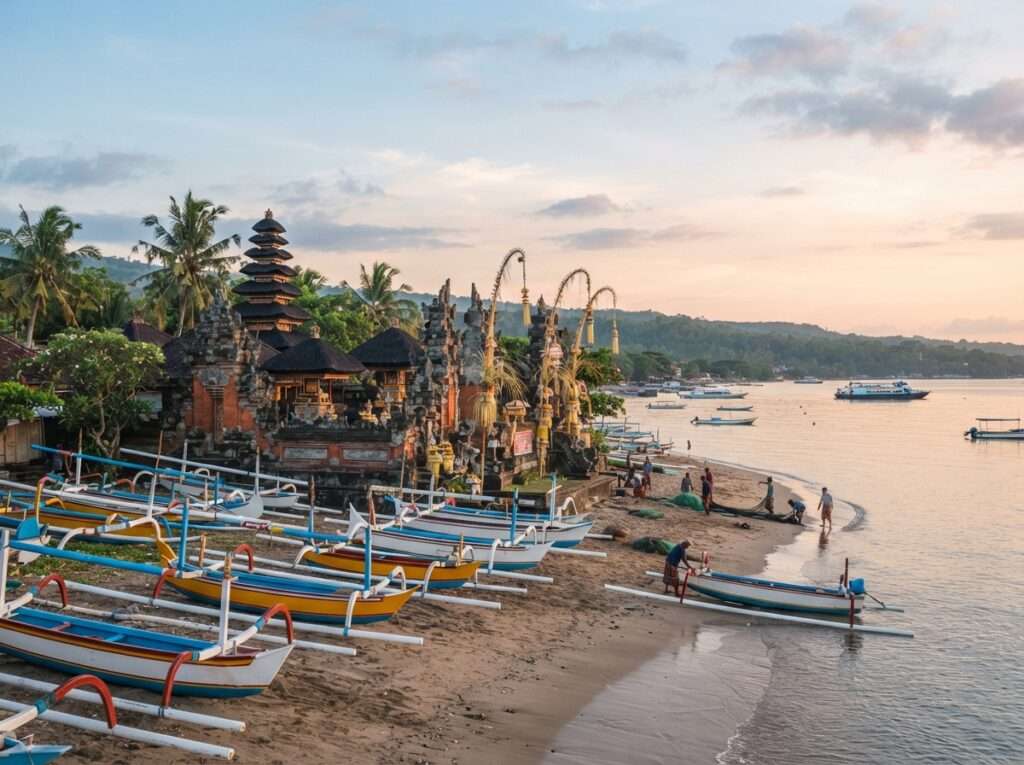
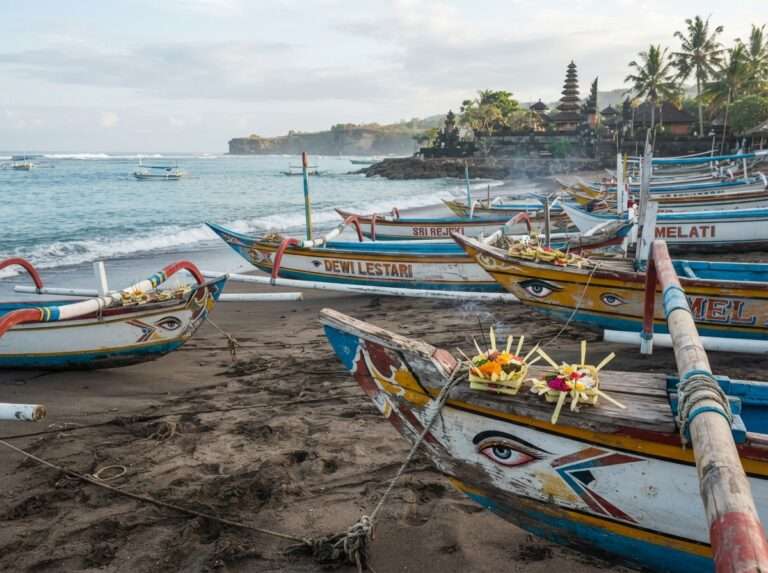
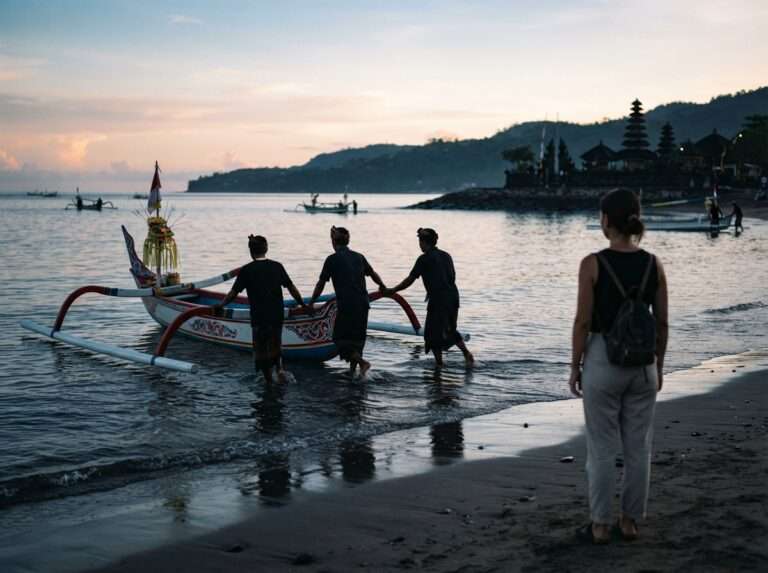
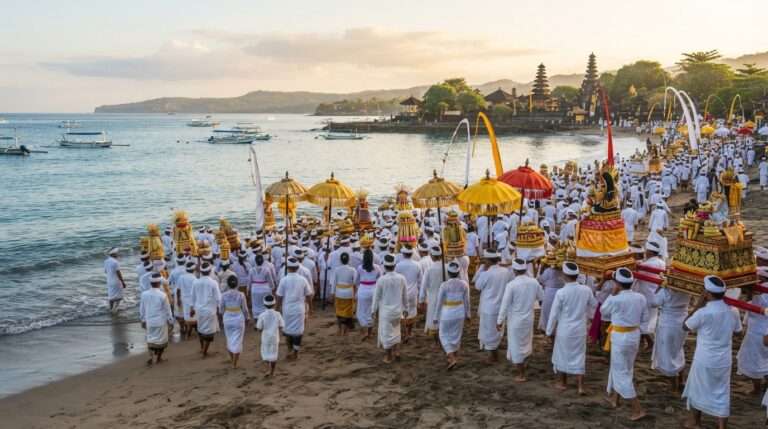
Pura Segara sits by the sand between the village and the main beach. Each morning, families who fish from jukung, the painted outrigger boats lined up on Padangbai’s beach, leave palm-leaf offerings here and on the boats before they launch. The big day is Melasti, the purification procession a few days before Nyepi, when the village walks to the sea in white with its temple effigies under umbrellas. Nyepi 2027 falls on Monday 8 March, so expect Melasti in the first days of March.
Three more small temples complete the census of Padangbai in Wikipedia’s list. Pura Pesamuhan is at the west end of Jalan Silayukti, Pura Mumbul is south of the harbour, and Pura Puseh is north-west of town. They are neighbourhood temples you will walk past rather than visit. A glance at the gate is enough.
| What it is | The village sea temple, plus Pura Pesamuhan, Pura Mumbul and Pura Puseh |
| Where | Segara is by the beach between town and the main beach. Pesamuhan is at the west end of Jalan Silayukti, Mumbul south of the harbour, Puseh north-west of town |
| From the harbour | All under 1 km |
| Entry | View from the gate |
| Best time | Dawn, when the jukung boats go out, and Melasti days before Nyepi |
09
Pura Goa Lawah
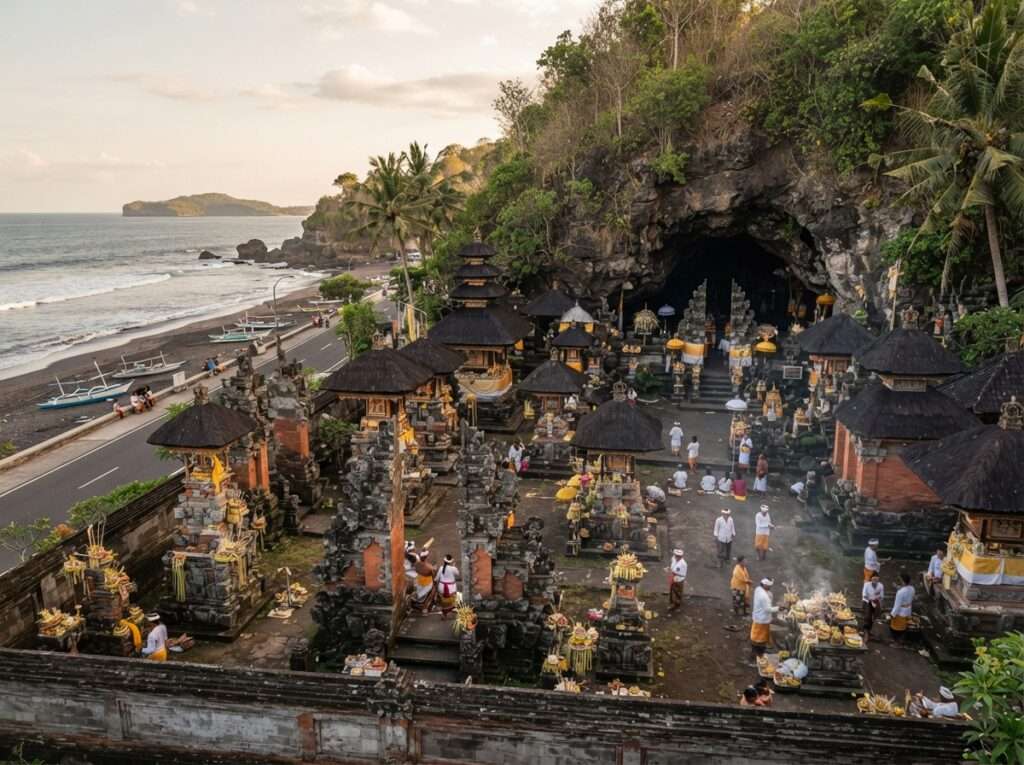
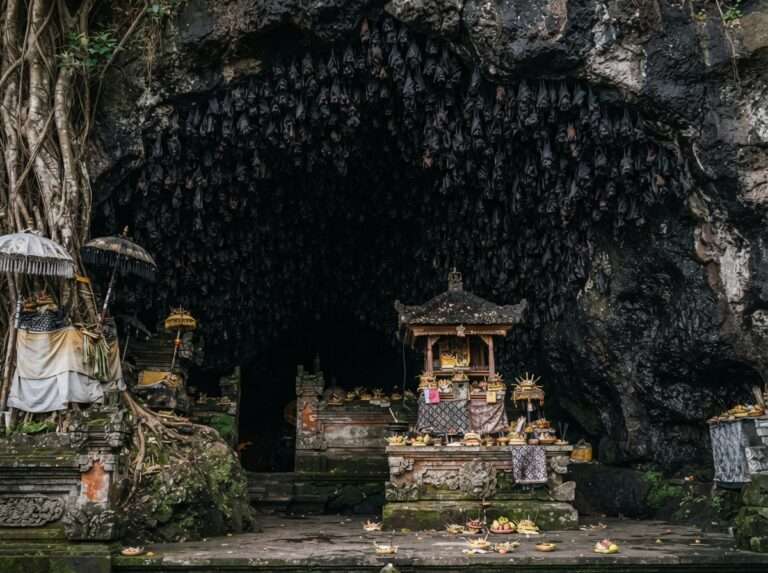
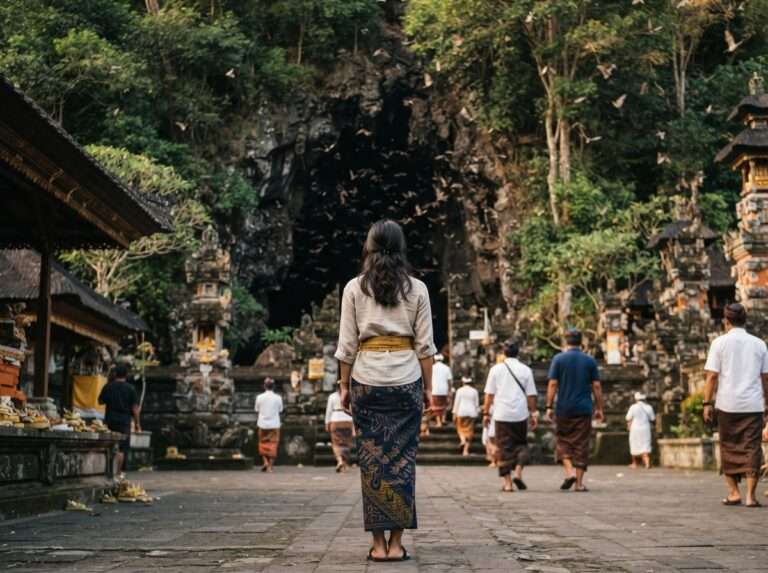
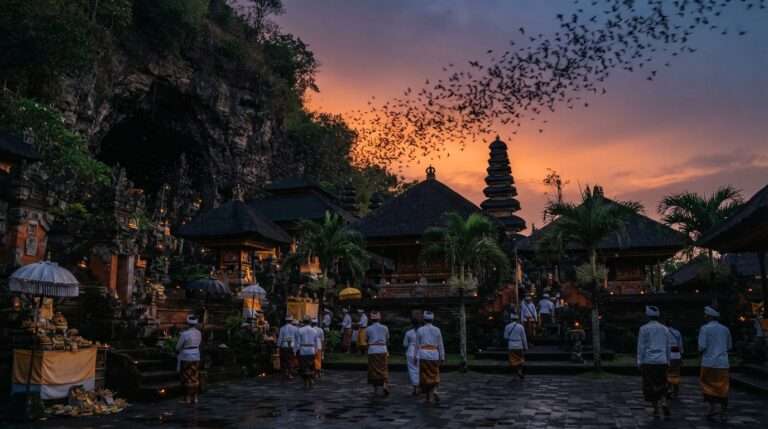
Goa Lawah is the temple most people mean when they say “the temple near Padangbai”. It is not in Padangbai. It sits 7.9 km west by road in Pesinggahan village, Klungkung regency, right on the coast highway, so you can stop on the way in or out of the port. Bali Holiday Secrets lists it as one of the Sad Kahyangan, the six sanctuaries that guard the island, with Goa Lawah watching the south-east. Its founding is credited to the same Mpu Kuturan who lived at Silayukti, in the 11th century.
The temple is built around the mouth of a cave in the cliff, and the cave is packed with thousands of fruit bats hanging from the roof. You cannot enter the cave. You stand in the courtyard in front of it and watch the dark mass shift and squeak. Legend says the cave is the home of the sacred serpent Naga Basuki and that a tunnel runs from it under the island to Pura Besakih on the slopes of Mount Agung. Come in the last half hour before the 6 pm close and you will see the bats begin to stir. They stream out at dusk.
Pay at the small booth just past the car park. A foreign adult pays IDR 30,000 (about ₹160) in cash, and the sarong and sash are lent at the counter. Ceremonies happen often, especially after cremations, when families come to purify ashes at the beach opposite. Visitors are welcome to watch from the back.
Pair it with Kusamba, 11.1 km from Padangbai, where farmers still make salt the old way on the black-sand beach. They soak the sand with seawater, filter the brine through wooden vats and dry it in split coconut trunks.
| What it is | The bat-cave temple, one of Bali's six Sad Kahyangan (directional temples) |
| Where | Pesinggahan village, Dawan, Klungkung, on the coast road to Sanur |
| From the harbour | 7.9 km, 12 to 15 minutes by car or scooter |
| Hours | 8 am to 6 pm |
| Entry | IDR 30,000 per foreign adult, sarong and sash included (some lists split it as IDR 25,000 + IDR 5,000 sarong). Cash only |
| Parking | IDR 5,000 car, IDR 2,000 scooter |
| Time to allow | About 45 minutes |
10
Candidasa Temples And Tenganan
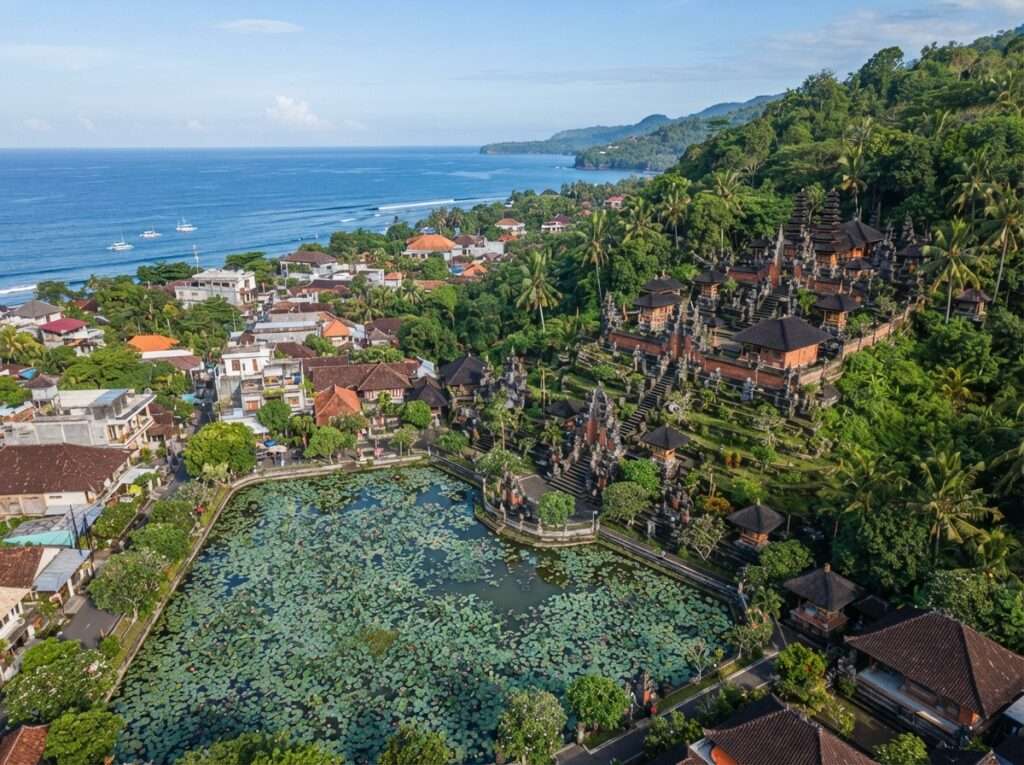
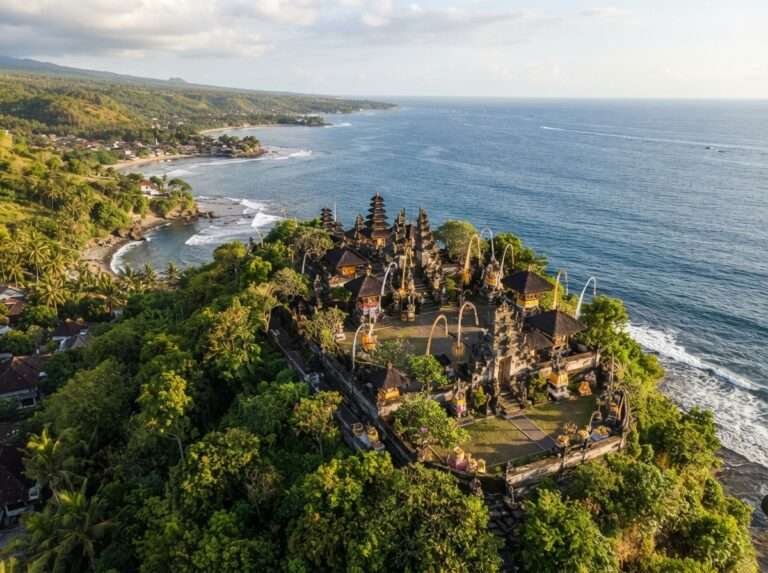
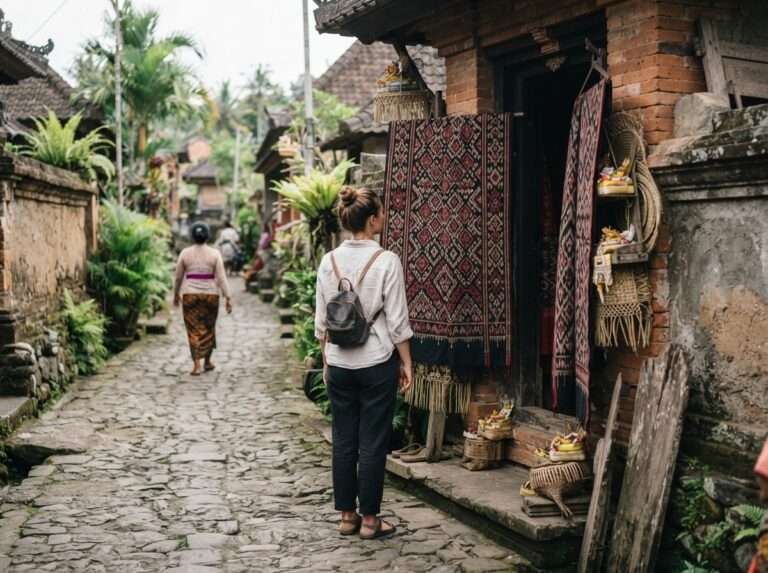
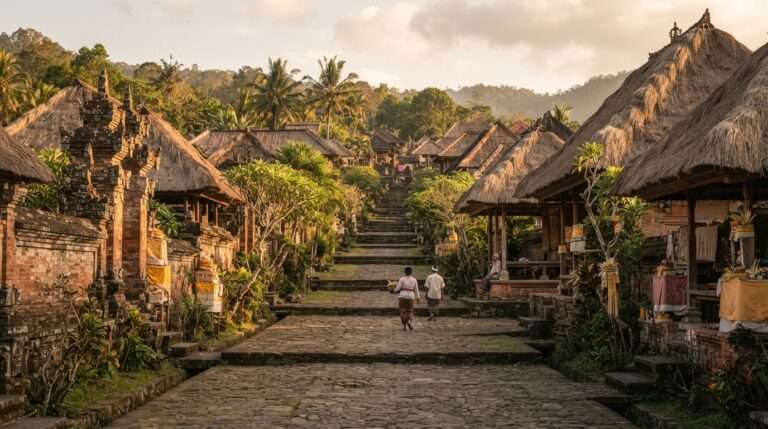
About 20 to 30 minutes’ drive east of Padangbai, Candidasa has its own small temple set. Pura Candidasa stands on the hillside above the town’s lagoon. Pura Gumang crowns the headland at Bugbug, with views back along the coast toward Padangbai. A short ride inland is Tenganan Pegringsingan, one of the old Bali Aga villages, known for double-ikat weaving. We keep this short because our 4 temples in Candidasa guide covers them in full. For the beaches and food there, see things to do in Candidasa, and for the wider regency, temples in Karangasem.
| What it is | Pura Candidasa above the lagoon, hilltop Pura Gumang at Bugbug, and the Bali Aga village of Tenganan inland |
| Where | Along the coast road east of Padangbai |
| From the harbour | 13 to 19 km, 20 to 35 minutes (Candidasa town 12.8 km, Tenganan 14.9 km, Pura Gumang 19 km) |
| Entry | Temples free or by donation. Tenganan asks for a donation at the gate |
| Best for | A half day if you are staying two or three nights in the area |
Besakih And Lempuyang From Padangbai
The two great mountain temples of east Bali are day trips from Padangbai, not walks, and they need an early start.
| Temple | Road distance from Padangbai | Drive time | Our guide |
|---|---|---|---|
| Pura Besakih, the mother temple, at Rendang | 38.9 km | About 1 to 1.25 h | Besakih temple guide and visitor details |
| Pura Lempuyang, the “Gates of Heaven”, at Abang | 40.5 km | About 1 to 1.25 h | Lempuyang temple guide and Pura Lempuyang Luhur |
Do not try either one in a ferry wait. Besakih is on the slopes of Mount Agung and takes half a day once you add the shuttle and walk. Lempuyang’s photo queue at the split gate can run for hours by mid-morning. If you are staying in Amed rather than Padangbai, Lempuyang is much closer, and our guide to temples in Amed starts from there. The two water palaces on the same side of the island are not temples. Taman Ujung (24.1 km) is a royal pleasure garden, and our Taman Ujung guide has the details. Tirta Gangga (30.9 km) is a royal water garden with a sacred spring.
Walking The Silayukti Headland From The Ferry Port
You can walk to all five headland temples in Padangbai from the ferry port without a guide. The return trip is about 3 km, and 75 to 90 minutes covers it with time at each shrine.
- Start at the harbour gate and head east along Jalan Silayukti. This is the beach road. Follow it past the jukung boats, the dive shops and Pura Segara to the far end of the bay, about 1 km.
- Climb the road at the end of Jalan Silayukti onto the headland. Signs point to Blue Lagoon Beach and to the temple. Follow the temple signs, or ask in a warung on the beach road. Allow 15 to 20 minutes from the ferry jetty to the top.
- Visit Pura Silayukti and Pura Telaga Mas. Put on your sarong and sash at the gate. Telaga Mas is on the north side, joined to Silayukti by a path.
- Take the staircase down to Pura Peyogaan. Go slowly. This is the steepest part of the walk.
- Continue about 100 m south to Pura Tanjung Sari, on the point facing the sea.
- Walk on to Pura Tirta Segara Muncar at the tip, close to sea level. Check the waves before you go onto the rocks.
- Return the same way, or detour to Blue Lagoon Beach. It is a few minutes’ walk from the headland. Bring a towel if you want a swim, and see our Blue Lagoon Beach guide for the snorkelling.
Waiting for the Lombok or Gili boat? If you have at least 2 hours before boarding, this walk fits. Check in for your boat first, ask the operator’s office whether you can leave a bag with them, and keep your ticket and passport on you. Be back at the harbour 30 minutes before departure. In the midday heat, buy water on Jalan Silayukti before you climb.
Temple Etiquette And Dress Code In Padangbai
The same rules apply at Silayukti and at Goa Lawah. Following them gets you a welcome instead of a polite refusal at the gate.
- Wear a sarong and a sash. Every temple expects one, even over long trousers. At Goa Lawah they are lent with the ticket. On the headland there is no booth, so bring your own from your guesthouse or buy one in the village first.
- Cover your shoulders. A T-shirt is fine. A tank top is not.
- Walk around the offerings. The palm-leaf trays on steps and paths, the canang sari, are offerings. Never step over or on one.
- Stay out of the inner courtyard during prayers. Do not climb, sit on or lean against any shrine, wall or gate for a photo.
- Ask before photographing people at prayer, and never use a flash. Drones are not welcome over temples during ceremonies.
- Follow the custom on bleeding. Under Balinese custom, women who are menstruating, and anyone with an open bleeding wound, do not enter a temple. Admire the headland from the path that day.
- Mind the monkeys and leave a donation. At Silayukti, keep food zipped away and hold on to glasses and phones. At the village temples, IDR 10,000 to 20,000 in the box is a kind gesture.
When To See A Temple Ceremony In Padangbai
Padangbai’s temples are busiest on their own anniversaries, the odalan, and on the island-wide holy days. These are the next dates.
| Occasion | Next dates | What you see in Padangbai |
|---|---|---|
| Galungan | 13 January 2027 and 11 August 2027 | Bamboo penjor poles line Jalan Silayukti and families pray at every village temple |
| Kuningan | 23 January 2027 and 21 August 2027 | The close of the Galungan period, with morning prayers |
| Silayukti odalan (Buda Kliwon Pahang) | 17 February 2027 and 15 September 2027 | Pilgrims from across Bali, about four days of ceremony, the pier car park full |
| Melasti | First days of March 2027 | Processions in white to the sea at Pura Segara |
| Nyepi | Monday 8 March 2027 | Day of silence. The port and all ferries stop for 24 hours |
| Tanjung Sari piodalan (Buda Kliwon Matal) | 24 March 2027 and 20 October 2027 | Offerings and prayers for Mpu Baradah at the shrine on the point |
These dates follow the 210-day Balinese pawukon calendar, which is why Galungan and each odalan come twice in 2027. Buda Kliwon Pahang also closes the Galungan season across Bali. If you are catching a boat, plan around Nyepi above all. Nothing leaves Padangbai harbour that day, and you must stay in your hotel.
A Half-Day Temple Route From Padangbai
If you have a morning in Padangbai, this route links Goa Lawah, the salt farmers and the headland and has you swimming by early afternoon. A car with a driver or a rented scooter makes it easy.
| Time | Stop | What to do |
|---|---|---|
| 8 am | Pura Goa Lawah (7.9 km) | Arrive at opening, before the tour buses. Pay IDR 30,000 in cash with the sarong |
| 9 am | Kusamba salt beach (about 3 km further west) | Watch the salt farmers work the black sand before the heat peaks |
| 10 am | Back in Padangbai | Park near the harbour and walk Jalan Silayukti |
| 10.30 am | Silayukti headland | Silayukti, Telaga Mas, Peyogaan, Tanjung Sari, Tirta Segara Muncar |
| 12 pm | Lunch on Jalan Silayukti | Fresh fish at a beach warung |
| 1.30 pm | Blue Lagoon Beach | Swim and snorkel in the cove beside the headland |
For lunch spots, see our list of restaurants in Padangbai, and for the other coves, beaches in Padangbai. If you would rather see the bats leave, swap the order: walk the headland in the morning and reach Goa Lawah near 5.30 pm.
How We Checked This Guide
This update is desk research cross-checked on maps. Temple names and positions come from the Wikipedia and Wikivoyage articles on Padangbai, which list 11 temples between them and the culture sites we cite. Temple histories come from budayabali, a Balinese culture site. The Goa Lawah fees and hours come from Bali Holiday Secrets (May 2026), and distances are road routes measured from the harbour. We derived the ceremony dates from the 210-day Balinese calendar and checked them against a July 2026 holy-day list from RRI Singaraja. We have not timed the headland walk on foot ourselves, and fees in Bali change often. We will update this page after our team’s next visit to Padangbai.
Planning Your Trip Around Padangbai
Padangbai is about 56 km from Bali’s airport, roughly 1.5 hours by car, and most travellers spend a night here on the way to Lombok, the Gilis or Nusa Penida. For the rest of the village, see things to do in Padangbai and places to visit in Padangbai. For the island-wide list, see places to visit in Bali.
The temples in Padangbai are the easiest culture stop in east Bali. Silayukti and its four neighbours are a 20-minute walk from the jetty, and Goa Lawah is a 15-minute ride away. Bring a sarong and IDR 30,000 in cash, and you can see them all before your boat leaves. If you would rather have the driver, the hotels and an east Bali day built into one trip, browse our Bali tour packages and ask for a night in Padangbai.
FAQs
Temples In Padangbai: Frequently Asked Questions
common question about temples in padangbai
Padangbai has at least 11 temples. Five sit on the headland east of the harbour: Pura Silayukti, Pura Telaga Mas, the Pura Peyogaan cave shrine, Pura Tanjung Sari and Pura Tirta Segara Muncar. In town are Pura Penataran Agung, Pura Dalem, Pura Segara and the small Pesamuhan, Mumbul and Puseh temples. Pura Goa Lawah, the bat-cave temple, is 7.9 km west in Klungkung and is usually counted as Padangbai's nearest big temple. This guide covers the 11 as eight entries, then adds Goa Lawah and Candidasa for 10.
Pura Silayukti is the most important temple in Padangbai. It dates from the 11th century and is a Dang Kahyangan, a temple of island-wide importance, because tradition says the priest Mpu Kuturan lived, meditated and reached moksha there. Pilgrims from across Bali come for its odalan every 210 days. The next one is on Wednesday 17 February 2027. Nearby Goa Lawah ranks higher still, as one of Bali's six Sad Kahyangan.
Mpu Kuturan was an 11th-century Javanese priest who reorganised religious life on Bali. He is credited with the kahyangan tiga, the three temples every Balinese village keeps, and is linked to the founding of Goa Lawah. Balinese sources point out that "Mpu Kuturan" is a title rather than a name. The man who held it is remembered as Mpu Rajakerta. Tradition says he lived and died at Pura Silayukti in Padangbai.
Yes. Pura Silayukti is about 1.3 km from the Padangbai ferry jetty, a 15 to 20 minute walk. Head east from the harbour along Jalan Silayukti, follow the beach road to its end, and climb onto the headland, following the temple signs where the Blue Lagoon Beach path splits off. Allow 75 to 90 minutes for the return walk and all five headland temples.
Pura Silayukti is free to enter, with no ticket booth and no posted timetable. Visitors come in daylight hours, roughly early morning to late afternoon. Leave IDR 10,000 to 20,000 in the donation box if you see one. You must wear a sarong and sash, and there is no rental on the headland, so bring your own. Visitors stay in the outer courtyard unless invited further in.
No. They are two different temples about 40 km apart by road. Padangbai's Pura Tanjung Sari is a small shrine at the foot of Silayukti hill. It honours Mpu Baradah, the priest King Airlangga of East Java sent to meet Mpu Kuturan, and its piodalan falls on Buda Kliwon Matal (next 24 March 2027). Sanur's Pura Tanjung Sari is a beachfront village temple in south Bali.
The Silayukti odalan falls on Buda Kliwon Pahang, once every 210 days on the Balinese pawukon calendar. The next dates are Wednesday 17 February 2027 and Wednesday 15 September 2027. Celebrations run about four days, with pilgrims arriving from all over Bali. Parking runs out on the headland, so pilgrims leave cars at the Padangbai pier car park and walk up. Expect a slow harbour road those days.
Yes. Every temple in Padangbai expects a sarong and a sash, even if you wear long trousers, and shoulders should be covered. At Goa Lawah the sarong and sash come with the IDR 30,000 ticket. The headland temples have no booth or rental, so bring your own or buy one in the village before you walk up. A light sarong also doubles as a beach towel.
Yes. Long-tailed macaques live on the Silayukti headland and hang around the temple and the staircase down to the Peyogaan cave shrine. They will grab food, sunglasses and loose phones. Keep snacks zipped inside your bag, do not feed them, and hold your phone with both hands near the cliff steps.
Goa Lawah is 7.9 km west of Padangbai harbour by road, a 12 to 15 minute drive on the coast highway. It is not in Padangbai or Karangasem. It stands in Pesinggahan village, Dawan district, Klungkung regency. Because it is on the main road to Sanur and the airport, most travellers stop there on the way to or from the port. Allow about 45 minutes at the temple.
Goa Lawah costs IDR 30,000 (about ₹160) for a foreign adult, including the loan of a sarong and sash, payable in cash only. Children pay a lower rate. Parking is IDR 5,000 for a car and IDR 2,000 for a scooter. The temple is open from 8 am to 6 pm, and the bats are most active near dusk.
Yes, if you have at least 2 hours. The Silayukti headland starts about 1.3 km from the ferry jetty, and the walk with all five shrines takes 75 to 90 minutes. Check in for your boat first, ask the operator about leaving a bag, keep your passport and ticket on you, and be back 30 minutes before departure. With under 2 hours, visit Pura Dalem and Pura Penataran Agung, both within 5 minutes of the jetty.
Yes, but not in a ferry wait. Pura Besakih is 38.9 km from Padangbai and Pura Lempuyang 40.5 km, each about 1 to 1.25 hours by car. Both take half a day once you add the shuttle, the climb and, at Lempuyang, the photo queue. Start by 6 am, hire a driver, and keep Goa Lawah for the drive back, since it is on the coast road.